MN Department of Health MN Rural Water Association

- Slides: 61
MN Department of Health & MN Rural Water Association Present Wellhead Protection Plan Webinar Series Thursdays @ 11: 00 am, March 12 – April 2, 2015
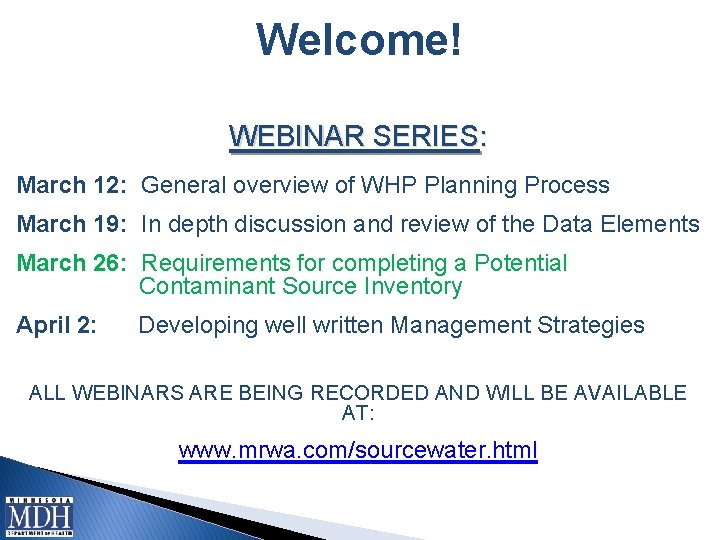
Welcome! WEBINAR SERIES: March 12: General overview of WHP Planning Process March 19: In depth discussion and review of the Data Elements March 26: Requirements for completing a Potential Contaminant Source Inventory April 2: Developing well written Management Strategies ALL WEBINARS ARE BEING RECORDED AND WILL BE AVAILABLE AT: www. mrwa. com/sourcewater. html
Getting Started Refer to the “Best Practices for Attending the WHP Webinars using Web. Ex” sent to you Feb. 20 th or available on MRWA website for screen sizing & directions for submittal of questions using Web. Ex Chat. Ø Technical problems / questions can be submitted via Web. Ex chat and staff will respond to try and help resolve any technical problems as we get started. Ø Webinar questions can be submitted during the session via Web. Ex Chat and will be answered at the end of each webinar. Ø Materials for each webinar are available at: www. mrwa. com/sourcewater. html Ø
Topics Covered � Why have a PCSI Webinar? � Importance of the PCSI � Requirements for a WHP Plan PCSI � Process and Procedures for Completing a PCSI � Technical Assistance Tools to Help 4
Why PCSI Webinar? ANSWER THE QUESTION… “What do I need to do to successfully complete a PCSI for MDH approval? Clearer Expectations…! Picture Source: 2007 mongabay. com
Why PCSI Webinar? Other Really Good Reasons…. Ø Most Common Reason for plan disapprovals by MDH Lost Time & Resources: PWS – Consultant - MDH Ø MDH / Consultants share common goal to improve the process & service to mutual our client the PWS. Ø Clarify WHP Rule Requirements / Expectations for completing a PCSI Ø Explain MDH procedures for PCSI review & endorsement
Transition from. ” Why Have a PCSI Webinar? to Importance of PCSI
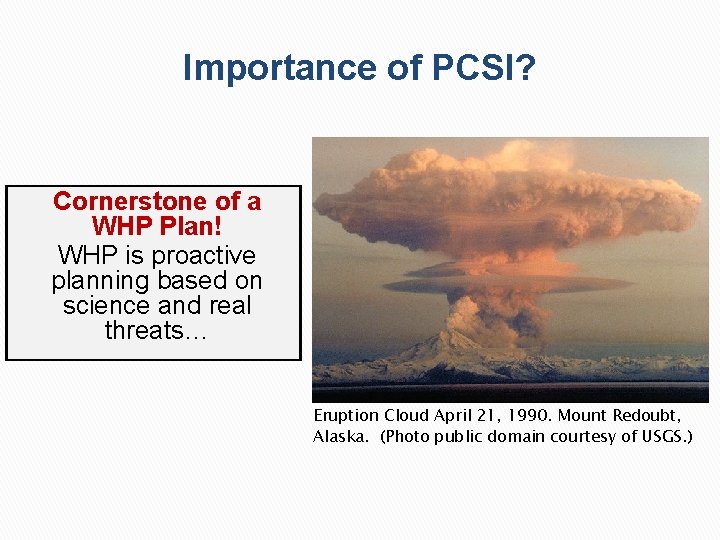
Importance of PCSI? Cornerstone of a WHP Plan! WHP is proactive planning based on science and real threats… Eruption Cloud April 21, 1990. Mount Redoubt, Alaska. (Photo public domain courtesy of USGS. )
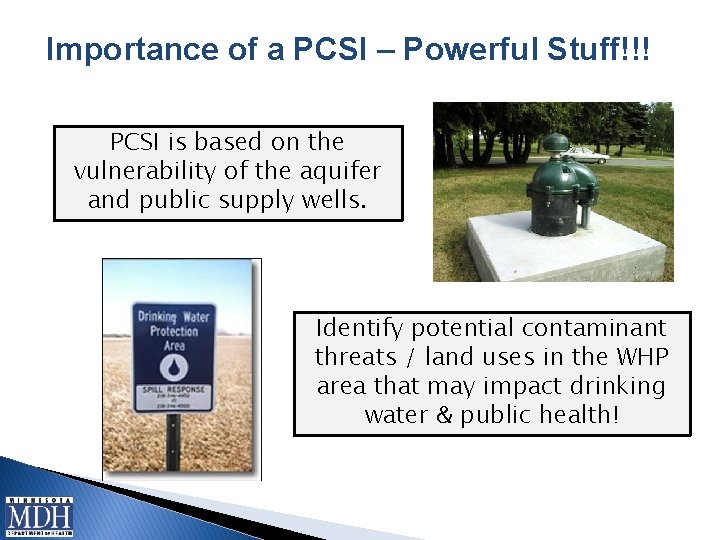
Importance of a PCSI – Powerful Stuff!!! PCSI is based on the vulnerability of the aquifer and public supply wells. Identify potential contaminant threats / land uses in the WHP area that may impact drinking water & public health!
Importance of a PCSI – Powerful Stuff!!! The PCSI helps the public water supplier “gauge risk” and “threats” and evaluate how to manage risk through the planning process.
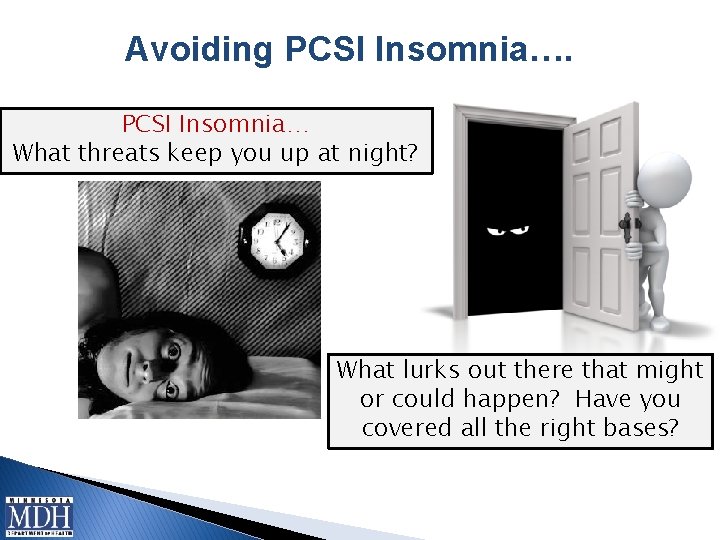
Avoiding PCSI Insomnia… What threats keep you up at night? What lurks out there that might or could happen? Have you covered all the right bases?
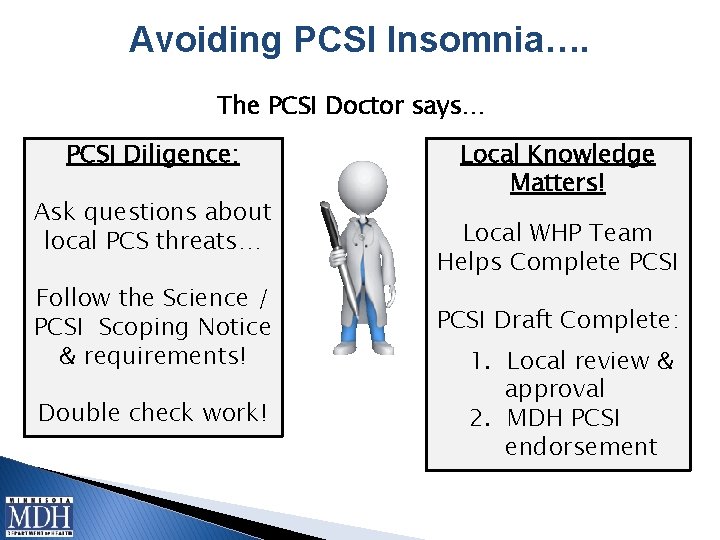
Avoiding PCSI Insomnia…. The PCSI Doctor says… PCSI Diligence: Ask questions about local PCS threats… Follow the Science / PCSI Scoping Notice & requirements! Double check work! Local Knowledge Matters! Local WHP Team Helps Complete PCSI Draft Complete: 1. Local review & approval 2. MDH PCSI endorsement
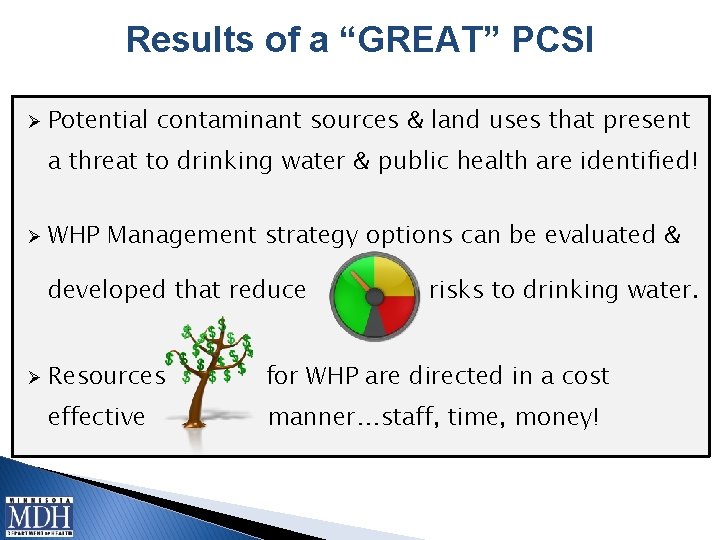
Results of a “GREAT” PCSI Ø Potential contaminant sources & land uses that present a threat to drinking water & public health are identified! Ø WHP Management strategy options can be evaluated & developed that reduce risks to drinking water. Ø Resources for WHP are directed in a cost effective manner…staff, time, money!
Transition from Importance of PCSI. ” to Requirements for a WHP Plan PCSI
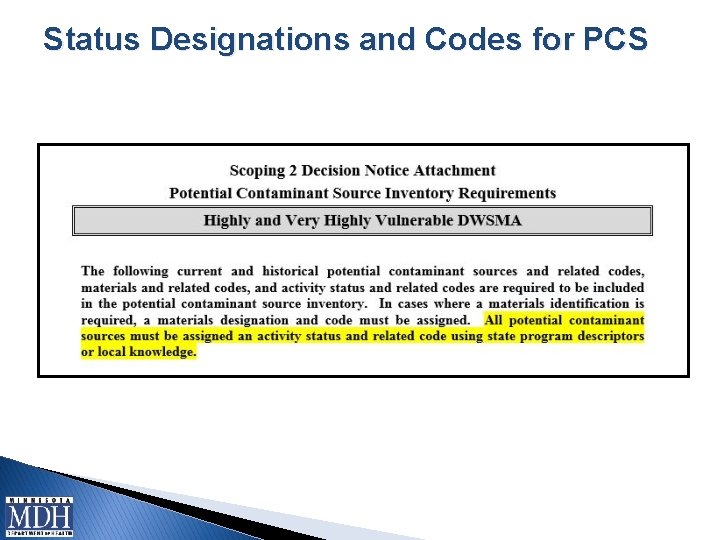
What Guides the Content of a PCSI? � WHP Rule Language � Understanding � Scoping � Potential the Relationship to Vulnerability 2 Decision Notice Contaminant Source Lists �Potential Contaminant Sources (PCS) & Attributes �Required Materials Designations & Codes �Required Status Designations & Codes � WHP Planning Issues Summary
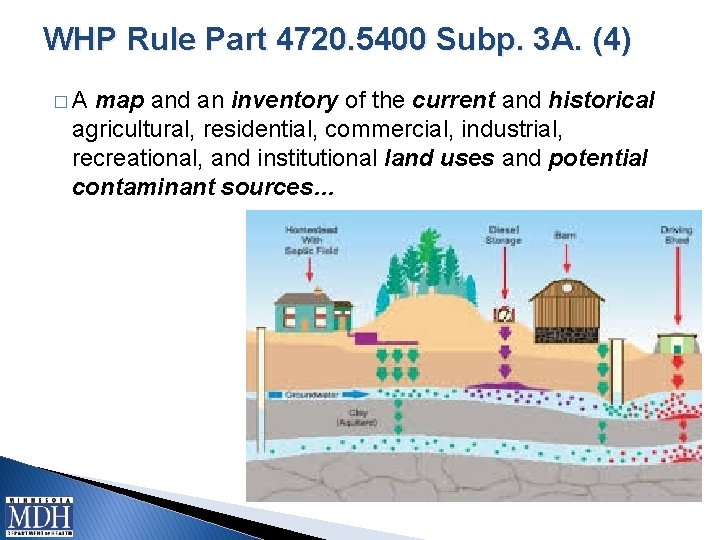
WHP Rule Part 4720. 5400 Subp. 3 A. (4) �A map and an inventory of the current and historical agricultural, residential, commercial, industrial, recreational, and institutional land uses and potential contaminant sources…
Relationship to Vulnerability � Vulnerability guides the level and depth of a PCSI � Not all PCSIs are created equal !
The PCSI is related to the vulnerability assessment of wells and the Drinking Water Supply Management Area Commonly Inventoried… � Low = other wells � Moderate = other wells and chemical & petroleum storage tanks High = all land uses & potential contaminant sources �
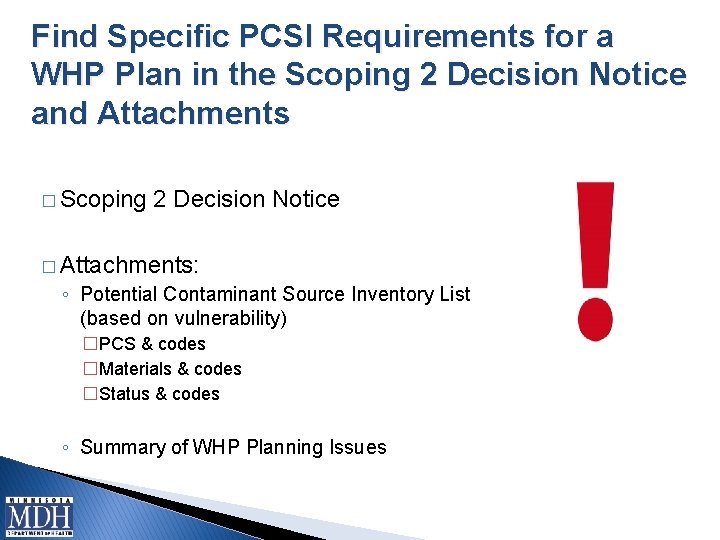
Find Specific PCSI Requirements for a WHP Plan in the Scoping 2 Decision Notice and Attachments � Scoping 2 Decision Notice � Attachments: ◦ Potential Contaminant Source Inventory List (based on vulnerability) �PCS & codes �Materials & codes �Status & codes ◦ Summary of WHP Planning Issues
Scoping 2 Decision Notice & Attachments
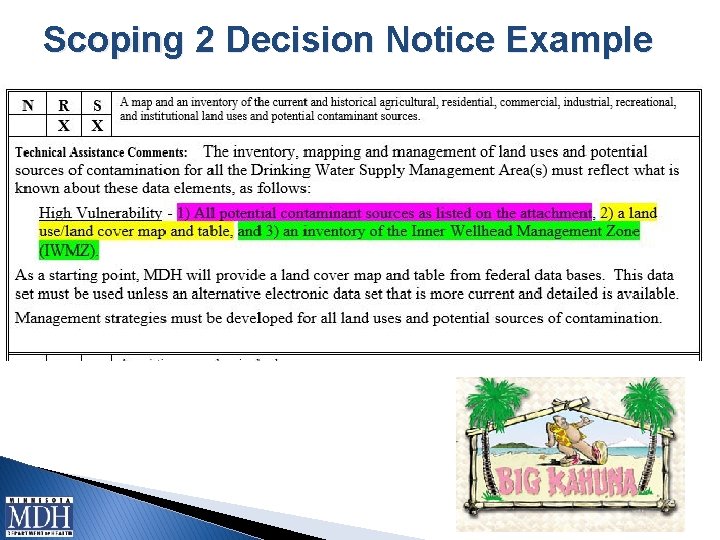
Scoping 2 Decision Notice Example
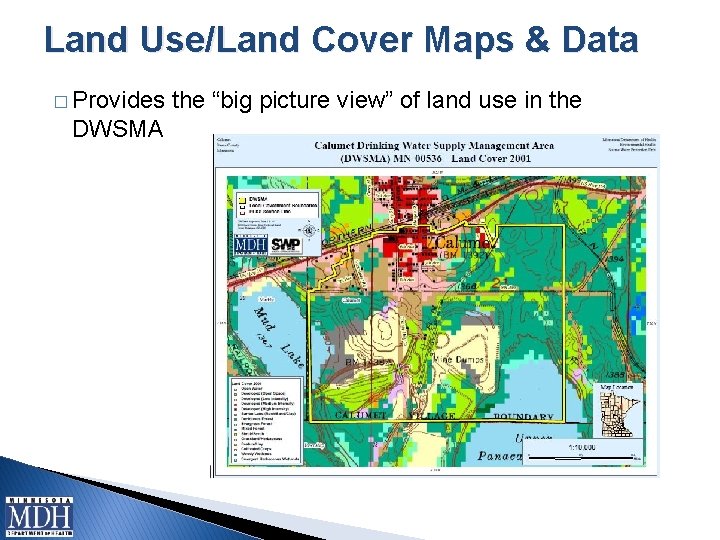
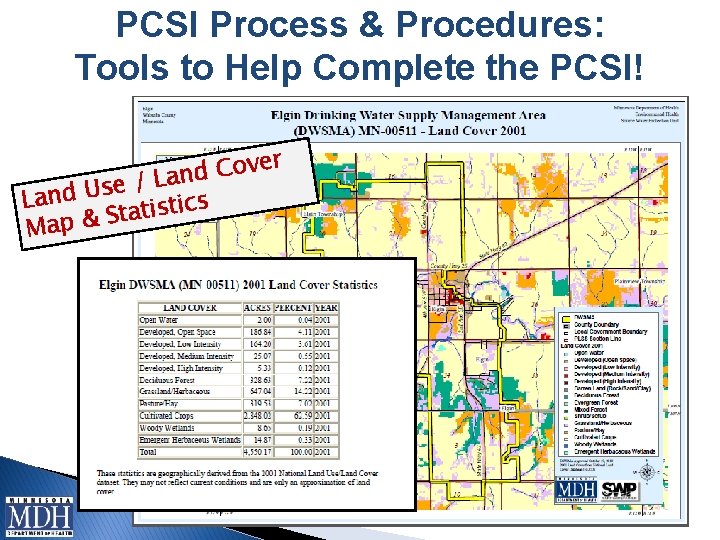
Land Use/Land Cover Maps & Data � Provides DWSMA the “big picture view” of land use in the
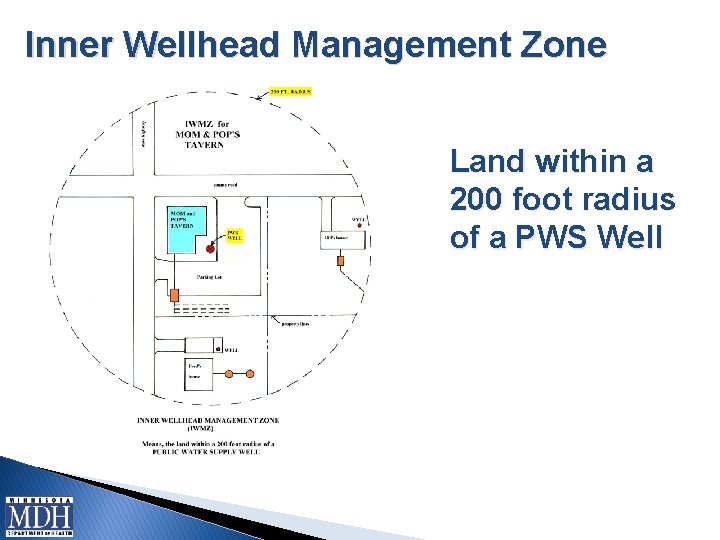
Inner Wellhead Management Zone Land within a 200 foot radius of a PWS Well
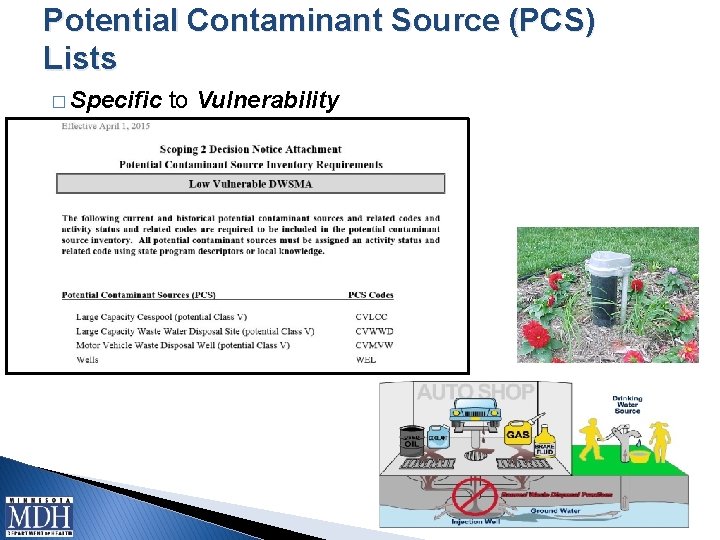
Potential Contaminant Source (PCS) Lists � Specific to Vulnerability
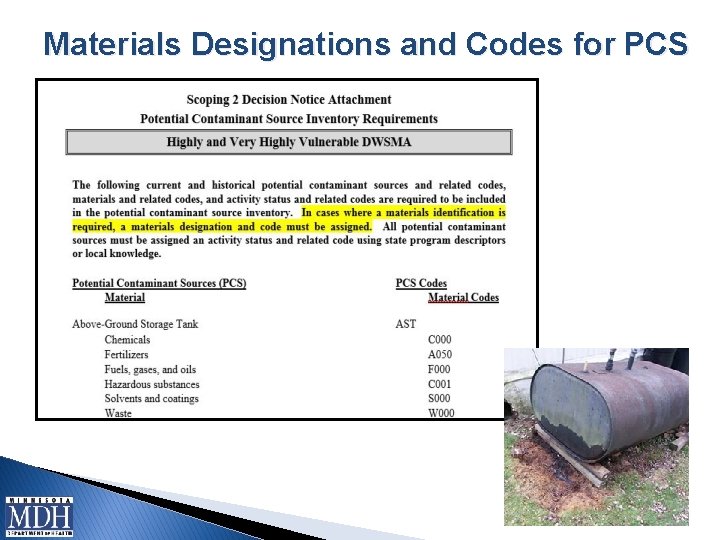
Materials Designations and Codes for PCS
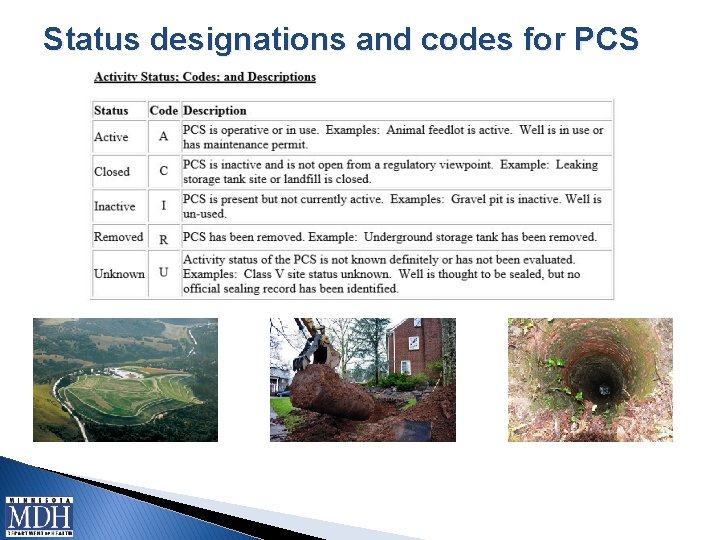
Status Designations and Codes for PCS
Status designations and codes for PCS
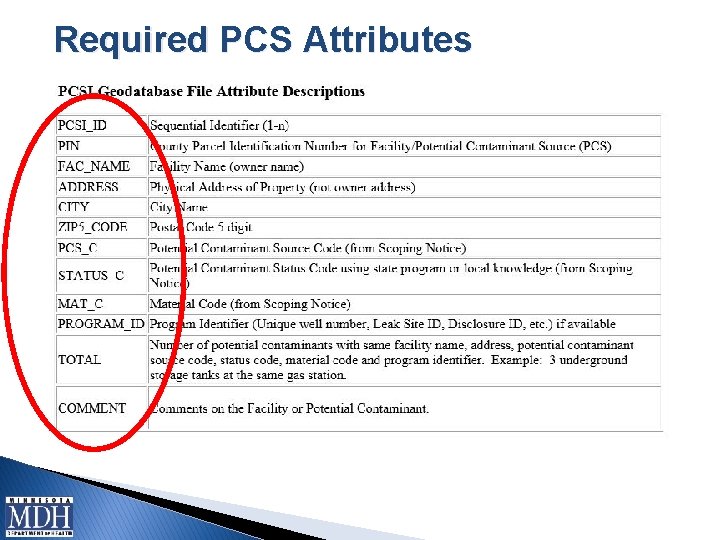
Required PCS Attributes
WHP Planning Issues Summary � Attached � Lists date to Scoping 2 Decision Notice all the planning issues that have been identified to
Putting it all together…
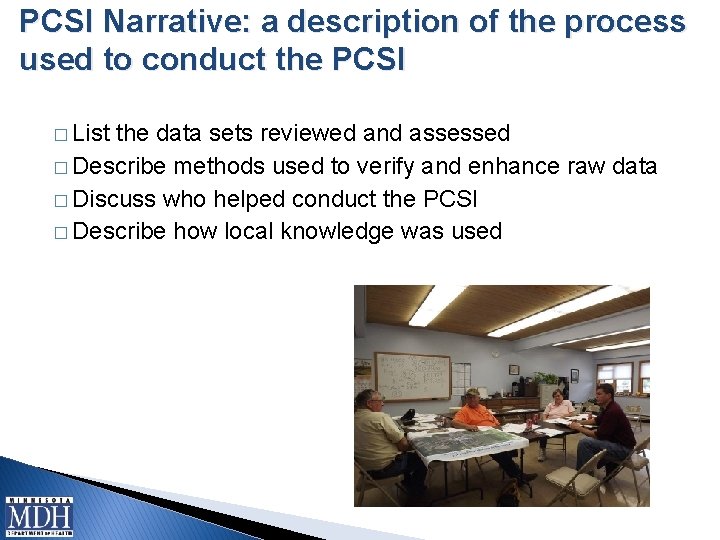
PCSI Narrative: a description of the process used to conduct the PCSI � List the data sets reviewed and assessed � Describe methods used to verify and enhance raw data � Discuss who helped conduct the PCSI � Describe how local knowledge was used
Complete PCSI Package �A land use/land cover map and table � An inventory of the Inner Wellhead Management Zone(s) � A list of all potential contaminant sources in the DWSMA � Required attribute data for each PCS identified � A map showing the locations of all PCS � A narrative describing how the PCSI was conducted
Shifting Gears…
PCSI Endorsement Process Early informal feedback on PCSI to PWS & Consultants � Done at or before 60 -day LUG review � Complete PCSI package is submitted to planning & GIS staff � WHP Rule data reporting requirements are met � Electronic PCSI are submitted to MDH �
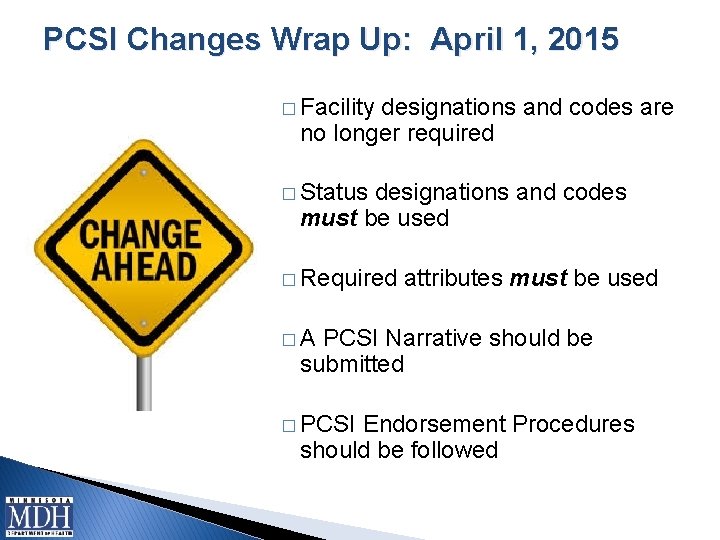
PCSI Changes Wrap Up: April 1, 2015 � Facility designations and codes are no longer required � Status designations and codes must be used � Required attributes must be used �A PCSI Narrative should be submitted � PCSI Endorsement Procedures should be followed
Transition from Requirements for a WHP Plan PCSI to Process. ” & Procedures for Completing a PCSI
Setting the Stage: Where are you in the PCSI and WHP Planning Process?
PCSI Process & Procedures: Scoping II Meeting Has the Scoping II Meeting been held yet? Significance: If you have been hired to complete the Part II, WHP Plan, we recommend you attend to learn about the PCSI and other requirements / issues related to the Part II WHP Plan. Helpful Hint! This is also a good time to talk about number of WHP Team Meetings needed to do the Part II WHP Plan.
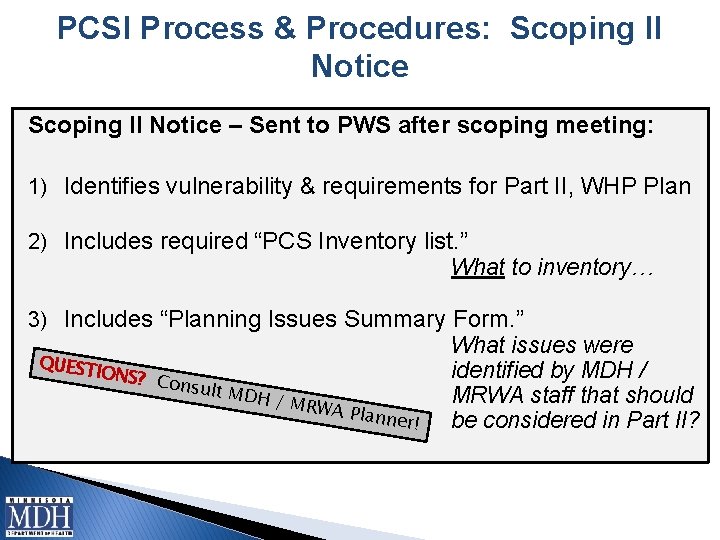
PCSI Process & Procedures: Scoping II Notice – Sent to PWS after scoping meeting: 1) Identifies vulnerability & requirements for Part II, WHP Plan 2) Includes required “PCS Inventory list. ” What to inventory… 3) Includes “Planning Issues Summary Form. ” What issues were QUEST IONS? identified by MDH / Consul t MDH MRWA staff that should / MRW A Plann er! be considered in Part II?
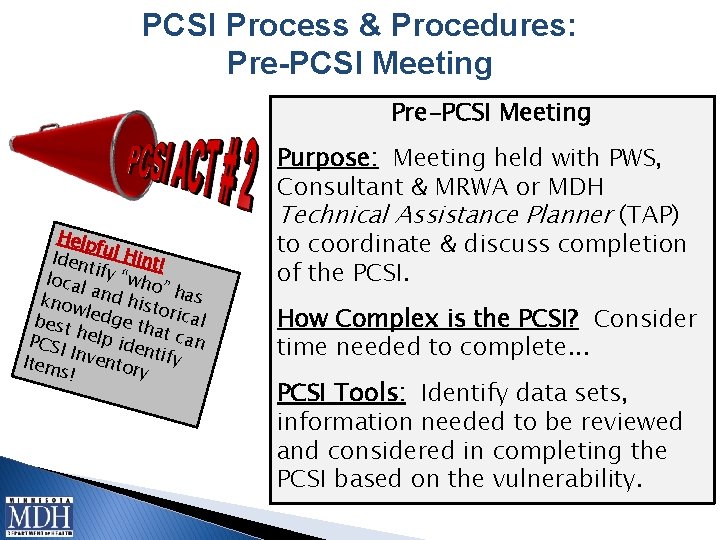
PCSI Process & Procedures: Pre-PCSI Meeting Help f Iden ul Hint! t loca ify “who l ” know and hist has o best ledge th rical a h PCSI elp ide t can n I Item nventor tify y s! Purpose: Meeting held with PWS, Consultant & MRWA or MDH Technical Assistance Planner (TAP) to coordinate & discuss completion of the PCSI. How Complex is the PCSI? Consider time needed to complete. . . PCSI Tools: Identify data sets, information needed to be reviewed and considered in completing the PCSI based on the vulnerability.
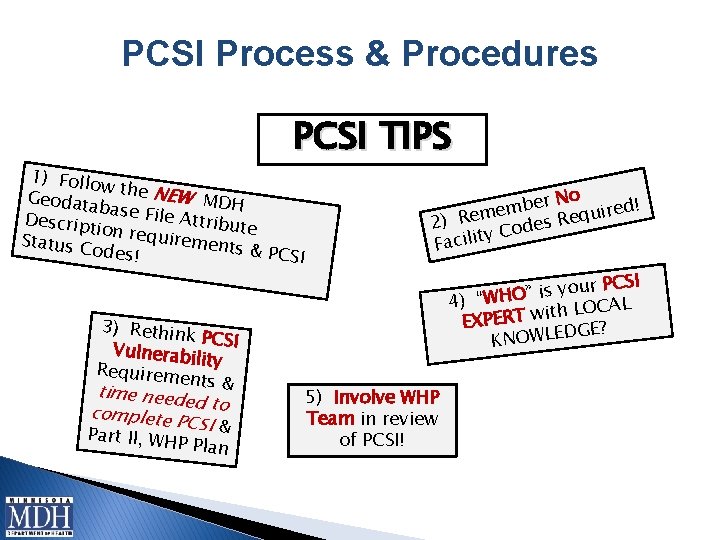
PCSI Process & Procedures PCSI TIPS 1) Follo w Geodata the NEW MDH base Fil e Attrib Descrip ute tion req u irement Status C s & PCSI odes! 3) Rethin k PCSI Vulnerabi lity Requirem ents & time neede d complete P to CSI & P art II, WHP Plan r No e b d! m e e r i m u e q R 2) es Re d o C y Facilit PCSI r u o y s i ” 4) “WHO LOCAL h t i w T R EXPE GE? KNOWLED 5) Involve WHP Team in review of PCSI!
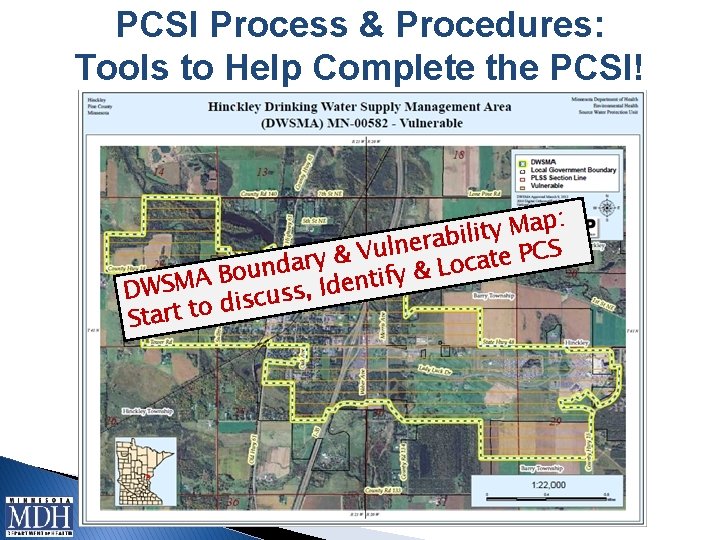
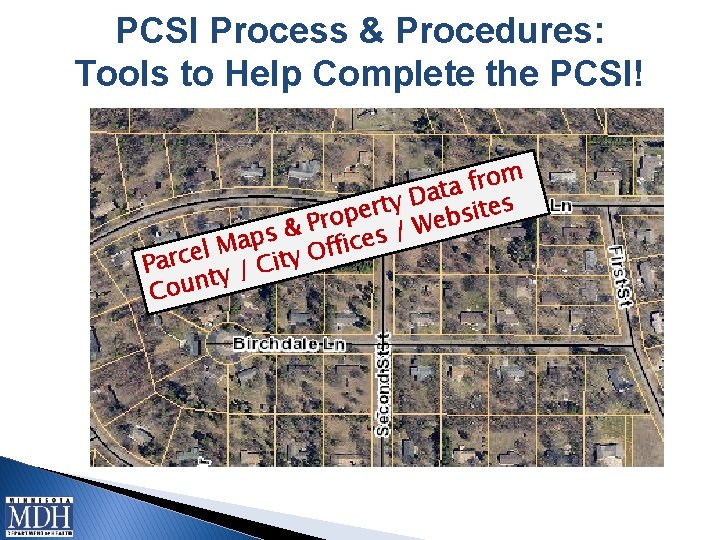
PCSI Process & Procedures: Tools to Help Complete the PCSI! : p a M y t bili a r e n l Vu CS P & e t y r a a c Lo und & o y B f i A t en d I , DWSM s s scu i d o t t Star
PCSI Process & Procedures: Tools to Help Complete the PCSI! m o r f a t a D y rt es t e i p s o b e Pr W & / s p es a c i M f f l Parce y / City O t n u o C
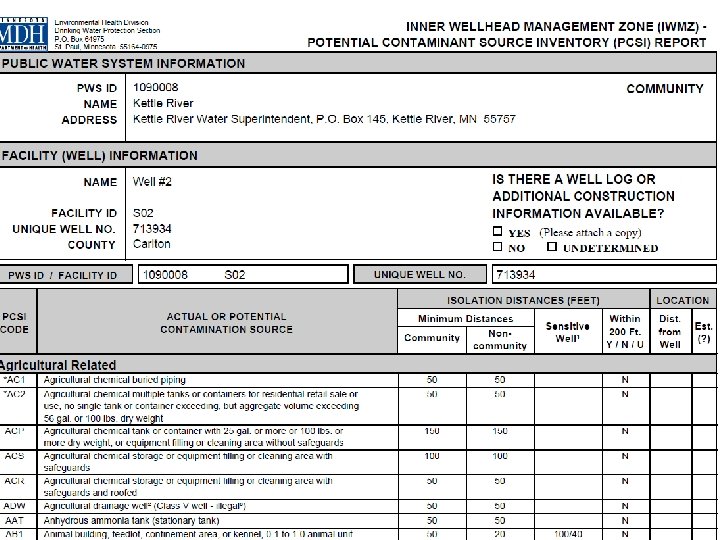
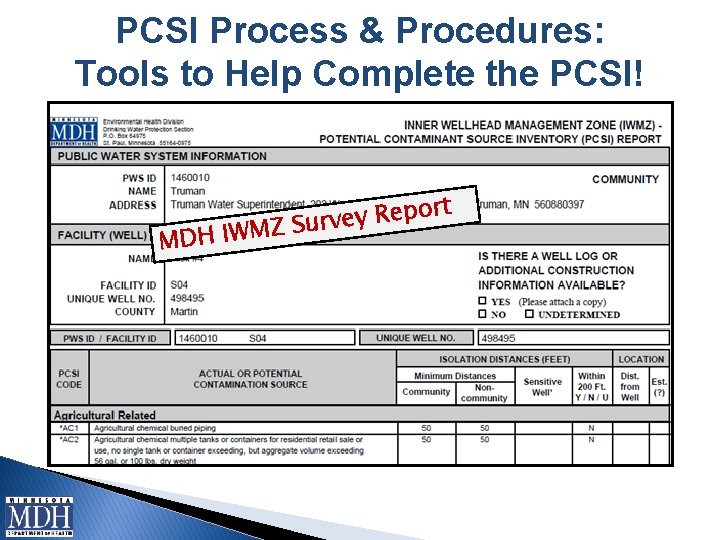
PCSI Process & Procedures: Tools to Help Complete the PCSI! rt o p e R y e urv S Z M W I MDH
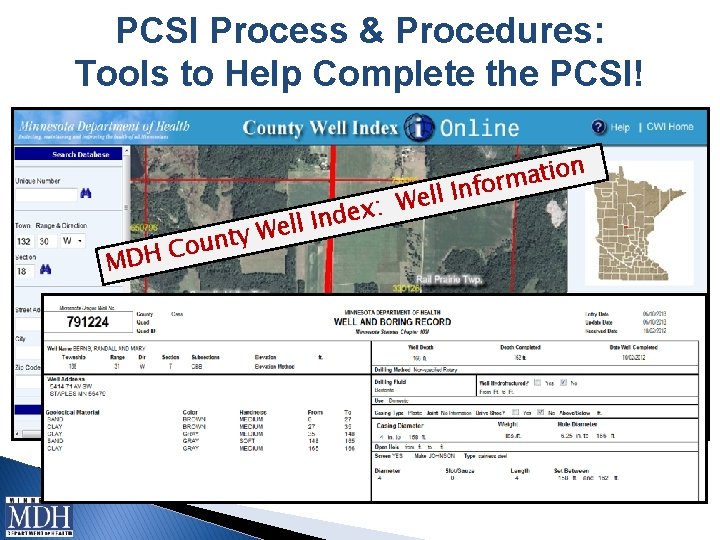
PCSI Process & Procedures: Tools to Help Complete the PCSI! n o i t a orm f n I l l e W : x nde I l l e W y t n u Co H D M
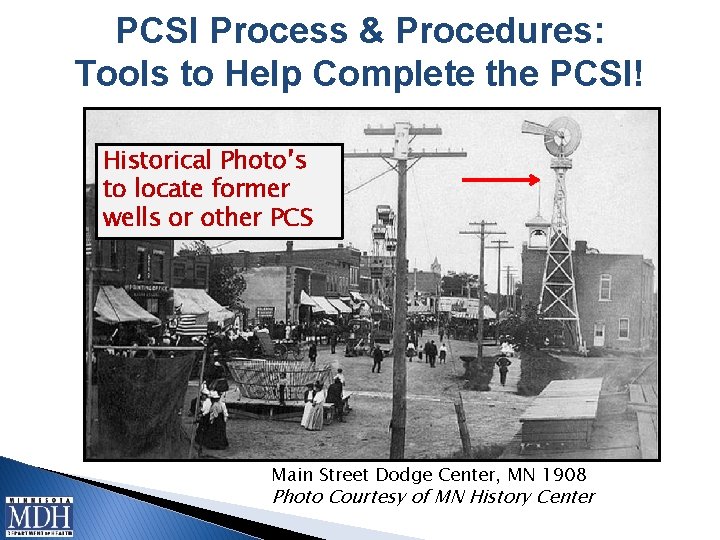
PCSI Process & Procedures: Tools to Help Complete the PCSI! Historical Photo’s to locate former wells or other PCS Main Street Dodge Center, MN 1908 Photo Courtesy of MN History Center
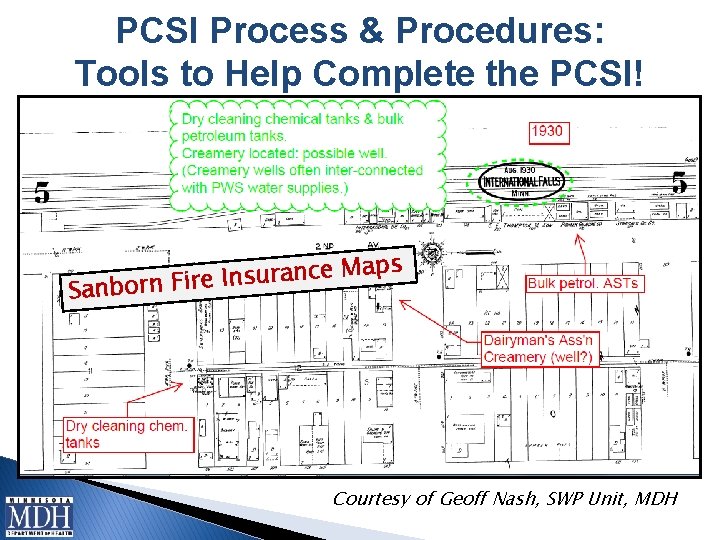
PCSI Process & Procedures: Tools to Help Complete the PCSI! Maps e c n a r u s n I e Sanborn Fir Courtesy of Geoff Nash, SWP Unit, MDH
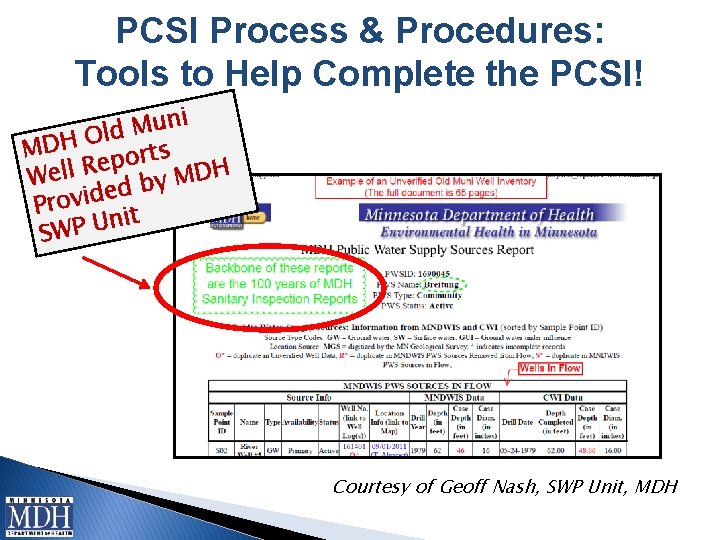
PCSI Process & Procedures: Tools to Help Complete the PCSI! ni u M d Ol H D M ts r o p e Well R d by MDH e d i v o r P it n U P SW Courtesy of Geoff Nash, SWP Unit, MDH
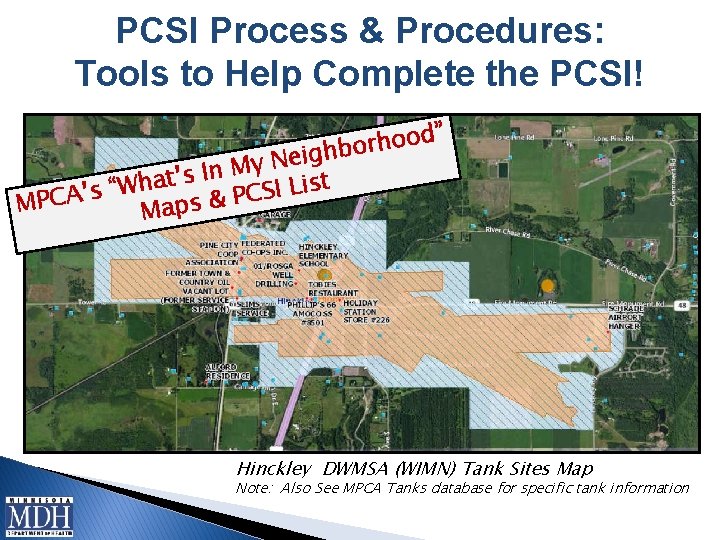
PCSI Process & Procedures: Tools to Help Complete the PCSI! ” d o o h r o ighb e N y M n I s ’ t ha st i W L “ I S s ’ C A P MPC Maps & Hinckley DWMSA (WIMN) Tank Sites Map Note: Also See MPCA Tanks database for specific tank information
PCSI Process & Procedures: Tools to Help Complete the PCSI! r e v o C and L / e s Land U tics s i t a t S Map &
PCSI Process & Procedures: Tools to Help Complete the PCSI! Other Datasets & PCSI Resources: q Local Information: PWS system hook-up information, storm water, septic system, feedlot information, etc. q Pipelines q Transportation Routes / Railways – possible spill locations q MDA - Agriculture spills / release database q Other - State / Federal / Local Databases & Information
Transition from Tools for Completing a. ” PCSI to Finalizing a PCSI
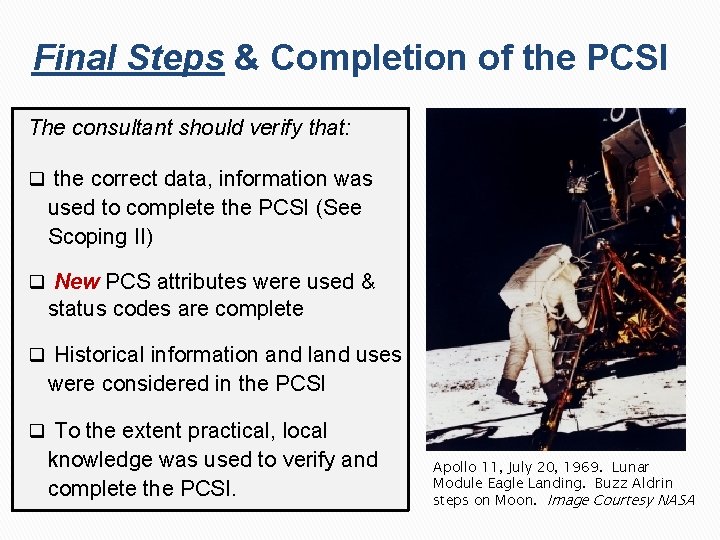
Final Steps & Completion of the PCSI The consultant should verify that: q the correct data, information was used to complete the PCSI (See Scoping II) q New PCS attributes were used & status codes are complete q Historical information and land uses were considered in the PCSI q To the extent practical, local knowledge was used to verify and complete the PCSI. Apollo 11, July 20, 1969. Lunar Module Eagle Landing. Buzz Aldrin steps on Moon. Image Courtesy NASA
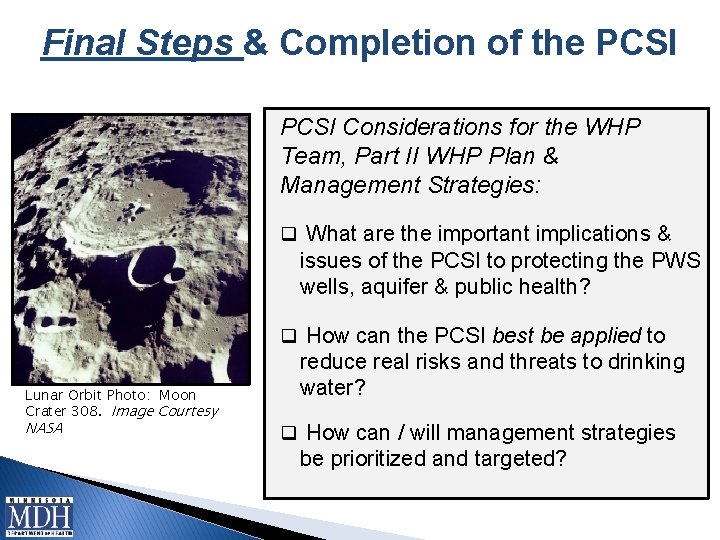
Final Steps & Completion of the PCSI Considerations for the WHP Team, Part II WHP Plan & Management Strategies: q What are the important implications & issues of the PCSI to protecting the PWS wells, aquifer & public health? q How can the PCSI best be applied to Lunar Orbit Photo: Moon Crater 308. Image Courtesy NASA reduce real risks and threats to drinking water? q How can / will management strategies be prioritized and targeted?
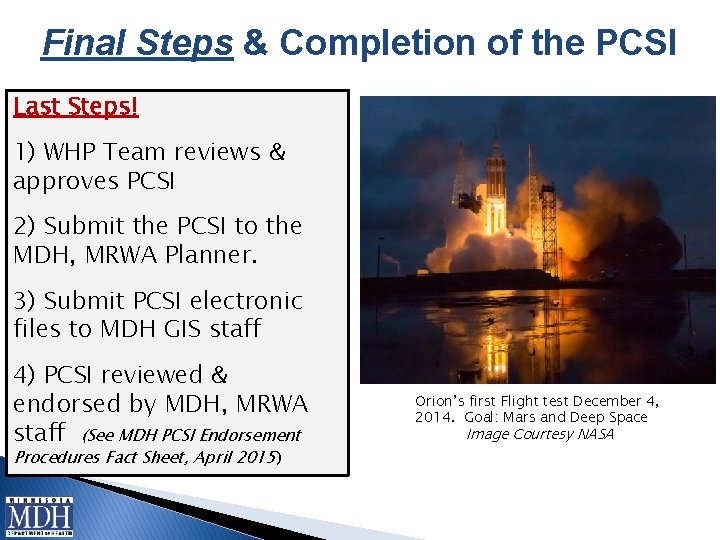
Final Steps & Completion of the PCSI Last Steps! 1) WHP Team reviews & approves PCSI 2) Submit the PCSI to the MDH, MRWA Planner. 3) Submit PCSI electronic files to MDH GIS staff 4) PCSI reviewed & endorsed by MDH, MRWA staff (See MDH PCSI Endorsement Procedures Fact Sheet, April 2015) Orion’s first Flight test December 4, 2014. Goal: Mars and Deep Space Image Courtesy NASA
Transition from Process & Procedures. ”for Completing a PCSI to Tools Available to Help
MDH Provided Tools & Assistance � Old Municipal Well Reports � Assist PWS in updating IWMZ � Provide IWMZ Reports to PWS & Consultant � Provide Land use/Land cover Map and Table � Provide Well Data; upon request
Technical Assistance � MDH Planner � MRWA Planner � MDH GIS Staff
Questions?
MN Department of Health Wellhead Protection Planning Webinars � April 2: Developing well written Management Strategies Reminder: All Webinars are being recorded and will be available at: www. mrwa. com/sourcewater. html Information in this document is available in alternative formats to individuals with disabilities upon request by calling or emailing George Minerich at (320) 223 -7314 or email at George. Minerich@state. mn. us