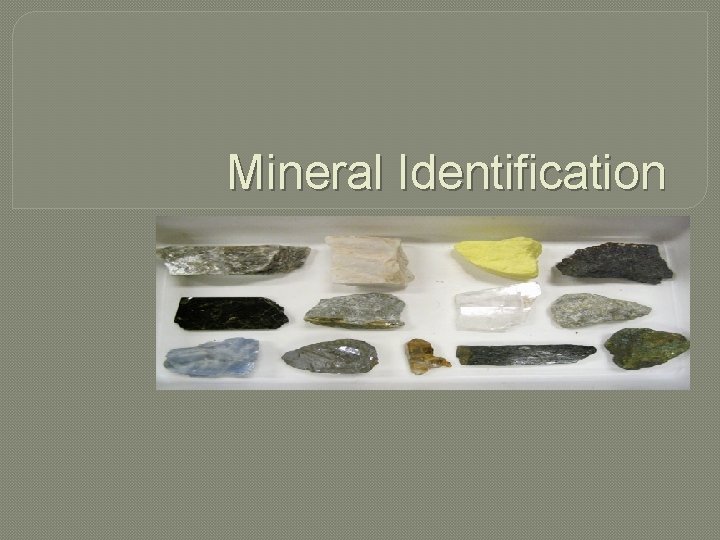
Mineral Identification Mineral Property 1 Color Streak Streak



- Slides: 43
Mineral Identification
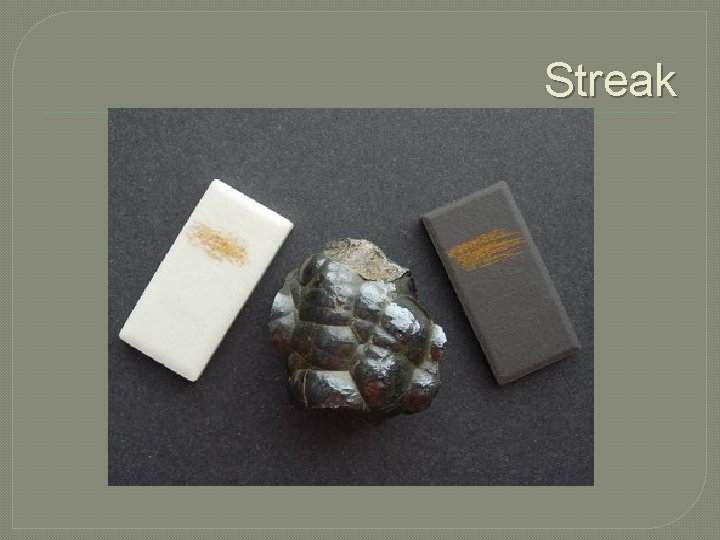
Mineral Property #1 Color & Streak � � Streak is closely related to color, but is a different property because the color of the mineral may be different than the color of the streak. Streak is actually the color of the powder of a mineral. It is called streak because the proper way to test for streak is to rub a mineral across a tile of white unglazed porcelain and to examine the color of the "streak" left behind.
Streak
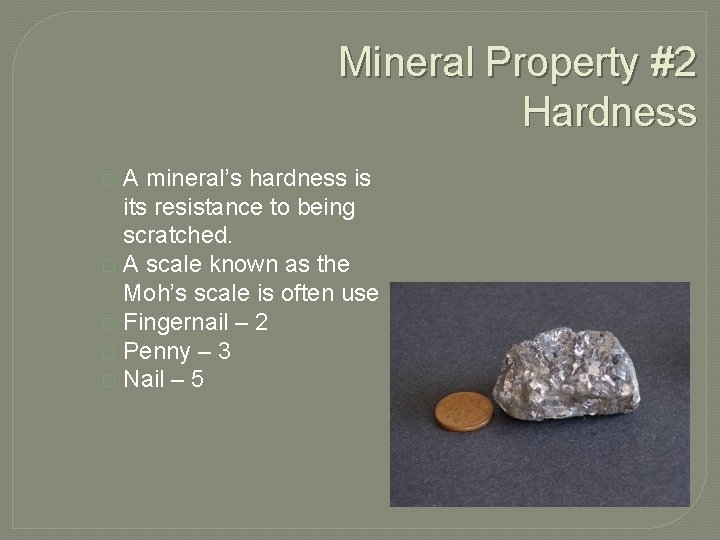
Mineral Property #2 Hardness A mineral’s hardness is its resistance to being scratched. � A scale known as the Moh’s scale is often use � Fingernail – 2 � Penny – 3 � Nail – 5 �
Mineral Property #3 - Texture �Smooth �Rough �Gritty �Sandy �Sharp �Powdery �Greasy
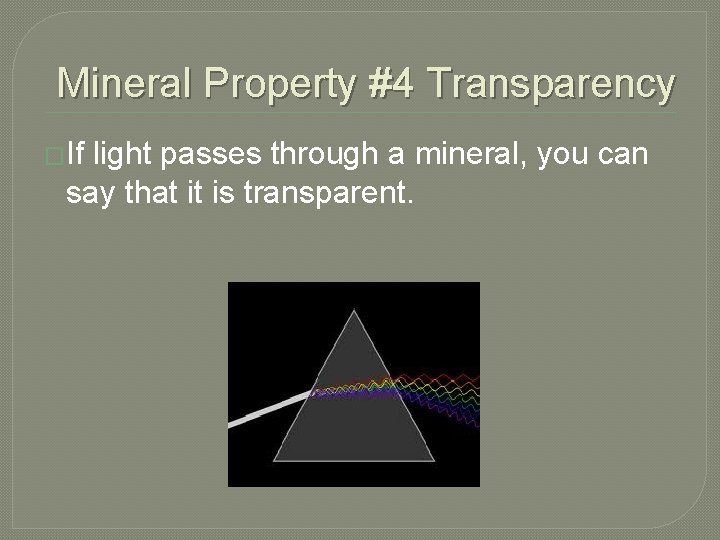
Mineral Property #4 Transparency �If light passes through a mineral, you can say that it is transparent.
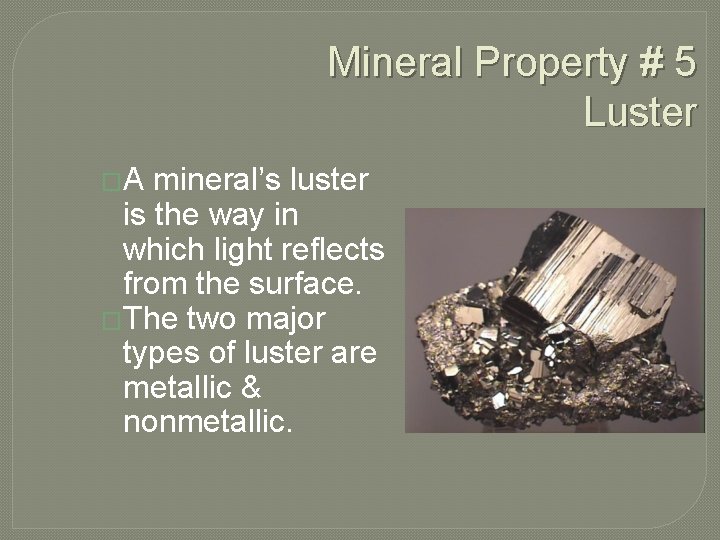
Mineral Property # 5 Luster �A mineral’s luster is the way in which light reflects from the surface. �The two major types of luster are metallic & nonmetallic.
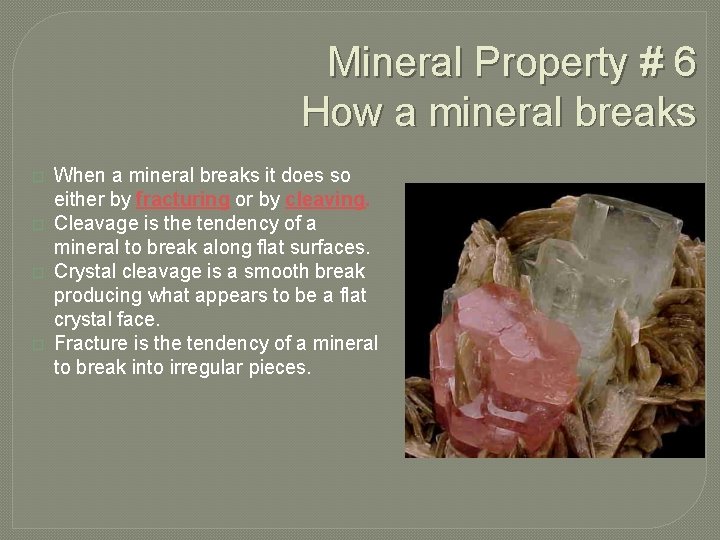
Mineral Property # 6 How a mineral breaks � � When a mineral breaks it does so either by fracturing or by cleaving. Cleavage is the tendency of a mineral to break along flat surfaces. Crystal cleavage is a smooth break producing what appears to be a flat crystal face. Fracture is the tendency of a mineral to break into irregular pieces.
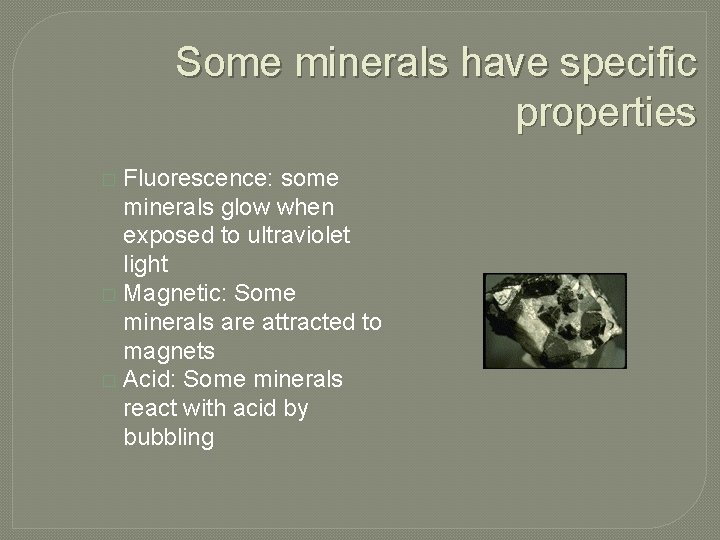
Some minerals have specific properties Fluorescence: some minerals glow when exposed to ultraviolet light � Magnetic: Some minerals are attracted to magnets � Acid: Some minerals react with acid by bubbling �
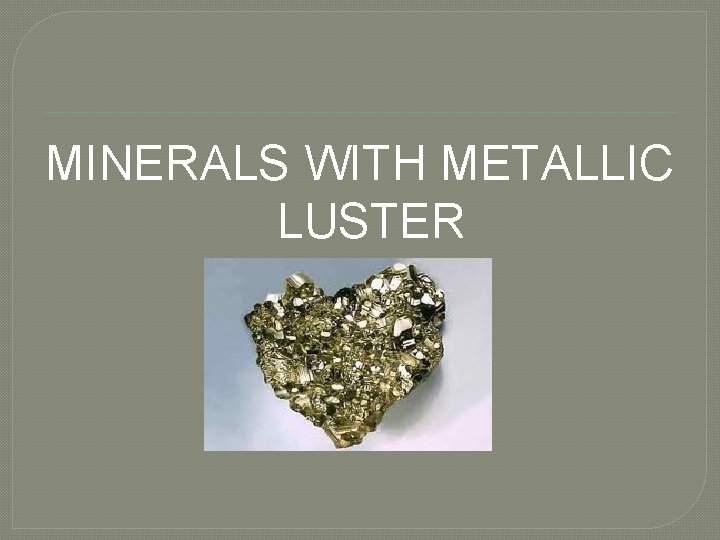
MINERALS WITH METALLIC LUSTER
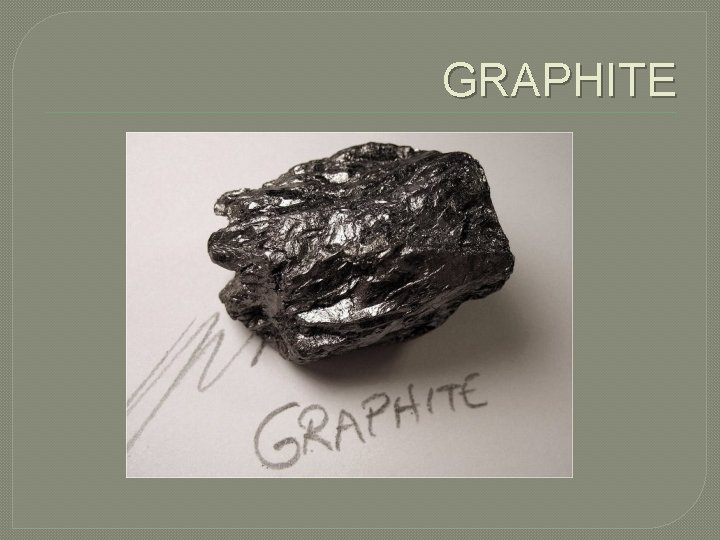
GRAPHITE
GRAPHITE �Metallic Luster �Black to grey streak �Hardness approx. 2 �Cleavage �Used in pencil lead, used in batteries
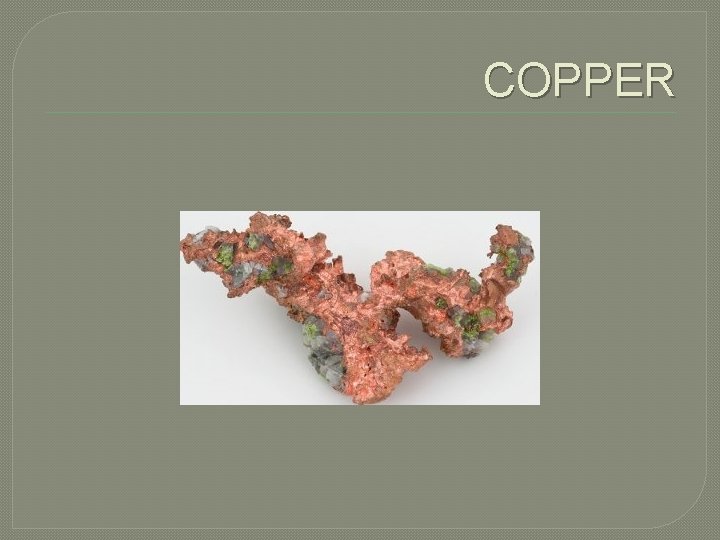
COPPER
COPPER �Metallic Luster – under the oxidation. �Streak- Copper Red �Hardness – approx. 3 �Hackly Cleavage �Used in coins, pipes, gutters, and wire.
PYRITE
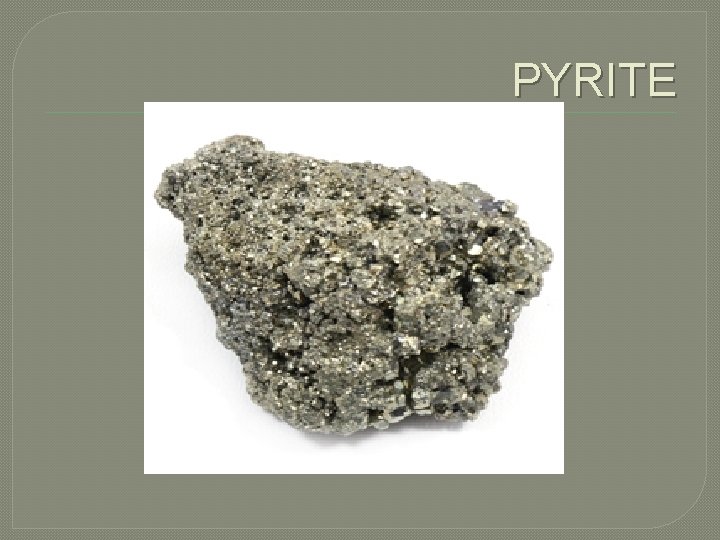
PYRITE �Metallic Luster �Streak- greenish black �Hardess - +5 �Fracture �Used as a source of iron, also known as Fool’s Gold.
MINERALS WITH NONMETALLIC LUSTER
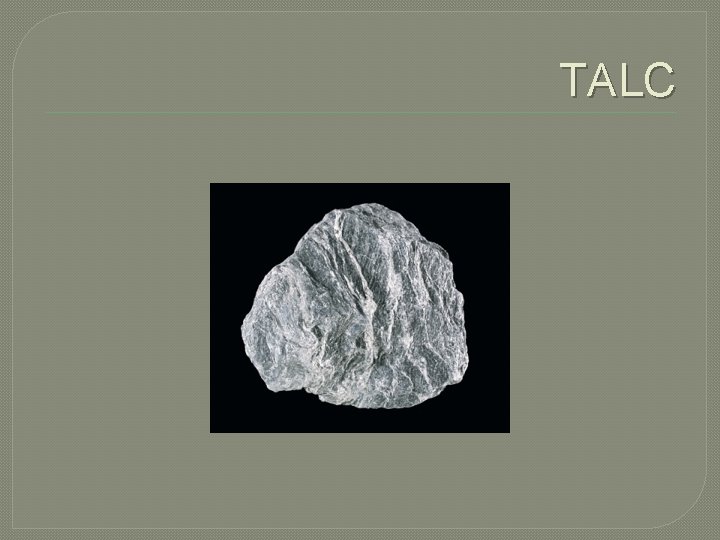
TALC
TALC �Non-metallic luster �Streak – white �Hardness – 1 -2 �Fracture �Used in talcum powder, used in making make-up and used in making paper
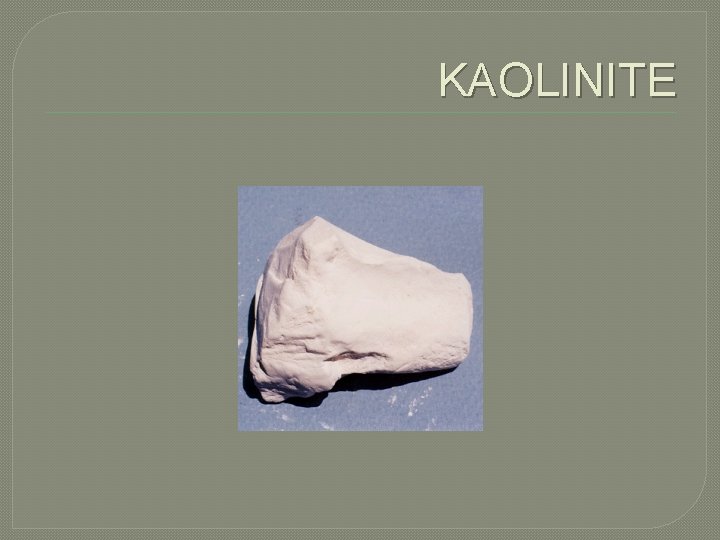
KAOLINITE
KAOLINITE �Nonmetallic Luster �Streak – white �Hardness – 2 �Fracture �Used in making ceramics and in china dishes, common ingredient in soils.
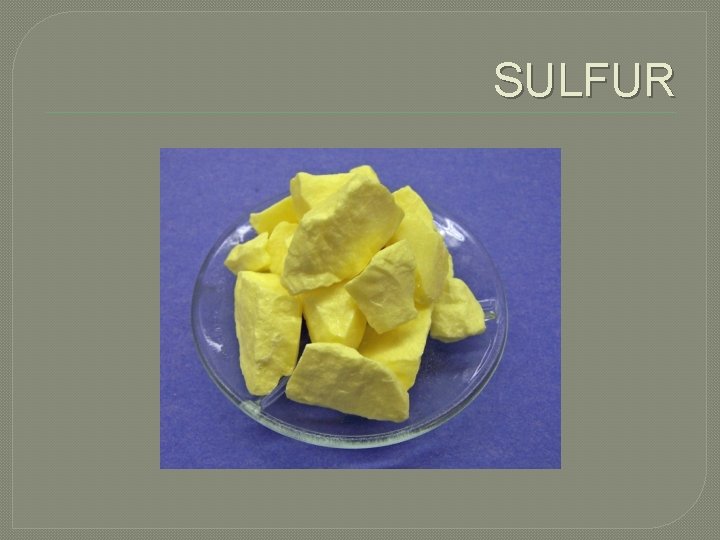
SULFUR
SULFUR �Nonmetallic luster �Streak – yellow to white �Hardness – 2 �Fracture �Used in medicine, fungicide in plants, used to make sulfuric acid
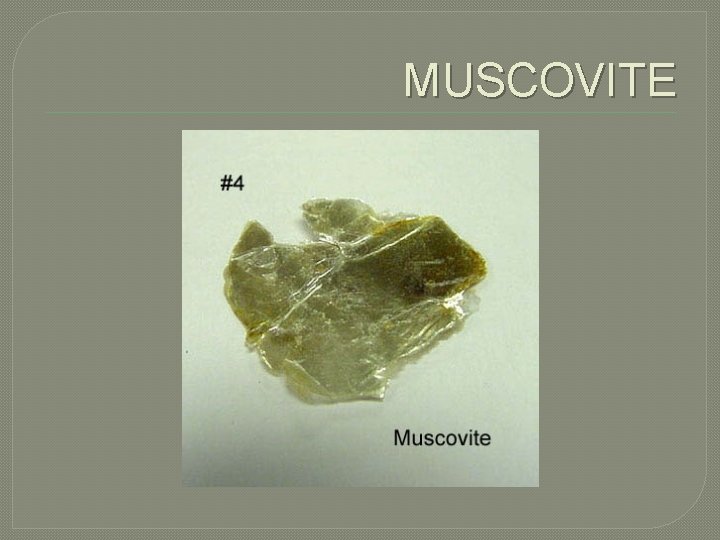
MUSCOVITE
MUSCOVITE �Nonmetallic luster �Streak – colorless �Hardness – 3 �Cleavage �Used as an insulator in electrical equipment
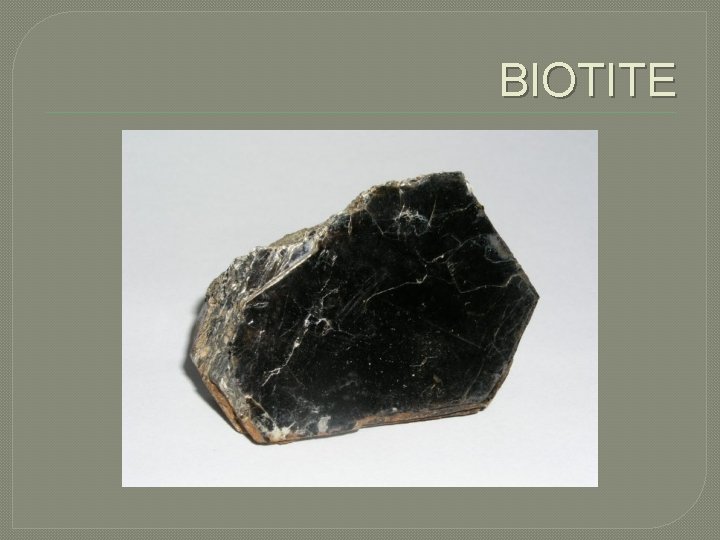
BIOTITE
BIOTITE �Nonmetallic luster �Streak – colorless �Hardness – 3 �Cleavage �Used in electrical insulation
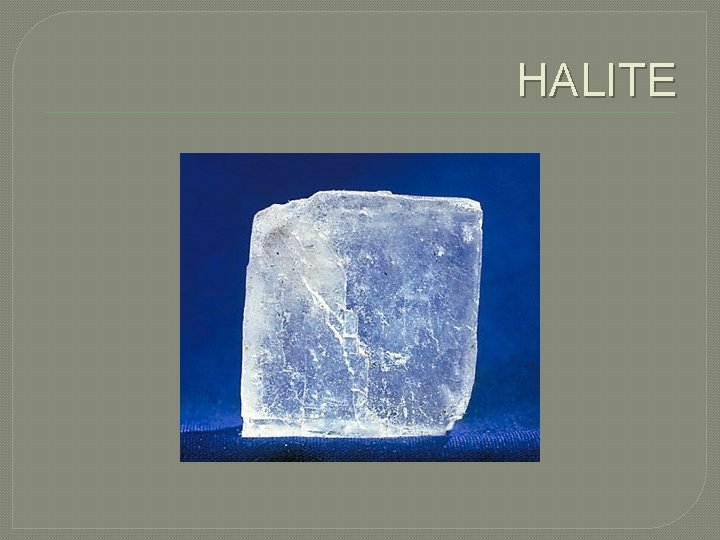
HALITE
HALITE �Nonmetallic Luster �Steak – colorless �Hardness – 3 �Cleavage �Salt – used as a preservative
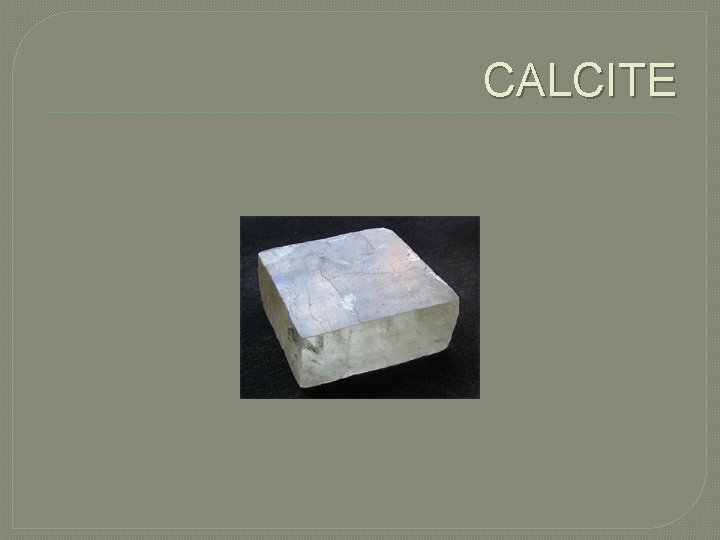
CALCITE
CALCITE �Nonmetallic luster �Streak – colorless to white �Hardness – 3 �Cleavage �Used in cement and other building material
FLOURITE
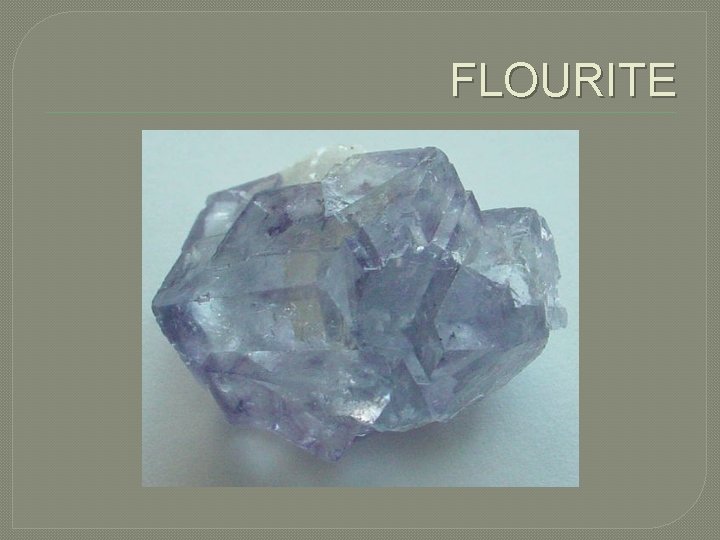
FLOURITE �Nonmetallic luster �Streak - colorless �Hardness – 5 �Used in making optical equipment, glows under UV light
Hematite
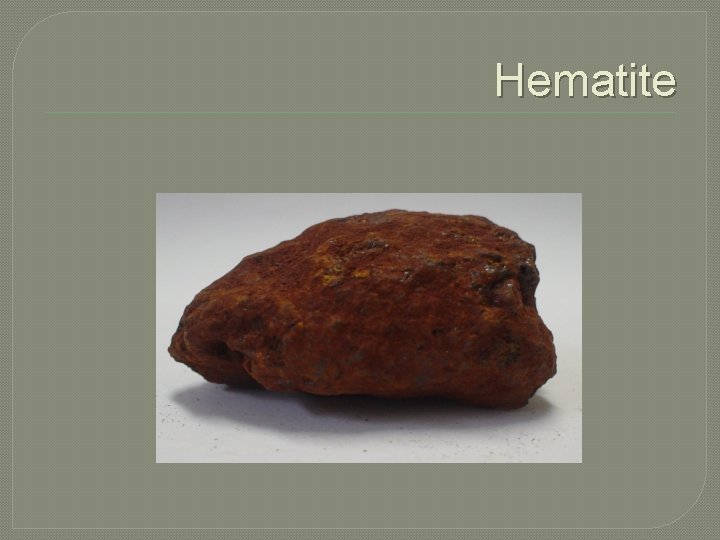
Hematite �Non-metallic luster �Streak – red, brown �Hardness - 5 -6 �Fracture �This mineral is necessary in the creation of iron. Red soil usually contains large amounts of Hematite. Used in making red paints.
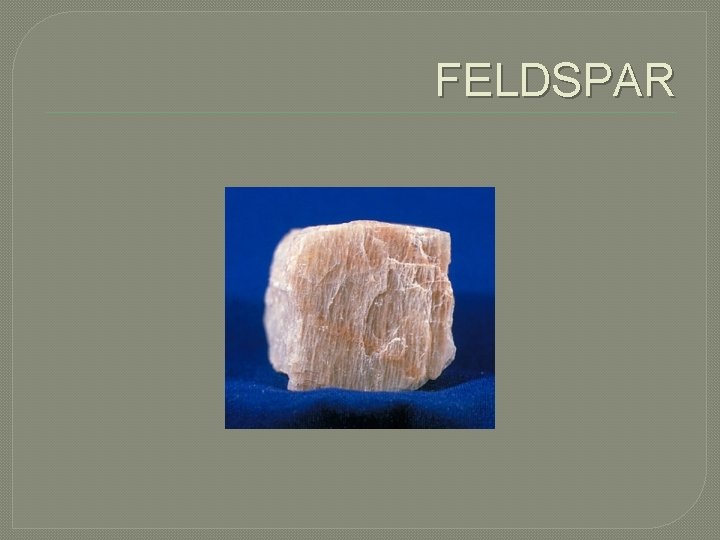
FELDSPAR
FELDSPAR �Nonmetallic luster �Streak – colorless �Hardness - +5 �Fracture �Used in ceramics
QUARTZ
QUARTZ �Nonmetallic luster �Streak – colorless �Hardness – 5+ �Fracture �Used in glass manufacturing, electronic equipment- radios, computers, watches and gem stones.
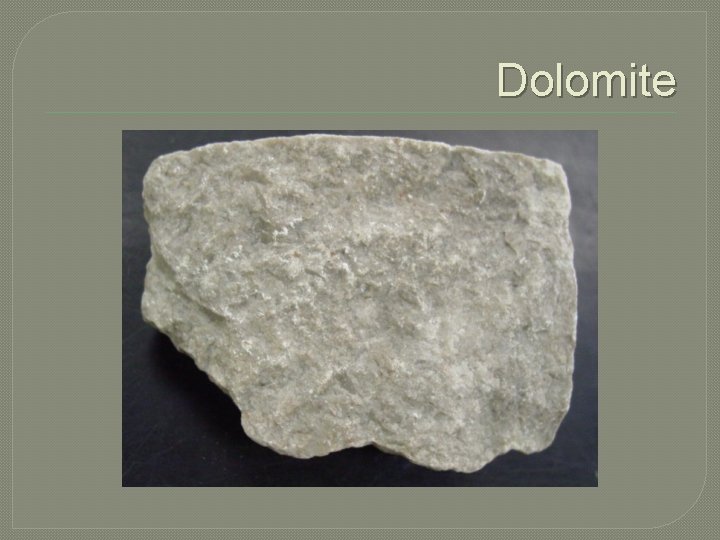
Dolomite
Dolomite �Nonmetallic Luster �Streak-white �Hardness- 3. 5 - 4 �Fracture �Uses- building material, ingredient in concrete
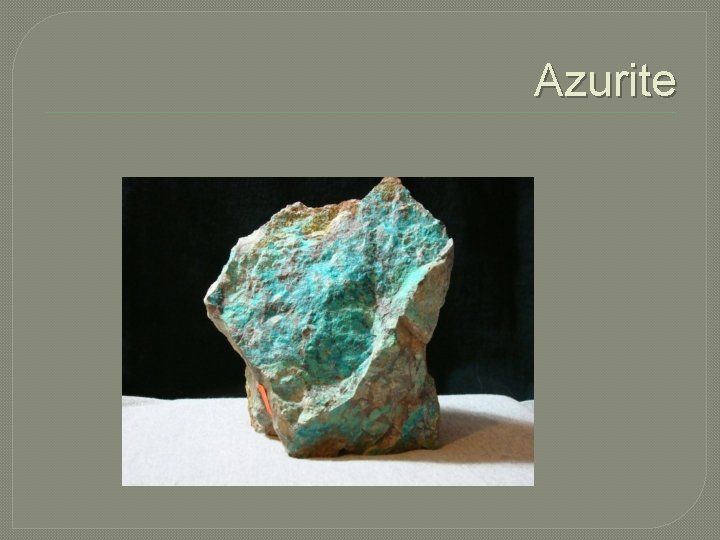
Azurite
Azurite �Nonmetallic luster �Streak – white to light blue �Hardness- 3. 5 – 4 �Fracture �Uses – in jewelry and as a blue pigment in paint.