Mendelian Pedigree patterns Autosomal dominant Autosomal recessive XLinked
- Slides: 75
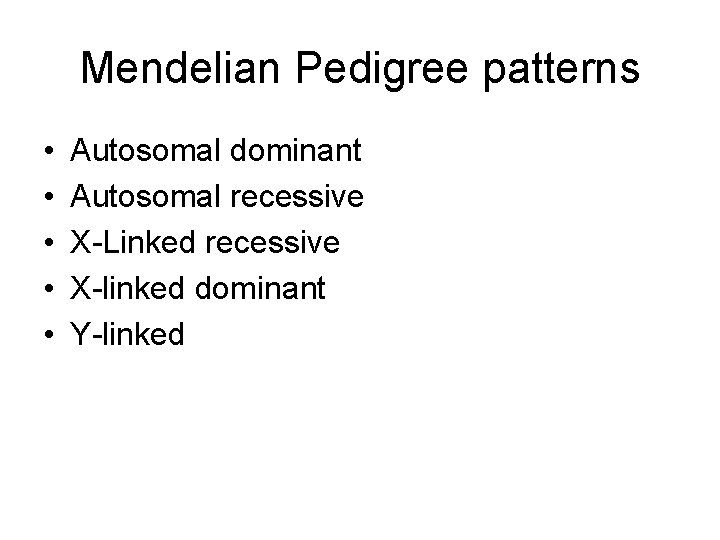
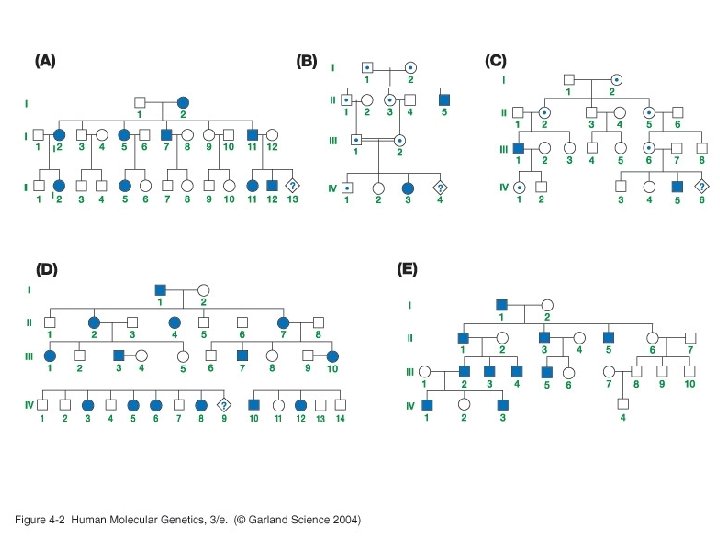
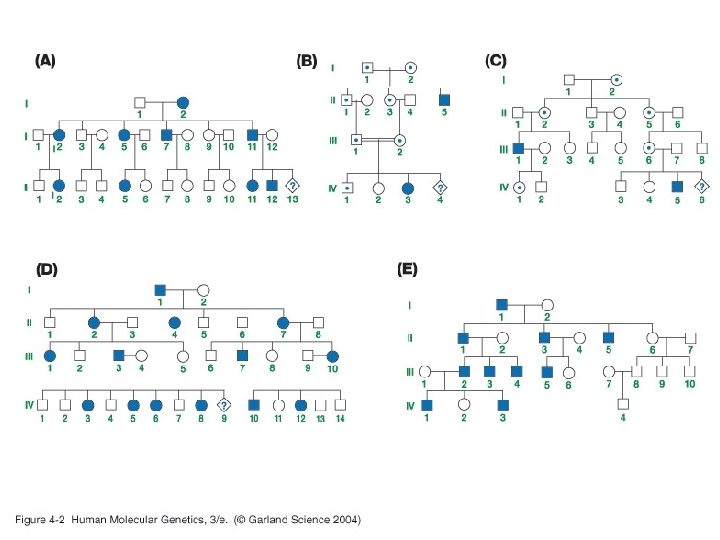
Mendelian Pedigree patterns • • • Autosomal dominant Autosomal recessive X-Linked recessive X-linked dominant Y-linked
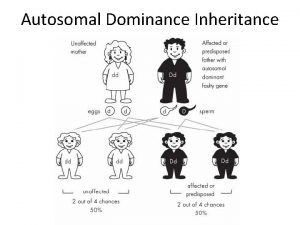
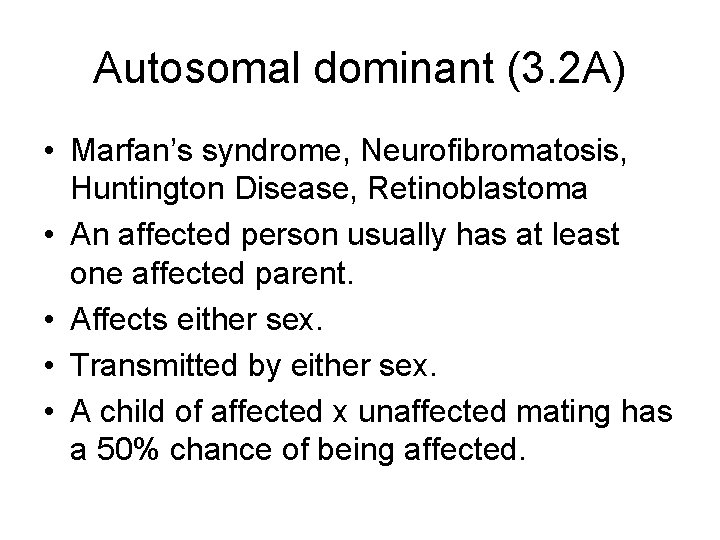
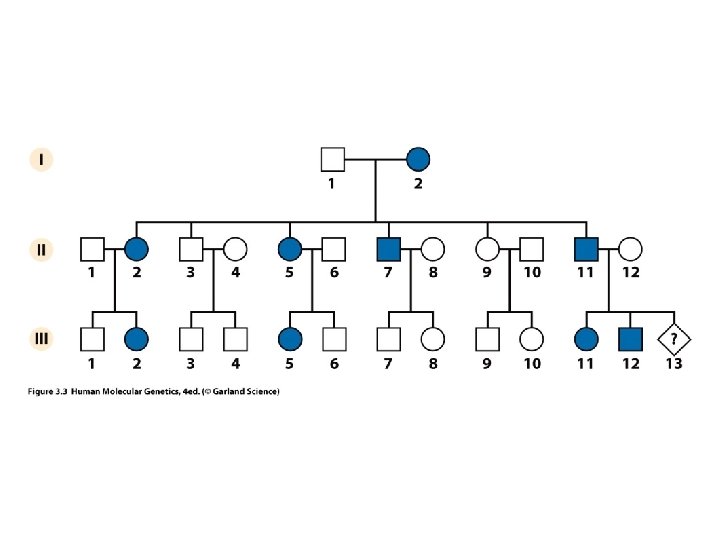
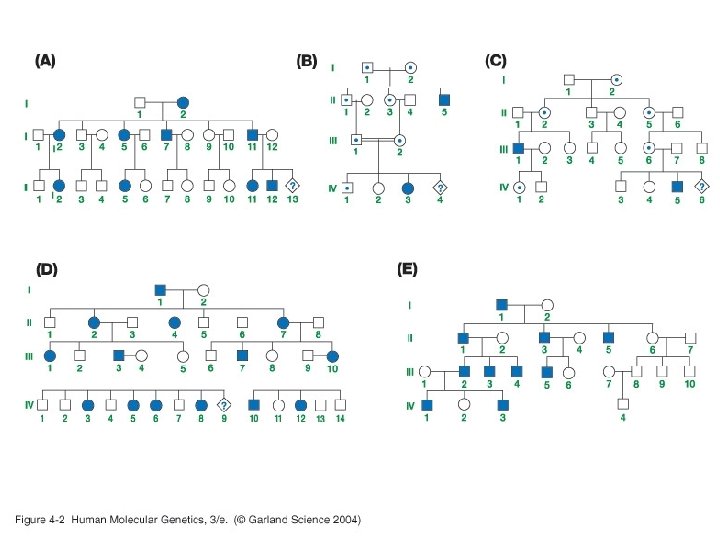
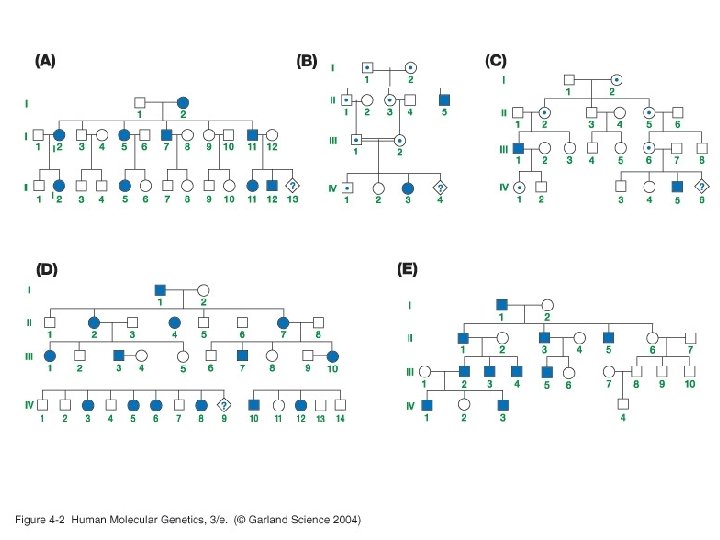
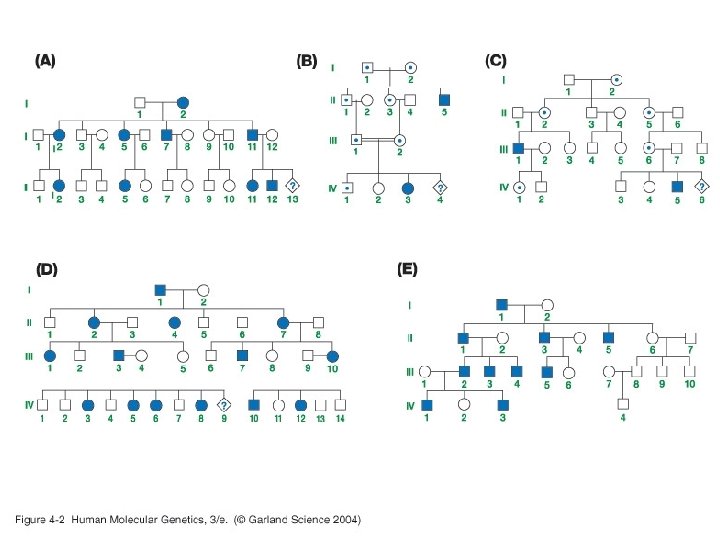
Autosomal dominant (3. 2 A) • Marfan’s syndrome, Neurofibromatosis, Huntington Disease, Retinoblastoma • An affected person usually has at least one affected parent. • Affects either sex. • Transmitted by either sex. • A child of affected x unaffected mating has a 50% chance of being affected.
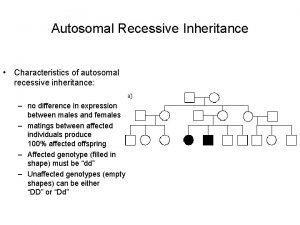
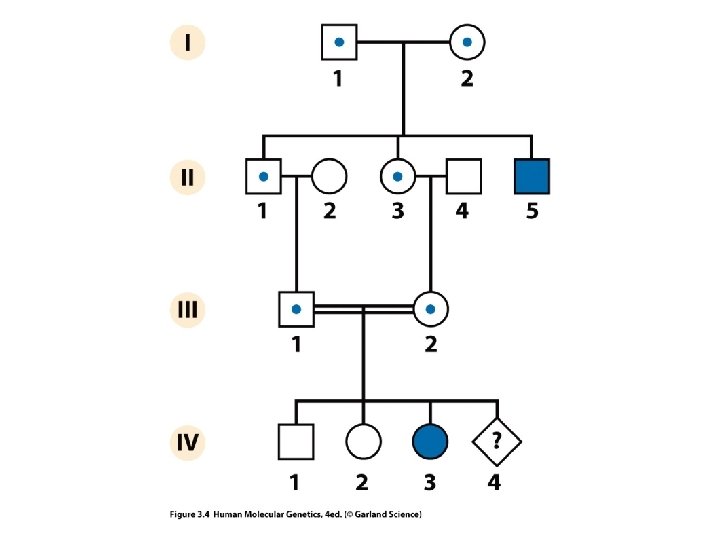
Autosomal recessive (3. 2 B) • Cystic fibrosis, Phenylketonuria, Tay-Sachs • Affected people are usually born to unaffected parents. • Parents of affected people usually asymptomatic carriers. • There is an increased incidence of parental consanguinity. • Affects either sex. • After birth of an affected child each subsequent child has 25% chance of being affected.
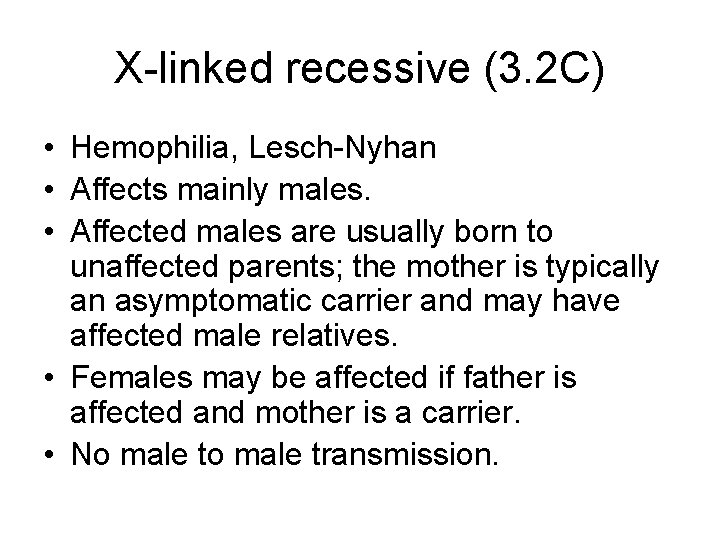
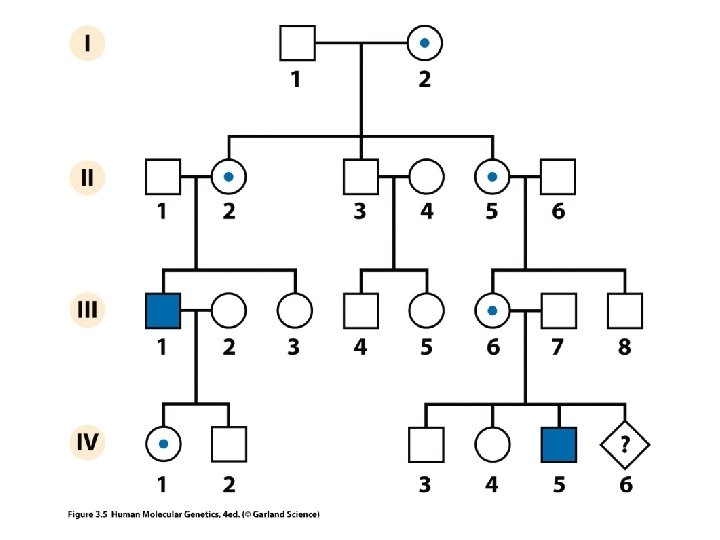
X-linked recessive (3. 2 C) • Hemophilia, Lesch-Nyhan • Affects mainly males. • Affected males are usually born to unaffected parents; the mother is typically an asymptomatic carrier and may have affected male relatives. • Females may be affected if father is affected and mother is a carrier. • No male transmission.
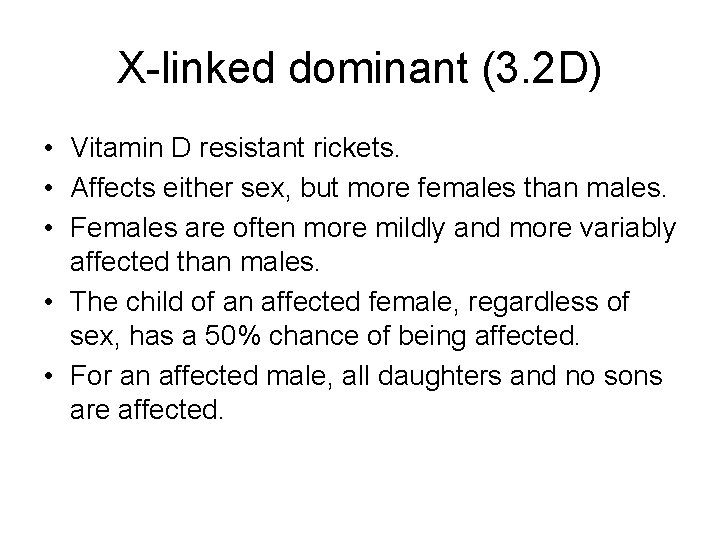
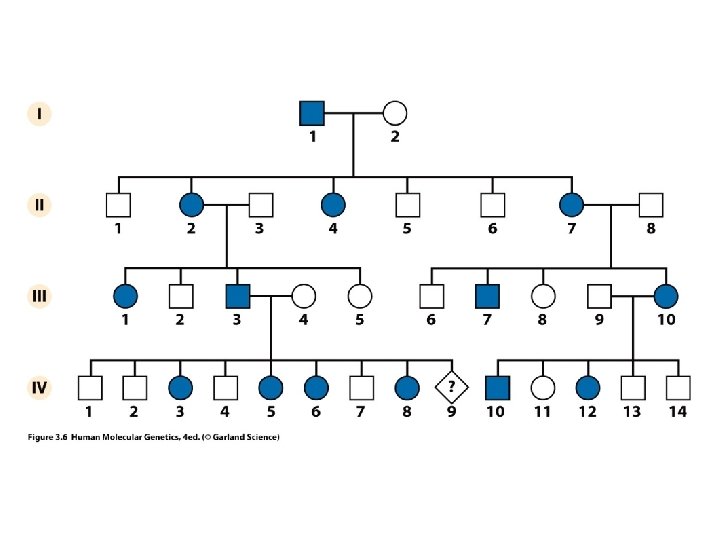
X-linked dominant (3. 2 D) • Vitamin D resistant rickets. • Affects either sex, but more females than males. • Females are often more mildly and more variably affected than males. • The child of an affected female, regardless of sex, has a 50% chance of being affected. • For an affected male, all daughters and no sons are affected.
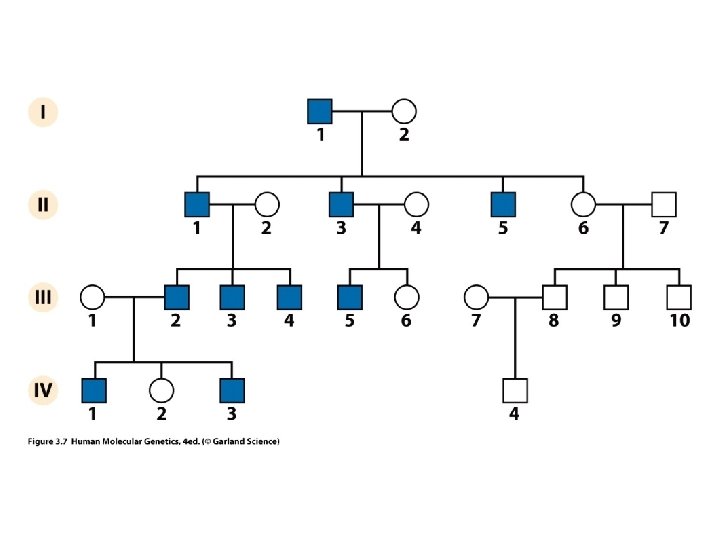
Y-linked inheritance (3. 2 E) • Affects only males. • Affected males always have an affected father unless there is a new mutation. • All sons of an affected man are affected.
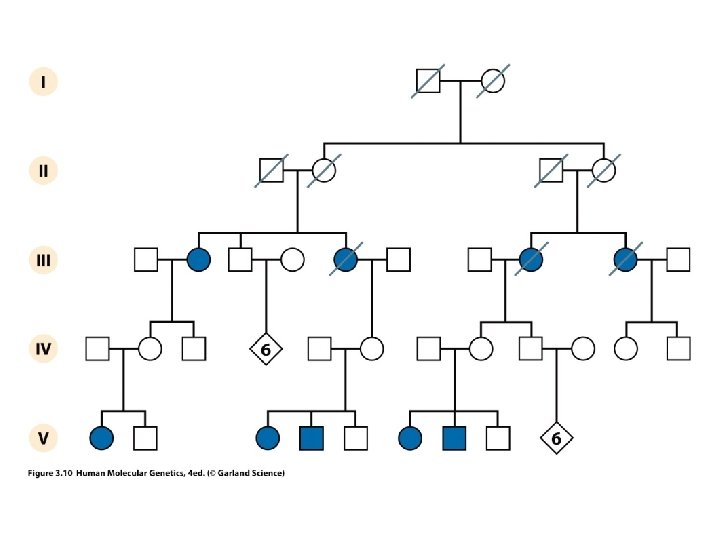
Mitochondrial diseases • Typical pattern for hearing loss. • Atypical Leber’s hereditary optic atrophy.
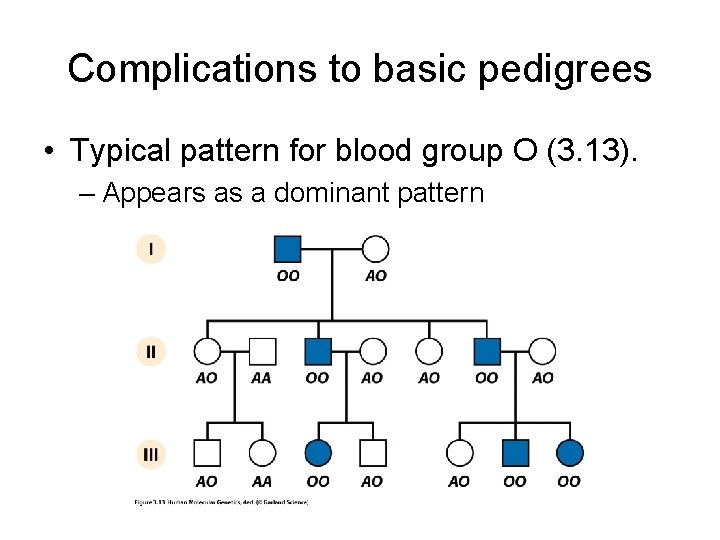
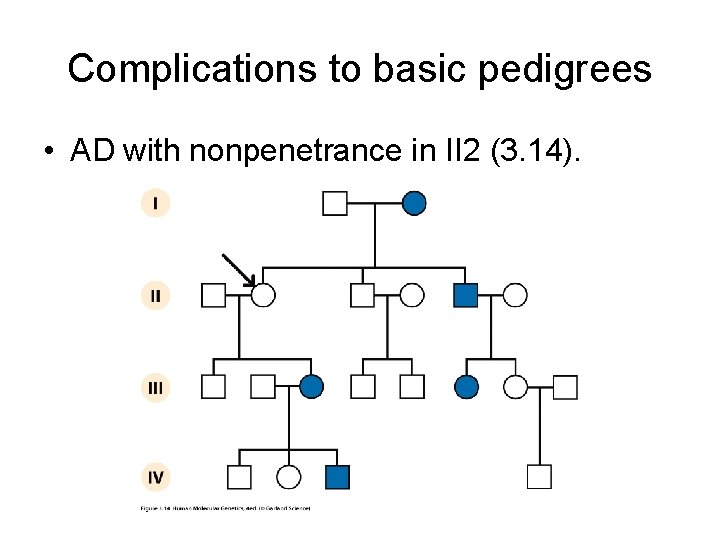
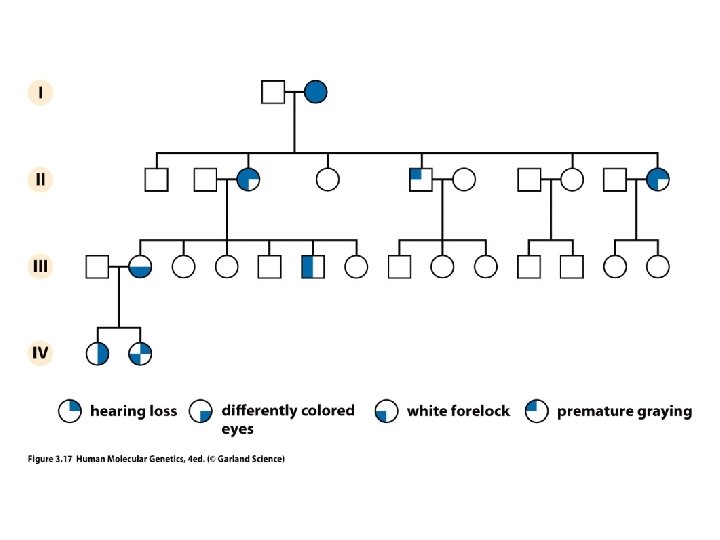
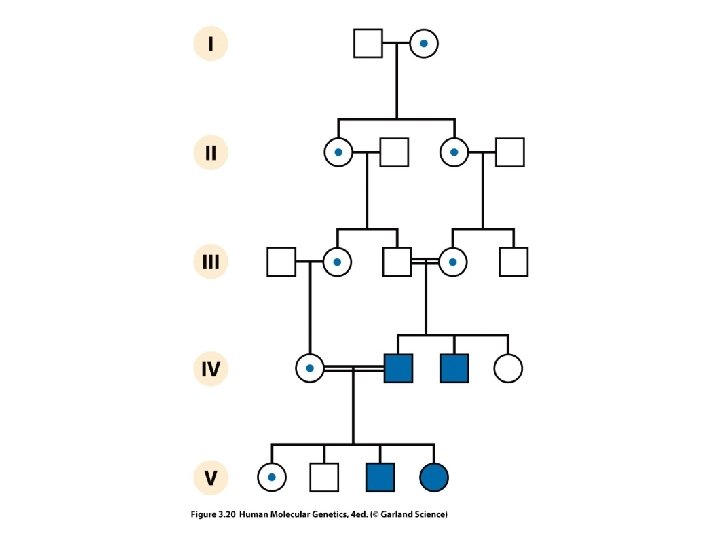
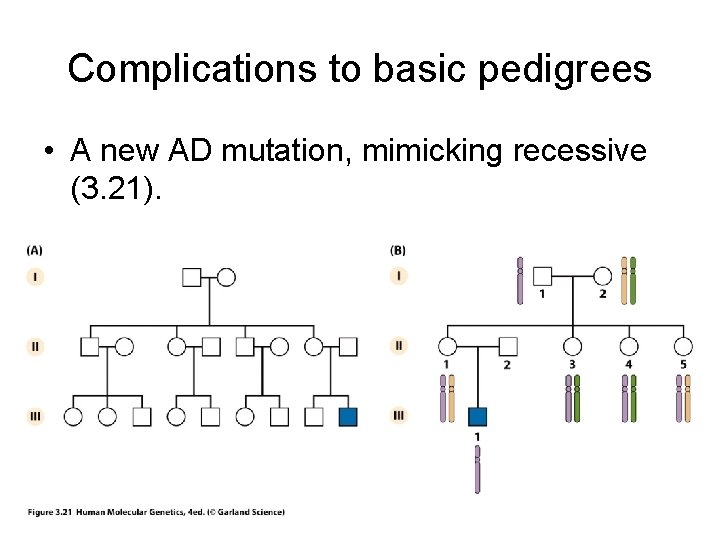
Complications to basic pedigrees • • Typical pattern for blood group O (3. 13). AD with nonpenetrance in II 2 (3. 14). AD with variable expression (3. 17). Genetic imprinting (3. 18). X-linked dominant incontinentia pigmenti (3. 19). X-linked recessive with inbreeding (3. 20). A new AD mutation, mimicking recessive (3. 21).
Complications to basic pedigrees • Typical pattern for blood group O (3. 13). – Appears as a dominant pattern
Complications to basic pedigrees • AD with nonpenetrance in II 2 (3. 14).
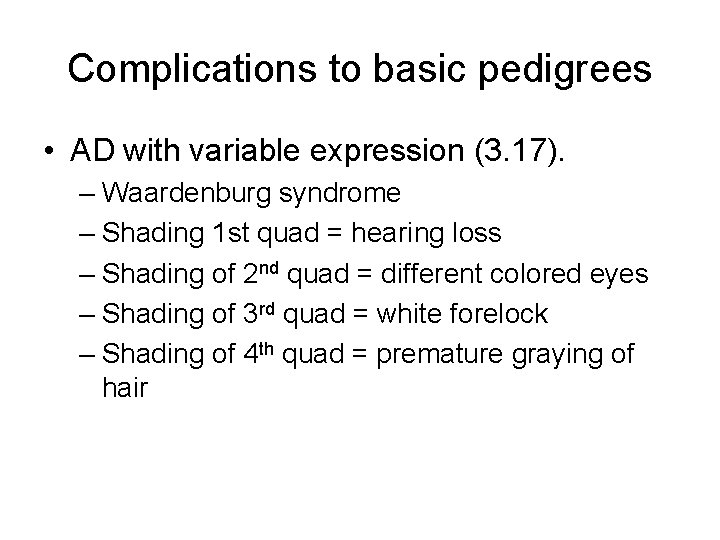
Complications to basic pedigrees • AD with variable expression (3. 17). – Waardenburg syndrome – Shading 1 st quad = hearing loss – Shading of 2 nd quad = different colored eyes – Shading of 3 rd quad = white forelock – Shading of 4 th quad = premature graying of hair
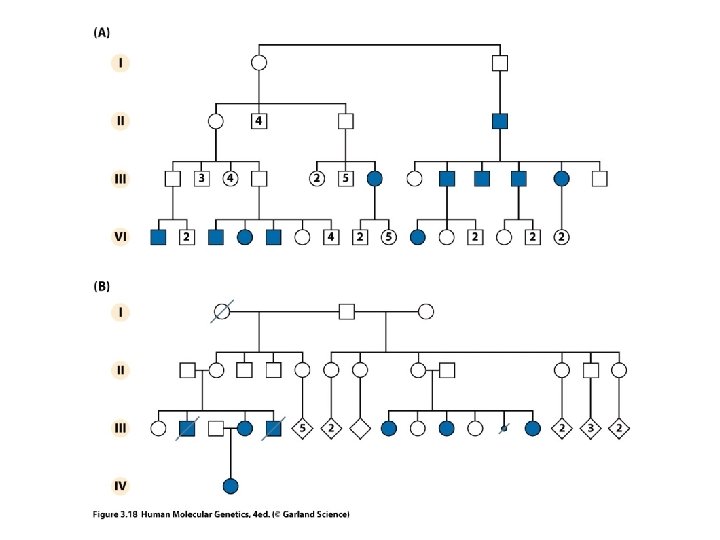
Complications to basic pedigrees • Genetic imprinting (3. 18). – AD glomus tumors manifest only when gene s inherited from father (A). – AD Beckwith-Wiedemann syndrome manifests only when gene is inherited from mother (B).
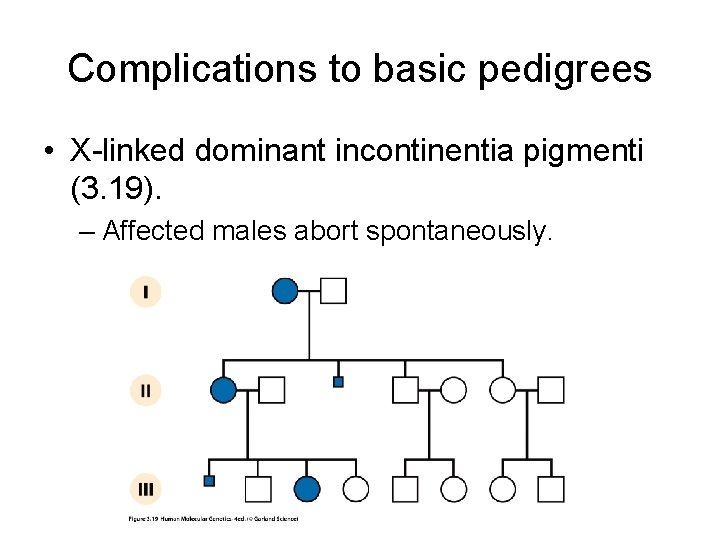
Complications to basic pedigrees • X-linked dominant incontinentia pigmenti (3. 19). – Affected males abort spontaneously.
Complications to basic pedigrees • X-linked recessive with inbreeding (3. 20). – Inbreeding gives an affected female and apparent male to male transmission.
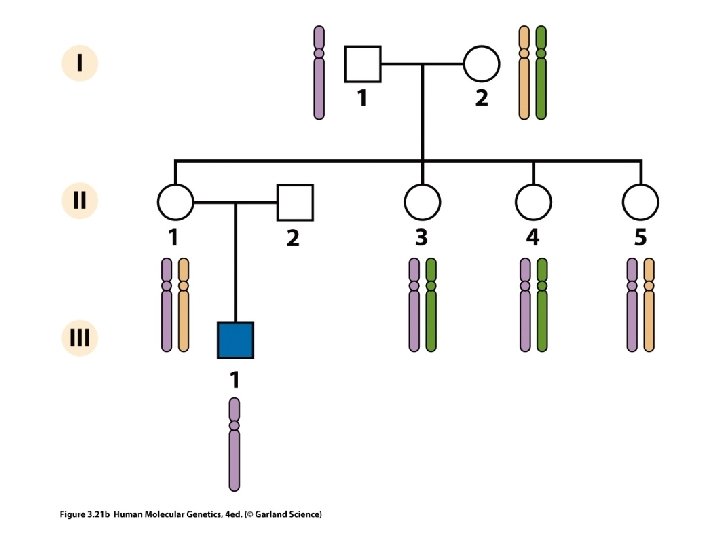
Complications to basic pedigrees • A new AD mutation, mimicking recessive (3. 21).
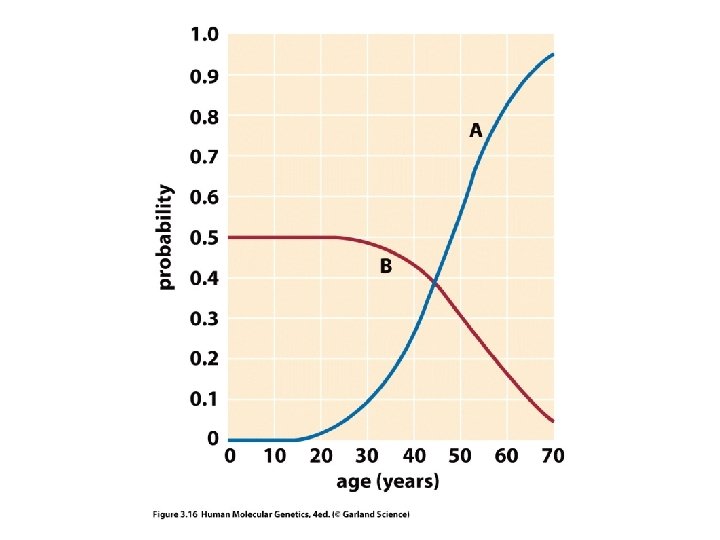
Huntington Age of Onset • Probability that an individual carrying the disease gene will have developed symptoms by a given age (A). • Risk that a healthy child of an affected parent carries the disease gene at a given age (B).
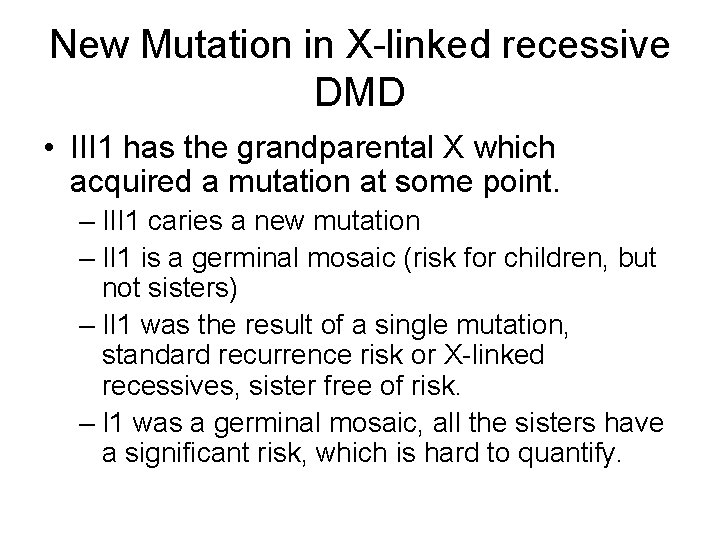
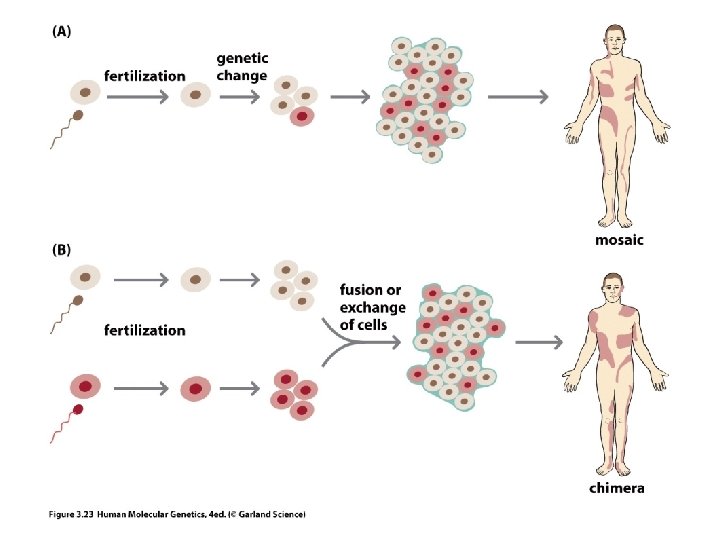
New Mutation in X-linked recessive DMD • III 1 has the grandparental X which acquired a mutation at some point. – III 1 caries a new mutation – II 1 is a germinal mosaic (risk for children, but not sisters) – II 1 was the result of a single mutation, standard recurrence risk or X-linked recessives, sister free of risk. – I 1 was a germinal mosaic, all the sisters have a significant risk, which is hard to quantify.
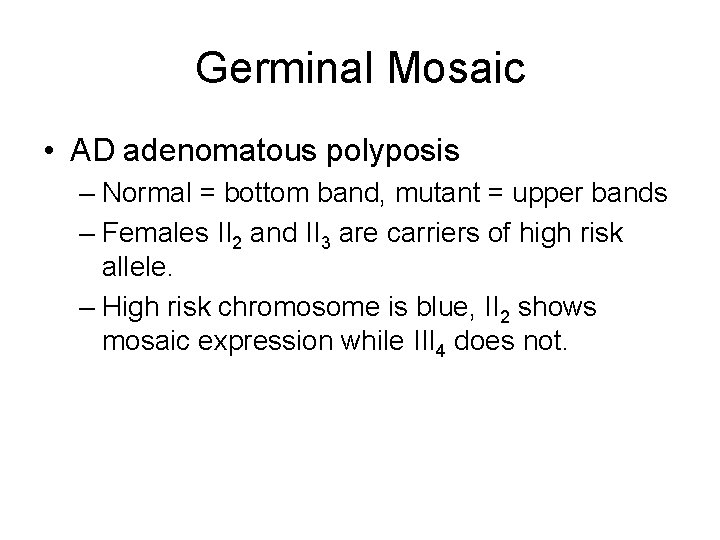
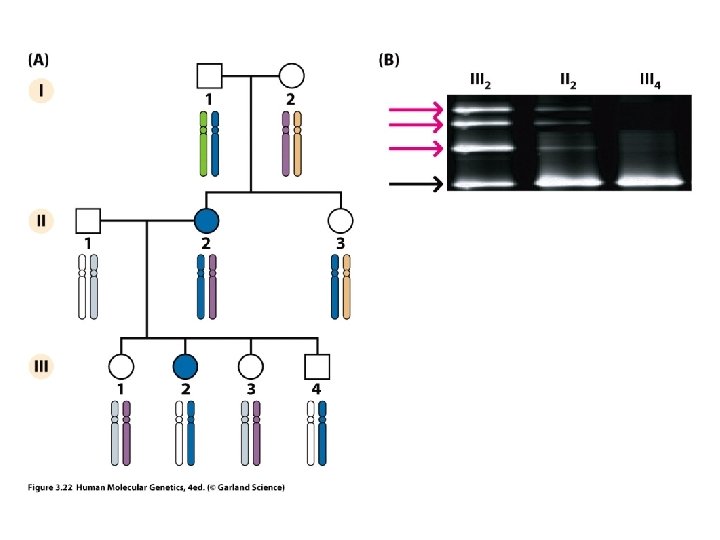
Germinal Mosaic • AD adenomatous polyposis – Normal = bottom band, mutant = upper bands – Females II 2 and II 3 are carriers of high risk allele. – High risk chromosome is blue, II 2 shows mosaic expression while III 4 does not.
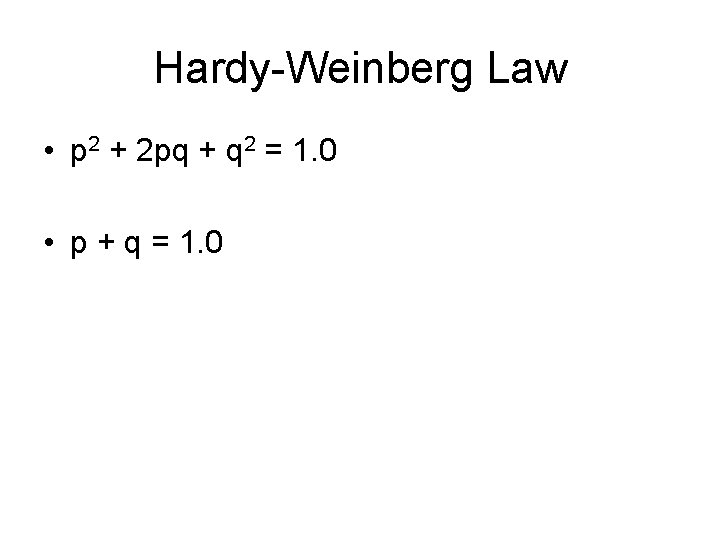
Hardy-Weinberg Law • p 2 + 2 pq + q 2 = 1. 0 • p + q = 1. 0
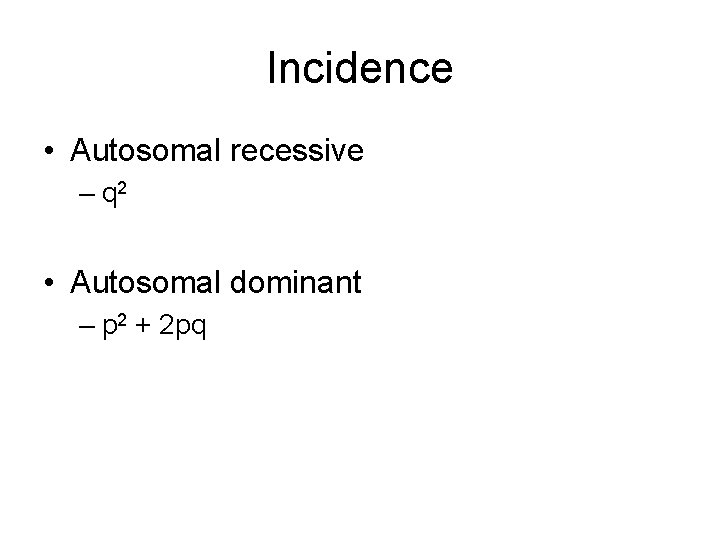
Incidence • Autosomal recessive – q 2 • Autosomal dominant – p 2 + 2 pq
05_02. jpg
05_02_2. jpg
05_02_3. jpg