
Xlinked dominant inheritance the basics a tutorial to
X-linked dominant inheritance: the basics a tutorial to show the genes segregate to give the typical pedigree pattern Professor P Farndon, Clinical Genetics Unit, Birmingham Women’s Hospital 13. 11. 06
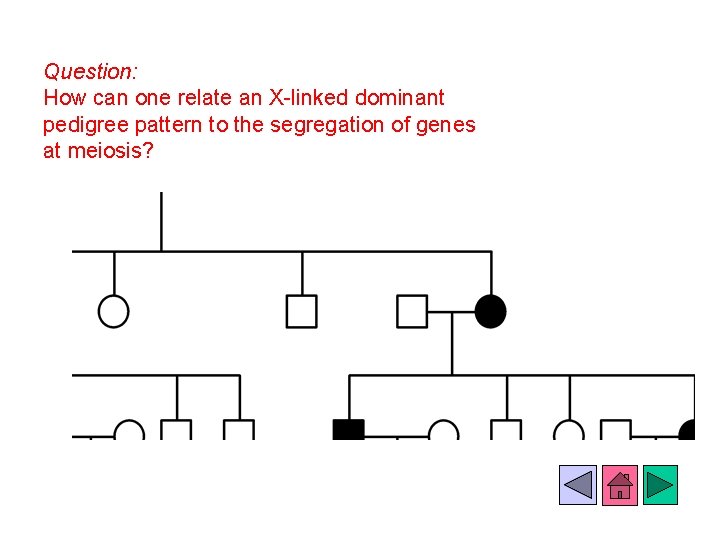
Question: How can one relate an X-linked dominant pedigree pattern to the segregation of genes at meiosis?
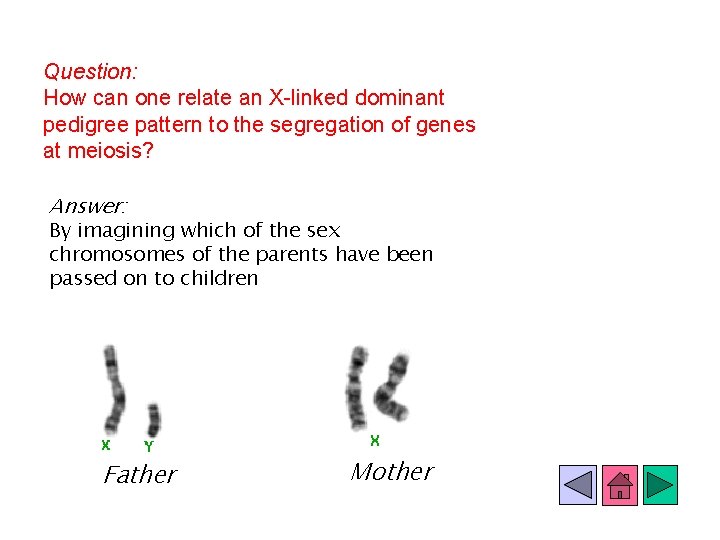
Question: How can one relate an X-linked dominant pedigree pattern to the segregation of genes at meiosis? Answer: By imagining which of the sex chromosomes of the parents have been passed on to children Father Mother
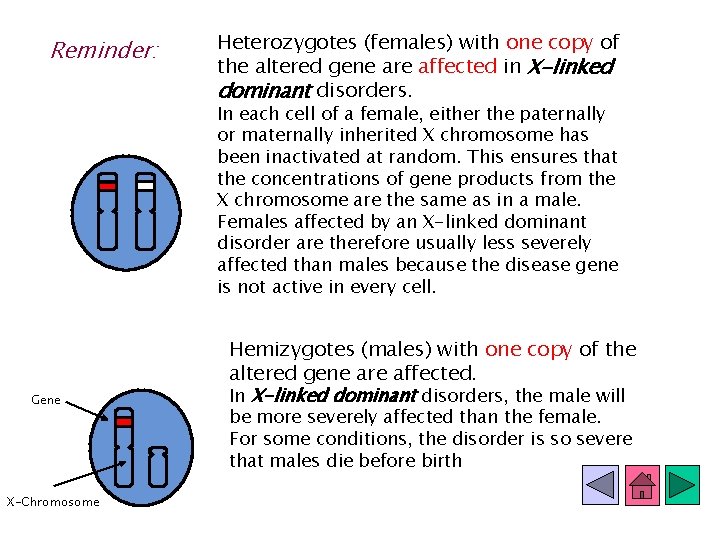
Reminder: Heterozygotes (females) with one copy of the altered gene are affected in X-linked dominant disorders. In each cell of a female, either the paternally or maternally inherited X chromosome has been inactivated at random. This ensures that the concentrations of gene products from the X chromosome are the same as in a male. Females affected by an X-linked dominant disorder are therefore usually less severely affected than males because the disease gene is not active in every cell. Gene X-Chromosome Hemizygotes (males) with one copy of the altered gene are affected. In X-linked dominant disorders, the male will be more severely affected than the female. For some conditions, the disorder is so severe that males die before birth
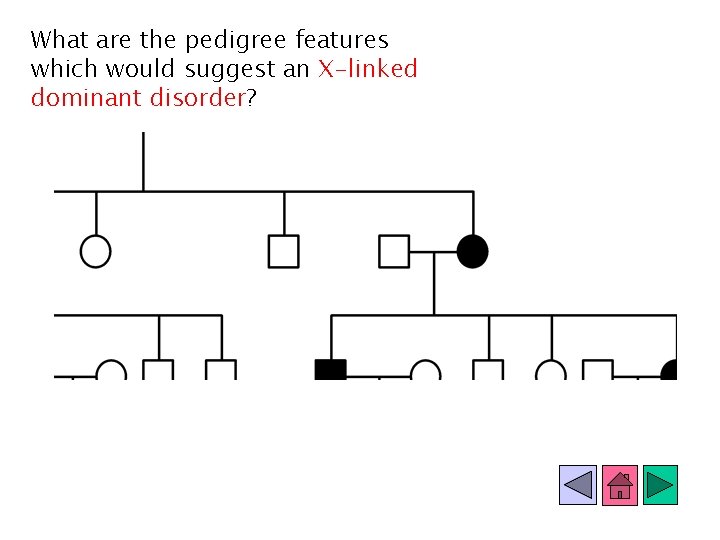
What are the pedigree features which would suggest an X-linked dominant disorder?

Dominant: • In each generation (“vertical transmission”) • Affected people have affected and unaffected children X-linked: • Half of female children of affected females affected • Half of male children of affected females affected • No sons of affected men affected • All daughters of affected men affected
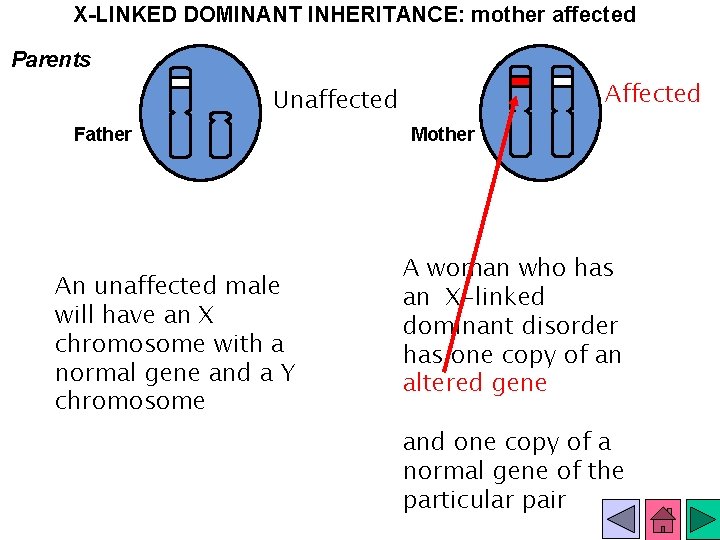
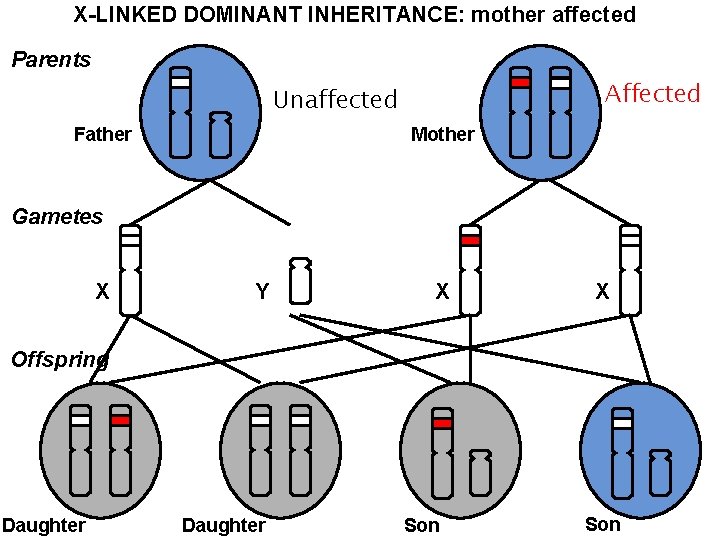
X-LINKED DOMINANT INHERITANCE: mother affected Parents Affected Unaffected Father An unaffected male will have an X chromosome with a normal gene and a Y chromosome Mother A woman who has an X-linked dominant disorder has one copy of an altered gene and one copy of a normal gene of the particular pair
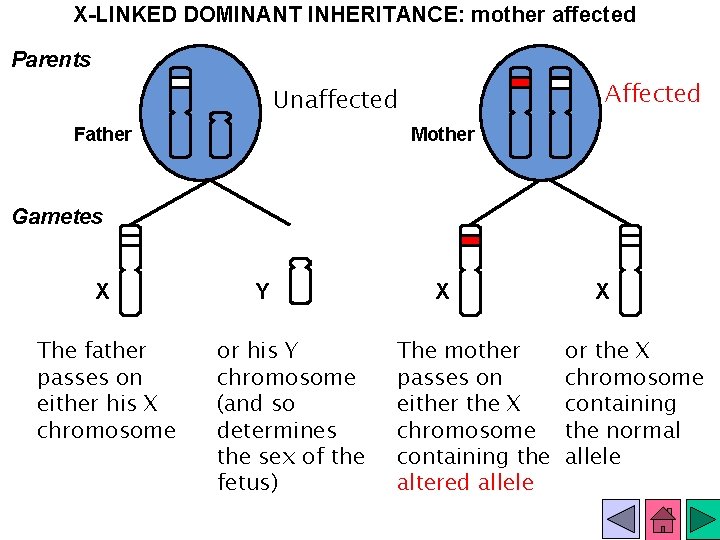
X-LINKED DOMINANT INHERITANCE: mother affected Parents Affected Unaffected Father Mother Gametes X The father passes on either his X chromosome Y or his Y chromosome (and so determines the sex of the fetus) X The mother passes on either the X chromosome containing the altered allele X or the X chromosome containing the normal allele
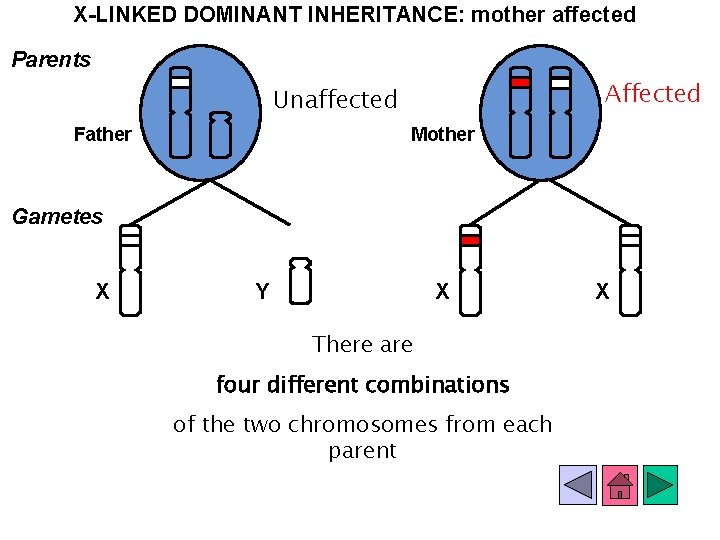
X-LINKED DOMINANT INHERITANCE: mother affected Parents Affected Unaffected Father Mother Gametes X Y X There are four different combinations of the two chromosomes from each parent X
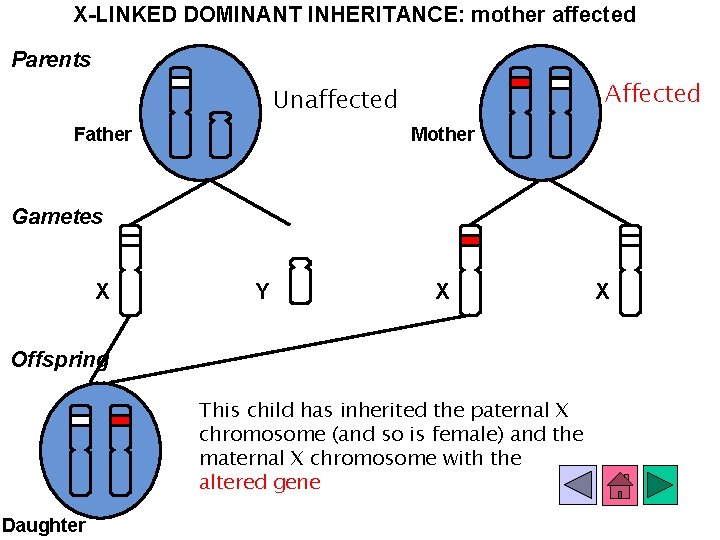
X-LINKED DOMINANT INHERITANCE: mother affected Parents Affected Unaffected Father Mother Gametes X Y X Offspring This child has inherited the paternal X chromosome (and so is female) and the maternal X chromosome with the altered gene Daughter X
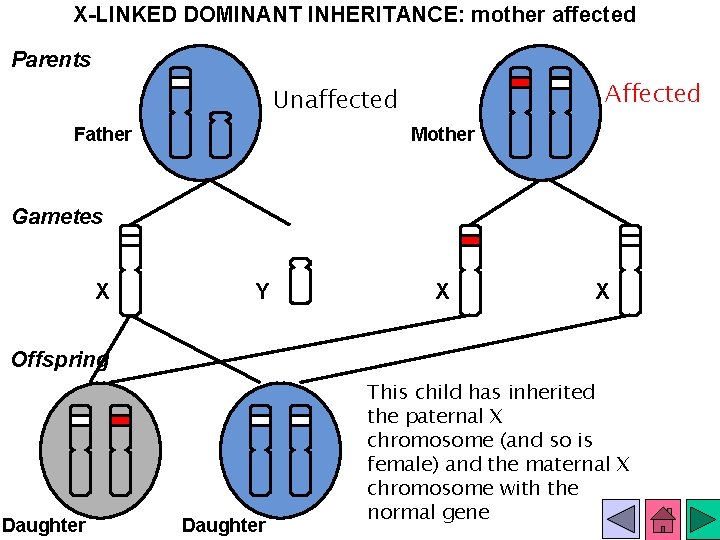
X-LINKED DOMINANT INHERITANCE: mother affected Parents Affected Unaffected Father Mother Gametes X Y X X Offspring Daughter This child has inherited the paternal X chromosome (and so is female) and the maternal X chromosome with the normal gene
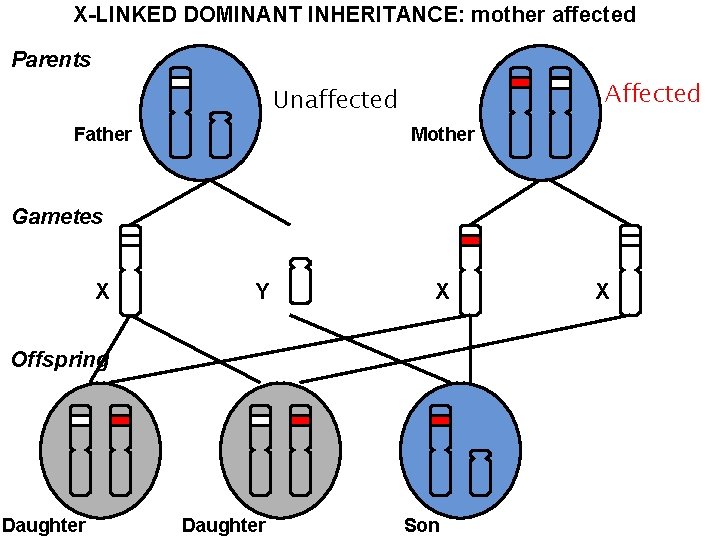
X-LINKED DOMINANT INHERITANCE: mother affected Parents Affected Unaffected Father Mother Gametes X Y X Offspring Daughter Son X
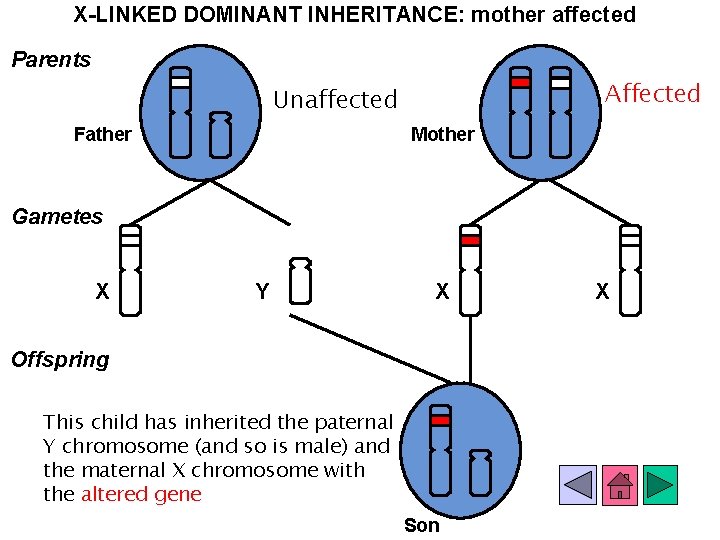
X-LINKED DOMINANT INHERITANCE: mother affected Parents Affected Unaffected Father Mother Gametes X Y X Offspring This child has inherited the paternal Y chromosome (and so is male) and the maternal X chromosome with the altered gene Son X
X-LINKED DOMINANT INHERITANCE: mother affected Parents Affected Unaffected Father Mother Gametes X Y X X Offspring Daughter Son
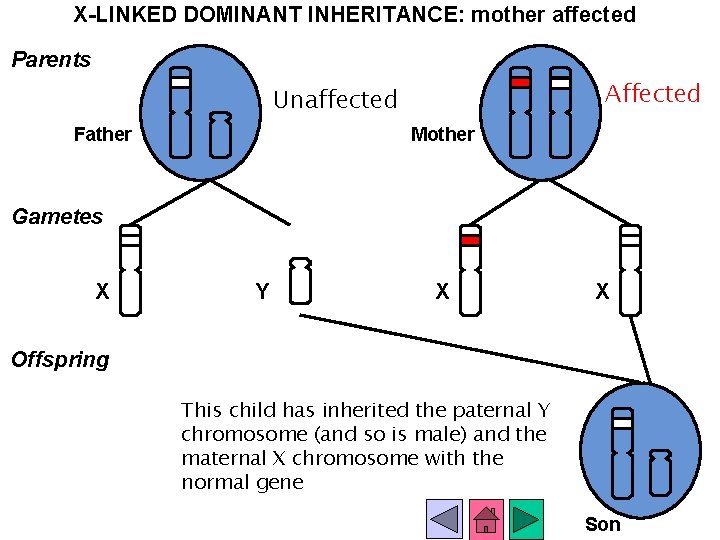
X-LINKED DOMINANT INHERITANCE: mother affected Parents Affected Unaffected Father Mother Gametes X Y X X Offspring This child has inherited the paternal Y chromosome (and so is male) and the maternal X chromosome with the normal gene Son
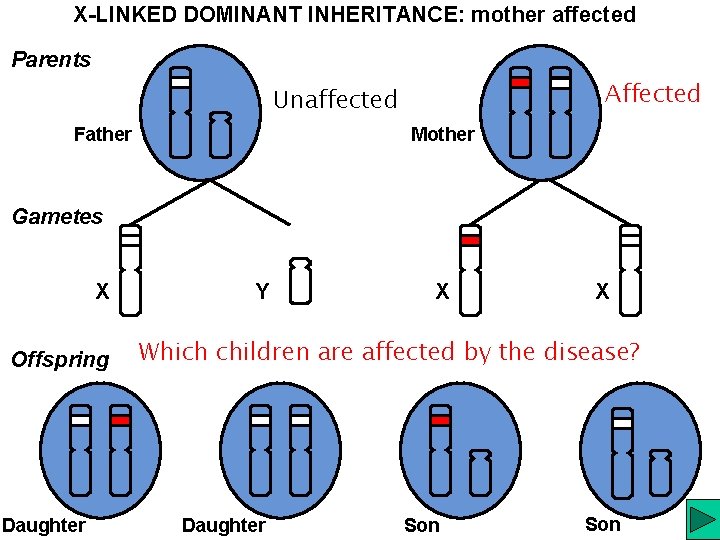
X-LINKED DOMINANT INHERITANCE: mother affected Parents Affected Unaffected Father Mother Gametes X Offspring Daughter Y X X Which children are affected by the disease? Daughter Son
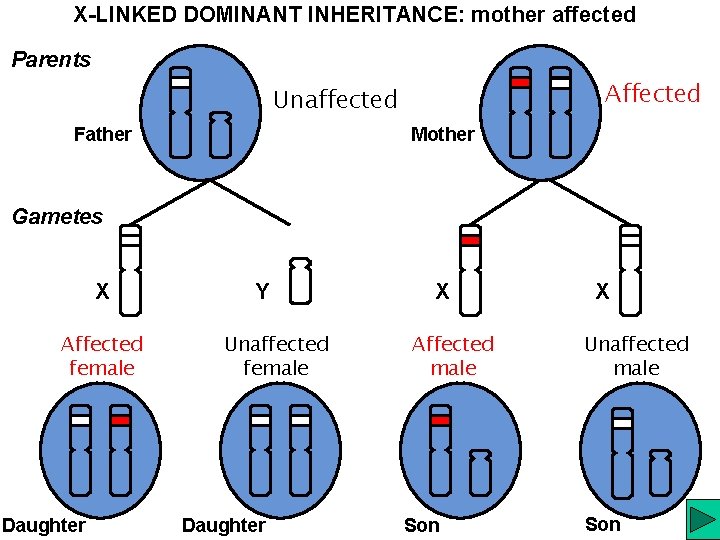
X-LINKED DOMINANT INHERITANCE: mother affected Parents Affected Unaffected Father Mother Gametes X Affected female Daughter Y Unaffected female Daughter X Affected male Son X Unaffected male Son
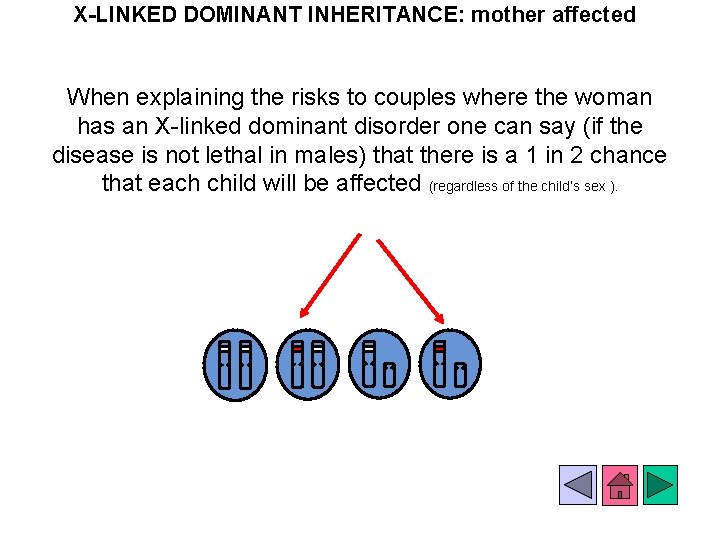
X-LINKED DOMINANT INHERITANCE: mother affected When explaining the risks to couples where the woman has an X-linked dominant disorder one can say (if the disease is not lethal in males) that there is a 1 in 2 chance that each child will be affected (regardless of the child’s sex ).
Where the father is affected by an X-linked dominant disorder
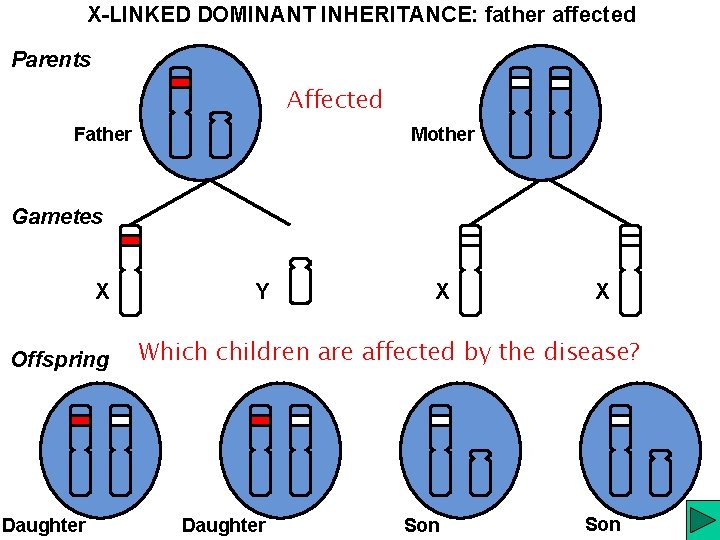
X-LINKED DOMINANT INHERITANCE: father affected Parents Affected Father Mother Gametes X Offspring Daughter Y X X Which children are affected by the disease? Daughter Son
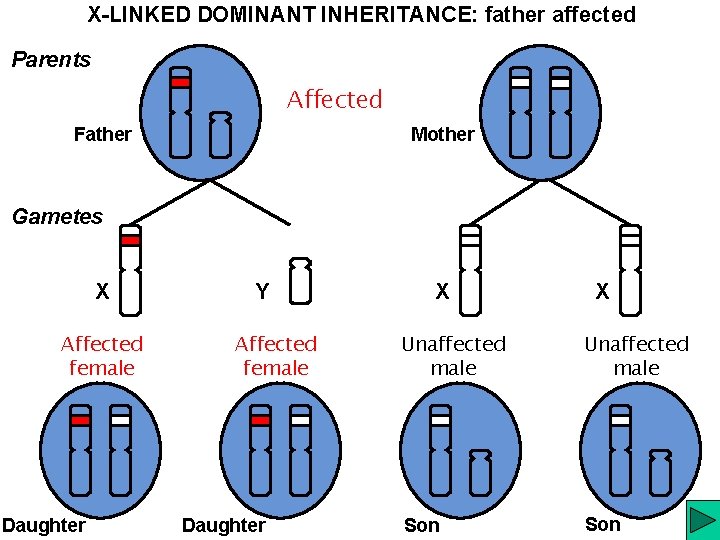
X-LINKED DOMINANT INHERITANCE: father affected Parents Affected Father Mother Gametes X Affected female Daughter Y Affected female Daughter X X Unaffected male Son
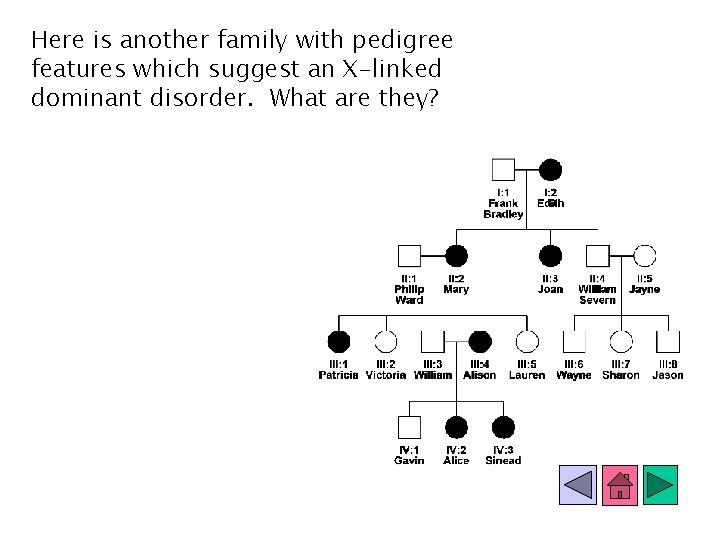
Here is another family with pedigree features which suggest an X-linked dominant disorder. What are they?
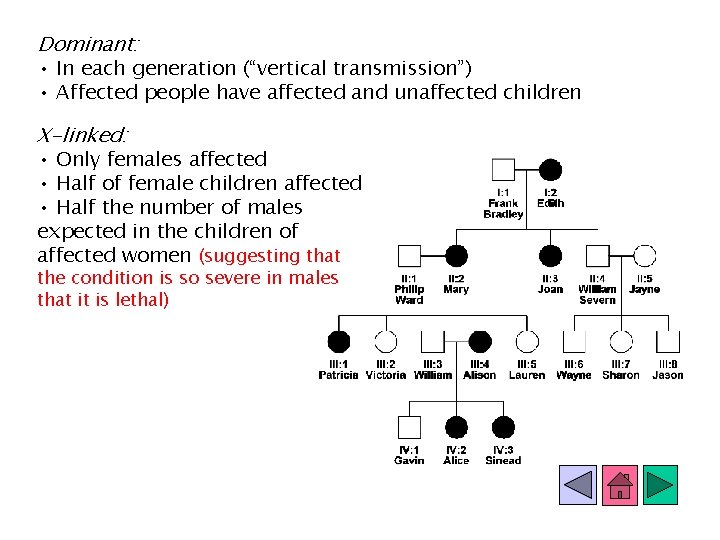
Dominant: • In each generation (“vertical transmission”) • Affected people have affected and unaffected children X-linked: • Only females affected • Half of female children affected • Half the number of males expected in the children of affected women (suggesting that the condition is so severe in males that it is lethal)

Examples of X-linked dominant disorders are relatively uncommon compared with disorders inherited by the other modes of Mendelian inheritance Males more severely affected than females Vitamin D-resistant rickets Condition causing lethality in males Goltz syndrome
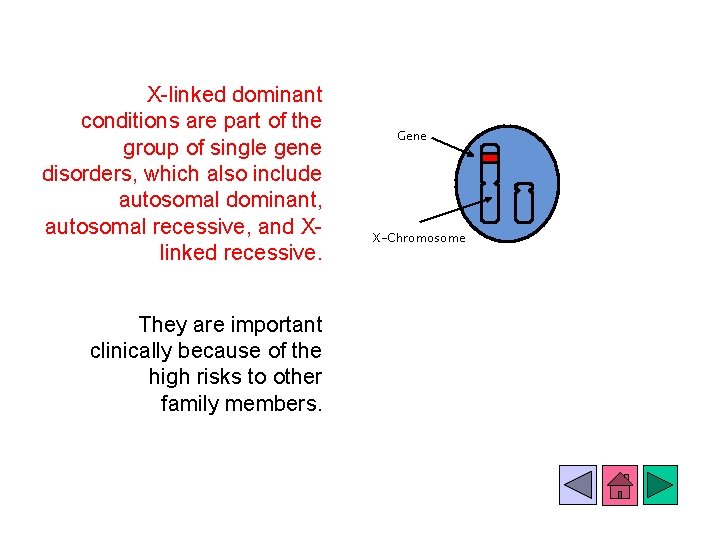
X-linked dominant conditions are part of the group of single gene disorders, which also include autosomal dominant, autosomal recessive, and Xlinked recessive. They are important clinically because of the high risks to other family members. Gene X-Chromosome
Pedigrees demonstrating X-linked dominant or mitochondrial inheritance can look similar: look for particular clues from the pedigree In X-linked dominant inheritance • each son and daughter of an affected woman has a one in two chance of inheriting the X-chromosome which has the disease gene and so being affected. • all the daughters of an affected man are affected because they all inherit his single X chromosome on which is located the disease gene. All his sons are unaffected. A pedigree caused by mitochondrial inheritance (ie due to a mutation in the DNA in the mitochondria rather than a mutation in the nuclear DNA) classically shows • all the children (male and female) of an affected woman are affected. • None of the children of an affected man are affected because mitochondria are not transmitted in sperm.
The end! • Thank you for completing this revision aid • We are interested in your comments about this aid. Please email Professor Farndon. (p. a. farndon@bham. ac. uk) © P Farndon 2003
- Slides: 27