M ND Your friendly guide to mental health

- Slides: 49
M ND Your friendly guide to mental health.
What am I here for? Raw, real, doctor-certified facts that are in no way sugarcoated or whitewashed. Education on warning signs and red flags in yourself and friends.
What topics are we discussing? 1 Depression 2 Anxiety 3 Bipolar disorder 4 Schizophrenia 5 Eating disorders 6 And the stigma behind it all.
Depressi on.
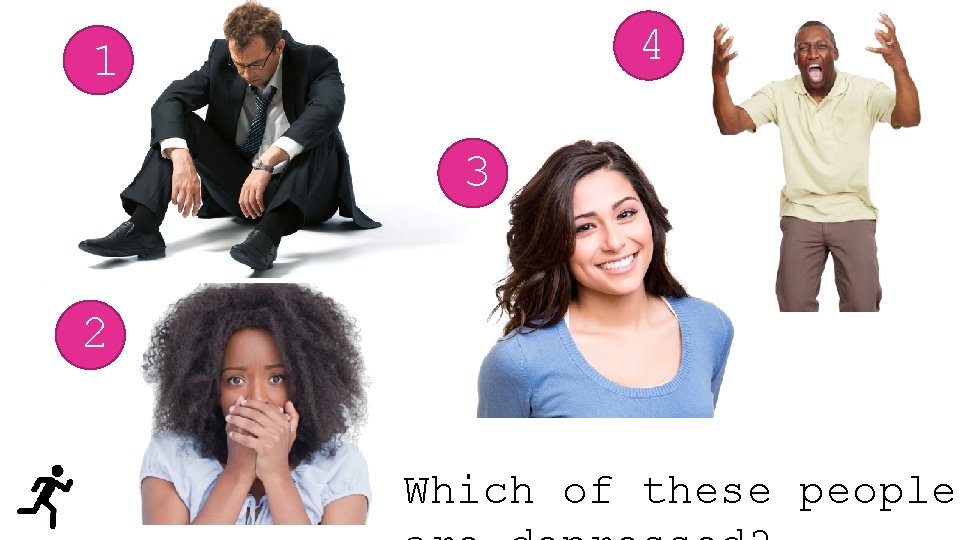
1 To talk about mental health… 4 3 2 Which of these people We first have to talk
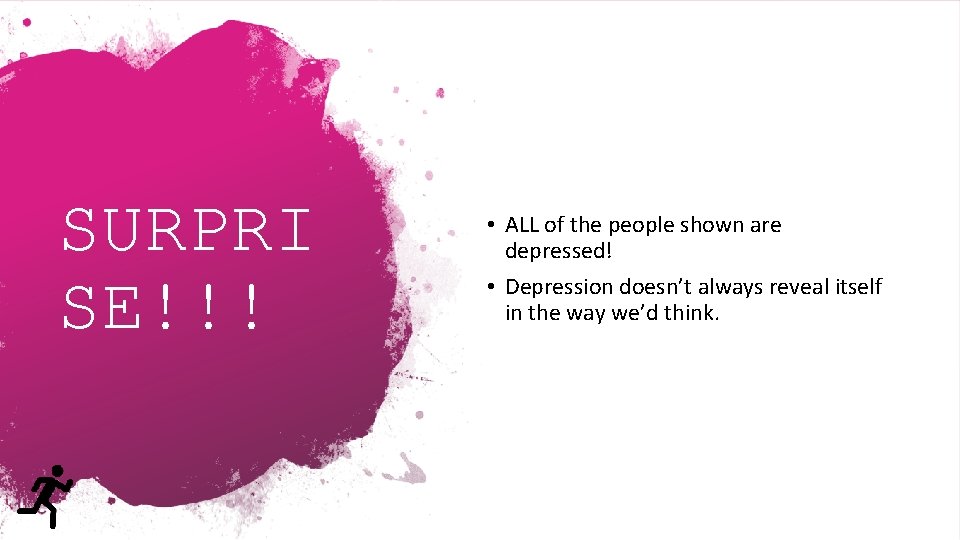
SURPRI SE!!! • ALL of the people shown are depressed! • Depression doesn’t always reveal itself in the way we’d think.
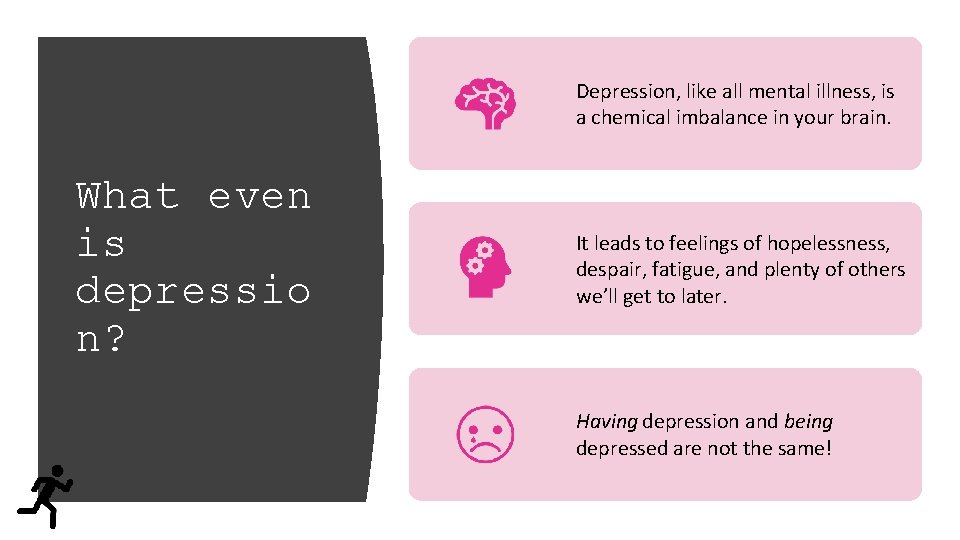
Depression, like all mental illness, is a chemical imbalance in your brain. What even is depressio n? It leads to feelings of hopelessness, despair, fatigue, and plenty of others we’ll get to later. Having depression and being depressed are not the same!
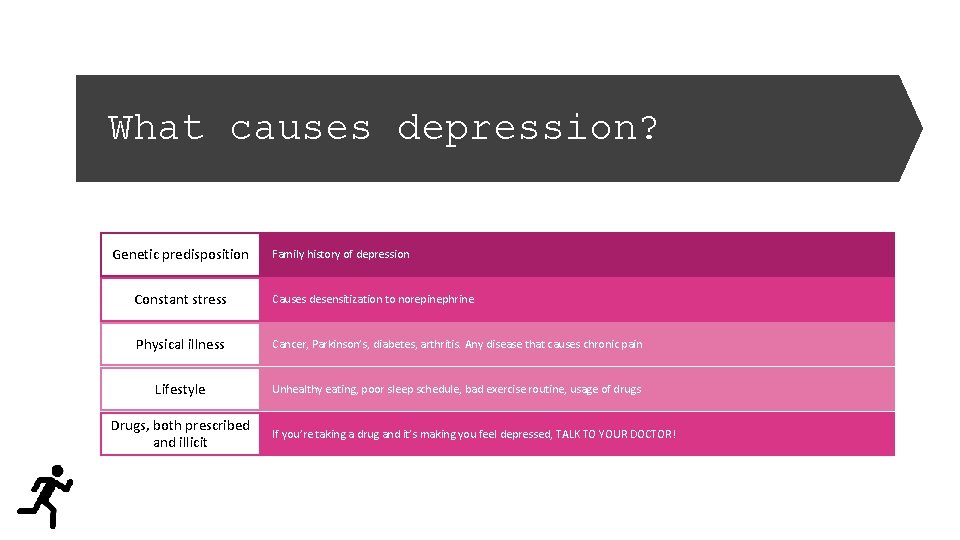
What causes depression? Genetic predisposition Family history of depression Constant stress Causes desensitization to norepinephrine Physical illness Cancer, Parkinson’s, diabetes, arthritis. Any disease that causes chronic pain Lifestyle Unhealthy eating, poor sleep schedule, bad exercise routine, usage of drugs Drugs, both prescribed and illicit If you’re taking a drug and it’s making you feel depressed, TALK TO YOUR DOCTOR!
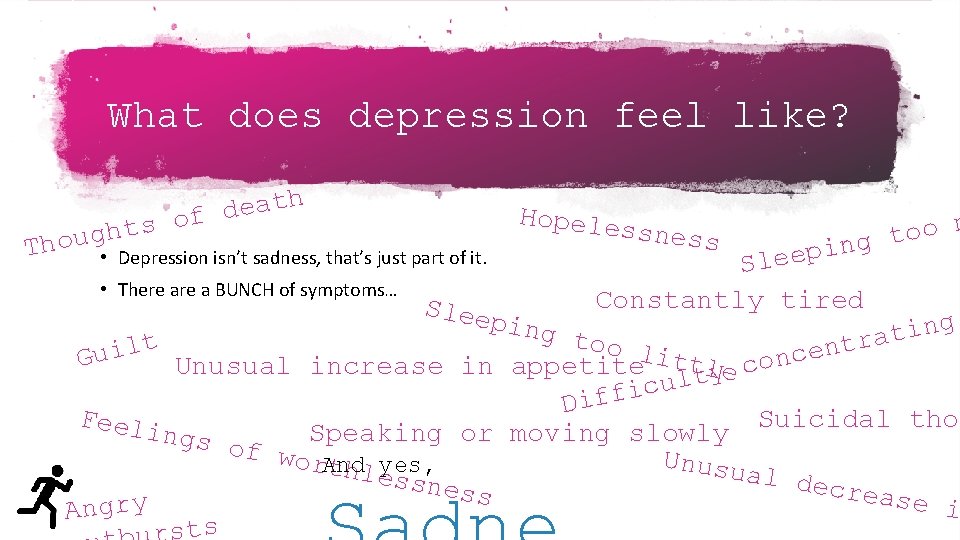
What does depression feel like? th a e d f o s t h Thoug • Depression isn’t sadness, that’s just part of it. Hopeles m o o t g n i p e Sle • There a BUNCH of symptoms… Constantly tired Slee ping g n i t a too r t t l n i e Gu Unusual increase in appetitelitlttlye conc u c i f if D Feeli Suicidal thou Speaking or moving slowly ngs o f wor. And yes, Unusu thles al de sness creas e i Angry sts sness
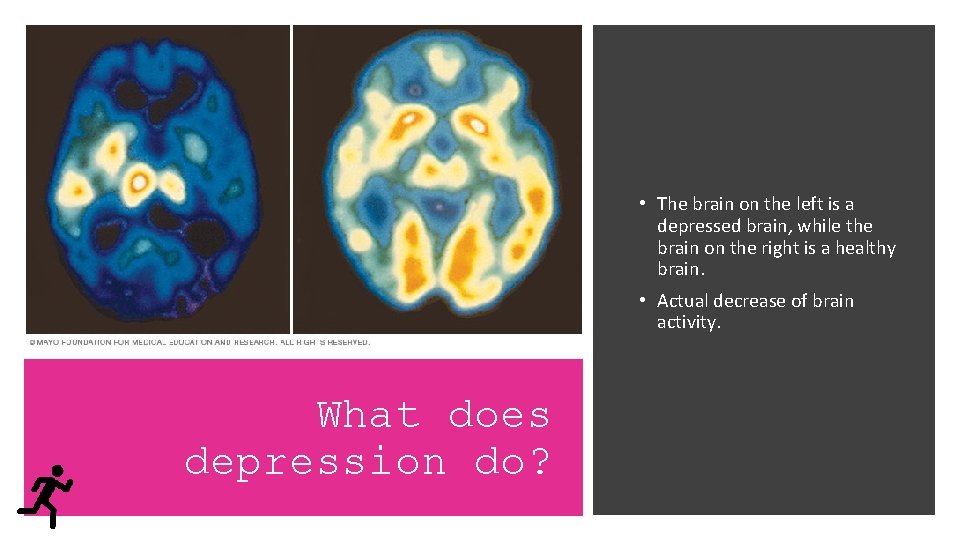
• The brain on the left is a depressed brain, while the brain on the right is a healthy brain. • Actual decrease of brain activity. What does depression do?
Recognizi ng depressio n in oth ers. • Are the jokes you normally make not funny? • Do they seem slow or tired? • Are they distracted?
Recognizi ng depressio your n in self. • Are you still following your routine? • Do you have to force yourself to do things that used to be fun? • Are your friends and family noticing you seem “off”?
Suicide. • One scary side effect of depression is suicidal behavior. • Not all who have depression are suicidal. • There are lots of warning signs that can help you watch out for friends: Giving away personal items For adults, getting affairs in order such as wills or tying up loose ends Risky behavior Concerning comments like, “I wish I weren’t here. ” or “You’ll miss me when I’m gone. ” Always talking about death Sudden switching from extreme sadness to calm or even happy behavior! If you or your friend are experiencing suicidal thoughts, call the national
When should I seek help? • As soon as you recognize! • You don’t even have to go directly to a therapist. • If you keep it in your head, it’s going to get worse. • “Something’s not right. ”
Anxiety.
What is anxiety? • Anxiety is often defined as worrying about things that you can’t control. • “Unproductive worry”
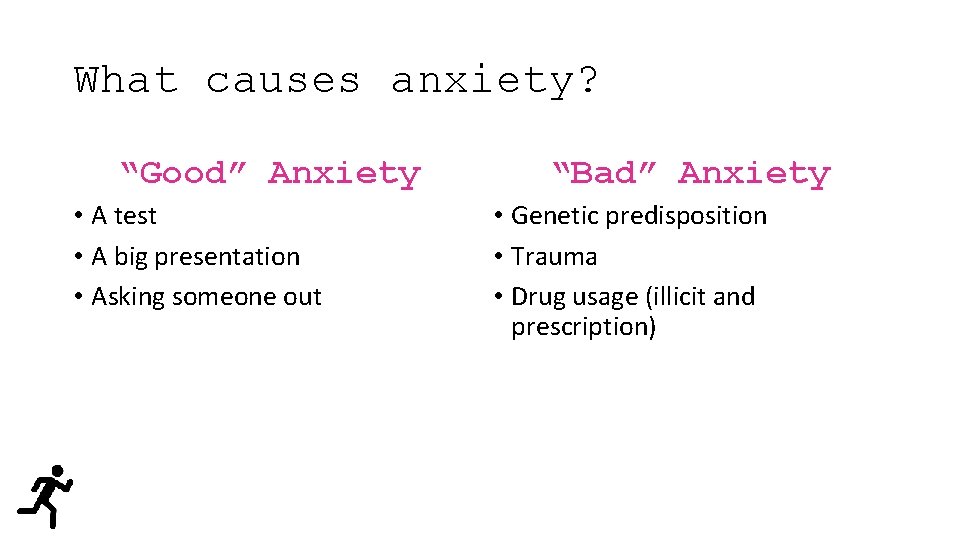
What causes anxiety? “Good” Anxiety • A test • A big presentation • Asking someone out “Bad” Anxiety • Genetic predisposition • Trauma • Drug usage (illicit and prescription)
What does Anxiety feel like? Uncontrollable feelings of worry, apprehension, or fear. “Something’s wrong!!!”
What does anxiety do to you? • Anxiety, like depression, can throw you out of your routine. • Cause you to not enjoy things you once loved, • Physical symptoms! • Acid reflux • Picking skin/nails/hair • Shaking
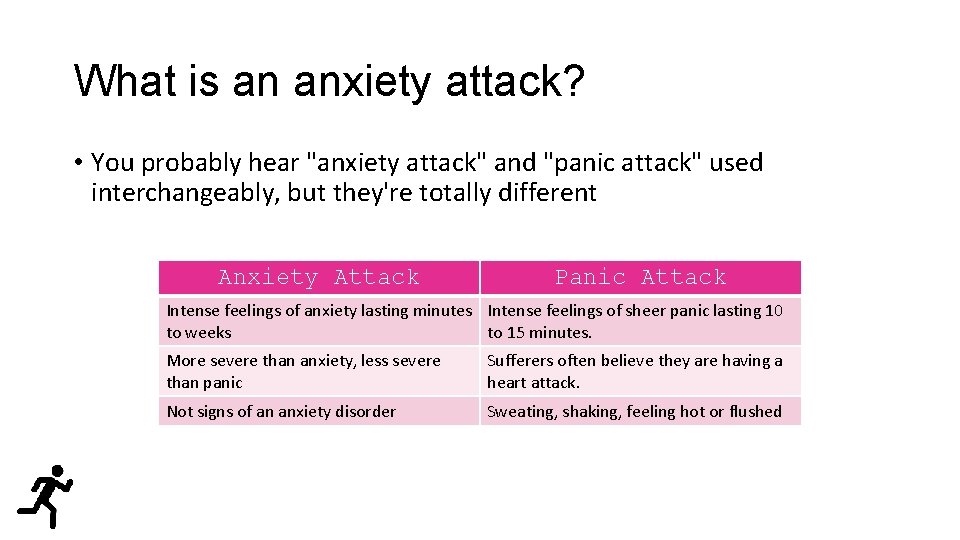
What is an anxiety attack? • You probably hear "anxiety attack" and "panic attack" used interchangeably, but they're totally different Anxiety Attack Panic Attack Intense feelings of anxiety lasting minutes Intense feelings of sheer panic lasting 10 to weeks to 15 minutes. More severe than anxiety, less severe than panic Sufferers often believe they are having a heart attack. Not signs of an anxiety disorder Sweating, shaking, feeling hot or flushed
Recognizi ng anxiety OTH in ERS. • Anxiety’s easy to recognize for the most part • It can be shown as stress • If your friend breaks down over something small like attending a party or a tough assignment, it may be a symptom of anxiety or stress.
Recognizi ng anxiety Your in self. • Anxiety in yourself is hard! • You’re so used to your own skin you don’t know what’s wrong. • If your family comments or you suspect you may be anxious, check in with someone you trust!
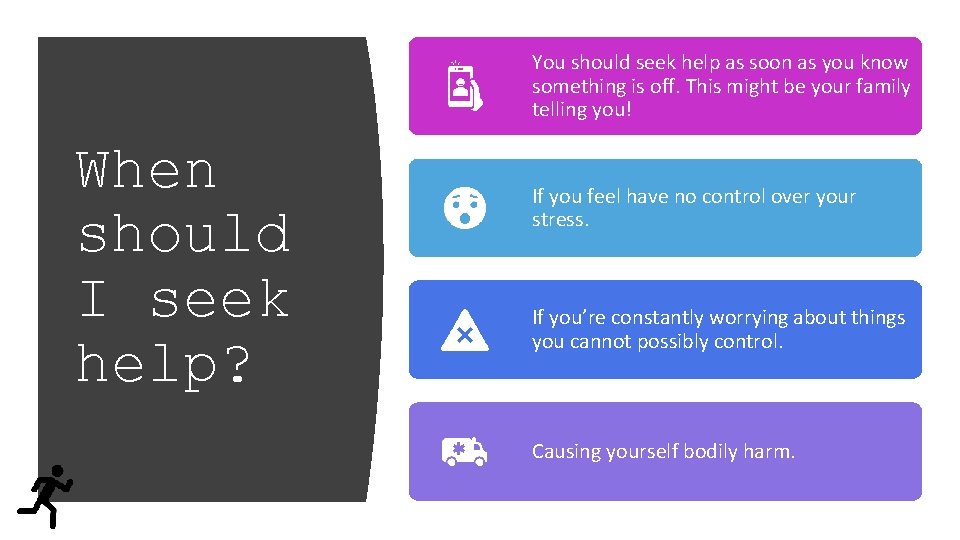
You should seek help as soon as you know something is off. This might be your family telling you! When should I seek help? If you feel have no control over your stress. If you’re constantly worrying about things you cannot possibly control. Causing yourself bodily harm.
Bipolar Disorder.
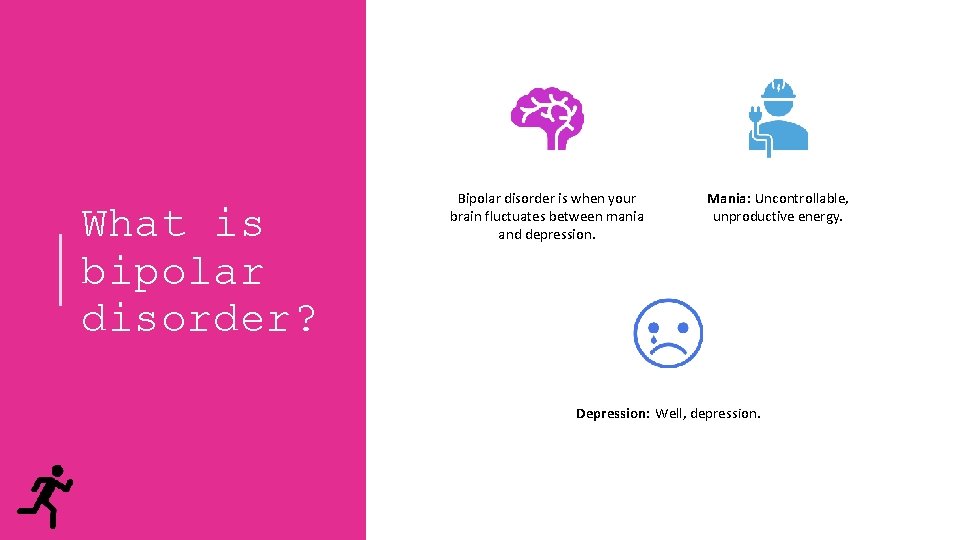
What is bipolar disorder? Bipolar disorder is when your brain fluctuates between mania and depression. Mania: Uncontrollable, unproductive energy. Depression: Well, depression.
What causes Bipolar disorde r? • At its root, bipolar disorder is a lack of chemicals in your brain.
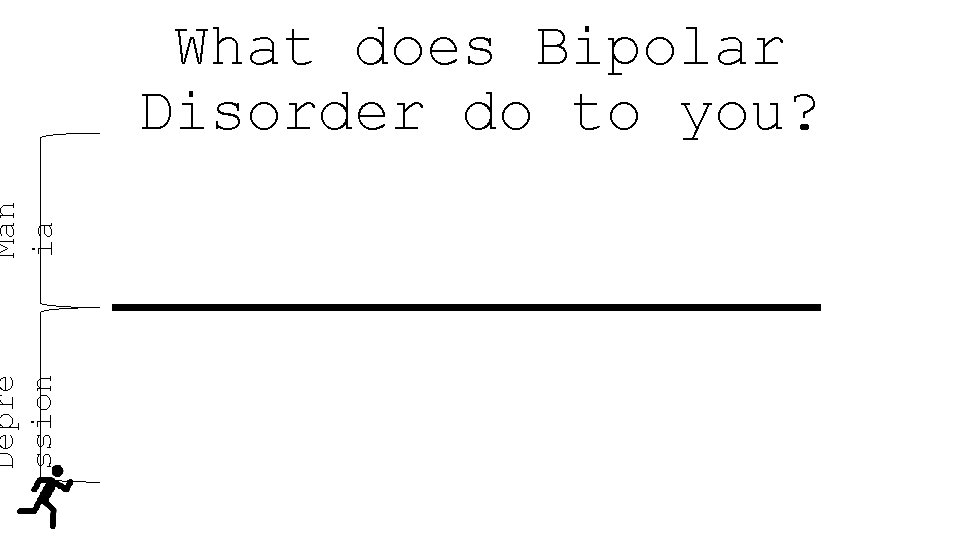
What does Bipolar Disord er feel like? Let’s break it down first…. Bipolar disorder is a fluctuating combination of both. (The chart next slide MANIA DEPRESSION Uncontrollable, unproductive Depression as mentioned before. will probably explain a energy. little more!)
Man ia Depre ssion What does Bipolar Disorder do to you?
Recognizing Bi. Polar Disorder in others. Look out for signs of depression Look for signs of mania: Extreme excitability Unnatural decrease in sleep Overconfidence Engaging in risky behavior.
Recognizing Bipolar disorder in yourself. Please Being a note: teenager and having bipolar disorder can often Recognizing bipolar disorder in yourself is exceptionally hard. present themselves very Over time, you have the possibility of noticing. similarly. Don’t go out and diagnose yourself with Most of the time, you notice by looking back at your atypical bipolar disorder. It’s when behavior. your highs and lows become dangerous and scary that you
Schizoph renia.
What is schizophrenia? • Schizophrenia is the most often misunderstood mental illness • It alters the sufferer’s reality • Delusions • Paranoia • Hallucinations • Catatonia
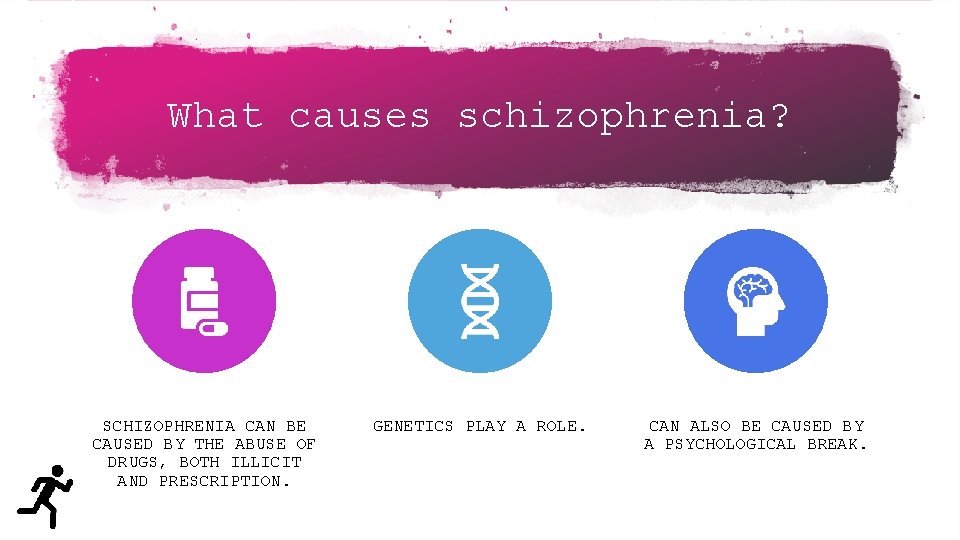
What causes schizophrenia? SCHIZOPHRENIA CAN BE CAUSED BY THE ABUSE OF DRUGS, BOTH ILLICIT AND PRESCRIPTION. GENETICS PLAY A ROLE. CAN ALSO BE CAUSED BY A PSYCHOLOGICAL BREAK.
What does it feel like? • Having schizophrenia is different for everybody • Some people become paranoid • Some people have delusions and hallucinations • Some people become catatonic and cannot move
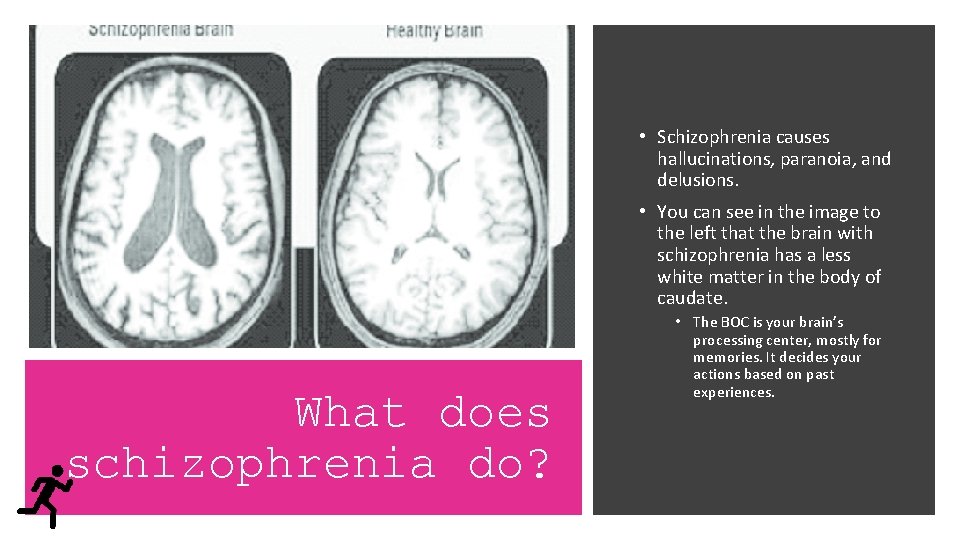
• Schizophrenia causes hallucinations, paranoia, and delusions. • You can see in the image to the left that the brain with schizophrenia has a less white matter in the body of caudate. What does schizophrenia do? • The BOC is your brain’s processing center, mostly for memories. It decides your actions based on past experiences.
Recognizi ng schizophr enia. OTHE in RS. • They see connections between things that have none. • A full, diagnosed psychotic break. • Ask if something they believe can possibly not be real. • If they insist the government really is watching them through installed cameras, there might be a problem.
Recognizi ng schizophr Yours enia in elf. • Schizophrenia is unrecognizable in yourself.
Eating Disorders.
What are eating disorders? • Eating disorders are severe illnesses that cause the victim to become preoccupied with food or their weight. • More common in women, athletes, and gay men.
Anorexia Nervosa What types of EDs are there? • Not eating Bulimia Nervosa • Eating, then purging Binge Eating Disorder • Binging, and then taking extreme measures to lose weight
What does it feel like? • An eating disorder causes the sufferer to become completely and totally obsessed with food and their body/weight • Constant stress!
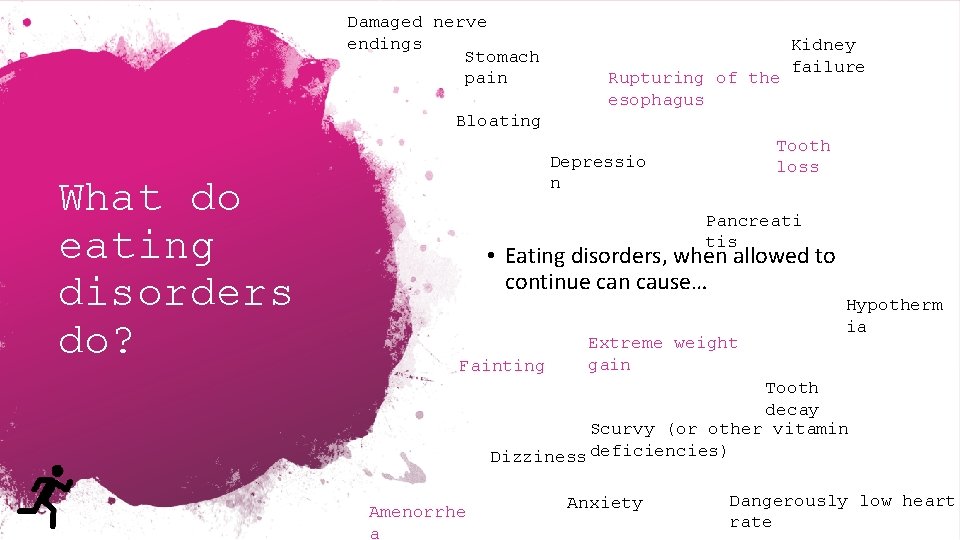
Damaged nerve endings Stomach pain Rupturing of the esophagus Kidney failure Bloating What do eating disorders do? Tooth loss Depressio n Pancreati tis • Eating disorders, when allowed to continue can cause… Fainting Extreme weight gain Hypotherm ia Tooth decay Scurvy (or other vitamin Dizziness deficiencies) Amenorrhe a Anxiety Dangerously low heart rate
Recognizi ng an eating disorder Oth in ers. • They are obsessed with their weight or how they look. • They constantly talk about dieting or food. • They eat nothing at all or everything in sight. • They have rapidly gained or lost weight. • They talk about how to lose weight
Recognizi ng an eating disorder Your in self. • You obsessively count calories. • You intentionally do not eat. • You are taking extreme measures to lose weight • (Dangerous crash diets, purging, overexercising)
The Stigma.
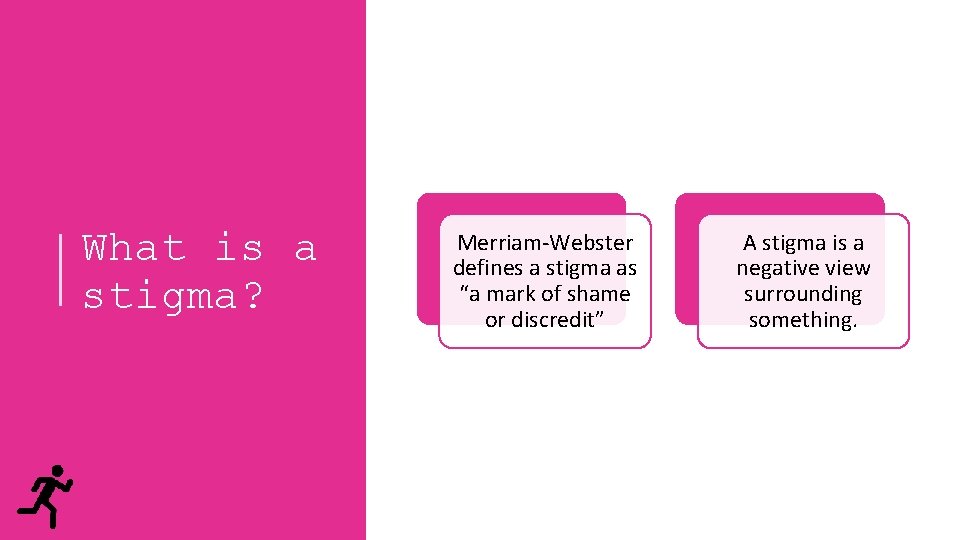
What is a stigma? Merriam-Webster defines a stigma as “a mark of shame or discredit” A stigma is a negative view surrounding something.
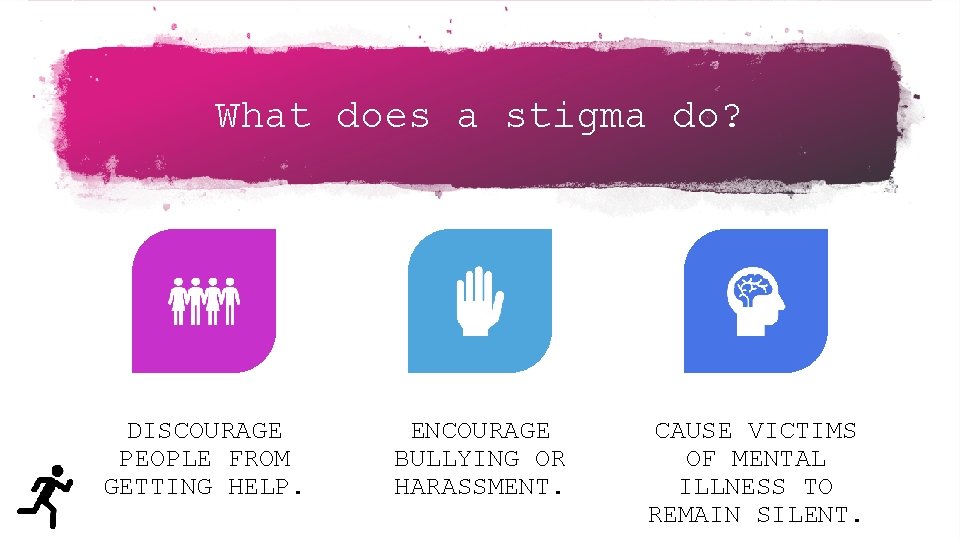
What does a stigma do? DISCOURAGE PEOPLE FROM GETTING HELP. ENCOURAGE BULLYING OR HARASSMENT. CAUSE VICTIMS OF MENTAL ILLNESS TO REMAIN SILENT.
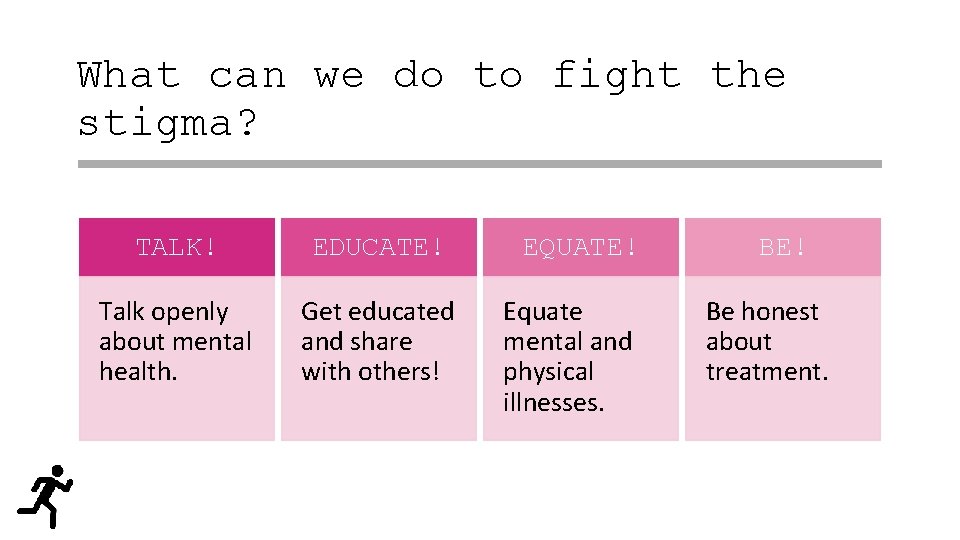
What can we do to fight the stigma? TALK! EDUCATE! Talk openly about mental health. Get educated and share with others! EQUATE! Equate mental and physical illnesses. BE! Be honest about treatment.
Any questions ?