
Understanding the Emotional Needs of Children and Adults













- Slides: 119
Understanding the Emotional Needs of Children and Adults SUICIDE CAN TOUCH ANYONE Healthy Parents/Healthy Children May 14, 2019
Prepare the child for the path…
A Village and a River
Interpretation Drives Intervention
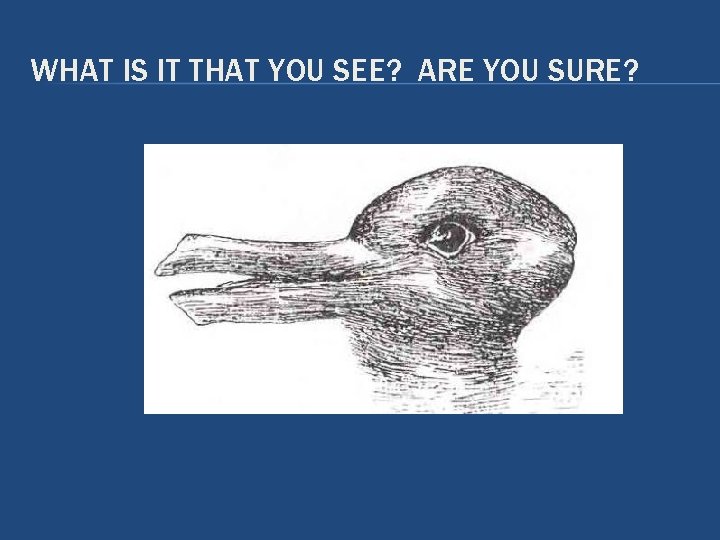
WHAT IS IT THAT YOU SEE? ARE YOU SURE?
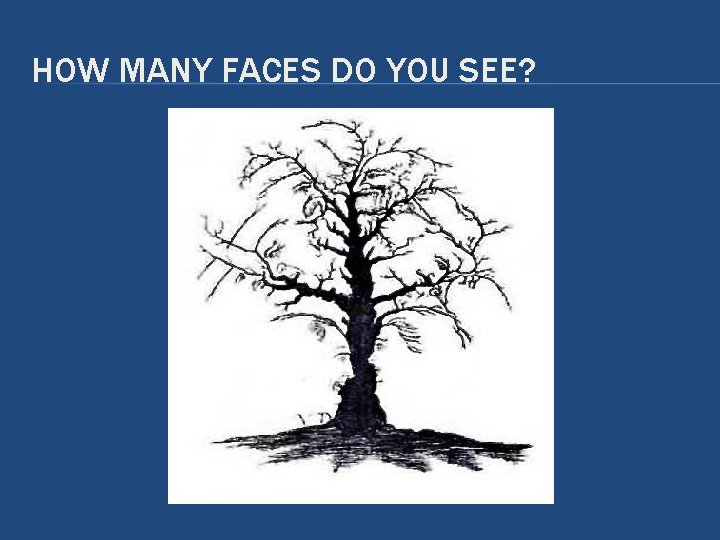
HOW MANY FACES DO YOU SEE?
Interpretation Drives Intervention If you misinterpret what you see and what you hear, your actions, which are intended to help, may do nothing at all, or may actually make matters even worse.
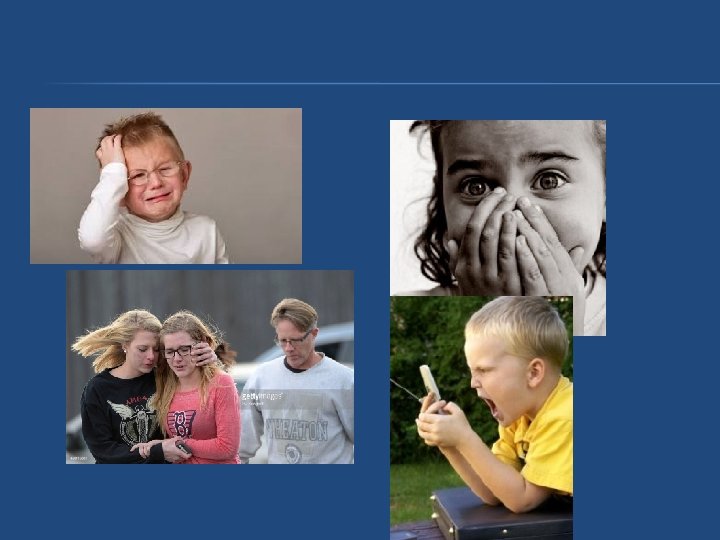
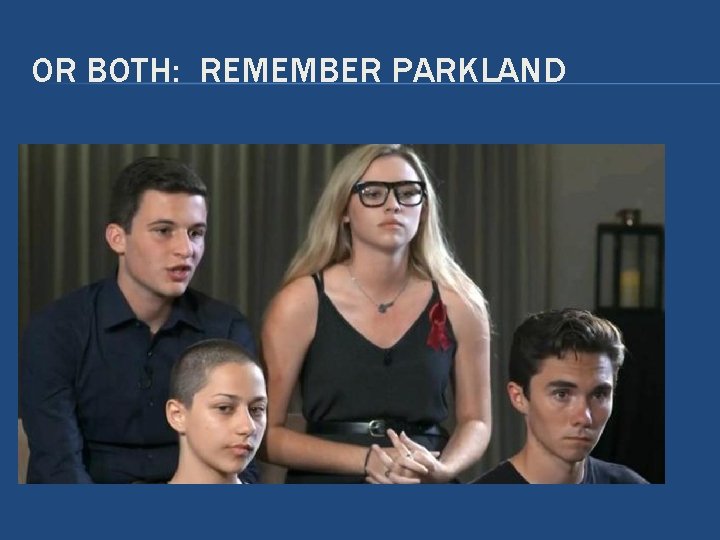
EMOTIONAL NEEDS OF CHILDREN AND TEENS How do our children tell us they need us?
EMOTIONAL NEEDS OF CHILDREN AND TEENS How do our children tell us they need us? They TELL us with their words…
Or they SHOW us with their behavior.
OR BOTH: REMEMBER PARKLAND
Interpretation Drives Intervention Sounds simple, however…
we do not always UNDERSTAND. .
we do not always UNDERSTAND. . AND…
IN THE ABSENCE OF TRUE UNDERSTANDING, HUMAN BEINGS SUFFER…AND SOMETIMES DIE:
IN THE ABSENCE OF TRUE UNDERSTANDING, HUMAN BEINGS SUFFER…AND SOMETIMES DIE: → Ingesting Lead
IN THE ABSENCE OF TRUE UNDERSTANDING, HUMAN BEINGS SUFFER…AND SOMETIMES DIE: → Ingesting Lead → Using tobacco products (vaping)
IN THE ABSENCE OF TRUE UNDERSTANDING, HUMAN BEINGS SUFFER…AND SOMETIMES DIE: → Ingesting Lead → Using tobacco products (vaping) → Inhaling asbestos
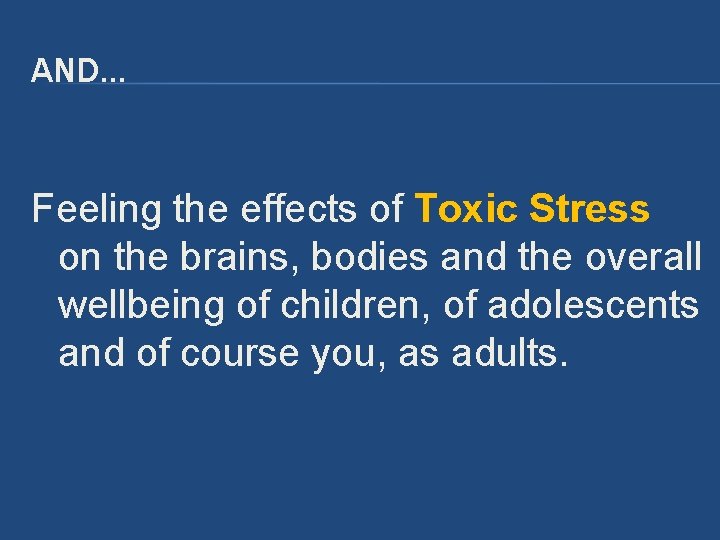
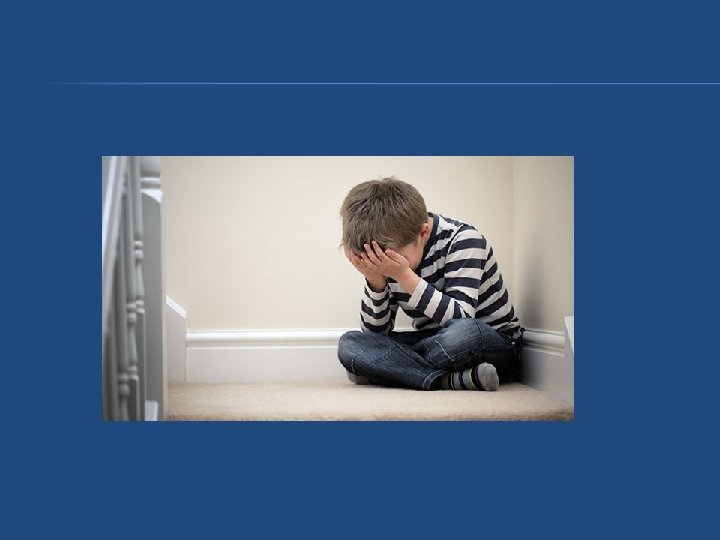
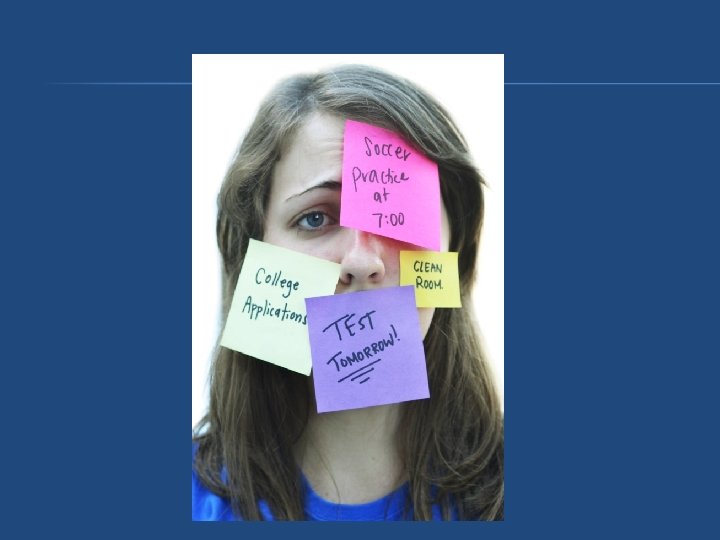
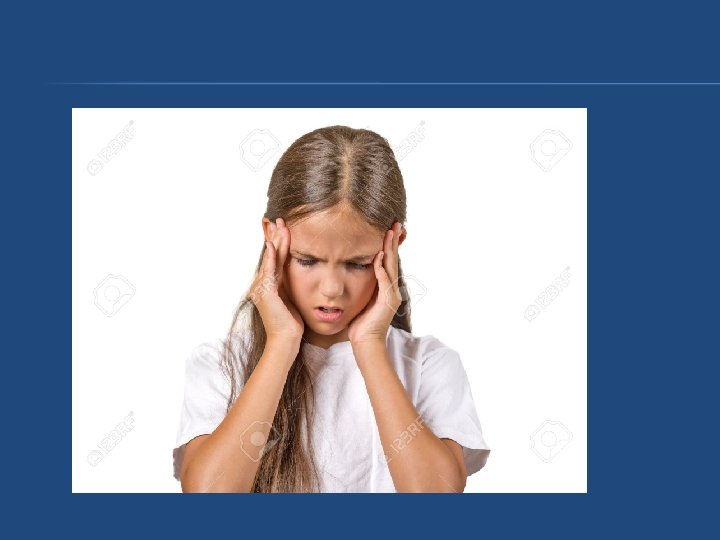
AND… Feeling the effects of Toxic Stress on the brains, bodies and the overall wellbeing of children, of adolescents and of course you, as adults.
Opportunity for comments And questions: What examples do you have of children “in the river? ”
Prepare the child for the path…
WHY DO SOME OF OUR CHILDREN GROW UP AND LIVES THAT LOOK LIKE THIS?
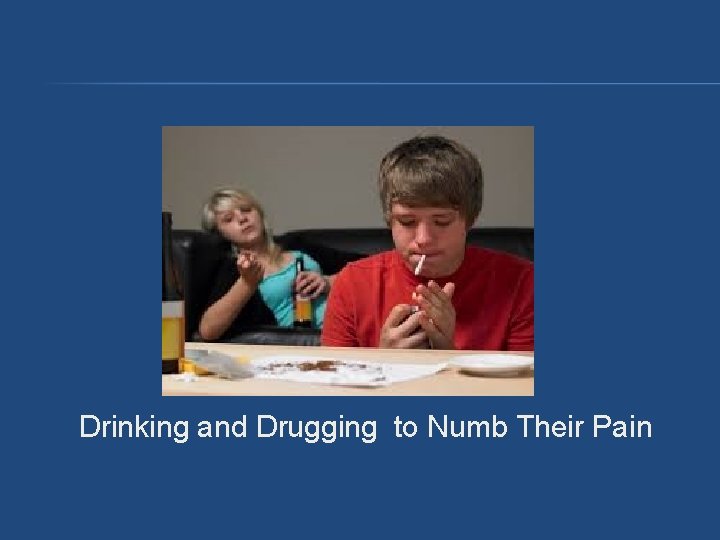
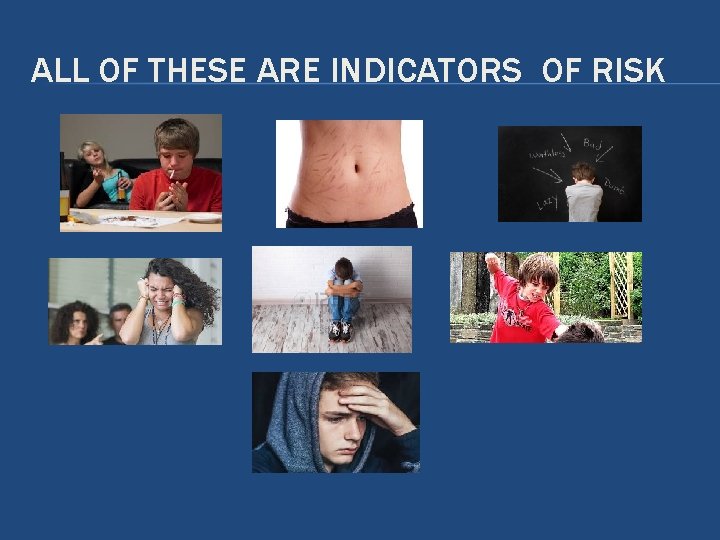
Drinking and Drugging to Numb Their Pain
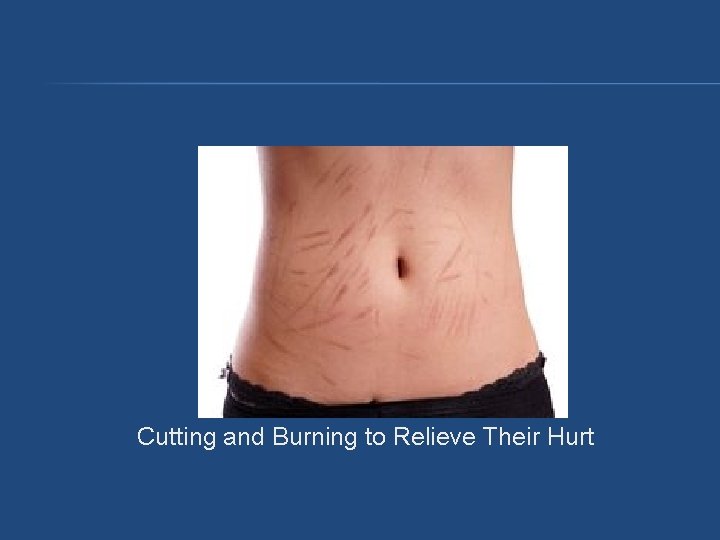
Cutting and Burning to Relieve Their Hurt
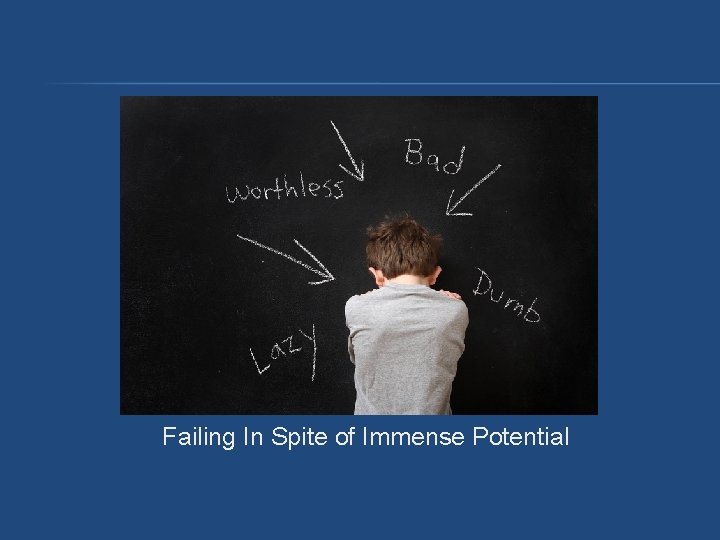
Failing In Spite of Immense Potential
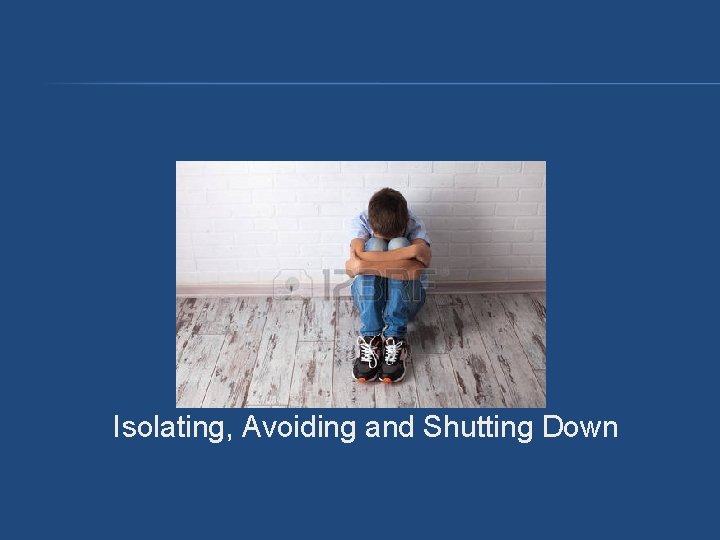
Isolating, Avoiding and Shutting Down
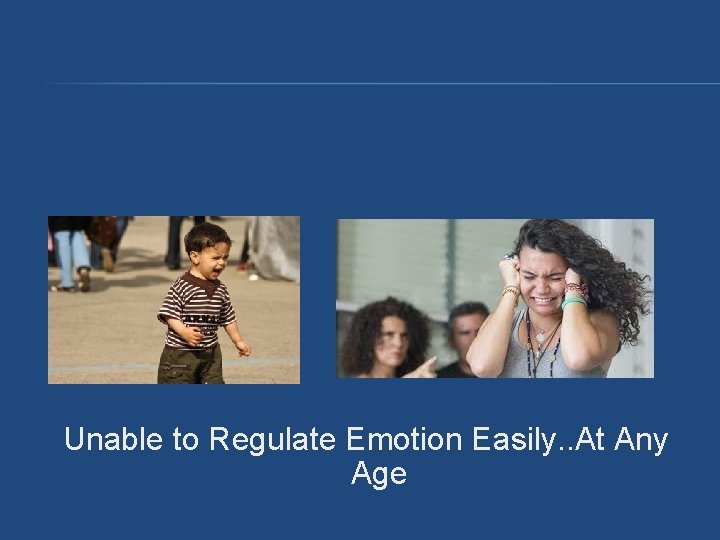
Unable to Regulate Emotion Easily. . At Any Age
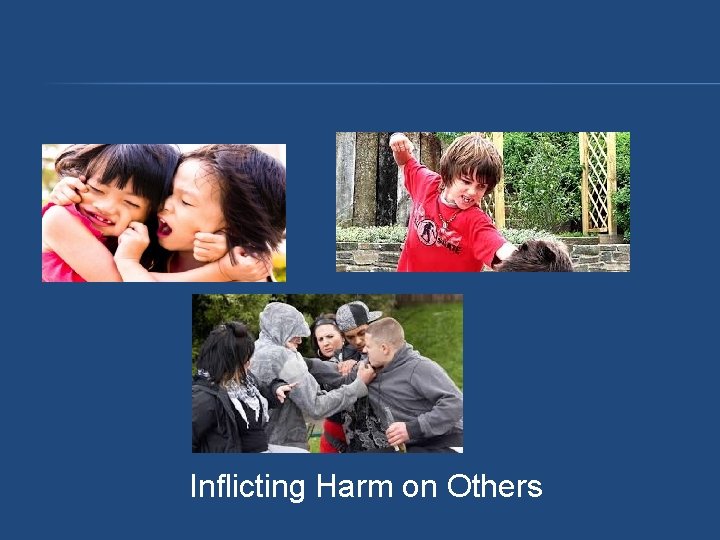
Inflicting Harm on Others
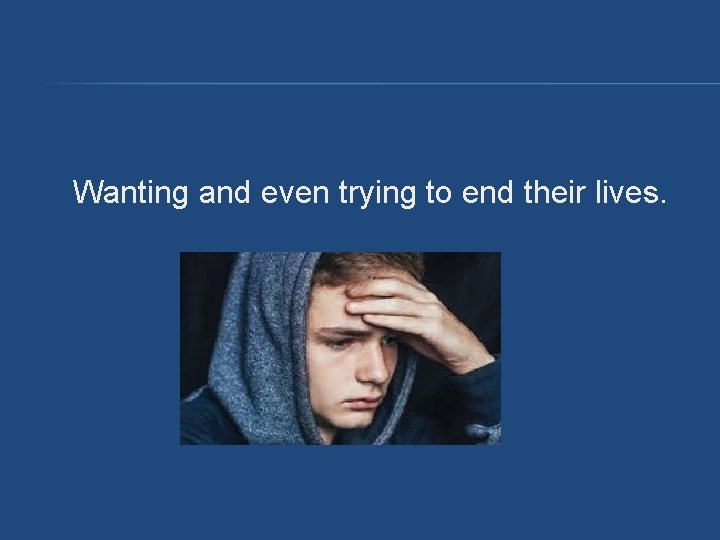
Wanting and even trying to end their lives.
And, as young as 10, dying by suicide.
ALL OF THESE ARE INDICATORS OF RISK
How does all of this Toxic Stress get into our bodies anyway? ?
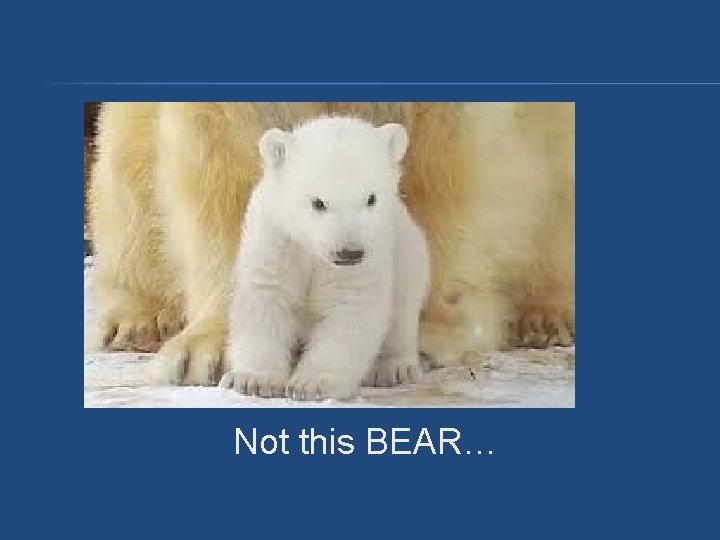
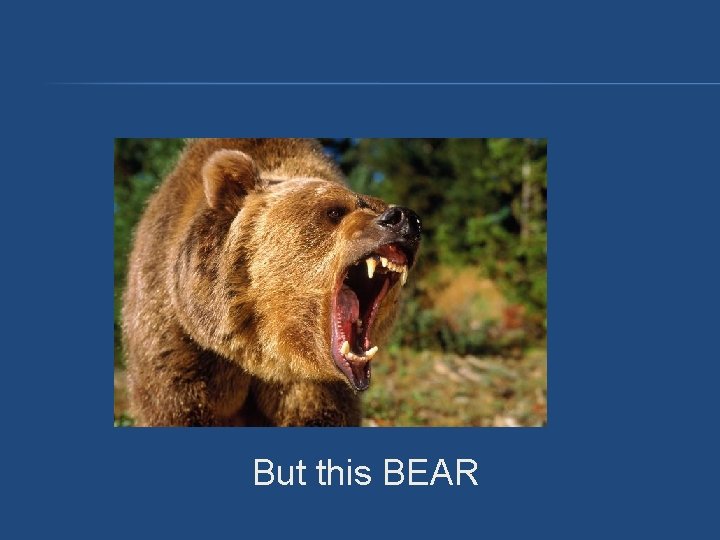
A story about a bear
Not this BEAR…
But this BEAR
The story goes like this…
That’s IF, you come across the BEAR in the woods.
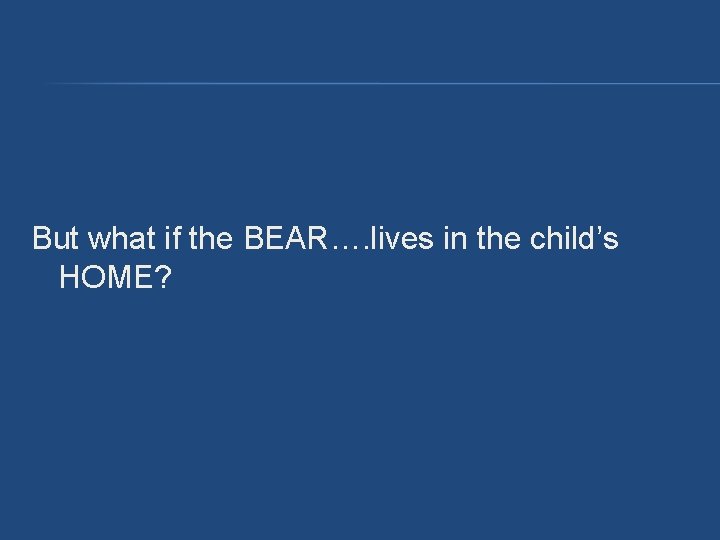
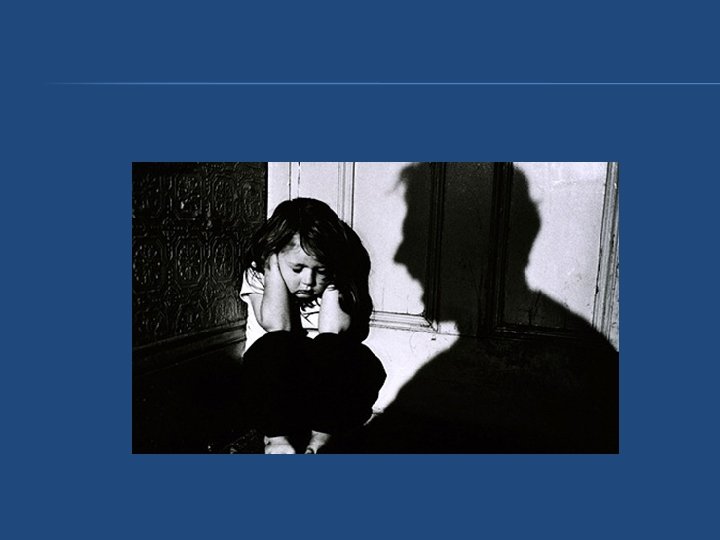
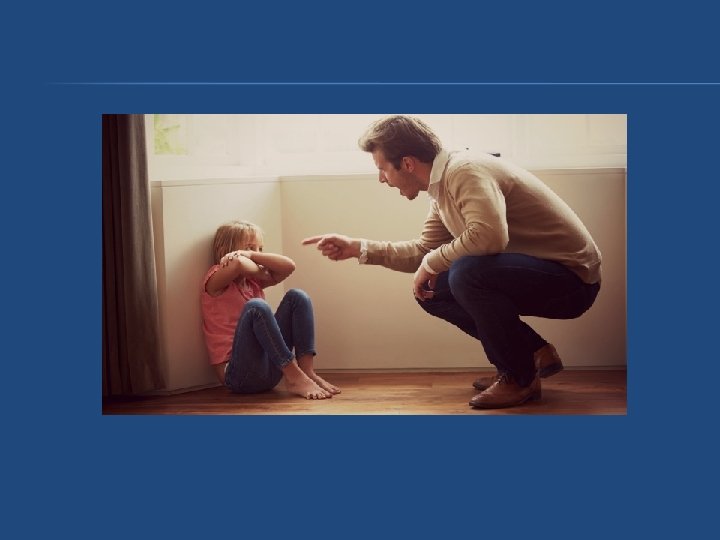
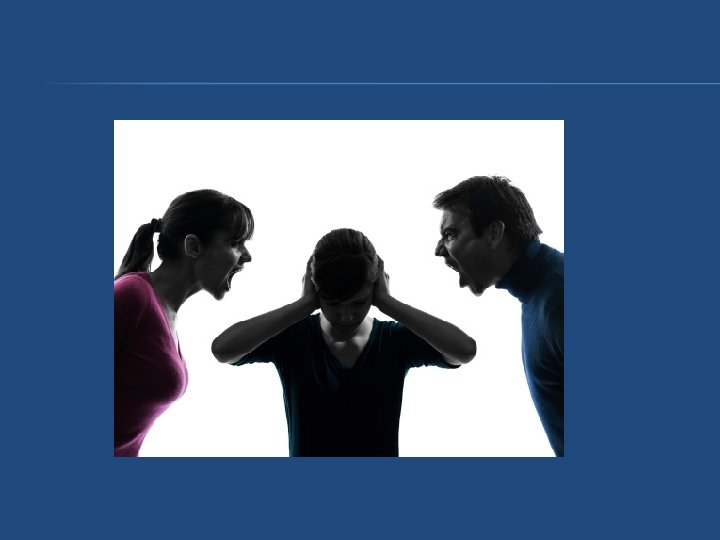
But what if the BEAR…. lives in the child’s HOME?
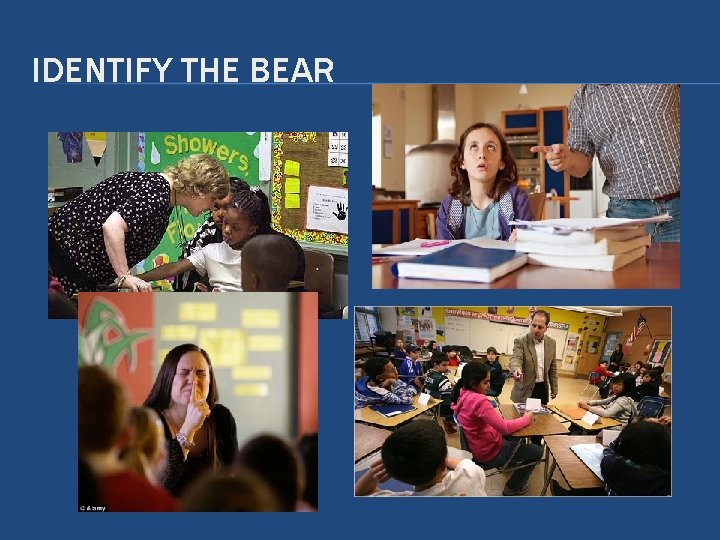
OR the Bear lives in the classroom.
IDENTIFY THE BEAR
TOXINS, TOXIC EVENTS, TRAUMA So, what are these toxins, and what are the effects?
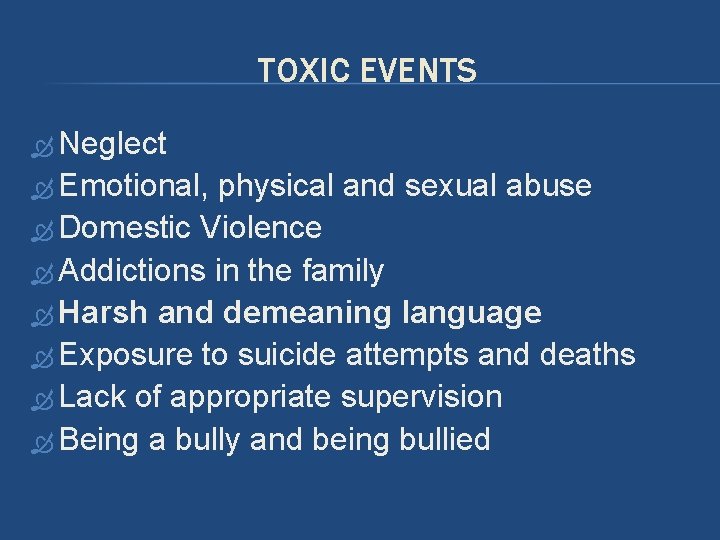
TOXIC EVENTS Neglect Emotional, physical and sexual abuse Domestic Violence Addictions in the family Harsh and demeaning language Exposure to suicide attempts and deaths Lack of appropriate supervision Being a bully and being bullied
In the absence of understanding, human beings suffer…and sometimes die.
Opportunity for comments and questions: What do you need to understand?
REMEMBER Prepare the child for the path…
What can go wrong? What should parents and other adults know?
LET’S LOOK AT THE EFFECTS OF ACES (ADVERSE CHILDHOOD EXPERIENCES) Following are 10 questions for you to consider about your own growing up. For each that applies to you, you will give yourself a score of 1. In the privacy of your own mind, consider the following:
ASK YOURSELF While you were growing up, during your first 18 years of life: 1. Did a parent or other adult in the household often or very often…swear at you, insult you, put you down or humiliate you? Or…act in a way that made you afraid that you might be physically hurt?
2. Did a parent or other adult in the household often or very often…push, grab, slap, or throw something at you? Or…ever hit you so hard that you had marks or were injured?
3. Did an adult or person at least 5 years older than you ever…touch or fondle you or have you touch their body in a sexual way? Or…attempt or actually have oral, anal, or vaginal intercourse with you?
4. Did you often or very often feel that…no one in your family loved you or thought you were important or special? Or…your family didn’t look out for each other, feel close to each other, or support each other?
5. Did you often or very often feel that…you didn’t have enough to eat, had to wear dirty clothes, and had no one to protect you? Or…your parents were too drunk or high to take care of you or take you to the doctor if you needed it?
6. Were your parents ever separated or divorced?
7. Was your mother or stepmother, (grandmother): Often or very often pushed, grabbed, slapped, or had something thrown at her? Or… sometimes, often, or very often kicked, bitten, hit with a fist, or hit with something hard? Or… ever repeatedly hit at for least a few minutes or threatened with a gun or knife?
8. Did you live with anyone who was a problem drinker or alcoholic or who used street drugs?
9. Was a household member depressed or mentally ill, or did a household member attempt suicide?
10. Did a household member go to prison?
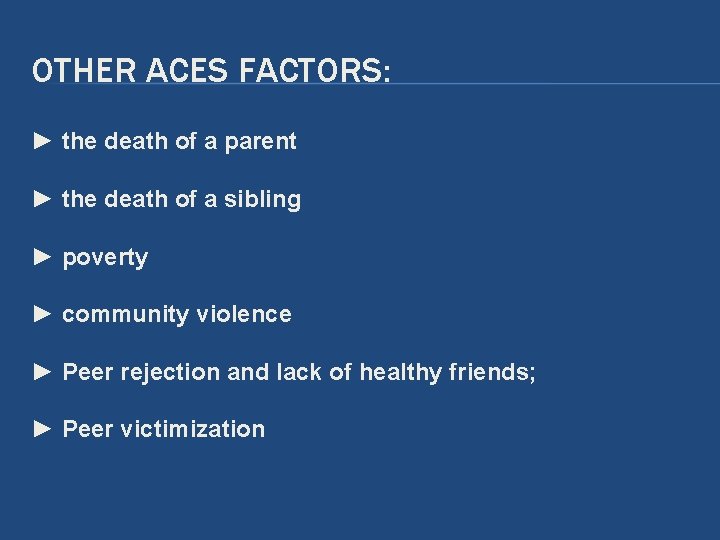
OTHER ACES FACTORS: ► the death of a parent ► the death of a sibling ► poverty ► community violence ► Peer rejection and lack of healthy friends; ► Peer victimization
Got an ACE score of 4 or more?
Got an ACE score of 4 or more? There is likely to be an increase risk of: • poor academic performance, • violations of home and school rules, • increases in discipline including detentions and suspensions, • use of alcohol, tobacco, marijuana or other drugs
Got an ACE score of 4 or more? In the child’s lifetime, there will be: • twice the likelihood of developing cancer • an increase likelihood of developing pulmonary illness, • immune system illnesses like MS and Lupus • an increase struggle with personal and workrelated relationships.
Got an ACE score of 4 or more? • A child’s risk of developing depression is 46 times greater than if there is a score of 0.
Got an ACE score of 4 or more? A child’s risk of suicide increases 1200%
SUICIDE AND SUICIDAL BEHAVIOR
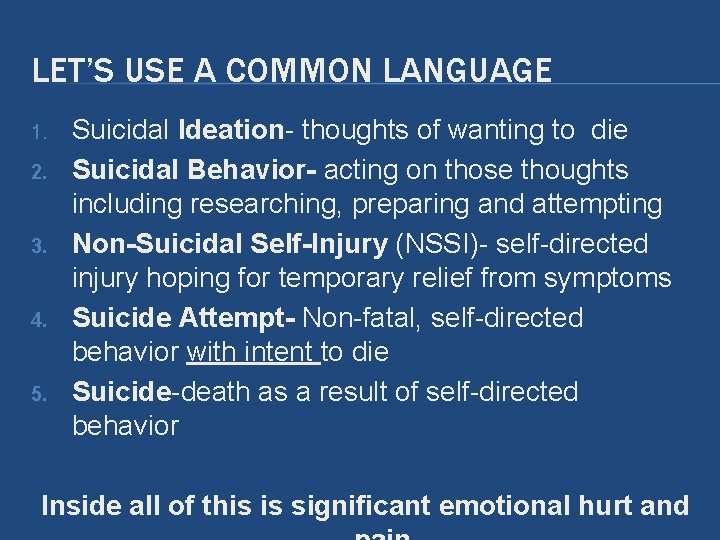
LET’S USE A COMMON LANGUAGE 1. 2. 3. 4. 5. Suicidal Ideation- thoughts of wanting to die Suicidal Behavior- acting on those thoughts including researching, preparing and attempting Non-Suicidal Self-Injury (NSSI)- self-directed injury hoping for temporary relief from symptoms Suicide Attempt- Non-fatal, self-directed behavior with intent to die Suicide-death as a result of self-directed behavior Inside all of this is significant emotional hurt and
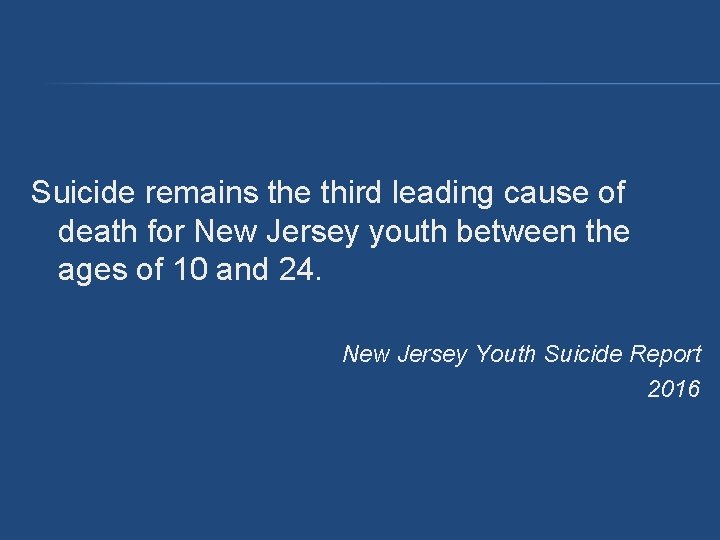
Suicide remains the third leading cause of death for New Jersey youth between the ages of 10 and 24. New Jersey Youth Suicide Report 2016
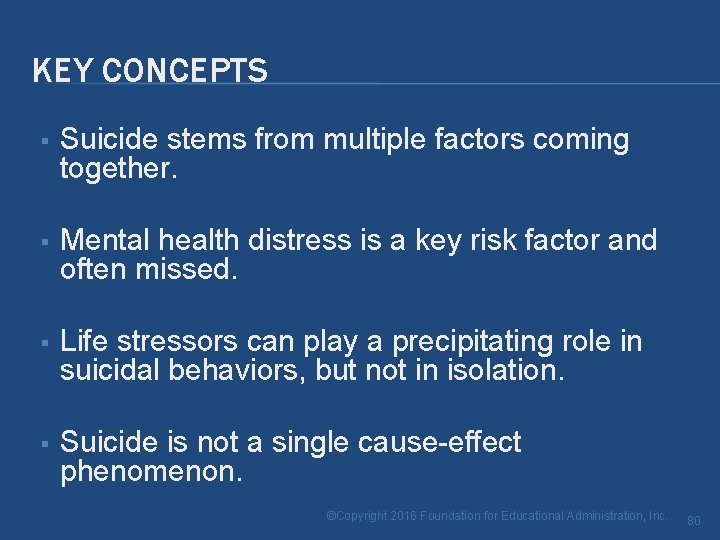
KEY CONCEPTS § Suicide stems from multiple factors coming together. § Mental health distress is a key risk factor and often missed. § Life stressors can play a precipitating role in suicidal behaviors, but not in isolation. § Suicide is not a single cause-effect phenomenon. ©Copyright 2016 Foundation for Educational Administration, Inc. 80
The following behaviors, Risk Factors, serve as red flags that let us know to stop and pay more attention to our children.
CONSIDER THESE… • Irritability, anger, hostility, self-injury • Extreme sensitivity to rejection or failure • Frequent complaints of physical illness • Frequent absences/tardiness to school or work • Decrease in school or work performance
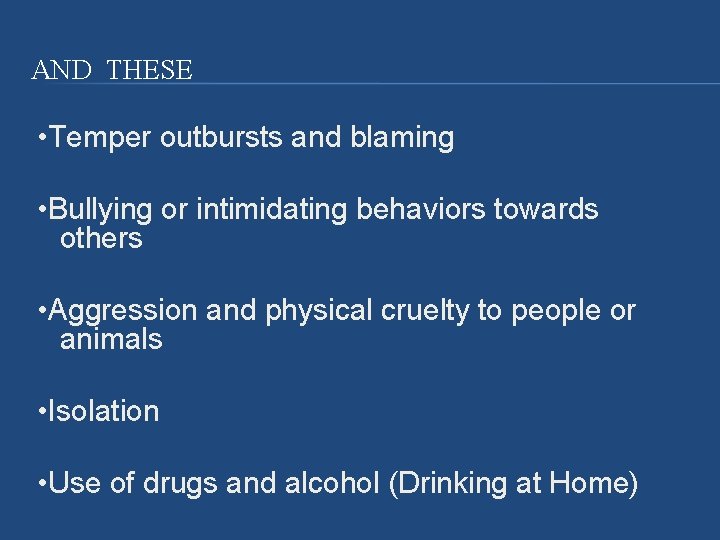
AND THESE • Temper outbursts and blaming • Bullying or intimidating behaviors towards others • Aggression and physical cruelty to people or animals • Isolation • Use of drugs and alcohol (Drinking at Home)
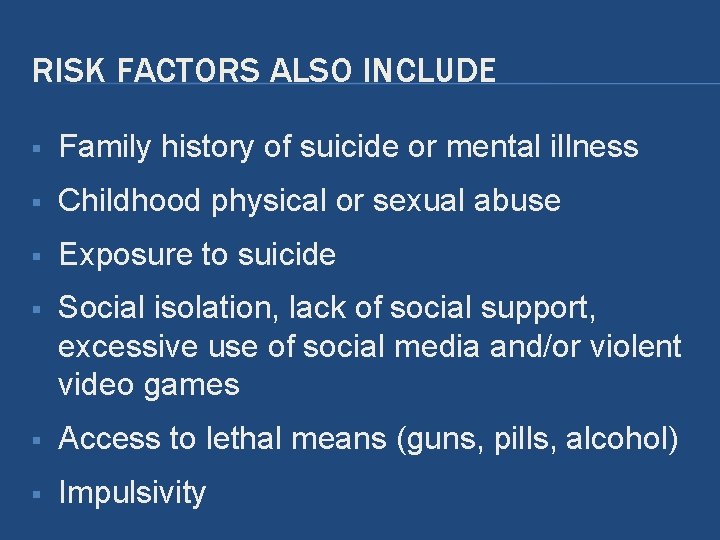
RISK FACTORS ALSO INCLUDE § Family history of suicide or mental illness § Childhood physical or sexual abuse § Exposure to suicide § Social isolation, lack of social support, excessive use of social media and/or violent video games § Access to lethal means (guns, pills, alcohol) § Impulsivity
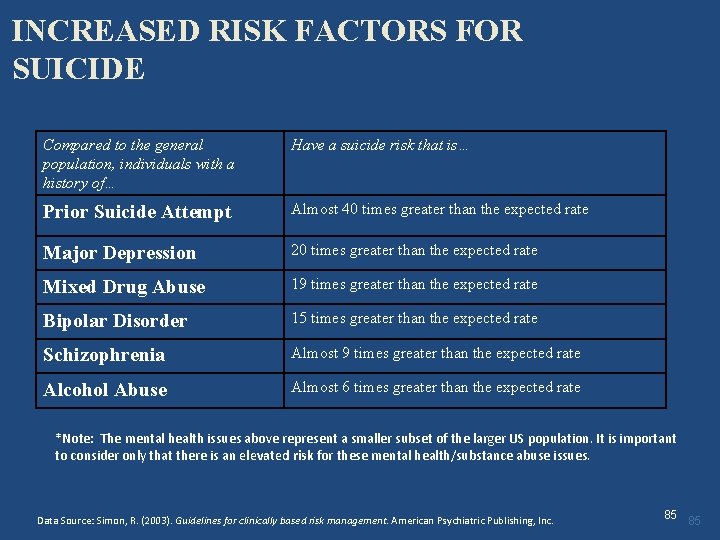
INCREASED RISK FACTORS FOR SUICIDE Compared to the general population, individuals with a history of… Have a suicide risk that is… Prior Suicide Attempt Almost 40 times greater than the expected rate Major Depression 20 times greater than the expected rate Mixed Drug Abuse 19 times greater than the expected rate Bipolar Disorder 15 times greater than the expected rate Schizophrenia Almost 9 times greater than the expected rate Alcohol Abuse Almost 6 times greater than the expected rate *Note: The mental health issues above represent a smaller subset of the larger US population. It is important to consider only that there is an elevated risk for these mental health/substance abuse issues. Data Source: Simon, R. (2003). Guidelines for clinically based risk management. American Psychiatric Publishing, Inc. 85 85
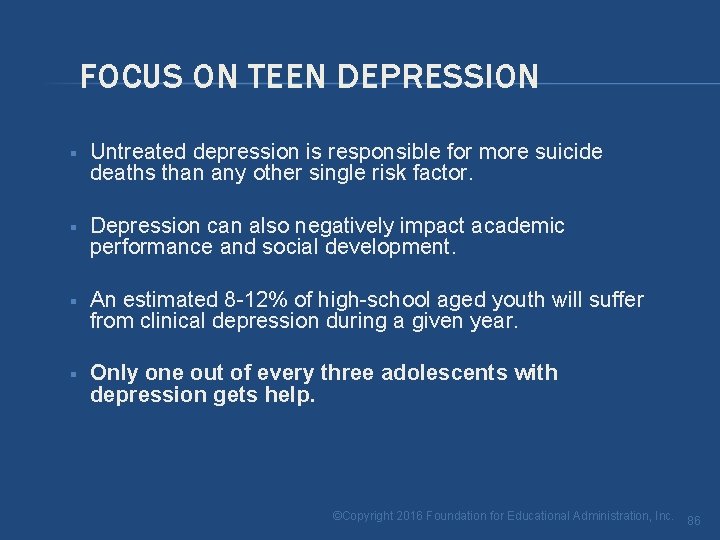
FOCUS ON TEEN DEPRESSION § Untreated depression is responsible for more suicide deaths than any other single risk factor. § Depression can also negatively impact academic performance and social development. § An estimated 8 -12% of high-school aged youth will suffer from clinical depression during a given year. § Only one out of every three adolescents with depression gets help. ©Copyright 2016 Foundation for Educational Administration, Inc. 86
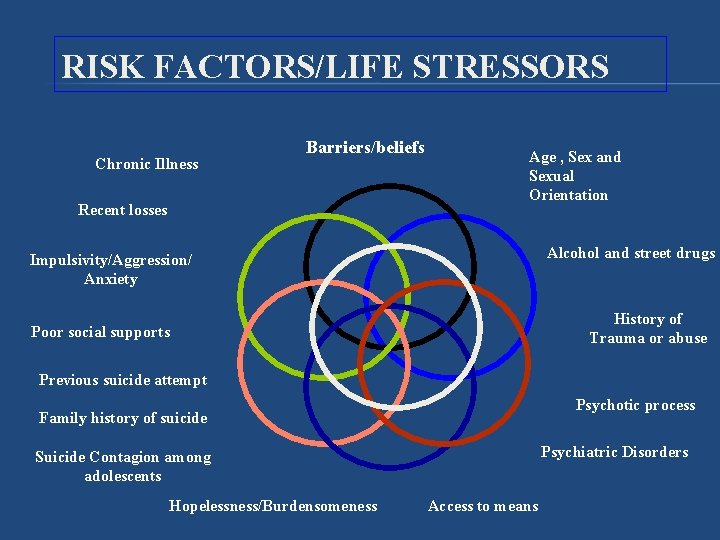
RISK FACTORS/LIFE STRESSORS Chronic Illness Barriers/beliefs Recent losses Age , Sex and Sexual Orientation Alcohol and street drugs Impulsivity/Aggression/ Anxiety History of Trauma or abuse Poor social supports Previous suicide attempt Psychotic process Family history of suicide Psychiatric Disorders Suicide Contagion among adolescents Hopelessness/Burdensomeness Access to means
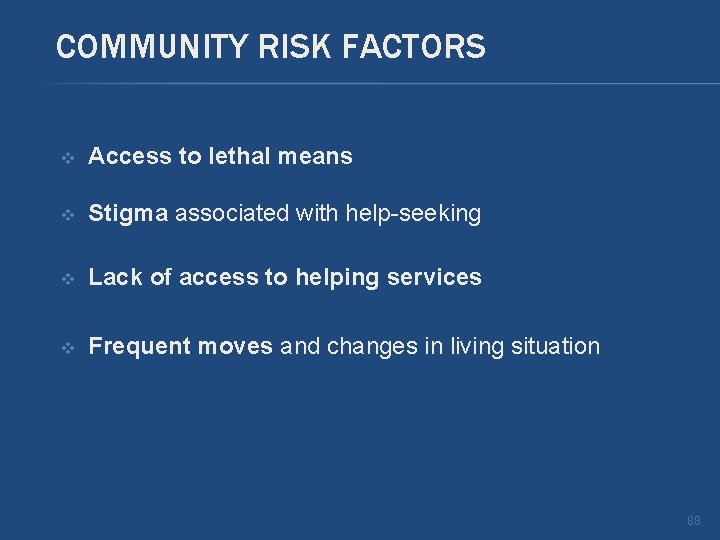
COMMUNITY RISK FACTORS v Access to lethal means v Stigma associated with help-seeking v Lack of access to helping services v Frequent moves and changes in living situation 88
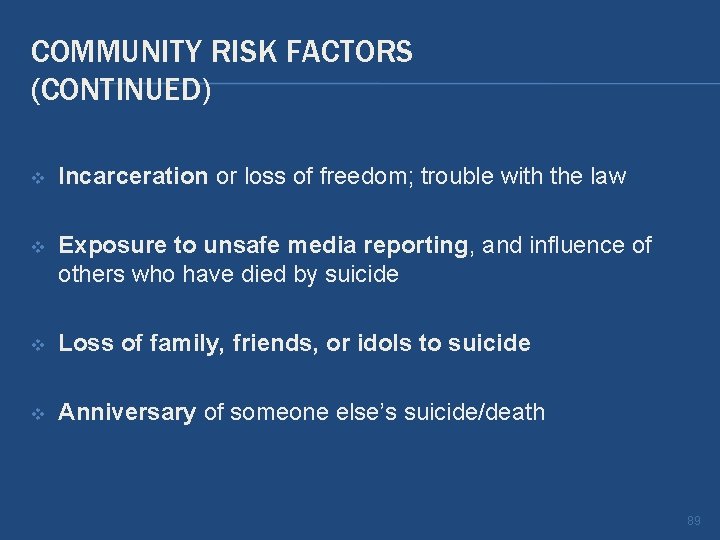
COMMUNITY RISK FACTORS (CONTINUED) v Incarceration or loss of freedom; trouble with the law v Exposure to unsafe media reporting, and influence of others who have died by suicide v Loss of family, friends, or idols to suicide v Anniversary of someone else’s suicide/death 89
WARNING SIGNS: ACT IMMEDIATELY The following require our immediate attention and our immediate action.
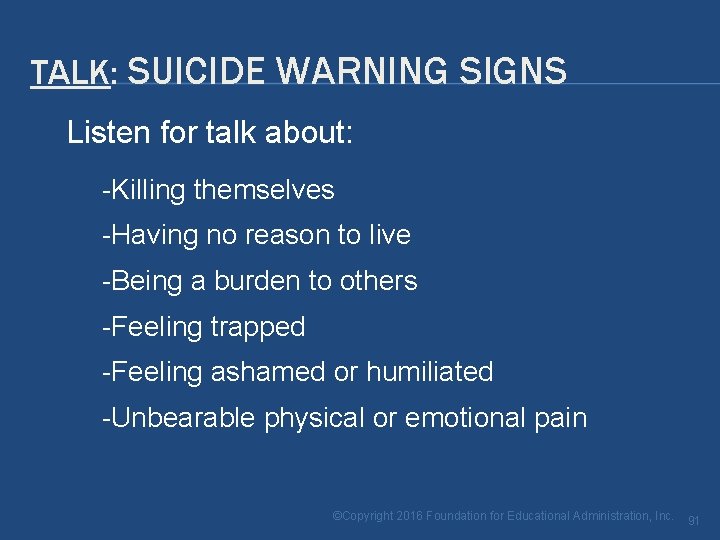
TALK: SUICIDE WARNING SIGNS Listen for talk about: -Killing themselves -Having no reason to live -Being a burden to others -Feeling trapped -Feeling ashamed or humiliated -Unbearable physical or emotional pain ©Copyright 2016 Foundation for Educational Administration, Inc. 91
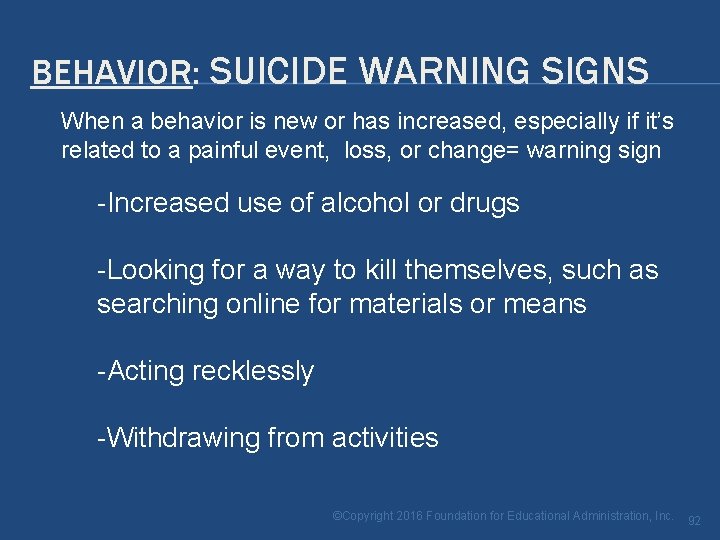
BEHAVIOR: SUICIDE WARNING SIGNS When a behavior is new or has increased, especially if it’s related to a painful event, loss, or change= warning sign -Increased use of alcohol or drugs -Looking for a way to kill themselves, such as searching online for materials or means -Acting recklessly -Withdrawing from activities ©Copyright 2016 Foundation for Educational Administration, Inc. 92
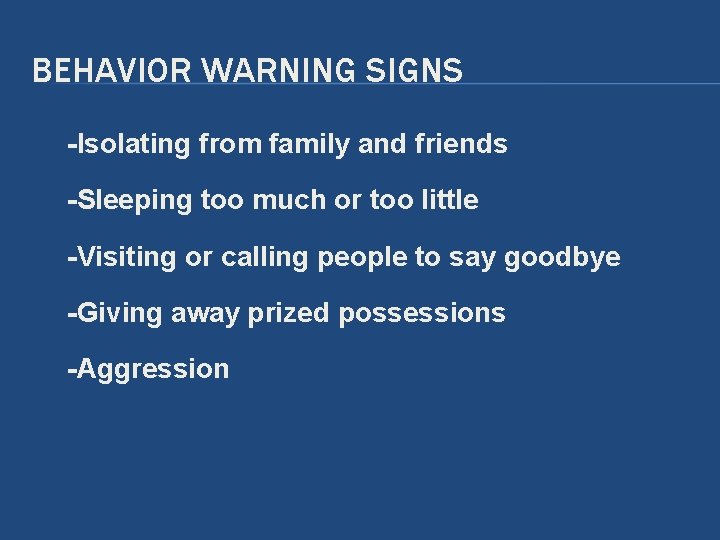
BEHAVIOR WARNING SIGNS -Isolating from family and friends -Sleeping too much or too little -Visiting or calling people to say goodbye -Giving away prized possessions -Aggression
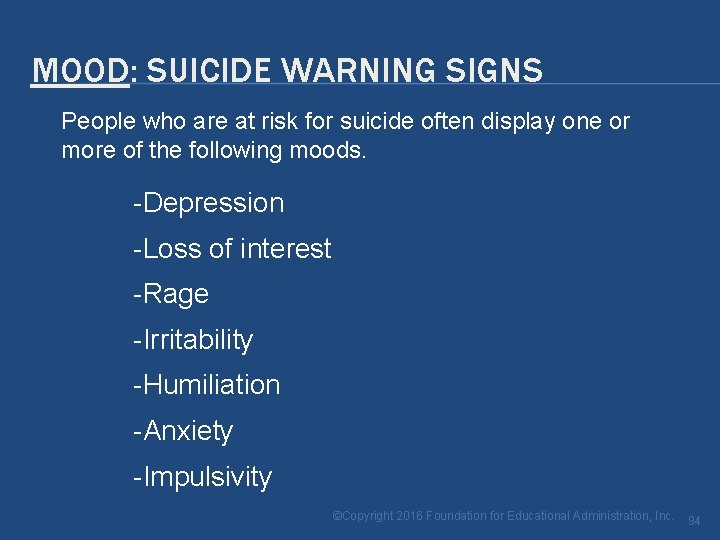
MOOD: SUICIDE WARNING SIGNS People who are at risk for suicide often display one or more of the following moods. -Depression -Loss of interest -Rage -Irritability -Humiliation -Anxiety -Impulsivity ©Copyright 2016 Foundation for Educational Administration, Inc. 94
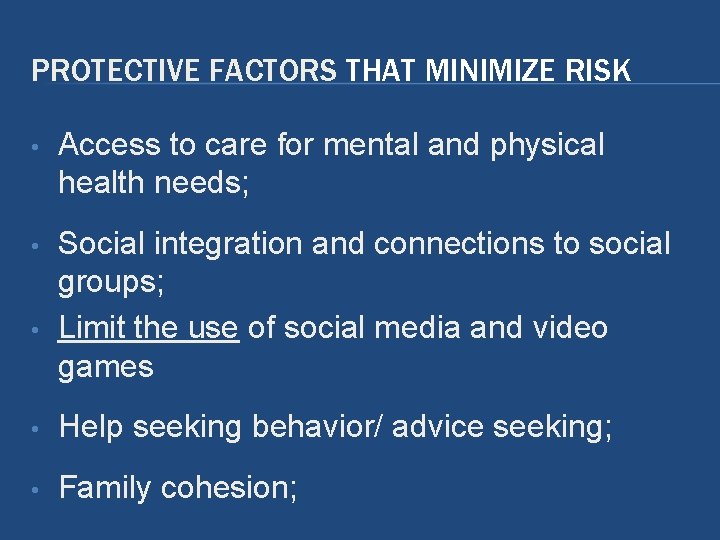
PROTECTIVE FACTORS THAT MINIMIZE RISK • Access to care for mental and physical health needs; • Social integration and connections to social groups; Limit the use of social media and video games • • Help seeking behavior/ advice seeking; • Family cohesion;
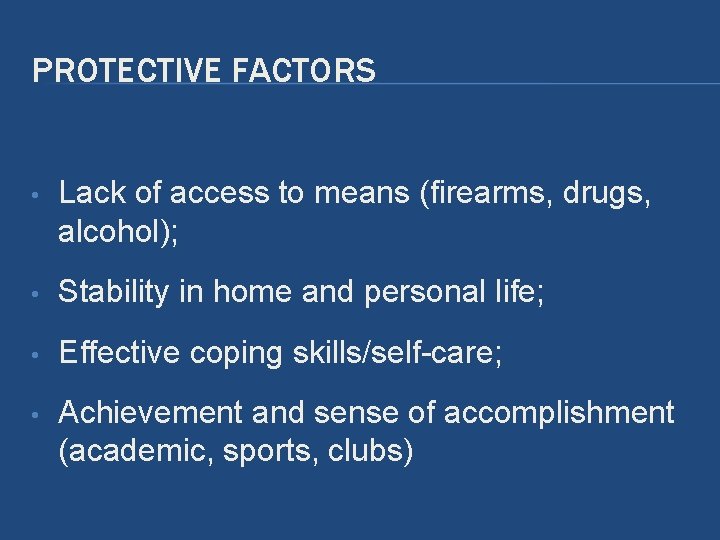
PROTECTIVE FACTORS • Lack of access to means (firearms, drugs, alcohol); • Stability in home and personal life; • Effective coping skills/self-care; • Achievement and sense of accomplishment (academic, sports, clubs)
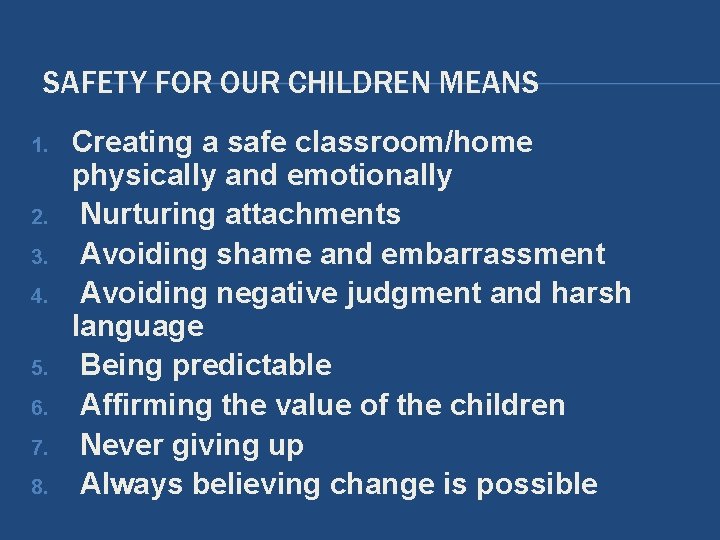
SAFETY FOR OUR CHILDREN MEANS 1. 2. 3. 4. 5. 6. 7. 8. Creating a safe classroom/home physically and emotionally Nurturing attachments Avoiding shame and embarrassment Avoiding negative judgment and harsh language Being predictable Affirming the value of the children Never giving up Always believing change is possible
THE EFFECTS OF SOCIAL MEDIA 1. 2. 3. Isolation Exposure to themes where youth are cast in the role of adults, defending themselves from an aggressive enemy using guns and other violent means and committing sexual acts and aggression. Experiencing fight/flight stress responses Not all children/youth can manage this role.
PERFECT PARENTING? ? ? WHAT’S THAT? ? To continually chastise and blame yourself for your past errors and mis-steps in parenting, keeps you focused on your own “stuff”, and keeps you out of relationship with your children. It’s never too late to make changes and move toward greater personal health and harmony.
WHAT IS AN ADULT TO DO? 1. Manage your own baggage. Work to make sense of your own story first. 2. Understand that childhood’s chronic challenges are different than childhood’s chronic stresses. Challenges build resiliency; constant stressors change the brain system. 3. Offer “facetime” with the child, without a “yuk” face, using a soothing eye gaze.
WHAT IS AN ADULT TO DO? 4. If you lose your temper, apologize—Right Away! 5. Validate and normalize all of their EMOTIONS. 6. Strengthen attachments, secure the bonds between adults and children, and among children.
WHAT IS AN ADULT TO DO? 7. Amplify the good feelings. 8. Make what’s happening a safe and open conversation. 9. Consider how to use mindfulness and calming moments at home.
WHEN YOU ARE CONCERNED… Tell your child, and your spouse/partner you are concerned… Call the school counselor for advice… Ask for the names of private counselors and agencies, and then make an appointment… Speak with your child’s physician, express your worries and concerns… If your “gut feeling” keeps you concerned, don’t ignore the feeling.
WHO IS YOUR SUPPORT TEAM? We can’t do this alone. Often it requires us to partner with others who we TRUST. Consider creating a support team to include: School Counselors School Child Study Team Members Trusted teacher/nurse/administrator Pastors, priests, rabbi, imam Private Therapist
We can no longer ignore what research now tells us is the truth about child development. We can no longer expect others to carry on the work alone, without us.
REMEMBER
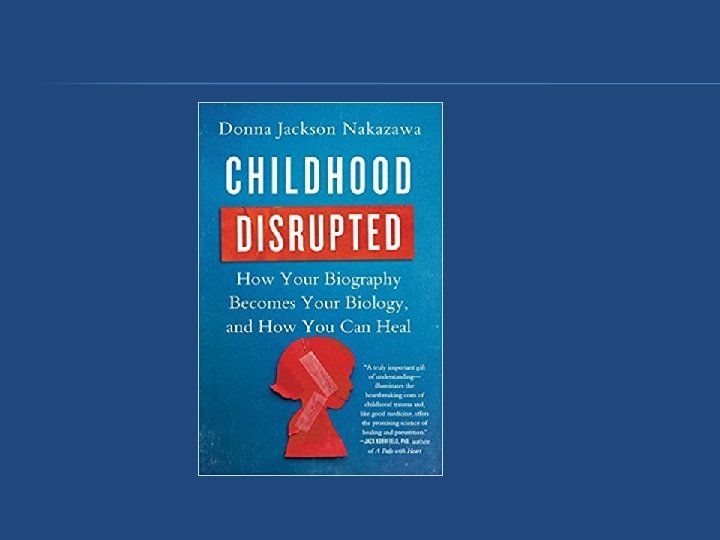
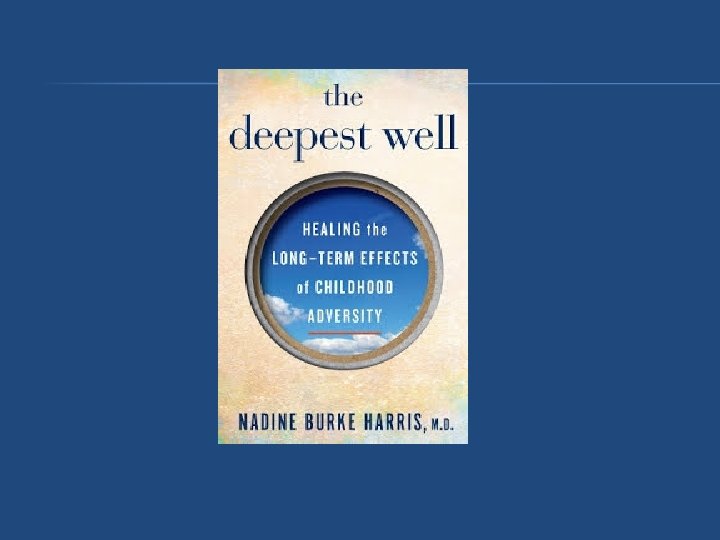
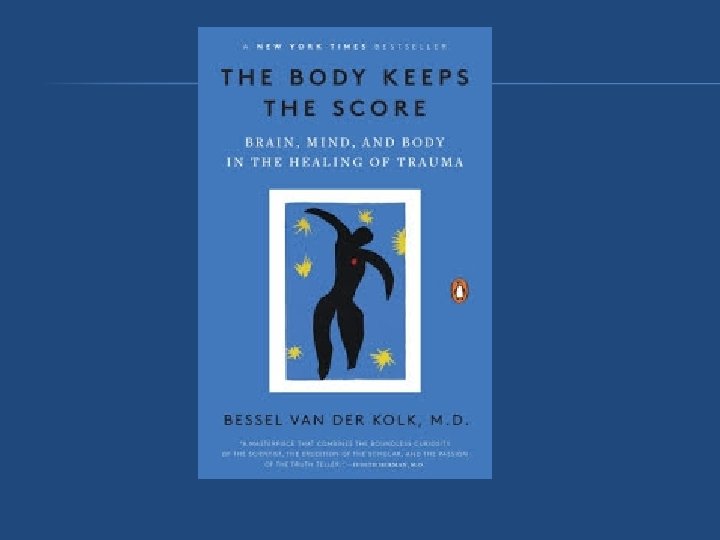
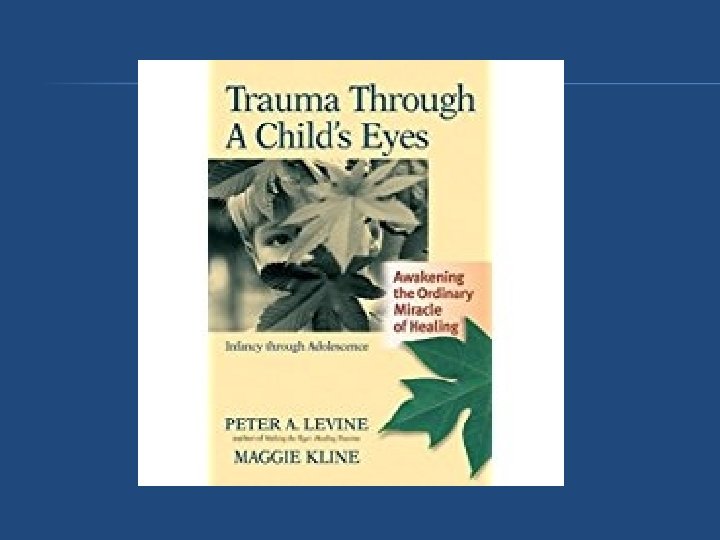
Following are resources to support your growth.
SUICIDE SAFETY APP Available for I-Phones, Androids and Google
HAVING ACCESS TO OTHER HELPERS What can you do? Who can you call? ▪ NJ Hopeline 1 -855 -654 -6735 ▪ 2 nd Floor Helpline 888 -2228 (talk/TEXT) ▪ National Lifeline 1 -800 -273 -8255 ▪ Am. Foundation for Suicide Prev. ▪ 9 -1 -1 in any Emergency afsp. org
You do not have to be alone in this. It is never too late to make a difference in the life of your child. Never!!
Prepare the child for the path…
Prepare the child for the path… Don’t prepare the path for the child
Thank you for being part of this!! Just being here shows that you care.
George Scott, Ed. S, LMFT Center for Counseling Services and The Traumatic Loss Coalition 609 -771 -0444 george. centerforcounseling@verizon. net