
Best Treatment of People with PNES Tom Snyder
Best Treatment of People with PNES Tom Snyder, Ph. D. Clinical Neuropsychologist Clinical Professor of Psychiatry University of Alberta and Hospitals
CFPC Faculty/Presenter Disclosure Faculty: Thomas J. Snyder § Relationships with any commercial interests (Grants/Research Support/Pharma. Corp) - none § Speakers Bureau/Honoraria - none § Consulting Fees - none § Employee of Alberta Health Services, University of Alberta Hospital Site, Edmonton
Best Treatment of People with PNES Tom Snyder, Ph. D. Clinical Neuropsychologist Clinical Professor of Psychiatry University of Alberta and Hospitals
Objectives � Understand what is known about the efficacy of different treatments for people with PNES (PWPNES) � Understand an E. E. T. process of treatment for PNES in adults and adolescents • Explaining: Presenting the Diagnosis (3 Ws) • Exploring: Defining treatment parameters (3 Ps) • Treating: Psychological treatments (How) • Treatment Example: Manualized CBT-informed PT • Treatment Programs in Canada and U. S. A. � Appreciate the challenges to achieving effective treatment for PWPNES in Canada
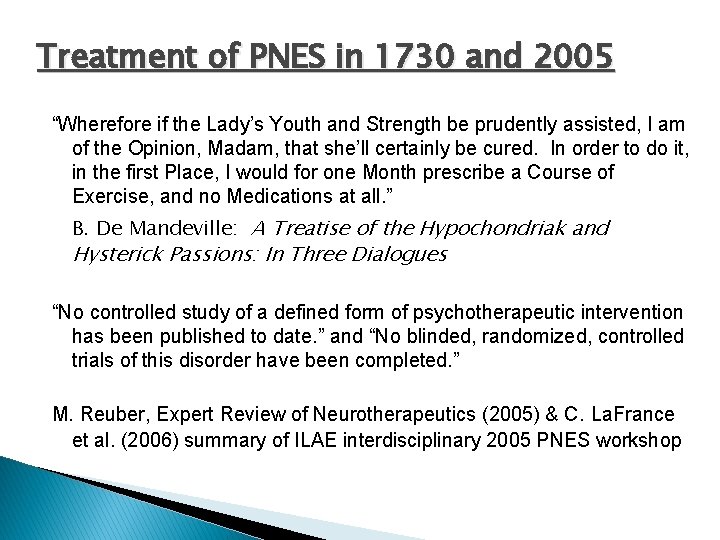
Treatment of PNES in 1730 and 2005 “Wherefore if the Lady’s Youth and Strength be prudently assisted, I am of the Opinion, Madam, that she’ll certainly be cured. In order to do it, in the first Place, I would for one Month prescribe a Course of Exercise, and no Medications at all. ” B. De Mandeville: A Treatise of the Hypochondriak and Hysterick Passions: In Three Dialogues “No controlled study of a defined form of psychotherapeutic intervention has been published to date. ” and “No blinded, randomized, controlled trials of this disorder have been completed. ” M. Reuber, Expert Review of Neurotherapeutics (2005) & C. La. France et al. (2006) summary of ILAE interdisciplinary 2005 PNES workshop
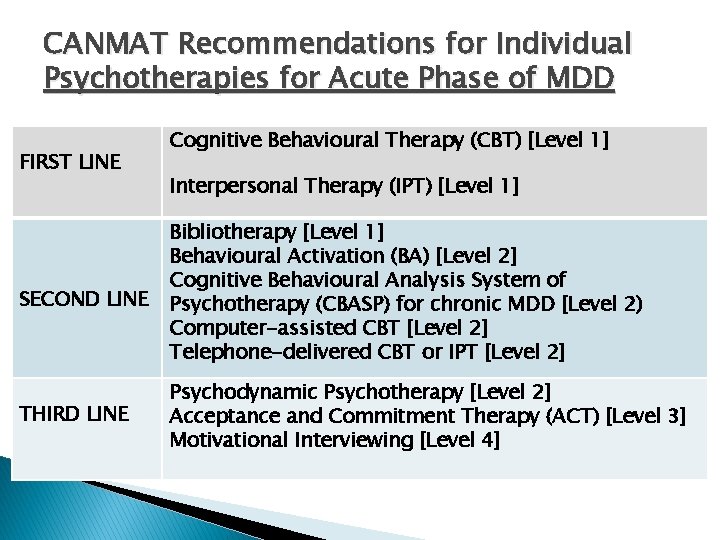
CANMAT Recommendations for Individual Psychotherapies for Acute Phase of MDD FIRST LINE Cognitive Behavioural Therapy (CBT) [Level 1] Interpersonal Therapy (IPT) [Level 1] SECOND LINE Bibliotherapy [Level 1] Behavioural Activation (BA) [Level 2] Cognitive Behavioural Analysis System of Psychotherapy (CBASP) for chronic MDD [Level 2) Computer-assisted CBT [Level 2] Telephone-delivered CBT or IPT [Level 2] THIRD LINE Psychodynamic Psychotherapy [Level 2] Acceptance and Commitment Therapy (ACT) [Level 3] Motivational Interviewing [Level 4]
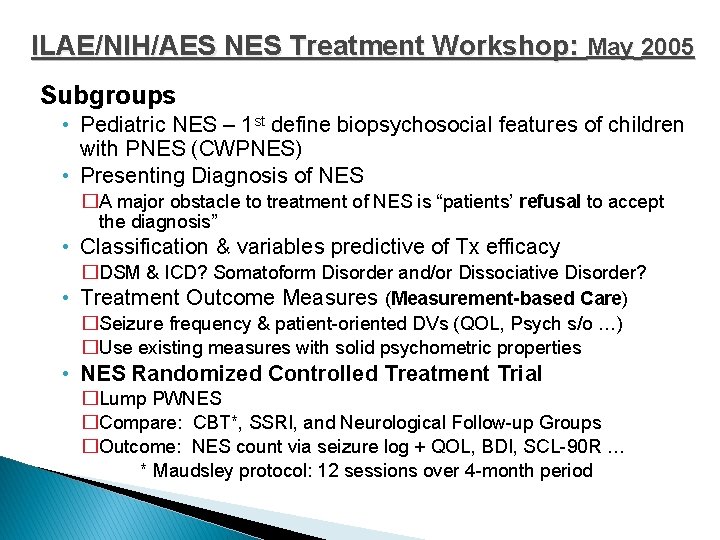
ILAE/NIH/AES NES Treatment Workshop: May 2005 Subgroups • Pediatric NES – 1 st define biopsychosocial features of children with PNES (CWPNES) • Presenting Diagnosis of NES �A major obstacle to treatment of NES is “patients’ refusal to accept the diagnosis” • Classification & variables predictive of Tx efficacy �DSM & ICD? Somatoform Disorder and/or Dissociative Disorder? • Treatment Outcome Measures (Measurement-based Care) �Seizure frequency & patient-oriented DVs (QOL, Psych s/o …) �Use existing measures with solid psychometric properties • NES Randomized Controlled Treatment Trial �Lump PWNES �Compare: CBT*, SSRI, and Neurological Follow-up Groups �Outcome: NES count via seizure log + QOL, BDI, SCL-90 R … * Maudsley protocol: 12 sessions over 4 -month period

Psychological and behavioural treatments for adults with non‐epileptic attack disorder (NEAD): Meta-analysis (2014) Risk of Bias: Low High Cochrane Database of Systematic Reviews, Martlew, Pulman, & Marson (February 2014)
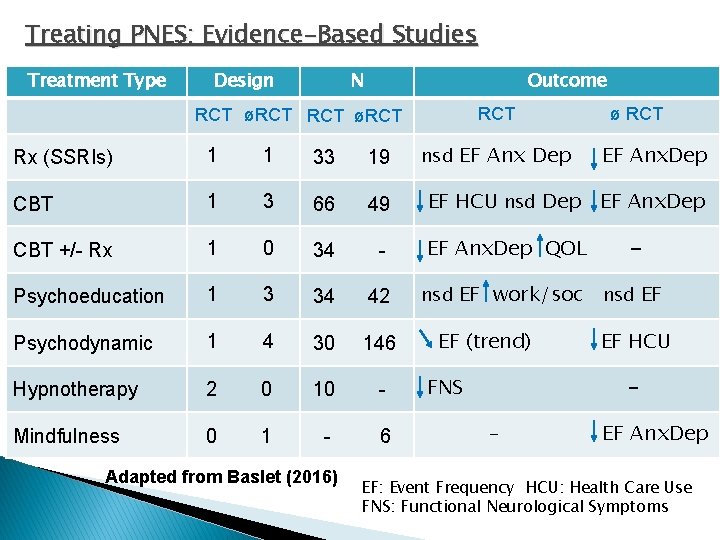
Treating PNES: Evidence-Based Studies Treatment Type Design N Outcome RCT øRCT nsd EF Anx Dep ø RCT EF Anx. Dep Rx (SSRIs) 1 1 33 19 CBT 1 3 66 49 CBT +/- Rx 1 0 34 - EF Anx. Dep QOL - Psychoeducation 1 3 34 42 nsd EF work/soc nsd EF Psychodynamic 1 4 30 146 Hypnotherapy 2 0 10 - Mindfulness 0 1 - 6 Adapted from Baslet (2016) EF HCU nsd Dep EF Anx. Dep EF (trend) FNS EF HCU - - EF Anx. Dep EF: Event Frequency HCU: Health Care Use FNS: Functional Neurological Symptoms
Explaining/Communicating Diagnosis “The main obstacle to effective treatment is effective [ineffective] delivery of the diagnosis. ” Benbadis (2015) � Treatment for PNES does not begin with psychological intervention but starts with the diagnosis and delivery of the diagnosis � Q-Pulse Survey of Communication Practices (2015) ◦ 10% inform patients of possible PNES Dx before V-EEG Dx – the 1 st breakdown in patient/doctor communication? ◦ > 70% with a diagnosis of PNES (a psychiatric diagnosis) presented only by neurologists; 6% with MHP + neurologist ◦ 59% with no follow-up with patients who doubt diagnosis – message of not caring what happens after diagnosis? ◦ If mental health follow-up is recommended, 42% advised to make appointment with MHP of their choosing
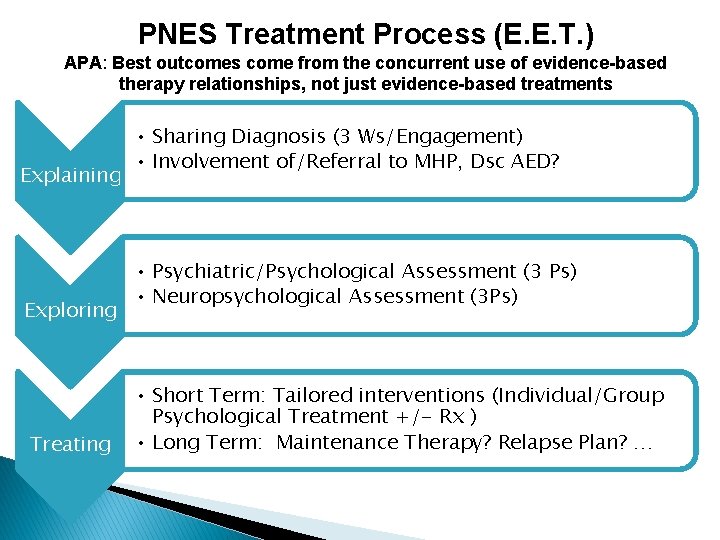
PNES Treatment Process (E. E. T. ) APA: Best outcomes come from the concurrent use of evidence-based therapy relationships, not just evidence-based treatments Explaining Exploring Treating • Sharing Diagnosis (3 Ws/Engagement) • Involvement of/Referral to MHP, Dsc AED? • Psychiatric/Psychological Assessment (3 Ps) • Neuropsychological Assessment (3 Ps) • Short Term: Tailored interventions (Individual/Group Psychological Treatment +/- Rx ) • Long Term: Maintenance Therapy? Relapse Plan? …
Explaining/Communicating Diagnosis Purposes (3 Ws & facilitating treatment) � Educate patient and family • What PNES is and its causes: • Conversation difficult & almost all patients exhibit interactional resistance to a psychological model of PNES • Communication style as important as words used • “The body’s expression of emotions and this expression is not consciously controlled” NA , or ” A reflex the brain has learned to deal with internal or external triggers” MR • Communication strategies – what to say • What can be done about PNES (Planting the seed for PTx) • Provide educational materials/resources � Facilitate Engagement: Assess willingness to engage in treatment – motivational interviewing? Facilitate referral to MHP.
Exploring Relevant Factors (3 Ps) “Heterogeneity is the homogeneity of NES” (La. France, 2015) � Predisposing factors for each person � Precipitating factors: Cognitive and defensive patterns that inhibit/distort awareness and/or verbal/affective expression of emotional distress • Impaired executive attention, memory, & lexical access • Personality factors, dissociation … � Perpetuating factors • Comorbidities: PTSD, depression, panic disorder, generalized anxiety disorder, family relationship binds • Internal and/or external reinforcement Essential information for tailoring treatment for each individual
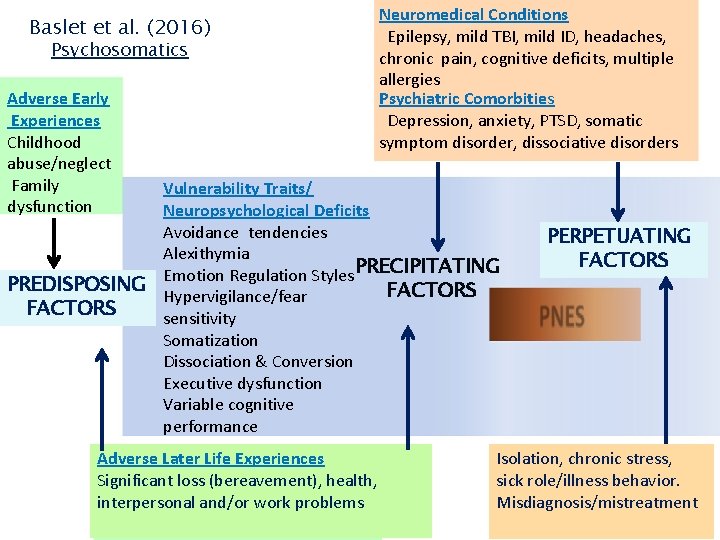
Baslet et al. (2016) Psychosomatics Adverse Early Experiences Childhood abuse/neglect Family dysfunction Neuromedical Conditions Epilepsy, mild TBI, mild ID, headaches, chronic pain, cognitive deficits, multiple allergies Psychiatric Comorbities Depression, anxiety, PTSD, somatic symptom disorder, dissociative disorders Vulnerability Traits/ Neuropsychological Deficits Avoidance tendencies Alexithymia Emotion Regulation Styles PRECIPITATING PREDISPOSING FACTORS Hypervigilance/fear FACTORS sensitivity Somatization Dissociation & Conversion Executive dysfunction Variable cognitive performance Adverse Later Life Experiences Significant loss (bereavement), health, interpersonal and/or work problems PERPETUATING FACTORS Isolation, chronic stress, sick role/illness behavior. Misdiagnosis/mistreatment
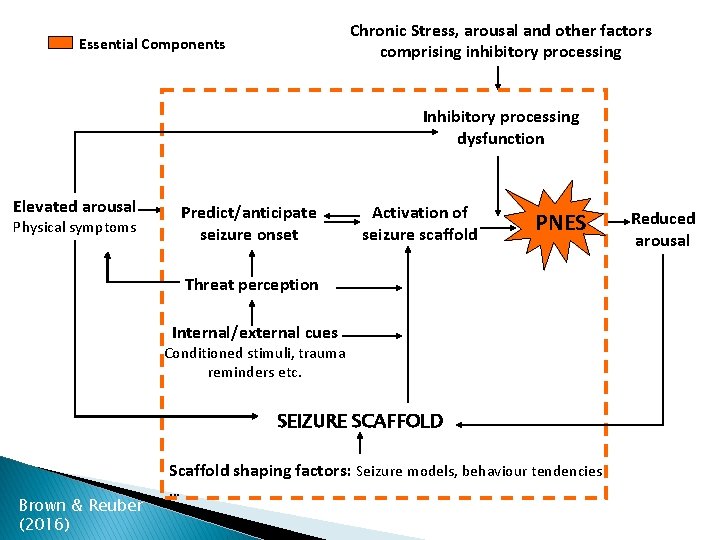
Chronic Stress, arousal and other factors comprising inhibitory processing Essential Components Inhibitory processing dysfunction Elevated arousal Predict/anticipate seizure onset Physical symptoms Activation of seizure scaffold PNES Threat perception Internal/external cues Conditioned stimuli, trauma reminders etc. SEIZURE SCAFFOLD Scaffold shaping factors: Seizure models, behaviour tendencies Brown & Reuber (2016) … Reduced arousal
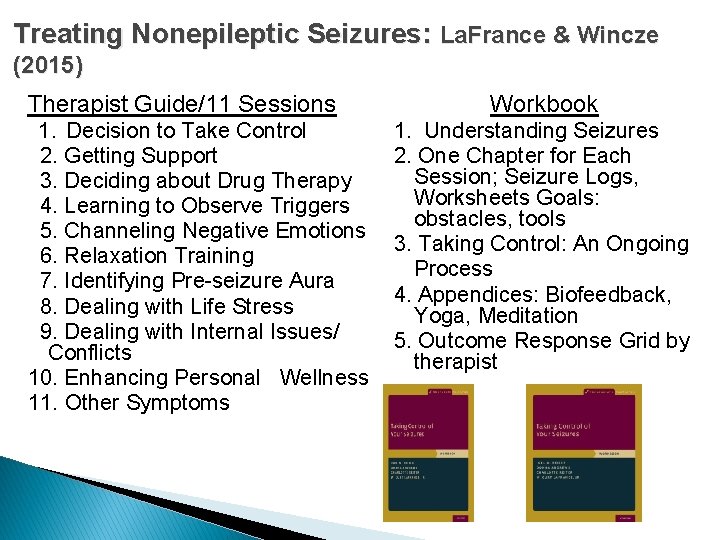
Treating Nonepileptic Seizures: La. France & Wincze (2015) Therapist Guide/11 Sessions 1. Decision to Take Control 2. Getting Support 3. Deciding about Drug Therapy 4. Learning to Observe Triggers 5. Channeling Negative Emotions 6. Relaxation Training 7. Identifying Pre-seizure Aura 8. Dealing with Life Stress 9. Dealing with Internal Issues/ Conflicts 10. Enhancing Personal Wellness 11. Other Symptoms Workbook 1. Understanding Seizures 2. One Chapter for Each Session; Seizure Logs, Worksheets Goals: obstacles, tools 3. Taking Control: An Ongoing Process 4. Appendices: Biofeedback, Yoga, Meditation 5. Outcome Response Grid by therapist
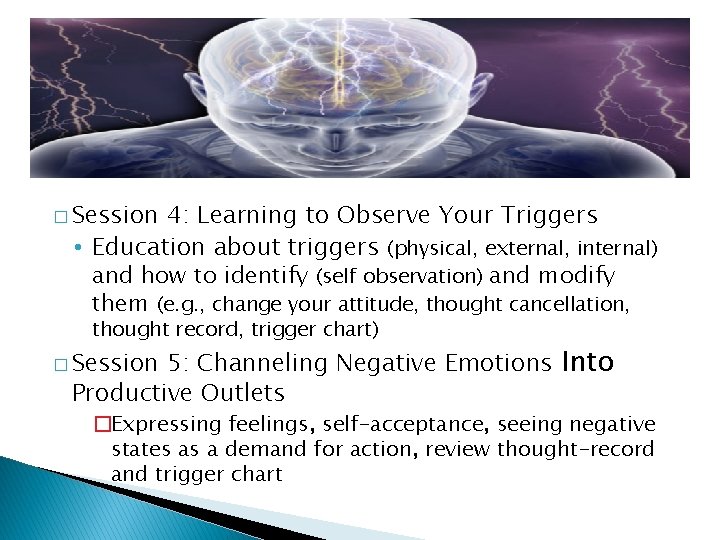
� Session 4: Learning to Observe Your Triggers • Education about triggers (physical, external, internal) and how to identify (self observation) and modify them (e. g. , change your attitude, thought cancellation, thought record, trigger chart) 5: Channeling Negative Emotions Into Productive Outlets � Session �Expressing feelings, self-acceptance, seeing negative states as a demand for action, review thought-record and trigger chart
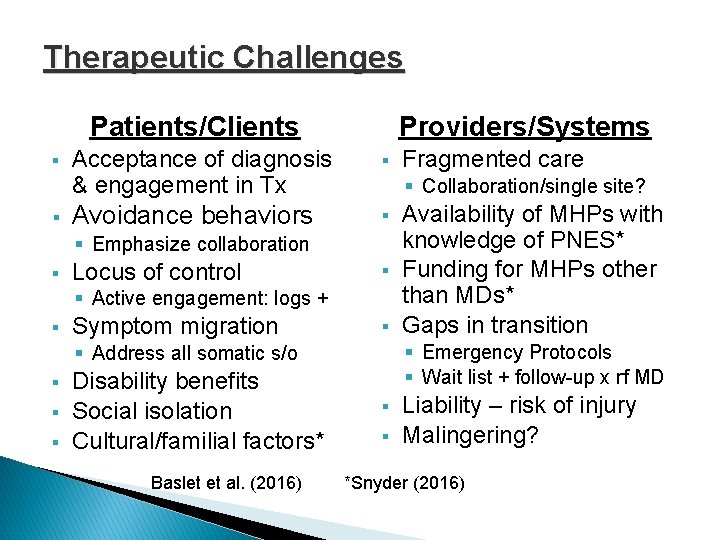
Therapeutic Challenges Patients/Clients § § Providers/Systems Acceptance of diagnosis & engagement in Tx § Avoidance behaviors § § Collaboration/single site? § Emphasize collaboration § Locus of control § § Active engagement: logs + § Symptom migration § § § Disability benefits Social isolation Cultural/familial factors* Baslet et al. (2016) Availability of MHPs with knowledge of PNES* Funding for MHPs other than MDs* Gaps in transition § Emergency Protocols § Wait list + follow-up x rf MD § Address all somatic s/o § Fragmented care § § Liability – risk of injury Malingering? *Snyder (2016)
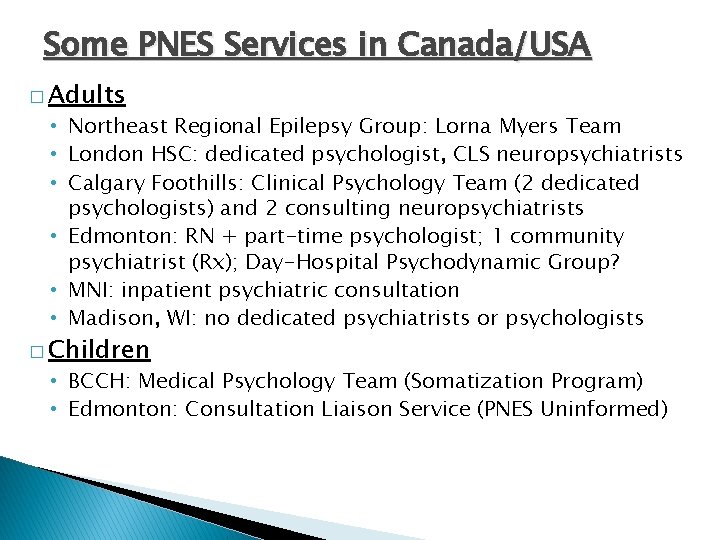
Some PNES Services in Canada/USA � Adults • Northeast Regional Epilepsy Group: Lorna Myers Team • London HSC: dedicated psychologist, CLS neuropsychiatrists • Calgary Foothills: Clinical Psychology Team (2 dedicated psychologists) and 2 consulting neuropsychiatrists • Edmonton: RN + part-time psychologist; 1 community psychiatrist (Rx); Day-Hospital Psychodynamic Group? • MNI: inpatient psychiatric consultation • Madison, WI: no dedicated psychiatrists or psychologists � Children • BCCH: Medical Psychology Team (Somatization Program) • Edmonton: Consultation Liaison Service (PNES Uninformed)
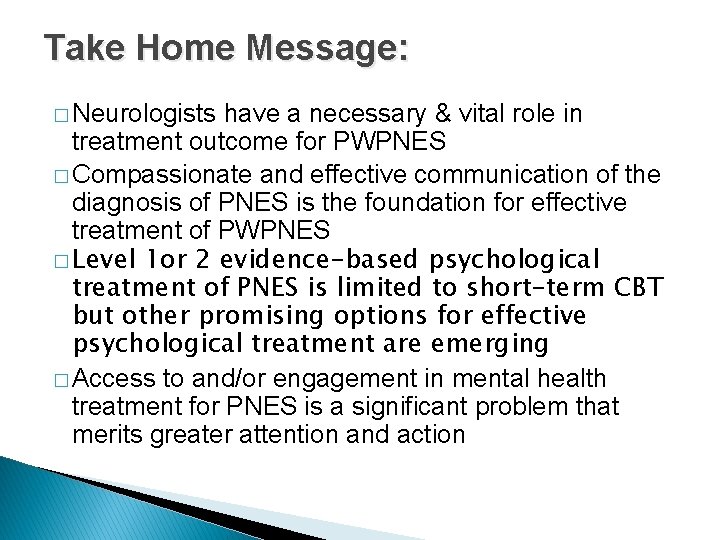
Take Home Message: � Neurologists have a necessary & vital role in treatment outcome for PWPNES � Compassionate and effective communication of the diagnosis of PNES is the foundation for effective treatment of PWPNES � Level 1 or 2 evidence-based psychological treatment of PNES is limited to short-term CBT but other promising options for effective psychological treatment are emerging � Access to and/or engagement in mental health treatment for PNES is a significant problem that merits greater attention and action
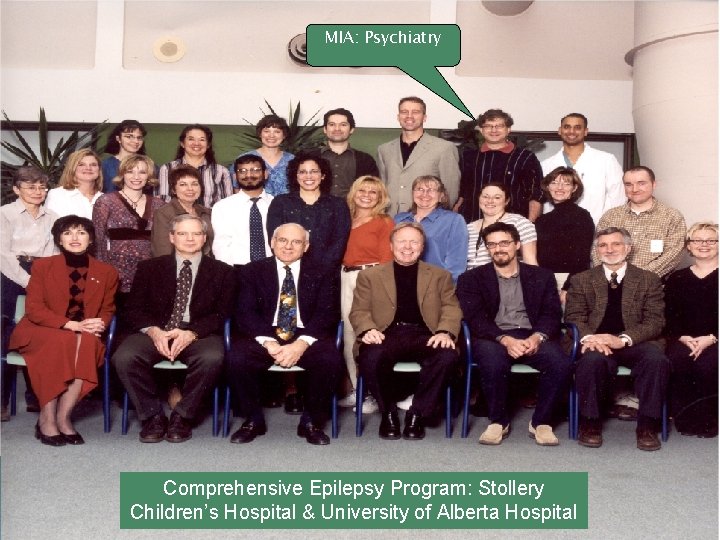
MIA: Psychiatry Comprehensive Epilepsy Program: Stollery Children’s Hospital & University of Alberta Hospital
Resources Psychogenic Non-epileptic Seizures: A Guide (Lorna Myers, 2014) � Treating Nonepileptic Seziures: Therapist Guide (La. France & Wincze, 2015) � Taking Control of Your Seizures: Workbook (Reiter et al. , 2015) � Pediatric Somatization Professional Handbook (Newlove, Stanford, et al. , 2016) � Mindfulness-Based Intervention, Baslet et al. (2015) � Overcoming Functional Neurological Symptoms: A five areas approach (Williams et al. , 2011) � View from the Floor: Psychogenic Non-epileptic Seizures, A Patients Perspective (Kate Berger, 2015) � www. nonepilepticattackdisorders. info �
Some Thoughts: Dr. Lynda Phillips � Each session is packed with information, a lot to learn. Could take two or more appointments to cover the material in some sessions (e. g. , Thought Record from “Mind Over Mood” taught at the end of session 4) � Motivation needs to be very high � Issues can easily come up in each session that may require psychotherapy to relieve before moving on to the next session � Session 9 could take months to complete, especially if psychopathology is significant
Brown & Reuber (2016): Systematic review of psychological & psychiatric aspects of PNES “The treatment of PNES is only likely to improve significantly with a better understanding of the etiology of the disorder” (Reuber 2005) � PWPNES reliably report more physical symptoms than PWE � Capacity for dissociation is common but neither necessary nor sufficient for PNES � Trauma is not a universal antecedent of PNES � Subjective anxiety is not greater in PWPNES than PWE & subjective fear is not common � Increased arousal is common with PNES events � Unclear temporal relationship between stressful events and PNES – concussion/head injury
- Slides: 24