Lymphoma Ali Al Khader M D Faculty of


- Slides: 28
Lymphoma Ali Al Khader, M. D. Faculty of Medicine Al-Balqa’ Applied University Email: ali. alkhader@bau. edu. jo
(1) Precursor B cell leukemia/lymphoma (BALL) • As the name indicates: It can present as lymphoma or leukemia • Mostly presents as leukemia (Acute lymphoblastic leukemia, ALL) • Peaks in 3 year old children • Much more common than precursor T cell leukemia/lymphoma
(2) Precursor T cell leukemia/lymphoma (TALL) • As the name indicates: It can present as lymphoma or leukemia • Mostly present as thymic lymphoma • Peaks in adolescent males
B-ALL & T-ALL in general • Both can present as leukemia or lymphoma Td. T • The most common cancer in children, especially younger than 15 years • Males more • Whites more • Hispanics have the highest incidence
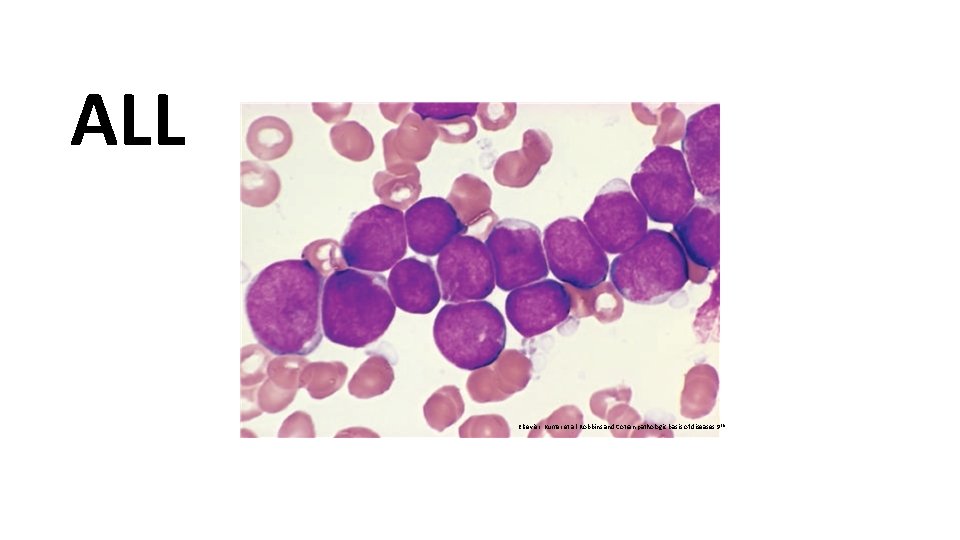
ALL Elsevier. Kumar et al. Robbins and Cotran pathologic basis of diseases 9 th
As a leukemia: • It must be differentiated from AML (Blasts of both may be indistinguishable)…flow cytometry of peripheral blood or marrow aspirate *Flow cytometry is somewhat like immunohistochemistry but on fluids • Clinically: neutropenia, thrombocytopenia & anemia • WBC count: >100000…but in 50%: <10000 (aleukemic leukemia)
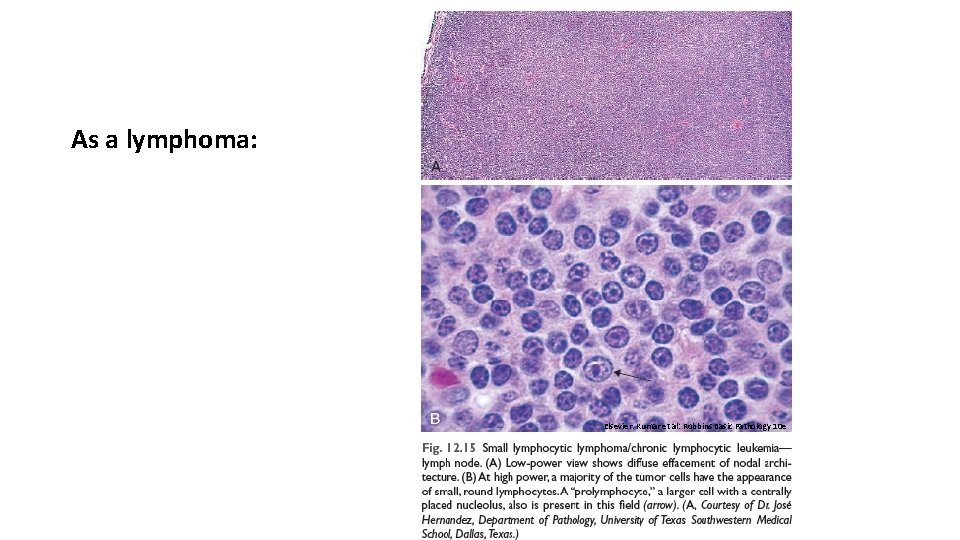
(3) Chronic lymphocytic leukemia (CLL)/Small lymphocytic lymphoma (SLL) B cell neoplasm • As the name indicates: It can present as lymphoma or leukemia • If the peripheral blood lymphocyte count reaches 5000, it is called CLL …the most common leukemia of adults in the Western world …but SLL is not a common lymphoma • CLL/SLL is an indolent, slowly growing tumor • In addition to the lymph nodes, the bone marrow, spleen, and liver are involved in almost all cases • Absolute lymphocytosis in peripheral blood in most patients…with smudge cells
As a lymphoma: Elsevier. Kumar et al: Robbins Basic Pathology 10 e
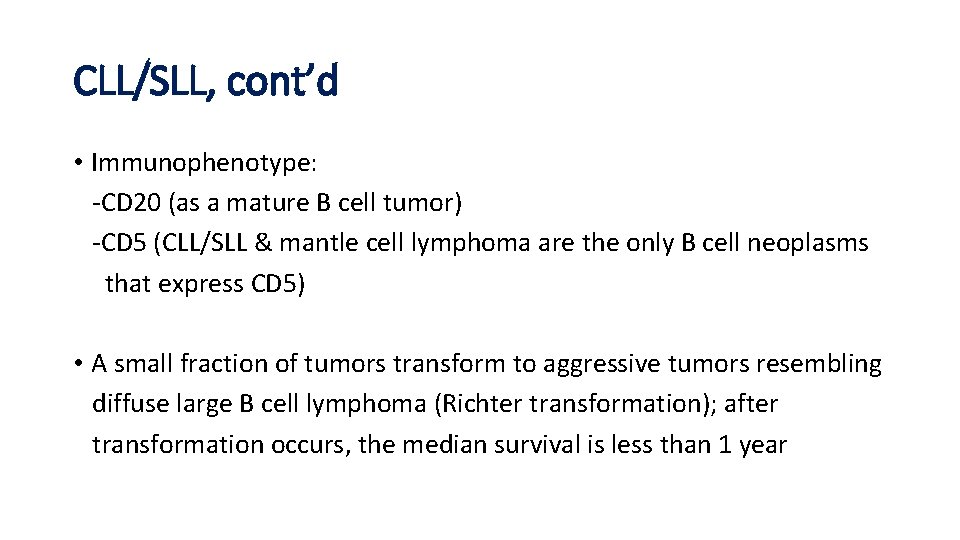
CLL/SLL, cont’d • Immunophenotype: -CD 20 (as a mature B cell tumor) -CD 5 (CLL/SLL & mantle cell lymphoma are the only B cell neoplasms that express CD 5) • A small fraction of tumors transform to aggressive tumors resembling diffuse large B cell lymphoma (Richter transformation); after transformation occurs, the median survival is less than 1 year
(4) Follicular lymphoma (FL) B cell neoplasm • 40% of the adult NHLs (non-Hodgkin lymphomas) in the United States • As CLL/SLL, less common in Asia • Greater than 85% of follicular lymphomas have a characteristic (14; 18) translocation that fuses the BCL 2 gene on chromosome 18 to the Ig. H locus on chromosome 14
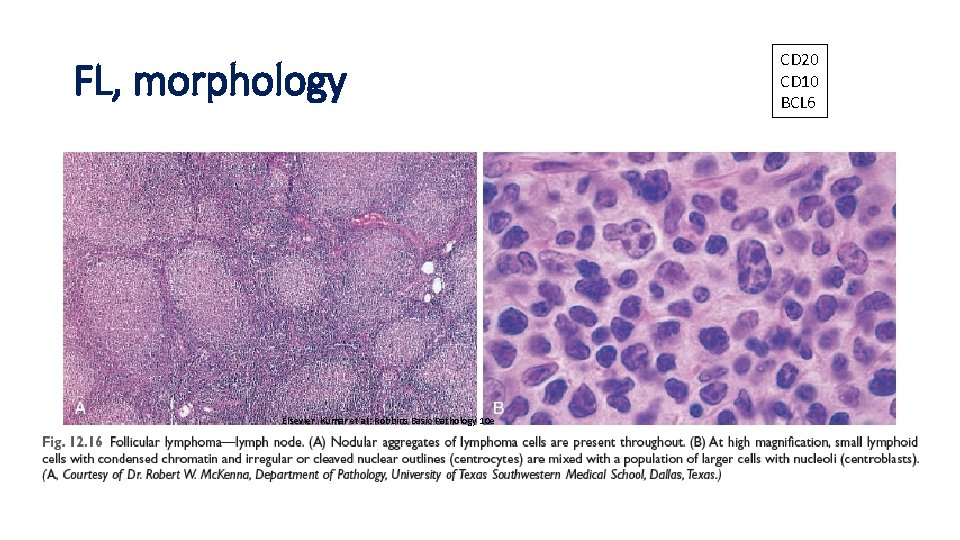
FL, morphology Elsevier. Kumar et al: Robbins Basic Pathology 10 e CD 20 CD 10 BCL 6
FL, clinical notes • Mainly occurs in adults older than 50 years of age and affects males and females equally • Usually manifests as painless, generalized lymphadenopathy …The bone marrow is involved at diagnosis in approximately 80% of cases • In about 30% to 40% of patients, follicular lymphoma progresses to diffuse large B cell lymphoma • Although the natural history is prolonged (overall median survival, approximately 10 years), follicular lymphoma is not curable
(5) Mantle cell lymphoma (MCL) B cell neoplasm • Mainly in men older than 50 years of age • Almost all tumors have an (11; 14) translocation that fuses the cyclin D 1 gene to the Ig. H locus • Positive for CD 20, CD 5 & cyclin-D 1 • Most patients present with fatigue and lymphadenopathy and are found to have generalized disease involving the bone marrow, spleen, liver, and (often) the gastrointestinal tract
MCL, cont’d • Morphology: -Diffuse or vaguely nodular pattern -Proliferation centers are absent • The bone marrow is involved in most cases and the peripheral blood in about 20% of cases • The tumor sometimes arises in the gastrointestinal tract, often manifesting as multifocal submucosal nodules that grossly resemble polyps (lymphomatoid polyposis) • These tumors are moderately aggressive and incurable. The median survival is 4 to 6 years
(6) Extranodal marginal zone lymphoma • Extranodal marginal zone lymphoma is an example of a cancer that arises within and is sustained by chronic inflammation -B cell neoplasm -Lymphoepithelial lesions • It tends to develop within tissues that are involved by chronic inflammation triggered by autoimmune disorders (such as the salivary gland in Sjögren syndrome and the thyroid gland in Hashimoto thyroiditis) or that are the sites of chronic infection (such as H. pylori gastritis) -CD 20 -positive
(7) Diffuse large B cell lymphoma (DLBCL) • The most common type of lymphoma in adults, accounting for approximately 35% of adult NHLs • Aggressive, but somehow: curable! • The median age at presentation is about 60 years • One-third of diffuse large B cell lymphomas have rearrangements of the BCL 6 gene …and an even higher fraction of tumors have activating point mutations in the BCL 6 promoter
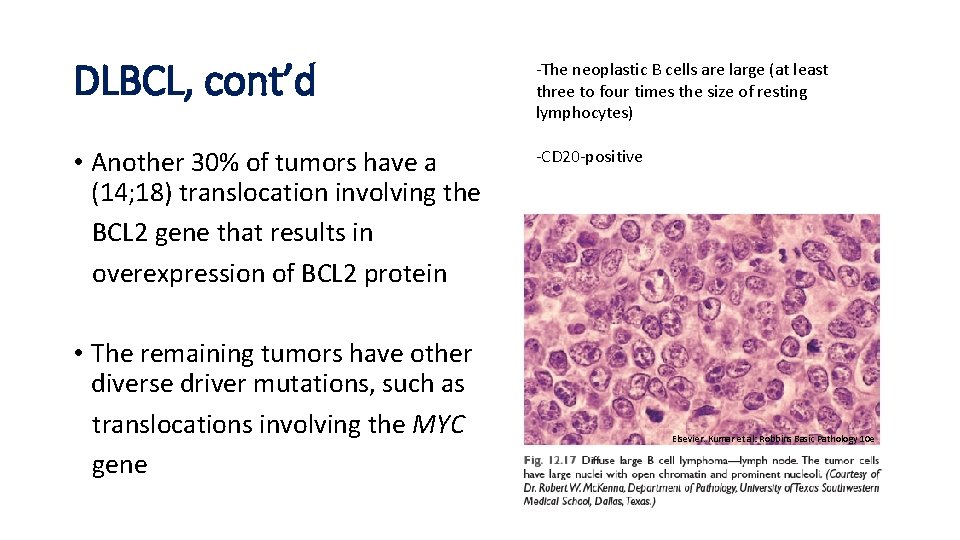
DLBCL, cont’d -The neoplastic B cells are large (at least three to four times the size of resting lymphocytes) • Another 30% of tumors have a (14; 18) translocation involving the BCL 2 gene that results in overexpression of BCL 2 protein -CD 20 -positive • The remaining tumors have other diverse driver mutations, such as translocations involving the MYC gene Elsevier. Kumar et al: Robbins Basic Pathology 10 e
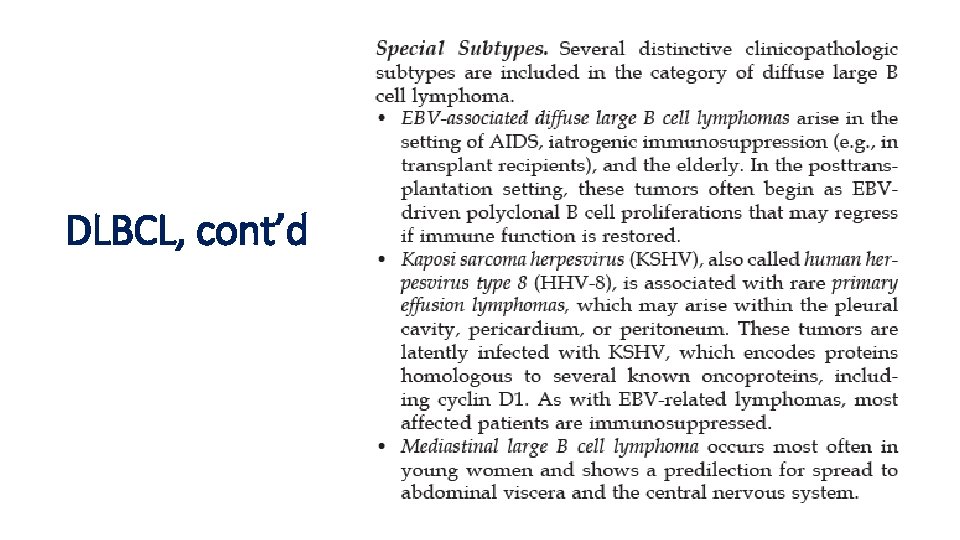
DLBCL, cont’d
DLBCL, cont’d • Patients typically present with a rapidly enlarging, often symptomatic mass at one or several sites • Extranodal presentations are common. The gastrointestinal tract is the most common extranodal site • Unlike the more indolent lymphomas (e. g. , follicular lymphoma), involvement of the liver, spleen, and bone marrow is not common at diagnosis
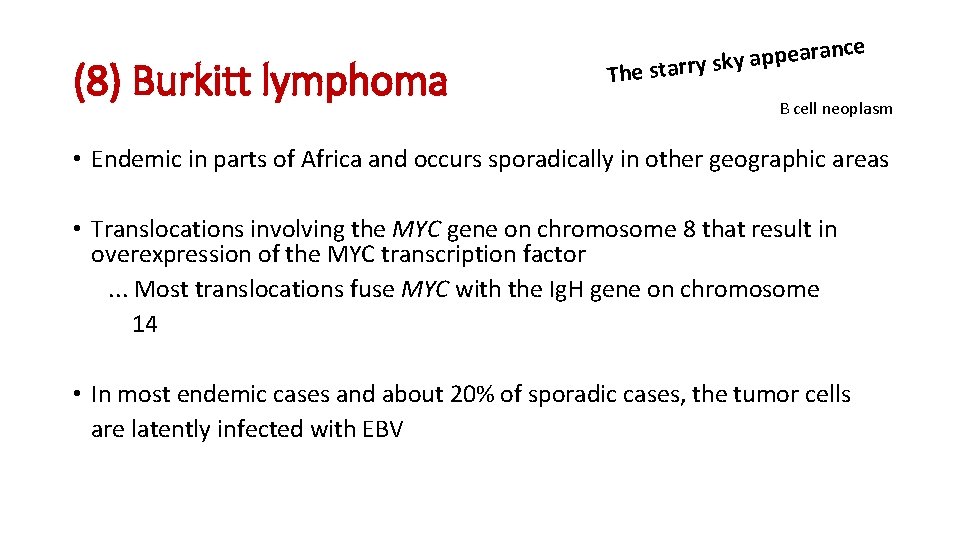
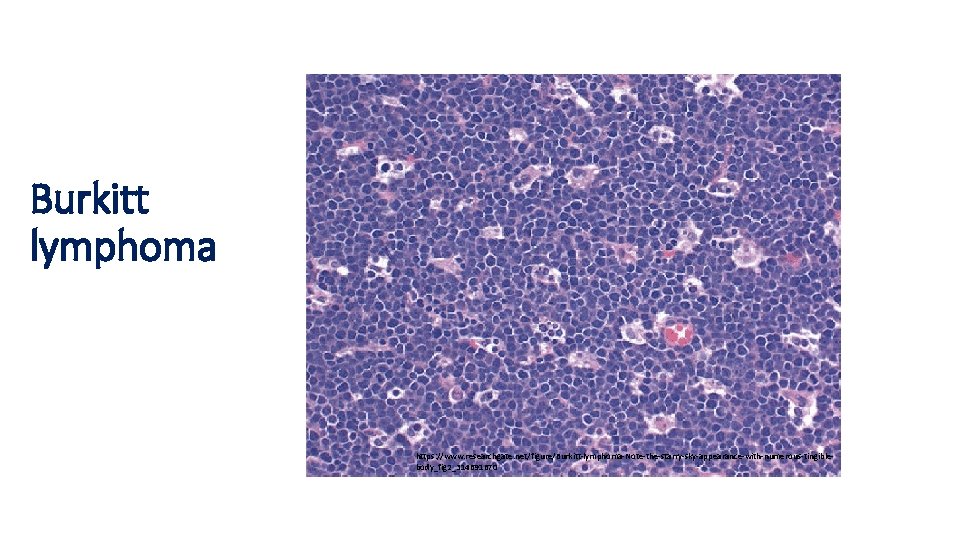
(8) Burkitt lymphoma c n a r a e p p a sky The starry e B cell neoplasm • Endemic in parts of Africa and occurs sporadically in other geographic areas • Translocations involving the MYC gene on chromosome 8 that result in overexpression of the MYC transcription factor. . . Most translocations fuse MYC with the Ig. H gene on chromosome 14 • In most endemic cases and about 20% of sporadic cases, the tumor cells are latently infected with EBV
Burkitt lymphoma, cont’d • Mainly children and young adults…usually extranodal …Endemic tumors often manifest as maxillary or mandibular masses, whereas abdominal tumors involving the bowel, retroperitoneum, and ovaries are more common in North America • Leukemic presentations sometimes occur and must be distinguished from ALL, which is treated with different drug regimens • + for CD 20, CD 10 and BCL 6
Burkitt lymphoma https: //www. researchgate. net/figure/Burkitt-lymphoma-Note-the-starry-sky-appearance-with-numerous-tingiblebody_fig 2_314691670
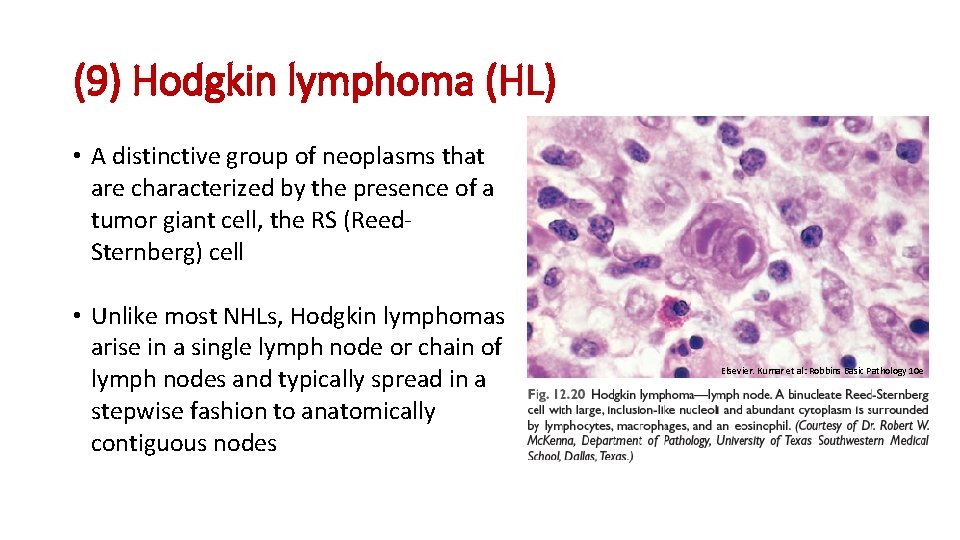
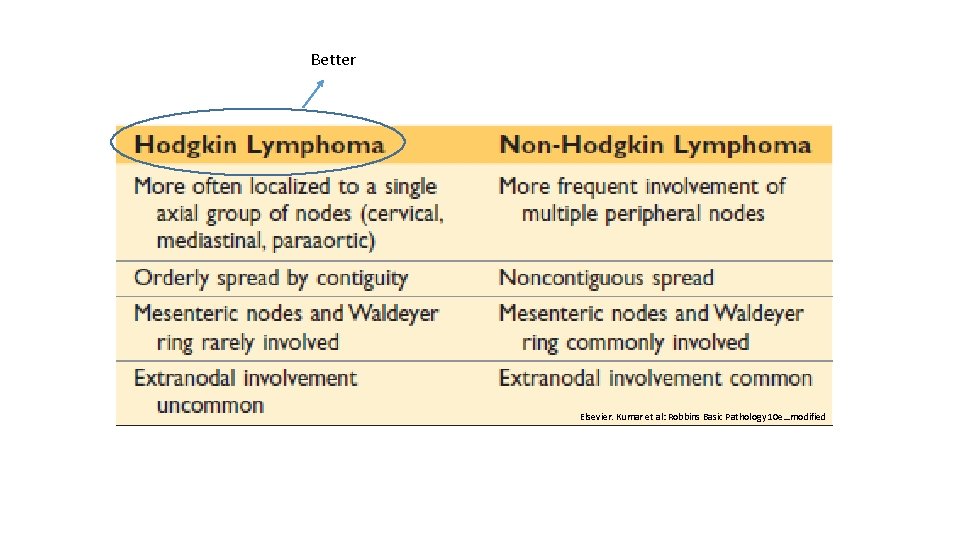
(9) Hodgkin lymphoma (HL) • A distinctive group of neoplasms that are characterized by the presence of a tumor giant cell, the RS (Reed. Sternberg) cell • Unlike most NHLs, Hodgkin lymphomas arise in a single lymph node or chain of lymph nodes and typically spread in a stepwise fashion to anatomically contiguous nodes Elsevier. Kumar et al: Robbins Basic Pathology 10 e
HL, 5 subtypes (1) Nodular sclerosis (2) Mixed cellularity (3) Lymphocyte rich RS and Hodgkin cells are positive for CD 15 and CD 30 and negative for CD 45 (the leukocyte common antigen (LCA)) or B or T cell antigens (4) Lymphocyte depletion (5) Lymphocyte predominant (non-classical)
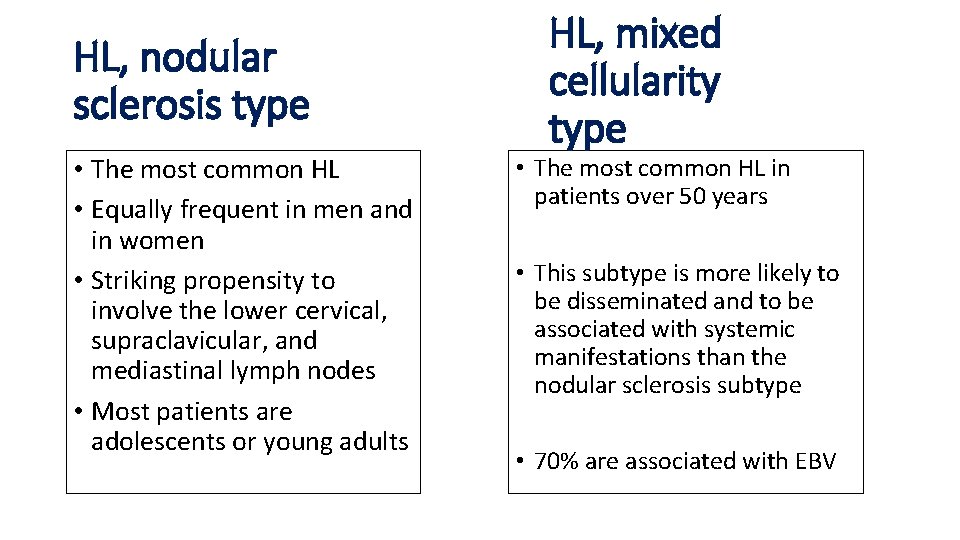
HL, nodular sclerosis type • The most common HL • Equally frequent in men and in women • Striking propensity to involve the lower cervical, supraclavicular, and mediastinal lymph nodes • Most patients are adolescents or young adults HL, mixed cellularity type • The most common HL in patients over 50 years • This subtype is more likely to be disseminated and to be associated with systemic manifestations than the nodular sclerosis subtype • 70% are associated with EBV
Better Elsevier. Kumar et al: Robbins Basic Pathology 10 e…modified
• What are B symptoms? • What is Mycosis fungoides/Sézary syndrome?
Thank You