
Inflammation 4 of 5 Ali Al Khader M

- Slides: 19
Inflammation (4 of 5) Ali Al Khader, M. D. Faculty of Medicine Al-Balqa’ Applied University Email: ali. alkhader@bau. edu. jo
What will we discuss today? • Plasma protein–derived mediators • Anti-inflammatory mediators • Morphologic patterns of acute inflammation
Plasma protein–derived mediators … 3 systems: -Complement system -Kinin system -Coagulation system
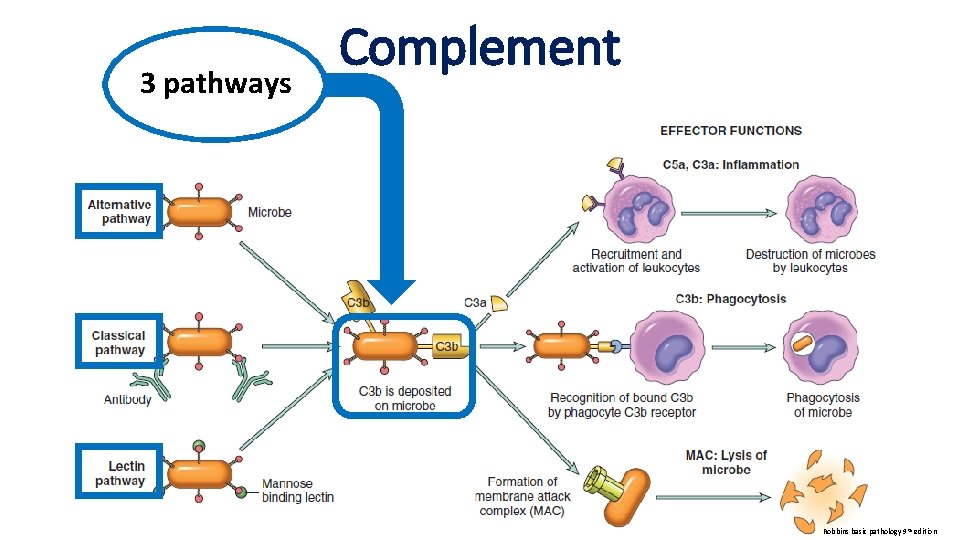
3 pathways Complement Robbins basic pathology 9 th edition
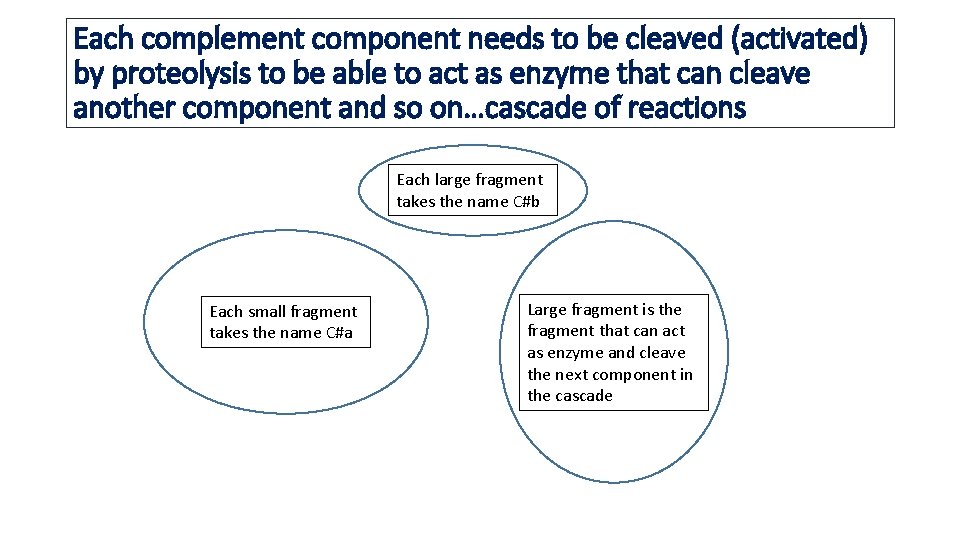
Each complement component needs to be cleaved (activated) by proteolysis to be able to act as enzyme that can cleave another component and so on…cascade of reactions Each large fragment takes the name C#b Each small fragment takes the name C#a Large fragment is the fragment that can act as enzyme and cleave the next component in the cascade
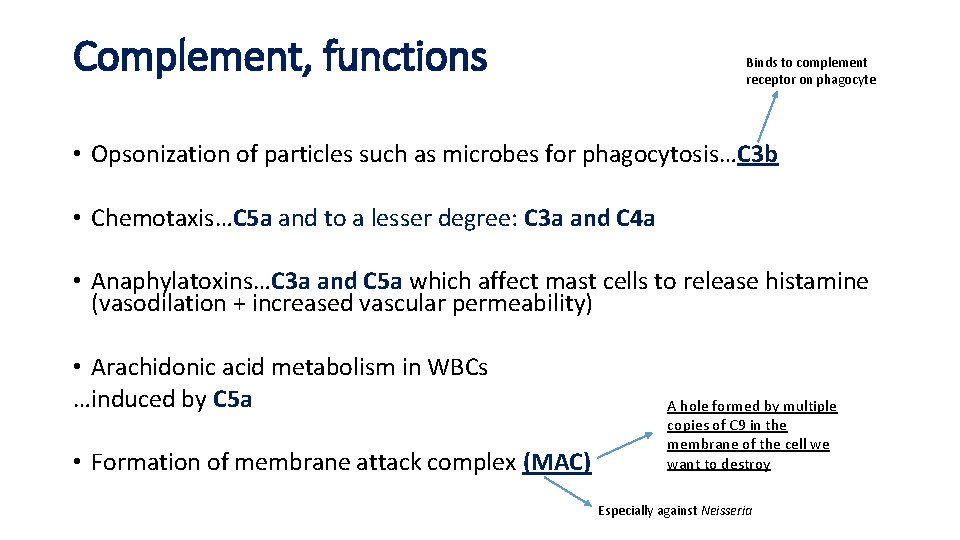
Complement, functions Binds to complement receptor on phagocyte • Opsonization of particles such as microbes for phagocytosis…C 3 b • Chemotaxis…C 5 a and to a lesser degree: C 3 a and C 4 a • Anaphylatoxins…C 3 a and C 5 a which affect mast cells to release histamine (vasodilation + increased vascular permeability) • Arachidonic acid metabolism in WBCs …induced by C 5 a • Formation of membrane attack complex (MAC) A hole formed by multiple copies of C 9 in the membrane of the cell we want to destroy Especially against Neisseria
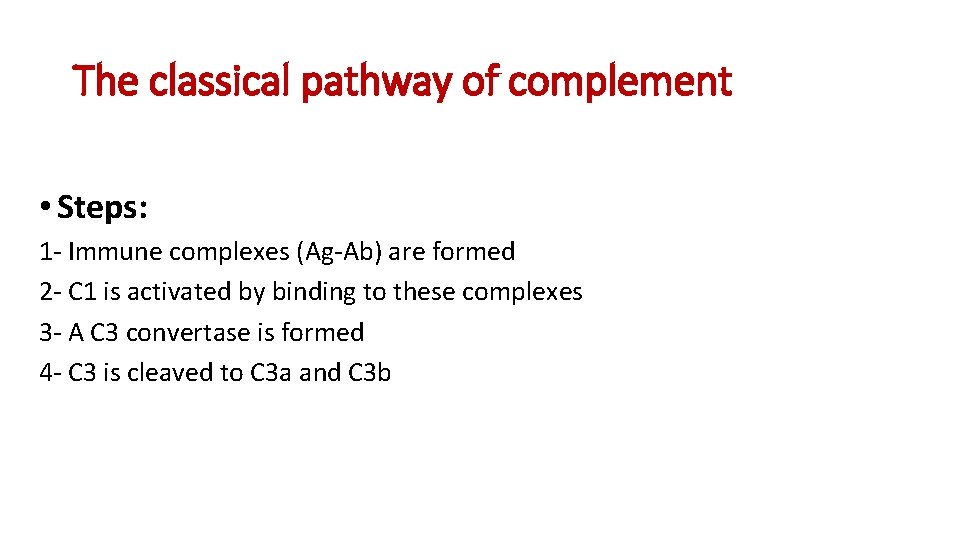
The classical pathway of complement • Steps: 1 - Immune complexes (Ag-Ab) are formed 2 - C 1 is activated by binding to these complexes 3 - A C 3 convertase is formed 4 - C 3 is cleaved to C 3 a and C 3 b
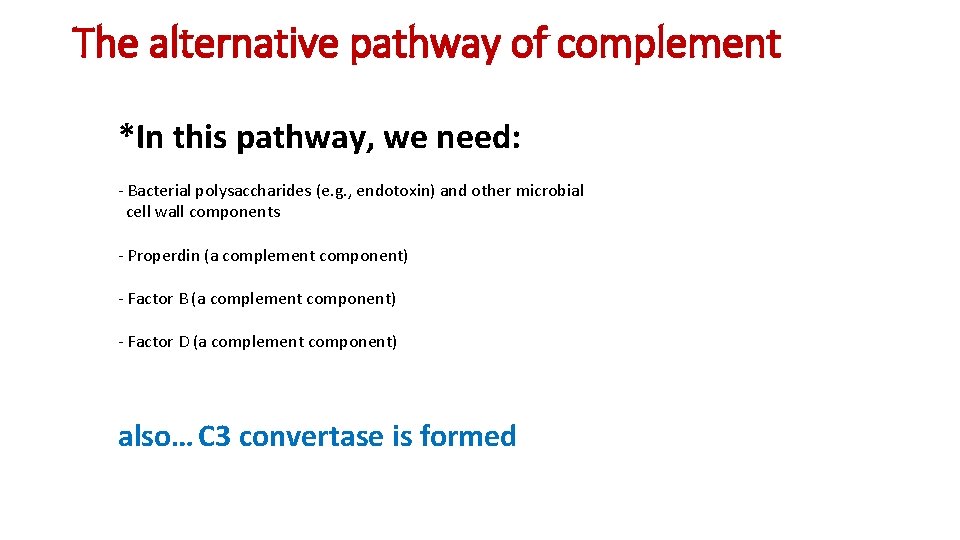
The alternative pathway of complement *In this pathway, we need: - Bacterial polysaccharides (e. g. , endotoxin) and other microbial cell wall components - Properdin (a complement component) - Factor B (a complement component) - Factor D (a complement component) also… C 3 convertase is formed
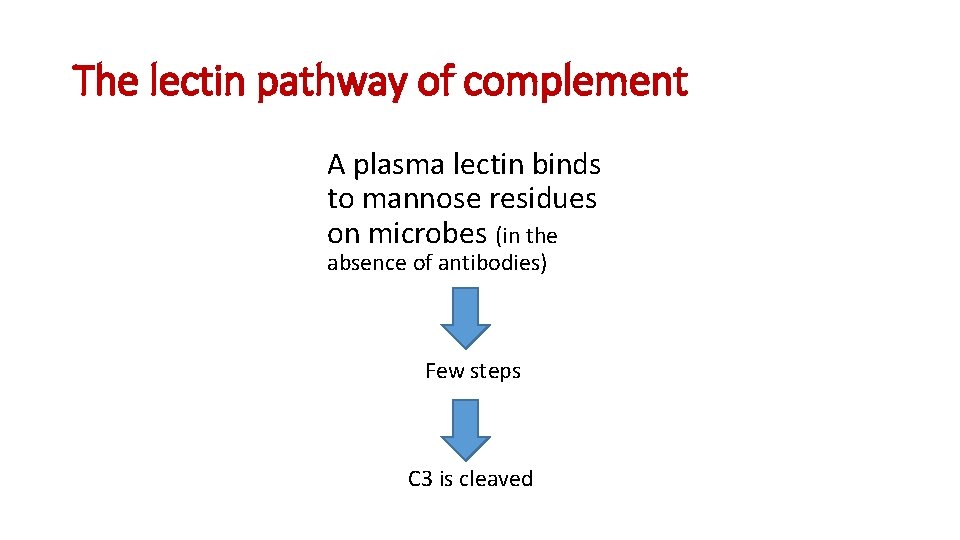
The lectin pathway of complement A plasma lectin binds to mannose residues on microbes (in the absence of antibodies) Few steps C 3 is cleaved
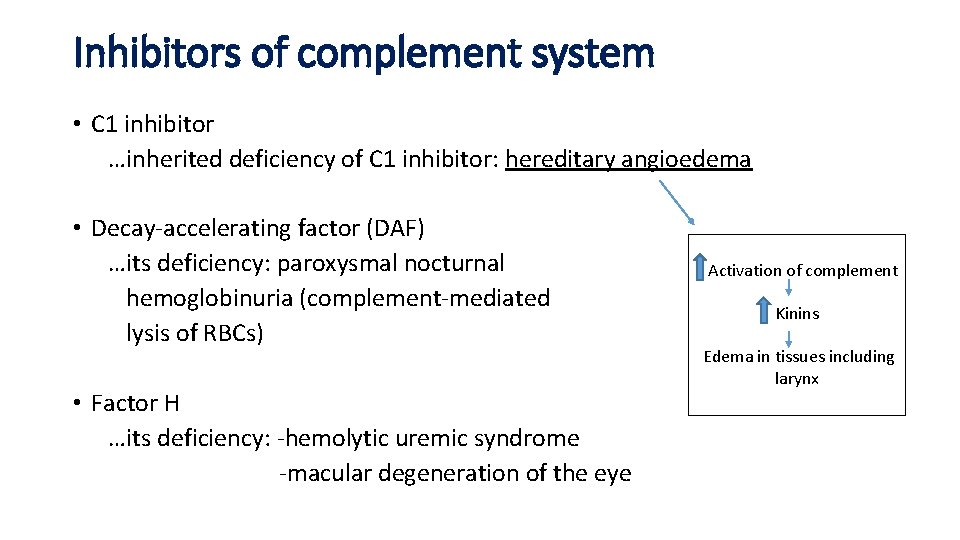
Inhibitors of complement system • C 1 inhibitor …inherited deficiency of C 1 inhibitor: hereditary angioedema • Decay-accelerating factor (DAF) …its deficiency: paroxysmal nocturnal hemoglobinuria (complement-mediated lysis of RBCs) • Factor H …its deficiency: -hemolytic uremic syndrome -macular degeneration of the eye Activation of complement Kinins Edema in tissues including larynx
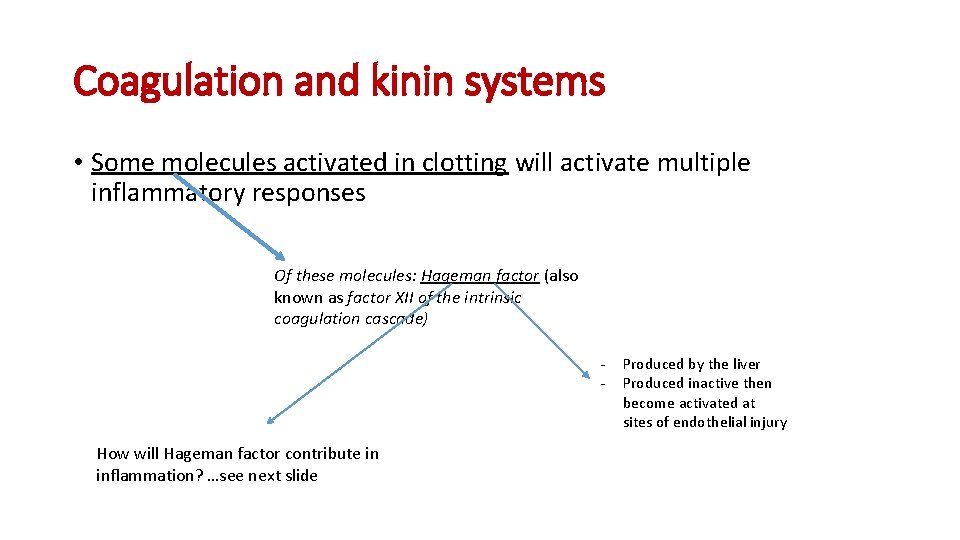
Coagulation and kinin systems • Some molecules activated in clotting will activate multiple inflammatory responses Of these molecules: Hageman factor (also known as factor XII of the intrinsic coagulation cascade) - How will Hageman factor contribute in inflammation? …see next slide Produced by the liver Produced inactive then become activated at sites of endothelial injury
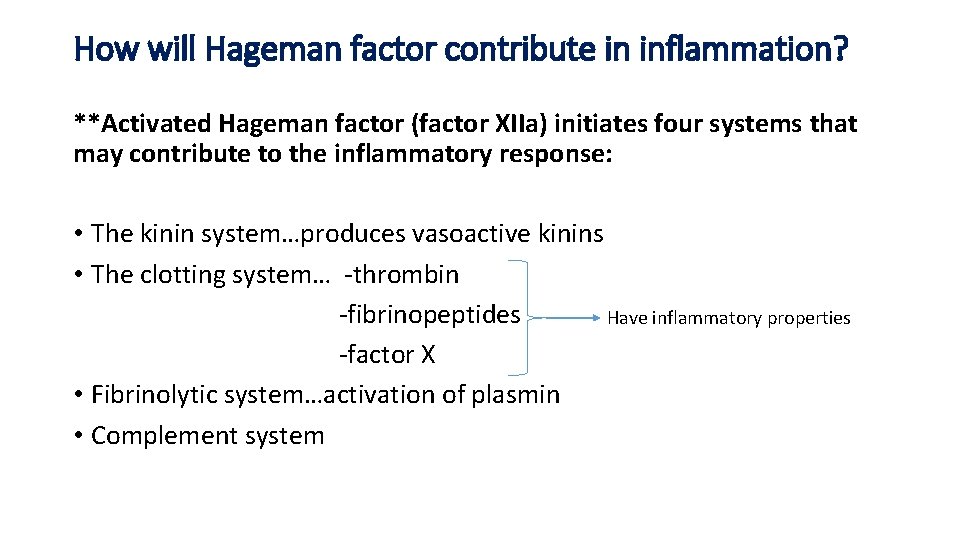
How will Hageman factor contribute in inflammation? **Activated Hageman factor (factor XIIa) initiates four systems that may contribute to the inflammatory response: • The kinin system…produces vasoactive kinins • The clotting system… -thrombin -fibrinopeptides Have inflammatory properties -factor X • Fibrinolytic system…activation of plasmin • Complement system
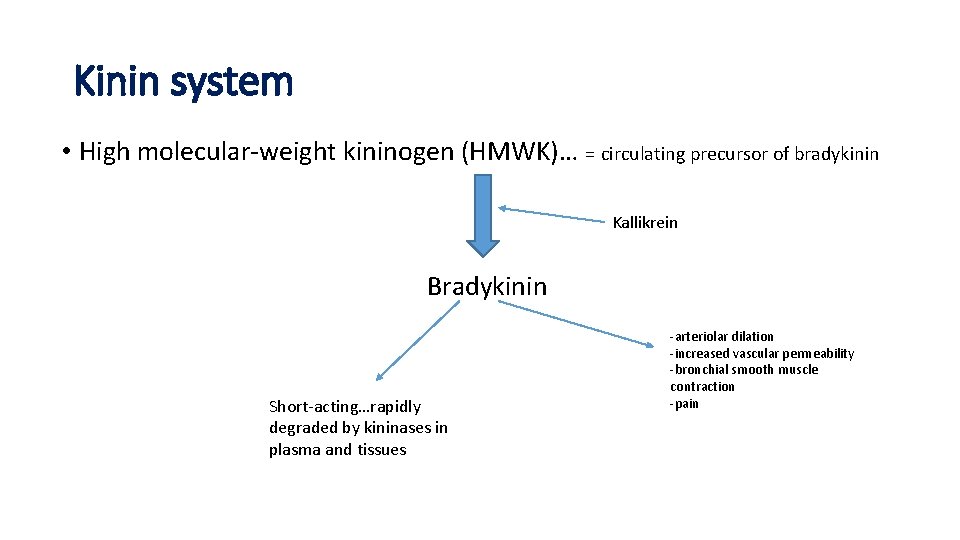
Kinin system • High molecular-weight kininogen (HMWK)… = circulating precursor of bradykinin Kallikrein Bradykinin Short-acting…rapidly degraded by kininases in plasma and tissues -arteriolar dilation -increased vascular permeability -bronchial smooth muscle contraction -pain
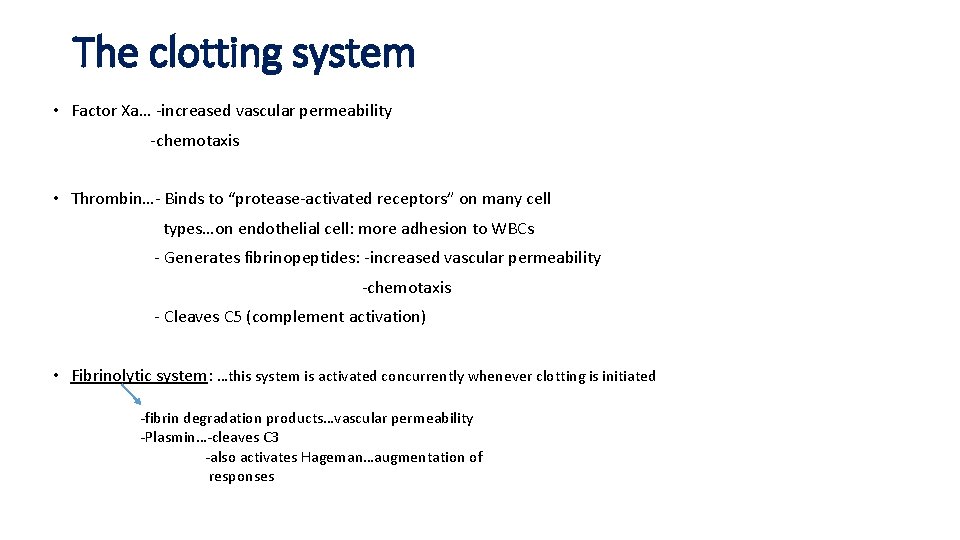
The clotting system • Factor Xa… -increased vascular permeability -chemotaxis • Thrombin…- Binds to “protease-activated receptors” on many cell types…on endothelial cell: more adhesion to WBCs - Generates fibrinopeptides: -increased vascular permeability -chemotaxis - Cleaves C 5 (complement activation) • Fibrinolytic system: …this system is activated concurrently whenever clotting is initiated -fibrin degradation products…vascular permeability -Plasmin…-cleaves C 3 -also activates Hageman…augmentation of responses
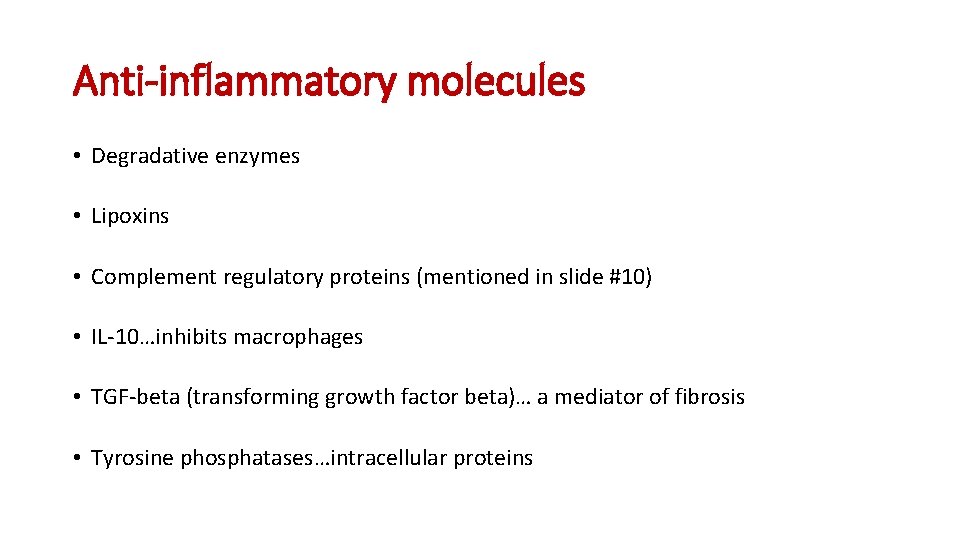
Anti-inflammatory molecules • Degradative enzymes • Lipoxins • Complement regulatory proteins (mentioned in slide #10) • IL-10…inhibits macrophages • TGF-beta (transforming growth factor beta)… a mediator of fibrosis • Tyrosine phosphatases…intracellular proteins
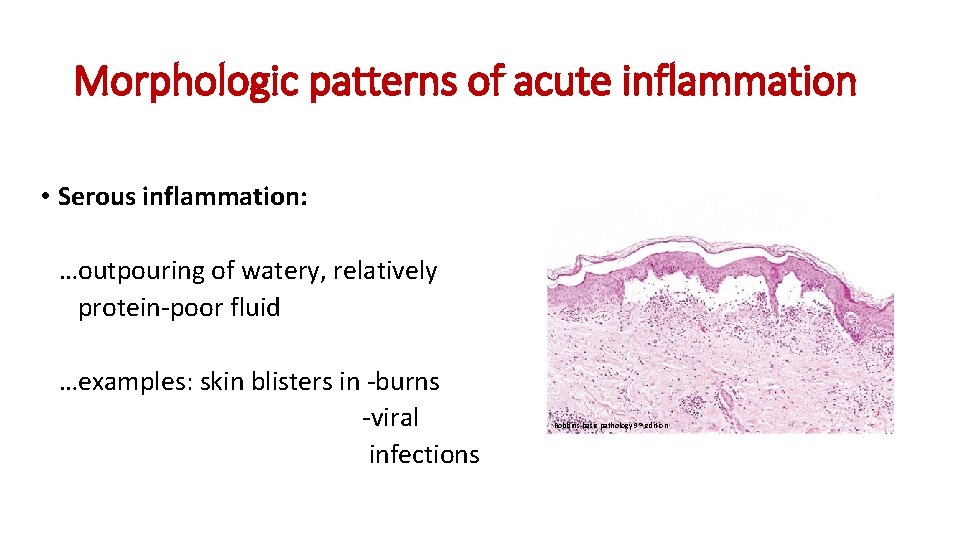
Morphologic patterns of acute inflammation • Serous inflammation: …outpouring of watery, relatively protein-poor fluid …examples: skin blisters in -burns -viral infections Robbins basic pathology 9 th edition
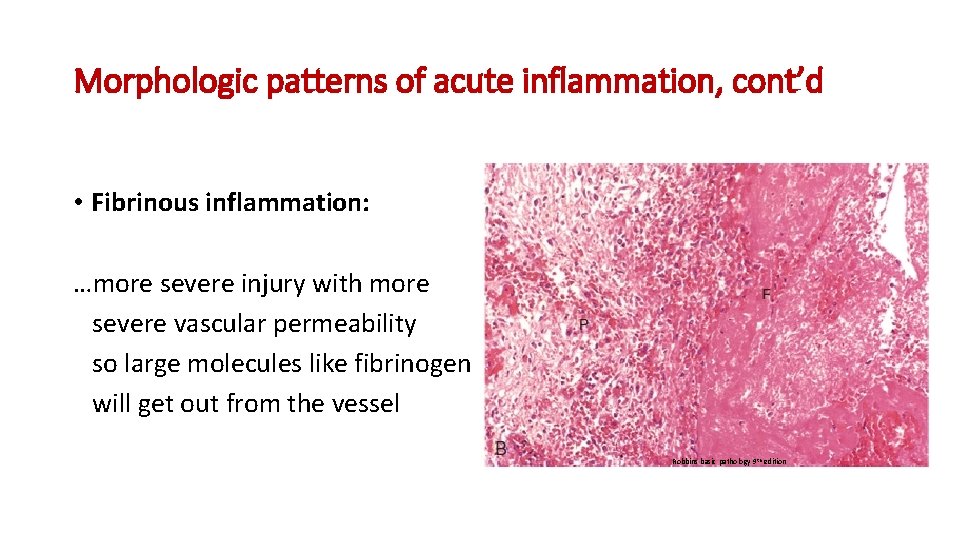
Morphologic patterns of acute inflammation, cont’d • Fibrinous inflammation: …more severe injury with more severe vascular permeability so large molecules like fibrinogen will get out from the vessel Robbins basic pathology 9 th edition
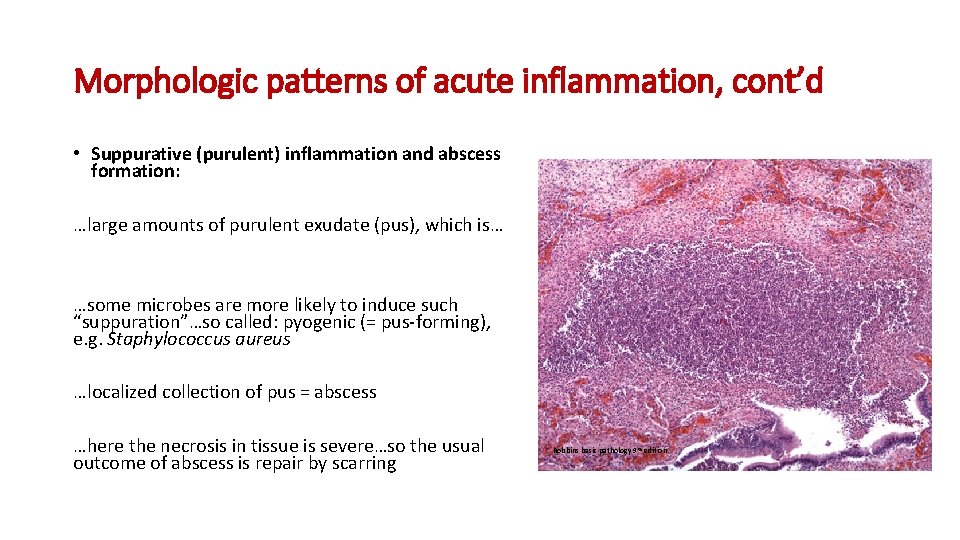
Morphologic patterns of acute inflammation, cont’d • Suppurative (purulent) inflammation and abscess formation: …large amounts of purulent exudate (pus), which is… …some microbes are more likely to induce such “suppuration”…so called: pyogenic (= pus-forming), e. g. Staphylococcus aureus …localized collection of pus = abscess …here the necrosis in tissue is severe…so the usual outcome of abscess is repair by scarring Robbins basic pathology 9 th edition
Thank You