LOVE Elspeth Mc Adam STOK Conference 13 th

- Slides: 55
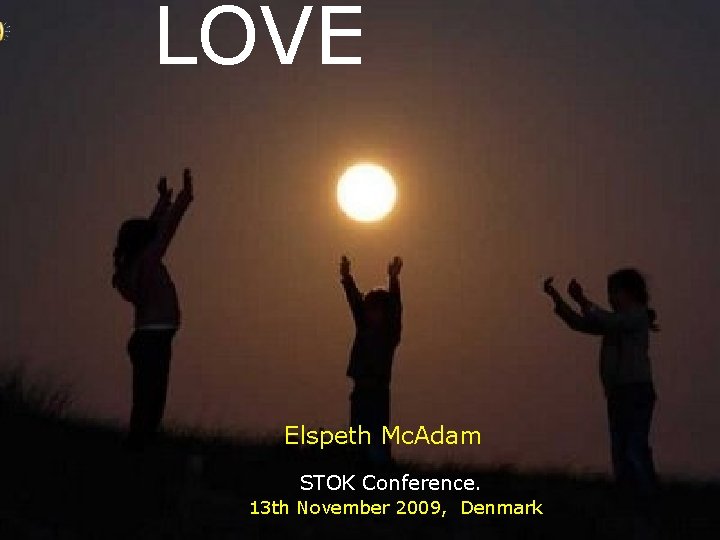
LOVE Elspeth Mc. Adam STOK Conference. 13 th November 2009, Denmark
Love If music be the food of love, play on Shakespeare All you need is LOVE Beatles
Lingugram of love o Ocean of meaning in a drop of grammar! o Meanings emerge as we the word is used o In 2 s or 3 s explore meaning and narratives of love and what it entails what actions, what stances
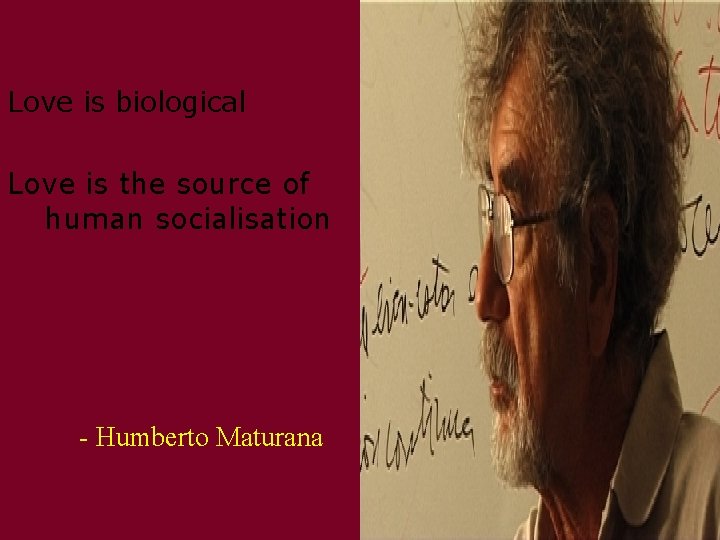
Love is biological Love is the source of human socialisation - Humberto Maturana
Maturana’s thoughts on love o Stickiness/Love is the spontaneous dynamic condition of acceptance by a living system of its coexistence with other living systems: a reciprocal fitting, a happening that takes place or does not o Love is a biological phenomena, and requires no justification; o If love occurs there is socialisation if it does not then there is not. o Love is the fundament of social phenomena and not its consequence. o Social phenomena only last as long as love lasts in that domain.
Socialization o Love is the source of human socialisation o What is especially human is what we do in love as humans o This is an invitation to respect the biological condition that is the basis of humanity. o Without love as a spontaneous biological phenomena there is no socialisation
Language o Can only develop as a mutual dance between people o To be conserved over time involves dramatic increased complexity of relationships to be maintained where love, care respect is lived o Conversations are an entwining of emotion, language & action o Language now living and perpetuated but appropriation/ownership culture – competition, hierarchy, negation valued and love/humanness incidental o But still live love based childhood then competition and patriarchy come in in adolescence. o Schism of world of humanness coexisting with world of inhumanness
Love is a healer! o Love is a fundamental condition of being a human being o When the biology of love is interfered with we disappear or become ill and are cured by love o New beginnings always start in love – new respect and dignity couplings
An Invitation o Maturana is offering us an invitation to respect the Biological condition that is the basis of humanity. Without love as a spontaneous biological phenomena there is no socialisation o Without socialisation there's no language, no reason, no self consciousness, no awareness of emotions, so without love we are not social beings. This is not trivial and has huge implications.
Value of Maturana’s ideas of love as Biological o Really important in this day and age as there are so many wars, tyranny and ideology that the rationalisation justifies the loss of socialisation. We no longer have love that accepts and enjoys the differences. o How we are treating our children can be seen as a loss of the biological ideas/narrative of love. o Press talk about children as monsters or wild animals but Govt beginning to listen
Mirror neurones Daniel Stern Children do not use spoken language until 18 – 24 months but understand communicate clearly. o They learn very early to respond via mirror neurones (MN) to carer’s communication – smile they smile, anger they withdraw or cry o There also intention neurones (IN) that pick up and anticipate others’ intentions. o MN & IN – GROW IMPLICIT KNOWLEDGE - Huge and difficult to put into words Eg LOVE
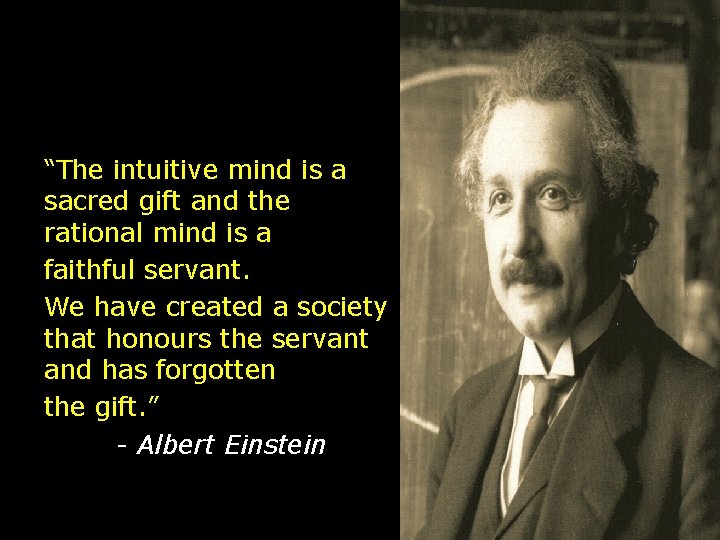
“ “The intuitive mind is a sacred gift and the rational mind is a faithful servant. We have created a society that honours the servant and has forgotten the gift. ” - Albert Einstein
o Love is experienced in the whole body as are all emotions o Non-verbal expressions are seen and sensed even though we do not appreciate we are showing them.
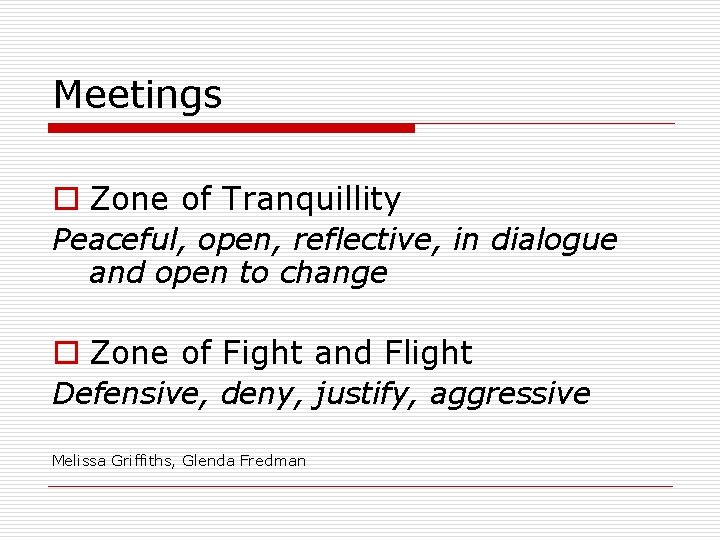
Meetings o Zone of Tranquillity Peaceful, open, reflective, in dialogue and open to change o Zone of Fight and Flight Defensive, deny, justify, aggressive Melissa Griffiths, Glenda Fredman
Implicit Knowledge o Children and vulnerable people are very sensitive to this implicit communication, responding fast to any sense of criticism moving into a fight and flight mode, o So when we meet people we need to make sure we are in a Zone of Tranquillity to help people feel safe. o We also need to enhance our listening to our own mirror and intention neurones
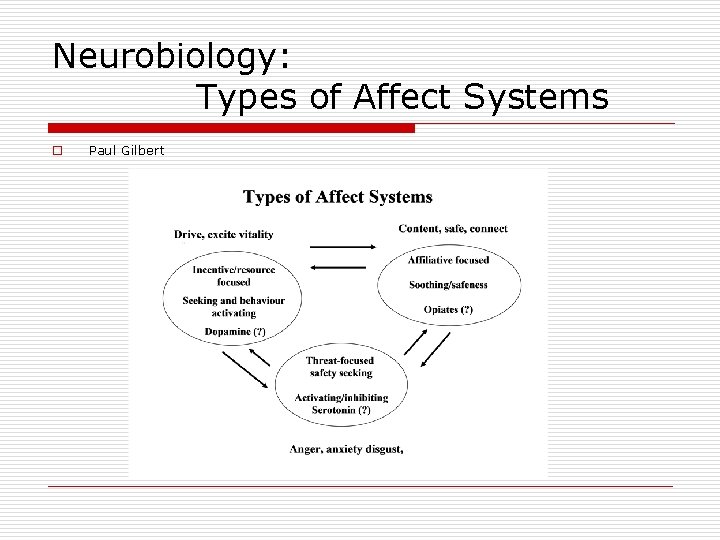
Neurobiology: Types of Affect Systems o Paul Gilbert
The Contentment System o When animals are not threatened and not seeking resources they become content o Contentment associated with positive affect, and sense of calm and well being, enabling signals of caring and kindness to have soothing qualities, that activate positive affect, safeness and social connectedness. – the social safeness system. o The contentment/social safeness system is wired to act as a regulator of the threat protection and drive systems.
Threat Protection System (TPS) o All living things have evolved threatdetection and protection systems o Stimuli impinging on organisms must be checked out for potential threat o Mammalian defences include a menu of behaviours – fight, flight, freeze; emotions- anger, anxiety, disgust; stories o TPS have evolved to be attuned to certain kinds of threats and operates a better safe than sorry policy
continued o Sensitivity and response to specific threats results from interaction between genes and learning o Response options may conflict and create confusion o Brain state choreographed from threat protection can bias other processing systems ambiguous events read negatively o Over and under development of sensitivities in threat protection underpin many psychopathologies
Cortisol High cortisol negative outlook & view of life o active Right brain – high emotions o low activity in Left brain- limited cognitive processing High Anxiety in pregnancy is predictor of CD in child Normal –L Brain more active than Rt Brain- positive feelings, cheerfulness & sociability
The Drive System o This system motivates and directs us to important resources o It is a source of anticipation and pleasure o It underpins the development of desires and some goals – both materials and those linked to self esteem – eg seeking status or fame o It is an activating system highly stimulated by certain drugs o Positive emotions flowing from this become focus of Western philosophy and materialistic cultures
Imagery o Imagination can stimulate any of these pathways or systems – v biological o Read a good menu and you salivate o Ballerina post surgery o Imagining caring loving thoughts or memories or loving, caring, content futures encourage contentment pathways to grow. o Imagine success and dreams of a successful career, sport etc grow the drive pathway.
What is love?
Love is reciprocal and relational o Cannot do it alone o Anxious mother or mother who needs mothering herself often not available to her child o Withdrawn, unresponsive baby less likely to encourage mother’s warmth o Ideally Love and responsiveness need to flow in both directions
Attunement- Being in Tune o Being present to your child o Using mirror neurones to respond to child in way it wants o Observe when temporarily withdraws– withdraw to give child space o Peek a Boo games – led by child’s anticipation o Entering their grammar o Putting language on their emotion o Seeing emotion and behaviour as an invitation – “You seem cross, you want all Mummy’s attention, I understand know… but sometimes Mum has to give attention to your brother, I know you do not like it … but I do have to show him love too. Love you”
Setting limits o Some Cortisol facilitates growth of nor adrenaline in orbito frontal cortex which develops regulatory/inhibitory behaviour o Eg When told to STOP/DANGER- temporary loss of attunement – helps child fit social norms o Change from sympathetic to Para sympathetic arousal o Shame is experienced- important part of socialisation. o More important is the recovery from shame – with restoration of attunement.
Delight and pleasure at other’s achievements o Genuine delight and pleasure when someone you love achieves something from smiles to first steps to passing exams, getting a job, getting married etc o Stimulates sense of value and self esteem that allows person to be confidently motivated
Bowlby, 1951, The Early Systemic Therapist Just as children are absolutely dependent on their parents for sustenance, so in all but the most primitive communities, are parents, especially their mothers, dependent on a greater society for economic provision. If a community values its children it must cherish their parents.
Secure Attachment Story o o o o o Resilient to stress and trauma Mother present and attuned to baby MN Co creative gaze holding and letting go IN Any rupture of affirmative relationship with well attuned mother – fast reparation MN Games of anticipation and expectation –peek a boo IN Respond to baby and led by their response MN Boundaries develop with the withdrawal of affirmation and fast restoration of relationship MN & IN Communication thru eye contact helps brain to grow, Mother’s sympathetic system aroused –dilated pupils MN Implicitly child knows mother is there for it MN Attuned parents grow a social brain Mirror Neurones MN & Intention Neurones IN – GROW IMPLICIT KNOWLEDGE - HUGE AND DIFFICULT TO PUT INTO WORDS Eg LOVE
Insecure attachment o Baby does not experience being cocooned by protective mother o Mirror neurones and intention neurones pick up hostility and aggression, inconsistency and lack of attunement, over-involved play o Baby overstressed – stress response active prematurely. Cortisol receptors flooded and shut down. So free floating cortisol – sense of stress/inhibits endorphins, dopamine and pleasurable feelings o Cortisol stimulates adrenaline -) fight and flight and increased arousal o Cortisol highest when loss of power/control
Ambivalent o Mother inconsistent, intrusive & dismissive o Child becomes enmeshed, child is compliant, desperate to please, mother feels eaten up and pushes away o Child terrified of Abandonment so does not explore o Child swings between safeness and fear/threat protection systems. Little of drive system develops
Avoidant Attachment o Mother functional, pushing away, child does not feel valued or engaged with o Child becomes terrified of contact, rejection, dismissive of others, poor historian, poor story line, poor self awareness. Wariness of others o Cortisol stimulates adrenaline -) fight and flight and increased arousal, o Cortisol highest when loss of power/control
Therapeutic implications Whatever story we tell of formative childhood experiences perhaps need to understand the biological consequences of what we do and ensure we can create opportunities for “love. ” How do we help children stand on this tripod of the Healthy Affective Circle So much of this comes to the biology of love and creating a robust safety system
Social Construction o We create our worlds through language and tell stories o Active process depending on what stories are told, to whom and in what context o Words create: meaning and action, intentionality, emotion and morality o Language is future orientated o Change happens simultaneously as we caress people with our words o Language we use is a moral issue. Questions create a world for people to live with dignity
Appreciative Language –everyone wants to be a HEROINE o We all grow with being valued o Positive stories allow people to have a choice to change o Tell one of the untold stories o Give people genuine dignity and respect o Perfect system –coherent with their values and morality - Maturana
Criticism, blame and shame o Invites people to justify their actions and create explanations to repeat the “unwanted” behaviour o It encourages denial and defensiveness o If fast reparation may help child conform to social norms
As professionals we are: o Responsible for creating a morally respectful, dignified world o Stories are prioritised differently for everyone in different contexts + different relationships o Our own stories bewitches us – they fit OUR morality o So difficult to make sense of/understand another’s morality when people do things you feel are wrong
Questions are Fateful o What you ask is what you get o Ask questions that will give energy to the desired outcome and engagement in the conversation –connect thru love! o Enquire about high points or success stories as this is when most abilities are evident energizes people. Abilities become resources o Appreciate the richness of an episode- by asking questions to bring out all the details. o Every PROBLEM is a FRUSTRATED dream – question and work with the dream
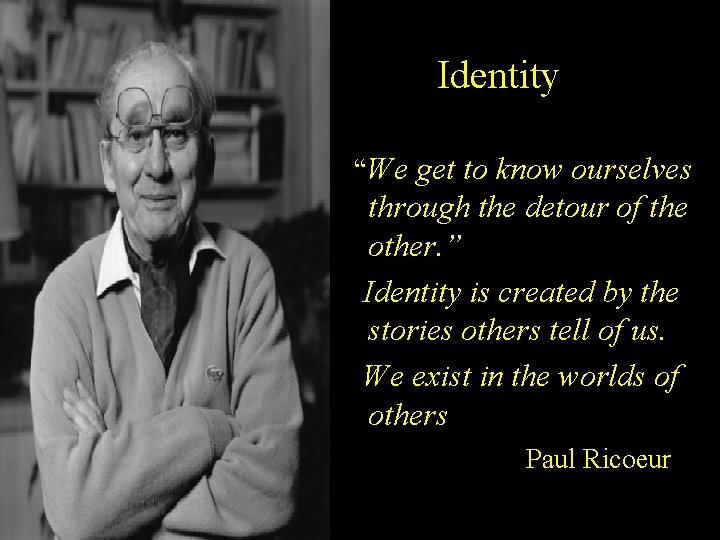
Identity “We get to know ourselves through the detour of the other. ” Identity is created by the stories others tell of us. We exist in the worlds of others Paul Ricoeur
Identity is constantly inflow. A mosaic. Multiple stories depending on context and relationship o What stories would you like told? o What would you have to do to get those stories told. o What actions live the identity?
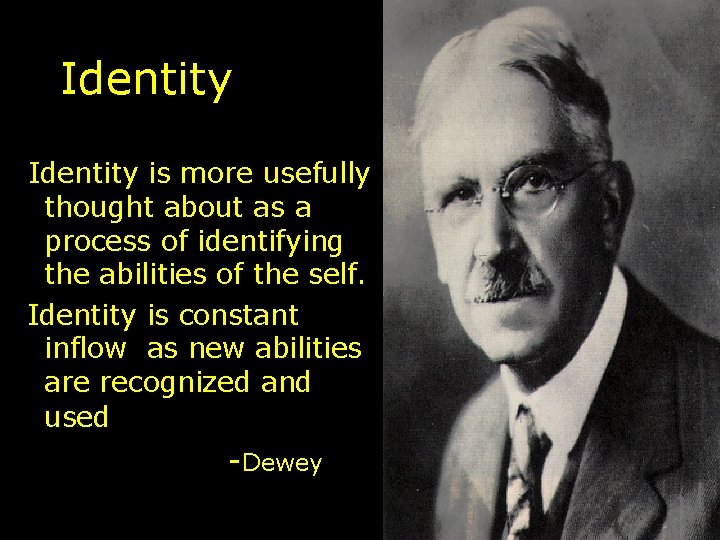
Identity is more usefully thought about as a process of identifying the abilities of the self. Identity is constant inflow as new abilities are recognized and used -Dewey
Identity cont o Ability spot and encourage abilities to flower and blossom in different contexts so they become values & resources for future use
Ability Spotting o Ask about high points/moments of pride or joy, SPOT abilities whilst fulfilling these actions – spot abilities as they emerge o By getting into the details of the other’s story, the abilities emerge through the stories told. o These emerge through detailed exploration, sharing, and co creativity of stories lived. o They are accepted, as the evidence is before you in the story told.
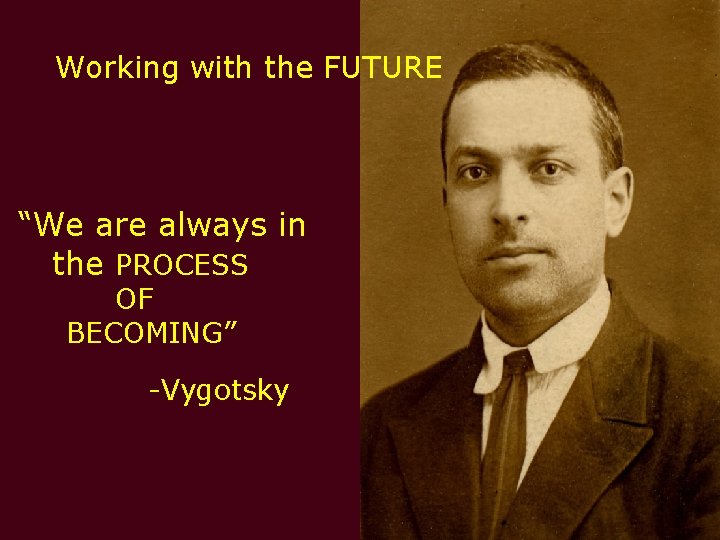
Working with the FUTURE “We are always in the PROCESS OF BECOMING” -Vygotsky
Hope o Focusing on becoming creates hope – I can be something different o Creating possible futures is part of love as it takes as a stance that life holds riches for the future that are yours. It shows a belief in someone’s abilities and strengths to go on, survive and live a full and rich life.
Working with the future o The future is in the present. o In the Future meaning grows, the meaning of events emerge. o Meaning is crafted in the consequences of an action as it is lived out in the future in relationships. o The future creates present action o Dewey talks about END - in – VIEW o Vygotsky -- We are always in the PROCESS OF BECOMING
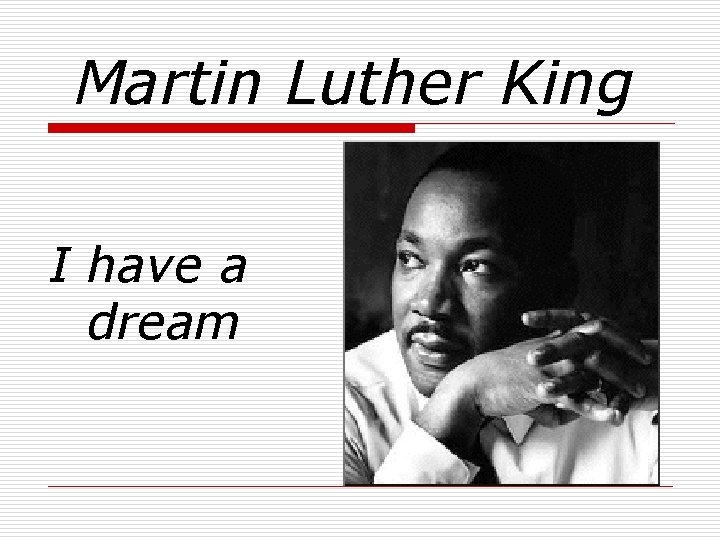
Martin Luther King I have a dream
Dreaming o Use DREAMING instead of solutions as different language game. o Dewey – Reflexive Imagination which increases choices for living. Don’t think of just one future, think of 4/5 when values and relationships are harmonised o Creates Zones of Proximal Development where people can experiment with a different identity and life trajectory o Imagery stimulates the oxytocin pathways
Dreams are: o Often Unrealistic, Idealistic – hopeful and create possibilities o Energising & Fun & Playful –life giving o Emotion is positive, enthusiasm, person feels valued o Everything is possible o Can’t fail o Values are lived o Fragmentary
Dreaming the future therapeutically o Go 10 – 15 years hence – gets away from as yet unsolved problems o Talk about future in present tense. o Tell a reassuring story – you are a mature adult leading a really happy competent life, suggest all problems gone so how are they now relating to family/friends etc. o Be as unrealistic / creative as desire, enjoy the metaphors look at meaning in metaphor.
Curiosity about the future o So it is 2020 … where are you living which community/country? What sort of house/apartment? What does it look like? Are you married , do you have children? Etc etc What job are you doing? o Great detail – like a video – 3 D experience o Create the details of dreams by asking lots of detailed questions o When person located in living the future as now o Back light – work slowly back to the present -- Ask about how managed to get there as they have already solved difficulties and created a future. o Continue dreaming right up until the present day so they know what to do tomorrow.
Witnessing and attesting o We now call our Network Meetings FUTURE PLANNING MEETINGS o We invite all those who are concerned about the FUTURE of the young person – family/schools/police/SS Ask about moments of pride compliant, desperate to please Ask about moments of pride and look for abilities o o o Focus on abilities even in unwanted behaviours – what abilities are needed to be a good thief? – observant, fast, courage, daring, network o ASK NETWORK when else noticed these abilities-GIVE EGS – when shown courage or loyalty
Conclusions World View – need to consider love and socialisation as love that accepts and enjoys the differences. Societally - Care for our “mothers” and our children so they are given the love and safeness they need to develop all 3 bits of their affective systems. This means from conception on. Mothers is used generically as a relational care giving role – fathers, teachers, siblings, peer groups etc
How – just a few ideas! o Pregnancy – reduce stress, violence, support, education, skills and emotional awareness. o Societally to create narratives of success and survival in press o To see people’s competences and comment on them o To give everyone hope and a future o Support parents and children at risk of developing CD
Thank you for listening ! ! elspethmcadam@doctors. org. uk