
SWK 707 Research for Social Workers Elspeth Slayter

- Slides: 33
SWK 707 Research for Social Workers Elspeth Slayter, Ph. D. , Assistant Professor School of Social Work, Salem State University
Today’s class �Administrative matters & check-in �Review � Implementing evidence-supported interventions � Introduction to program evaluation �Intro to the use of theory �How to do a literature review 2
Pop Quiz #1 (Worst grade dropped, all other quiz grades averaged over semester)
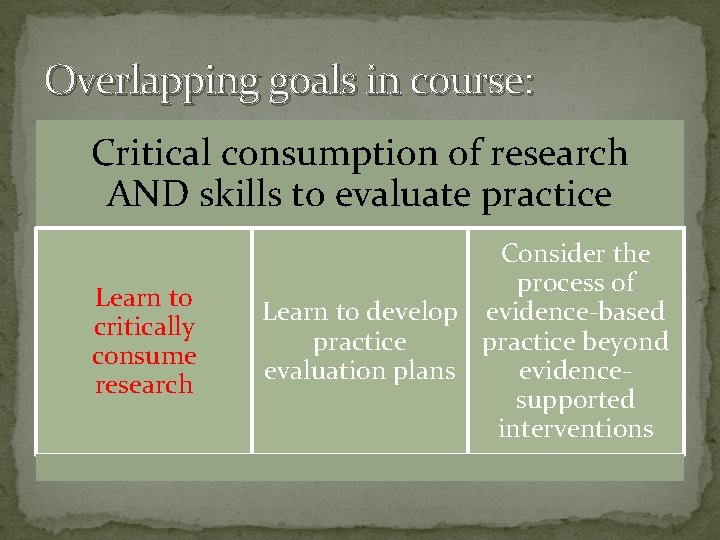
Overlapping goals in course: Critical consumption of research AND skills to evaluate practice Learn to critically consume research Consider the process of Learn to develop evidence-based practice beyond evaluation plans evidencesupported interventions
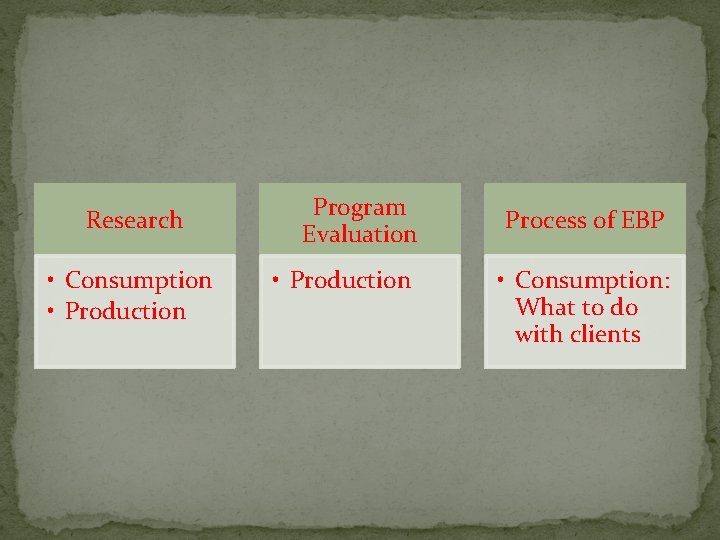
Research • Consumption • Production Program Evaluation • Production Process of EBP • Consumption: What to do with clients
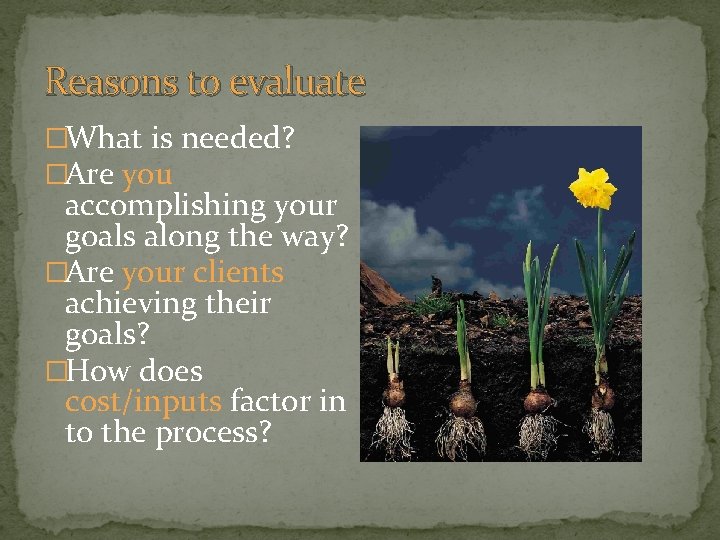
Reasons to evaluate �What is needed? �Are you accomplishing your goals along the way? �Are your clients achieving their goals? �How does cost/inputs factor in to the process?
Cost-benefit, cost-effectiveness evaluation Cost-benefit: � Outcomes considered use monetary units � Victimization � Criminal justice expenses � Receipt of social welfare- derived income transfers Cost-effectiveness: �Assess relative efficiency of alternative approaches to improving outcomes �Classically: health conditions as outcomes �Non-financiallydefined outcomes
Shifting gears: Use of theory in research
Theories & conceptual frameworks Theory �Analytic structure �Identifies distinct observations �Makes assertions about the underlying reality that brings about or affects something Conceptual frameworks �Intermediate theory �Potential to connect to all aspects of inquiry �Outline of possible courses of action, ways of being, relationships 9
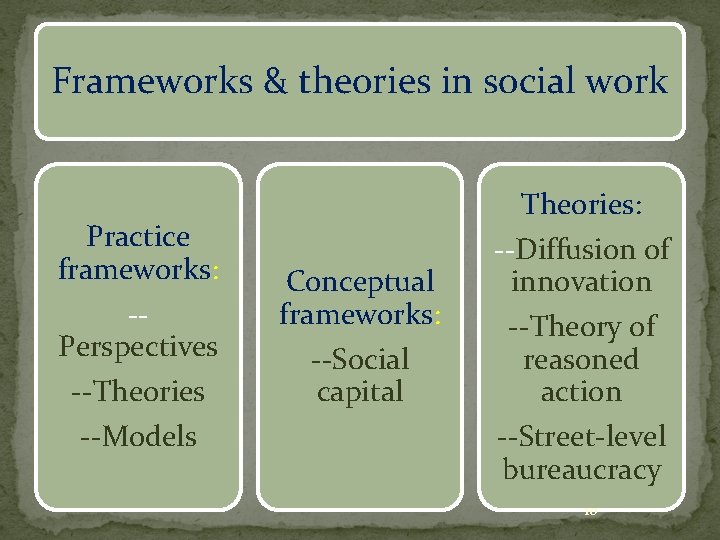
Frameworks & theories in social work Practice frameworks: -Perspectives --Theories --Models Theories: Conceptual frameworks: --Social capital --Diffusion of innovation --Theory of reasoned action --Street-level bureaucracy 10
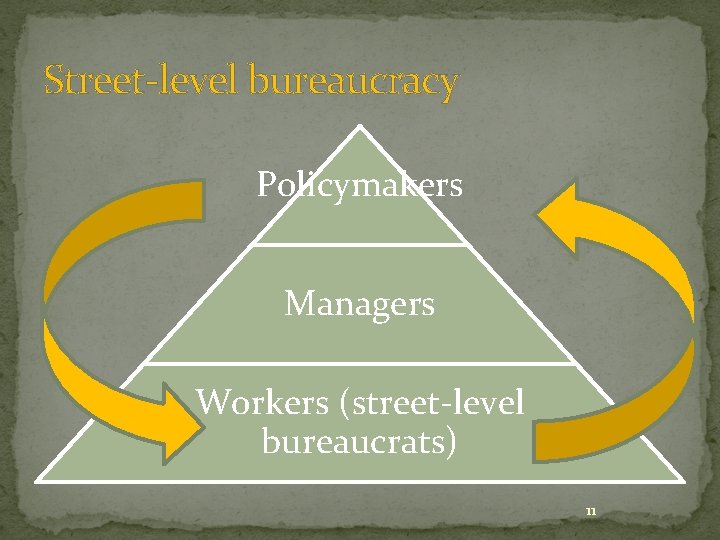
Street-level bureaucracy Policymakers Managers Workers (street-level bureaucrats) 11
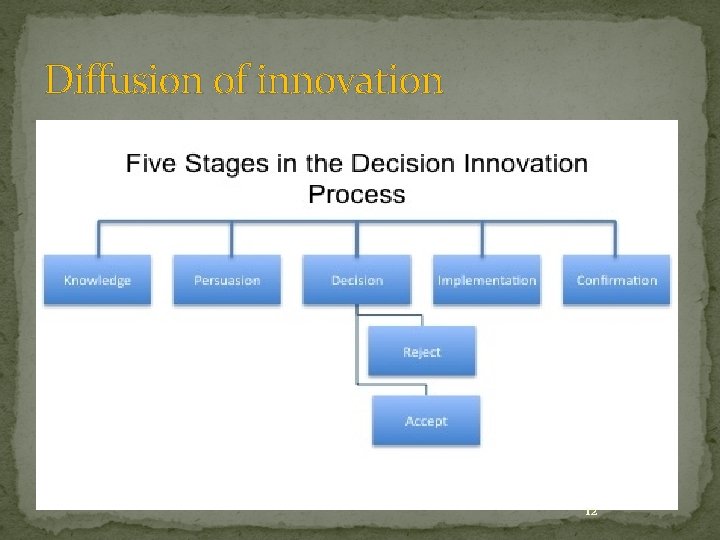
Diffusion of innovation 12
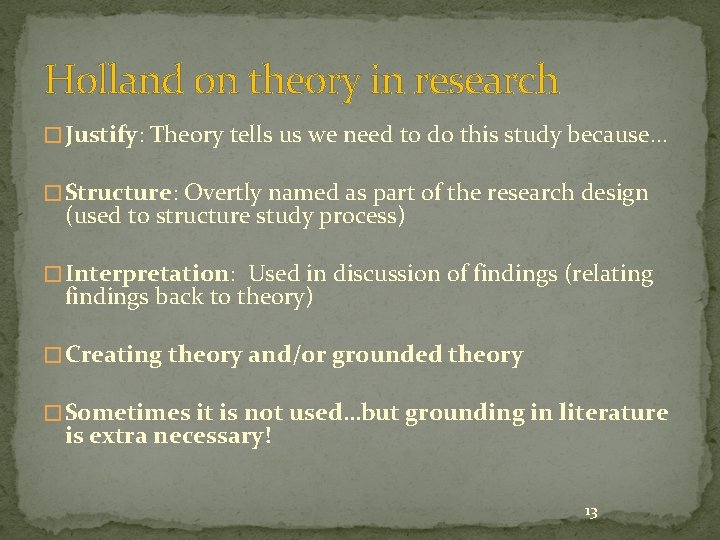
Holland on theory in research � Justify: Theory tells us we need to do this study because… � Structure: Overtly named as part of the research design (used to structure study process) � Interpretation: Used in discussion of findings (relating findings back to theory) � Creating theory and/or grounded theory � Sometimes it is not used…but grounding in literature is extra necessary! 13
…and how exactly do you find a theory? �Look in the existing literature �What theories or concepts drive the research you are reading? �Look at the sociological or public health literature 14
How does the homelessness study use theory? Turn to the person next to you – and discuss for 3 minutes
Holland on theory in research � Justify: Theory tells us we need to do this study because… � Structure: Overtly named as part of the research design (used to structure study process) � Interpretation: Used in discussion of findings (relating findings back to theory) � Creating theory and/or grounded theory � Sometimes it is not used…but grounding in literature is extra necessary! 16
An exemplar qualitative study: Sex & Drugs & Rock ‘n’ Roll: Implementing the dignity of risk among community-based adults with intellectual disabilities 17
Inspired by my own experiences �Interest in choice-making among people with ID: � “Twinkies” for breakfast � Substance abuse does happen � Psychotropic medications � “Home alone” policies � Sex education, pregnancy scares and legal competency � Going out to shows and non-disabled friends 18
…and to the literature… �Not much literature: � Sex & drugs & rock n’ roll � Some focus on prevalence/treatment, not much on parenting or “management” �Central policy goals: � “Dignity of risk” � Community inclusion � Self-determination �Not really discussed together 19
…and your “practice knowledge”… �Many people with ID/DD live in the community � Families, group homes/congregate care settings �Group home workers are at the “front lines” �Leads me to ask: � How are group home workers implementing the dignity of risk? � If yes, how? � If no, how and why? � Haven’t heard their voices 20
…the role of theory… �Sometimes to set up study, sometimes not…in this case… �Lipsky: Street-level Bureaucracy � “Policy implementation in the end comes down to the people who actually implement it” � Workers’ own views influence their work with clients �Justification for approach � What can we learn from street-level bureaucrats on this topic? �Use to explain results � Policy vs. “lived” policy 21
An exemplar quantitative study: Pathways to substance abuse treatment among people with intellectual disabilities 22
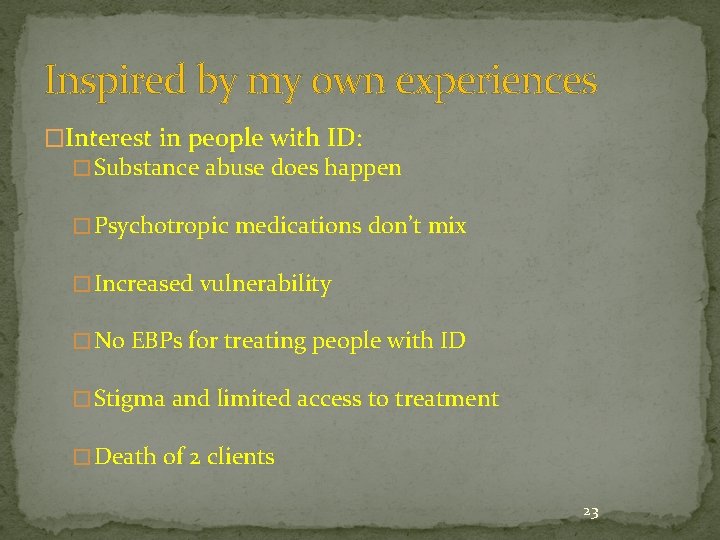
Inspired by my own experiences �Interest in people with ID: � Substance abuse does happen � Psychotropic medications don’t mix � Increased vulnerability � No EBPs for treating people with ID � Stigma and limited access to treatment � Death of 2 clients 23
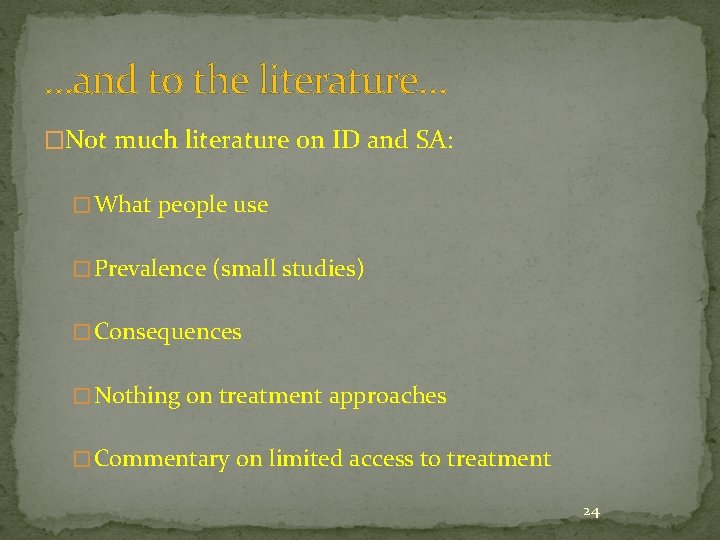
…and to the literature… �Not much literature on ID and SA: � What people use � Prevalence (small studies) � Consequences � Nothing on treatment approaches � Commentary on limited access to treatment 24
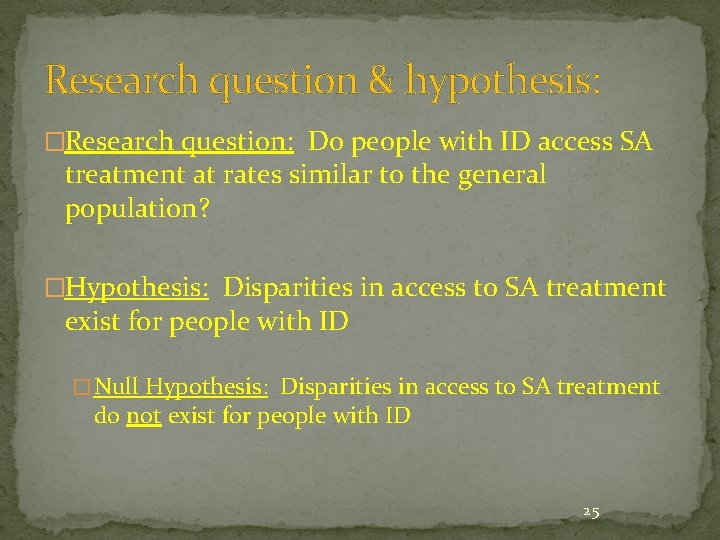
Research question & hypothesis: �Research question: Do people with ID access SA treatment at rates similar to the general population? �Hypothesis: Disparities in access to SA treatment exist for people with ID � Null Hypothesis: Disparities in access to SA treatment do not exist for people with ID 25
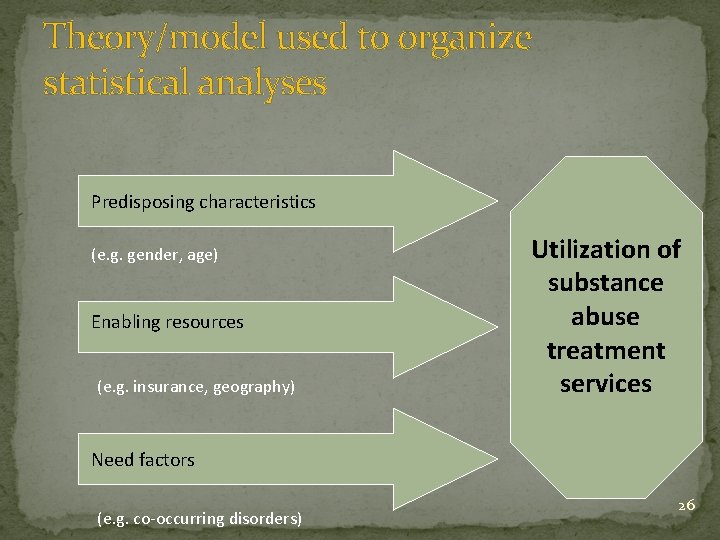
Theory/model used to organize statistical analyses Predisposing characteristics (e. g. gender, age) Enabling resources (e. g. insurance, geography) Utilization of substance abuse treatment services Need factors (e. g. co-occurring disorders) 26
Shifting gears: Conducting a literature review
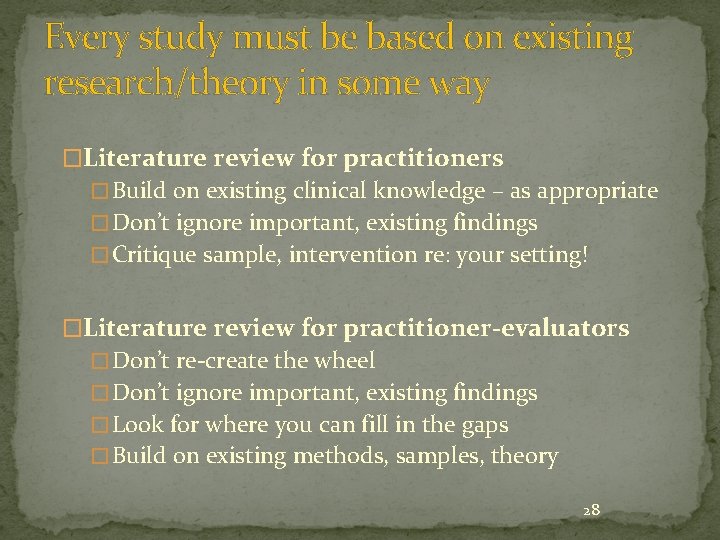
Every study must be based on existing research/theory in some way �Literature review for practitioners � Build on existing clinical knowledge – as appropriate � Don’t ignore important, existing findings � Critique sample, intervention re: your setting! �Literature review for practitioner-evaluators � Don’t re-create the wheel � Don’t ignore important, existing findings � Look for where you can fill in the gaps � Build on existing methods, samples, theory 28
Literature review is about synthesis 29
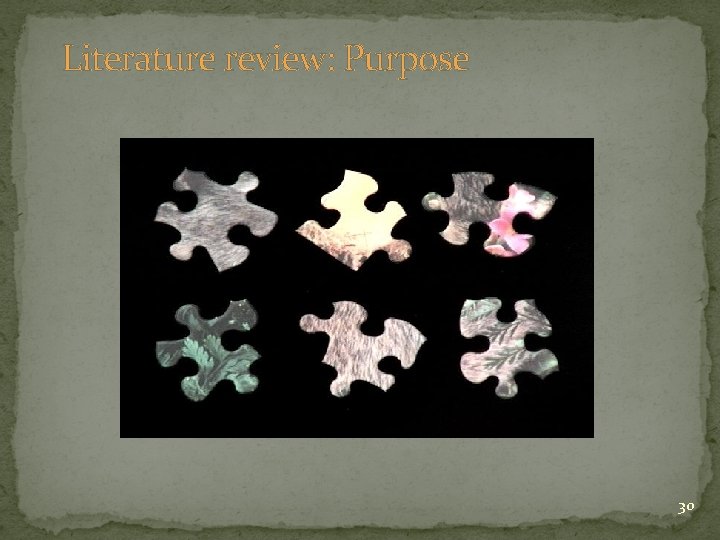
Literature review: Purpose 30
Literature review: Good technique ü Be thorough: Show mastery of central issues ü Compare, contrast & synthesize, synthesize! ü Don’t provide me with a list ü Be selective (if overwhelmed w/existing studies) ü If not overwhelmed with existing studies - piece things together to show you will fill the gap ü Define variables to be used, historically used (not in problem statement) 31
What I mean by a list: �One study said blah blah blah (Citation). Another study said blah blah blah (Citation). A third study said blah blah blah (Citation). The last study said blah blah blah blah blah (Citation). 32
Questions? Clarifications?