learning styles how to use them Ramesh Mehay


- Slides: 46
learning styles & how to use them Ramesh Mehay
Aim To introduce the participants to the concept and the use of learning styles and linking it to the e-portfolio
Objectives At the end of the sessions the participants will have: been introduced to the Honey & Mumford Learning Styles seen the variety of styles amongst their fellow colleagues related their learning styles to themselves and their own lives some awareness of the implications for the eportfolio
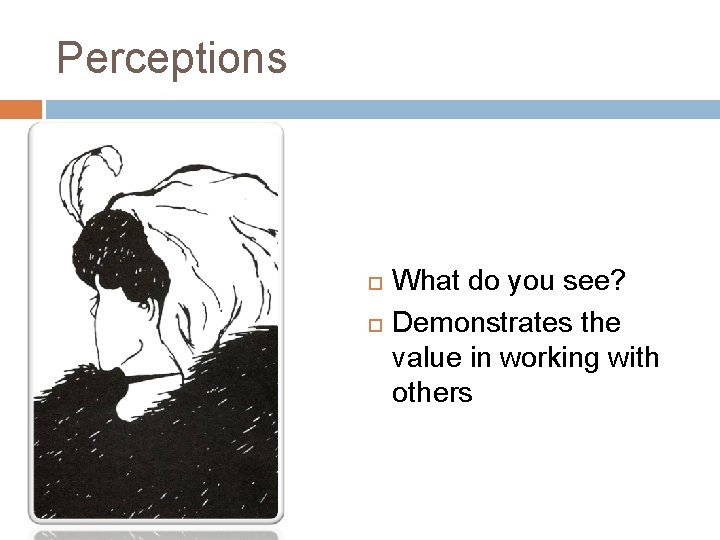
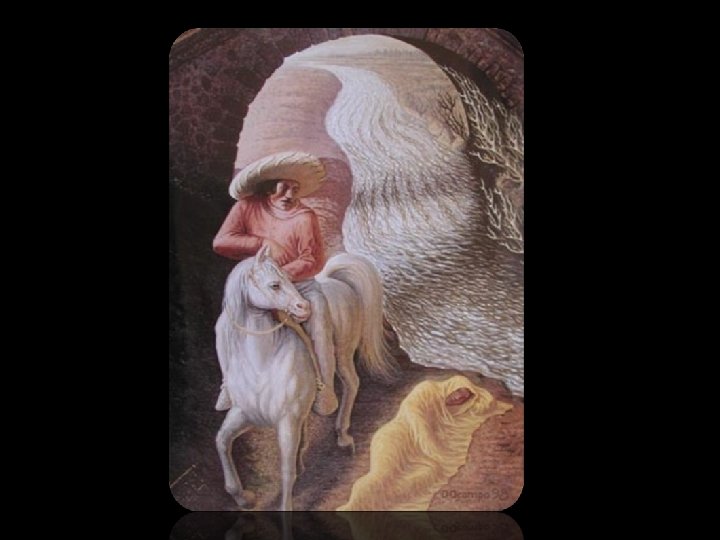
Perceptions What do you see? Demonstrates the value in working with others
On to Honey & Mumford…
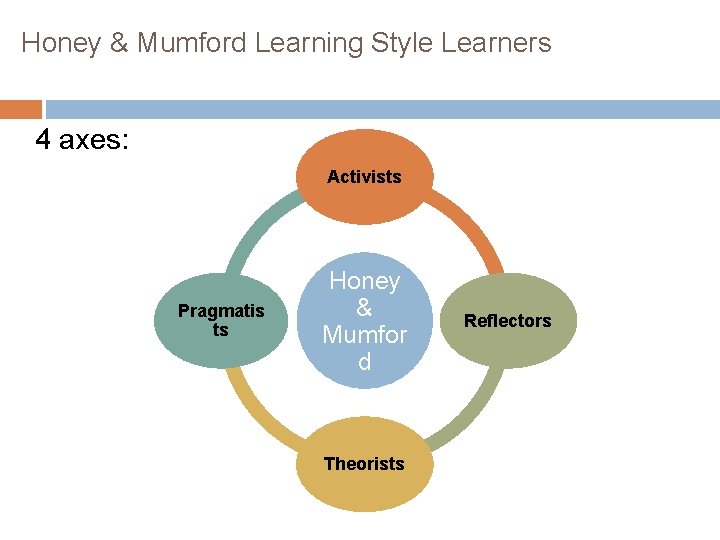
Honey & Mumford Learning Style Learners 4 axes: Activists Pragmatis ts Honey & Mumfor d Theorists Reflectors
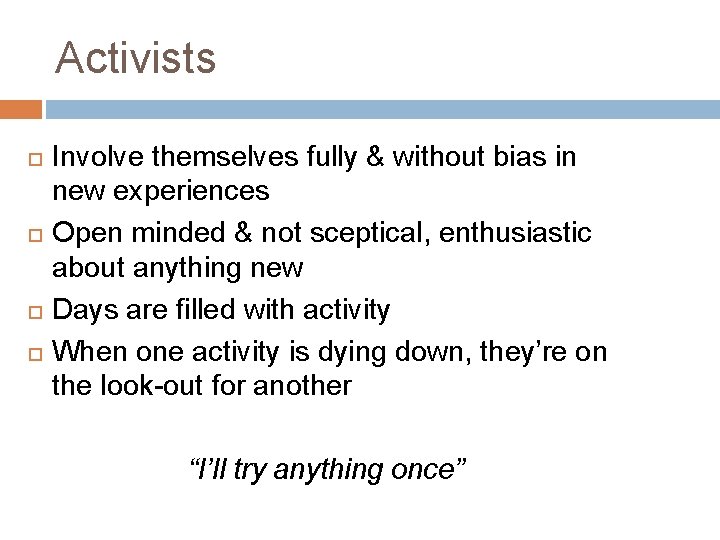
Activists Involve themselves fully & without bias in new experiences Open minded & not sceptical, enthusiastic about anything new Days are filled with activity When one activity is dying down, they’re on the look-out for another “I’ll try anything once”
Activists But: Act first & consider the consequences after Centre all the activities around themselves! Thrive on challenge, but bored with implementation and long term consolidation
Reflectors stand back and ponder about experiences enjoy observing other people, adopt a low profile act on the past, the present and the opinion of others = a more ‘rounded’ reflection “Do you mind if I think about it more first? ” “We need to be cautious”
Reflectors But: thorough collection and analysis of data can delay reaching a definite conclusion
Theorists observe and make theories analyse and synthesise go back to basic assumptions, principles, theories, models and systems “If it’s logical, it must be good” “Does it make sense? ” “How does this fit in with that? ”
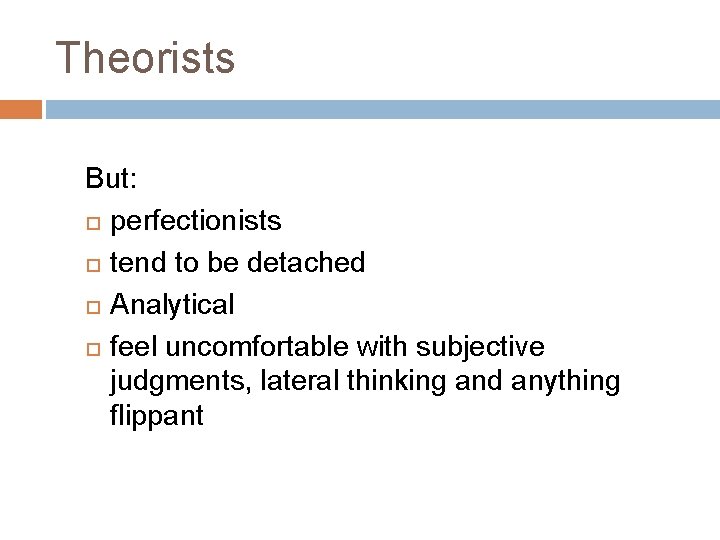
Theorists But: perfectionists tend to be detached Analytical feel uncomfortable with subjective judgments, lateral thinking and anything flippant
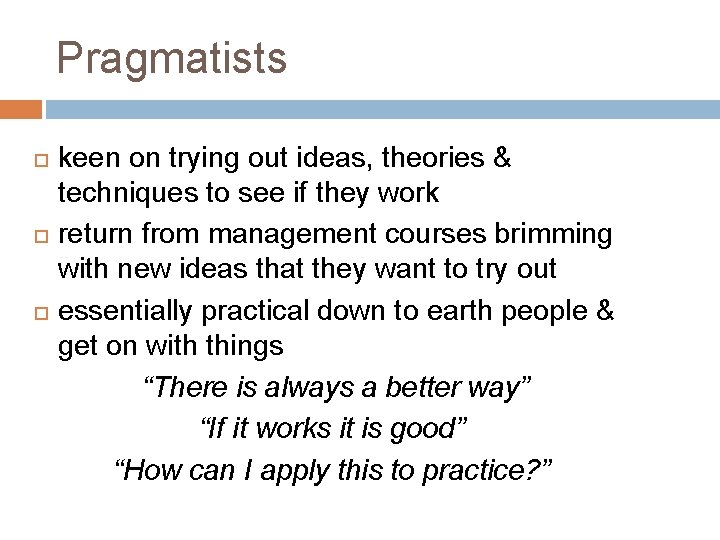
Pragmatists keen on trying out ideas, theories & techniques to see if they work return from management courses brimming with new ideas that they want to try out essentially practical down to earth people & get on with things “There is always a better way” “If it works it is good” “How can I apply this to practice? ”
Pragmatists But: impatient with ruminating and open-ended discussions
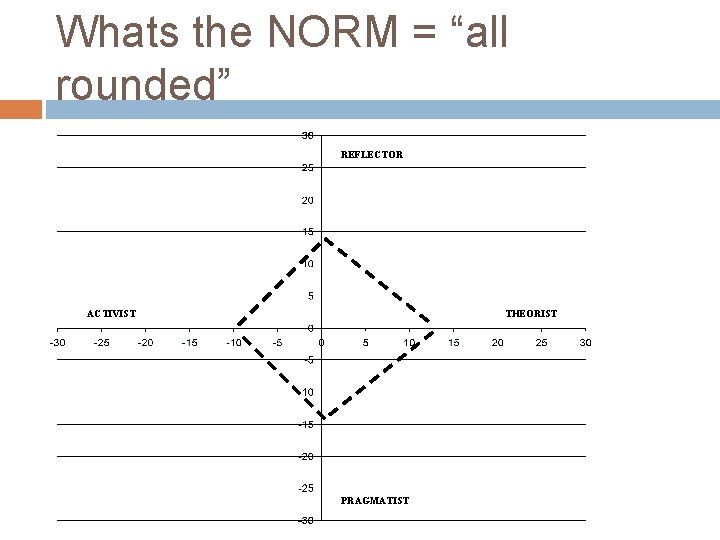
The graphs
Whats the NORM = “all rounded” REFLECTOR ACTIVIST THEORIST PRAGMATIST
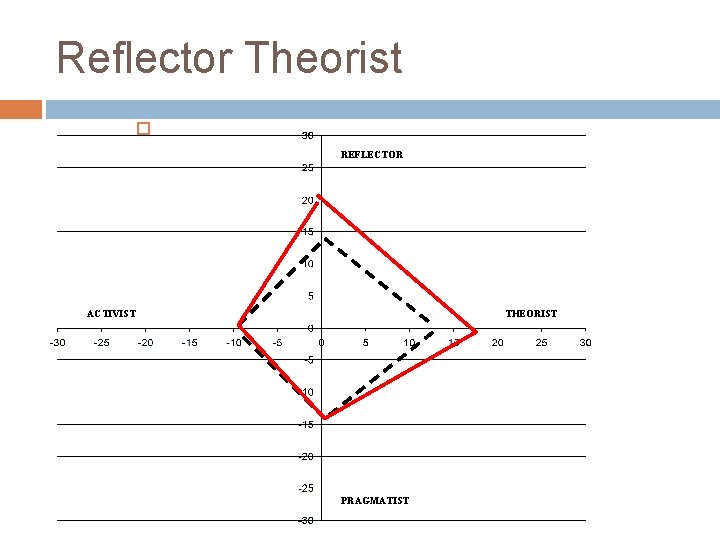
Reflector Theorist REFLECTOR ACTIVIST THEORIST PRAGMATIST
Reflector - Theorist Commonest variant style “ANALYSIS TO PARALYSIS”
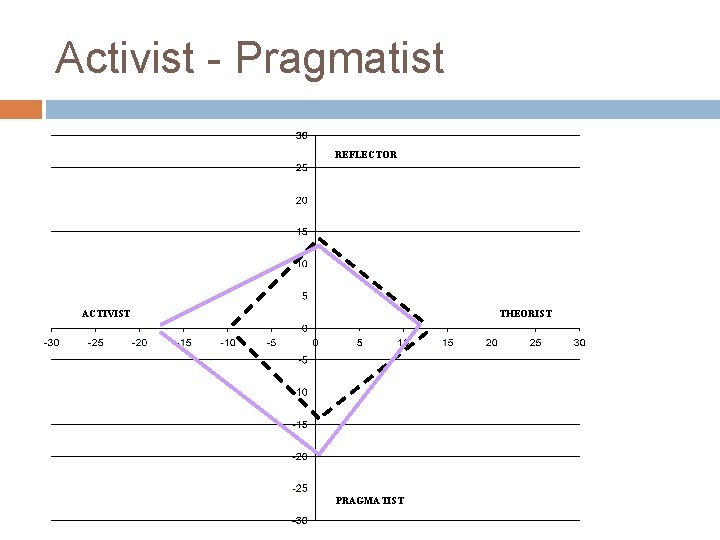
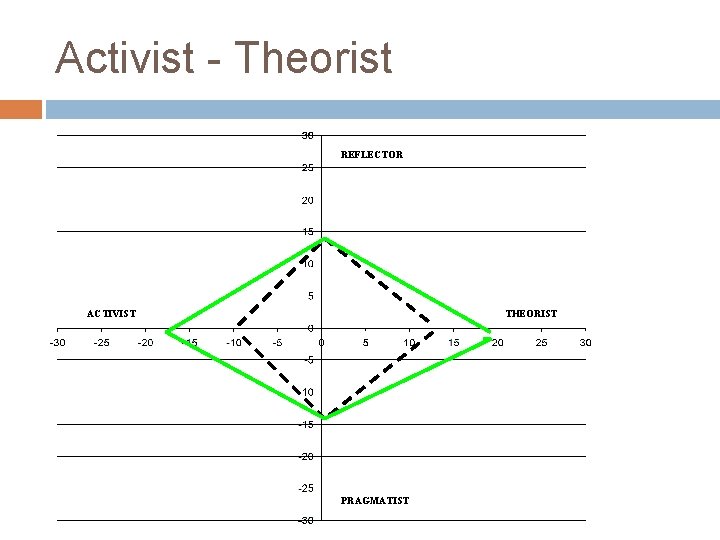
Activist - Pragmatist REFLECTOR ACTIVIST THEORIST PRAGMATIST
Activist - Pragmatist 2 nd commonest variant style but they do things too quickly!!!
Activist - Theorist REFLECTOR ACTIVIST THEORIST PRAGMATIST
Activist - Theorist Not a common style jump to conclusions
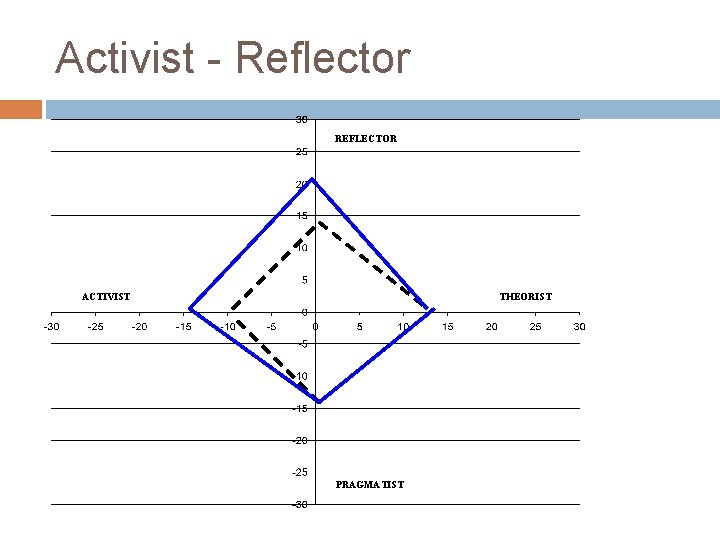
Activist - Reflector REFLECTOR ACTIVIST THEORIST PRAGMATIST
Activist - Reflector uncommon But depending on the proportions, have the ability to reflect before they act = a good thing
How does all of this tie in with the e-portfolio?
Activists - Pros Enthusiastic about anything new You need to capture this in your e-portfolio. Love projects and new experiences Why did you engage in an activity? etc. Act first, consider consequences later Capture the consequences and reflect later. What have you learned?
Activists - Cons Days are filled with activity/Bored with long term consolidation Will you have time for the e-portfolio? (schedule it in because when one activity is dying down, you’ll already be onto another). Will you get bored with the activity by the time it needs logging on? End up with lots of incomplete PDPs (long term consolidation). Might end up overwhelming the e-portfolio (with all the activities) Be selective – what is useful & what shows curriculum coverage.
Reflectors - Pros Very good observers Capture what you’ve seen, heard or feel. Capture an ‘all rounded view” Act on the past, the present and opinions. Good at exploring ‘feelings’ As well as the mechanics of an issue.
Reflectors - cons Can postpone reaching a definite conclusion And may end up adding entries too late. Capture the views of everyone and everything around them May result in long entries – think about those who have to read them!
Theorists - Pros The e-portfolio might complement their learning style Because it helps provide a structure for their learning. eg what did you learn from the event, what will you do differently, how will you do this, by what time? Often add entries in a logical way Starting from first principles and basic assumptions. Therefore, the flow is often good.
Theorists - cons Theorists are perfectionists and the e-portfolio isn’t E-portfolio may not accommodate all real life situations. Where do you put what? Tend to be detached analytical You need to show your ‘humanistic’ side. Subjectivity and ambiguity are just as important as objectivity. For that, you need to get comfortable with lateral thinking + ruminating/open ended discussions.
Pragmatists - pros Return from courses brimming with pragmatic ideas Capture them in the e-portfolio, may help you keep a log of them so you don’t forget. Practical people Placing learning events in context. See problems and opportunities as challenges And the ARCP panels like that attitude.
Pragmatists - cons Practical down to Earth people May ignore the e-portfolio as they might not see how it can help them with their day to day work. Concentrate on the mechanics rather than people and feelings Be careful, you need to capture both – a balance. Impatient with ruminating and open ended discussions And sometimes you need that to help things progress.
If you were the norm: The ideal for the e-portfolio IS the NORM: all rounded no extremes to stop them from using the e-portfolio in a skewed way
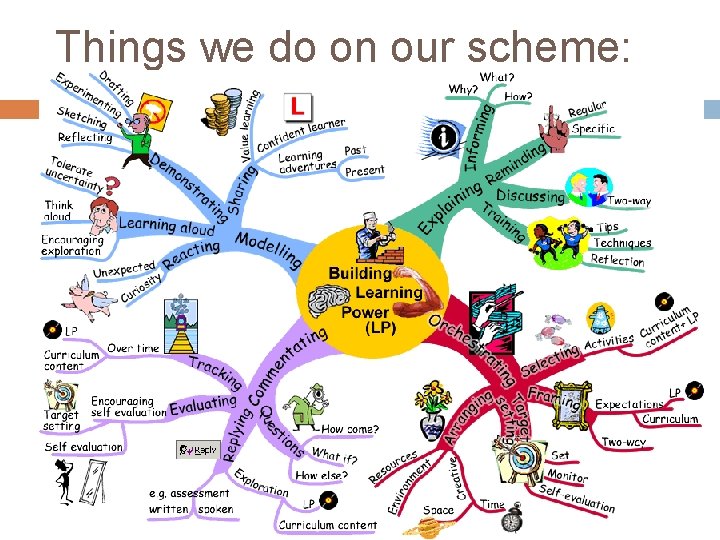
How else can you use learning styles to your advantage? …and something about how we run our scheme
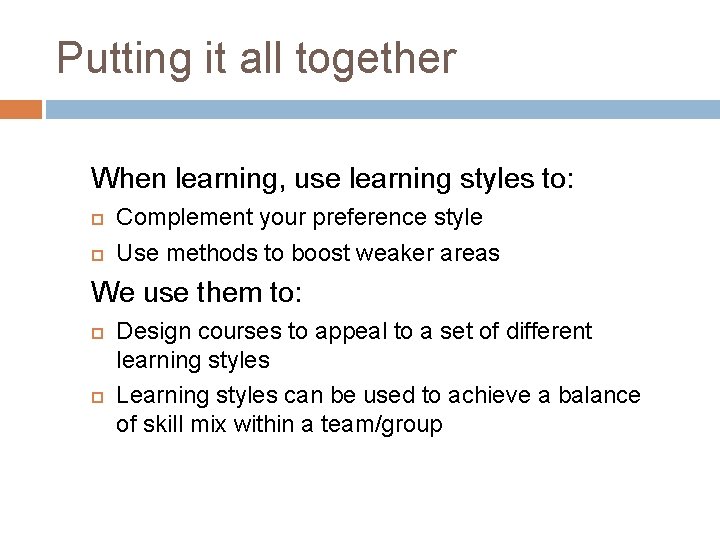
Putting it all together When learning, use learning styles to: Complement your preference style Use methods to boost weaker areas We use them to: Design courses to appeal to a set of different learning styles Learning styles can be used to achieve a balance of skill mix within a team/group
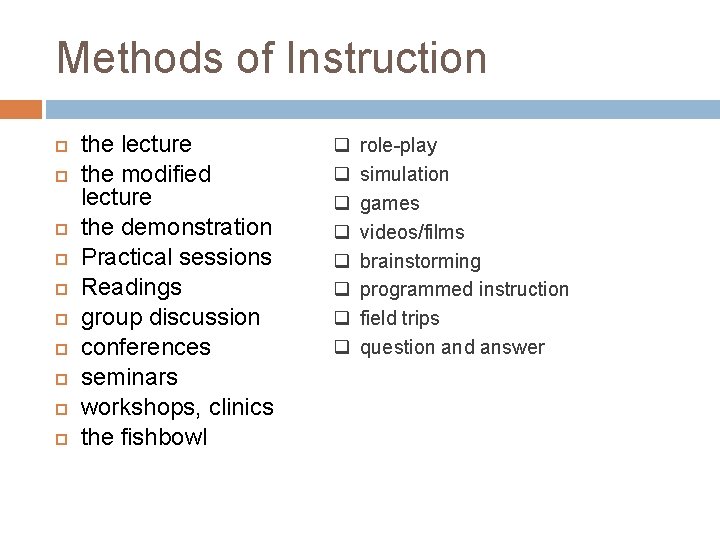
Methods of Instruction the lecture the modified lecture the demonstration Practical sessions Readings group discussion conferences seminars workshops, clinics the fishbowl q q q q role-play simulation games videos/films brainstorming programmed instruction field trips question and answer
Things we do on our scheme:
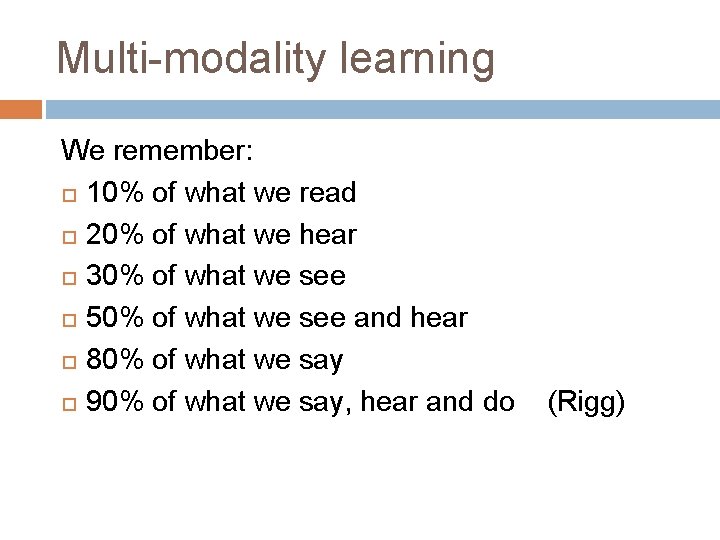
Multi-modality learning We remember: 10% of what we read 20% of what we hear 30% of what we see 50% of what we see and hear 80% of what we say 90% of what we say, hear and do (Rigg)
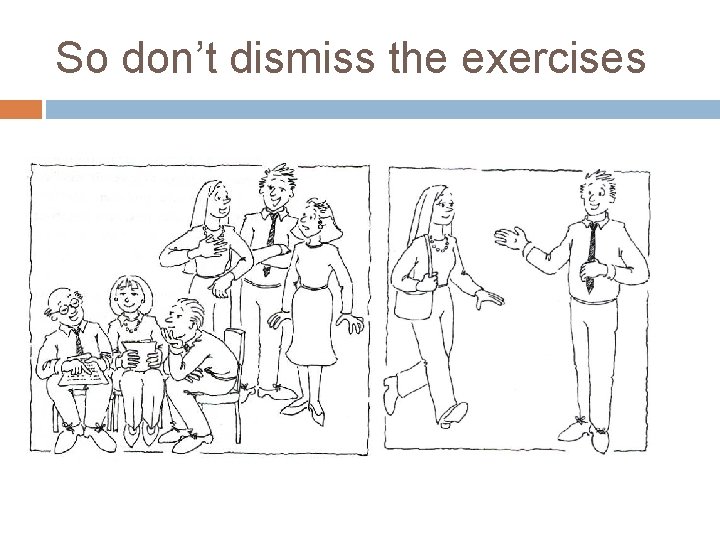
So don’t dismiss the exercises
Close HDR exercises, tasks and games are carefully designed to: Explore new avenues, so don’t just dismiss them We often put a lot of thought into them Don’t mock them until you’ve tried them So :
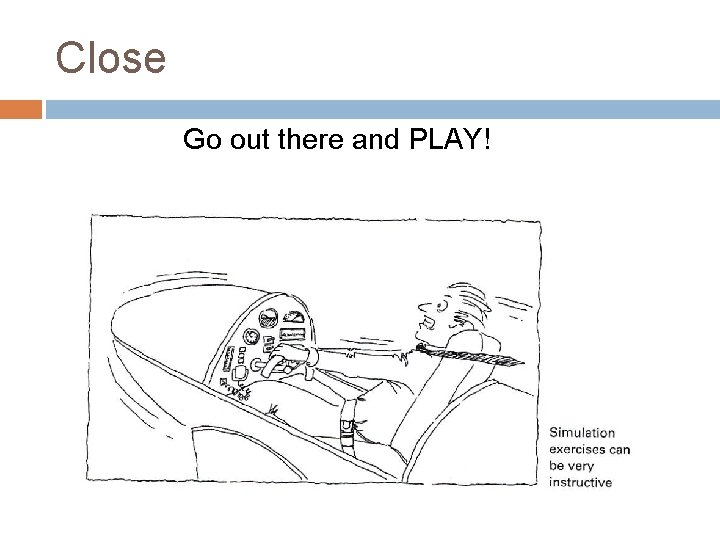
Close Go out there and PLAY!