
How can we teach effectively Ramesh Mehay Course



- Slides: 24
How can we teach effectively? Ramesh Mehay Course Organiser, Bradford VTS
Aims l identify learning objectives l introduce some educational theory l Increase your repertoire of teaching skills
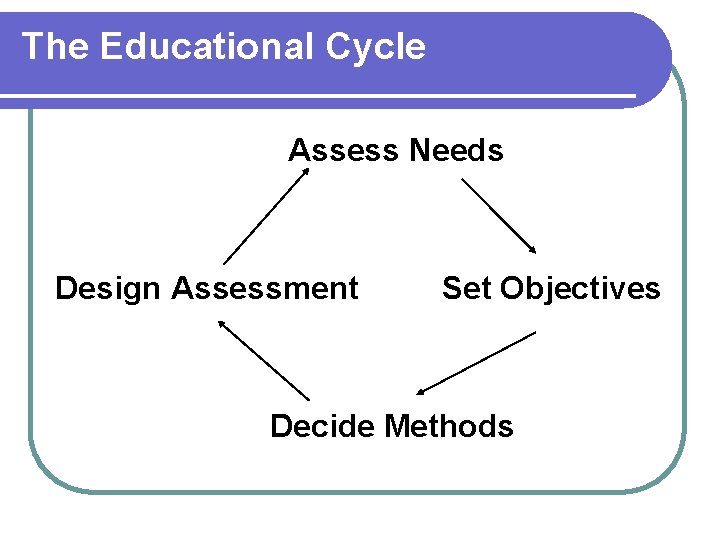
The Educational Cycle Assess Needs Design Assessment Set Objectives Decide Methods
Part One – Defining the A&Os What do they need to know? What are the aims and objectives of the session?
Identify what they want to learn FIRST OF ALL, DEFINE WHAT THEY NEED TO KNOW THAT WILL HELP YOU DEFINE THE AIMS & OBJECTIVES l Ask them l Check lists (eg from the medical school) l problem case analysis - things you know you don’t know l random case analysis - issues you may not have identified l critical incident analysis - learning from mistakes and near misses l PUNs (patient unmet needs) l DENs (doctors educational needs)
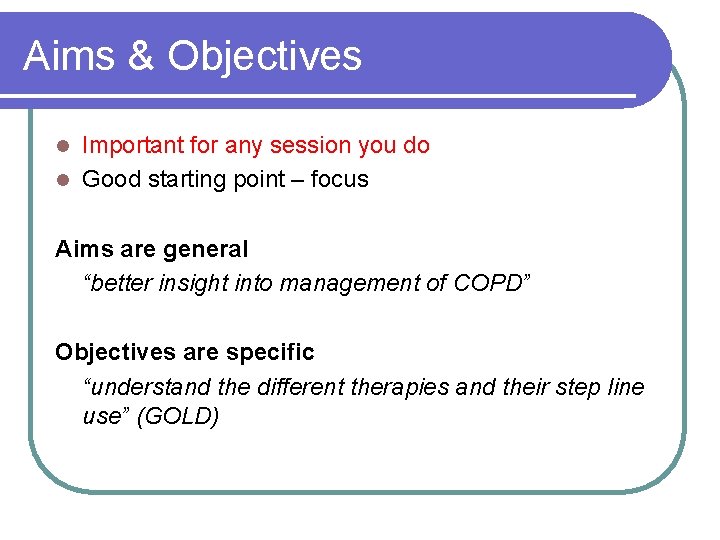
Aims & Objectives Important for any session you do l Good starting point – focus l Aims are general “better insight into management of COPD” Objectives are specific “understand the different therapies and their step line use” (GOLD)
Part Two – Domains of Learning What are we trying to teach?
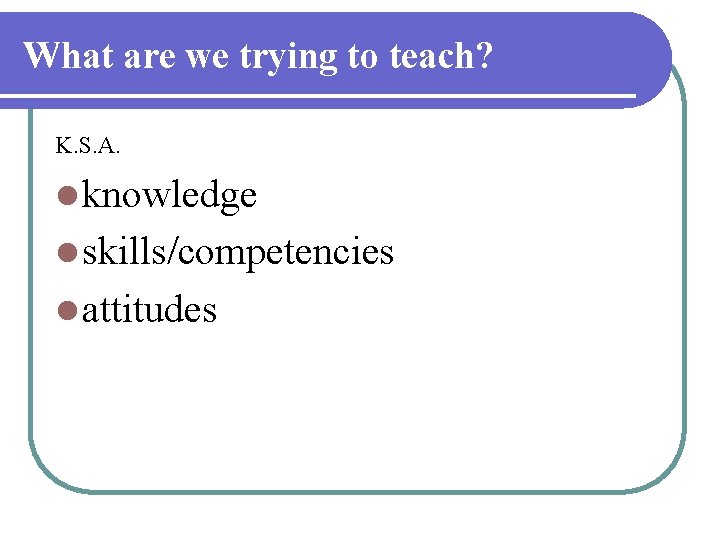
What are we trying to teach? K. S. A. l knowledge l skills/competencies l attitudes
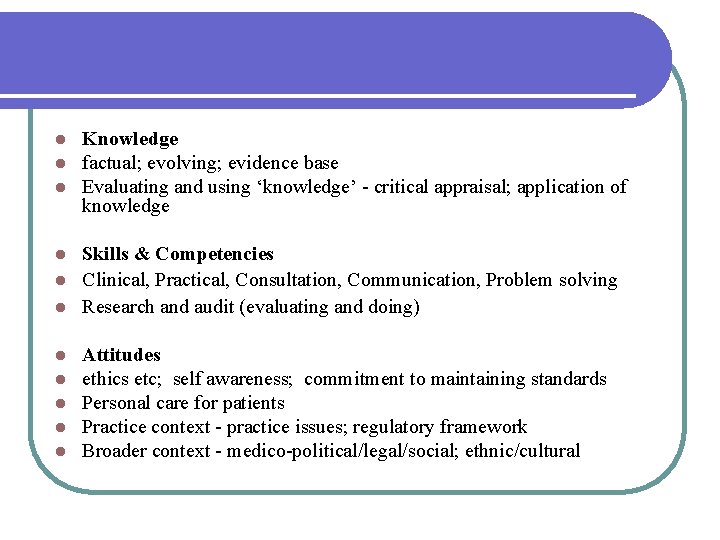
l l l Knowledge factual; evolving; evidence base Evaluating and using ‘knowledge’ - critical appraisal; application of knowledge Skills & Competencies l Clinical, Practical, Consultation, Communication, Problem solving l Research and audit (evaluating and doing) l l l Attitudes ethics etc; self awareness; commitment to maintaining standards Personal care for patients Practice context - practice issues; regulatory framework Broader context - medico-political/legal/social; ethnic/cultural
Part Three – Educational Theory What principles and philosophies in education might help with our teaching?
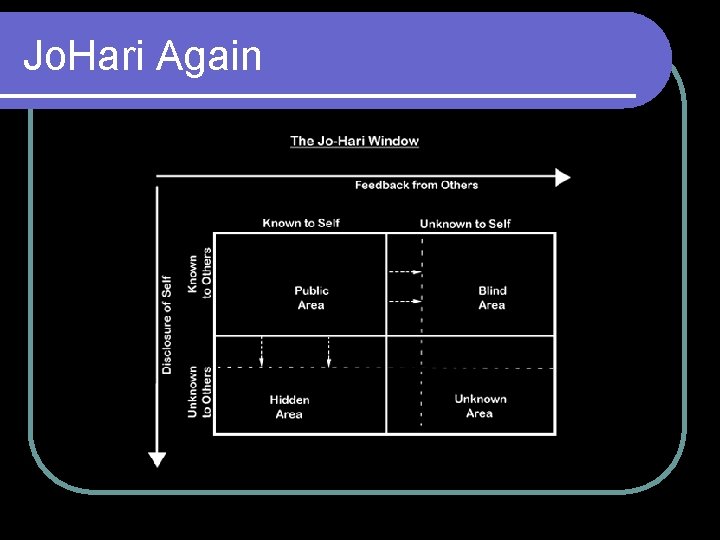
Jo. Hari’s Window
Jo. Hari Again
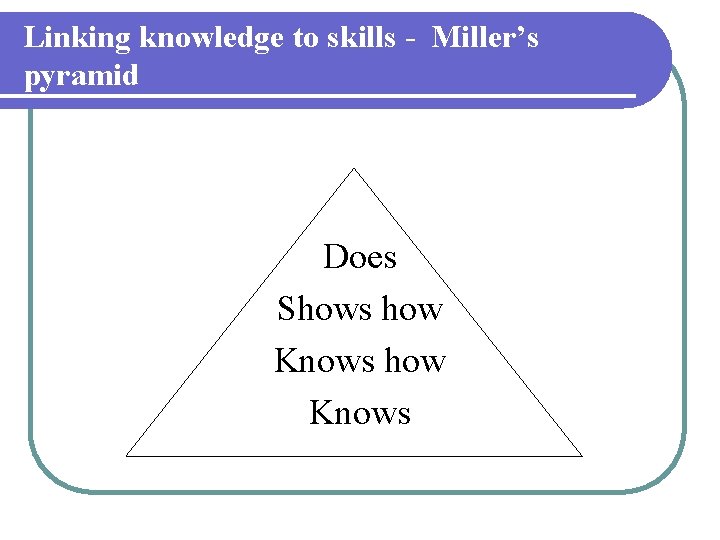
Linking knowledge to skills - Miller’s pyramid Does Shows how Knows
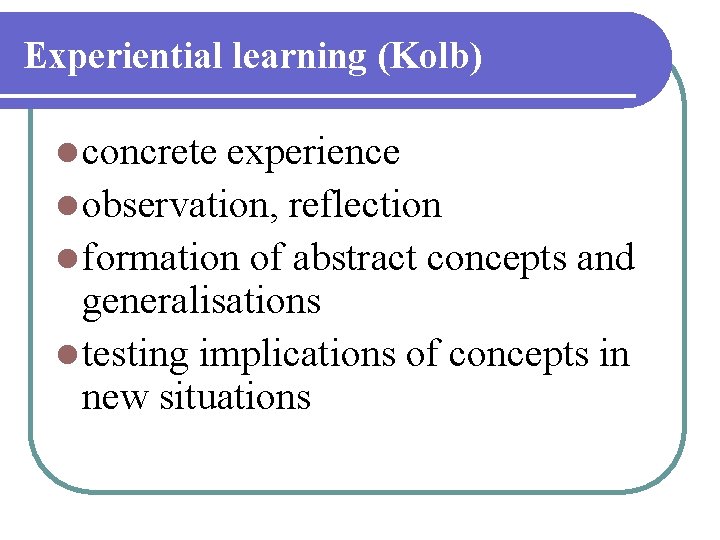
Experiential learning (Kolb) l concrete experience l observation, reflection l formation of abstract concepts and generalisations l testing implications of concepts in new situations
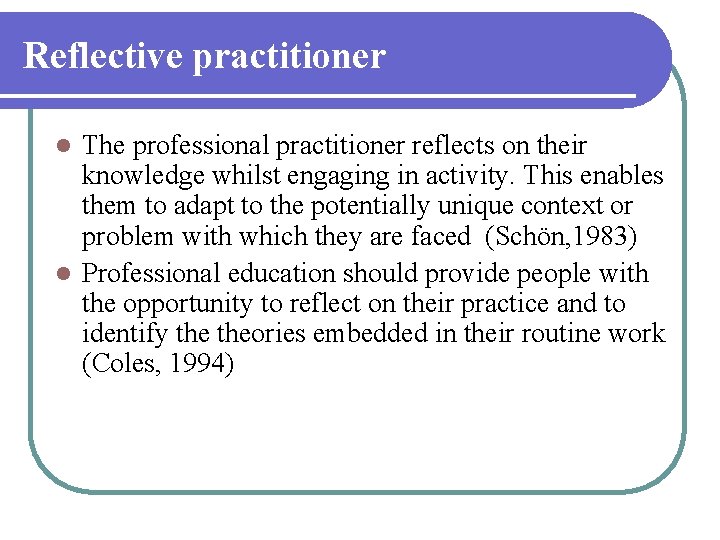
Reflective practitioner The professional practitioner reflects on their knowledge whilst engaging in activity. This enables them to adapt to the potentially unique context or problem with which they are faced (Schön, 1983) l Professional education should provide people with the opportunity to reflect on their practice and to identify theories embedded in their routine work (Coles, 1994) l
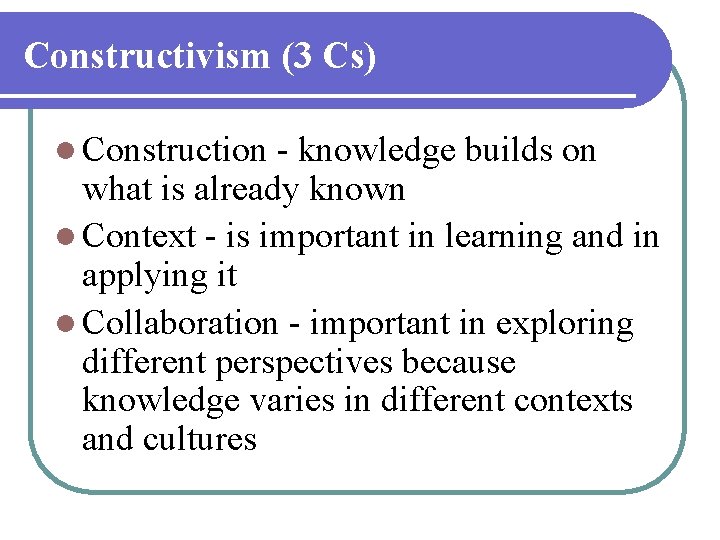
Constructivism (3 Cs) l Construction - knowledge builds on what is already known l Context - is important in learning and in applying it l Collaboration - important in exploring different perspectives because knowledge varies in different contexts and cultures
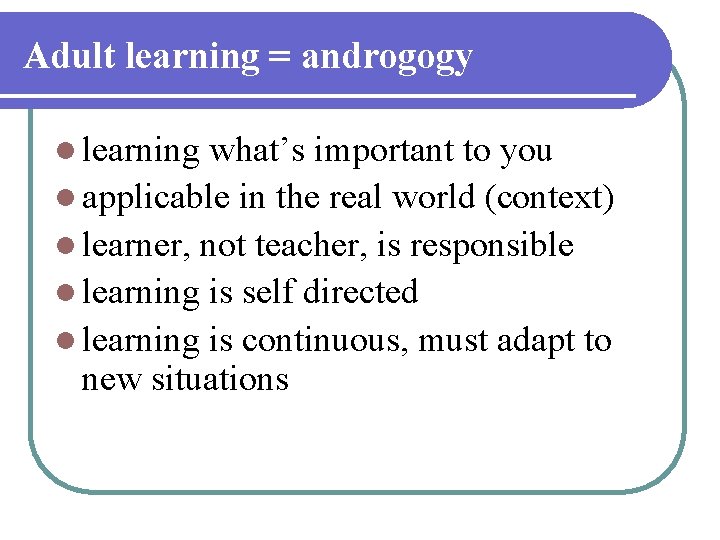
Adult learning = androgogy l learning what’s important to you l applicable in the real world (context) l learner, not teacher, is responsible l learning is self directed l learning is continuous, must adapt to new situations
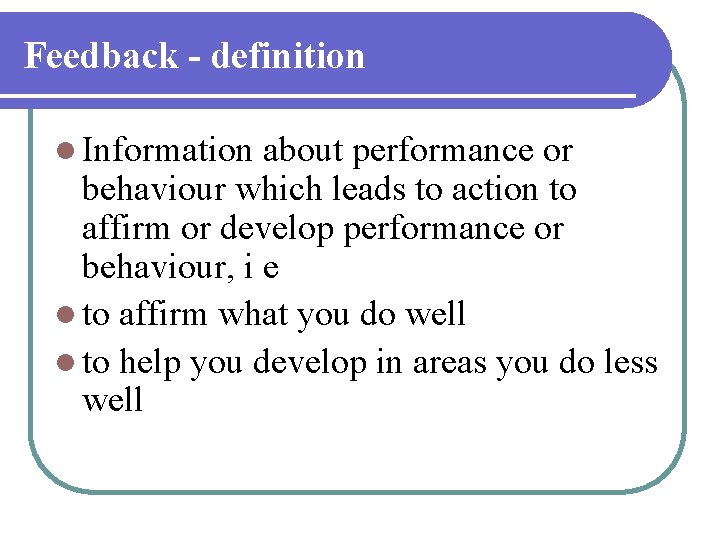
Feedback - definition l Information about performance or behaviour which leads to action to affirm or develop performance or behaviour, i e l to affirm what you do well l to help you develop in areas you do less well
Part Four – teaching methods How else can we do it?
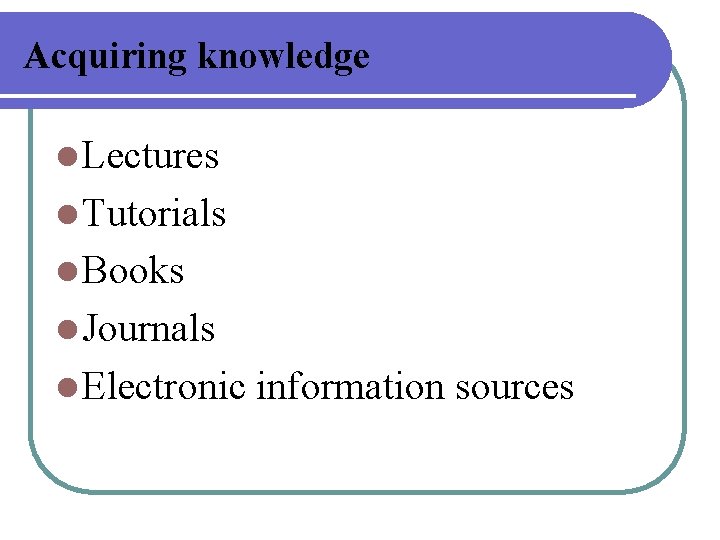
Acquiring knowledge l Lectures l Tutorials l Books l Journals l Electronic information sources
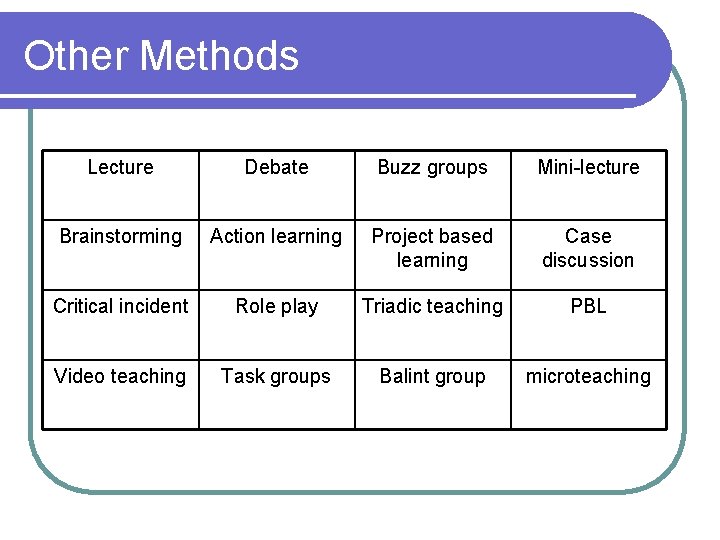
Other Methods Lecture Debate Buzz groups Mini-lecture Brainstorming Action learning Project based learning Case discussion Critical incident Role play Triadic teaching PBL Video teaching Task groups Balint group microteaching
Difficult Cases
GROUP WORK
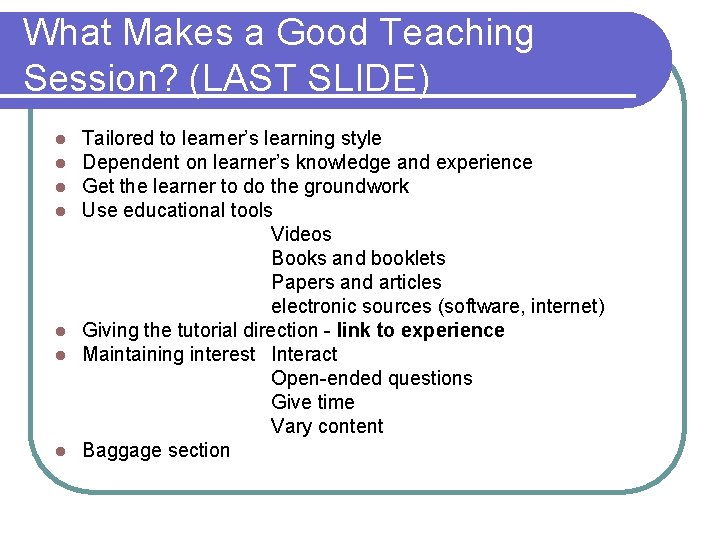
What Makes a Good Teaching Session? (LAST SLIDE) Tailored to learner’s learning style Dependent on learner’s knowledge and experience Get the learner to do the groundwork Use educational tools Videos Books and booklets Papers and articles electronic sources (software, internet) l Giving the tutorial direction - link to experience l Maintaining interest Interact Open-ended questions Give time Vary content l Baggage section l l