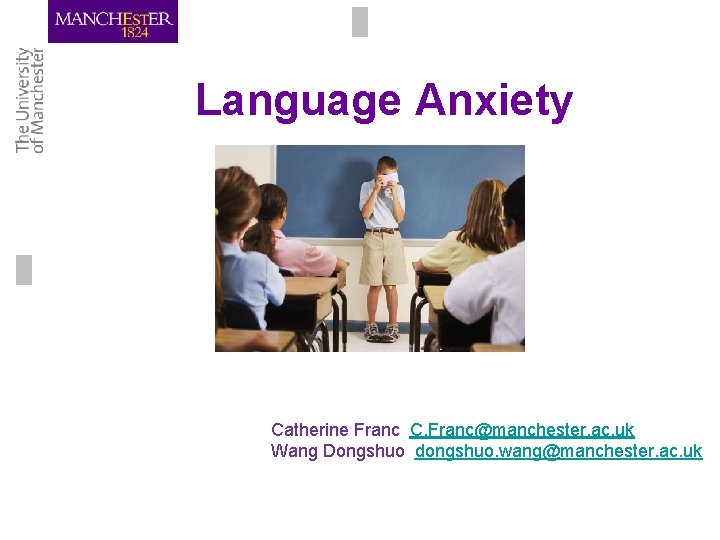
Language Anxiety Catherine Franc C Francmanchester ac uk
- Slides: 44
Language Anxiety Catherine Franc C. Franc@manchester. ac. uk Wang Dongshuo dongshuo. wang@manchester. ac. uk
Overview • Definition • Types of Language Anxiety • Research on Language Anxiety • Pedagogical Implications
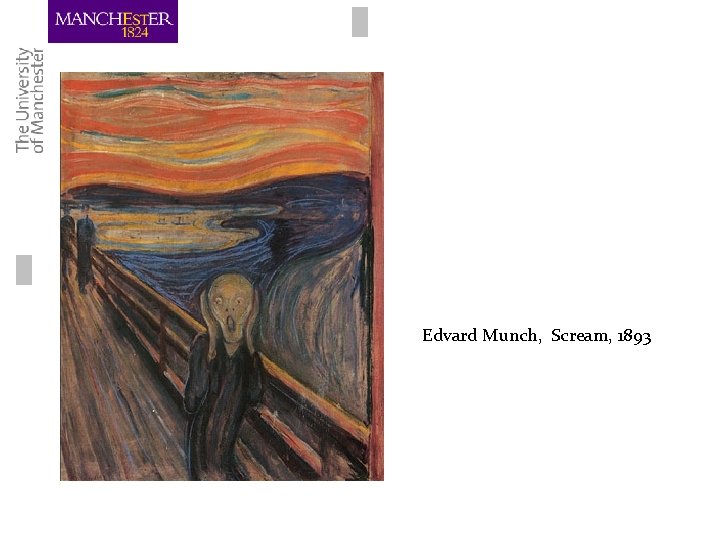
Edvard Munch, Scream, 1893
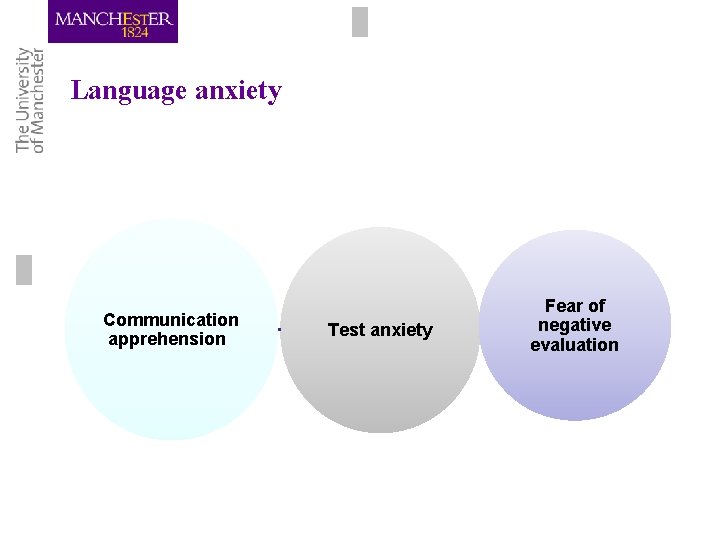
Language anxiety Communication apprehension Test anxiety Fear of negative evaluation
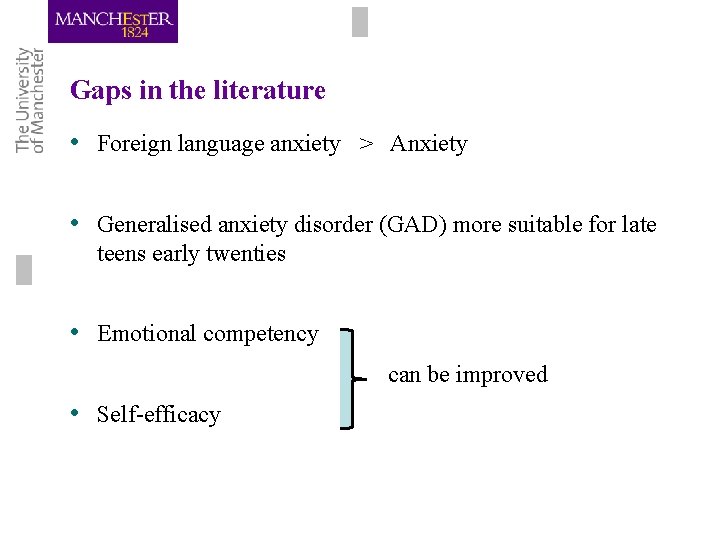
Gaps in the literature • Foreign language anxiety > Anxiety • Generalised anxiety disorder (GAD) more suitable for late teens early twenties • Emotional competency • Self-efficacy can be improved
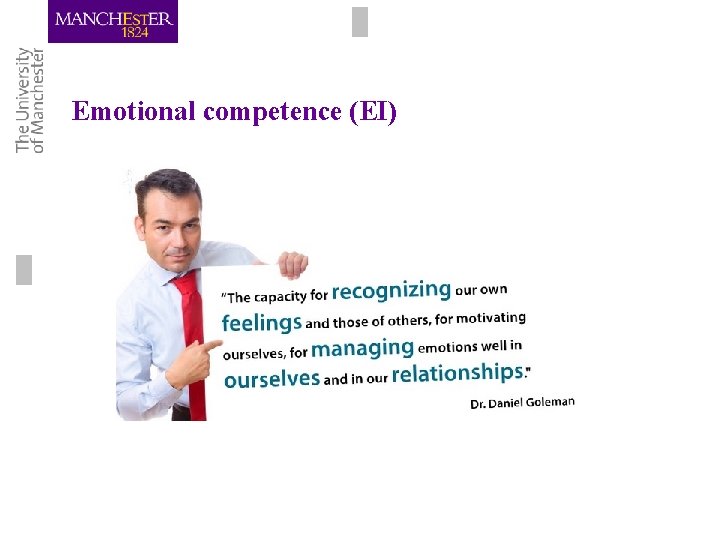
Emotional competence (EI)
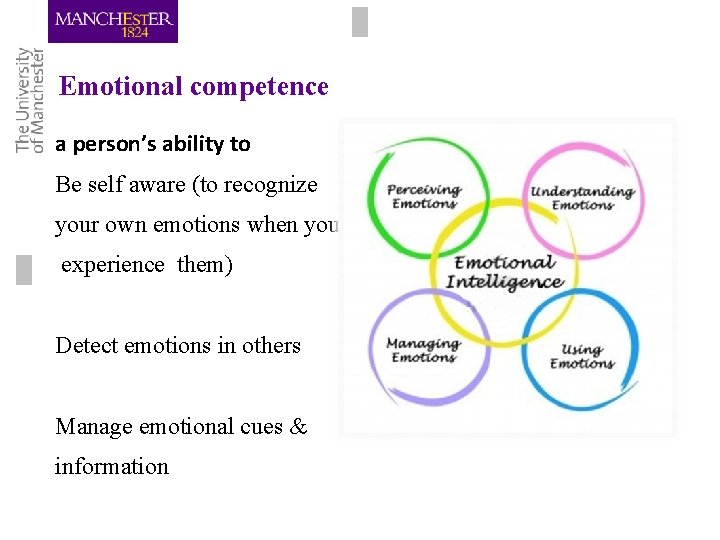
Emotional competence a person’s ability to Be self aware (to recognize your own emotions when you experience them) Detect emotions in others Manage emotional cues & information
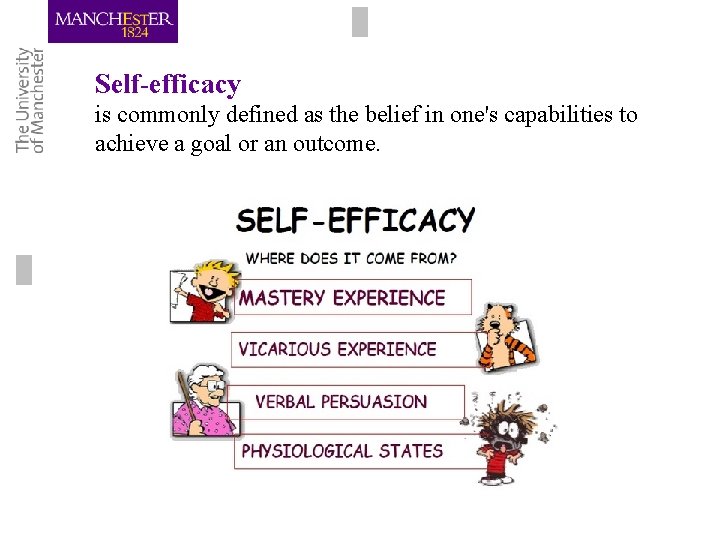
Self-efficacy is commonly defined as the belief in one's capabilities to achieve a goal or an outcome.
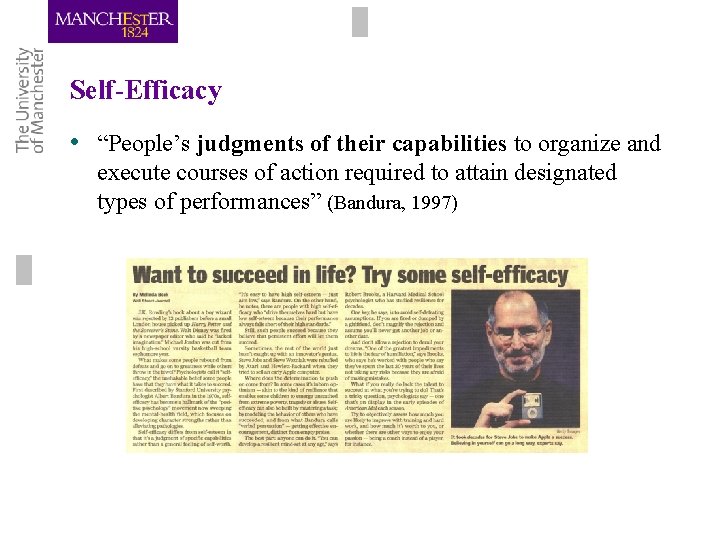
Self-Efficacy • “People’s judgments of their capabilities to organize and execute courses of action required to attain designated types of performances” (Bandura, 1997)
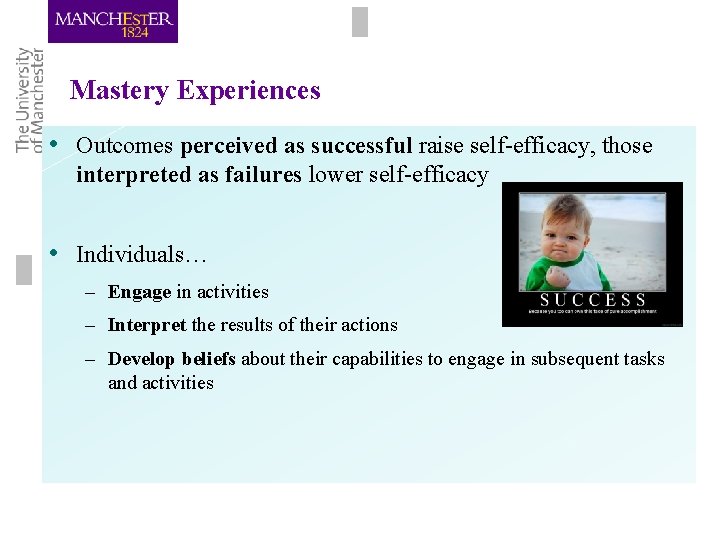
Mastery Experiences • Outcomes perceived as successful raise self-efficacy, those interpreted as failures lower self-efficacy • Individuals… – Engage in activities – Interpret the results of their actions – Develop beliefs about their capabilities to engage in subsequent tasks and activities
Vicarious Experiences • Observations of others • Effects of Modeling • If the model’s attributes are similar to their own (ex: peers, etc. ), the influence of the vicarious experience is strong
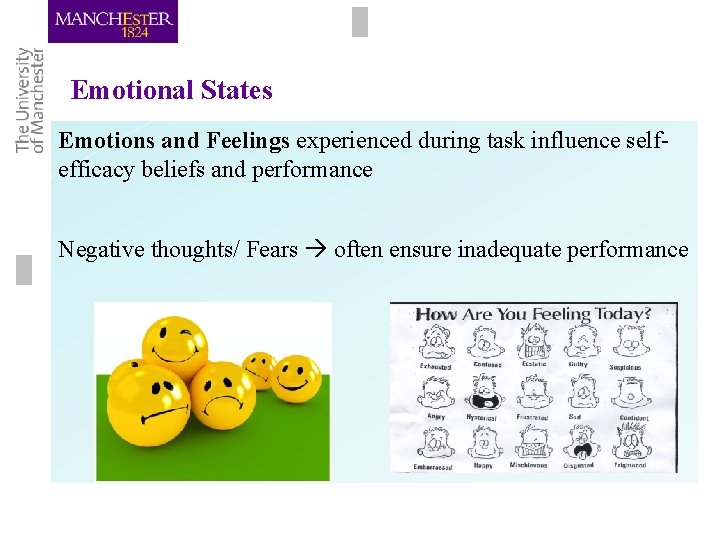
Emotional States Emotions and Feelings experienced during task influence selfefficacy beliefs and performance Negative thoughts/ Fears often ensure inadequate performance
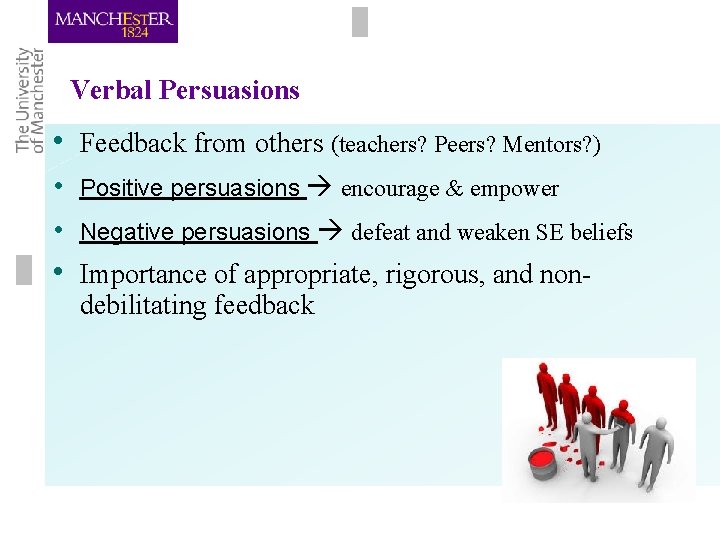
Verbal Persuasions • Feedback from others (teachers? Peers? Mentors? ) • Positive persuasions encourage & empower • Negative persuasions defeat and weaken SE beliefs • Importance of appropriate, rigorous, and nondebilitating feedback
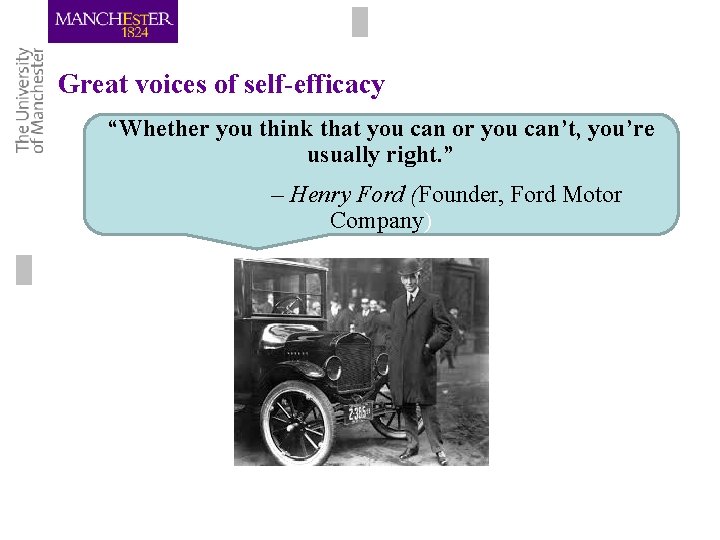
Great voices of self-efficacy “Whether you think that you can or you can’t, you’re usually right. ” – Henry Ford (Founder, Ford Motor Company)
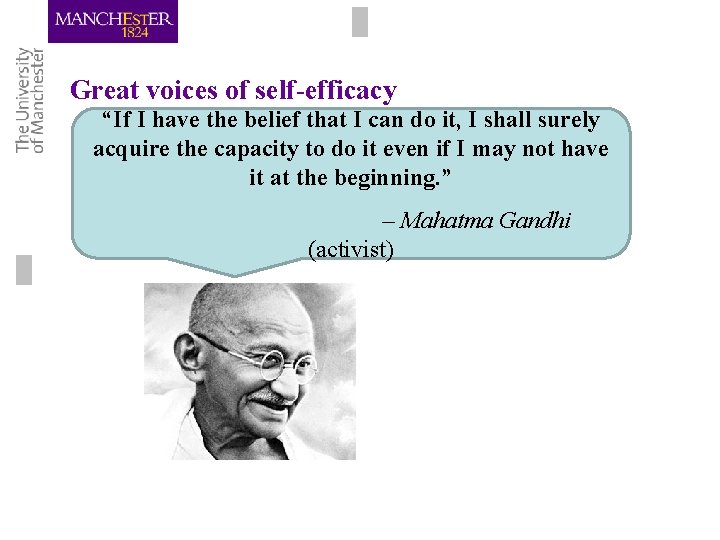
Great voices of self-efficacy “If I have the belief that I can do it, I shall surely acquire the capacity to do it even if I may not have it at the beginning. ” – Mahatma Gandhi (activist)
Research Question: What is the impact of anxiety on students’ language learning results? What are the relationships between Emotional Intelligence, self-efficacy and generalised anxiety to language exam scores?
Research design Questionnaire
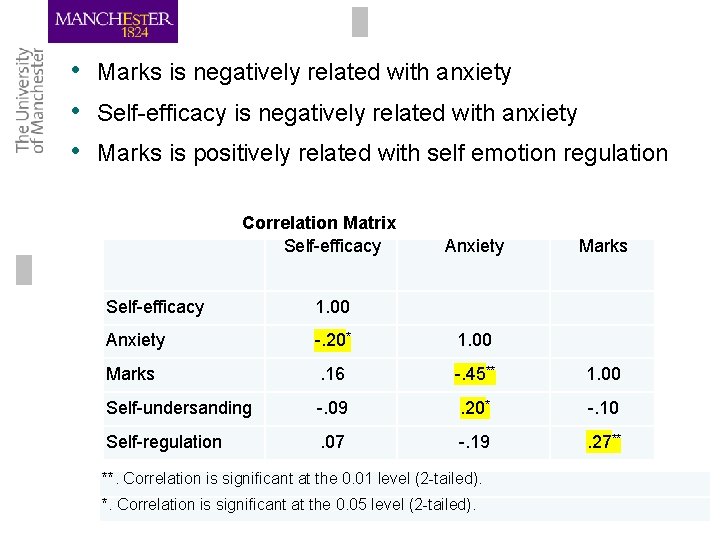
• Marks is negatively related with anxiety • Self-efficacy is negatively related with anxiety • Marks is positively related with self emotion regulation Correlation Matrix Self-efficacy Anxiety Marks Self-efficacy 1. 00 Anxiety -. 20* 1. 00 Marks . 16 -. 45** 1. 00 Self-undersanding -. 09 . 20* -. 10 Self-regulation . 07 -. 19 . 27** **. Correlation is significant at the 0. 01 level (2 -tailed). *. Correlation is significant at the 0. 05 level (2 -tailed).
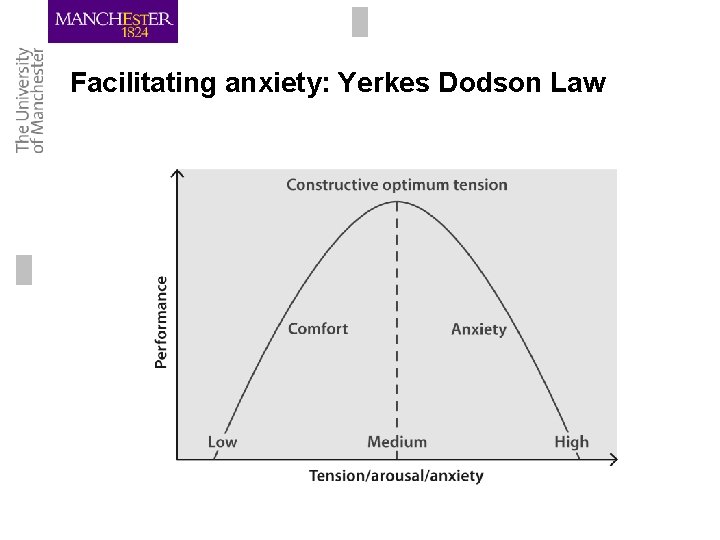
Facilitating anxiety: Yerkes Dodson Law
GENDER
Enhancing self-efficacy to reduce anxiety Anxiety is negatively related with self-efficacy r =-. 203* p<0. 05
Enhance EI-self emotion regulation to improve marks Marks is strongly positively related with self-regulation r =. 275** p<0. 01 If students can handle their emotions, e. g. easily find way to calm themselves down from angry, they are more likely to achieve better marks in the language exam.
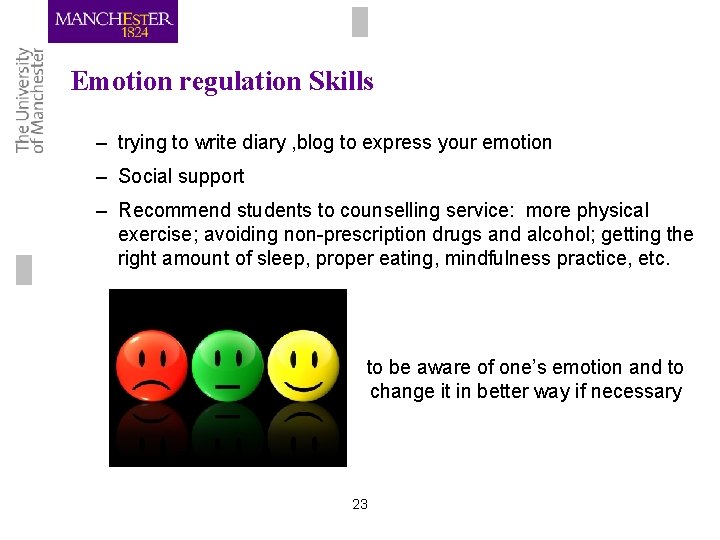
Emotion regulation Skills – trying to write diary , blog to express your emotion – Social support – Recommend students to counselling service: more physical exercise; avoiding non-prescription drugs and alcohol; getting the right amount of sleep, proper eating, mindfulness practice, etc. to be aware of one’s emotion and to change it in better way if necessary 23
Emotional States • Helping students understand their own emotions • Establishing dialogue in the classroom • What are stress and anxiety and which forms they can take • Small test to help students understand what stresses them • Thoughts; physical sensations; attitudes • Reasons • Advice
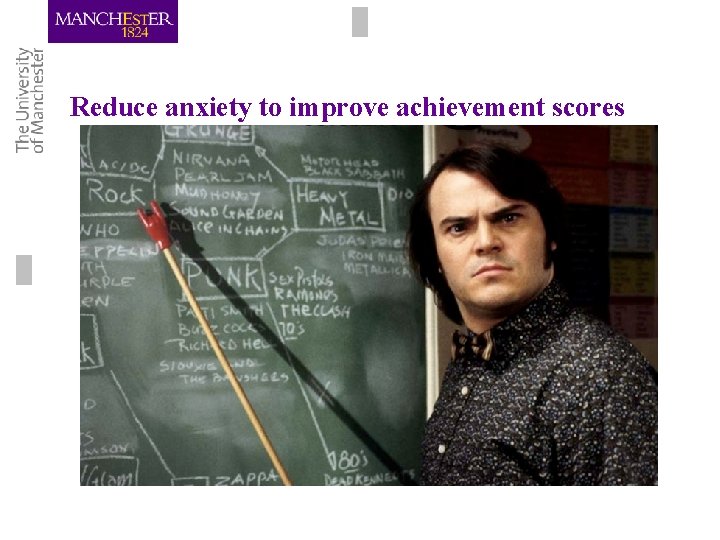
Reduce anxiety to improve achievement scores
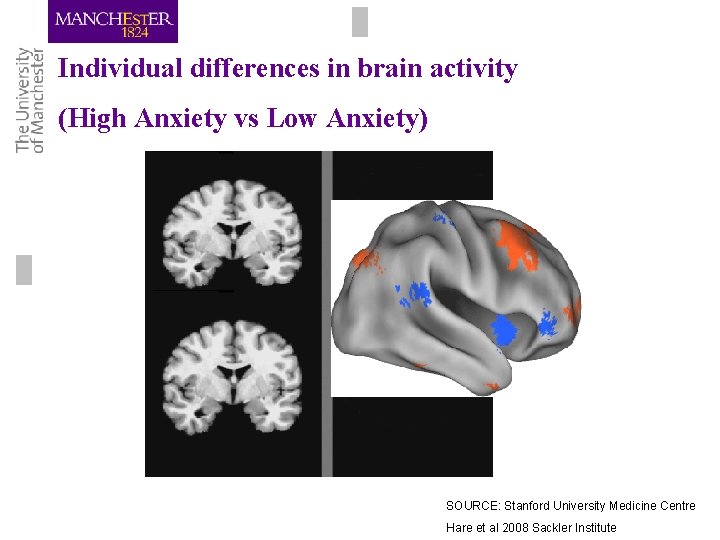
Individual differences in brain activity (High Anxiety vs Low Anxiety) SOURCE: Stanford University Medicine Centre Hare et al 2008 Sackler Institute
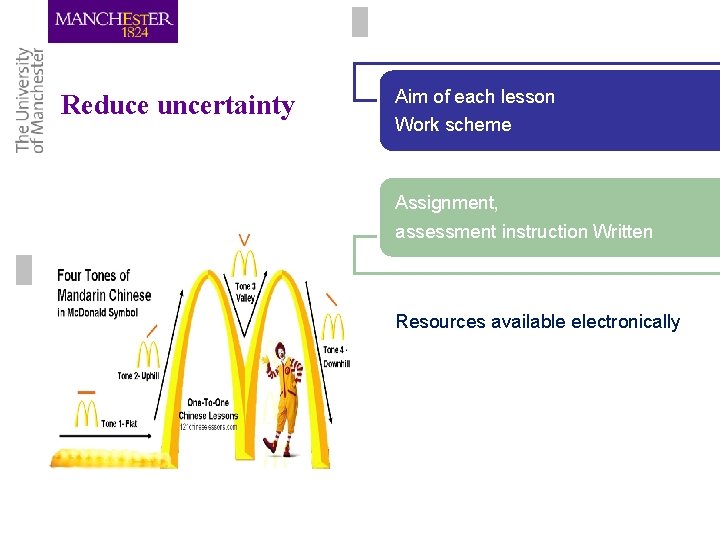
Reduce uncertainty Aim of each lesson Work scheme Assignment, assessment instruction Written Resources available electronically
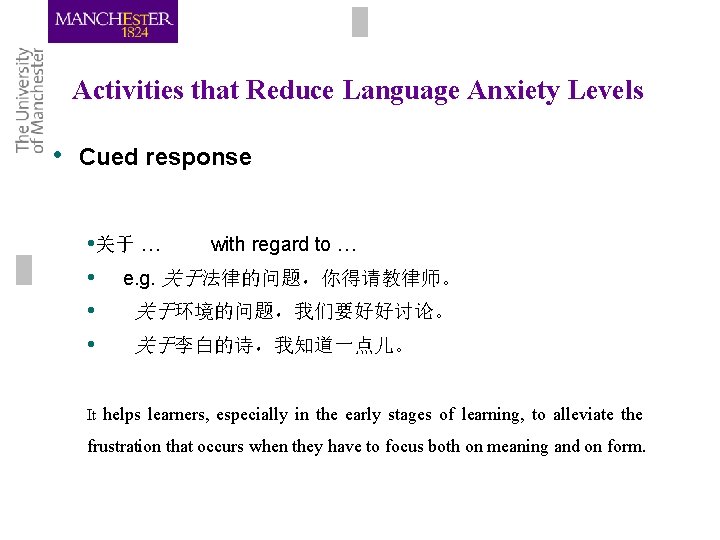
Activities that Reduce Language Anxiety Levels • Cued response • 关于 … with regard to … • e. g. 关于法律的问题,你得请教律师。 • 关于环境的问题,我们要好好讨论。 • 关于李白的诗,我知道一点儿。 It helps learners, especially in the early stages of learning, to alleviate the frustration that occurs when they have to focus both on meaning and on form.
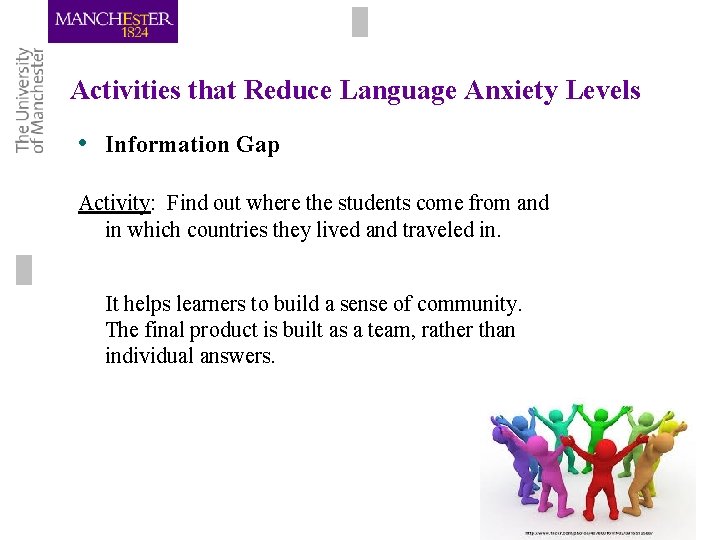
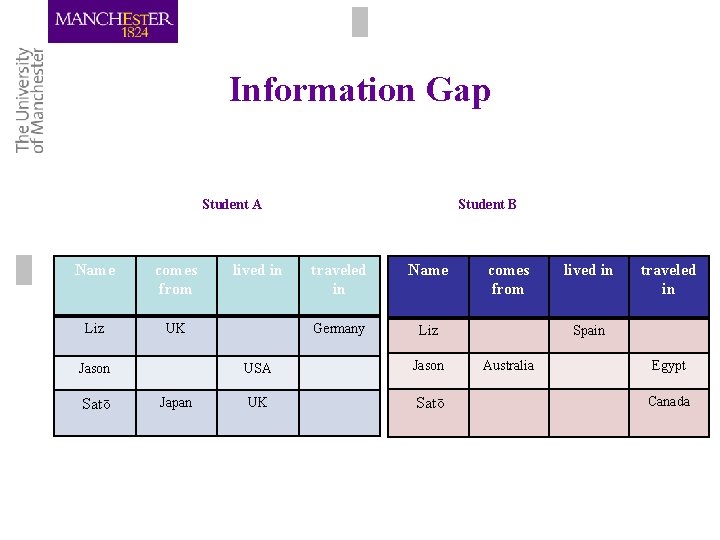
Activities that Reduce Language Anxiety Levels • Information Gap Activity: Find out where the students come from and in which countries they lived and traveled in. It helps learners to build a sense of community. The final product is built as a team, rather than individual answers.
Information Gap Student A Name comes from Liz UK Jason Satō Japan lived in Student B traveled in Name Germany Liz USA Jason UK Satō comes from lived in traveled in Spain Australia Egypt Canada
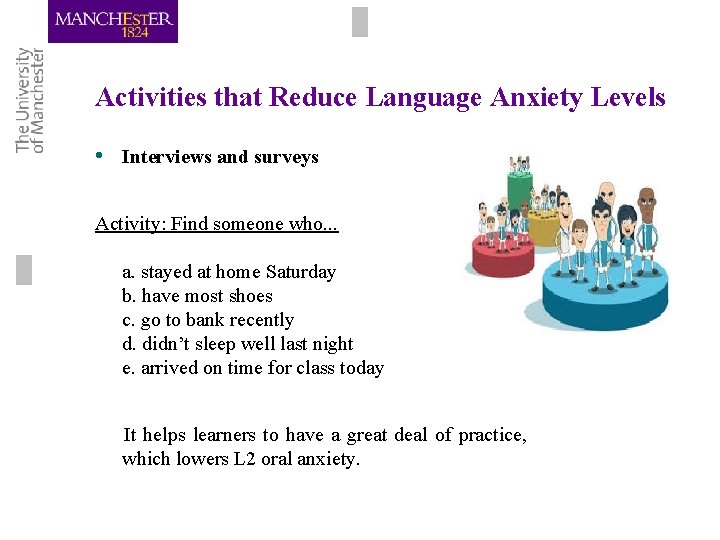
Activities that Reduce Language Anxiety Levels • Interviews and surveys Activity: Find someone who. . . a. stayed at home Saturday b. have most shoes c. go to bank recently d. didn’t sleep well last night e. arrived on time for class today It helps learners to have a great deal of practice, which lowers L 2 oral anxiety.
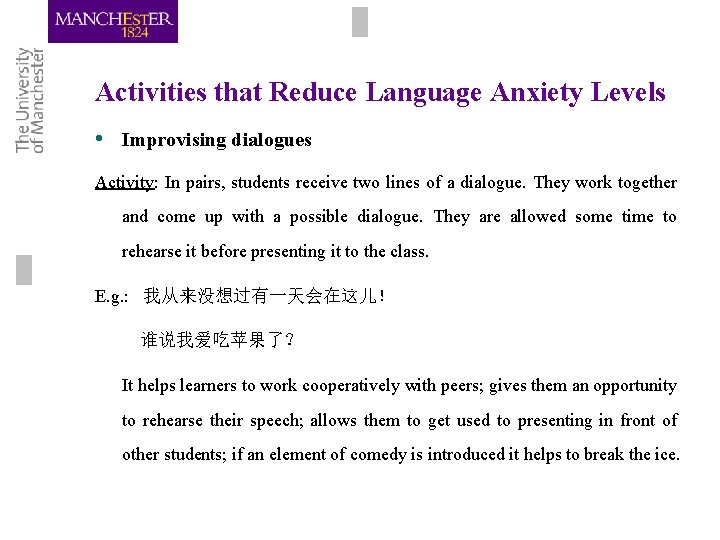
Activities that Reduce Language Anxiety Levels • Improvising dialogues Activity: In pairs, students receive two lines of a dialogue. They work together and come up with a possible dialogue. They are allowed some time to rehearse it before presenting it to the class. E. g. : 我从来没想过有一天会在这儿! 谁说我爱吃苹果了? It helps learners to work cooperatively with peers; gives them an opportunity to rehearse their speech; allows them to get used to presenting in front of other students; if an element of comedy is introduced it helps to break the ice.
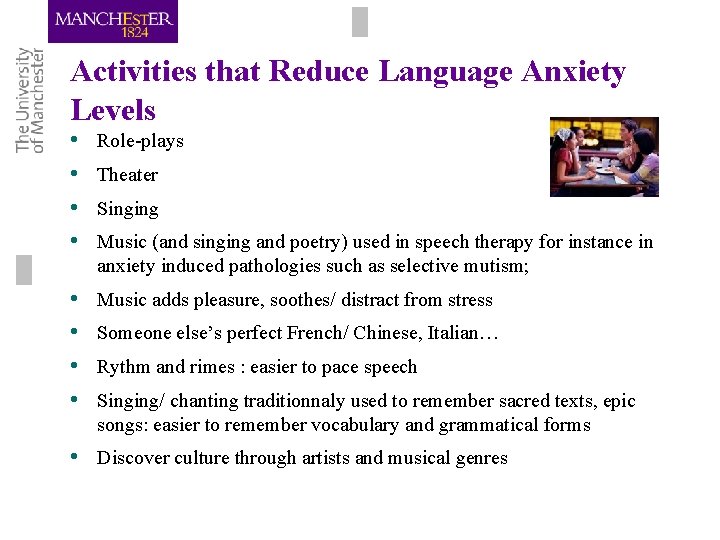
Activities that Reduce Language Anxiety Levels • • Role-plays • • Music adds pleasure, soothes/ distract from stress Theater Singing Music (and singing and poetry) used in speech therapy for instance in anxiety induced pathologies such as selective mutism; Someone else’s perfect French/ Chinese, Italian… Rythm and rimes : easier to pace speech Singing/ chanting traditionnaly used to remember sacred texts, epic songs: easier to remember vocabulary and grammatical forms • Discover culture through artists and musical genres
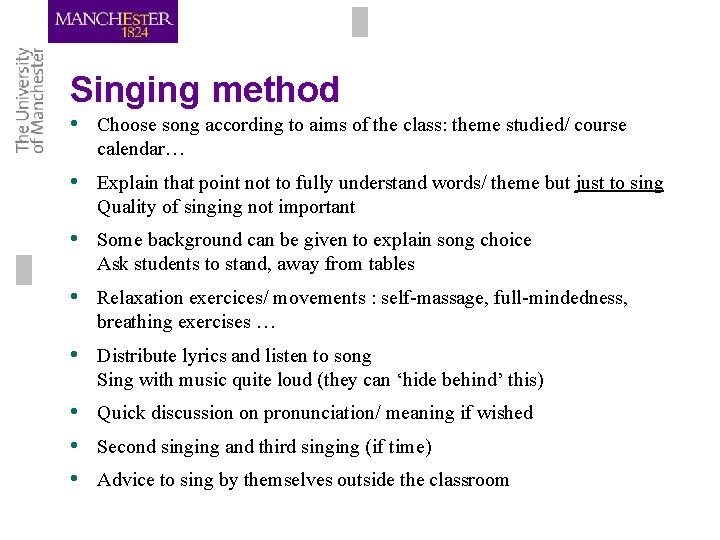
Singing method • Choose song according to aims of the class: theme studied/ course calendar… • Explain that point not to fully understand words/ theme but just to sing Quality of singing not important • Some background can be given to explain song choice Ask students to stand, away from tables • Relaxation exercices/ movements : self-massage, full-mindedness, breathing exercises … • Distribute lyrics and listen to song Sing with music quite loud (they can ‘hide behind’ this) • Quick discussion on pronunciation/ meaning if wished • Second singing and third singing (if time) • Advice to sing by themselves outside the classroom
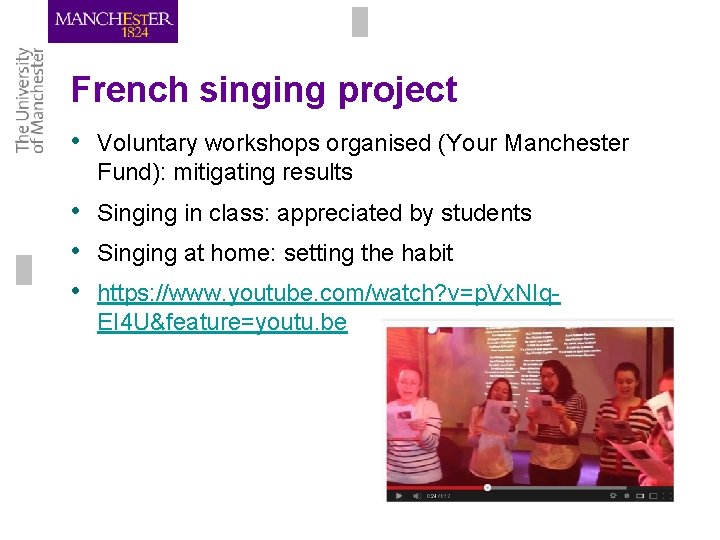
French singing project • Voluntary workshops organised (Your Manchester Fund): mitigating results • Singing in class: appreciated by students • Singing at home: setting the habit • https: //www. youtube. com/watch? v=p. Vx. NIq. EI 4 U&feature=youtu. be
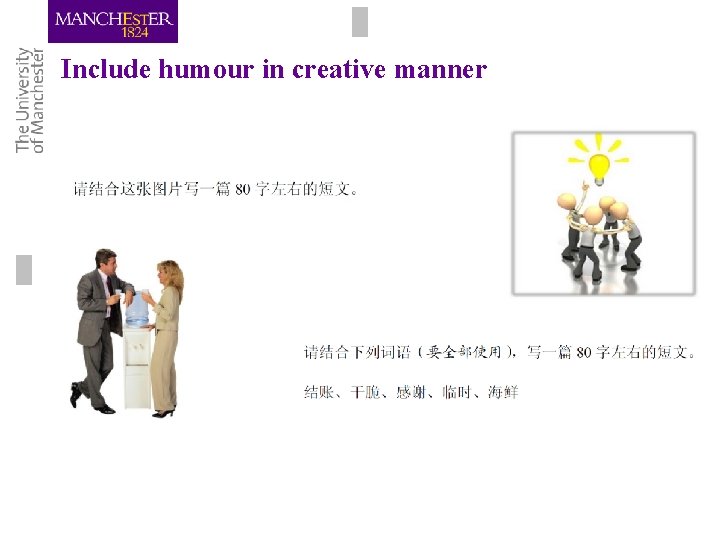
Include humour in creative manner
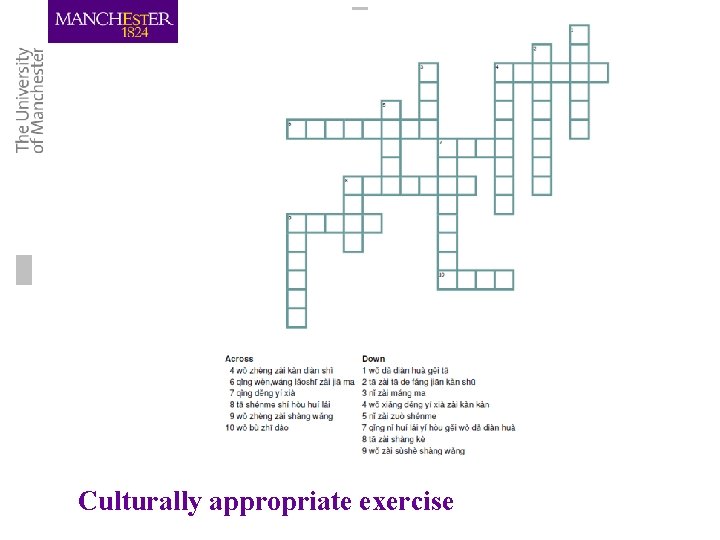
Culturally appropriate exercise
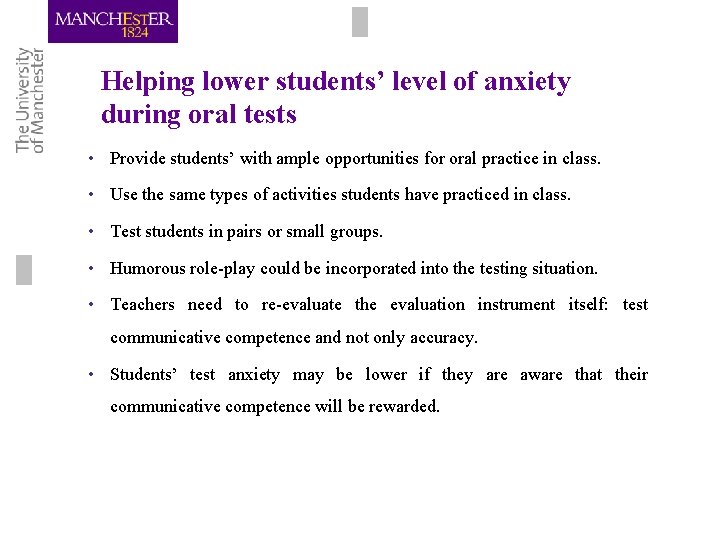
Helping lower students’ level of anxiety during oral tests • Provide students’ with ample opportunities for oral practice in class. • Use the same types of activities students have practiced in class. • Test students in pairs or small groups. • Humorous role-play could be incorporated into the testing situation. • Teachers need to re-evaluate the evaluation instrument itself: test communicative competence and not only accuracy. • Students’ test anxiety may be lower if they are aware that their communicative competence will be rewarded.
Pedagogical Implications Ø Portfolio keeping Ø conventional teacher-centered evaluation versus Ø contemporary evaluation methods such as peerreviewing or self-evaluation Ø Self-evaluation (highly proficient learners) Ø Providing checklists or diaries to encourage selfevaluation.
Concluding… • Teachers are encouraged to be aware of students’ anxiety about language learning to better help them manage their anxiety. • Activities that help learners cooperate and depend on their peers foster an environment conducive to the development of community. • Learners feel more at ease and willing to be engaged in oral activities if there is a more relaxing environment in the class. • Maintaining the development of communicative competence is a tool to help learners lower their level of anxiety. Provide students’ with ample opportunities for oral practice in class
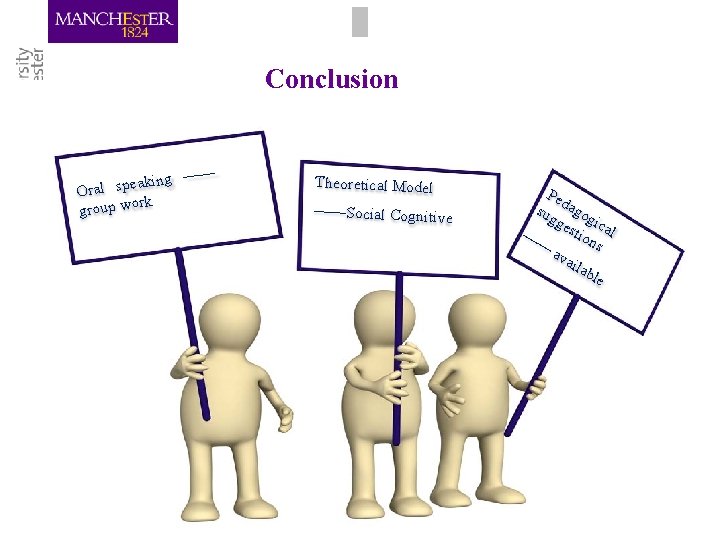
Conclusion g —— n i k a e p s Oral rk group wo Theoretical Model ——Social Cognitive Pe d sug agog ges ica tio l — ns — av ail abl e
Questions and Answers Knowledge arises from interactions
References Arnold, J. & Brown, H. (1999). Introduction: A map of the terrain. In Arnold, J. (Ed. ) Affect in Language Learning New York: Cambridge University Press. pp. 1 -24. Dornyei, Z. (2005). The Psychology of the Language Learner: Individual Differences in Second Language Acquisition. Mahwah, N. J. : Lawrence Erlbaum Associates. Hewitt E. and Stephenson, J. (2012). Foreign Language Anxiety and Oral Exam Performance: a Replication of Phillips’s MLJ Study. The Modern Language Journal 96, ii. Horwitz, E. K. , Horwitz, M. B. , & Cope, J. (1986). Foreign language classroom anxiety. The Modern Language Journal, 70(2), 125‐ 132. Torres, K. & Turner, J. E. (2014). Exploring students’ foreign language anxiety, intercultural sensitivity, and perceptions of teacher effectiveness. The Journal of Language Teaching and Learning, 4(1), 84 -101. Woodrow, L. (2006). Anxiety and speaking English as a second language. RELC Journal, 37(3), 308– 328. Xiao, Y. & Wong, K. F. (2014). Exploring heritage language anxiety: A study of Chinese heritage language learners. The Modern Language Journal, 98(2), 589 -611.