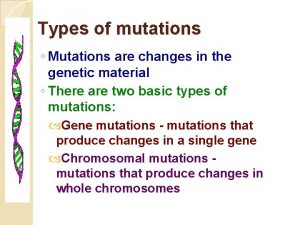
Key Questions How do mutations effect organisms DNA
- Slides: 39
Key Questions: • How do mutations effect organisms?
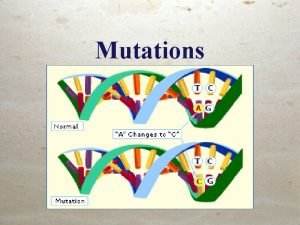
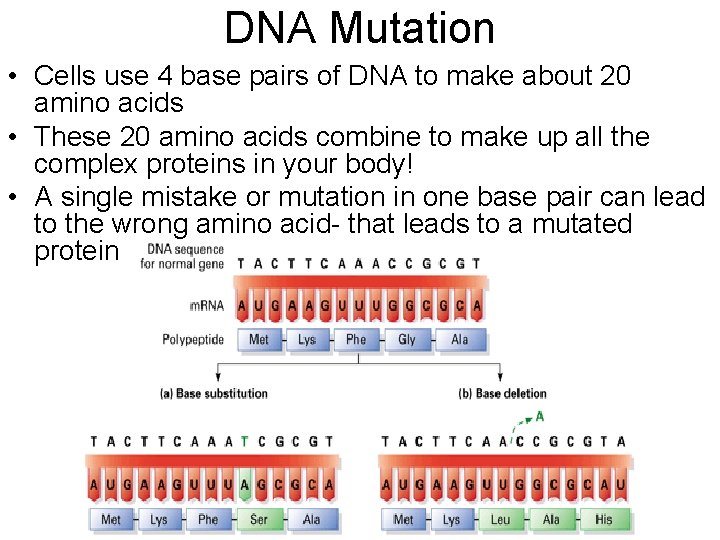
DNA Mutation • Cells use 4 base pairs of DNA to make about 20 amino acids • These 20 amino acids combine to make up all the complex proteins in your body! • A single mistake or mutation in one base pair can lead to the wrong amino acid- that leads to a mutated protein
Possible Causes of DNA Mutations • • Exposure to X-rays Exposure to UV light Exposure to certain chemical agents Exposure to radiation
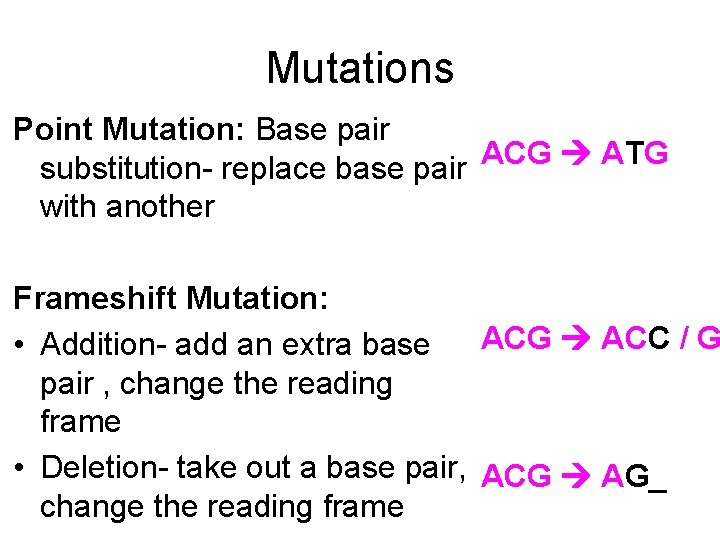
Mutations Point Mutation: Base pair substitution- replace base pair ACG ATG with another Frameshift Mutation: ACG ACC / G • Addition- add an extra base pair , change the reading frame • Deletion- take out a base pair, ACG AG_ change the reading frame
Which is worse? • Which would have a greater affect on the eventual protein/trait? A point mutation or a frameshift mutation?
Mutations • Point mutations and Frameshifts are mutations that change a portion of a DNA gene or RNA. – An error during what process would cause a mutation in the DNA? Interphase- DNA replication – An error during what process would cause a mutation in the RNA? Transcription or Translation
WHAT IF What if there is a mutation during MEIOSIS? Dun dun….
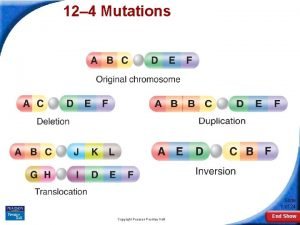
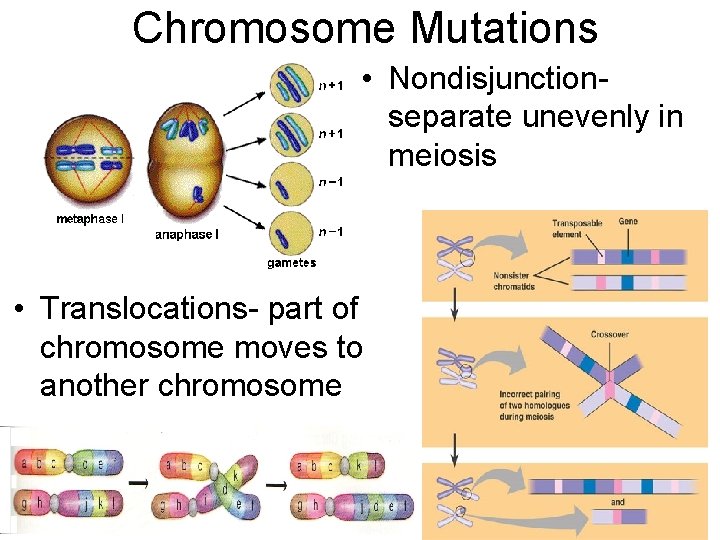
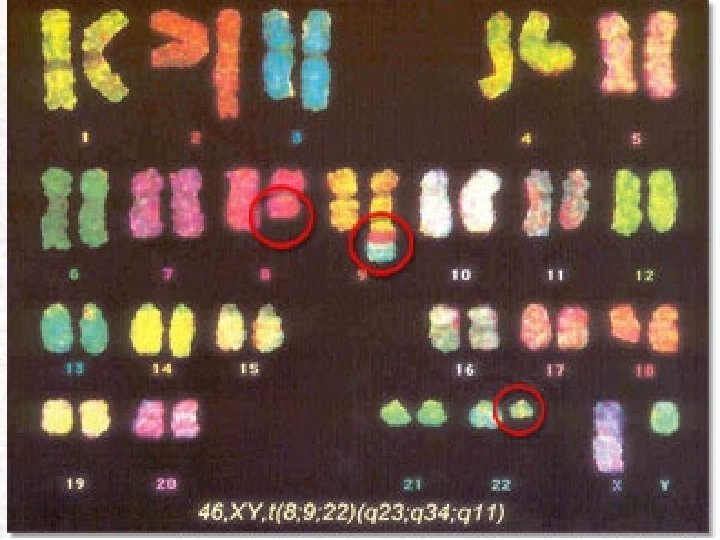
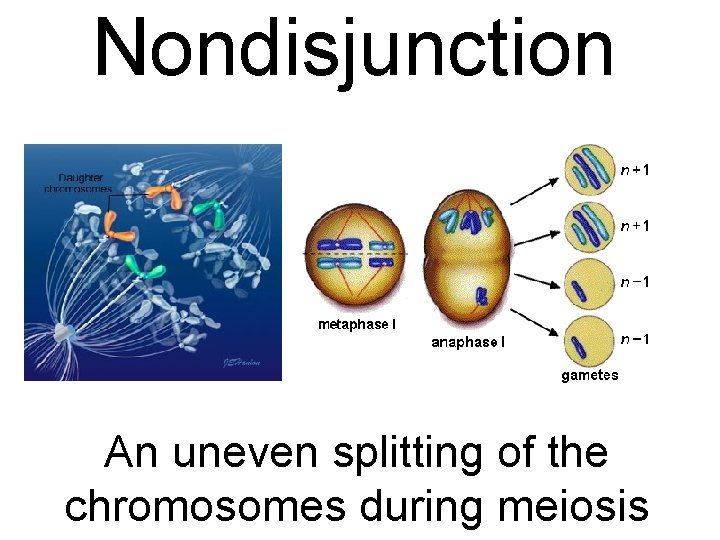
Chromosome Mutations • Nondisjunctionseparate unevenly in meiosis • Translocations- part of chromosome moves to another chromosome
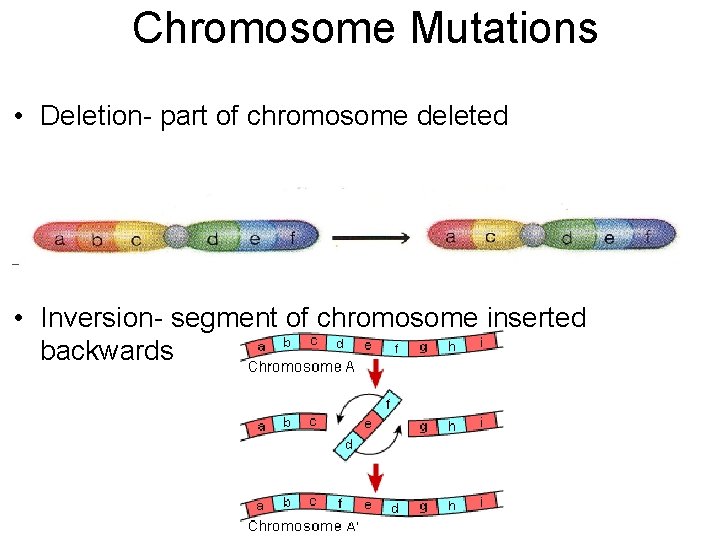
Chromosome Mutations • Deletion- part of chromosome deleted • Inversion- segment of chromosome inserted backwards
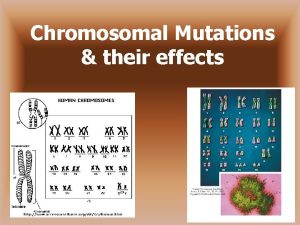
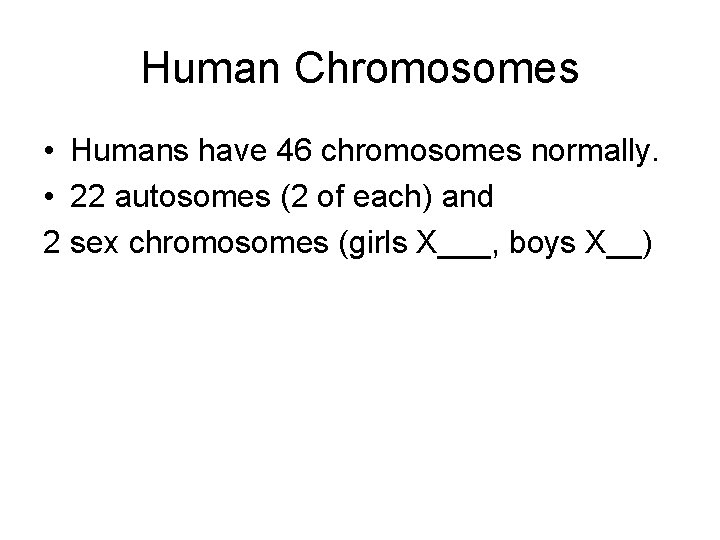
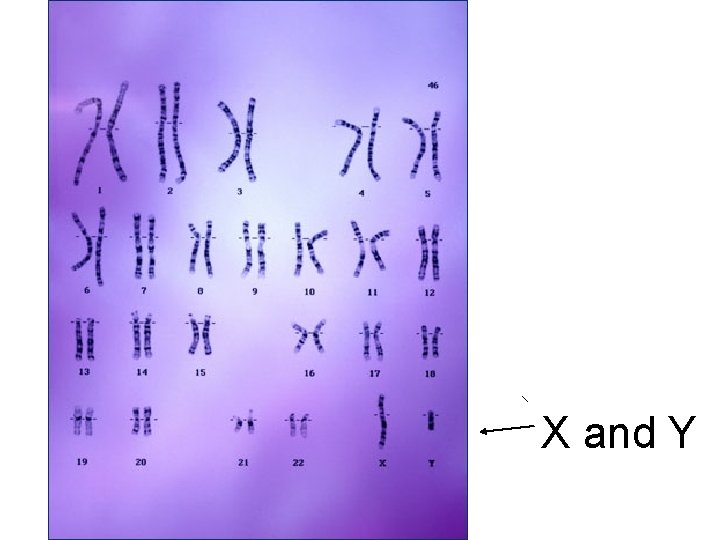
Human Chromosomes • Humans have 46 chromosomes normally. • 22 autosomes (2 of each) and 2 sex chromosomes (girls X___, boys X__)
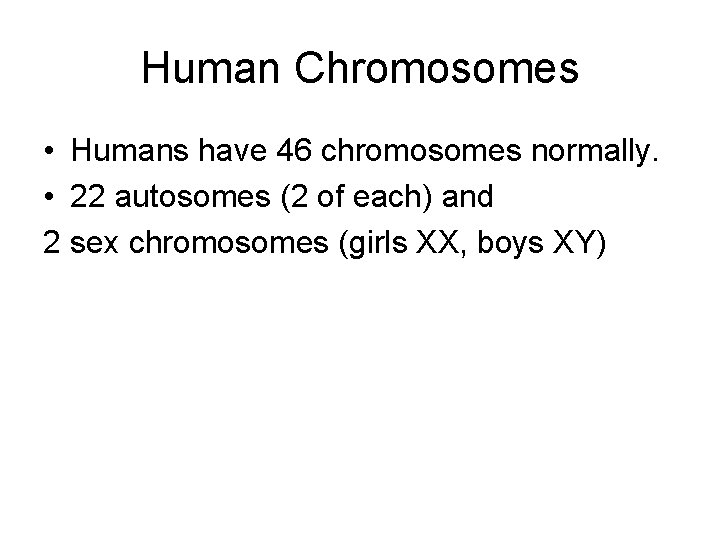
Human Chromosomes • Humans have 46 chromosomes normally. • 22 autosomes (2 of each) and 2 sex chromosomes (girls XX, boys XY)
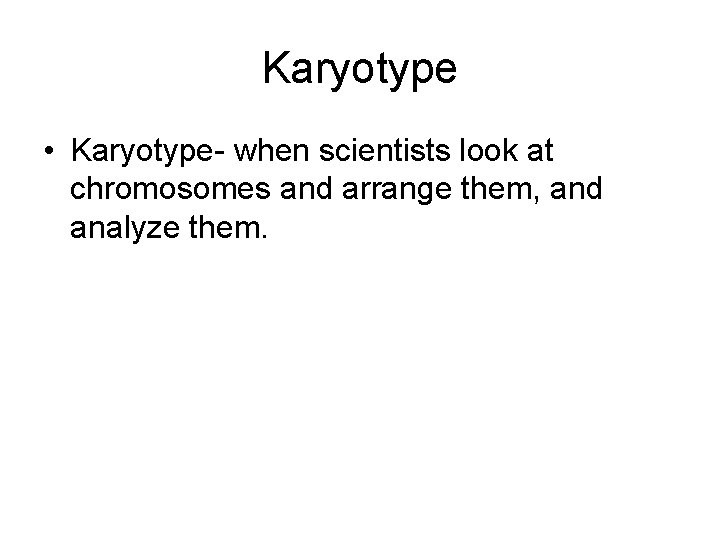
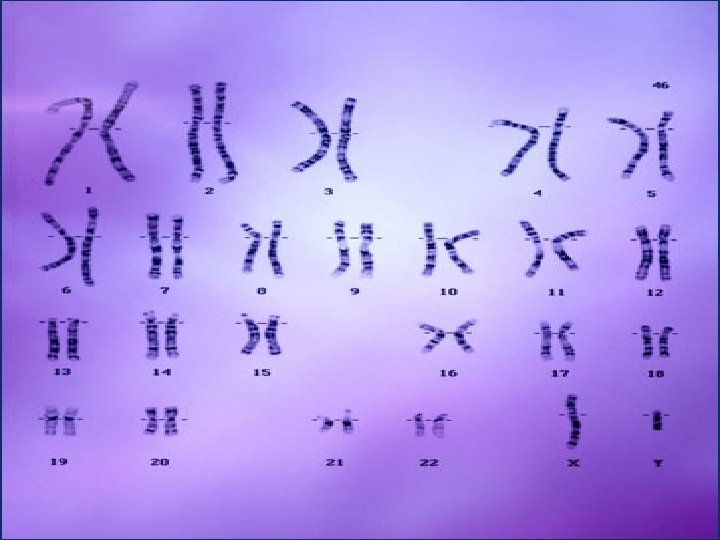
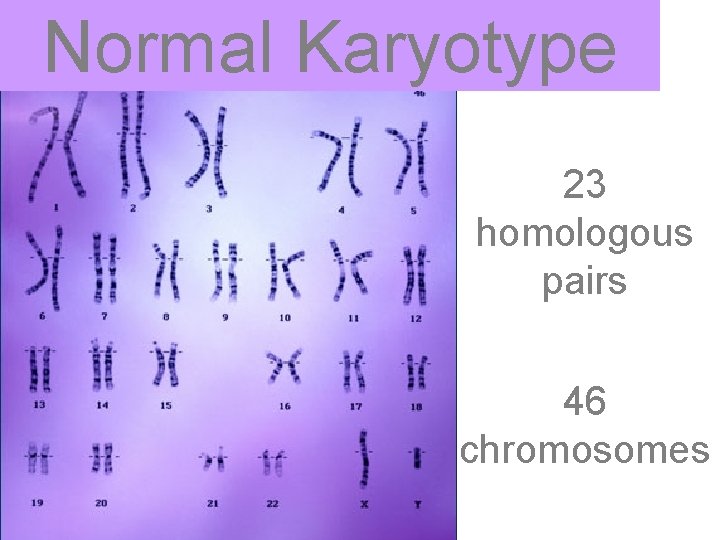
Karyotype • Karyotype- when scientists look at chromosomes and arrange them, and analyze them.
Karyotype • Arranged by size • Arranged by position of centromere • First arrange normal chromosomes • Try to arrange anything irregular
Staining chromosomes • Stain Giemsa Staining stains the A and T rich portion of DNA dark. • Banding patterns depend on genetic code • Banding patterns unique to certain chromosomes
Normal Karyotype 23 homologous pairs 46 chromosomes
• What are the sex chromosomes ?
X and Y
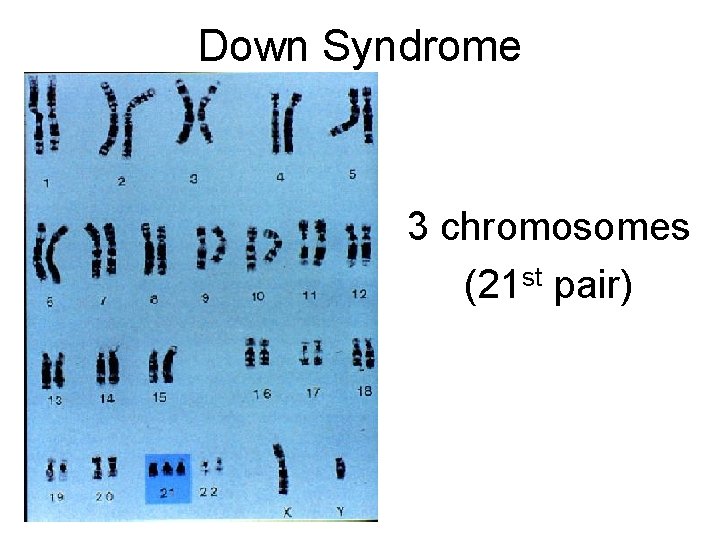
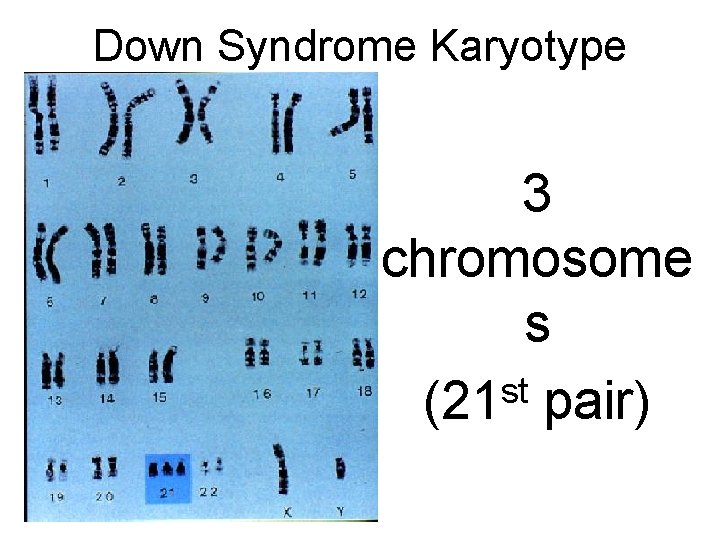
Chromosomal notation: • 46, XY(normal boy) 46, XX(normal girl) • 47, XX, +21 ABNORMAL EXTRA 21 what’s the disease?
Down Syndrome 3 chromosomes (21 st pair)
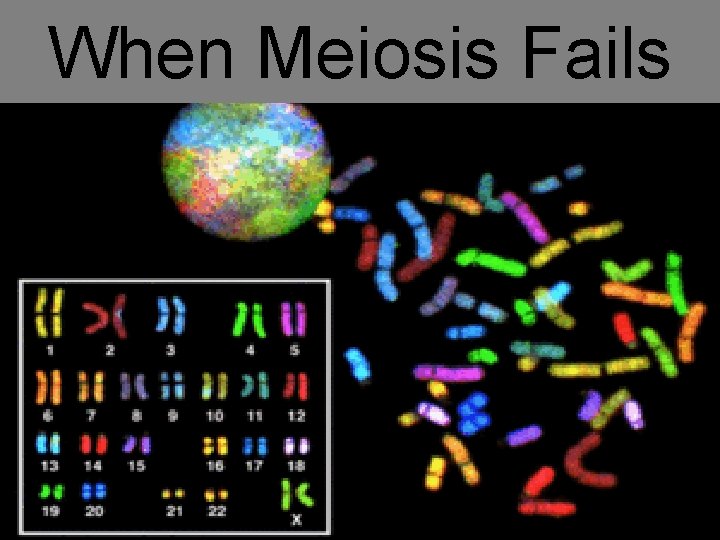
When Meiosis Fails
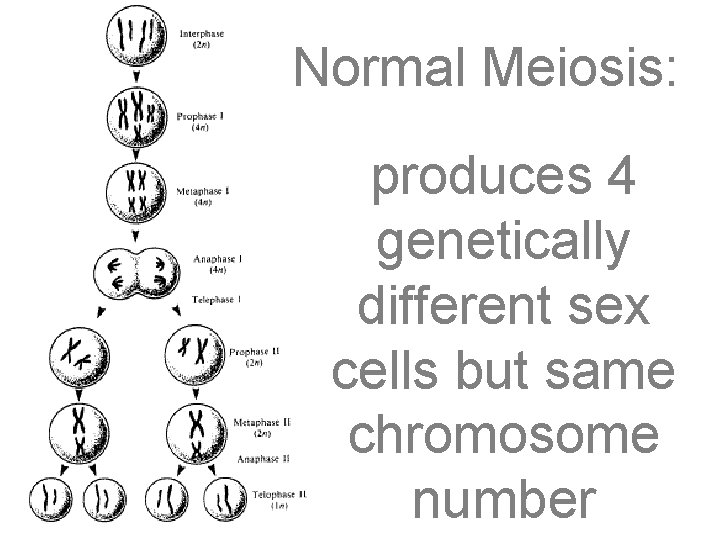
Normal Meiosis: produces 4 genetically different sex cells but same chromosome number
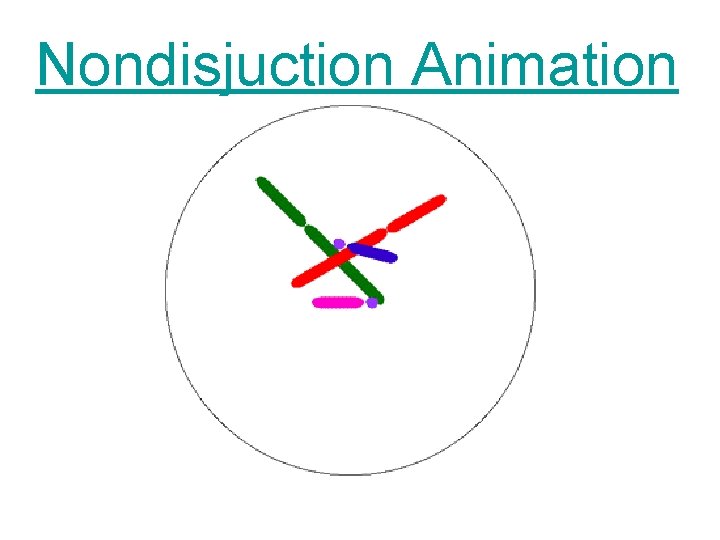
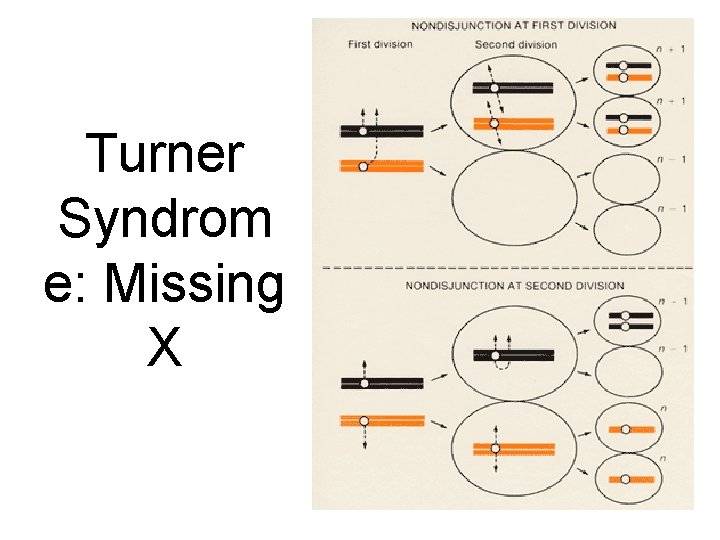
Nondisjunction An uneven splitting of the chromosomes during meiosis
Nondisjuction Animation
Do the research • Get into groups of 2 -3 and research the following topics (each group needs a comp) • You will be assigned a syndrome – Describe the syndrome • List cause • List symptoms • Are their any treatments? • Interesting facts
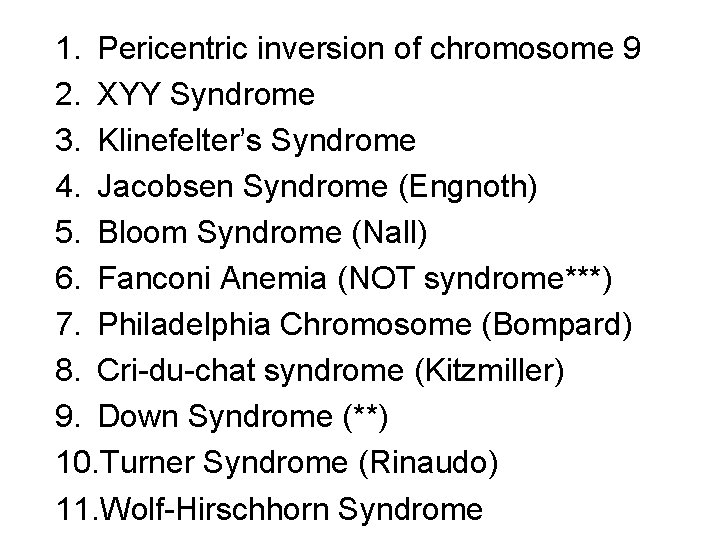
1. Pericentric inversion of chromosome 9 2. XYY Syndrome 3. Klinefelter’s Syndrome 4. Jacobsen Syndrome (Engnoth) 5. Bloom Syndrome (Nall) 6. Fanconi Anemia (NOT syndrome***) 7. Philadelphia Chromosome (Bompard) 8. Cri-du-chat syndrome (Kitzmiller) 9. Down Syndrome (**) 10. Turner Syndrome (Rinaudo) 11. Wolf-Hirschhorn Syndrome
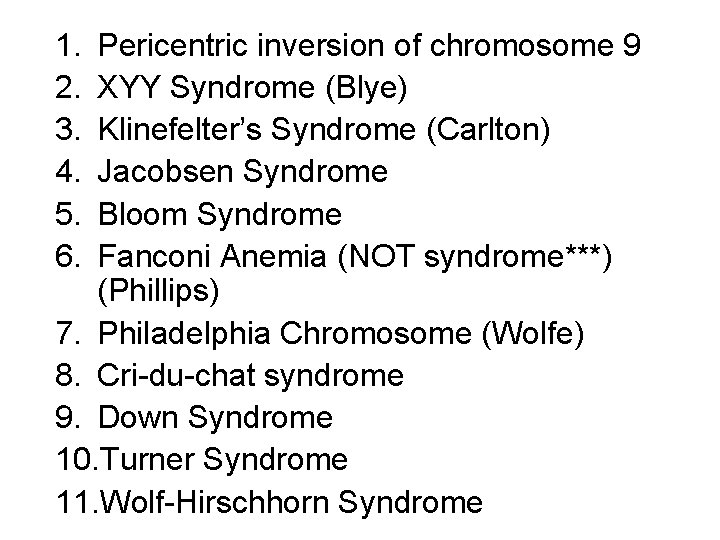
1. 2. 3. 4. 5. 6. Pericentric inversion of chromosome 9 XYY Syndrome (Blye) Klinefelter’s Syndrome (Carlton) Jacobsen Syndrome Bloom Syndrome Fanconi Anemia (NOT syndrome***) (Phillips) 7. Philadelphia Chromosome (Wolfe) 8. Cri-du-chat syndrome 9. Down Syndrome 10. Turner Syndrome 11. Wolf-Hirschhorn Syndrome
Down Syndrome Karyotype 3 chromosome s st (21 pair)
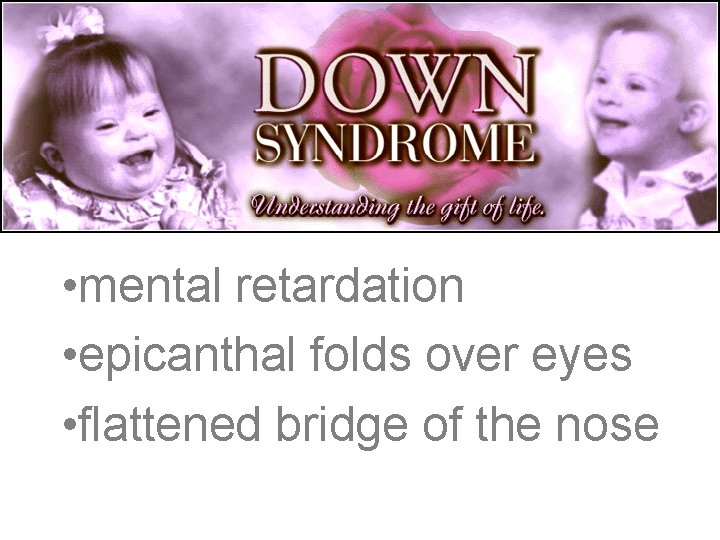
Down Syndrome Traits • mental retardation • epicanthal folds over eyes • flattened bridge of the nose
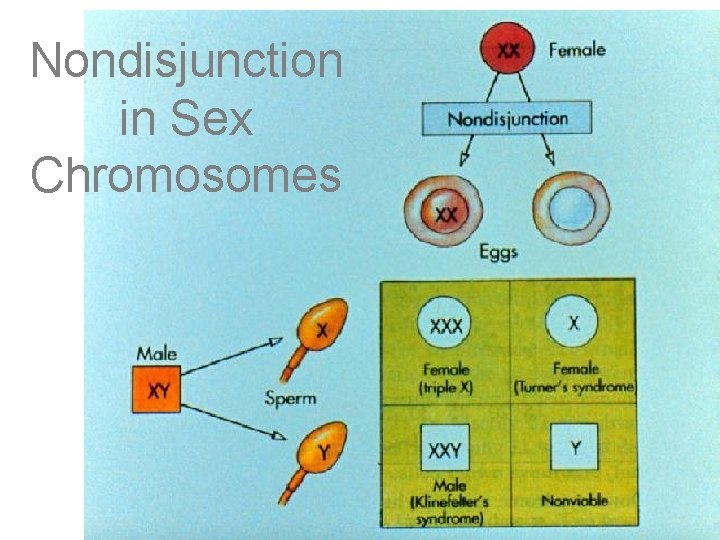
Nondisjunction in Sex Chromosomes
Turner Syndrom e: Missing X
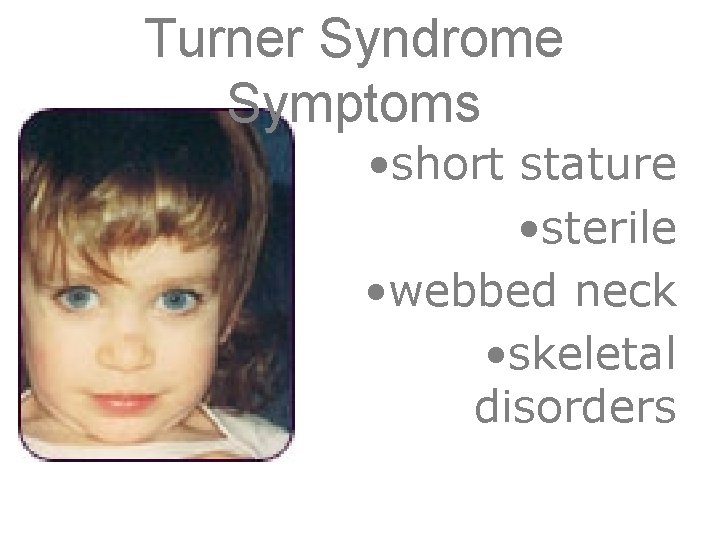
Turner Syndrome Symptoms • short stature • sterile • webbed neck • skeletal disorders
XYY Syndrome • Falsely called “superman” or “criminal” syndrome. • 5 -10 born each day in USA
XYY Symptoms • taller • more hairy • heavy facial features • delays in learning & language • violent tendencies ? ?
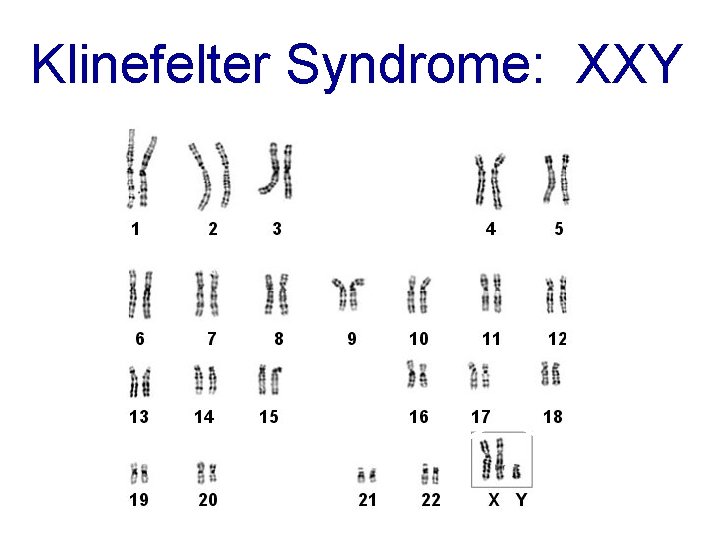
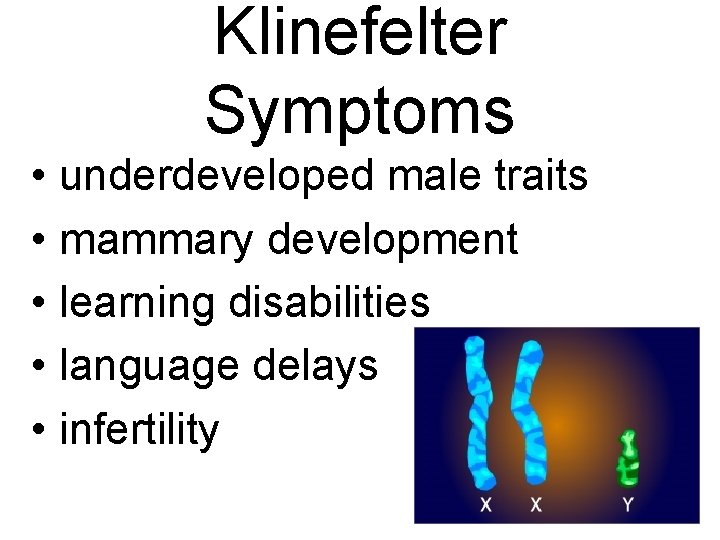
Klinefelter Syndrome: XXY
Klinefelter Symptoms • underdeveloped male traits • mammary development • learning disabilities • language delays • infertility