Introduction to Cooperative Learning Maria Garvey 086 3585157


- Slides: 48
Introduction to Cooperative Learning Maria Garvey 086 3585157 mariagarvey@slss. ie The Second Level Support Service is funded by the Department of Education and Science under the National Development Plan
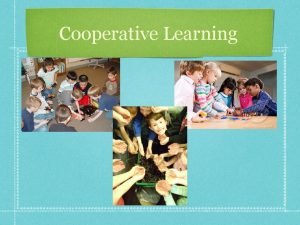
Cooperative Learning Cooperative learning is the instructional use of small groups so that students work together to maximize their own and each other’s learning (Johnson, & Holubec 1998) • Structures in elements which make groups work • Structures out elements which cause groups to fail
Two Responsibilities Individual Responsibility Make sure you learn something interesting and useful today Group Responsibility Make sure your group learns something interesting and useful today
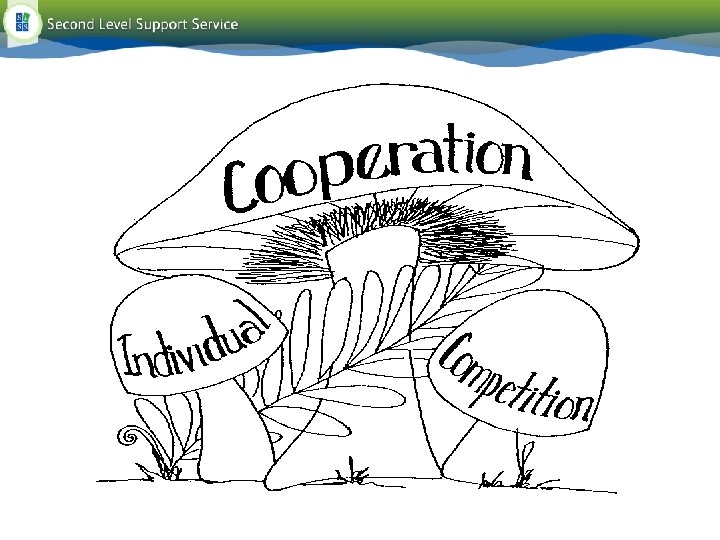
In a classroom there is a place for… • Individual Learning – I am in this alone • Competitive Learning – I swim you sink • Cooperative Learning – We sink or swim together
Cooperation We Sink or Swim Together • Students share the same learning goals and work together to achieve them • They work in small often heterogeneous groups • What benefits one benefits all • All strive for each other’s success • Joint success is celebrated • Rewards are viewed as unlimited • Evaluation is by comparing performance to a preset criteria
Competition: I swim you sink • Individuals work against each other to achieve a goal only one or a few can attain • Each student works alone • Students want to outshine each other • What benefits self deprives others • Students celebrate their own success and others failure • Rewards are limited • Students are ranked from best to worst
Individualism: I am in this alone • • • Each student works alone Each strives for own success What benefits self does not effect others Each celebrates their own success Rewards are viewed as unlimited Evaluation is by comparing performance to a preset criteria
Forming Groups The Birthday Game
Forming Groups Other Methods • Random – Count off – Birthday Game – Literature cards – characters from same book – Maths problems – same answers – EU countries and capitals • Students self select • Teacher assigns students – on basis of ability, learning interests, learning style etc – Sociogram
Activity 1 Do this on your own – no talking You have 2 minutes to count the total no of squares There is a prize for the first correct answer Time up!! Write in the no of squares you found answer the questions on the sheet
Activity 2 Individually You have 2 minutes to count the total no of triangles There is an ‘A’ for everybody who gets 90% of the number Time up!! Write in the no of triangles you found answer the questions on the sheet
Activity 3 Do this as a team You have 2 minutes to count the total no of triangles Time up!! Write in the no of triangles you found answer the questions on the sheet
Think – Pair – Share Reflections on group work
Read and Explain in Pairs • Silent Individual Reading • Two Roles: Summariser; Clarifier / Accuracy checker • Material in Short Snappy paragraphs • Suitable for tasks based on Information
Value of Cooperation • We work alone when we do not have the skills to collaborate • Collaboration is inherently more complex than individualistic or competitive work • For successful group-work we must teach pupils teamwork, interpersonal, collaborative skills
Cooperative Learning is where students work together in small groups where they maximise their own and each others learning. Note: not ALL groups are cooperative groups. It takes time, skills and structure to form cooperative groups Formal Cooperative groups last for particular length of time, chapter or section of course work
Characteristics of a Traditional Group • Dominant Members • Disengaged Members • Inappropriate group size and resources • Homogeneity of skills and ability
Research Results • • Higher Achievement Increased retention Greater use of Higher Level reasoning Better attitudes towards school Better attitudes towards teachers Higher self esteem Greater social support
Research Results cont. • • • More positive psychological adjustment More on-task behaviour Greater collaborative skills Increased perspective taking Greater intrinsic motivation More positive heterogenous relationships
Read and Explain Pairs Basic Elements of Cooperative Learning
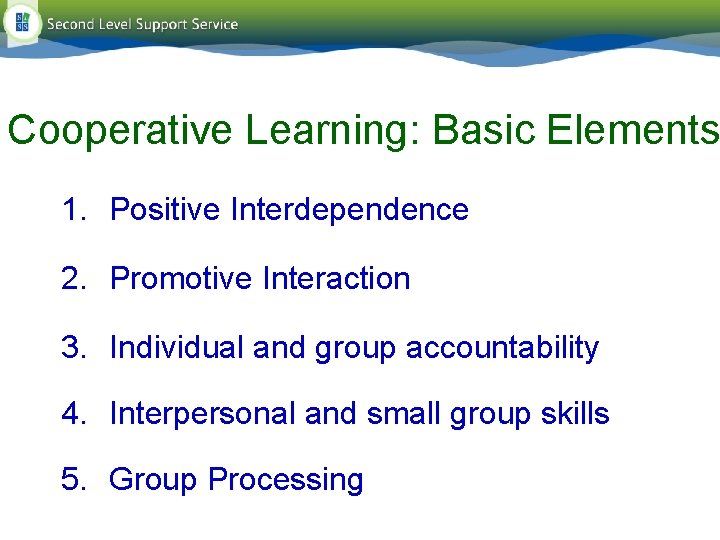
Cooperative Learning: Basic Elements 1. Positive Interdependence 2. Promotive Interaction 3. Individual and group accountability 4. Interpersonal and small group skills 5. Group Processing
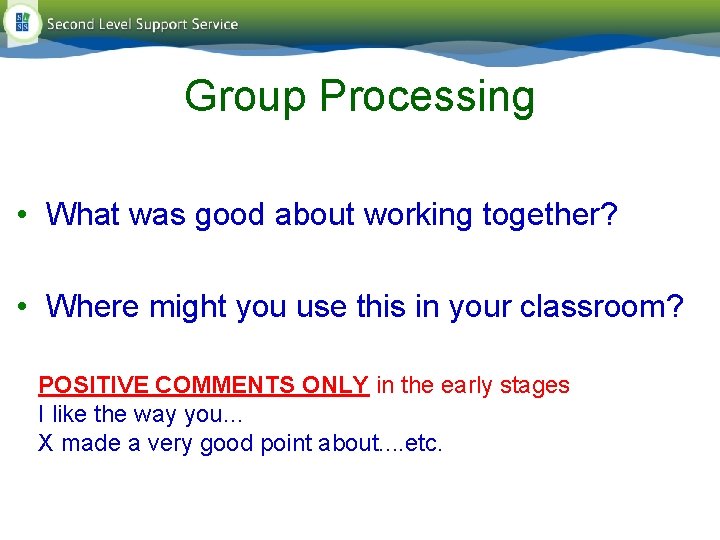
Group Processing • What was good about working together? • Where might you use this in your classroom? POSITIVE COMMENTS ONLY in the early stages I like the way you… X made a very good point about. . etc.
Reading Comprehension Triads Dreams
Reading Comprehension TASK: • Read Poem and answer the question. COOPERATIVE: • One set of answers from the group • Everyone must agree • Everyone must be able to explain the group’s answer
Individual Accountability • One member will be randomly picked to explain the group’s answers CRITERIA FOR SUCCESS Acceptable answers on all questions
EXPECTED BEHAVIOURS • Checking for Understanding • Encouraging everyone’s participation INTERGROUP COOPERATION • When you finish compare your answers with those of another group
Reader • Read through material slowly, carefully, with expression, so group members never forget it for the rest of their lives.
Recorder • Write down all of group’s good ideas, make sure there are three good possible right answers, and circle the one the group decides is most appropriate
Checker • Require other group members to demonstrate comprehension and help diagnose problems in understanding
Group Processing • What was helpful about working together in this way?
Team Work • • • Collaborative and co-operative learning Socialising effect Relaxed and enjoyable Less able child supported unobtrusively Two or more minds are better than one Able children are stimulated by having to explain or recount • Pupils can become more responsible for their own behaviour • Encourages ownership and involvement of learning
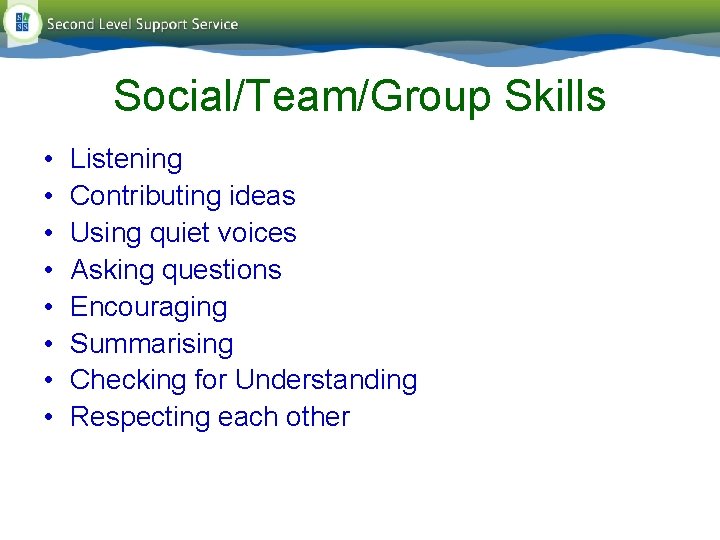
Social/Team/Group Skills • • Listening Contributing ideas Using quiet voices Asking questions Encouraging Summarising Checking for Understanding Respecting each other
Teaching Teamwork Skills • Using T Charts to teach teamwork skills • Ask what the skill ‘Looks Like’ • Ask what the skill ‘Sounds Like’
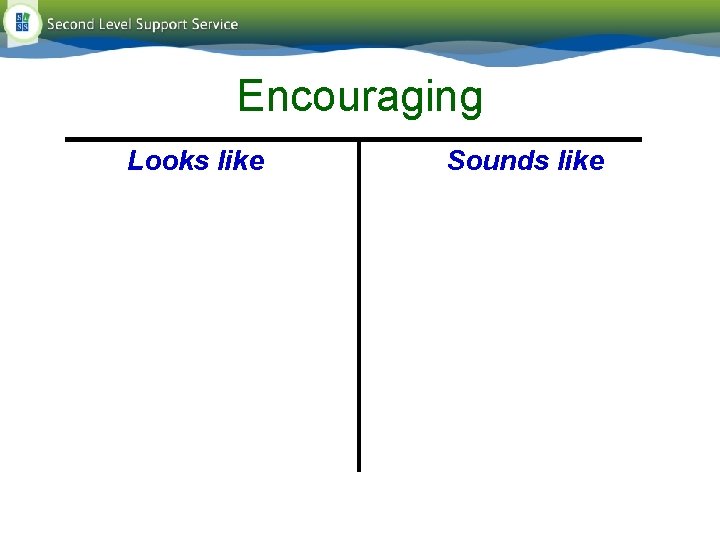
Encouraging Looks like Sounds like
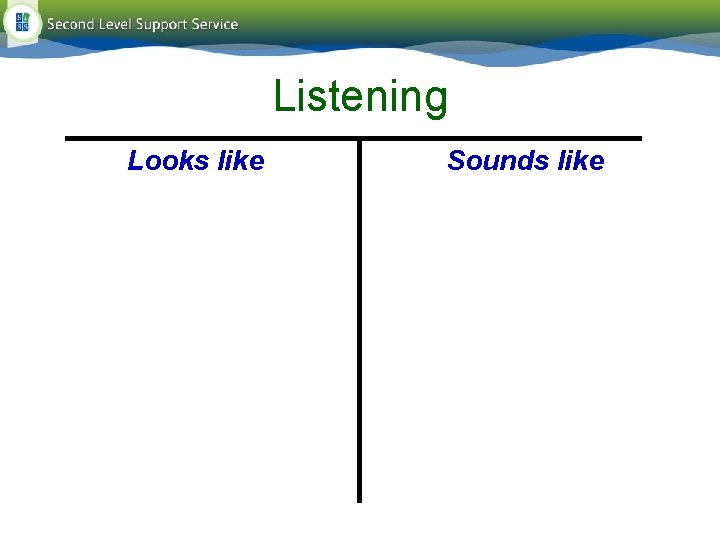
Listening Looks like Sounds like
Contributing Ideas Looks like Sounds like
Summarising Looks like Sounds like
Respecting Each Other Looks like Sounds like
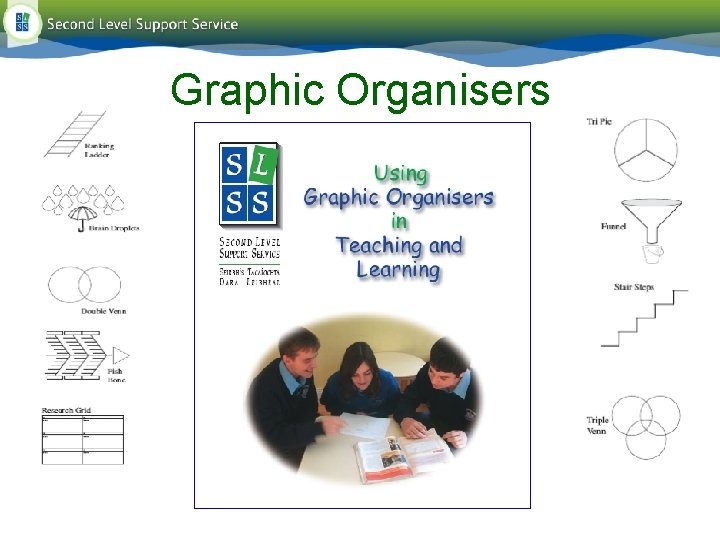
Graphic Organisers
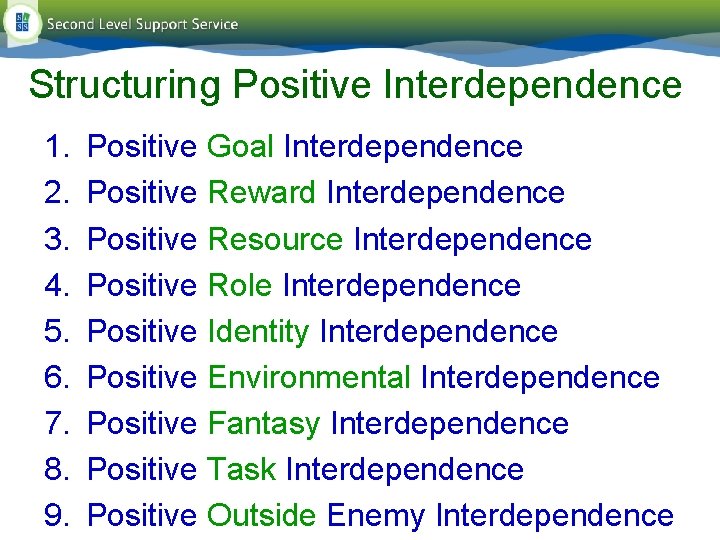
Structuring Positive Interdependence 1. 2. 3. 4. 5. 6. 7. 8. 9. Positive Goal Interdependence Positive Reward Interdependence Positive Resource Interdependence Positive Role Interdependence Positive Identity Interdependence Positive Environmental Interdependence Positive Fantasy Interdependence Positive Task Interdependence Positive Outside Enemy Interdependence
Group Processing What was good about working together? I like the way you… X made a very good point about. . etc. The Second Level Support Service is funded by the Department of Education and Science under the National Development Plan
Jig-Saw Types of Cooperative Groups Base Groups Informal Groups
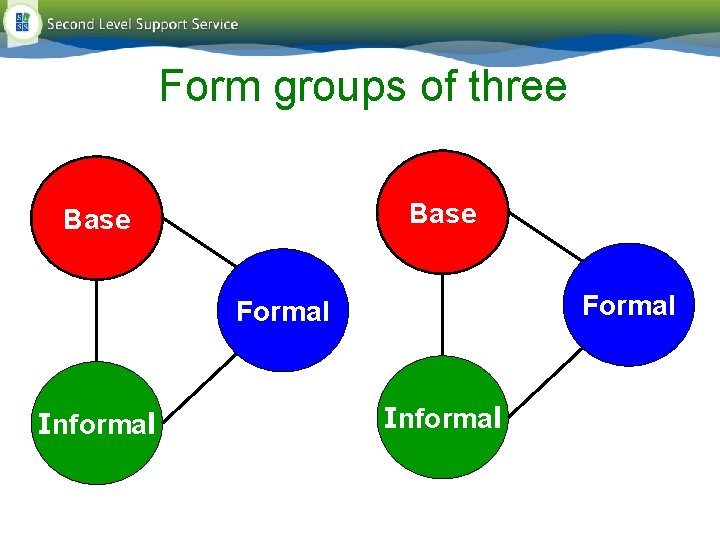
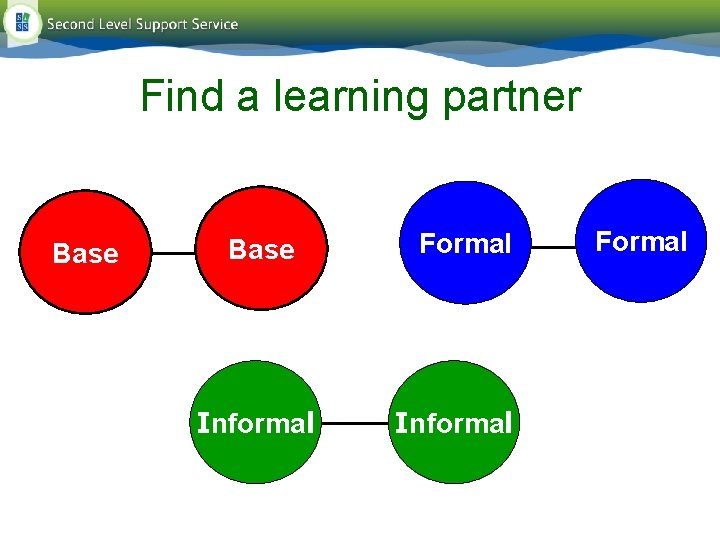
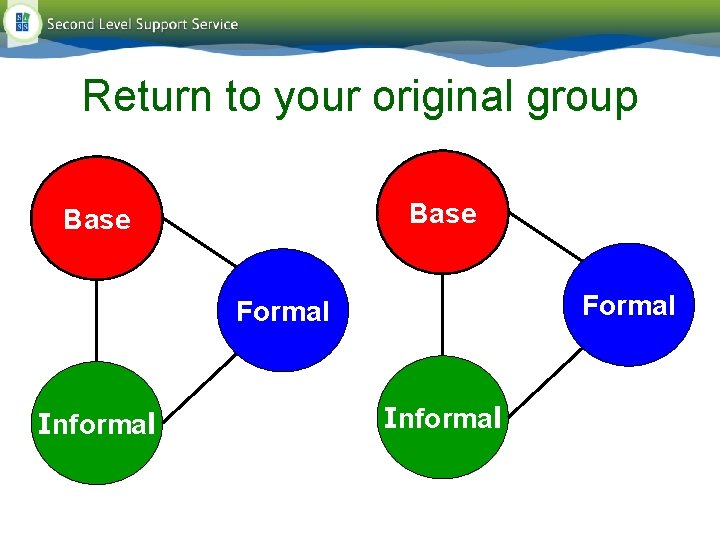
Types of Groups • Base Groups – long term support groups meet twice weekly during the week • Formal Groups – short term – time, section of work • Informal groups – immediate
Form groups of three Base Formal Informal
Find a learning partner Base Informal Formal
Return to your original group Base Formal Informal
www. slss. ie Please complete and return evaluation forms The Second Level Support Service is funded by the Department of Education and Science under the National Development Plan