Cooperative Learning IN SUPPORT OF ITS USE IN
- Slides: 7
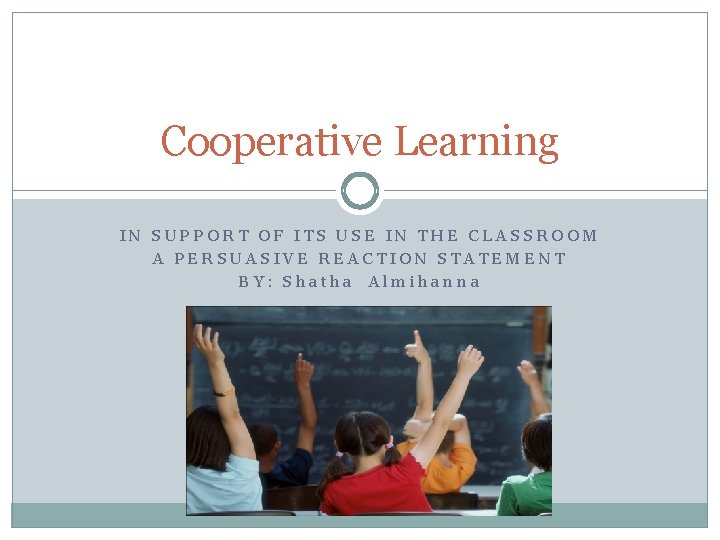
Cooperative Learning IN SUPPORT OF ITS USE IN THE CLASSROOM A PERSUASIVE REACTION STATEMENT BY: Shatha Almihanna
Cooperative Learning in the Classroom Cooperative Learning involves using small groups in the classroom where the students work together to learn from each other, helping, discussing and sharing materials.
Types of Cooperative Learning 1) Formal cooperative learning. 2) Informal cooperative learning. 3) Cooperative base groups.
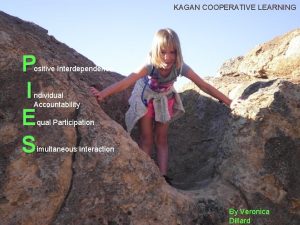
Elements of Cooperative Learning For cooperative learning to be effective, it needs the following essential elements: § Positive interdependence. § Face-to-face interaction. § Individual accountability. § Social skills. § Group processing.
Tips on Cooperative Learning Cooperative learning takes practice. No more than four students in a group. Students should solve their problems them selves. The teacher should do a lot of planning out side of the classroom.
Benefits of Cooperative Learning According to the SERC website, Cooperative Learning: Students learn significantly more, remember it longer, and develop better critical-thinking skills than in traditional lecture classes. Students enjoy cooperative learning so they are more likely to attend classes and finish the course. Cooperative learning helps students develop the skills necessary to work on projects too complex for one person to do. Cooperative learning processes prepare students to assess outcomes linked to accreditation.
References Dahley, A. M. (1994, January 10). Cooperative learning classroom research. Retrieved from http: //alumni. media. mit. edu/~andyd/mindset/design/clc_rsch. html Johnson, D. W. , & Johnson , R. T. (1994). An overview of cooperative learning. Retrieved from http: //www. co-operation. org/? page_id=65 Kagan cooperative learning-structures for success part 1 [Web]. ( 2009). Retrieved from http: //youtu. be/S 0 s_qx. JDuas Smith, K. A. (1992). Cooperative / collaborative learning for active. Retrieved from http: //trc. virginia. edu/Publications/Teaching_Concerns/Fall_1992/TC_Fall_1992_Coopera tive_Collaborative. htm. Teed, R. , Mc. Daris, J. , & Roseth, C. ( 2012 , May 29). Cooperative learning. Retrieved from http: //serc. carleton. edu/10838