Integrating Cooperative Games in Elementary Physical Education Susan







- Slides: 32
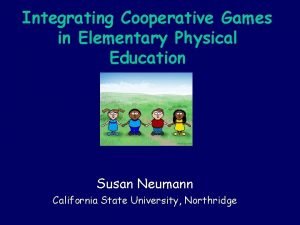
Integrating Cooperative Games in Elementary Physical Education Susan Neumann California State University, Northridge
Introduction
• Games and play – Personalities – Socialization • Positive behaviors not always exemplified • Lack of cooperation skills Fun tarnished Disinterest in physical activity
Solution? Teach cooperative activities in Physical education classes
What is cooperative learning? • • • Small groups Solve a common problem Success of the group Individual learning Focus = process used
Why Cooperative Learning? Benefits from problem solving activities: – – – Communication skills Positive social interaction Critical thinking development Reduced aggressive behavior Increased self-esteem
Purpose
To investigate the effects of integrating cooperative activities in elementary physical education programs
Methods
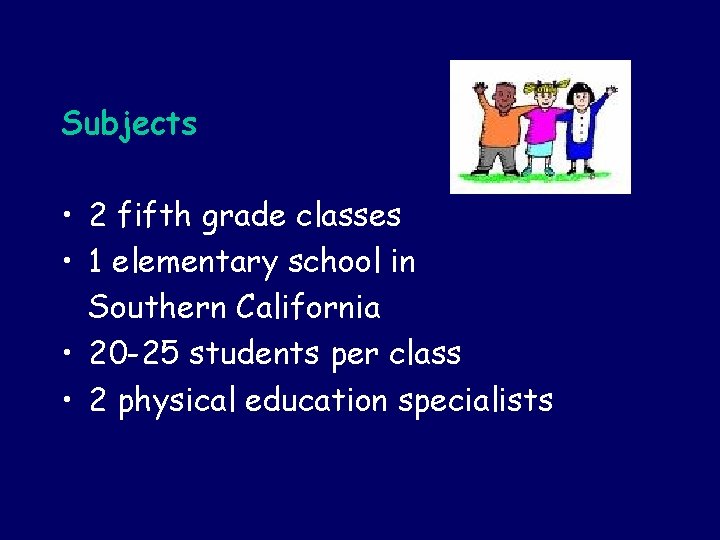
Subjects • 2 fifth grade classes • 1 elementary school in Southern California • 20 -25 students per class • 2 physical education specialists
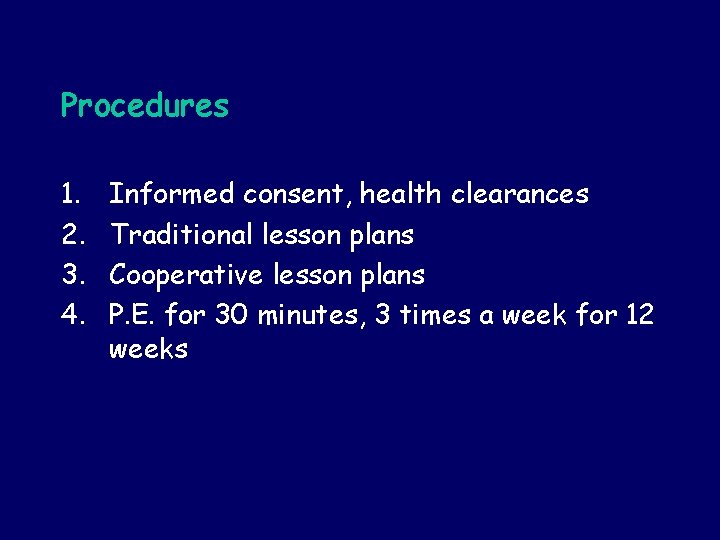
Procedures 1. 2. 3. 4. Informed consent, health clearances Traditional lesson plans Cooperative lesson plans P. E. for 30 minutes, 3 times a week for 12 weeks
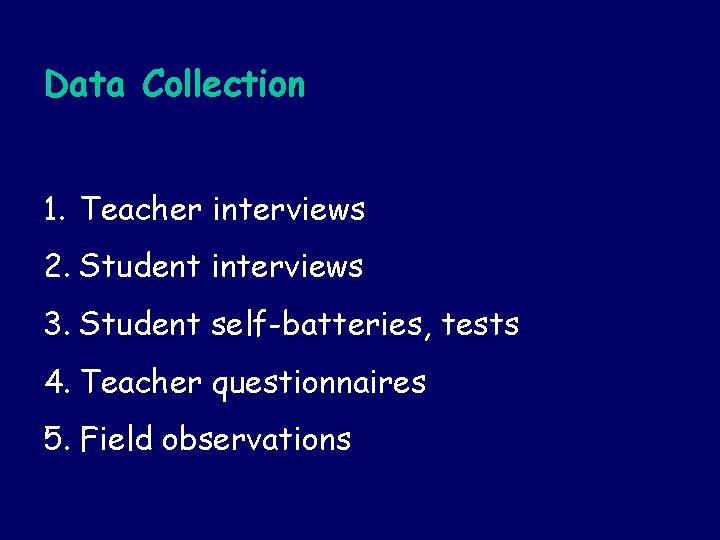
Data Collection 1. Teacher interviews 2. Student interviews 3. Student self-batteries, tests 4. Teacher questionnaires 5. Field observations
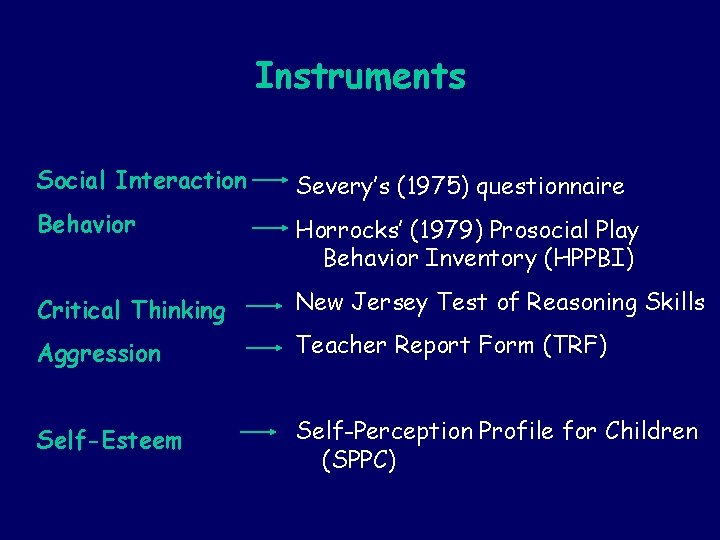
Instruments Social Interaction Severy’s (1975) questionnaire Behavior Horrocks’ (1979) Prosocial Play Behavior Inventory (HPPBI) Critical Thinking New Jersey Test of Reasoning Skills Aggression Teacher Report Form (TRF) Self-Esteem Self-Perception Profile for Children (SPPC)
Hypothesis
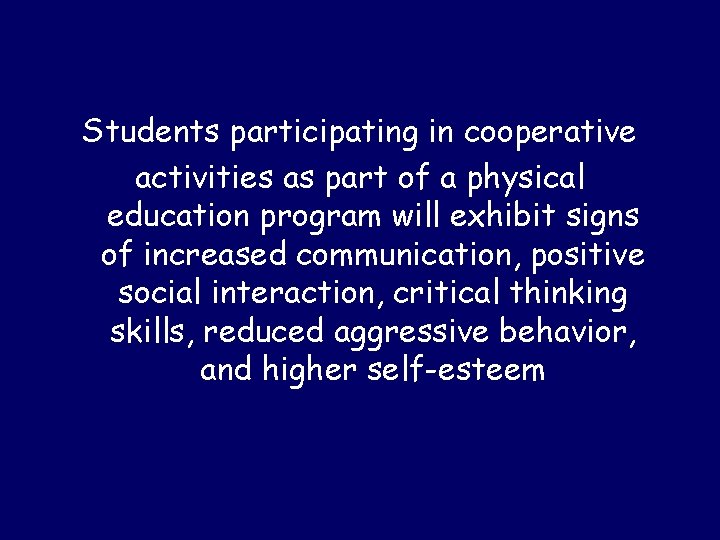
Students participating in cooperative activities as part of a physical education program will exhibit signs of increased communication, positive social interaction, critical thinking skills, reduced aggressive behavior, and higher self-esteem
Results
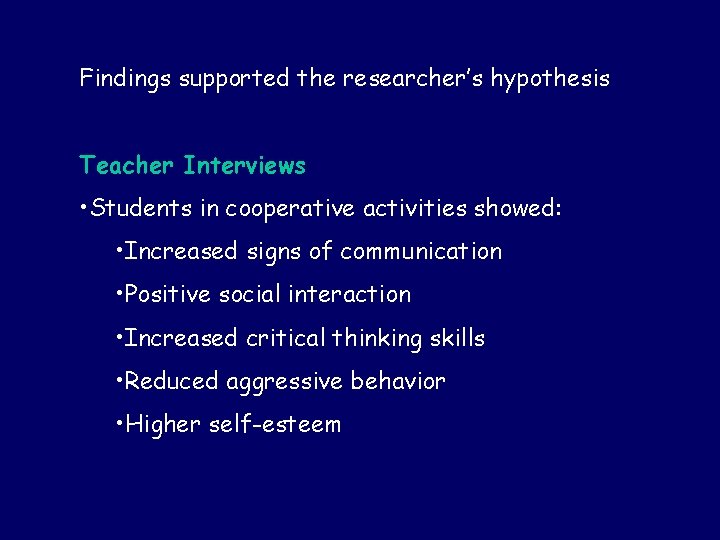
Findings supported the researcher’s hypothesis Teacher Interviews • Students in cooperative activities showed: • Increased signs of communication • Positive social interaction • Increased critical thinking skills • Reduced aggressive behavior • Higher self-esteem
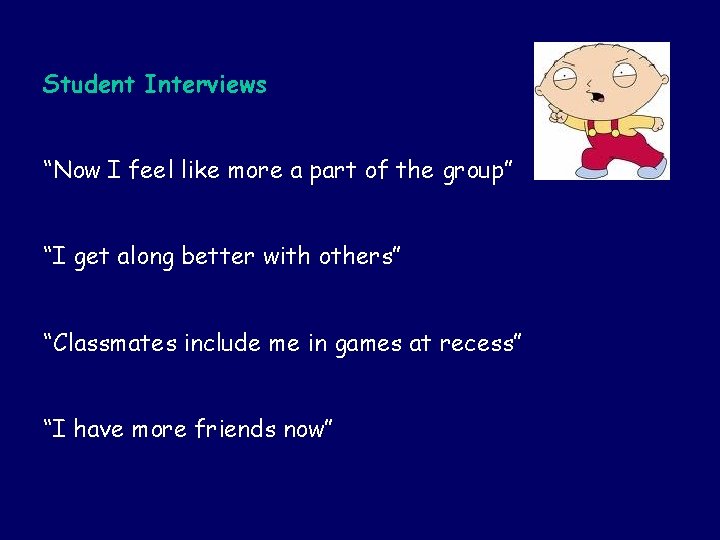
Student Interviews “Now I feel like more a part of the group” “I get along better with others” “Classmates include me in games at recess” “I have more friends now”
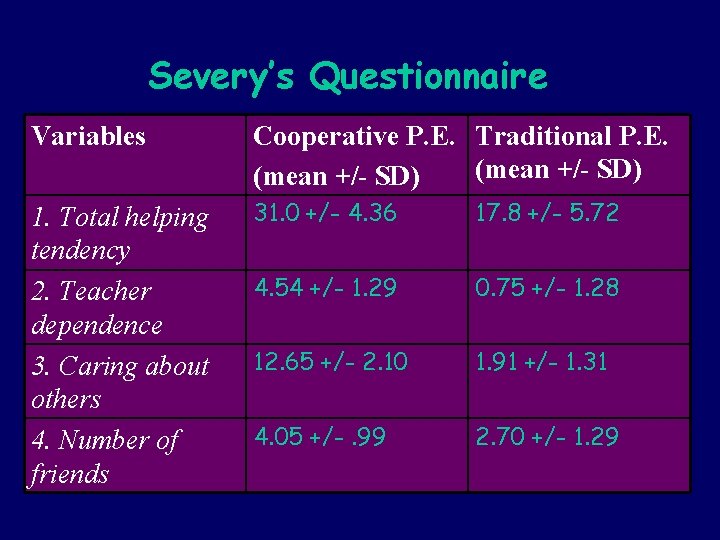
Severy’s Questionnaire Variables Cooperative P. E. Traditional P. E. (mean +/- SD) 1. Total helping tendency 2. Teacher dependence 3. Caring about others 4. Number of friends 31. 0 +/- 4. 36 17. 8 +/- 5. 72 4. 54 +/- 1. 29 0. 75 +/- 1. 28 12. 65 +/- 2. 10 1. 91 +/- 1. 31 4. 05 +/-. 99 2. 70 +/- 1. 29
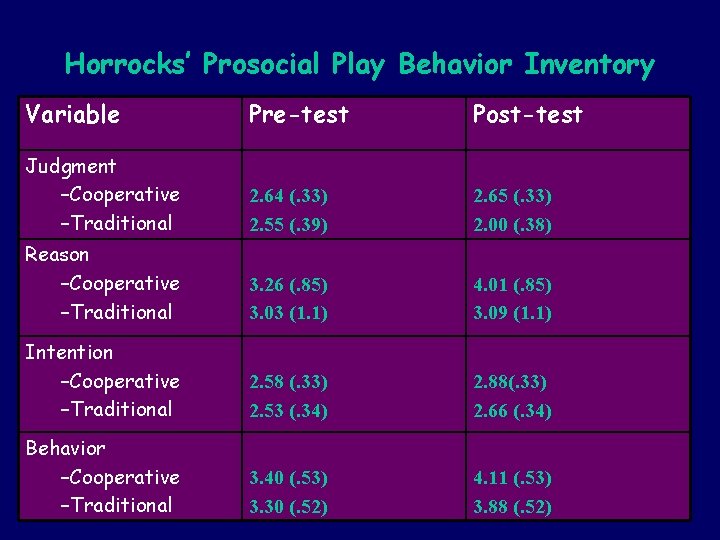
Horrocks’ Prosocial Play Behavior Inventory Variable Pre-test Post-test Judgment –Cooperative –Traditional 2. 64 (. 33) 2. 55 (. 39) 2. 65 (. 33) 2. 00 (. 38) Reason –Cooperative –Traditional 3. 26 (. 85) 3. 03 (1. 1) 4. 01 (. 85) 3. 09 (1. 1) Intention –Cooperative –Traditional 2. 58 (. 33) 2. 53 (. 34) 2. 88(. 33) 2. 66 (. 34) Behavior –Cooperative –Traditional 3. 40 (. 53) 3. 30 (. 52) 4. 11 (. 53) 3. 88 (. 52)
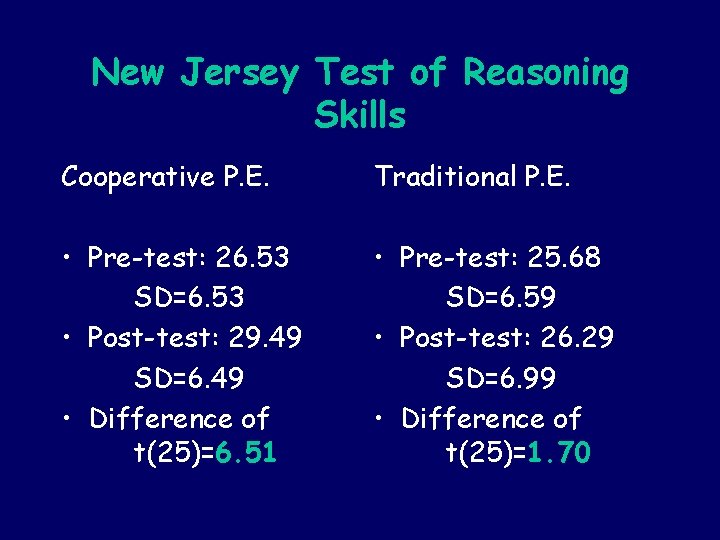
New Jersey Test of Reasoning Skills Cooperative P. E. Traditional P. E. • Pre-test: 26. 53 SD=6. 53 • Post-test: 29. 49 SD=6. 49 • Difference of t(25)=6. 51 • Pre-test: 25. 68 SD=6. 59 • Post-test: 26. 29 SD=6. 99 • Difference of t(25)=1. 70
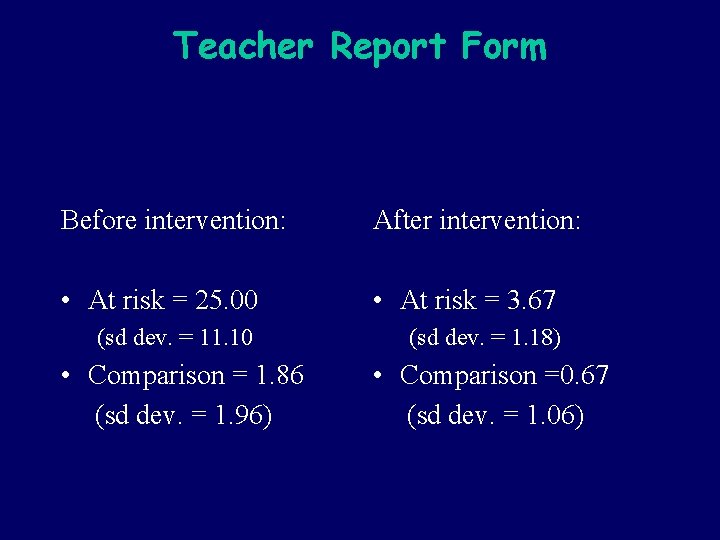
Teacher Report Form Before intervention: After intervention: • At risk = 25. 00 • At risk = 3. 67 (sd dev. = 11. 10 (sd dev. = 1. 18) • Comparison = 1. 86 (sd dev. = 1. 96) • Comparison =0. 67 (sd dev. = 1. 06)
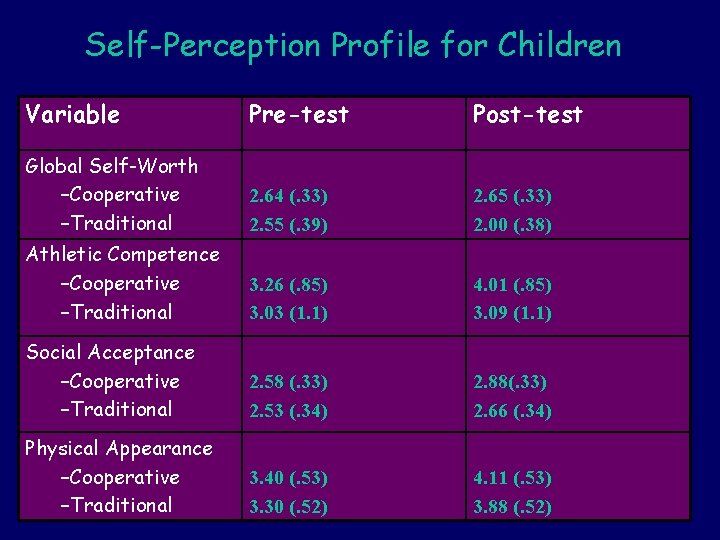
Self-Perception Profile for Children Variable Pre-test Post-test Global Self-Worth –Cooperative –Traditional 2. 64 (. 33) 2. 55 (. 39) 2. 65 (. 33) 2. 00 (. 38) Athletic Competence –Cooperative –Traditional 3. 26 (. 85) 3. 03 (1. 1) 4. 01 (. 85) 3. 09 (1. 1) Social Acceptance –Cooperative –Traditional 2. 58 (. 33) 2. 53 (. 34) 2. 88(. 33) 2. 66 (. 34) Physical Appearance –Cooperative –Traditional 3. 40 (. 53) 3. 30 (. 52) 4. 11 (. 53) 3. 88 (. 52)
Discussion
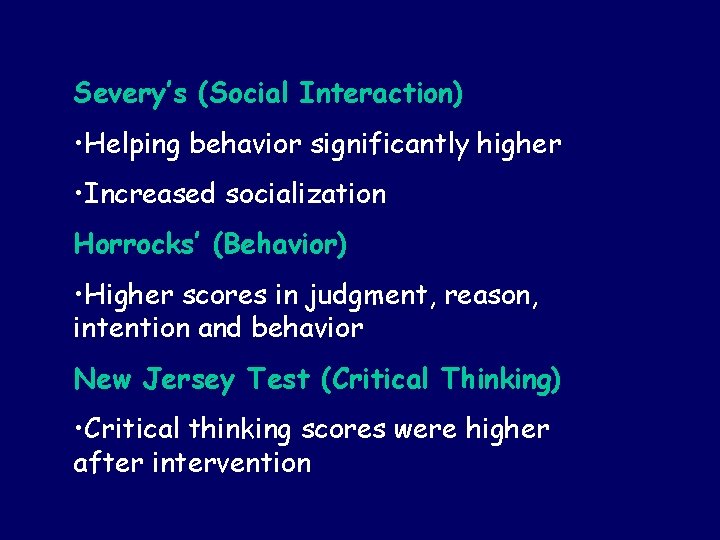
Severy’s (Social Interaction) • Helping behavior significantly higher • Increased socialization Horrocks’ (Behavior) • Higher scores in judgment, reason, intention and behavior New Jersey Test (Critical Thinking) • Critical thinking scores were higher after intervention
TRF (Aggression) • Increase engagement of antisocial children • Decrease aggression SPPC (Self-Esteem) • Positive effect on the self-conceptions of students
Conclusion
Results from interviews with students and teachers, along with findings from questionnaires and tests confirm cooperative activities as part of a physical education program produce:
-Increased communication -Positive social interaction -Increased critical thinking skills -Reduced aggressive behavior -Higher self-esteem
Limitations
-Small sample size -Student self-reported information not completely reliable -Some bias in teacher reports might exist -Physical education teachers not specifically certified in elementary