Intensive First Year American Sign Language ASL 134






- Slides: 48
Intensive First Year American Sign Language (ASL 134) class Summer 2016 Instructor: Kristi Winter, MA University of Washington Dept. of Linguistics ASL Program
Agenda: � Today: ▪ Unit 7 “Describing People and Things” ▪ Video: “When the Mind Hears” Chapter 1 Monday, August 1 st ▪ ▪ Unit 7 Sign Production Assignment #2 “The Gallaudet and Clerc Story” due ▪ **Journal #3 will be due on Thursday, August 4 th
Unit 7 Describing People and Things
Homework 7: 1 follow up Lesson 7: 1 “Identifying Present People”
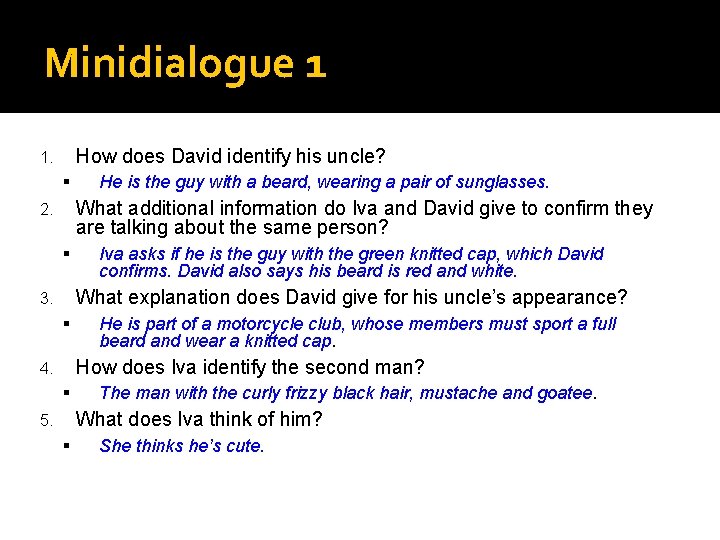
Minidialogue 1 How does David identify his uncle? 1. He is the guy with a beard, wearing a pair of sunglasses. What additional information do Iva and David give to confirm they are talking about the same person? 2. Iva asks if he is the guy with the green knitted cap, which David confirms. David also says his beard is red and white. What explanation does David give for his uncle’s appearance? 3. He is part of a motorcycle club, whose members must sport a full beard and wear a knitted cap. How does Iva identify the second man? 4. The man with the curly frizzy black hair, mustache and goatee. What does Iva think of him? 5. She thinks he’s cute.
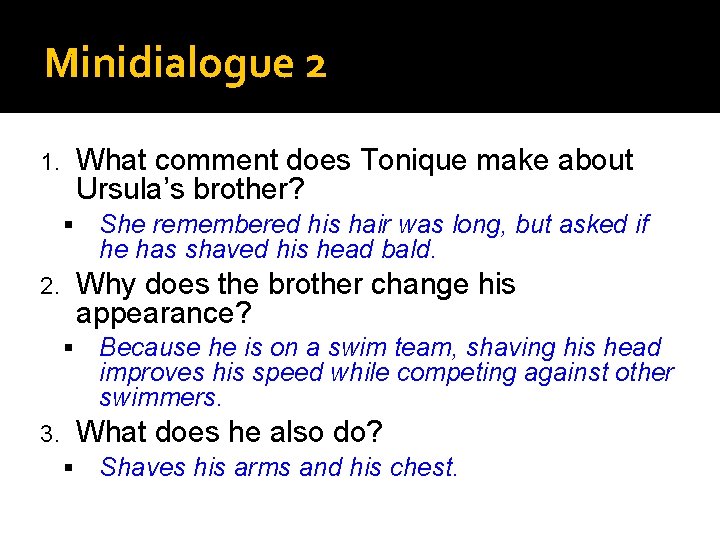
Minidialogue 2 What comment does Tonique make about Ursula’s brother? 1. She remembered his hair was long, but asked if he has shaved his head bald. Why does the brother change his appearance? 2. Because he is on a swim team, shaving his head improves his speed while competing against other swimmers. What does he also do? 3. Shaves his arms and his chest.
Homework 7: 2 Follow up Lesson 7: 2 Fingerspelling: Clothing-Related Words
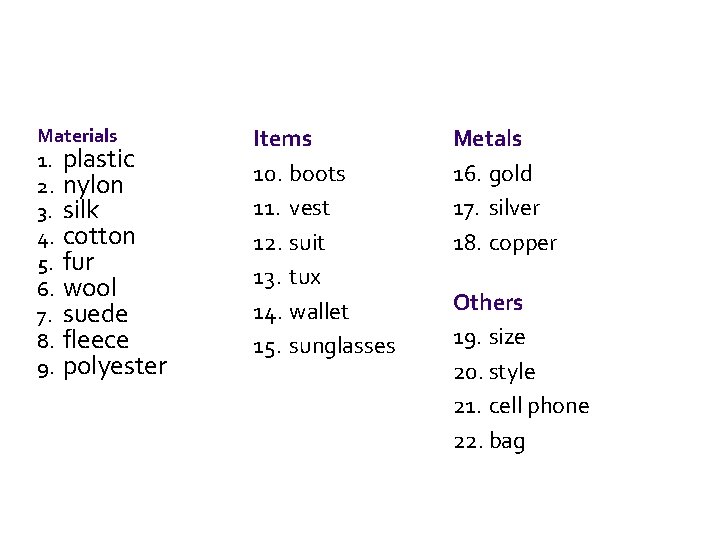
Materials 1. 2. 3. 4. 5. 6. 7. 8. 9. plastic nylon silk cotton fur wool suede fleece polyester Items 10. boots 11. vest 12. suit 13. tux 14. wallet 15. sunglasses Metals 16. gold 17. silver 18. copper Others 19. size 20. style 21. cell phone 22. bag
Review Lesson 7: 3 Numbers: Guess My Number 1. 2. 3. 4. 5. To have something in mind, in this case, a number To guess or come up with (a number) Above (a certain number) Below (a certain number) Between two numbers
Lesson 7: 4 “Describing Personal Items
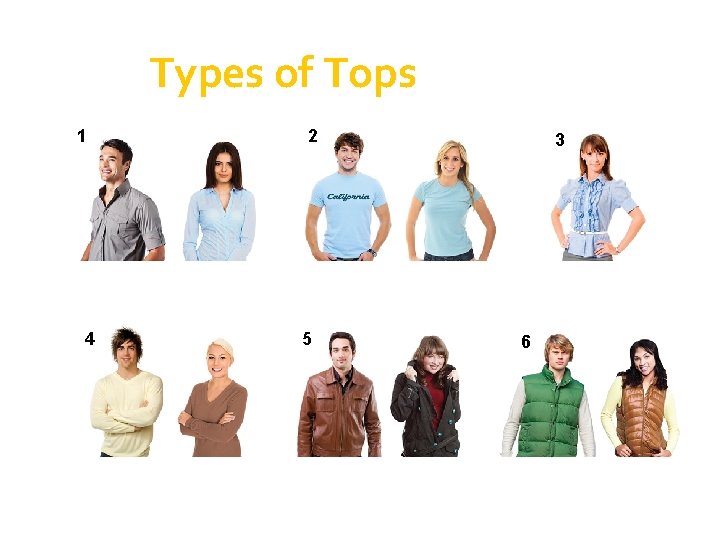
Types of Tops 1 4 2 5 3 6
Necklines 1 4 2 5 3 6
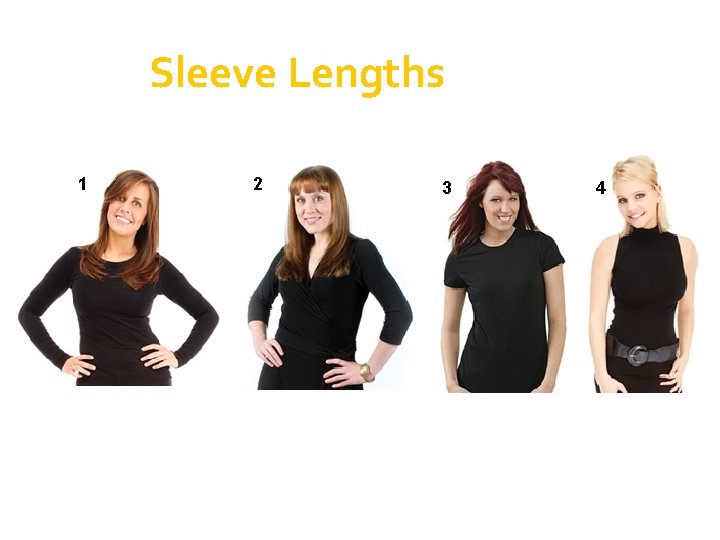
Sleeve Lengths 1 2 3 4
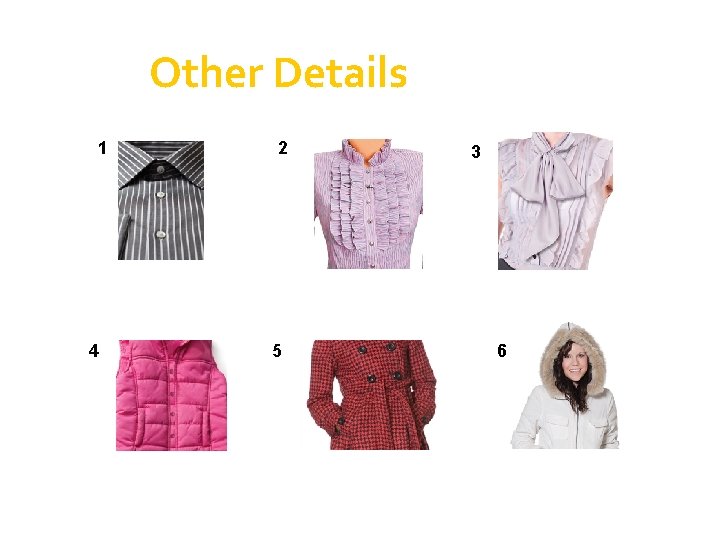
Other Details 1 4 2 5 3 6
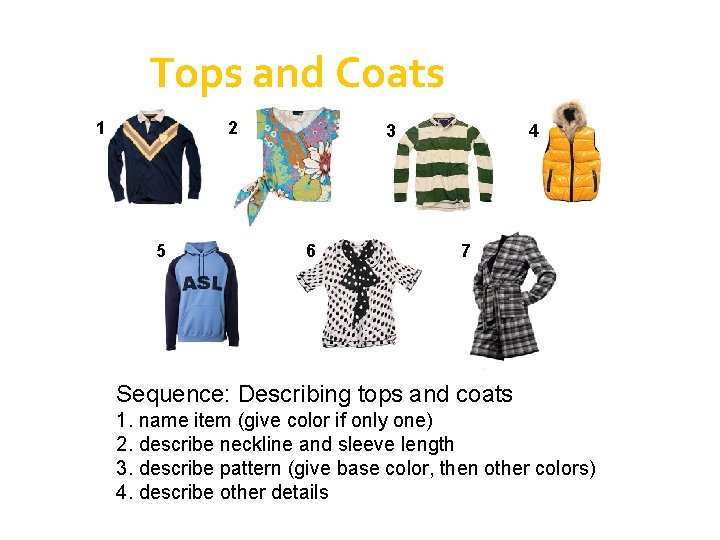
Tops and Coats 1 2 5 4 3 6 7 Sequence: Describing tops and coats 1. name item (give color if only one) 2. describe neckline and sleeve length 3. describe pattern (give base color, then other colors) 4. describe other details
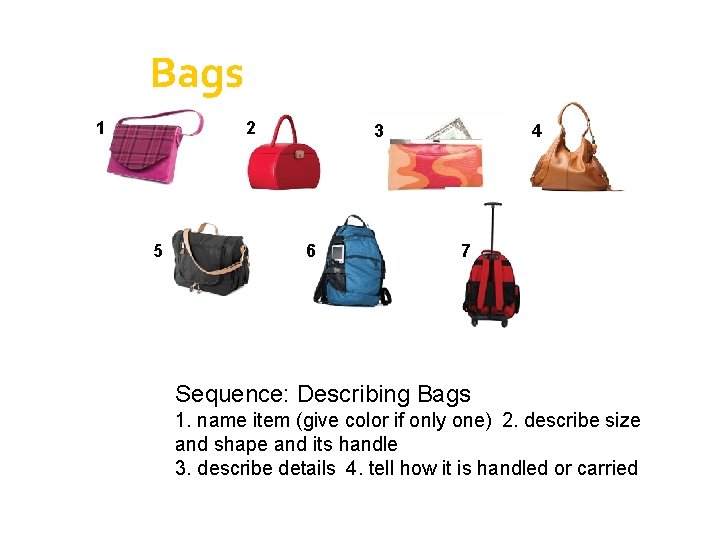
Bags 1 2 5 4 3 6 7 Sequence: Describing Bags 1. name item (give color if only one) 2. describe size and shape and its handle 3. describe details 4. tell how it is handled or carried
Eyeglasses 1 2 4 3 5 Sequence: Describing Eyeglasses 1. name item (give color, if only one) 2. describe size and shape of lens 3. describe details
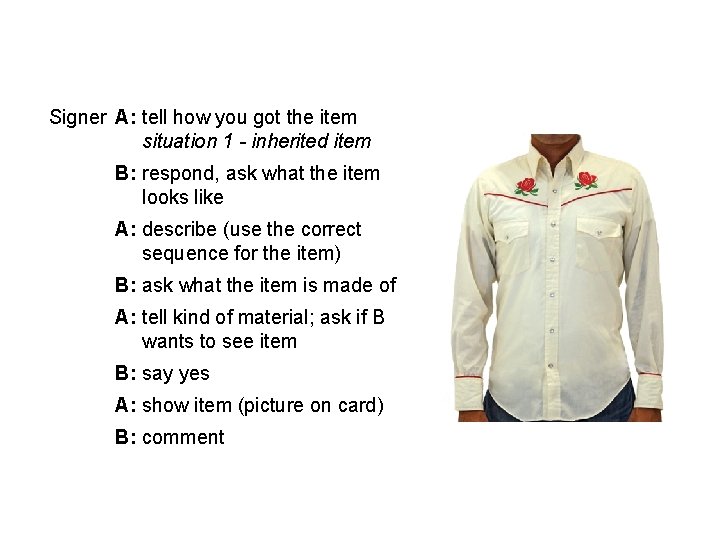
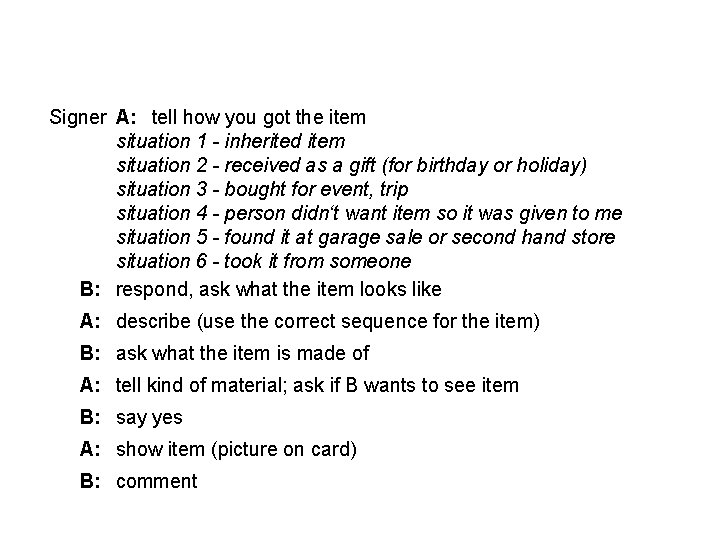
Signer A: tell how you got the item situation 1 - inherited item B: respond, ask what the item looks like A: describe (use the correct sequence for the item) B: ask what the item is made of A: tell kind of material; ask if B wants to see item B: say yes A: show item (picture on card) B: comment
Signer A: tell how you got the item situation 1 - inherited item situation 2 - received as a gift (for birthday or holiday) situation 3 - bought for event, trip situation 4 - person didn‘t want item so it was given to me situation 5 - found it at garage sale or second hand store situation 6 - took it from someone B: respond, ask what the item looks like A: describe (use the correct sequence for the item) B: ask what the item is made of A: tell kind of material; ask if B wants to see item B: say yes A: show item (picture on card) B: comment
Lesson 7: 5 “Translating Sentences with “Have” Part 1
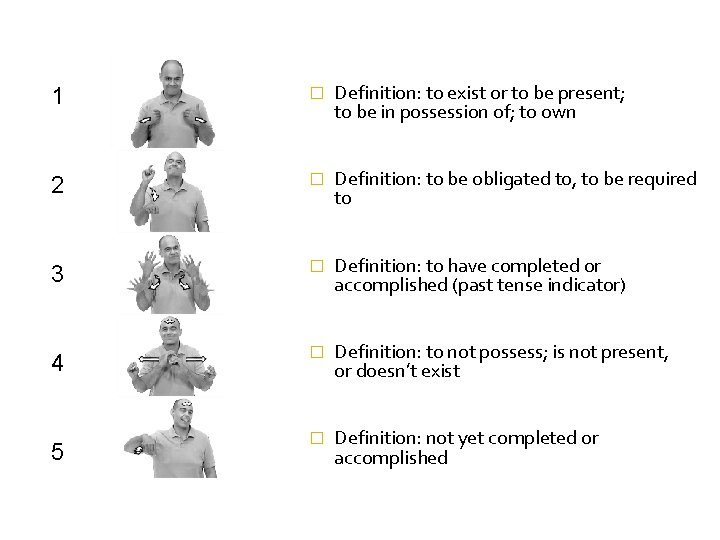
1 � Definition: to exist or to be present; to be in possession of; to own 2 � Definition: to be obligated to, to be required to 3 � Definition: to have completed or accomplished (past tense indicator) 4 � Definition: to not possess; is not present, or doesn’t exist 5 � Definition: not yet completed or accomplished
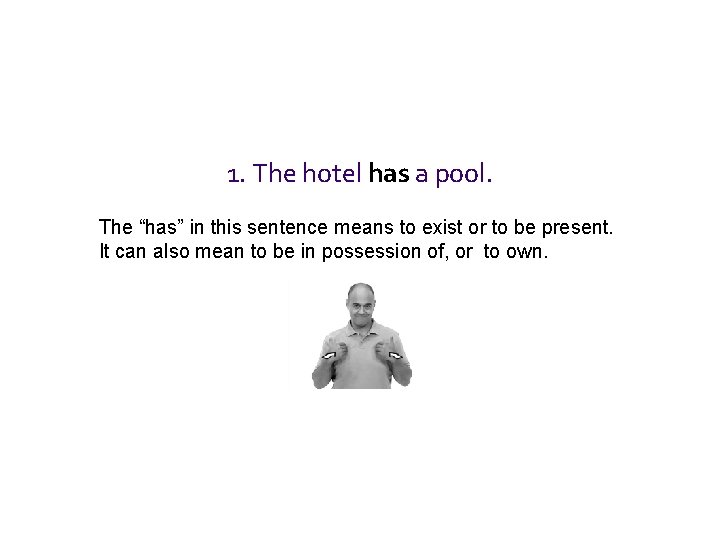
1. The hotel has a pool. The “has” in this sentence means to exist or to be present. It can also mean to be in possession of, or to own.
1. The hotel has a pool. The “has” in this sentence means to exist or to be present. It can also mean to be in possession of, or to own.
2. I have to go to work. � The “have to” in this sentence means to be obligated to, or to be required to.
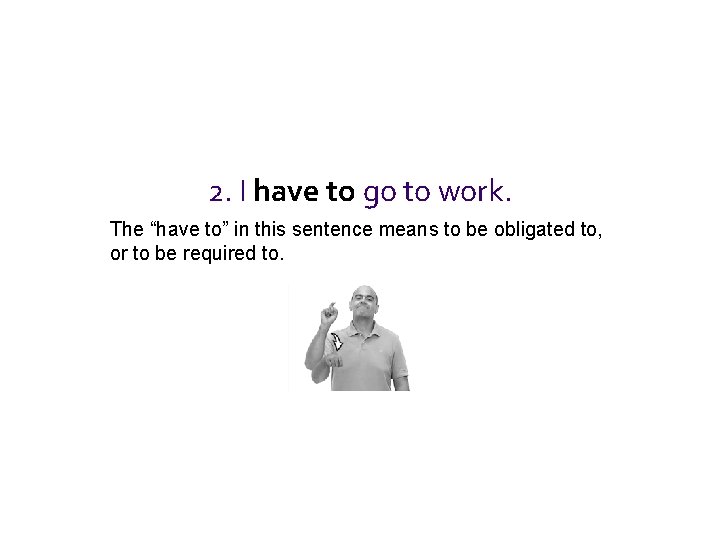
2. I have to go to work. The “have to” in this sentence means to be obligated to, or to be required to.
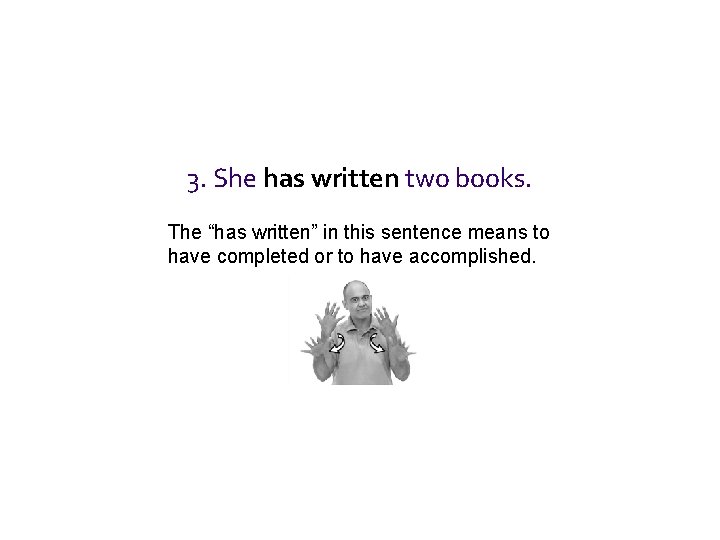
3. She has written two books. � The “has written” in this sentence means to have completed or to have accomplished.
3. She has written two books. The “has written” in this sentence means to have completed or to have accomplished.
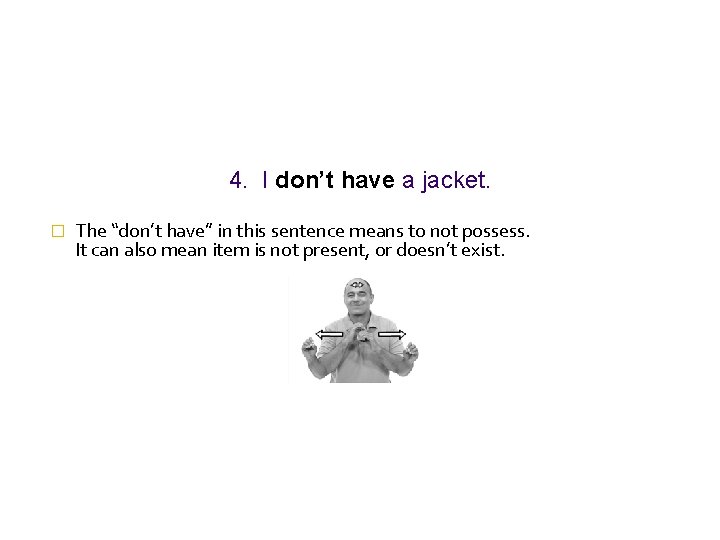
4. I don’t have a jacket. � The “don’t have” in this sentence means to not possess. It can also mean item is not present, or doesn’t exist.
4. I don’t have a jacket. � The “don’t have” in this sentence means to not possess. It can also mean item is not present, or doesn’t exist.
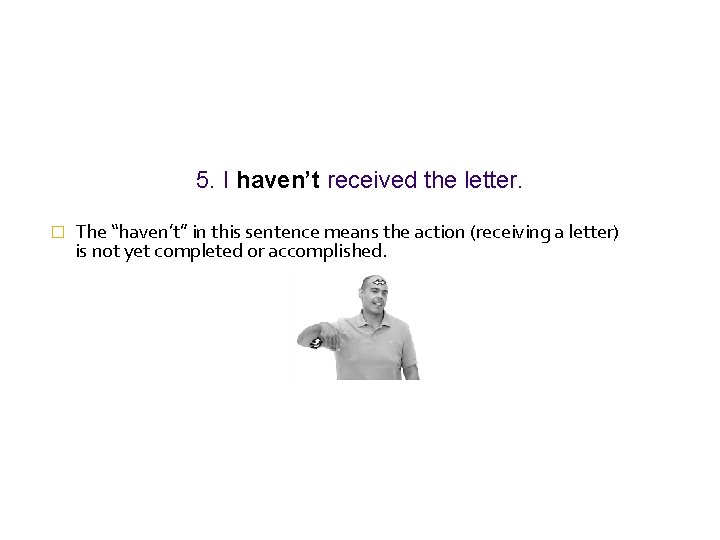
5. I haven’t received the letter. � The “haven’t” in this sentence means the action (receiving a letter) is not yet completed or accomplished.
5. I haven’t received the letter. � The “haven’t” in this sentence means the action (receiving a letter) is not yet completed or accomplished.
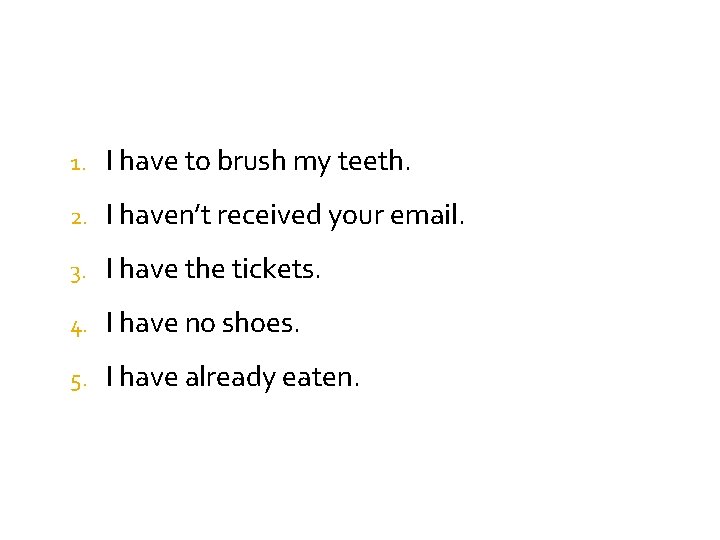
1. I have to brush my teeth. 2. I haven’t received your email. 3. I have the tickets. 4. I have no shoes. 5. I have already eaten.
Lesson 7: 6 “Translating Sentences with “Drive To, ” “Take” and “Pick Up” Part 1
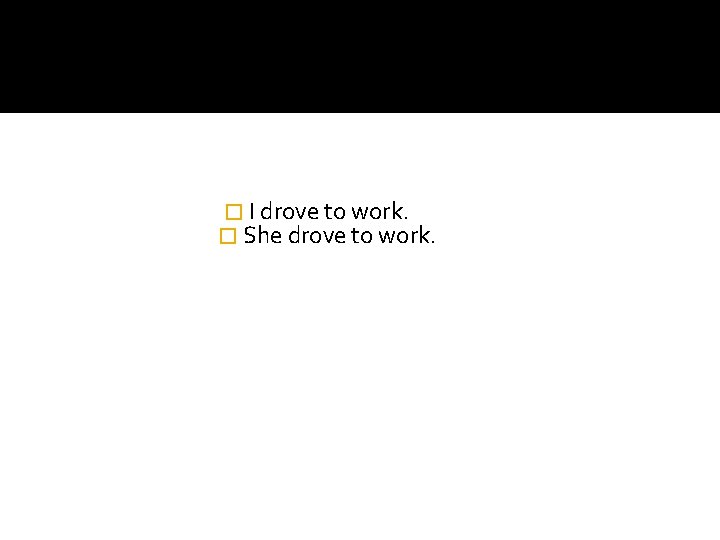
� I drove to work. � She drove to work.
� I drove her to work. � “her” is the direct object in the sentence.
� � I took her to school. She took me to school. � In English the word “took” means both � 1. getting the person and 2. transporting the person
� �I picked him up at the airport and took him home (to where he lives).
� I picked him up at school and brought him home (to where we live). � I picked him up from church and drove him to work.
Lesson 7: 7 “Numbers: Asking How Many”
Reactions to the amount given that is… ordinary, common, expected 2. less than expected 3. more than expected 4. unbelievable, ridiculous, outrageous 1.
A: Ask how many (of something) B has. B: Give number (on your card). A: React to the amount given that is… • ordinary, common, expected • less than expected • more than expected • unbelievable, ridiculous, outrageous
Lesson 7: 8 Conversation 3: Describing Personal Items (Hats and Scarves)
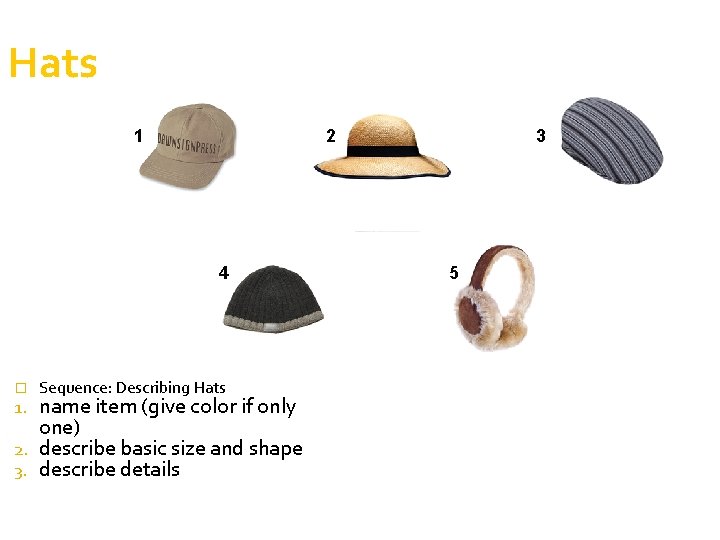
Hats 1 2 4 � Sequence: Describing Hats name item (give color if only one) 2. describe basic size and shape 3. describe details 1. 3 5
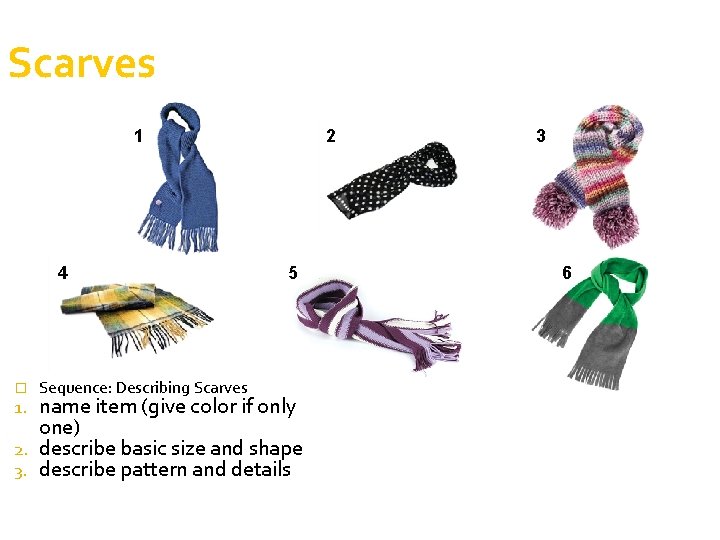
Scarves 1 4 � Sequence: Describing Scarves 2 5 name item (give color if only one) 2. describe basic size and shape 3. describe pattern and details 1. 3 6
Part 1 A: B: Part 2 B: A: B: Part 3 B: A: B: (A approaches B) tell what is lost, ask if B has seen it say no, ask A to describe it describe tell A you will check (B returns without the item) add another description to confirm or correct explain you will go get the item (B returns with the item) ask if it is the correct item confirm, express gratitude respond
Homework for next class day: �Study and practice “The Gallaudet and Clerc Story” (pages 329 -337) for your SPA #2 (due on Monday, August 1 st ) �Do Homework 7: 4 – 7: 8 for tomorrow Bring a copy of your homework 7: 4, 7: 5 and 7: 8 to class on Monday
Sources: � Smith, C. , Lentz, E. & Mikos, K. (1988)Signing Naturally Student Workbook Level 1. Dawn. Sign. Press. San Diego, CA � Smith, C. , Lentz, E. , Mikos, K. (2008) Signing Naturally Units 1 -6. Dawn Sign Press. San Diego, CA. � Zinza, Jason E. (2006) Master ASL! Sign Media, Inc. Burtonsville, MD. � Eastman, G. (1989) From Mime to Sign. T. J. Publishers, Inc. Silver Spring, MD. � Pictures from Microsoft Clip Arts