HOW TO RESEARCH FOR NCEA L 2 AND











- Slides: 30
HOW TO RESEARCH FOR NCEA L 2 AND L 3 STATISTICS
We are all beginners, it just takes some of us longer to realise it. Chuck Miller
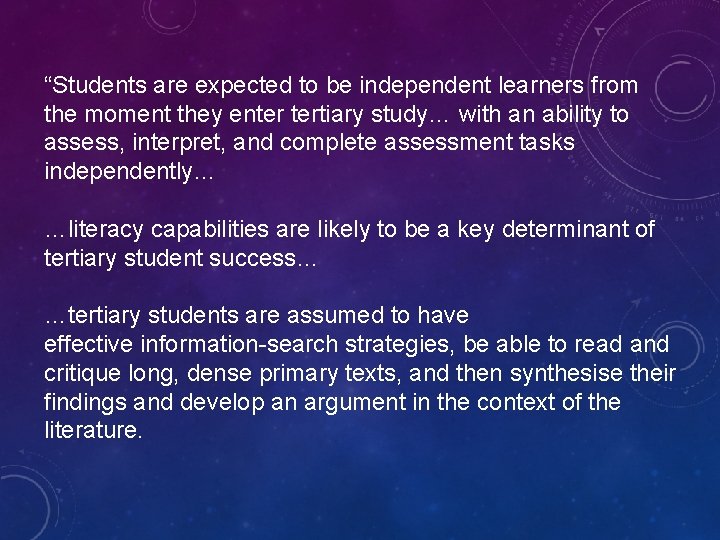
“Students are expected to be independent learners from the moment they enter tertiary study… with an ability to assess, interpret, and complete assessment tasks independently… …literacy capabilities are likely to be a key determinant of tertiary student success… …tertiary students are assumed to have effective information-search strategies, be able to read and critique long, dense primary texts, and then synthesise their findings and develop an argument in the context of the literature.
I asked my students…
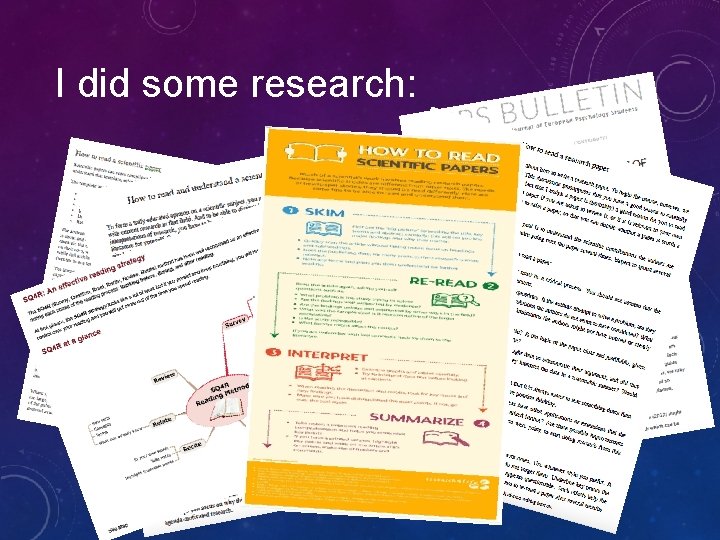
I did some research:
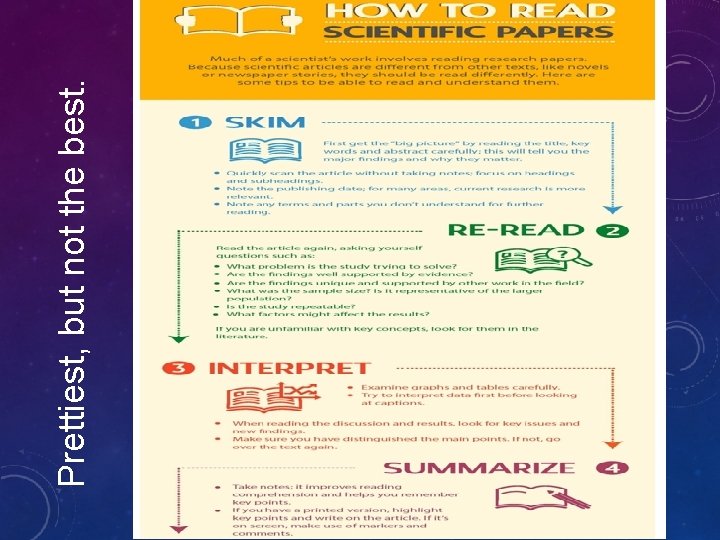
Prettiest, but not the best.
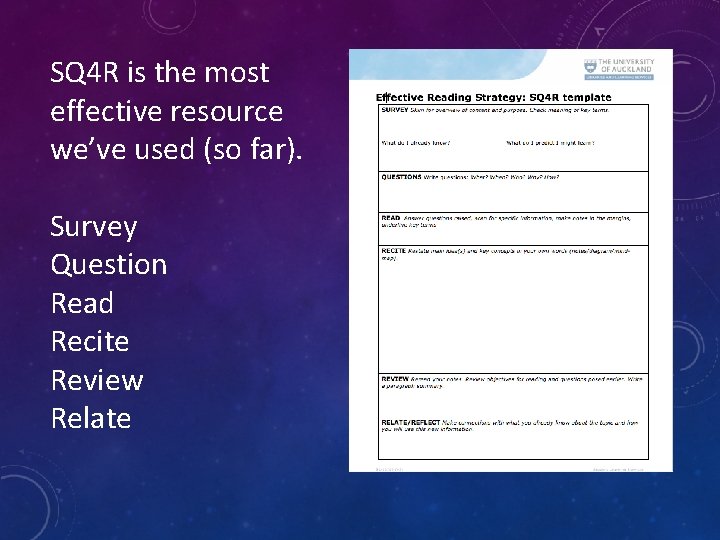
SQ 4 R is the most effective resource we’ve used (so far). Survey Question Read Recite Review Relate
But research is more than just reading…
So I did more research …
I came up with 9 steps to doing a report using research (adapted and modified from several sources) (Perhaps this needs to be simplified)
1. BACKGROUND RESEARCH FOR WRITING A PURPOSEFUL QUESTION • Ideas from class discussion, reading and websites used in class • Your interests and life experience • Google the context and the variables • Newspapers, magazines, TV, news websites * Your question must have a purpose that someone would find useful.
2. WRITE YOUR INVESTIGATIVE QUESTION • Make sure it has a sensible purpose. • You understand the context • You understand the variables • Your question meets the format required by the standard
3. CREATE A SEARCH STRATEGY • Identify the main ideas in your investigative question (context, variables) • Brainstorm alternative terms or synonyms for your main ideas. • When searching, combine and use the words that give the best results rather than typing in your original question or phrase.
4. RESEARCH YOUR INVESTIGATIVE QUESTION • Library (EPIC database) • Google • News websites • Other sources (could be people you interview) • Make notes, use stickies, highlight, etc to identify important bits.
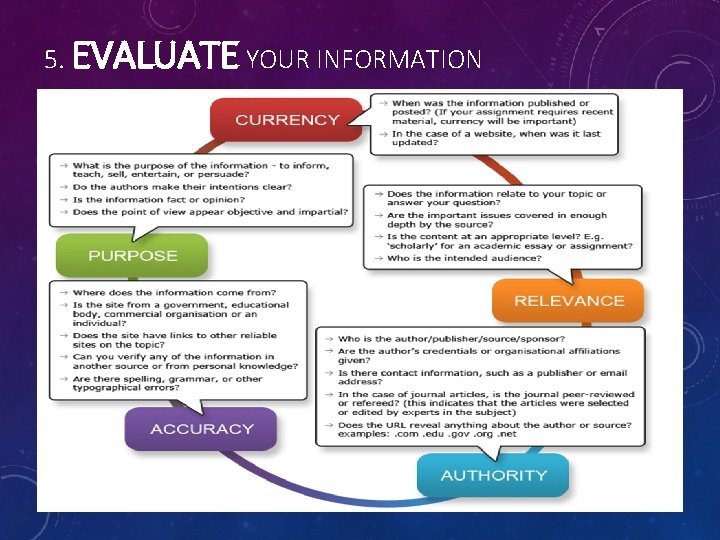
5. EVALUATE YOUR INFORMATION
6. SELECT YOUR REFERENCES • Is the information relevant? • What could be left out? • Everything you keep should pass the CRAAP test. • Record your sources and keep a reference list.
7. ORGANISE HOW CAN YOU BEST USE YOUR INFORMATION? • Match your references to sections of your report. • What helped you define your purpose and investigative question? • What is relevant to the features of your graph? • What links your findings to the wider world?
8. PRESENT THE REPORT • Write a report (or present in another way) • Is the presentation logical and well-organised? • Have you met the requirements of the standard? • Have you used statistical language appropriately? • Have you used your own ideas and referenced your sources?
9. REFLECT • What did you learn? • Is there anything you need to improve: locating; selecting, note making, time management? • How can you improve? Do you need to ask for help? • Who should you ask?
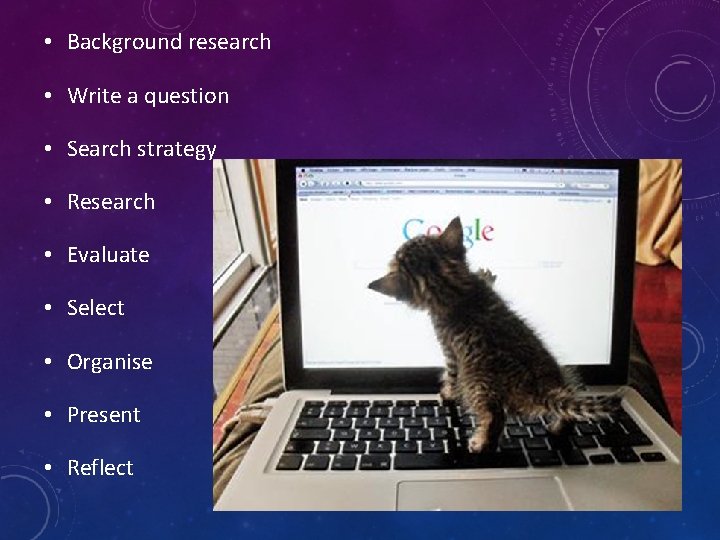
• Background research • Write a question • Search strategy • Research • Evaluate • Select • Organise • Present • Reflect
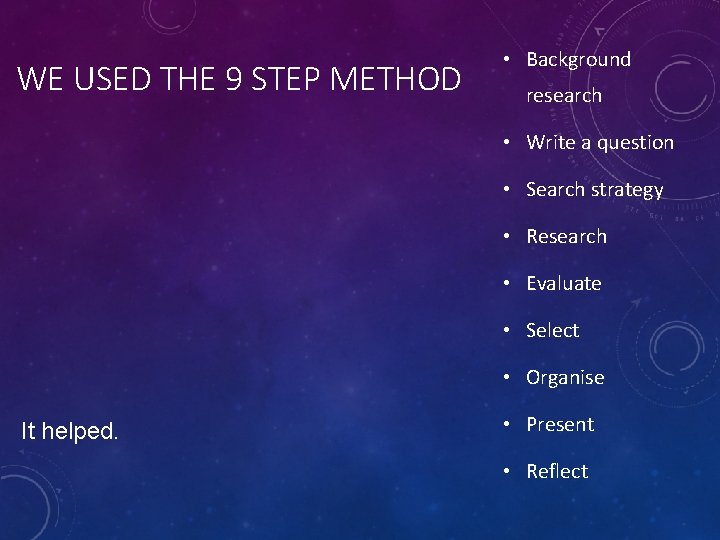
WE USED THE 9 STEP METHOD • Background research • Write a question • Search strategy • Research • Evaluate • Select • Organise It helped. • Present • Reflect
And then I went to a workshop… Thank-you Robyn
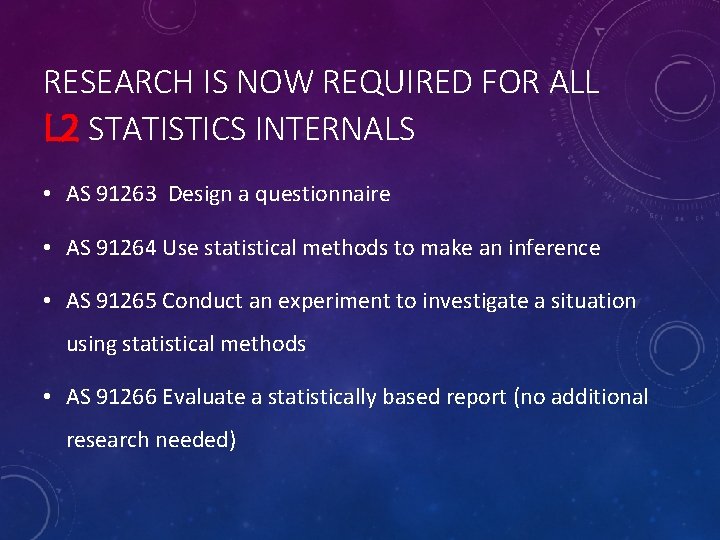
RESEARCH IS NOW REQUIRED FOR ALL L 2 STATISTICS INTERNALS • AS 91263 Design a questionnaire • AS 91264 Use statistical methods to make an inference • AS 91265 Conduct an experiment to investigate a situation using statistical methods • AS 91266 Evaluate a statistically based report (no additional research needed)
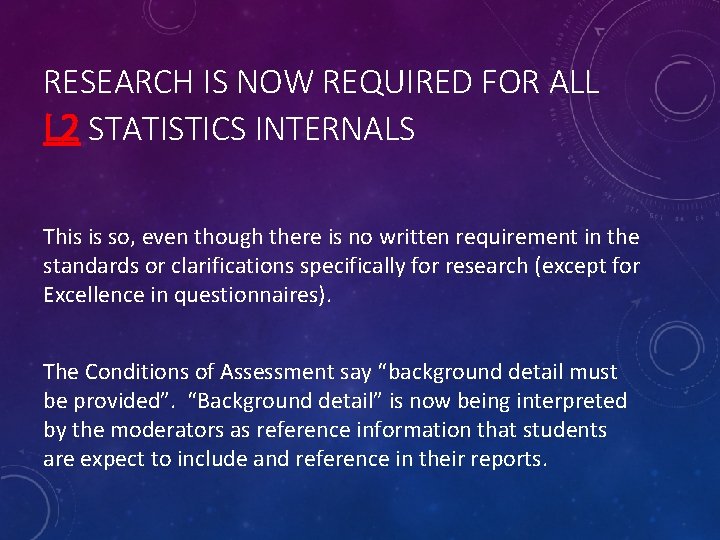
RESEARCH IS NOW REQUIRED FOR ALL L 2 STATISTICS INTERNALS This is so, even though there is no written requirement in the standards or clarifications specifically for research (except for Excellence in questionnaires). The Conditions of Assessment say “background detail must be provided”. “Background detail” is now being interpreted by the moderators as reference information that students are expect to include and reference in their reports.
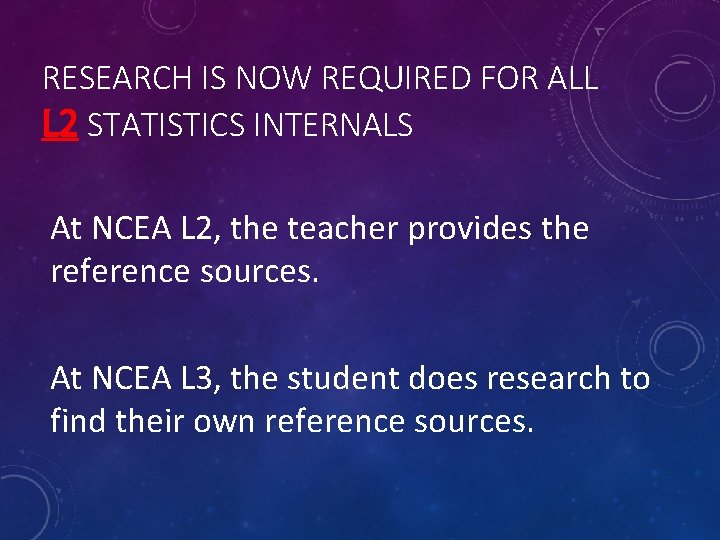
RESEARCH IS NOW REQUIRED FOR ALL L 2 STATISTICS INTERNALS At NCEA L 2, the teacher provides the reference sources. At NCEA L 3, the student does research to find their own reference sources.
GIVE IT A GO • Find a statistics standard that you have in common with people sitting near you. • Choose a topic you use or might use for teaching or assessment. • Find an article or research paper related to that topic. • Read it while filling out the SQ 4 R template.
REFLECT • Did you find the SQ 4 R process useful? • Would your students find it useful?
REFLECT • What do you already do well as a teacher of research skills? • What’s something you could try doing to become a more effective teacher of research? • How could we all work together to become more effective teachers of research skills?
SHARE We are all beginners. We can learn from each other.