Head Start A to Z 2 0 Community


- Slides: 58
Head Start A to Z, 2. 0 Community and Self-Assessment Part 2: Self-Assessment: Building on Strengths and Improving Systems
Learning Objectives In this module, participants will: • Understand the requirements for self-assessment • Explore the recommended process for conducting a self-assessment • Recognize the importance of these activities for planning, evaluation, and continuous improvement • Identify strategies and resources to support these activities
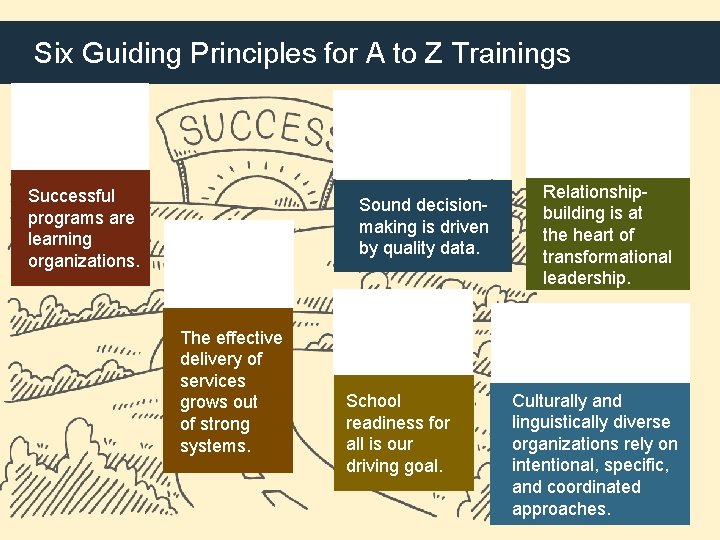
Six Guiding Principles for A to Z Trainings Successful programs are learning organizations. Sound decisionmaking is driven by quality data. The effective delivery of services grows out of strong systems. School readiness for all is our driving goal. Relationshipbuilding is at the heart of transformational leadership. Culturally and linguistically diverse organizations rely on intentional, specific, and coordinated approaches.
Overview
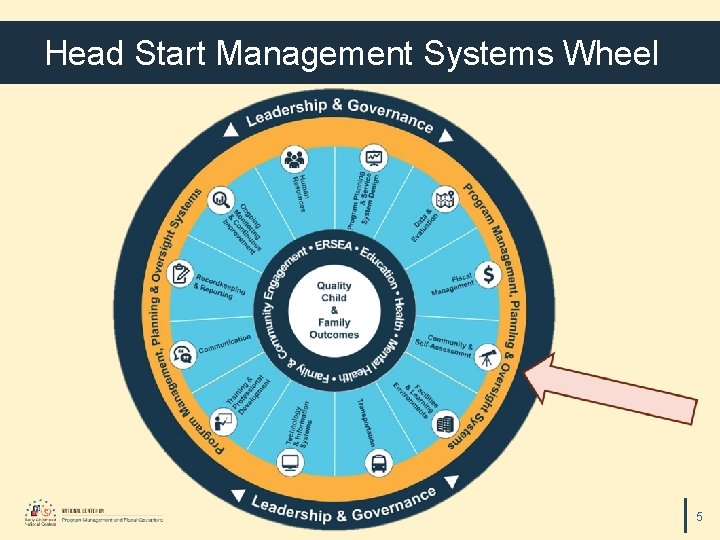
Head Start Management Systems Wheel 5
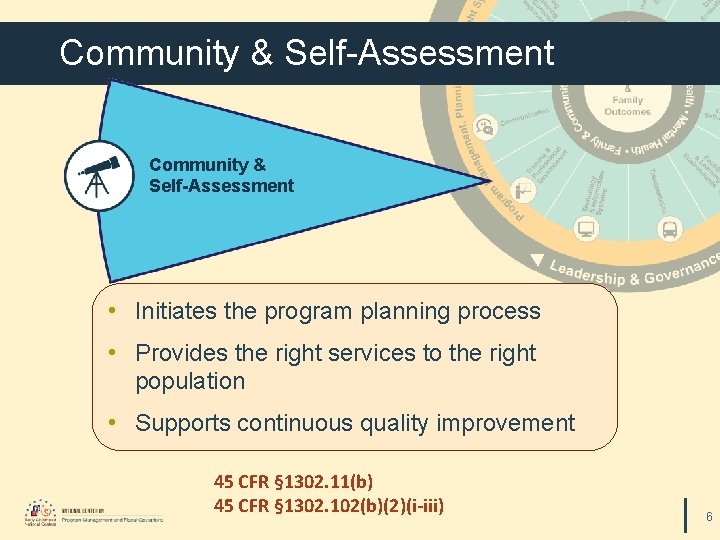
Community & Self-Assessment • Initiates the program planning process • Provides the right services to the right population • Supports continuous quality improvement 45 CFR § 1302. 11(b) 45 CFR § 1302. 102(b)(2)(i-iii) 6
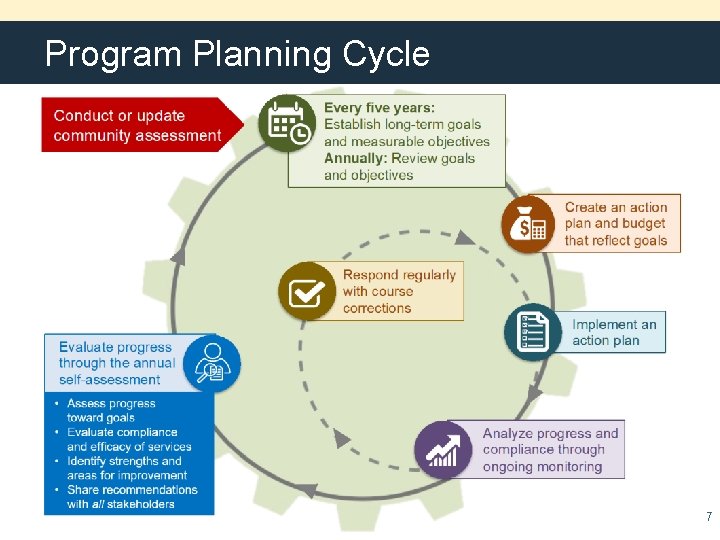
Program Planning Cycle 7
45 CFR § 1302 Subpart J—Program Management and Quality Improvement A program must provide management and a process of ongoing monitoring and continuous improvement for achieving program goals that ensures child safety and the delivery of effective, highquality program services. 8
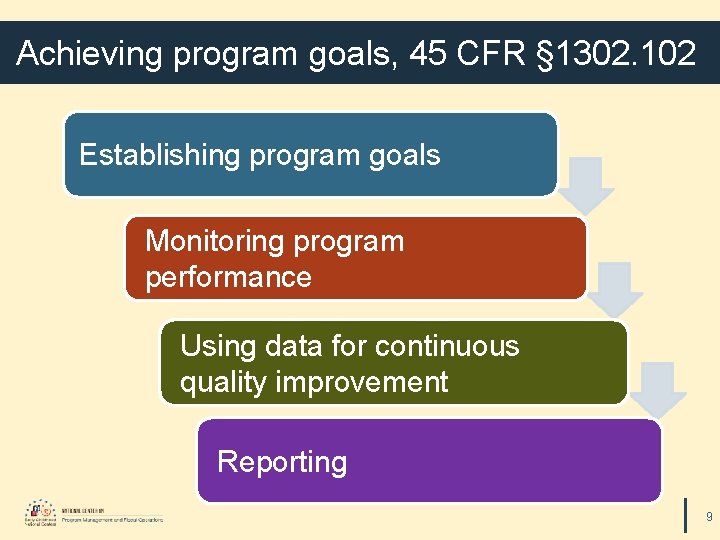
Achieving program goals, 45 CFR § 1302. 102 Establishing program goals Monitoring program performance Using data for continuous quality improvement Reporting 9
Self-Assessment Self-assessment uses program data to measure: • Success in meeting program goals • Compliance with Head Start Program Performance Standards (HSPPS) • Effectiveness of the professional development and family engagement systems in promoting school readiness 10
The Role of Data
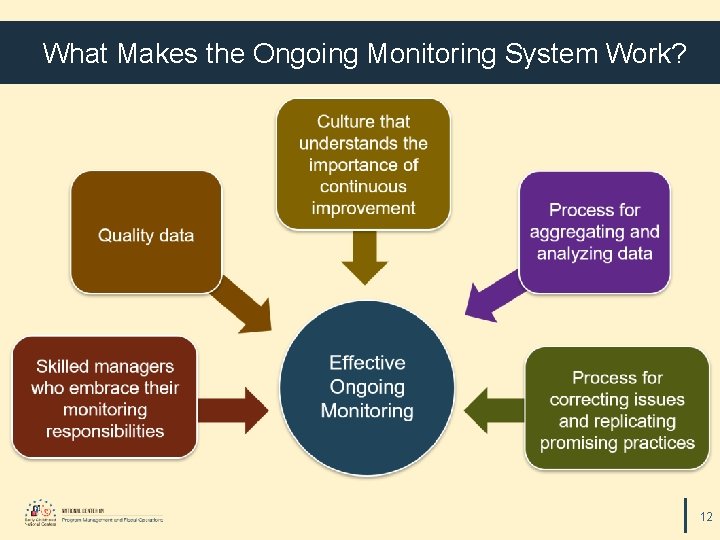
What Makes the Ongoing Monitoring System Work? 12
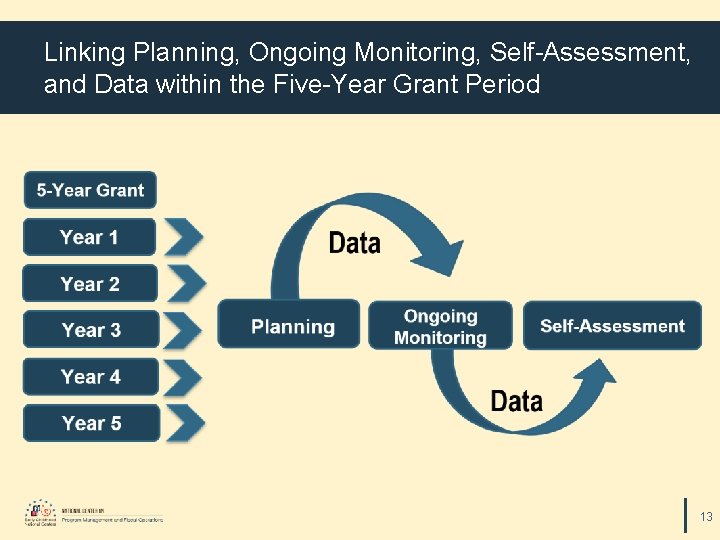
Linking Planning, Ongoing Monitoring, Self-Assessment, and Data within the Five-Year Grant Period 13
Truth or Myth? 14
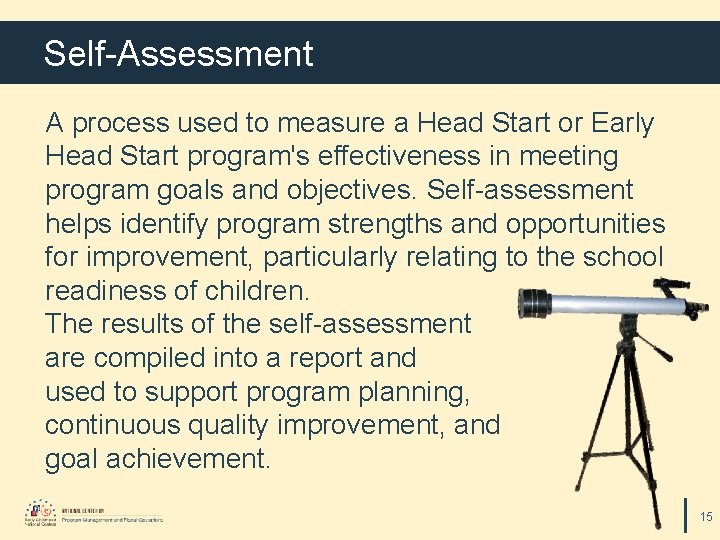
Self-Assessment A process used to measure a Head Start or Early Head Start program's effectiveness in meeting program goals and objectives. Self-assessment helps identify program strengths and opportunities for improvement, particularly relating to the school readiness of children. The results of the self-assessment are compiled into a report and used to support program planning, continuous quality improvement, and goal achievement. 15
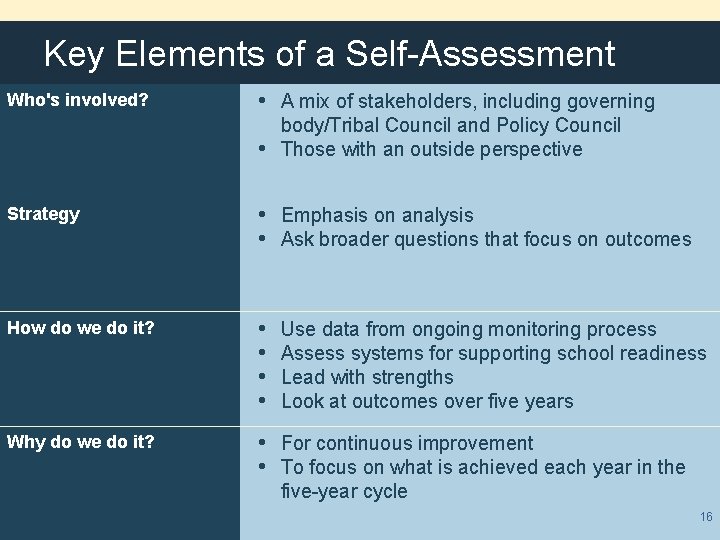
Key Elements of a Self-Assessment Who's involved? • A mix of stakeholders, including governing • body/Tribal Council and Policy Council Those with an outside perspective Strategy • Emphasis on analysis • Ask broader questions that focus on outcomes How do we do it? • • Why do we do it? • For continuous improvement • To focus on what is achieved each year in the Use data from ongoing monitoring process Assess systems for supporting school readiness Lead with strengths Look at outcomes over five years five-year cycle 16
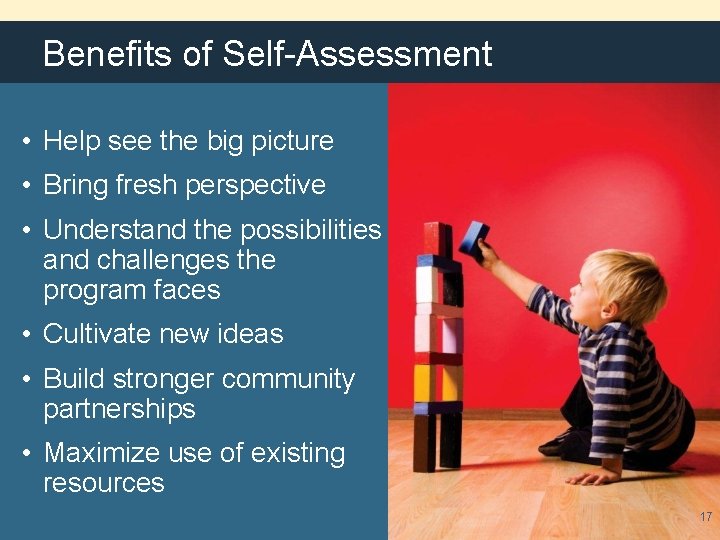
Benefits of Self-Assessment • Help see the big picture • Bring fresh perspective • Understand the possibilities and challenges the program faces • Cultivate new ideas • Build stronger community partnerships • Maximize use of existing resources 17
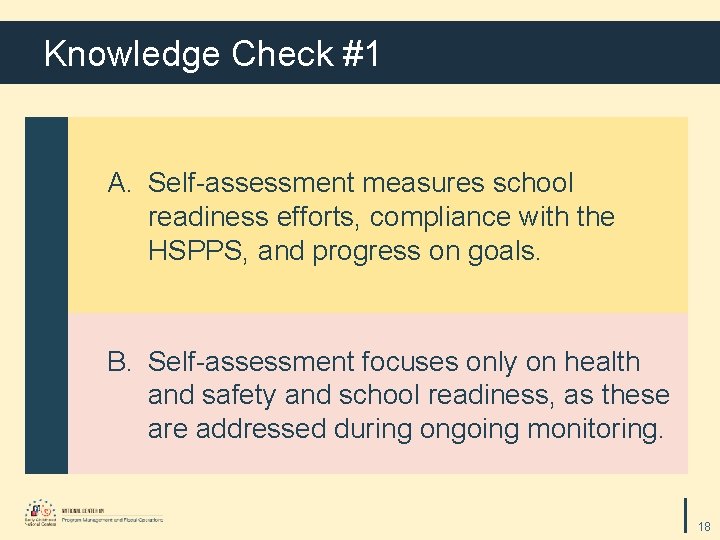
Knowledge Check #1 A. Self-assessment measures school readiness efforts, compliance with the HSPPS, and progress on goals. B. Self-assessment focuses only on health and safety and school readiness, as these are addressed during ongoing monitoring. 18
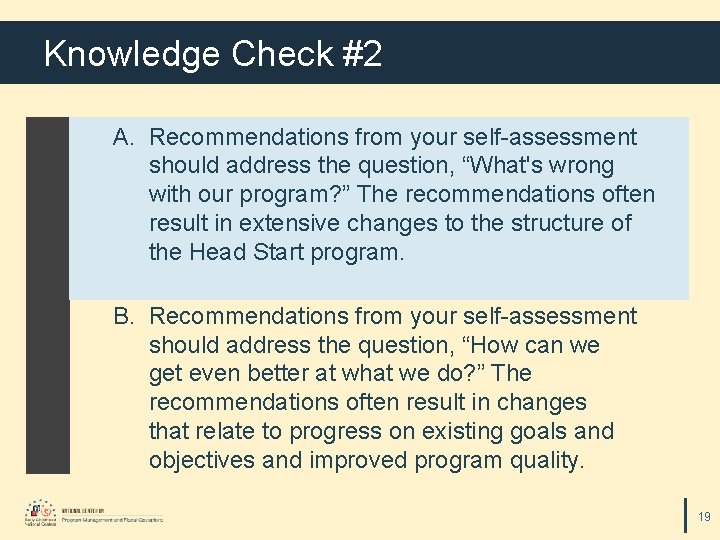
Knowledge Check #2 A. Recommendations from your self-assessment should address the question, “What's wrong with our program? ” The recommendations often result in extensive changes to the structure of the Head Start program. B. Recommendations from your self-assessment should address the question, “How can we get even better at what we do? ” The recommendations often result in changes that relate to progress on existing goals and objectives and improved program quality. 19
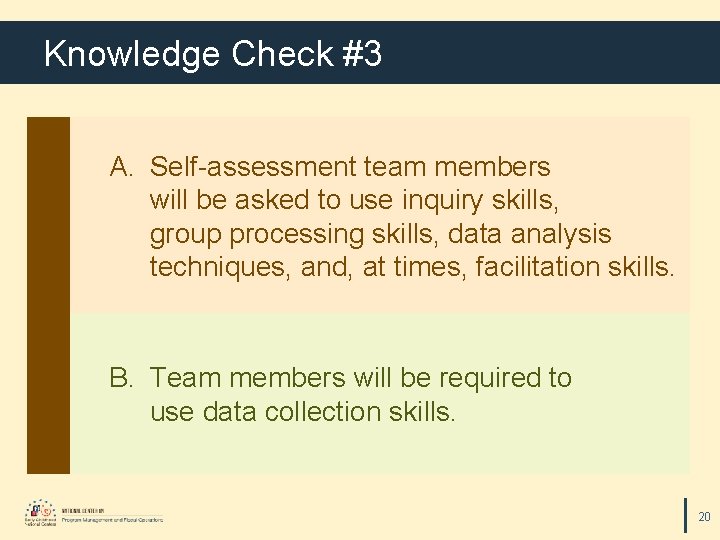
Knowledge Check #3 A. Self-assessment team members will be asked to use inquiry skills, group processing skills, data analysis techniques, and, at times, facilitation skills. B. Team members will be required to use data collection skills. 20
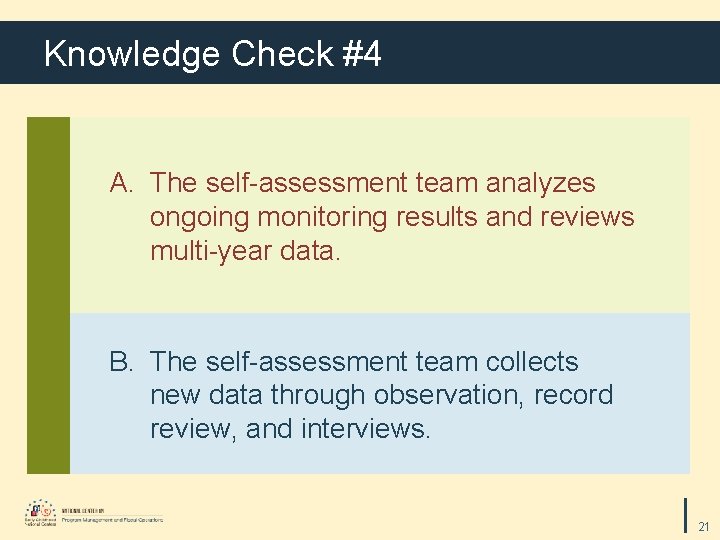
Knowledge Check #4 A. The self-assessment team analyzes ongoing monitoring results and reviews multi-year data. B. The self-assessment team collects new data through observation, record review, and interviews. 21
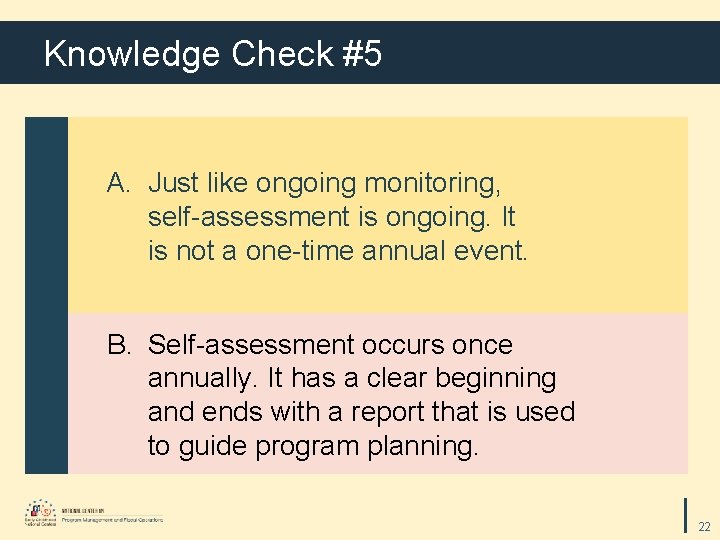
Knowledge Check #5 A. Just like ongoing monitoring, self-assessment is ongoing. It is not a one-time annual event. B. Self-assessment occurs once annually. It has a clear beginning and ends with a report that is used to guide program planning. 22
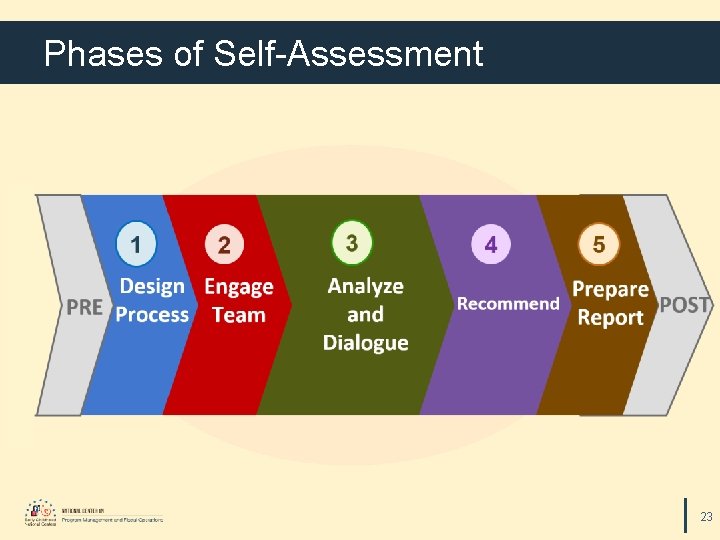
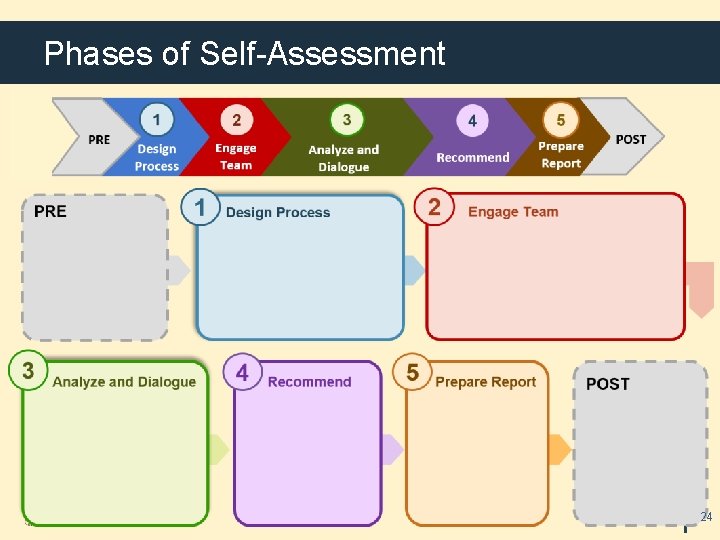
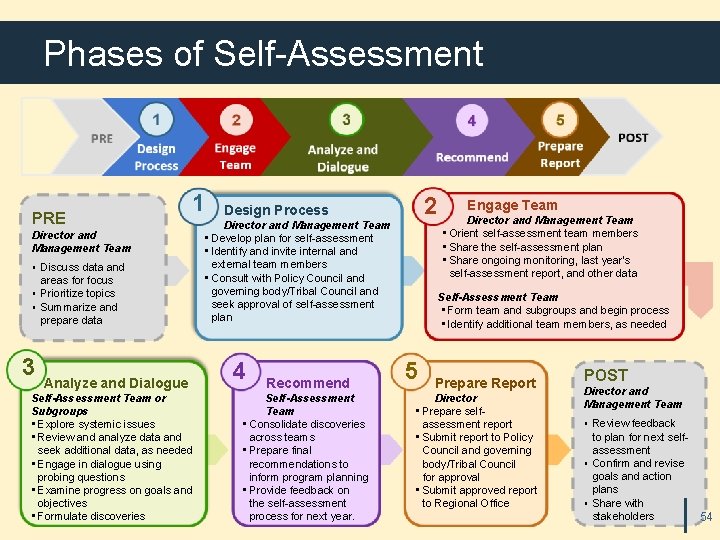
Phases of Self-Assessment 23
Phases of Self-Assessment 24
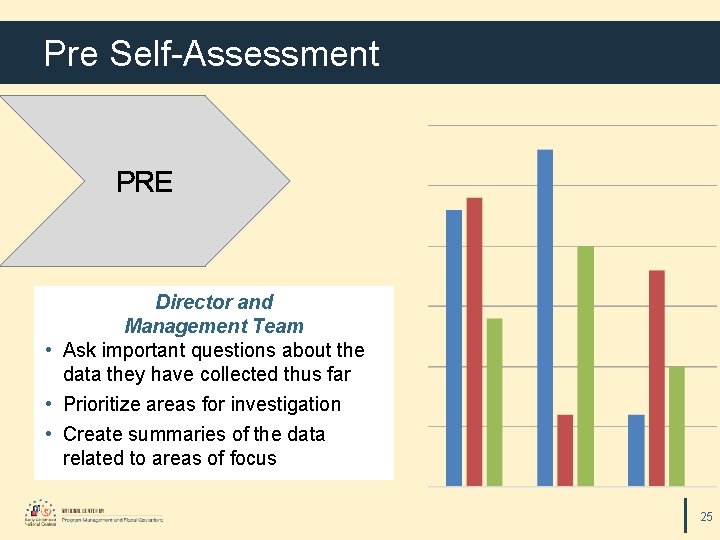
Pre Self-Assessment PRE Director and Management Team • Ask important questions about the data they have collected thus far • Prioritize areas for investigation • Create summaries of the data related to areas of focus 25
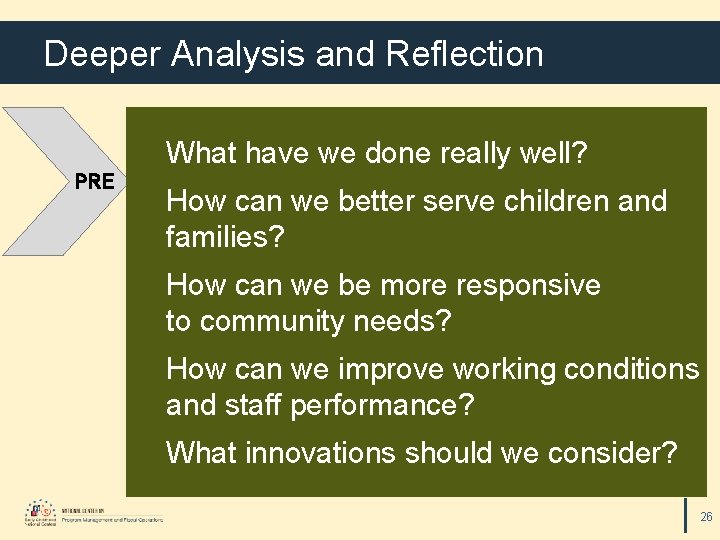
Deeper Analysis and Reflection What have we done really well? PRE How can we better serve children and families? How can we be more responsive to community needs? How can we improve working conditions and staff performance? What innovations should we consider? 26
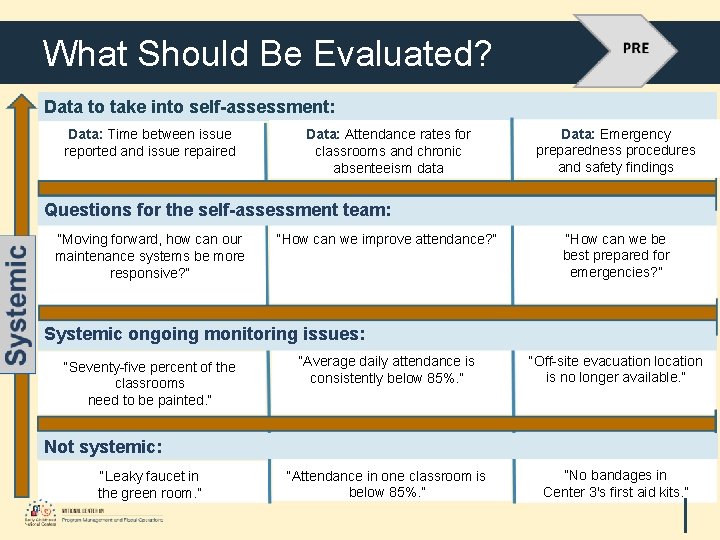
What Should Be Evaluated? Data to take into self-assessment: Data: Time between issue reported and issue repaired Data: Attendance rates for classrooms and chronic absenteeism data Data: Emergency preparedness procedures and safety findings Questions for the self-assessment team: “Moving forward, how can our maintenance systems be more responsive? ” “How can we improve attendance? ” “How can we be best prepared for emergencies? ” Systemic ongoing monitoring issues: “Seventy-five percent of the classrooms need to be painted. ” “Average daily attendance is consistently below 85%. ” “Off-site evacuation location is no longer available. ” “Attendance in one classroom is below 85%. ” “No bandages in Center 3's first aid kits. ” Not systemic: “Leaky faucet in the green room. ”
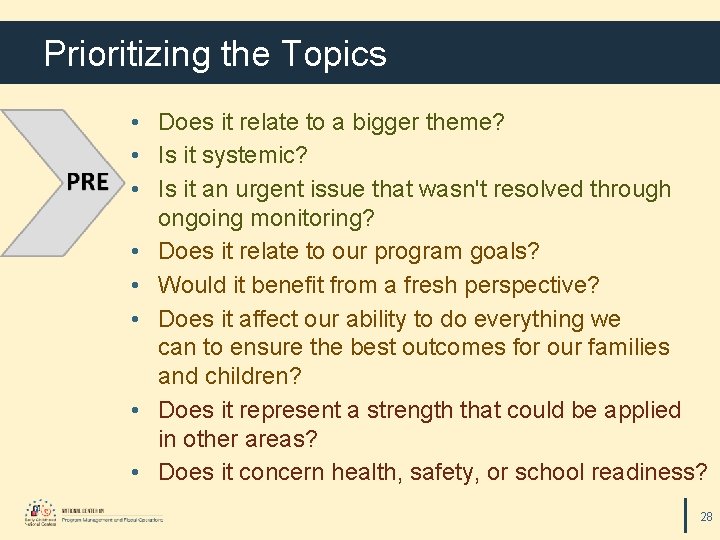
Prioritizing the Topics • Does it relate to a bigger theme? • Is it systemic? • Is it an urgent issue that wasn't resolved through ongoing monitoring? • Does it relate to our program goals? • Would it benefit from a fresh perspective? • Does it affect our ability to do everything we can to ensure the best outcomes for our families and children? • Does it represent a strength that could be applied in other areas? • Does it concern health, safety, or school readiness? 28
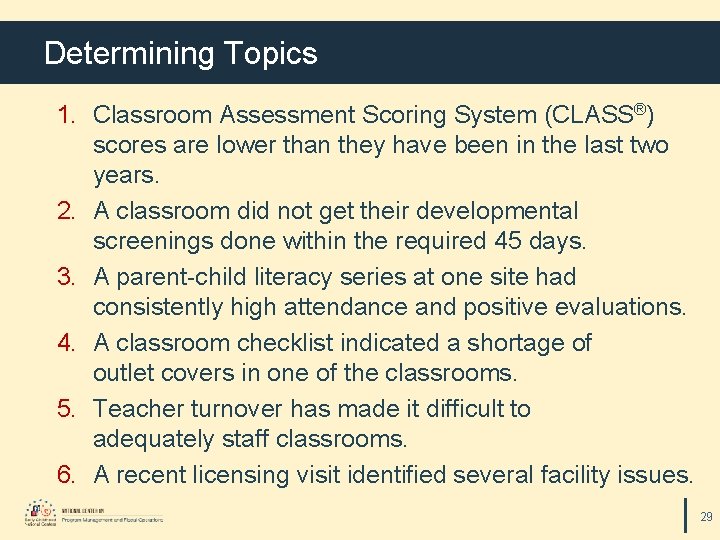
Determining Topics 1. Classroom Assessment Scoring System (CLASS®) scores are lower than they have been in the last two years. 2. A classroom did not get their developmental screenings done within the required 45 days. 3. A parent-child literacy series at one site had consistently high attendance and positive evaluations. 4. A classroom checklist indicated a shortage of outlet covers in one of the classrooms. 5. Teacher turnover has made it difficult to adequately staff classrooms. 6. A recent licensing visit identified several facility issues. 29
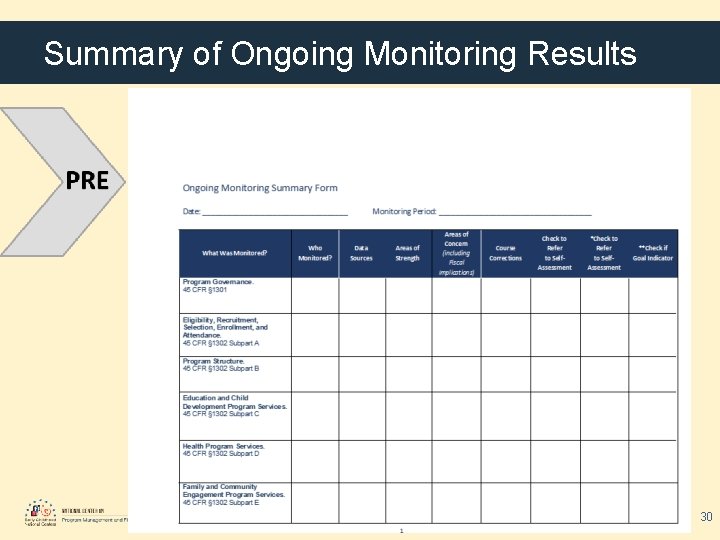
Summary of Ongoing Monitoring Results 30
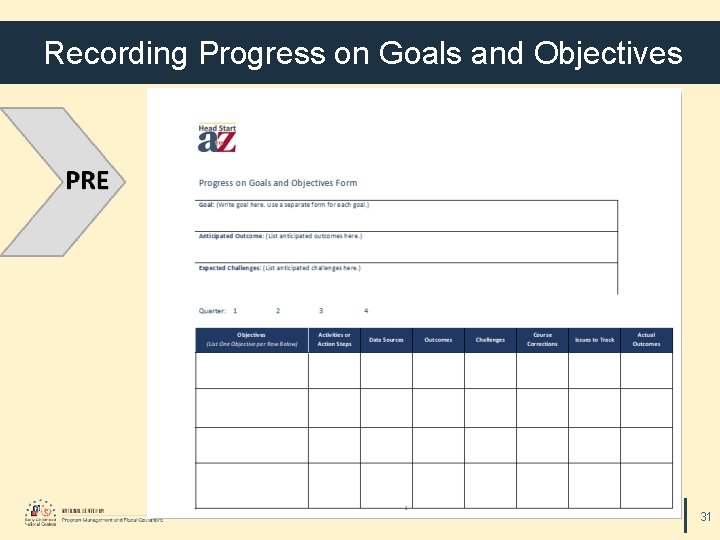
Recording Progress on Goals and Objectives 31
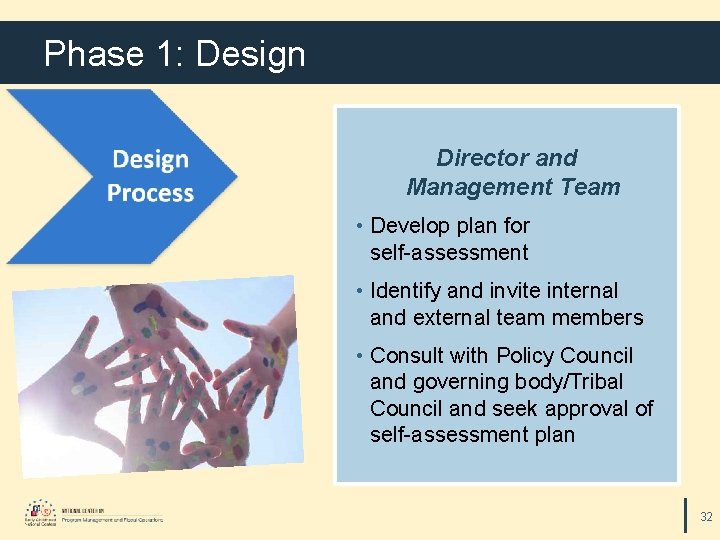
Phase 1: Design Director and Management Team • Develop plan for self-assessment • Identify and invite internal and external team members • Consult with Policy Council and governing body/Tribal Council and seek approval of self-assessment plan 32
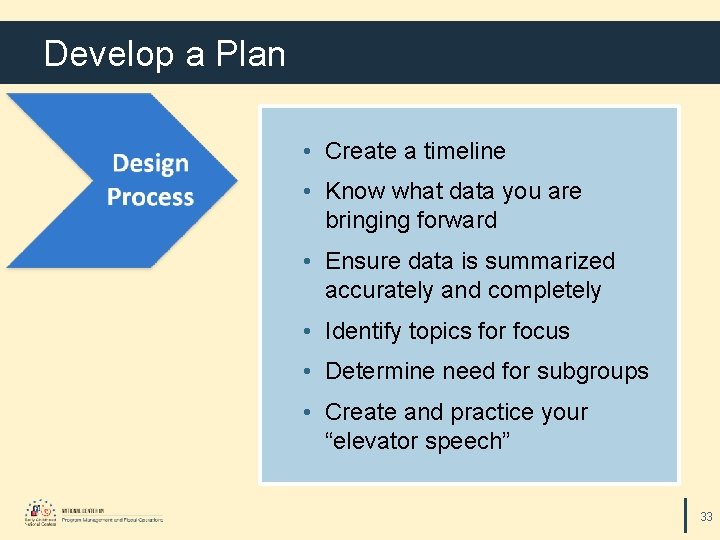
Develop a Plan • Create a timeline • Know what data you are bringing forward • Ensure data is summarized accurately and completely • Identify topics for focus • Determine need for subgroups • Create and practice your “elevator speech” 33
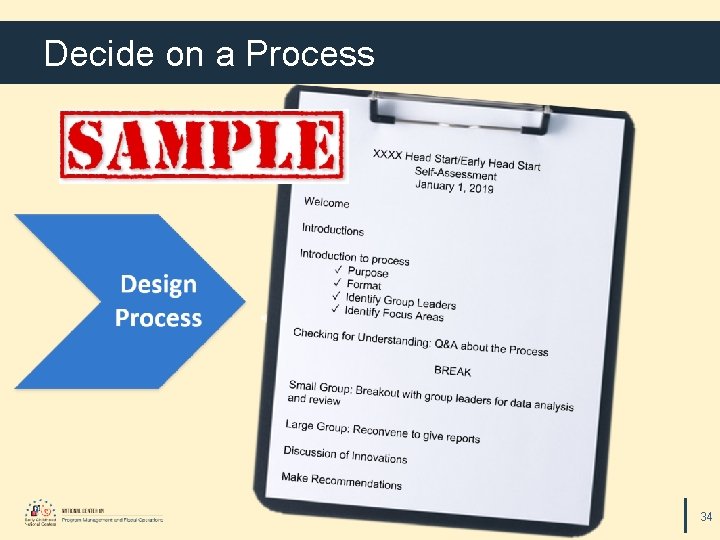
Decide on a Process 34
Recruit Your Team
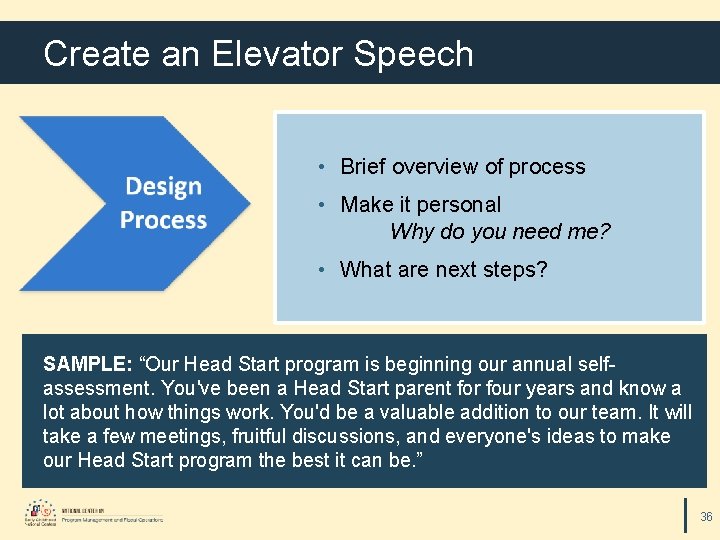
Create an Elevator Speech • Brief overview of process • Make it personal Why do you need me? • What are next steps? SAMPLE: “Our Head Start program is beginning our annual selfassessment. You've been a Head Start parent for four years and know a lot about how things work. You'd be a valuable addition to our team. It will take a few meetings, fruitful discussions, and everyone's ideas to make our Head Start program the best it can be. ” 36
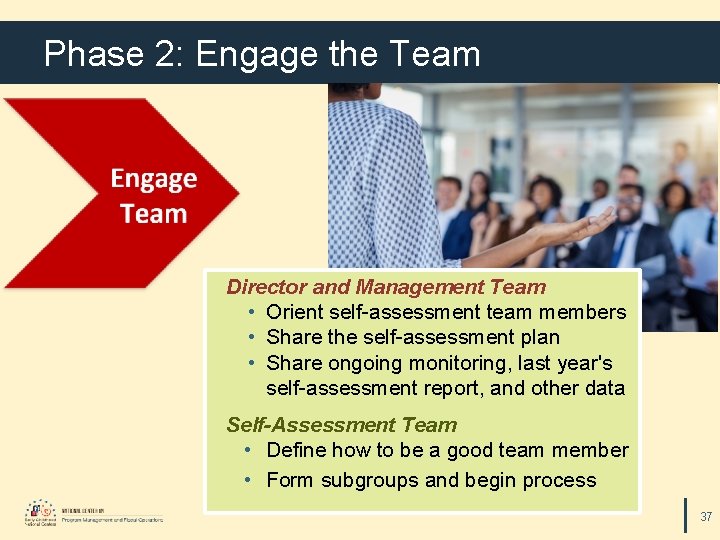
Phase 2: Engage the Team Director and Management Team • Orient self-assessment team members • Share the self-assessment plan • Share ongoing monitoring, last year's self-assessment report, and other data Self-Assessment Team • Define how to be a good team member • Form subgroups and begin process 37
Being a Good Team Member Six Useful Tips: • Keep a strengths-based approach • Let go of control • Include all team members • Use multiple strategies to engage team • Keep the dialogue flowing • Focus on the “big picture” instead of details 38
Orient the Team • Present the self-assessment plan • Identify subgroups and areas of focus • Share ongoing monitoring results related to areas of focus • Present and review last year's self-assessment report • Ensure roles and responsibilities are clear Useful Resource: • Orientation to the Self-Assessment Process in Head Start 39
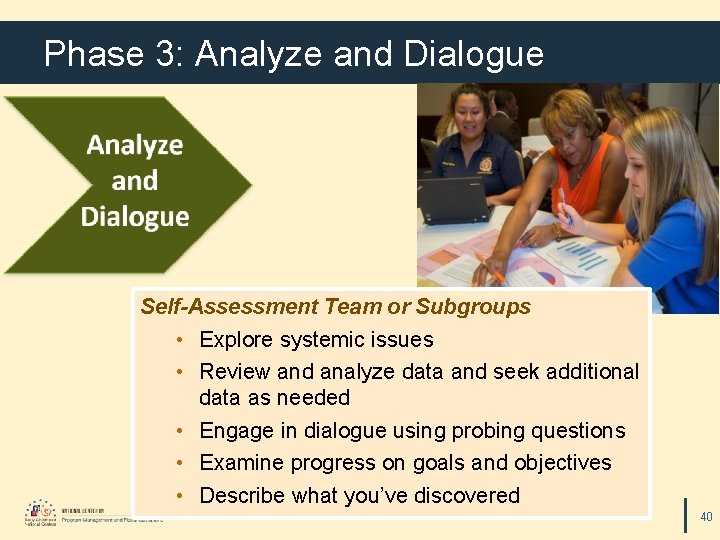
Phase 3: Analyze and Dialogue Self-Assessment Team or Subgroups • Explore systemic issues • Review and analyze data and seek additional data as needed • Engage in dialogue using probing questions • Examine progress on goals and objectives • Describe what you’ve discovered 40
Types of Head Start Data • Program Information Report (PIR) • Eligibility, Recruitment, Selection, Enrollment, and Attendance (ERSEA) • Community assessment • Ongoing monitoring • Child outcomes • Family engagement • Professional development • Health, mental health, and nutrition • Transportation, fiscal, and facilities 41
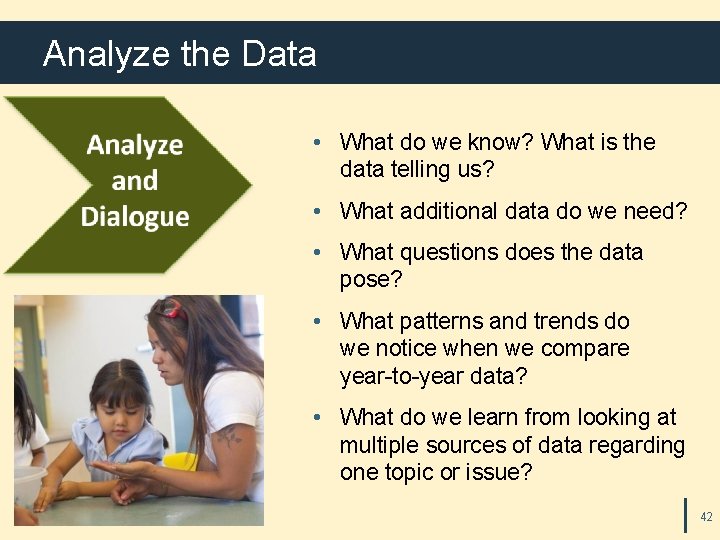
Analyze the Data • What do we know? What is the data telling us? • What additional data do we need? • What questions does the data pose? • What patterns and trends do we notice when we compare year-to-year data? • What do we learn from looking at multiple sources of data regarding one topic or issue? 42
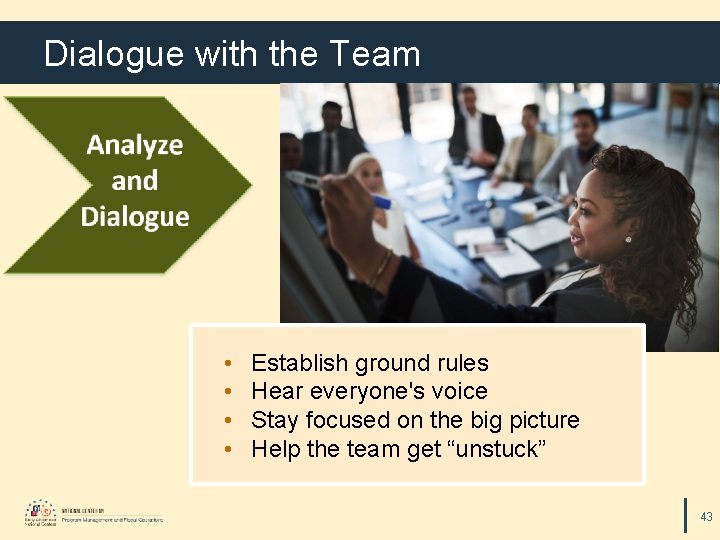
Dialogue with the Team • • Establish ground rules Hear everyone's voice Stay focused on the big picture Help the team get “unstuck” 43
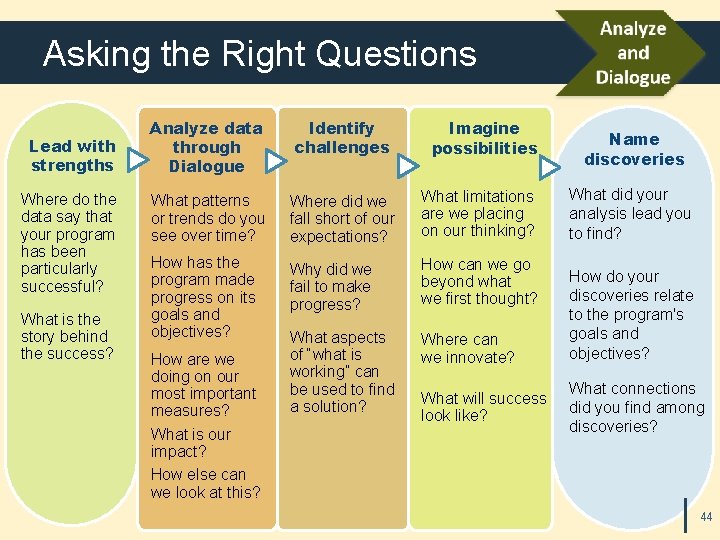
Asking the Right Questions Lead with strengths Where do the data say that your program has been particularly successful? What is the story behind the success? Analyze data through Dialogue Identify challenges Imagine possibilities What patterns or trends do you see over time? Where did we fall short of our expectations? What limitations are we placing on our thinking? How has the program made progress on its goals and objectives? Why did we fail to make progress? How can we go beyond what we first thought? What aspects of “what is working” can be used to find a solution? Where can we innovate? How are we doing on our most important measures? What is our impact? How else can we look at this? What will success look like? Name discoveries What did your analysis lead you to find? How do your discoveries relate to the program's goals and objectives? What connections did you find among discoveries? 44
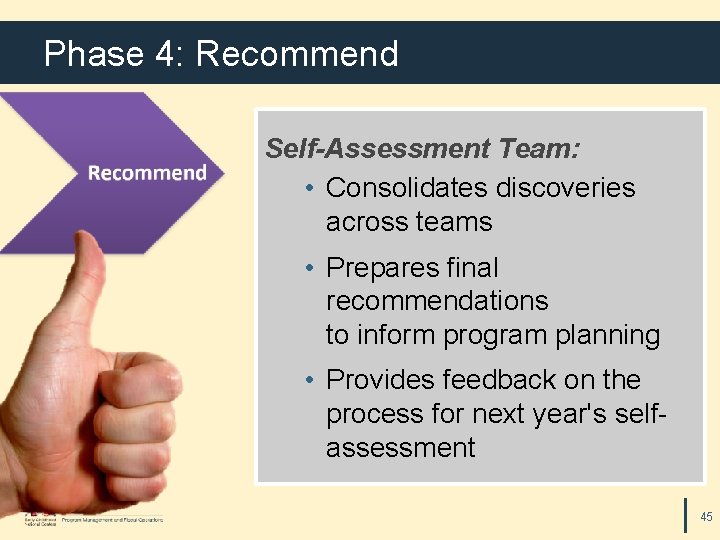
Phase 4: Recommend Self-Assessment Team: • Consolidates discoveries across teams • Prepares final recommendations to inform program planning • Provides feedback on the process for next year's selfassessment 45
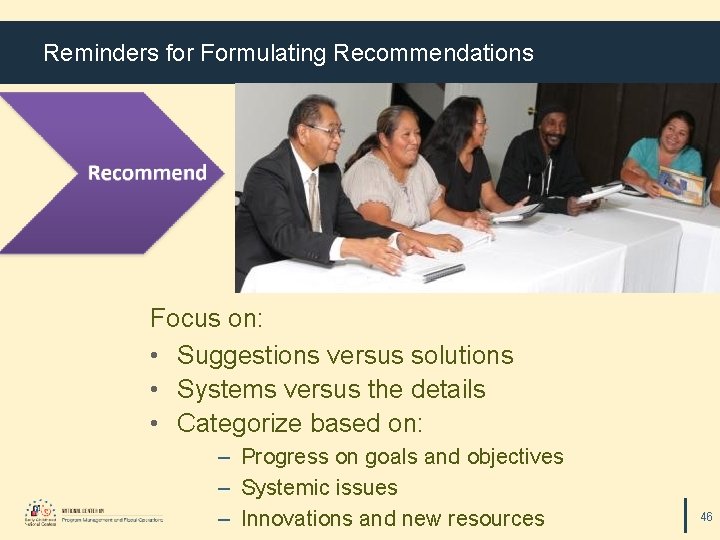
Reminders for Formulating Recommendations Focus on: • Suggestions versus solutions • Systems versus the details • Categorize based on: – Progress on goals and objectives – Systemic issues – Innovations and new resources 46
Putting It All Together: A Case Study
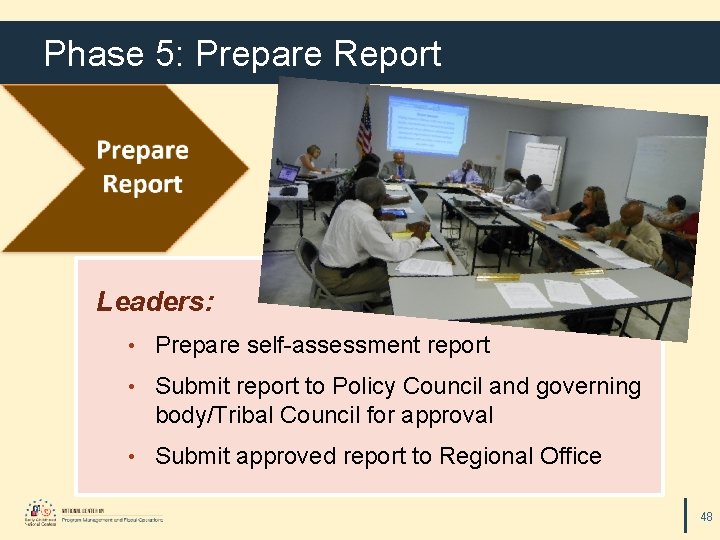
Phase 5: Prepare Report Leaders: • Prepare self-assessment report • Submit report to Policy Council and governing body/Tribal Council for approval • Submit approved report to Regional Office 48
Elements of a Self-Assessment Report • Introduction • Methodology • Key Insights • Recommendations 49
How Is the Self-Assessment Report Used? • Director creates final report from recommendations • Policy Council and governing body/ Tribal Council approve the report • Director submits report to Regional Office with a Program Improvement Plan • Planning team uses report in future planning and goal-setting • Data shows progress towards five-year goals and objectives 50
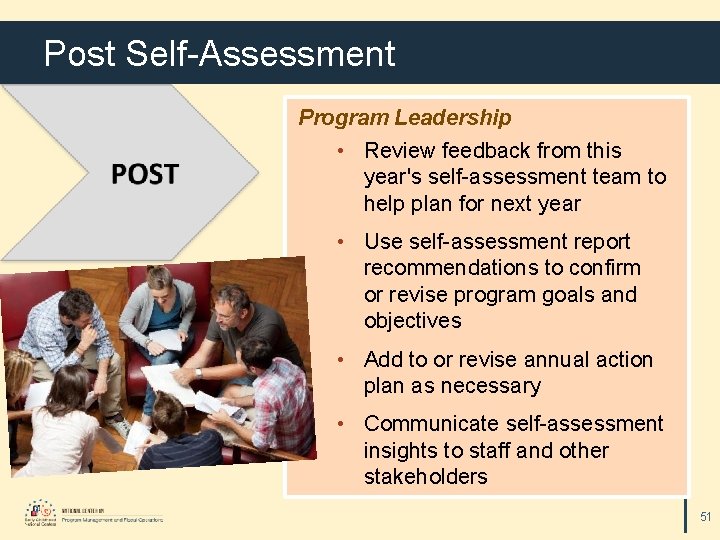
Post Self-Assessment Program Leadership • Review feedback from this year's self-assessment team to help plan for next year • Use self-assessment report recommendations to confirm or revise program goals and objectives • Add to or revise annual action plan as necessary • Communicate self-assessment insights to staff and other stakeholders 51
Keep Self-Assessment in Mind When you are: • Conducting or updating your community assessment • Writing or reviewing goals and objectives • Developing an action plan and budget • Implementing an action plan • Evaluating progress through ongoing monitoring 52
Truth or Myth? 53
Phases of Self-Assessment PRE 1 Director and Management Team ▪ Discuss data and areas for focus ▪ Prioritize topics ▪ Summarize and prepare data 3 Analyze and Dialogue Self-Assessment Team or Subgroups • Explore systemic issues • Review and analyze data and seek additional data, as needed • Engage in dialogue using probing questions • Examine progress on goals and objectives • Formulate discoveries 2 Design Process Director and Management Team • Develop plan for self-assessment • Identify and invite internal and external team members • Consult with Policy Council and governing body/Tribal Council and seek approval of self-assessment plan 4 Recommend Self-Assessment Team • Consolidate discoveries across teams • Prepare final recommendations to inform program planning • Provide feedback on the self-assessment process for next year. Engage Team Director and Management Team • Orient self-assessment team members • Share the self-assessment plan • Share ongoing monitoring, last year's self-assessment report, and other data Self-Assessment Team • Form team and subgroups and begin process • Identify additional team members, as needed 5 Prepare Report Director • Prepare selfassessment report • Submit report to Policy Council and governing body/Tribal Council for approval • Submit approved report to Regional Office POST Director and Management Team ▪ Review feedback to plan for next selfassessment ▪ Confirm and revise goals and action plans ▪ Share with stakeholders 54
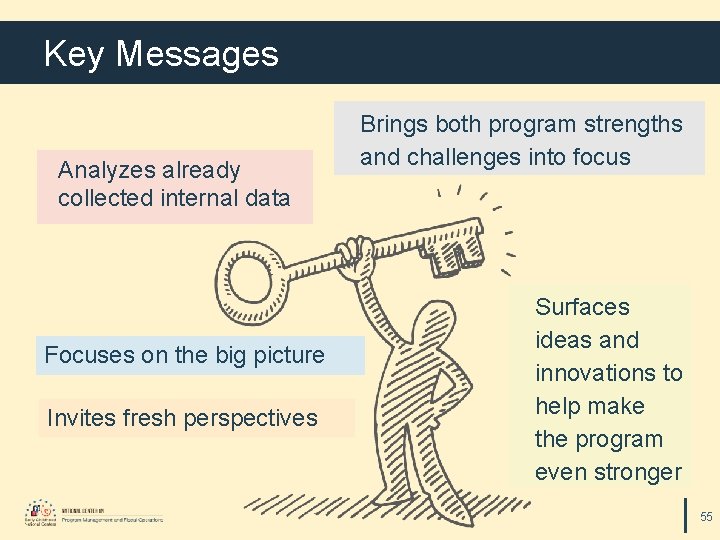
Key Messages Analyzes already collected internal data Focuses on the big picture Invites fresh perspectives Brings both program strengths and challenges into focus Surfaces ideas and innovations to help make the program even stronger 55
Closing Reflections What have I learned? What will I do with what I've learned? *Adapted from: Professional Development Guides for Implementing PFCE What excites or concerns me about what I learned? 56
Related ECLKC Resources About Us https: //eclkc. ohs. acf. hhs. gov/about -us/article/office-head-start-ohs Head Start Programs https: //eclkc. ohs. acf. hhs. gov/programs/ article/head-start-programs Head Start Act https: //eclkc. ohs. acf. hhs. gov/ policy/head-start-act 57
Contact PMFO pmfo@ecetta. info https: //eclkc. ohs. acf. hhs. gov/ncpmfo Call us: 888 -874 -5469