GO TO Educators Identification of Mental Disorders in
- Slides: 84
“GO TO” Educators Identification of Mental Disorders in School Setting© Developed By: Dr. Stan Kutcher MD, FRCPC, FCAHS Sun Life Financial Chair in Adolescent Mental Health & Director, WHO Collaborating Centre, Dalhousie University and the IWK Health Centre Presented By: Andrew Baxter MSW RSW Provincial Coordinator for the Mental Health Literacy Project, School Based Mental Health, Alberta Health Services
Acknowledgements Ms. Yifeng Wei: Coordinator School Mental Health Programs Educators Advisory Committee to the Chair Youth Advisory Committee to the Chair Disclosures: none WWW. TEENMENTALHEALTH. ORG 2
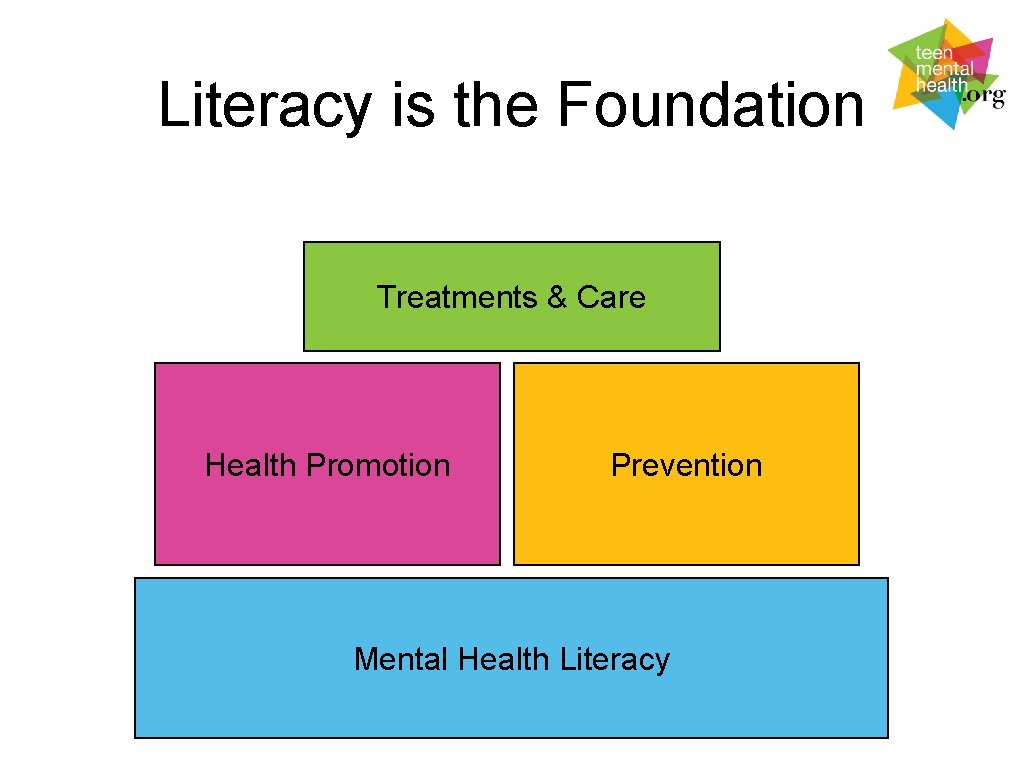
Literacy is the Foundation Treatments & Care Health Promotion Prevention Mental Health Literacy
Who Are “Go. To”Educators? • Educators whom students naturally go to for help in the school setting • May be subject teachers, guidance counsellors, school psychologists, social workers, health nurses, administration staff, or other school support staff identified by each individual school. 4
What do “Go-To” Educators Do? • Bring a higher level of contextualized mental health knowledge to the school setting • Be a person whom students know that they can contact if they have a concern • Be able to identify students who have high probability of having a mental disorder • Link the student to appropriate “in school” supports • Provide on-going support to the student as part of the “in school” team • May be a designated linking person to health/mental health providers or focal contact point for parents • TEACHERS ARE NOT COUNSELLORS OR THERAPISTS 5
DO NOT DIAGNOSE!! • • • Across Canada, communicating a diagnosis is a “controlled act” under the Regulated Health Professions Act (or local equivalent) Only psychologists, psychological associates, clinical social workers and physicians can diagnose mental disorders There are significant penalties for others who do so 6
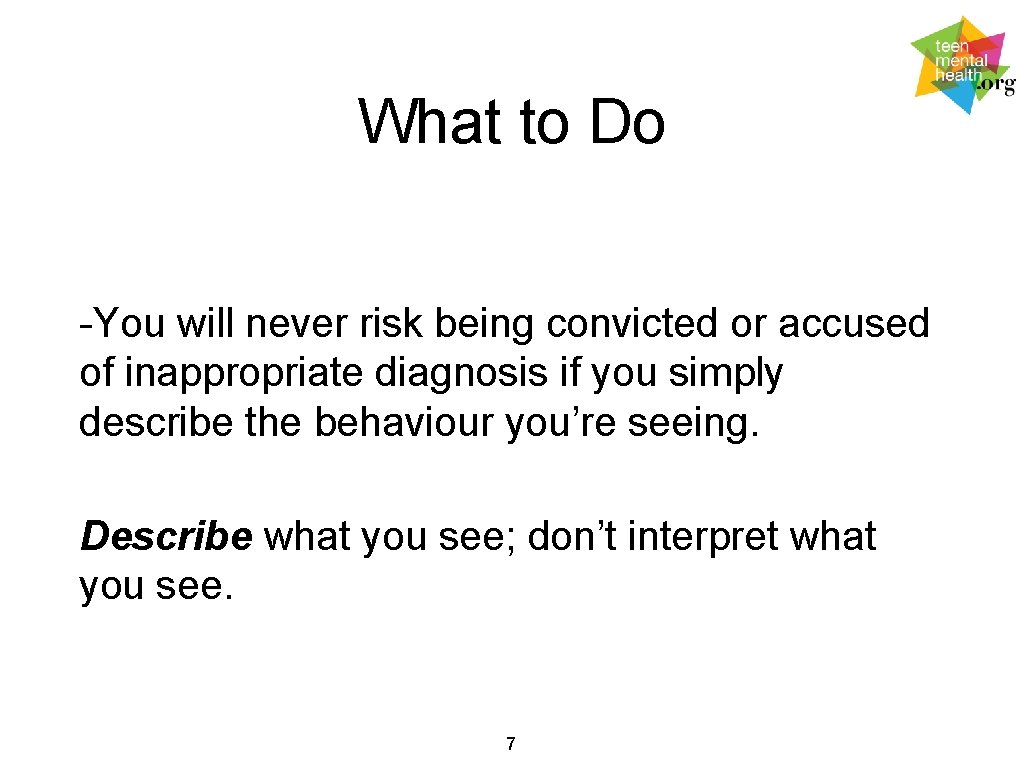
What to Do -You will never risk being convicted or accused of inappropriate diagnosis if you simply describe the behaviour you’re seeing. Describe what you see; don’t interpret what you see. 7
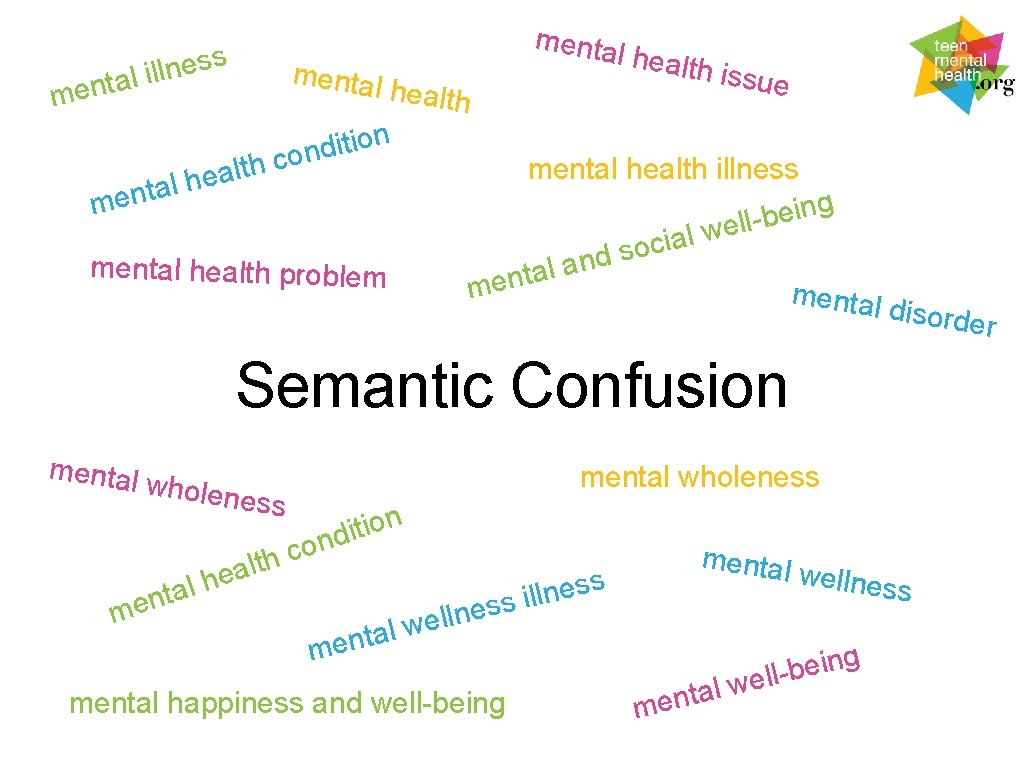
s s e n l l i l a t n me mental lth a e h ntal menta l health n o i t i d con me mental health problem h issue mental health illness g n i e b l l e w l a i c o s d n a l a t n me mental dis order Semantic Confusion mental wholeness wholen ess o c h alt n o i t i nd e h l ta men s s e n l l e w l ta li lness mental happiness and well-being wellnes w l a t men g n i e ell-b s
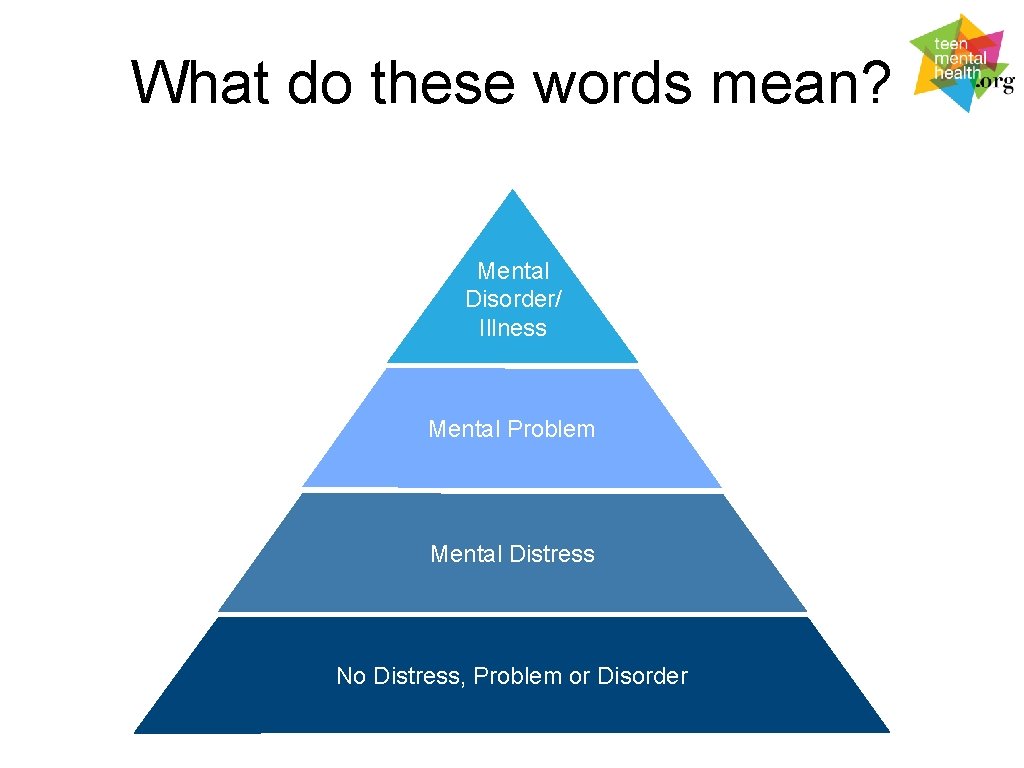
What do these words mean? Mental Disorder/ Illness Mental Problem Mental Distress No Distress, Problem or Disorder
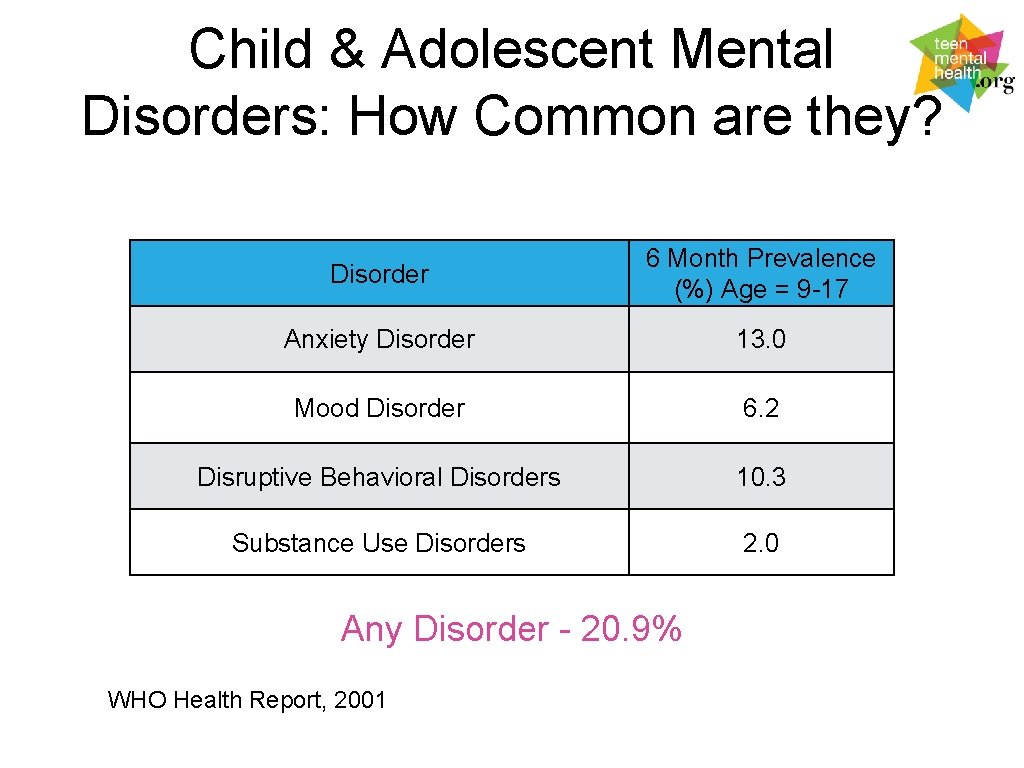
Child & Adolescent Mental Disorders: How Common are they? Disorder 6 Month Prevalence (%) Age = 9 -17 Anxiety Disorder 13. 0 Mood Disorder 6. 2 Disruptive Behavioral Disorders 10. 3 Substance Use Disorders 2. 0 Any Disorder - 20. 9% WHO Health Report, 2001
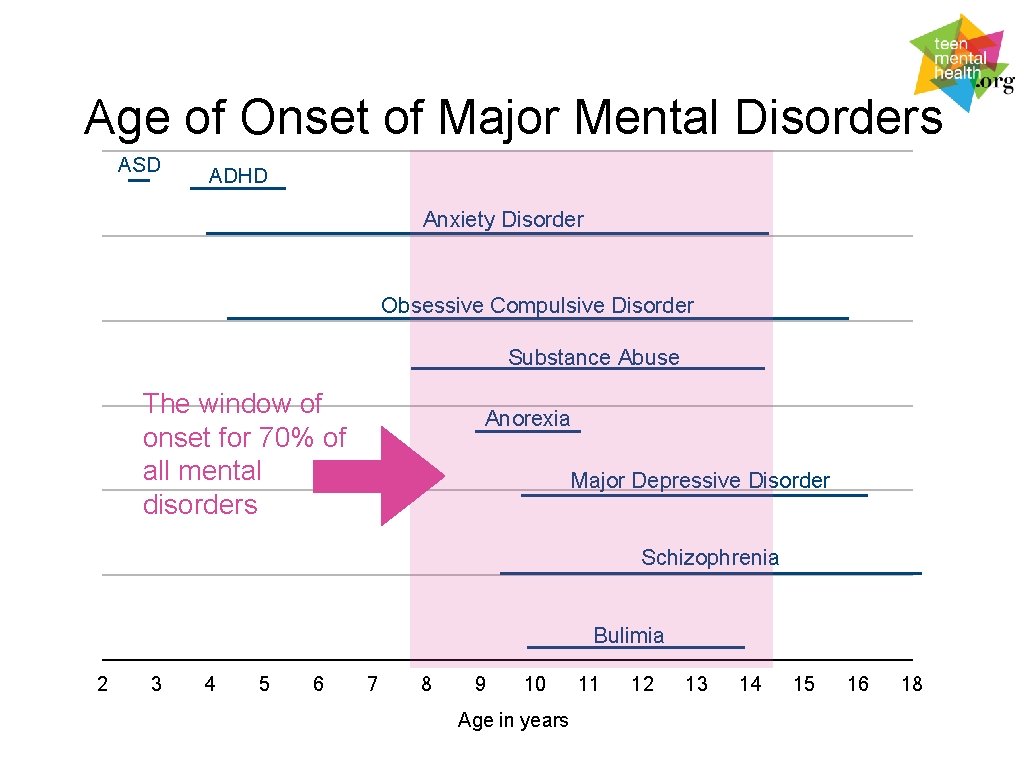
Age of Onset of Major Mental Disorders ASD ADHD Anxiety Disorder Obsessive Compulsive Disorder Substance Abuse The window of onset for 70% of all mental disorders Anorexia Major Depressive Disorder Schizophrenia Bulimia 2 3 4 5 6 7 8 9 10 Age in years 11 12 13 14 15 16 18
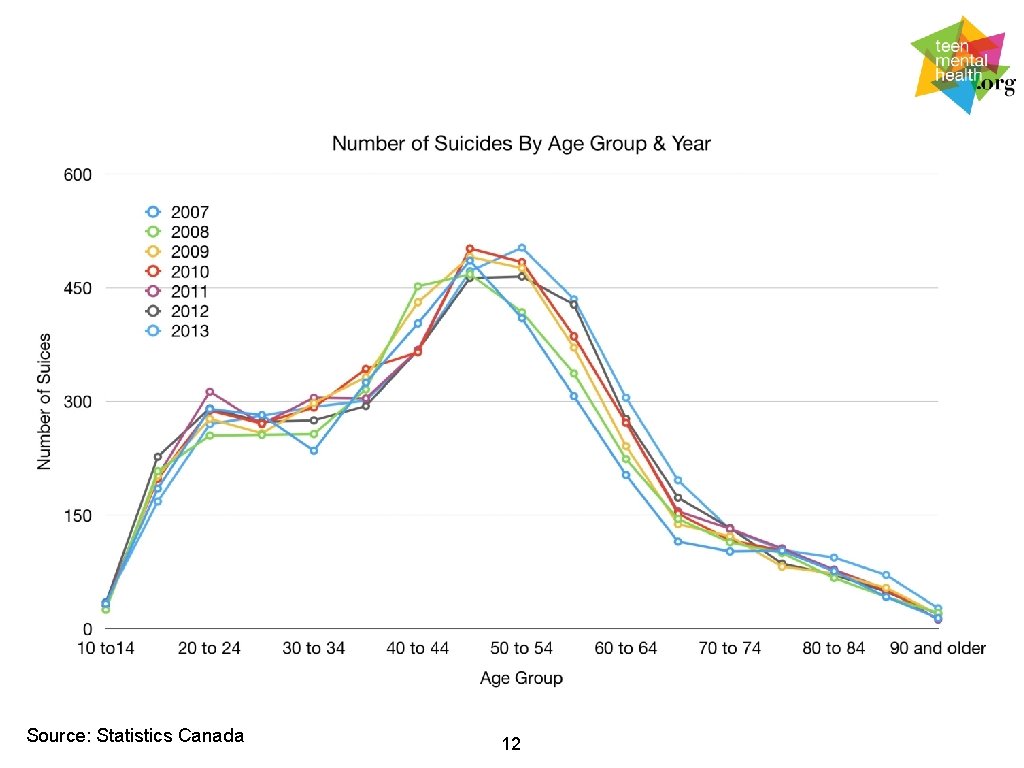
Source: Statistics Canada 12
Canada Suicide Rates Per 100, 000(1950 -2013) Source: Statistics Canada 13
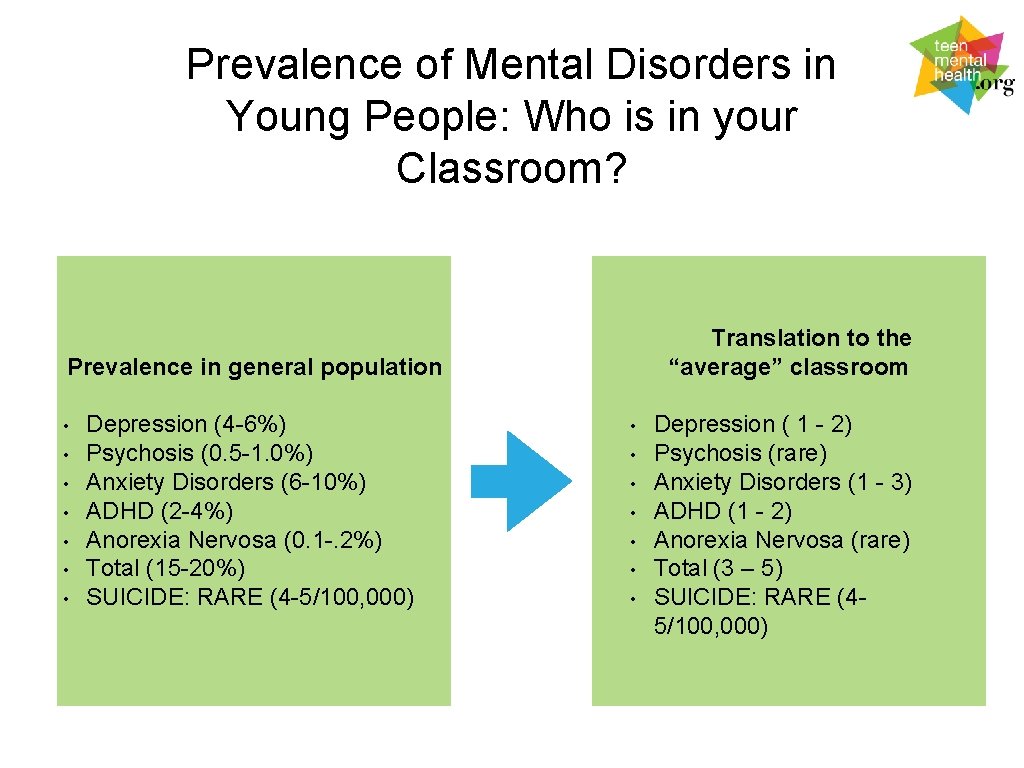
Prevalence of Mental Disorders in Young People: Who is in your Classroom? Translation to the “average” classroom Prevalence in general population • • Depression (4 -6%) Psychosis (0. 5 -1. 0%) Anxiety Disorders (6 -10%) ADHD (2 -4%) Anorexia Nervosa (0. 1 -. 2%) Total (15 -20%) SUICIDE: RARE (4 -5/100, 000) • • Depression ( 1 - 2) Psychosis (rare) Anxiety Disorders (1 - 3) ADHD (1 - 2) Anorexia Nervosa (rare) Total (3 – 5) SUICIDE: RARE (45/100, 000)
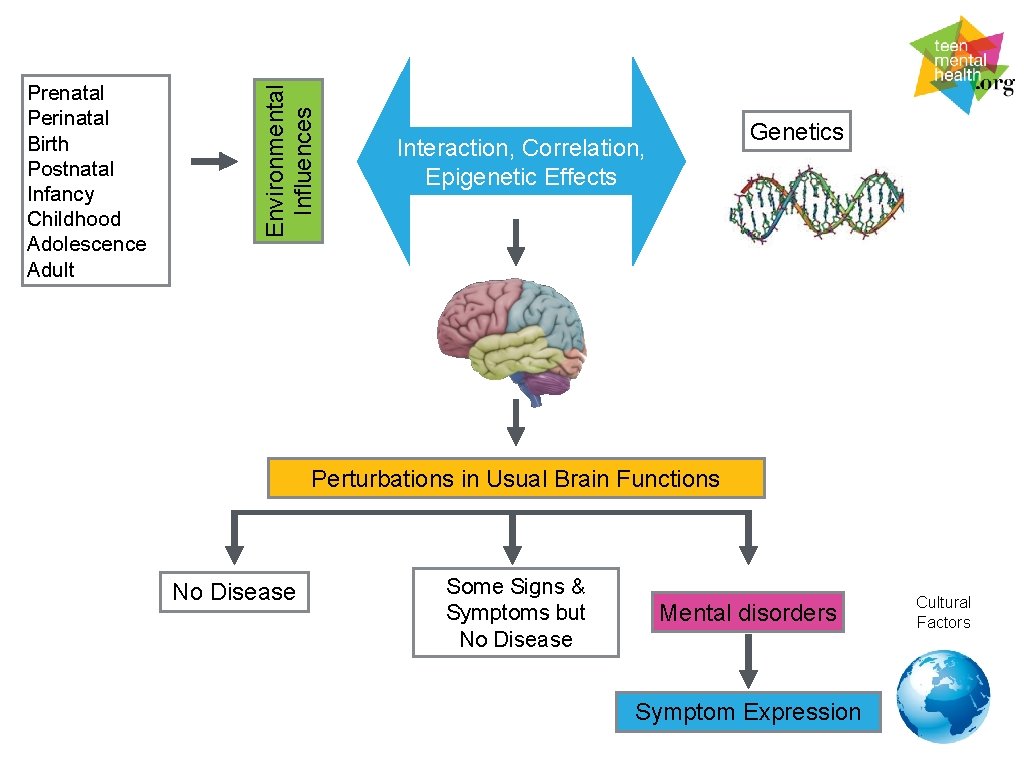
Environmental Influences Prenatal Perinatal Birth Postnatal Infancy Childhood Adolescence Adult Genetics Interaction, Correlation, Epigenetic Effects Perturbations in Usual Brain Functions No Disease Some Signs & Symptoms but No Disease Mental disorders Symptom Expression Cultural Factors
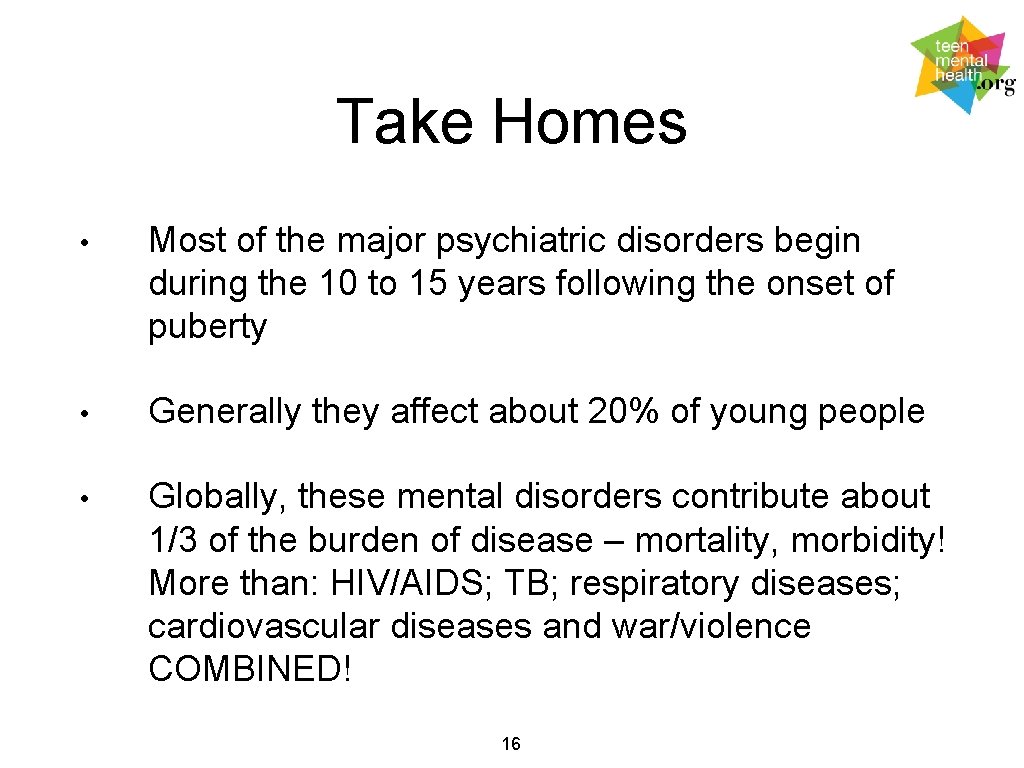
Take Homes • Most of the major psychiatric disorders begin during the 10 to 15 years following the onset of puberty • Generally they affect about 20% of young people • Globally, these mental disorders contribute about 1/3 of the burden of disease – mortality, morbidity! More than: HIV/AIDS; TB; respiratory diseases; cardiovascular diseases and war/violence COMBINED! 16
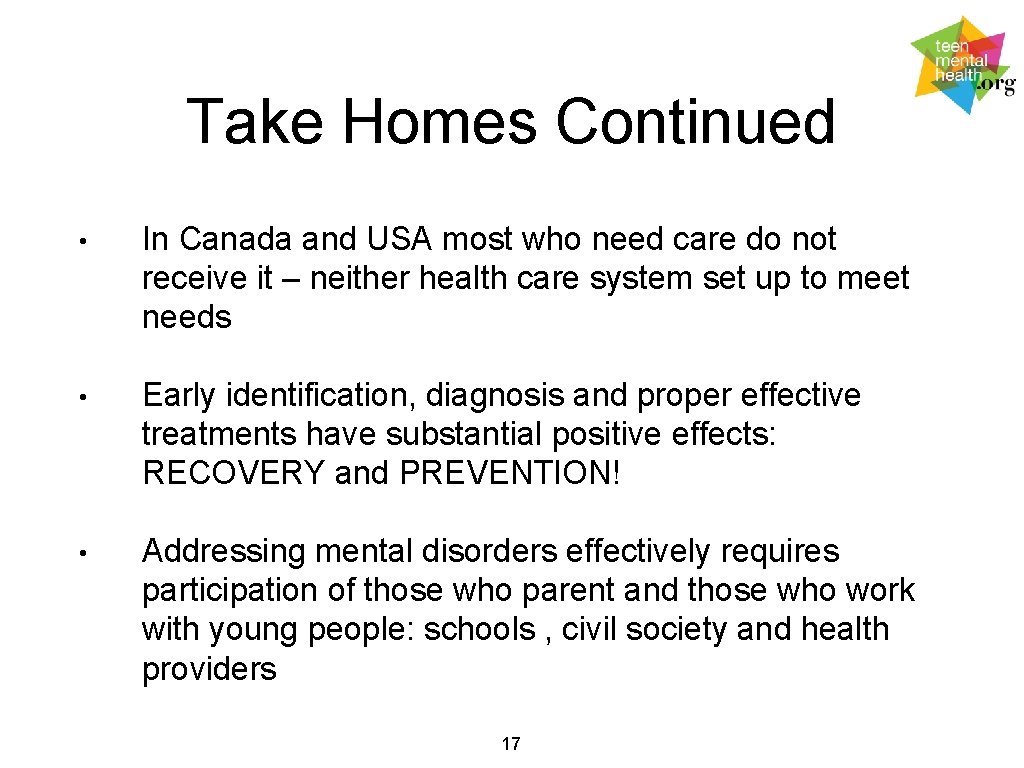
Take Homes Continued • In Canada and USA most who need care do not receive it – neither health care system set up to meet needs • Early identification, diagnosis and proper effective treatments have substantial positive effects: RECOVERY and PREVENTION! • Addressing mental disorders effectively requires participation of those who parent and those who work with young people: schools , civil society and health providers 17
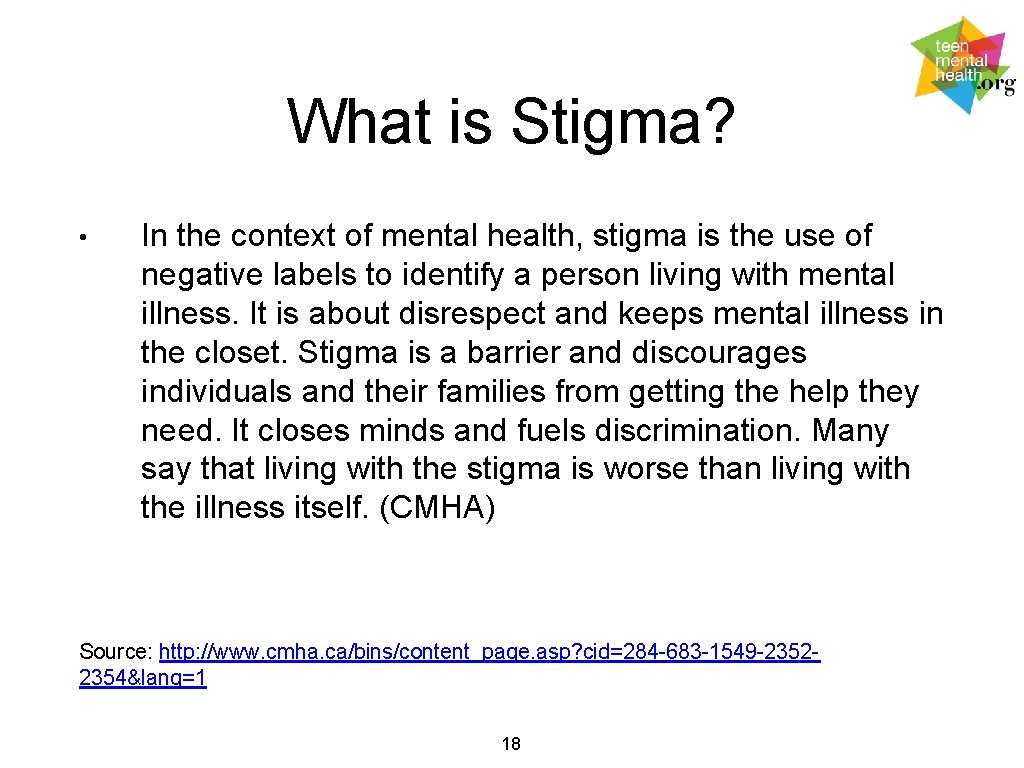
What is Stigma? • In the context of mental health, stigma is the use of negative labels to identify a person living with mental illness. It is about disrespect and keeps mental illness in the closet. Stigma is a barrier and discourages individuals and their families from getting the help they need. It closes minds and fuels discrimination. Many say that living with the stigma is worse than living with the illness itself. (CMHA) Source: http: //www. cmha. ca/bins/content_page. asp? cid=284 -683 -1549 -23522354&lang=1 18
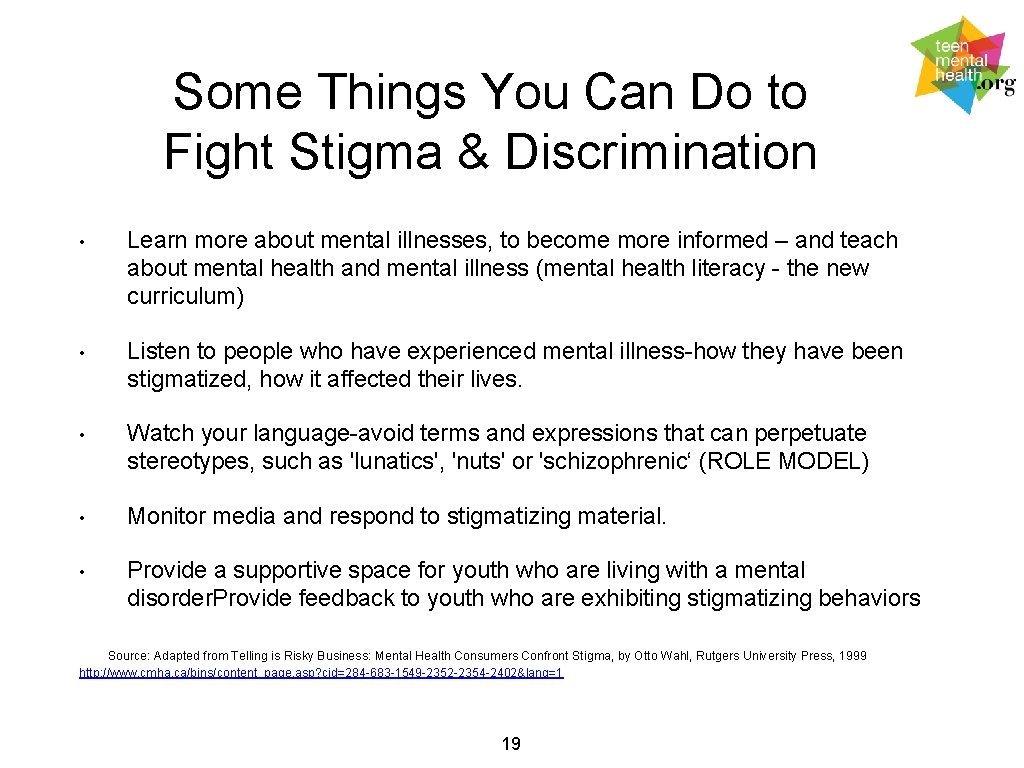
Some Things You Can Do to Fight Stigma & Discrimination • Learn more about mental illnesses, to become more informed – and teach about mental health and mental illness (mental health literacy - the new curriculum) • Listen to people who have experienced mental illness-how they have been stigmatized, how it affected their lives. • Watch your language-avoid terms and expressions that can perpetuate stereotypes, such as 'lunatics', 'nuts' or 'schizophrenic‘ (ROLE MODEL) • Monitor media and respond to stigmatizing material. • Provide a supportive space for youth who are living with a mental disorder. Provide feedback to youth who are exhibiting stigmatizing behaviors Source: Adapted from Telling is Risky Business: Mental Health Consumers Confront Stigma, by Otto Wahl, Rutgers University Press, 1999 http: //www. cmha. ca/bins/content_page. asp? cid=284 -683 -1549 -2352 -2354 -2402&lang=1 19
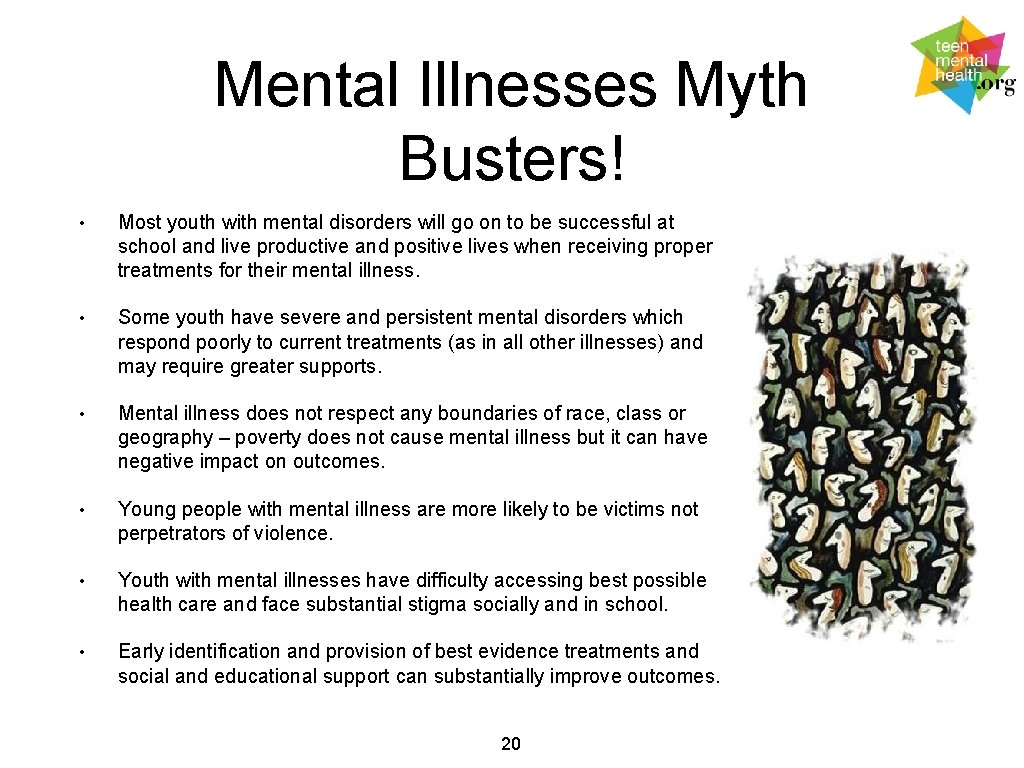
Mental Illnesses Myth Busters! • Most youth with mental disorders will go on to be successful at school and live productive and positive lives when receiving proper treatments for their mental illness. • Some youth have severe and persistent mental disorders which respond poorly to current treatments (as in all other illnesses) and may require greater supports. • Mental illness does not respect any boundaries of race, class or geography – poverty does not cause mental illness but it can have negative impact on outcomes. • Young people with mental illness are more likely to be victims not perpetrators of violence. • Youth with mental illnesses have difficulty accessing best possible health care and face substantial stigma socially and in school. • Early identification and provision of best evidence treatments and social and educational support can substantially improve outcomes. 20
How Can I Tell It’s a Mental Disorder? • Good understanding about mental disorders • Critical consideration of the “weight of evidence” • Self awareness: not Chicken Little nor the Boy that Cried Wolf nor the Ostrich • You are not alone – enlist the assistance of others (including if possible: parents) • Differentiate: crisis; urgent; non-urgent • What is the role of watchful waiting? 21
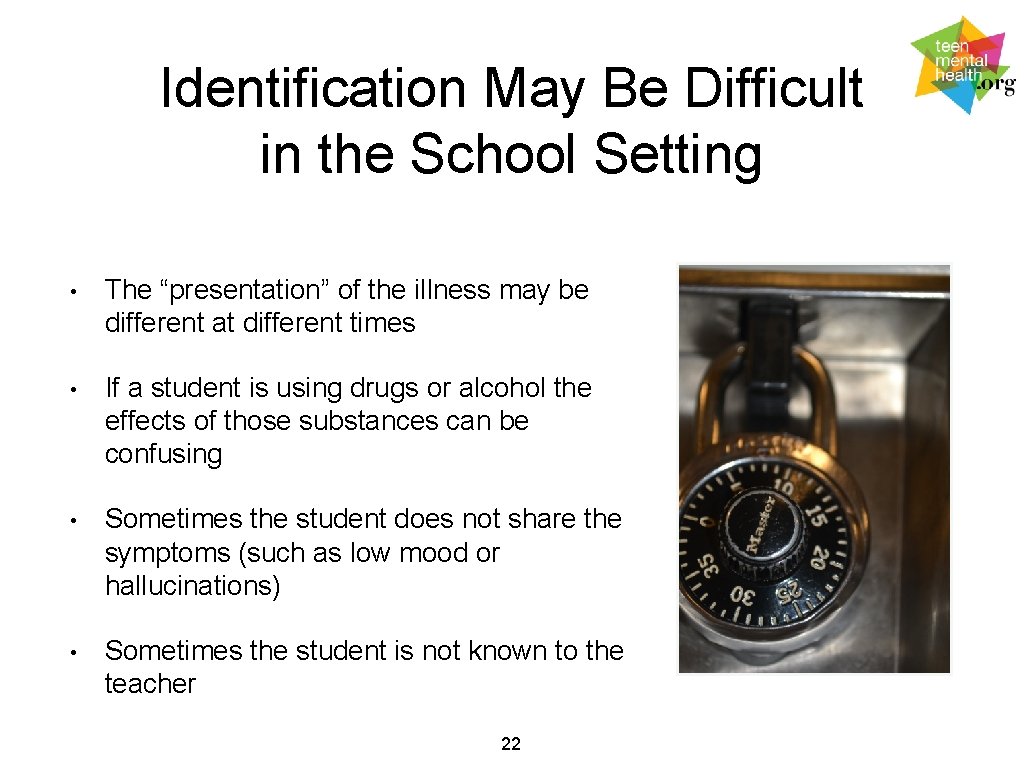
Identification May Be Difficult in the School Setting • The “presentation” of the illness may be different at different times • If a student is using drugs or alcohol the effects of those substances can be confusing • Sometimes the student does not share the symptoms (such as low mood or hallucinations) • Sometimes the student is not known to the teacher 22
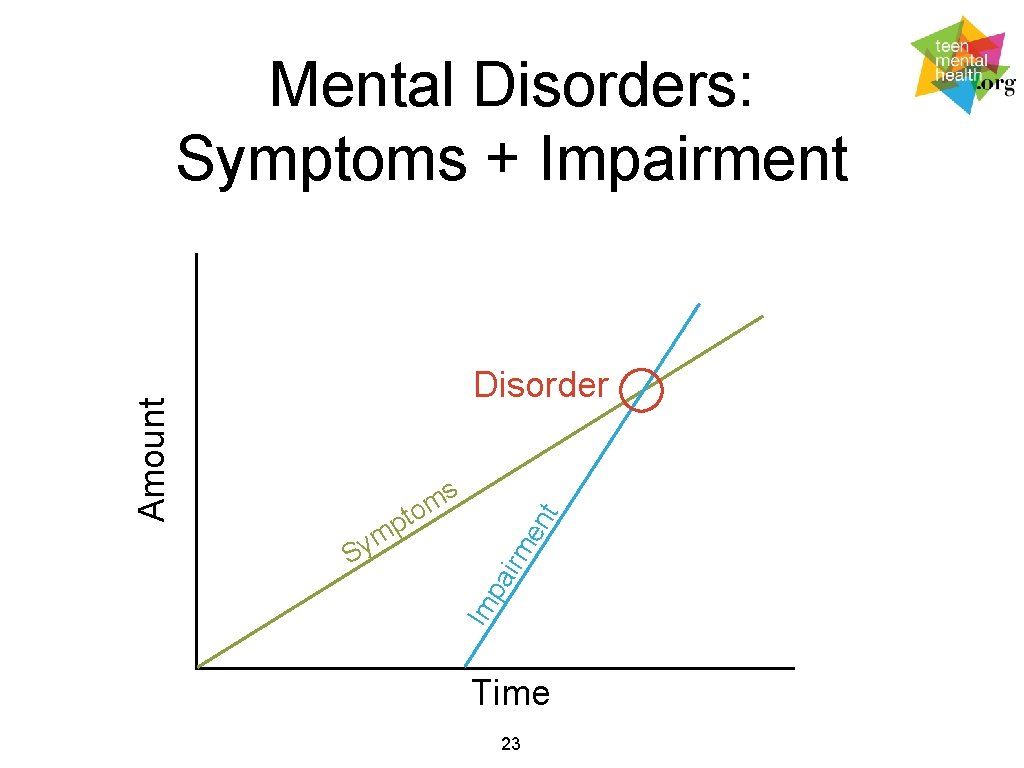
irm en pa m y S s m pto t Disorder Im Amount Mental Disorders: Symptoms + Impairment Time 23
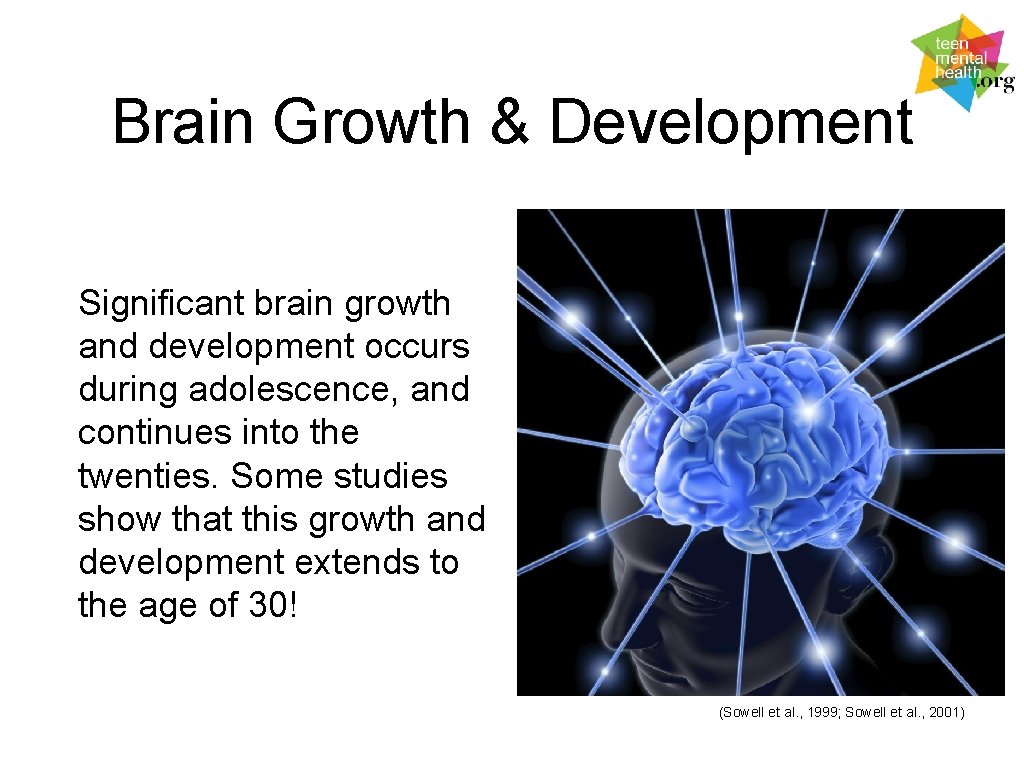
Brain Growth & Development Significant brain growth and development occurs during adolescence, and continues into the twenties. Some studies show that this growth and development extends to the age of 30! (Sowell et al. , 1999; Sowell et al. , 2001)
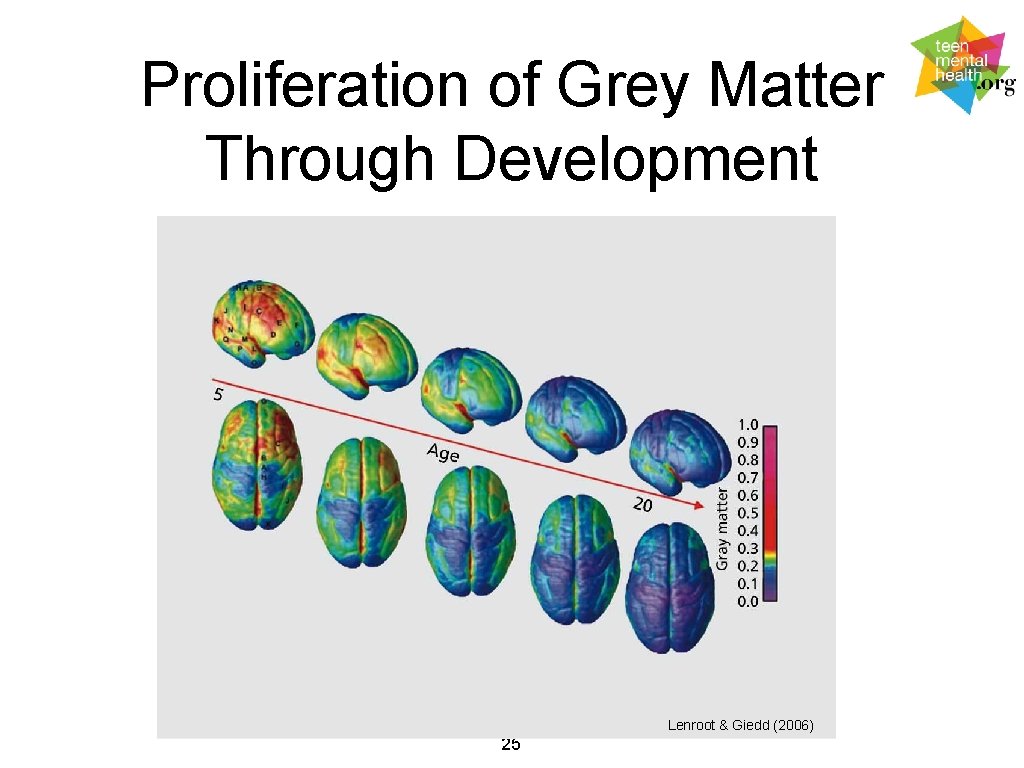
Proliferation of Grey Matter Through Development. . Lenroot & Giedd (2006) 25
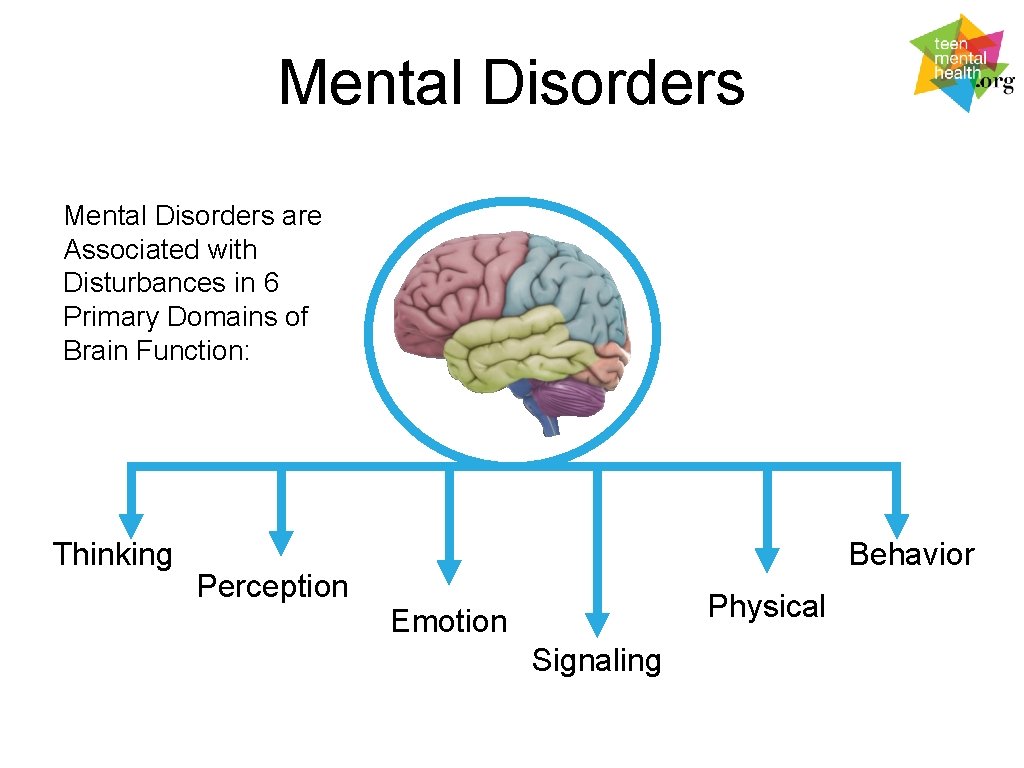
Mental Disorders are Associated with Disturbances in 6 Primary Domains of Brain Function: Thinking Perception Behavior Physical Emotion Signaling
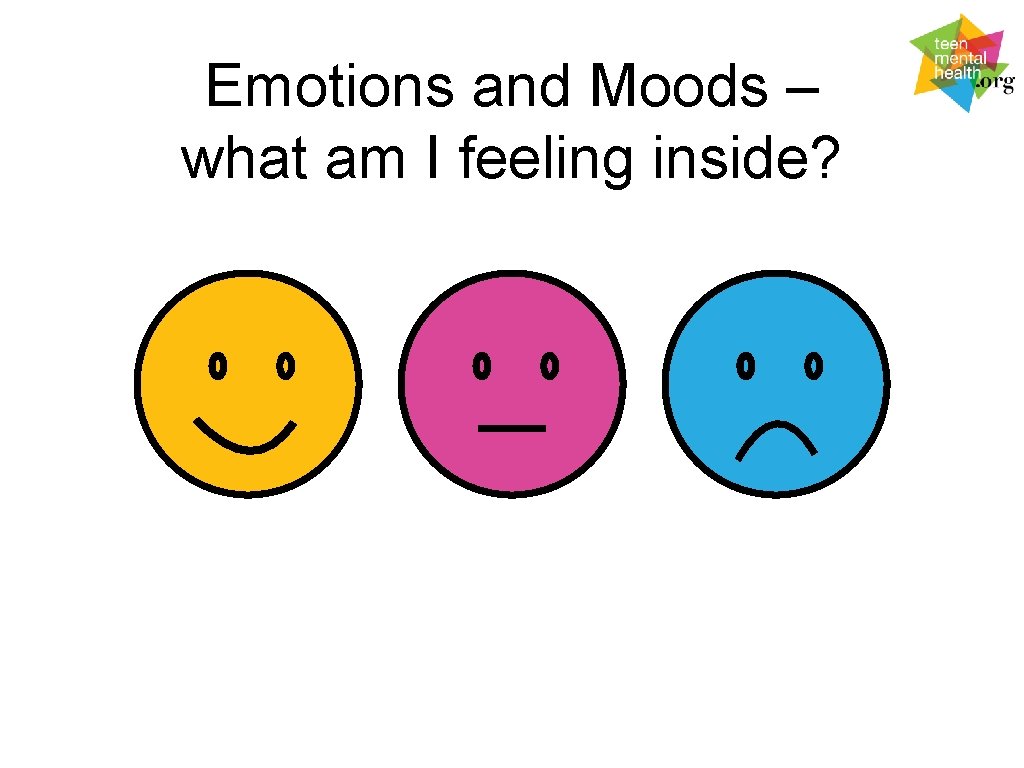
Emotions and Moods – what am I feeling inside?
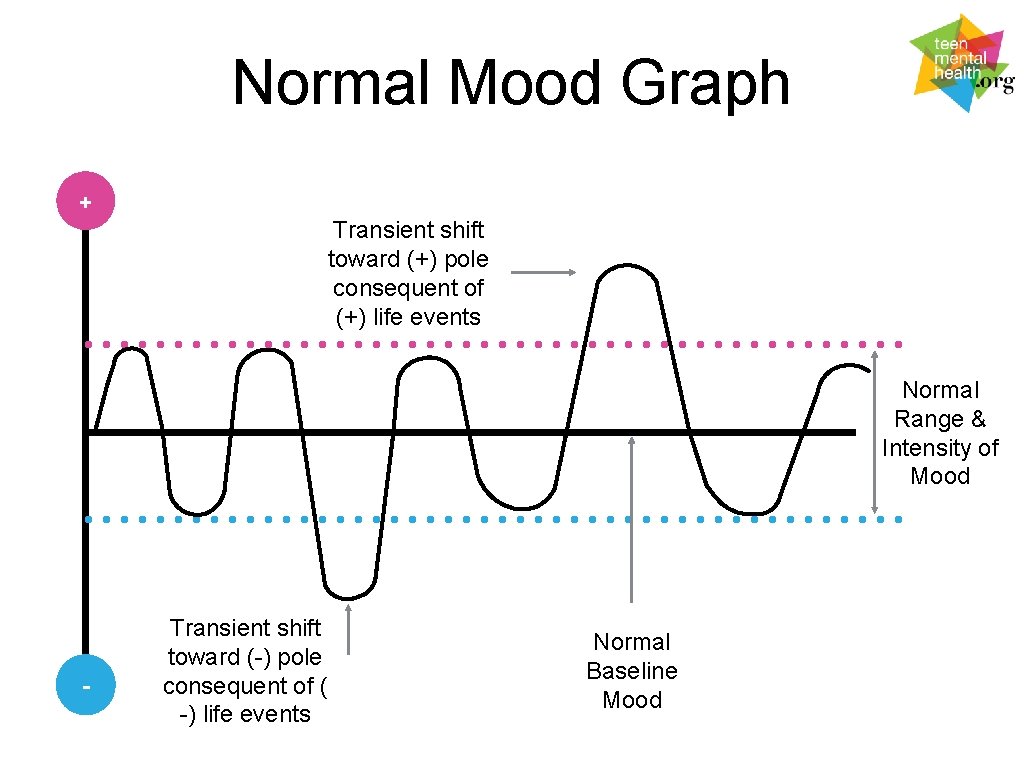
Normal Mood Graph + Transient shift toward (+) pole consequent of (+) life events Normal Range & Intensity of Mood - Transient shift toward (-) pole consequent of ( -) life events Normal Baseline Mood
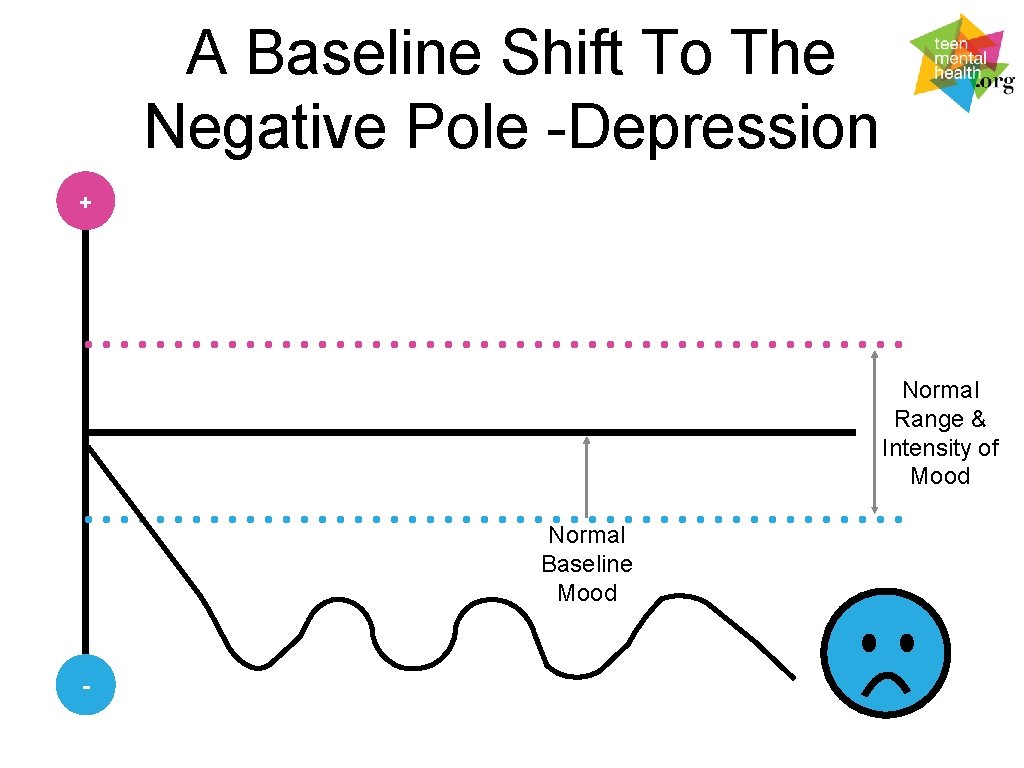
A Baseline Shift To The Negative Pole -Depression + Normal Range & Intensity of Mood Normal Baseline Mood -
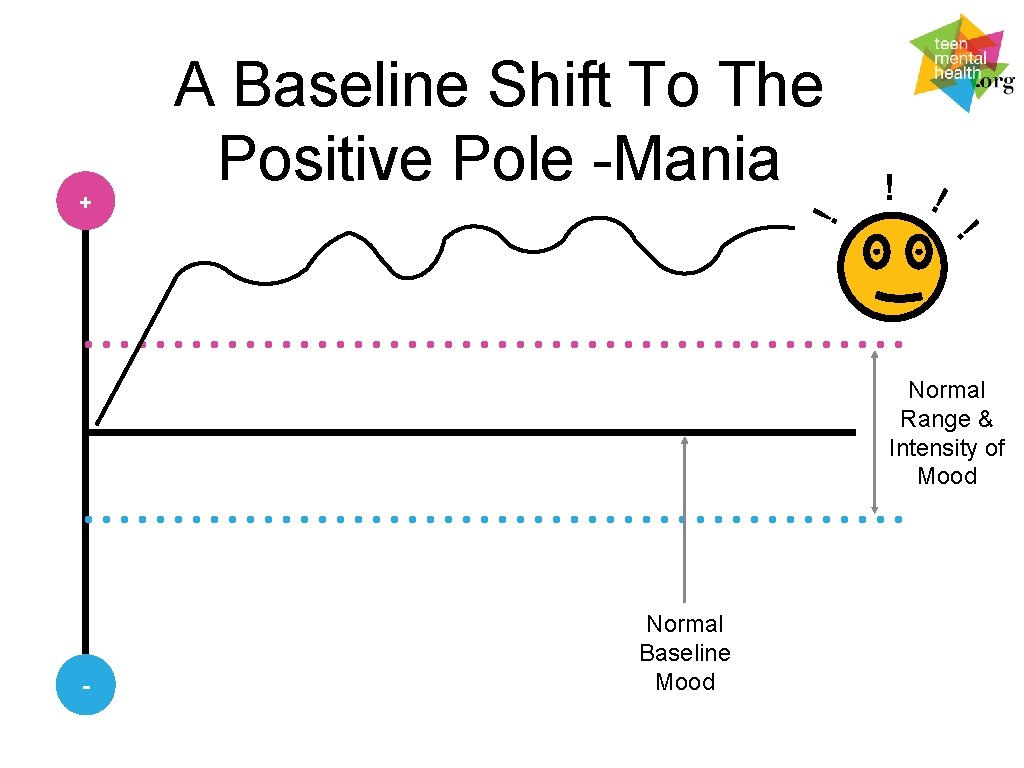
! + A Baseline Shift To The Positive Pole -Mania ! ! ! Normal Range & Intensity of Mood - Normal Baseline Mood
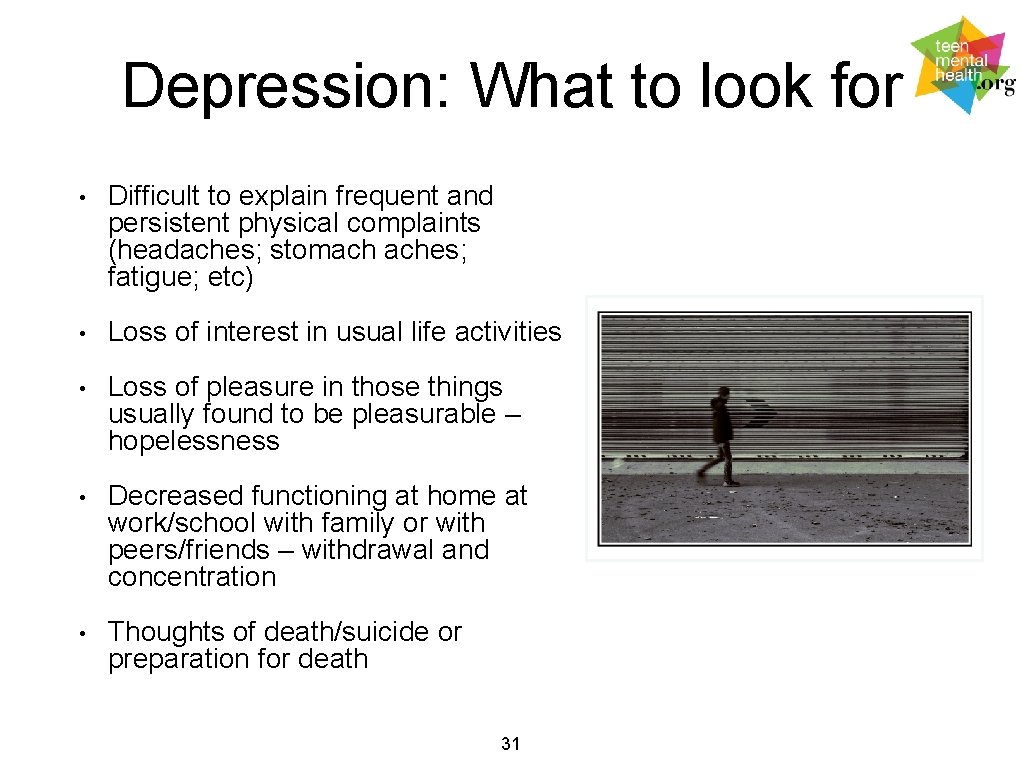
Depression: What to look for • Difficult to explain frequent and persistent physical complaints (headaches; stomach aches; fatigue; etc) • Loss of interest in usual life activities • Loss of pleasure in those things usually found to be pleasurable – hopelessness • Decreased functioning at home at work/school with family or with peers/friends – withdrawal and concentration • Thoughts of death/suicide or preparation for death 31
Depression: What to ask? • How are you feeling inside of yourself? – How long have you been feeling that way? • Have you been feeling down, like nothing really matters, hopeless? • What does the way that you are feeling now prevent you from doing? – What would you be doing if you were not feeling the way you are feeling now? • Are you thinking or feeling that life is not worth living or that you would be better off dead? What have you thought about doing? • Do not agree to keep self-harm or suicide confidential. 32
Depression: What to do • Depression is highly treatable (medications and evidence based psychological therapies): referral to health provider as soon as possible KNOWLEDGE • All treatments decrease risk for suicide and decrease suicide rates – essential to support youth in access to care. • Academic expectations may need to be modified due to Depression effects on motivation and cognition. • Mood enhancing activities (prescription – YOU CAN DO THIS). • Be aware of the risk of suicide – discuss with health providers what the role of educators should be in each individuals case. • Develop a youth supporting educational/health collaboration with appropriate consents. • Clarify role of school with regards to potential crisis situations 33
Depression: What not to miss CAUTION • Always ask about suicidal thoughts and suicide plans • If you are not sure – ask someone with expertise to immediately evaluate • Substance abuse 34
Depression: What to know about treatment • Often can be effectively treated in primary care • Psychological treatments such as CBT are helpful • Medications such as some SSRI’s are helpful • Treatment of the acute episode usually takes 8 – 10 weeks before a substantial improvement takes place • Antidepressant medication use and psychological treatment both decrease suicide rates • Modification of school curriculum may be needed to accommodate for the cognitive problems that occur with depression (concentration; lack of motivation) • Depression is a substantive risk factor for suicide 35
Youth Suicide • Youth suicide is a rare but tragic event for any community • Most youth suicide is associated with the presence of a mental disorder (often depression) that has either not been diagnosed or is not being appropriately treated. • Youth suicide is not the result of the usual stresses of being a teenager. • Suicide attempts need to be differentiated from self-harm events – they require different approaches to deal with them. • The use of youth specific suicide assessment tools (such as the TASR-Am) can assist professionals in the evaluation of youth suicide risk. 36
Youth Suicide: Well Established Risk Factors • Presence of a mental disorder • Previous suicide attempt (especially in boys) • Family history of suicide • Family history of mental disorder • Substance abuse • Juvenile justice involvement 37
Youth Suicide: Treatment Works • Suicide is an emotional issue – emotionally driven decisions are often not the best decision. Essential to do the right thing, not just something. • Current evidence shows that the most effective approach to suicide prevention is identification, diagnosis and effective treatment of mental disorders • Gatekeeper programs in controlled settings or institutions have good promise for positive impacts • Many interventions (some of which can be quite costly) have not been demonstrated to substantively decrease suicide (such as: yellow ribbon; SOS school based programs): ESCe criteria 38
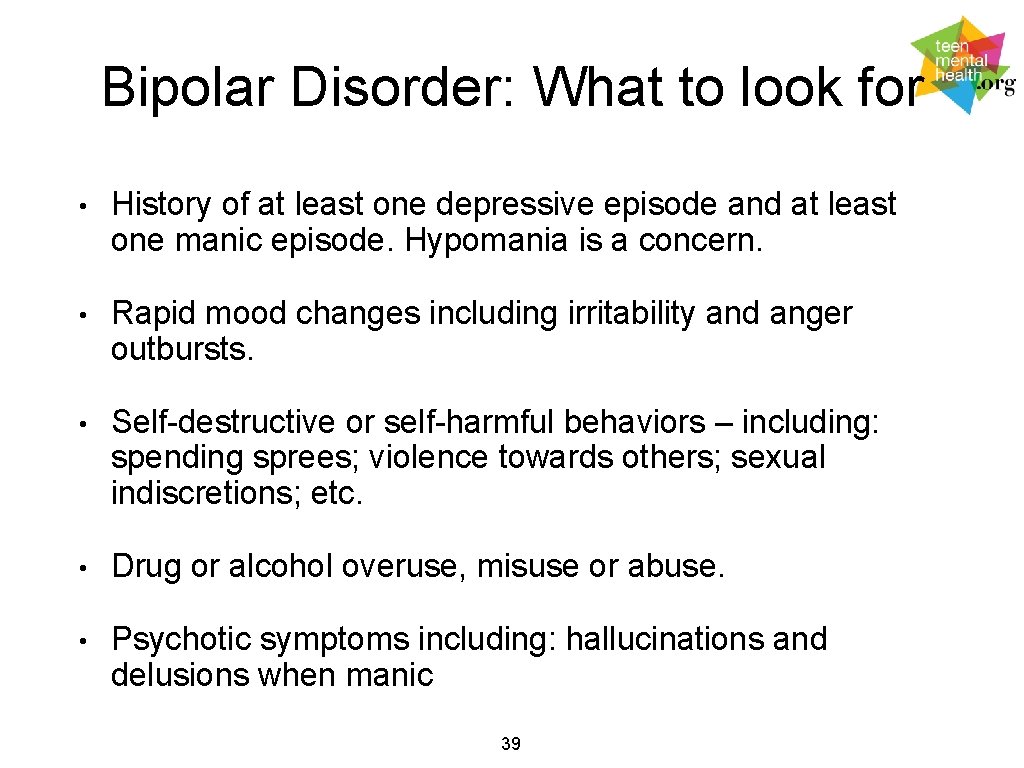
Bipolar Disorder: What to look for • History of at least one depressive episode and at least one manic episode. Hypomania is a concern. • Rapid mood changes including irritability and anger outbursts. • Self-destructive or self-harmful behaviors – including: spending sprees; violence towards others; sexual indiscretions; etc. • Drug or alcohol overuse, misuse or abuse. • Psychotic symptoms including: hallucinations and delusions when manic 39
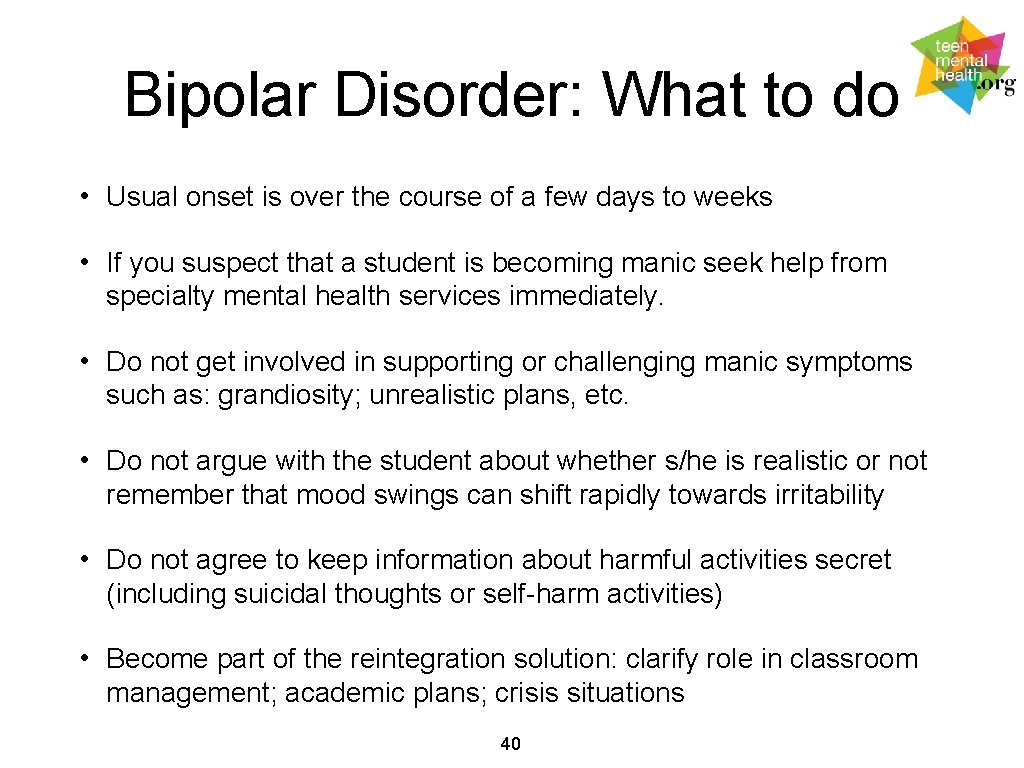
Bipolar Disorder: What to do • Usual onset is over the course of a few days to weeks • If you suspect that a student is becoming manic seek help from specialty mental health services immediately. • Do not get involved in supporting or challenging manic symptoms such as: grandiosity; unrealistic plans, etc. • Do not argue with the student about whether s/he is realistic or not remember that mood swings can shift rapidly towards irritability • Do not agree to keep information about harmful activities secret (including suicidal thoughts or self-harm activities) • Become part of the reintegration solution: clarify role in classroom management; academic plans; crisis situations 40
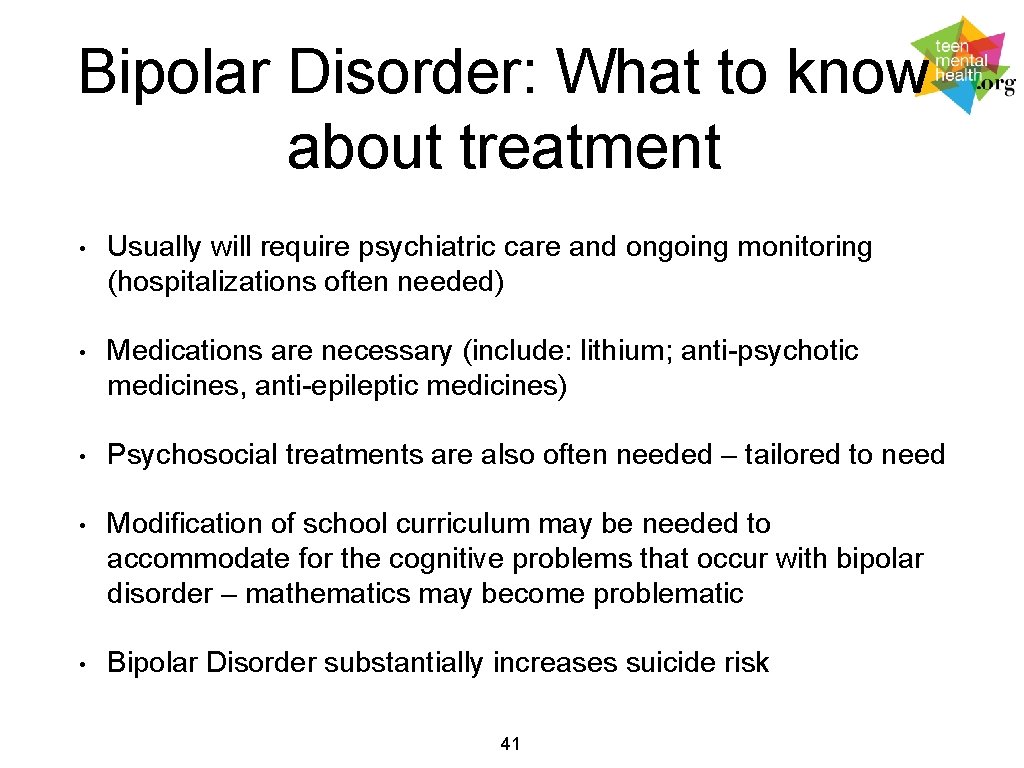
Bipolar Disorder: What to know about treatment • Usually will require psychiatric care and ongoing monitoring (hospitalizations often needed) • Medications are necessary (include: lithium; anti-psychotic medicines, anti-epileptic medicines) • Psychosocial treatments are also often needed – tailored to need • Modification of school curriculum may be needed to accommodate for the cognitive problems that occur with bipolar disorder – mathematics may become problematic • Bipolar Disorder substantially increases suicide risk 41
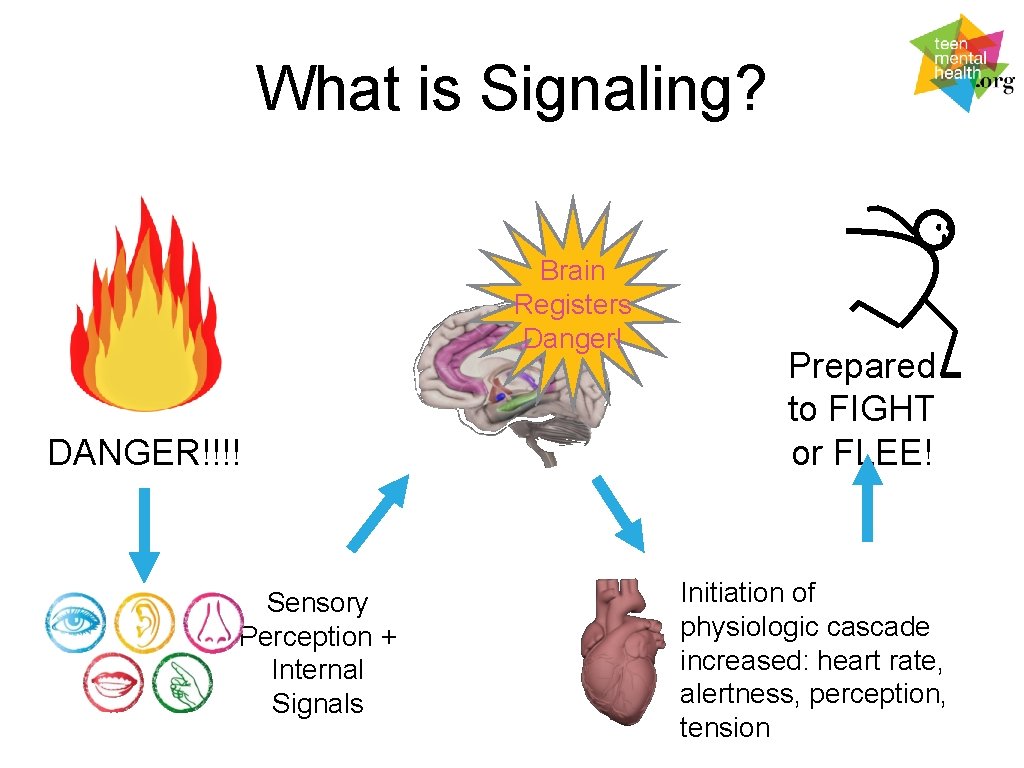
What is Signaling? Brain Registers Danger! DANGER!!!! Sensory Perception + Internal Signals Prepared to FIGHT or FLEE! Initiation of physiologic cascade increased: heart rate, alertness, perception, tension
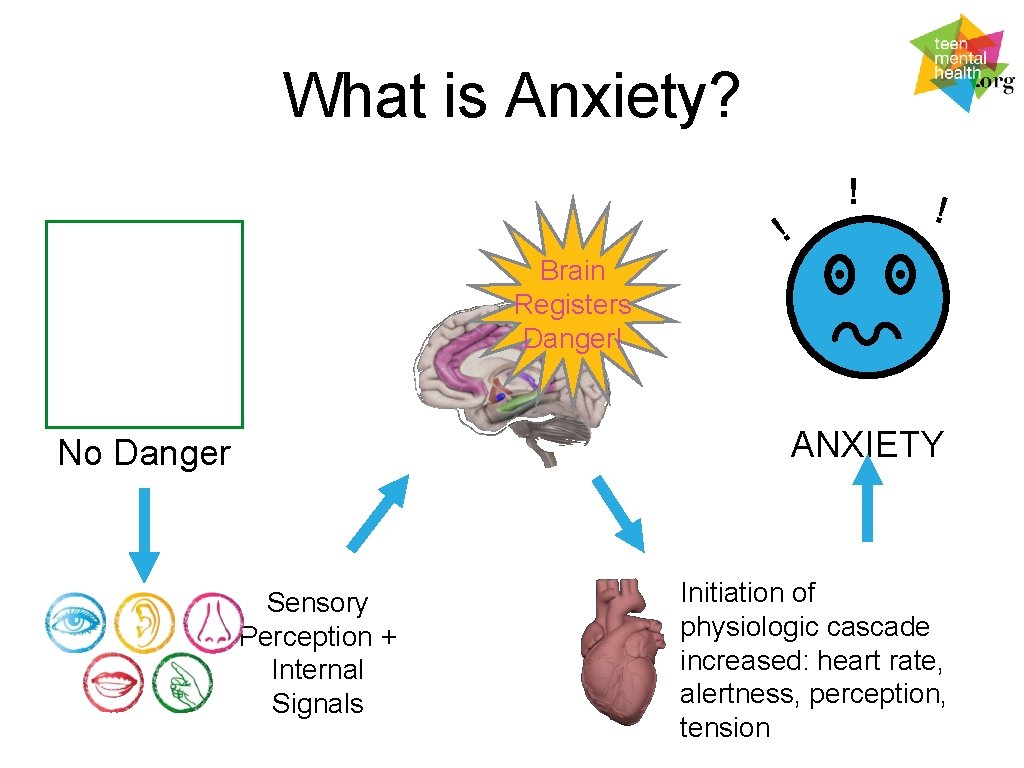
What is Anxiety? ! ! ! Brain Registers Danger! ANXIETY No Danger Sensory Perception + Internal Signals Initiation of physiologic cascade increased: heart rate, alertness, perception, tension
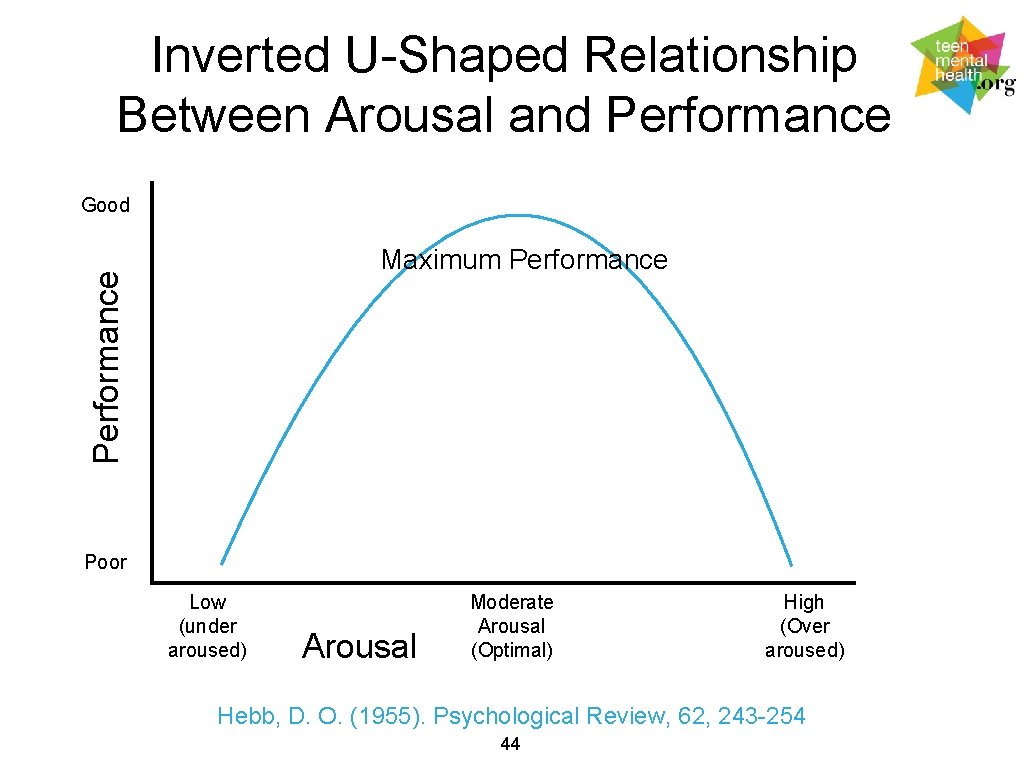
Inverted U-Shaped Relationship Between Arousal and Performance Good Performance Maximum Performance Poor Low (under aroused) Arousal Moderate Arousal (Optimal) High (Over aroused) Hebb, D. O. (1955). Psychological Review, 62, 243 -254 44
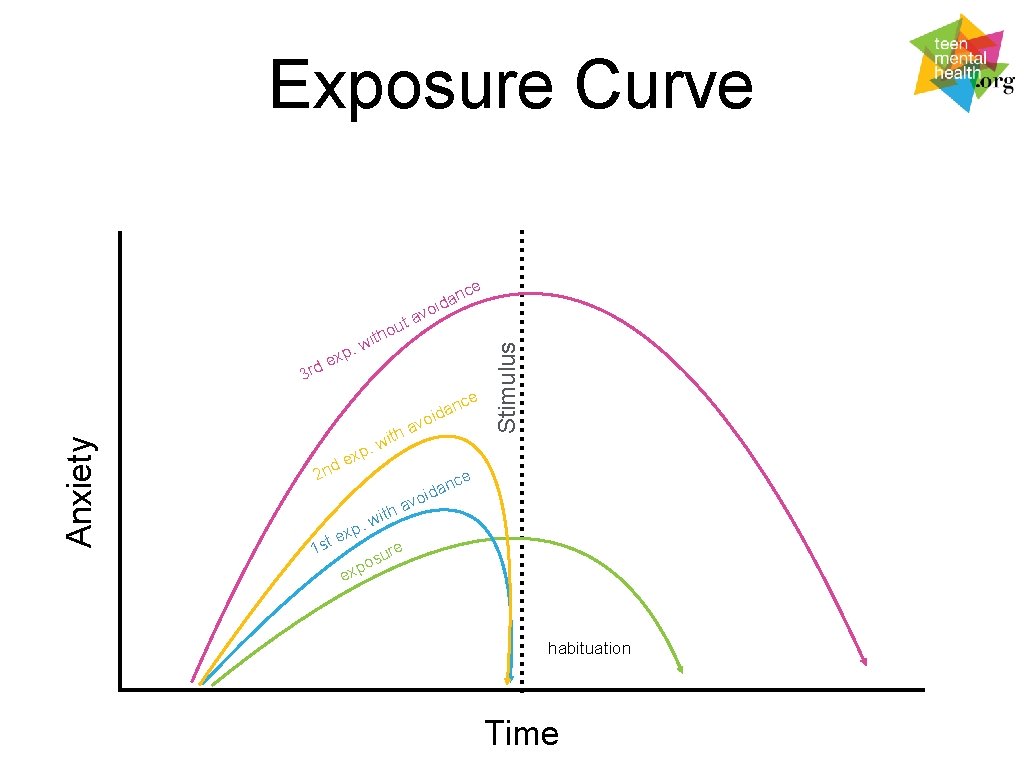
Exposure Curve nce a id e Anxiety c n a id vo a th 2 nd wi. p ex Stimulus 3 r xp. e d u ho t i w vo a t ce n a id vo e 1 st x a ith w p. e sur o exp habituation Time
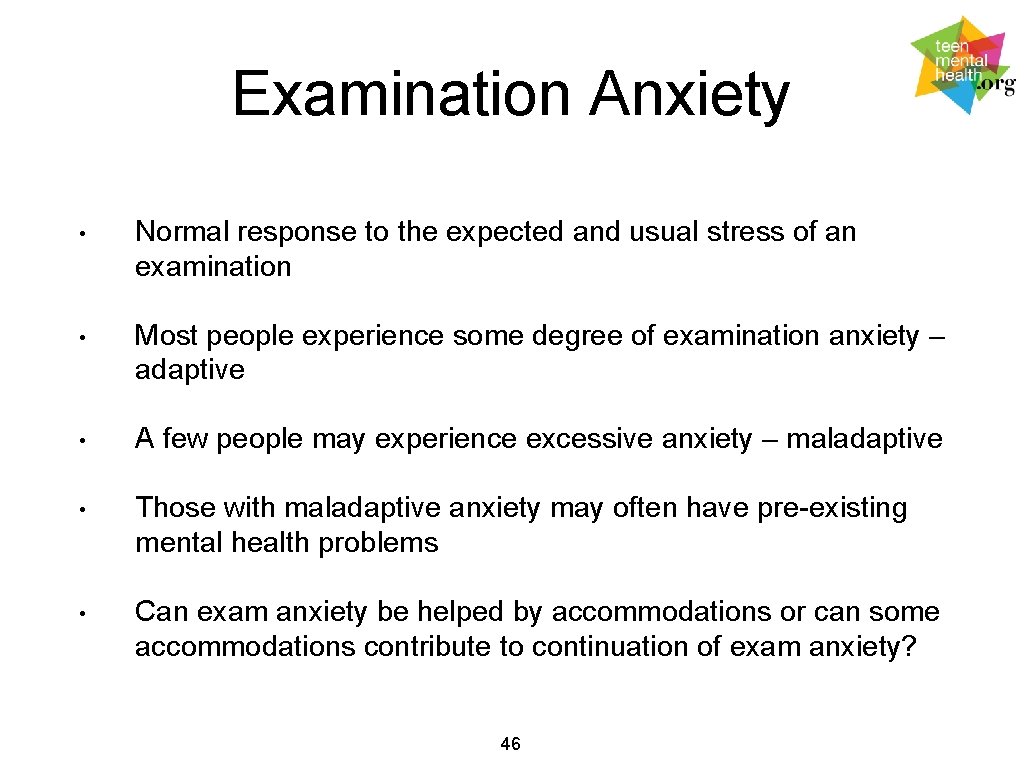
Examination Anxiety • Normal response to the expected and usual stress of an examination • Most people experience some degree of examination anxiety – adaptive • A few people may experience excessive anxiety – maladaptive • Those with maladaptive anxiety may often have pre-existing mental health problems • Can exam anxiety be helped by accommodations or can some accommodations contribute to continuation of exam anxiety? 46
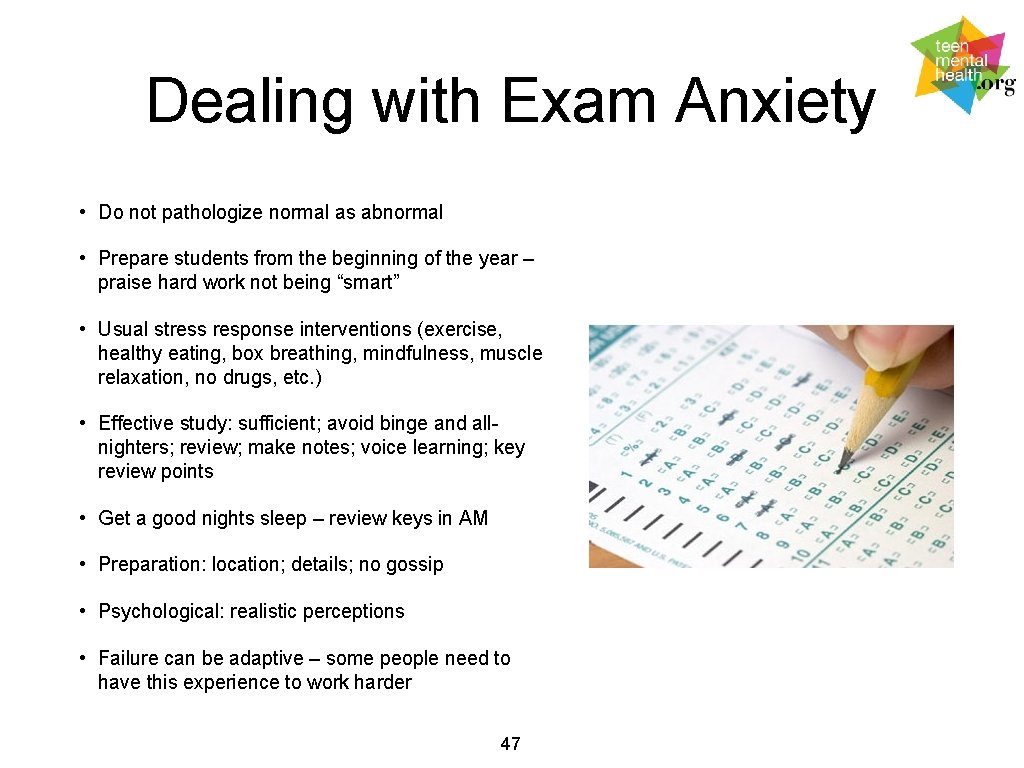
Dealing with Exam Anxiety • Do not pathologize normal as abnormal • Prepare students from the beginning of the year – praise hard work not being “smart” • Usual stress response interventions (exercise, healthy eating, box breathing, mindfulness, muscle relaxation, no drugs, etc. ) • Effective study: sufficient; avoid binge and allnighters; review; make notes; voice learning; key review points • Get a good nights sleep – review keys in AM • Preparation: location; details; no gossip • Psychological: realistic perceptions • Failure can be adaptive – some people need to have this experience to work harder 47
Mental Disorders of Signaling: The Anxiety Disorders
Generalized Anxiety Disorder: What to look for • Does the youth have many persistent physical symptoms that cause distress but for which there is no good medical explanation – such as: headaches; stomachaches; pain; etc. • Does the youth worry about many things, much more than other people seem to worry? Needing constant reassurance? • Does the person have trouble “letting go” of the worry? • Does she or he usually seem tense or “on edge”? • Is the worrying of such intensity that it interferes with the young person enjoying life or doing things that he or she would like to do? Does s/he frequently miss school because of vague physical problems? • The “WORRY MACHINE!” 49
Generalized Anxiety Disorder: What to ask • Would you or others consider you to be a master worrier? • Do you tend to worry a lot about most things? More than others you know. • What are the most common worries that you have? • Does your body “worry” by getting headaches; stomach aches; pains; etc. ? • How do your worries get in the way of you doing things you like to do or in enjoying life? • Do you sometimes just feel overwhelmed by your worries? 50
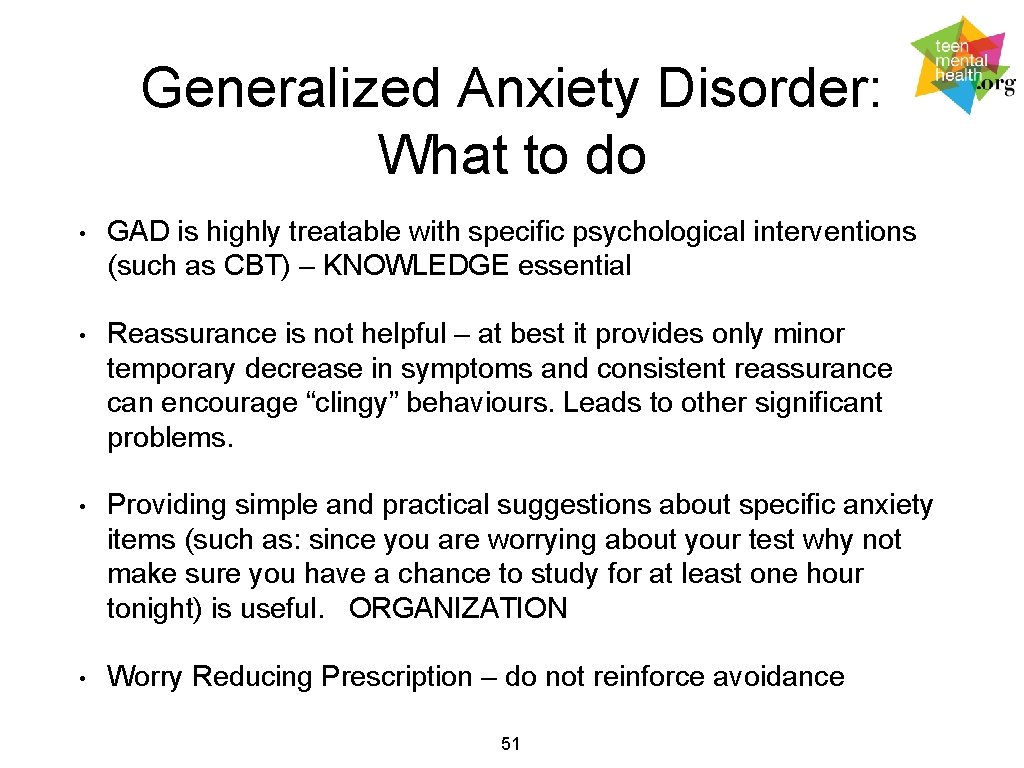
Generalized Anxiety Disorder: What to do • GAD is highly treatable with specific psychological interventions (such as CBT) – KNOWLEDGE essential • Reassurance is not helpful – at best it provides only minor temporary decrease in symptoms and consistent reassurance can encourage “clingy” behaviours. Leads to other significant problems. • Providing simple and practical suggestions about specific anxiety items (such as: since you are worrying about your test why not make sure you have a chance to study for at least one hour tonight) is useful. ORGANIZATION • Worry Reducing Prescription – do not reinforce avoidance 51
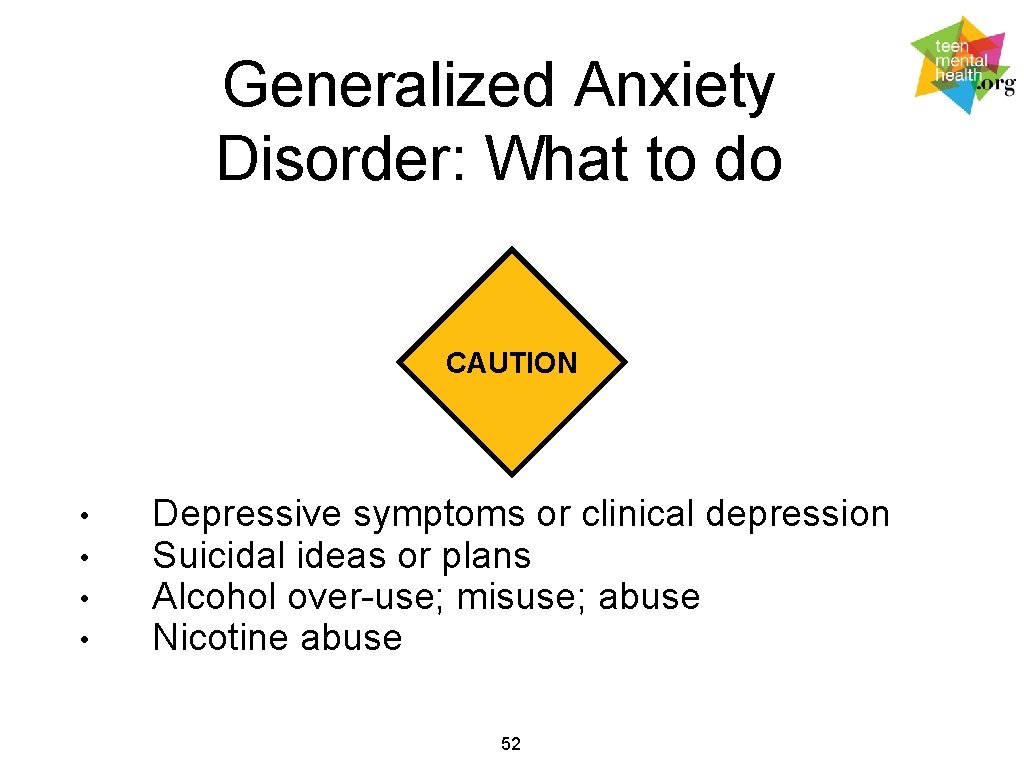
Generalized Anxiety Disorder: What to do CAUTION • • Depressive symptoms or clinical depression Suicidal ideas or plans Alcohol over-use; misuse; abuse Nicotine abuse 52
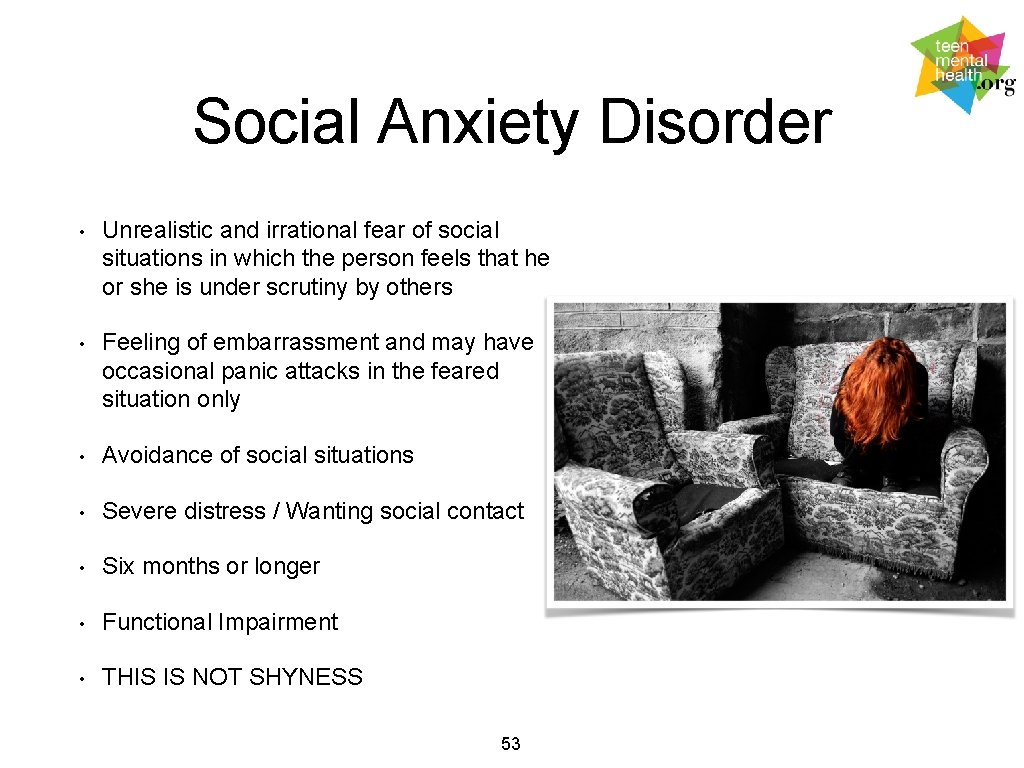
Social Anxiety Disorder • Unrealistic and irrational fear of social situations in which the person feels that he or she is under scrutiny by others • Feeling of embarrassment and may have occasional panic attacks in the feared situation only • Avoidance of social situations • Severe distress / Wanting social contact • Six months or longer • Functional Impairment • THIS IS NOT SHYNESS 53
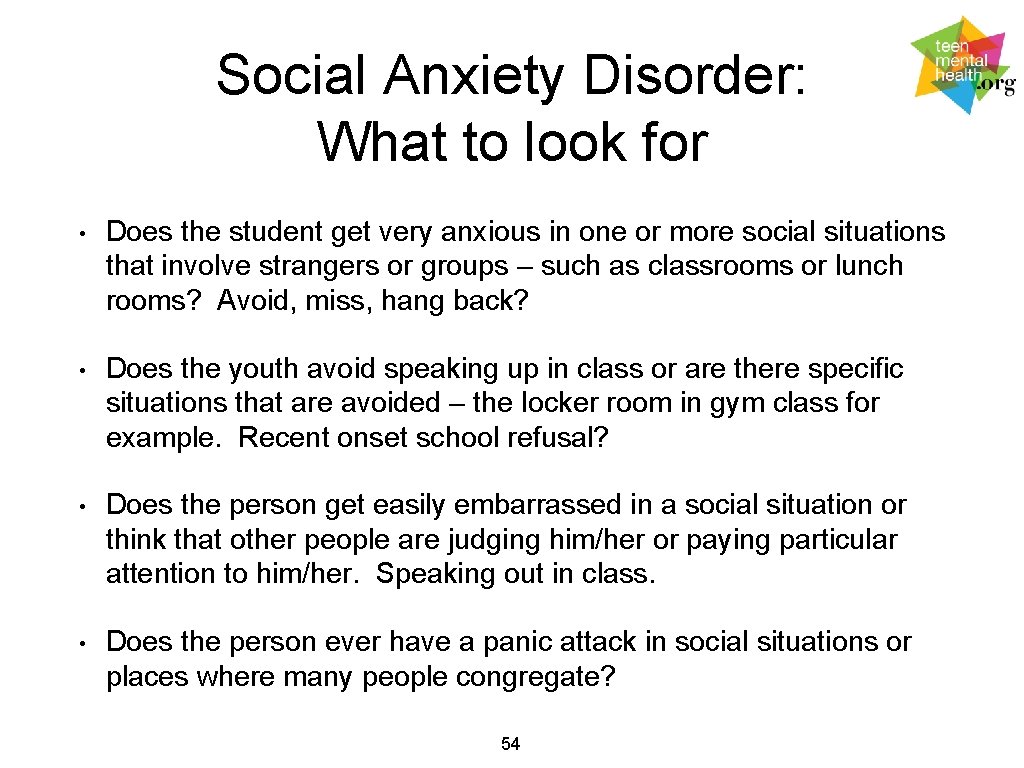
Social Anxiety Disorder: What to look for • Does the student get very anxious in one or more social situations that involve strangers or groups – such as classrooms or lunch rooms? Avoid, miss, hang back? • Does the youth avoid speaking up in class or are there specific situations that are avoided – the locker room in gym class for example. Recent onset school refusal? • Does the person get easily embarrassed in a social situation or think that other people are judging him/her or paying particular attention to him/her. Speaking out in class. • Does the person ever have a panic attack in social situations or places where many people congregate? 54
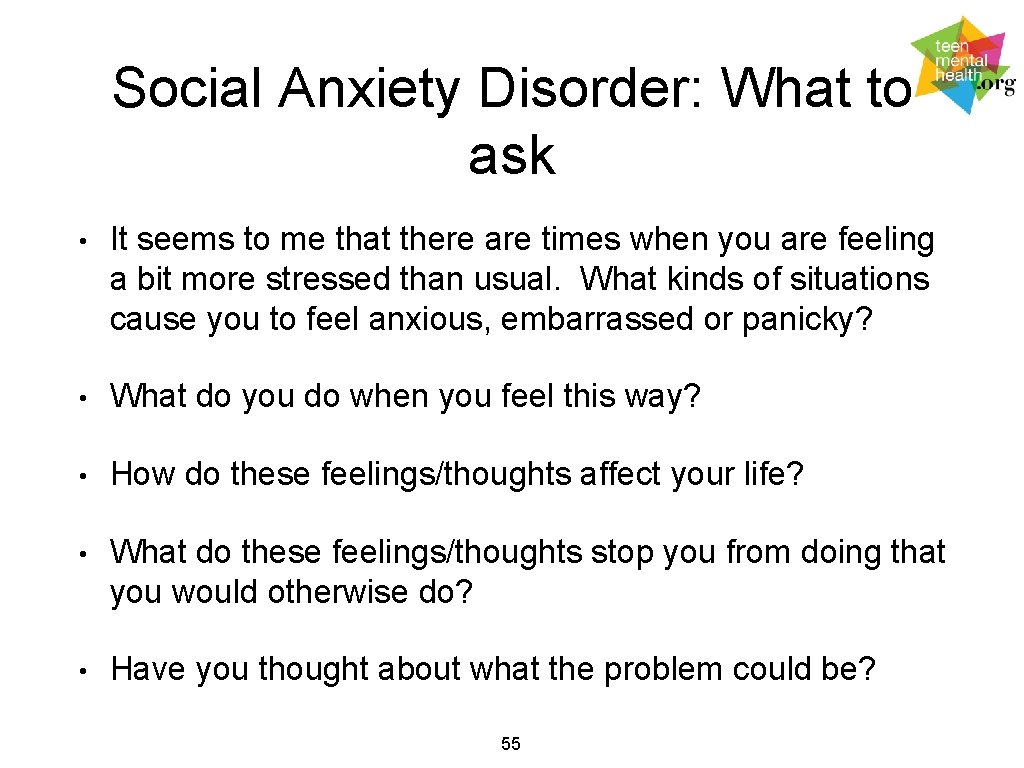
Social Anxiety Disorder: What to ask • It seems to me that there are times when you are feeling a bit more stressed than usual. What kinds of situations cause you to feel anxious, embarrassed or panicky? • What do you do when you feel this way? • How do these feelings/thoughts affect your life? • What do these feelings/thoughts stop you from doing that you would otherwise do? • Have you thought about what the problem could be? 55
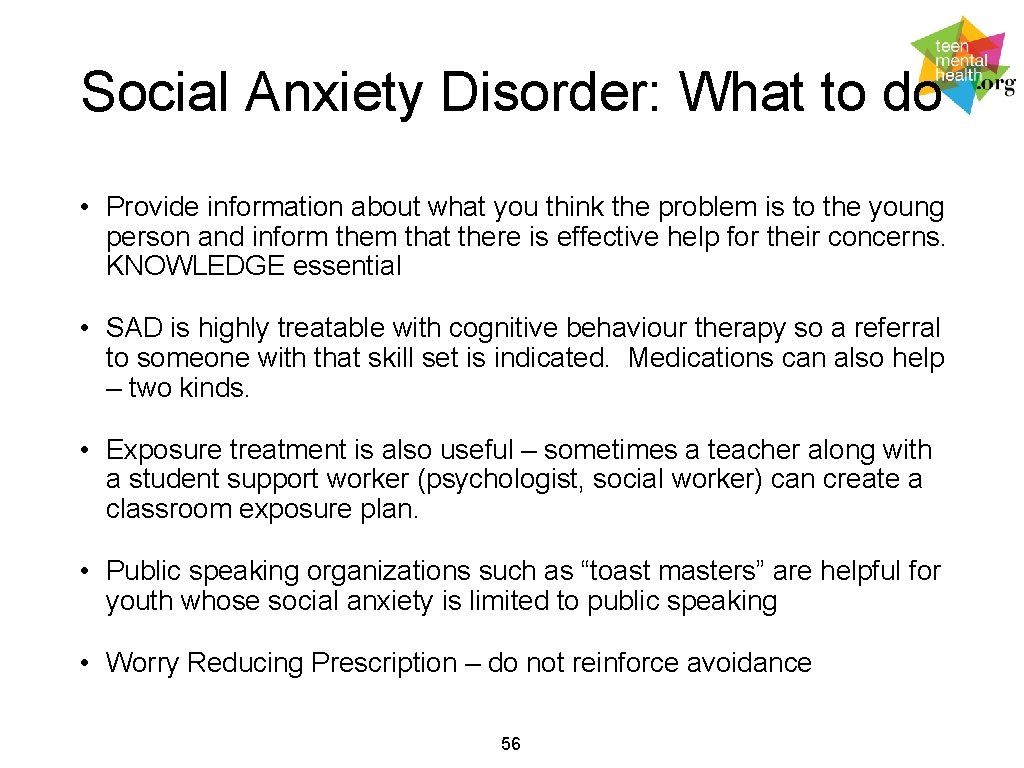
Social Anxiety Disorder: What to do • Provide information about what you think the problem is to the young person and inform them that there is effective help for their concerns. KNOWLEDGE essential • SAD is highly treatable with cognitive behaviour therapy so a referral to someone with that skill set is indicated. Medications can also help – two kinds. • Exposure treatment is also useful – sometimes a teacher along with a student support worker (psychologist, social worker) can create a classroom exposure plan. • Public speaking organizations such as “toast masters” are helpful for youth whose social anxiety is limited to public speaking • Worry Reducing Prescription – do not reinforce avoidance 56
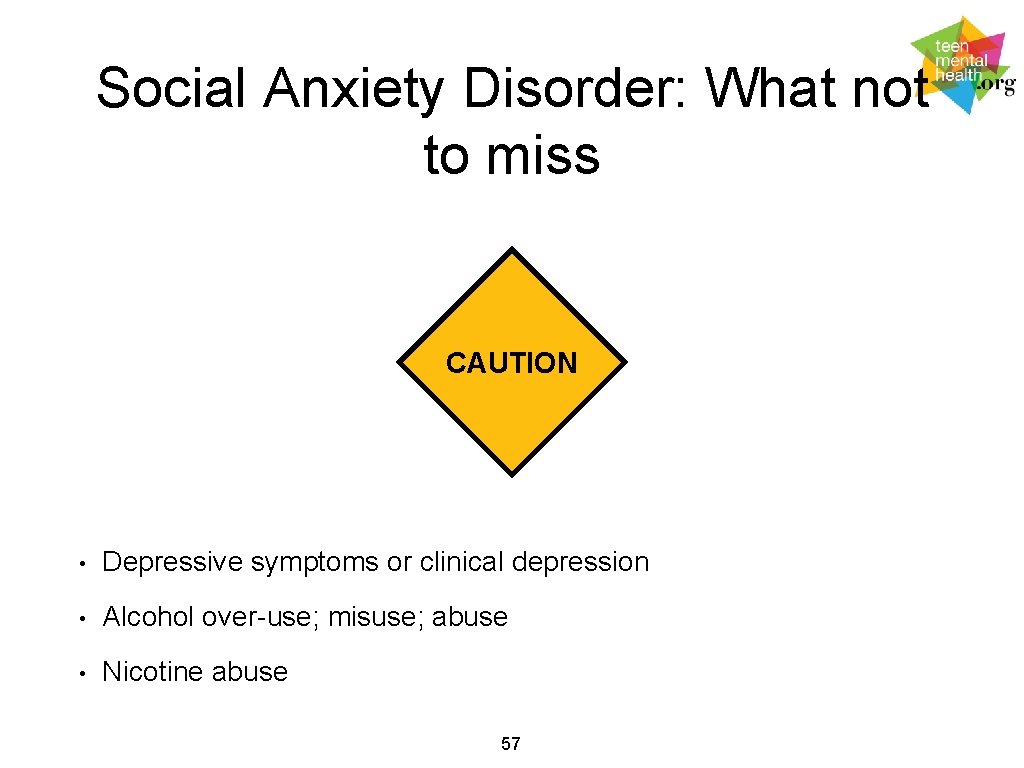
Social Anxiety Disorder: What not to miss CAUTION • Depressive symptoms or clinical depression • Alcohol over-use; misuse; abuse • Nicotine abuse 57
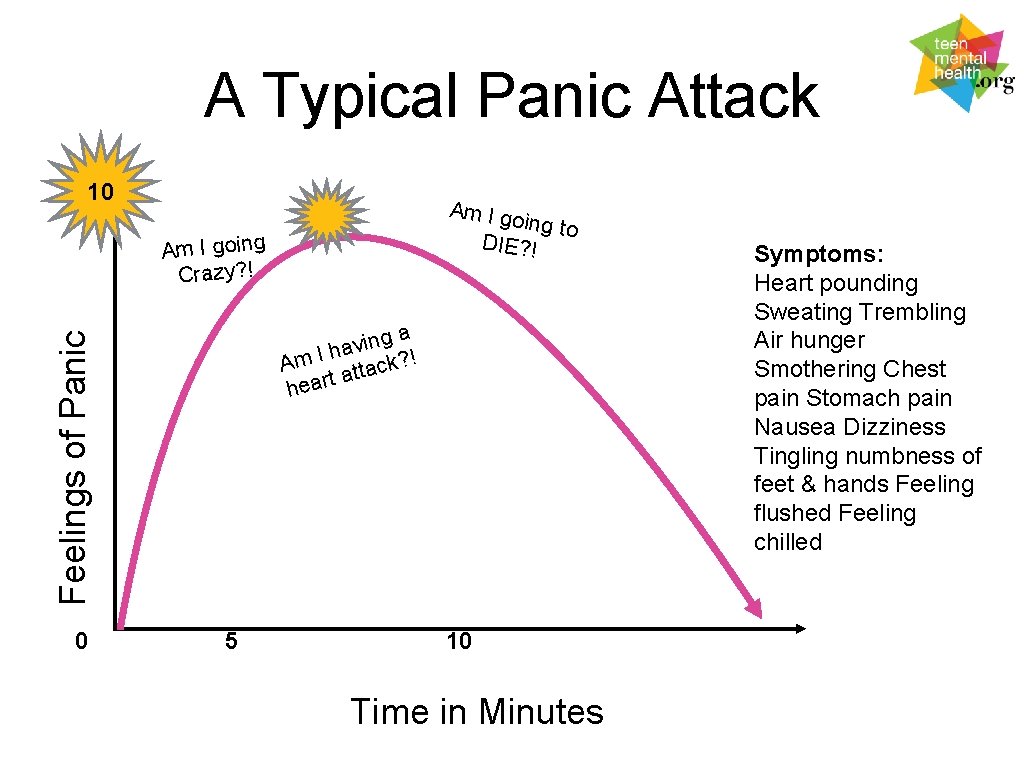
A Typical Panic Attack 10 Am I go ing to DIE? ! Am I going Crazy? ! Feelings of Panic ga n i v a h Am I ttack? ! ta r a e h 0 5 10 Time in Minutes Symptoms: Heart pounding Sweating Trembling Air hunger Smothering Chest pain Stomach pain Nausea Dizziness Tingling numbness of feet & hands Feeling flushed Feeling chilled
Panic Disorder: What to look for • Does the person have panic attacks – rapid onset of panic feelings and physical symptoms such as rapid or irregular heartbeat; breathing problems; tingling; light-headedness; etc. ? • Does the person worry about getting an attack? • Does the person avoid going to places where an attack has happened or where they worry they might get an attack? • Do the panic attacks negatively affect the person’s life or prevent them from doing what they would like to do? Often school avoidant behaviors similar to SAD. 59
Panic Disorder: What to do • Provide information about what you think the problem is to the young person and inform them that there is effective help for their concerns. • PD is highly treatable with cognitive behaviour therapy so a referral to someone with that skill set is indicated. Medications can also help – very effective. • Worry Reducing Prescription – do not reinforce avoidance 60
Panic Disorder: What not to miss CAUTION • • Depressive symptoms or clinical depression Agoraphobia Alcohol over-use; misuse; abuse Nicotine abuse 61
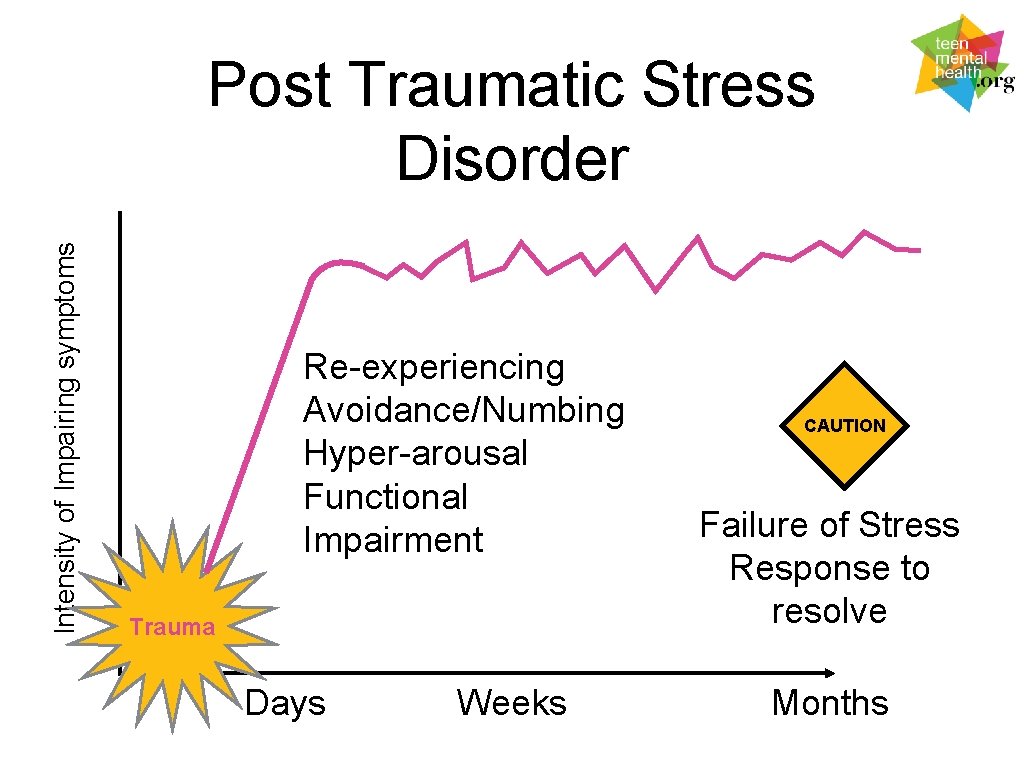
Post Traumatic Stress Disorder (PTSD) • Severe and persistent emotional response to a situation in which the safety or body integrity of the person is threatened (rape, war, earthquake, train wreck) • Symptoms noted 6 weeks or longer after the trauma and include: re-experiencing; autonomic hyperarousal; avoidance • Can be made worse by psycho-social debriefing interventions • Functional Impairment 62
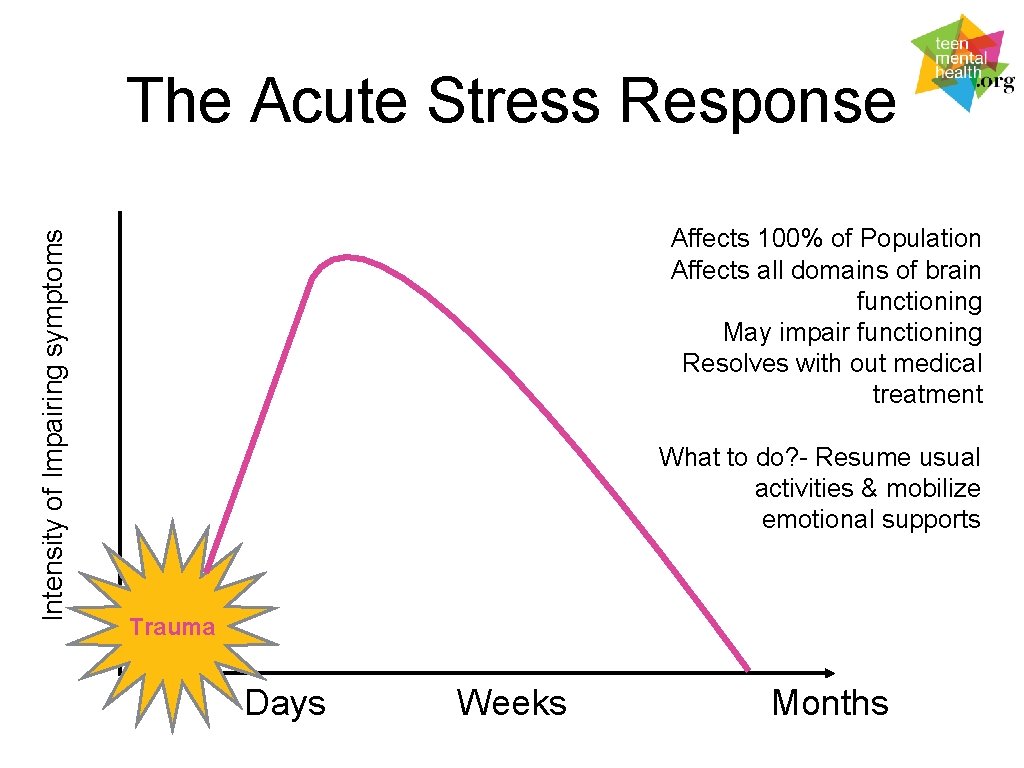
Intensity of Impairing symptoms The Acute Stress Response Affects 100% of Population Affects all domains of brain functioning May impair functioning Resolves with out medical treatment What to do? - Resume usual activities & mobilize emotional supports Trauma Days Weeks Months
Intensity of Impairing symptoms Post Traumatic Stress Disorder Re-experiencing Avoidance/Numbing Hyper-arousal Functional Impairment Trauma Days Weeks CAUTION Failure of Stress Response to resolve Months
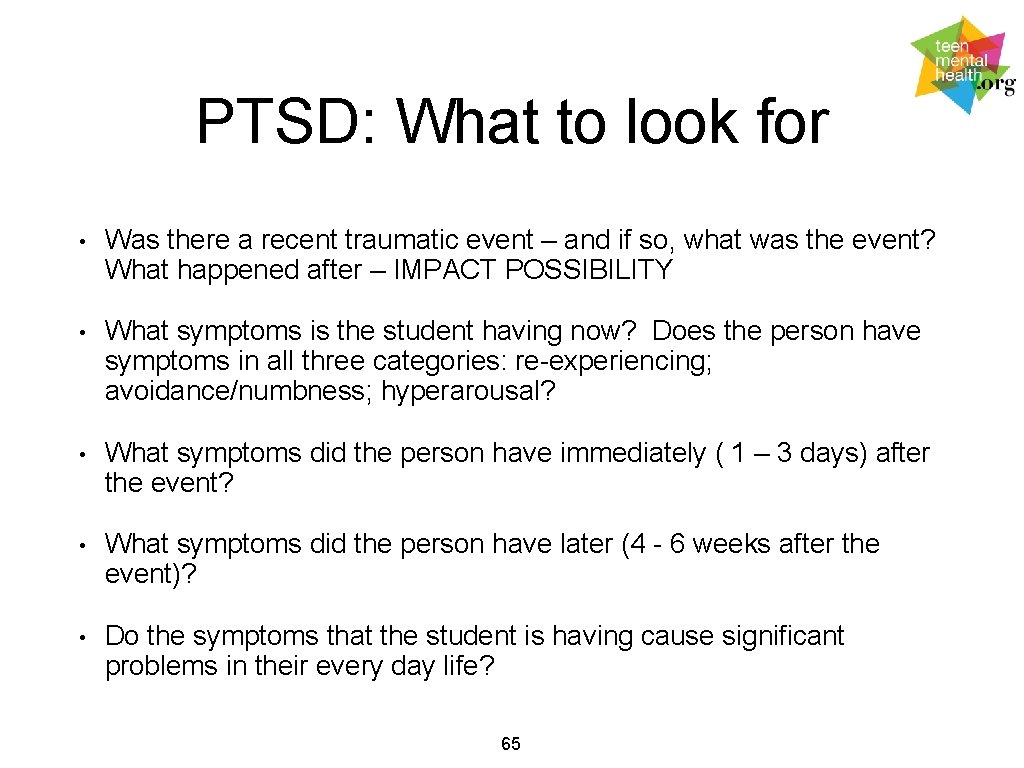
PTSD: What to look for • Was there a recent traumatic event – and if so, what was the event? What happened after – IMPACT POSSIBILITY • What symptoms is the student having now? Does the person have symptoms in all three categories: re-experiencing; avoidance/numbness; hyperarousal? • What symptoms did the person have immediately ( 1 – 3 days) after the event? • What symptoms did the person have later (4 - 6 weeks after the event)? • Do the symptoms that the student is having cause significant problems in their every day life? 65
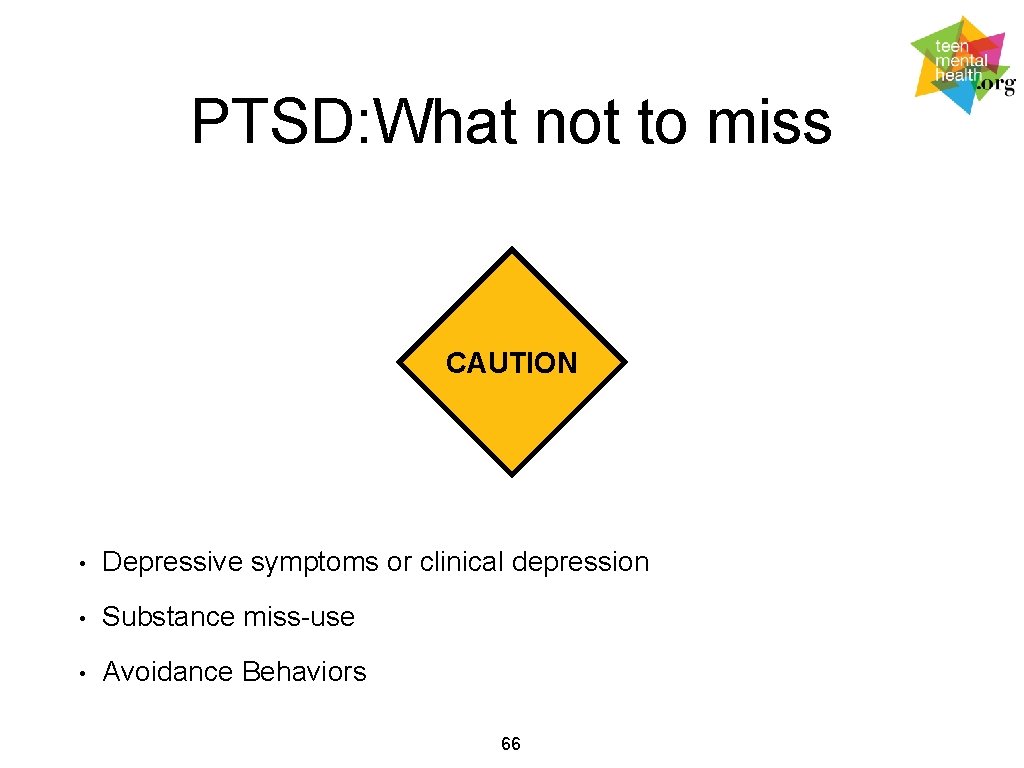
PTSD: What not to miss CAUTION • Depressive symptoms or clinical depression • Substance miss-use • Avoidance Behaviors 66
Traumatic Events and the School Setting • Stress symptoms immediately following a traumatic event are NORMAL and do not require outside interventions such as grief/crisis counselors. Information about what is expected and normal should be provided to students, parents and staff. Provide clear leadership and information about the event and what will be done next. – HAVE A PLAN • Some interventions (such as CISD/CISM) may not be helpful and may even be harmful. • Following a traumatic event schools could provide quiet spaces with staff support after school hours and “identification” of symptomatic youth 4 – 6 weeks after the event. REMEMBER THE TEACHERS! Identify symptomatic individuals 6 weeks or so after the event. • Symptomatic students can be offered CBIT or other evidence based psychological interventions by trained professionals. THIS IS NOT GRIEF COUNSELLING! • Avoid the pressure to “do something” and focus on doing “the right thing”. • With a suicide – consider identification of high-risk youth (friends of the deceased). 67
Obsessive Compulsive Disorder • Obsessions - recurrent, intrusive, unwanted thoughts or images or impulses that cause significant distress and functional impairment • Compulsions – recurrent, repetitive behaviours that are time consuming and cause significant distress or functional impairment • Person realizes that the obsessions and compulsions are excessive and unrealistic but can not control them 68
Obsessive Compulsive Disorder: What to look for • Does the person have repetitive behaviors or rituals such as checking; ordering; counting; etc. that they can not easily stop? • Does the person have repetitive thoughts that are upsetting to them and that they can not easily stop? • Do these behaviors or thoughts cause them difficulties in their everyday life? • Perfectionist in school work. Never seem to complete assignments thought spent lots of time on them. Rituals in the classroom (entering; sitting). 69
Obsessive Compulsive Disorder: What to do • Provide information about what you think the problem is to the young person and inform them that there is effective help for their concerns. • OCD is best treated with a combination of cognitive behaviour therapy and an SSRI type medication. • Usually requires specialty mental health care: 12 WEEKS FOR SYMPTOM REDUCTION • Worry Reducing Prescription – do not reinforce obsessions or compulsive behaviors • Other interventions: Thought Stopping? 70
OCD: What not to miss CAUTION • Depressive symptoms or clinical depression • Tics and Tic Disorders 71
Attention Deficit Hyperactivity Disorder • Onsets before age seven • Three Major Domains: • Attention • Hyperactivity • Impulsivity • Functional Impairment in MULTIPLE domains. 72
ADHD: What to look for *Compared to others his/her age is the person persistently and much more: • Hyperactive (on the go; can not stay still; etc. ) • Impulsive (does things without thinking; gets into trouble often because of not considering possible outcomes of his/her actions, etc. ) • Problems with sustained attention (often does not finish tasks; forgets easily; etc/) • Girls may have substantial problems with sustained attention and not exhibit symptoms of hyperactivity and impulsivity • Many of these symptoms may diminish in intensity with age (BRAIN MATURATION) but may not completely disappear. • Always assess for learning disorder(s) and be aware of substance misuse. • Self-esteem and demoralization (this is not an ego-dystonic problem)! 73
ADHD: What to do • Discuss with young person how they perceive their problems, the diagnosis and the treatment. KEY • Utilize intervention strategies that have been demonstrated to be successful for the young person – do not waste your time on interventions that have not worked or are not likely to work. Schedules, rewards, parent collaboration. • Encourage a strength based framework – find the things that he/she does well or suggest activities that do not depend on sustained attention (run track don’t play goalie in soccer) • Understand the pros and cons of medication treatment (necessary but not sufficient). • Always assess for the presence of a learning disability 74
ADHD: What to know about treatment • Often can be effectively treated in primary care • School participation in assessment of treatment outcomes very helpful • Medications are usually necessary: psychostimulants and others • Treatment response usually evident within one week (psychostimulants) may take 2 -4 weeks with other medications • Great degree of mis-information and dis-information about ADHD and its treatment: learn the right information, provide to student if asked • Effective treatments improve outcomes, when they are maintained – some students will improve with age and as their brains mature – decrease risk for substance abuse • Become part of the reintegration solution: clarify role in classroom management; academic plans; crisis situations 75
Persistent Self-Harm • Behavior that can occur by itself or in the context of another mental disorder • Often secretive or “shared” in sub-groups • Has complex “causes” but is often maintained by outcomes it leads to – do not agree to keep it “secret” • Helpful to reframe as an unhelpful method to address ongoing problems in life: get specialty mental health team assistance • Can be an attempt to seek professional assistance in difficult life situation • Usually requires complex treatment strategies (including: CBT; DBT; medications; etc): can lead to “splitting” amongst care providers – requires constant communication 76
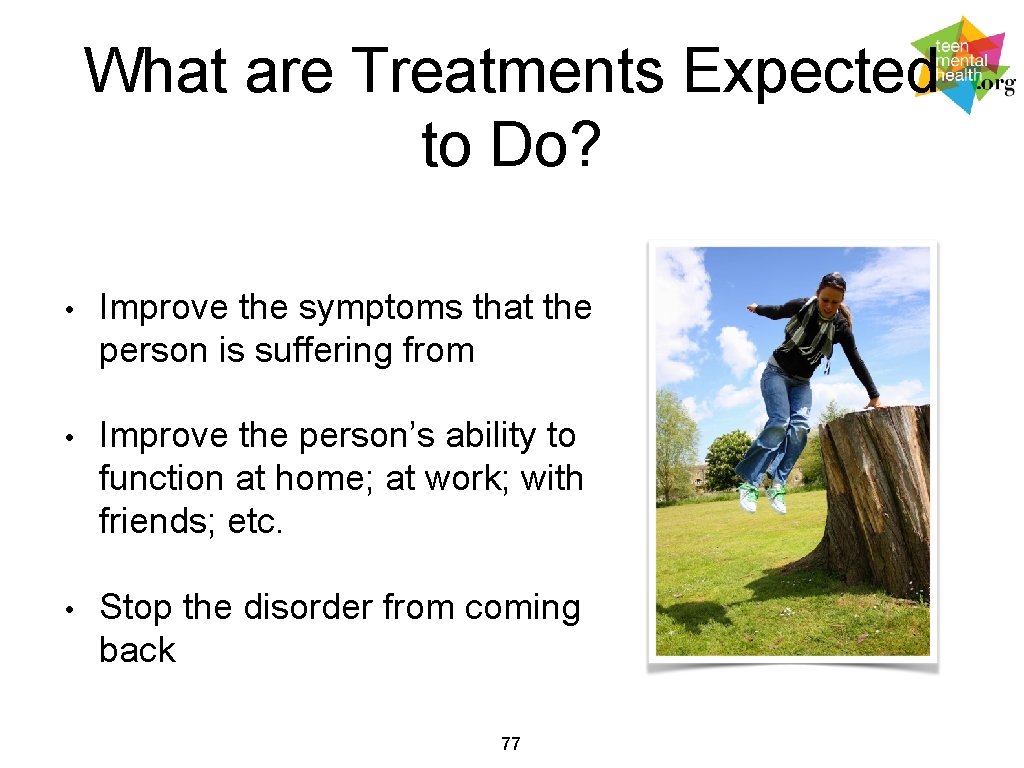
What are Treatments Expected to Do? • Improve the symptoms that the person is suffering from • Improve the person’s ability to function at home; at work; with friends; etc. • Stop the disorder from coming back 77
How to think about treatments (primacy of best evidence) • Specific treatments –have been scientifically demonstrated to show significant positive effects in a specific disorder (for example: SSRI medicine in adolescent depression; CBT in social anxiety disorder, etc. ): evidence based medicine at www. teenmentalhealth. org • Complementary treatments – interventions that may help specific treatments work more effectively but are not likely to be effective on their own, such as: exercise; nutrition; specific social interactions; etc. • Alternative treatments – interventions that take the place of specific treatments but without the evidence needed to consider them to be specific treatments. 78
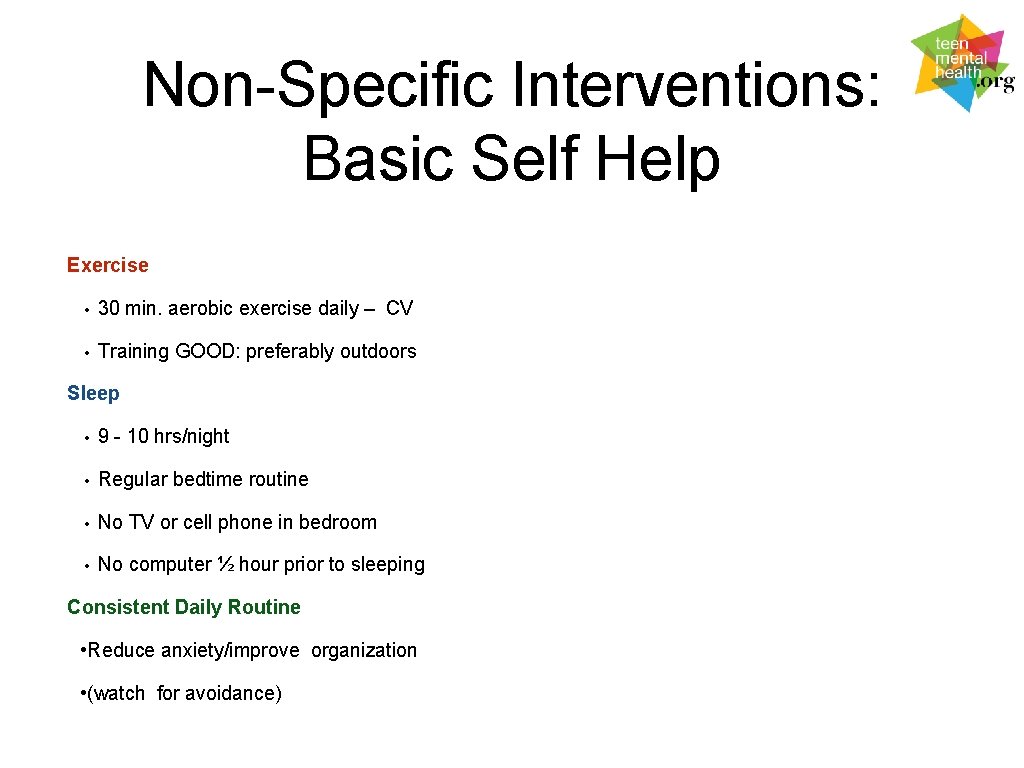
Non-Specific Interventions: Basic Self Help Exercise • 30 min. aerobic exercise daily – CV • Training GOOD: preferably outdoors Sleep • 9 - 10 hrs/night • Regular bedtime routine • No TV or cell phone in bedroom • No computer ½ hour prior to sleeping Consistent Daily Routine • Reduce anxiety/improve organization • (watch for avoidance)
Acting on your Concerns: Triage; Support; Referral 80
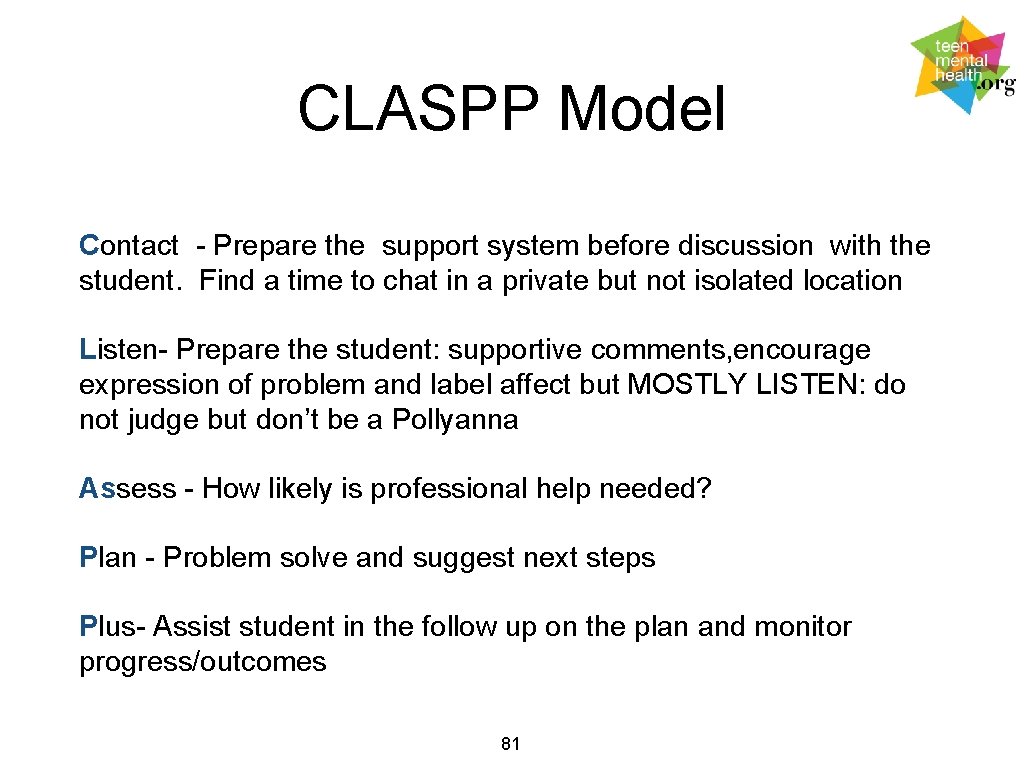
CLASPP Model Contact - Prepare the support system before discussion with the student. Find a time to chat in a private but not isolated location Listen- Prepare the student: supportive comments, encourage expression of problem and label affect but MOSTLY LISTEN: do not judge but don’t be a Pollyanna Assess - How likely is professional help needed? Plan - Problem solve and suggest next steps Plus- Assist student in the follow up on the plan and monitor progress/outcomes 81
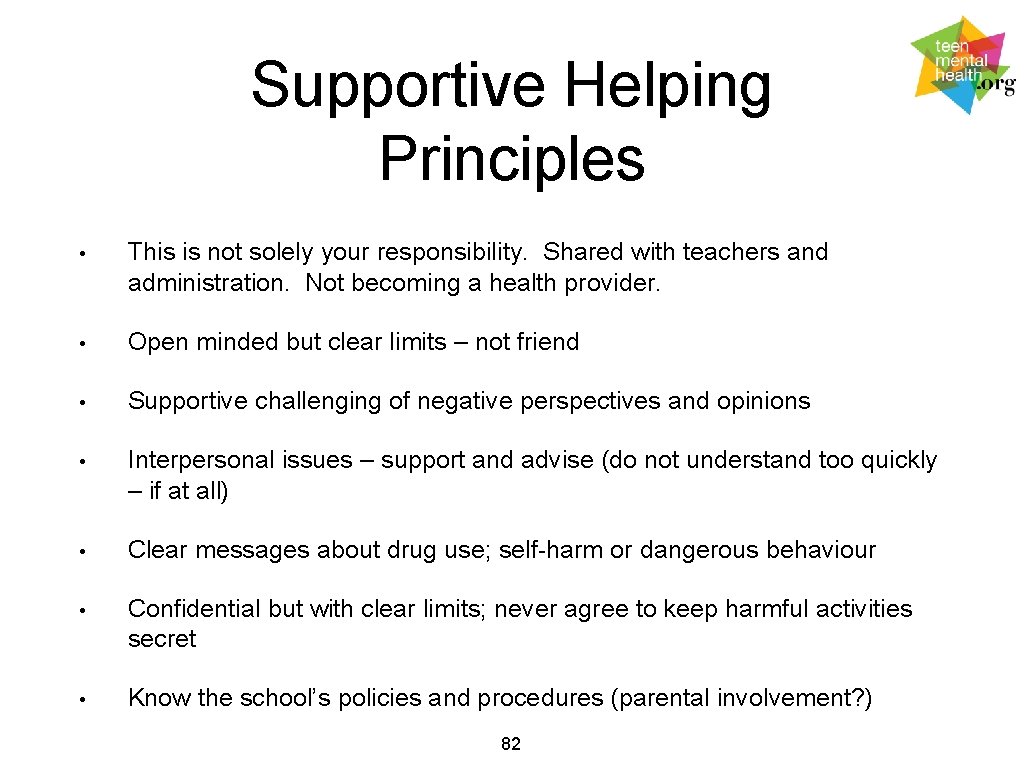
Supportive Helping Principles • This is not solely your responsibility. Shared with teachers and administration. Not becoming a health provider. • Open minded but clear limits – not friend • Supportive challenging of negative perspectives and opinions • Interpersonal issues – support and advise (do not understand too quickly – if at all) • Clear messages about drug use; self-harm or dangerous behaviour • Confidential but with clear limits; never agree to keep harmful activities secret • Know the school’s policies and procedures (parental involvement? ) 82
Assess: What am I dealing with? • What is the probability of a mental disorder? • Is the “disorder” mild, moderate or severe? • What is a stepped approach – watchful waiting? • What should I be looking for and how frequently should I be monitoring? • What are the risks and benefits of this approach? • What is my role in the “go-forward plan”? 83
Confidentiality: Common Issues • Essential to address issues of confidentiality from the beginning, not after there is a problem Teens may want confidentiality from: parents; school; peers Parents may want confidentiality from: children; partner; school • Cultural norms and expectations may impact • Know the legal parameters in your jurisdiction • Know the regulatory frameworks of your professional and licensing bodies • Self-harm and harm to others are deal-breakers but what are the trigger points and what will be the process must be understood by all (clarify and write down if needed) • What about electronic interactions: email; texting; 84