GLYCOSIDES Silpa M Assistant professor Dept of pharmacology

- Slides: 36
GLYCOSIDES Silpa M Assistant professor Dept. of pharmacology Yenepoya pharmacy college & research centre
Contents • Definition • Classification • Senna, Aloe, Bitter almond
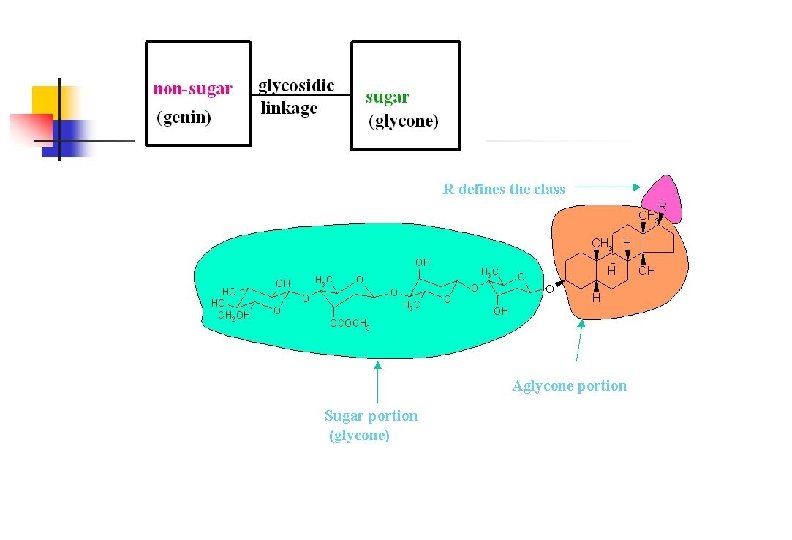
Definition • Glycosides are organic compounds of plant and animal origin which yield on either acidic or enzymatic hydrolysis, one or more sugar and a non-sugar residue. • The non-sugar moiety is called as genin or aglycone , while the sugar components are glycone
• Genins or aglycones may be hydroxylic compounds like alcohols or phenol or even it may be amine. • Glycosides are acetals and thus, the condensation products of sugar and aglycone. • Most commonly occurring sugars as a product of hydrolysis of glycosides are glucose, mannose and galactose • Rhamnose, digitoxose and cymarose occur rarely.
• Few glycosides like α, β and γ methyl glycosides and galactosides are prepared synthetically, as they are not found naturally • Thus, action of glucose on methanol produces α- methyl glycoside and β – methyl glycoside. • Pharmaceutically important glycosides are obtained from vegetable source only. • They occur in various parts of the plants like fruits, seeds, leaves and barks.
Classification 1. According to the basis of chemical nature of Aglycone. 2. According to the chemical linkage between Glycone & Aglycone.
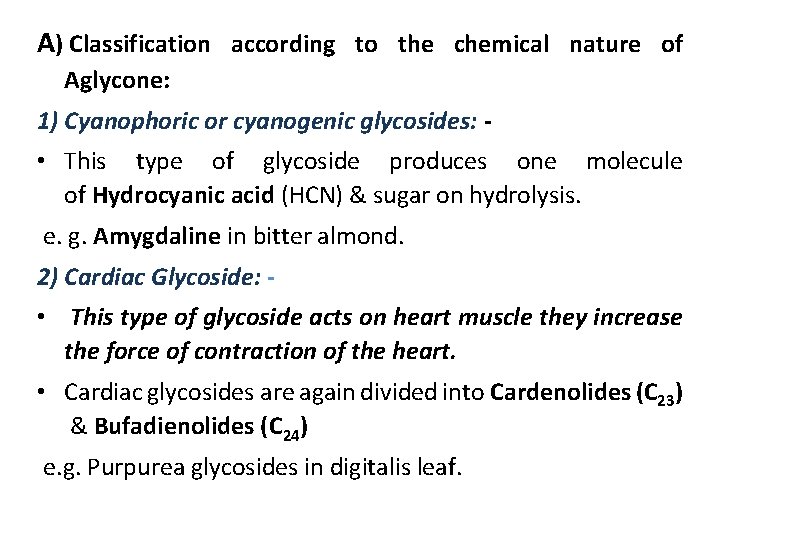
A) Classification according to the chemical nature of Aglycone: 1) Cyanophoric or cyanogenic glycosides: - • This type of glycoside produces one molecule of Hydrocyanic acid (HCN) & sugar on hydrolysis. e. g. Amygdaline in bitter almond. 2) Cardiac Glycoside: - • This type of glycoside acts on heart muscle they increase the force of contraction of the heart. • Cardiac glycosides are again divided into Cardenolides (C 23) & Bufadienolides (C 24) e. g. Purpurea glycosides in digitalis leaf.
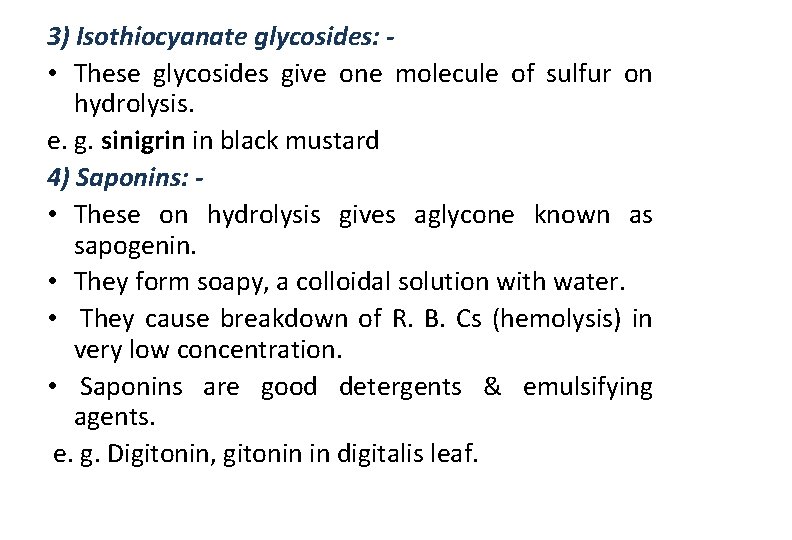
3) Isothiocyanate glycosides: • These glycosides give one molecule of sulfur on hydrolysis. e. g. sinigrin in black mustard 4) Saponins: • These on hydrolysis gives aglycone known as sapogenin. • They form soapy, a colloidal solution with water. • They cause breakdown of R. B. Cs (hemolysis) in very low concentration. • Saponins are good detergents & emulsifying agents. e. g. Digitonin, gitonin in digitalis leaf.
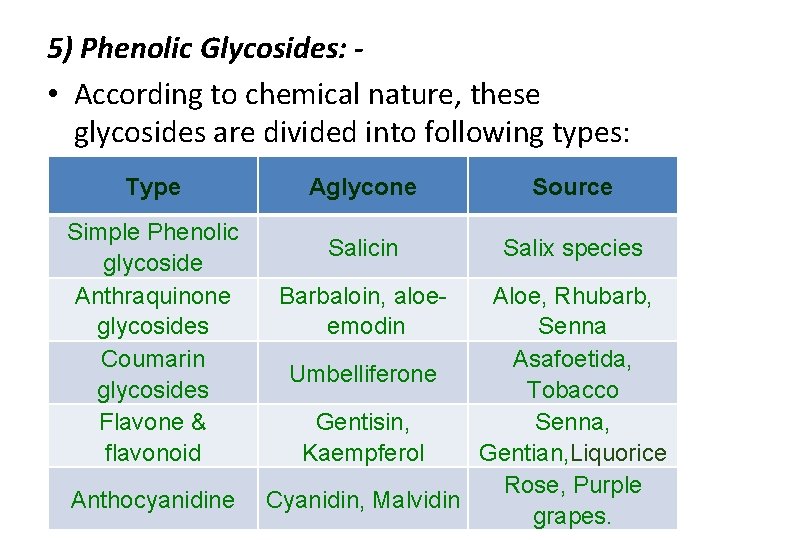
5) Phenolic Glycosides: • According to chemical nature, these glycosides are divided into following types: Type Simple Phenolic glycoside Anthraquinone glycosides Coumarin glycosides Flavone & flavonoid Anthocyanidine Aglycone Source Salicin Salix species Barbaloin, aloe emodin Aloe, Rhubarb, Senna Asafoetida, Umbelliferone Tobacco Gentisin, Senna, Kaempferol Gentian, Liquorice Rose, Purple Cyanidin, Malvidin grapes.
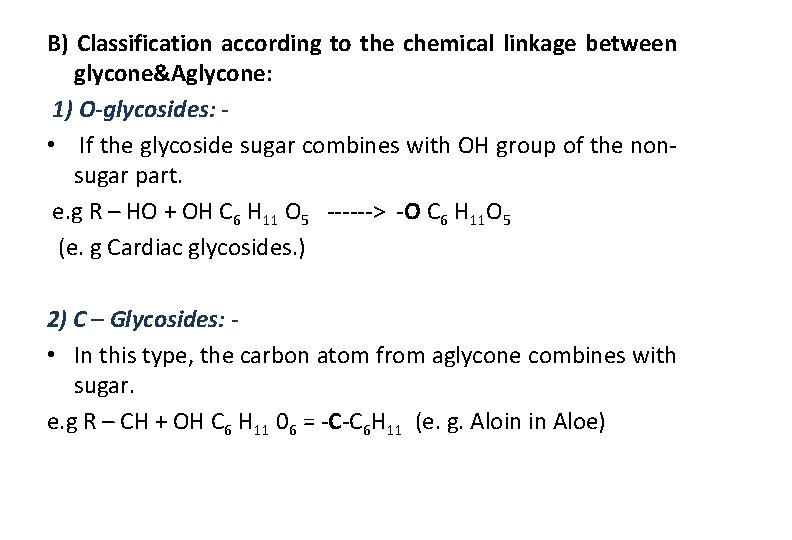
B) Classification according to the chemical linkage between glycone&Aglycone: 1) O-glycosides: • If the glycoside sugar combines with OH group of the non- sugar part. e. g R – HO + OH C 6 H 11 O 5 ------> -O C 6 H 11 O 5 (e. g Cardiac glycosides. ) 2) C – Glycosides: • In this type, the carbon atom from aglycone combines with sugar. e. g R – CH + OH C 6 H 11 06 = -C-C 6 H 11 (e. g. Aloin in Aloe)
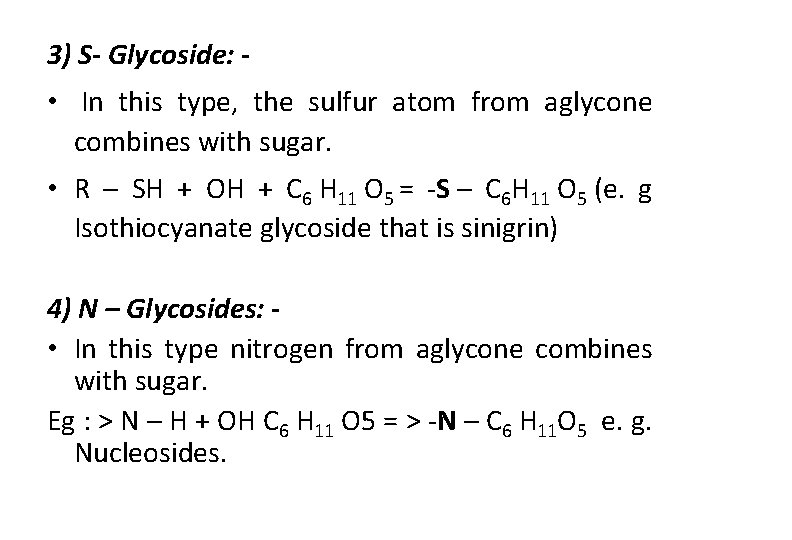
3) S- Glycoside: - • In this type, the sulfur atom from aglycone combines with sugar. • R – SH + OH + C 6 H 11 O 5 = -S – C 6 H 11 O 5 (e. g Isothiocyanate glycoside that is sinigrin) 4) N – Glycosides: • In this type nitrogen from aglycone combines with sugar. Eg : > N – H + OH C 6 H 11 O 5 = > -N – C 6 H 11 O 5 e. g. Nucleosides.
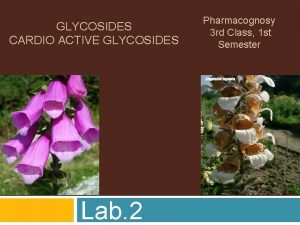
Cardiac glycoside Introduction • Cardiac glycosides are important class of naturally occurring glycoside which exert both beneficial and toxic effects on the heart. • They are potentially used to treat congestive heart failures. • They posses specific action on cardiac muscle, increasing tone, excitability and contractility of this muscle and thus allowing the weakened heart to function more efficiently. • Hence, it act as cardio tonic agents.
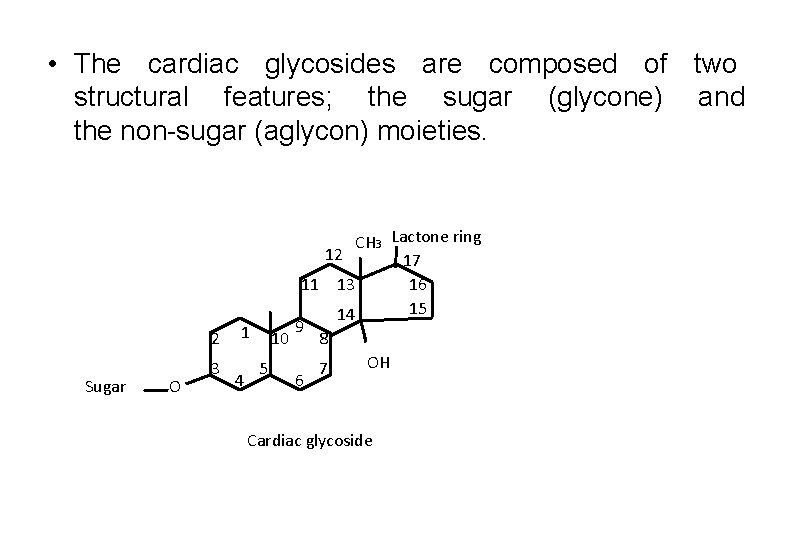
• The cardiac glycosides are composed of two structural features; the sugar (glycone) and the non-sugar (aglycon) moieties. Sugar O CH 3 Lactone ring 12 17 11 13 16 15 14 9 2 1 10 8 OH 3 5 7 4 6 Cardiac glycoside
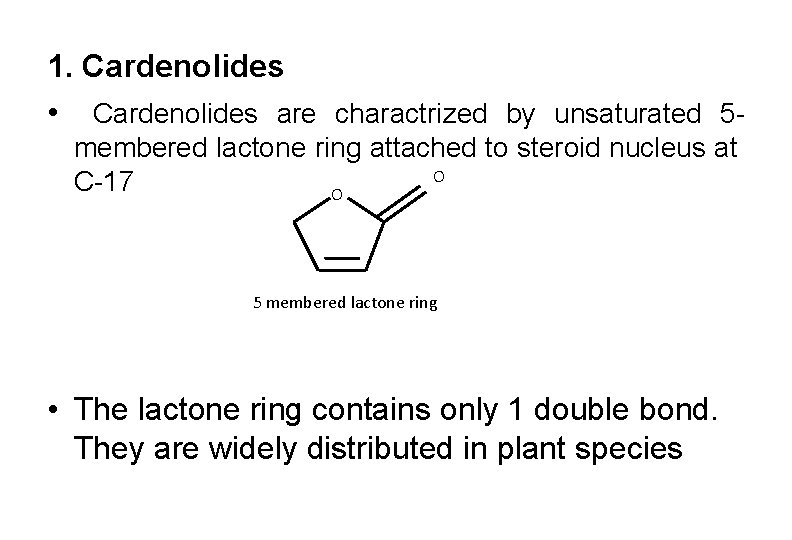
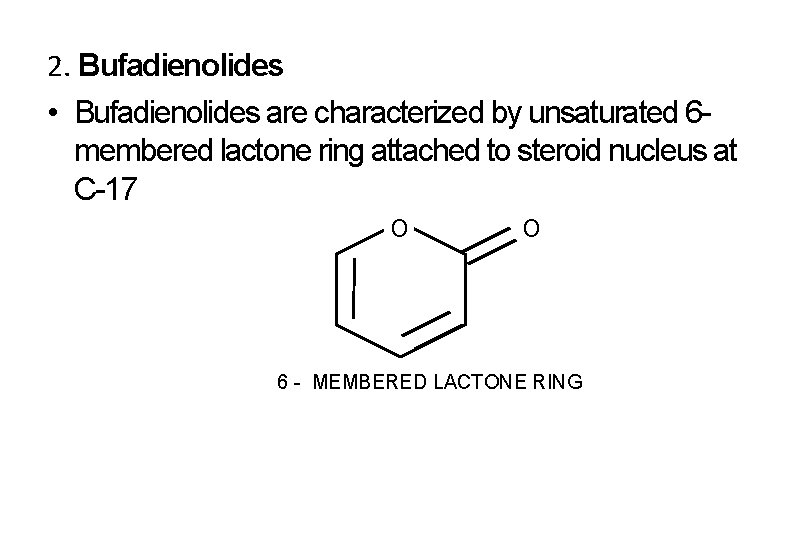
• Aglycone part of cardiac glycosides is steroidal moiety, i. e 5 memberd or 6 memberd lactone rings. • Two classes exist in nature. • cardenolides and bufadienolides. • Those contain five memberd lactone ring are called cardenolides and six memberd lacton containing compounds called bufadienolides.
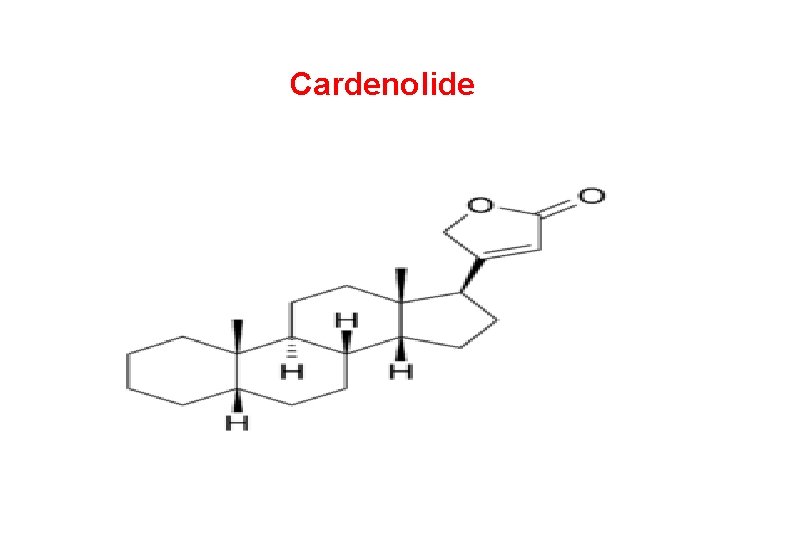
1. Cardenolides • Cardenolides are charactrized by unsaturated 5 membered lactone ring attached to steroid nucleus at O C-17 O 5 membered lactone ring • The lactone ring contains only 1 double bond. They are widely distributed in plant species
Cardenolide
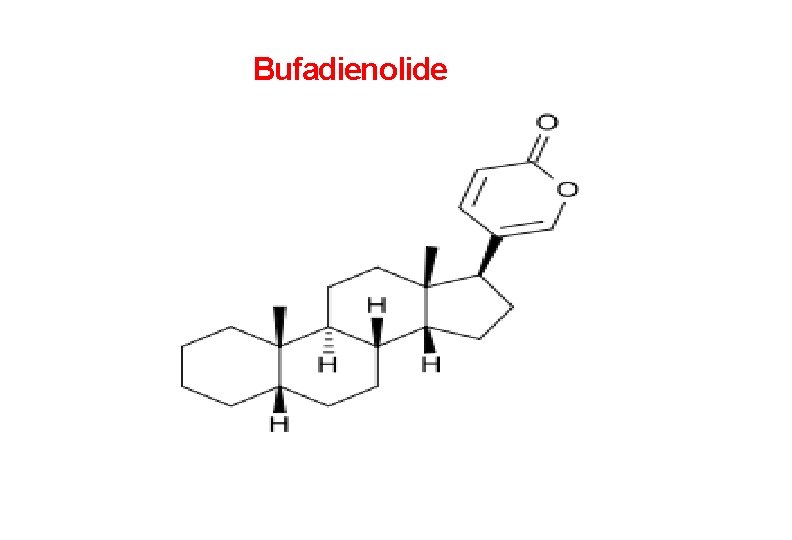
2. Bufadienolides • Bufadienolides are characterized by unsaturated 6 membered lactone ring attached to steroid nucleus at C-17 O O 6 - MEMBERED LACTONE RING
• The lactone ring of bufadinolide contains 2 double bond • They have at least one double bond in the steroid nucleus. They are mainly distributed in animal kingdom • Various types of sugar like glucose, rhamnose, arabinose can be attached to steroidal nucleus at C-3 position. Generally, at a time up to three molecules of sugar can be attached.
Bufadienolide
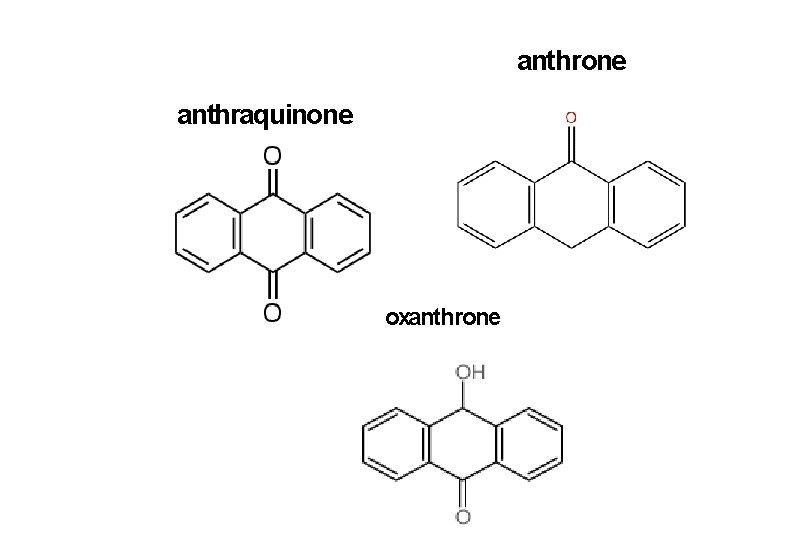
Anthraqiunone glycosides • Anthraquinone is derivative of anthracene. ( C 14 H 10, consisting of three fused benzene rings) • Natural anthraquinone derivative have laxative effects • These glycosides contains anthraquinone, anthrone, anthranol, dianthranol, oxanthrone, dianthrone etc as aglycone part. • parent molecule for all these aglycones is anthraquinone. • In reduced form anthraquinone is present as anthranol or anthrone which are isomeric to each other.
• oxanthrone is intermediate substance from anthraquinone to anthranol. • Bimeric form of anthrone is dianthrone. • in fresh drug these aglycones are present in reduced form which are biologically more active but during drying and storage they hydrolyzed , oxidized. • Sugar part can be glucose, rhamnose, arabinose, primeverose etc.
anthrone anthraquinone oxanthrone
Saponins glycosides • They contain aglycon part sapogenin. harmful safogenins are called sapotoxins. • This aglycone part have foaming action when shaked with water and yields colloidal solution. • They are considerd as haemotoxic because they causes haemolysis of erythrocytes, hence some of them used as fish poisons • Saponins are categorized in to two groups 1 - steroidal saponins(tetracyclic triterpenoid saponins) 2 - pentacyclic triterpenoid saponins
Functions of glycosides: In plant - glycosides play an important role in the life of plant & are involved in its 1. Regulatory function 2. Protective function 3. Sanitary function
• In animal- Because of their wide varieties of chemical nature of glycosides, their pharmacological actions are also widely distributed 1. Cardioactive : Digitalis, squill, strophanthus 2. Laxative - emodin (From Senna, Aloe, Cascara sagrada, Rhubarb) 3. Analgesic - Methyl salicylate (From wintergreen oil) 4. Local irritant - Allyl isothiocyanate (From sinigrin)
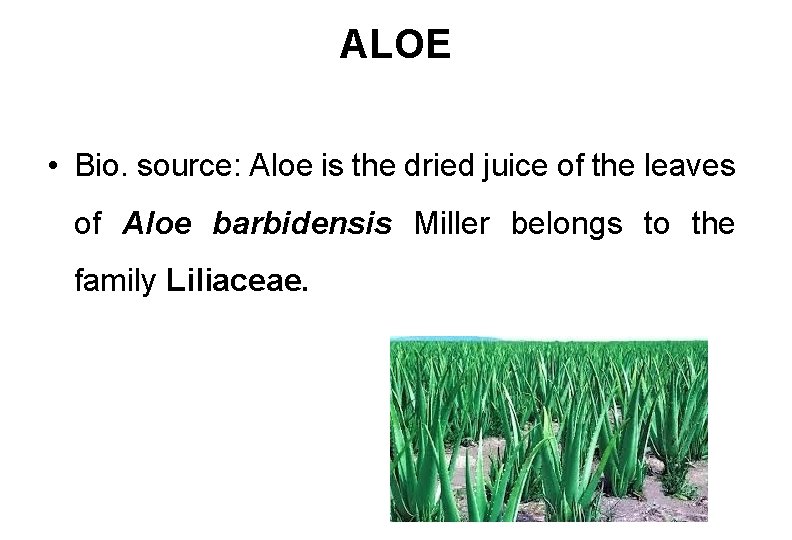
ALOE • Bio. source: Aloe is the dried juice of the leaves of Aloe barbidensis Miller belongs to the family Liliaceae.
Chemical constituents • Yellow coloured crystalline substance known as barbaloin (C-glycoside), resin and aloe- emodin. • Isobarbalion – Curacao and cape • Cape aloe characterized the presence of Aloinoside A, Aloinoside B, Capaloresinotannol with p-coumaric acid • Resin of Curacao variety contain Barbaloresino-tannol
Uses : • Strong purgative • In high doses acts as abortifacient • Anti-spasmodic • Ointment of Aloe gel is used in sun burns , thermal burns, radiation burns • Prevent skin ulceration, irritation and malignancy
SENNA • Bio. Source- it consist of dried leaflets of Cassia angustifolia • Family- Leguminosae
Chemical Constituents- • Senna leaves consist anthraquinone glycosides. Sennosides A, Sennoside B, Sennoside C and Sennoside D. it also consist rhein, Aloe-emodin. Plant also shows presence of protein and carbohydrates.
Uses- • Laxatives. • Irritant purgative due to the presence of antraquinonine derivative s
BITTER ALMOND Bio. Source: • Bitter almond are dried ripe seeds of plants, Prunus amygdalus Batsch var amara • Family : Rosaceae
Chemical constituents • 40 -50% Bland fixed oil • 20% protein • Glycoside: Amygdalin • 0. 5% volatile oil
USES • Sedative (due to hydrocyanic acid content) • Oil is used in demulcent skin lotion • Used for the preparation of amygdalin, bitter almond water, in perfumary and in the form of liquors
THANK YOU