Glycosides Pharmacognosy II 3 rd stage 5 th

- Slides: 18
Glycosides Pharmacognosy II 3 rd stage/ 5 th lecture A. Lecturer: Mohammed. S. Nawrooz
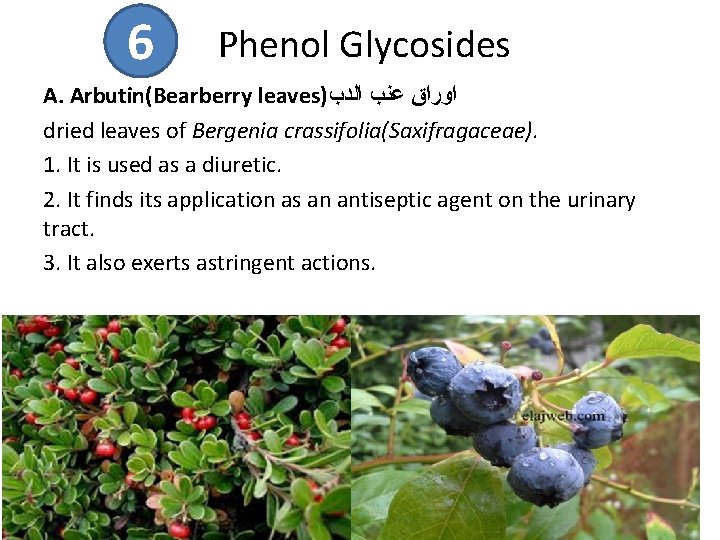
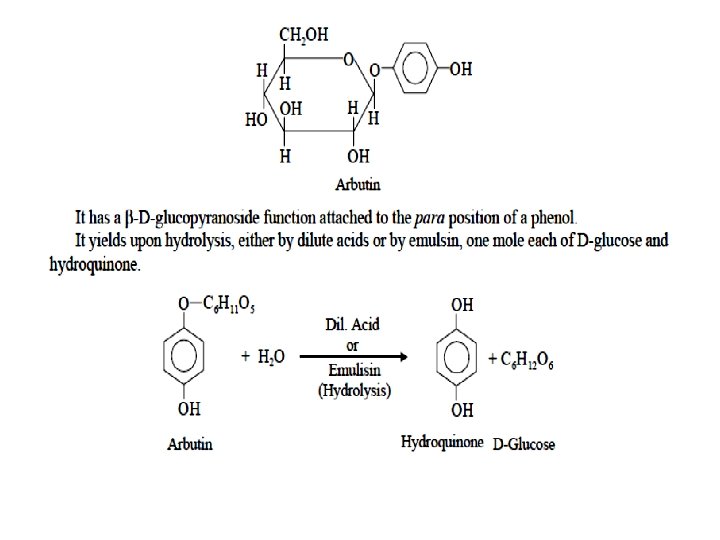
6 Phenol Glycosides A. Arbutin(Bearberry leaves) ﺍﻭﺭﺍﻕ ﻋﻨﺐ ﺍﻟﺪﺏ dried leaves of Bergenia crassifolia(Saxifragaceae). 1. It is used as a diuretic. 2. It finds its application as an antiseptic agent on the urinary tract. 3. It also exerts astringent actions.
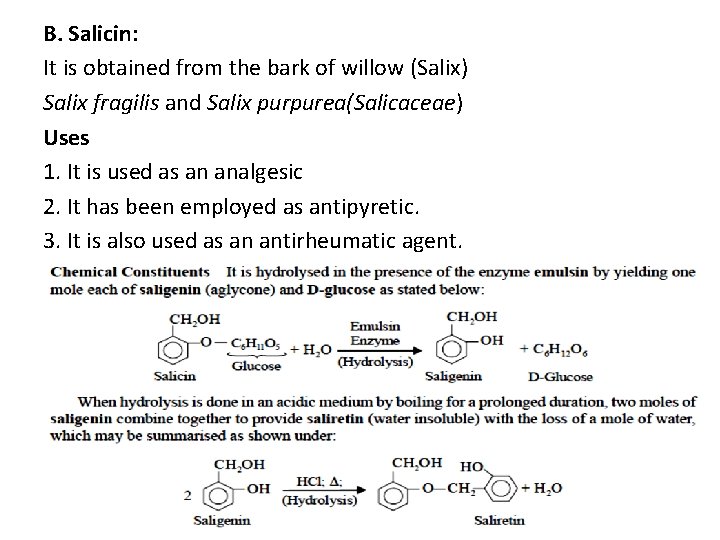
B. Salicin: It is obtained from the bark of willow (Salix) Salix fragilis and Salix purpurea(Salicaceae) Uses 1. It is used as an analgesic 2. It has been employed as antipyretic. 3. It is also used as an antirheumatic agent.
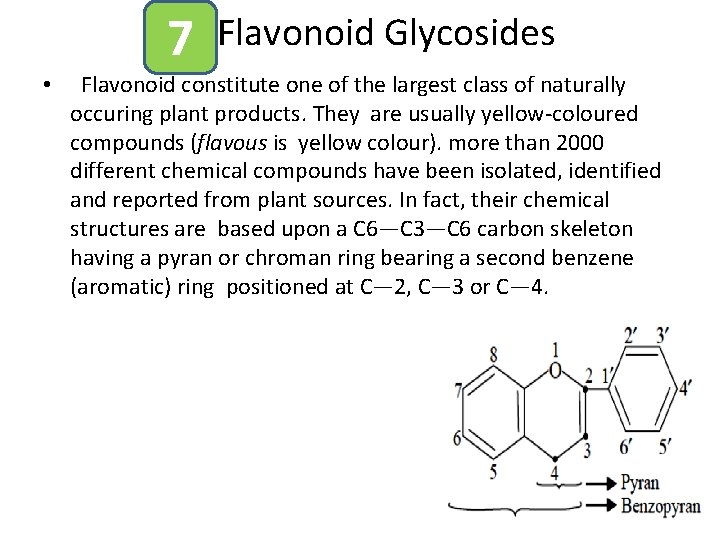
7 • Flavonoid Glycosides Flavonoid constitute one of the largest class of naturally occuring plant products. They are usually yellow-coloured compounds (flavous is yellow colour). more than 2000 different chemical compounds have been isolated, identified and reported from plant sources. In fact, their chemical structures are based upon a C 6—C 3—C 6 carbon skeleton having a pyran or chroman ring bearing a second benzene (aromatic) ring positioned at C— 2, C— 3 or C— 4.
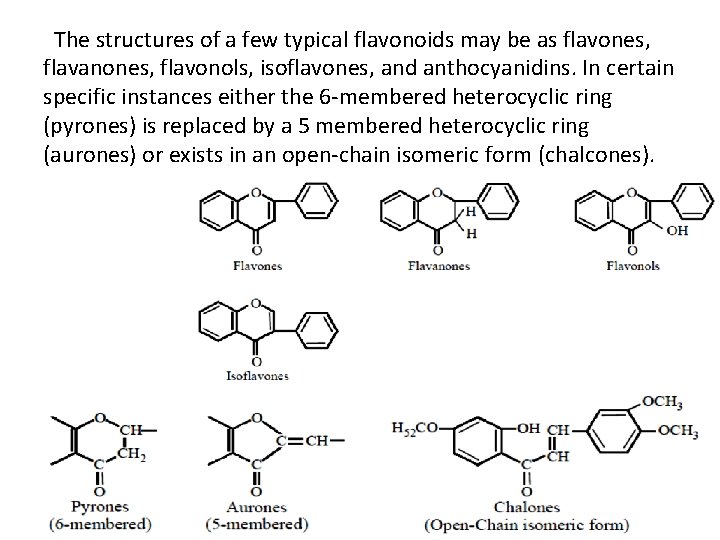
The structures of a few typical flavonoids may be as flavones, flavanones, flavonols, isoflavones, and anthocyanidins. In certain specific instances either the 6 -membered heterocyclic ring (pyrones) is replaced by a 5 membered heterocyclic ring (aurones) or exists in an open-chain isomeric form (chalcones).
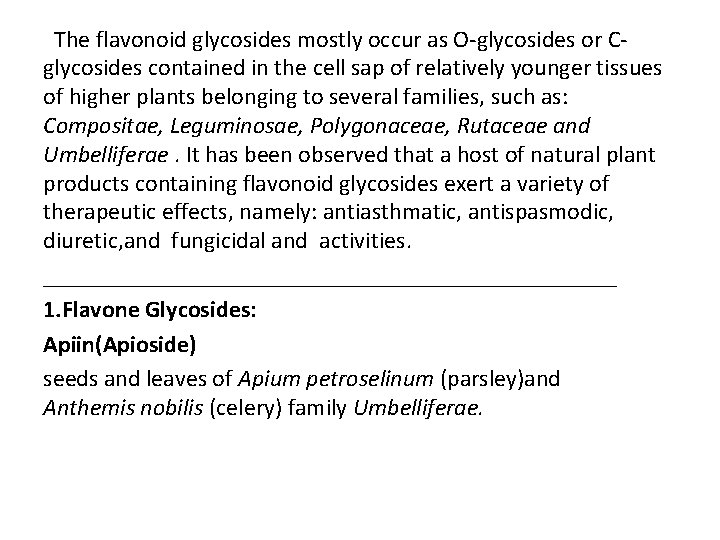
The flavonoid glycosides mostly occur as O-glycosides or Cglycosides contained in the cell sap of relatively younger tissues of higher plants belonging to several families, such as: Compositae, Leguminosae, Polygonaceae, Rutaceae and Umbelliferae. It has been observed that a host of natural plant products containing flavonoid glycosides exert a variety of therapeutic effects, namely: antiasthmatic, antispasmodic, diuretic, and fungicidal and activities. ________________________ 1. Flavone Glycosides: Apiin(Apioside) seeds and leaves of Apium petroselinum (parsley)and Anthemis nobilis (celery) family Umbelliferae.
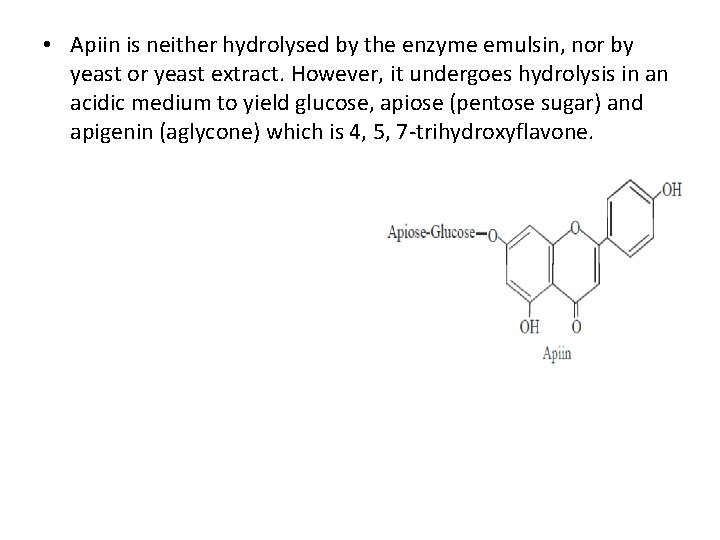
• Apiin is neither hydrolysed by the enzyme emulsin, nor by yeast or yeast extract. However, it undergoes hydrolysis in an acidic medium to yield glucose, apiose (pentose sugar) and apigenin (aglycone) which is 4, 5, 7 -trihydroxyflavone.
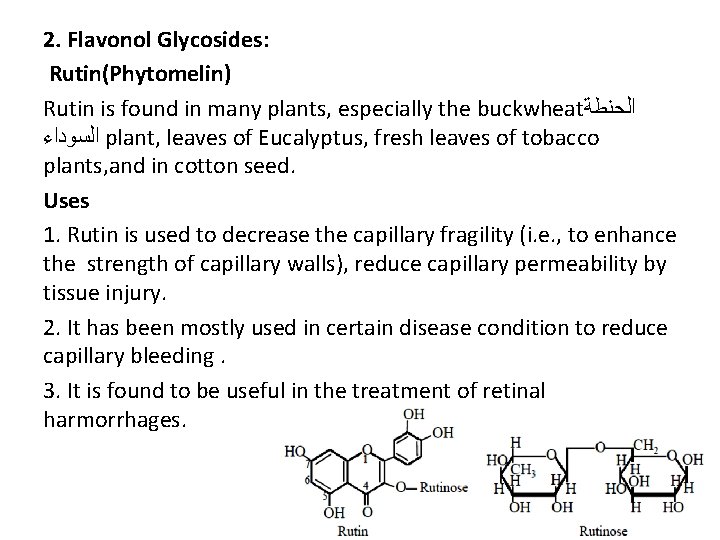
2. Flavonol Glycosides: Rutin(Phytomelin) Rutin is found in many plants, especially the buckwheat ﺍﻟﺤﻨﻄﺔ ﺍﻟﺴﻮﺩﺍﺀ plant, leaves of Eucalyptus, fresh leaves of tobacco plants, and in cotton seed. Uses 1. Rutin is used to decrease the capillary fragility (i. e. , to enhance the strength of capillary walls), reduce capillary permeability by tissue injury. 2. It has been mostly used in certain disease condition to reduce capillary bleeding. 3. It is found to be useful in the treatment of retinal harmorrhages.
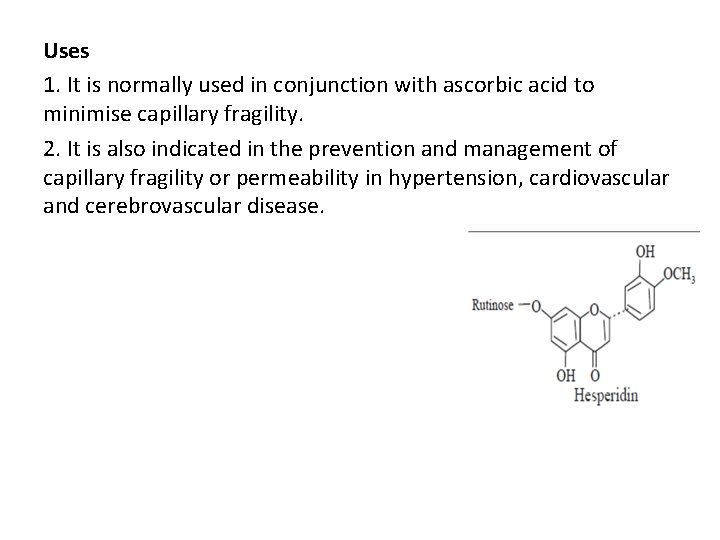
3. Flavanone Glycosides: Flavanone glycosides are most abundantly distributed amongst the citrus fruits. Hesperidin is the glycoside most commonly found in this particular class. However, the comparatively less important glycosides belonging to this type are: naringin, citronin and liquiritin. _________________________ Hesperidin(Cirantin) Hesperidin is the most predominant flavonoid in peels of lemon and orange and it occurs in the highest concentration in the white portion of the peel usually termed as albedo. Orange(Citrus sinensis) and Lemons (Citrus limon).
Uses 1. It is normally used in conjunction with ascorbic acid to minimise capillary fragility. 2. It is also indicated in the prevention and management of capillary fragility or permeability in hypertension, cardiovascular and cerebrovascular disease.
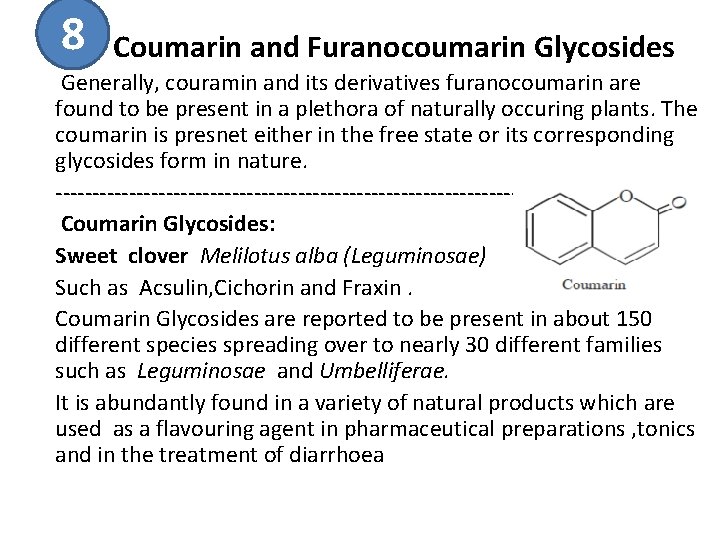
8 Coumarin and Furanocoumarin Glycosides Generally, couramin and its derivatives furanocoumarin are found to be present in a plethora of naturally occuring plants. The coumarin is presnet either in the free state or its corresponding glycosides form in nature. --------------------------------------Coumarin Glycosides: Sweet clover Melilotus alba (Leguminosae) Such as Acsulin, Cichorin and Fraxin. Coumarin Glycosides are reported to be present in about 150 different species spreading over to nearly 30 different families such as Leguminosae and Umbelliferae. It is abundantly found in a variety of natural products which are used as a flavouring agent in pharmaceutical preparations , tonics and in the treatment of diarrhoea
Furanocoumarin Glycosides: In general, the furanocoumarins are obtained by the fusion of the ‘furan ring’ to the coumarin nucleus. ___________________ A. Khellol Glucoside: (Khellinin): Eranthis hyemalis (Ranunculaceae)
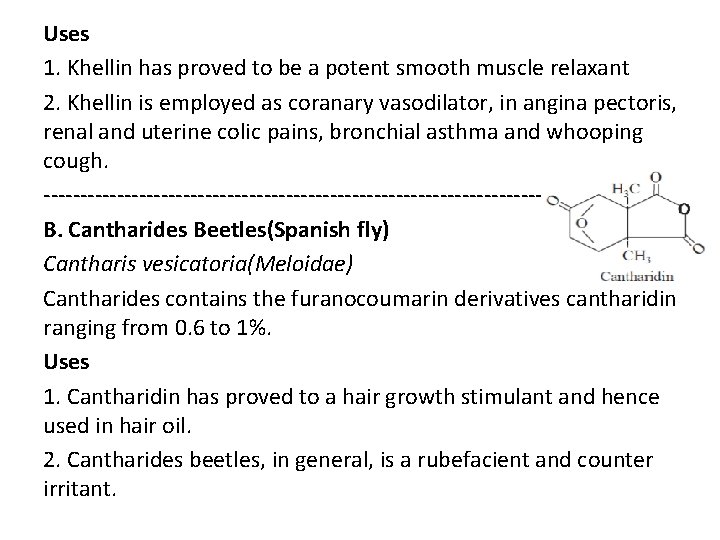
Uses 1. Khellin has proved to be a potent smooth muscle relaxant 2. Khellin is employed as coranary vasodilator, in angina pectoris, renal and uterine colic pains, bronchial asthma and whooping cough. -----------------------------------------B. Cantharides Beetles(Spanish fly) Cantharis vesicatoria(Meloidae) Cantharides contains the furanocoumarin derivatives cantharidin ranging from 0. 6 to 1%. Uses 1. Cantharidin has proved to a hair growth stimulant and hence used in hair oil. 2. Cantharides beetles, in general, is a rubefacient and counter irritant.
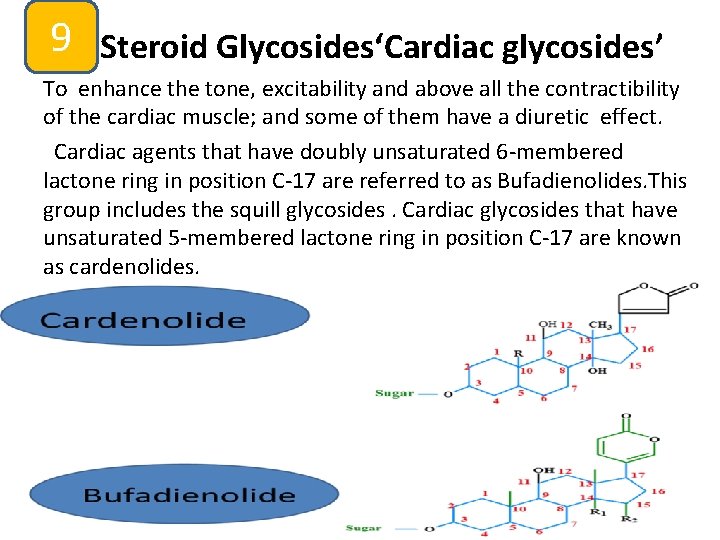
9 Steroid Glycosides‘Cardiac glycosides’ To enhance the tone, excitability and above all the contractibility of the cardiac muscle; and some of them have a diuretic effect. Cardiac agents that have doubly unsaturated 6 -membered lactone ring in position C-17 are referred to as Bufadienolides. This group includes the squill glycosides. Cardiac glycosides that have unsaturated 5 -membered lactone ring in position C-17 are known as cardenolides.
SAR (Structure Activity Relationship) A The saturation and/or cleavage of the lactone ring, destroys the cardiac activity. B The presence of a certain number of structural elements is required for at least favorable, to the activity: 1. The presence of unsaturated 5 or 6 - membered lactone ring at position C-17. 2. The configuration of the rings. The activity is maximized when the A, B, C and D rings are in the cis, trans, cis configuration. 3. The substituents : The inversion of the configuration at C 3 diminishes the activity , but 3 -deoxy compounds are not completely inactive. The presence of β-OH at position C-3, which is always involved in a glycosidic linkage.
C The presence of another β-OH group at C-14. D Additional OH groups may be present at C-5, C-11 and C-16. E The glycone part displays a great influence on the solubility and the rate of absorption and distribution of the glycosides to the site of action. F Small change in the molecules such as a change of the location of the OH group, modify the cardiac activity or even eliminate it completely. G The cardiac activity is linked to the aglycone. H The sugar moiety does not participate directly in the activity, but its presence enhances the activity and modulates it by modifying the polarity of the compound. I Digitalis glycosides contain angular methyl group at C-10, while strophanthus glycoside are characterized by presence of either an aldehydic (CHO) or primary alcoholic (C`H 2 OH) group at C-10.