Germn Sierra Instituto de Fsica Terica UAMCSIC Madrid


- Slides: 46
Germán Sierra Instituto de Física Teórica UAM-CSIC, Madrid Tercer Encuentro Conjunto de la Real Sociedad Matemática Española y la Sociedad Matemática Mexicana, Zacatecas, México, 1 -4 Sept 2014
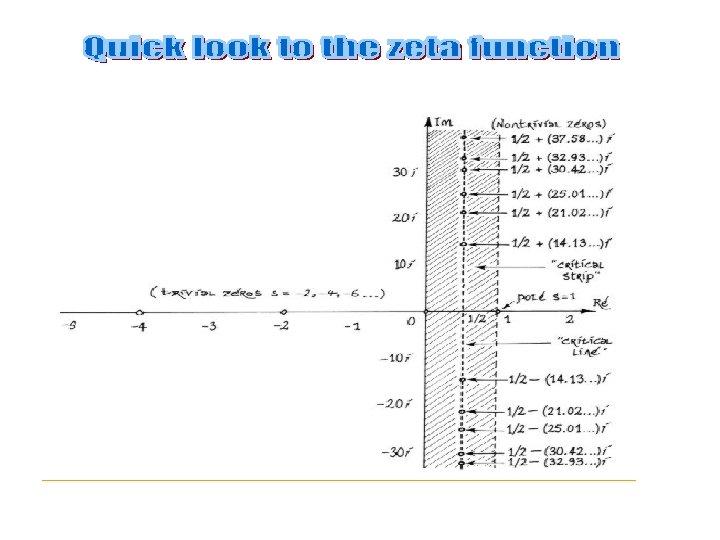
Riemann hypothesis (1859): the complex zeros of the zeta function all have real part equal to 1/2
Polya and Hilbert conjecture (circa 1910): There exists a self-adjoint operator H whose discrete spectra is given by the imaginary part of the Riemann zeros, This is known as the spectral approach to the RH The problem is to find H: the Riemann operator
His girlfriend? Richard Dawking
Outline • • The Riemann zeta function Hints for the spectral interpretation H = xp model by Berry-Keating and Connes The xp model à la Berry-Keating revisited Extended xp models and their spacetime interpretation xp and Dirac fermion in Rindler space …….
Based on: “Landau levels and Riemann zeros” (with P-K. Townsend) Phys. Rev. Lett. 2008 “A quantum mechanical model of the Riemann zeros” New J. of Physics 2008 ”The H=xp model revisited and the Riemann zeros”, (with J. Rodriguez-Laguna) Phys. Rev. Lett. 2011 ”General covariant xp models and the Riemann zeros” J. Phys. A: Math. Theor. 2012 ”An xp model on Ad. S 2 spacetime” (with J. Molina-Vilaplana) Nucl. Phys. B. 2013 ”The Riemann zeros as energy levels of a Dirac fermion in a potential built from the prime numbers in Rindler spacetime” J. of Phys. A 2014; arxiv: 1404. 4252
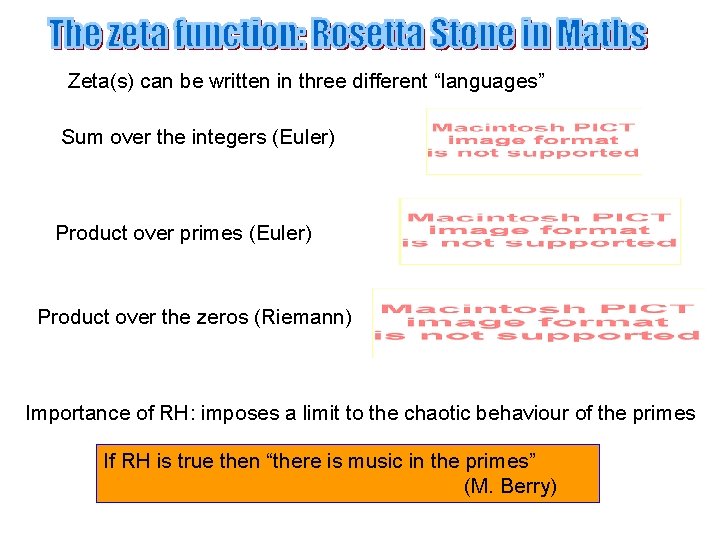
Zeta(s) can be written in three different “languages” Sum over the integers (Euler) Product over primes (Euler) Product over the zeros (Riemann) Importance of RH: imposes a limit to the chaotic behaviour of the primes If RH is true then “there is music in the primes” (M. Berry)
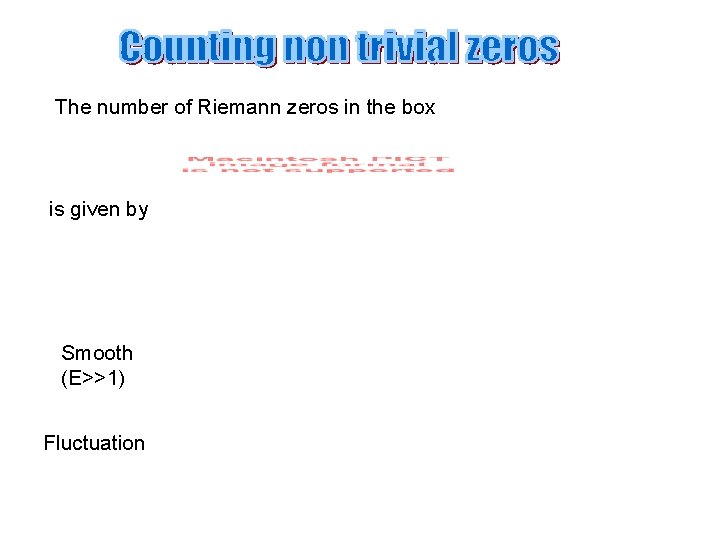
The number of Riemann zeros in the box is given by Smooth (E>>1) Fluctuation
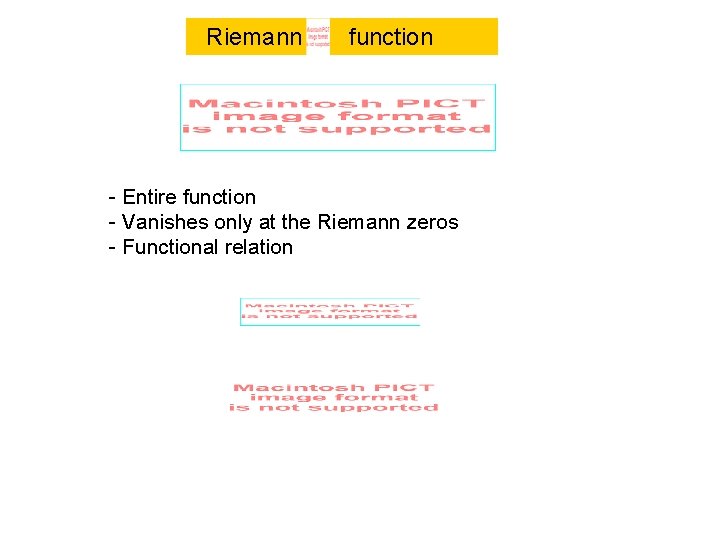
Riemann function - Entire function - Vanishes only at the Riemann zeros - Functional relation
Support for a spectral interpretation of the Riemann zeros Selberg’s trace formula (50´s): Classical-quantum correspondence similar to formulas in number theory Montgomery-Odlyzko law (70´s-80´s): The Riemann zeros behave as the eigenvalues of the GUE in Random Matrix Theory -> H breaks time reversal Berry´s quantum chaos proposal (80´s-90´s): The Riemann operator is the quantization of a classical chaotic Hamiltonian Berry-Keating/Connes (99): H = xp could be the Riemann operator
Berry´s quantum chaos proposal (80´s-90´s): the Riemann zeros are spectra of a quantum chaotic system Analogy between the number theory formula: and the fluctuation part of the spectrum of a classical chaotic Hamiltonian Dictionary: Idea: prime numbers are “time” and Riemann zeros are “energies”
• In 1999 Berry and Keating proposed that the 1 D classical Hamiltonian H = x p, when properly quantized, may contain the Riemann zeros in the spectrum • The Berry-Keating proposal was parallel to Connes adelic approach to the RH. These approaches are semiclassical (heuristic)
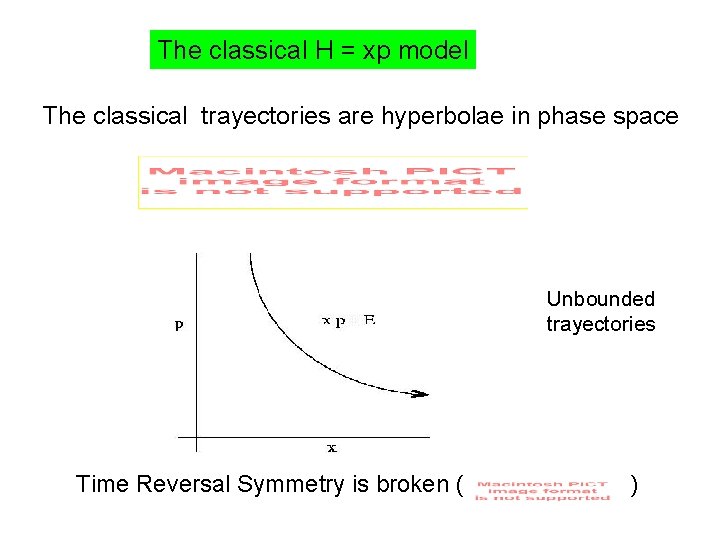
The classical H = xp model The classical trayectories are hyperbolae in phase space Unbounded trayectories Time Reversal Symmetry is broken ( )
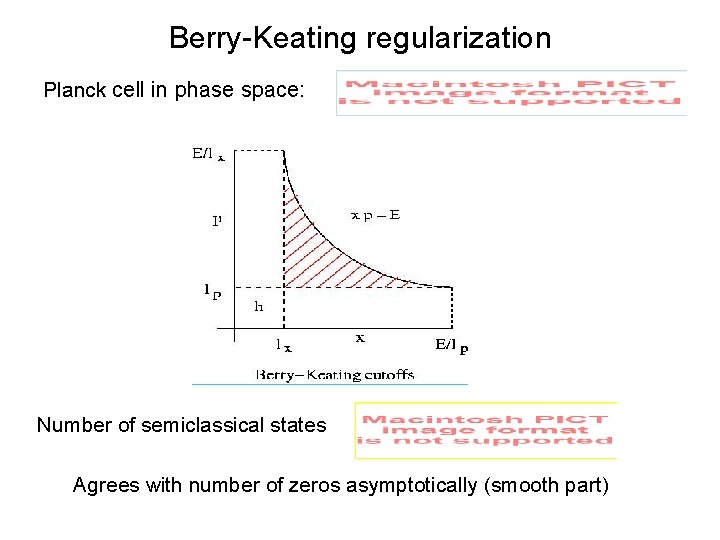
Berry-Keating regularization Planck cell in phase space: Number of semiclassical states Agrees with number of zeros asymptotically (smooth part)
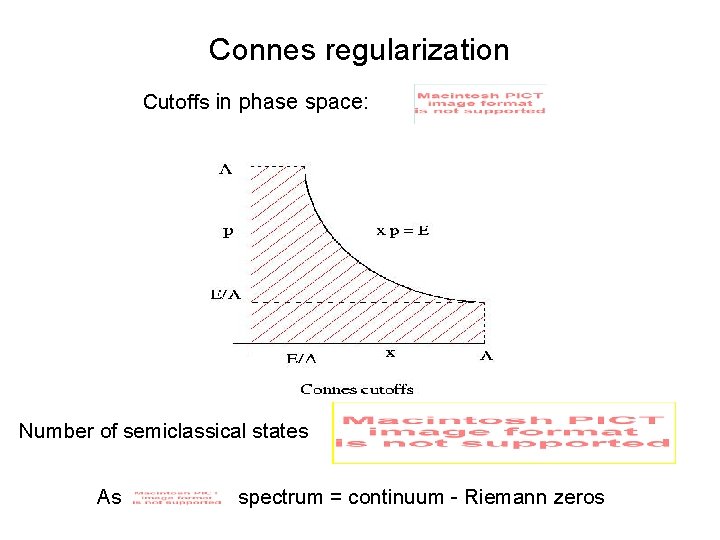
Connes regularization Cutoffs in phase space: Number of semiclassical states As spectrum = continuum - Riemann zeros
Are there quantum versions of the Berry. Keating/Connes “semiclassical” models?
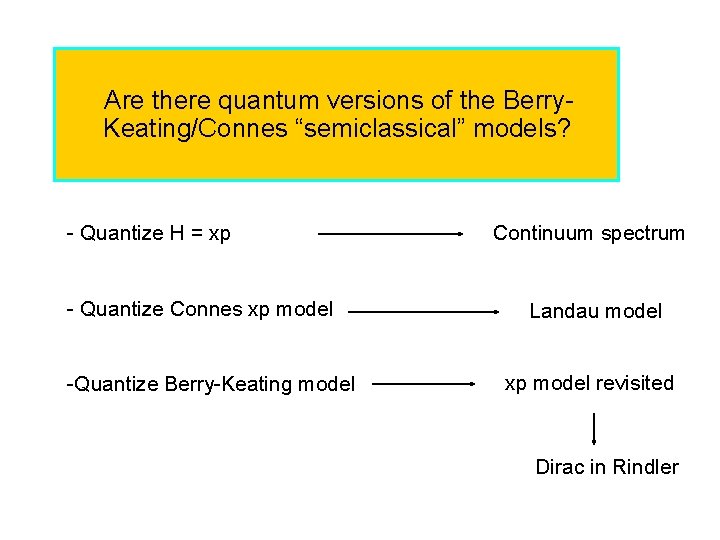
Are there quantum versions of the Berry. Keating/Connes “semiclassical” models? - Quantize H = xp - Quantize Connes xp model -Quantize Berry-Keating model Continuum spectrum Landau model xp model revisited Dirac in Rindler
Quantization of H = xp Define the normal ordered operator in the half-line H is a self-adjoint operator: eigenfunctions The spectrum is a continuum On the real line H is doubly degenerate with even and odd eigenfunctions under parity
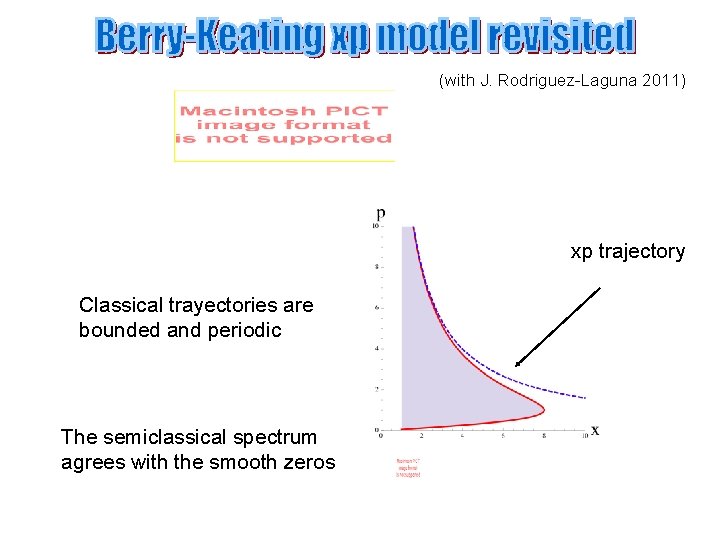
(with J. Rodriguez-Laguna 2011) xp trajectory Classical trayectories are bounded and periodic The semiclassical spectrum agrees with the smooth zeros
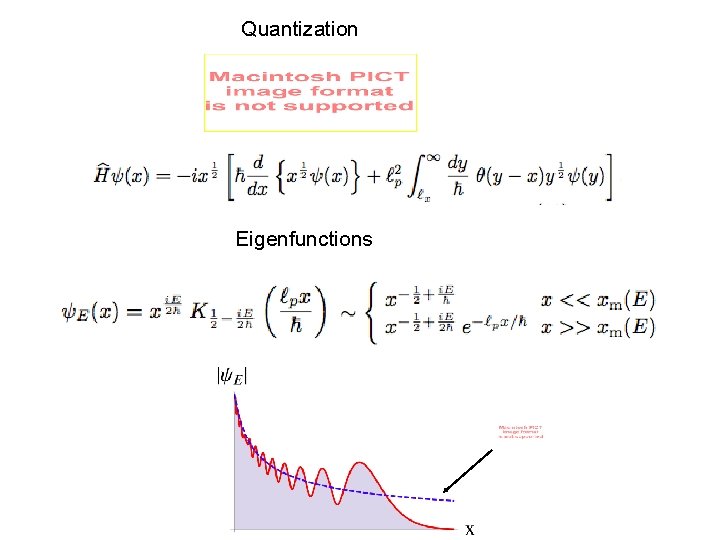
Quantization Eigenfunctions
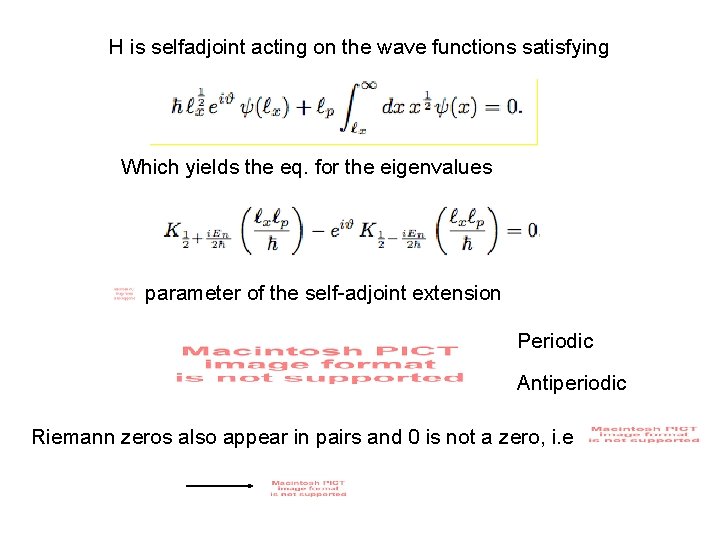
H is selfadjoint acting on the wave functions satisfying Which yields the eq. for the eigenvalues parameter of the self-adjoint extension Periodic Antiperiodic Riemann zeros also appear in pairs and 0 is not a zero, i. e
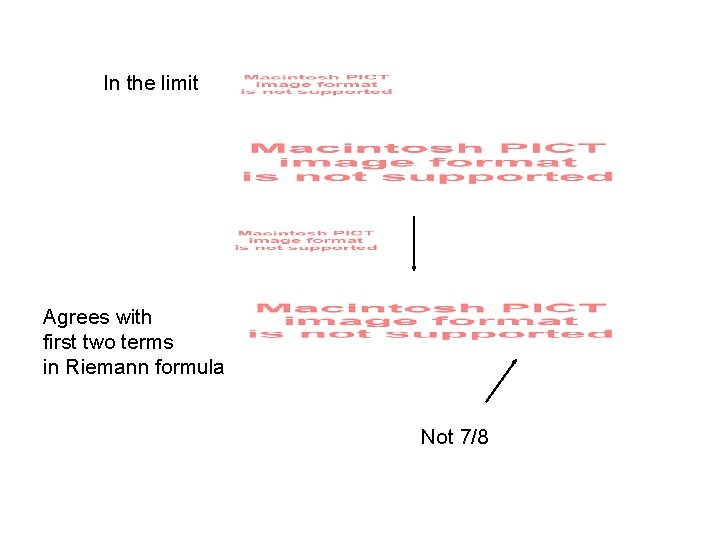
In the limit Agrees with first two terms in Riemann formula Not 7/8
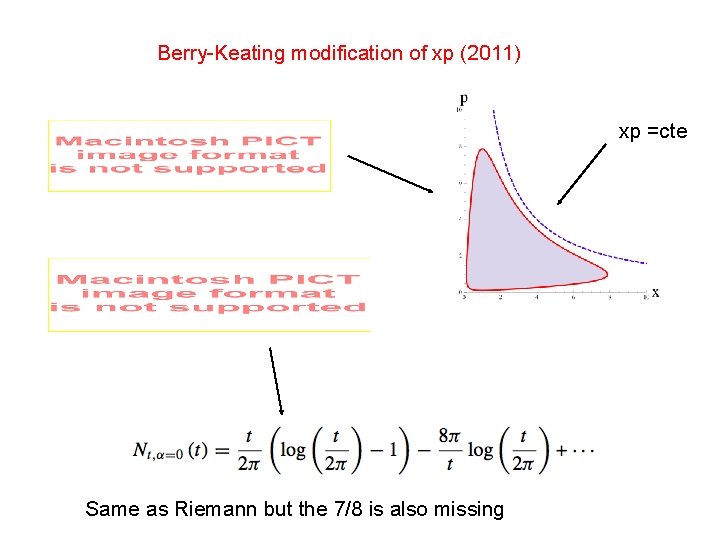
Berry-Keating modification of xp (2011) xp =cte Same as Riemann but the 7/8 is also missing
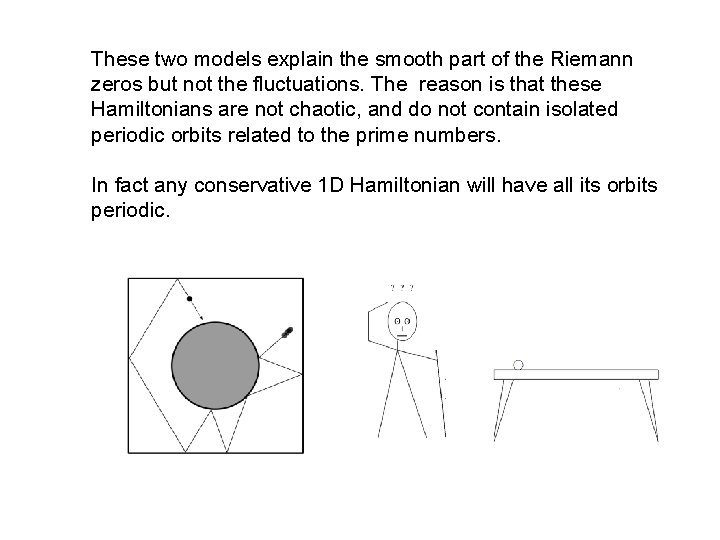
These two models explain the smooth part of the Riemann zeros but not the fluctuations. The reason is that these Hamiltonians are not chaotic, and do not contain isolated periodic orbits related to the prime numbers. In fact any conservative 1 D Hamiltonian will have all its orbits periodic.
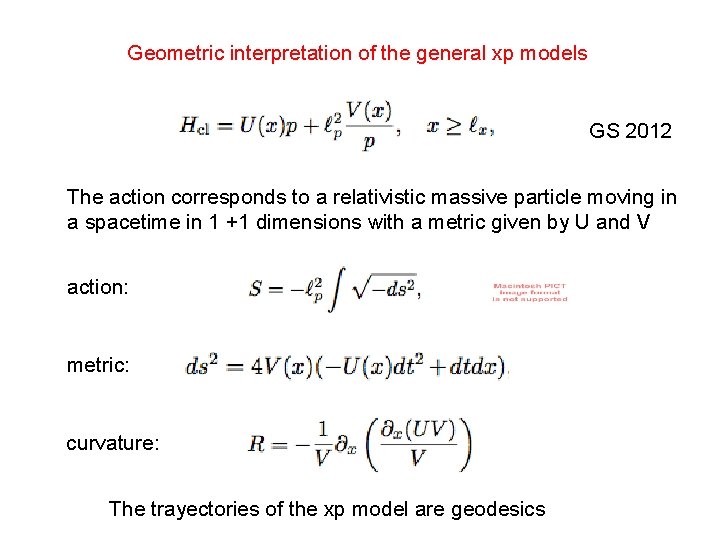
Geometric interpretation of the general xp models GS 2012 The action corresponds to a relativistic massive particle moving in a spacetime in 1 +1 dimensions with a metric given by U and V action: metric: curvature: The trayectories of the xp model are geodesics
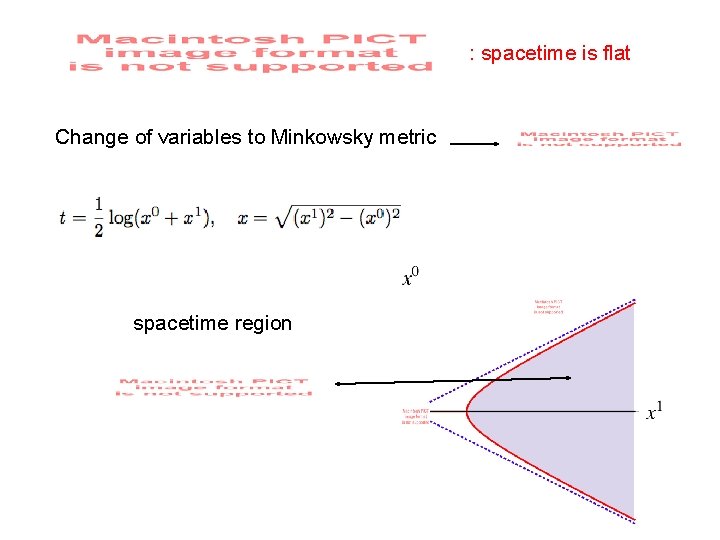
: spacetime is flat Change of variables to Minkowsky metric spacetime region
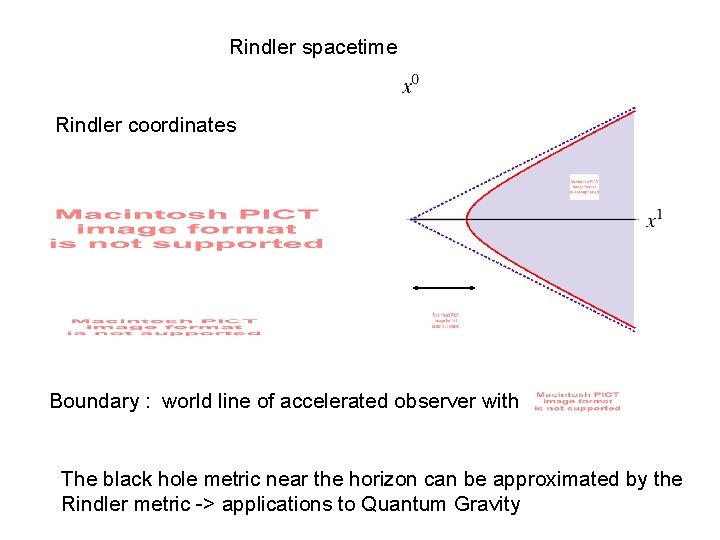
Rindler spacetime Rindler coordinates Boundary : world line of accelerated observer with The black hole metric near the horizon can be approximated by the Rindler metric -> applications to Quantum Gravity
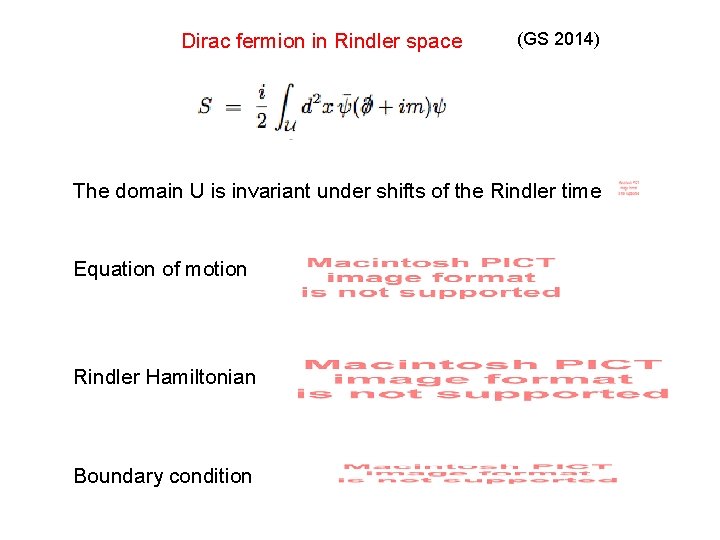
Dirac fermion in Rindler space (GS 2014) The domain U is invariant under shifts of the Rindler time Equation of motion Rindler Hamiltonian Boundary condition
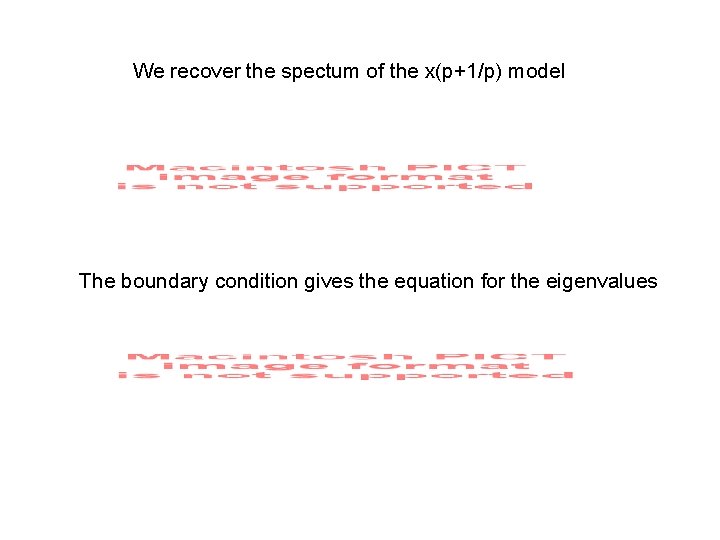
We recover the spectum of the x(p+1/p) model The boundary condition gives the equation for the eigenvalues
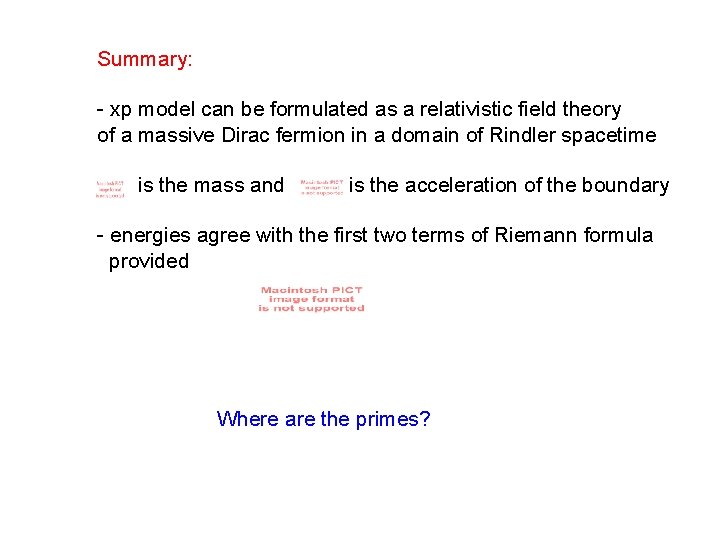
Summary: - xp model can be formulated as a relativistic field theory of a massive Dirac fermion in a domain of Rindler spacetime is the mass and is the acceleration of the boundary - energies agree with the first two terms of Riemann formula provided Where are the primes?
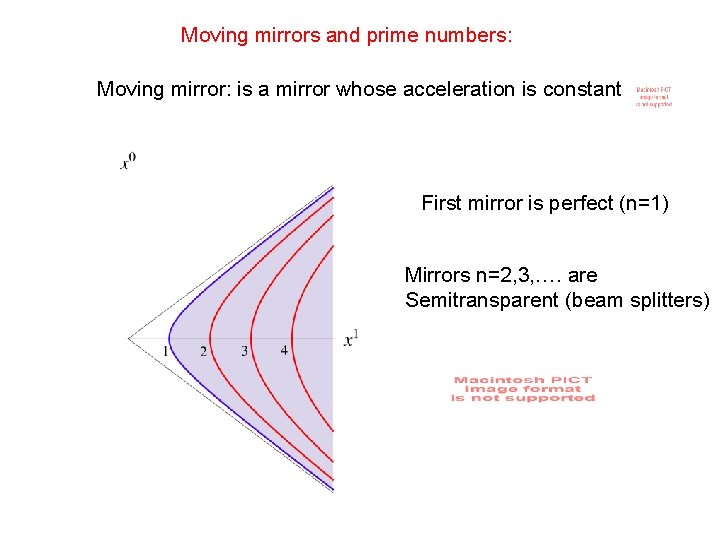
Moving mirrors and prime numbers: Moving mirror: is a mirror whose acceleration is constant First mirror is perfect (n=1) Mirrors n=2, 3, …. are Semitransparent (beam splitters)
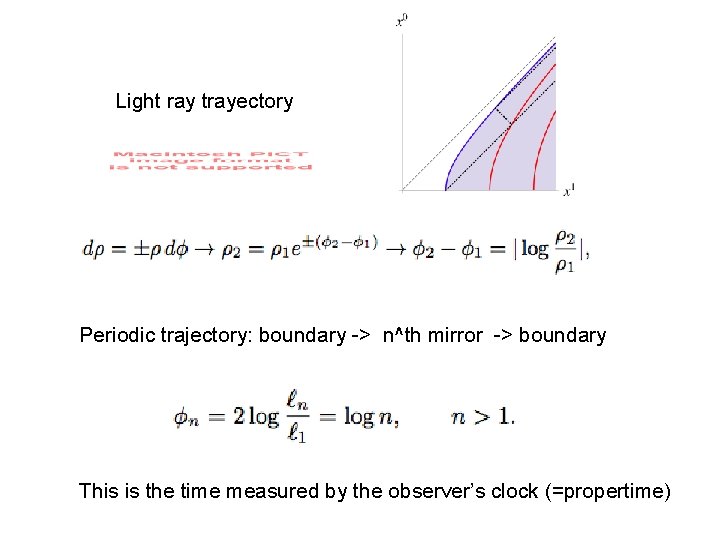
Light ray trayectory Periodic trajectory: boundary -> n^th mirror -> boundary This is the time measured by the observer’s clock (=propertime)
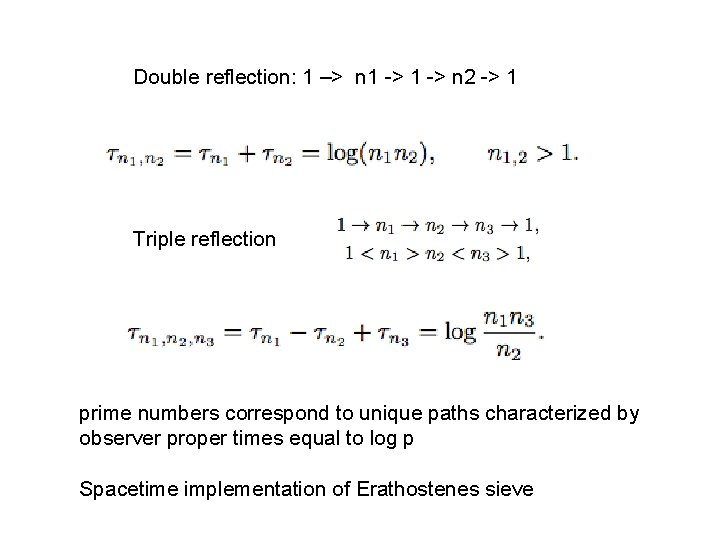
Double reflection: 1 –> n 1 -> n 2 -> 1 Triple reflection prime numbers correspond to unique paths characterized by observer proper times equal to log p Spacetime implementation of Erathostenes sieve
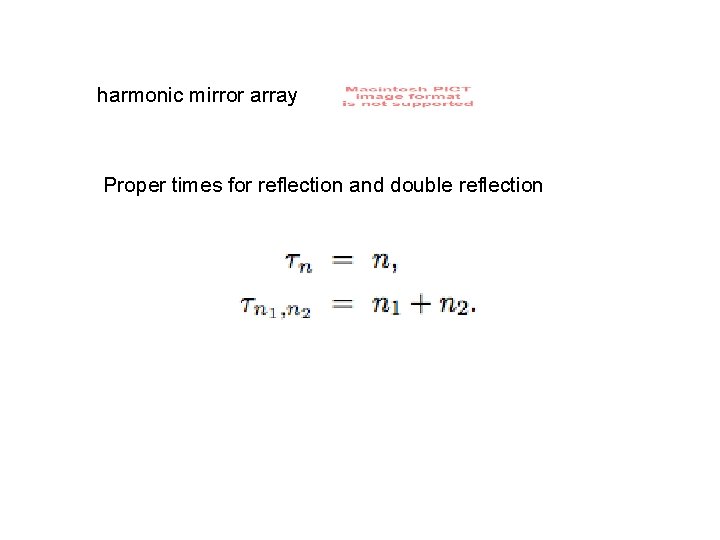
harmonic mirror array Proper times for reflection and double reflection
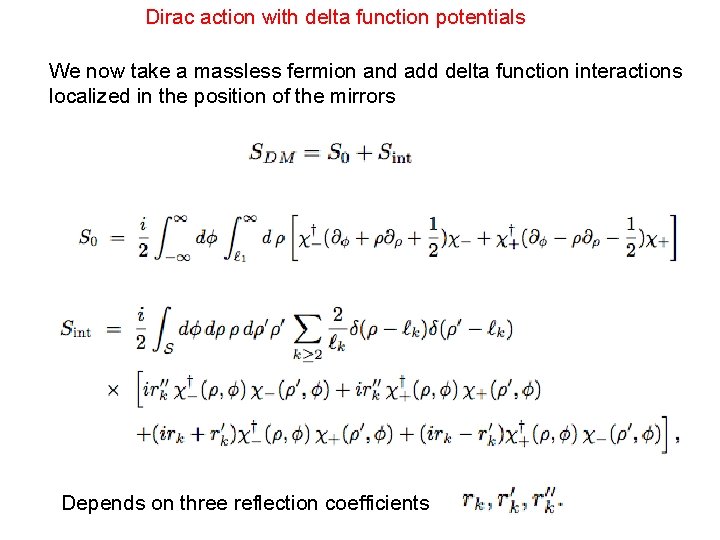
Dirac action with delta function potentials We now take a massless fermion and add delta function interactions localized in the position of the mirrors Depends on three reflection coefficients
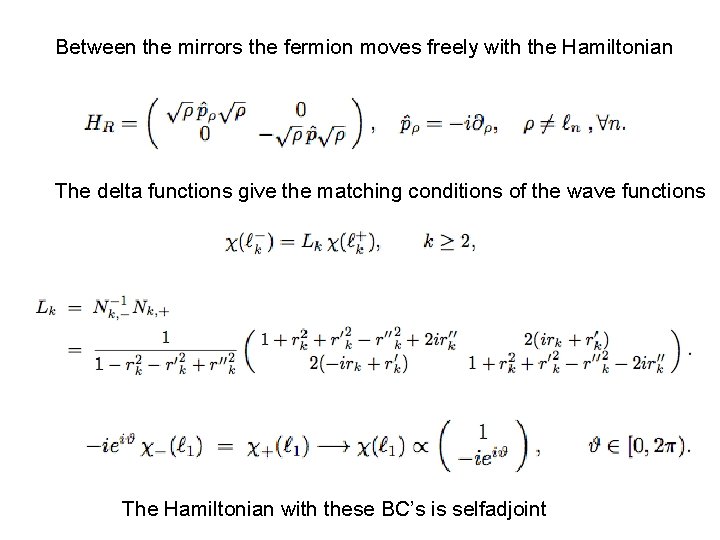
Between the mirrors the fermion moves freely with the Hamiltonian The delta functions give the matching conditions of the wave functions The Hamiltonian with these BC’s is selfadjoint
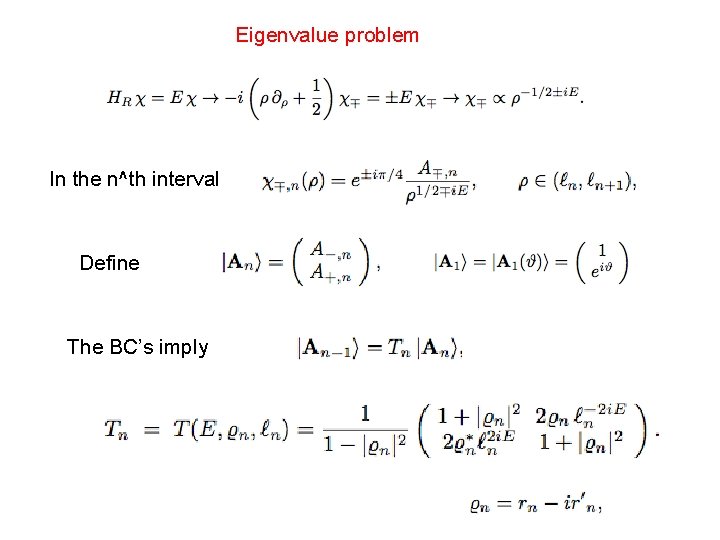
Eigenvalue problem In the n^th interval Define The BC’s imply
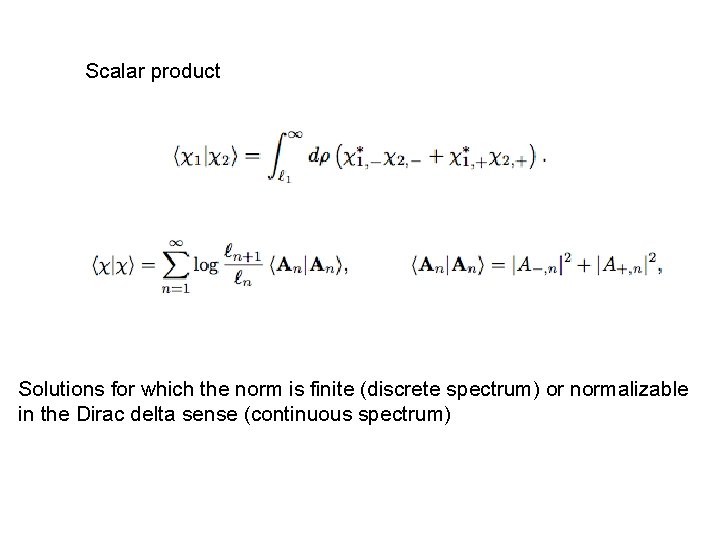
Scalar product Solutions for which the norm is finite (discrete spectrum) or normalizable in the Dirac delta sense (continuous spectrum)
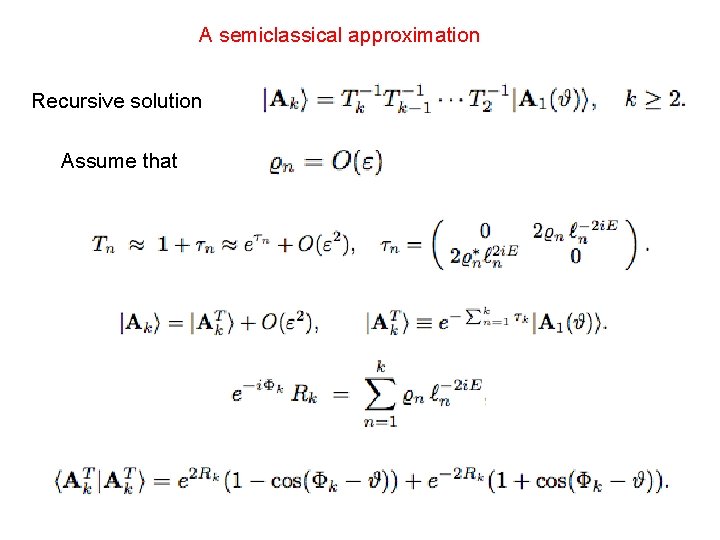
A semiclassical approximation Recursive solution Assume that
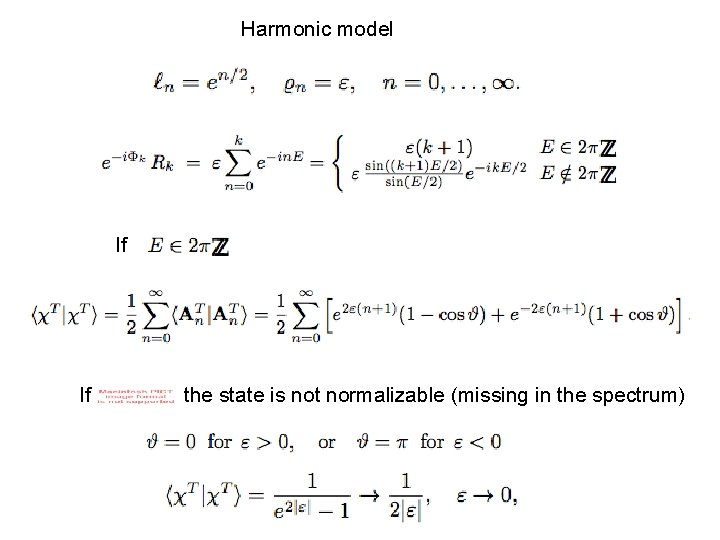
Harmonic model If If the state is not normalizable (missing in the spectrum)
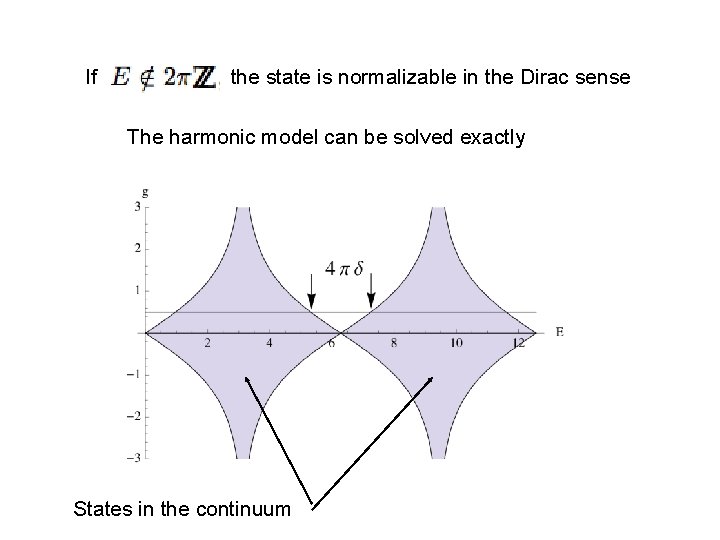
If the state is normalizable in the Dirac sense The harmonic model can be solved exactly States in the continuum
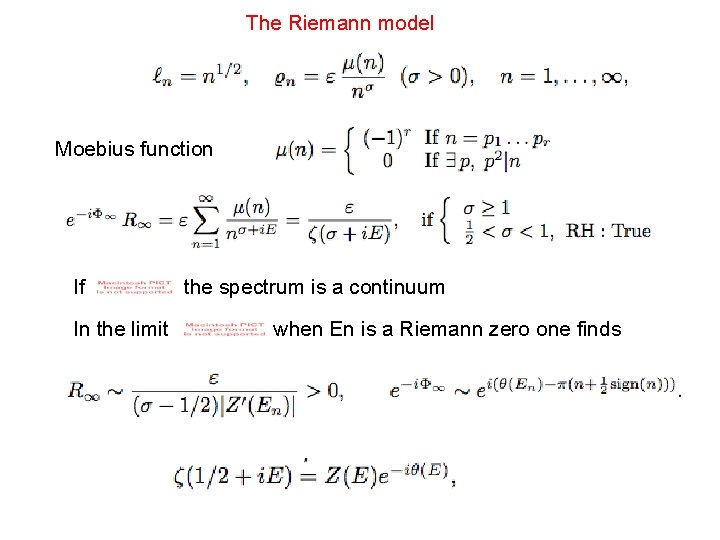
The Riemann model Moebius function If In the limit the spectrum is a continuum when En is a Riemann zero one finds
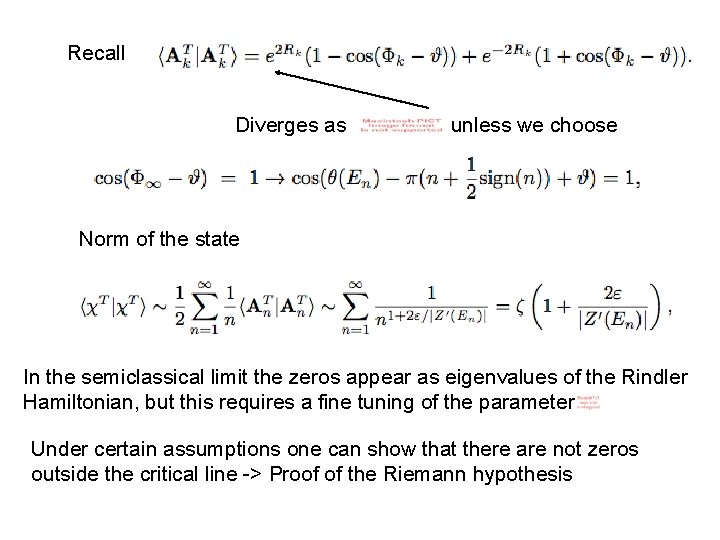
Recall Diverges as unless we choose Norm of the state In the semiclassical limit the zeros appear as eigenvalues of the Rindler Hamiltonian, but this requires a fine tuning of the parameter Under certain assumptions one can show that there are not zeros outside the critical line -> Proof of the Riemann hypothesis
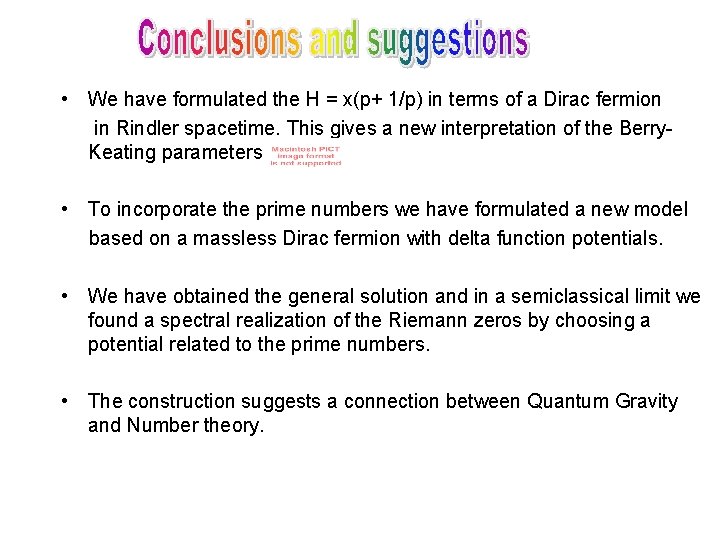
• We have formulated the H = x(p+ 1/p) in terms of a Dirac fermion in Rindler spacetime. This gives a new interpretation of the Berry. Keating parameters • To incorporate the prime numbers we have formulated a new model based on a massless Dirac fermion with delta function potentials. • We have obtained the general solution and in a semiclassical limit we found a spectral realization of the Riemann zeros by choosing a potential related to the prime numbers. • The construction suggests a connection between Quantum Gravity and Number theory.
Muchas gracias por su atención