Evidence of Evolution Genetic Variation and Patterns of
- Slides: 39
Evidence of Evolution Genetic Variation and Patterns of Evolution
Elements of Natural Selection 1. All species have genetic variation. 2. Since organisms generally produce more offspring than can be supported by the environment, individuals within a species frequently complete with each other for survival. 3. The environment itself presents many challenges for an organism's survival. 4. Survival of the fittest occurs 5. The traits of the organisms best suited to a certain habitat tend to become more frequent in a population over time.
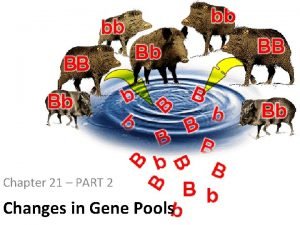
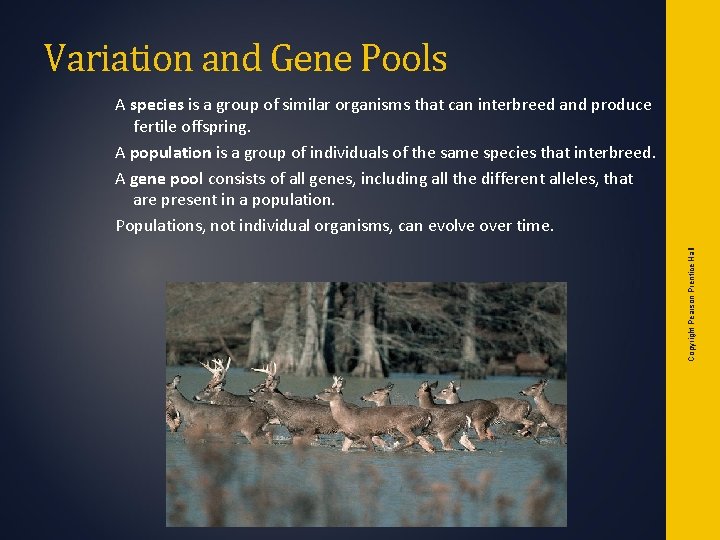
Variation and Gene Pools Copyright Pearson Prentice Hall A species is a group of similar organisms that can interbreed and produce fertile offspring. A population is a group of individuals of the same species that interbreed. A gene pool consists of all genes, including all the different alleles, that are present in a population. Populations, not individual organisms, can evolve over time.
Natural selection can affect the distributions of phenotypes in any of three ways: • directional selection • stabilizing selection • disruptive selection Copyright Pearson Prentice Hall Natural selection on single-gene traits can lead to changes in allele frequencies and thus to evolution.
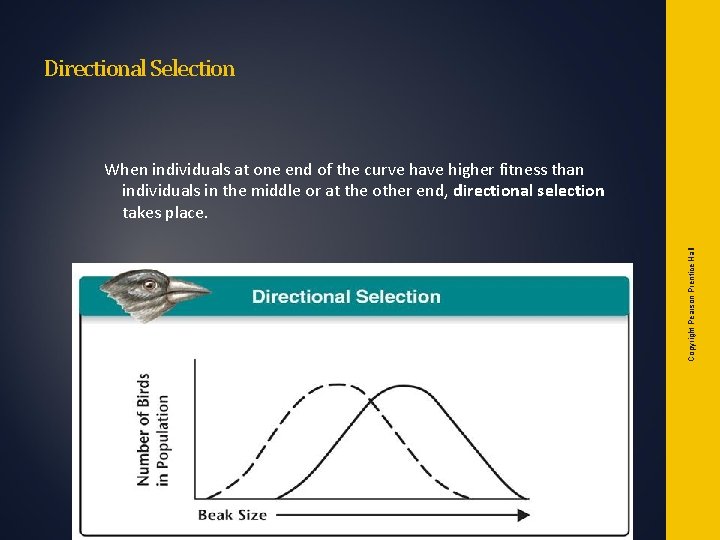
Directional Selection Copyright Pearson Prentice Hall When individuals at one end of the curve have higher fitness than individuals in the middle or at the other end, directional selection takes place.
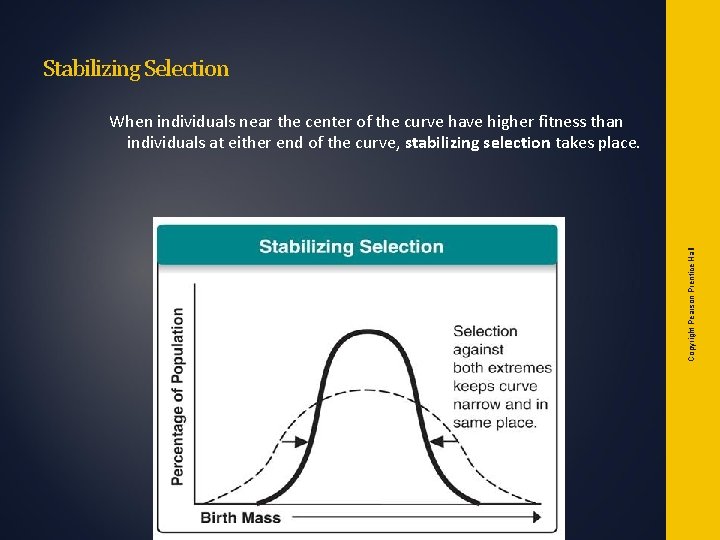
Stabilizing Selection Copyright Pearson Prentice Hall When individuals near the center of the curve have higher fitness than individuals at either end of the curve, stabilizing selection takes place.
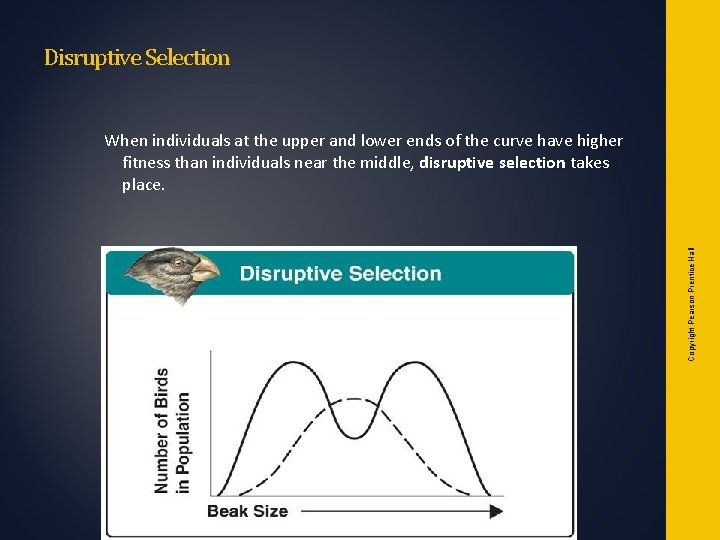
Disruptive Selection Copyright Pearson Prentice Hall When individuals at the upper and lower ends of the curve have higher fitness than individuals near the middle, disruptive selection takes place.
Consider that a flying beetle has been introduced to a new tropical island. Identify the type of natural selection at work in each example. – stabilizing, directional, or disruptive 1. Only the beetles with the darkest bodies thrive in the new environment. 2. The smallest beetles cannot compete for food. The largest beetles are easy prey for birds. 3. The beetles with the smallest wings a thrive in rotten tree trunks. The beetles with the largest wings thrive along the coastline.
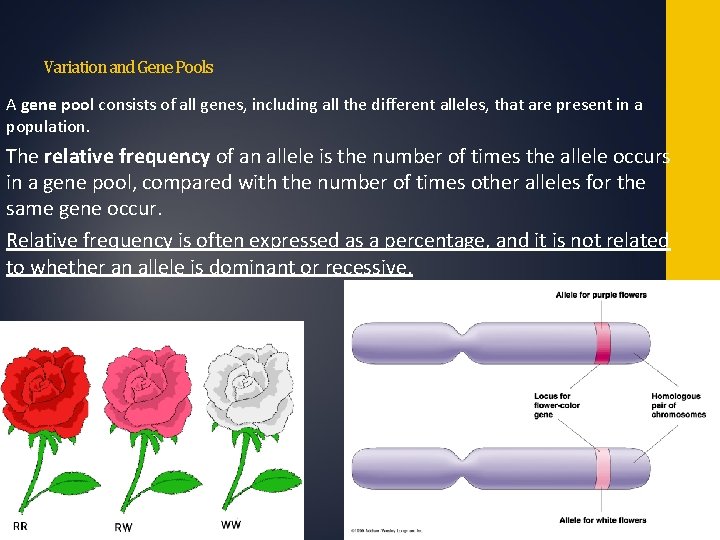
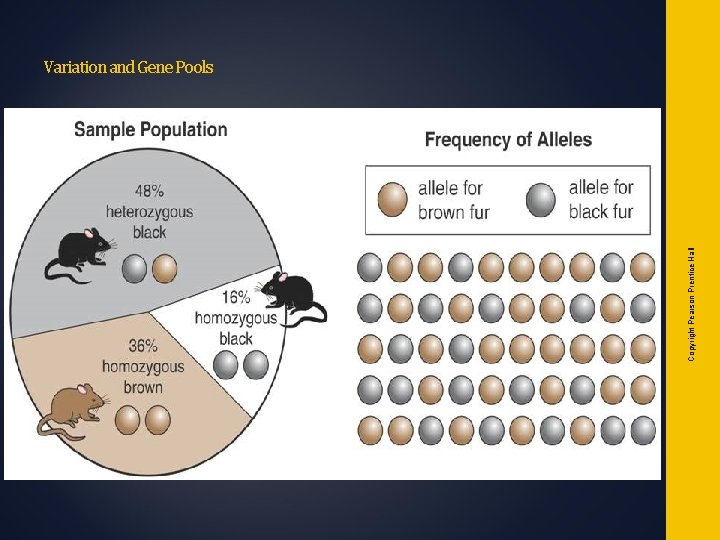
Variation and Gene Pools A gene pool consists of all genes, including all the different alleles, that are present in a population. The relative frequency of an allele is the number of times the allele occurs in a gene pool, compared with the number of times other alleles for the same gene occur. Relative frequency is often expressed as a percentage, and it is not related to whether an allele is dominant or recessive.
Variation and Gene Pools Copyright Pearson Prentice Hall Gene Pool for Fur Color in Mice
In genetic terms, evolution is any change in the relative frequency of alleles in a population. The two main sources of genetic variation are mutations and the genetic shuffling that results from sexual reproduction. Copyright Pearson Prentice Hall Variation and Gene Pools
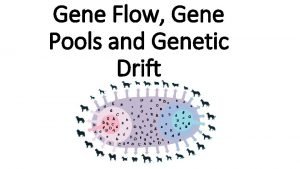
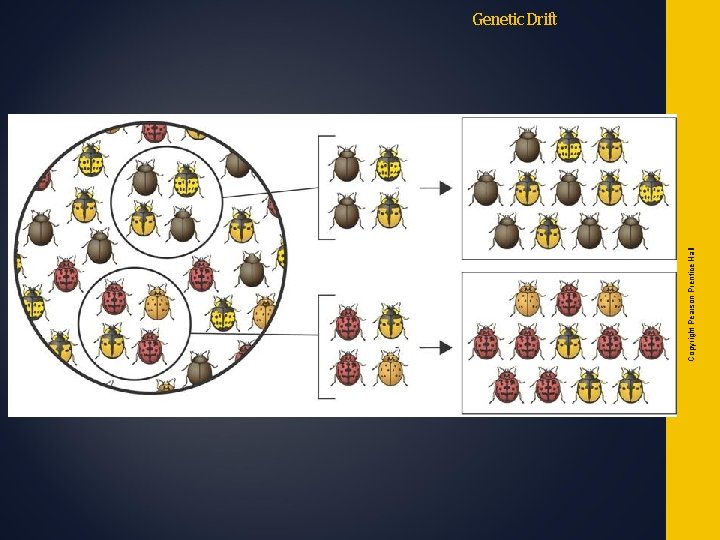
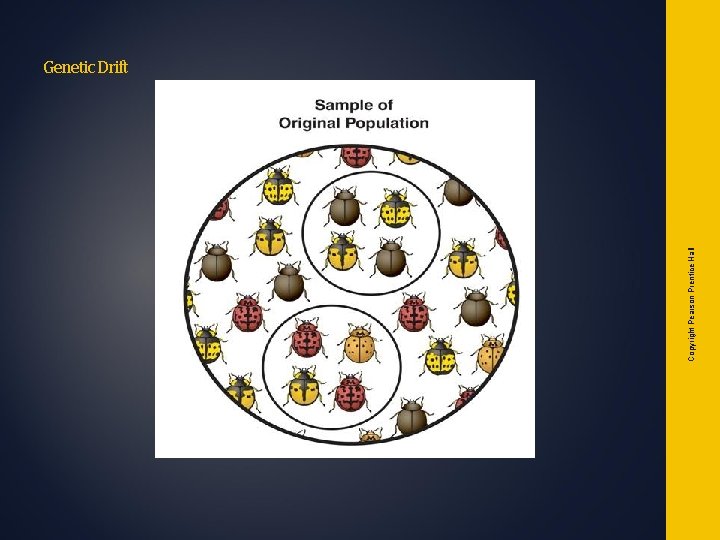
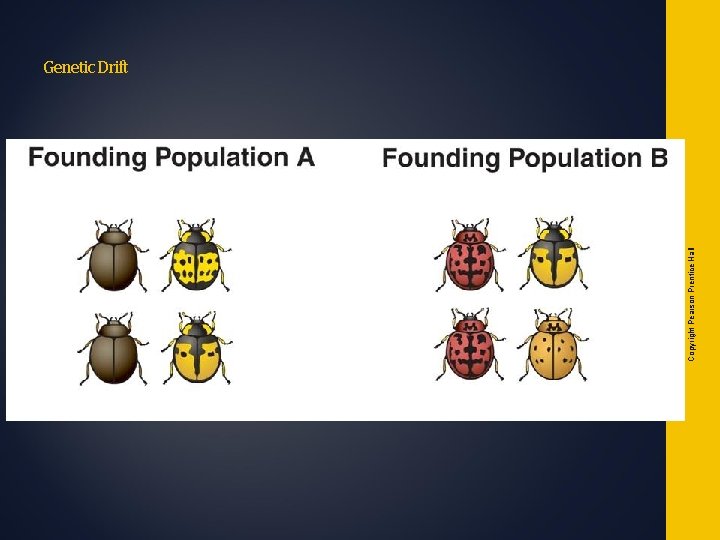
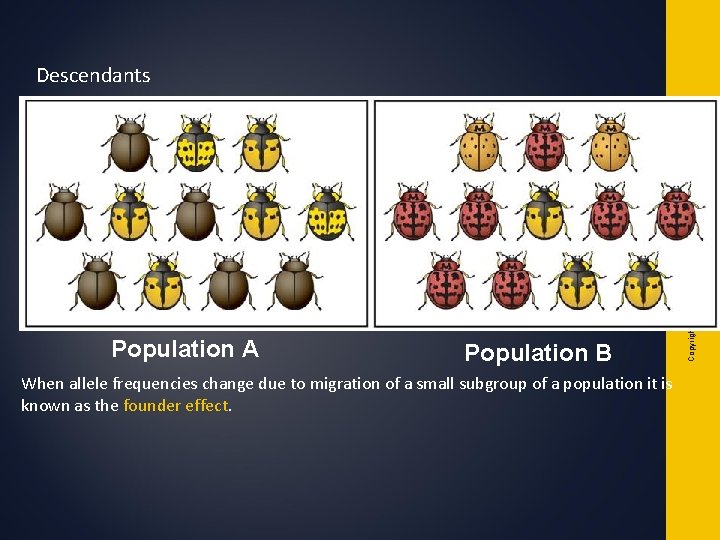
What is genetic drift? • A random change in allele frequency • Genetic drift may occur when a small group of individuals colonizes a new habitat. • Individuals may carry alleles in different relative frequencies than did the larger population from which they came.
Copyright Pearson Prentice Hall Genetic Drift
Copyright Pearson Prentice Hall Genetic Drift
Copyright Pearson Prentice Hall Genetic Drift
Population A Population B When allele frequencies change due to migration of a small subgroup of a population it is known as the founder effect. Copyright Pearson Prentice Hall Descendants
Evolution Versus Genetic Equilibrium Copyright Pearson Prentice Hall The Hardy-Weinberg principle states that allele frequencies in a population will remain constant unless one or more factors cause those frequencies to change. When allele frequencies remain constant it is called genetic equilibrium.
Five conditions are required to maintain genetic equilibrium from generation to generation: 1. there must be random mating, 2. the population must be very large, 3. there can be no movement into or out of the population, 4. there can be no mutations, and 5. there can be no natural selection. Copyright Pearson Prentice Hall Evolution Versus Genetic Equilibrium
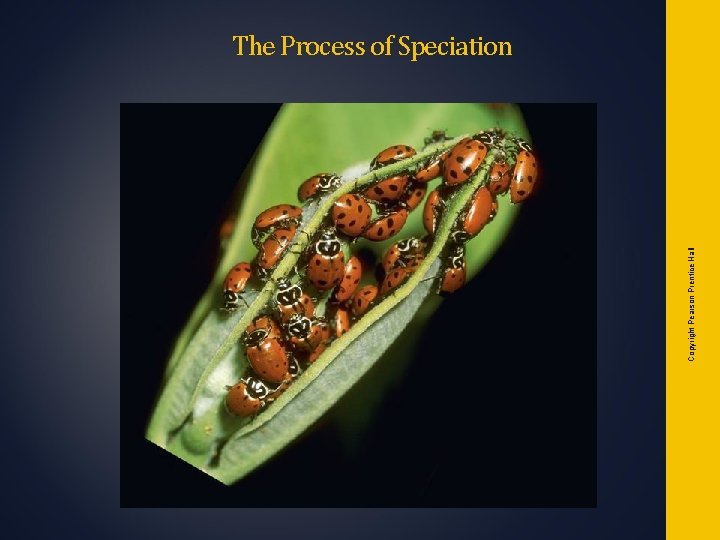
Copyright Pearson Prentice Hall The Process of Speciation
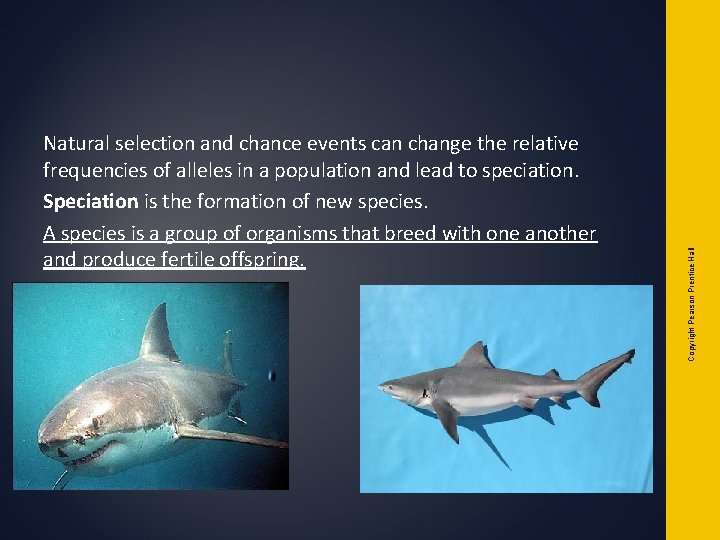
Copyright Pearson Prentice Hall Natural selection and chance events can change the relative frequencies of alleles in a population and lead to speciation. Speciation is the formation of new species. A species is a group of organisms that breed with one another and produce fertile offspring.
Isolating Mechanisms What factors are involved in the formation of new species? Copyright Pearson Prentice Hall The gene pools of two populations must become separated for them to become new species.
Isolating Mechanisms Copyright Pearson Prentice Hall As new species evolve, populations become reproductively isolated from each other. When the members of two populations cannot interbreed and produce fertile offspring, reproductive isolation has occurred.
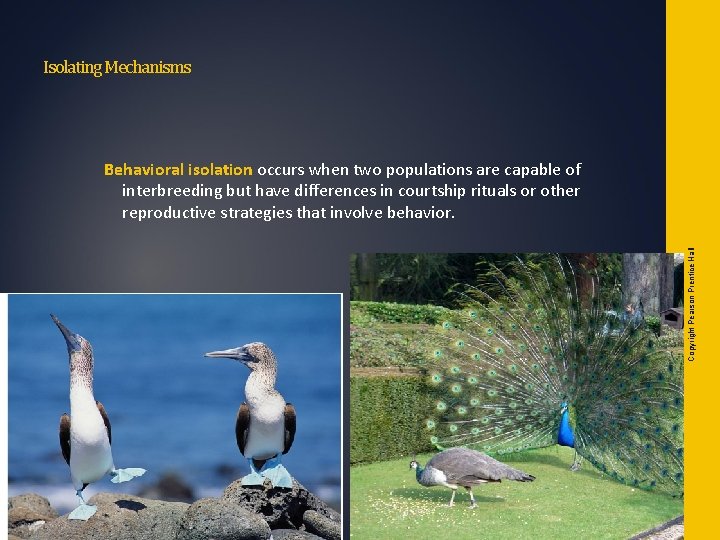
Isolating Mechanisms Copyright Pearson Prentice Hall Behavioral isolation occurs when two populations are capable of interbreeding but have differences in courtship rituals or other reproductive strategies that involve behavior.
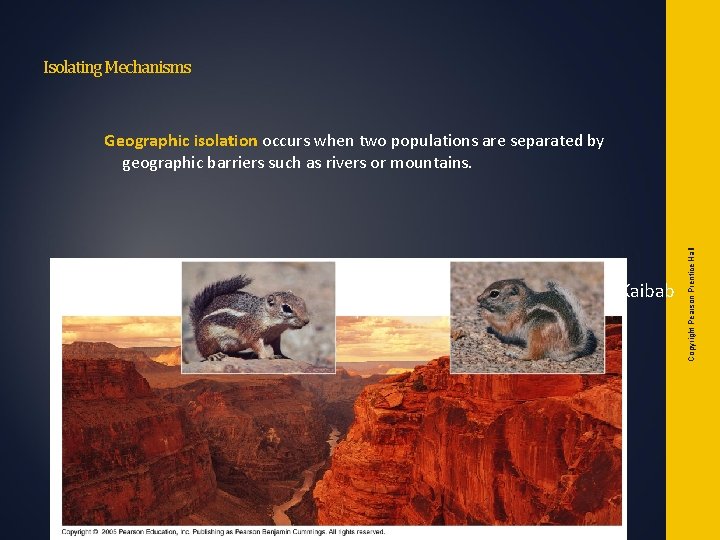
Isolating Mechanisms Abert Kaibab Copyright Pearson Prentice Hall Geographic isolation occurs when two populations are separated by geographic barriers such as rivers or mountains.
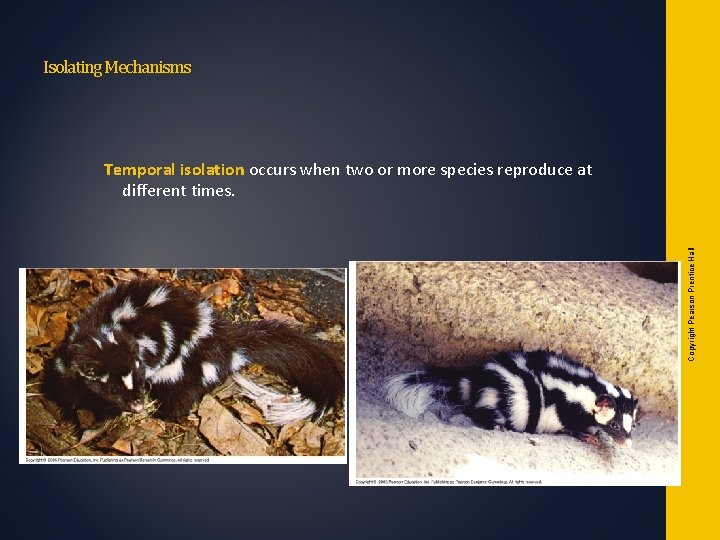
Isolating Mechanisms Copyright Pearson Prentice Hall Temporal isolation occurs when two or more species reproduce at different times.
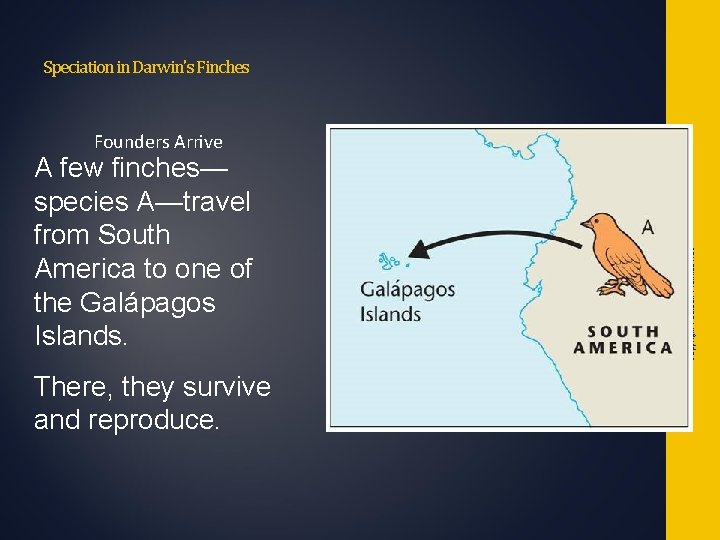
Speciation in Darwin's Finches A few finches— species A—travel from South America to one of the Galápagos Islands. There, they survive and reproduce. Copyright Pearson Prentice Hall Founders Arrive
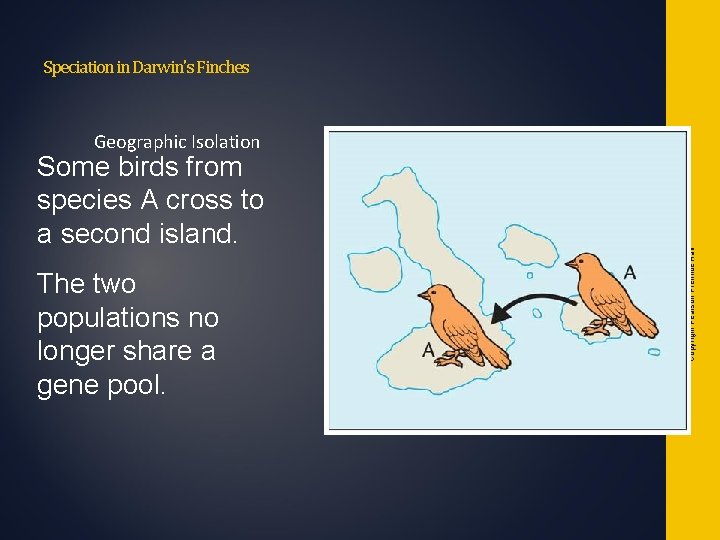
Speciation in Darwin's Finches Some birds from species A cross to a second island. The two populations no longer share a gene pool. Copyright Pearson Prentice Hall Geographic Isolation
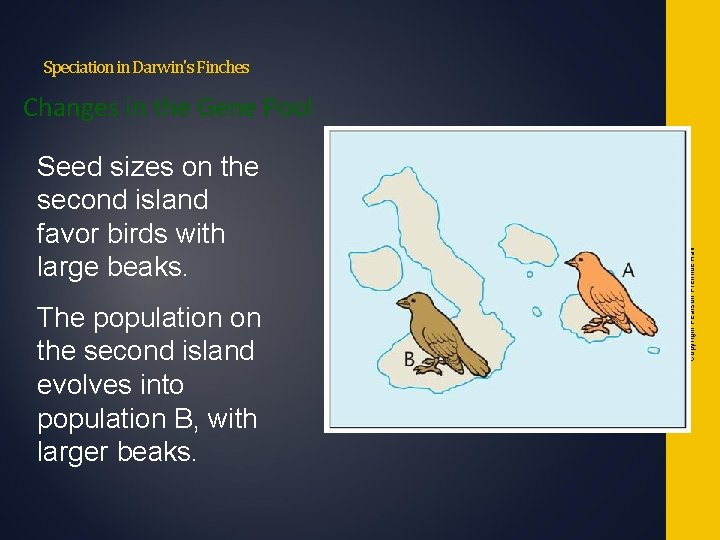
Speciation in Darwin's Finches Seed sizes on the second island favor birds with large beaks. The population on the second island evolves into population B, with larger beaks. Copyright Pearson Prentice Hall Changes in the Gene Pool
Speciation in Darwin's Finches Reproductive Isolation Copyright Pearson Prentice Hall If population B birds cross back to the first island, they will not mate with birds from population A. Populations A and B are separate species.
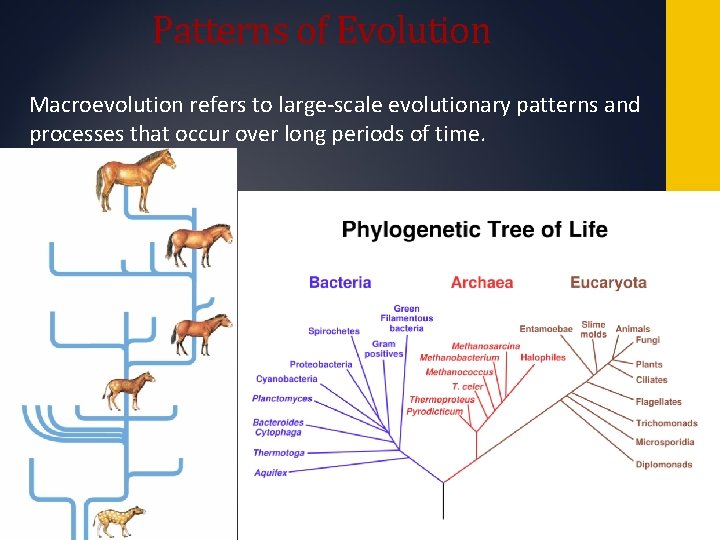
Patterns of Evolution Copyright Pearson Prentice Hall Macroevolution refers to large-scale evolutionary patterns and processes that occur over long periods of time.
Six important topics in macroevolution are: • extinction • adaptive radiation • convergent evolution • coevolution • punctuated equilibrium • changes in developmental genes Copyright Pearson Prentice Hall Macroevolution
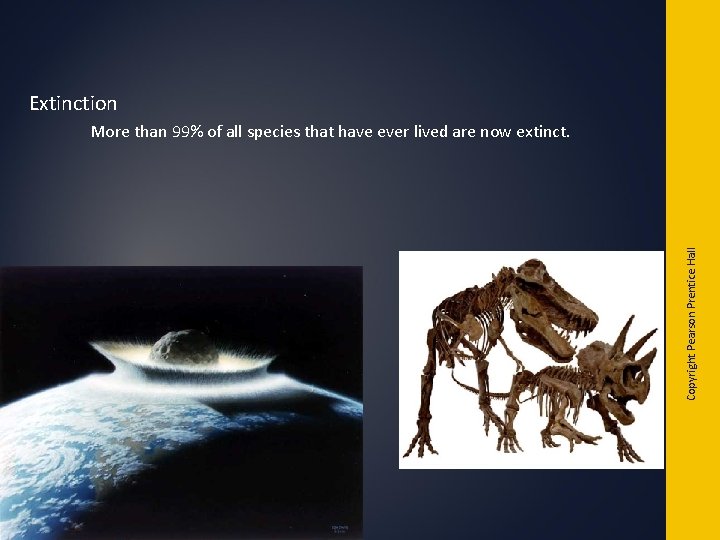
Extinction Copyright Pearson Prentice Hall More than 99% of all species that have ever lived are now extinct.
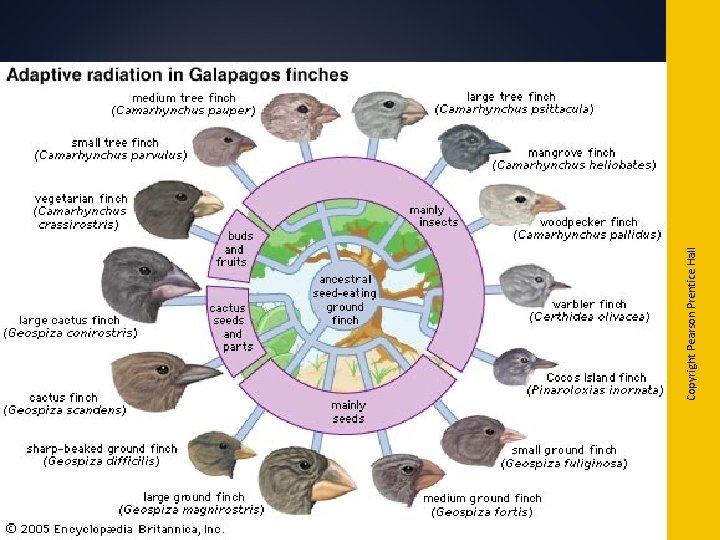
Adaptive radiation is the process by which a single species or a small group of species evolves into several different forms that live in different ways. For example, in the adaptive radiation of Darwin's finches, more than a dozen species evolved from a single species. Copyright Pearson Prentice Hall Adaptive Radiation
Copyright Pearson Prentice Hall
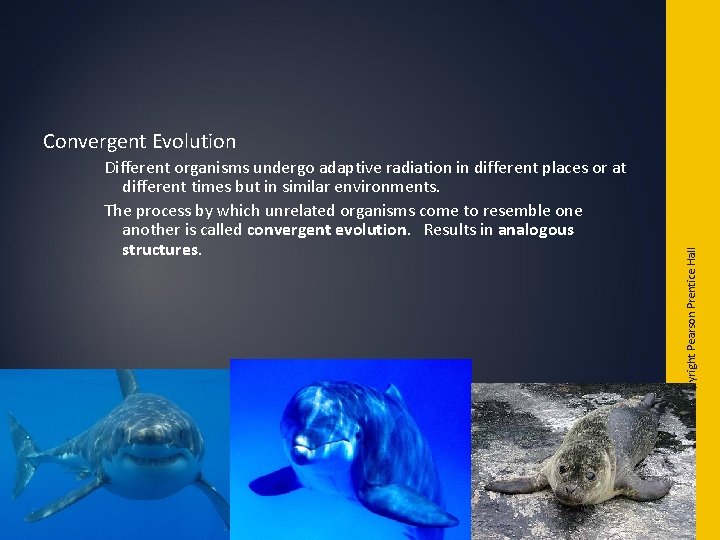
Different organisms undergo adaptive radiation in different places or at different times but in similar environments. The process by which unrelated organisms come to resemble one another is called convergent evolution. Results in analogous structures. Copyright Pearson Prentice Hall Convergent Evolution
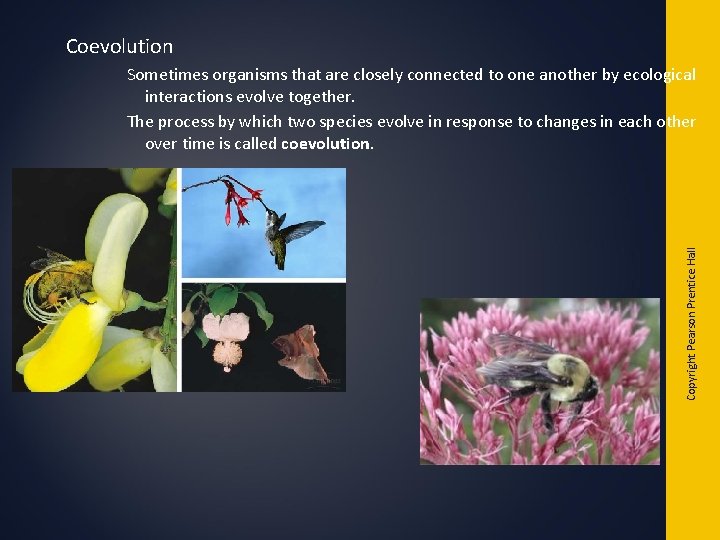
Coevolution Copyright Pearson Prentice Hall Sometimes organisms that are closely connected to one another by ecological interactions evolve together. The process by which two species evolve in response to changes in each other over time is called coevolution.
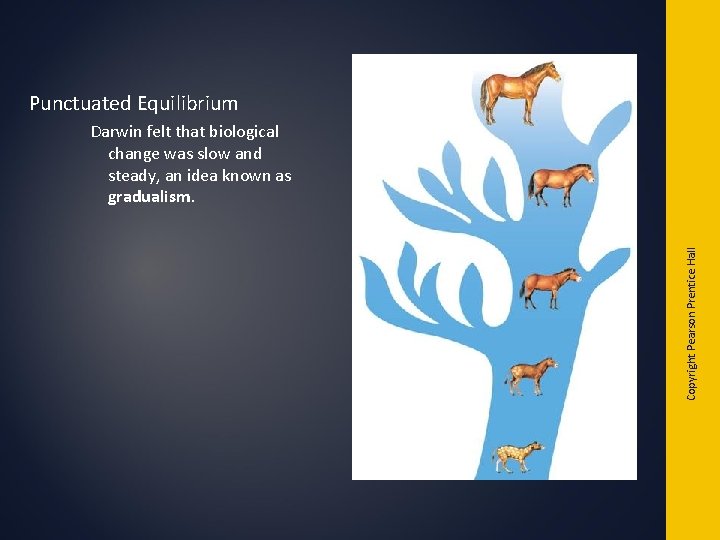
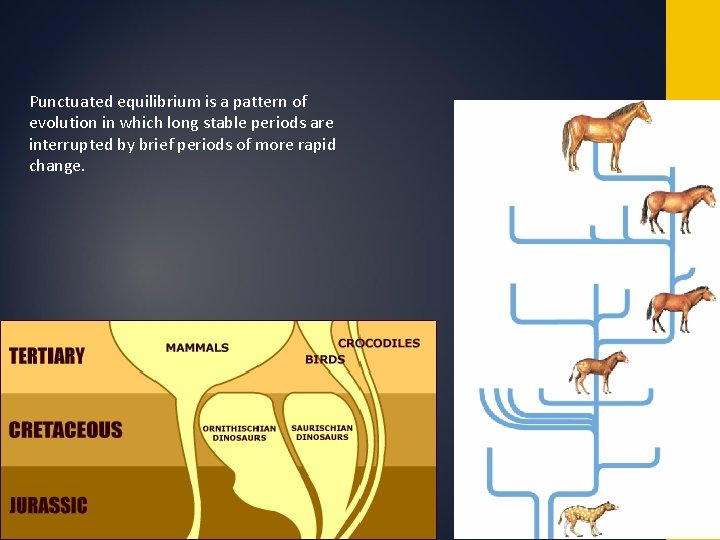
Punctuated Equilibrium Copyright Pearson Prentice Hall Darwin felt that biological change was slow and steady, an idea known as gradualism.
Copyright Pearson Prentice Hall Punctuated equilibrium is a pattern of evolution in which long stable periods are interrupted by brief periods of more rapid change.
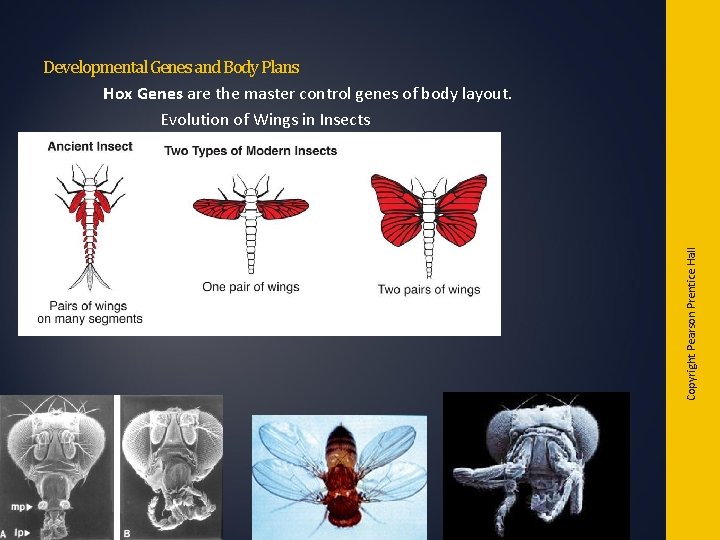
Copyright Pearson Prentice Hall Developmental Genes and Body Plans Hox Genes are the master control genes of body layout. Evolution of Wings in Insects