ertension Update Prof Ali M Kassem Head of



- Slides: 40
ertension Update Prof. Ali. M. Kassem Head of Internal Medicine and Cardiology Department Sohag Faculty of Medicine Sohag University
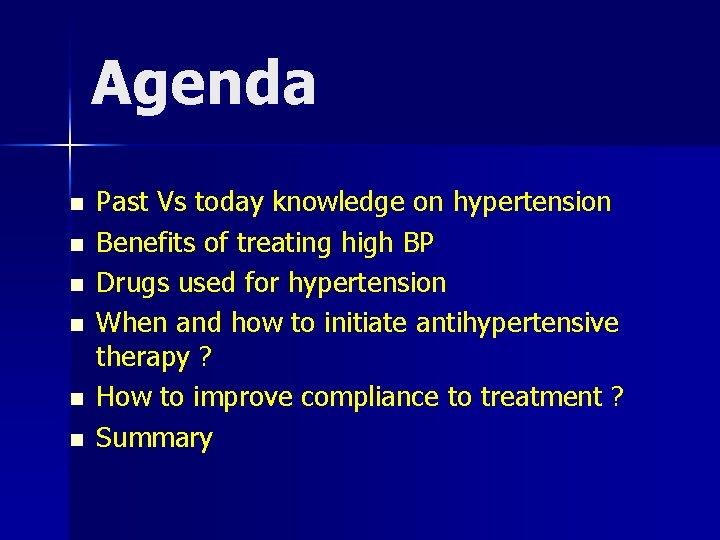
Agenda n n n Past Vs today knowledge on hypertension Benefits of treating high BP Drugs used for hypertension When and how to initiate antihypertensive therapy ? How to improve compliance to treatment ? Summary
Hyperextension in the past “The greatest danger to a man with high blood pressure lies in its discovery, because then some fool is certain to try and reduce it. ” Hay, Brit Med J, 1931
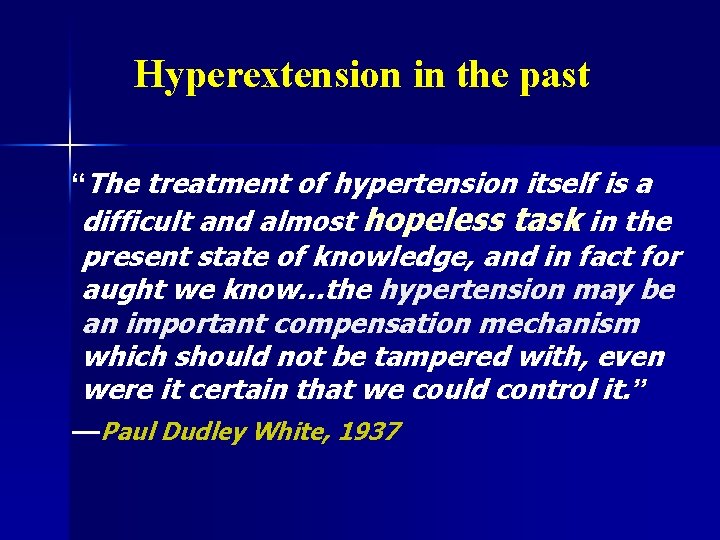
Hyperextension in the past “The treatment of hypertension itself is a difficult and almost hopeless task in the present state of knowledge, and in fact for aught we know. . . the hypertension may be an important compensation mechanism which should not be tampered with, even were it certain that we could control it. ” —Paul Dudley White, 1937
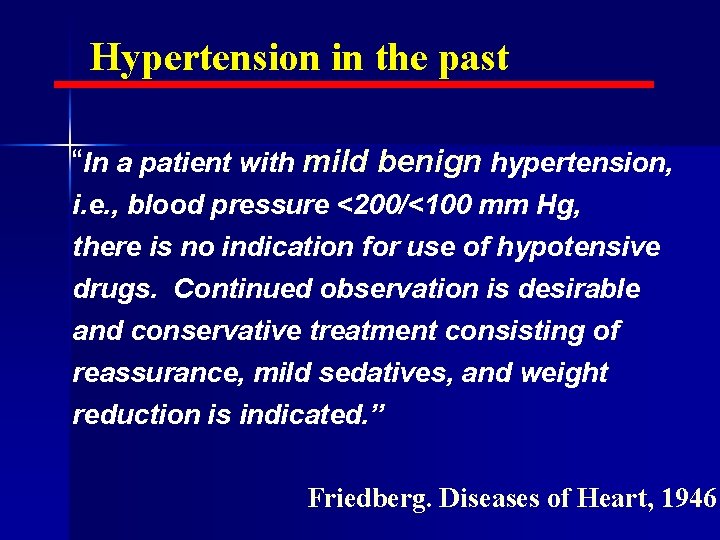
Hypertension in the past “In a patient with mild benign hypertension, i. e. , blood pressure <200/<100 mm Hg, there is no indication for use of hypotensive drugs. Continued observation is desirable and conservative treatment consisting of reassurance, mild sedatives, and weight reduction is indicated. ” Friedberg. Diseases of Heart, 1946
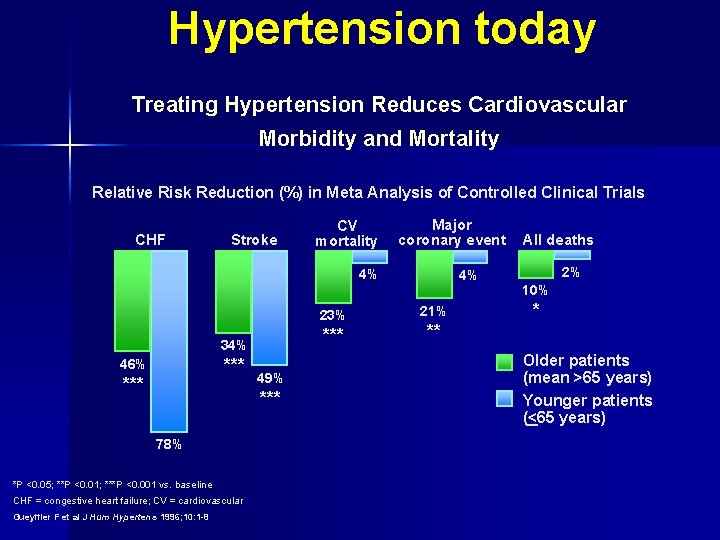
Hypertension today Treating Hypertension Reduces Cardiovascular Morbidity and Mortality Relative Risk Reduction (%) in Meta Analysis of Controlled Clinical Trials CHF Stroke CV mortality Major coronary event 4% 23% *** 34% *** 46% *** 49% *** 78% *P <0. 05; **P <0. 01; ***P <0. 001 vs. baseline CHF = congestive heart failure; CV = cardiovascular Gueyffier F et al J Hum Hypertens 1996; 10: 1 -8 4% 21% All deaths 2% 10% * ** Older patients (mean >65 years) Younger patients (<65 years)
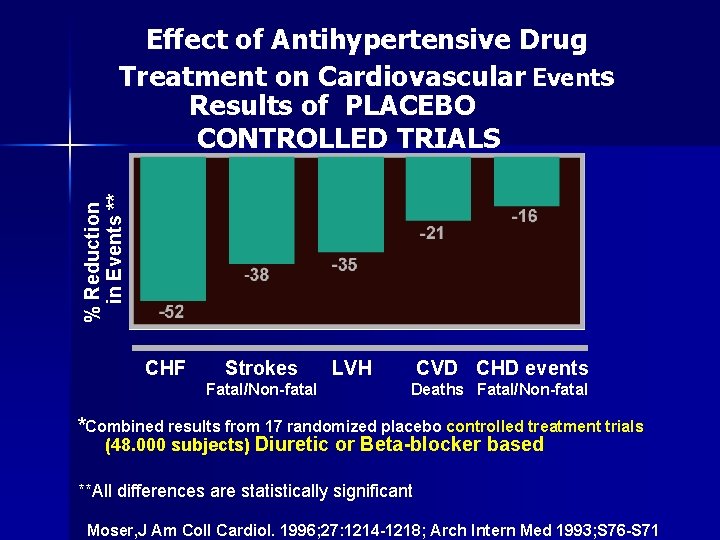
% Reduction in Events ** Effect of Antihypertensive Drug Treatment on Cardiovascular Events Results of PLACEBO CONTROLLED TRIALS CHF Strokes Fatal/Non-fatal LVH CVD CHD events Deaths Fatal/Non-fatal *Combined results from 17 randomized placebo controlled treatment trials (48. 000 subjects) Diuretic or Beta-blocker based **All differences are statistically significant Moser, J Am Coll Cardiol. 1996; 27: 1214 -1218; Arch Intern Med 1993; S 76 -S 71
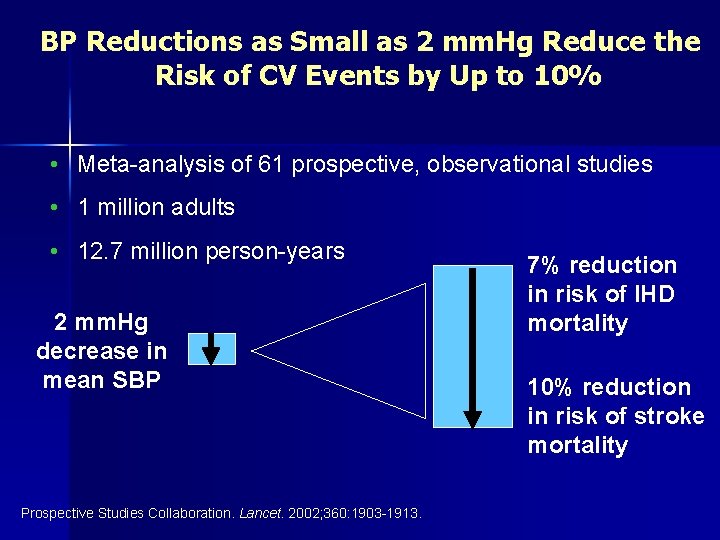
BP Reductions as Small as 2 mm. Hg Reduce the Risk of CV Events by Up to 10% • Meta-analysis of 61 prospective, observational studies • 1 million adults • 12. 7 million person-years 2 mm. Hg decrease in mean SBP Prospective Studies Collaboration. Lancet. 2002; 360: 1903 -1913. 7% reduction in risk of IHD mortality 10% reduction in risk of stroke mortality
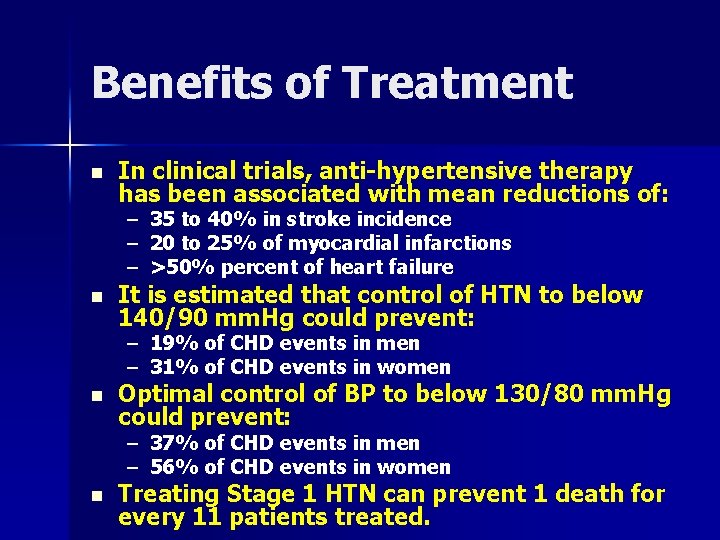
Benefits of Treatment n In clinical trials, anti-hypertensive therapy has been associated with mean reductions of: – 35 to 40% in stroke incidence – 20 to 25% of myocardial infarctions – >50% percent of heart failure n It is estimated that control of HTN to below 140/90 mm. Hg could prevent: – 19% of CHD events in men – 31% of CHD events in women n Optimal control of BP to below 130/80 mm. Hg could prevent: – 37% of CHD events in men – 56% of CHD events in women n Treating Stage 1 HTN can prevent 1 death for every 11 patients treated.
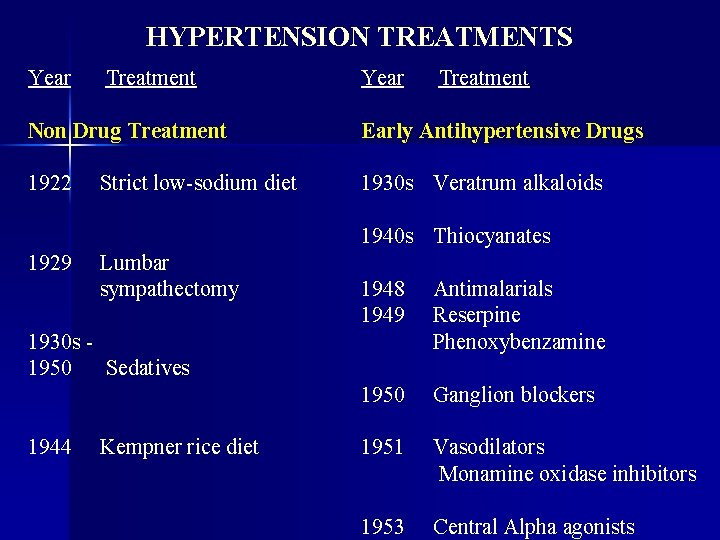
HYPERTENSION TREATMENTS Year Treatment Non Drug Treatment Early Antihypertensive Drugs 1922 1930 s Veratrum alkaloids Strict low-sodium diet 1940 s Thiocyanates 1929 Lumbar sympathectomy 1948 1949 Antimalarials Reserpine Phenoxybenzamine 1950 Ganglion blockers 1951 Vasodilators Monamine oxidase inhibitors 1953 Central Alpha agonists 1930 s 1950 Sedatives 1944 Kempner rice diet
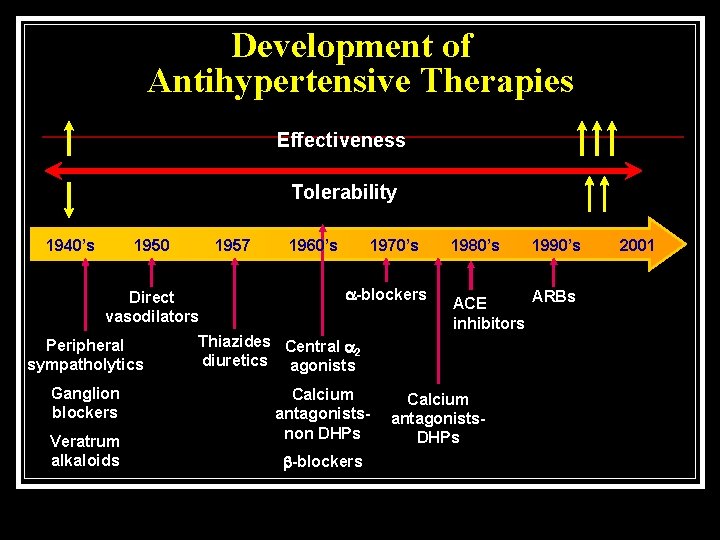
Development of Antihypertensive Therapies Effectiveness Tolerability 1940’s 1950 1957 Direct vasodilators Peripheral sympatholytics Ganglion blockers Veratrum alkaloids 1960’s 1970’s -blockers 1980’s ARBs ACE inhibitors Thiazides Central 2 diuretics agonists Calcium antagonistsnon DHPs -blockers 1990’s Calcium antagonists. DHPs 2001
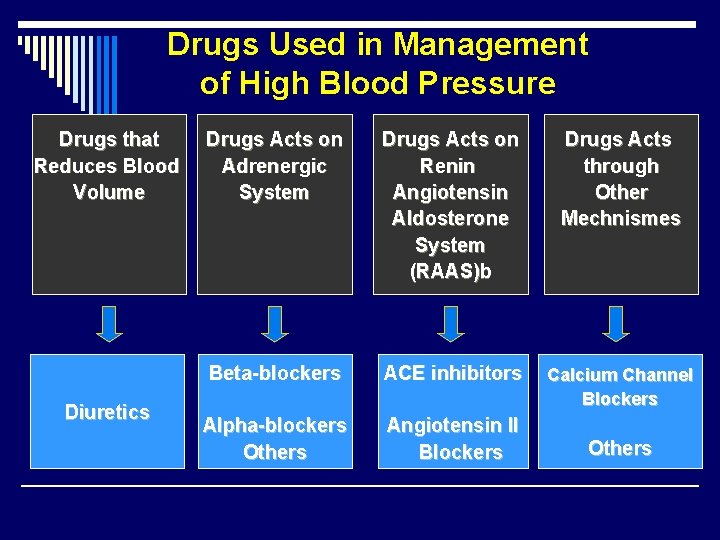
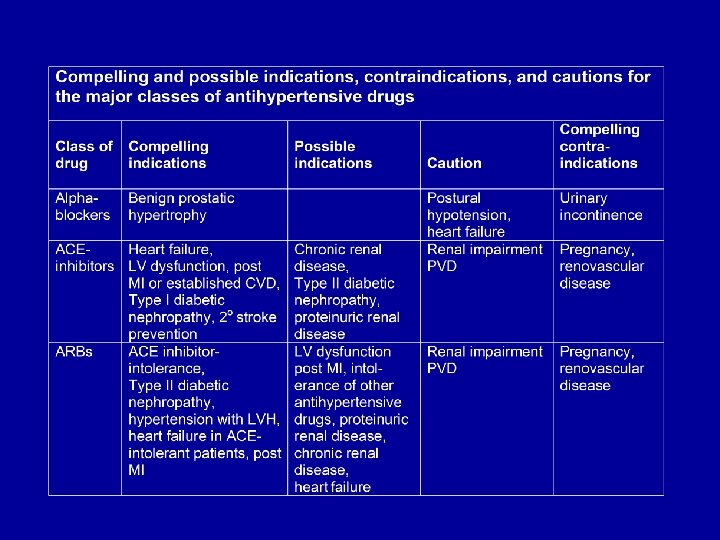
Drugs Used in Management of High Blood Pressure Drugs that Reduces Blood Volume Diuretics Drugs Acts on Adrenergic System Drugs Acts on Renin Angiotensin Aldosterone System (RAAS)b Drugs Acts through Other Mechnismes Beta-blockers ACE inhibitors Calcium Channel Blockers Alpha-blockers Others Angiotensin II Blockers Others
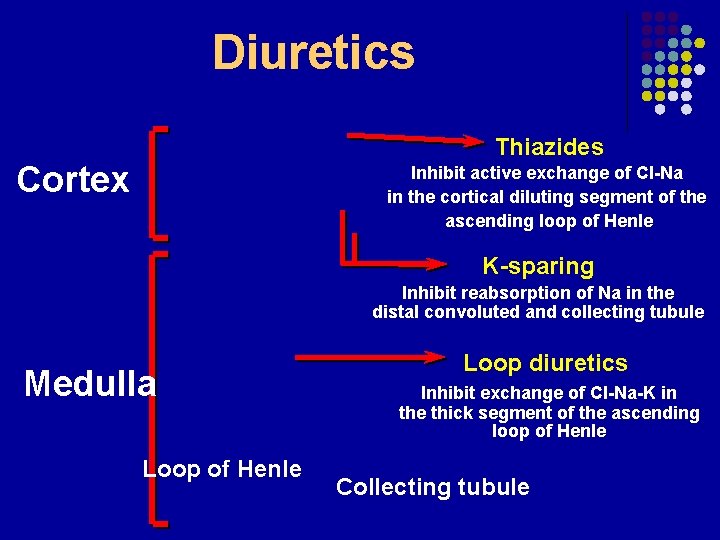
Diuretics Thiazides Cortex Inhibit active exchange of Cl-Na in the cortical diluting segment of the ascending loop of Henle K-sparing Inhibit reabsorption of Na in the distal convoluted and collecting tubule Medulla Loop of Henle Loop diuretics Inhibit exchange of Cl-Na-K in the thick segment of the ascending loop of Henle Collecting tubule
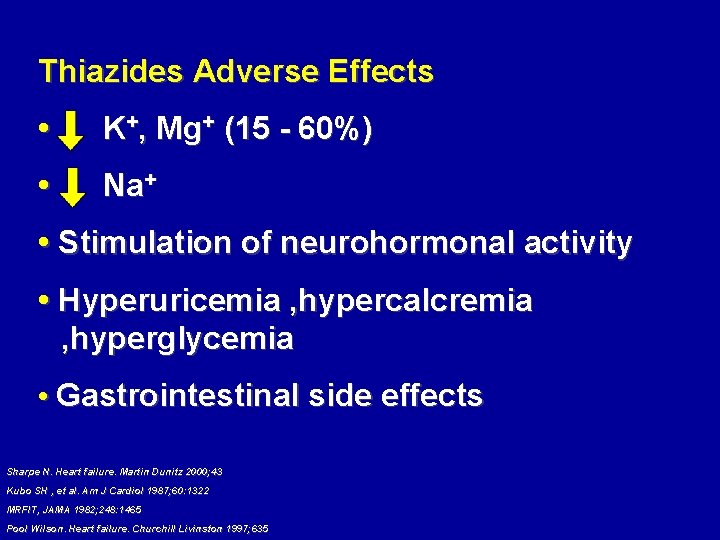
Thiazides Adverse Effects • K+, Mg+ (15 - 60%) • Na+ • Stimulation of neurohormonal activity • Hyperuricemia , hypercalcremia , hyperglycemia • Gastrointestinal side effects Sharpe N. Heart failure. Martin Dunitz 2000; 43 Kubo SH , et al. Am J Cardiol 1987; 60: 1322 MRFIT, JAMA 1982; 248: 1465 Pool Wilson. Heart failure. Churchill Livinston 1997; 635
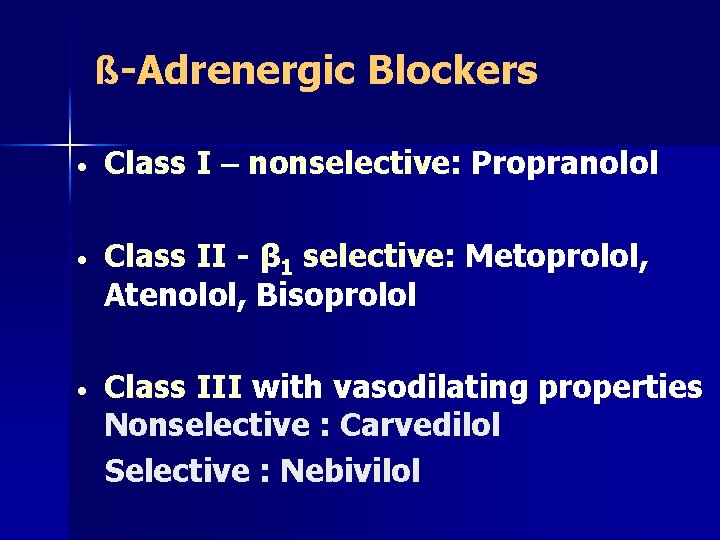
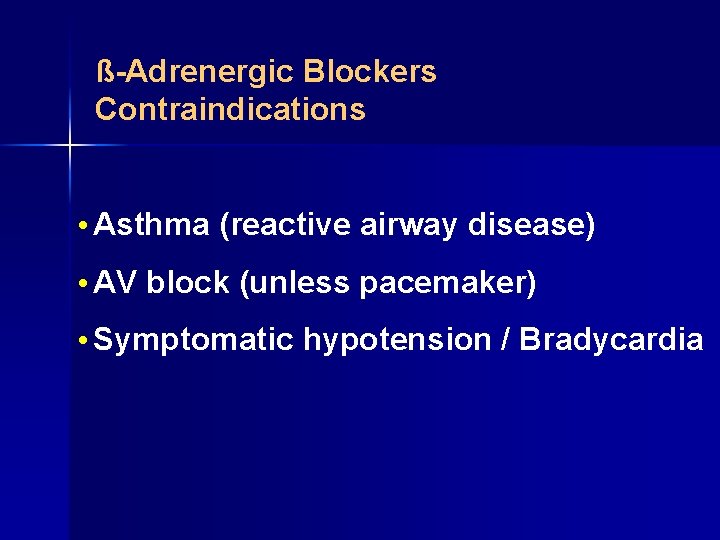
ß-Adrenergic Blockers • Class I – nonselective: Propranolol • Class II - β 1 selective: Metoprolol, Atenolol, Bisoprolol • Class III with vasodilating properties Nonselective : Carvedilol Selective : Nebivilol
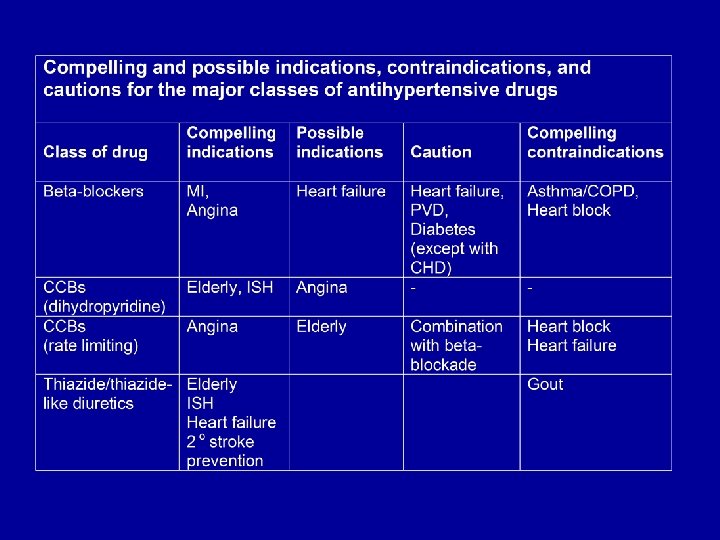
ß-Adrenergic Blockers Contraindications • Asthma (reactive airway disease) • AV block (unless pacemaker) • Symptomatic hypotension / Bradycardia
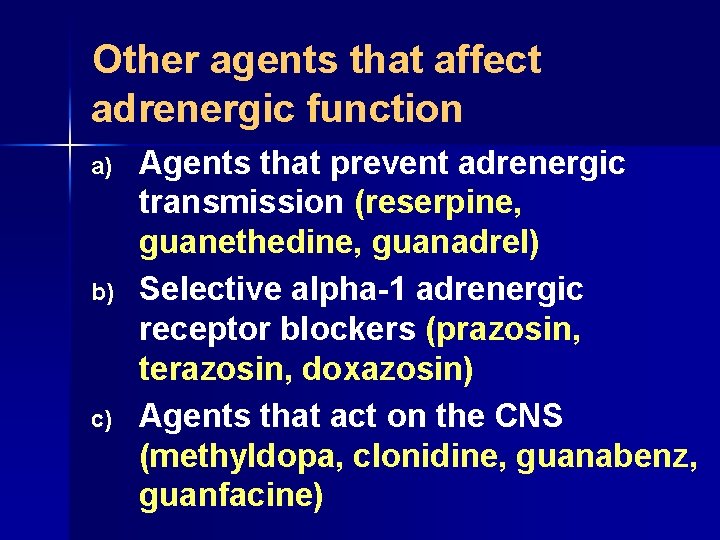
Other agents that affect adrenergic function a) b) c) Agents that prevent adrenergic transmission (reserpine, guanethedine, guanadrel) Selective alpha-1 adrenergic receptor blockers (prazosin, terazosin, doxazosin) Agents that act on the CNS (methyldopa, clonidine, guanabenz, guanfacine)
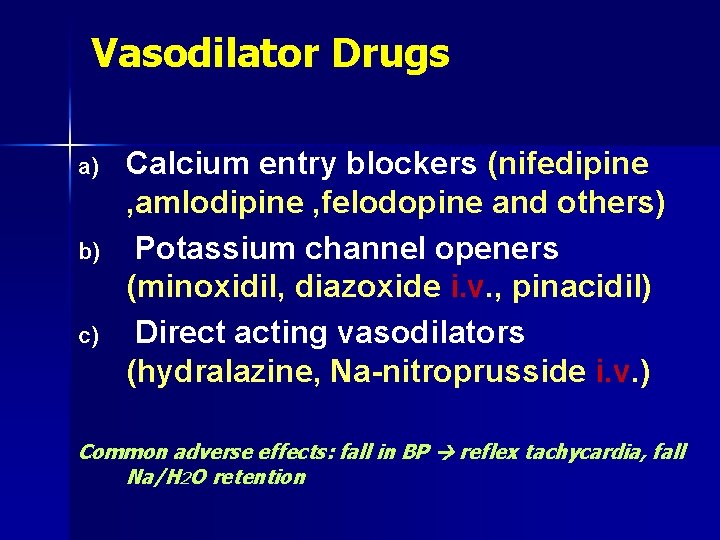
Vasodilator Drugs a) b) c) Calcium entry blockers (nifedipine , amlodipine , felodopine and others) Potassium channel openers (minoxidil, diazoxide i. v. , pinacidil) Direct acting vasodilators (hydralazine, Na-nitroprusside i. v. ) Common adverse effects: fall in BP reflex tachycardia, fall Na/H 2 O retention
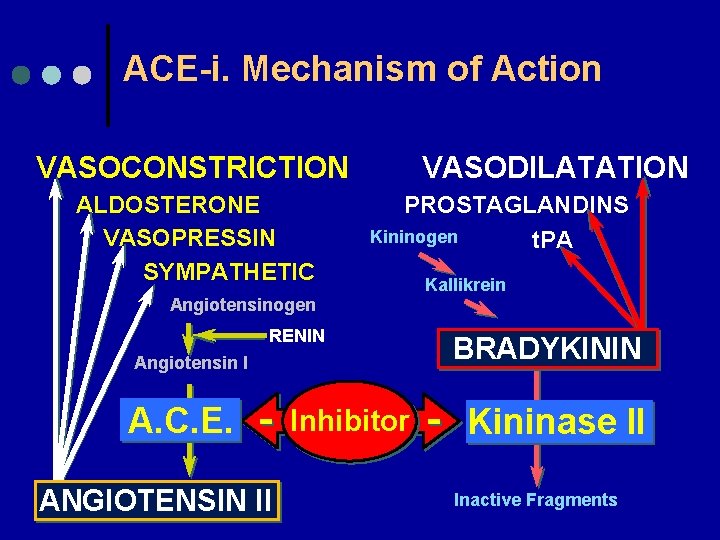
ACE-i. Mechanism of Action VASOCONSTRICTION ALDOSTERONE VASOPRESSIN SYMPATHETIC VASODILATATION PROSTAGLANDINS Kininogen t. PA Angiotensinogen RENIN Angiotensin I A. C. E. ANGIOTENSIN II Inhibitor Kallikrein BRADYKININ Kininase II Inactive Fragments
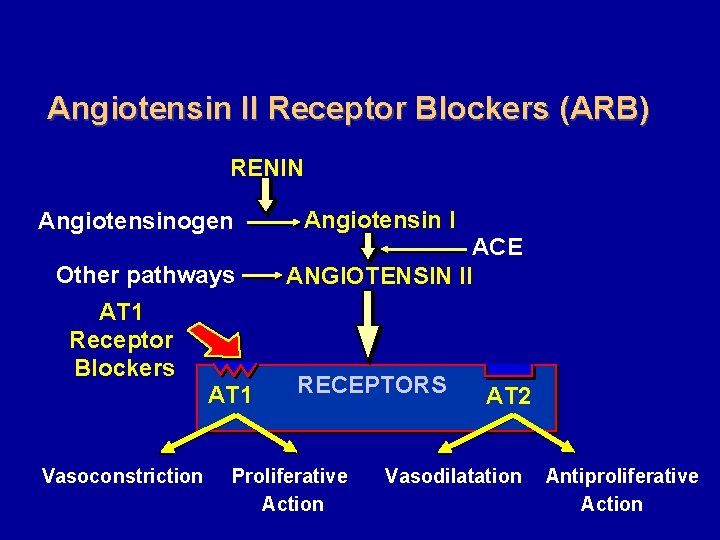
Angiotensin II Receptor Blockers (ARB) RENIN Angiotensinogen Other pathways AT 1 Receptor Blockers AT 1 Vasoconstriction Angiotensin I ACE ANGIOTENSIN II RECEPTORS Proliferative Action AT 2 Vasodilatation Antiproliferative Action
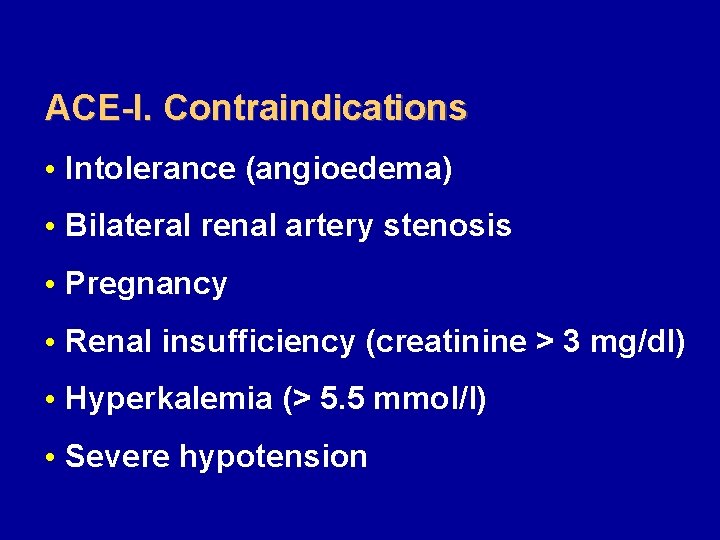
ACE-I. Contraindications • Intolerance (angioedema) • Bilateral renal artery stenosis • Pregnancy • Renal insufficiency (creatinine > 3 mg/dl) • Hyperkalemia (> 5. 5 mmol/l) • Severe hypotension
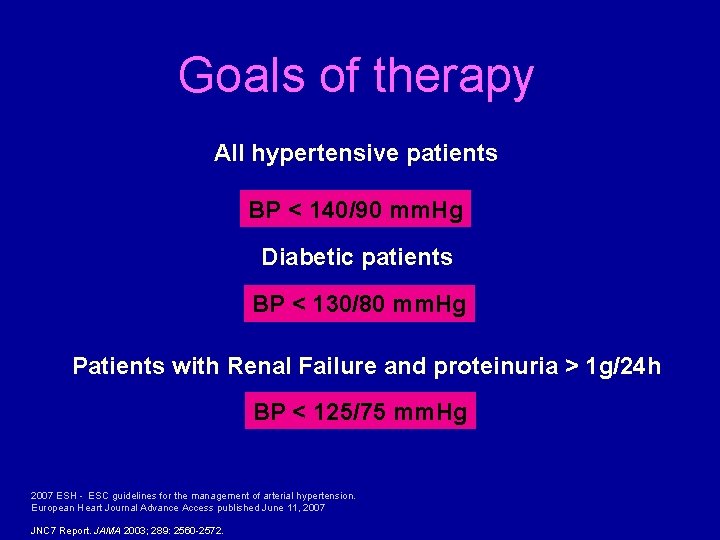
Goals of therapy All hypertensive patients BP < 140/90 mm. Hg Diabetic patients BP < 130/80 mm. Hg Patients with Renal Failure and proteinuria > 1 g/24 h BP < 125/75 mm. Hg 2007 ESH - ESC guidelines for the management of arterial hypertension. European Heart Journal Advance Access published June 11, 2007 JNC 7 Report. JAMA 2003; 289: 2560 -2572.
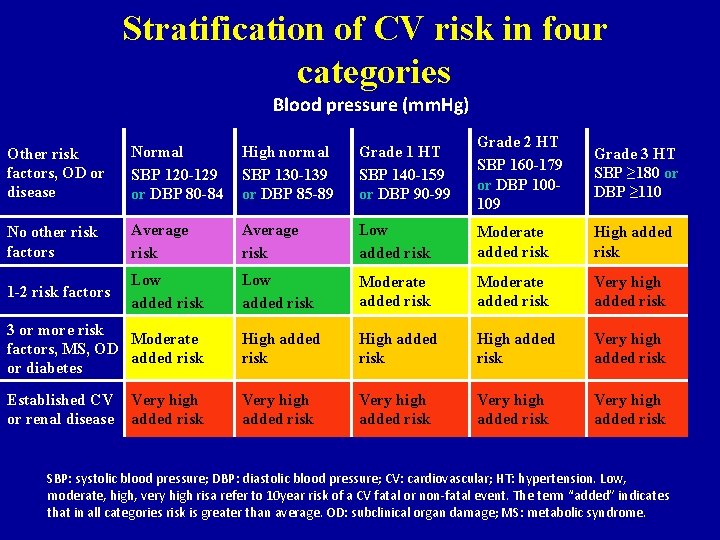
Stratification of CV risk in four categories Blood pressure (mm. Hg) Other risk factors, OD or disease Normal SBP 120 -129 or DBP 80 -84 High normal SBP 130 -139 or DBP 85 -89 Grade 1 HT SBP 140 -159 or DBP 90 -99 Grade 2 HT SBP 160 -179 or DBP 100109 Grade 3 HT SBP ≥ 180 or DBP ≥ 110 No other risk factors Average risk Low added risk Moderate added risk High added risk 1 -2 risk factors Low added risk Moderate added risk Very high added risk 3 or more risk Moderate factors, MS, OD added risk or diabetes High added risk Very high added risk Established CV or renal disease Very high added risk Very high added risk SBP: systolic blood pressure; DBP: diastolic blood pressure; CV: cardiovascular; HT: hypertension. Low, moderate, high, very high risa refer to 10 year risk of a CV fatal or non-fatal event. The term “added” indicates that in all categories risk is greater than average. OD: subclinical organ damage; MS: metabolic syndrome.
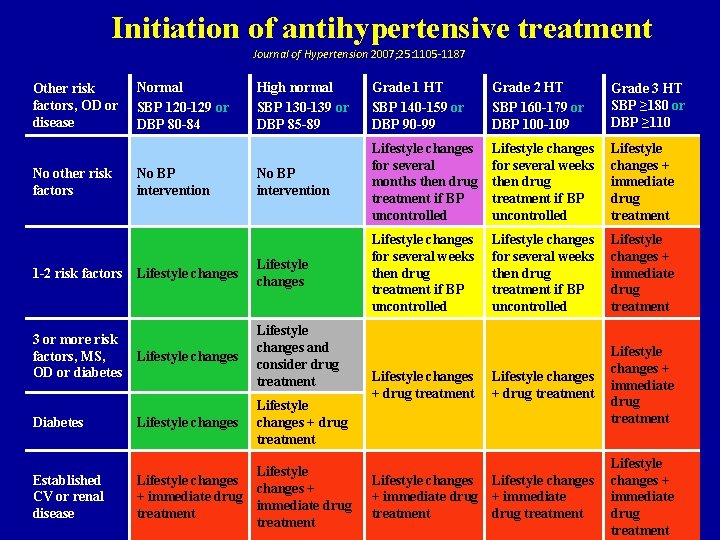
Initiation of antihypertensive treatment Journal of Hypertension 2007; 25: 1105 -1187 High normal SBP 130 -139 or DBP 85 -89 Grade 1 HT SBP 140 -159 or DBP 90 -99 Grade 2 HT SBP 160 -179 or DBP 100 -109 Grade 3 HT SBP ≥ 180 or DBP ≥ 110 No BP intervention Lifestyle changes for several months then drug treatment if BP uncontrolled Lifestyle changes for several weeks then drug treatment if BP uncontrolled Lifestyle changes + immediate drug treatment 1 -2 risk factors Lifestyle changes for several weeks then drug treatment if BP uncontrolled Lifestyle changes + immediate drug treatment 3 or more risk factors, MS, Lifestyle changes OD or diabetes Lifestyle changes and consider drug treatment Diabetes Lifestyle changes + drug treatment Lifestyle changes + immediate drug treatment Established CV or renal disease Lifestyle changes + + immediate drug treatment Lifestyle changes + immediate drug + immediate treatment drug treatment Lifestyle changes + immediate drug treatment Other risk factors, OD or disease No other risk factors Normal SBP 120 -129 or DBP 80 -84 No BP intervention Lifestyle changes + drug treatment
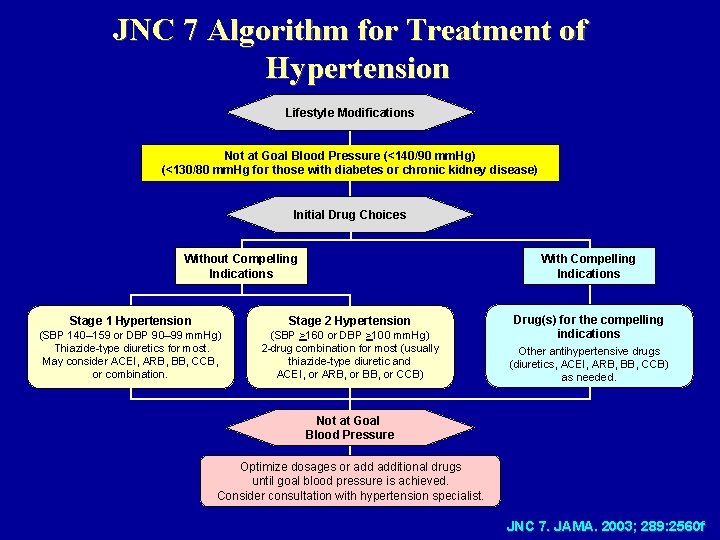
JNC 7 Algorithm for Treatment of Hypertension Lifestyle Modifications Not at Goal Blood Pressure (<140/90 mm. Hg) (<130/80 mm. Hg for those with diabetes or chronic kidney disease) Initial Drug Choices Without Compelling Indications With Compelling Indications Stage 1 Hypertension Stage 2 Hypertension (SBP 140– 159 or DBP 90– 99 mm. Hg) Thiazide-type diuretics for most. May consider ACEI, ARB, BB, CCB, or combination. (SBP >160 or DBP >100 mm. Hg) 2 -drug combination for most (usually thiazide-type diuretic and ACEI, or ARB, or BB, or CCB) Drug(s) for the compelling indications Other antihypertensive drugs (diuretics, ACEI, ARB, BB, CCB) as needed. Not at Goal Blood Pressure Optimize dosages or additional drugs until goal blood pressure is achieved. Consider consultation with hypertension specialist. JNC 7. JAMA. 2003; 289: 2560 f
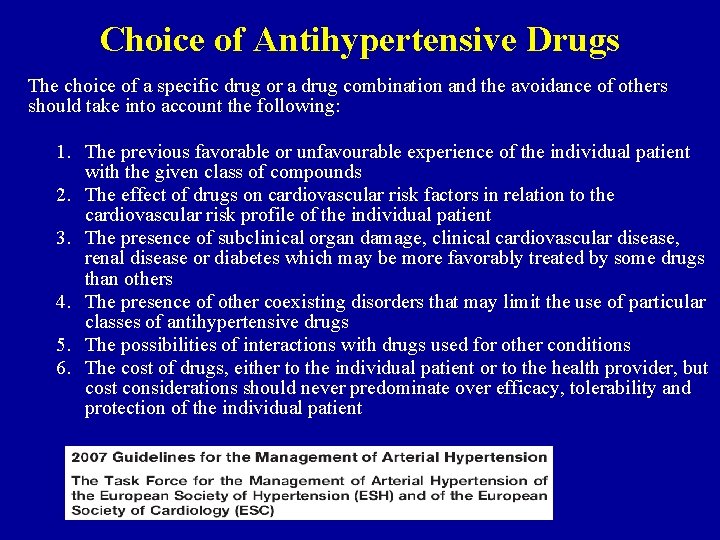
Choice of Antihypertensive Drugs The choice of a specific drug or a drug combination and the avoidance of others should take into account the following: 1. The previous favorable or unfavourable experience of the individual patient with the given class of compounds 2. The effect of drugs on cardiovascular risk factors in relation to the cardiovascular risk profile of the individual patient 3. The presence of subclinical organ damage, clinical cardiovascular disease, renal disease or diabetes which may be more favorably treated by some drugs than others 4. The presence of other coexisting disorders that may limit the use of particular classes of antihypertensive drugs 5. The possibilities of interactions with drugs used for other conditions 6. The cost of drugs, either to the individual patient or to the health provider, but cost considerations should never predominate over efficacy, tolerability and protection of the individual patient
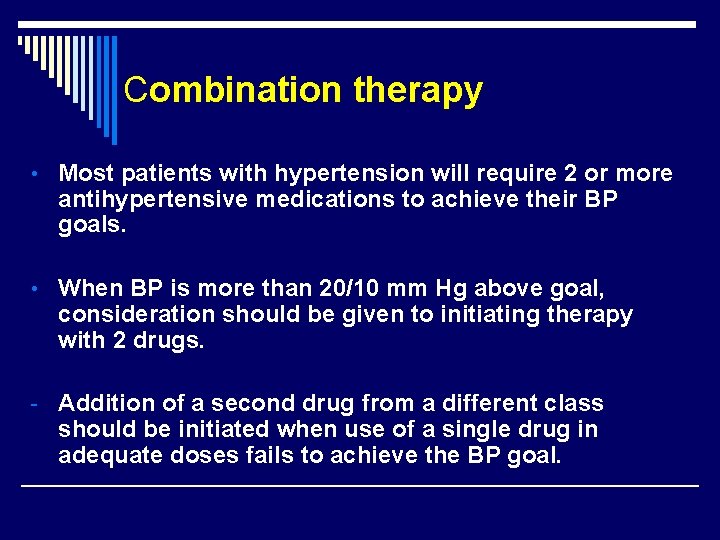
Combination therapy • Most patients with hypertension will require 2 or more antihypertensive medications to achieve their BP goals. • When BP is more than 20/10 mm Hg above goal, consideration should be given to initiating therapy with 2 drugs. - Addition of a second drug from a different class should be initiated when use of a single drug in adequate doses fails to achieve the BP goal.
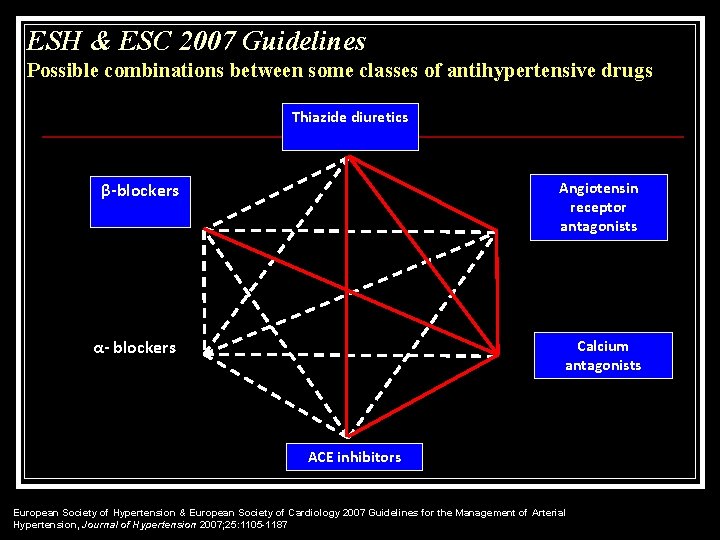
ESH & ESC 2007 Guidelines Possible combinations between some classes of antihypertensive drugs Thiazide diuretics β-blockers Angiotensin receptor antagonists α- blockers Calcium antagonists ACE inhibitors European Society of Hypertension & European Society of Cardiology 2007 Guidelines for the Management of Arterial Hypertension, Journal of Hypertension 2007; 25: 1105 -1187
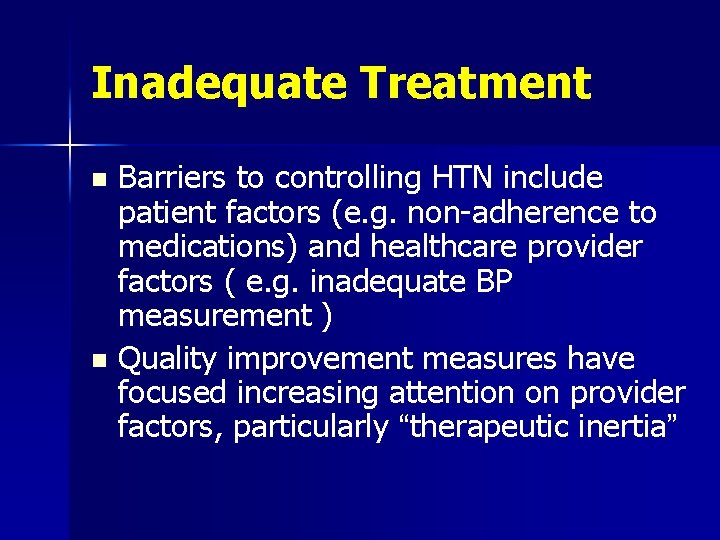
Inadequate Treatment Barriers to controlling HTN include patient factors (e. g. non-adherence to medications) and healthcare provider factors ( e. g. inadequate BP measurement ) n Quality improvement measures have focused increasing attention on provider factors, particularly “therapeutic inertia” n
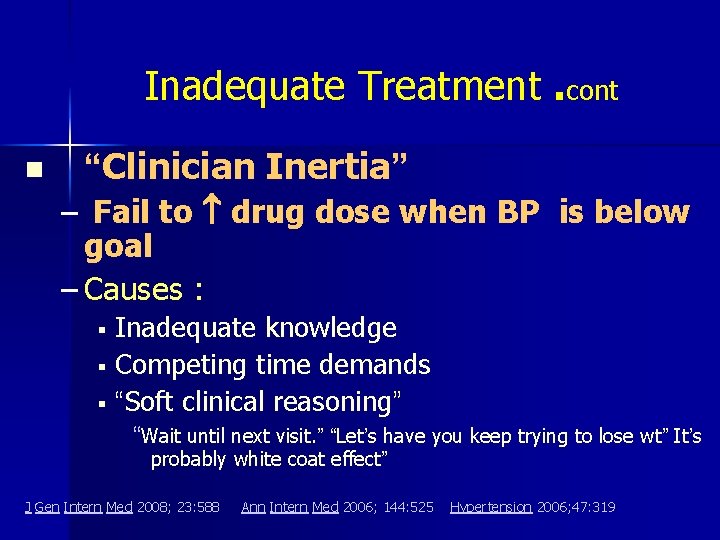
Inadequate Treatment. cont n “Clinician Inertia” – Fail to drug dose when BP is below goal – Causes : Inadequate knowledge § Competing time demands § “Soft clinical reasoning” § “Wait until next visit. ” “Let’s have you keep trying to lose wt” It’s probably white coat effect” J Gen Intern Med 2008; 23: 588 Ann Intern Med 2006; 144: 525 Hypertension 2006; 47: 319
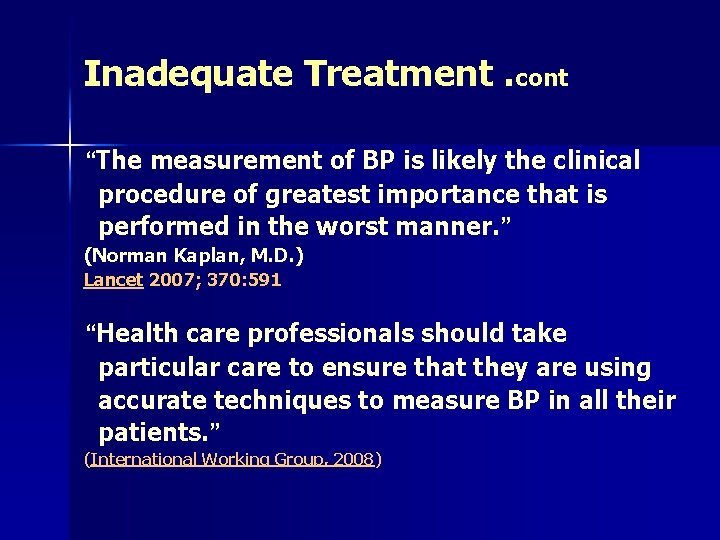
Inadequate Treatment. cont “The measurement of BP is likely the clinical procedure of greatest importance that is performed in the worst manner. ” (Norman Kaplan, M. D. ) Lancet 2007; 370: 591 “Health care professionals should take particular care to ensure that they are using accurate techniques to measure BP in all their patients. ” (International Working Group, 2008)
Medications that Can Interfere with Blood Pressure Control • Non-Narcotic Analgesics Non-steroidal anti-inflammatory agents including aspirin Selective COX-2 inhibitors • Sympathomimetic agents (decongestants, diet pills, cocaine) • Stimulants (methylphenidate, dextroamphetamine, methamphetamine, modafinil) • Alcohol • Oral contraceptives • Cyclosporine • Erythropoietin • Natural licorice • Herbal compounds (ephedra or ma huang)
How to improve compliance to treatment ? n Inform the patient on the risk of hypertension and the benefit of effective treatment n Provide clear written and oral instructions about treatment and its possible side effects. n Tailor the treatment regimen to patient’s lifestyle and needs n Involve patient’s partner or family in information on disease and treatment plans n Dialogue with patient regarding adherence and be informed of his/her problems Provide reliable support system and affordable n
Patient’s Follow-Up n n n Titration to BP control requires frequent visits in order to timely modify the treatment regimen in relation to BP changes and appearance of side effects Once target BP has been obtained, the frequency of visits can be considerably reduced. However, excessively wide intervals between visits are not advisable Patients at low risk or with grade 1 hypertension may be seen every months and regular home BP measurements may further extend this interval. Visits should be more frequent in high or very high risk patients
Patient’s Follow-Up. cont n n n Follow-up visits should aim at maintaining control of all reversible risk factors as well as at checking the status of organ damage. Treatment of hypertension should be continued for life because in correctly diagnosed patients cessation of treatment is usually followed by return to the hypertensive state. Cautious downward titration of the existing treatment may be attempted in low risk patients after long-term BP control, particularly if non pharmacological treatment can be successfully implemented
Thank You