Epidemiology and Management of Diarrheal Diseases Amal Mitra

- Slides: 32
Epidemiology and Management of Diarrheal Diseases Amal Mitra, MD, MPH, Dr. PH Professor University of Southern Mississippi Readings: Diarrhoeal Diseases
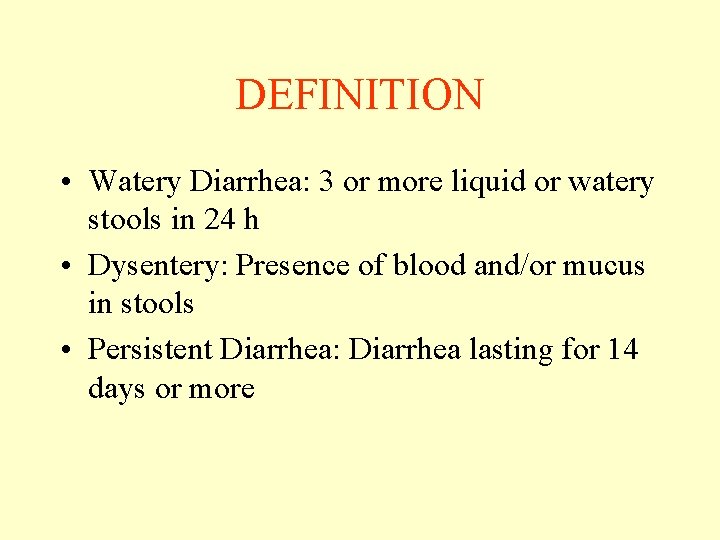
DEFINITION • Watery Diarrhea: 3 or more liquid or watery stools in 24 h • Dysentery: Presence of blood and/or mucus in stools • Persistent Diarrhea: Diarrhea lasting for 14 days or more
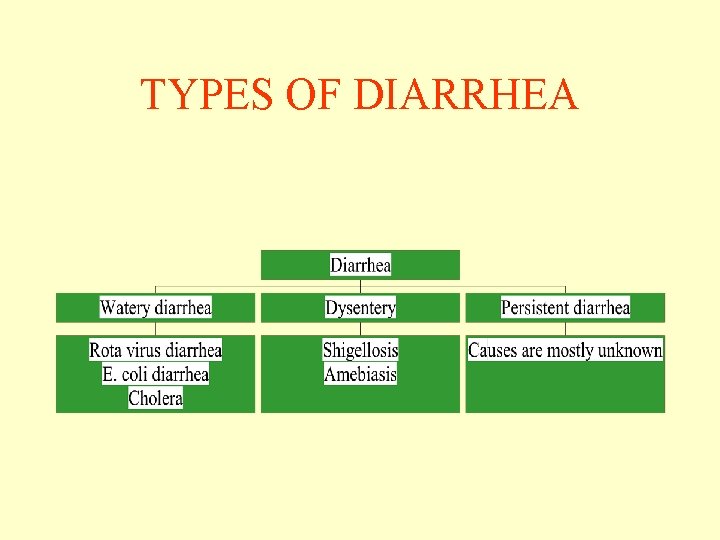
TYPES OF DIARRHEA
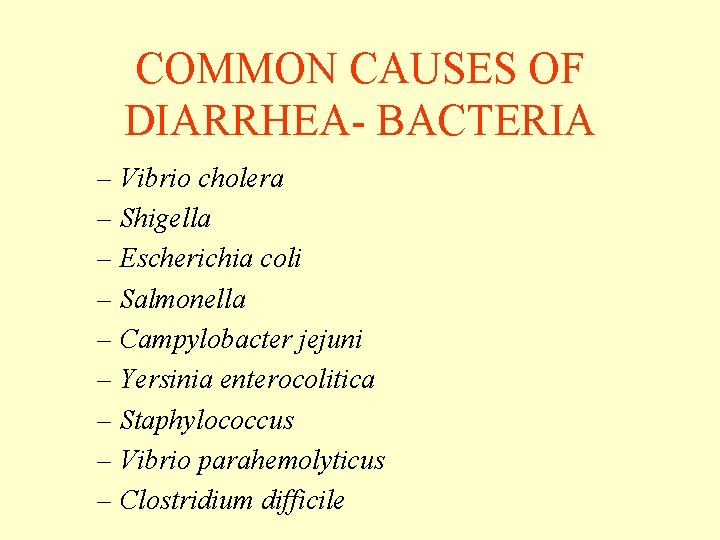
COMMON CAUSES OF DIARRHEA- BACTERIA – Vibrio cholera – Shigella – Escherichia coli – Salmonella – Campylobacter jejuni – Yersinia enterocolitica – Staphylococcus – Vibrio parahemolyticus – Clostridium difficile
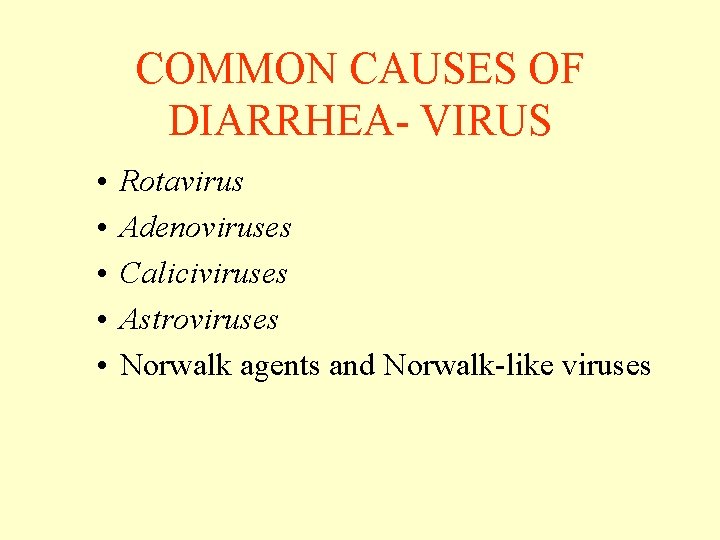
COMMON CAUSES OF DIARRHEA- VIRUS • • • Rotavirus Adenoviruses Caliciviruses Astroviruses Norwalk agents and Norwalk-like viruses
COMMON CAUSES OF DIARRHEA- PARASITE • • Entameba histolytica Giardia lamblia Cryptosporidium Isospora
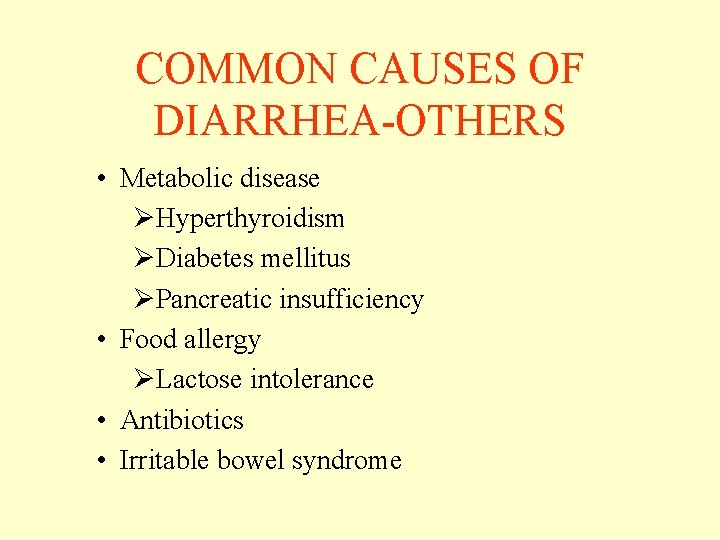
COMMON CAUSES OF DIARRHEA-OTHERS • Metabolic disease ØHyperthyroidism ØDiabetes mellitus ØPancreatic insufficiency • Food allergy ØLactose intolerance • Antibiotics • Irritable bowel syndrome
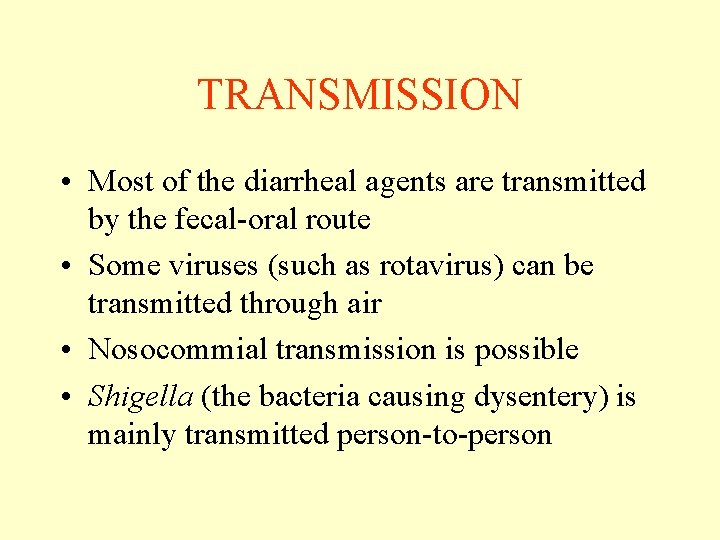
TRANSMISSION • Most of the diarrheal agents are transmitted by the fecal-oral route • Some viruses (such as rotavirus) can be transmitted through air • Nosocommial transmission is possible • Shigella (the bacteria causing dysentery) is mainly transmitted person-to-person
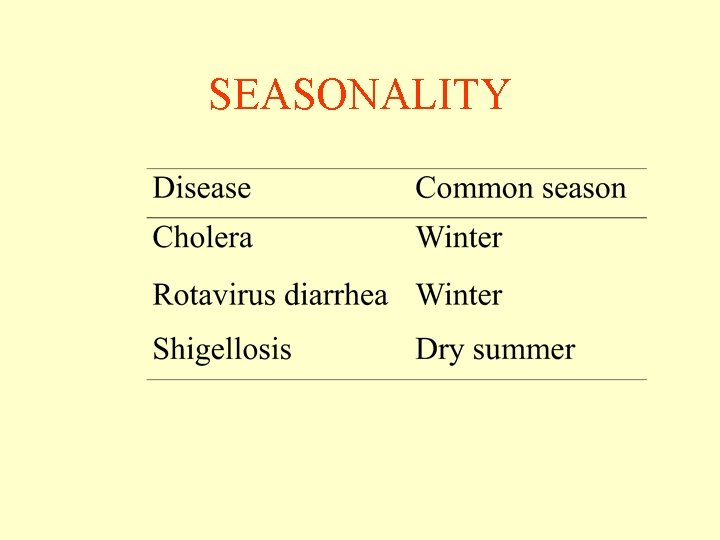
SEASONALITY
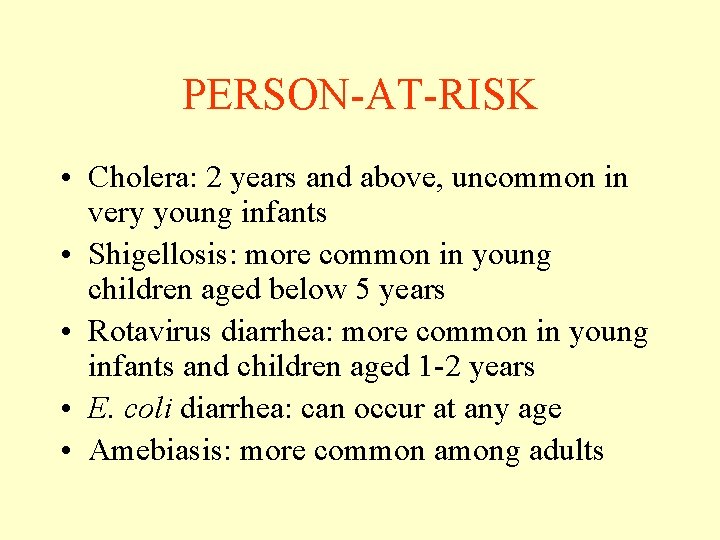
PERSON-AT-RISK • Cholera: 2 years and above, uncommon in very young infants • Shigellosis: more common in young children aged below 5 years • Rotavirus diarrhea: more common in young infants and children aged 1 -2 years • E. coli diarrhea: can occur at any age • Amebiasis: more common among adults
TYPES OF VIBRIO CHOLERA • Two major biotypes of Vibrio cholera that cause diarrhea are: ØClassical ØEl. Tor • Two common serotypes of Vibrio cholera that cause diarrhea are: ØInaba ØOgawa
Vibrio cholerae O 139 • Vibrio cholerae in O-group 139 was first isolated in 1992 and by 1993 had been found throughout the Indian subcontinent. This epidemic expansion probably resulted from a single source after a lateral gene transfer (LGT) event that changed the serotype of an epidemic V. cholerae O 1 El Tor strain to O 139. • More information: http: //www. cdc. gov/ncidod/EID/vol 9 no 7/020760. htm
Vibrio vulnificus • The organism Vibrio vulnificus causes wound infections, gastroenteritis or a serious syndrome known as "primary septicema. " • V. vulnificus infections are either transmitted to humans through open wounds in contact with seawater or through consumption of certain improperly cooked or raw shellfish. • This bacterium has been isolated from water, sediment, plankton and shellfish (oysters, clams and crabs) located in the Gulf of Mexico, the Atlantic Coast as far north as Cape Cod and the entire U. S. West Coast. • Cases of illness have also been associated with brackish lakes in New Mexico and Oklahoma. • For more information: http: //hgic. clemson. edu/factsheets/HGIC 3663. htm
TYPES OF SHIGELLA • The major serotypes of Shigella that cause diarrhea are: ØDysenteriae type 1 or Shigella shiga ØShigella flexneri ØShigella sonnei ØShigella boydii
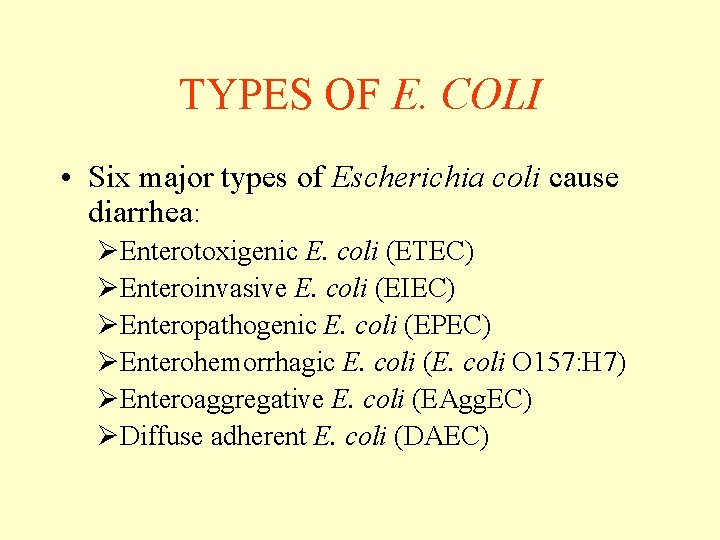
TYPES OF E. COLI • Six major types of Escherichia coli cause diarrhea: ØEnterotoxigenic E. coli (ETEC) ØEnteroinvasive E. coli (EIEC) ØEnteropathogenic E. coli (EPEC) ØEnterohemorrhagic E. coli (E. coli O 157: H 7) ØEnteroaggregative E. coli (EAgg. EC) ØDiffuse adherent E. coli (DAEC)
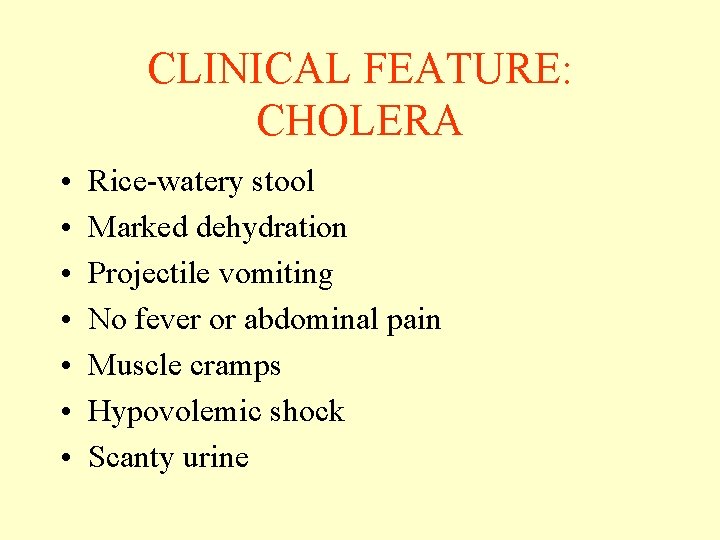
CLINICAL FEATURE: CHOLERA • • Rice-watery stool Marked dehydration Projectile vomiting No fever or abdominal pain Muscle cramps Hypovolemic shock Scanty urine
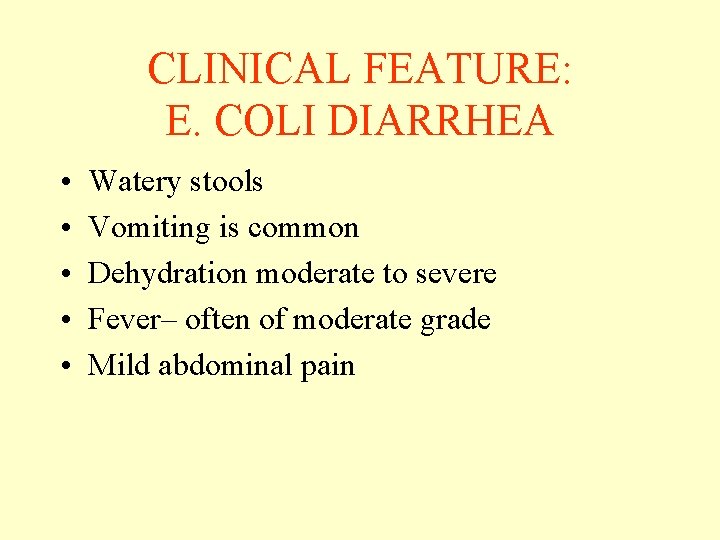
CLINICAL FEATURE: E. COLI DIARRHEA • • • Watery stools Vomiting is common Dehydration moderate to severe Fever– often of moderate grade Mild abdominal pain
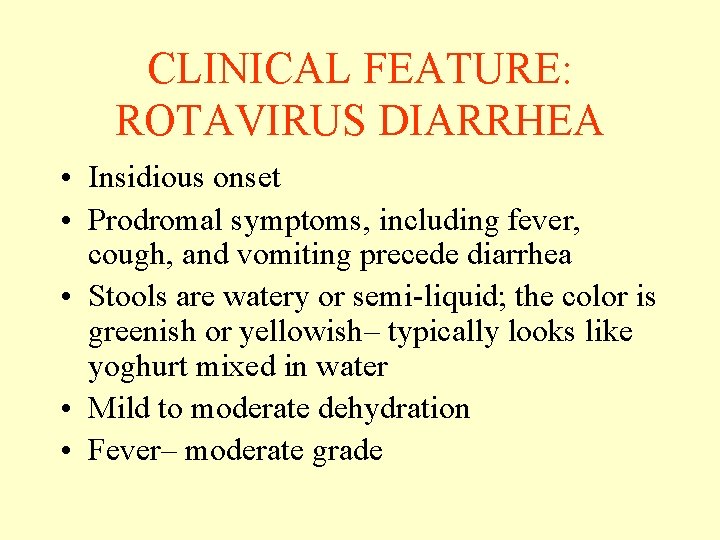
CLINICAL FEATURE: ROTAVIRUS DIARRHEA • Insidious onset • Prodromal symptoms, including fever, cough, and vomiting precede diarrhea • Stools are watery or semi-liquid; the color is greenish or yellowish– typically looks like yoghurt mixed in water • Mild to moderate dehydration • Fever– moderate grade
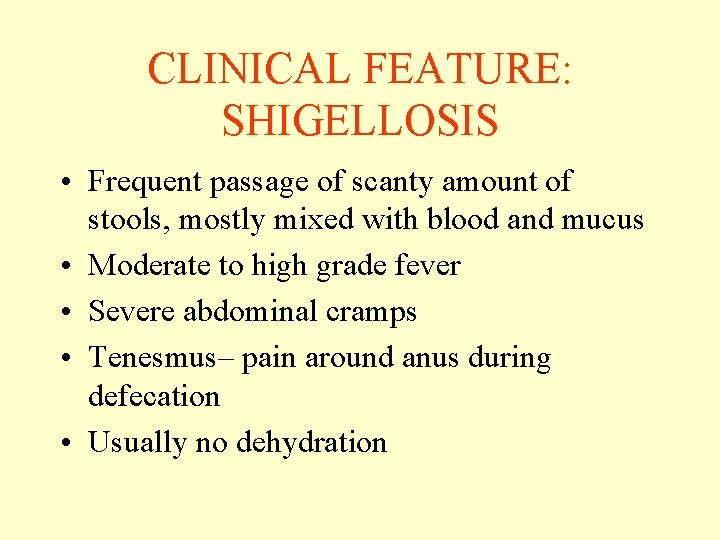
CLINICAL FEATURE: SHIGELLOSIS • Frequent passage of scanty amount of stools, mostly mixed with blood and mucus • Moderate to high grade fever • Severe abdominal cramps • Tenesmus– pain around anus during defecation • Usually no dehydration
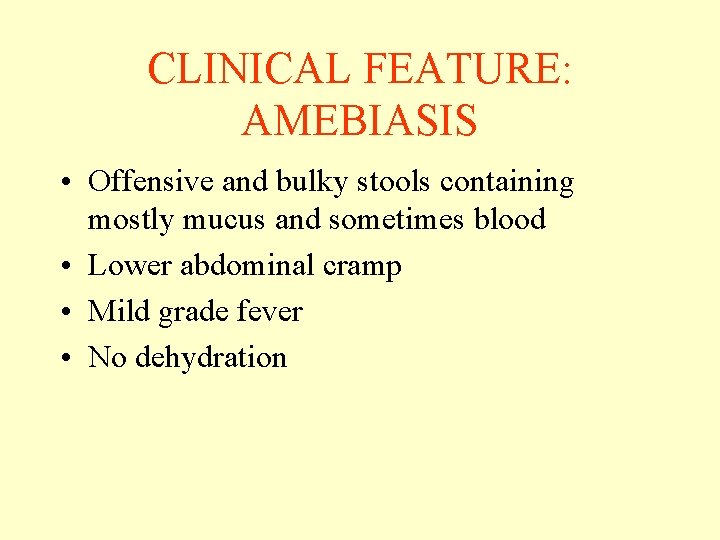
CLINICAL FEATURE: AMEBIASIS • Offensive and bulky stools containing mostly mucus and sometimes blood • Lower abdominal cramp • Mild grade fever • No dehydration
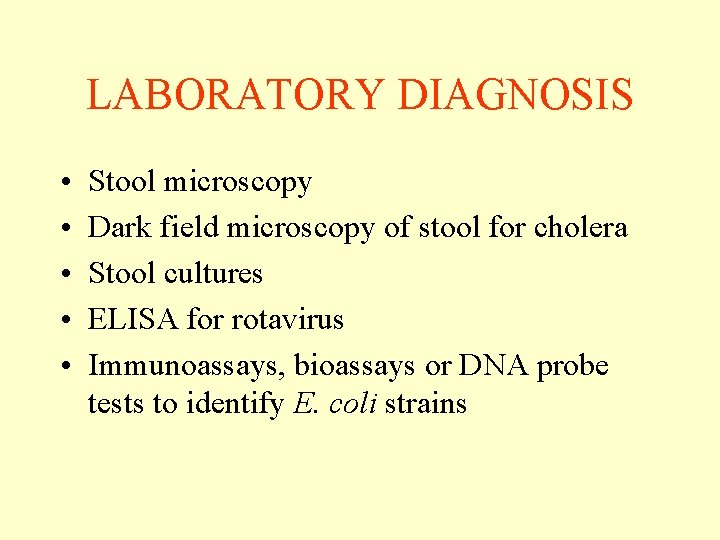
LABORATORY DIAGNOSIS • • • Stool microscopy Dark field microscopy of stool for cholera Stool cultures ELISA for rotavirus Immunoassays, bioassays or DNA probe tests to identify E. coli strains
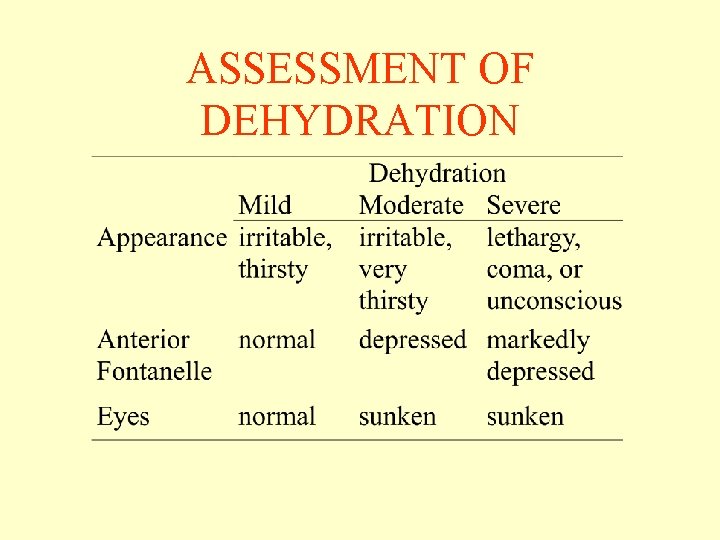
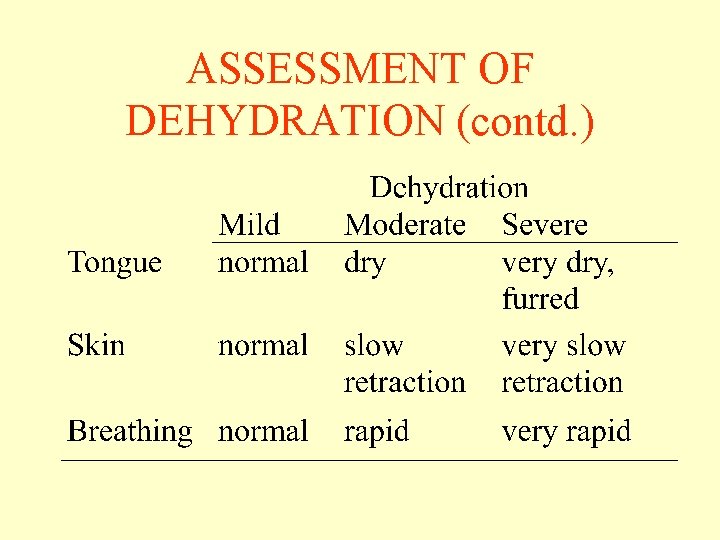
ASSESSMENT OF DEHYDRATION
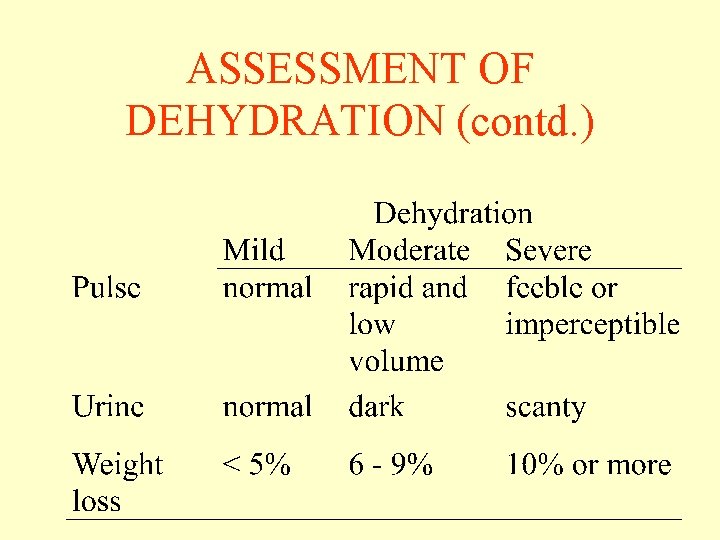
ASSESSMENT OF DEHYDRATION (contd. )
ASSESSMENT OF DEHYDRATION (contd. )
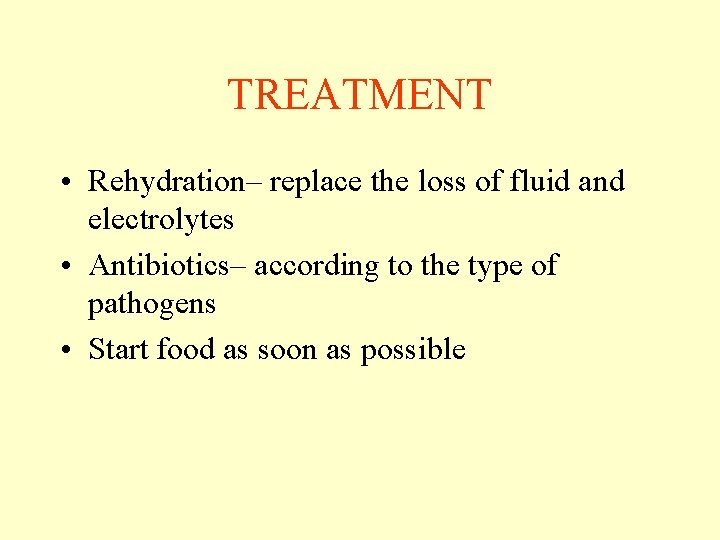
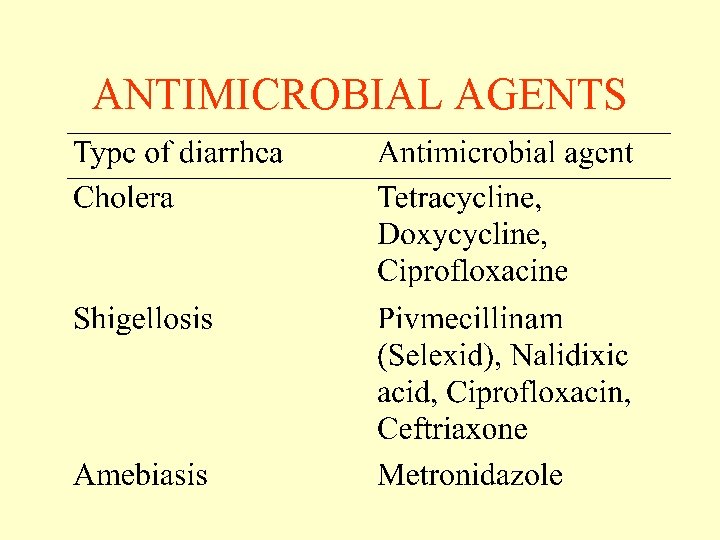
TREATMENT • Rehydration– replace the loss of fluid and electrolytes • Antibiotics– according to the type of pathogens • Start food as soon as possible
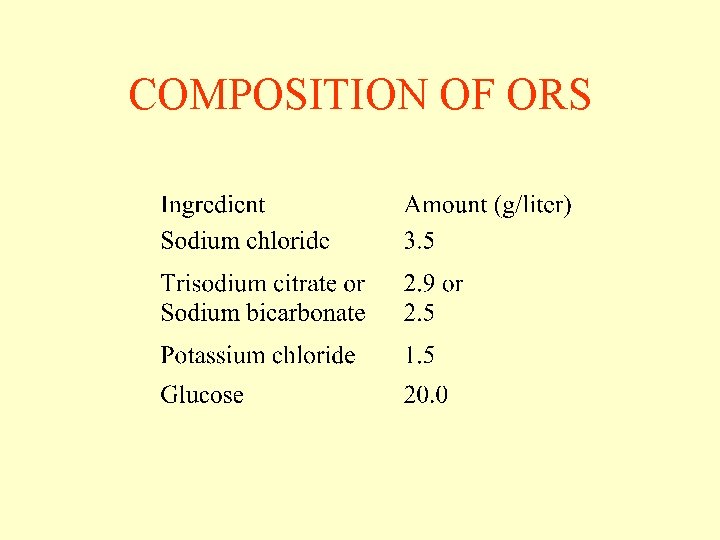
COMPOSITION OF ORS
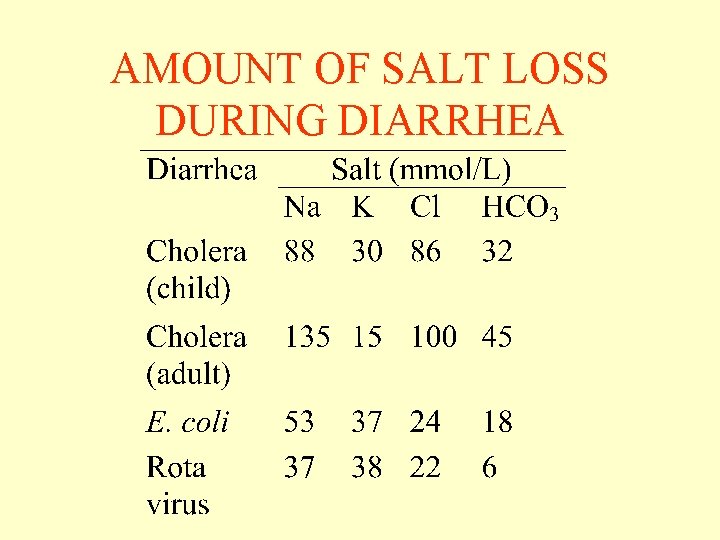
AMOUNT OF SALT LOSS DURING DIARRHEA
ANTIMICROBIAL AGENTS
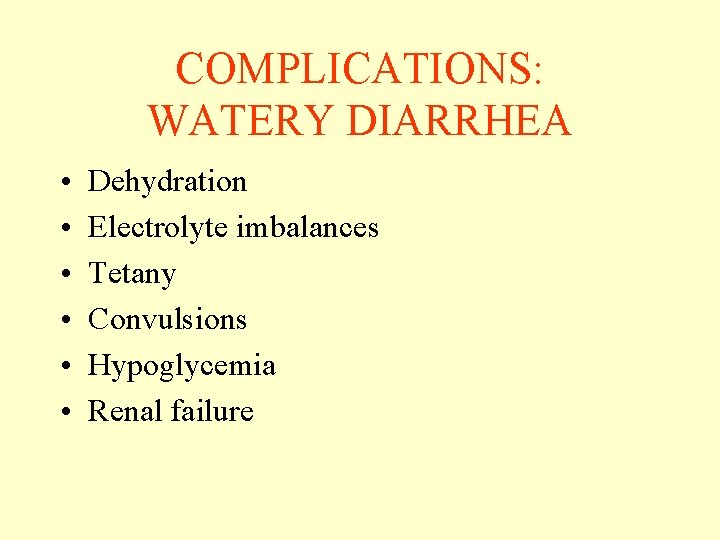
COMPLICATIONS: WATERY DIARRHEA • • • Dehydration Electrolyte imbalances Tetany Convulsions Hypoglycemia Renal failure
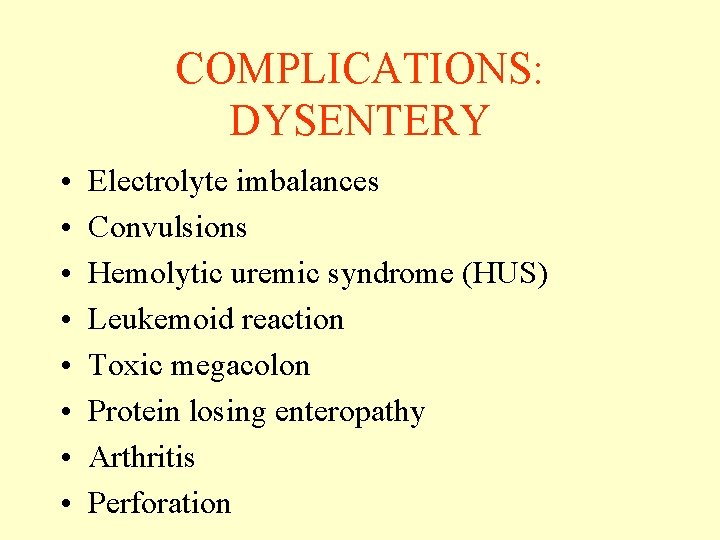
COMPLICATIONS: DYSENTERY • • Electrolyte imbalances Convulsions Hemolytic uremic syndrome (HUS) Leukemoid reaction Toxic megacolon Protein losing enteropathy Arthritis Perforation
VACCINES • An oral cholera vaccine is available, which gives immunity to 50 -60% of those who take the vaccine, and this immunity lasts only a few months. • No vaccines are available against shigellosis • A vaccine against rotavirus diarrhea has been withdrawn recently from the market.
PREVENTION • Safe drinking water and food “Boil it, cook it, peel it, or forget it. " • Hand washing • Proper sanitation