Detect Protect Perfect care of patients with Atrial
- Slides: 34
Detect, Protect, Perfect: care of patients with Atrial Fibrillation across Wessex (2018 -2019) December 2019 Dr Anastasios Argyropoulos Centre for Implementation Science A. Argyropoulos@soton. ac. uk Wessex AHSN Atrial Fibrillation Senior Programme Manager: Vicki Rowse Wessex AHSN Atrial Fibrillation Clinical Lead: Sharron Gordon
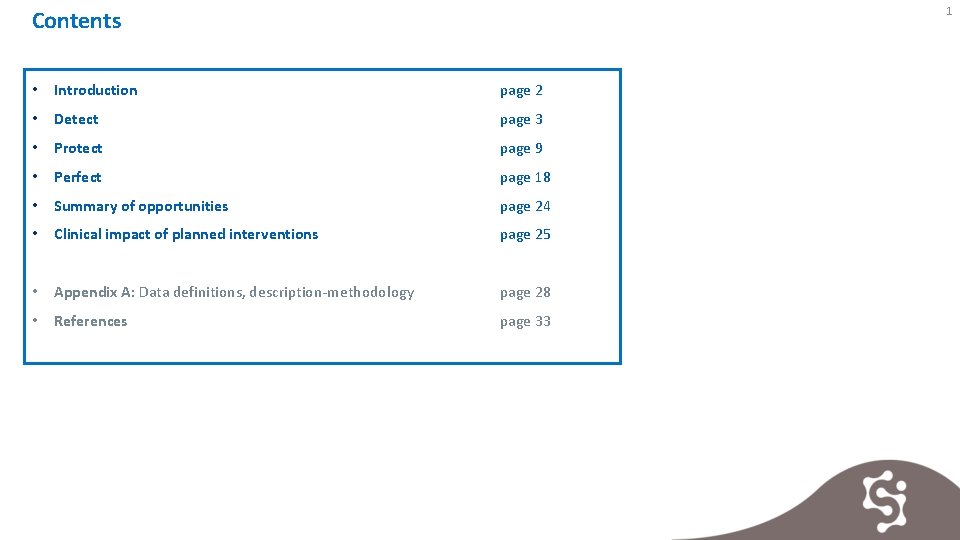
1 Contents • Introduction page 2 • Detect page 3 • Protect page 9 • Perfect page 18 • Summary of opportunities page 24 • Clinical impact of planned interventions page 25 • Appendix A: Data definitions, description-methodology page 28 • References page 33
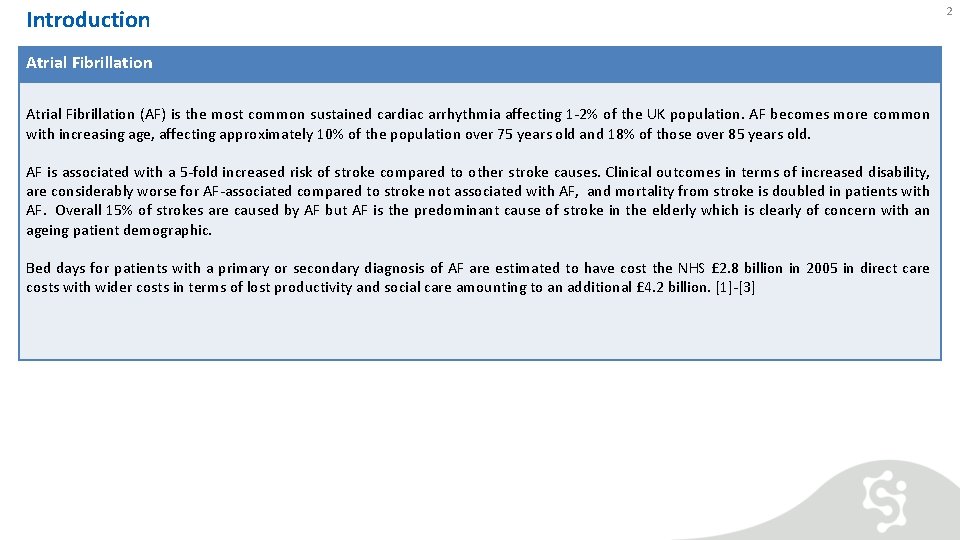
Introduction Atrial Fibrillation (AF) is the most common sustained cardiac arrhythmia affecting 1 -2% of the UK population. AF becomes more common with increasing age, affecting approximately 10% of the population over 75 years old and 18% of those over 85 years old. AF is associated with a 5 -fold increased risk of stroke compared to other stroke causes. Clinical outcomes in terms of increased disability, are considerably worse for AF-associated compared to stroke not associated with AF, and mortality from stroke is doubled in patients with AF. Overall 15% of strokes are caused by AF but AF is the predominant cause of stroke in the elderly which is clearly of concern with an ageing patient demographic. Bed days for patients with a primary or secondary diagnosis of AF are estimated to have cost the NHS £ 2. 8 billion in 2005 in direct care costs with wider costs in terms of lost productivity and social care amounting to an additional £ 4. 2 billion. [1]-[3] 2
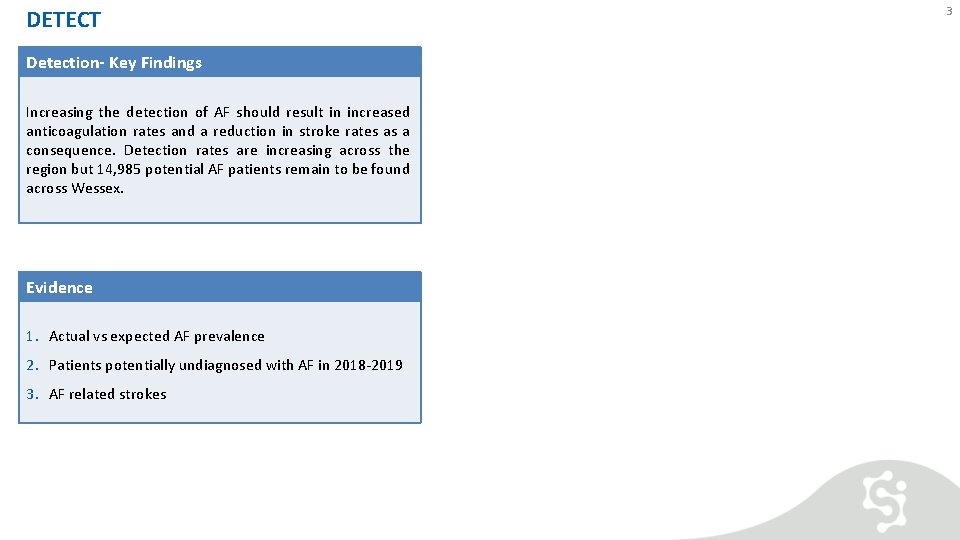
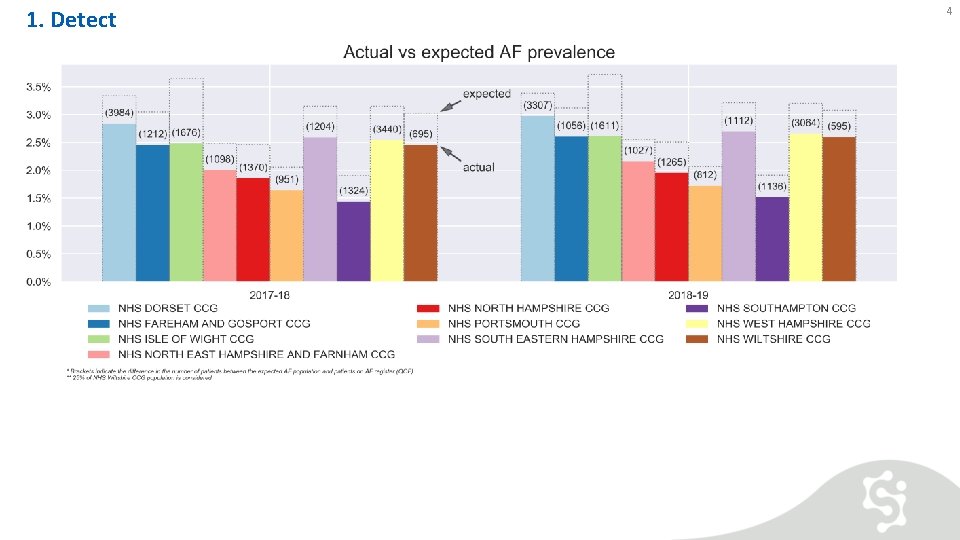
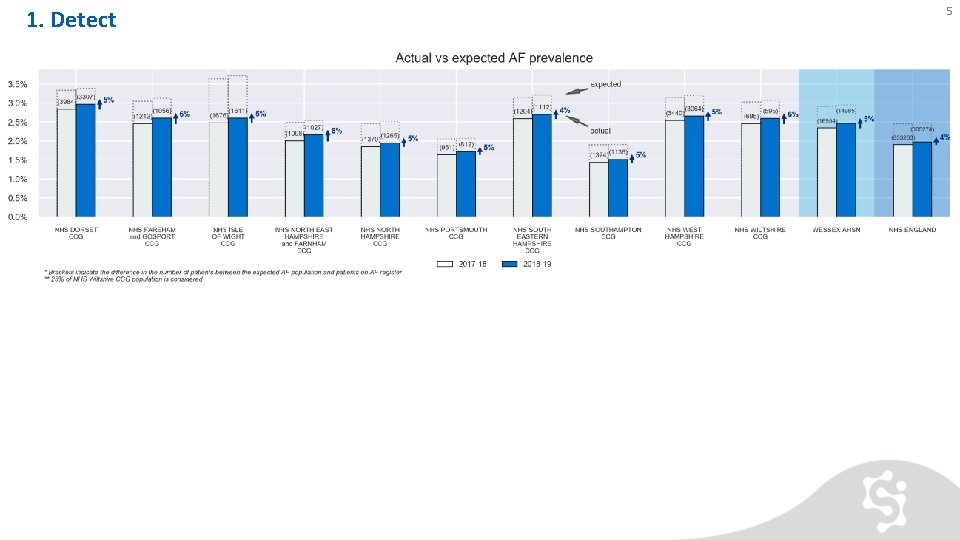
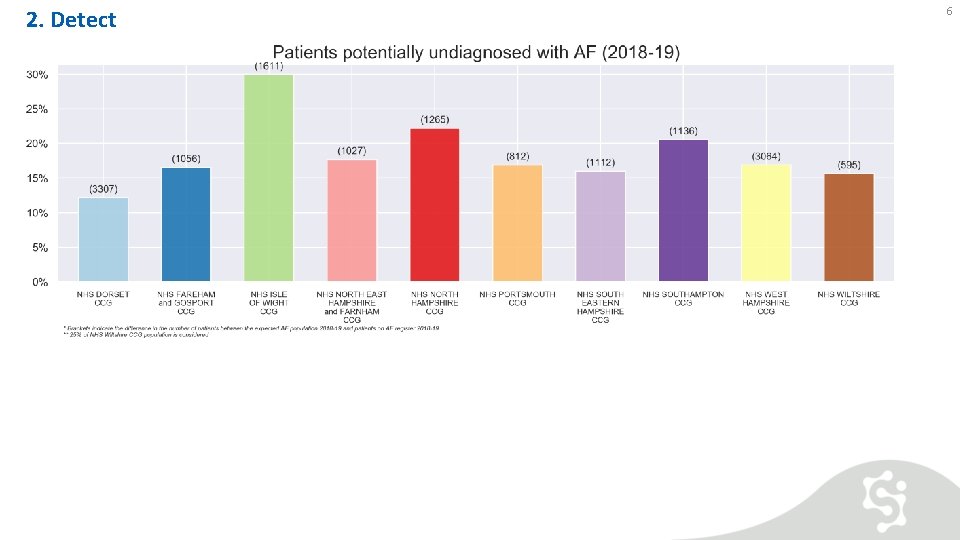
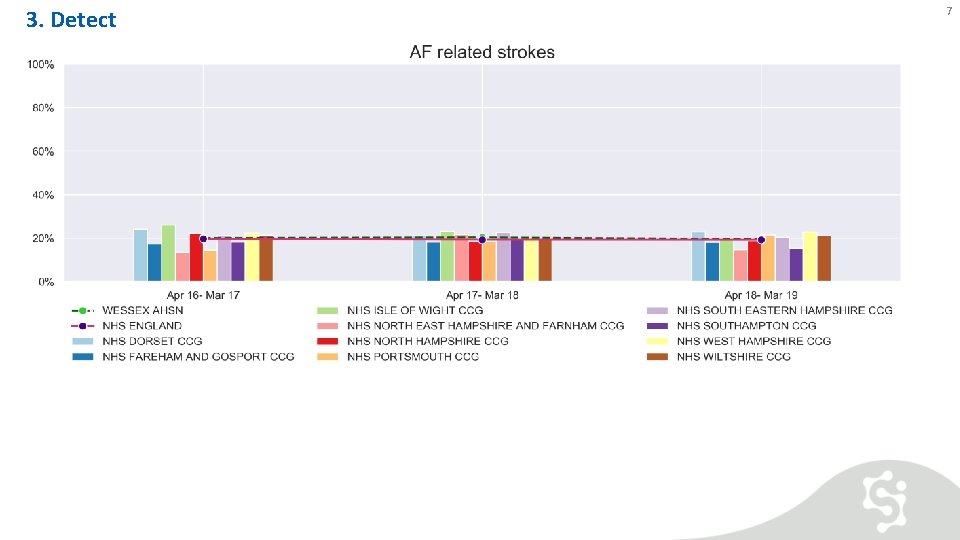
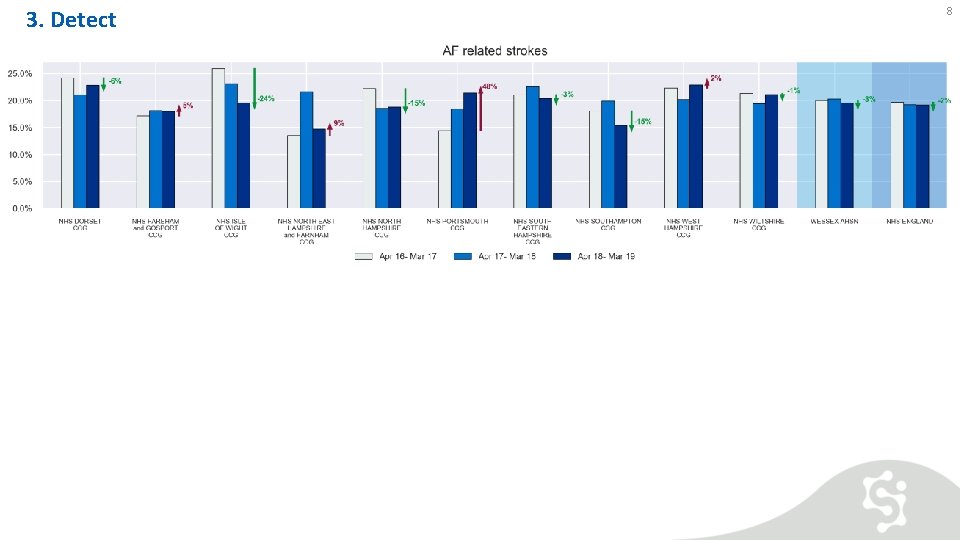
DETECT Detection- Key Findings Increasing the detection of AF should result in increased anticoagulation rates and a reduction in stroke rates as a consequence. Detection rates are increasing across the region but 14, 985 potential AF patients remain to be found across Wessex. Evidence 1. Actual vs expected AF prevalence 2. Patients potentially undiagnosed with AF in 2018 -2019 3. AF related strokes 3
1. Detect 4
1. Detect 5
2. Detect 6
3. Detect 7
3. Detect 8
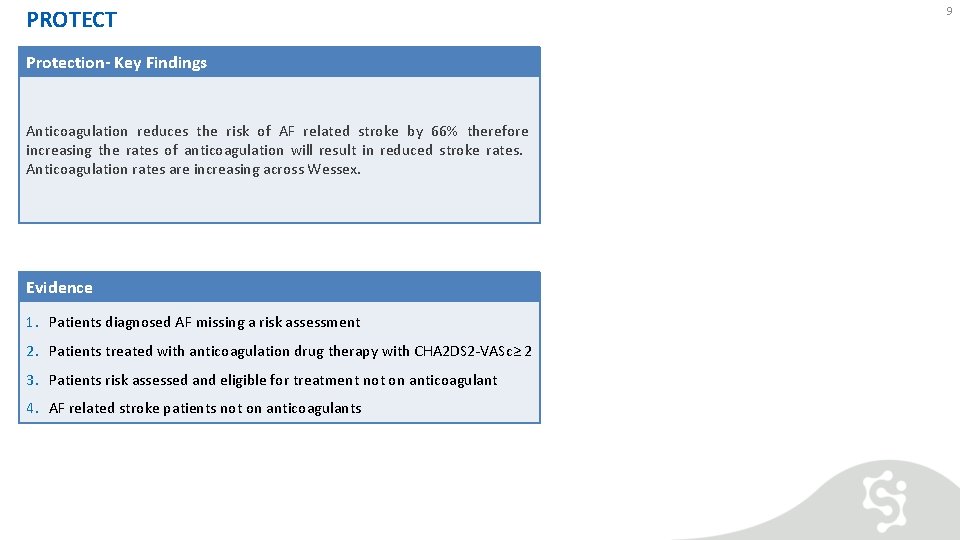
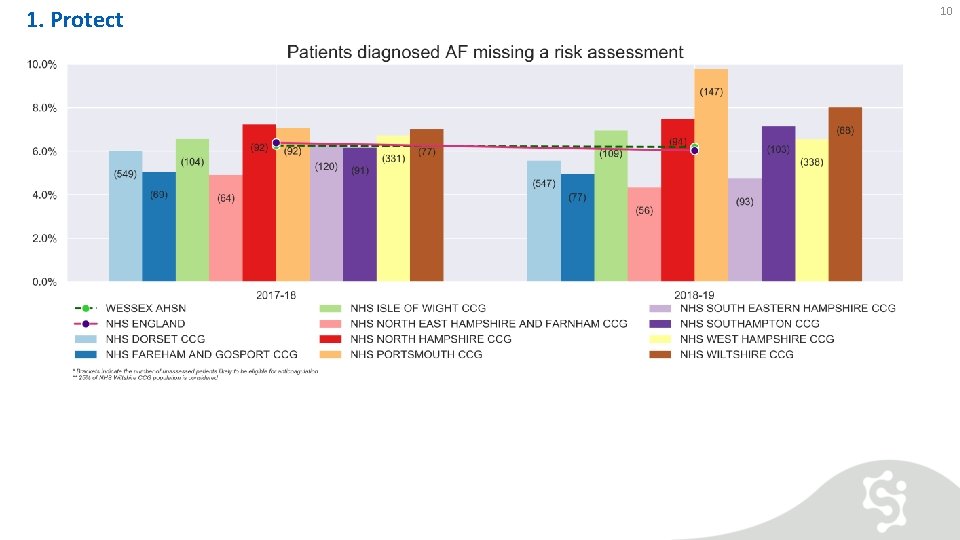
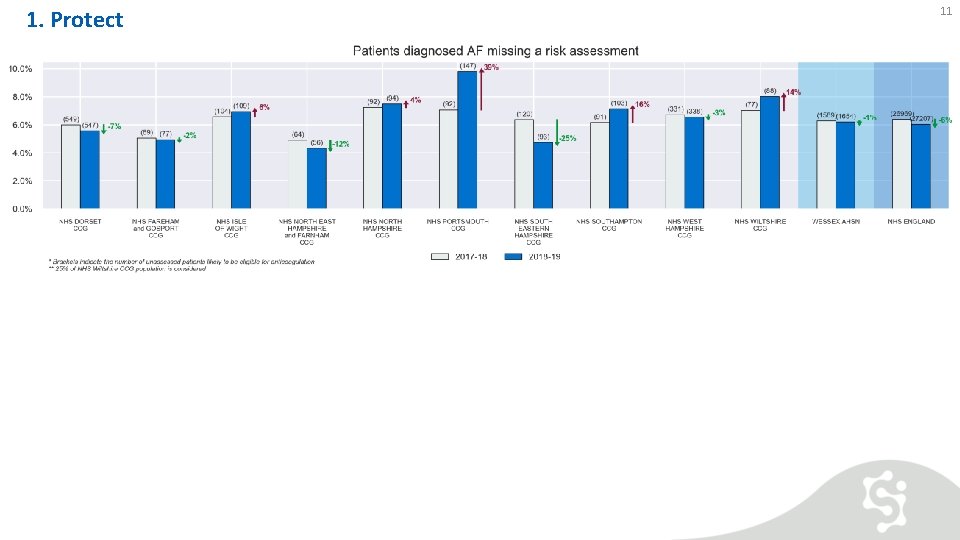
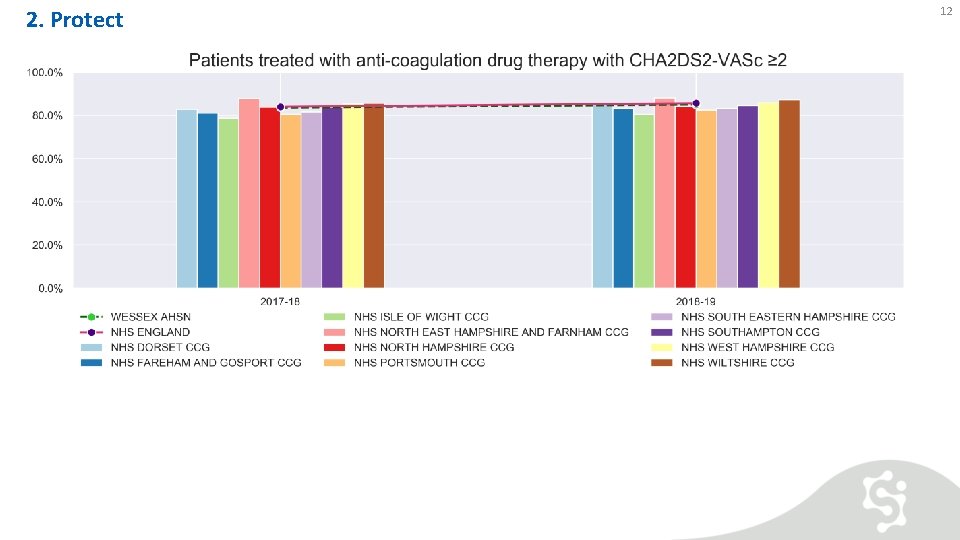
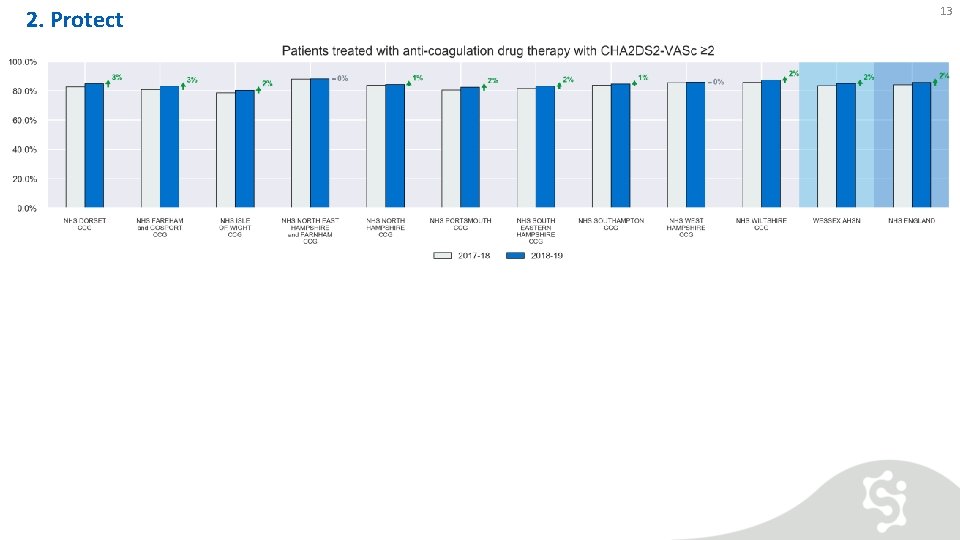
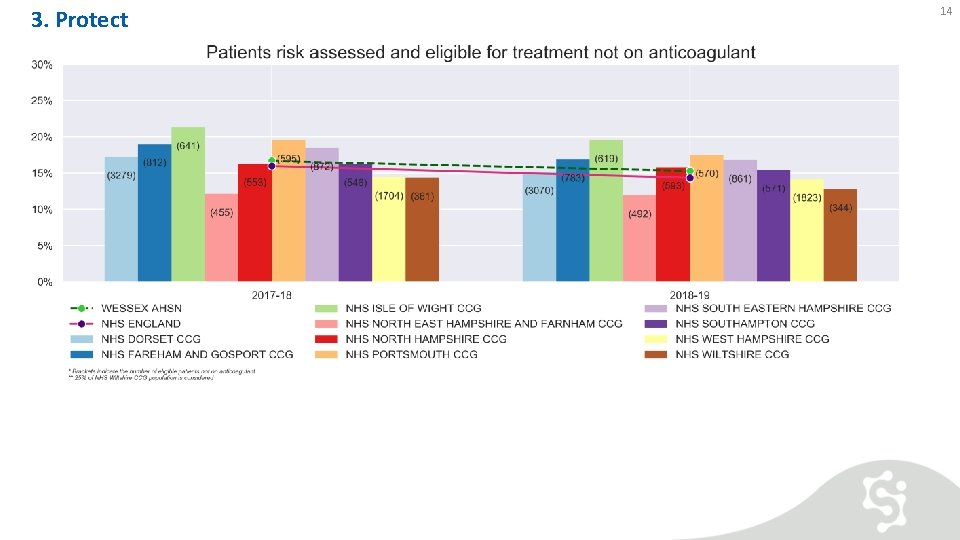
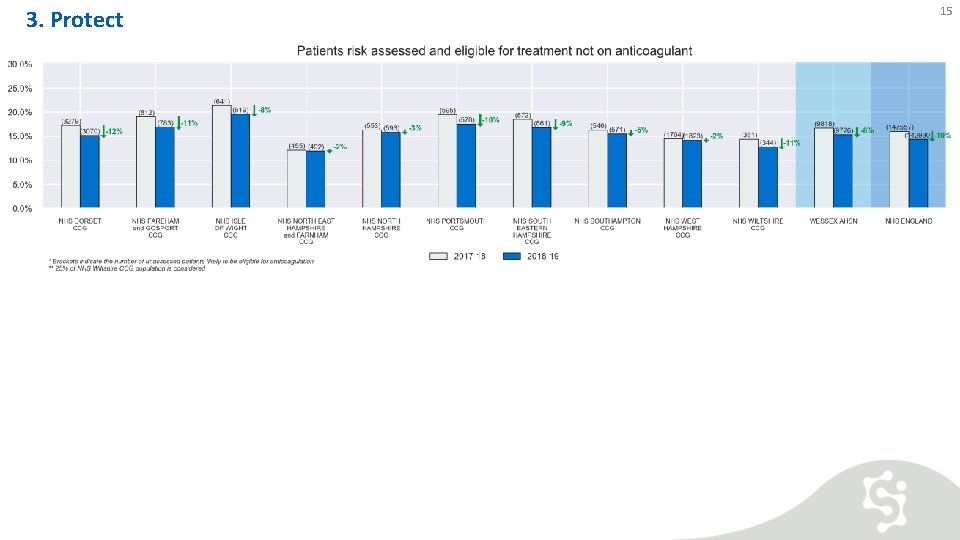
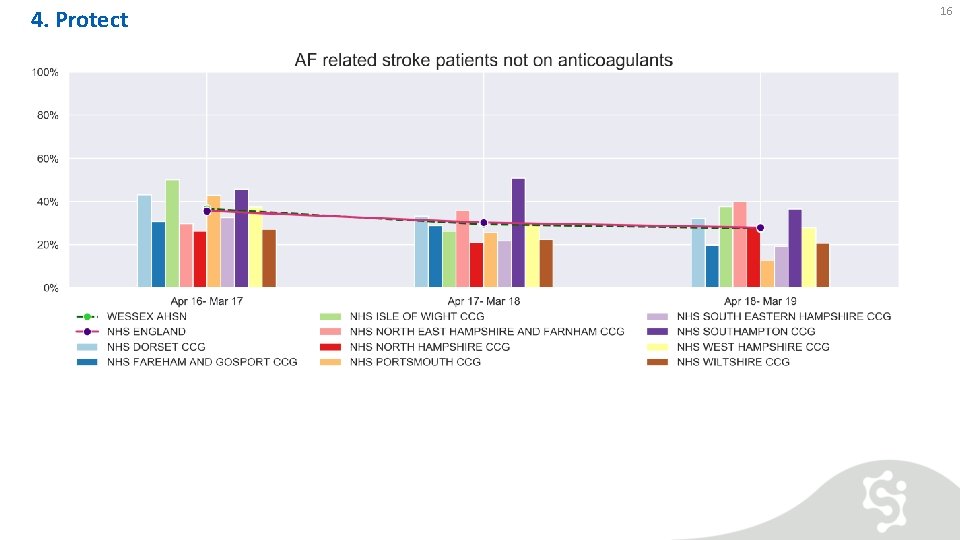
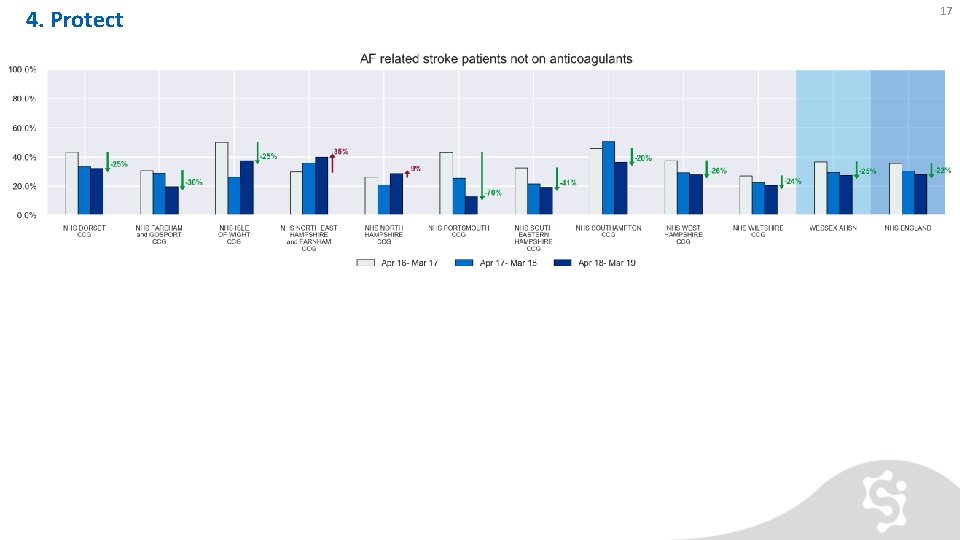
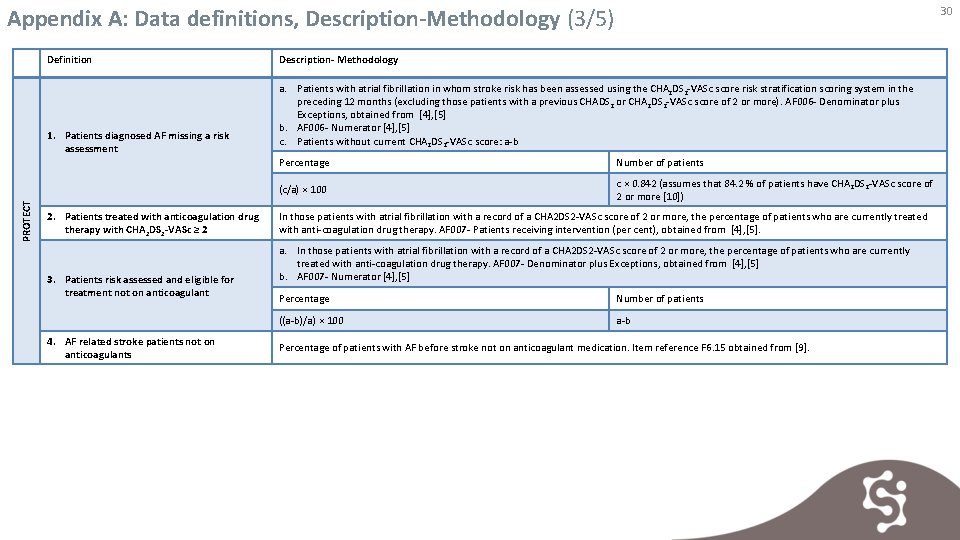
PROTECT Protection- Key Findings Anticoagulation reduces the risk of AF related stroke by 66% therefore increasing the rates of anticoagulation will result in reduced stroke rates. Anticoagulation rates are increasing across Wessex. Evidence 1. Patients diagnosed AF missing a risk assessment 2. Patients treated with anticoagulation drug therapy with CHA 2 DS 2 -VASc≥ 2 3. Patients risk assessed and eligible for treatment not on anticoagulant 4. AF related stroke patients not on anticoagulants 9
1. Protect 10
1. Protect 11
2. Protect 12
2. Protect 13
3. Protect 14
3. Protect 15
4. Protect 16
4. Protect 17
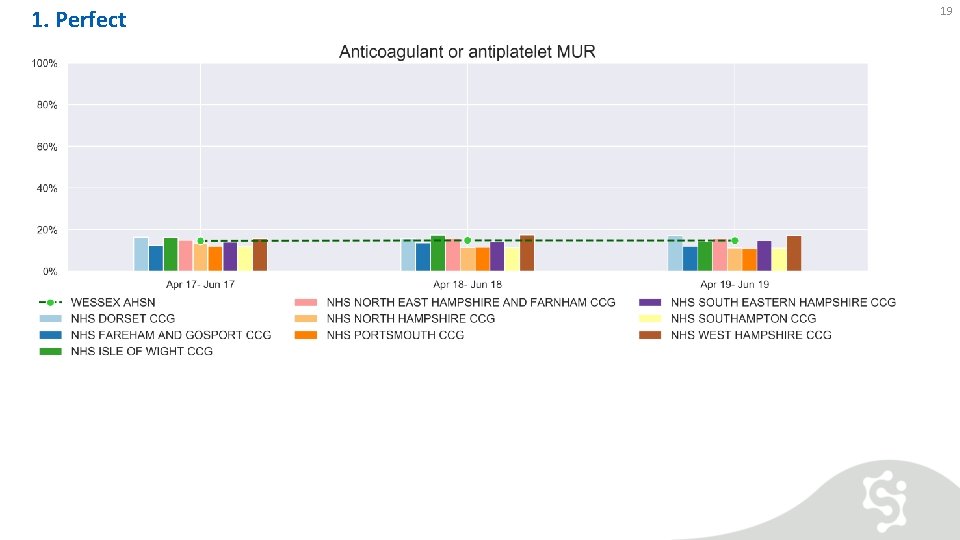
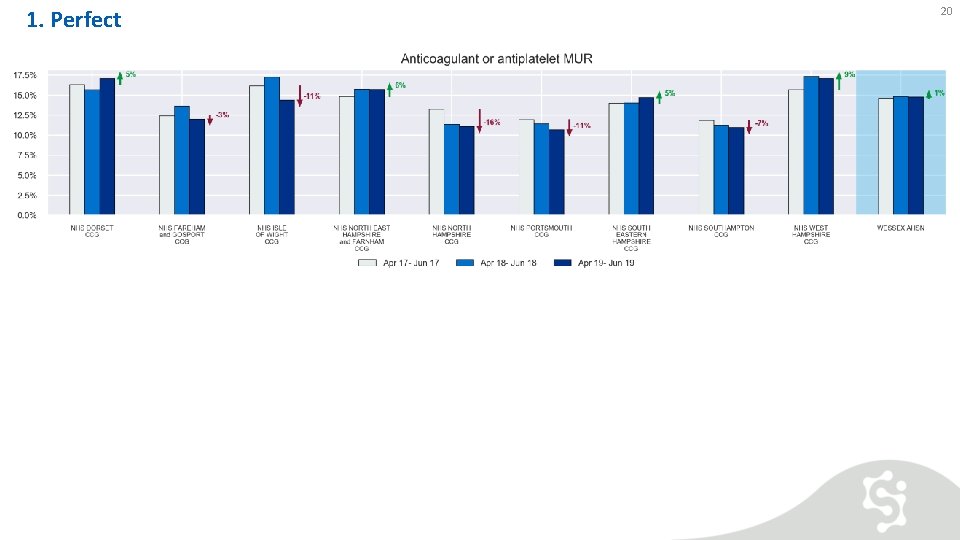
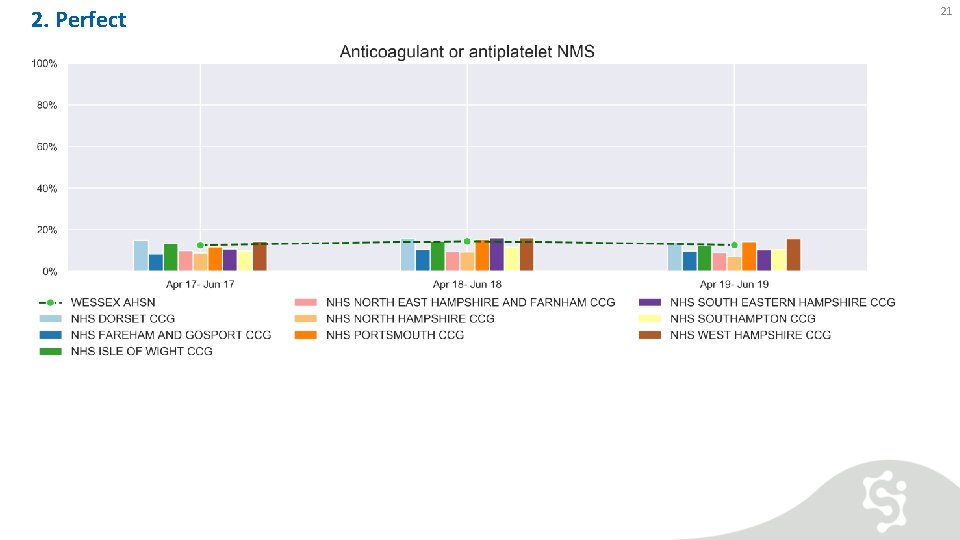
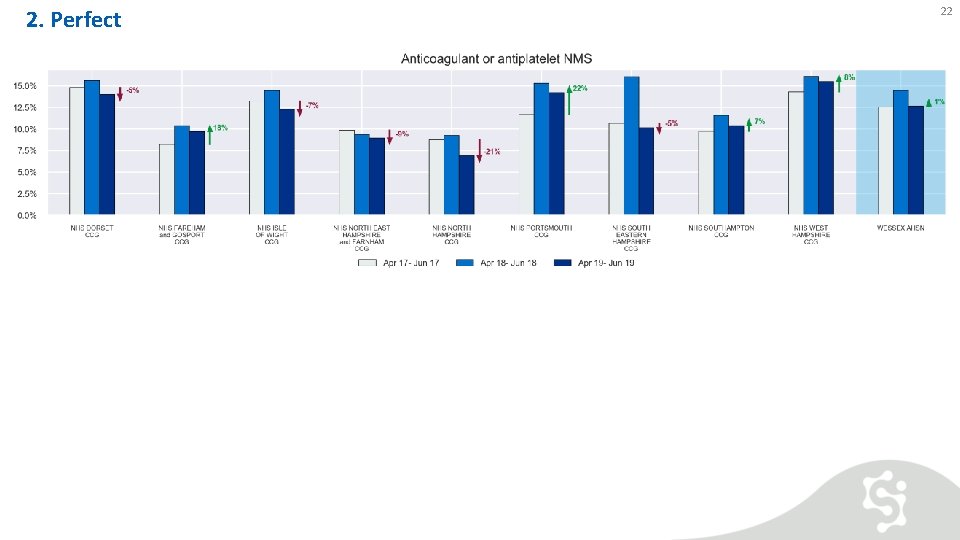
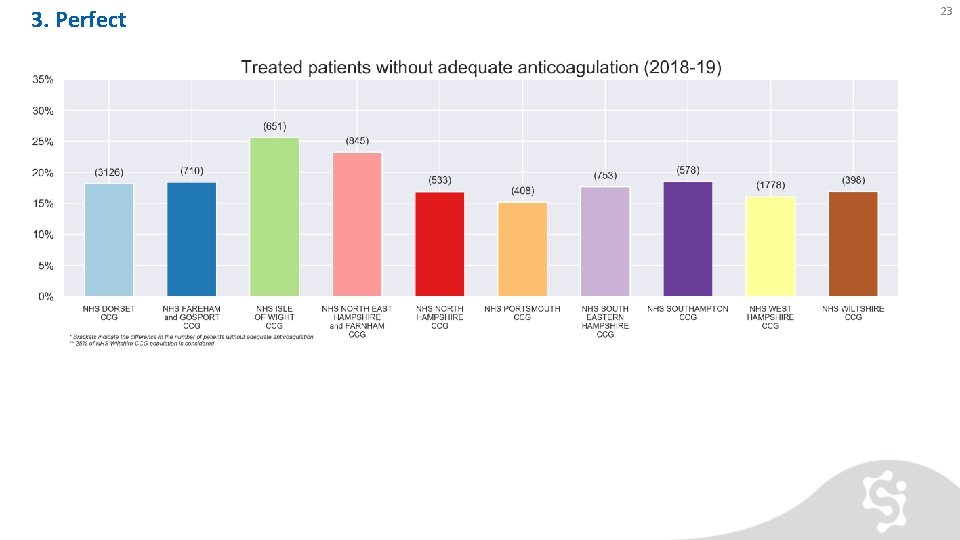
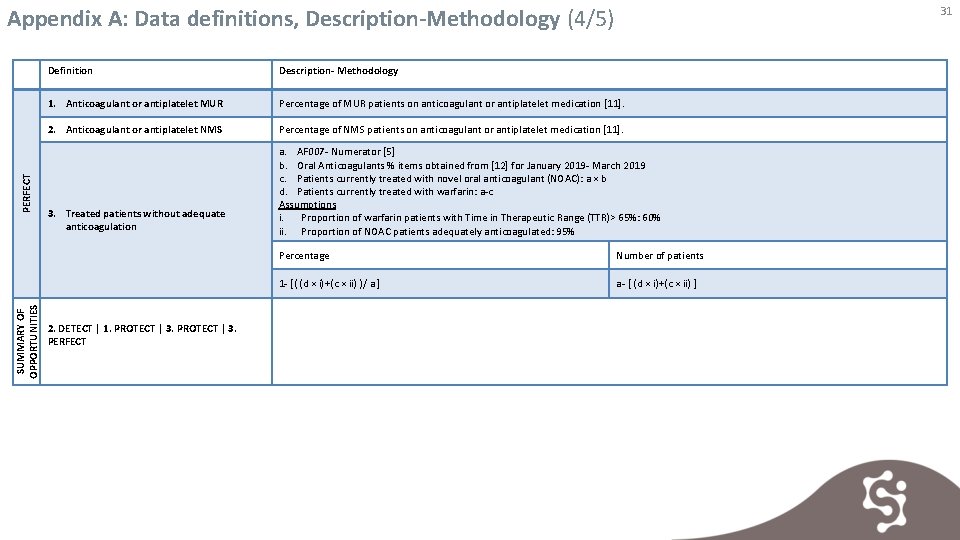
PERFECT Perfection- Key Findings Between 30 -50% of patients do not take their medicines as intended. This results in up to £ 150 million or avoidable medicines waste in the NHS and poor patient outcomes. The New Medicines Service (NMS) provides support for people with long-term conditions newly prescribed anticoagulation to help improve medicines adherence. Increasing NMS discussions will increase adherence by at least 10% Evidence 1. Anticoagulant or antiplatelet MUR 2. Anticoagulant or antiplatelet NMS 3. Treated patients without adequate anticoagulation 18
1. Perfect 19
1. Perfect 20
2. Perfect 21
2. Perfect 22
3. Perfect 23
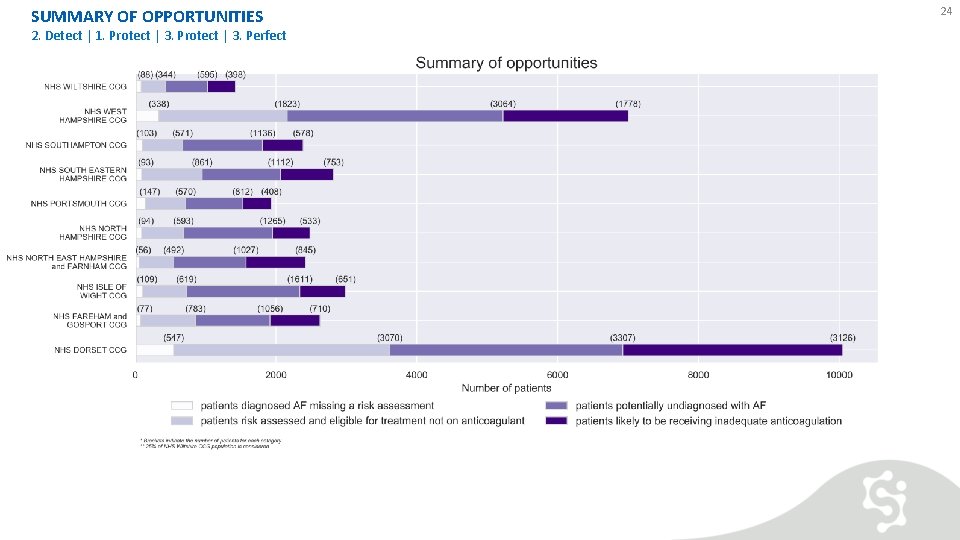
SUMMARY OF OPPORTUNITIES 2. Detect | 1. Protect | 3. Perfect 24
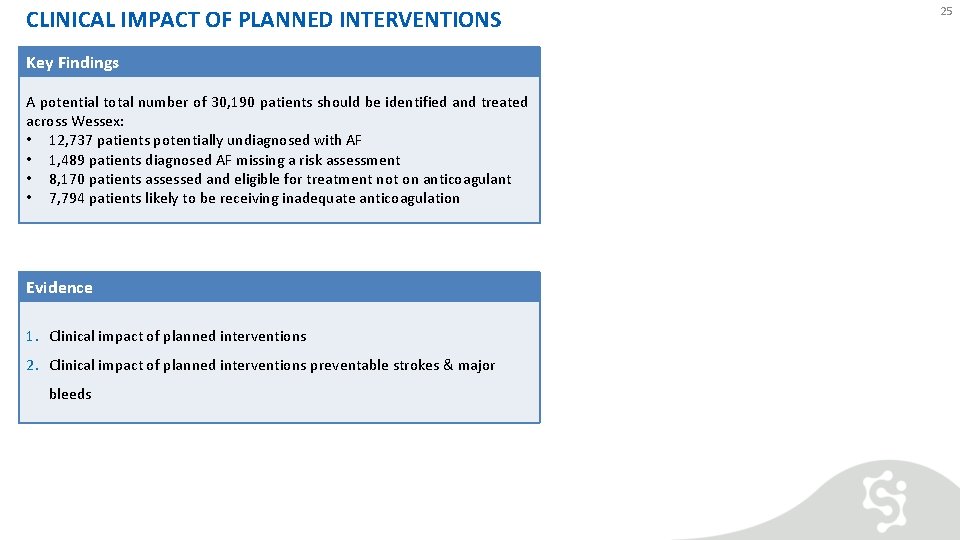
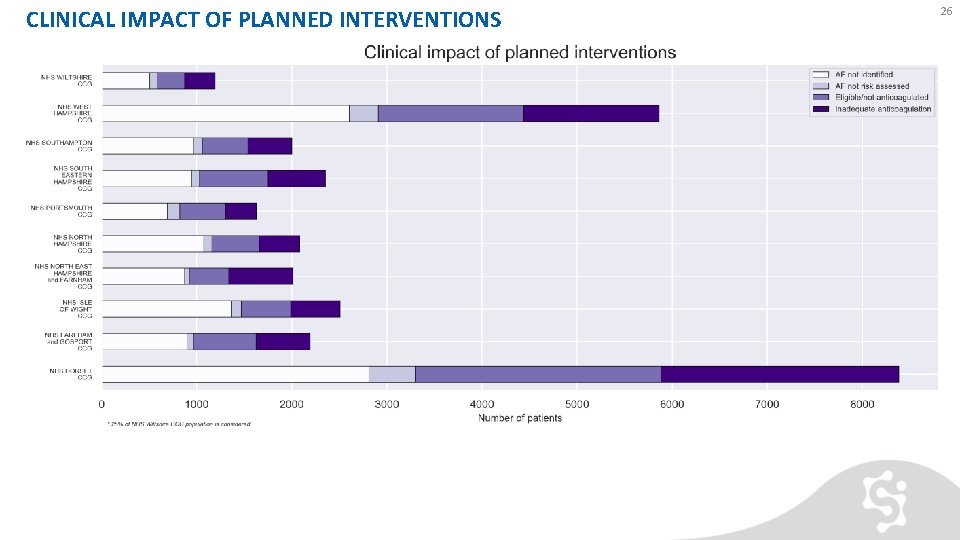
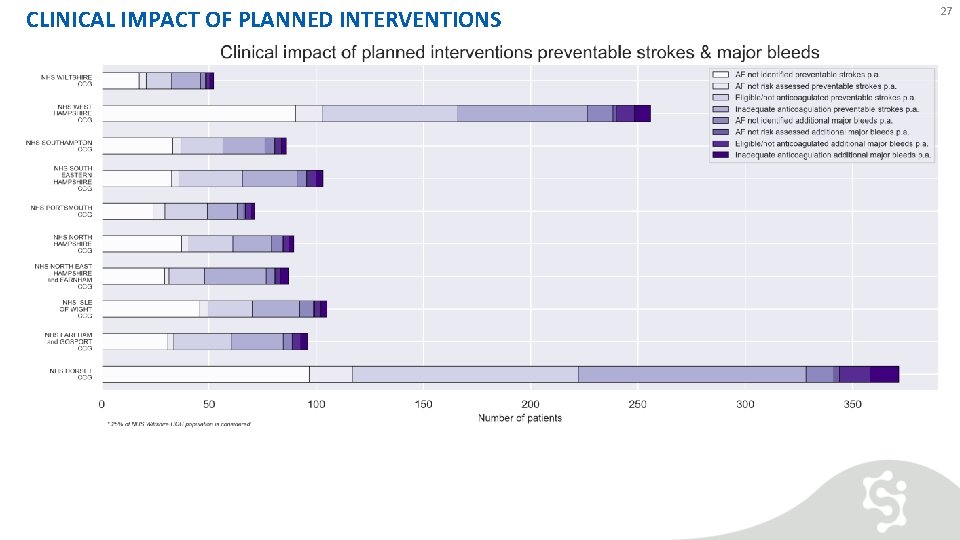
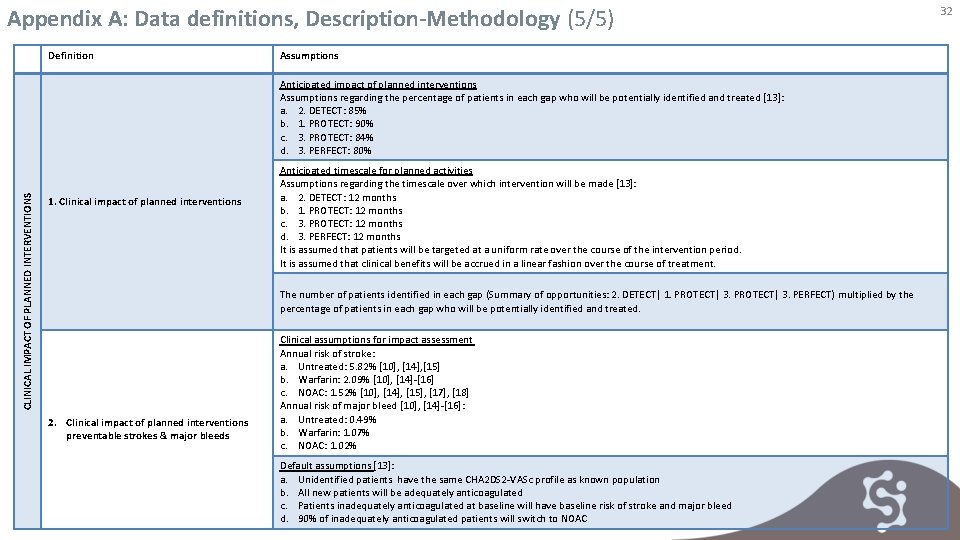
CLINICAL IMPACT OF PLANNED INTERVENTIONS Key Findings A potential total number of 30, 190 patients should be identified and treated across Wessex: • 12, 737 patients potentially undiagnosed with AF • 1, 489 patients diagnosed AF missing a risk assessment • 8, 170 patients assessed and eligible for treatment not on anticoagulant • 7, 794 patients likely to be receiving inadequate anticoagulation Evidence 1. Clinical impact of planned interventions 2. Clinical impact of planned interventions preventable strokes & major bleeds 25
CLINICAL IMPACT OF PLANNED INTERVENTIONS 26
CLINICAL IMPACT OF PLANNED INTERVENTIONS 27
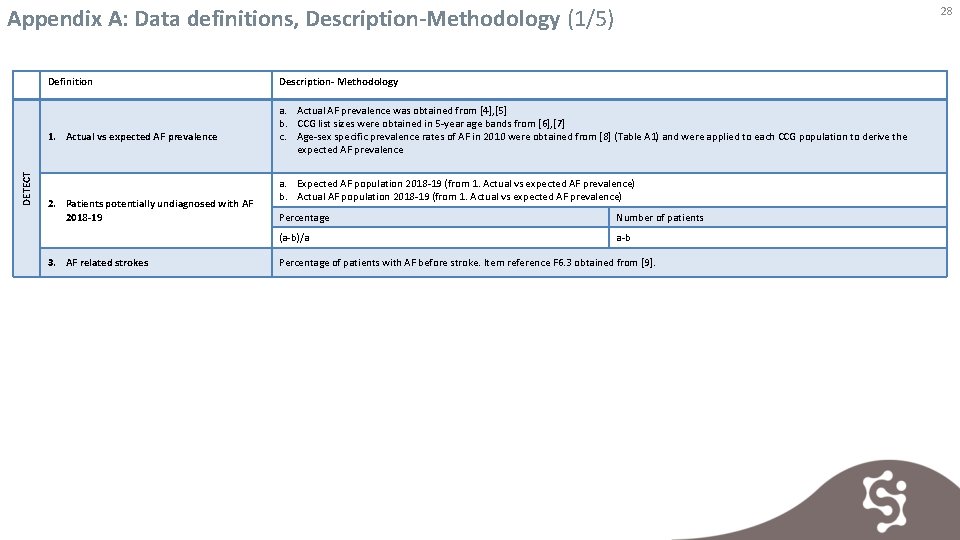
Appendix A: Data definitions, Description-Methodology (1/5) Definition DETECT 1. Actual vs expected AF prevalence 2. Patients potentially undiagnosed with AF 2018 -19 3. AF related strokes 28 Description- Methodology a. Actual AF prevalence was obtained from [4], [5] b. CCG list sizes were obtained in 5 -year age bands from [6], [7] c. Age-sex specific prevalence rates of AF in 2010 were obtained from [8] (Table A 1) and were applied to each CCG population to derive the expected AF prevalence a. Expected AF population 2018 -19 (from 1. Actual vs expected AF prevalence) b. Actual AF population 2018 -19 (from 1. Actual vs expected AF prevalence) Percentage Number of patients (a-b)/a a-b Percentage of patients with AF before stroke. Item reference F 6. 3 obtained from [9].
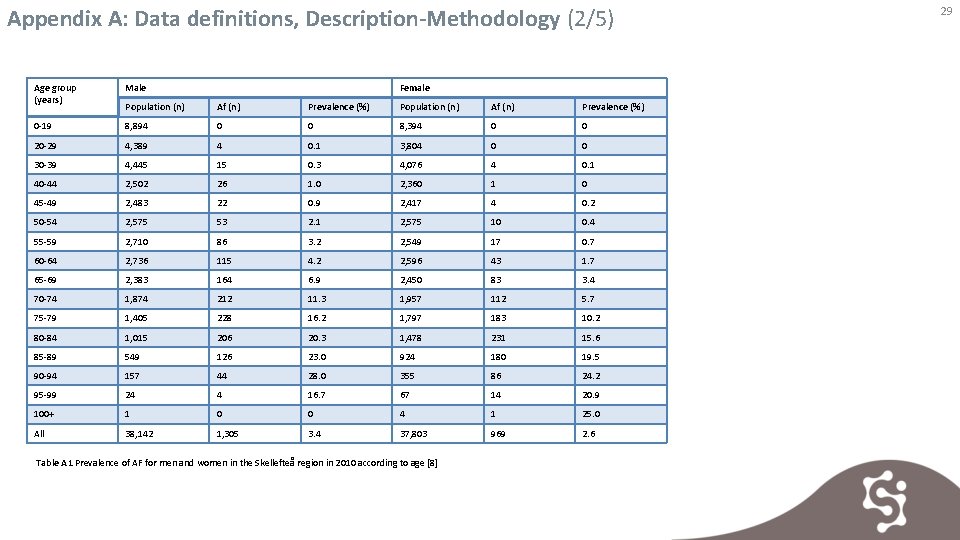
Appendix A: Data definitions, Description-Methodology (2/5) Age group (years) Male Female Population (n) Af (n) Prevalence (%) 0 -19 8, 894 0 0 8, 394 0 0 20 -29 4, 389 4 0. 1 3, 804 0 0 30 -39 4, 445 15 0. 3 4, 076 4 0. 1 40 -44 2, 502 26 1. 0 2, 360 1 0 45 -49 2, 483 22 0. 9 2, 417 4 0. 2 50 -54 2, 575 53 2. 1 2, 575 10 0. 4 55 -59 2, 710 86 3. 2 2, 549 17 0. 7 60 -64 2, 736 115 4. 2 2, 596 43 1. 7 65 -69 2, 383 164 6. 9 2, 450 83 3. 4 70 -74 1, 874 212 11. 3 1, 957 112 5. 7 75 -79 1, 405 228 16. 2 1, 797 183 10. 2 80 -84 1, 015 206 20. 3 1, 478 231 15. 6 85 -89 549 126 23. 0 924 180 19. 5 90 -94 157 44 28. 0 355 86 24. 2 95 -99 24 4 16. 7 67 14 20. 9 100+ 1 0 0 4 1 25. 0 All 38, 142 1, 305 3. 4 37, 803 969 2. 6 Table A 1 Prevalence of AF for men and women in the Skellefteå region in 2010 according to age [8] 29
Appendix A: Data definitions, Description-Methodology (3/5) Definition PROTECT 1. Patients diagnosed AF missing a risk assessment 2. Patients treated with anticoagulation drug therapy with CHA 2 DS 2 -VASc ≥ 2 3. Patients risk assessed and eligible for treatment not on anticoagulant 4. AF related stroke patients not on anticoagulants 30 Description- Methodology a. Patients with atrial fibrillation in whom stroke risk has been assessed using the CHA 2 DS 2 -VASc score risk stratification scoring system in the preceding 12 months (excluding those patients with a previous CHADS 2 or CHA 2 DS 2 -VASc score of 2 or more). AF 006 - Denominator plus Exceptions, obtained from [4], [5] b. AF 006 - Numerator [4], [5] c. Patients without current CHA 2 DS 2 -VASc score: a-b Percentage Number of patients (c/a) × 100 c × 0. 842 (assumes that 84. 2 % of patients have CHA 2 DS 2 -VASc score of 2 or more [10]) In those patients with atrial fibrillation with a record of a CHA 2 DS 2 -VASc score of 2 or more, the percentage of patients who are currently treated with anti-coagulation drug therapy. AF 007 - Patients receiving intervention (per cent), obtained from [4], [5]. a. In those patients with atrial fibrillation with a record of a CHA 2 DS 2 -VASc score of 2 or more, the percentage of patients who are currently treated with anti-coagulation drug therapy. AF 007 - Denominator plus Exceptions, obtained from [4], [5] b. AF 007 - Numerator [4], [5] Percentage Number of patients ((a-b)/a) × 100 a-b Percentage of patients with AF before stroke not on anticoagulant medication. Item reference F 6. 15 obtained from [9].
SUMMARY OF OPPORTUNITIES PERFECT Appendix A: Data definitions, Description-Methodology (4/5) 31 Definition Description- Methodology 1. Anticoagulant or antiplatelet MUR Percentage of MUR patients on anticoagulant or antiplatelet medication [11]. 2. Anticoagulant or antiplatelet NMS Percentage of NMS patients on anticoagulant or antiplatelet medication [11]. 3. Treated patients without adequate anticoagulation a. AF 007 - Numerator [5] b. Oral Anticoagulants % items obtained from [12] for January 2019 - March 2019 c. Patients currently treated with novel oral anticoagulant (NOAC): a × b d. Patients currently treated with warfarin: a-c Assumptions i. Proportion of warfarin patients with Time in Therapeutic Range (TTR)> 65%: 60% ii. Proportion of NOAC patients adequately anticoagulated: 95% 2. DETECT | 1. PROTECT | 3. PERFECT Percentage Number of patients 1 - [( (d × i)+(c × ii) )/ a ] a- [ (d × i)+(c × ii) ]
Appendix A: Data definitions, Description-Methodology (5/5) Definition Assumptions CLINICAL IMPACT OF PLANNED INTERVENTIONS Anticipated impact of planned interventions Assumptions regarding the percentage of patients in each gap who will be potentially identified and treated [13]: a. 2. DETECT: 85% b. 1. PROTECT: 90% c. 3. PROTECT: 84% d. 3. PERFECT: 80% 1. Clinical impact of planned interventions Anticipated timescale for planned activities Assumptions regarding the timescale over which intervention will be made [13]: a. 2. DETECT: 12 months b. 1. PROTECT: 12 months c. 3. PROTECT: 12 months d. 3. PERFECT: 12 months It is assumed that patients will be targeted at a uniform rate over the course of the intervention period. It is assumed that clinical benefits will be accrued in a linear fashion over the course of treatment. The number of patients identified in each gap (Summary of opportunities: 2. DETECT| 1. PROTECT| 3. PERFECT) multiplied by the percentage of patients in each gap who will be potentially identified and treated. 2. Clinical impact of planned interventions preventable strokes & major bleeds Clinical assumptions for impact assessment Annual risk of stroke: a. Untreated: 5. 82% [10], [14], [15] b. Warfarin: 2. 09% [10], [14]-[16] c. NOAC: 1. 52% [10], [14], [15], [17], [18] Annual risk of major bleed [10], [14]-[16]: a. Untreated: 0. 49% b. Warfarin: 1. 07% c. NOAC: 1. 02% Default assumptions [13]: a. Unidentified patients have the same CHA 2 DS 2 -VASc profile as known population b. All new patients will be adequately anticoagulated c. Patients inadequately anticoagulated at baseline will have baseline risk of stroke and major bleed d. 90% of inadequately anticoagulated patients will switch to NOAC 32
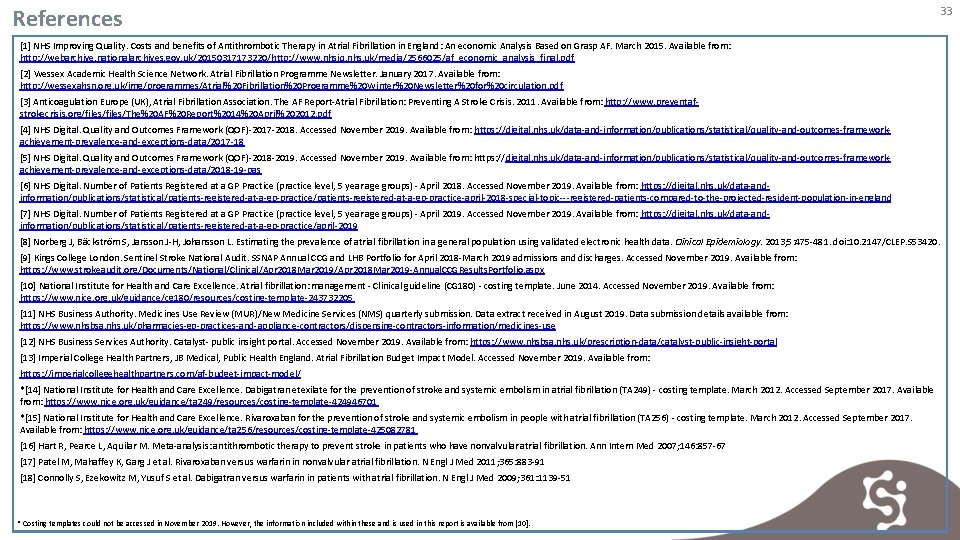
References [1] NHS Improving Quality. Costs and benefits of Antithrombotic Therapy in Atrial Fibrillation in England: An economic Analysis Based on Grasp AF. March 2015. Available from: http: //webarchive. nationalarchives. gov. uk/20150317173220/http: //www. nhsiq. nhs. uk/media/2566025/af_economic_analysis_final. pdf [2] Wessex Academic Health Science Network. Atrial Fibrillation Programme Newsletter. January 2017. Available from: http: //wessexahsn. org. uk/img/programmes/Atrial%20 Fibrillation%20 Programme%20 Winter%20 Newsletter%20 for%20 circulation. pdf [3] Anticoagulation Europe (UK), Atrial Fibrillation Association. The AF Report-Atrial Fibrillation: Preventing A Stroke Crisis. 2011. Available from: http: //www. preventafstrokecrisis. org/files/The%20 AF%20 Report%2014%20 April%202012. pdf [4] NHS Digital. Quality and Outcomes Framework (QOF)-2017 -2018. Accessed November 2019. Available from: https: //digital. nhs. uk/data-and-information/publications/statistical/quality-and-outcomes-frameworkachievement-prevalence-and-exceptions-data/2017 -18 [5] NHS Digital. Quality and Outcomes Framework (QOF)-2018 -2019. Accessed November 2019. Available from: https: //digital. nhs. uk/data-and-information/publications/statistical/quality-and-outcomes-frameworkachievement-prevalence-and-exceptions-data/2018 -19 -pas [6] NHS Digital. Number of Patients Registered at a GP Practice (practice level, 5 year age groups) - April 2018. Accessed November 2019. Available from: https: //digital. nhs. uk/data-andinformation/publications/statistical/patients-registered-at-a-gp-practice-april-2018 -special-topic---registered-patients-compared-to-the-projected-resident-population-in-england [7] NHS Digital. Number of Patients Registered at a GP Practice (practice level, 5 year age groups) - April 2019. Accessed November 2019. Available from: https: //digital. nhs. uk/data-andinformation/publications/statistical/patients-registered-at-a-gp-practice/april-2019 [8] Norberg J, Bäckström S, Jansson J-H, Johansson L. Estimating the prevalence of atrial fibrillation in a general population using validated electronic health data. Clinical Epidemiology. 2013; 5: 475 -481. doi: 10. 2147/CLEP. S 53420. [9] Kings College London. Sentinel Stroke National Audit. SSNAP Annual CCG and LHB Portfolio for April 2018 -March 2019 admissions and discharges. Accessed November 2019. Available from: https: //www. strokeaudit. org/Documents/National/Clinical/Apr 2018 Mar 2019 -Annual. CCGResults. Portfolio. aspx [10] National Institute for Health and Care Excellence. Atrial fibrillation: management - Clinical guideline (CG 180) - costing template. June 2014. Accessed November 2019. Available from: https: //www. nice. org. uk/guidance/cg 180/resources/costing-template-243732205 [11] NHS Business Authority. Medicines Use Review (MUR)/New Medicine Services (NMS) quarterly submission. Data extract received in August 2019. Data submission details available from: https: //www. nhsbsa. nhs. uk/pharmacies-gp-practices-and-appliance-contractors/dispensing-contractors-information/medicines-use [12] NHS Business Services Authority. Catalyst- public insight portal. Accessed November 2019. Available from: https: //www. nhsbsa. nhs. uk/prescription-data/catalyst-public-insight-portal [13] Imperial College Health Partners, JB Medical, Public Health England. Atrial Fibrillation Budget Impact Model. Accessed November 2019. Available from: https: //imperialcollegehealthpartners. com/af-budget-impact-model/ *[14] National Institute for Health and Care Excellence. Dabigatran etexilate for the prevention of stroke and systemic embolism in atrial fibrillation (TA 249) - costing template. March 2012. Accessed September 2017. Available from: https: //www. nice. org. uk/guidance/ta 249/resources/costing-template-424946701 *[15] National Institute for Health and Care Excellence. Rivaroxaban for the prevention of stroke and systemic embolism in people with atrial fibrillation (TA 256) - costing template. March 2012. Accessed September 2017. Available from: https: //www. nice. org. uk/guidance/ta 256/resources/costing-template-425082781 [16] Hart R, Pearce L, Aquilar M. Meta-analysis: antithrombotic therapy to prevent stroke in patients who have nonvalvular atrial fibrillation. Ann Intern Med 2007; 146: 857 -67 [17] Patel M, Mahaffey K, Garg J et al. Rivaroxaban versus warfarin in nonvalvular atrial fibrillation. N Engl J Med 2011; 365: 883 -91 [18] Connolly S, Ezekowitz M, Yusuf S et al. Dabigatran versus warfarin in patients with atrial fibrillation. N Engl J Med 2009; 361: 1139 -51 * Costing templates could not be accessed in November 2019. However, the information included within these and is used in this report is available from [10]. 33