Curriculum Compaction Tanya Morret tmorretcaiu org April 1

- Slides: 23
Curriculum Compaction Tanya Morret tmorret@caiu. org April 1, 2015
Learning Goals • What is compaction? • Why should we consider compaction?
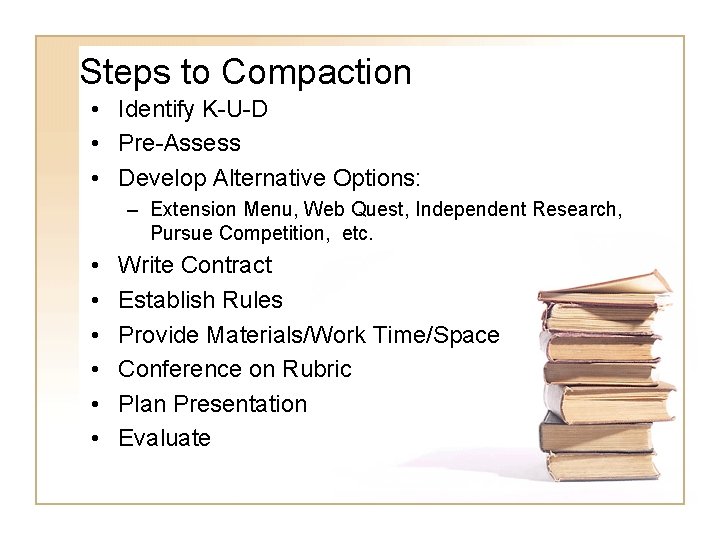
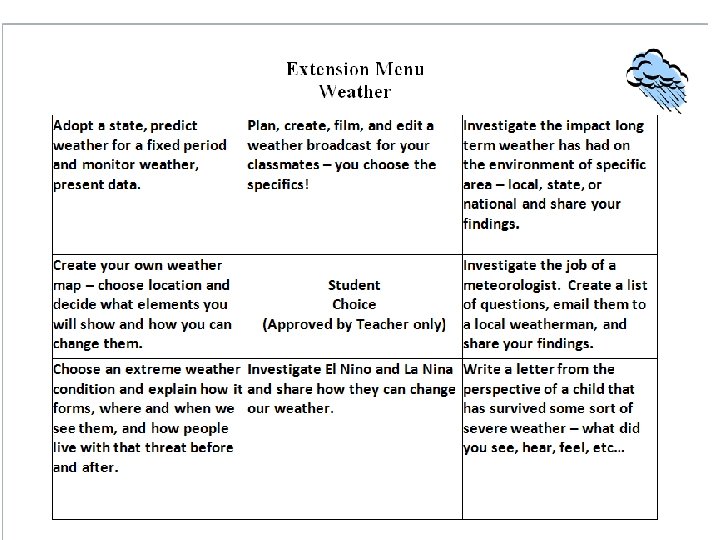
Steps to Compaction • Identify K-U-D • Pre-Assess • Develop Alternative Options: – Extension Menu, Web Quest, Independent Research, Pursue Competition, etc. • • • Write Contract Establish Rules Provide Materials/Work Time/Space Conference on Rubric Plan Presentation Evaluate
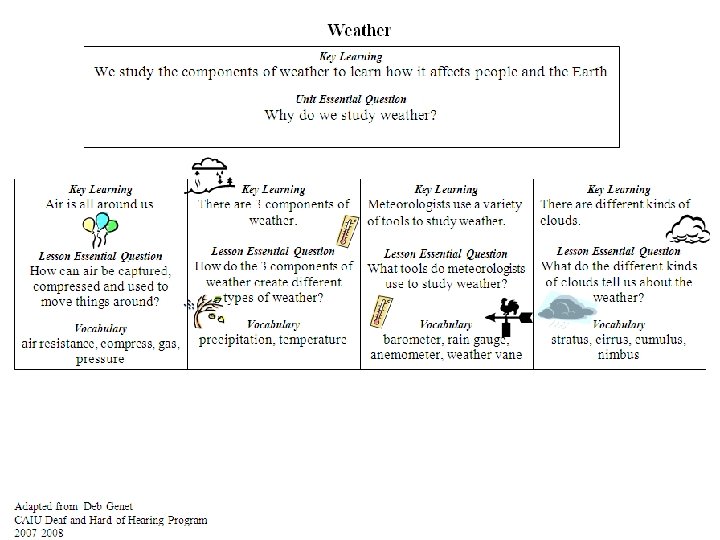
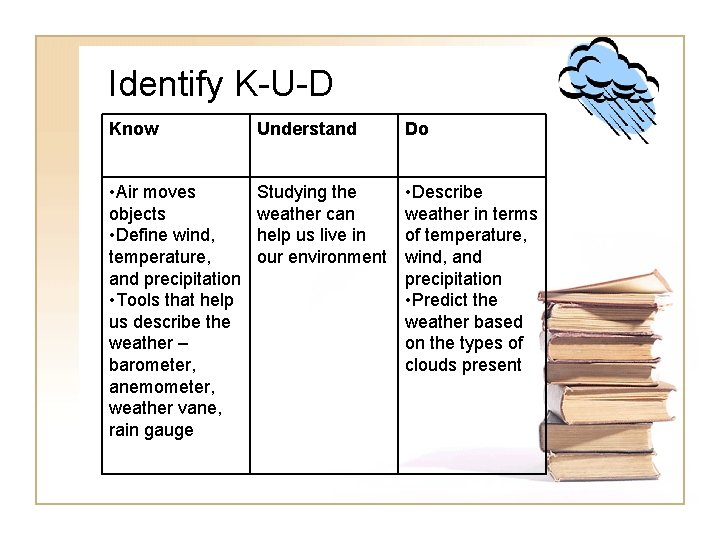
Identify K-U-D Know Understand Do • Air moves objects • Define wind, temperature, and precipitation • Tools that help us describe the weather – barometer, anemometer, weather vane, rain gauge Studying the weather can help us live in our environment • Describe weather in terms of temperature, wind, and precipitation • Predict the weather based on the types of clouds present
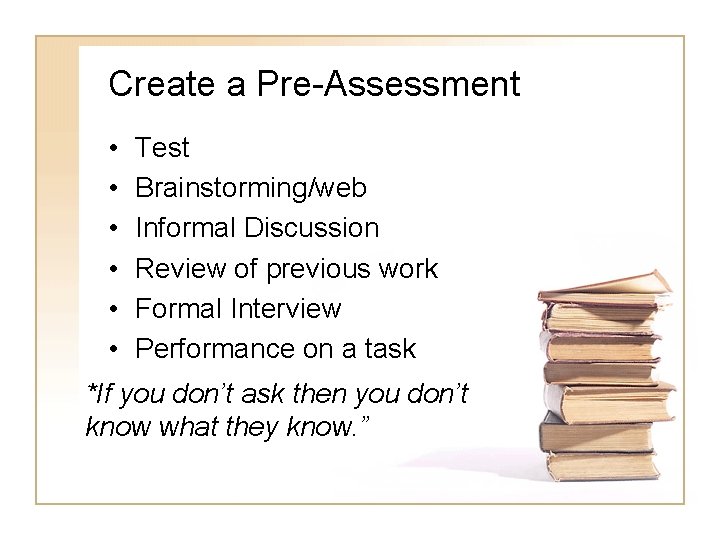
Create a Pre-Assessment • • • Test Brainstorming/web Informal Discussion Review of previous work Formal Interview Performance on a task *If you don’t ask then you don’t know what they know. ”
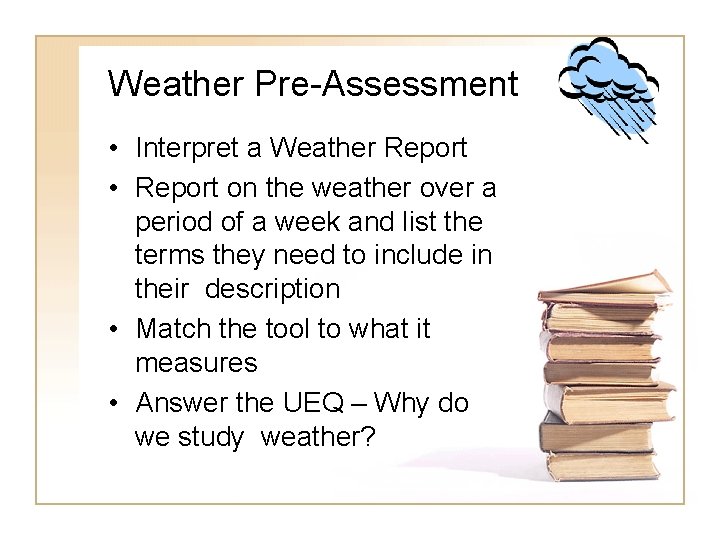
Weather Pre-Assessment • Interpret a Weather Report • Report on the weather over a period of a week and list the terms they need to include in their description • Match the tool to what it measures • Answer the UEQ – Why do we study weather?
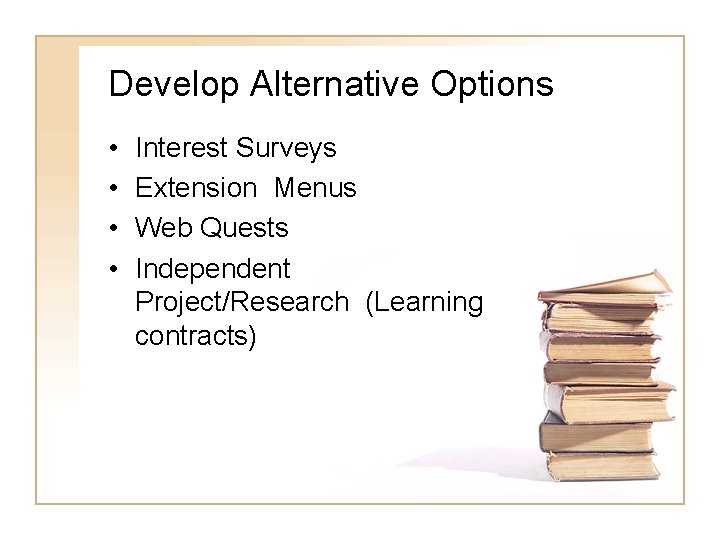
Develop Alternative Options • • Interest Surveys Extension Menus Web Quests Independent Project/Research (Learning contracts)
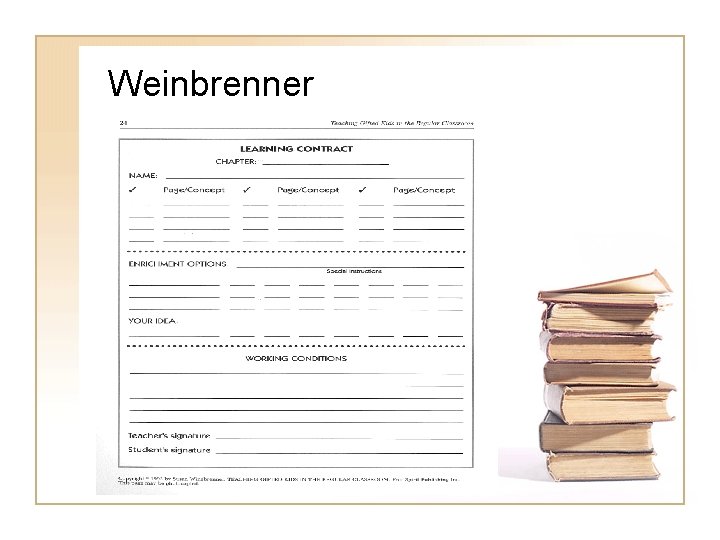
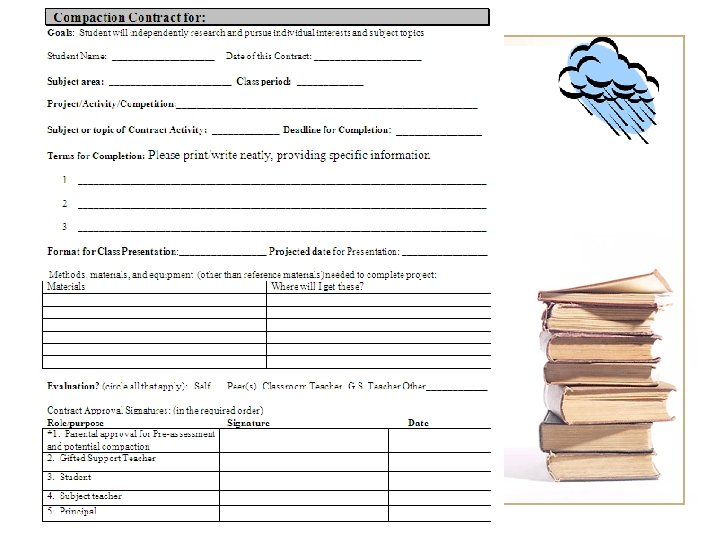
Write a Contract • Look at Winebrenner Contract • See Morret Generic Contract • Be as specific as you can but still open-ended that allows for the incidental learning to occur
Weinbrenner
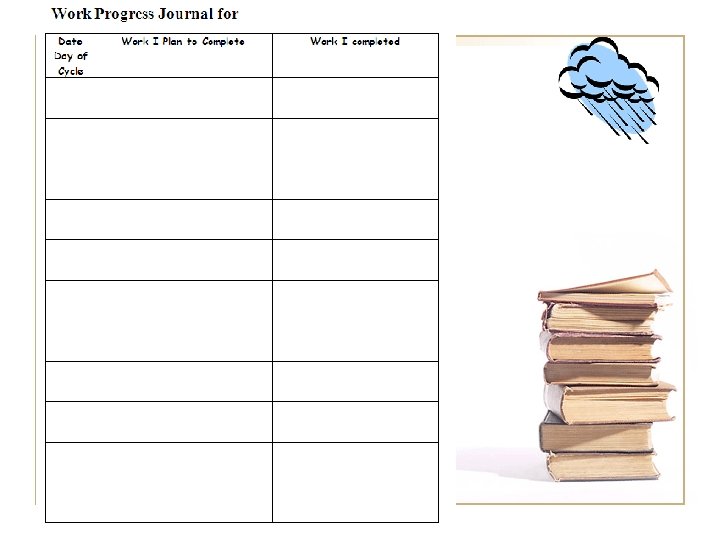
Establish Rules • Preparedness • Documentation (Work Progress Journal) • Appropriate Behavior • “What to do when the student does not know what to do”
Sample Rules • Compaction Folder must be in the classroom • Consider three before me. • Red cup lets me know you need me, work constructively till I can get to you. • Group work needs to use 6 inch voices.
Provide Work Space/Materials/Resources • Where? • When? • With who?
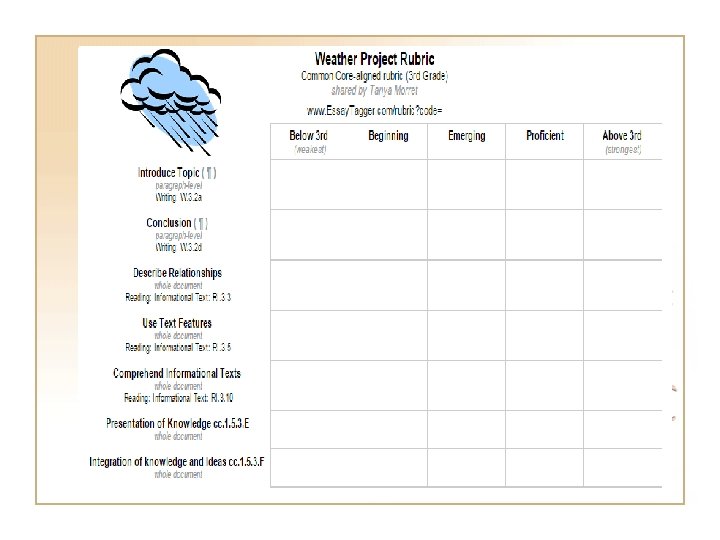
Develop/Conference on Rubric/Checklist • “Design your own” • Use District Rubric Bank • • • http: //www. myt 4 l. com/ http: //www. rcampus. com/indexrubric. cfm http: //www. myteachertools. com/ http: //www. curriculum 21. com/clearinghouse/ http: //www. essaytagger. com/commoncore
Plan Presentation • Timeline/Deadlines • Length • Rehearsal!!
Evaluate • Self • Peers – class or group • Teacher – Gen. Ed and/or Gifted Supp • Guest Evaluator • Be specific, give constructive feedback
Learning Goals • What is compaction? • Why should we consider compaction?
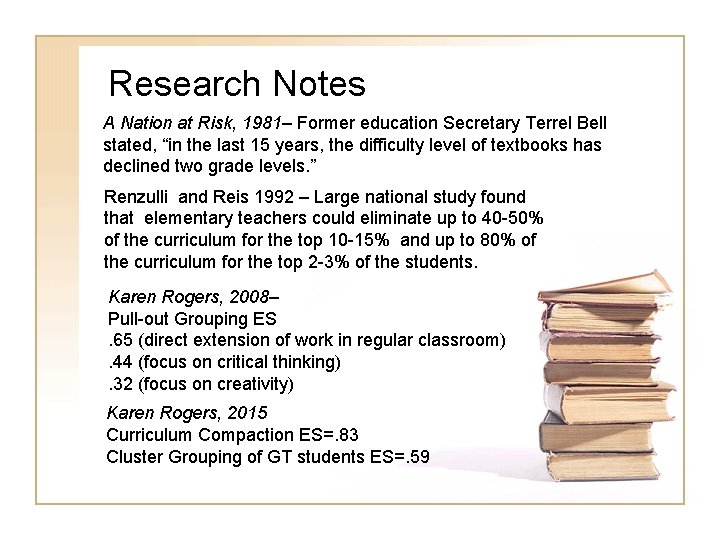
Research Notes A Nation at Risk, 1981– Former education Secretary Terrel Bell stated, “in the last 15 years, the difficulty level of textbooks has declined two grade levels. ” Renzulli and Reis 1992 – Large national study found that elementary teachers could eliminate up to 40 -50% of the curriculum for the top 10 -15% and up to 80% of the curriculum for the top 2 -3% of the students. Karen Rogers, 2008– Pull-out Grouping ES. 65 (direct extension of work in regular classroom). 44 (focus on critical thinking). 32 (focus on creativity) Karen Rogers, 2015 Curriculum Compaction ES=. 83 Cluster Grouping of GT students ES=. 59
? ? Questions? ? http: //blog. surveymonkey. com/wpcontent/uploads/2011/12/faq. jpg