CORD PRESENTATION CORD PROLAPSE Anupama Tamrakar Lecturer Yenepoya



- Slides: 19
CORD PRESENTATION/ CORD PROLAPSE Anupama Tamrakar Lecturer, Yenepoya Nursing College
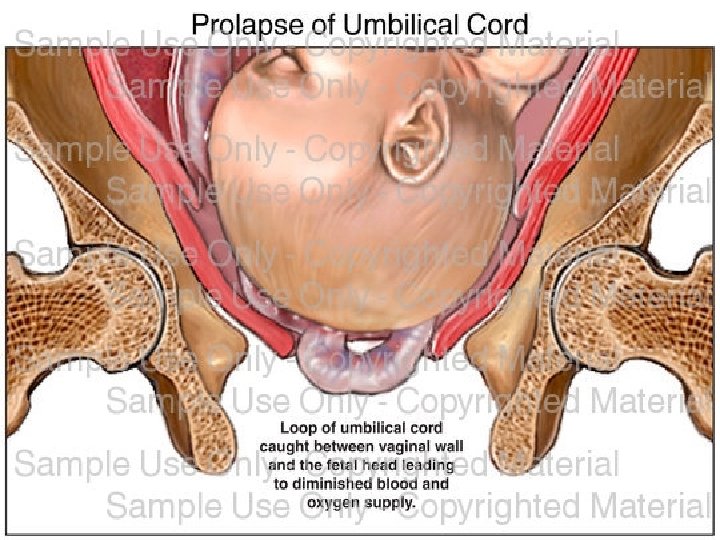
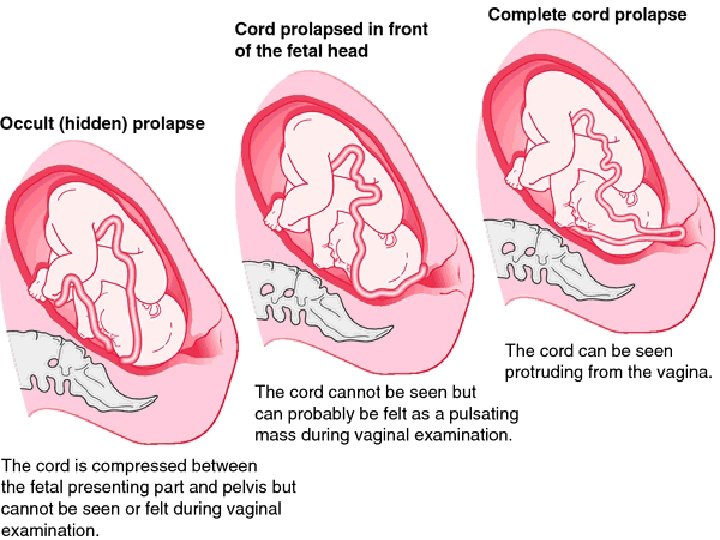
Definitions • Cord presentation: a condition in which the umbilical cord is in front of the presenting part of the fetus with the membranes intact(not ruptured). • Cord prolapse: this is a condition in which the umbilical cord is in front of the presenting part of the fetus with the membranes ruptured.
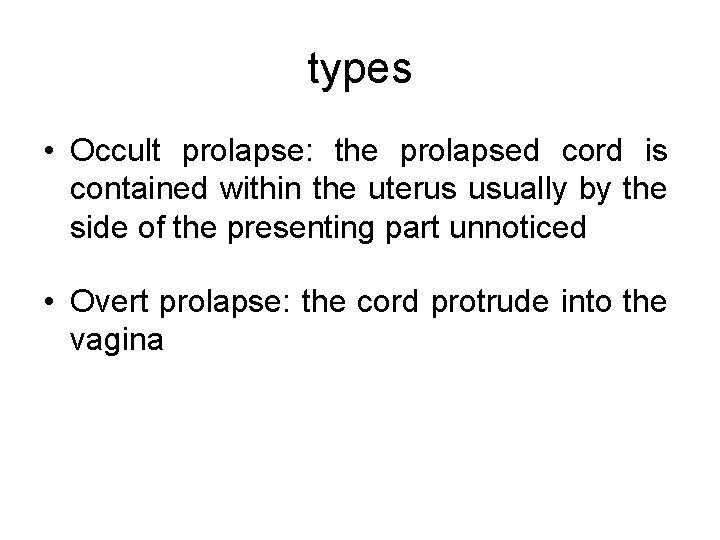
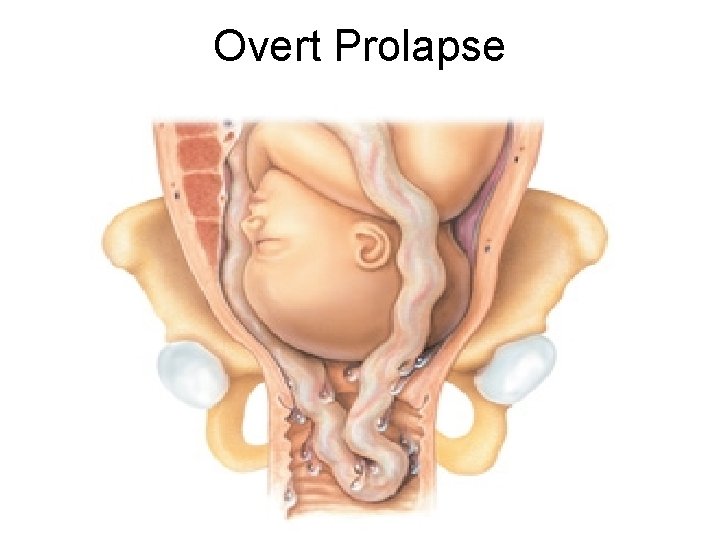
types • Occult prolapse: the prolapsed cord is contained within the uterus usually by the side of the presenting part unnoticed • Overt prolapse: the cord protrude into the vagina
Overt Prolapse
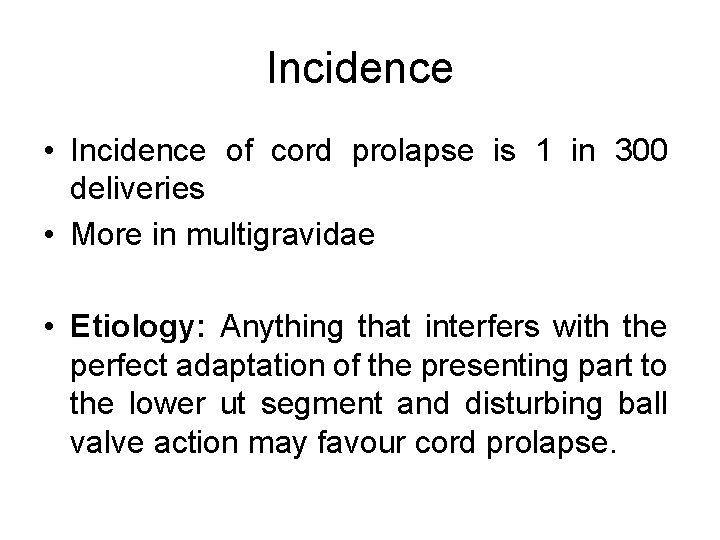
Incidence • Incidence of cord prolapse is 1 in 300 deliveries • More in multigravidae • Etiology: Anything that interfers with the perfect adaptation of the presenting part to the lower ut segment and disturbing ball valve action may favour cord prolapse.
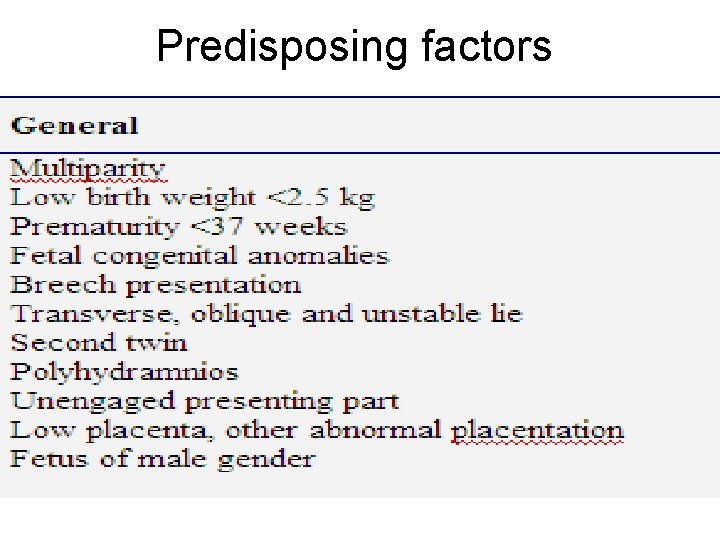
Predisposing factors
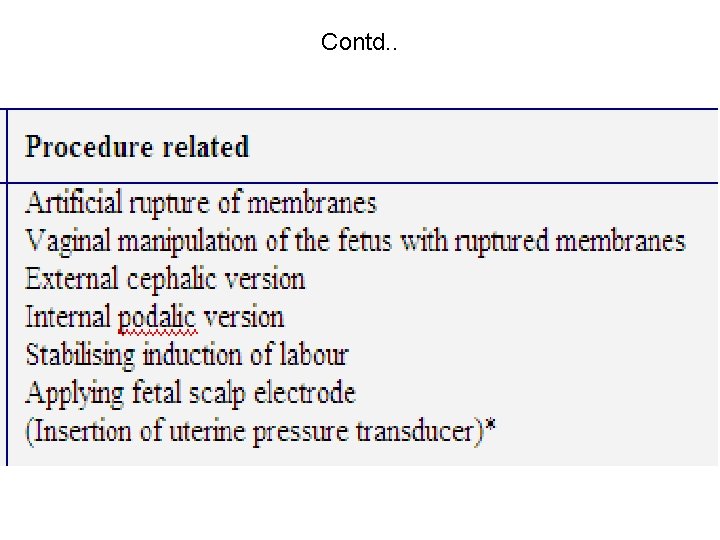
Contd. .
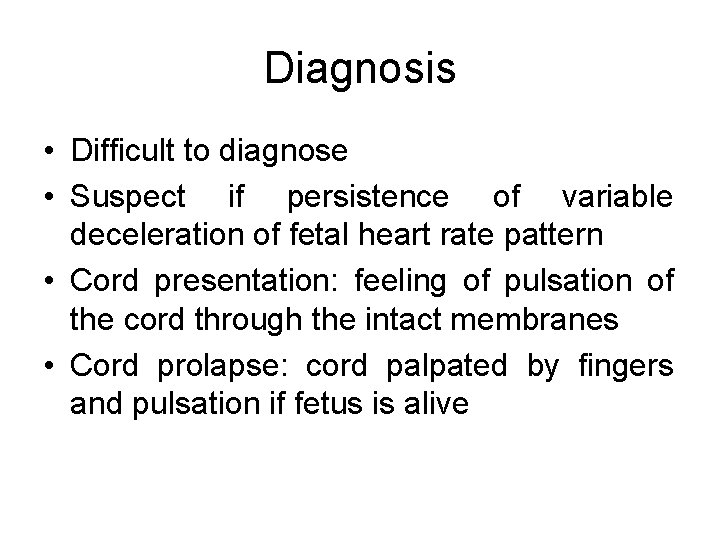
Diagnosis • Difficult to diagnose • Suspect if persistence of variable deceleration of fetal heart rate pattern • Cord presentation: feeling of pulsation of the cord through the intact membranes • Cord prolapse: cord palpated by fingers and pulsation if fetus is alive
Consequence of UCP • The cord is often compressed by either the shoulder, breech or head. A fetal heart rate pattern that suggest hypoxaemia (eg severe bradycardia, severe variable accelerations) may be the clue especially in occult prolapse.
Prevention of cord prolapse • High index of suspicion of cord presentation • Care when performing artificial rupture of fetal membranes • Careful monitoring of FHR to detect irregular heart rate pattern that may suggest cord compression (severe bradycardia, severe variable accelerations
Management • diagnosed early , or perhaps even prevented. • Risk factors such as malpresentation, polyhydramnios, a high presenting part or a structural anomaly should alert possibility of cord prolapse.
Contd. . • Avoidance of ARM in cases of cord presentation would prevent cord prolapse • Making sure that there is no cord presentation before membranes rupture • Rupturing membranes gradually and guiding the draining of flow - it avoid sudden decompression
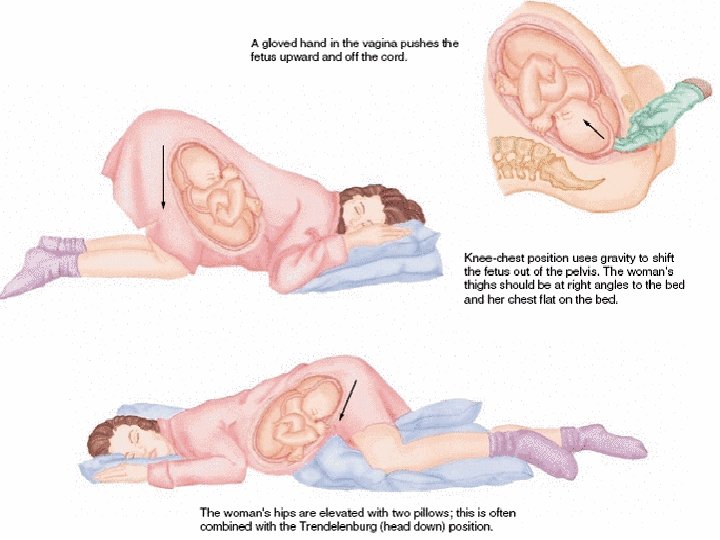
METHODS OF ALLEVIATION OF PRESSURE ON THE PROLAPSED CORD Alleviation of pressure on the prolapsed cord until delivery can be achieved through by : 1. Digital disengagement of the presenting part 2. Raising the maternal pelvis (Tredelenburgs position or sim’s position) 3. Filling of the maternal bladder
DELIVERY • if the cervix is not fully dilated, prompt delivery through emergency caesarean section offers the best chance of favourable fetal outcome. • If the fetus is dead, then manage labour as indicated
Complications of cord prolapse • Fetal distress • Intrapartum fetal death • Neonatal asphyxia • Early neonatal death