NEPHRITIS Santhosh Thomas Lecturer Yenepoya Nursing College Learning











- Slides: 31
NEPHRITIS. Santhosh Thomas Lecturer, Yenepoya Nursing College.
Learning objectives. • The student will be able to: § Define nephritis. § State different types of nephritis. § Explain the causes of nephritis. § Explain its pathophysiology. § Write its diagnostic evaluation. § Elaborate its management.
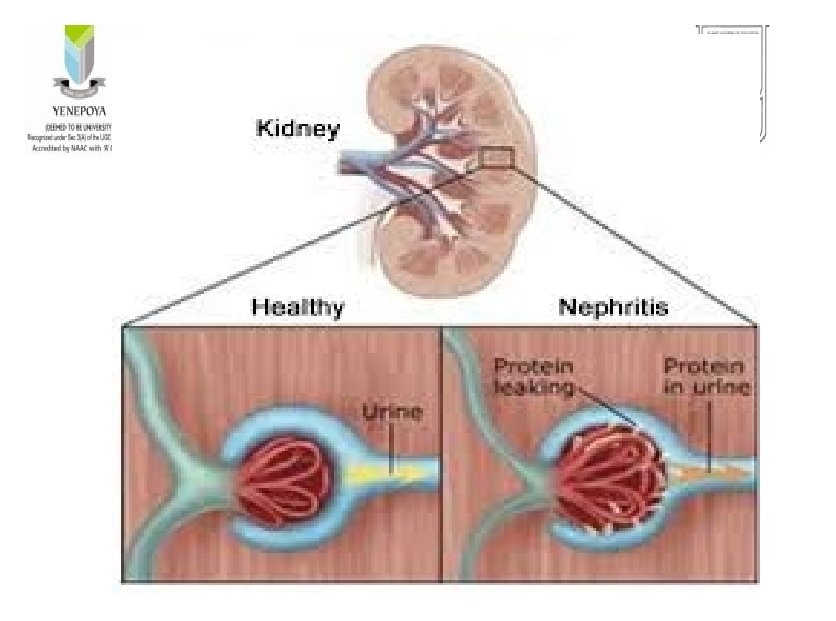
Nephritis. • Inflammation of kidneys due to infection. It has several causes and it can ultimately lead to kidney failure if its left untreated.
Types of nephritis. Ø Interstitial Nephritis Ø Pyelonephritis. Ø Glomerulonephritis
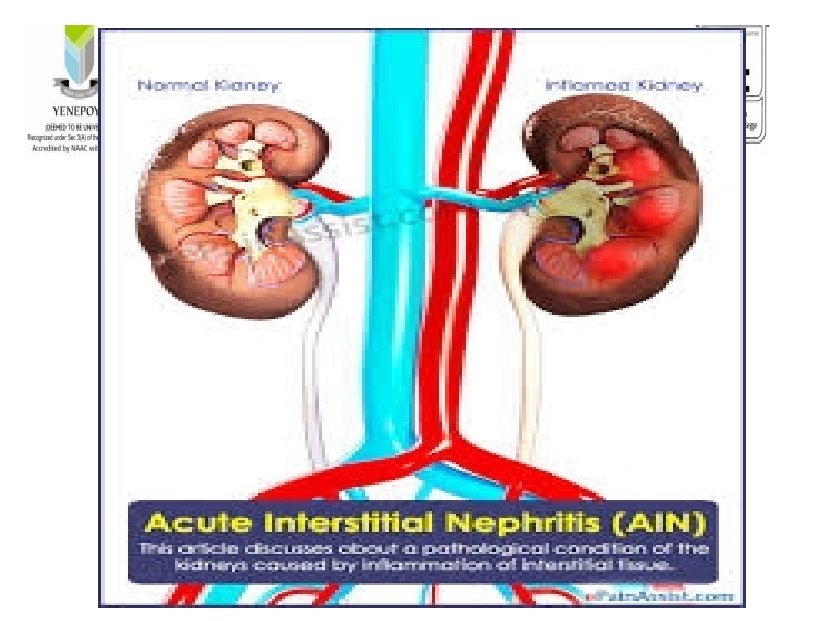
Ø Interstitial nephritis: In interstitial nephritis, the spaces between the kidney tubules become inflamed. This inflammation causes kidney to swell.
• Pyelonephritis: • Pyelonephritis is an inflammation of the kidney, usuallydue to bacterial infection. In the majority of cases, infection starts within the bladder and migrates up the ureters and into the kidneys.
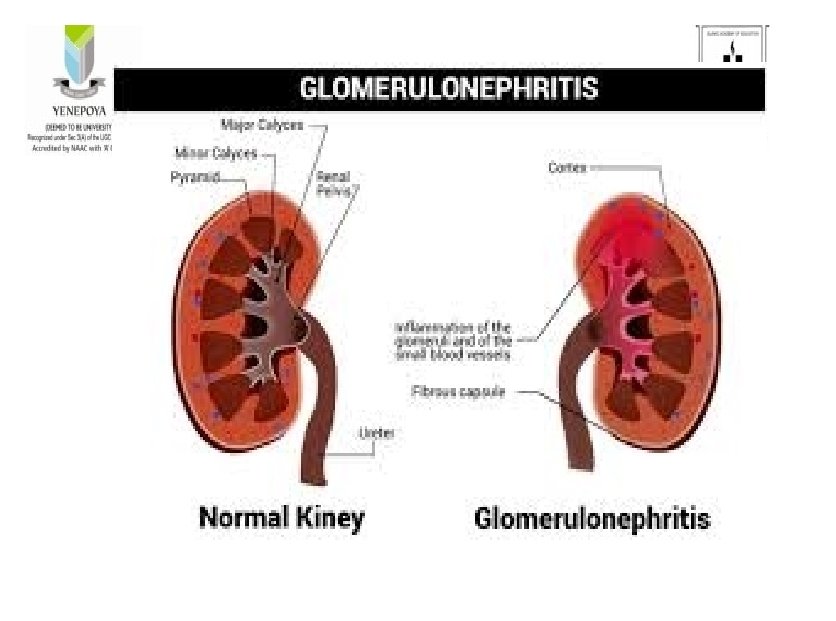
• Glomerulonephritis: This type of acute infection causes inflammation in the glomeruli. There are millions of cappillaries within each kidney. Glomeruli that are damagd and inflamed may not filter the blood properly.
Causes Ø Interstitial nephritis. • Allergic reaction to a medication or antibiotic. • Low pottassium in blood.
Causes. Ø Pyelonephritis. • Ecoli bacterial infetions, using cystoscope, surgery of the bladder.
Causes. Ø Glomerulonephritis: • Problems in immune system. • A history of cancer. • An abscess that breaks and travels to your kidneys by blood.
Risk factors. • Family history of kidney disease and infection. • Lupus(immune system disease). • Too many antibiotics or pain relievers. • Recent surgery of urinary tract.
Pathophysiology: Nephritis. • Nephritis can produce glomerular injury, by disturbing the glomerular structure wuth inflammatory cell proliferation. This can lead to reduced glomerular blood flow, leading to reduced urine output(oliguria), retention of waste products(uremia). As a result , red blood cells may leak out of damaged glomeruli, causing blood to appear in the urine(hematuria).
Symptoms • Pain in the pelvis. • Pain or burning sensation while urinating. • A frequent need to urinate. • Cloudy urine. • Blood or pus in urine. • Pain in the kidney area or abdomen • Swelling of the body • Vomiting, fever, high blood pressure.
Diagnostic Evaluation. • Physical Exam, medical history. • Urinalysis : for the presence of blood, bacteria, WBCs • BUN and creatinine.
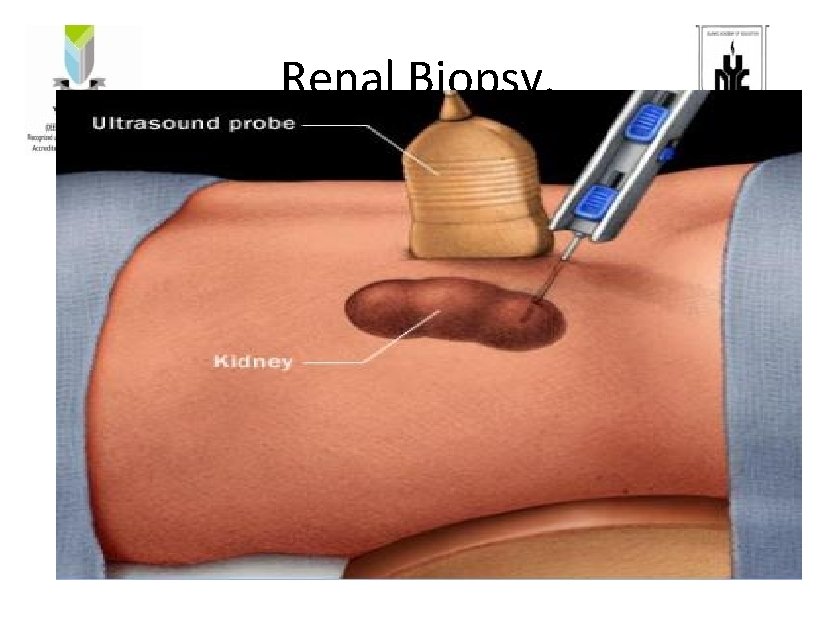
• CT scan or renal ultra sound. • Renal biopsy • Blood tests to check, like: Hyperkalemia, Anemia, Hypoalbunemia, increased serum phosphorus levels.
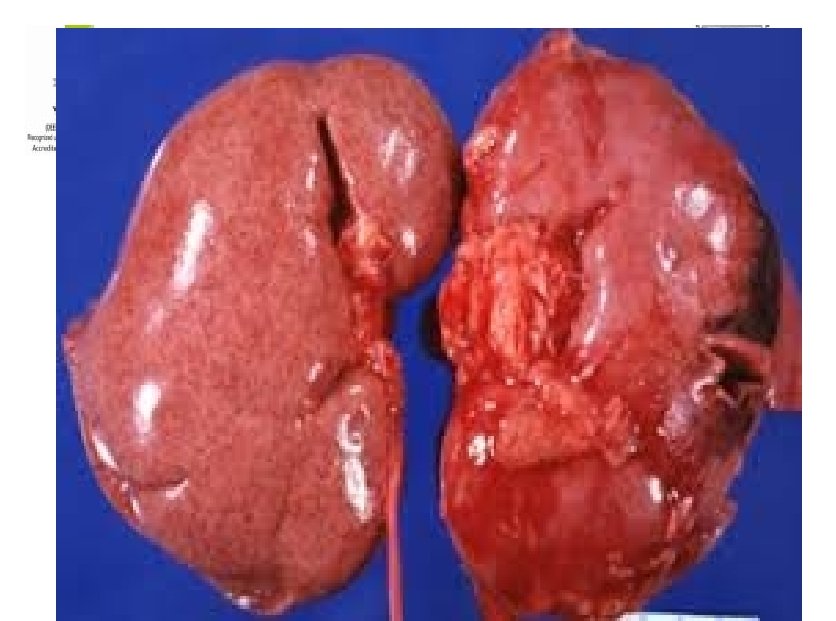
Renal Biopsy.
Medical Management. Ø Administering antibiotics by IV. • Eg. Vancomycin, meropenem, and gentamycin. Ø OTC NSAIDS like: • Aspirin, naproxen Ø Dialysis: If kidneys not working properly. Ø Increase fluid intake.
Dietary restrictions. • Use fresh meat and vegetables instead of packaged ones. • Spices and herbs can be used instead of salt in food. • Carbohydrates are given liberally to provide energy and reduce the catabolism of protein. • Increase fluid intake.
Nursing Diagnosis. • Excess fluid volume related to decreased urine output, dietary excesses, and retention of sodium and water. • Activity intolerance related to fatigue, anemia. • Deficient knowledge related to condition and treatment.
Nursing Intervntions. • If the patient is hospitalized or seen by the nurse in the home, the nurse observes the patient for changes in fluid and electrolyte status and for signs and symptoms of deterioration of renal function. Changes in fluid and electrolyte status and in cardiac and neurologic status are reported promptly to the physician. Anxiety levels are often extremely high for both the patient and family.
• Throughout the course of the disease and treatment, the nurse gives emotional support by providing opportunities for the patient and family to verbalize their concerns, have their questions answered, and explore their options.
Summary. • I discussed about definition, causes , pathophysiology, diagnostic evaluation, and management of nephritis. Hope all of you has understood.
Conclusion: • I discussed on nephritis which is a common disease condition which can lead to renal failure.