COACHING STOCK I R S I C F
- Slides: 27
COACHING STOCK �I R S � I C F LAMINATED � B E M L (BHARAT EARTH MOVERS LTD) � I C F ALL COIL
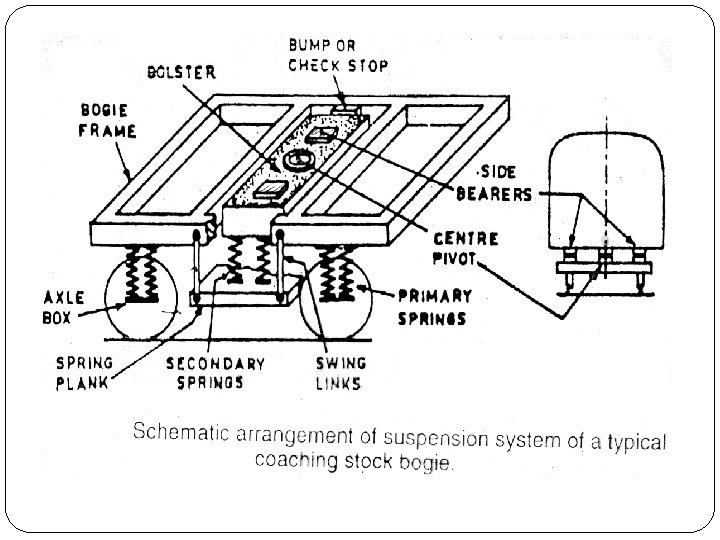
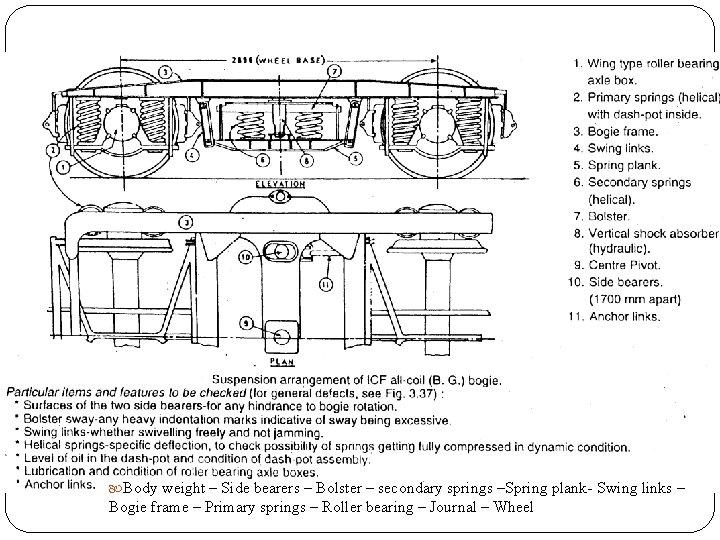
Body weight – Side bearers – Bolster – secondary springs –Spring plank- Swing links – Bogie frame – Primary springs – Roller bearing – Journal – Wheel
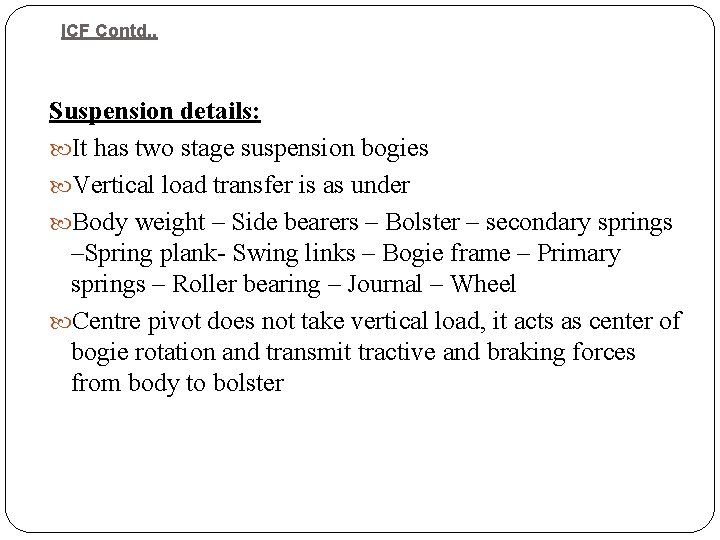
ICF Contd. . Suspension details: It has two stage suspension bogies Vertical load transfer is as under Body weight – Side bearers – Bolster – secondary springs –Spring plank- Swing links – Bogie frame – Primary springs – Roller bearing – Journal – Wheel Centre pivot does not take vertical load, it acts as center of bogie rotation and transmit tractive and braking forces from body to bolster
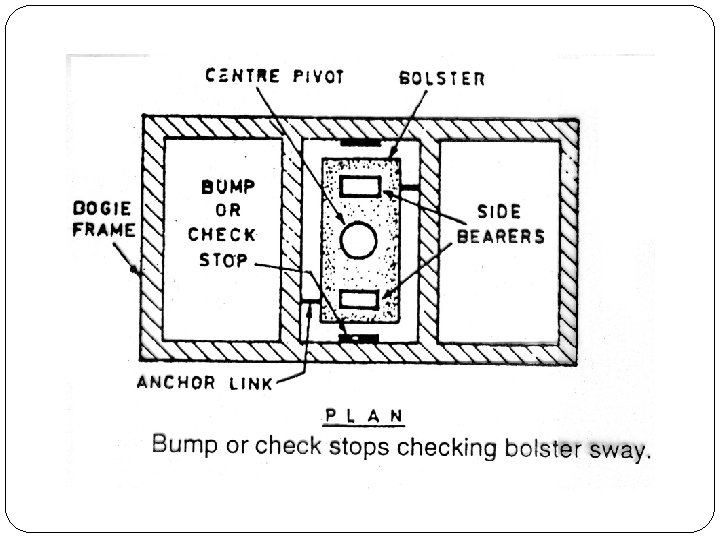
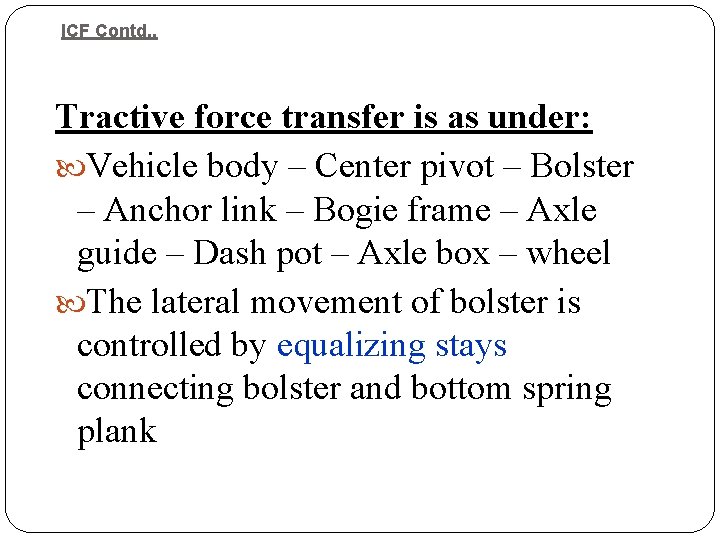
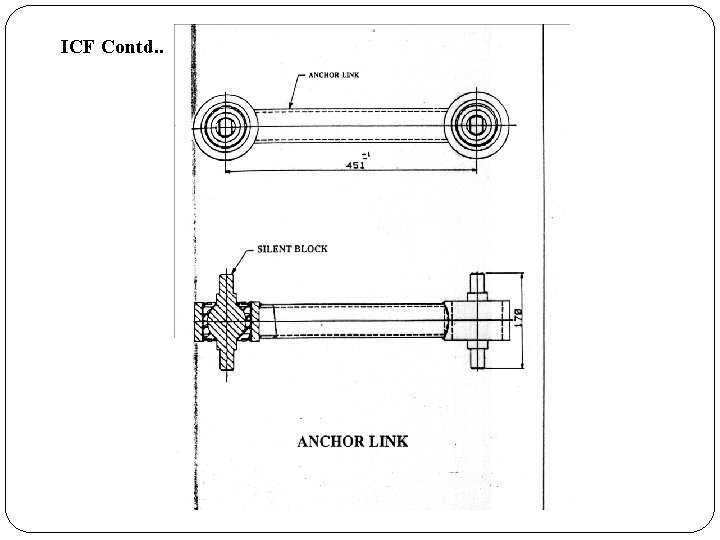
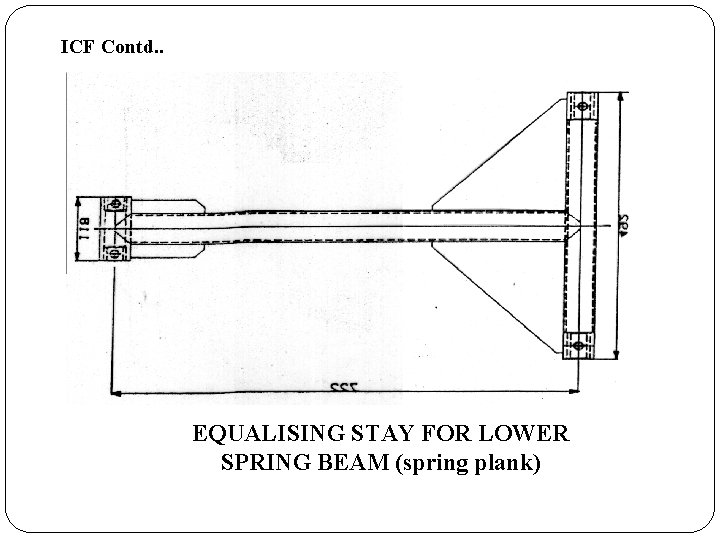
ICF Contd. . Tractive force transfer is as under: Vehicle body – Center pivot – Bolster – Anchor link – Bogie frame – Axle guide – Dash pot – Axle box – wheel The lateral movement of bolster is controlled by equalizing stays connecting bolster and bottom spring plank
ICF Contd. . Silent bloc bushes are provided at center pivot and both ends of anchor links. Silent bloc bushes absorb shocks by rubber lining provided inside bush Check the condition of equalizing stay, Anchor links and silent block bushes. Oil in hydraulic dash pot should be minimum 60 mm
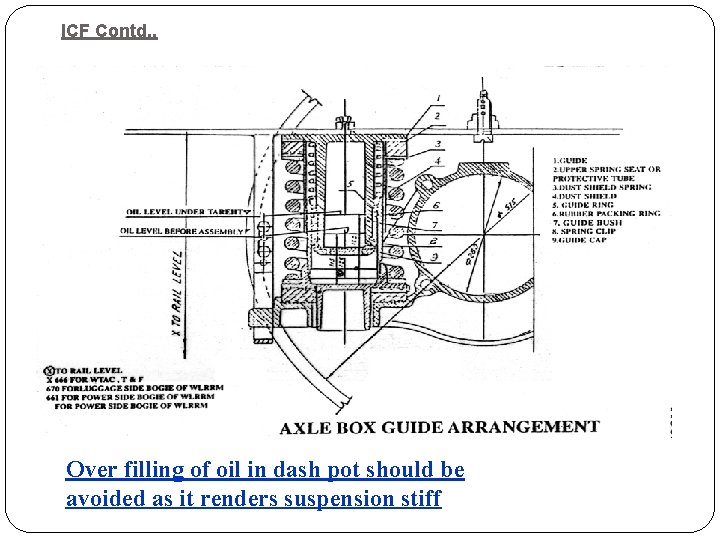
ICF Contd. . Over filling of oil in dash pot should be avoided as it renders suspension stiff
ICF Contd. . Buffer height under tare condition should be 1105 (maximum), 1090 (minimum) POH of coaching stock: @ 18 months for PCV & OCV for mail & express trains, and 24 months for OCV on other than mail and express trains, PCV – Passenger coaching vehicle OCV – Other coaching vehicle IOH- 9 months
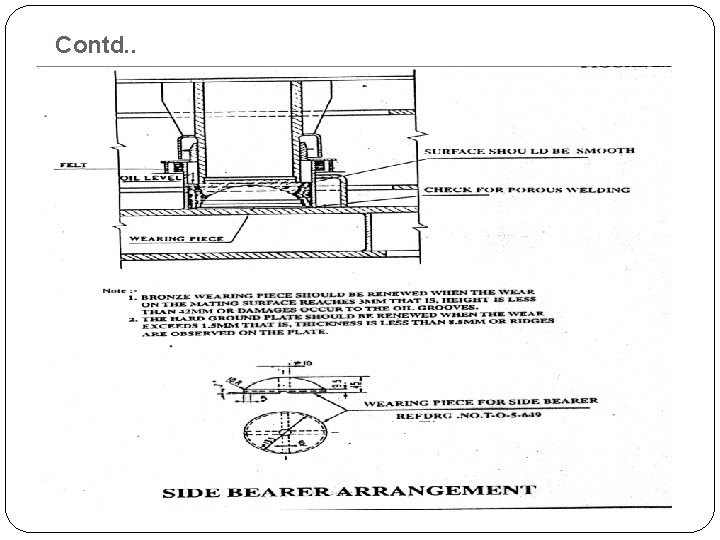
Contd. . Special features which need to be checked are as under: Side bearer: Hard wearing plate wear-1. 5 mm (when it reaches thickness of 8. 5 mm). For high speed ICF all coil coaches wear limit is 1. 0 mm. Bronze wearing to be replaced when the height reduces to 42 mm (3 mm wear).
Contd. .
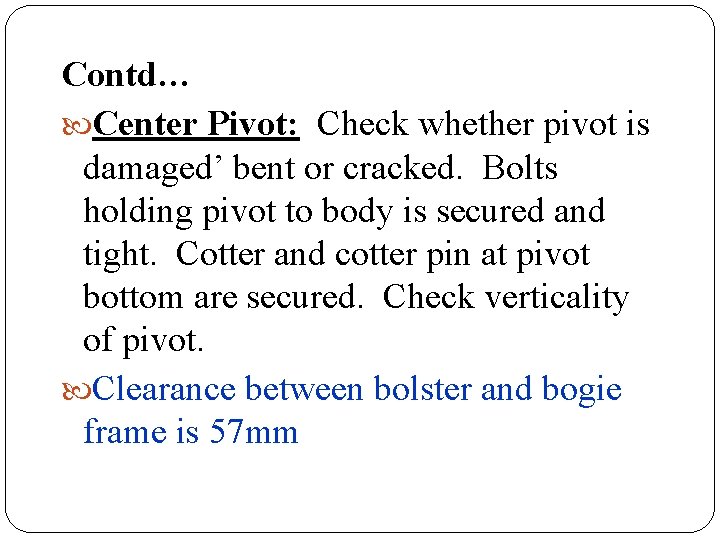
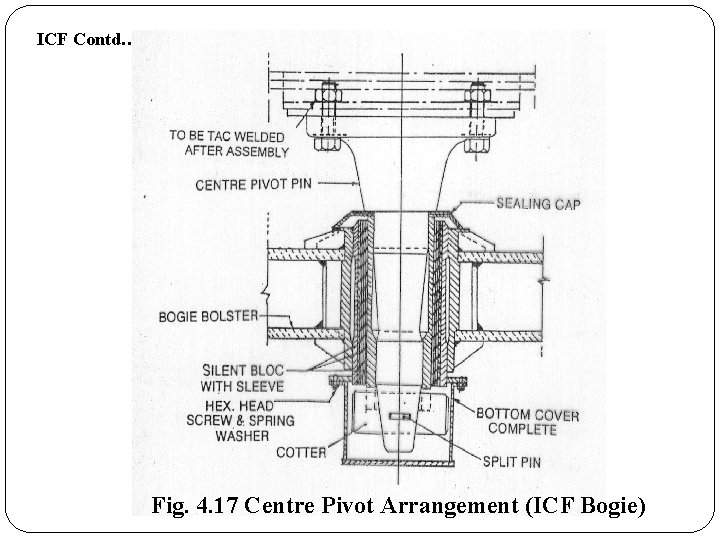
Contd… Center Pivot: Check whether pivot is damaged’ bent or cracked. Bolts holding pivot to body is secured and tight. Cotter and cotter pin at pivot bottom are secured. Check verticality of pivot. Clearance between bolster and bogie frame is 57 mm
ICF Contd… Fig. 4. 17 Centre Pivot Arrangement (ICF Bogie)
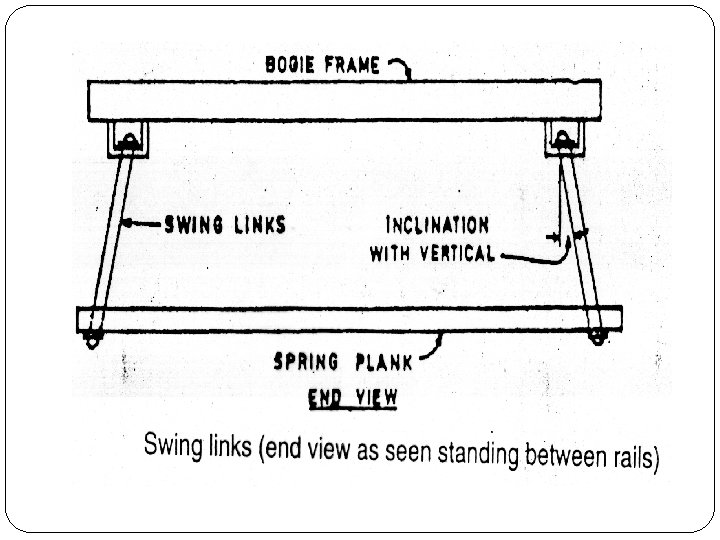
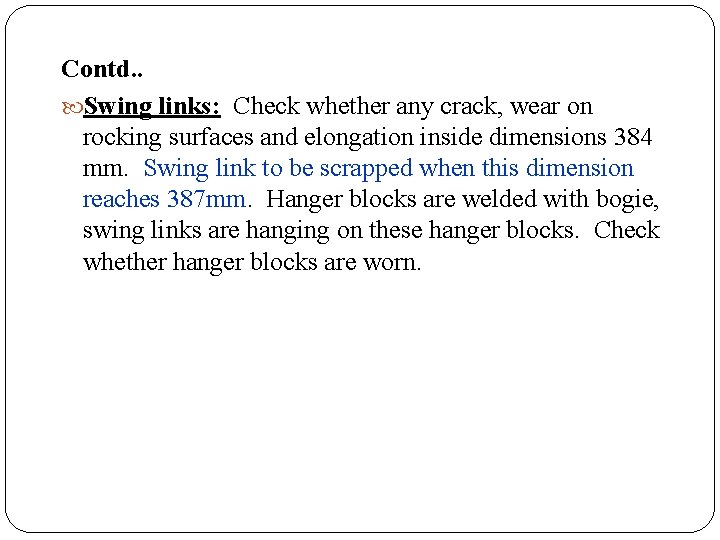
Contd. . Swing links: Check whether any crack, wear on rocking surfaces and elongation inside dimensions 384 mm. Swing link to be scrapped when this dimension reaches 387 mm. Hanger blocks are welded with bogie, swing links are hanging on these hanger blocks. Check whether hanger blocks are worn.
ICF Contd. .
ICF Contd. . EQUALISING STAY FOR LOWER SPRING BEAM (spring plank)
Check List for Derailment Investigation (ICF all coil bogie) 1. Check wheel tyre profile with tyre defect gauge as shown in plate 45 of IRCA rules Part IV. No wheel where flange is less than 22 mm thick shall be permitted to run on high speed train 2. Wheel gauge shall be within 1600 -1 mm and 1600+2 mm
Contd. . 3. a) b) c) It should be ensured that variation in tread diameter of the wheels selected for use under coach does not exceed the following permissible limits On the same axle 0. 5 m On the same bogie 5 mm On the same coach 13 mm
Cont. . Oil in hydraulic dashpot should be checked. Add/Replenish with specified grade of oil if the oil level is below 80 mm (BG), 71 mm (MG) in tare condition. Over filling of oil in dash pot should be avoided as it renders the suspension stiff. Level of oil in dash pot and side bearer should be checked and recorded 5. Side bearers: Hard wearing plate of the side bearer should be checked for wear and sharp corners. The plate should be replaced when it reaches the thickness of 8. 5 mm. Bronze wearing piece should be replaced when the mating surface reaches 3 mm dia i. e. when the height reduces to 42 mm 4.
Cont. . 6. 7. Check the condition of equalizing stay and anchor links and silent block bushes Check swing links for crack, wear on the rocking surfaces and elongation. If there is any sign of elongation or cracking or when the total wear exceeds 3 mm the swing link is to be scrapped. All wing link anchor pins should be replaced during every POH. The maximum permissible wear on diameter is 1. 5 mm. Check if swing link hanger blocks are worn.
Cont. . Check buffer height, and also wooden packing provided to adjust buffer height. Under tare condition 1090 (minimum) 1105 (maximum) 10. Clearance between bolster and bogie frame 57 mm (maximum) 11. Centre pivot: Check whether pivot is damaged, bent or cracked. Check whether the bolts holding the pivot to the body is secure and tight. The center and cotter pin at the pivot bottom should be secure. Check the verticality of pivot. All pivots should be chalk tested either in position or when they are dropped and the pivots found cracked should be replaced. 9.
Cont. . 11. Check condition of axle guides. The maximum permissible clearance between the guide bush and the casing is 1. 0 mm. Check the bogie frame by using Trammel gauge. 13. Check the roller bearing: Common defects in the roller bearing are a) Small pits and peeling of the skins b) Broken or bent cover ring c) Wear due to rust d) Wear on rollers e) Crack in inner race
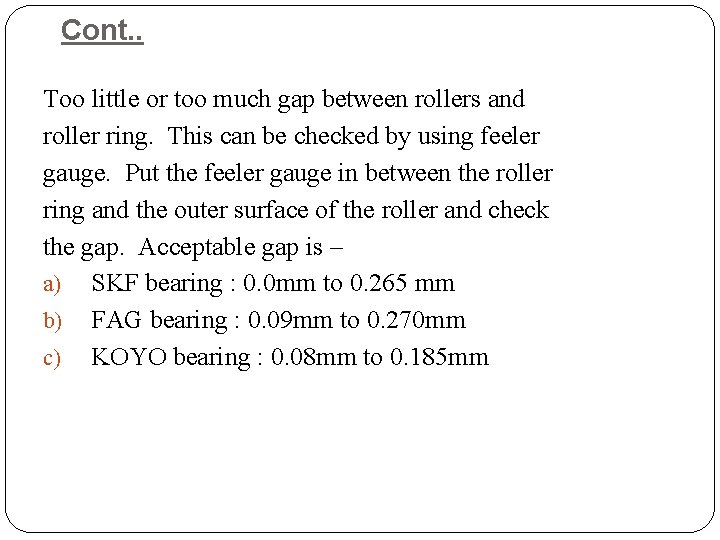
Cont. . Too little or too much gap between rollers and roller ring. This can be checked by using feeler gauge. Put the feeler gauge in between the roller ring and the outer surface of the roller and check the gap. Acceptable gap is – a) SKF bearing : 0. 0 mm to 0. 265 mm b) FAG bearing : 0. 09 mm to 0. 270 mm c) KOYO bearing : 0. 08 mm to 0. 185 mm
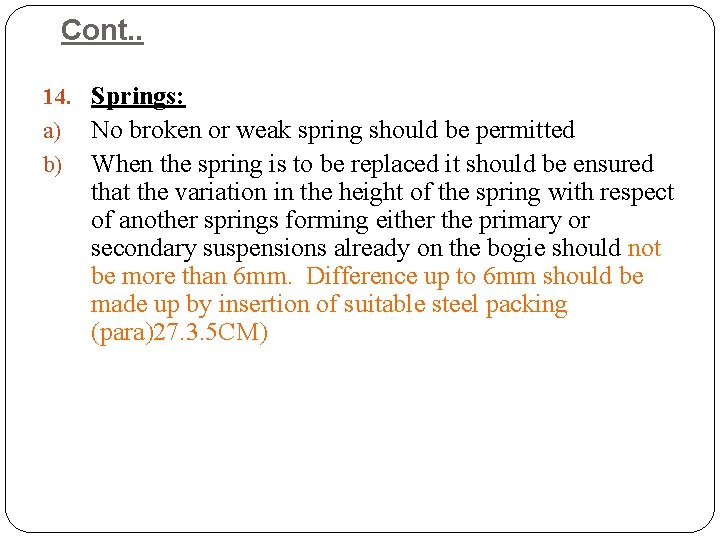
Cont. . 14. Springs: a) No broken or weak spring should be permitted b) When the spring is to be replaced it should be ensured that the variation in the height of the spring with respect of another springs forming either the primary or secondary suspensions already on the bogie should not be more than 6 mm. Difference up to 6 mm should be made up by insertion of suitable steel packing (para)27. 3. 5 CM)
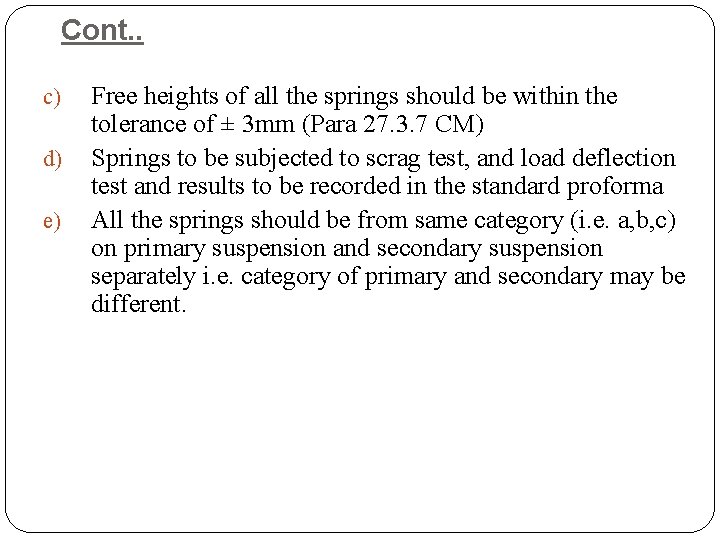
Cont. . c) d) e) Free heights of all the springs should be within the tolerance of ± 3 mm (Para 27. 3. 7 CM) Springs to be subjected to scrag test, and load deflection test and results to be recorded in the standard proforma All the springs should be from same category (i. e. a, b, c) on primary suspension and secondary suspension separately i. e. category of primary and secondary may be different.
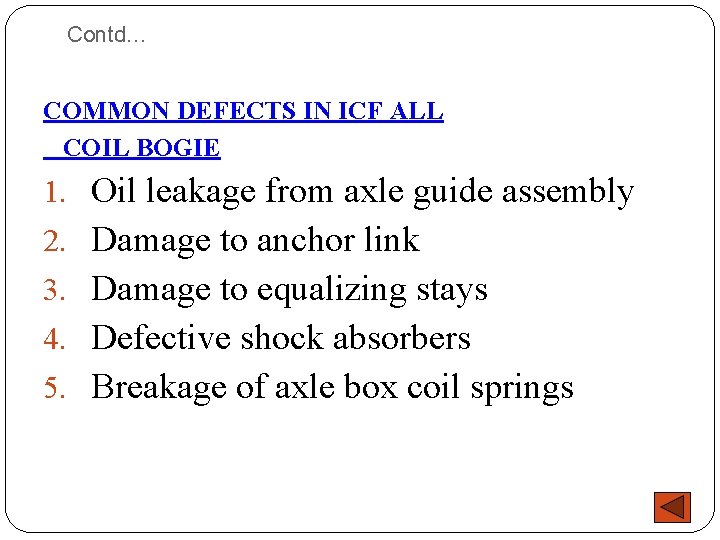
Contd… COMMON DEFECTS IN ICF ALL COIL BOGIE 1. Oil leakage from axle guide assembly 2. Damage to anchor link 3. Damage to equalizing stays 4. Defective shock absorbers 5. Breakage of axle box coil springs