
School Readiness High Quality PRD Experiences for All
- Slides: 31
School Readiness High Quality PRD Experiences for All
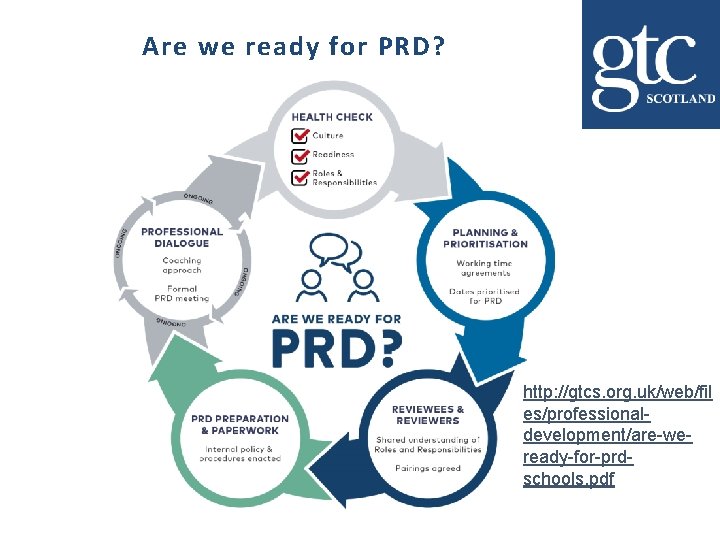
Are we ready for PRD? http: //gtcs. org. uk/web/fil es/professionaldevelopment/are-weready-for-prdschools. pdf
By the end of this presentation, you will have: v Access to signposts for future development: Culture and Climate of Trust v An understanding of the purpose of PRD v Explored the Route Map to identify any gaps in your procedures v Knowledge of the 10 key features of high-quality PRD v Awareness of potential barriers to high-quality PRD v An opportunity to reflect on your school community readiness for high-quality PRD and plan for any next steps v An opportunity to explore the benefits of PRD v Explored a suggested framework for PRD discussions including how to use a coaching wheel.
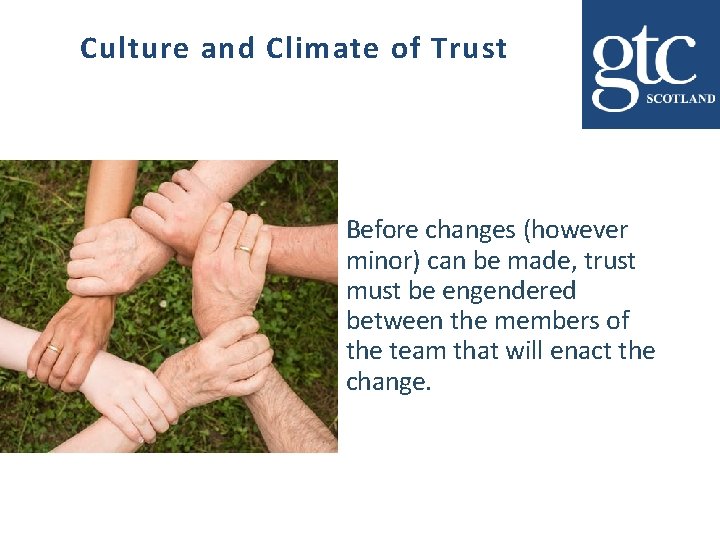
Culture and Climate of Trust Before changes (however minor) can be made, trust must be engendered between the members of the team that will enact the change.
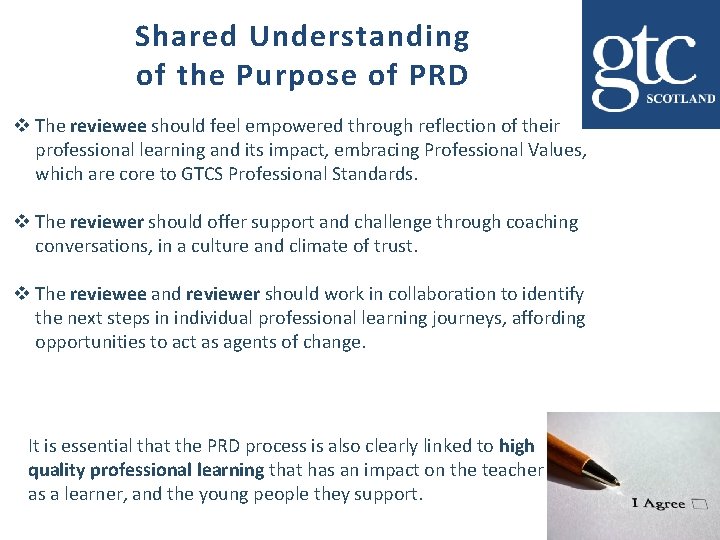
Shared Understanding of the Purpose of PRD v The reviewee should feel empowered through reflection of their professional learning and its impact, embracing Professional Values, which are core to GTCS Professional Standards. v The reviewer should offer support and challenge through coaching conversations, in a culture and climate of trust. v The reviewee and reviewer should work in collaboration to identify the next steps in individual professional learning journeys, affording opportunities to act as agents of change. It is essential that the PRD process is also clearly linked to high quality professional learning that has an impact on the teacher as a learner, and the young people they support.
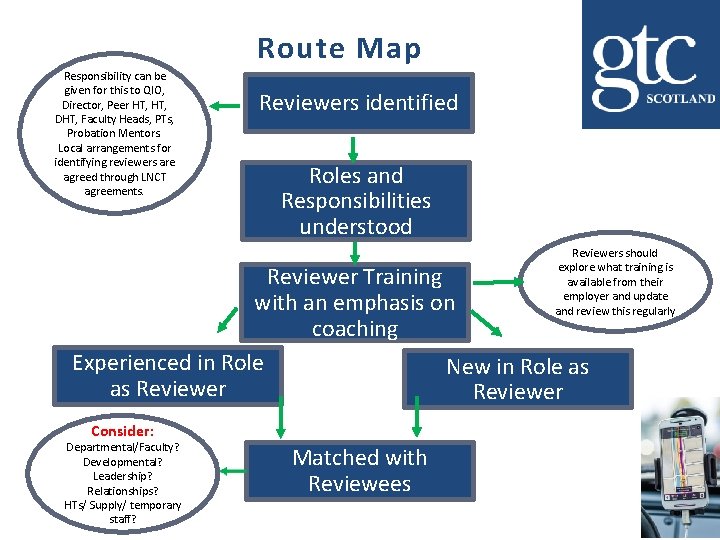
Route Map Responsibility can be given for this to QIO, Director, Peer HT, DHT, Faculty Heads, PTs, Probation Mentors. Local arrangements for identifying reviewers are agreed through LNCT agreements. Reviewers identified Roles and Responsibilities understood Reviewers should explore what training is available from their employer and update and review this regularly Reviewer Training with an emphasis on coaching Experienced in Role New in Role as as Reviewer Consider: Departmental/Faculty? Developmental? Leadership? Relationships? HTs/ Supply/ temporary staff? Matched with Reviewees
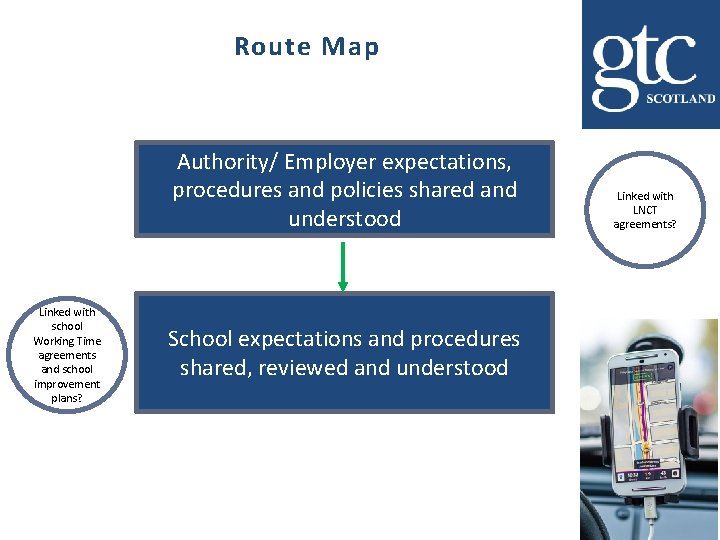
Route Map Authority/ Employer expectations, procedures and policies shared and understood Linked with school Working Time agreements and school improvement plans? School expectations and procedures shared, reviewed and understood Linked with LNCT agreements?
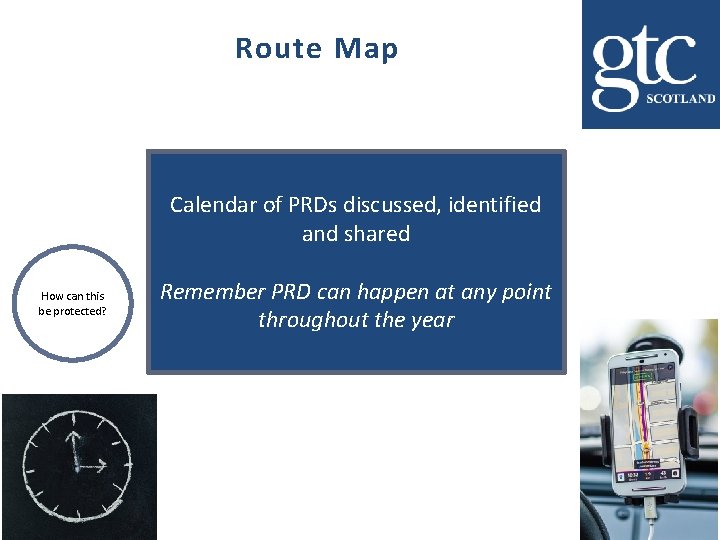
Route Map Calendar of PRDs discussed, identified and shared How can this be protected? Remember PRD can happen at any point throughout the year
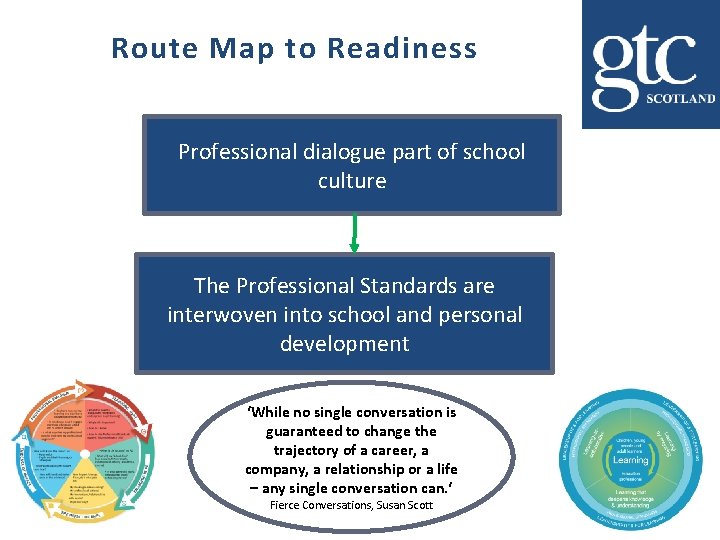
Route Map to Readiness Professional dialogue part of school culture The Professional Standards are interwoven into school and personal development ‘While no single conversation is guaranteed to change the trajectory of a career, a company, a relationship or a life – any single conversation can. ‘ Fierce Conversations, Susan Scott
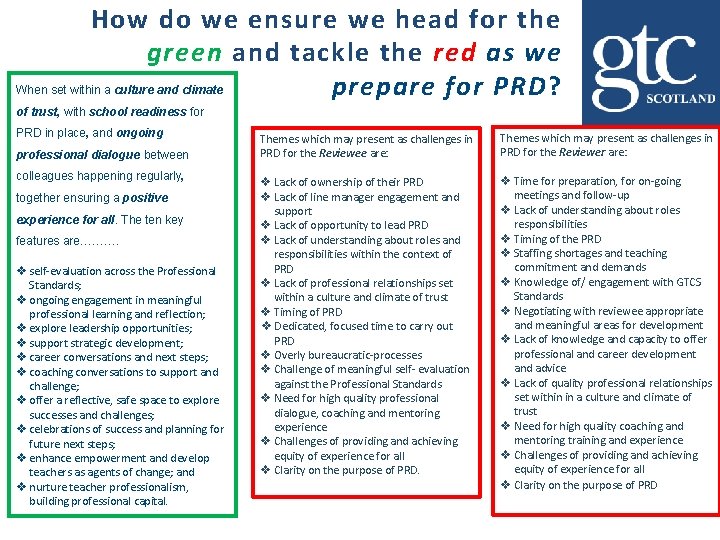
The 10 Key features of high quality PRD……. …. . when set within a culture and climate of trust, with school readiness for PRD in place, and ongoing professional dialogue between colleagues happening regularly, together ensuring a positive experience for all. The ten key features are……….
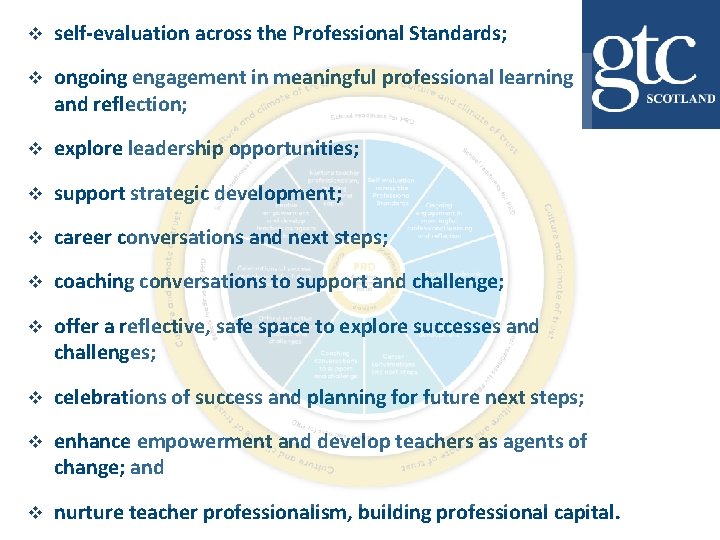
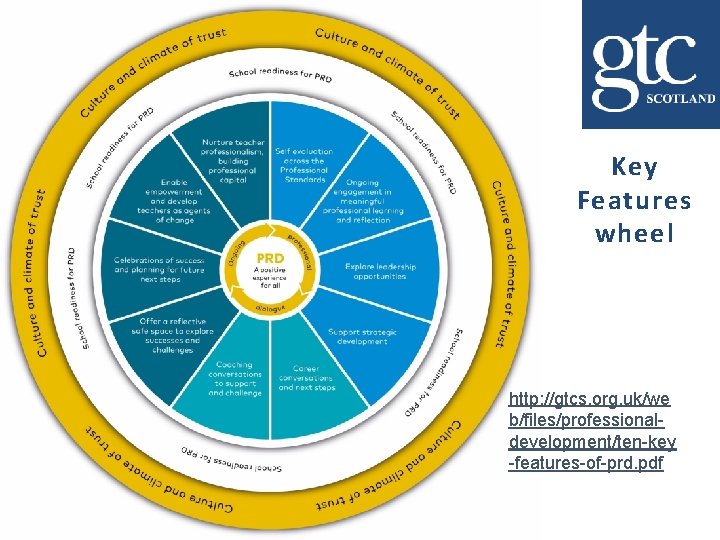
v self-evaluation across the Professional Standards; v ongoing engagement in meaningful professional learning and reflection; v explore leadership opportunities; v support strategic development; v career conversations and next steps; v coaching conversations to support and challenge; v offer a reflective, safe space to explore successes and challenges; v celebrations of success and planning for future next steps; v enhance empowerment and develop teachers as agents of change; and v nurture teacher professionalism, building professional capital.
Key Features wheel http: //gtcs. org. uk/we b/files/professionaldevelopment/ten-key -features-of-prd. pdf
Challenges to be considered by the Reviewee (1 of 2) v Lack of ownership of their PRD v Lack of line manager engagement and support v Lack of opportunity to lead PRD v Lack of understanding about roles and responsibilities within the context of PRD v Lack of professional relationships set within a culture and climate of trust v Timing of PRD Are any of these challenges current for you?
Challenges to be considered by the Reviewee (2 of 2) v Dedicated, focused time to carry out PRD v Overly bureaucratic processes v Challenge of meaningful self-evaluation against the Professional Standards v Need for high quality professional dialogue, coaching and mentoring experience v Challenges of providing and achieving equity of experience for all v Clarity on the purpose of PRD Are any of these challenges current for you?
Challenges to be considered by the Reviewer (1 of 2) v Time for preparation, for on-going meetings and follow-up v Lack of understanding about roles and responsibilities v Timing of the PRD v Staffing shortages and teaching commitment and demands v Knowledge of / engagement with GTCS Standards v Negotiating with reviewee appropriate and meaningful areas for development Are any of these challenges current for you?
Challenges to be considered for the Reviewer (2 of 2) v Lack of knowledge and capacity to offer professional and career development and advice v Lack of quality professional relationships set within in a culture and climate of trust v Need for high quality coaching and mentoring training and experience v Challenges of providing and achieving equity of experience for all v Clarity on the purpose of PRD Are any of these challenges current for you?
How do we ensure we head for the green and tackle the red as we When set within a culture and climate prepare for PRD? of trust, with school readiness for PRD in place, and ongoing professional dialogue between colleagues happening regularly, together ensuring a positive experience for all. The ten key features are………. v self-evaluation across the Professional Standards; v ongoing engagement in meaningful professional learning and reflection; v explore leadership opportunities; v support strategic development; v career conversations and next steps; v coaching conversations to support and challenge; v offer a reflective, safe space to explore successes and challenges; v celebrations of success and planning for future next steps; v enhance empowerment and develop teachers as agents of change; and v nurture teacher professionalism, building professional capital. Themes which may present as challenges in PRD for the Reviewee are: Themes which may present as challenges in PRD for the Reviewer are: v Lack of ownership of their PRD v Lack of line manager engagement and support v Lack of opportunity to lead PRD v Lack of understanding about roles and responsibilities within the context of PRD v Lack of professional relationships set within a culture and climate of trust v Timing of PRD v Dedicated, focused time to carry out PRD v Overly bureaucratic-processes v Challenge of meaningful self- evaluation against the Professional Standards v Need for high quality professional dialogue, coaching and mentoring experience v Challenges of providing and achieving equity of experience for all v Clarity on the purpose of PRD. v Time for preparation, for on-going meetings and follow-up v Lack of understanding about roles responsibilities v Timing of the PRD v Staffing shortages and teaching commitment and demands v Knowledge of/ engagement with GTCS Standards v Negotiating with reviewee appropriate and meaningful areas for development v Lack of knowledge and capacity to offer professional and career development and advice v Lack of quality professional relationships set within in a culture and climate of trust v Need for high quality coaching and mentoring training and experience v Challenges of providing and achieving equity of experience for all v Clarity on the purpose of PRD
Why wouldn’t you embrace PRD? E N T I T L E M E N T
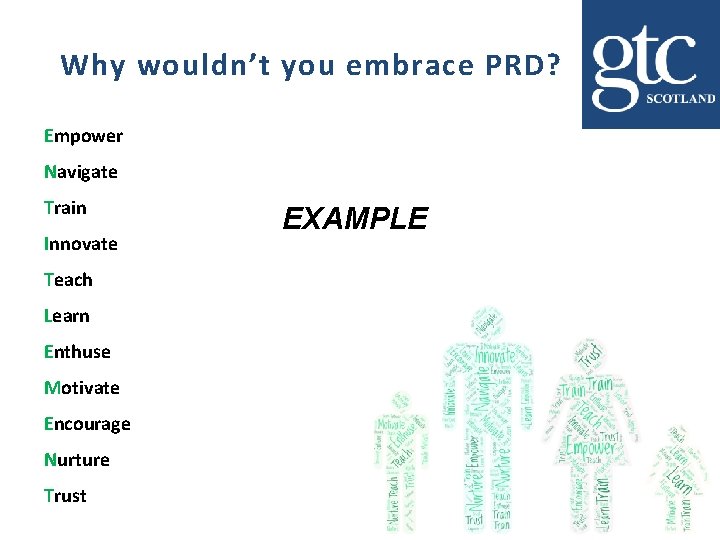
Why wouldn’t you embrace PRD? Empower Navigate Train Innovate Teach Learn Enthuse Motivate Encourage Nurture Trust EXAMPLE
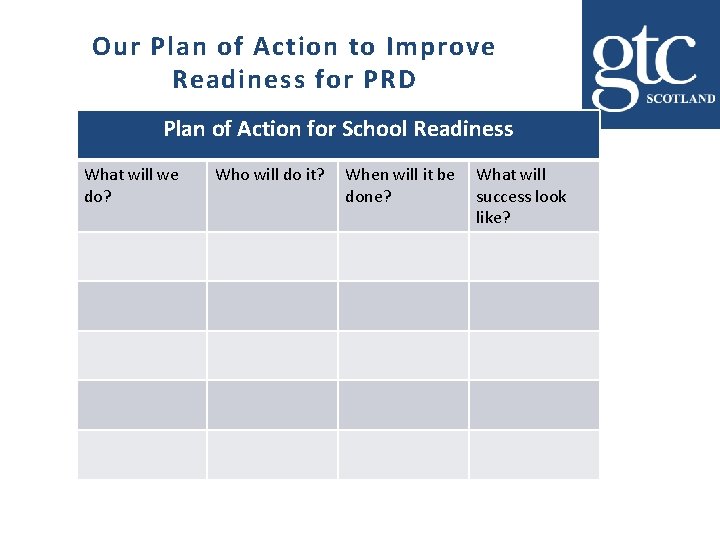
Our Plan of Action to Improve Readiness for PRD Plan of Action for School Readiness What will we do? Who will do it? When will it be done? What will success look like?
How to best prepare for your PRD …. . A suggested framework for PRD that may be helpful in your school context…. .
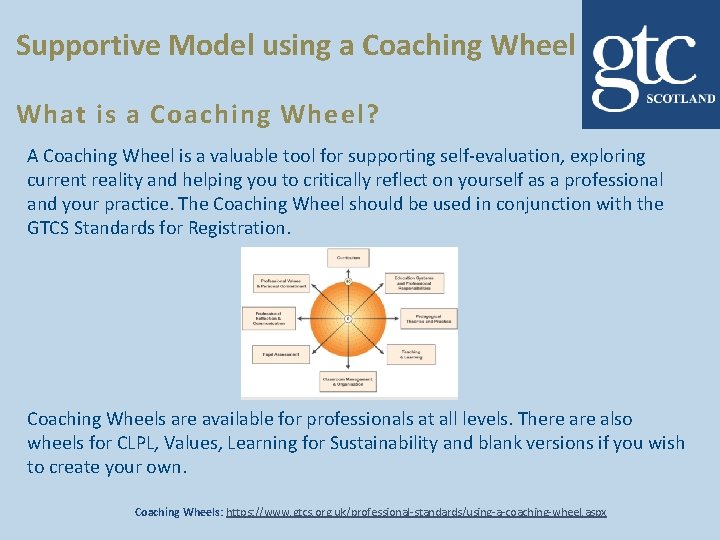
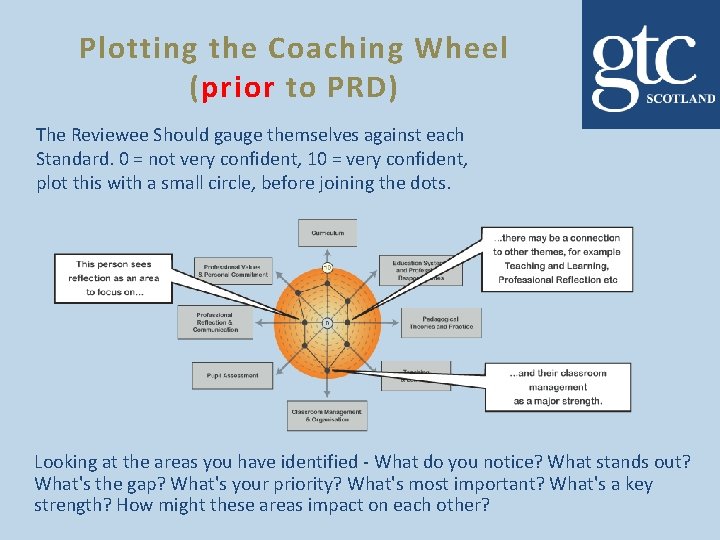
Supportive Model using a Coaching Wheel What is a Coaching Wheel? A Coaching Wheel is a valuable tool for supporting self-evaluation, exploring current reality and helping you to critically reflect on yourself as a professional and your practice. The Coaching Wheel should be used in conjunction with the GTCS Standards for Registration. Coaching Wheels are available for professionals at all levels. There also wheels for CLPL, Values, Learning for Sustainability and blank versions if you wish to create your own. Coaching Wheels: https: //www. gtcs. org. uk/professional-standards/using-a-coaching-wheel. aspx
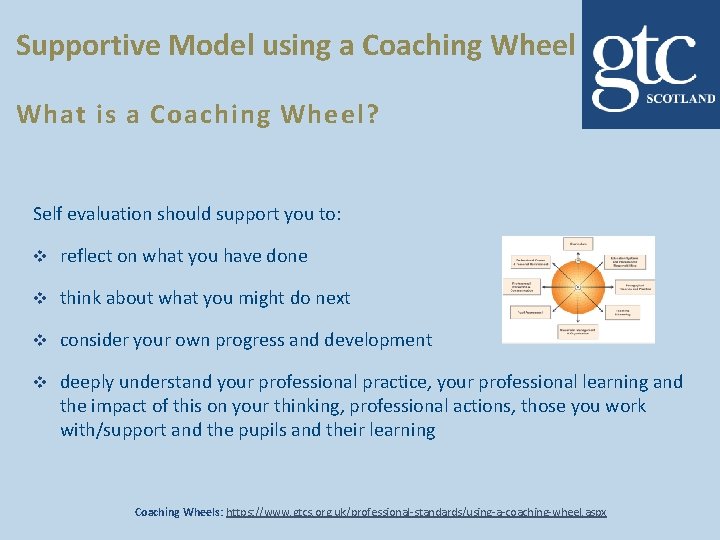
Supportive Model using a Coaching Wheel What is a Coaching Wheel? Self evaluation should support you to: v reflect on what you have done v think about what you might do next v consider your own progress and development v deeply understand your professional practice, your professional learning and the impact of this on your thinking, professional actions, those you work with/support and the pupils and their learning Coaching Wheels: https: //www. gtcs. org. uk/professional-standards/using-a-coaching-wheel. aspx
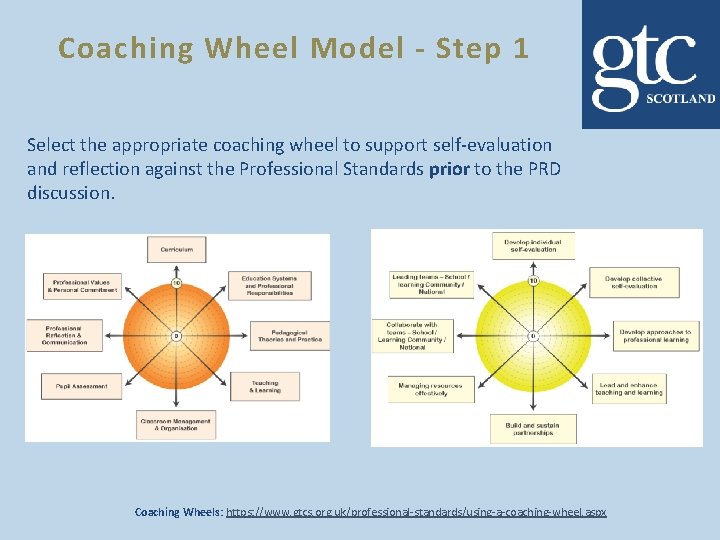
Coaching Wheel Model - Step 1 Select the appropriate coaching wheel to support self-evaluation and reflection against the Professional Standards prior to the PRD discussion. Coaching Wheels: https: //www. gtcs. org. uk/professional-standards/using-a-coaching-wheel. aspx
Plotting the Coaching Wheel (prior to PRD) The Reviewee Should gauge themselves against each Standard. 0 = not very confident, 10 = very confident, plot this with a small circle, before joining the dots. Looking at the areas you have identified - What do you notice? What stands out? What's the gap? What's your priority? What's most important? What's a key strength? How might these areas impact on each other?
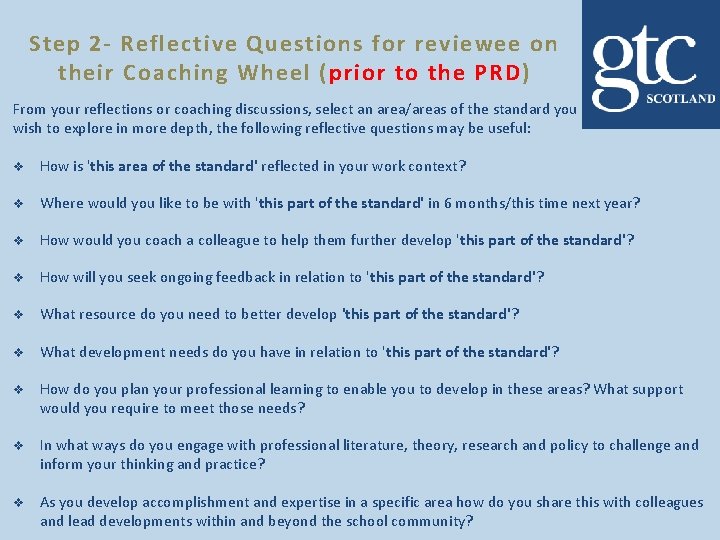
Step 2 - Reflective Questions for reviewee on their Coaching Wheel (prior to the PRD) From your reflections or coaching discussions, select an area/areas of the standard you wish to explore in more depth, the following reflective questions may be useful: v How is 'this area of the standard' reflected in your work context? v Where would you like to be with 'this part of the standard' in 6 months/this time next year? v How would you coach a colleague to help them further develop 'this part of the standard'? v How will you seek ongoing feedback in relation to 'this part of the standard'? v What resource do you need to better develop 'this part of the standard'? v What development needs do you have in relation to 'this part of the standard'? v How do you plan your professional learning to enable you to develop in these areas? What support would you require to meet those needs? v In what ways do you engage with professional literature, theory, research and policy to challenge and inform your thinking and practice? v As you develop accomplishment and expertise in a specific area how do you share this with colleagues and lead developments within and beyond the school community?
Step 3 - Hand This Information to Your Reviewer (prior to the PRD) At this stage of the process the coaching wheel is shared, along with any answers written in relation to the reflective questions, with the Reviewer. This allows Reviewers to generate responses to the following questions.
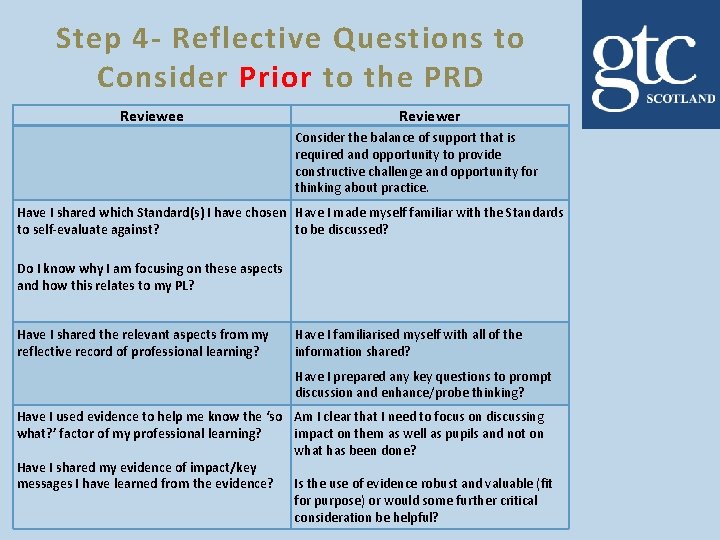
Step 4 - Reflective Questions to Consider Prior to the PRD Reviewee Reviewer Consider the balance of support that is required and opportunity to provide constructive challenge and opportunity for thinking about practice. Have I shared which Standard(s) I have chosen Have I made myself familiar with the Standards to self-evaluate against? to be discussed? Do I know why I am focusing on these aspects and how this relates to my PL? Have I shared the relevant aspects from my reflective record of professional learning? Have I familiarised myself with all of the information shared? Have I prepared any key questions to prompt discussion and enhance/probe thinking? Have I used evidence to help me know the ‘so Am I clear that I need to focus on discussing what? ’ factor of my professional learning? impact on them as well as pupils and not on what has been done? Have I shared my evidence of impact/key messages I have learned from the evidence? Is the use of evidence robust and valuable (fit for purpose) or would some further critical consideration be helpful?
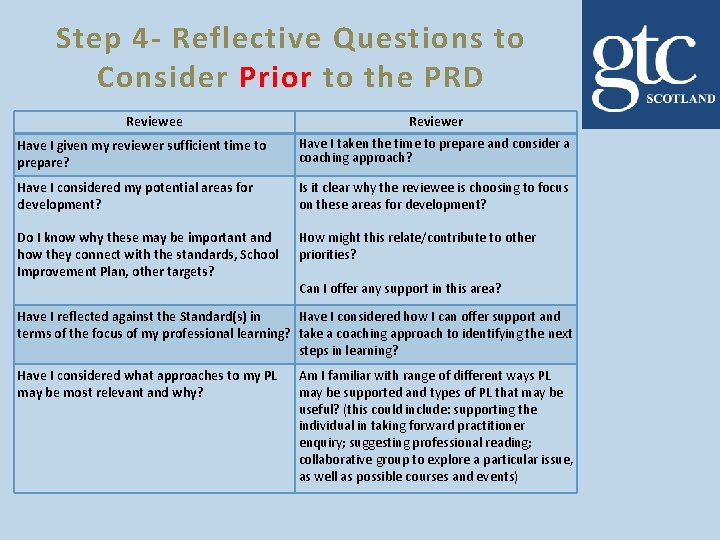
Step 4 - Reflective Questions to Consider Prior to the PRD Reviewee Reviewer Have I given my reviewer sufficient time to prepare? Have I taken the time to prepare and consider a coaching approach? Have I considered my potential areas for development? Is it clear why the reviewee is choosing to focus on these areas for development? Do I know why these may be important and how they connect with the standards, School Improvement Plan, other targets? How might this relate/contribute to other priorities? Can I offer any support in this area? Have I reflected against the Standard(s) in Have I considered how I can offer support and terms of the focus of my professional learning? take a coaching approach to identifying the next steps in learning? Have I considered what approaches to my PL may be most relevant and why? Am I familiar with range of different ways PL may be supported and types of PL that may be useful? (this could include: supporting the individual in taking forward practitioner enquiry; suggesting professional reading; collaborative group to explore a particular issue, as well as possible courses and events)
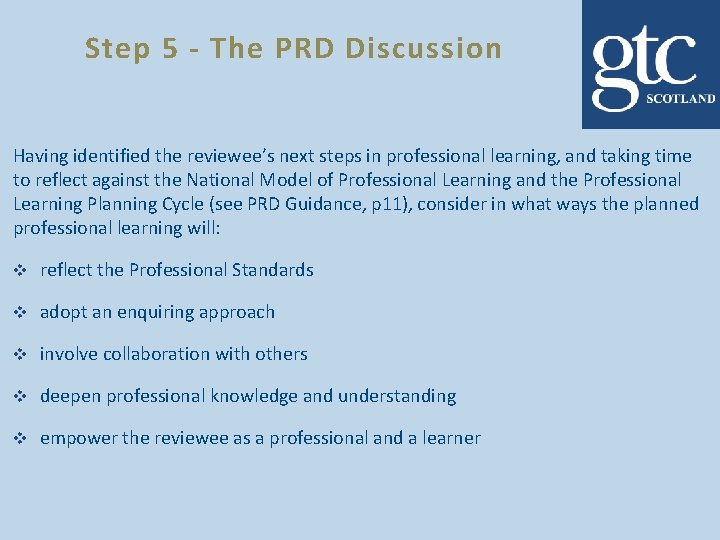
Step 5 - The PRD Discussion Having identified the reviewee’s next steps in professional learning, and taking time to reflect against the National Model of Professional Learning and the Professional Learning Planning Cycle (see PRD Guidance, p 11), consider in what ways the planned professional learning will: v reflect the Professional Standards v adopt an enquiring approach v involve collaboration with others v deepen professional knowledge and understanding v empower the reviewee as a professional and a learner
Thank you! GTCS would like to thank you for taking the time to ensure your school is ready for PRD. We hope this resource has been supportive and useful to you in your school journey. As always, we would welcome your thoughts and opinions, and would be very grateful if you had any feedback on ways it could be improved. Equally, we would be very interested in seeing what individual schools have done with this resource. Please send any feedback to: professional. update@gtcs. org. uk GTC Scotland 08 June 2021