
Chapter 11 Coaching An Effective Communication System By
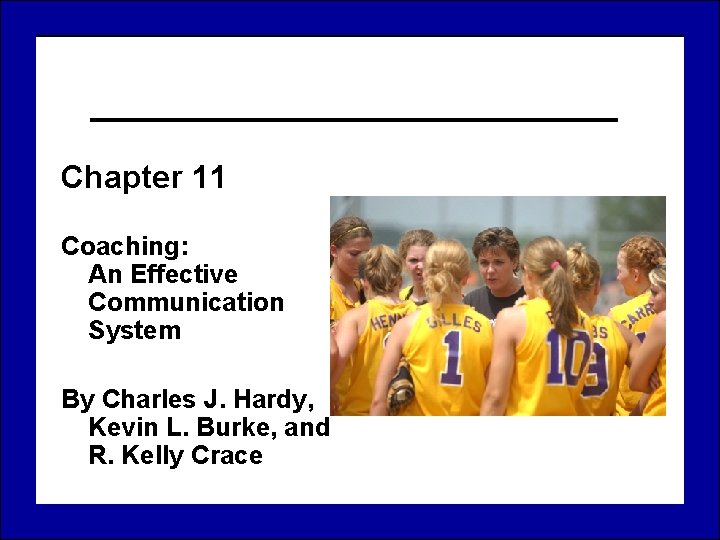
Chapter 11 Coaching: An Effective Communication System By Charles J. Hardy, Kevin L. Burke, and R. Kelly Crace
Overview Ø The essence of coaching is teaching and motivating. Ø It’s one of the few professions where one’s own hard work is judged by the performance of others. Ø Examine the basics of communication. Ø Principles of effective message sending. Ø Principles of effective message receiving. Ø Why coaches may not emphasize communication.
The Fundamentals Ø Building and maintaining an effective communication system: • Sending messages • Receiving messages • Interpreting messages
Evaluate Your Communication Skills Ø Self-assessment scale adapted from Lawrence Rosenfeld & Larry Wilder (1990). See figure 11. 1 on page 193.
Establishing Credibility and Trust Ø For coaches: • Can athletes believe what you say? • Are your actions consistent with your values and belief systems? • Do you communicate in an open and honest manner? Ø People don’t care how much you know until they know how much you care.
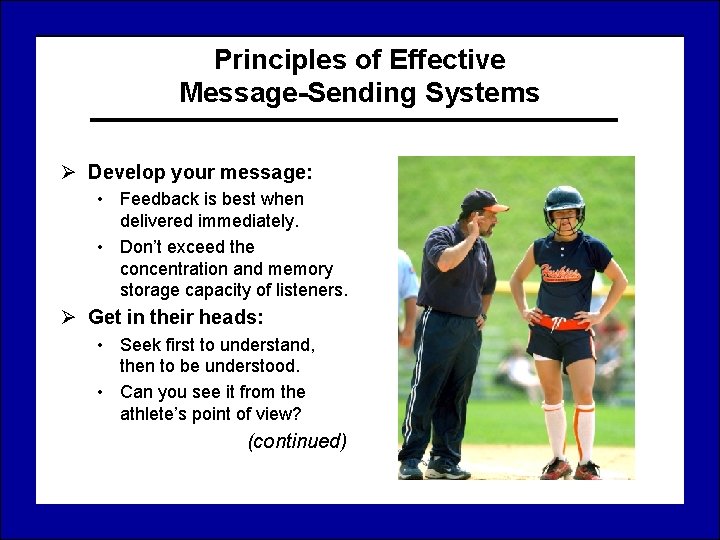
Principles of Effective Message-Sending Systems Ø Develop your message: • Feedback is best when delivered immediately. • Don’t exceed the concentration and memory storage capacity of listeners. Ø Get in their heads: • Seek first to understand, then to be understood. • Can you see it from the athlete’s point of view? (continued)
Principles of Effective Message-Sending Systems (cont) Ø Tell the truth, directly and specifically. • Telling the truth and “stepping up to the plate” build trust. • Control emotions so that anger and hostility do not disrupt communication. • Be specific rather than vague (e. g. , “get your head in the game”). Ø Use supportive language and empathy. • Show respect by holding athletes accountable. • Criticize the performance (feedback), not the player. • 46% of people who leave their jobs do so because they feel unappreciated by their bosses. (continued)
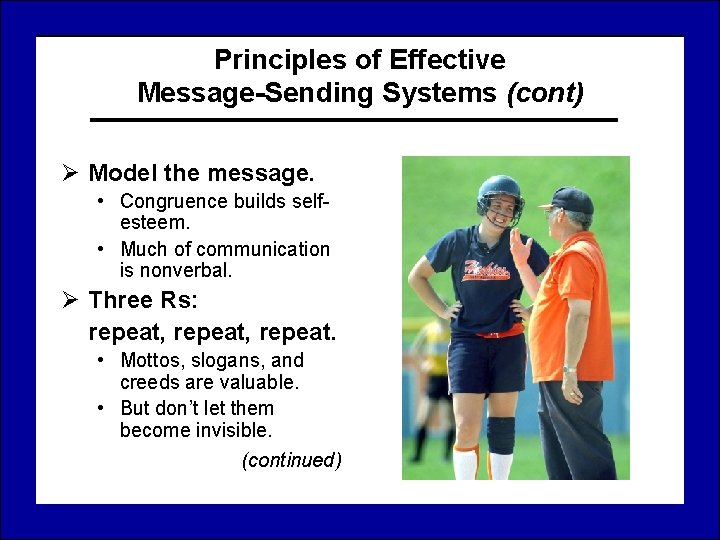
Principles of Effective Message-Sending Systems (cont) Ø Model the message. • Congruence builds selfesteem. • Much of communication is nonverbal. Ø Three Rs: repeat, repeat. • Mottos, slogans, and creeds are valuable. • But don’t let them become invisible. (continued)
Principles of Effective Message-Sending Systems (cont) Ø Watch body language. • Ask athletes to explain what they heard. Ø For criticism, employ the “sandwich approach. ” • Based on research by Ron Smith and colleagues at the University of Washington. • Criticism doesn’t have to be demeaning or ridiculing. • The sandwich: – Positive statement – Instruction – Positive encouragement
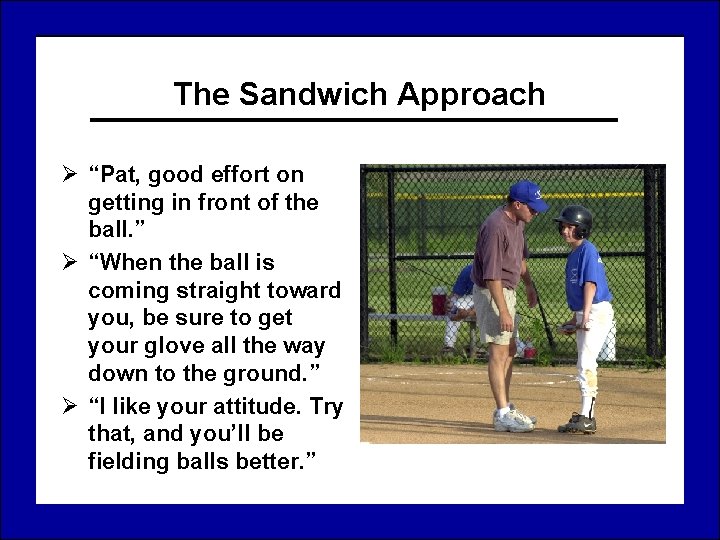
The Sandwich Approach Ø “Pat, good effort on getting in front of the ball. ” Ø “When the ball is coming straight toward you, be sure to get your glove all the way down to the ground. ” Ø “I like your attitude. Try that, and you’ll be fielding balls better. ”
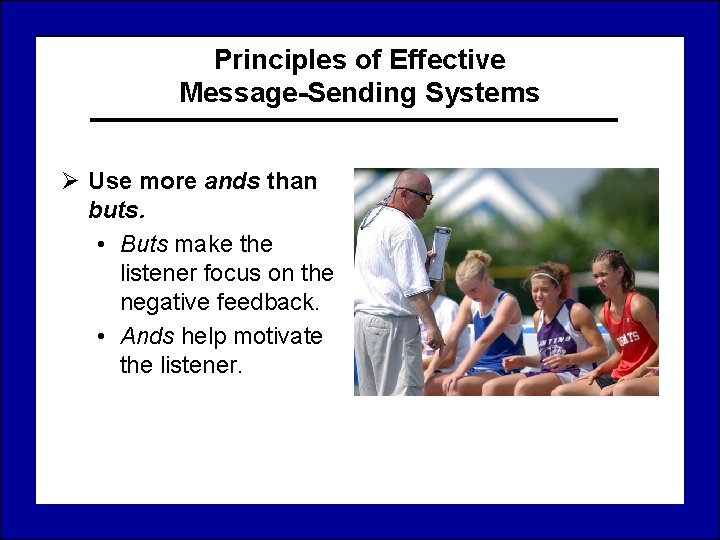
Principles of Effective Message-Sending Systems Ø Use more ands than buts. • Buts make the listener focus on the negative feedback. • Ands help motivate the listener.
“It’s not what you tell them— it’s what they hear. ” –Red Auerbach, former Boston Celtics championship coach
Principles of Effective Message-Receiving Systems Ø Don’t mistake hearing for listening. Ø Get ready to listen: Reserve important conversations for when you have energy. Ø Use supportive behaviors and language as you listen: – Use “I” language. – Be spontaneous. – Describe feelings and concern. – Remain open to compromise. (continued)
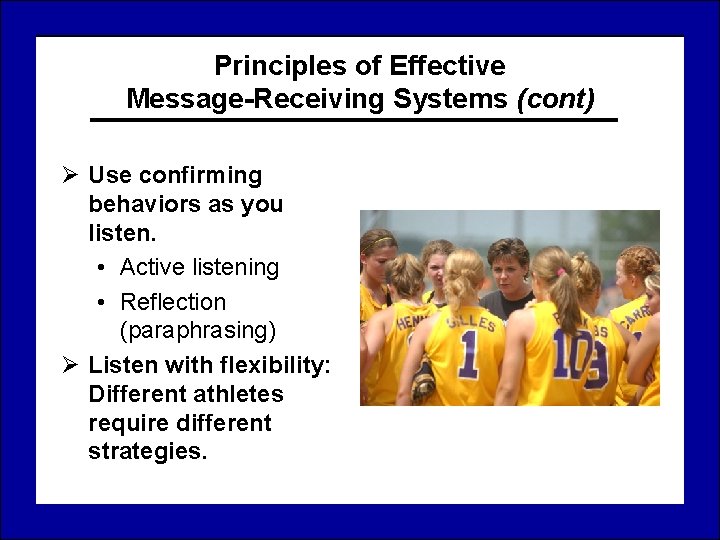
Principles of Effective Message-Receiving Systems (cont) Ø Use confirming behaviors as you listen. • Active listening • Reflection (paraphrasing) Ø Listen with flexibility: Different athletes require different strategies.
Common Listening Mistakes Ø Pseudolistening: appearing to listen without paying attention Ø Stage-hogging: thinking of what you are going to say while the other person is speaking Ø Selective listening: hearing only those parts of the message that interest you (continued)
Common Listening Mistakes (cont) Ø Insulated listening: forgetting a message you don’t want to hear Ø Ambushing: listening only to collect information to use in attacking the speaker
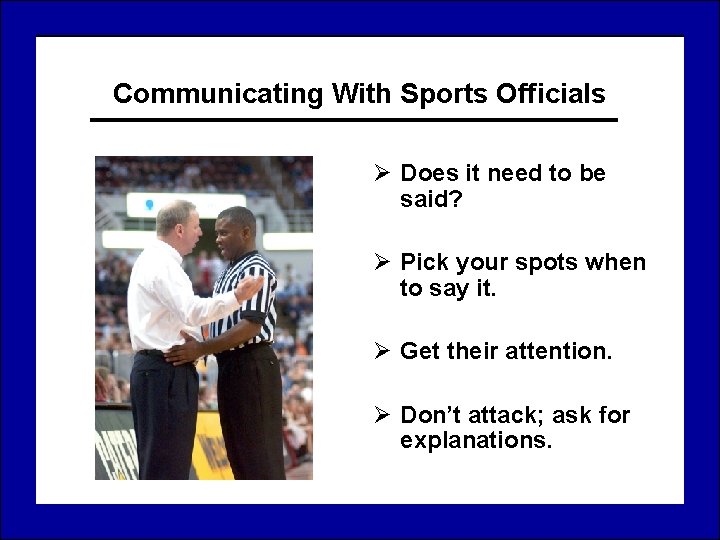
Communicating With Sports Officials Ø Does it need to be said? Ø Pick your spots when to say it. Ø Get their attention. Ø Don’t attack; ask for explanations.
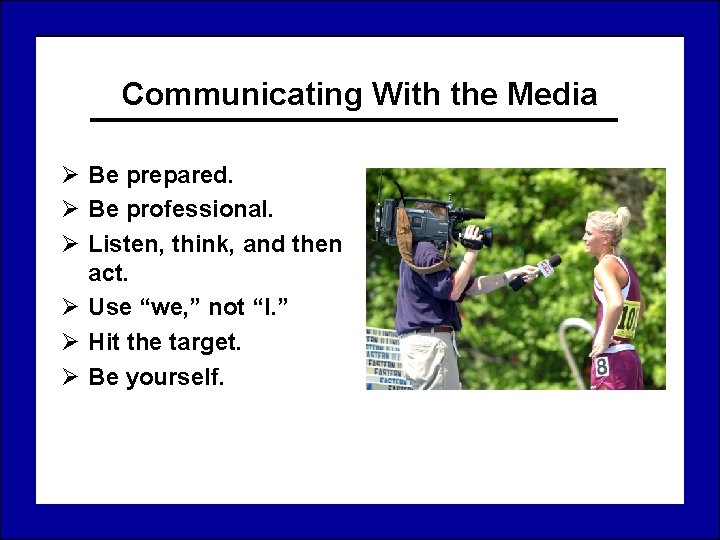
Communicating With the Media Ø Be prepared. Ø Be professional. Ø Listen, think, and then act. Ø Use “we, ” not “I. ” Ø Hit the target. Ø Be yourself.
Three Myths Ø Three excuses that coaches make for not taking the time to set up a good communication system: • “I tell it like it is. ” Usually means they take the easy way out. • “I don’t have the time or the energy. ” In the long run, it saves time and energy. • “It’s too touchy-feely. ” Is this a cover-up for being attacking and demeaning?

- Slides: 20