China limits European Contact Chapter 19 Section 2
- Slides: 29
China limits European Contact Chapter 19 Section 2
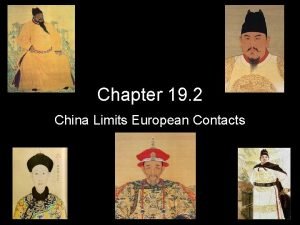
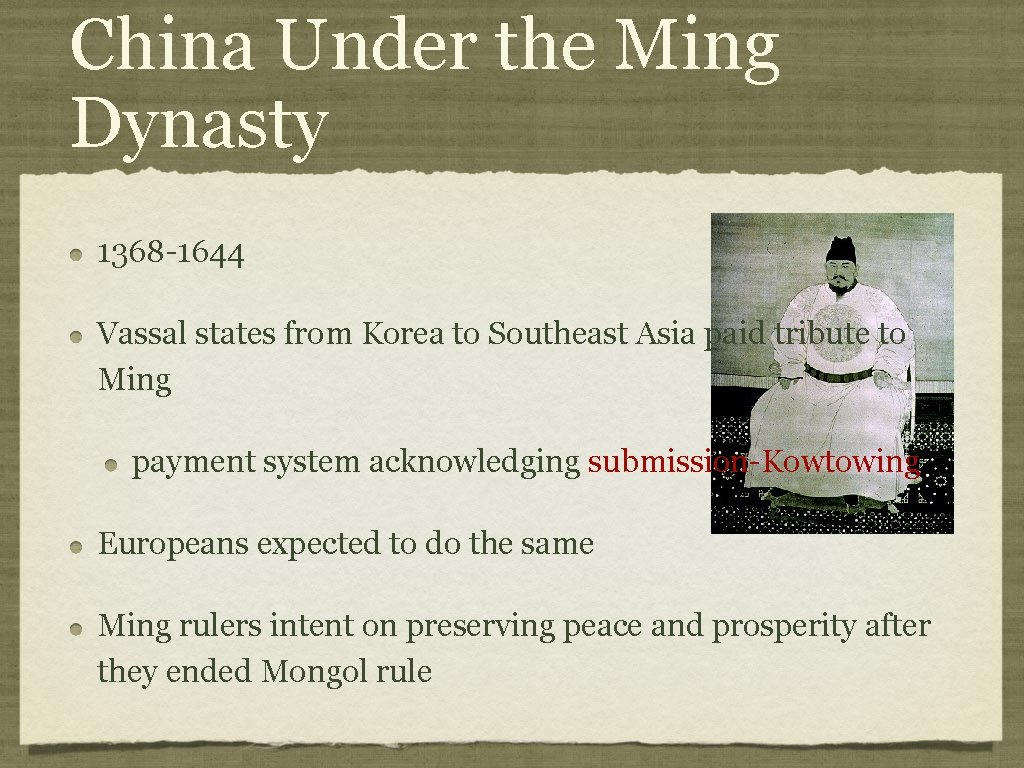
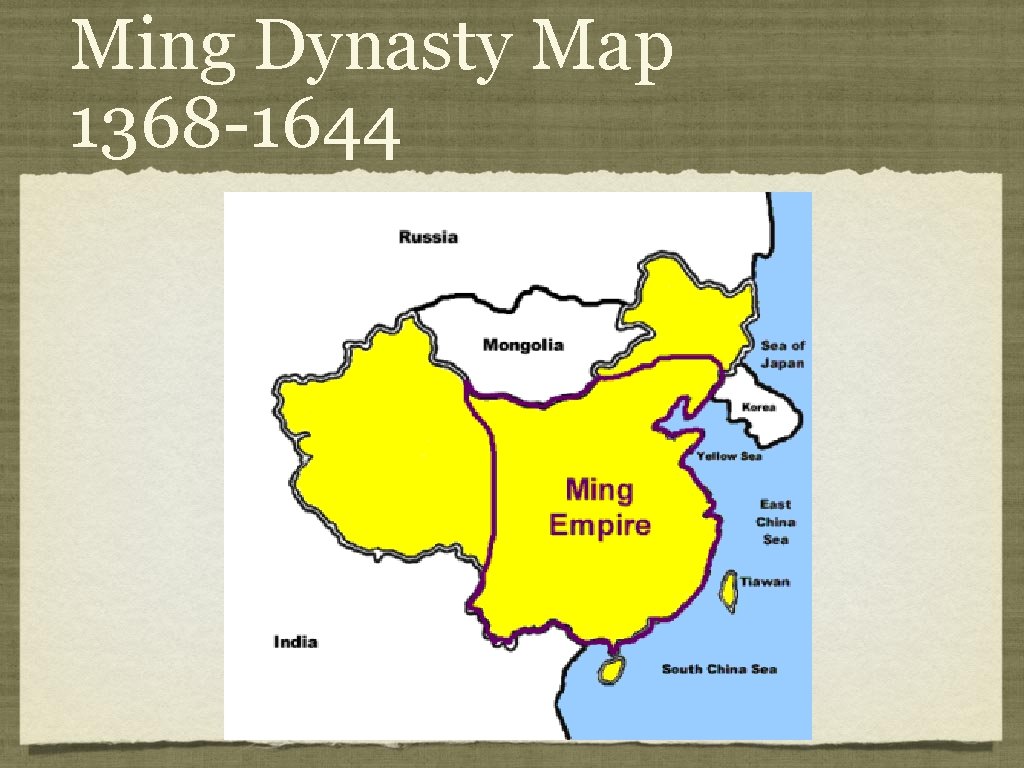
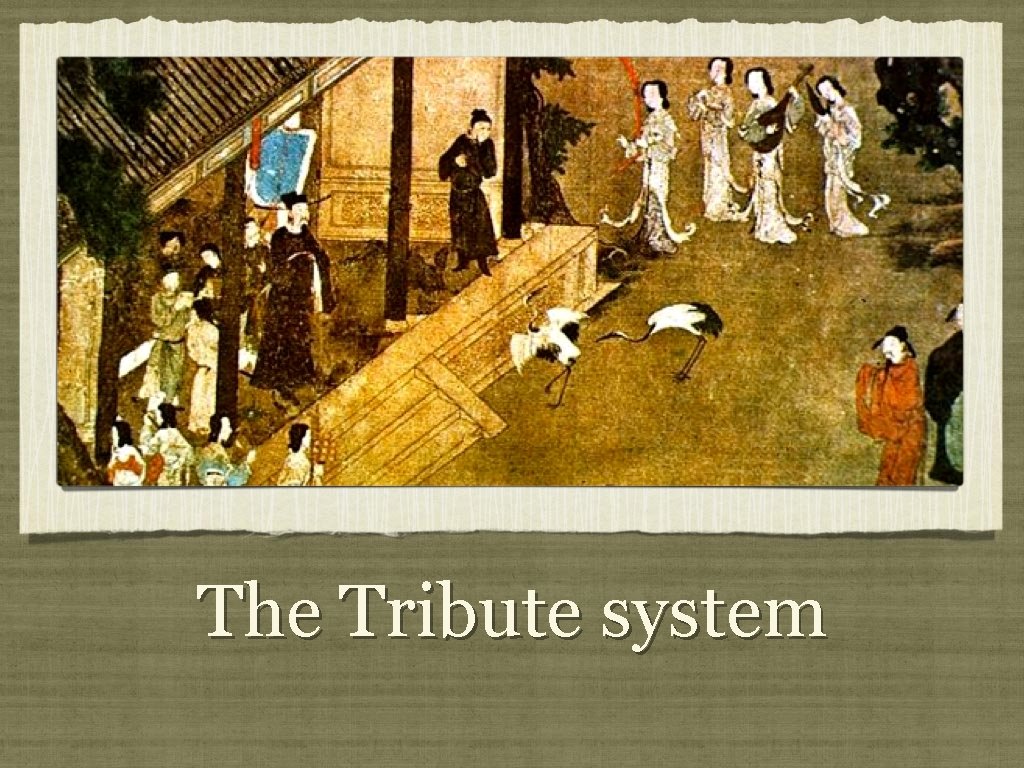
China Under the Ming Dynasty 1368 -1644 Vassal states from Korea to Southeast Asia paid tribute to Ming payment system acknowledging submission-Kowtowing Europeans expected to do the same Ming rulers intent on preserving peace and prosperity after they ended Mongol rule
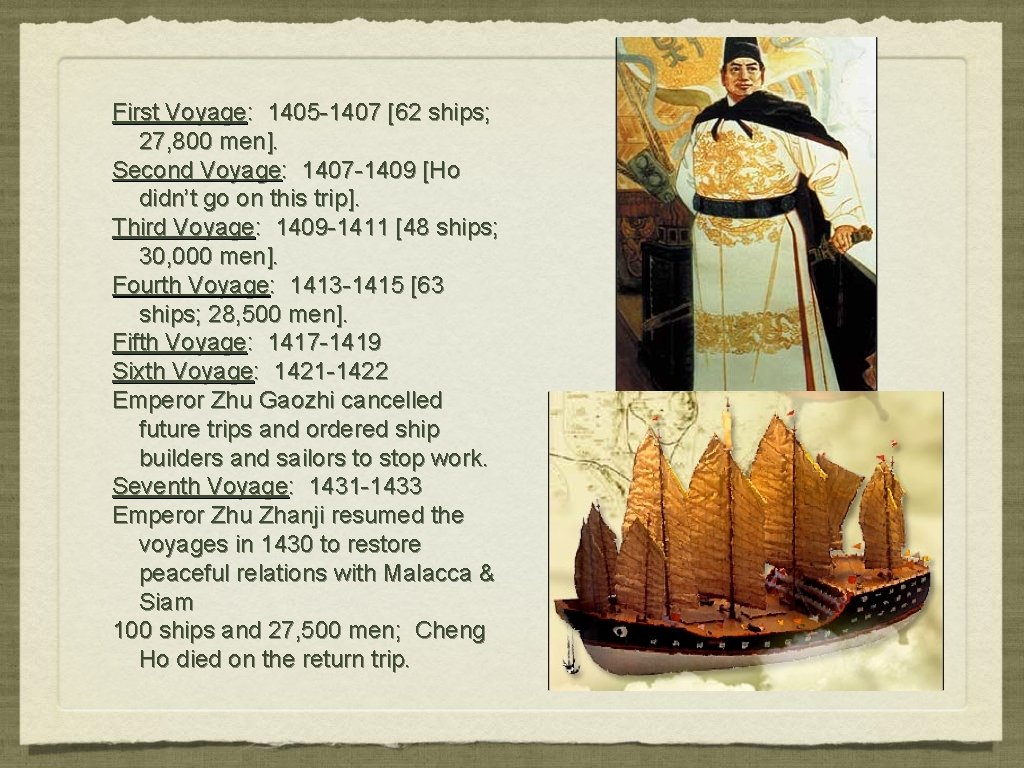
First Voyage: 1405 -1407 [62 ships; 27, 800 men]. Second Voyage: 1407 -1409 [Ho didn’t go on this trip]. Third Voyage: 1409 -1411 [48 ships; 30, 000 men]. Fourth Voyage: 1413 -1415 [63 ships; 28, 500 men]. Fifth Voyage: 1417 -1419 Sixth Voyage: 1421 -1422 Emperor Zhu Gaozhi cancelled future trips and ordered ship builders and sailors to stop work. Seventh Voyage: 1431 -1433 Emperor Zhu Zhanji resumed the voyages in 1430 to restore peaceful relations with Malacca & Siam 100 ships and 27, 500 men; Cheng Ho died on the return trip.
Ming Dynasty COnt’d How did Hongwu bring stability to China? What were some of his agricultural reforms? began reforms to restore agriculture destroyed by war increased rice production restored civil service exam system introduced fish farming improved irrigation growing commercial crops encouraged a return to Confucian moral standards sugar cane cotton
Ming Dynasty Map 1368 -1644
Ming Dynast Cont’d Why was only the government allowed to conduct foreign trade? limit foreign influence to a minimum three ports of trade only-Canton, Macao and Ningbo How did foreign trade affect Ming China? trade flourished up and down coast because of smuggling increase in manufacturing introduction of Christianity and European inventions
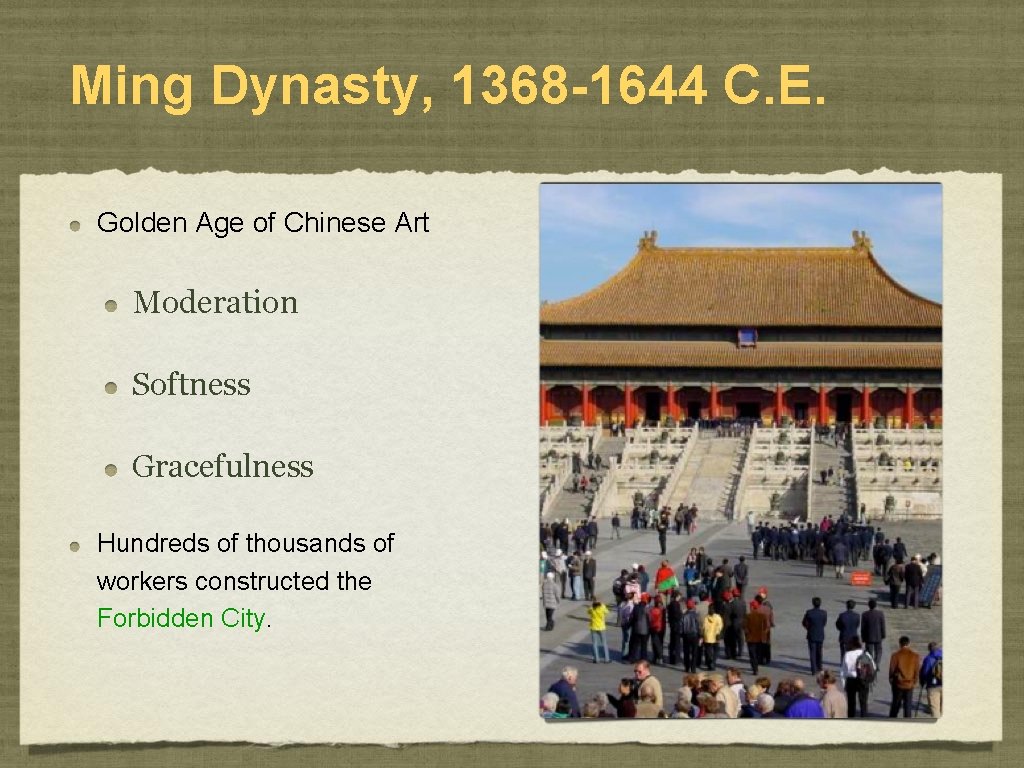
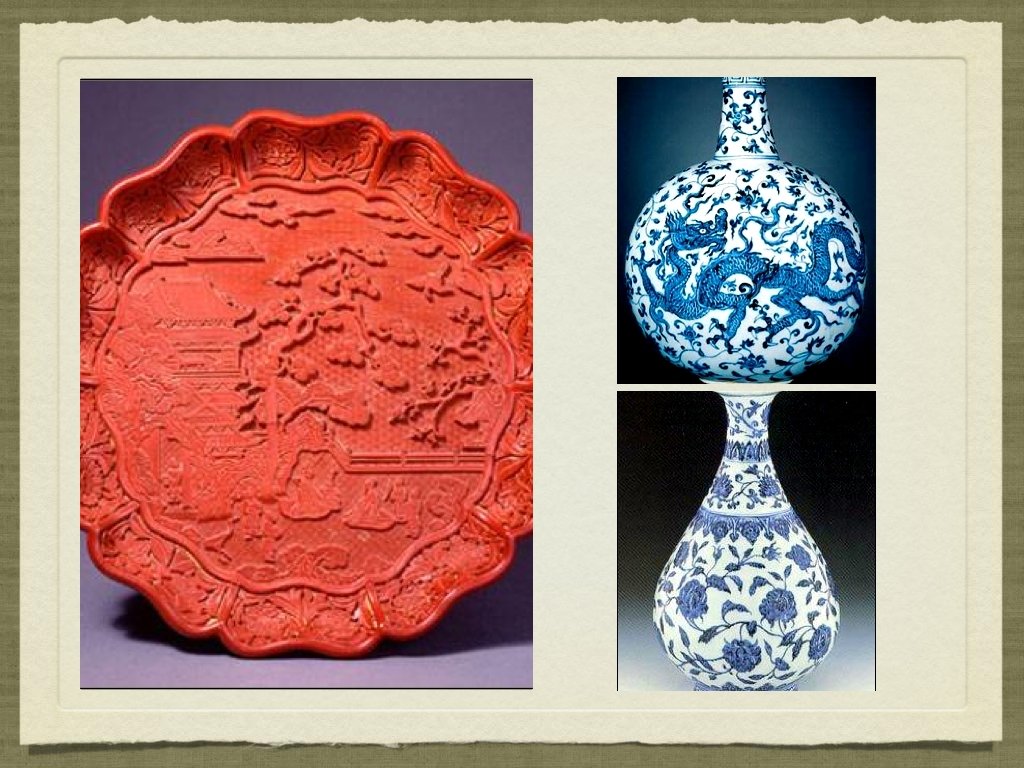
Ming Dynasty, 1368 -1644 C. E. Golden Age of Chinese Art Moderation Softness Gracefulness Hundreds of thousands of workers constructed the Forbidden City.
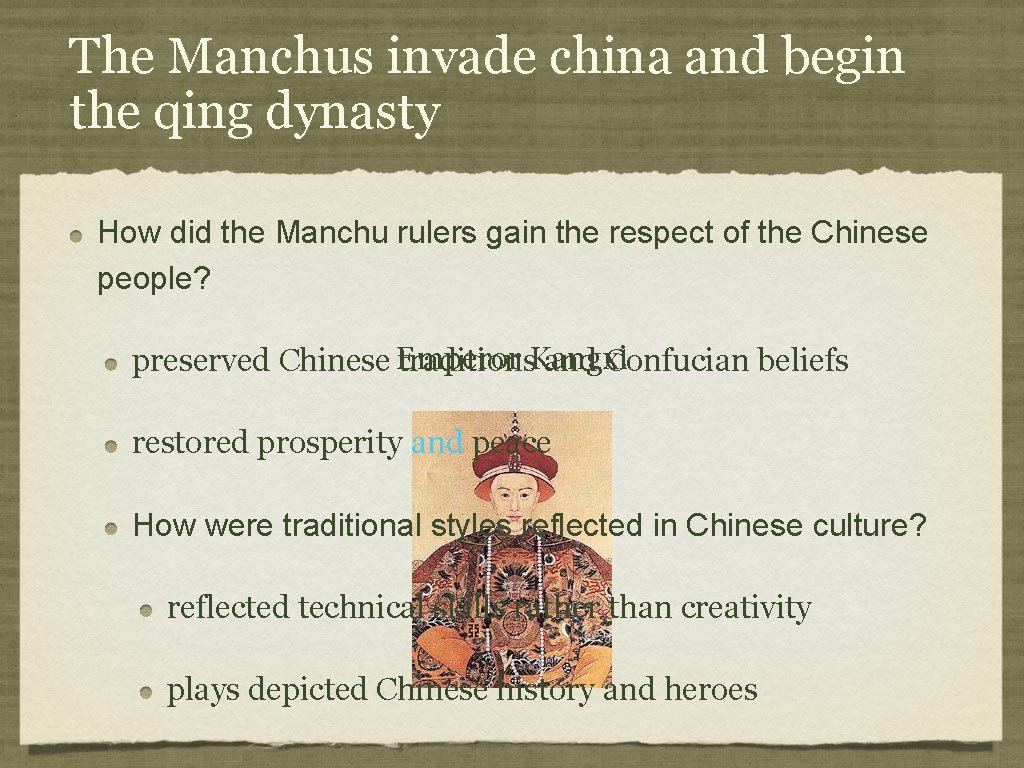
The Manchus invade china and begin the qing dynasty How did the Manchu rulers gain the respect of the Chinese people? preserved Chinese Emperor traditions. Kangxi and Confucian beliefs restored prosperity and peace How were traditional styles reflected in Chinese culture? reflected technical skills rather than creativity plays depicted Chinese history and heroes
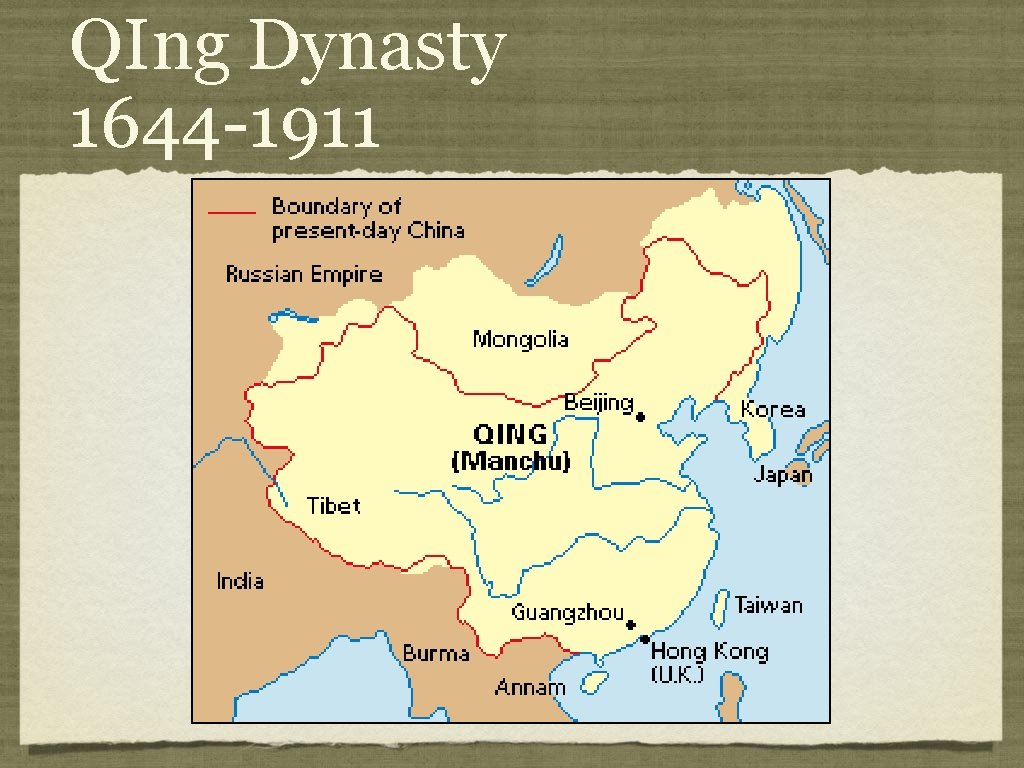
QIng Dynasty 1644 -1911
Qing Dynasty Cont’d What restrictions did the Manchus place on foreign trade? restricted to special ports demanded tribute and “kowtow” rituals Why did the Chinese accept the Dutch and reject the British as trading partners? The Dutch followed Chinese rules while the British refused to kowtow
The Tribute system
Recap What three things stick out most in your mind about what you have learned? What do you believe was the most significant accomplishment of the Chinese dynasties covered here?
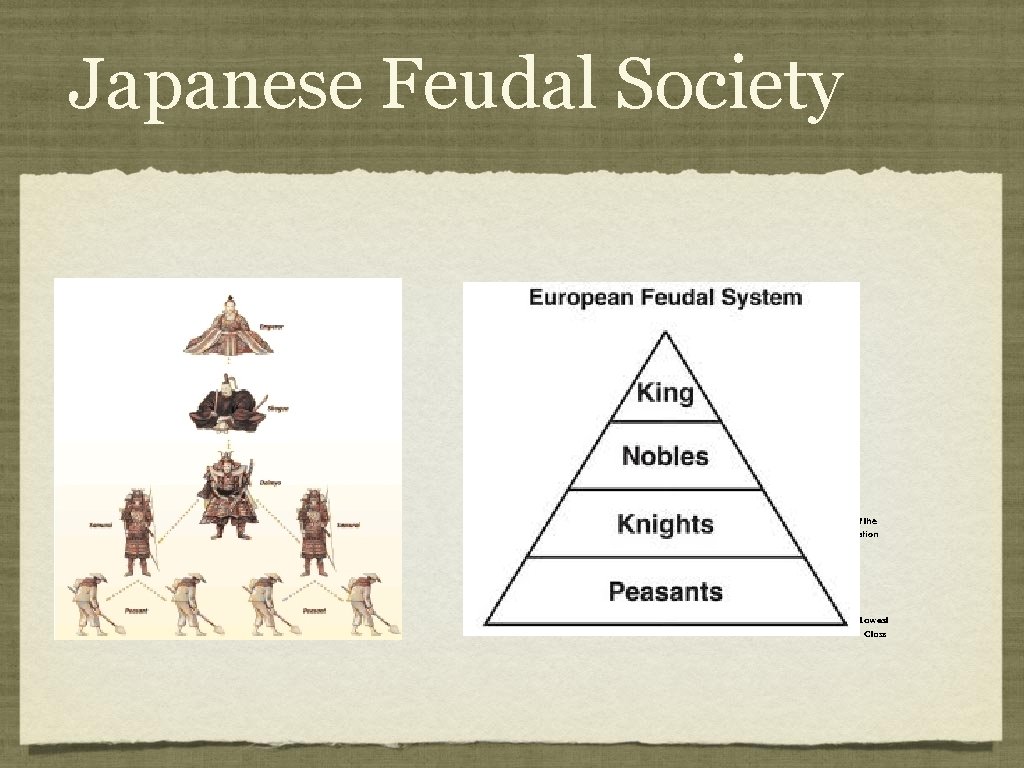
Japanese Feudal Society
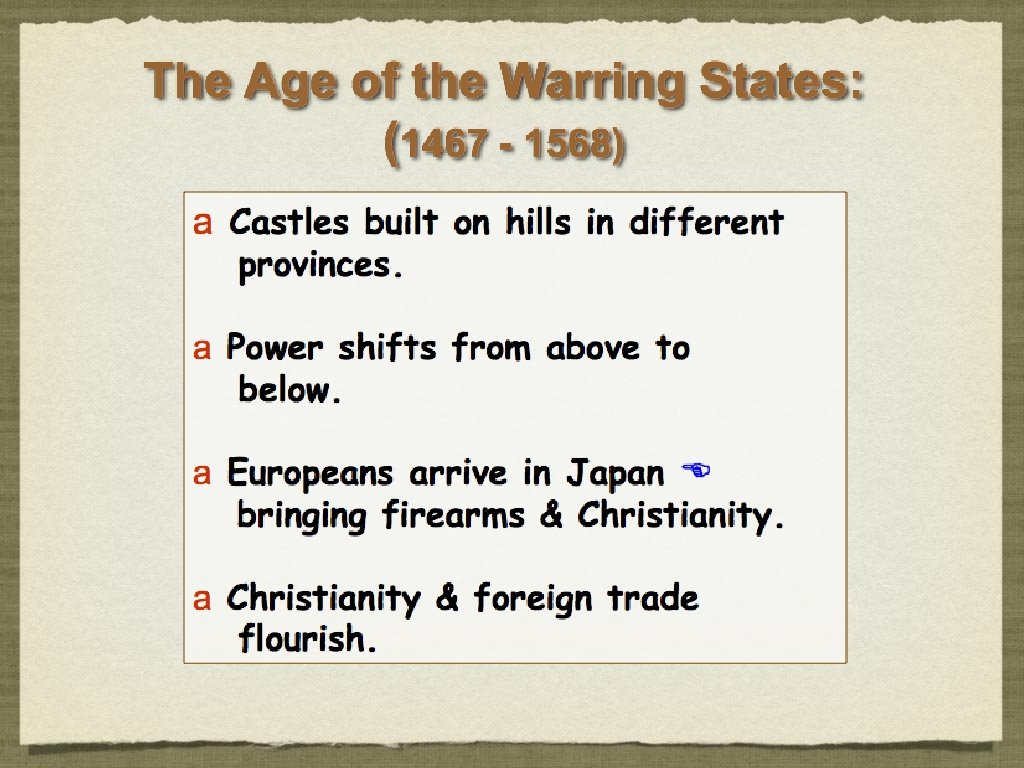
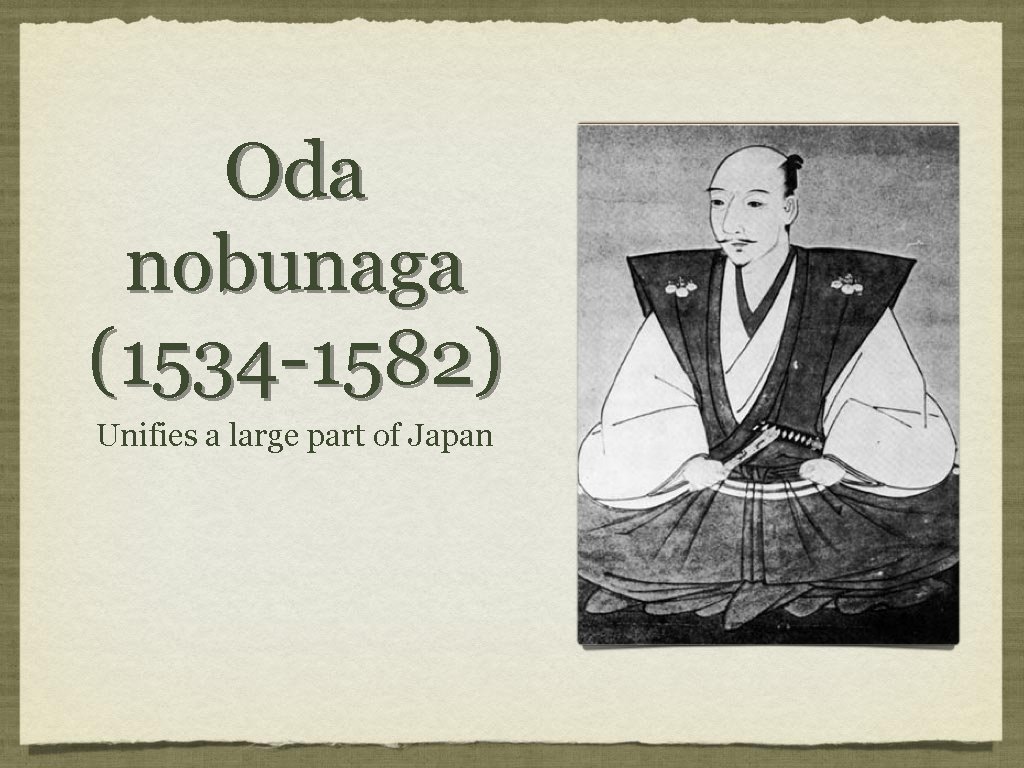
Japan returns to isolation How did each of the following help to unify Japan? Daimyo fought each other for over a century, eventually one was victorious and unified Japan Oda Nobunaga seized imperial capital and set out to eliminate rivals Toyotomi Hideyoshi continued Nobunaga’s mission, gained control over most of the country
how did each of the following influence japanese society and culture? Tokugawa Shogunate brought about more than two centuries of stability, prosperity and isolation Portuguese introduced many new items, ex, firearms=changed samurai traditions, fortification of castles and eventually growth of cities and towns Christian Missionaries at first, convert Japanese; later, religious persecution and eventual end of Christianity in Japan “Closed Country” policy
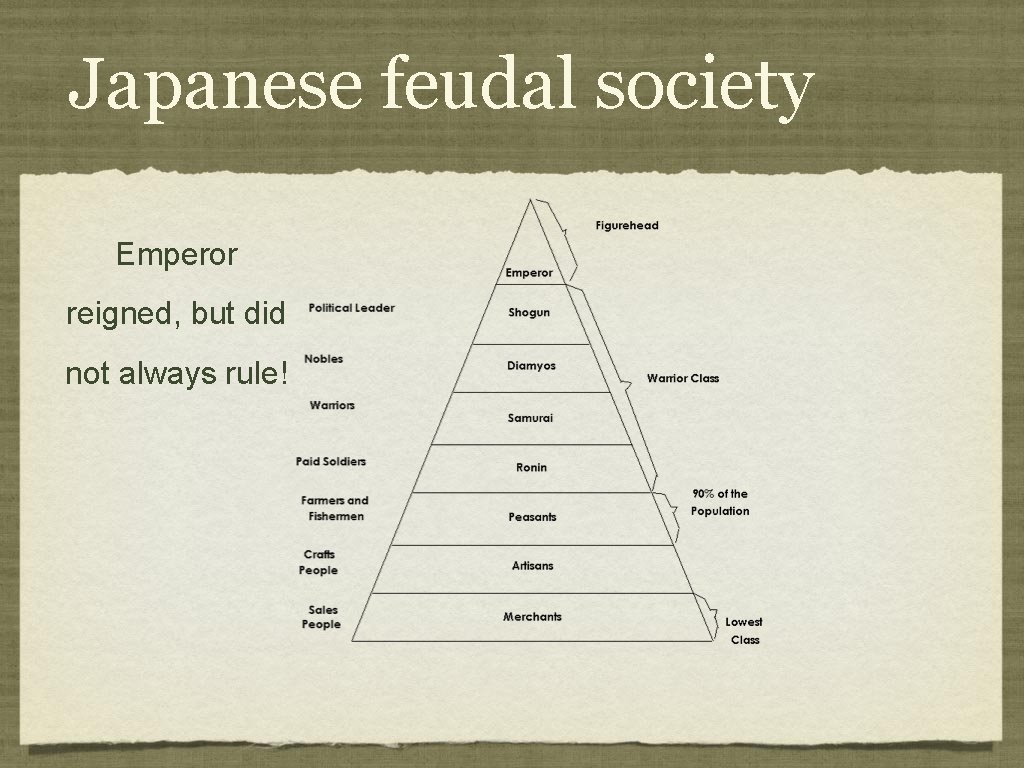
Japanese feudal society Emperor reigned, but did not always rule!
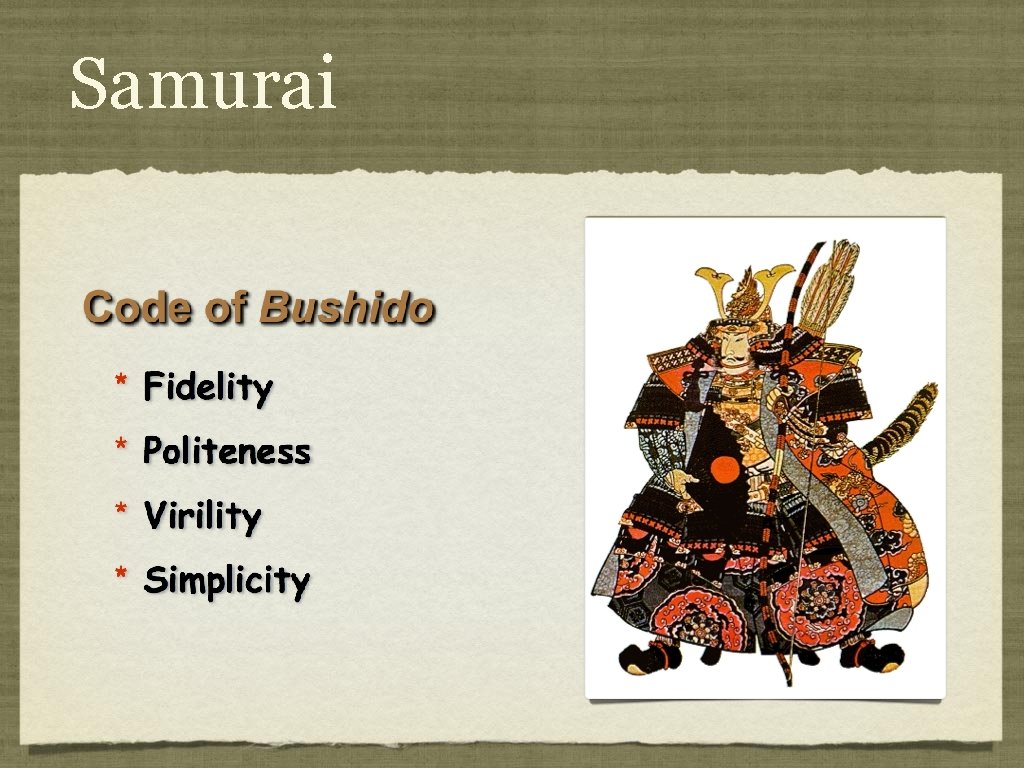
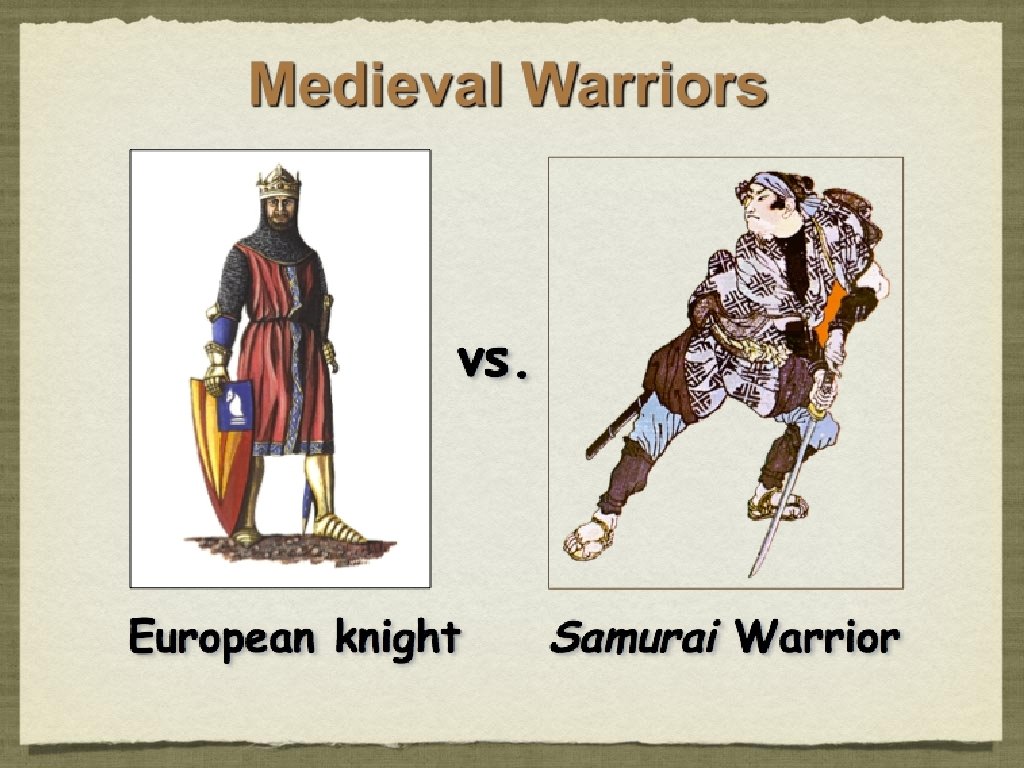
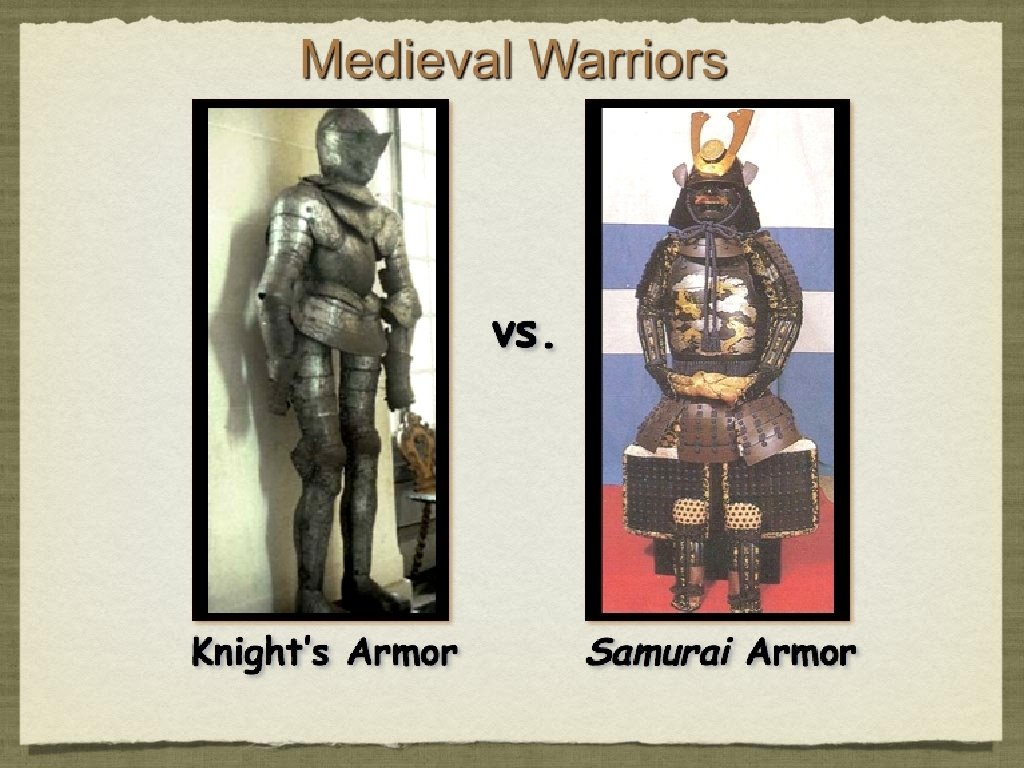
Samurai
Oda nobunaga (1534 -1582) Unifies a large part of Japan
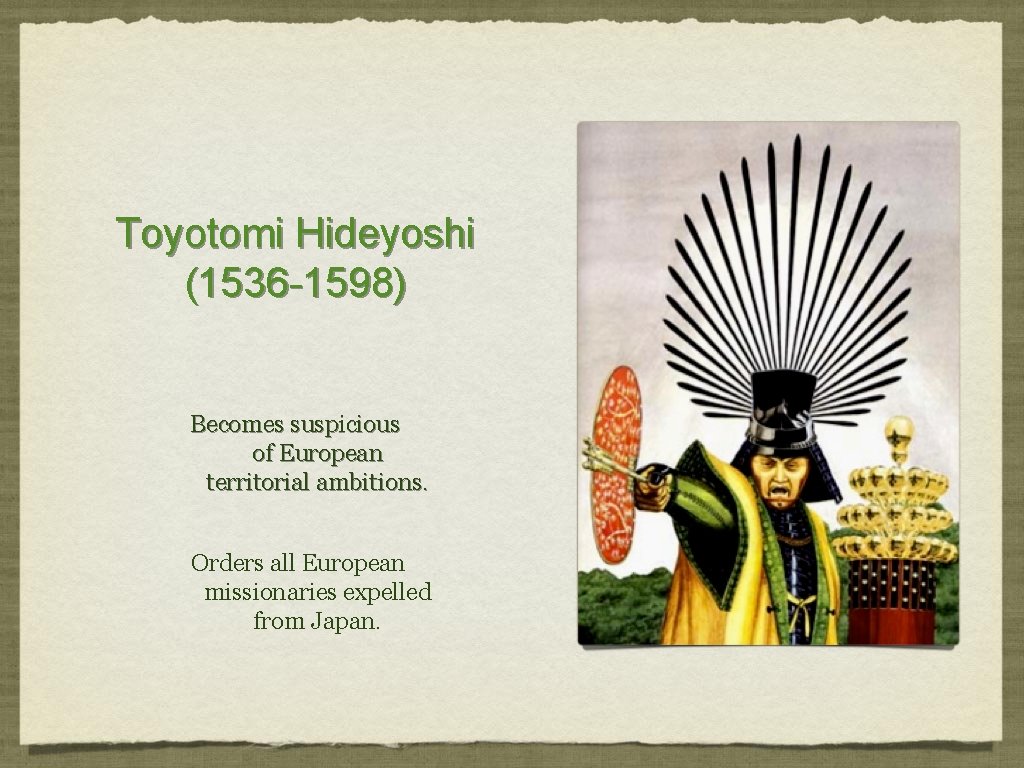
Toyotomi Hideyoshi (1536 -1598) Becomes suspicious of European territorial ambitions. Orders all European missionaries expelled from Japan.
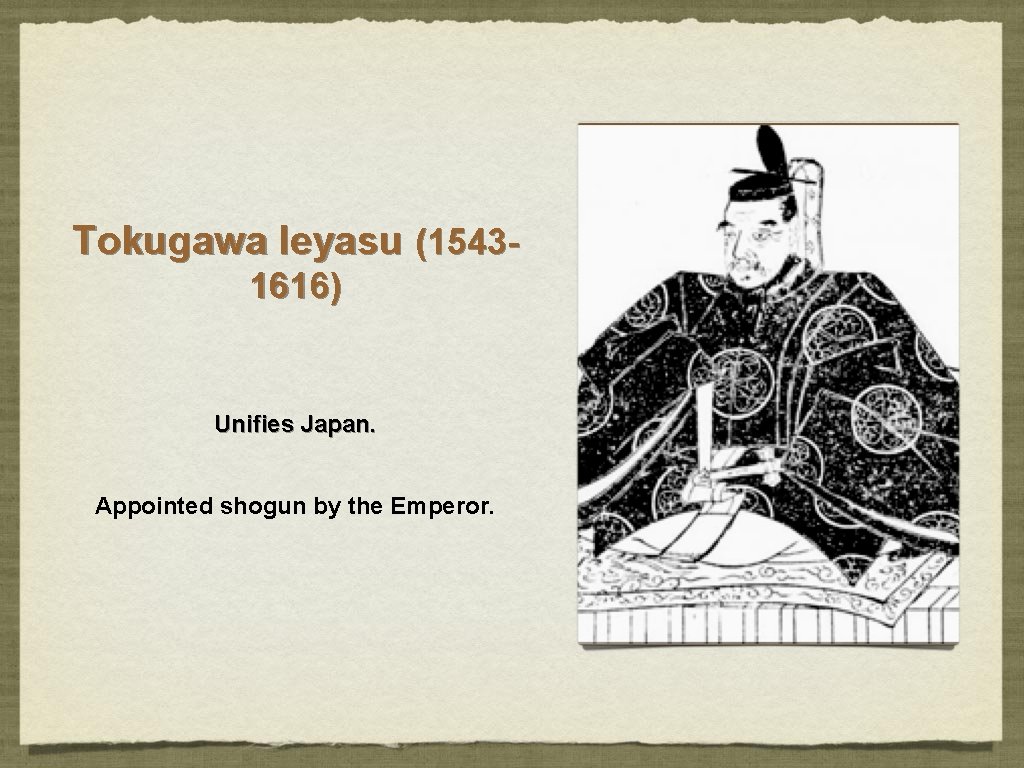
Tokugawa Ieyasu (15431616) Unifies Japan. Appointed shogun by the Emperor.
Tokugawa Shogunate Period Japan closed off to all trade [except to the Dutch and Chinese]. Merchant class becomes rich! New art forms haiku poetry, kabuki Domestic trade flourishes. Towns, esp. castle towns, increase. The Dutch were restricted to a small island in Nagasaki harbor. Japanese Christians persecuted and Christianity is forbidden. The government is centralized with all power in the hands of the shogun.