Chapter 20 Section 2 European Nations Settle North


- Slides: 27
Chapter 20, Section 2 European Nations Settle North America
Objective Describe the colonial activities of Europeans in North America.
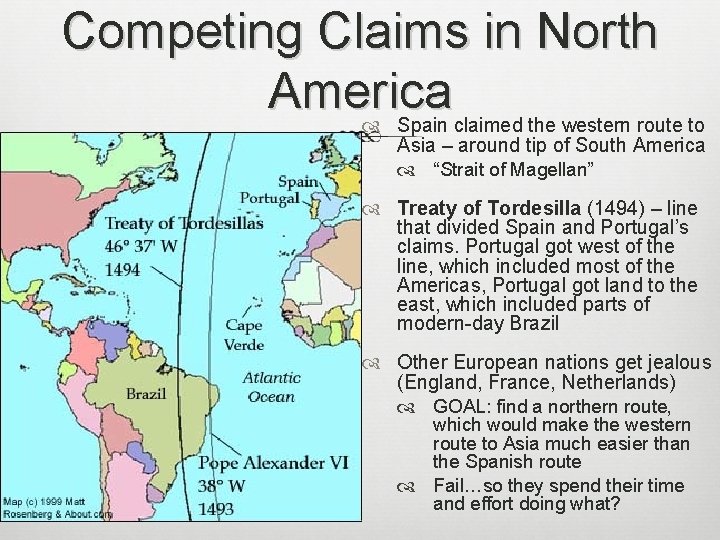
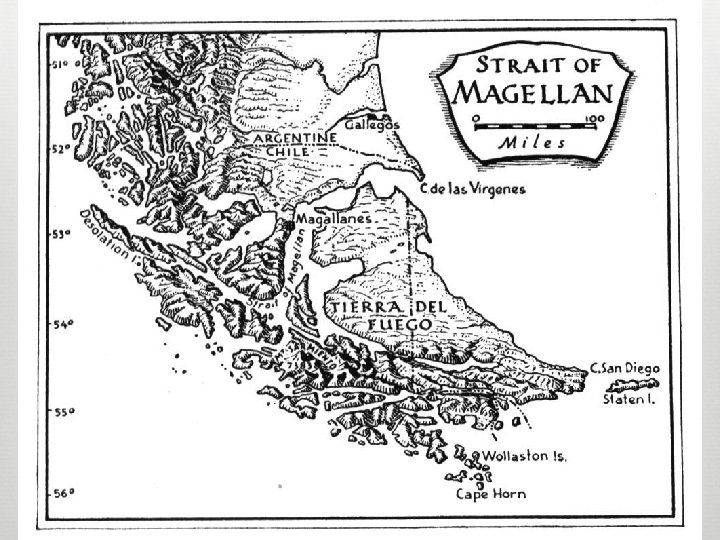
Competing Claims in North America Spain claimed the western route to Asia – around tip of South America “Strait of Magellan” Treaty of Tordesilla (1494) – line that divided Spain and Portugal’s claims. Portugal got west of the line, which included most of the Americas, Portugal got land to the east, which included parts of modern-day Brazil Other European nations get jealous (England, France, Netherlands) GOAL: find a northern route, which would make the western route to Asia much easier than the Spanish route Fail…so they spend their time and effort doing what?
NEW FRANCE What is their reason for exploration? What is the general location of French settlement? Who are the significant French explorers?
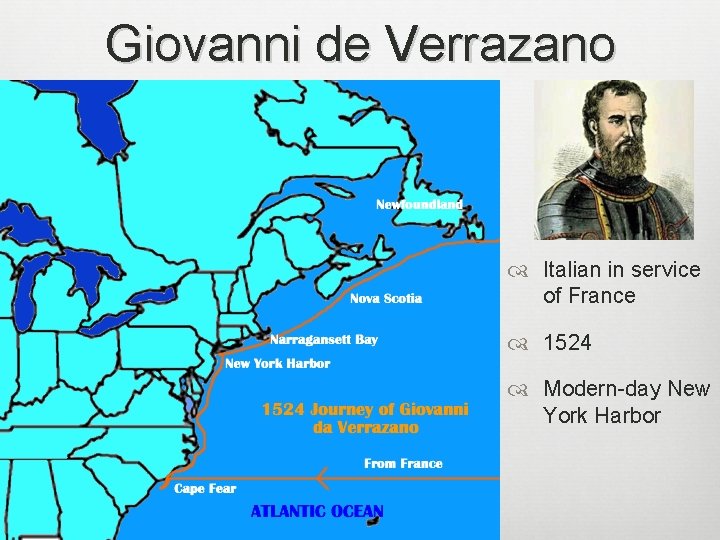
Giovanni de Verrazano Italian in service of France 1524 Modern-day New York Harbor
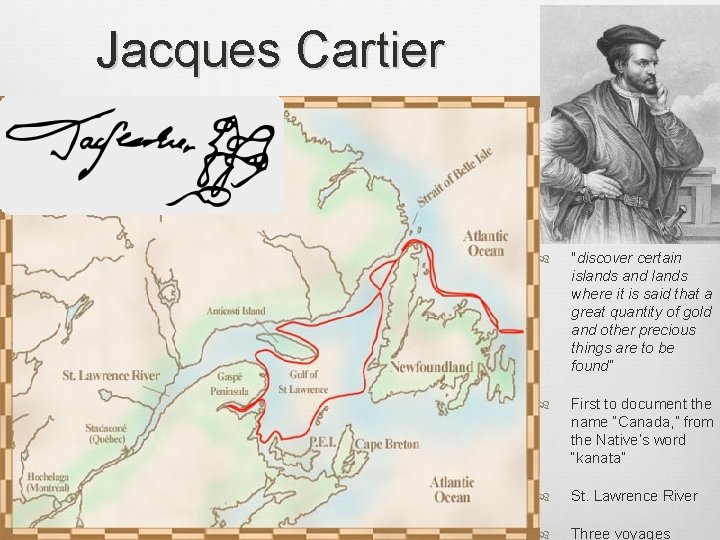
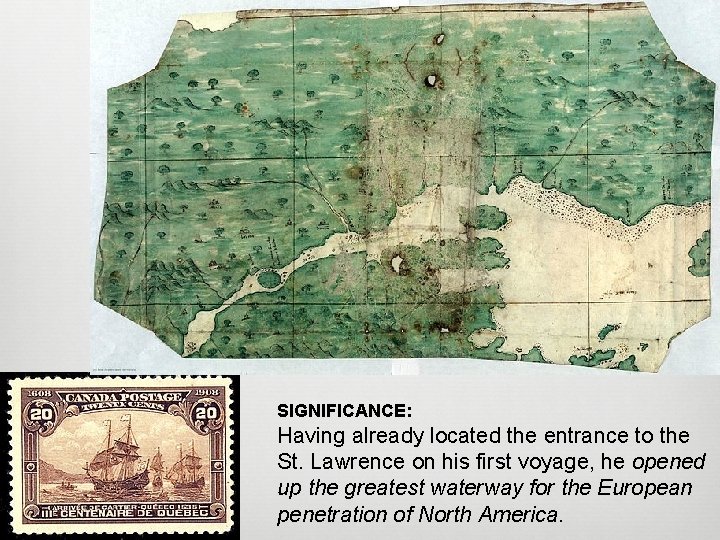
Jacques Cartier "discover certain islands and lands where it is said that a great quantity of gold and other precious things are to be found” First to document the name “Canada, ” from the Native’s word “kanata” St. Lawrence River Three voyages
SIGNIFICANCE: Having already located the entrance to the St. Lawrence on his first voyage, he opened up the greatest waterway for the European penetration of North America.
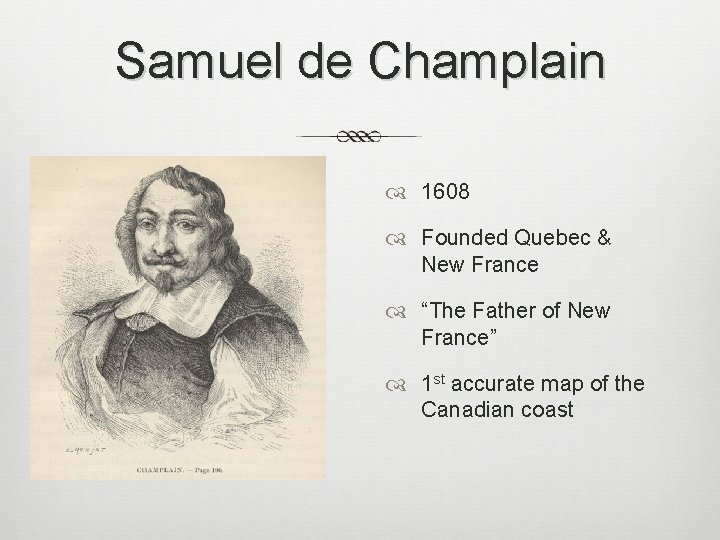
Samuel de Champlain 1608 Founded Quebec & New France “The Father of New France” 1 st accurate map of the Canadian coast
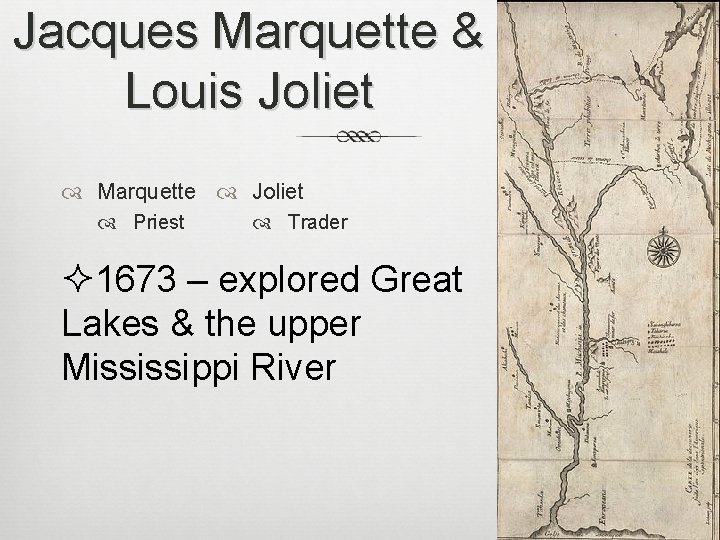
Jacques Marquette & Louis Joliet Marquette Joliet Priest Trader ² 1673 – explored Great Lakes & the upper Mississippi River
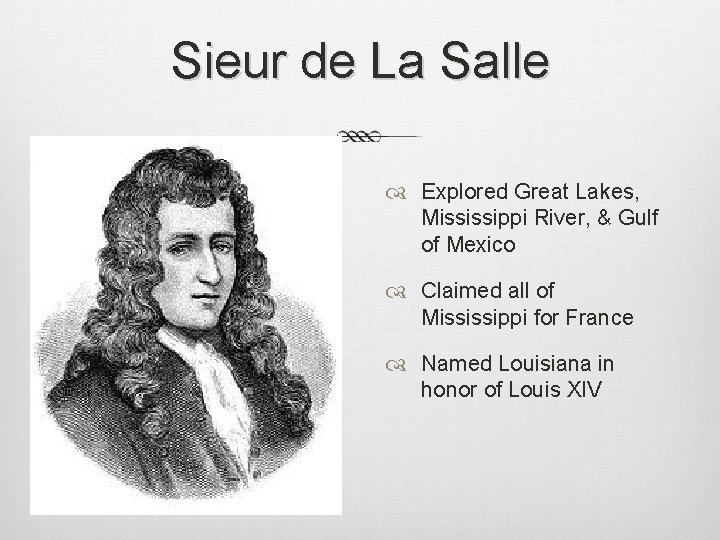
Sieur de La Salle Explored Great Lakes, Mississippi River, & Gulf of Mexico Claimed all of Mississippi for France Named Louisiana in honor of Louis XIV
By the early 1700 s, New France covered much of what is now the Midwest US and Eastern Canada. Fur Trade Beaver Pelts 1600 s-1800 s Almost went extinct European population by 1760 in New France… Only around 65, 000 People NOT interested in settling down and staying for a long time…just wanted to make money off of the land go home.
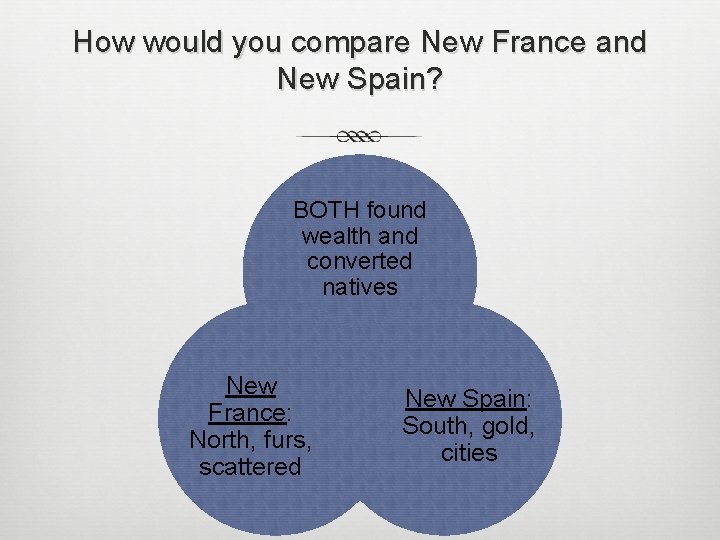
How would you compare New France and New Spain? BOTH found wealth and converted natives New France: North, furs, scattered New Spain: South, gold, cities
Why were France’s North American holding so sparsely populated? Priests and fur traders had no desire to build towns and start families
The English Arrive in North America 1606: Virginia Company in London received charter from King James to settle the New World 3 ships, over 100 settlers Claimed land & named it Jamestown, in honor of their king Why did Jamestown get a bad start?
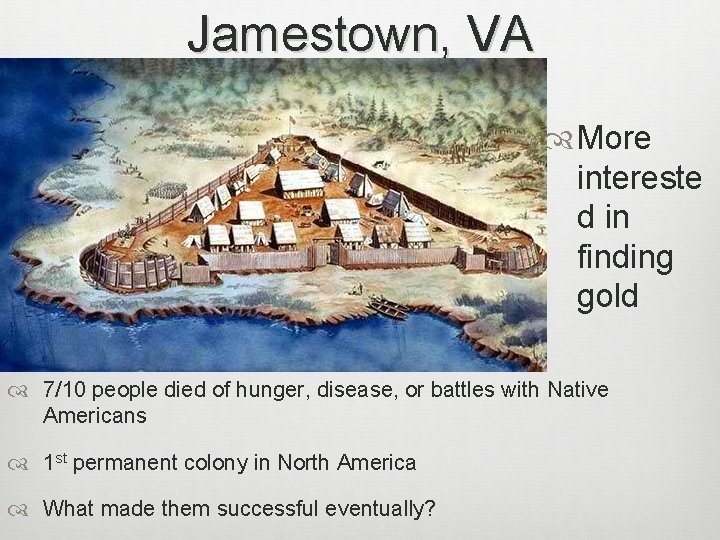
Jamestown, VA More intereste d in finding gold 7/10 people died of hunger, disease, or battles with Native Americans 1 st permanent colony in North America What made them successful eventually?
“New England” 1620: Pilgrims found 2 nd colony in Plymouth, Massachusetts In search of religious freedom 1630: Puritans sought religious freedom from Anglican Church What is a Puritan? Goal: to build model community for other Christians to follow Why did they succeed?
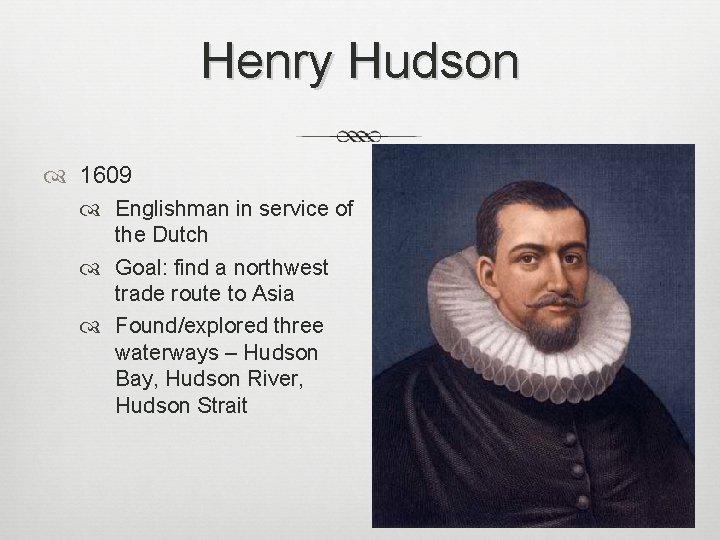
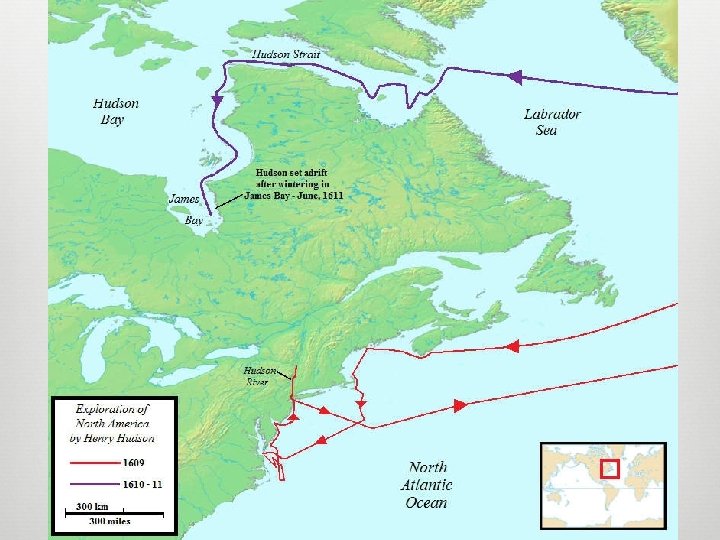
Henry Hudson 1609 Englishman in service of the Dutch Goal: find a northwest trade route to Asia Found/explored three waterways – Hudson Bay, Hudson River, Hudson Strait
“New Netherland” Dutch claimed Hudson’s finds Fur trade – Iroquois Indians 1621: Dutch West India Company Hard time colonizing…Dutch people didn’t want to go. Invited Germans, French, Scandinavians, and others.
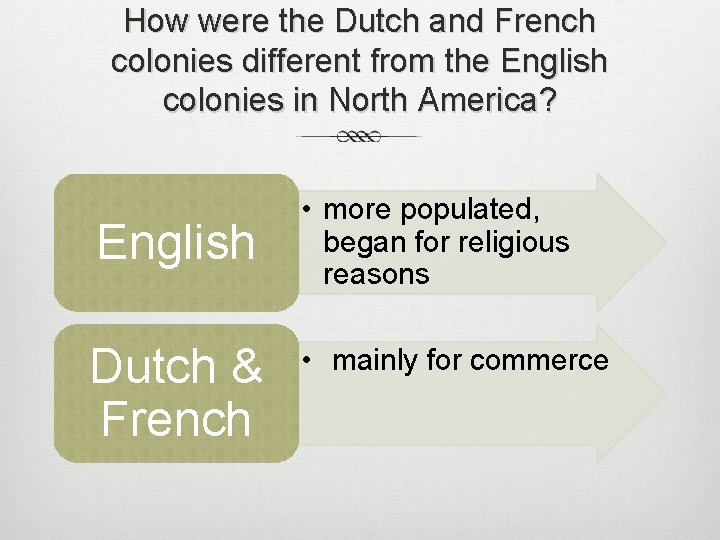
How were the Dutch and French colonies different from the English colonies in North America? English Dutch & French • more populated, began for religious reasons • mainly for commerce
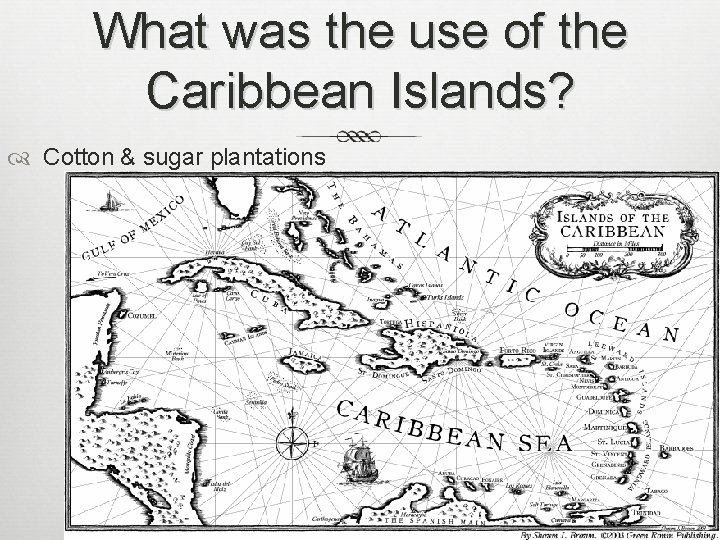
What was the use of the Caribbean Islands? Cotton & sugar plantations
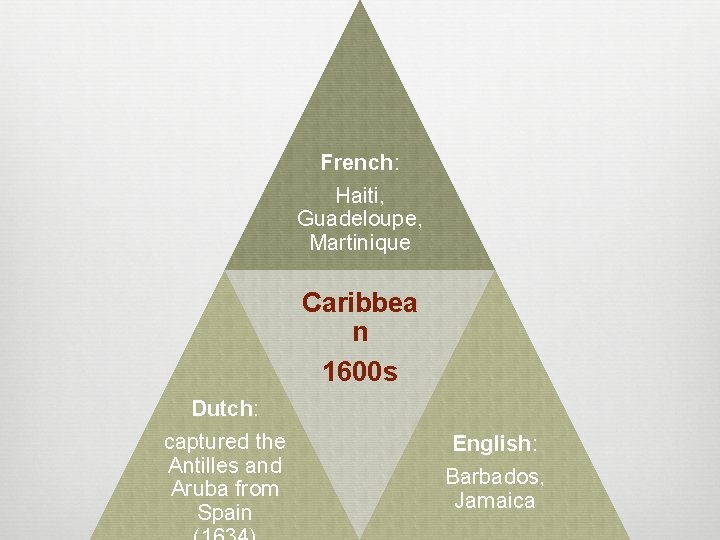
French: Haiti, Guadeloupe, Martinique Caribbea n 1600 s Dutch: captured the Antilles and Aruba from Spain English: Barbados, Jamaica
The Struggle for North America France, England, and Netherlands battled for supremacy in North America English oust the Dutch separated the Northern and Southern English colonies 1664: King Charles II granted permission to drive out the Dutch surrendered Duke of York renamed the land “New York”
With the Dutch gone…English could settle the entire east coast By 1750, about 1. 2 million English settlers lived in the colonies BUT…they still weren’t happy. Growing population led to a need for more land English push farther west and collide with French holdings
What do you think were the most valuable amenities in the New World?
Ticket Out The Door What are the differences between Jamestown and the Pilgrims’ settlement?