Chapter 19 2 China Limits European Contacts Ming
- Slides: 12
Chapter 19. 2 China Limits European Contacts
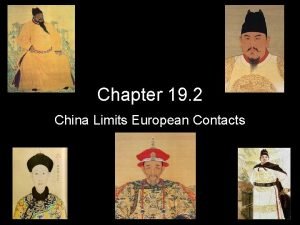
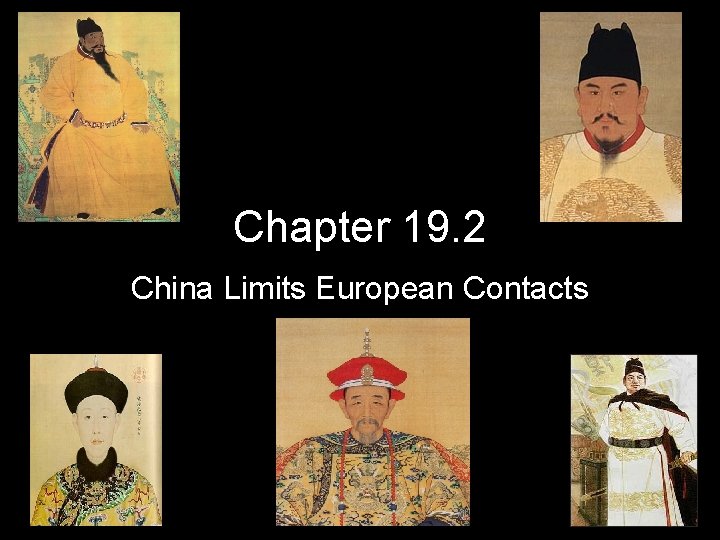
Ming Dynasty 1368 -1644 • China becomes dominant power in Asia under Ming – 14 th-17 th Centuries • Vassal State: States dependent and loyal to another more powerful state. – Common forms of payment: military assistance and tribute payments – China expected Europeans to pay for contact
Rise of Ming • Hongwu drives out Mongols (1368) • Becomes first Ming ruler • Reforms agriculture – Increases rice production – Improves irrigation techniques – Encourages commercial crops: fish, cotton, sugar cane • • Erases Mongol past, promotes China’s power Encourages return to Confucian morals Later becomes tyrant: paranoid of overthrow Yonglo – son takes over – Launches first voyages of exploration - before Euros – Reason: show off China’s power and expand tribute system
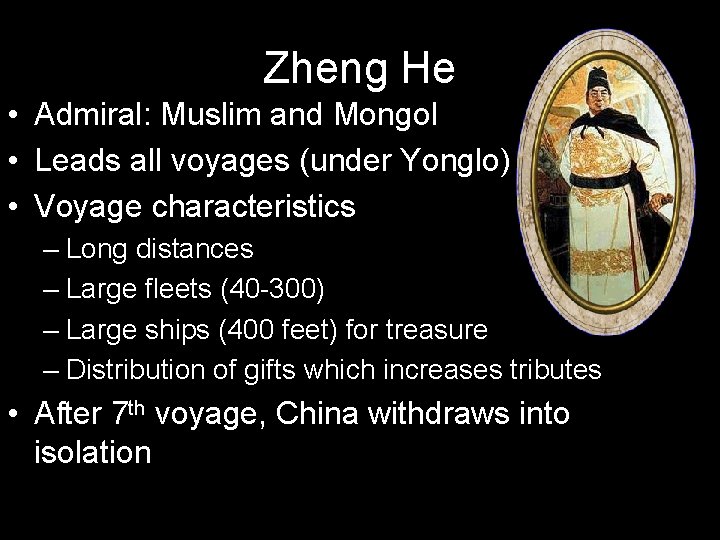
Zheng He • Admiral: Muslim and Mongol • Leads all voyages (under Yonglo) • Voyage characteristics – Long distances – Large fleets (40 -300) – Large ships (400 feet) for treasure – Distribution of gifts which increases tributes • After 7 th voyage, China withdraws into isolation
Ming and Foreign Nations • Only government conducted trade – Three coastal ports: Canton, Macao, and Ningbo • Demand for Chinese products increase • China’s industrial woes: – “Commerce” offended Confucian beliefs – Agriculture traditional economy • Christianity – Missionaries accompany Euros – Matteo Ricci – Jesuit gains favor with Ming introducing trigonometry, and astronomy
Ming Decline • Decline due to: – Ineffective rulers – Corrupt officials – No money – High agricultural taxes and bad harvests = starvation
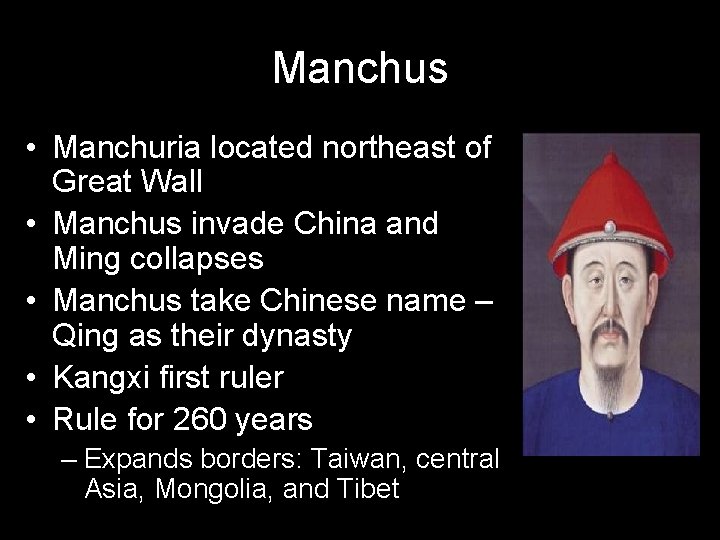
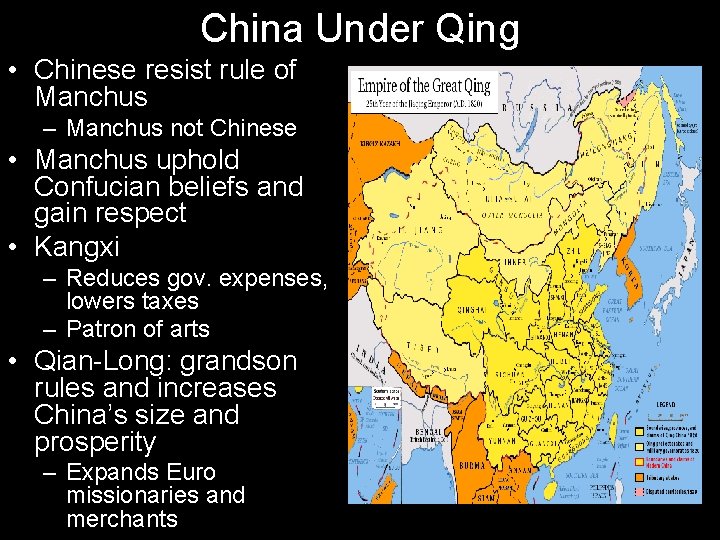
Manchus • Manchuria located northeast of Great Wall • Manchus invade China and Ming collapses • Manchus take Chinese name – Qing as their dynasty • Kangxi first ruler • Rule for 260 years – Expands borders: Taiwan, central Asia, Mongolia, and Tibet
China Under Qing • Chinese resist rule of Manchus – Manchus not Chinese • Manchus uphold Confucian beliefs and gain respect • Kangxi – Reduces gov. expenses, lowers taxes – Patron of arts • Qian-Long: grandson rules and increases China’s size and prosperity – Expands Euro missionaries and merchants
Isolation Continues • Chinese rules must be followed by Euros – Special ports and paying tributes • Dutch pay tributes and accept rules – Become trading partners • British refuse rules • China is self-sufficient and does not need British
Korea under Manchu • Vassal state of Manchus • Korea – Govt. under Confucian principles – Adopt Chinese tech, culture, and isolation policy • Manchu invasion and Japanese attack prompt nationalism – Evident in art (Korean scenes)
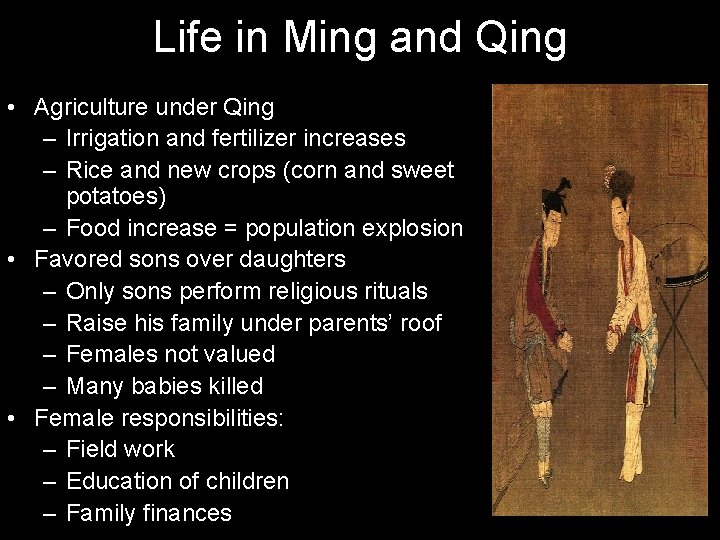
Life in Ming and Qing • Agriculture under Qing – Irrigation and fertilizer increases – Rice and new crops (corn and sweet potatoes) – Food increase = population explosion • Favored sons over daughters – Only sons perform religious rituals – Raise his family under parents’ roof – Females not valued – Many babies killed • Female responsibilities: – Field work – Education of children – Family finances
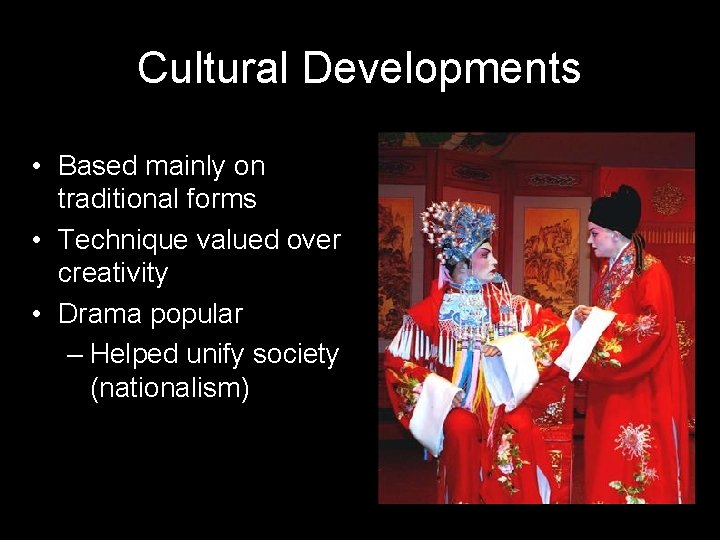
Cultural Developments • Based mainly on traditional forms • Technique valued over creativity • Drama popular – Helped unify society (nationalism)