Chapter 3 Communicating in a World of Diversity





- Slides: 34
Chapter 3 Communicating in a World of Diversity Copyright © 2015 Pearson Education, Inc. publishing as Prentice Hall Chapter 3 - 2
Learning Objectives 1. Discuss the opportunities and challenges of intercultural communication 2. Define culture, explain how culture is learned, and define ethnocentrism and stereotyping 3. Explain the importance of recognizing cultural variations, and list eight categories of cultural differences Copyright © 2015 Pearson Education, Inc. publishing as Prentice Hall Chapter 3 - 3
Learning Objectives 4. List four general guidelines for adapting to any business culture 5. Identify seven steps you can take to improve your intercultural communication skills Copyright © 2015 Pearson Education, Inc. publishing as Prentice Hall Chapter 3 - 4
Communicating in a Diverse World The Concept of Diversity Intercultural Communication Individual Characteristics Cultural Backgrounds Personal Experiences Cultural Differences Copyright © 2015 Pearson Education, Inc. publishing as Prentice Hall Chapter 3 - 5
Opportunities in a Global Marketplace Competition Growth Revenues Copyright © 2015 Pearson Education, Inc. publishing as Prentice Hall Chapter 3 - 6
Advantages of a Diverse Workforce • • Connecting with Customers Expanding the Talent Pool Broader Spectrum of Viewpoints Understand Identify with Diverse Markets Copyright © 2015 Pearson Education, Inc. publishing as Prentice Hall Chapter 3 - 7
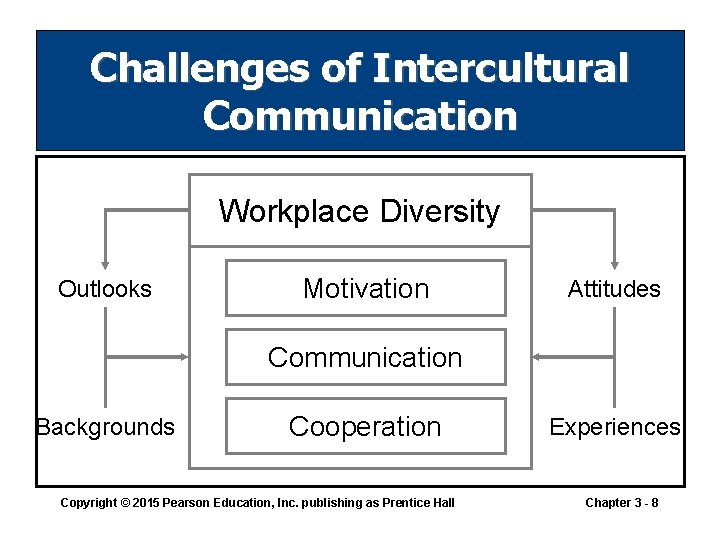
Challenges of Intercultural Communication Workplace Diversity Outlooks Motivation Attitudes Communication Backgrounds Cooperation Copyright © 2015 Pearson Education, Inc. publishing as Prentice Hall Experiences Chapter 3 - 8
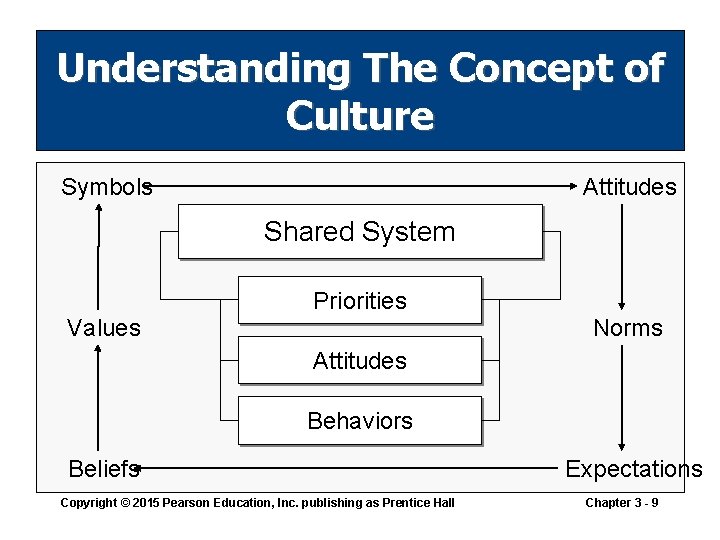
Understanding The Concept of Culture Symbols Attitudes Shared System Priorities Values Norms Attitudes Behaviors Beliefs Copyright © 2015 Pearson Education, Inc. publishing as Prentice Hall Expectations Chapter 3 - 9
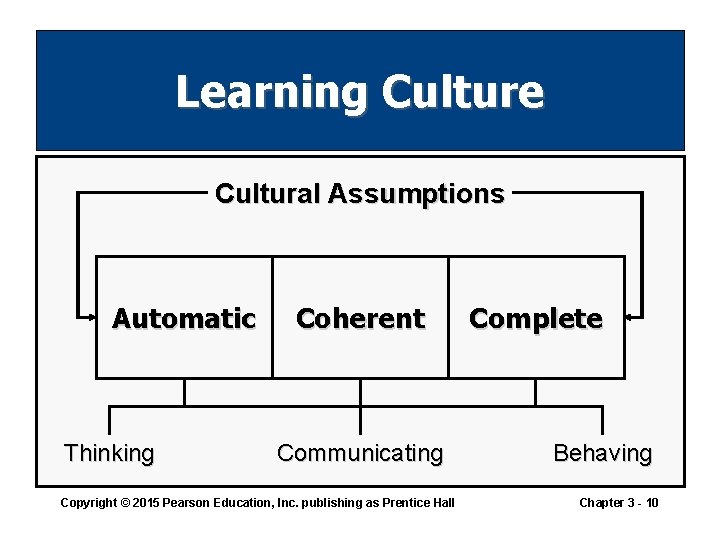
Learning Culture Cultural Assumptions Automatic Thinking Coherent Communicating Copyright © 2015 Pearson Education, Inc. publishing as Prentice Hall Complete Behaving Chapter 3 - 10
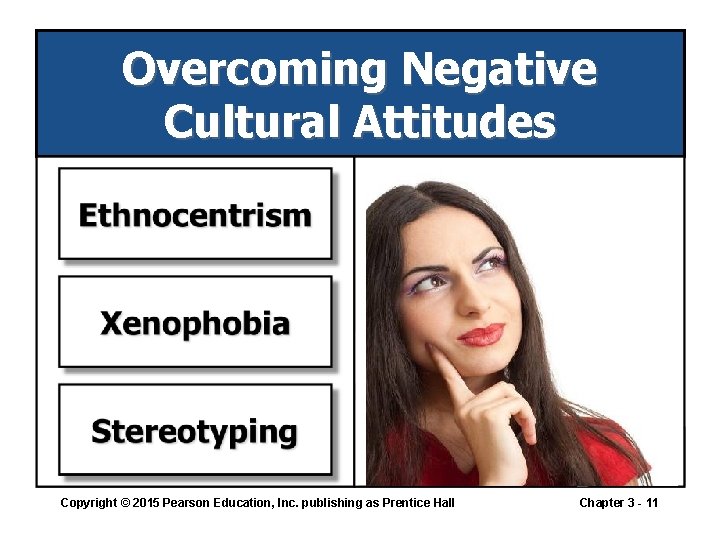
Overcoming Negative Cultural Attitudes Copyright © 2015 Pearson Education, Inc. publishing as Prentice Hall Chapter 3 - 11
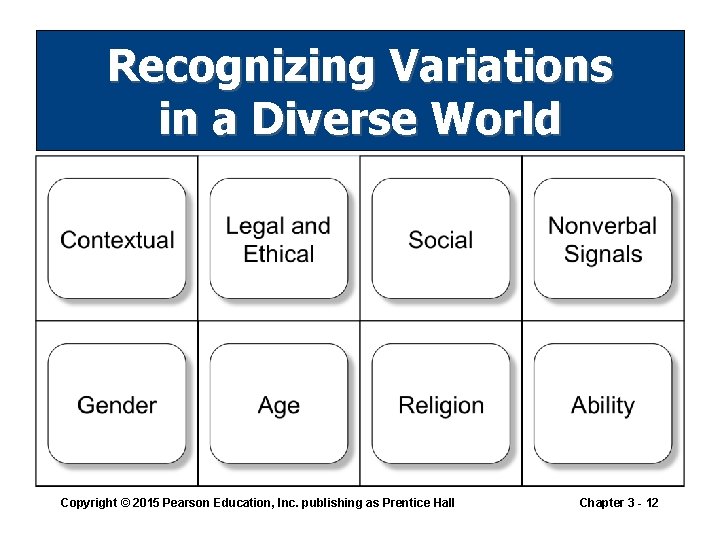
Recognizing Variations in a Diverse World Copyright © 2015 Pearson Education, Inc. publishing as Prentice Hall Chapter 3 - 12
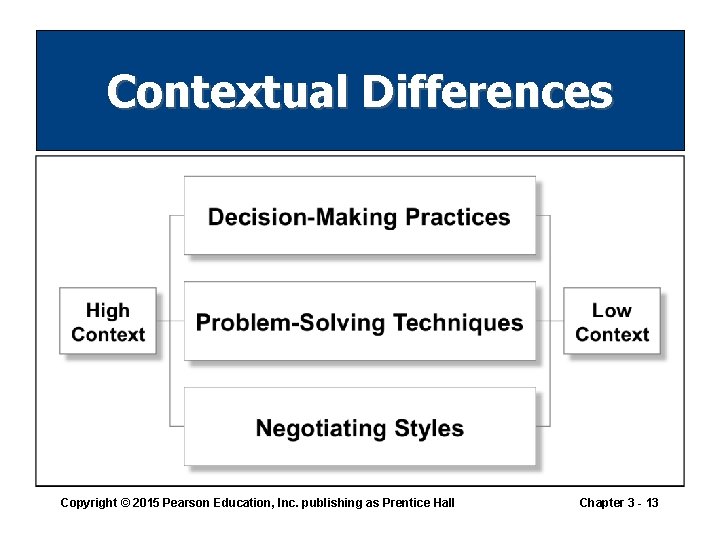
Contextual Differences Copyright © 2015 Pearson Education, Inc. publishing as Prentice Hall Chapter 3 - 13
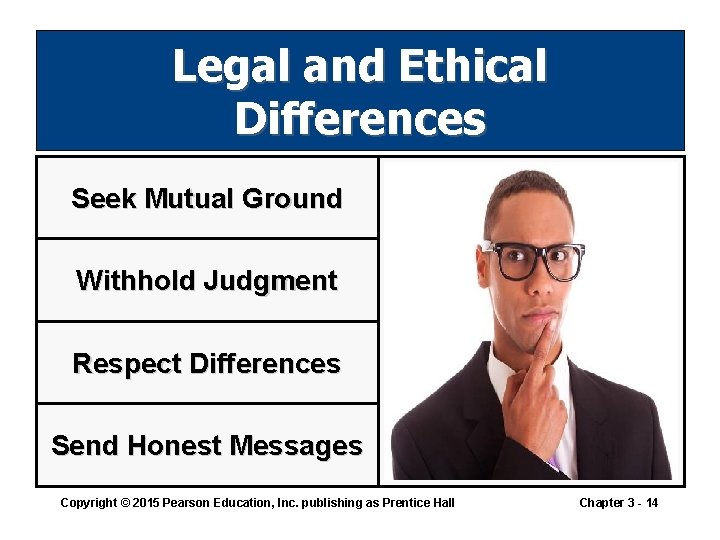
Legal and Ethical Differences Seek Mutual Ground Withhold Judgment Respect Differences Send Honest Messages Copyright © 2015 Pearson Education, Inc. publishing as Prentice Hall Chapter 3 - 14
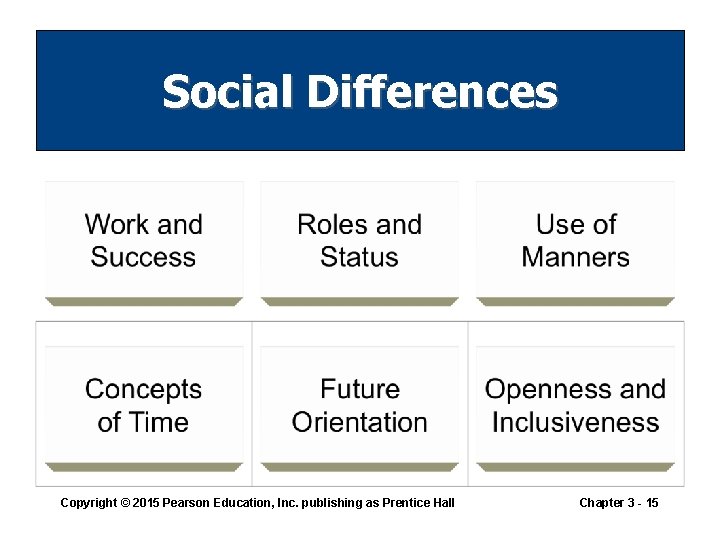
Social Differences Copyright © 2015 Pearson Education, Inc. publishing as Prentice Hall Chapter 3 - 15
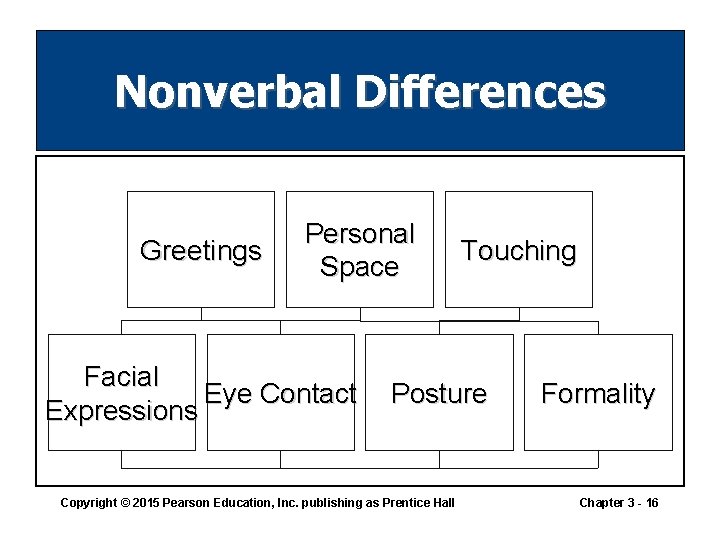
Nonverbal Differences Greetings Personal Space Facial Eye Contact Expressions Touching Posture Copyright © 2015 Pearson Education, Inc. publishing as Prentice Hall Formality Chapter 3 - 16
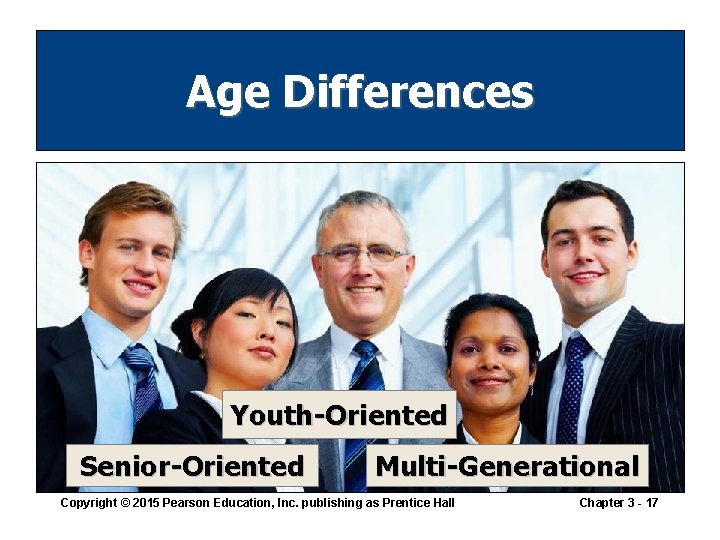
Age Differences Youth-Oriented Senior-Oriented Multi-Generational Copyright © 2015 Pearson Education, Inc. publishing as Prentice Hall Chapter 3 - 17
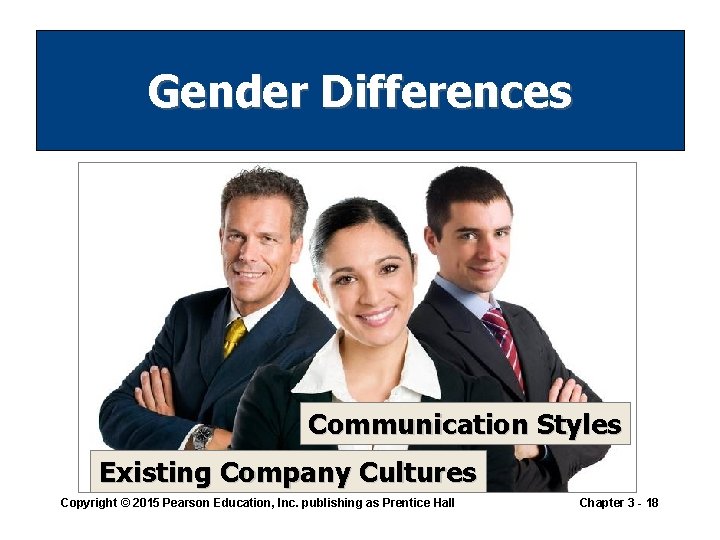
Gender Differences Communication Styles Existing Company Cultures Copyright © 2015 Pearson Education, Inc. publishing as Prentice Hall Chapter 3 - 18
Religious Differences Copyright © 2015 Pearson Education, Inc. publishing as Prentice Hall Chapter 3 - 19
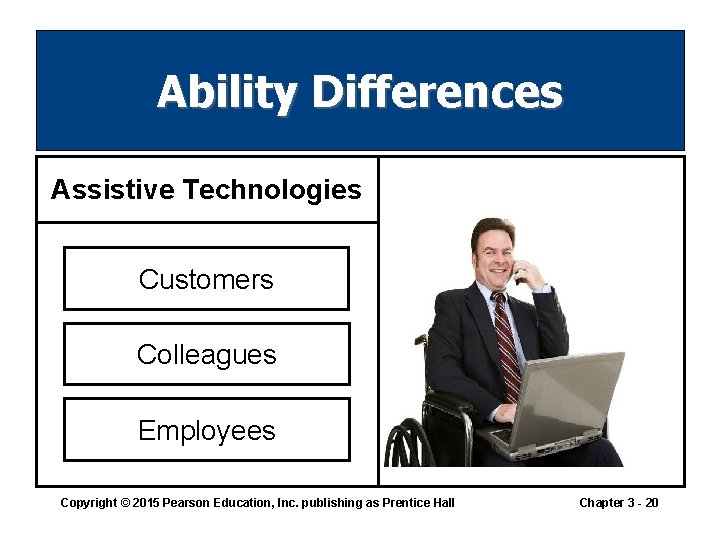
Ability Differences Assistive Technologies Customers Colleagues Employees Copyright © 2015 Pearson Education, Inc. publishing as Prentice Hall Chapter 3 - 20
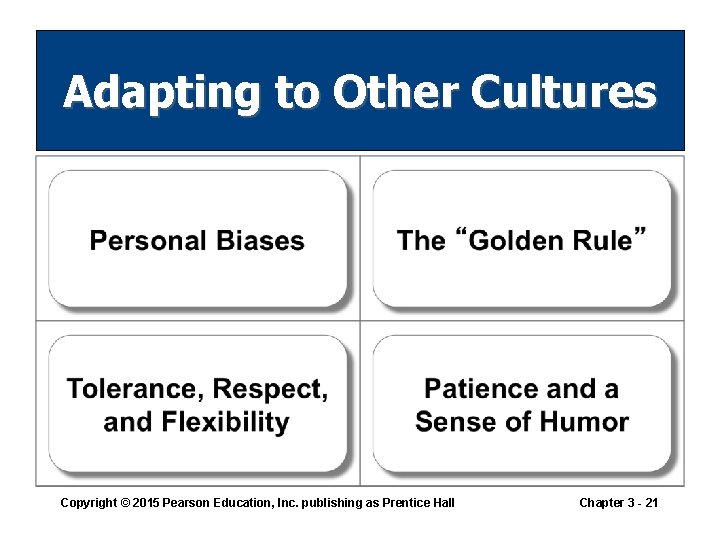
Adapting to Other Cultures Copyright © 2015 Pearson Education, Inc. publishing as Prentice Hall Chapter 3 - 21
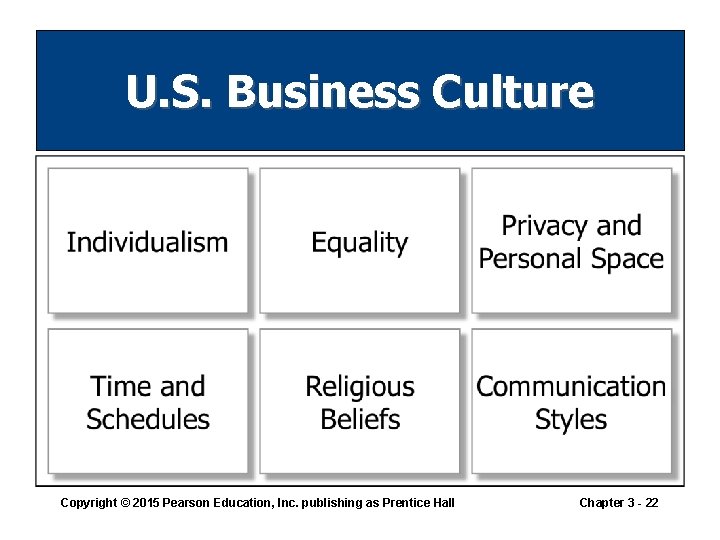
U. S. Business Culture Copyright © 2015 Pearson Education, Inc. publishing as Prentice Hall Chapter 3 - 22
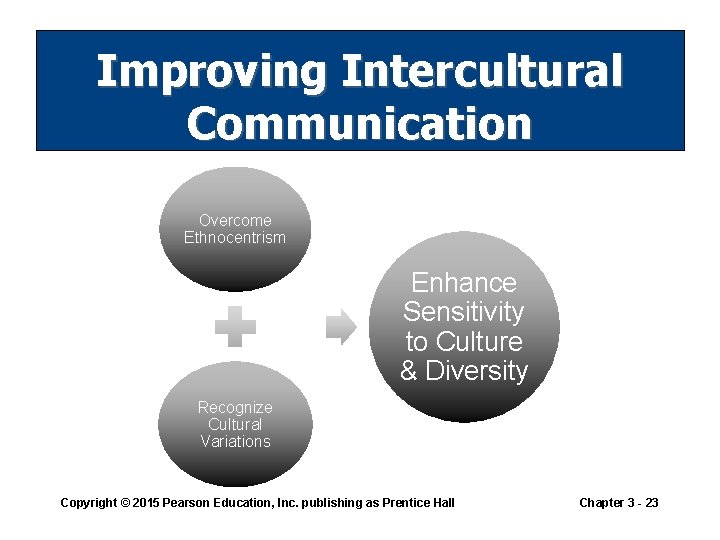
Improving Intercultural Communication Overcome Ethnocentrism Enhance Sensitivity to Culture & Diversity Recognize Cultural Variations Copyright © 2015 Pearson Education, Inc. publishing as Prentice Hall Chapter 3 - 23
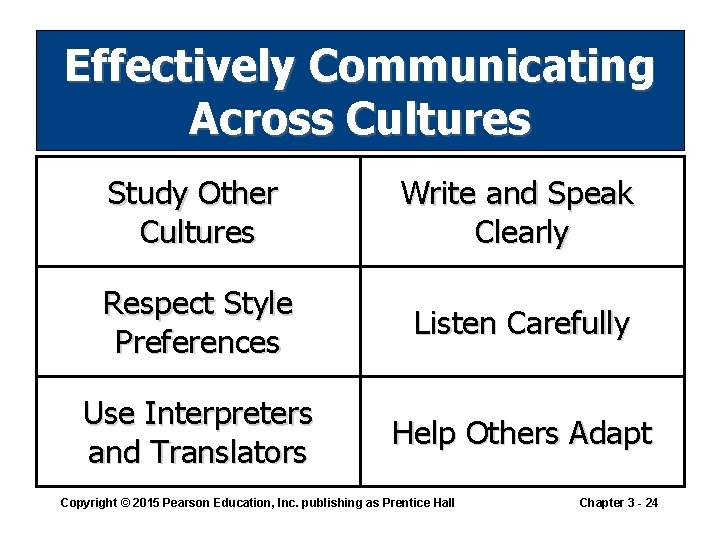
Effectively Communicating Across Cultures Study Other Cultures Write and Speak Clearly Respect Style Preferences Listen Carefully Use Interpreters and Translators Help Others Adapt Copyright © 2015 Pearson Education, Inc. publishing as Prentice Hall Chapter 3 - 24
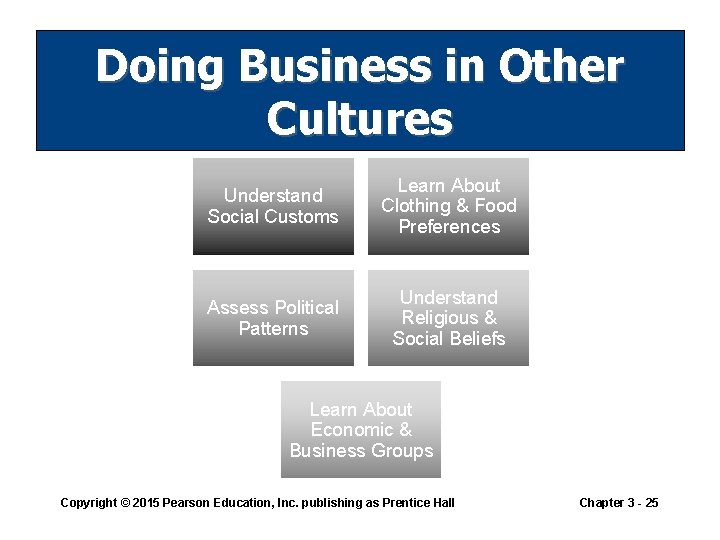
Doing Business in Other Cultures Understand Social Customs Learn About Clothing & Food Preferences Assess Political Patterns Understand Religious & Social Beliefs Learn About Economic & Business Groups Copyright © 2015 Pearson Education, Inc. publishing as Prentice Hall Chapter 3 - 25
Studying Other Languages Facilitate Communication Promote Business Relationships Copyright © 2015 Pearson Education, Inc. publishing as Prentice Hall Chapter 3 - 26
Respecting Communication Preferences Degree of Formality Level of Directness Copyright © 2015 Pearson Education, Inc. publishing as Prentice Hall Chapter 3 - 27
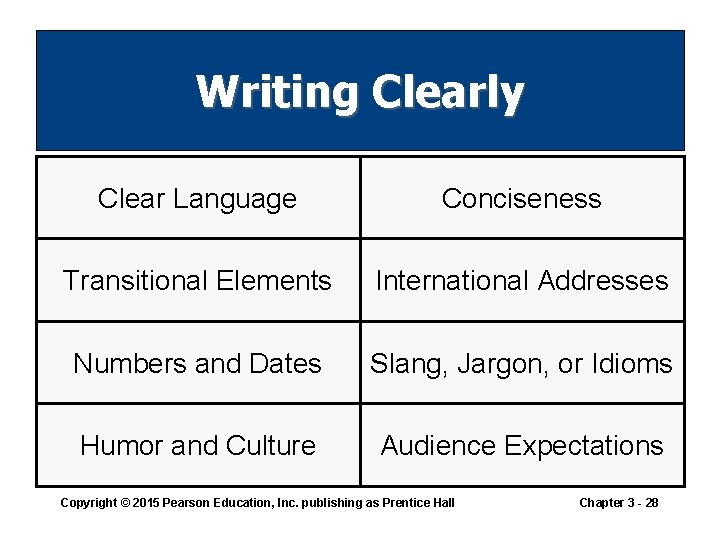
Writing Clearly Clear Language Conciseness Transitional Elements International Addresses Numbers and Dates Slang, Jargon, or Idioms Humor and Culture Audience Expectations Copyright © 2015 Pearson Education, Inc. publishing as Prentice Hall Chapter 3 - 28
Intercultural Business Letter Excerpts Business message excerpt conforming to Chinese practices Dear Mr. Li: -> The salutation uses a colon rather than a comma. Our market tests show strong potential for demand among younger consumers, who are often eager to try new products. We are now looking for a manufacturing partner, and we are very willing to collaborate with you. - > The phrase “we are very willing to collaborate with you” shows respect for the reader and suggests the interest in forming a partnership. Please share your company’s philosophy and strategies for minimizing these two concerns. -> “Minimizing” is easier for a non-native speaker to understand rather than a word like “mitigating. ” Copyright © 2015 Pearson Education, Inc. publishing as Prentice Hall Chapter 3 - 29
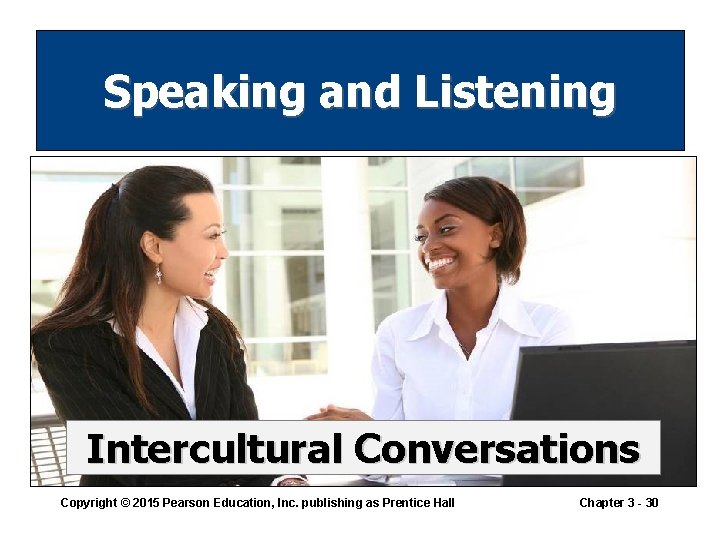
Speaking and Listening Intercultural Conversations Copyright © 2015 Pearson Education, Inc. publishing as Prentice Hall Chapter 3 - 30
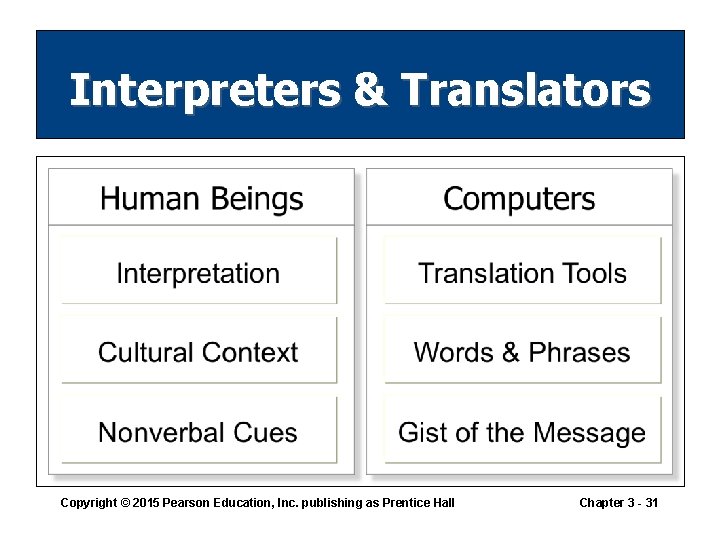
Interpreters & Translators Copyright © 2015 Pearson Education, Inc. publishing as Prentice Hall Chapter 3 - 31
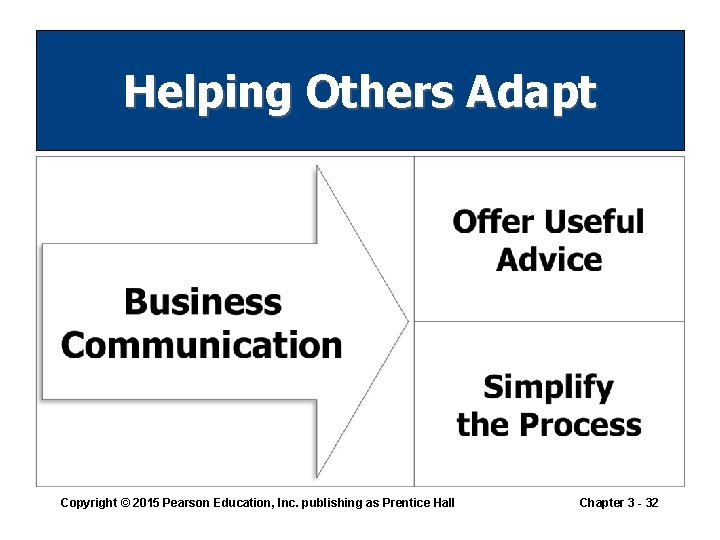
Helping Others Adapt Copyright © 2015 Pearson Education, Inc. publishing as Prentice Hall Chapter 3 - 32
Summary of Objectives Copyright © 2015 Pearson Education, Inc. publishing as Prentice Hall Chapter 3 - 33
Copyright © 2015 Pearson Education, Inc. publishing as Prentice Hall Chapter 3 - 34