Chapter 15 Alcohols Diols and Thiols 15 1
- Slides: 23
Chapter 15: Alcohols, Diols, and Thiols 15. 1: Sources of Alcohols (please read) Hydration of alkenes (Chapter 6) 1. Acid-catalyzed hydration 2. Oxymercuration 3. Hydroboration Hydrolysis of alkyl halides (Chapter 8) nucleophilic substitution Reaction of Grignard or organolithium reagents with ketones, aldehydes, and esters. (Chapter 14) Reduction of alehydes, ketones, esters, and carboxylic acids (Chapter 15. 2 - 15. 3) Reaction of epoxides with Grignard Reagents (Chapter 15. 4) Diols from the dihydroxylation of alkenes (Chapter 15. 5)74
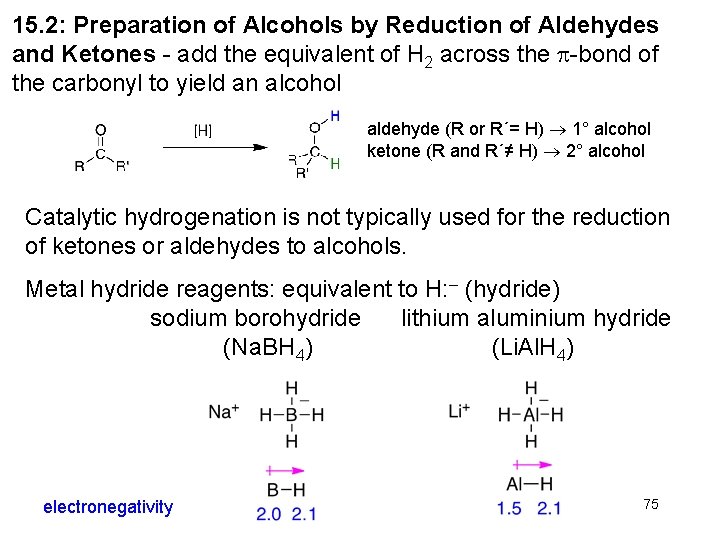
15. 2: Preparation of Alcohols by Reduction of Aldehydes and Ketones - add the equivalent of H 2 across the -bond of the carbonyl to yield an alcohol aldehyde (R or R´= H) 1° alcohol ketone (R and R´≠ H) 2° alcohol Catalytic hydrogenation is not typically used for the reduction of ketones or aldehydes to alcohols. Metal hydride reagents: equivalent to H: – (hydride) sodium borohydride lithium aluminium hydride (Na. BH 4) (Li. Al. H 4) electronegativity 75
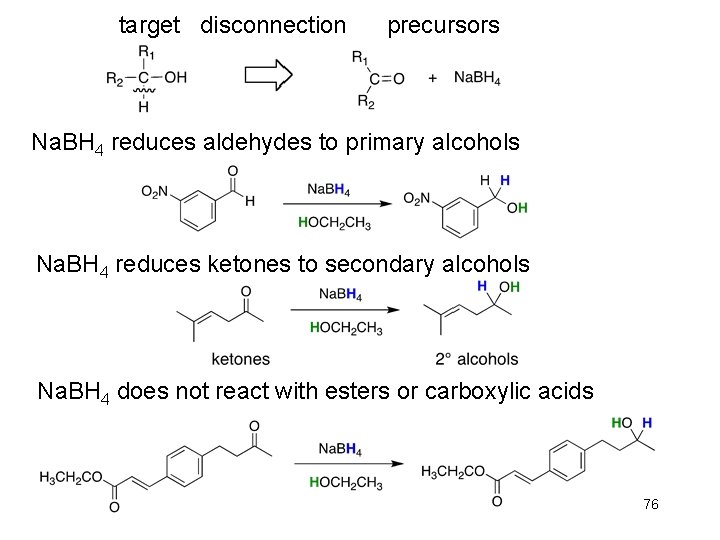
target disconnection precursors Na. BH 4 reduces aldehydes to primary alcohols Na. BH 4 reduces ketones to secondary alcohols Na. BH 4 does not react with esters or carboxylic acids 76
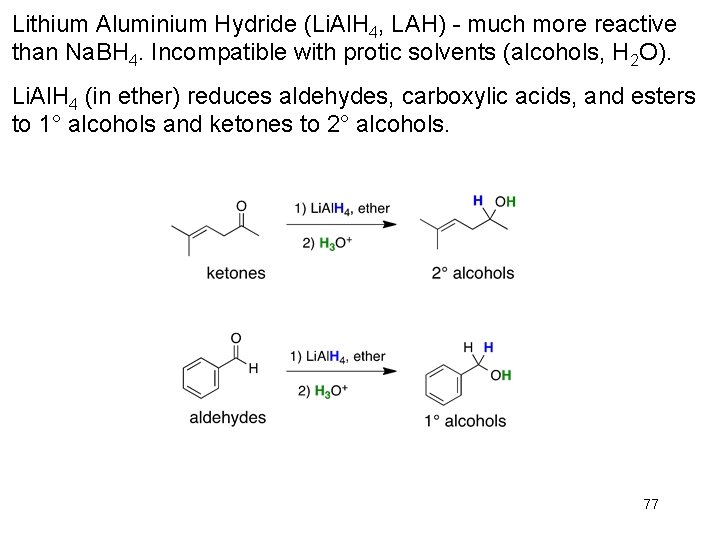
Lithium Aluminium Hydride (Li. Al. H 4, LAH) - much more reactive than Na. BH 4. Incompatible with protic solvents (alcohols, H 2 O). Li. Al. H 4 (in ether) reduces aldehydes, carboxylic acids, and esters to 1° alcohols and ketones to 2° alcohols. 77
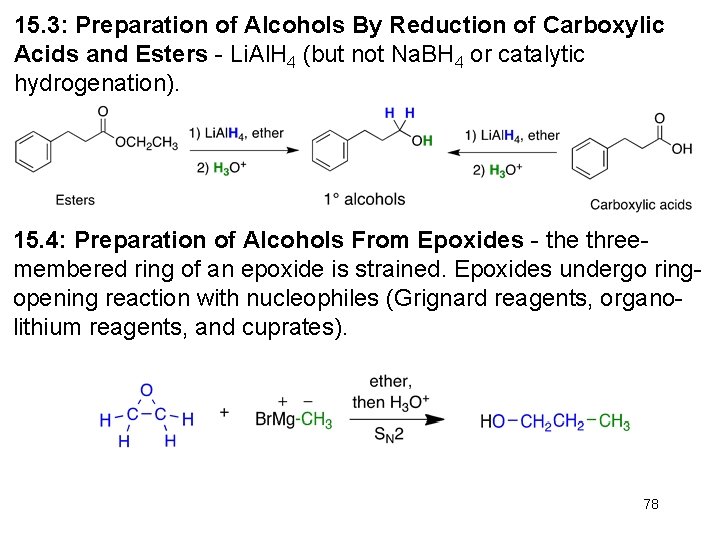
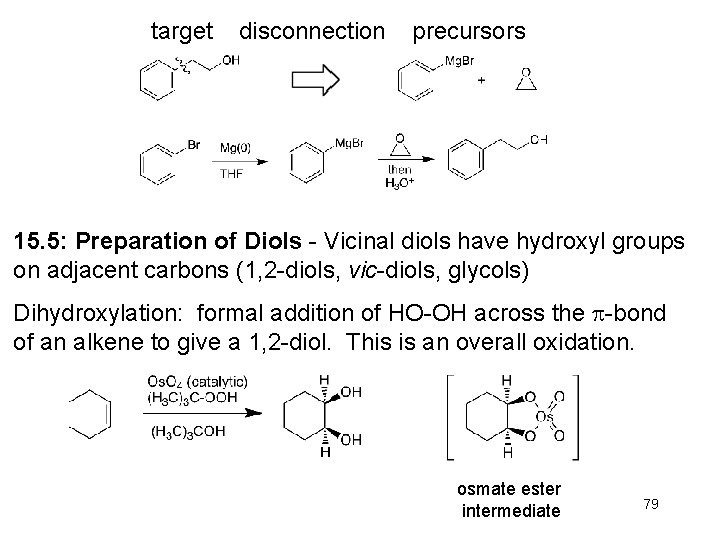
15. 3: Preparation of Alcohols By Reduction of Carboxylic Acids and Esters - Li. Al. H 4 (but not Na. BH 4 or catalytic hydrogenation). 15. 4: Preparation of Alcohols From Epoxides - the threemembered ring of an epoxide is strained. Epoxides undergo ringopening reaction with nucleophiles (Grignard reagents, organolithium reagents, and cuprates). 78
target disconnection precursors 15. 5: Preparation of Diols - Vicinal diols have hydroxyl groups on adjacent carbons (1, 2 -diols, vic-diols, glycols) Dihydroxylation: formal addition of HO-OH across the -bond of an alkene to give a 1, 2 -diol. This is an overall oxidation. osmate ester intermediate 79
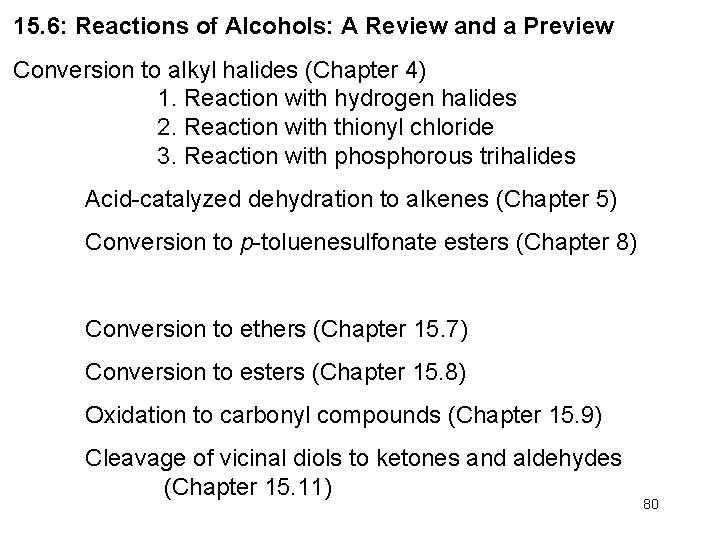
15. 6: Reactions of Alcohols: A Review and a Preview Conversion to alkyl halides (Chapter 4) 1. Reaction with hydrogen halides 2. Reaction with thionyl chloride 3. Reaction with phosphorous trihalides Acid-catalyzed dehydration to alkenes (Chapter 5) Conversion to p-toluenesulfonate esters (Chapter 8) Conversion to ethers (Chapter 15. 7) Conversion to esters (Chapter 15. 8) Oxidation to carbonyl compounds (Chapter 15. 9) Cleavage of vicinal diols to ketones and aldehydes (Chapter 15. 11) 80
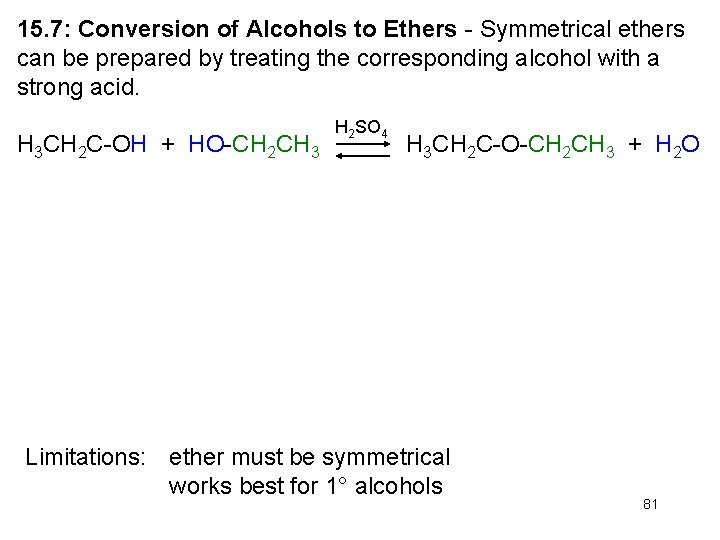
15. 7: Conversion of Alcohols to Ethers - Symmetrical ethers can be prepared by treating the corresponding alcohol with a strong acid. H 3 CH 2 C-OH + HO-CH 2 CH 3 H 2 SO 4 H 3 CH 2 C-O-CH 2 CH 3 + H 2 O Limitations: ether must be symmetrical works best for 1° alcohols 81
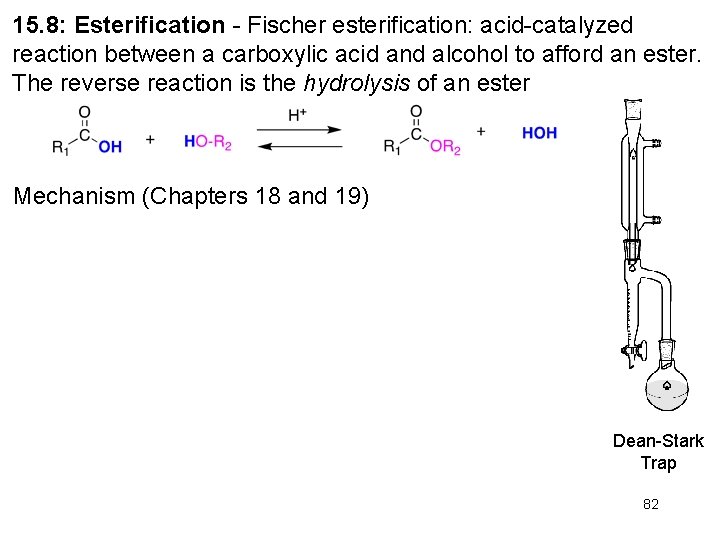
15. 8: Esterification - Fischer esterification: acid-catalyzed reaction between a carboxylic acid and alcohol to afford an ester. The reverse reaction is the hydrolysis of an ester Mechanism (Chapters 18 and 19) Dean-Stark Trap 82
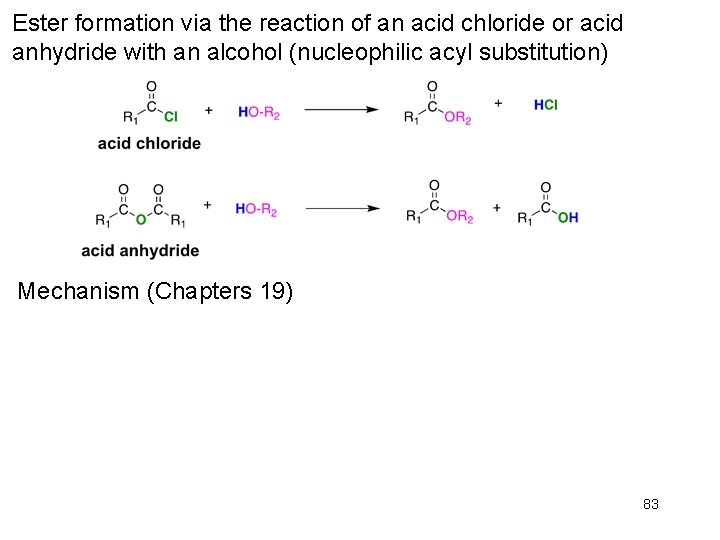
Ester formation via the reaction of an acid chloride or acid anhydride with an alcohol (nucleophilic acyl substitution) Mechanism (Chapters 19) 83
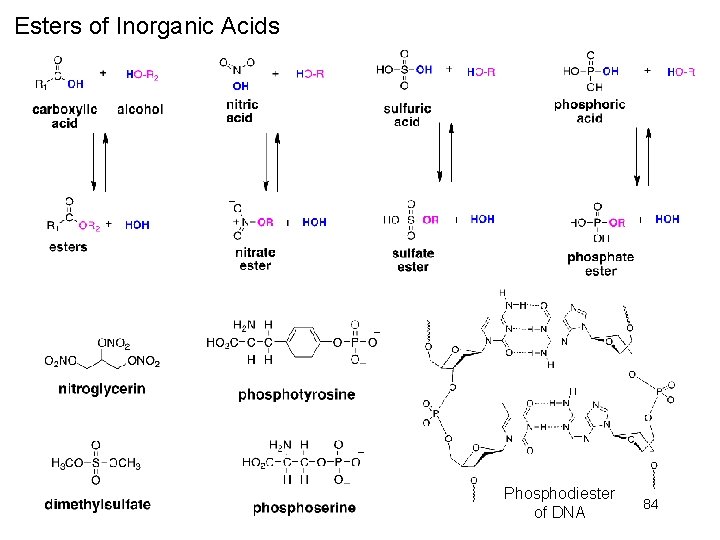
Esters of Inorganic Acids Phosphodiester of DNA 84
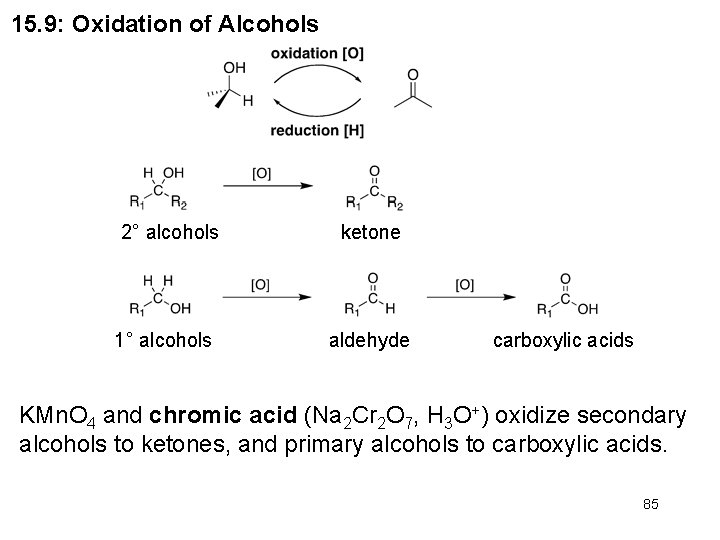
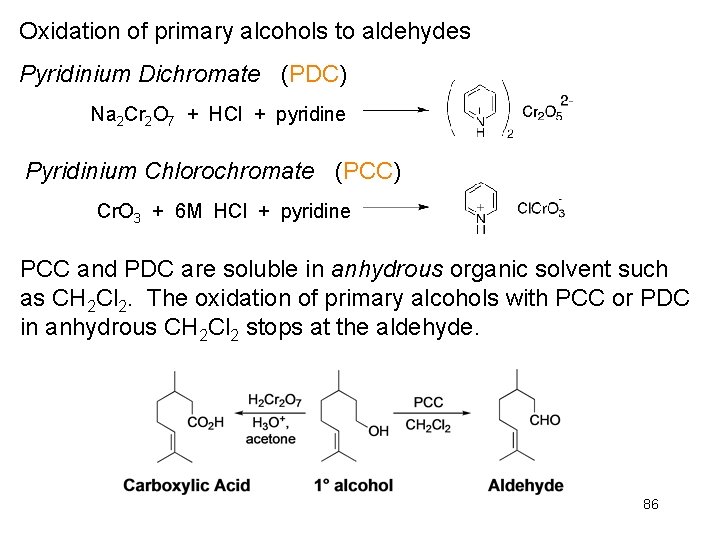
15. 9: Oxidation of Alcohols 2° alcohols 1° alcohols ketone aldehyde carboxylic acids KMn. O 4 and chromic acid (Na 2 Cr 2 O 7, H 3 O+) oxidize secondary alcohols to ketones, and primary alcohols to carboxylic acids. 85
Oxidation of primary alcohols to aldehydes Pyridinium Dichromate (PDC) Na 2 Cr 2 O 7 + HCl + pyridine Pyridinium Chlorochromate (PCC) Cr. O 3 + 6 M HCl + pyridine PCC and PDC are soluble in anhydrous organic solvent such as CH 2 Cl 2. The oxidation of primary alcohols with PCC or PDC in anhydrous CH 2 Cl 2 stops at the aldehyde. 86
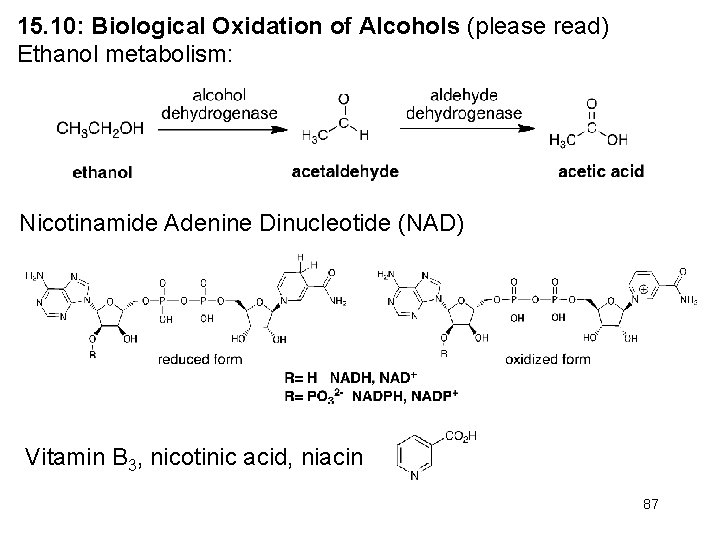
15. 10: Biological Oxidation of Alcohols (please read) Ethanol metabolism: Nicotinamide Adenine Dinucleotide (NAD) Vitamin B 3, nicotinic acid, niacin 87
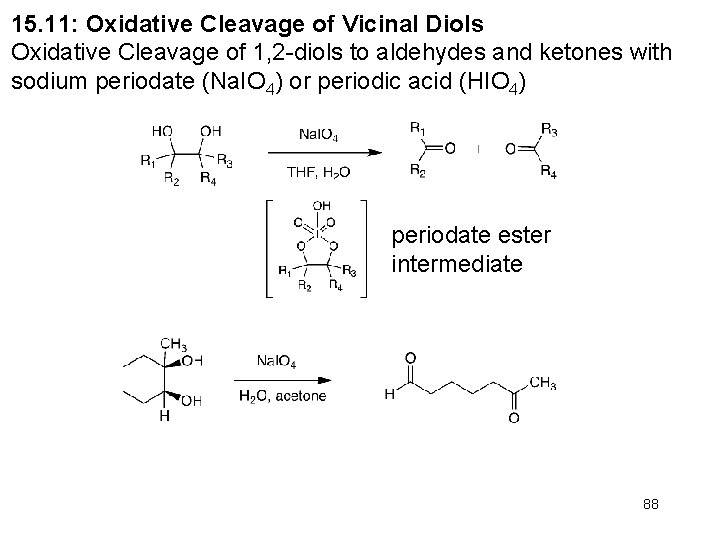
15. 11: Oxidative Cleavage of Vicinal Diols Oxidative Cleavage of 1, 2 -diols to aldehydes and ketones with sodium periodate (Na. IO 4) or periodic acid (HIO 4) periodate ester intermediate 88
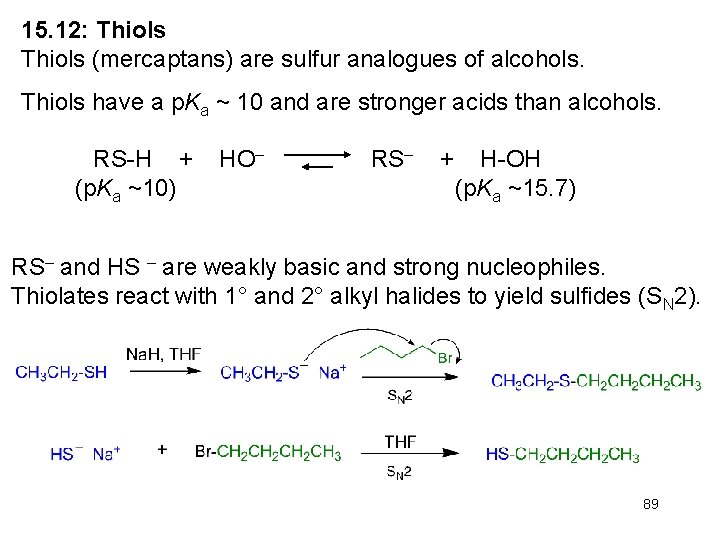
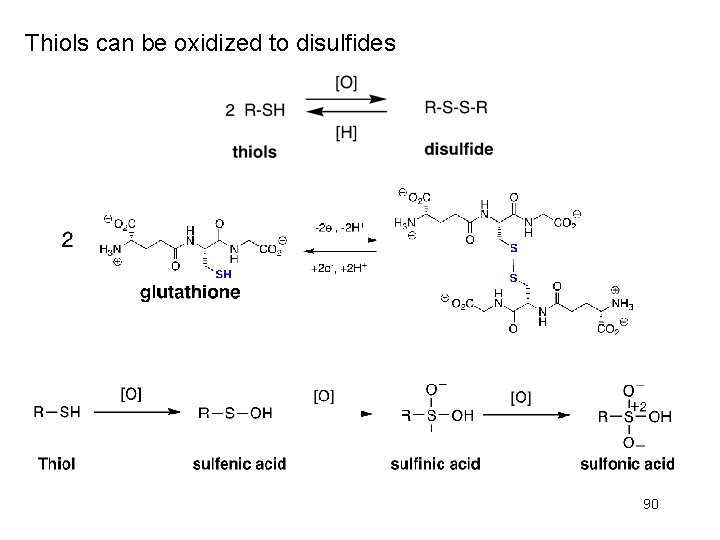
15. 12: Thiols (mercaptans) are sulfur analogues of alcohols. Thiols have a p. Ka ~ 10 and are stronger acids than alcohols. RS-H + (p. Ka ~10) HO– RS– + H-OH (p. Ka ~15. 7) RS– and HS – are weakly basic and strong nucleophiles. Thiolates react with 1° and 2° alkyl halides to yield sulfides (SN 2). 89
Thiols can be oxidized to disulfides 90
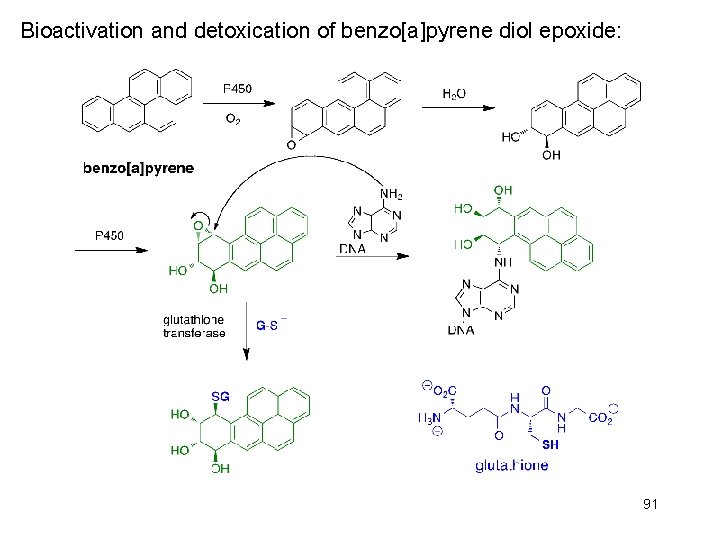
Bioactivation and detoxication of benzo[a]pyrene diol epoxide: 91
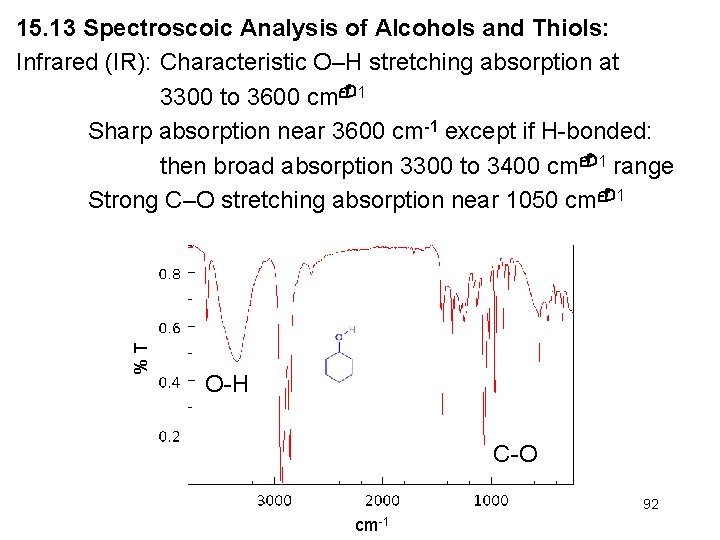
%T 15. 13 Spectroscoic Analysis of Alcohols and Thiols: Infrared (IR): Characteristic O–H stretching absorption at 3300 to 3600 cm 1 Sharp absorption near 3600 cm-1 except if H-bonded: then broad absorption 3300 to 3400 cm 1 range Strong C–O stretching absorption near 1050 cm 1 O-H C-O 92 cm-1
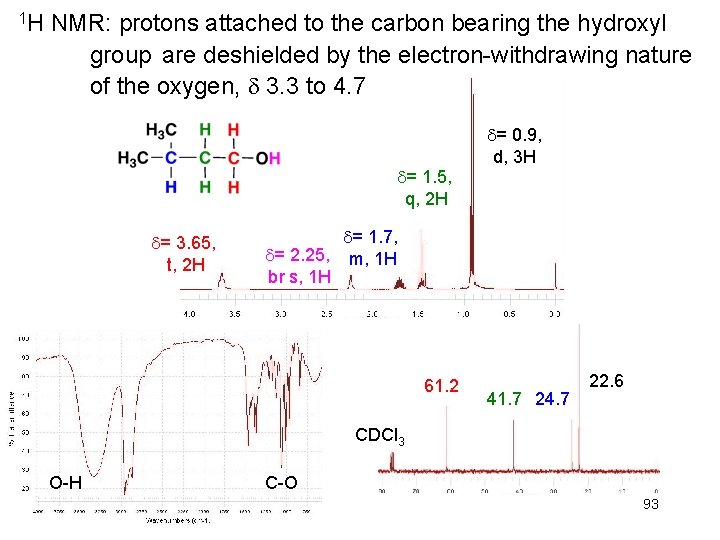
1 H NMR: protons attached to the carbon bearing the hydroxyl group are deshielded by the electron-withdrawing nature of the oxygen, 3. 3 to 4. 7 = 1. 5, q, 2 H = 3. 65, t, 2 H = 0. 9, d, 3 H = 1. 7, = 2. 25, m, 1 H br s, 1 H 61. 2 41. 7 24. 7 22. 6 CDCl 3 O-H C-O 93
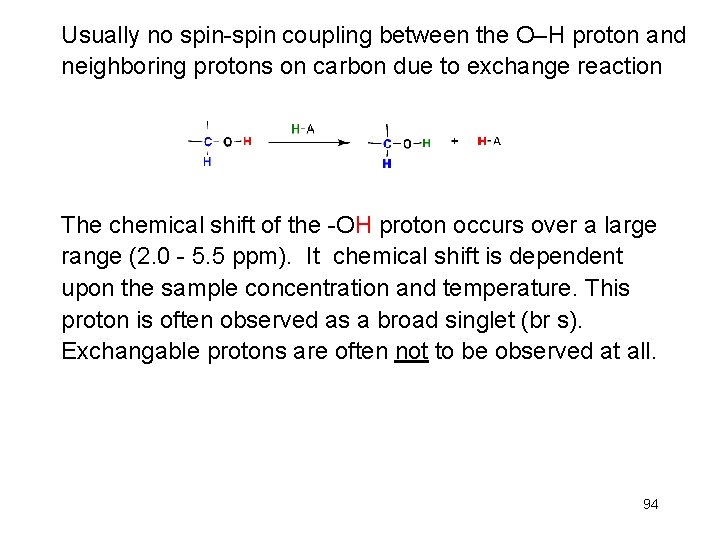
Usually no spin-spin coupling between the O–H proton and neighboring protons on carbon due to exchange reaction The chemical shift of the -OH proton occurs over a large range (2. 0 - 5. 5 ppm). It chemical shift is dependent upon the sample concentration and temperature. This proton is often observed as a broad singlet (br s). Exchangable protons are often not to be observed at all. 94
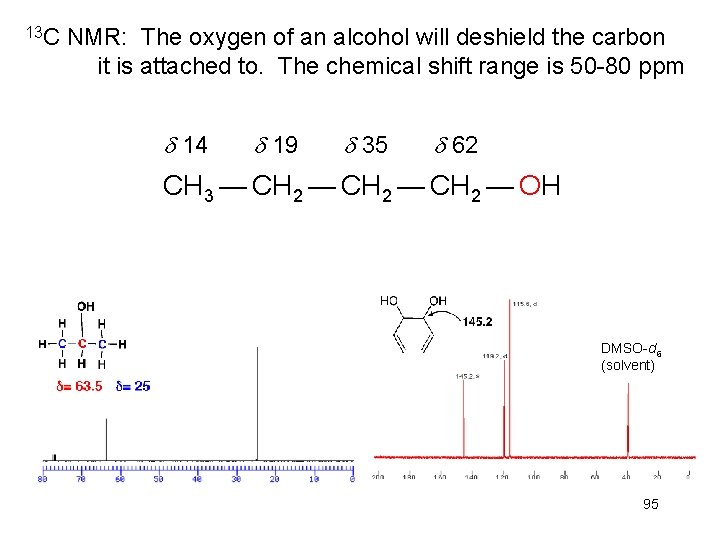
13 C NMR: The oxygen of an alcohol will deshield the carbon it is attached to. The chemical shift range is 50 -80 ppm 14 19 35 62 CH 3 — CH 2 — OH DMSO-d 6 (solvent) 95
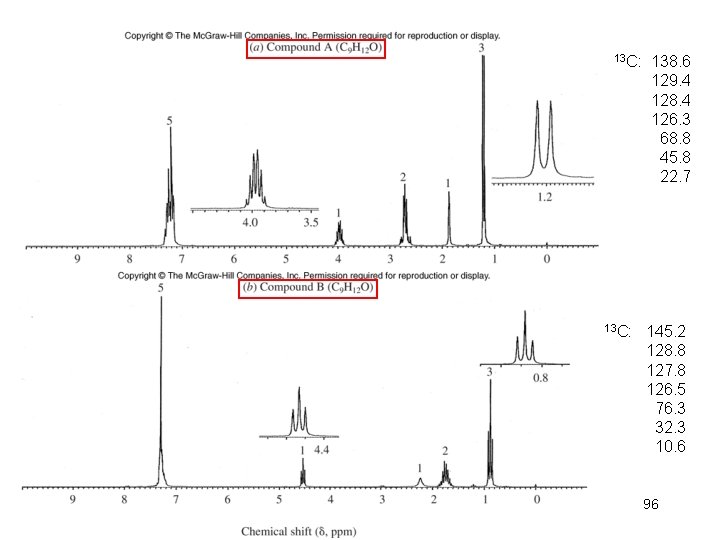
13 C: 138. 6 129. 4 128. 4 126. 3 68. 8 45. 8 22. 7 145. 2 128. 8 127. 8 126. 5 76. 3 32. 3 10. 6 96