Chapter 11 Models of Computation Invitation to Computer
- Slides: 40
Chapter 11: Models of Computation Invitation to Computer Science, C++ Version, Third Edition
Objectives In this chapter, you will learn about: n A model of a computing agent n A model of an algorithm n Turing machine examples n The Church–Turing thesis n Unsolvable problems Invitation to Computer Science, C++ Version, Third Edition 2
Introduction n Some problems do not have any algorithmic solution n A model of a computer q Easy to work with q Theoretically as powerful as a real computer q Needed to show that something cannot be done by any computer Invitation to Computer Science, C++ Version, Third Edition 3
What Is a Model? n n Models are an important way of studying physical and social phenomena, such as q Weather systems q Spread of epidemics q Chemical molecules Models can be used to q Predict the behavior of an existing system q Test a proposed design Invitation to Computer Science, C++ Version, Third Edition 4
What Is a Model? (continued) n A model of a phenomenon q Captures the essence (mportant properties) of the real thing q Probably differs in scale from the real thing q Suppresses some of the details of the real thing q Lacks the full functionality of the real thing Invitation to Computer Science, C++ Version, Third Edition 5
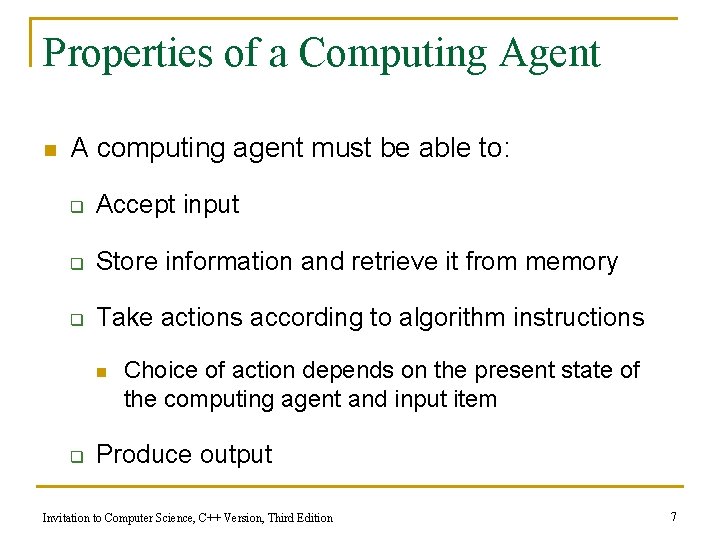
A Model of a Computing Agent n A good model for the “computing agent” entity must: q q Capture the fundamental properties of a computing agent Enable the exploration of the capabilities and limitations of computation in the most general sense Invitation to Computer Science, C++ Version, Third Edition 6
Properties of a Computing Agent n A computing agent must be able to: q Accept input q Store information and retrieve it from memory q Take actions according to algorithm instructions n q Choice of action depends on the present state of the computing agent and input item Produce output Invitation to Computer Science, C++ Version, Third Edition 7
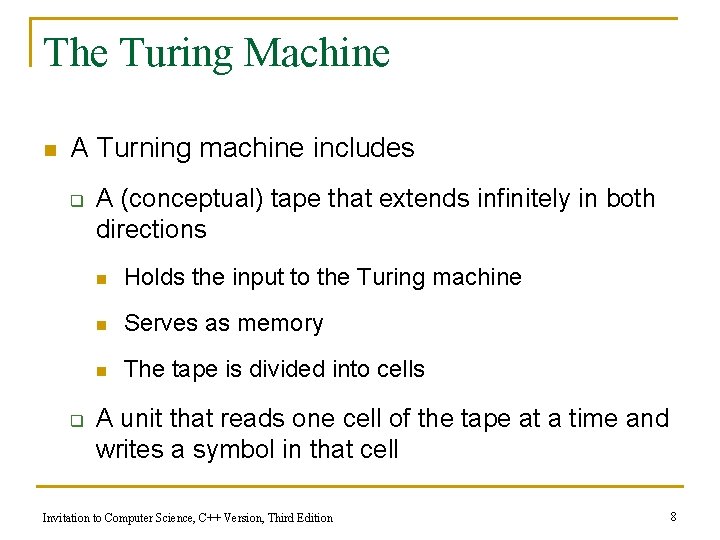
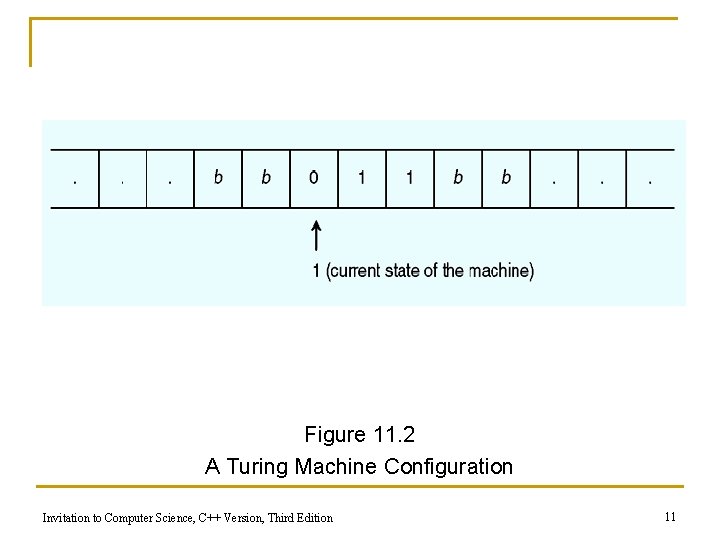
The Turing Machine n A Turning machine includes q q A (conceptual) tape that extends infinitely in both directions n Holds the input to the Turing machine n Serves as memory n The tape is divided into cells A unit that reads one cell of the tape at a time and writes a symbol in that cell Invitation to Computer Science, C++ Version, Third Edition 8
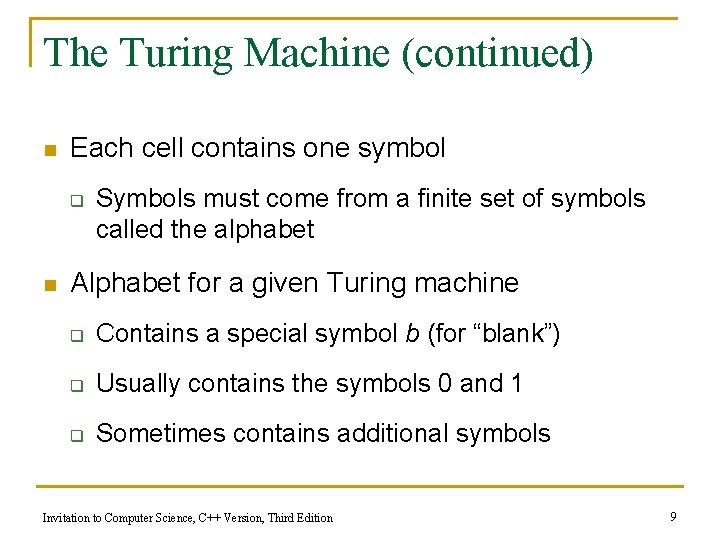
The Turing Machine (continued) n Each cell contains one symbol q n Symbols must come from a finite set of symbols called the alphabet Alphabet for a given Turing machine q Contains a special symbol b (for “blank”) q Usually contains the symbols 0 and 1 q Sometimes contains additional symbols Invitation to Computer Science, C++ Version, Third Edition 9
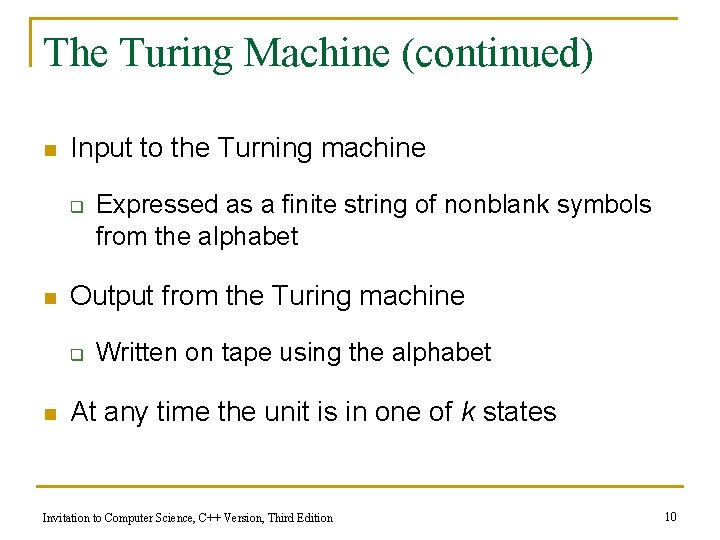
The Turing Machine (continued) n Input to the Turning machine q n Output from the Turing machine q n Expressed as a finite string of nonblank symbols from the alphabet Written on tape using the alphabet At any time the unit is in one of k states Invitation to Computer Science, C++ Version, Third Edition 10
Figure 11. 2 A Turing Machine Configuration Invitation to Computer Science, C++ Version, Third Edition 11
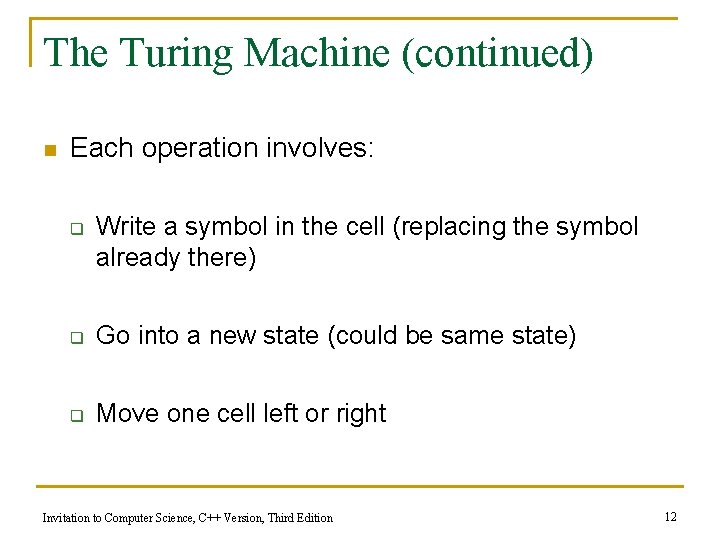
The Turing Machine (continued) n Each operation involves: q Write a symbol in the cell (replacing the symbol already there) q Go into a new state (could be same state) q Move one cell left or right Invitation to Computer Science, C++ Version, Third Edition 12
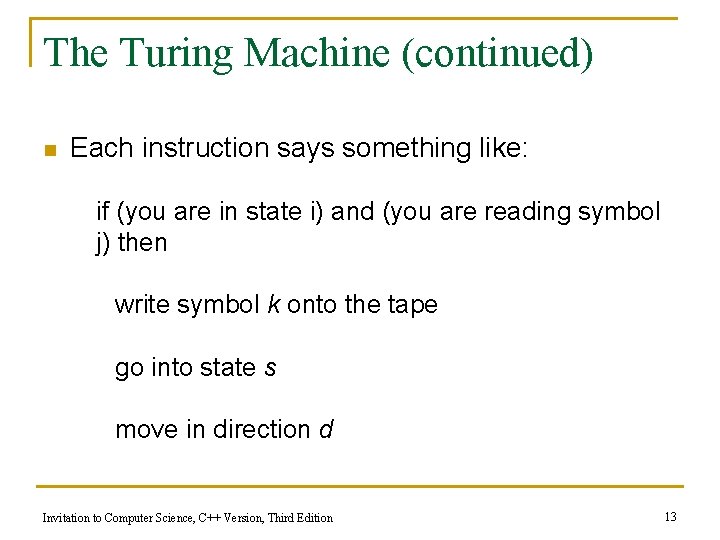
The Turing Machine (continued) n Each instruction says something like: if (you are in state i) and (you are reading symbol j) then write symbol k onto the tape go into state s move in direction d Invitation to Computer Science, C++ Version, Third Edition 13
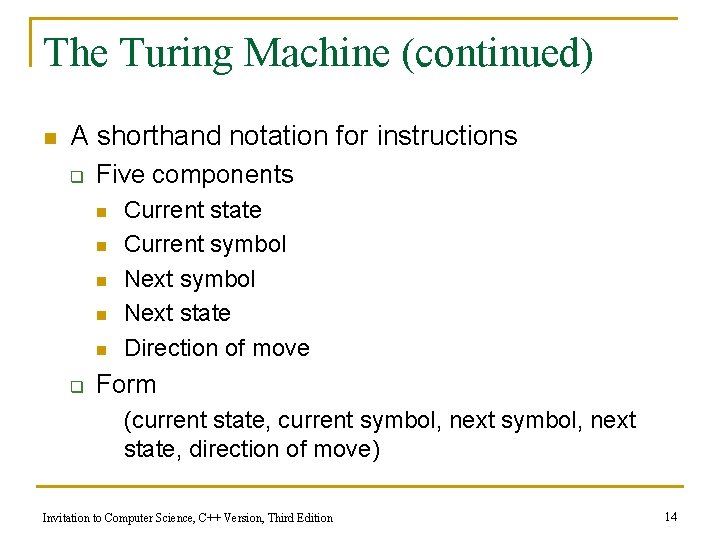
The Turing Machine (continued) n A shorthand notation for instructions q Five components n n n q Current state Current symbol Next state Direction of move Form (current state, current symbol, next state, direction of move) Invitation to Computer Science, C++ Version, Third Edition 14
The Turing Machine (continued) n A clock governs the action of the machine n Conventions regarding the initial configuration when the clock begins q q n The start-up state will always be state 1 The machine will always be reading the leftmost nonblank cell on the tape The Turing machine has the required features for a computing agent Invitation to Computer Science, C++ Version, Third Edition 15
A Model of an Algorithm n Instructions for a Turing machine are a model of an algorithm q q Are a well-ordered collection Consist of unambiguous and effectively computable operations q Halt in a finite amount of time q Produce a result Invitation to Computer Science, C++ Version, Third Edition 16
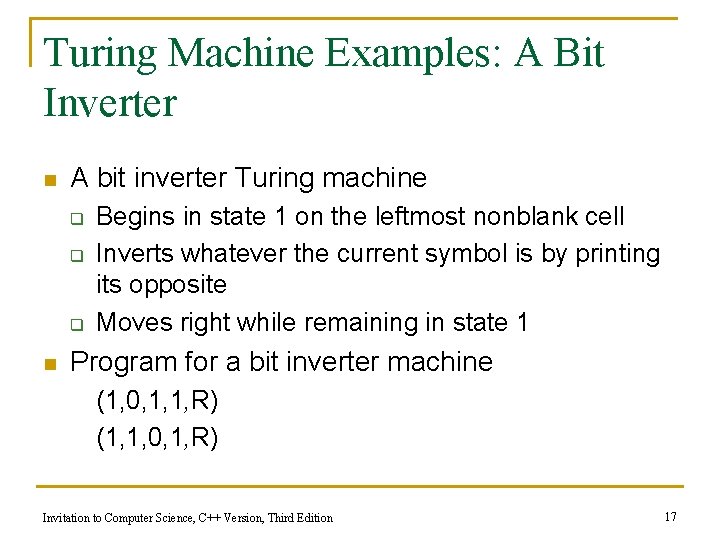
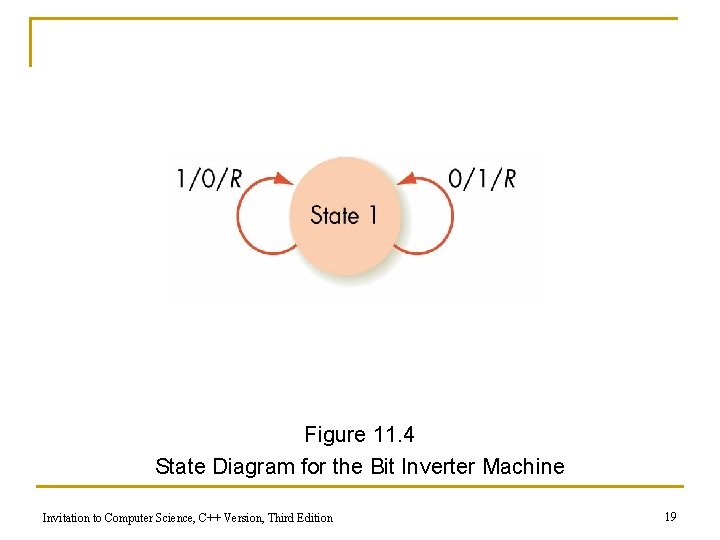
Turing Machine Examples: A Bit Inverter n A bit inverter Turing machine q q q n Begins in state 1 on the leftmost nonblank cell Inverts whatever the current symbol is by printing its opposite Moves right while remaining in state 1 Program for a bit inverter machine (1, 0, 1, 1, R) (1, 1, 0, 1, R) Invitation to Computer Science, C++ Version, Third Edition 17
A Bit Inverter (continued) n A state diagram q Visual representation of a Turing machine algorithm q Circles are states q Arrows are state transitions Invitation to Computer Science, C++ Version, Third Edition 18
Figure 11. 4 State Diagram for the Bit Inverter Machine Invitation to Computer Science, C++ Version, Third Edition 19
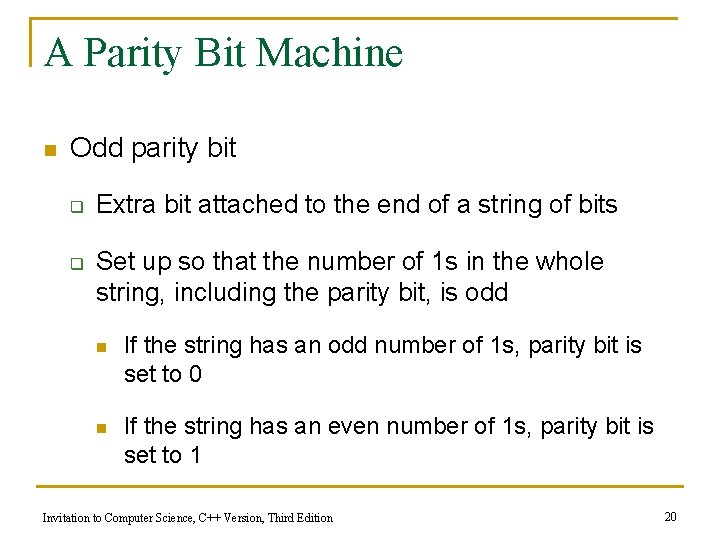
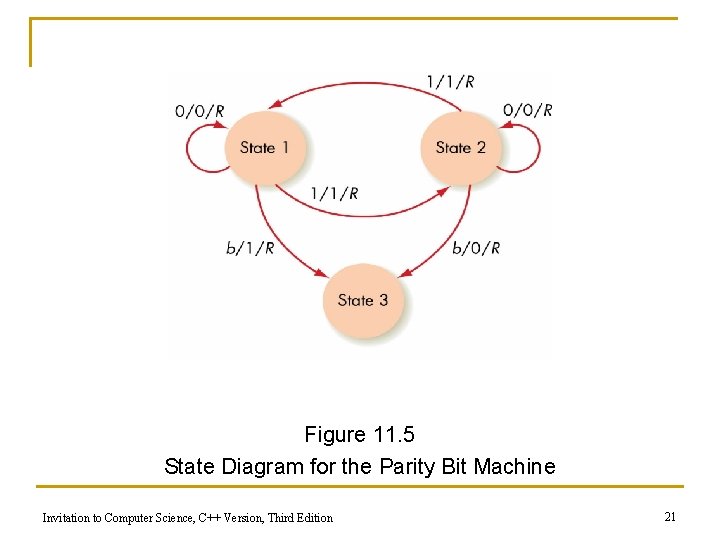
A Parity Bit Machine n Odd parity bit q q Extra bit attached to the end of a string of bits Set up so that the number of 1 s in the whole string, including the parity bit, is odd n If the string has an odd number of 1 s, parity bit is set to 0 n If the string has an even number of 1 s, parity bit is set to 1 Invitation to Computer Science, C++ Version, Third Edition 20
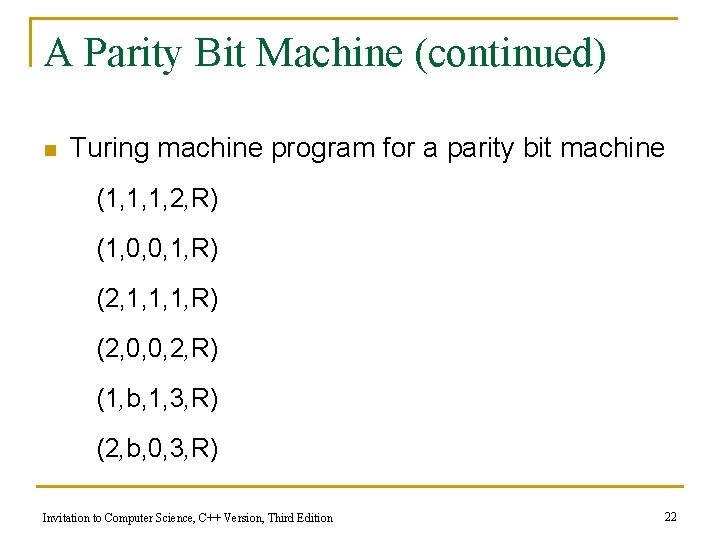
Figure 11. 5 State Diagram for the Parity Bit Machine Invitation to Computer Science, C++ Version, Third Edition 21
A Parity Bit Machine (continued) n Turing machine program for a parity bit machine (1, 1, 1, 2, R) (1, 0, 0, 1, R) (2, 1, 1, 1, R) (2, 0, 0, 2, R) (1, b, 1, 3, R) (2, b, 0, 3, R) Invitation to Computer Science, C++ Version, Third Edition 22
Machines for Unary Incrementing n Unary representation of numbers q q n Uses only one symbol: 1 Any unsigned whole number n is encoded by a sequence of n + 1 1 s An incrementer q A Turing machine that adds 1 to any number Invitation to Computer Science, C++ Version, Third Edition 23
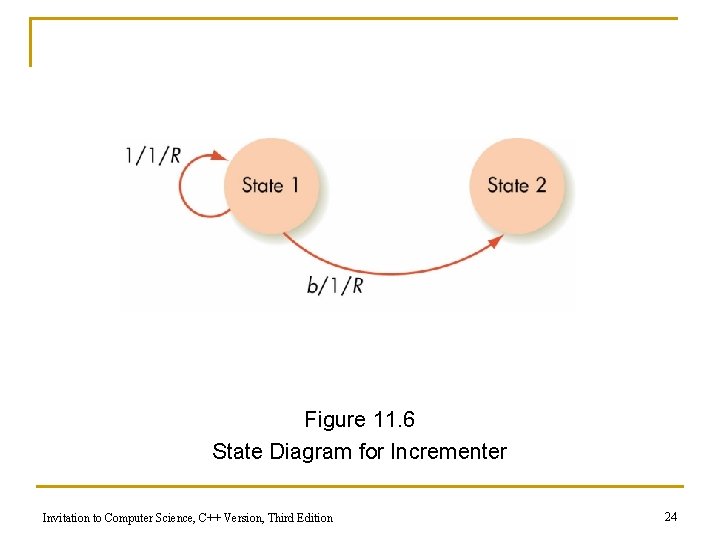
Figure 11. 6 State Diagram for Incrementer Invitation to Computer Science, C++ Version, Third Edition 24
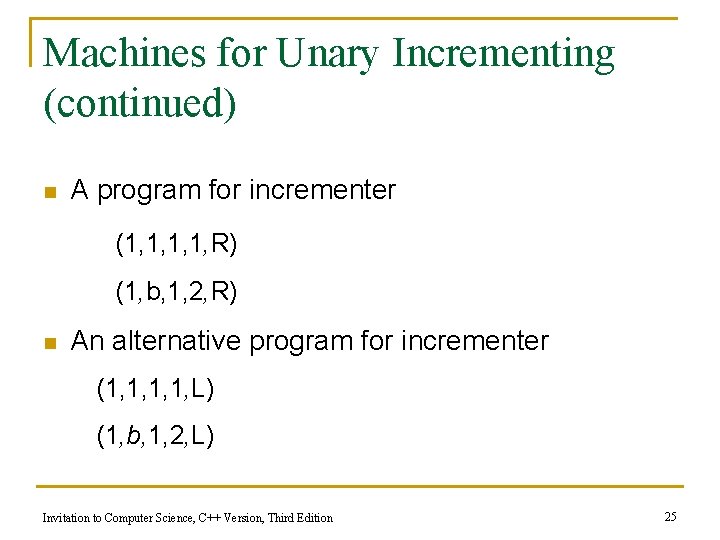
Machines for Unary Incrementing (continued) n A program for incrementer (1, 1, R) (1, b, 1, 2, R) n An alternative program for incrementer (1, 1, L) (1, b, 1, 2, L) Invitation to Computer Science, C++ Version, Third Edition 25
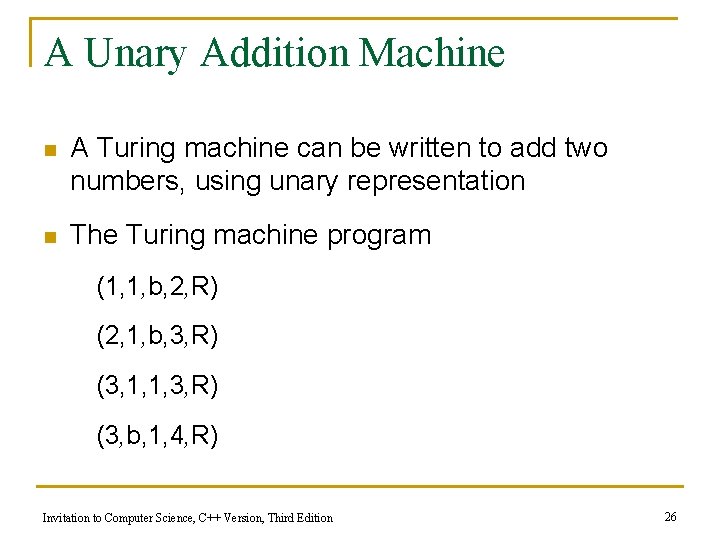
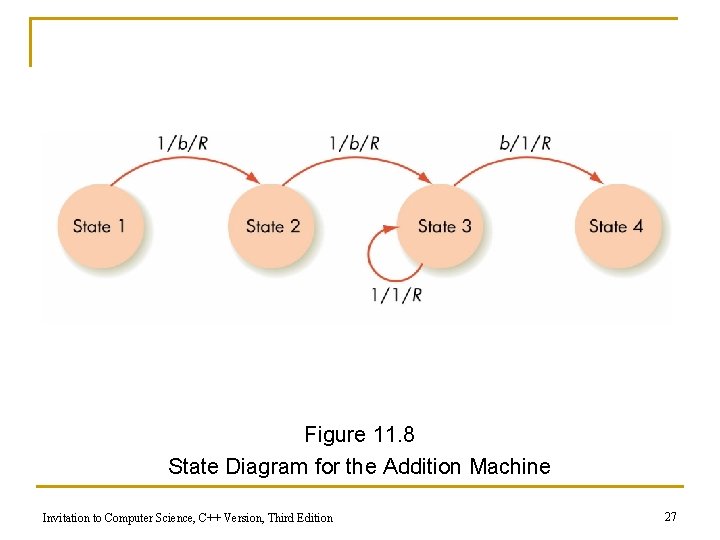
A Unary Addition Machine n A Turing machine can be written to add two numbers, using unary representation n The Turing machine program (1, 1, b, 2, R) (2, 1, b, 3, R) (3, 1, 1, 3, R) (3, b, 1, 4, R) Invitation to Computer Science, C++ Version, Third Edition 26
Figure 11. 8 State Diagram for the Addition Machine Invitation to Computer Science, C++ Version, Third Edition 27
The Church–Turing Thesis n Church–Turing thesis q If there exists an algorithm to do a symbol manipulation task, then there exists a Turing machine to do that task Invitation to Computer Science, C++ Version, Third Edition 28
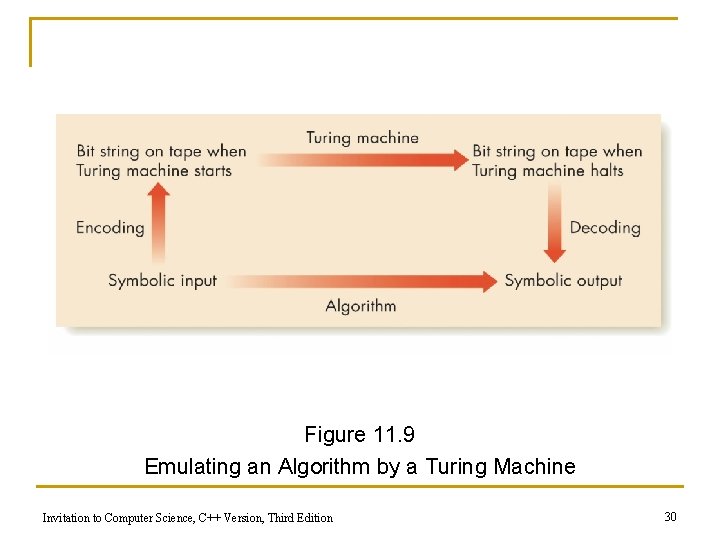
The Church–Turing Thesis (continued) n Two parts to writing a Turing machine for a symbol manipulation task q q Encoding symbolic information as strings of 0 s and 1 s Writing the Turing machine instructions to produce the encoded form of the output Invitation to Computer Science, C++ Version, Third Edition 29
Figure 11. 9 Emulating an Algorithm by a Turing Machine Invitation to Computer Science, C++ Version, Third Edition 30
The Church–Turing Thesis (continued) n Based on the Church–Turing thesis q q The Turing machine can be accepted as an ultimate model of a computing agent A Turing machine program can be accepted as an ultimate model of an algorithm Invitation to Computer Science, C++ Version, Third Edition 31
The Church–Turing Thesis (continued) n Turing machines define the limits of computability n An uncomputable or unsolvable problem q A problem for which we can prove that no Turing machine exists to solve it Invitation to Computer Science, C++ Version, Third Edition 32
Unsolvable Problems n The halting problem q Decide, given any collection of Turing machine instructions together with any initial tape contents, whether that Turing machine will ever halt if started on that tape Invitation to Computer Science, C++ Version, Third Edition 33
Unsolvable Problems (continued) n To show that no Turing machine exists to solve the halting problem, use a proof by contradiction approach q Assume that a Turing machine exists that solves this problem n Show that this assumption leads to an impossible situation Invitation to Computer Science, C++ Version, Third Edition 34
Unsolvable Problems (continued) n Practical consequences of other unsolvable problems related to the halting problem q q No program can be written to decide whether any given program always stops eventually, no matter what the input No program can be written to decide whether any two programs are equivalent (will produce the same output for all inputs) Invitation to Computer Science, C++ Version, Third Edition 35
Unsolvable Problems (continued) n Practical consequences of other unsolvable problems related to the halting problem (continued) q No program can be written to decide whether any given program run on any given input will ever produce some specific output Invitation to Computer Science, C++ Version, Third Edition 36
Summary of Level 4 n Topics examined in Level 4: The Software World q q Java: procedural high-level programming language Other high-level languages: other procedural languages, special-purpose languages, functional languages, logic-based languages Invitation to Computer Science, C++ Version, Third Edition 37
Summary of Level 4 (continued) n Topics examined in Level 4: The Software World (continued) q q Series of tasks that a language compiler must perform to convert high-level programming language instructions into machine language code Problems that can never be solved algorithmically Invitation to Computer Science, C++ Version, Third Edition 38
Summary n Models are an important way of studying physical and social phenomena n Church-Turing thesis: If there exists an algorithm to do a symbol manipulation task, then there exists a Turing machine to do that task n The Turing machine can be accepted as an ultimate model of a computing agent Invitation to Computer Science, C++ Version, Third Edition 39
Summary n A Turing machine program can be accepted as an ultimate model of an algorithm n Turing machines define the limits of computability n An uncomputable or unsolvable problem: we can prove that no Turing machine exists to solve the problem Invitation to Computer Science, C++ Version, Third Edition 40