Case Study Multiple Myeloma Amy 54 year old










- Slides: 27
Case Study Multiple Myeloma
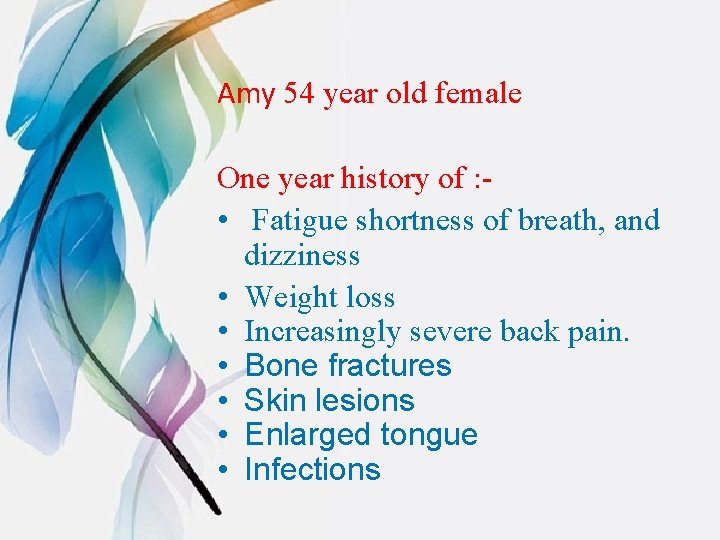
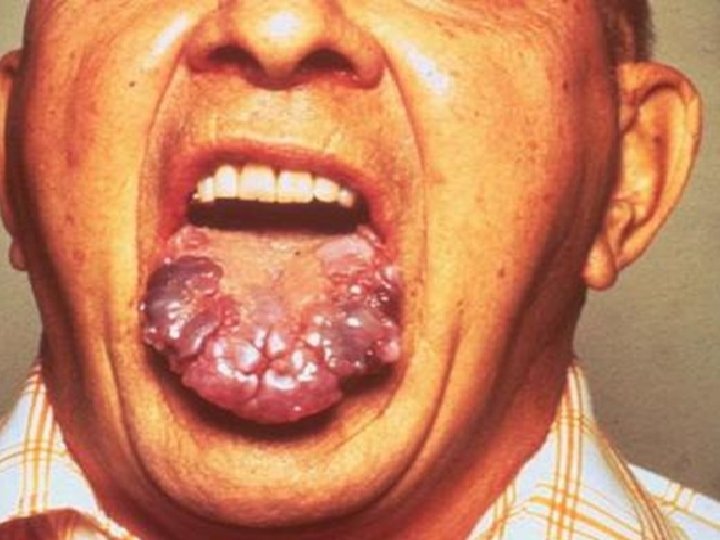
Amy 54 year old female One year history of : • Fatigue shortness of breath, and dizziness • Weight loss • Increasingly severe back pain. • Bone fractures • Skin lesions • Enlarged tongue • Infections
Amy wented to the doctor, and make physical examination: - She appeared pale - but otherwise her physical exam was within normal limits
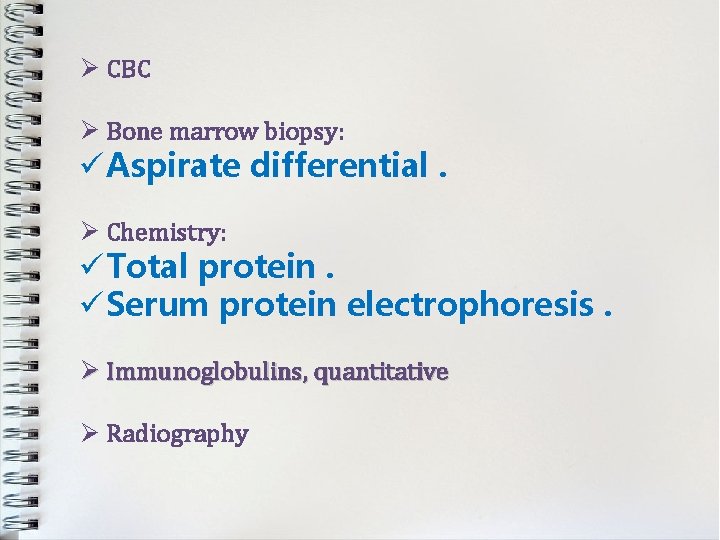
Asked the doctor several tests include : -
Ø CBC Ø Bone marrow biopsy: ü Aspirate differential. Ø Chemistry: ü Total protein. ü Serum protein electrophoresis. Ø Immunoglobulins, quantitative Ø Radiography
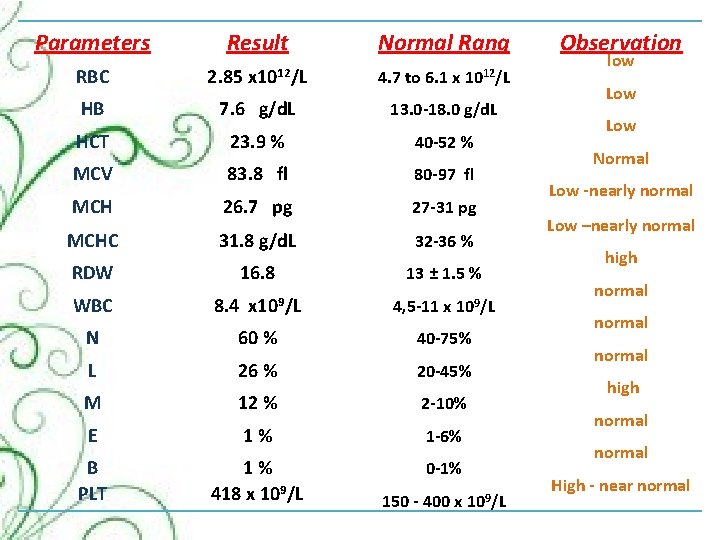
Parameters RBC Result 2. 85 x 1012/L Normal Rang 4. 7 to 6. 1 x 10¹²/L HB 7. 6 g/d. L 13. 0 -18. 0 g/d. L HCT 23. 9 % 40 -52 % MCV 83. 8 fl 80 -97 fl MCH 26. 7 pg 27 -31 pg MCHC 31. 8 g/d. L 32 -36 % RDW 16. 8 13 ± 1. 5 % WBC 8. 4 x 10⁹/L 4, 5 -11 x 109/L N 60 % 40 -75% L 26 % 20 -45% M 12 % 2 -10% E 1% 1 -6% B PLT 1% 418 x 109/L 0 -1% 150 - 400 x Observation low Low Normal Low -nearly normal Low –nearly normal high normal 109/L High - near normal
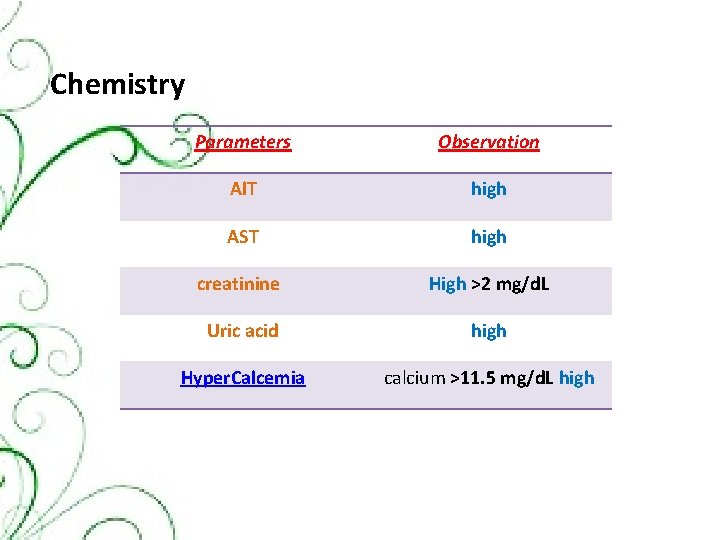
Chemistry Parameters Observation Al. T high AST high creatinine High >2 mg/d. L Uric acid high Hyper. Calcemia calcium >11. 5 mg/d. L high
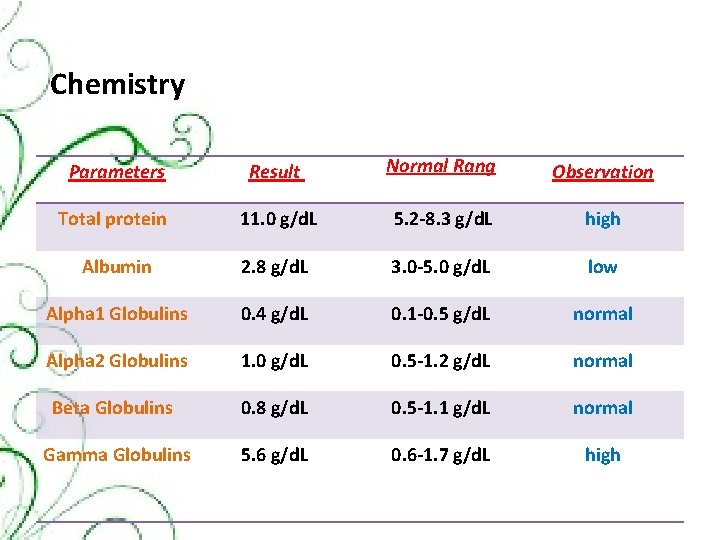
Chemistry Parameters Result Normal Rang Observation Total protein 11. 0 g/d. L 5. 2 -8. 3 g/d. L high Albumin 2. 8 g/d. L 3. 0 -5. 0 g/d. L low Alpha 1 Globulins 0. 4 g/d. L 0. 1 -0. 5 g/d. L normal Alpha 2 Globulins 1. 0 g/d. L 0. 5 -1. 2 g/d. L normal Beta Globulins 0. 8 g/d. L 0. 5 -1. 1 g/d. L normal Gamma Globulins 5. 6 g/d. L 0. 6 -1. 7 g/d. L high
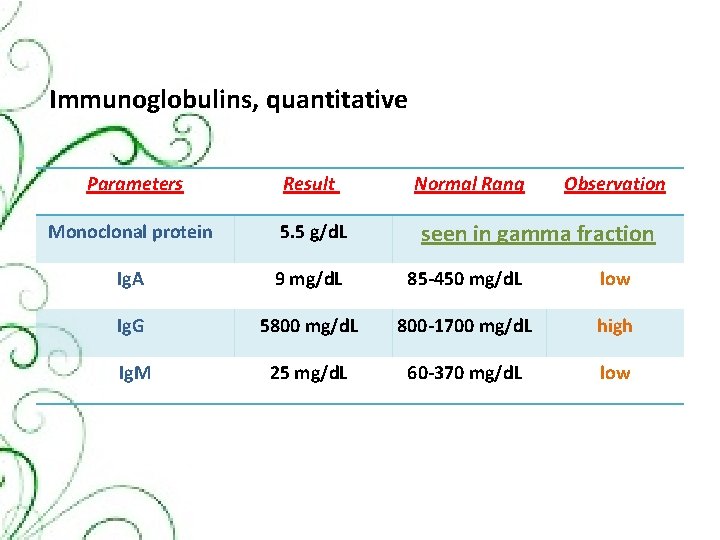
Immunoglobulins, quantitative Parameters Result Normal Rang Observation Monoclonal protein 5. 5 g/d. L Ig. A 9 mg/d. L 85 -450 mg/d. L low Ig. G 5800 mg/d. L 800 -1700 mg/d. L high Ig. M 25 mg/d. L 60 -370 mg/d. L low seen in gamma fraction
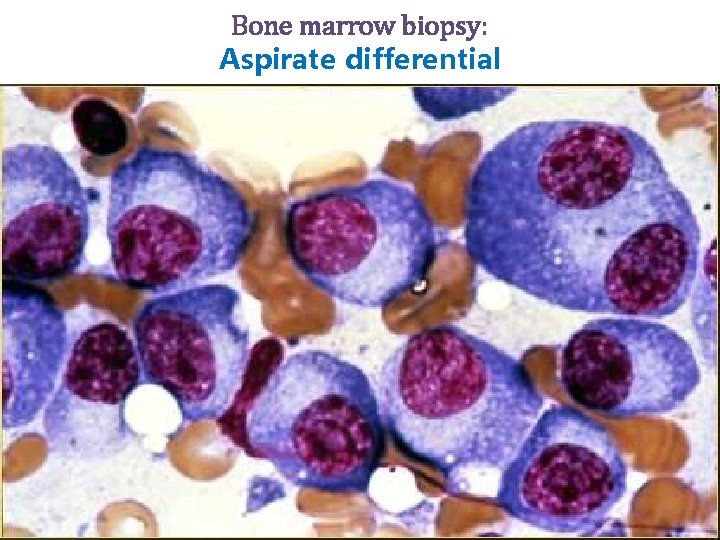
Bone marrow biopsy: Aspirate differential 10
Radiography: Multiple lytic lesions of the skull, spine, pelvis, and femurs.
Question q. What is the most likely diagnosis?
Multiple myeloma (Ig. G, kappa type)
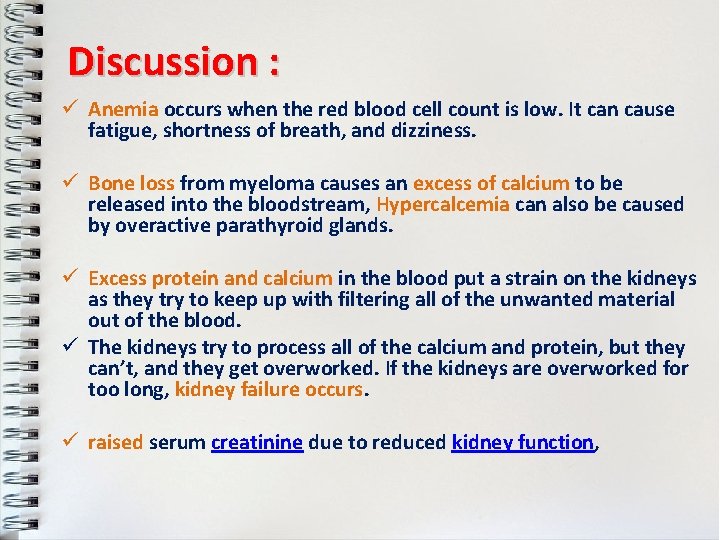
Discussion : ü Anemia occurs when the red blood cell count is low. It can cause fatigue, shortness of breath, and dizziness. ü Bone loss from myeloma causes an excess of calcium to be released into the bloodstream, Hypercalcemia can also be caused by overactive parathyroid glands. ü Excess protein and calcium in the blood put a strain on the kidneys as they try to keep up with filtering all of the unwanted material out of the blood. ü The kidneys try to process all of the calcium and protein, but they can’t, and they get overworked. If the kidneys are overworked for too long, kidney failure occurs. ü raised serum creatinine due to reduced kidney function,
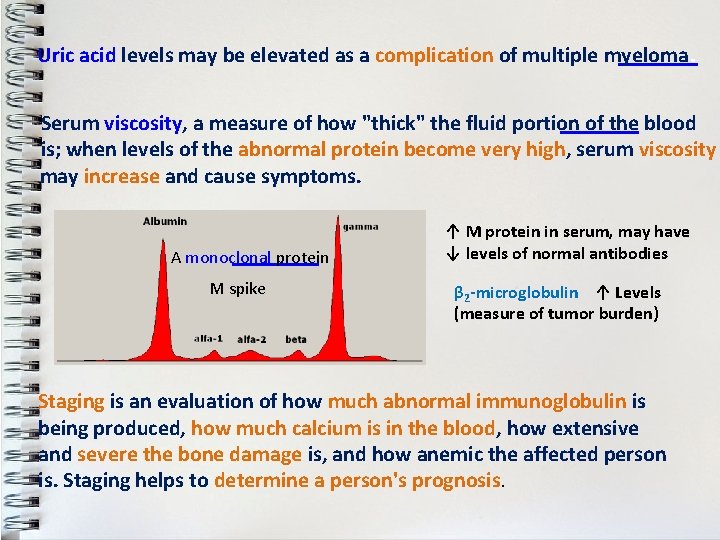
Uric acid levels may be elevated as a complication of multiple myeloma. Serum viscosity, a measure of how "thick" the fluid portion of the blood is; when levels of the abnormal protein become very high, serum viscosity may increase and cause symptoms. A monoclonal protein M spike ↑ M protein in serum, may have ↓ levels of normal antibodies β 2 -microglobulin ↑ Levels (measure of tumor burden) Staging is an evaluation of how much abnormal immunoglobulin is being produced, how much calcium is in the blood, how extensive and severe the bone damage is, and how anemic the affected person is. Staging helps to determine a person's prognosis.
Clinical Course : ü The patient was treated with chemotherapy and radiation therapy. ü Her bone pain lessened, and her serum protein levels gradually decreased to within normal ranges. ü After several months, however, she was again experiencing bone pain and abnormal protein levels. ü She continued to be followed in Hematology Clinic, and at her last visit--four years after the original diagnosis-the disease still appeared to be progressing slowly.
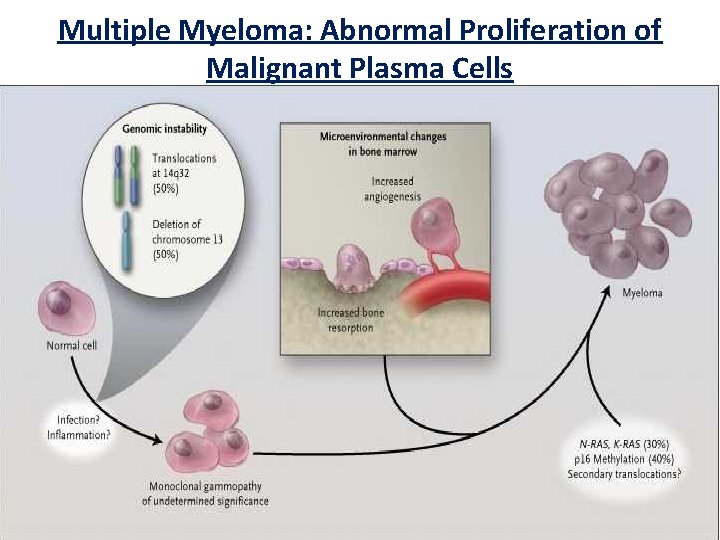
Multiple Myeloma: Abnormal Proliferation of Malignant Plasma Cells
Epidemiology § Second most common hematological malignancy. § Incidence and rates : § § 1% of all cancers. US incidence: 19, 900 new cases per year. US prevalence: 100, 000 patients. Deaths: estimated 10, 790 per year. § More than 80% of affected patients >age 60. § Affects slightly more men than women (1. 6: 1).
Clinical Manifestations of Multiple Myeloma 1. Over proliferation of plasma cells can cause : • • • Risk of infection Osteolytic bone lesions Hypercalcemia Bone marrow suppression (pancytopenia) Renal complication risk
2 - Production of monoclonal M proteins causes : • Decreased levels of normal immunoglobulins • Hyperviscosity
Major Symptoms at Diagnosis üBone pain - 58% üFatigue - 32% üWeight loss - 24% üAsymptomatic - 11%
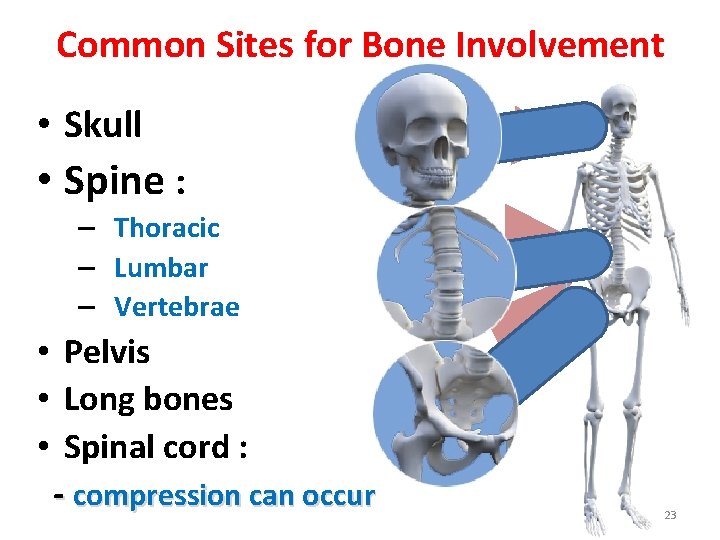
Common Sites for Bone Involvement • Skull • Spine : – Thoracic – Lumbar – Vertebrae • Pelvis • Long bones • Spinal cord : - compression can occur 23
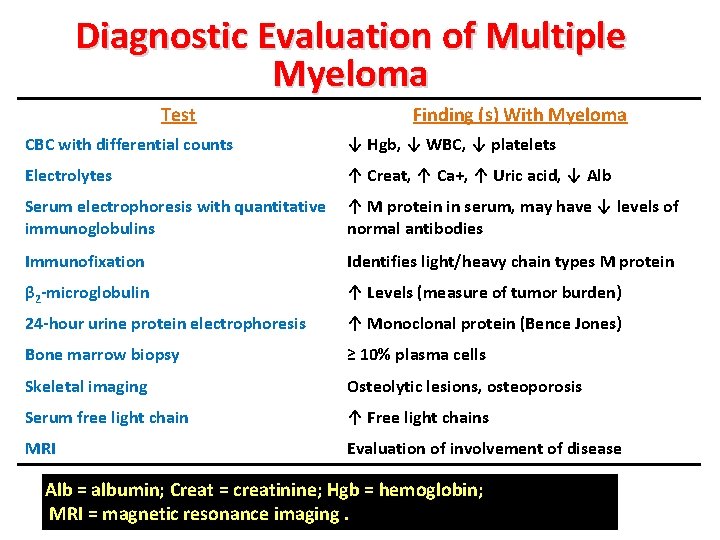
Diagnostic Evaluation of Multiple Myeloma Test Finding (s) With Myeloma CBC with differential counts ↓ Hgb, ↓ WBC, ↓ platelets Electrolytes ↑ Creat, ↑ Ca+, ↑ Uric acid, ↓ Alb Serum electrophoresis with quantitative immunoglobulins ↑ M protein in serum, may have ↓ levels of normal antibodies Immunofixation Identifies light/heavy chain types M protein β 2 -microglobulin ↑ Levels (measure of tumor burden) 24 -hour urine protein electrophoresis ↑ Monoclonal protein (Bence Jones) Bone marrow biopsy ≥ 10% plasma cells Skeletal imaging Osteolytic lesions, osteoporosis Serum free light chain ↑ Free light chains MRI Evaluation of involvement of disease Alb = albumin; Creat = creatinine; Hgb = hemoglobin; MRI = magnetic resonance imaging.
MM Treatment Options v. Conventional chemotherapy: Ø Melphalan Ø Doxorubicin Ø Cyclophosphamide v Steroid therapy: Ø Dexamethasone Ø Prednisone v Stem cell transplantation: Ø Autologous Ø Allogenic v Radiation therapy
Prepration : Asmaa Ashour Noor Al-Safadi Presentation : Areej Abuzubaida Nermeen Al-Ashi