Authors Arno Kumagai M D 2009 License Unless

- Slides: 52
Author(s): Arno Kumagai, M. D. , 2009 License: Unless otherwise noted, this material is made available under the terms of the Creative Commons Attribution–Noncommercial–Share Alike 3. 0 License: http: //creativecommons. org/licenses/by-nc-sa/3. 0/ We have reviewed this material in accordance with U. S. Copyright Law and have tried to maximize your ability to use, share, and adapt it. The citation key on the following slide provides information about how you may share and adapt this material. Copyright holders of content included in this material should contact open. michigan@umich. edu with any questions, corrections, or clarification regarding the use of content. For more information about how to cite these materials visit http: //open. umich. edu/education/about/terms-of-use. Any medical information in this material is intended to inform and educate and is not a tool for self-diagnosis or a replacement for medical evaluation, advice, diagnosis or treatment by a healthcare professional. Please speak to your physician if you have questions about your medical condition. Viewer discretion is advised: Some medical content is graphic and may not be suitable for all viewers.
Citation Key for more information see: http: //open. umich. edu/wiki/Citation. Policy Use + Share + Adapt { Content the copyright holder, author, or law permits you to use, share and adapt. } Public Domain – Government: Works that are produced by the U. S. Government. (17 USC § 105) Public Domain – Expired: Works that are no longer protected due to an expired copyright term. Public Domain – Self Dedicated: Works that a copyright holder has dedicated to the public domain. Creative Commons – Zero Waiver Creative Commons – Attribution License Creative Commons – Attribution Share Alike License Creative Commons – Attribution Noncommercial Share Alike License GNU – Free Documentation License Make Your Own Assessment { Content Open. Michigan believes can be used, shared, and adapted because it is ineligible for copyright. } Public Domain – Ineligible: Works that are ineligible for copyright protection in the U. S. (17 USC § 102(b)) *laws in your jurisdiction may differ { Content Open. Michigan has used under a Fair Use determination. } Fair Use: Use of works that is determined to be Fair consistent with the U. S. Copyright Act. (17 USC § 107) *laws in your jurisdiction may differ Our determination DOES NOT mean that all uses of this 3 rd-party content are Fair Uses and we DO NOT guarantee that your use of the content is Fair. To use this content you should do your own independent analysis to determine whether or not your use will be Fair.
DIABETES MELLITUS Part 2: COMPLICATIONS M 2 - Endocrine Sequence A. Kumagai Winter 2009
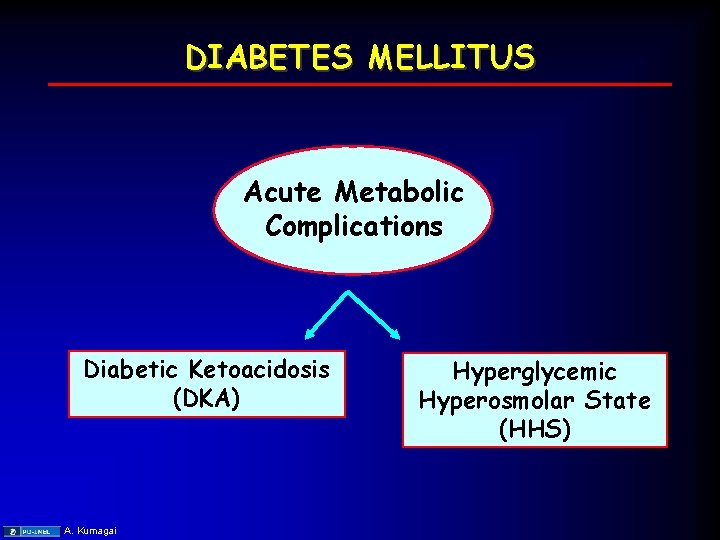
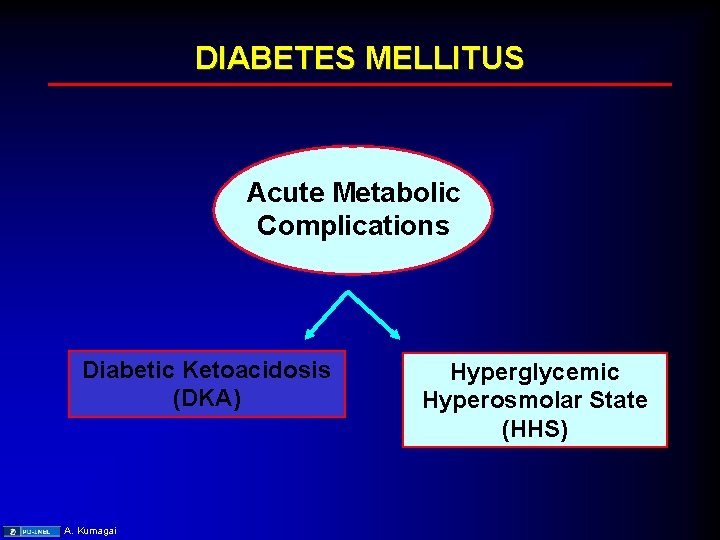
DIABETES MELLITUS Acute Metabolic Complications Diabetic Ketoacidosis (DKA) A. Kumagai Hyperglycemic Hyperosmolar State (HHS)
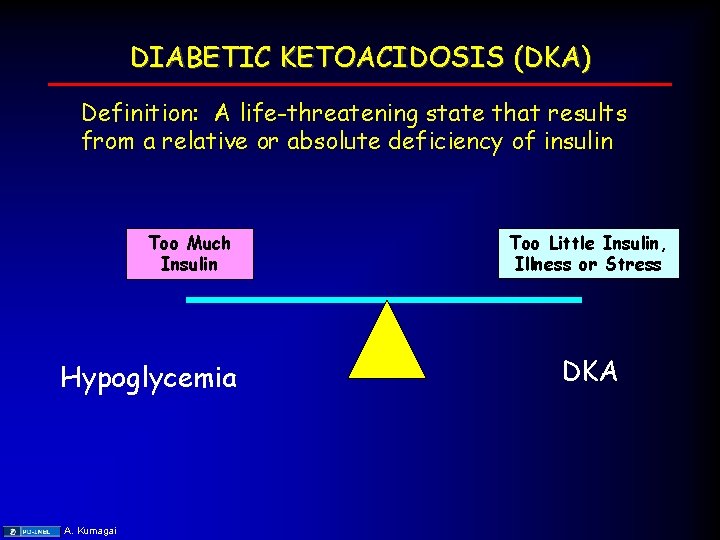
DIABETIC KETOACIDOSIS (DKA) Definition: A life-threatening state that results from a relative or absolute deficiency of insulin Too Much Insulin Hypoglycemia A. Kumagai Too Little Insulin, Illness or Stress DKA
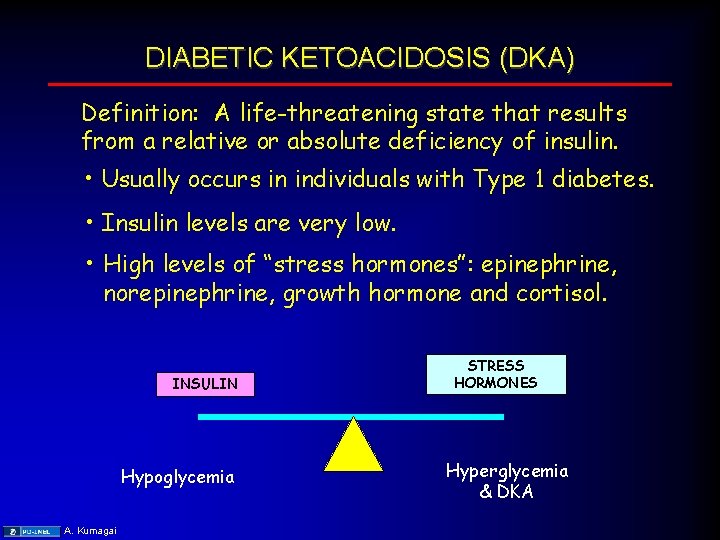
DIABETIC KETOACIDOSIS (DKA) Definition: A life-threatening state that results from a relative or absolute deficiency of insulin. • Usually occurs in individuals with Type 1 diabetes. • Insulin levels are very low. • High levels of “stress hormones”: epinephrine, norepinephrine, growth hormone and cortisol. INSULIN Hypoglycemia A. Kumagai STRESS HORMONES Hyperglycemia & DKA
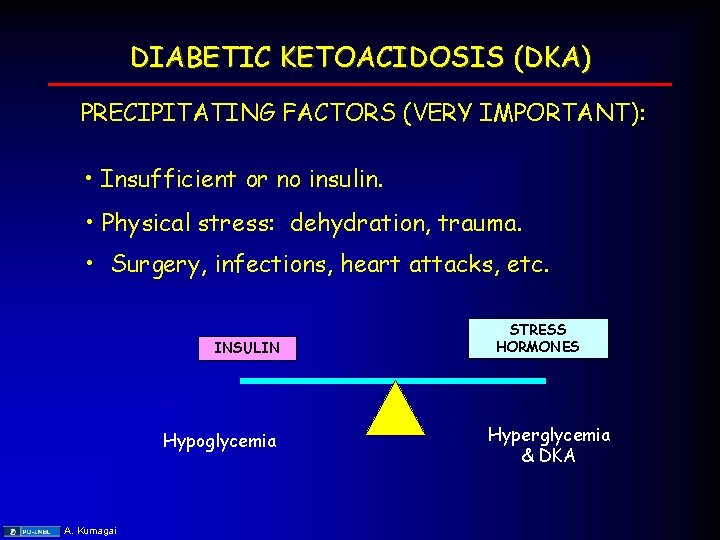
DIABETIC KETOACIDOSIS (DKA) PRECIPITATING FACTORS (VERY IMPORTANT): • Insufficient or no insulin. • Physical stress: dehydration, trauma. • Surgery, infections, heart attacks, etc. INSULIN Hypoglycemia A. Kumagai STRESS HORMONES Hyperglycemia & DKA
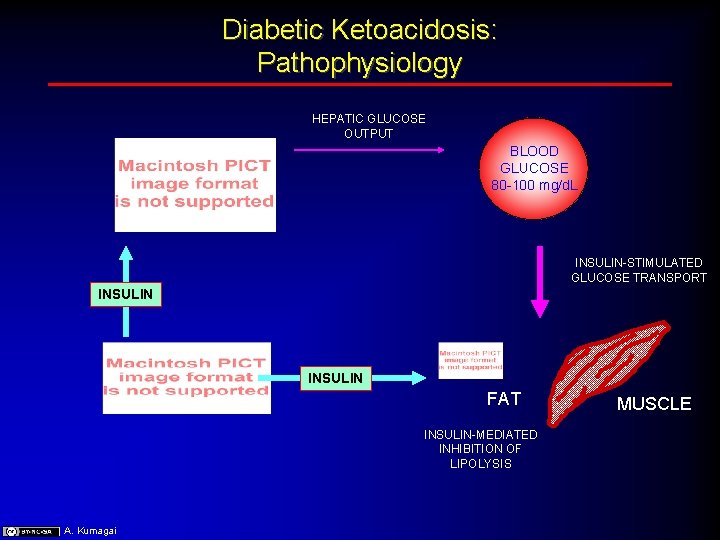
Diabetic Ketoacidosis: Pathophysiology HEPATIC GLUCOSE OUTPUT BLOOD GLUCOSE 80 -100 mg/d. L INSULIN-STIMULATED GLUCOSE TRANSPORT INSULIN FAT INSULIN-MEDIATED INHIBITION OF LIPOLYSIS A. Kumagai MUSCLE
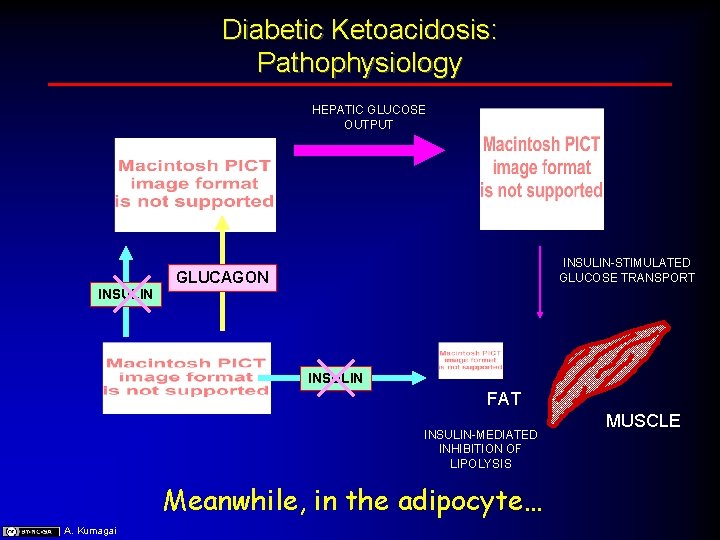
Diabetic Ketoacidosis: Pathophysiology HEPATIC GLUCOSE OUTPUT INSULIN-STIMULATED GLUCOSE TRANSPORT GLUCAGON INSULIN FAT INSULIN-MEDIATED INHIBITION OF LIPOLYSIS Meanwhile, in the adipocyte… A. Kumagai MUSCLE
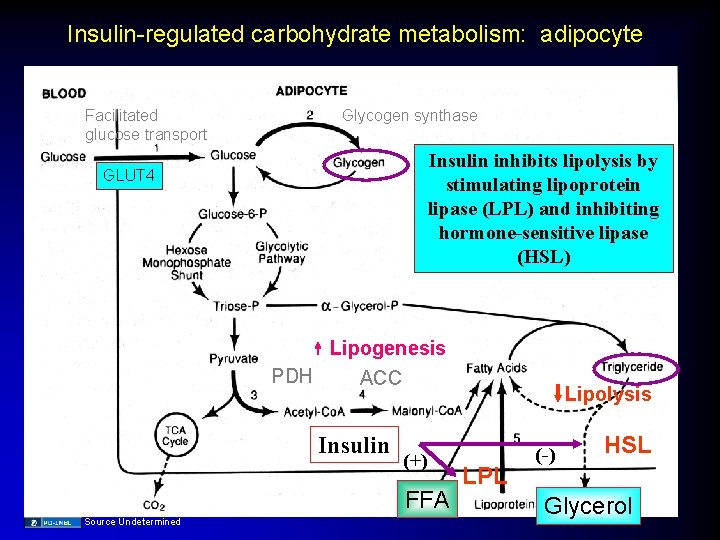
Insulin-regulated carbohydrate metabolism: adipocyte Glycogen synthase Facilitated glucose transport Insulin inhibits lipolysis by stimulating lipoprotein lipase (LPL) and inhibiting hormone-sensitive lipase (HSL) GLUT 4 Lipogenesis PDH ACC Insulin Lipolysis (+) FFA Source Undetermined LPL (-) HSL Glycerol
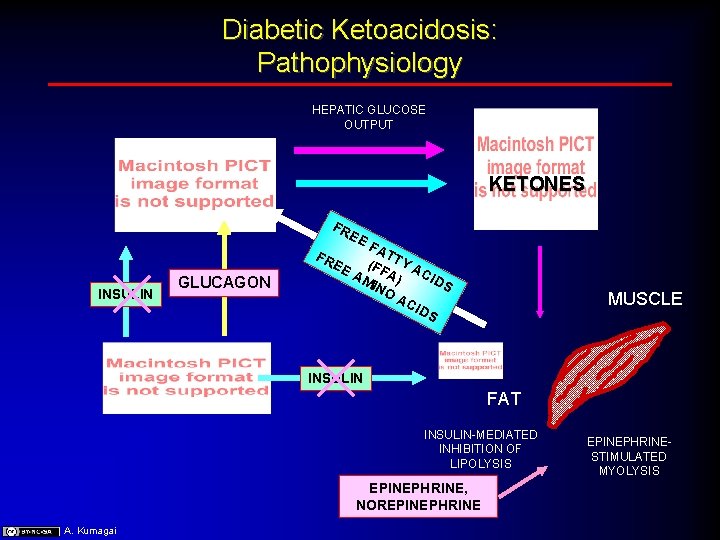
Diabetic Ketoacidosis: Pathophysiology HEPATIC GLUCOSE OUTPUT KETONES FR EE INSULIN GLUCAGON FR EE FA T (FF TY A CID AM A) S INO AC IDS MUSCLE INSULIN FAT INSULIN-MEDIATED INHIBITION OF LIPOLYSIS EPINEPHRINE, NOREPINEPHRINE A. Kumagai EPINEPHRINESTIMULATED MYOLYSIS
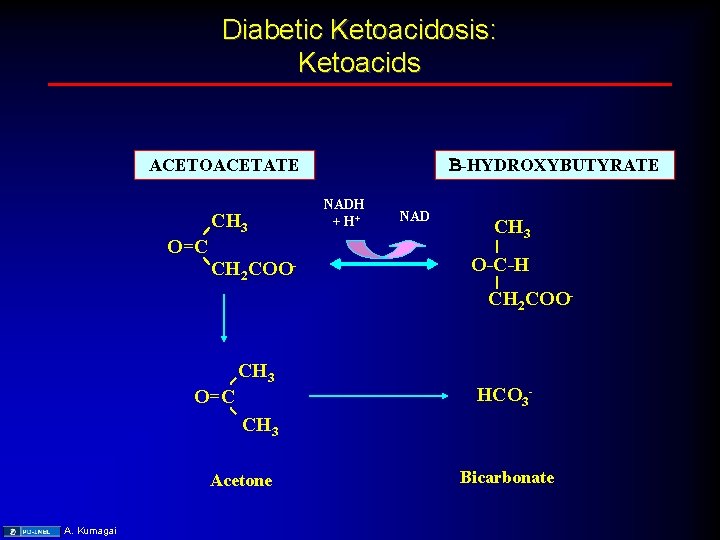
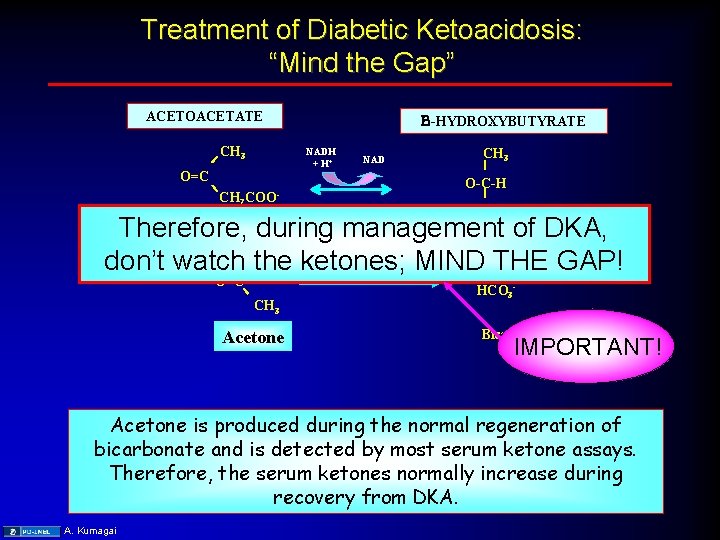
Diabetic Ketoacidosis: Ketoacids B-HYDROXYBUTYRATE ACETOACETATE CH 3 O=C CH 2 COO- NADH + H+ NAD CH 3 O-C-H CH 2 COO- CH 3 O=C HCO 3 - CH 3 Acetone A. Kumagai Bicarbonate
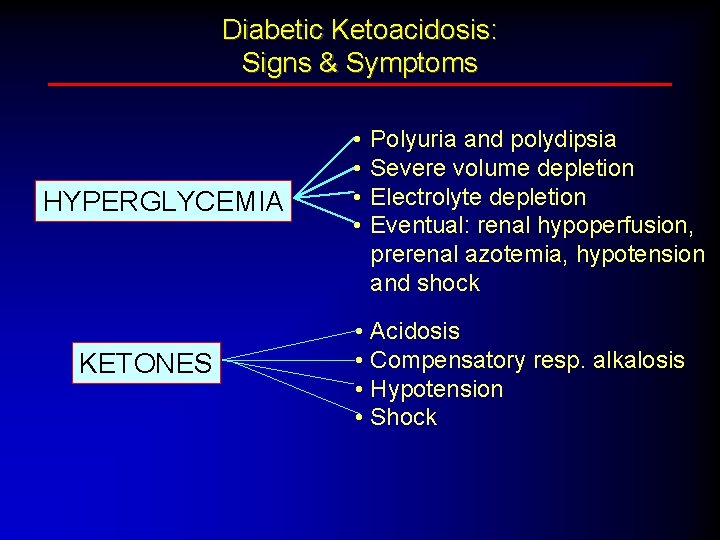
Diabetic Ketoacidosis: Signs & Symptoms HYPERGLYCEMIA KETONES • • Polyuria and polydipsia Severe volume depletion Electrolyte depletion Eventual: renal hypoperfusion, prerenal azotemia, hypotension and shock • Acidosis • Compensatory resp. alkalosis • Hypotension • Shock
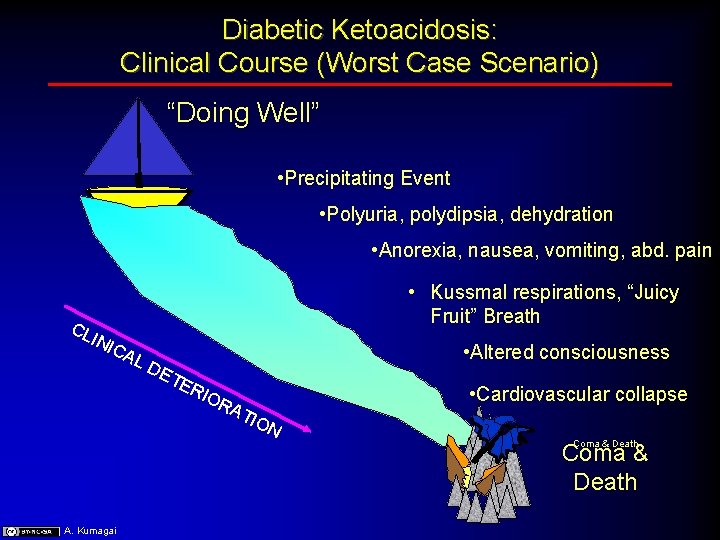
Diabetic Ketoacidosis: Clinical Course (Worst Case Scenario) “Doing Well” • Precipitating Event • Polyuria, polydipsia, dehydration • Anorexia, nausea, vomiting, abd. pain • Kussmal respirations, “Juicy Fruit” Breath CL IN ICA LD ET • Altered consciousness ER IOR AT ION • Cardiovascular collapse Coma & Death A. Kumagai
Diabetic Ketoacidosis: Effects on Mental Status Factors leading to impairment of CNS function: BRAIN A. Kumagai
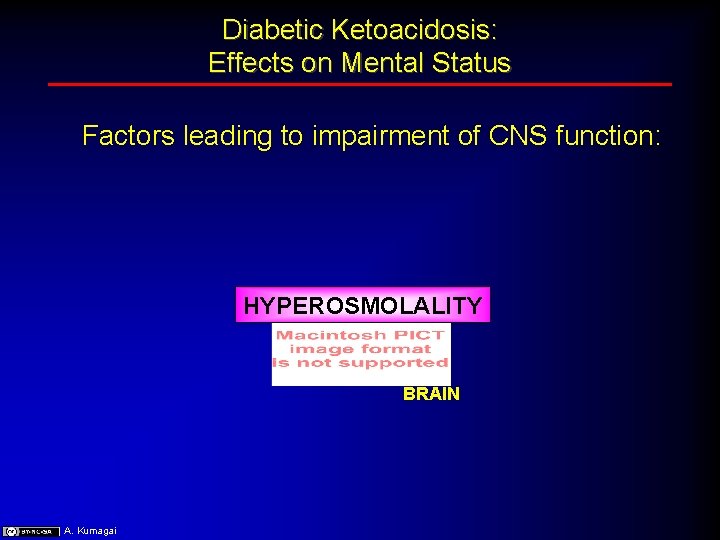
Diabetic Ketoacidosis: Effects on Mental Status Factors leading to impairment of CNS function: HYPEROSMOLALITY BRAIN A. Kumagai
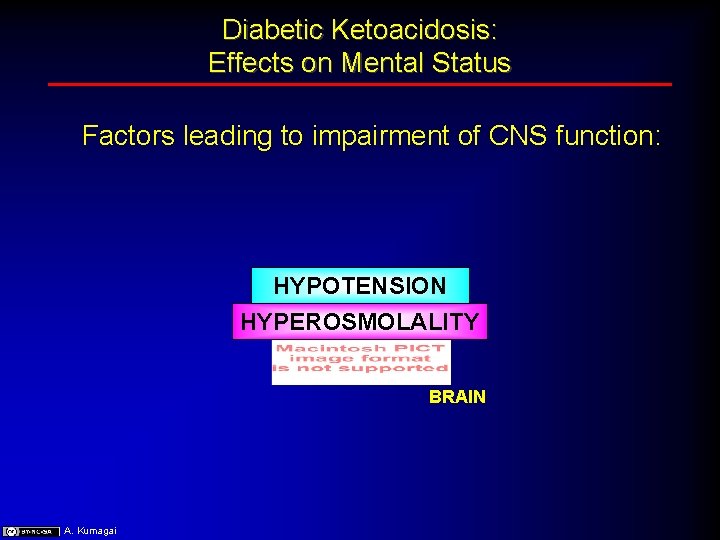
Diabetic Ketoacidosis: Effects on Mental Status Factors leading to impairment of CNS function: HYPOTENSION HYPEROSMOLALITY BRAIN A. Kumagai
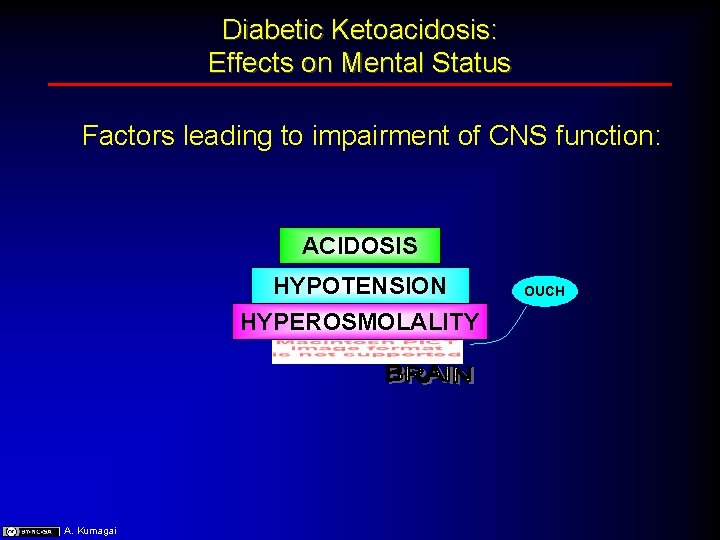
Diabetic Ketoacidosis: Effects on Mental Status Factors leading to impairment of CNS function: ACIDOSIS HYPOTENSION HYPEROSMOLALITY A. Kumagai OUCH
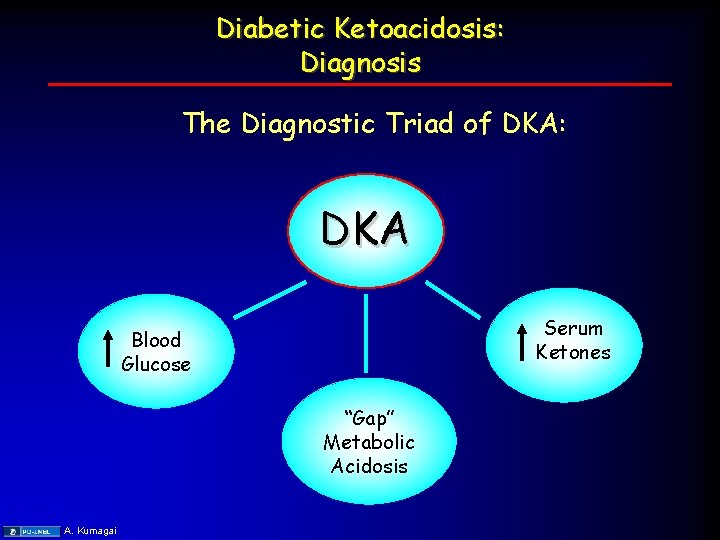
Diabetic Ketoacidosis: Diagnosis The Diagnostic Triad of DKA: DKA Serum Ketones Blood Glucose “Gap” Metabolic Acidosis A. Kumagai
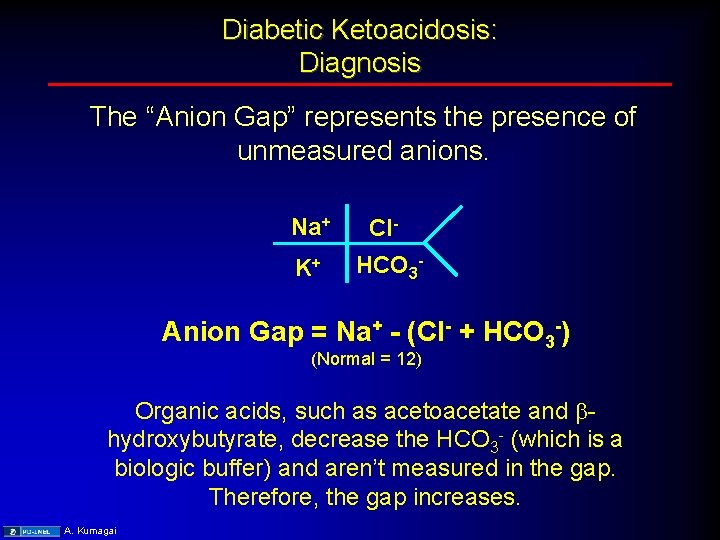
Diabetic Ketoacidosis: Diagnosis The “Anion Gap” represents the presence of unmeasured anions. Na+ Cl- K+ HCO 3 - Anion Gap = Na+ - (Cl- + HCO 3 -) (Normal = 12) Organic acids, such as acetoacetate and bhydroxybutyrate, decrease the HCO 3 - (which is a biologic buffer) and aren’t measured in the gap. Therefore, the gap increases. A. Kumagai
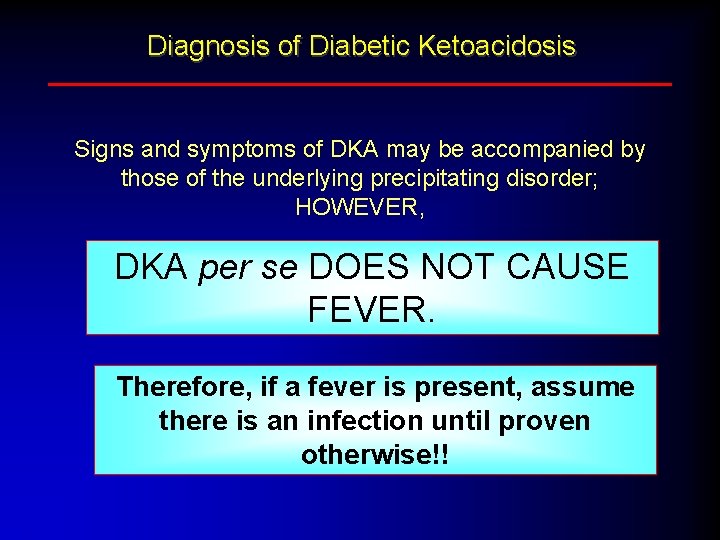
Diagnosis of Diabetic Ketoacidosis Signs and symptoms of DKA may be accompanied by those of the underlying precipitating disorder; HOWEVER, DKA per se DOES NOT CAUSE FEVER. Therefore, if a fever is present, assume there is an infection until proven otherwise!!
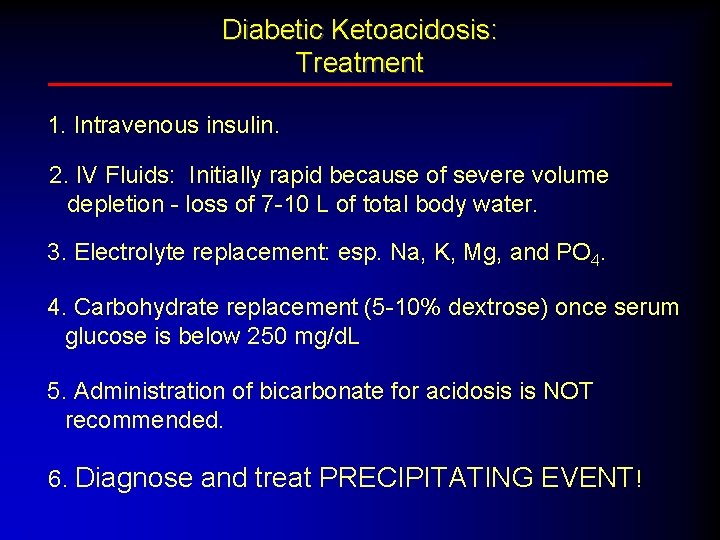
Diabetic Ketoacidosis: Treatment 1. Intravenous insulin. 2. IV Fluids: Initially rapid because of severe volume depletion - loss of 7 -10 L of total body water. 3. Electrolyte replacement: esp. Na, K, Mg, and PO 4. 4. Carbohydrate replacement (5 -10% dextrose) once serum glucose is below 250 mg/d. L 5. Administration of bicarbonate for acidosis is NOT recommended. 6. Diagnose and treat PRECIPITATING EVENT!
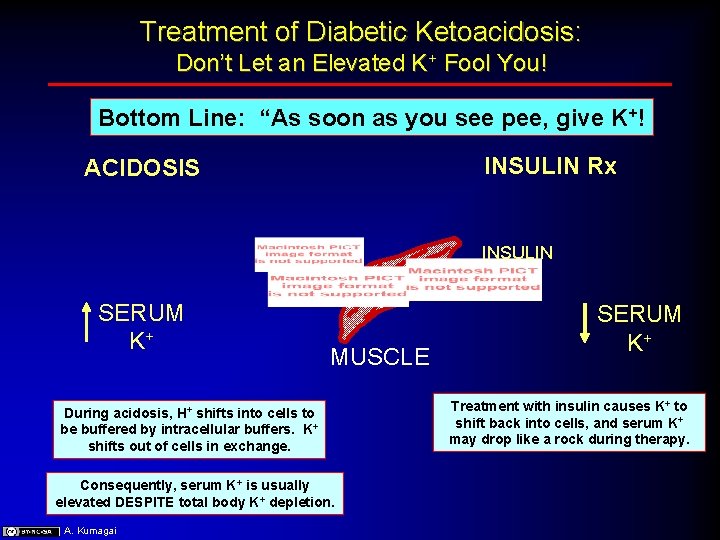
Treatment of Diabetic Ketoacidosis: Don’t Let an Elevated K+ Fool You! Bottom Line: “As soon as you see pee, give K+! INSULIN Rx ACIDOSIS INSULIN SERUM K+ MUSCLE During acidosis, H+ shifts into cells to be buffered by intracellular buffers. K+ shifts out of cells in exchange. Consequently, serum K+ is usually elevated DESPITE total body K+ depletion. A. Kumagai SERUM K+ Treatment with insulin causes K+ to shift back into cells, and serum K+ may drop like a rock during therapy.
Treatment of Diabetic Ketoacidosis: “Mind the Gap” ACETOACETATE B-HYDROXYBUTYRATE CH 3 NADH + H+ O=C CH 2 COO- NAD CH 3 O-C-H CH 2 COO- Therefore, during management of DKA, don’t watch CH the ketones; MIND THE GAP! 3 O=C CH 3 Acetone HCO 3 Bicarbonate IMPORTANT! Acetone is produced during the normal regeneration of bicarbonate and is detected by most serum ketone assays. Therefore, the serum ketones normally increase during recovery from DKA. A. Kumagai
Treatment of Diabetic Ketoacidosis: NC Márcio Cabral de Moura (Flickr)
Treatment of Diabetic Ketoacidosis Finally, Diagnose and treat the underlying precipitating event!
DIABETES MELLITUS Acute Metabolic Complications Diabetic Ketoacidosis (DKA) A. Kumagai Hyperglycemic Hyperosmolar State (HHS)
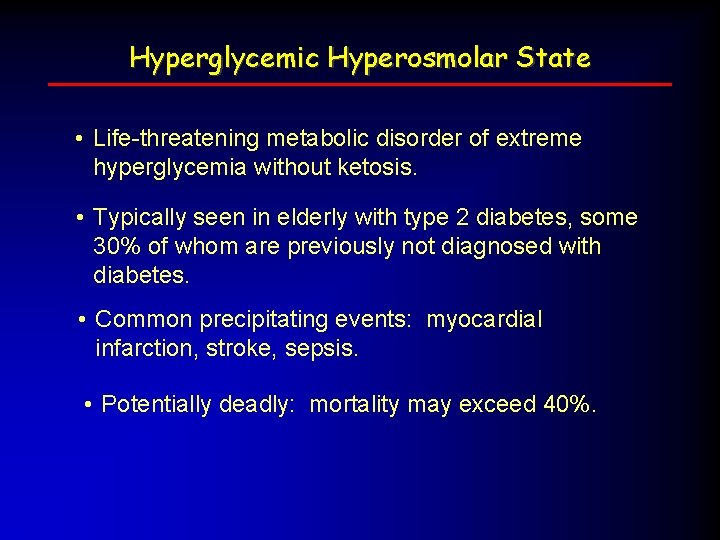
Hyperglycemic Hyperosmolar State • Life-threatening metabolic disorder of extreme hyperglycemia without ketosis. • Typically seen in elderly with type 2 diabetes, some 30% of whom are previously not diagnosed with diabetes. • Common precipitating events: myocardial infarction, stroke, sepsis. • Potentially deadly: mortality may exceed 40%.
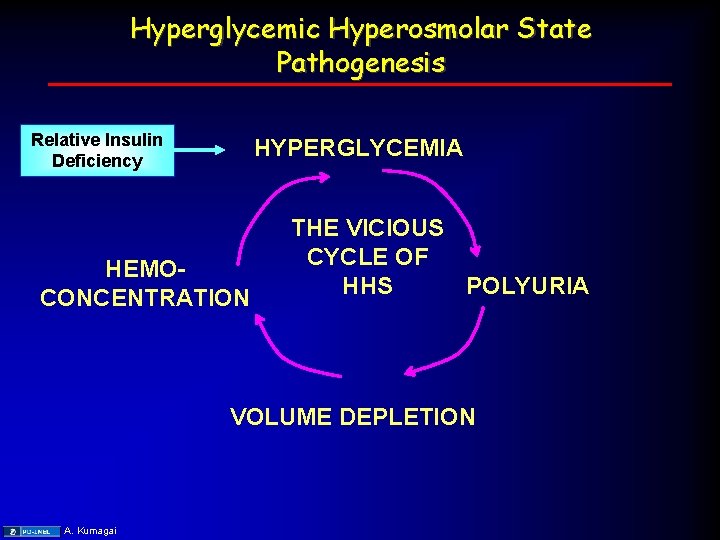
Hyperglycemic Hyperosmolar State Pathogenesis Relative Insulin Deficiency HYPERGLYCEMIA HEMOCONCENTRATION THE VICIOUS CYCLE OF POLYURIA HHS VOLUME DEPLETION A. Kumagai
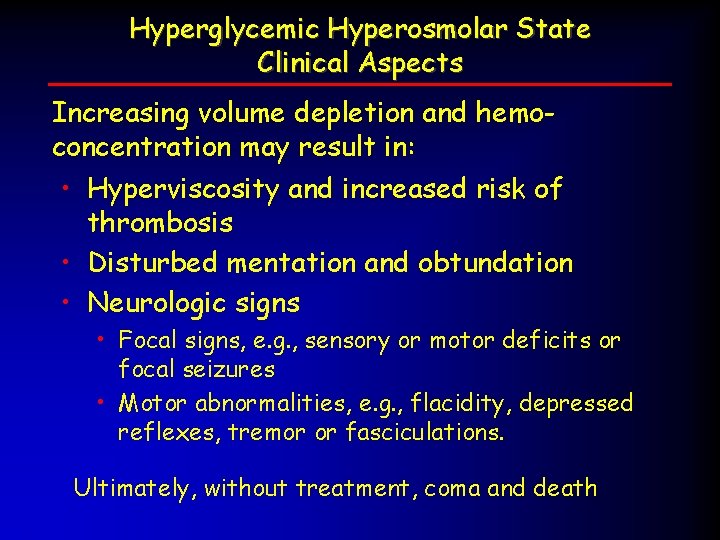
Hyperglycemic Hyperosmolar State Clinical Aspects Increasing volume depletion and hemoconcentration may result in: • Hyperviscosity and increased risk of thrombosis • Disturbed mentation and obtundation • Neurologic signs • Focal signs, e. g. , sensory or motor deficits or focal seizures • Motor abnormalities, e. g. , flacidity, depressed reflexes, tremor or fasciculations. Ultimately, without treatment, coma and death
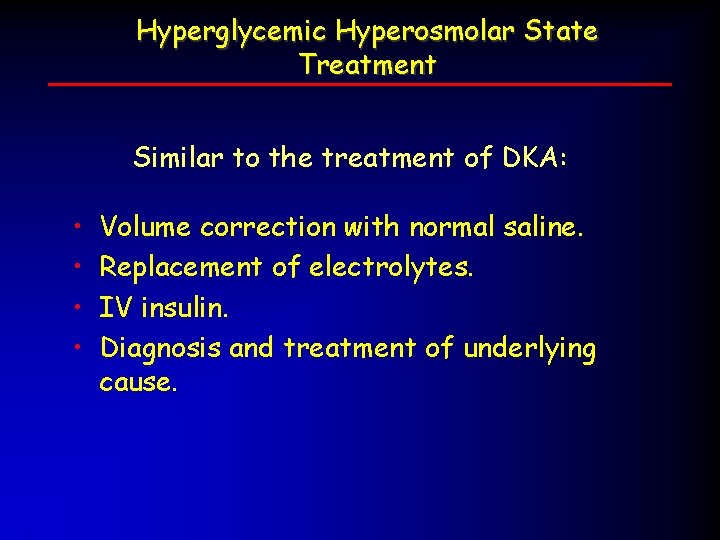
Hyperglycemic Hyperosmolar State Treatment Similar to the treatment of DKA: • • Volume correction with normal saline. Replacement of electrolytes. IV insulin. Diagnosis and treatment of underlying cause.
Diabetes Mellitus Chronic Complications
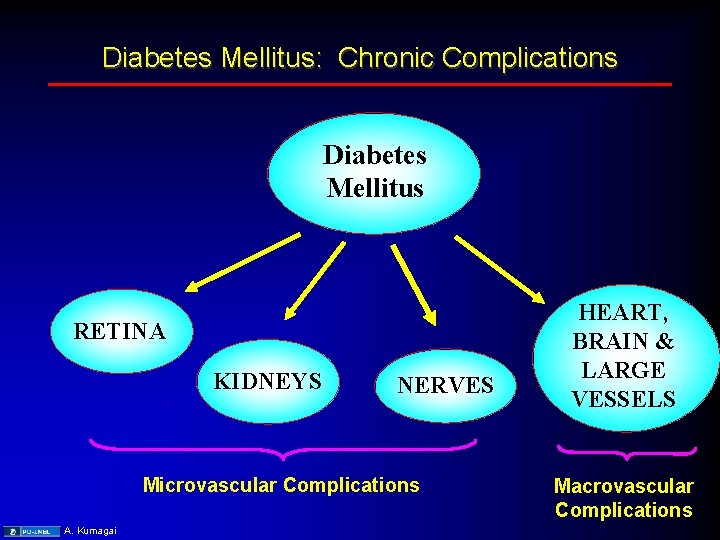
Diabetes Mellitus: Chronic Complications Diabetes Mellitus RETINA KIDNEYS NERVES Microvascular Complications A. Kumagai HEART, BRAIN & LARGE VESSELS Macrovascular Complications
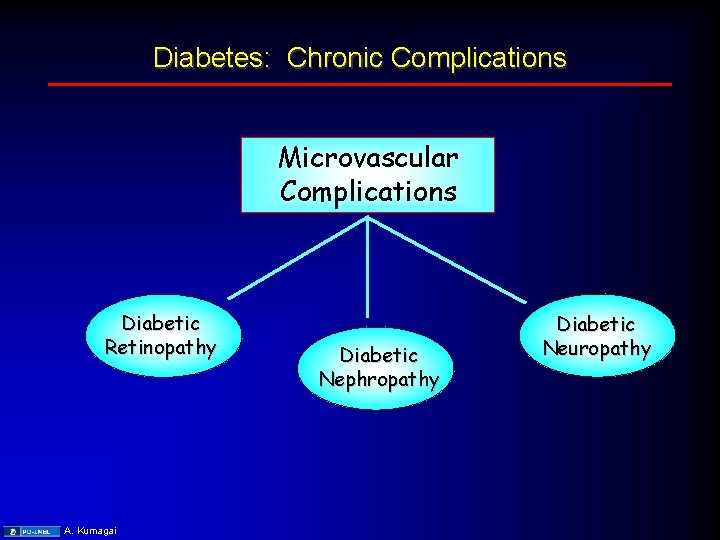
Diabetes: Chronic Complications Microvascular Complications Diabetic Retinopathy A. Kumagai Diabetic Nephropathy Diabetic Neuropathy
Diabetic Retinopathy Retinal Fundus Photographs Retinal capillaries Macula Optic nerve Source Undetermined
Diabetic Retinopathy Retinal Fundus Photographs Retinal capillaries Macular edema Optic nerve Exudates NON-PROLIFERATIVE OR “BACKGROUND” RETINOPATHY Disease Progression Source Undetermined (Both Images)
Diabetic Retinopathy Retinal Fundus Photographs Retinal capillaries Macular edema Optic nerve Exudates NON-PROLIFERATIVE OR “BACKGROUND” RETINOPATHY Disease Progression Source Undetermined (All Images) New Vessel Formation PROLIFERATIVE RETINOPATHY
Diabetic Retinopathy Exudates • leakage of plasma proteins into neuroretina. Microaneurysms EM Photograph of Plastic Cast of Retinal Capillaries from Diabetic Retina Source Undetermined Later stages of retinopathy involve death of endothelial cells and capillary “drop out, ” progressive ischemia and proliferative neovascular changes.
Diabetic Retinopathy Remember: Diabetic retinopathy is the leading cause of new adult blindness in the United States.
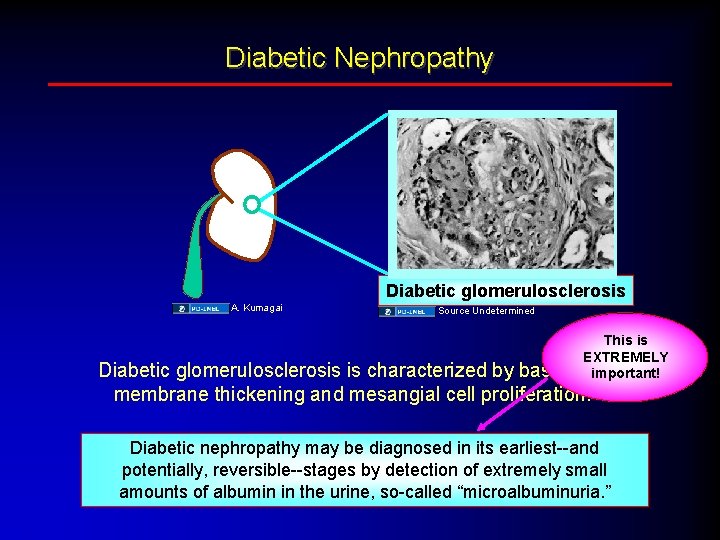
Diabetic Nephropathy Diabetic glomerulosclerosis A. Kumagai Source Undetermined This is EXTREMELY basement important! Diabetic glomerulosclerosis is characterized by membrane thickening and mesangial cell proliferation. Diabetic nephropathy may be diagnosed in its earliest--and potentially, reversible--stages by detection of extremely small amounts of albumin in the urine, so-called “microalbuminuria. ”
Diabetic Nephropathy Remember: Diabetic nephropathy is the leading cause of renal failure requiring dialysis in the United States.
DIABETIC NEUROPATHY: Peripheral Sensory Neuropathy Symmetrical neuropathy is the most common: • Primarily involving the distal extremities with “stocking-glove” distribution. • Sensory: decreased vibration, temperature, proprioception. • Initially may present with painful paresthesias: “burning” or “pins-and -needles” sensation. Eventually leads to complete loss of sensation. • Predisposed to skin breakdown, ulcer formation and unrecognized trauma. Source Undetermined
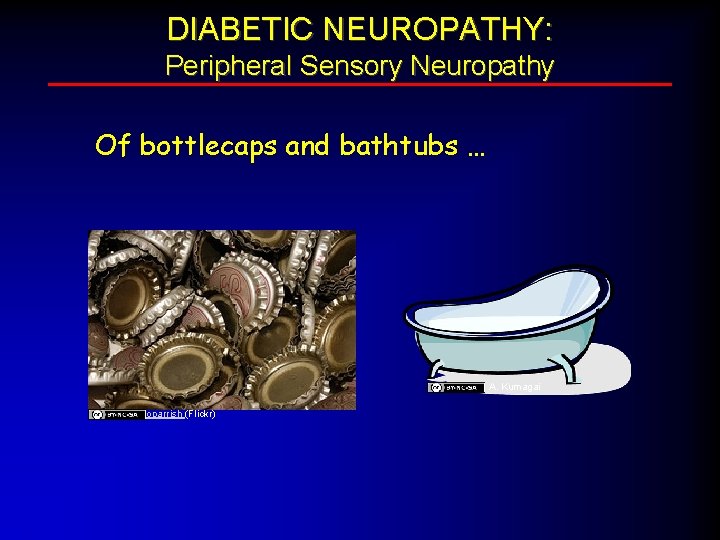
DIABETIC NEUROPATHY: Peripheral Sensory Neuropathy Of bottlecaps and bathtubs … A. Kumagai oparrish (Flickr)
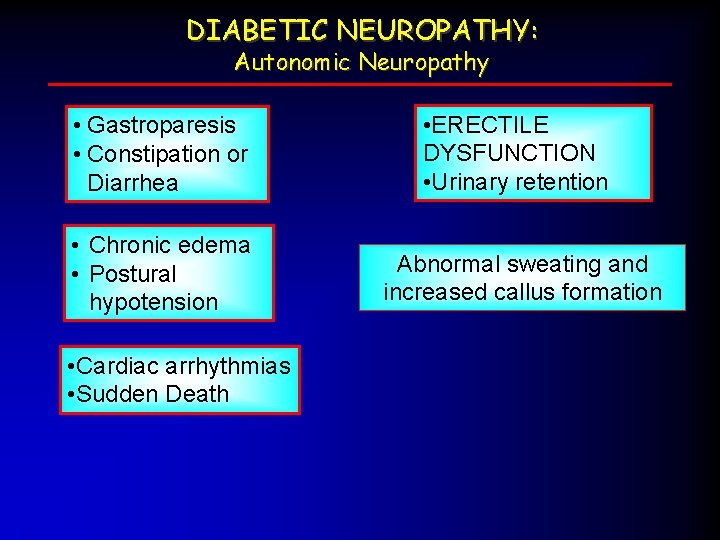
DIABETIC NEUROPATHY: Autonomic Neuropathy • Gastroparesis • Constipation or Diarrhea • ERECTILE DYSFUNCTION • Urinary retention • Chronic edema • Postural hypotension Abnormal sweating and increased callus formation • Cardiac arrhythmias • Sudden Death
Diabetic Neuropathy Remember: Diabetes is the leading cause of non-traumatic lower extremity amputations in the United States.
DIABETIC COMPLICATIONS MACROVASCULAR COMPLICATIONS Gangrene is 14 times more common in people with diabetes than those without. Coronary Heart Disease: • Twice as common in people with diabetes. • Occurs at an earlier age and places women at equal risk This is EXTREMELY with men. important! • For MI’s: individuals with diabetes have a high initial mortality rate and lower 5 -year survival rate. • MI’s often occur WITHOUT CHEST PAIN. Risk of death from stroke is approximately 3 times greater for people with diabetes than for those without.
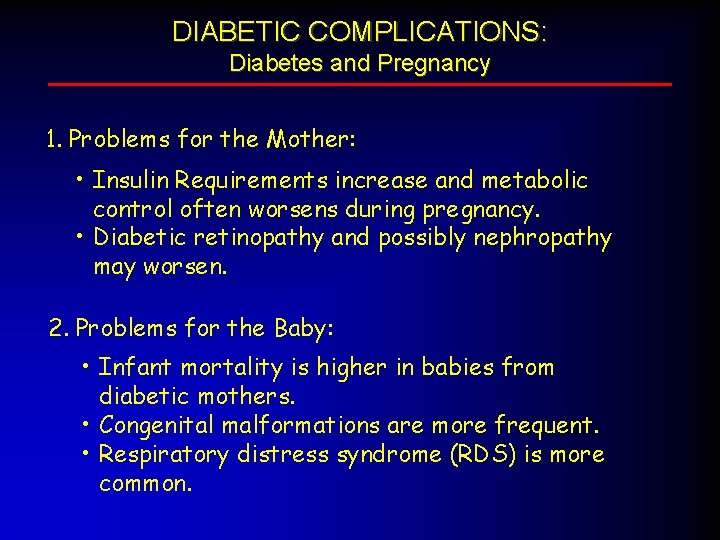
DIABETIC COMPLICATIONS: Diabetes and Pregnancy 1. Problems for the Mother: • Insulin Requirements increase and metabolic control often worsens during pregnancy. • Diabetic retinopathy and possibly nephropathy may worsen. 2. Problems for the Baby: • Infant mortality is higher in babies from diabetic mothers. • Congenital malformations are more frequent. • Respiratory distress syndrome (RDS) is more common.
DIABETIC COMPLICATIONS: Diabetes and Pregnancy High blood sugars in pregnancy can lead to…
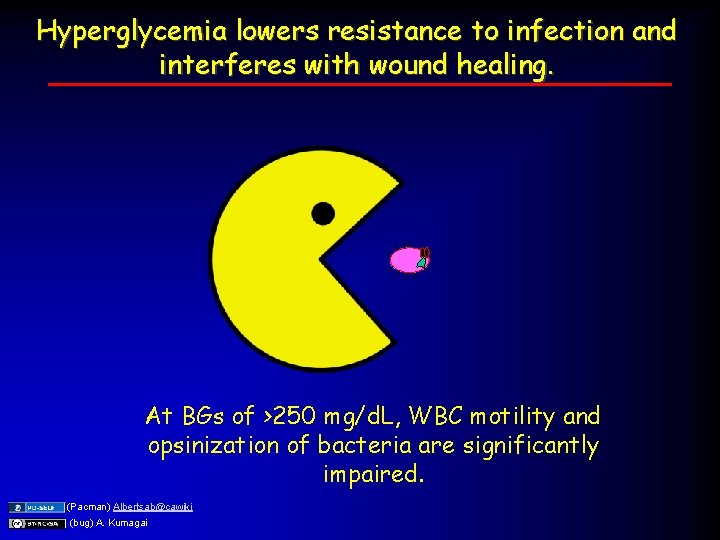
Hyperglycemia lowers resistance to infection and interferes with wound healing. At BGs of >250 mg/d. L, WBC motility and opsinization of bacteria are significantly impaired. (Pacman) Albertsab@cawiki (bug) A. Kumagai
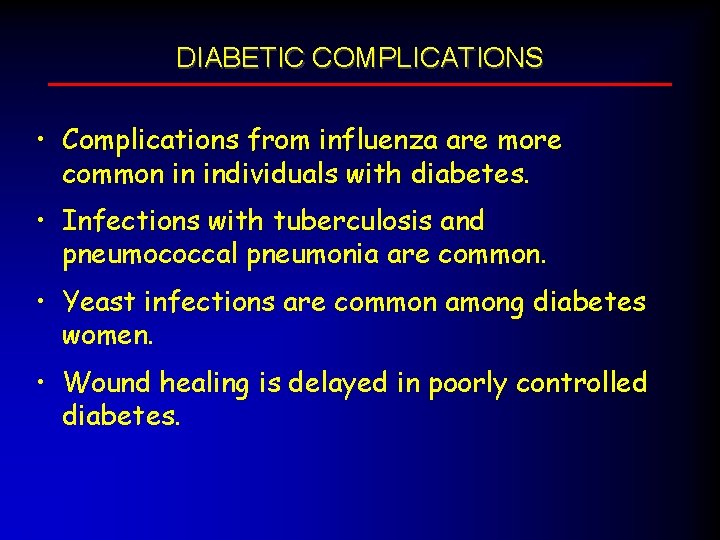
DIABETIC COMPLICATIONS • Complications from influenza are more common in individuals with diabetes. • Infections with tuberculosis and pneumococcal pneumonia are common. • Yeast infections are common among diabetes women. • Wound healing is delayed in poorly controlled diabetes.
Diabetic Complications “Diabetes is a dreadful affliction, the melting down of flesh and limbs into urine…Life is short, unpleasant and painful. . . -- Areteus of Capadocia, 2 nd C. A. D. What can we do? ? ?
Additional Source Information for more information see: http: //open. umich. edu/wiki/Citation. Policy Slide 4: Arno Kumagai Slide 5: Arno Kumagai Slide 6: Arno Kumagai Slide 7: Arno Kumagai Slide 9: Arno Kumagai Slide 10: Source Undetermined Slide 11: Arno Kumagai Slide 12: Arno Kumagai Slide 15: Arno Kumagai Slide 16: Arno Kumagai Slide 17: Arno Kumagai Slide 18: Arno Kumagai Slide 19: Arno Kumagai Slide 20: Arno Kumagai Slide 23: Arno Kumagai Slide 24: Arno Kumagai Slide 25: CC: BY-NC Márcio Cabral de Moura, http: //www. flickr. com/photos/mcdemoura/2209204939/, Flickr, http: //creativecommons. org/licenses/by -nc-sa/2. 0/deed. en Slide 27: Arno Kumagai Slide 29: Arno Kumagai Slide 33: Arno Kumagai Slide 34: Arno Kumagai Slide 35: Source Undetermined Slide 36: Source Undetermined (Both Images) Slide 37: Source Undetermined (All Images) Slide 38: Source Undetermined Slide 40: Arno Kumagai; Source Undetermined Slide 42: Source Undetermined Slide 43: CC: BY-NC-SA oparrish, Flickr, http: //creativecommons. org/licenses/by-nc-sa/2. 0/deed. en; Arno Kumagai Slide 49: (Pacman) Albertsab@cawiki, Wikimedia Commons, http: //commons. wikimedia. org/wiki/File: Pac_Man. svg; Arno Kumagai