
Sanitation Definitions Arno Rosemarin Eco San Res Programme
- Slides: 41
Sanitation Definitions Arno Rosemarin Eco. San. Res Programme Stockholm Environment Institute partner of SACOSAN Workshop, SL, April 27, 2009
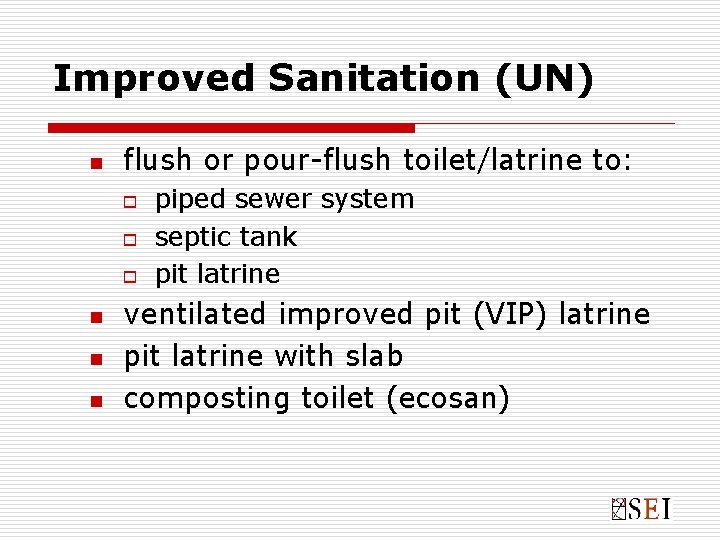
Improved Sanitation (UN) n flush or pour-flush toilet/latrine to: o o o n n n piped sewer system septic tank pit latrine ventilated improved pit (VIP) latrine pit latrine with slab composting toilet (ecosan)
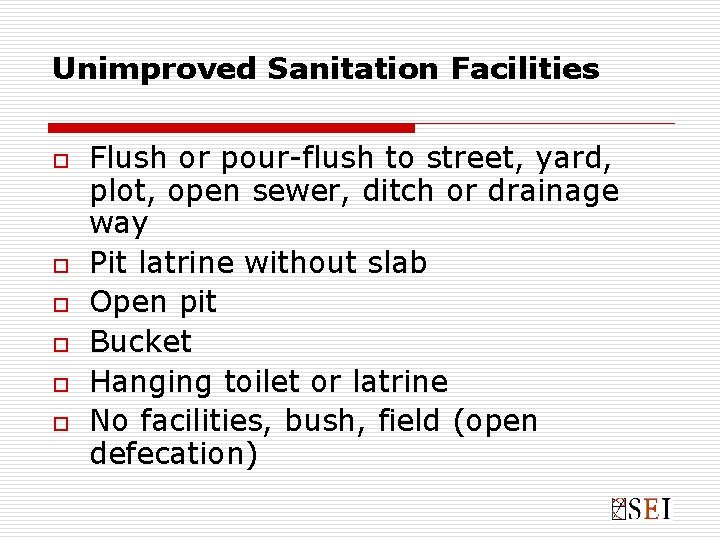
Unimproved Sanitation Facilities o o o Flush or pour-flush to street, yard, plot, open sewer, ditch or drainage way Pit latrine without slab Open pit Bucket Hanging toilet or latrine No facilities, bush, field (open defecation)
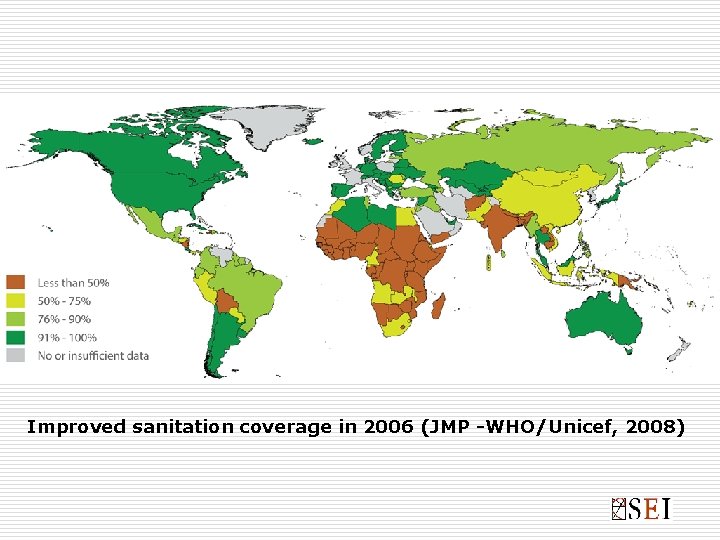
Improved sanitation coverage in 2006 (JMP -WHO/Unicef, 2008)
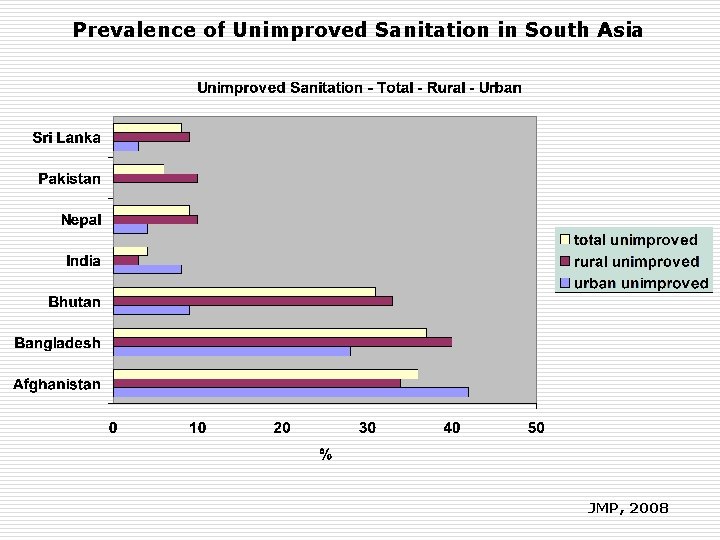
Prevalence of Unimproved Sanitation in South Asia JMP, 2008
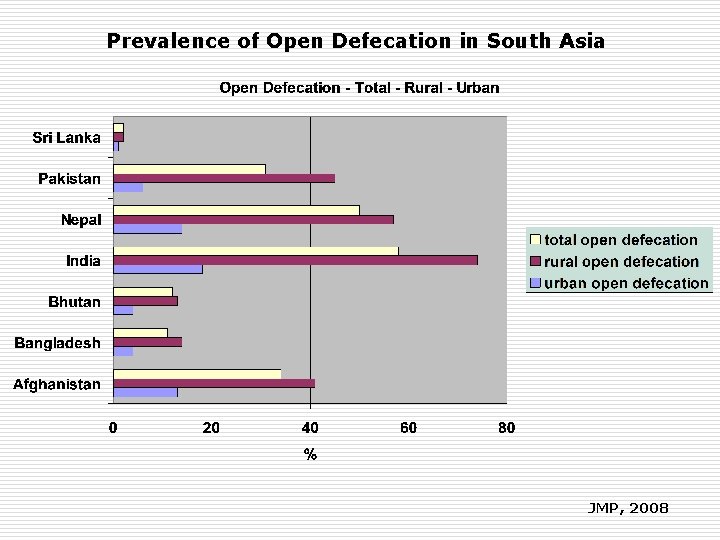
Prevalence of Open Defecation in South Asia JMP, 2008
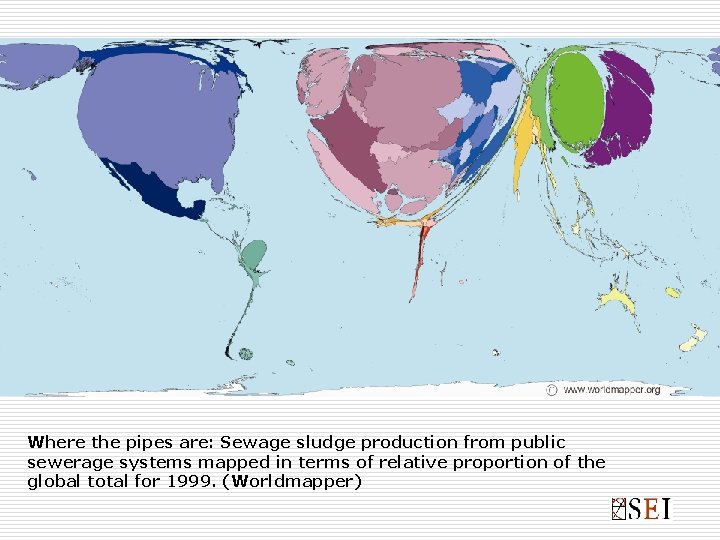
Where the pipes are: Sewage sludge production from public sewerage systems mapped in terms of relative proportion of the global total for 1999. (Worldmapper)
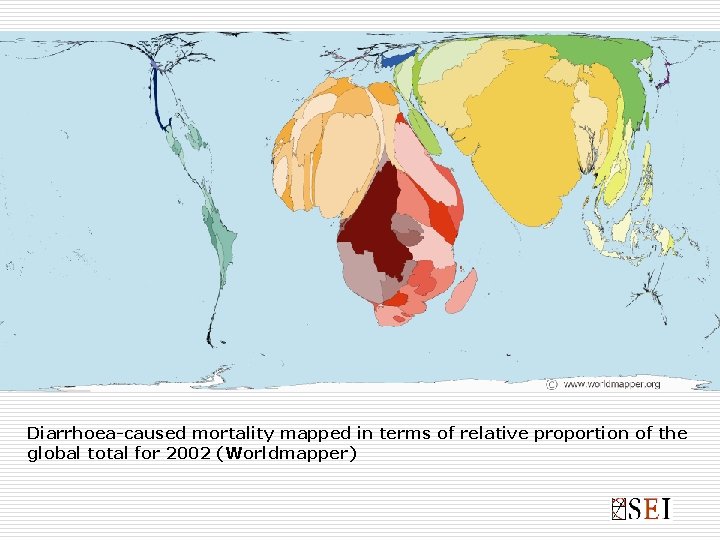
Diarrhoea-caused mortality mapped in terms of relative proportion of the global total for 2002 (Worldmapper)
Sustainable Sanitation o Sustainable sanitation goes beyond ”improved” and focuses on systems that n protect and promote human health by providing a clean environment and breaking the cycle of disease n are economically viable, socially acceptable, and technically and institutionally appropriate n protect the environment and natural resources n can involve a wide selection of technologies
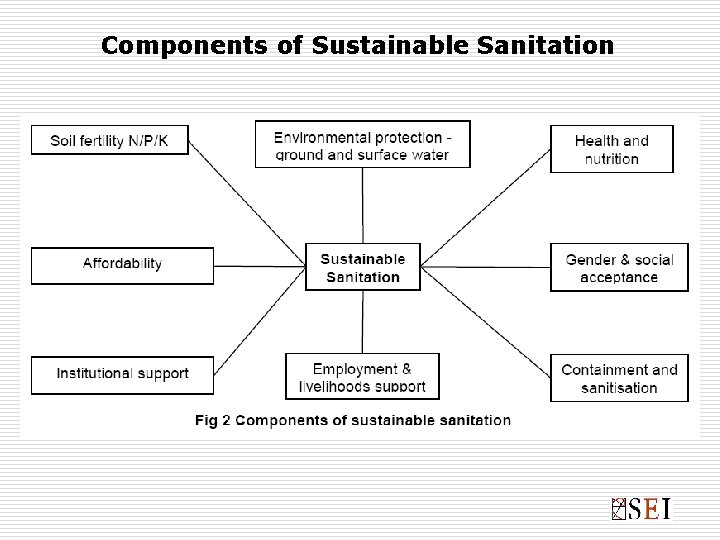
Components of Sustainable Sanitation
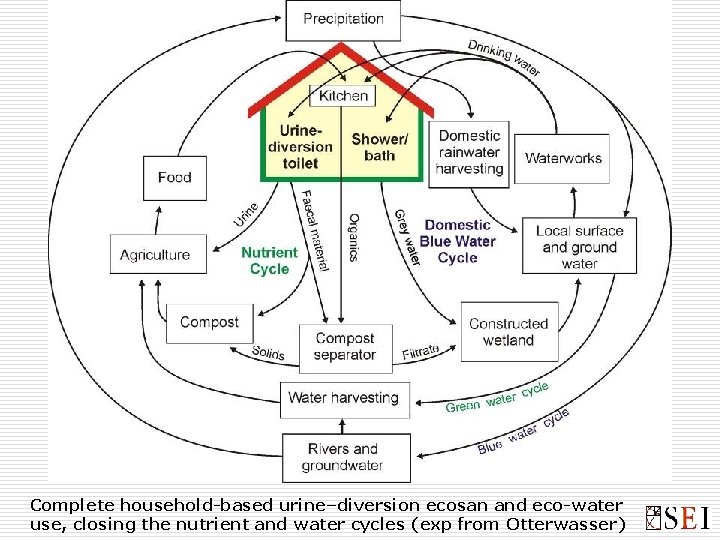
Ecological Sanitation n n source separation of urine & faeces and even greywater containment of each product sanitisation and treatment recycling of the nutrients, humus and water to soil and agricultural systems
Opportunities for Alternative Solutions o o o Humans produce only 50 L of faeces and 500 L of urine per year person A normal flush toilet uses an additional 15, 000 L of drinking water person per year The greywater from kitchens and bathrooms adds an additional 35, 000 L person per year Mixing the above and adding storm water makes centralised sewage systems often unaffordable for poor cities Source separation allows for the development of new sustainable alternatives These are being tested in small towns at present within the Eco. San. Res Programme and other international programmes
Complete household-based urine–diversion ecosan and eco-water use, closing the nutrient and water cycles (exp from Otterwasser)
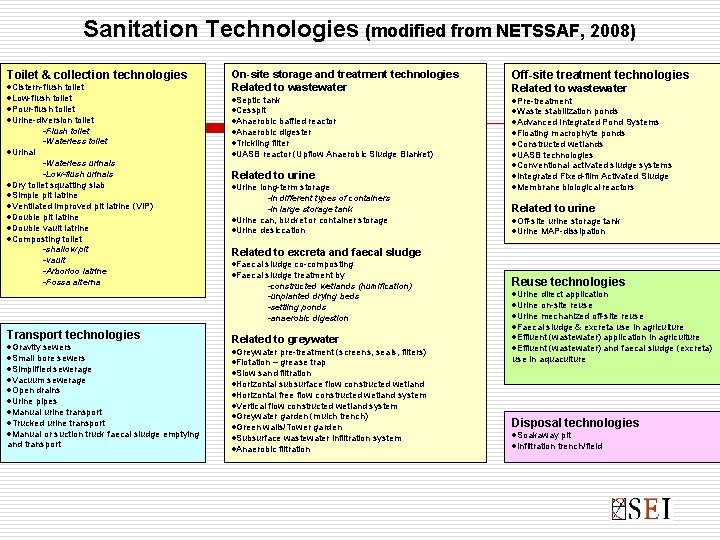
Sanitation Technologies (modified from NETSSAF, 2008) Toilet & collection technologies ·Cistern-flush toilet ·Low-flush toilet ·Pour-flush toilet ·Urine-diversion toilet ·Urinal -Flush toilet -Waterless urinals -Low-flush urinals ·Dry toilet squatting slab ·Simple pit latrine ·Ventilated improved pit latrine (VIP) ·Double pit latrine ·Double vault latrine ·Composting toilet -shallow pit -vault -Arborloo latrine -Fossa alterna Transport technologies ·Gravity sewers ·Small bore sewers ·Simplified sewerage ·Vacuum sewerage ·Open drains ·Urine pipes ·Manual urine transport ·Trucked urine transport ·Manual or suction truck faecal sludge emptying and transport On-site storage and treatment technologies Related to wastewater ·Septic tank ·Cesspit ·Anaerobic baffled reactor ·Anaerobic digester ·Trickling filter ·UASB reactor (Upflow Anaerobic Sludge Blanket) Related to urine ·Urine long-term storage -in different types of containers -in large storage tank ·Urine can, bucket or container storage ·Urine desiccation Off-site treatment technologies Related to wastewater ·Pre-treatment ·Waste stabilization ponds ·Advanced Integrated Pond Systems ·Floating macrophyte ponds ·Constructed wetlands ·UASB technologies ·Conventional activated sludge systems ·Integrated Fixed-film Activated Sludge ·Membrane biological reactors Related to urine ·Off-site urine storage tank ·Urine MAP-dissipation Related to excreta and faecal sludge ·Faecal sludge co-composting ·Faecal sludge treatment by -constructed wetlands (humification) -unplanted drying beds -settling ponds -anaerobic digestion Related to greywater ·Greywater pre-treatment (screens, seals, filters) ·Flotation – grease trap ·Slow sand filtration ·Horizontal subsurface flow constructed wetland ·Horizontal free flow constructed wetland system ·Vertical flow constructed wetland system ·Greywater garden (mulch trench) ·Green walls/Tower garden ·Subsurface wastewater infiltration system ·Anaerobic filtration Reuse technologies ·Urine direct application ·Urine on-site reuse ·Urine mechanized off-site reuse ·Faecal sludge & excreta use in agriculture ·Effluent (wastewater) application in agriculture ·Effluent (wastewater) and faecal sludge (excreta) use in aquaculture Disposal technologies ·Soakaway pit ·Infiltration trench/field
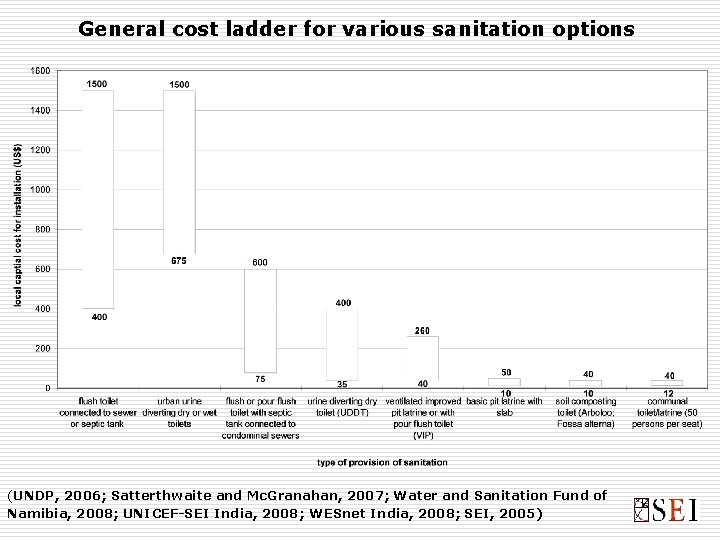
General cost ladder for various sanitation options (UNDP, 2006; Satterthwaite and Mc. Granahan, 2007; Water and Sanitation Fund of Namibia, 2008; UNICEF-SEI India, 2008; WESnet India, 2008; SEI, 2005)
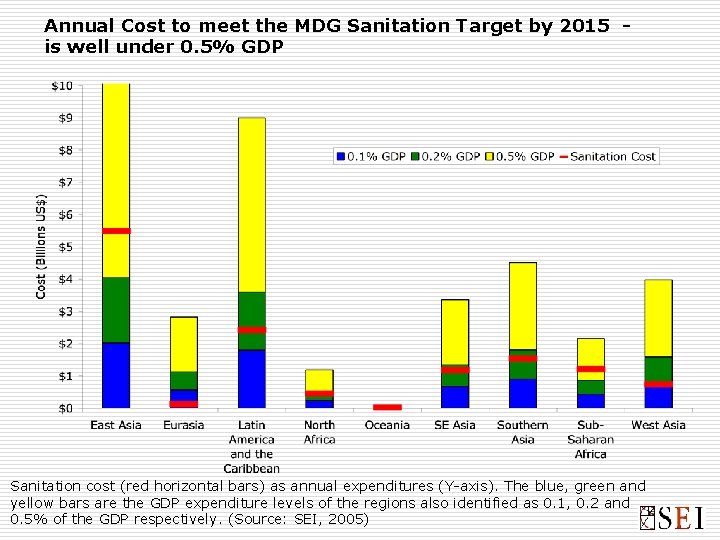
Annual Cost to meet the MDG Sanitation Target by 2015 is well under 0. 5% GDP Sanitation cost (red horizontal bars) as annual expenditures (Y-axis). The blue, green and yellow bars are the GDP expenditure levels of the regions also identified as 0. 1, 0. 2 and 0. 5% of the GDP respectively. (Source: SEI, 2005)
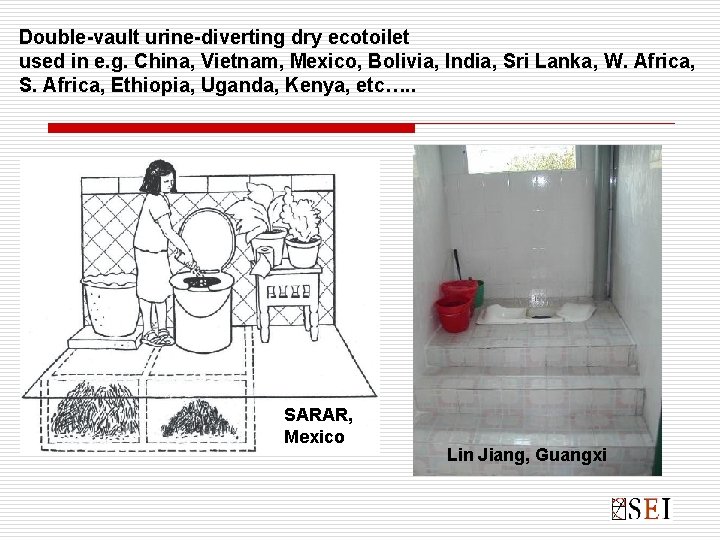
Double-vault urine-diverting dry ecotoilet used in e. g. China, Vietnam, Mexico, Bolivia, India, Sri Lanka, W. Africa, S. Africa, Ethiopia, Uganda, Kenya, etc…. . SARAR, Mexico Lin Jiang, Guangxi
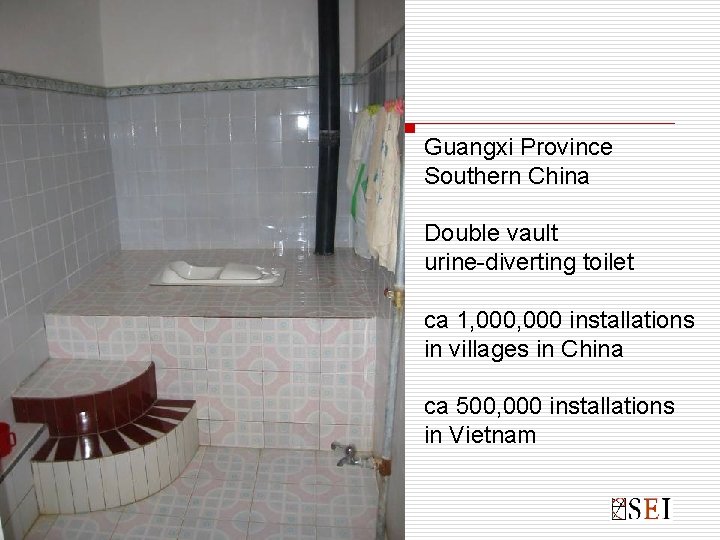
Guangxi Province Southern China Double vault urine-diverting toilet ca 1, 000 installations in villages in China ca 500, 000 installations in Vietnam
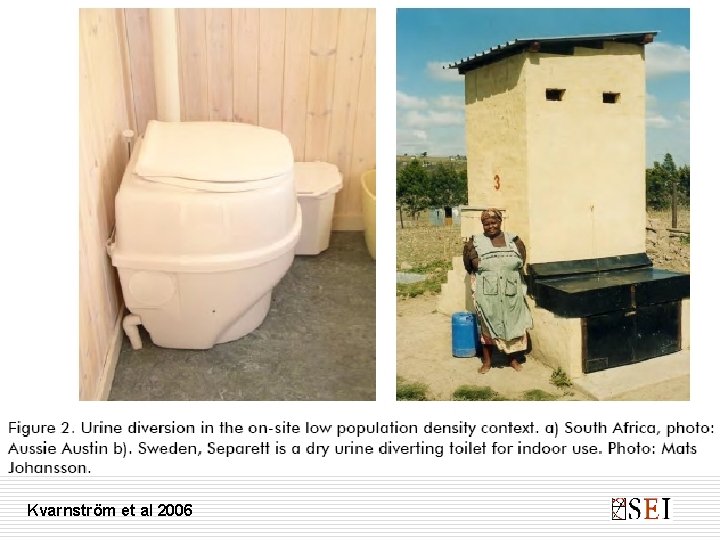
Kvarnström et al 2006
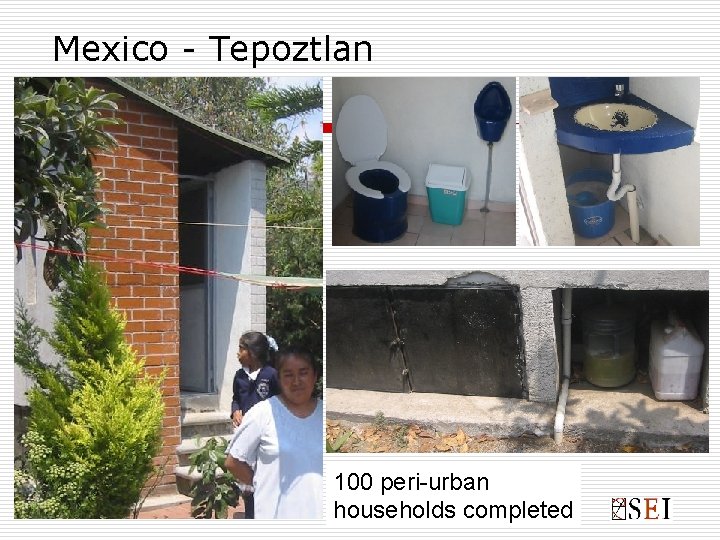
Mexico - Tepoztlan double vault urinediverting toilets & waterless urinals 100 peri-urban households completed
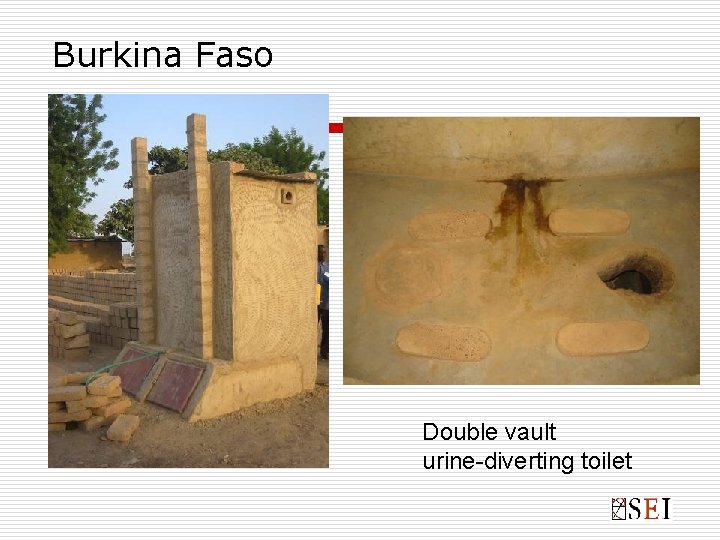
Burkina Faso Double vault urine-diverting toilet
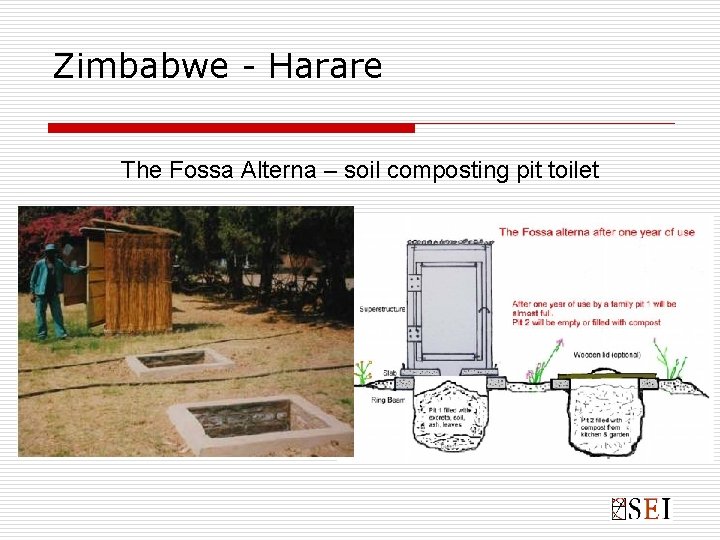
Zimbabwe - Harare The Fossa Alterna – soil composting pit toilet
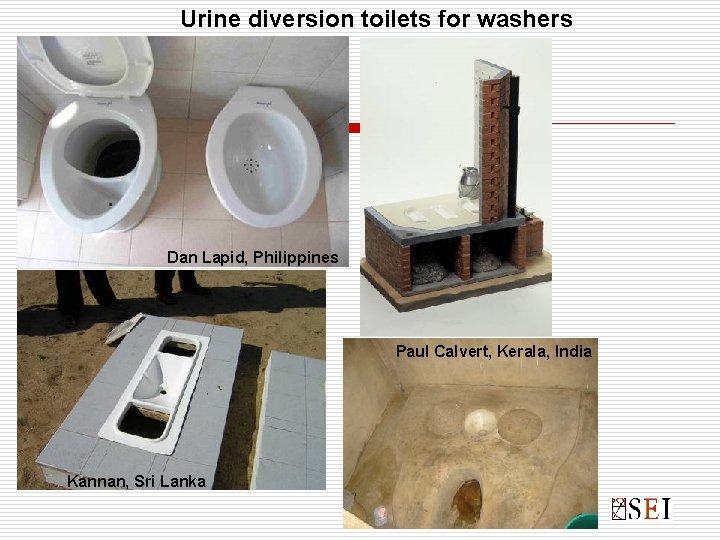
Urine diversion toilets for washers Dan Lapid, Philippines Paul Calvert, Kerala, India Kannan, Sri Lanka
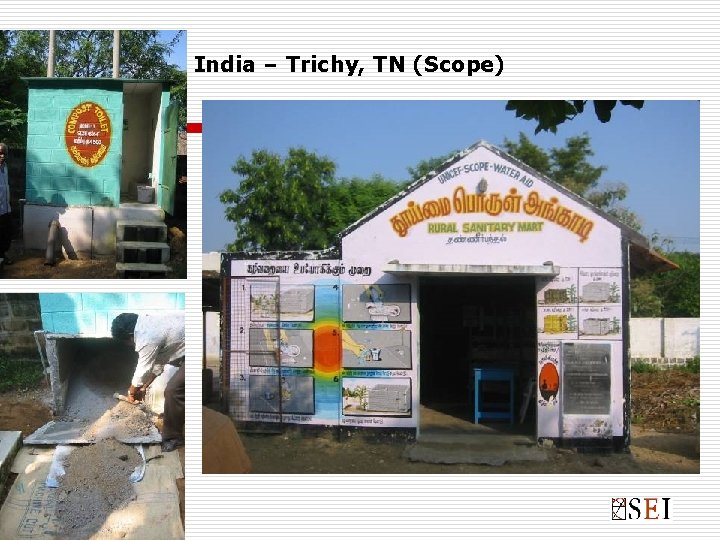
India – Trichy, TN (Scope)
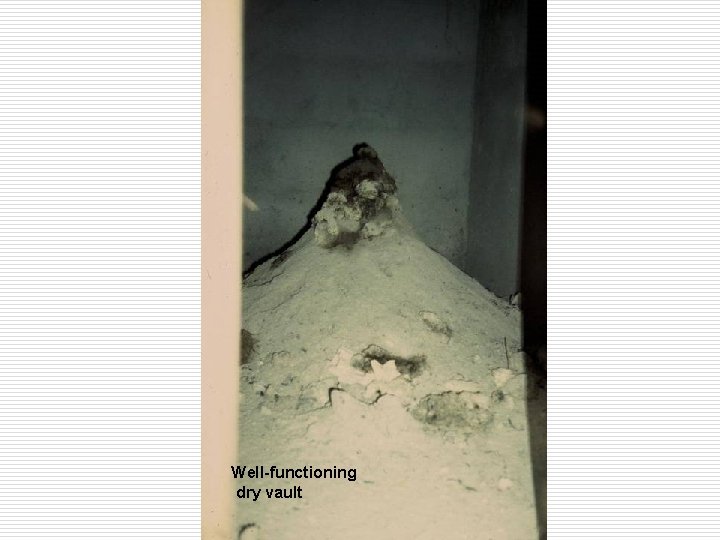
Well-functioning dry vault
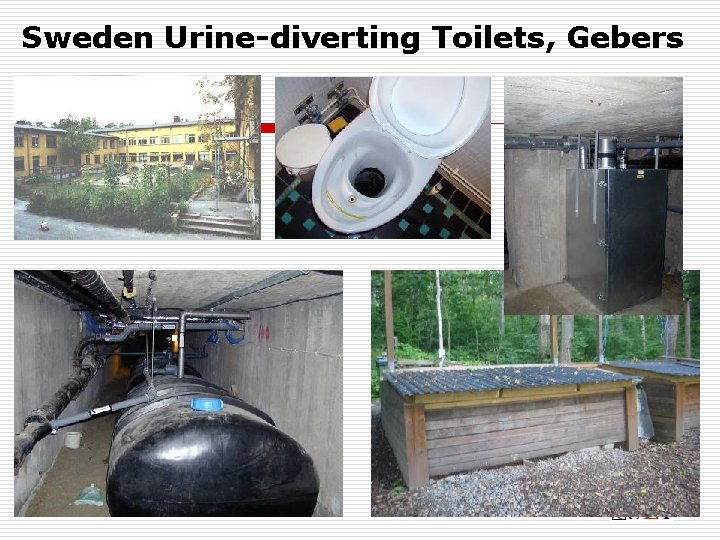
Sweden Urine-diverting Toilets, Gebers
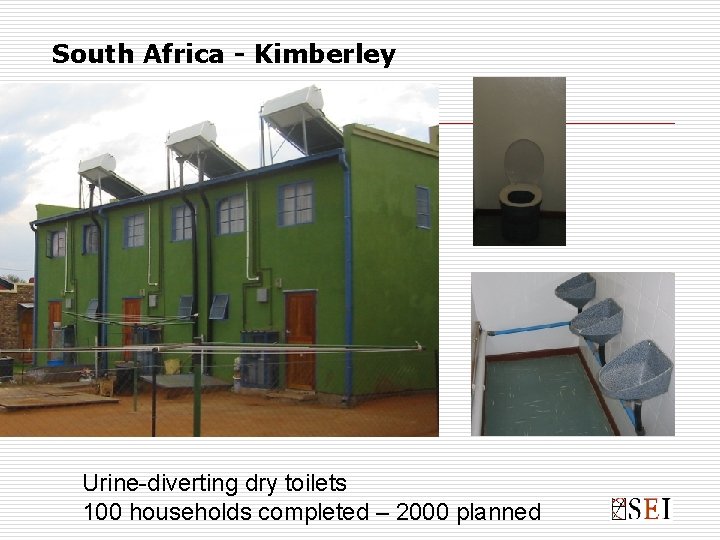
South Africa - Kimberley Urine-diverting dry toilets 100 households completed – 2000 planned
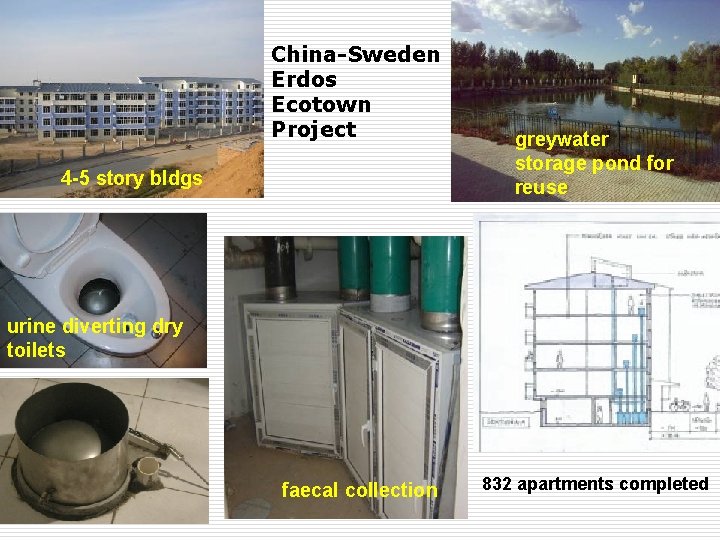
China-Sweden Erdos Ecotown Project 4 -5 story bldgs greywater storage pond for reuse urine diverting dry toilets faecal collection 832 apartments completed
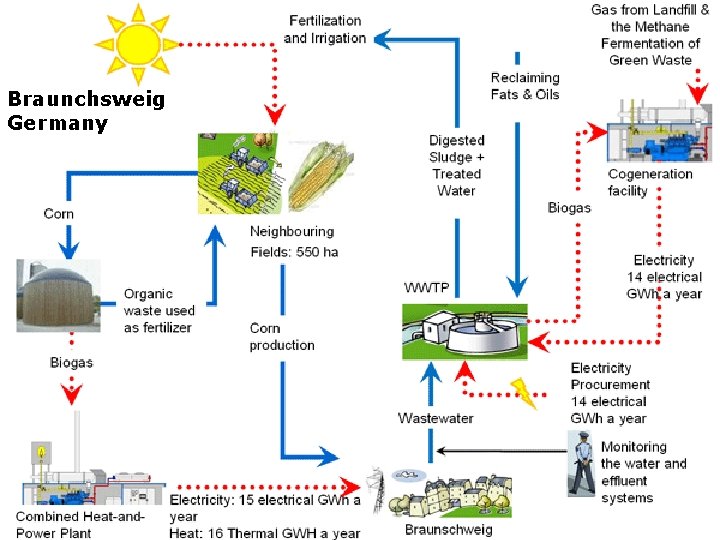
Braunchsweig Germany
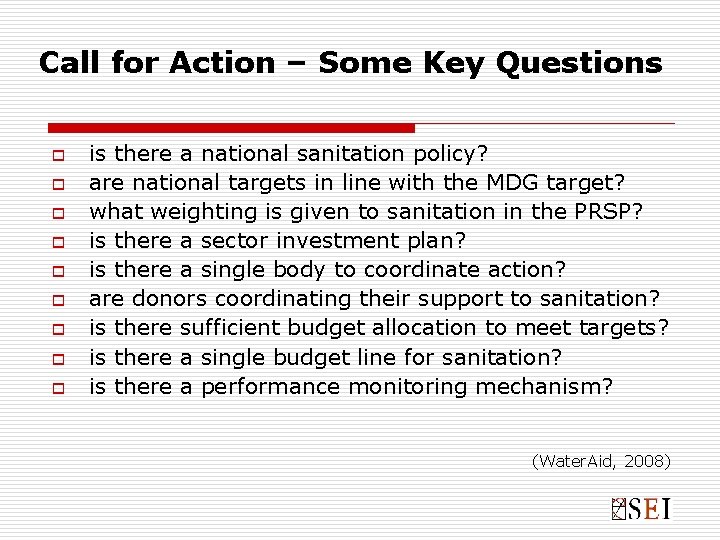
Call for Action – Some Key Questions o o o o o is there a national sanitation policy? are national targets in line with the MDG target? what weighting is given to sanitation in the PRSP? is there a sector investment plan? is there a single body to coordinate action? are donors coordinating their support to sanitation? is there sufficient budget allocation to meet targets? is there a single budget line for sanitation? is there a performance monitoring mechanism? (Water. Aid, 2008)
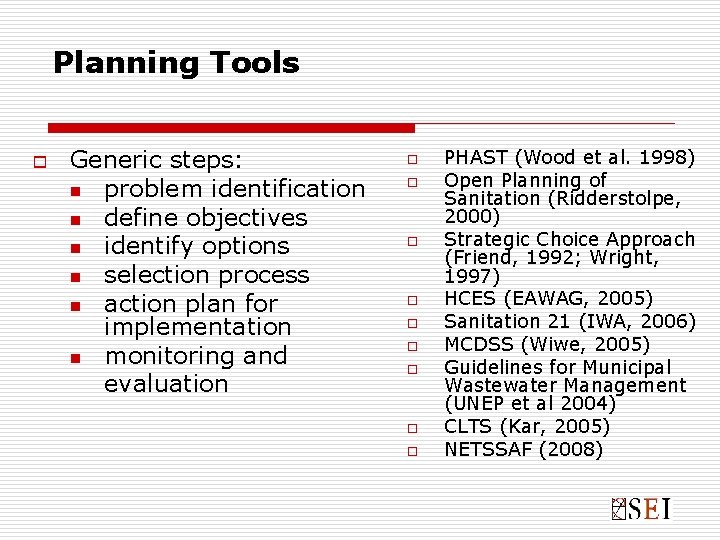
Planning Tools o Generic steps: n problem identification n define objectives n identify options n selection process n action plan for implementation n monitoring and evaluation o o o o o PHAST (Wood et al. 1998) Open Planning of Sanitation (Ridderstolpe, 2000) Strategic Choice Approach (Friend, 1992; Wright, 1997) HCES (EAWAG, 2005) Sanitation 21 (IWA, 2006) MCDSS (Wiwe, 2005) Guidelines for Municipal Wastewater Management (UNEP et al 2004) CLTS (Kar, 2005) NETSSAF (2008)
Lack of Capacity – Top Concern o o Limited absorptive capacity, i. e. inability to make use of available resources Poor service delivery and performance Limited transfer of knowledge Construction of infrastructures without consultation with end-users
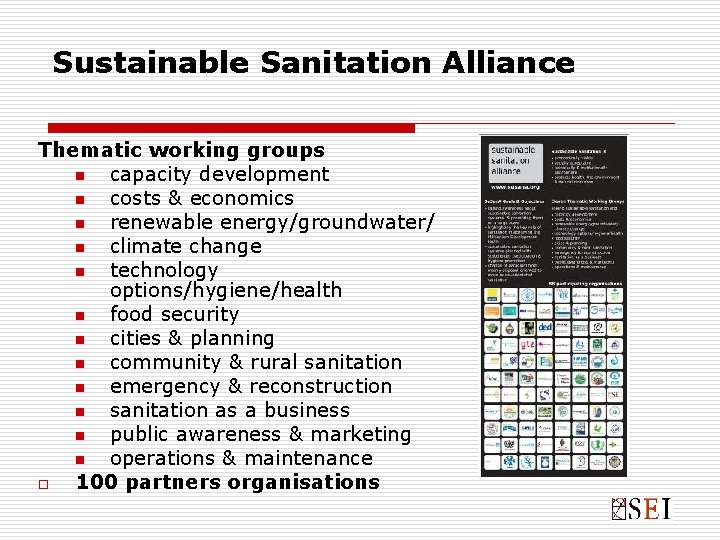
Sustainable Sanitation Alliance Thematic working groups n capacity development n costs & economics n renewable energy/groundwater/ n climate change n technology options/hygiene/health n food security n cities & planning n community & rural sanitation n emergency & reconstruction n sanitation as a business n public awareness & marketing n operations & maintenance o 100 partners organisations
Conclusions
Size of the Problem is Underestimated o o o the UN definition of improved sanitation does not strictly take into account dysfunction and contamination of the environment the UN coverage data may be providing an unrealistic picture if a definition including sustainability criteria were to be used, the global sanitation crisis would be even larger than it is perceived to be today
Not Given High Enough Priority o o the health burden (e. g. diarrhoeal diseases & worm infestations) imposed by dysfunctional or non-existent hygiene & sanitation should be given as high a priority as other diseases like malaria, HIV/AIDS & tuberculosis informal settlements such as slums and peri-urban areas require special added attention in terms of provision of safe water and sanitation systems
Sustainability Criteria Are Not Yet Being Used o o the introduction of sustainability criteria into the definition, planning and implementation of sanitation systems will have long-term positive impacts and make the investments even more cost-effective more appropriate, affordable and resilient sanitation systems are available than those currently being chosen and that professionals need to be better informed and trained about these
Public Dialogue and Demand is Lacking o o o o sanitation pays for itself several times over in improved health and livelihoods there are many active institutional players involved but lack of public dialogue and awareness prevents large strides in progress sanitation must be seen as an interplay between human behaviour (cultural attitudes and norms) appropriate technologies needed stakeholder and gender-sensitive planning and implementation needed scaling up needs planning systems, public ownership, local political leadership and stable financing
Local Financing the Key o o o financing of sanitation systems needs to be predictable and reliable based on the local ability to pay not entirely on external subsidies the costing out must also include operations and maintenance innovative financing can be developed e. g. with micro-credit loans also involving inclusive financial sectors not before linked to sanitation
Sanitation Value Chain o o o sanitation products e. g. water and nutrients are not waste products but valuable resources sanitation systems should be designed around possible reuse options this will have significant impacts on nutrition and food security productive sanitation can significantly substitute the use of chemical fertilisers in developing countries capacity building at the individual and institutional levels is needed globally to lift the sanitation sector into the era of sustainable development
www. ecosanres. org