Asthma in Latin America Community Health Worker Screening

- Slides: 43
Asthma in Latin America & Community Health Worker Screening for Asthma in Nicaragua Mary Crocker, MD, MPH March 16, 2017
Disclosures • Conflicts of interest: None • Funding sources: – NC Children’s Promise Research Grant – OIA Global Health Scholars Program
Outline • Overview of Asthma in Latin America – Is asthma really a global health problem? – How important is asthma? – What are risk factors for asthma in Latin America? • Asthma Screening Project in Managua, Nicaragua – Project development and implementation – Results
Part 1: Asthma in Latin America
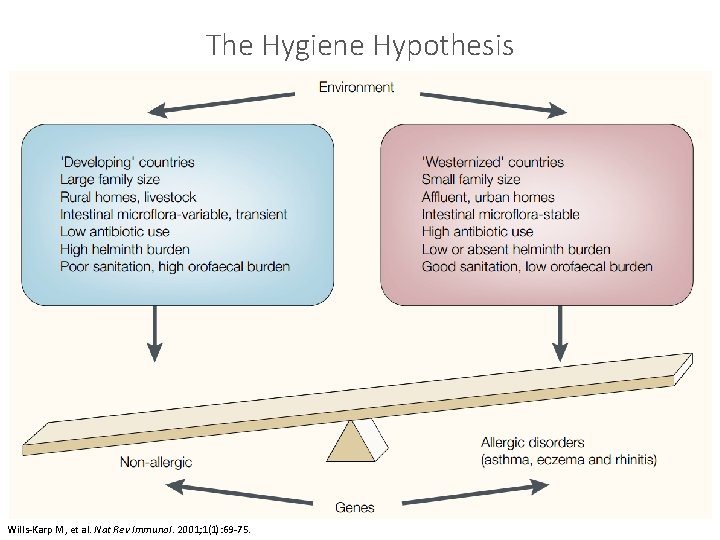
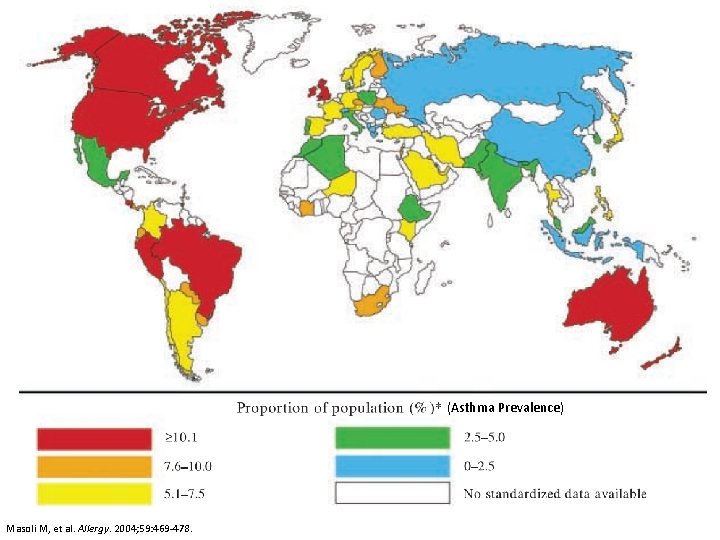
Is asthma really a problem in global health? • Common perception that asthma is more prevalent in affluent nations • A result of the “hygiene hypothesis”
The Hygiene Hypothesis Wills-Karp M, et al. Nat Rev Immunol. 2001; 1(1): 69 -75.
(Asthma Prevalence) Masoli M, et al. Allergy. 2004; 59: 469 -478.
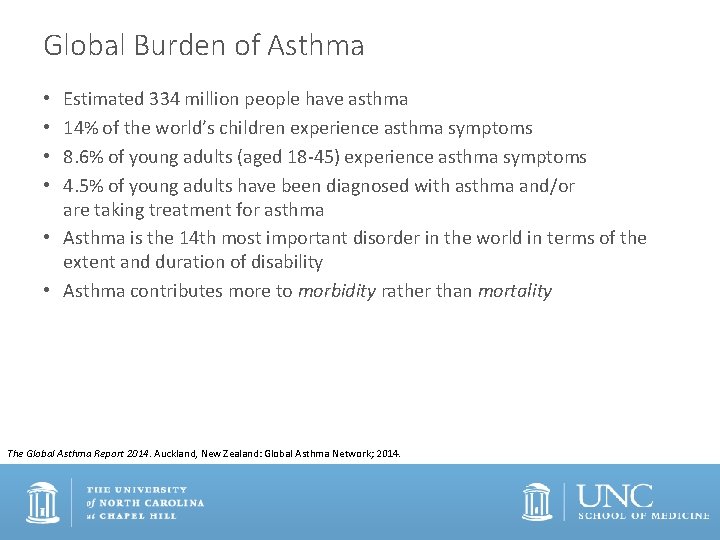
Global Burden of Asthma Estimated 334 million people have asthma 14% of the world’s children experience asthma symptoms 8. 6% of young adults (aged 18 -45) experience asthma symptoms 4. 5% of young adults have been diagnosed with asthma and/or are taking treatment for asthma • Asthma is the 14 th most important disorder in the world in terms of the extent and duration of disability • Asthma contributes more to morbidity rather than mortality • • The Global Asthma Report 2014. Auckland, New Zealand: Global Asthma Network; 2014.
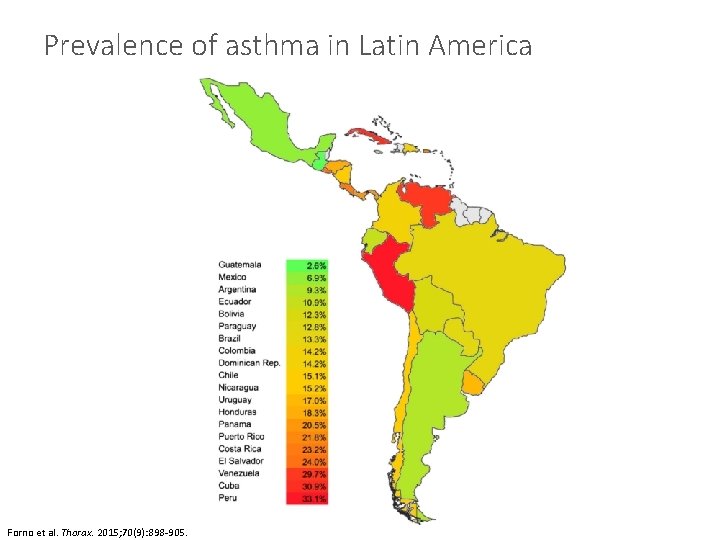
Prevalence of asthma in Latin America Forno et al. Thorax. 2015; 70(9): 898 -905.
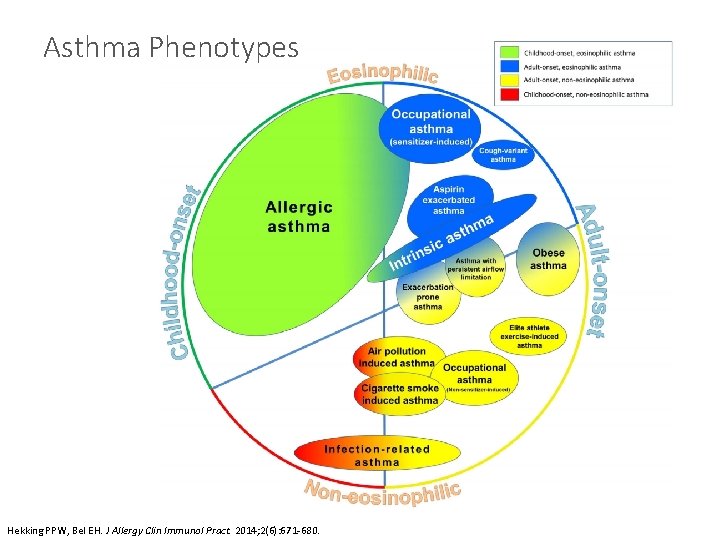
More complicated than we thought… • The hygiene hypothesis took the simplistic view that all asthma is created equal (i. e. classic allergic asthma) • In fact there are multiple asthma phenotypes – Different clinical patterns – Different pathogenesis – Different responses to treatment
Asthma Phenotypes Hekking PPW, Bel EH. J Allergy Clin Immunol Pract. 2014; 2(6): 671 -680.
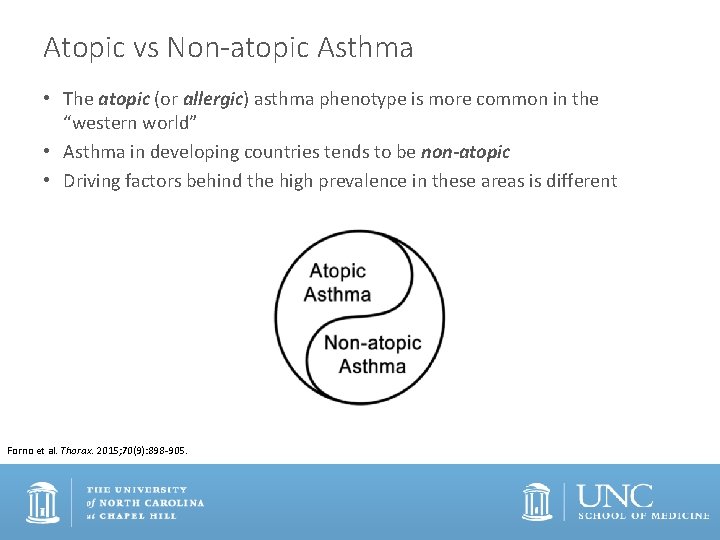
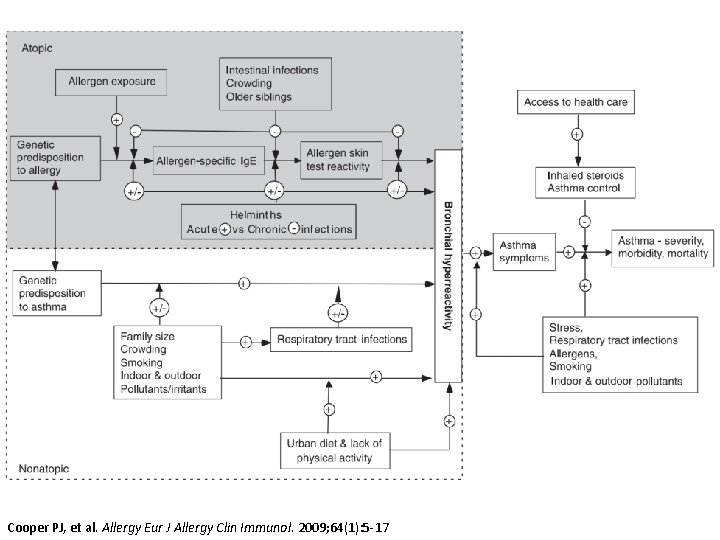
Atopic vs Non-atopic Asthma • The atopic (or allergic) asthma phenotype is more common in the “western world” • Asthma in developing countries tends to be non-atopic • Driving factors behind the high prevalence in these areas is different Forno et al. Thorax. 2015; 70(9): 898 -905.
Cooper PJ, et al. Allergy Eur J Allergy Clin Immunol. 2009; 64(1): 5 -17
Risk factors for asthma in Latin America • • • Changes in diet and exercise obesity Increased exposure to antibiotics and vaccines Indoor irritants Changes in exposure to allergens Increased psychosocial stresses and violence • Relationship is unclear: – Effect of poverty is NOT straightforward – Helminth infection – Outdoor air pollution – associated with exacerbations but not necessarily increased prevalence – Indoor air pollution (e. g. wood stoves)
Key Points • Asthma is an important cause of morbidity in the developing world • High prevalence of asthma in urban communities is not adequately explained by the hygiene hypothesis • Risk factors for asthma in Latin America are different than those in more affluent countries, but many are still not well understood
Part 2: Community Health Worker Screening for Asthma in Managua, Nicaragua
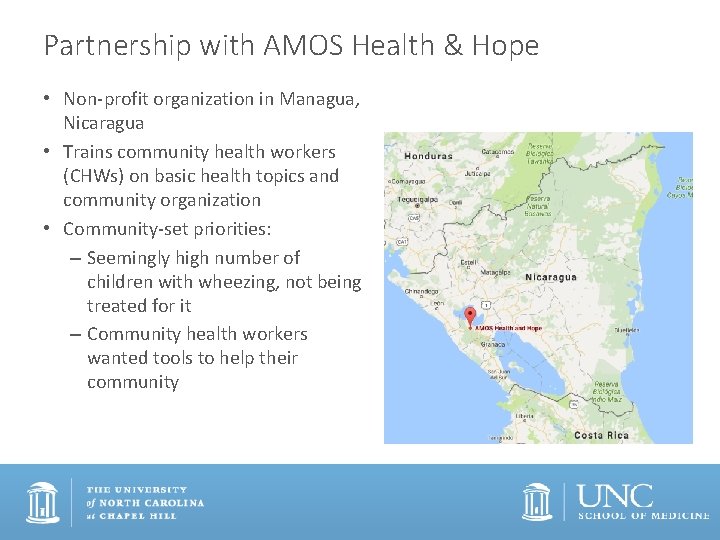
Partnership with AMOS Health & Hope • Non-profit organization in Managua, Nicaragua • Trains community health workers (CHWs) on basic health topics and community organization • Community-set priorities: – Seemingly high number of children with wheezing, not being treated for it – Community health workers wanted tools to help their community
Project Goals • Develop a tool to help the community health workers (CHWs) identify children at risk for asthma • Evaluate the tool for its effectiveness • Ensure that children identified as having asthma receive appropriate care • Secondary objectives: – Determine the actual prevalence of asthma – Explore risk factors for asthma in this population
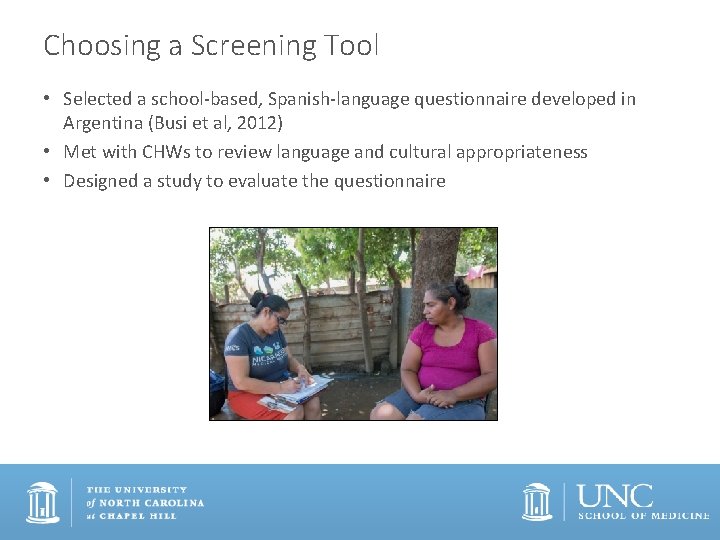
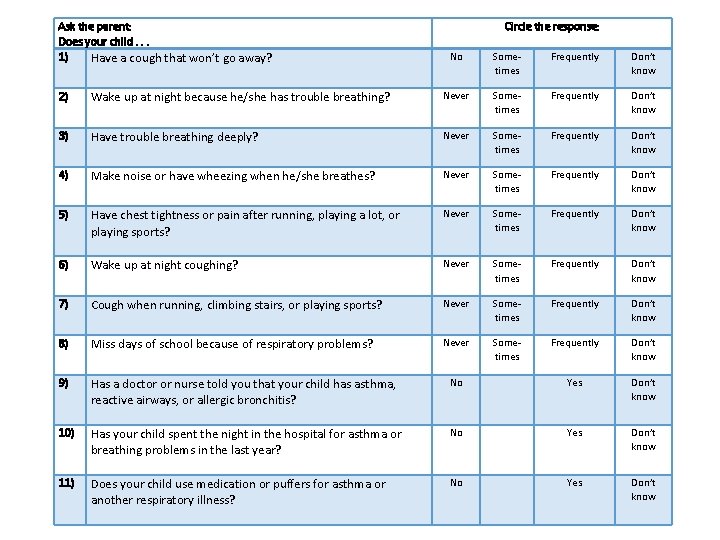
Choosing a Screening Tool • Selected a school-based, Spanish-language questionnaire developed in Argentina (Busi et al, 2012) • Met with CHWs to review language and cultural appropriateness • Designed a study to evaluate the questionnaire
Ask the parent: Does your child. . . 1) Have a cough that won’t go away? Circle the response: No Frequently Don’t know 2) Wake up at night because he/she has trouble breathing? Sometimes Never Frequently Don’t know 3) Have trouble breathing deeply? Sometimes Never Frequently Don’t know 4) Make noise or have wheezing when he/she breathes? Sometimes Never Frequently Don’t know 5) Have chest tightness or pain after running, playing a lot, or playing sports? Sometimes Never Sometimes Frequently Don’t know 6) Wake up at night coughing? Never Frequently Don’t know 7) Cough when running, climbing stairs, or playing sports? Sometimes Never Frequently Don’t know 8) Miss days of school because of respiratory problems? Sometimes Never Sometimes Frequently Don’t know No Yes Don’t know 9) Has a doctor or nurse told you that your child has asthma, reactive airways, or allergic bronchitis? 10) Has your child spent the night in the hospital for asthma or breathing problems in the last year? No Yes Don’t know 11) Does your child use medication or puffers for asthma or another respiratory illness? No Yes Don’t know
Study Design • Enroll all children ages 2 -17 in Vladimir Hernandez, a small sector in Managua • Perform pediatric pulmonologist evaluation to assess for asthma • Separately, CHW administers screening questionnaire • Using results of physician evaluation as a gold standard, evaluate the effectiveness of the screening questionnaire (sensitivity, specificity, positive predictive value, and negative predictive value)
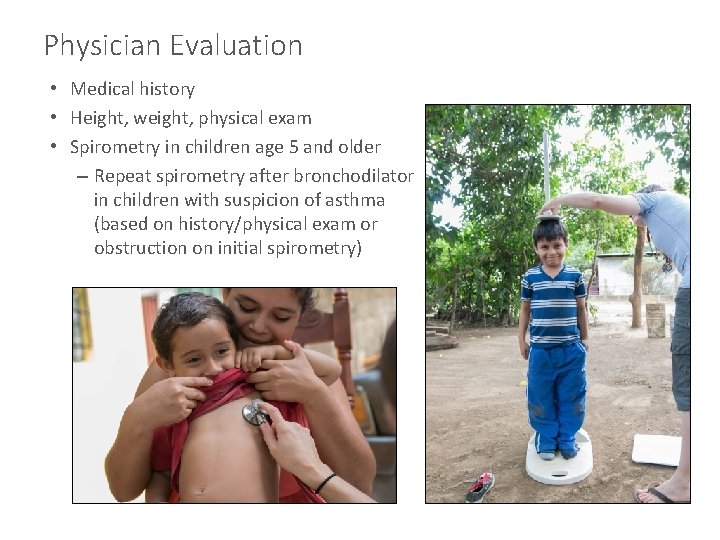
Physician Evaluation • Medical history • Height, weight, physical exam • Spirometry in children age 5 and older – Repeat spirometry after bronchodilator in children with suspicion of asthma (based on history/physical exam or obstruction on initial spirometry)
Diagnosis of asthma • Requirements for a diagnosis of asthma: – Clinical history consistent with asthma • Recurrent wheezing (>2 episodes) or shortness of breath that vary in intensity or over time • Presence of triggers, such as URIs, exercise, allergens, smoke, odors • Improvement with steroids or bronchodilator, if used – Spirometry used as an aid to diagnosis, but obstruction or bronchodilator response not required for diagnosis • In children ages 2 -4, term reactive airways disease (RAD) was used instead of asthma
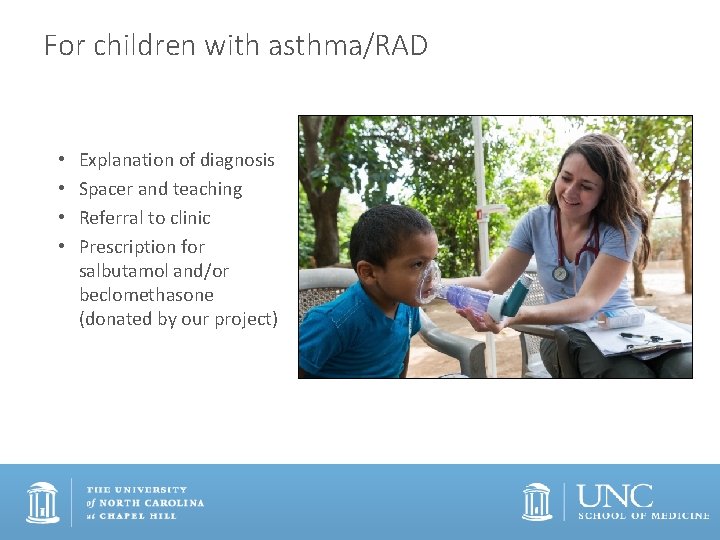
For children with asthma/RAD • • Explanation of diagnosis Spacer and teaching Referral to clinic Prescription for salbutamol and/or beclomethasone (donated by our project)
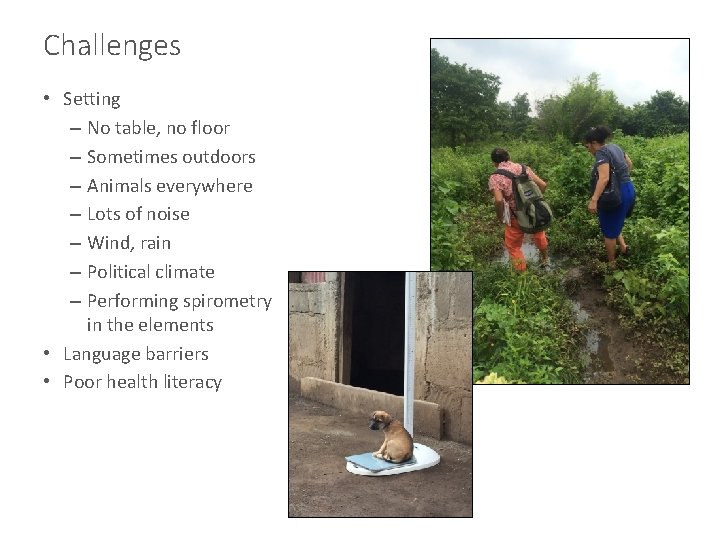
Challenges • Setting – No table, no floor – Sometimes outdoors – Animals everywhere – Lots of noise – Wind, rain – Political climate – Performing spirometry in the elements • Language barriers • Poor health literacy
RESULTS
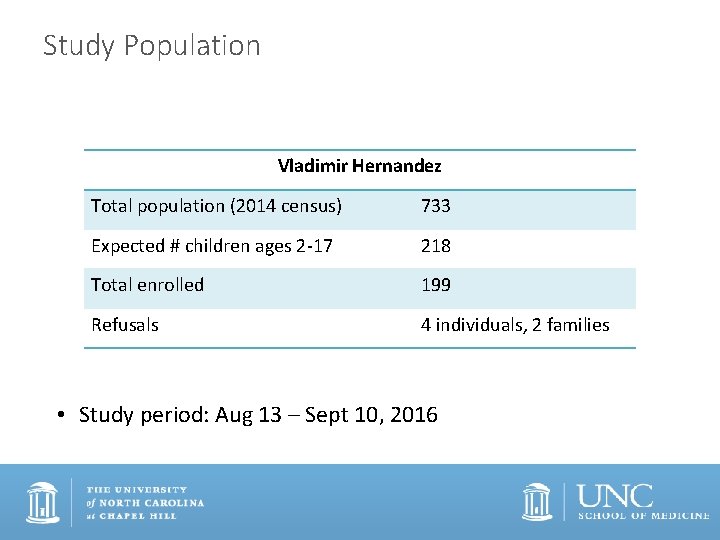
Study Population Vladimir Hernandez Total population (2014 census) 733 Expected # children ages 2 -17 218 Total enrolled 199 Refusals 4 individuals, 2 families • Study period: Aug 13 – Sept 10, 2016
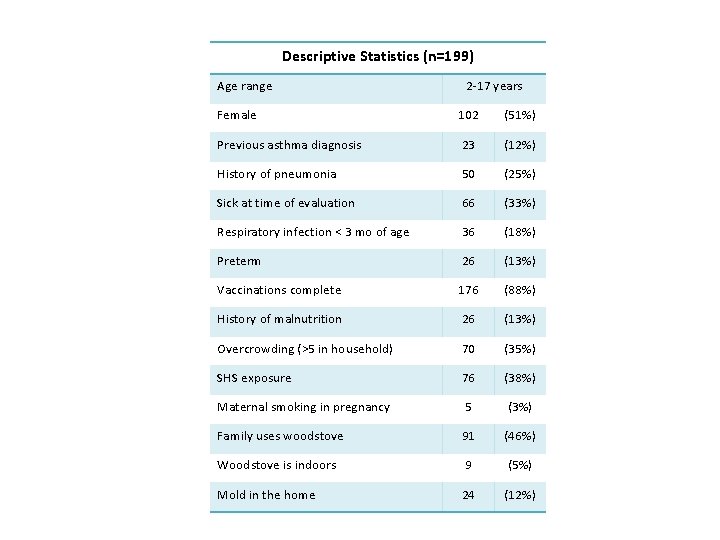
Descriptive Statistics (n=199) Age range 2 -17 years Female 102 (51%) Previous asthma diagnosis 23 (12%) History of pneumonia 50 (25%) Sick at time of evaluation 66 (33%) Respiratory infection < 3 mo of age 36 (18%) Preterm 26 (13%) Vaccinations complete 176 (88%) History of malnutrition 26 (13%) Overcrowding (>5 in household) 70 (35%) SHS exposure 76 (38%) Maternal smoking in pregnancy 5 (3%) Family uses woodstove 91 (46%) Woodstove is indoors 9 (5%) Mold in the home 24 (12%)
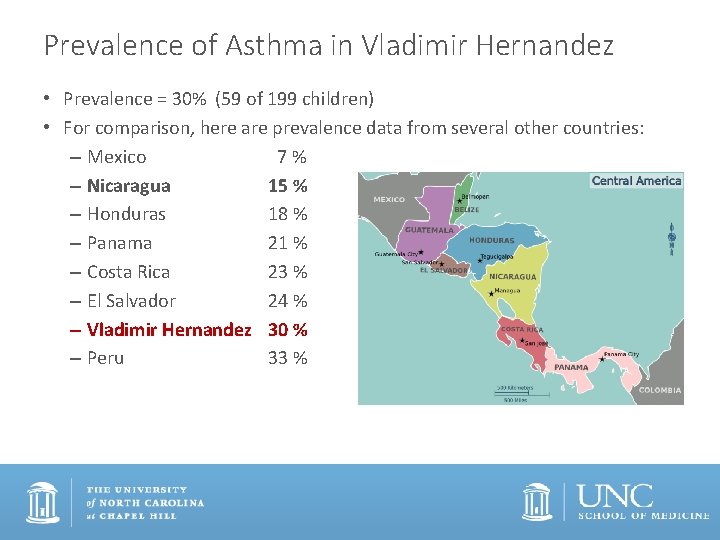
Prevalence of Asthma in Vladimir Hernandez • Prevalence = 30% (59 of 199 children) • For comparison, here are prevalence data from several other countries: – Mexico 7 % – Nicaragua 15 % – Honduras 18 % – Panama 21 % – Costa Rica 23 % – El Salvador 24 % – Vladimir Hernandez 30 % – Peru 33 %
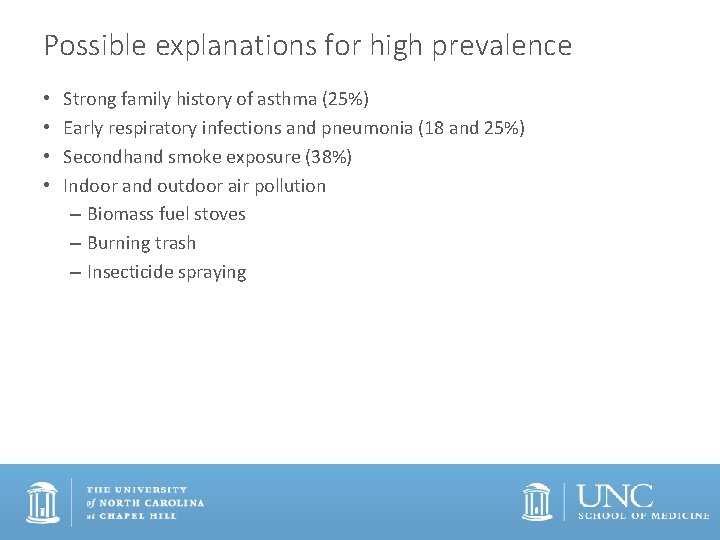
Possible explanations for high prevalence • • Strong family history of asthma (25%) Early respiratory infections and pneumonia (18 and 25%) Secondhand smoke exposure (38%) Indoor and outdoor air pollution – Biomass fuel stoves – Burning trash – Insecticide spraying
n = 133 59 p < 0. 0001
Evaluating a Screening Test • • Sensitivity Specificity Positive predictive value (PPV) Negative predictive value (NPV)
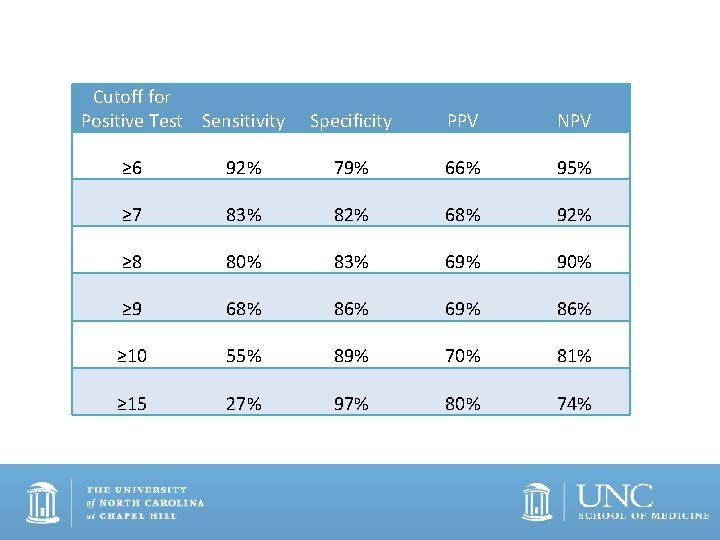
Sensitivity and Specificity: Characteristics of the test • Sensitivity – the likelihood that the test will pick up those who have the disease – 80% sensitivity means the test will detect 80% of those who have the disease • Specificity – the proportion of those who do not have the disease who have a negative test – 72% specificity means 72% of those without the disease will have a negative test
Predictive Value: What the test results mean to your patient • Positive predictive value (PPV) – Likelihood that a positive test means that the patient has the disease – 67% PPV means that a patient who tests positive has a 67% chance of having the disease • Negative predictive value (NPV) – Likelihood that a negative test means that the patient does not have the disease – 95% NPV means that a patient who tests negative has a 95% chance of not having the disease • These depend on the prevalence of the disease
Cutoff for Positive Test Sensitivity Specificity PPV NPV ≥ 6 92% 79% 66% 95% ≥ 7 83% 82% 68% 92% ≥ 8 80% 83% 69% 90% ≥ 9 68% 86% 69% 86% ≥ 10 55% 89% 70% 81% ≥ 15 27% 97% 80% 74%
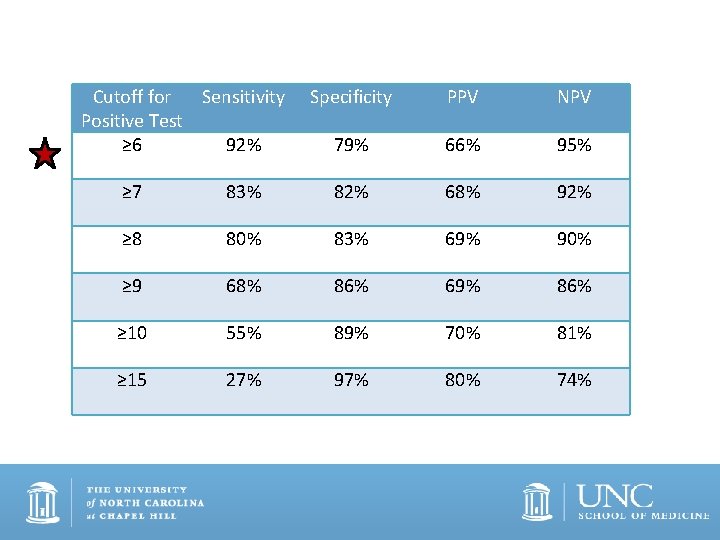
Determining a Cutoff for a Positive Test • Presented the community these scenarios about two families: – False Positive: One family is told their child has asthma, and they are sent to the doctor only to find out it isn’t correct and their child is actually fine. They lose time and money in the process, and have been worrying needlessly. – False Negative: The other family is incorrectly told by the health worker that their child does not have asthma, when in fact he/she actually does. They make no changes to their routine and the child continues to occasionally get sick. The family only finds out later that there were medications that could have helped him/her. • They unanimously chose the first scenario as the lesser of two evils
Cutoff for Sensitivity Positive Test ≥ 6 92% Specificity PPV NPV 79% 66% 95% ≥ 7 83% 82% 68% 92% ≥ 8 80% 83% 69% 90% ≥ 9 68% 86% 69% 86% ≥ 10 55% 89% 70% 81% ≥ 15 27% 97% 80% 74%
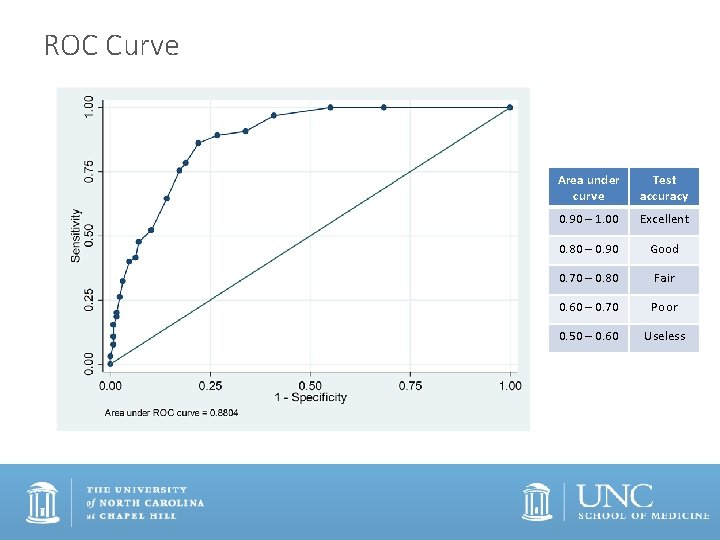
ROC Curve Area under curve Test accuracy 0. 90 – 1. 00 Excellent 0. 80 – 0. 90 Good 0. 70 – 0. 80 Fair 0. 60 – 0. 70 Poor 0. 50 – 0. 60 Useless
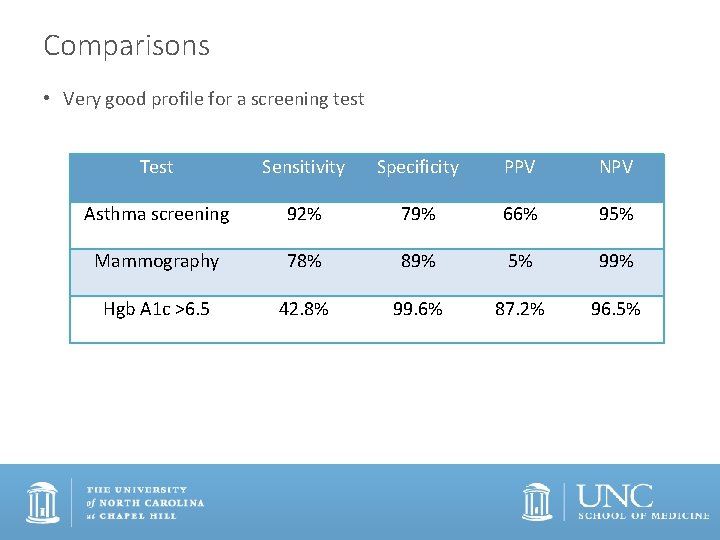
Comparisons • Very good profile for a screening test Test Sensitivity Specificity PPV NPV Asthma screening 92% 79% 66% 95% Mammography 78% 89% 5% 99% Hgb A 1 c >6. 5 42. 8% 99. 6% 87. 2% 96. 5%
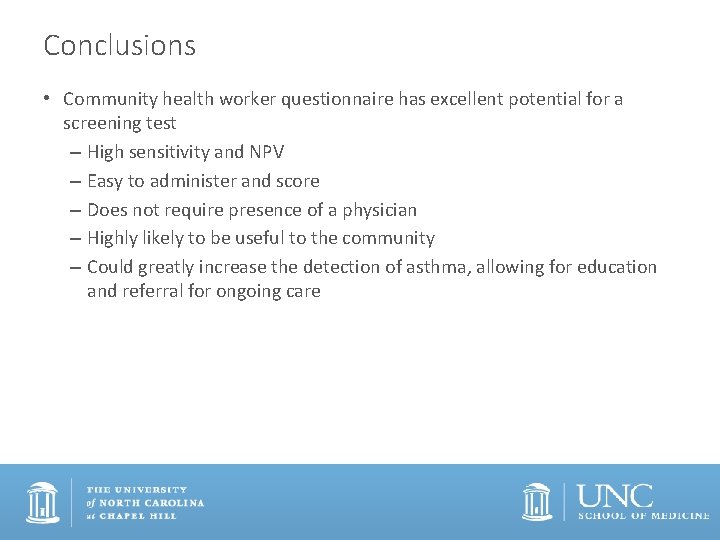
Conclusions • Community health worker questionnaire has excellent potential for a screening test – High sensitivity and NPV – Easy to administer and score – Does not require presence of a physician – Highly likely to be useful to the community – Could greatly increase the detection of asthma, allowing for education and referral for ongoing care
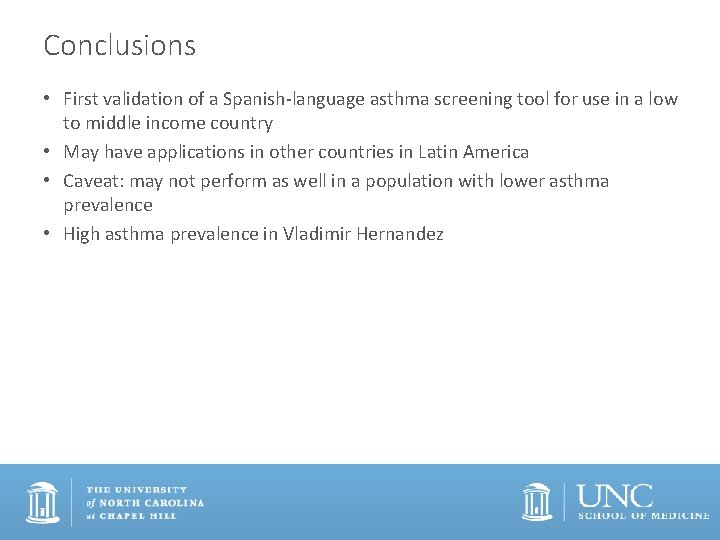
Conclusions • First validation of a Spanish-language asthma screening tool for use in a low to middle income country • May have applications in other countries in Latin America • Caveat: may not perform as well in a population with lower asthma prevalence • High asthma prevalence in Vladimir Hernandez
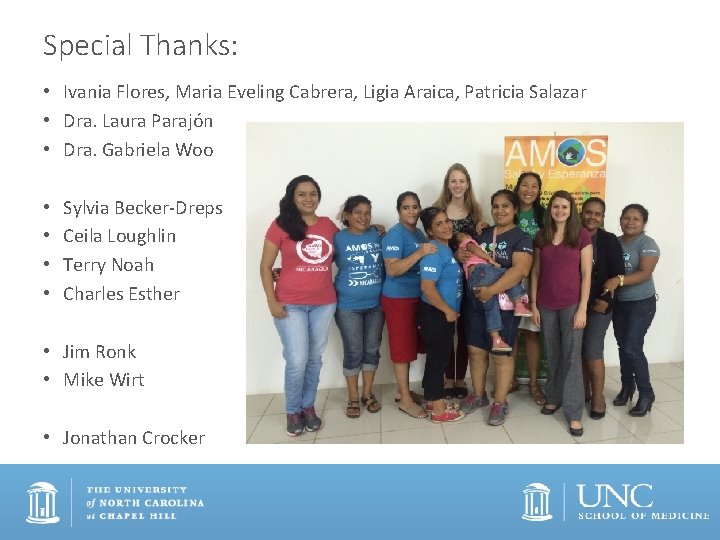
Special Thanks: • Ivania Flores, Maria Eveling Cabrera, Ligia Araica, Patricia Salazar • Dra. Laura Parajón • Dra. Gabriela Woo • • Sylvia Becker-Dreps Ceila Loughlin Terry Noah Charles Esther • Jim Ronk • Mike Wirt • Jonathan Crocker
References • • • • • Busi LE, Sly PD, Restuccia S, Llancamán L. Validation of a school-based written questionnaire for asthma case identification in Argentina. Pediatr Pulmonol. 2012; 47(1): 1 -7. Cooper PJ, Rodrigues LC, Cruz AA, Barreto ML. Asthma in Latin America: A public health challenge and research opportunity. Allergy Eur J Allergy Clin Immunol. 2009; 64(1): 5 -17. Fischer GB, Camargos PAM, Mocelin HT. The burden of asthma in children: a Latin American perspective. Paediatr Respir Rev. 2005; 6(1): 8 -13. Forno E, Gogna M, Cepeda A, et al. Asthma in Latin America. Thorax. 2015; 70(9): 898 -905. Global Initiative for Asthma. Global Strategy for Asthma Management and Prevention; 2015. Available at: www. ginasthma. org. Accessed Dec. 2, 2015. Hekking PPW, Bel EH. Developing and emerging clinical asthma phenotypes. J Allergy Clin Immunol Pract. 2014; 2(6): 671 -680. The International Study of Asthma and Allergies in Childhood (ISAAC) Steering Committee. Worldwide variation in prevalence of symptoms of asthma, allergic rhinoconjunctivitis, and atopic eczema: ISAAC. Lancet. 1998; 351(9111): 1225 -32. Lemanske RF, Busse WW. Asthma. J Allergy Clin Immunol. 2003; 111(2): S 502 -S 519. Liu L, Orza S, Hogan D, et al. Global, regional, and national causes of child mortality in 2000– 13, with projections to inform post-2015 priorities: an updated systematic analysis. Lancet. 2015; 385: 430 -440. Mallol J, Crane J, von Mutius E, Odhiambo J, Keil U, Stewart a. The International Study of Asthma and Allergies in Childhood (ISAAC) Phase Three: A global synthesis. Allergol Immunopathol (Madr). 2012; 41: 73 -85. Masoli M, Fabian D, Holt S BR. The global burden of asthma: executive summary of the GINA Dissemination Committee report. Allergy. 2004; 59: 469 -478. National Asthma Education and Prevention Program. Expert Panel Report 3: Guidelines for the Diagnosis and Management of Asthma. Bethesda: National Heart, Lung, and Blood Institute; 2007. Østergaard MS, Nantanda R, Tumwine JK, Aabenhus R. Childhood asthma in low income countries: an invisible killer? Prim Care Respir J. 2012; 21(2): 214 -219. Pitrez PM, Stein RT. Asthma in Latin America: the dawn of a new epidemic. Curr Opin Allergy Clin Immunol. 2008; 8: 378 -383 Pellegrino R. Interpretative strategies for lung function tests. Eur Respir J. 2005; 26(5): 948 -968. Sheikh SI, Anp JP, Ryan-wenger NA, Mccoy S, Jr DH. Screening high-risk children for asthma through a community intervention. 2015; 0903(October). Wills-Karp M, Santeliz J, Karp CL. The germless theory of allergic disease: revisiting the hygiene hypothesis. Nat Rev Immunol. 2001; 1(1): 69 -75. World Health Organization. Handbook: IMCI Integrated management of childhood illness. 2005.