Arrangements and procedures to assess security risks and



- Slides: 52
Arrangements and procedures to assess security risks and national defence requirements COL Dr Catalin-Marius Tarnacop NATO Studies Centre
Agenda • Underlying Principles • Underlying Process • Management of the process
What is Defence Policy? Defence Policy “ involves the political direction of a nation’s defence resources as a whole with a view to ensuring national security, protecting vital interests and furthering the international aims of the state” …the hand-maiden of a nation’s Foreign Policy
Why? • Major Change – Internal – External • Differing objectives – Appropriate (Roles, Size, Shape, Capabilities, Equipment, Professionalism) – Accountable (mechanisms, openness, transparency) – Affordable (Public Expenditure, Efficiency)
Why? “The aim of the National Defence Strategy is to make Armed Forces and their supporting structures modern, professional, accountable and efficient. They also have to be affordable within a medium term economic framework. ”
National Defence Strategy or Security Sector Review ? Defenc e Issues
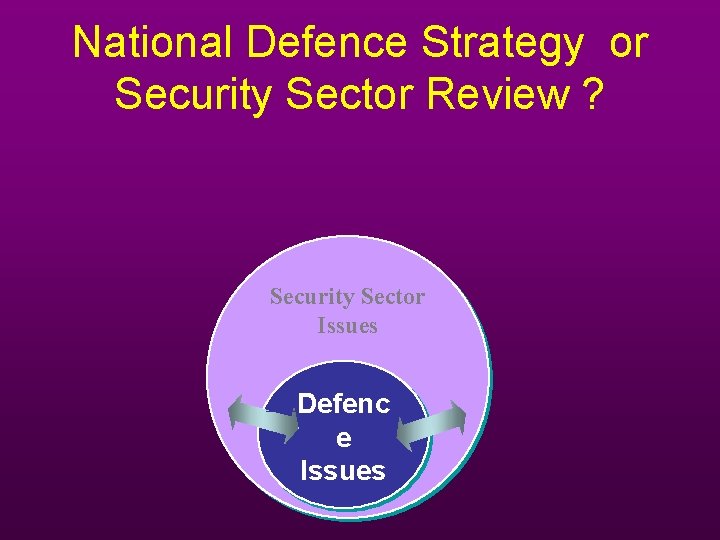
National Defence Strategy or Security Sector Review ? Security Sector Issues Defenc e Issues
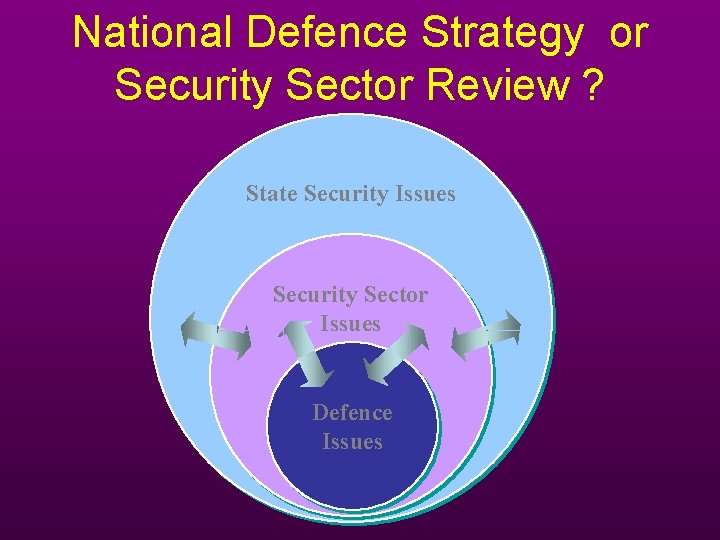
National Defence Strategy or Security Sector Review ? State Security Issues Security Sector Issues Defence Issues
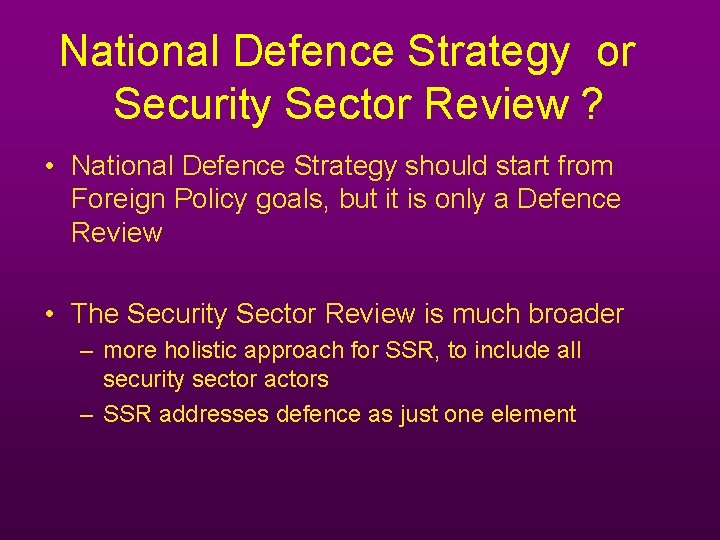
National Defence Strategy or Security Sector Review ? • National Defence Strategy should start from Foreign Policy goals, but it is only a Defence Review • The Security Sector Review is much broader – more holistic approach for SSR, to include all security sector actors – SSR addresses defence as just one element
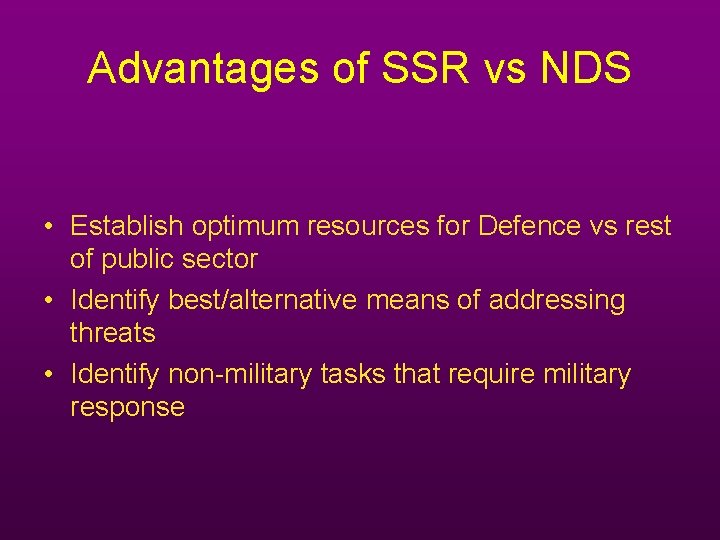
Advantages of SSR vs NDS • Establish optimum resources for Defence vs rest of public sector • Identify best/alternative means of addressing threats • Identify non-military tasks that require military response
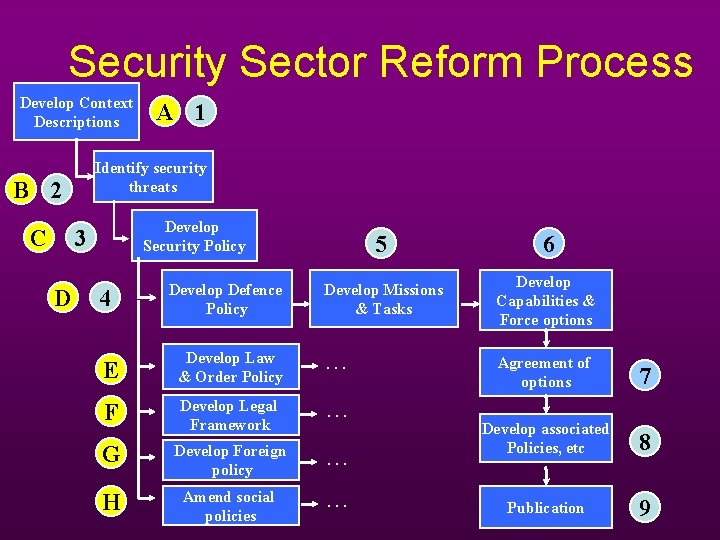
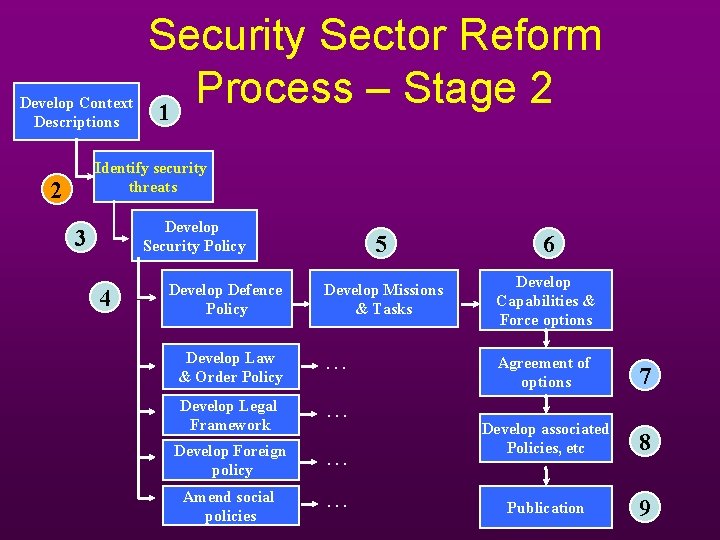
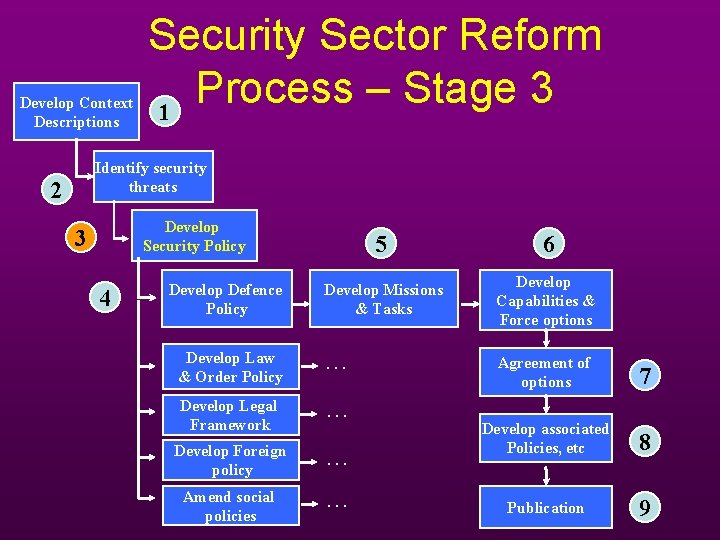
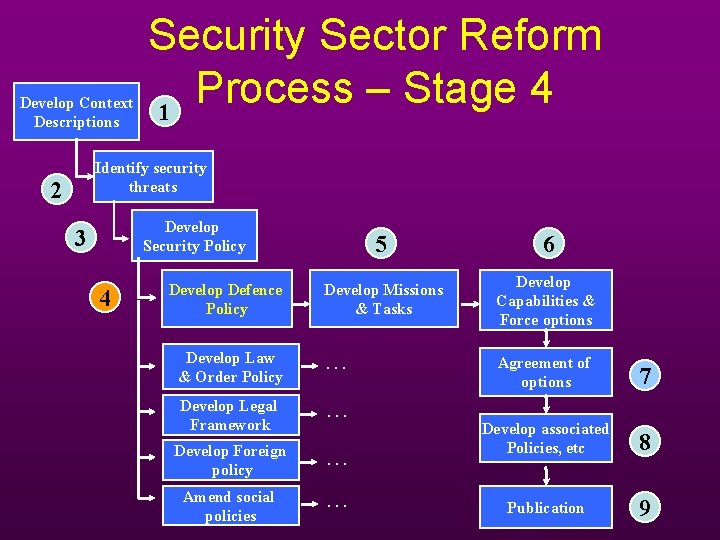
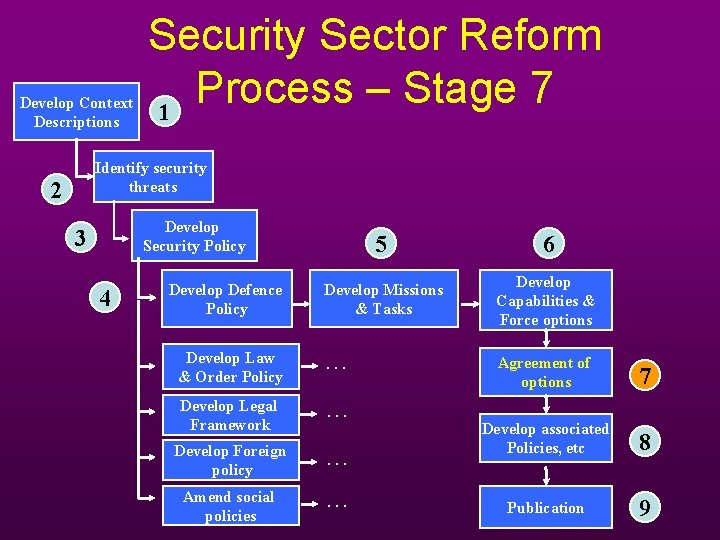
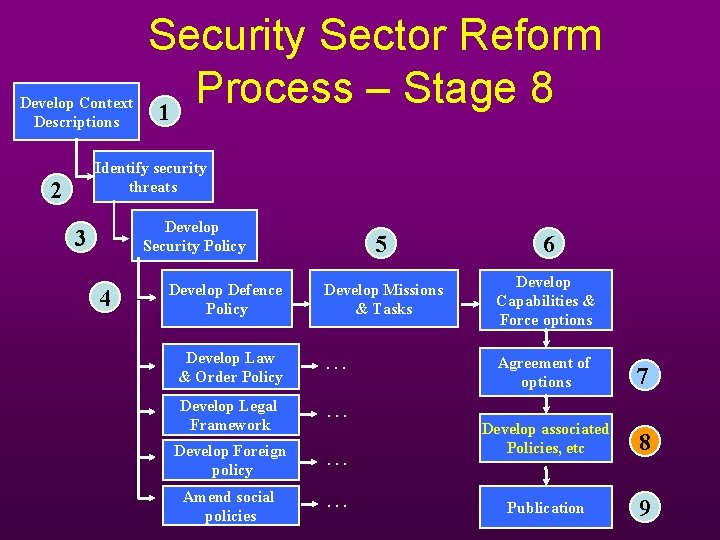
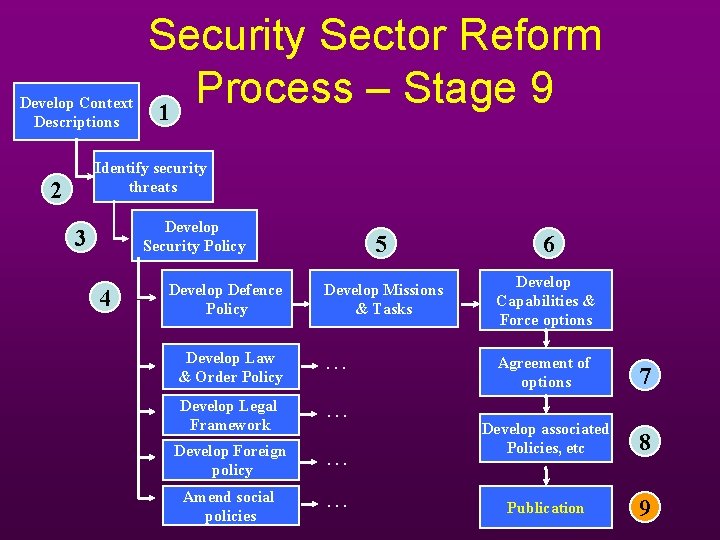
Security Sector Reform Process Develop Context Descriptions Identify security threats B 2 C Develop Security Policy 3 D A 1 5 6 Develop Missions & Tasks Develop Capabilities & Force options E Develop Law & Order Policy … Agreement of options 7 F Develop Legal Framework … G Develop Foreign policy … Develop associated Policies, etc 8 H Amend social policies … Publication 9 4 Develop Defence Policy
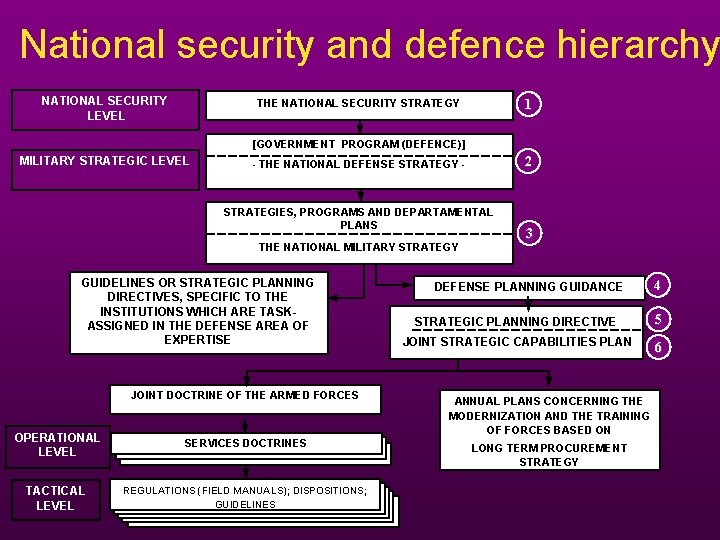
National security and defence hierarchy NATIONAL SECURITY LEVEL 1 THE NATIONAL SECURITY STRATEGY [GOVERNMENT PROGRAM (DEFENCE)] MILITARY STRATEGIC LEVEL 2 - THE NATIONAL DEFENSE STRATEGY - STRATEGIES, PROGRAMS AND DEPARTAMENTAL PLANS THE NATIONAL MILITARY STRATEGY GUIDELINES OR STRATEGIC PLANNING DIRECTIVES, SPECIFIC TO THE INSTITUTIONS WHICH ARE TASKASSIGNED IN THE DEFENSE AREA OF EXPERTISE JOINT DOCTRINE OF THE ARMED FORCES OPERATIONAL LEVEL SERVICES DOCTRINES TACTICAL LEVEL REGULATIONS (FIELD MANUALS); DISPOSITIONS; GUIDELINES 3 DEFENSE PLANNING GUIDANCE 4 STRATEGIC PLANNING DIRECTIVE 5 JOINT STRATEGIC CAPABILITIES PLAN 6 ANNUAL PLANS CONCERNING THE MODERNIZATION AND THE TRAINING OF FORCES BASED ON LONG TERM PROCUREMENT STRATEGY
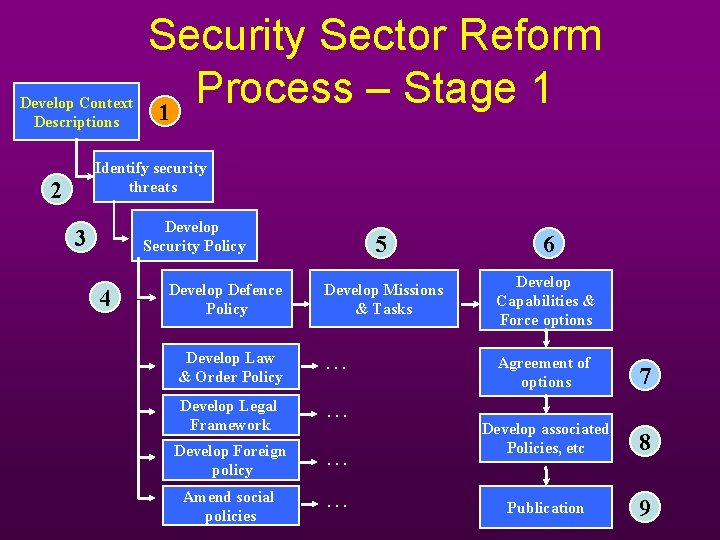
Develop Context Descriptions Security Sector Reform Process – Stage 1 1 Identify security threats 2 Develop Security Policy 3 4 5 6 Develop Missions & Tasks Develop Capabilities & Force options Develop Law & Order Policy … Agreement of options 7 Develop Legal Framework … Develop Foreign policy … Develop associated Policies, etc 8 Amend social policies … Publication 9 Develop Defence Policy
Stage 1: Develop Context Descriptions • What ? – Rational views of the possible future covering best to worst (“scenarios”) • How ? - Based upon establishing “drivers” – Physical, Technological, Economic, Social/Cultural, Legal, Political, Military • Who? – Defence Policy staff – Government Departments (Foreign Affairs, Finance, Interior, Other) – Civil society (academics) – Parliament
The new Strategic Realities (1) • • A new Europe and Eurasia The rise of ethnic and religious tensions Weak states and ungoverned areas Proliferation of Weapons of Mass Destruction Drugs and organised crime Terrorism Environmental degradation
The new Strategic Realities (2) • • • Population growth and demographic change Urbanisation and transnational migration flows Resource shortages, especially of water and oil Globalisation and growing disparities The pace of technological change The pace of social change
The New Strategic Environment compared to Cold War Era • More interdependent • More vulnerable due to increasing reliance on technology • More uncertain due to increasing range of challenges & threats • More varied due to the nature of challenges & threats • More demanding due to complexity • An environment with smaller scale, but more frequent use of force international issues, often asymmetrical operations
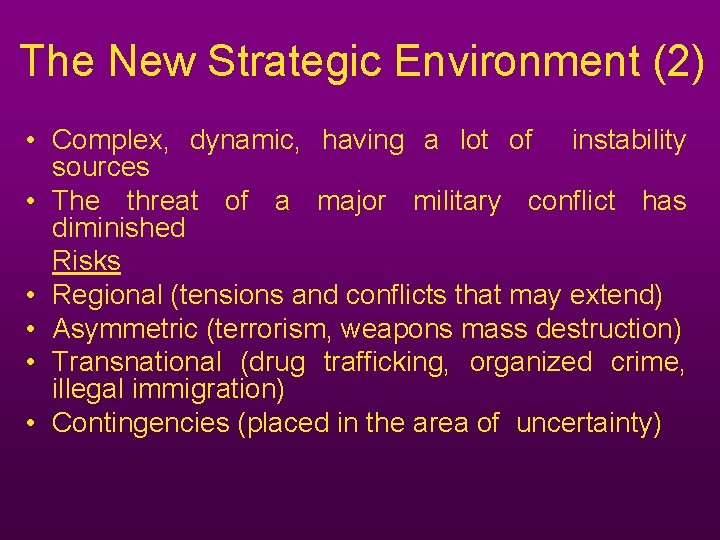
The New Strategic Environment (2) • Complex, dynamic, having a lot of instability sources • The threat of a major military conflict has diminished Risks • Regional (tensions and conflicts that may extend) • Asymmetric (terrorism, weapons mass destruction) • Transnational (drug trafficking, organized crime, illegal immigration) • Contingencies (placed in the area of uncertainty)
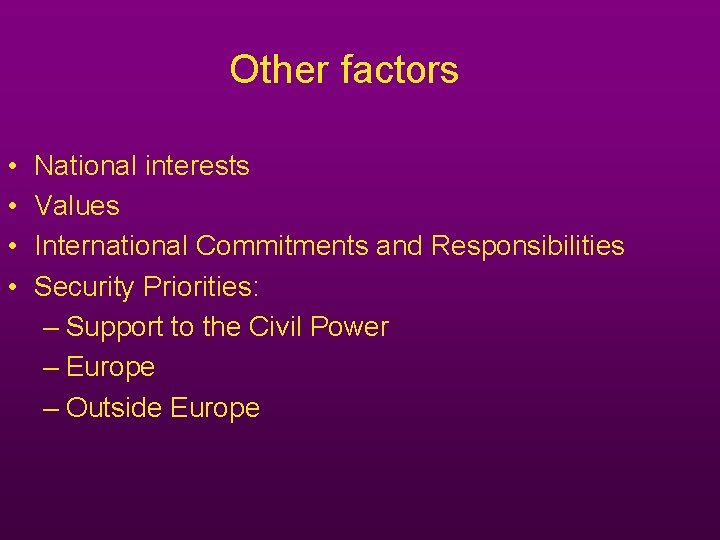
Other factors • • National interests Values International Commitments and Responsibilities Security Priorities: – Support to the Civil Power – Europe – Outside Europe
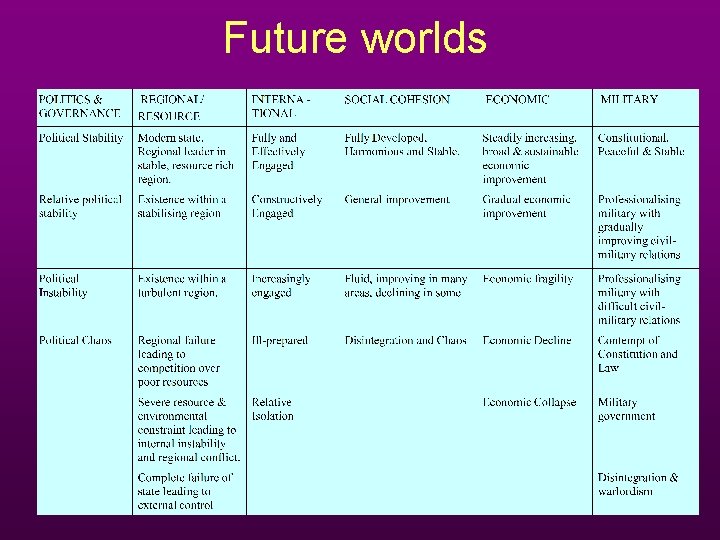
Future worlds
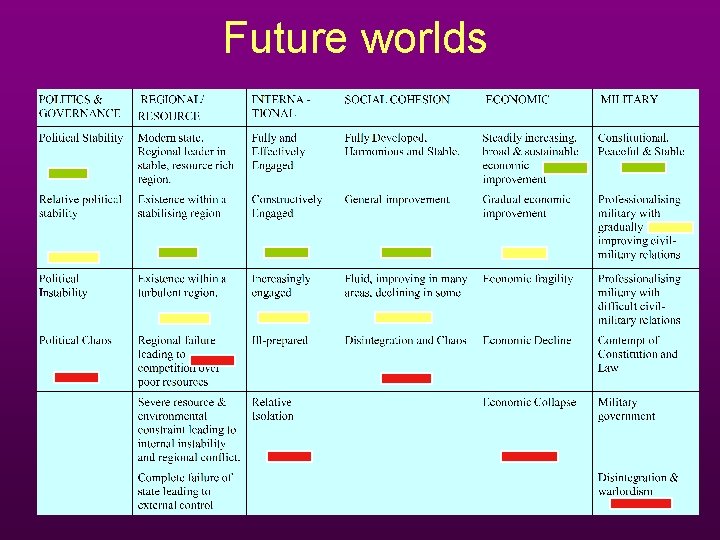
Future worlds
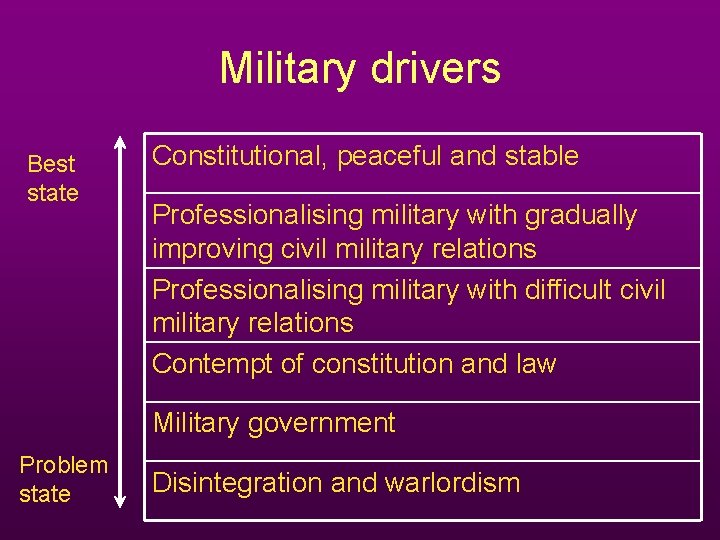
Military drivers Best state Constitutional, peaceful and stable Professionalising military with gradually improving civil military relations Professionalising military with difficult civil military relations Contempt of constitution and law Military government Problem state Disintegration and warlordism
Develop Context Descriptions Security Sector Reform Process – Stage 2 1 Identify security threats 2 Develop Security Policy 3 4 5 6 Develop Missions & Tasks Develop Capabilities & Force options Develop Law & Order Policy … Agreement of options 7 Develop Legal Framework … Develop Foreign policy … Develop associated Policies, etc 8 Amend social policies … Publication 9 Develop Defence Policy
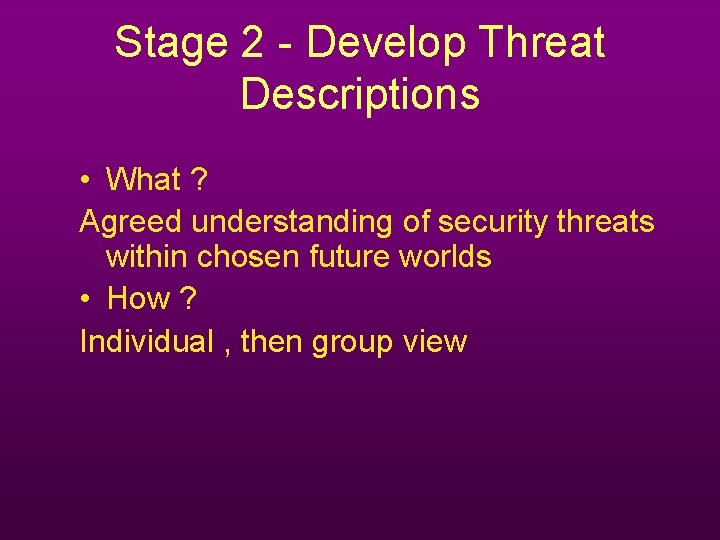
Stage 2 - Develop Threat Descriptions • What ? Agreed understanding of security threats within chosen future worlds • How ? Individual , then group view
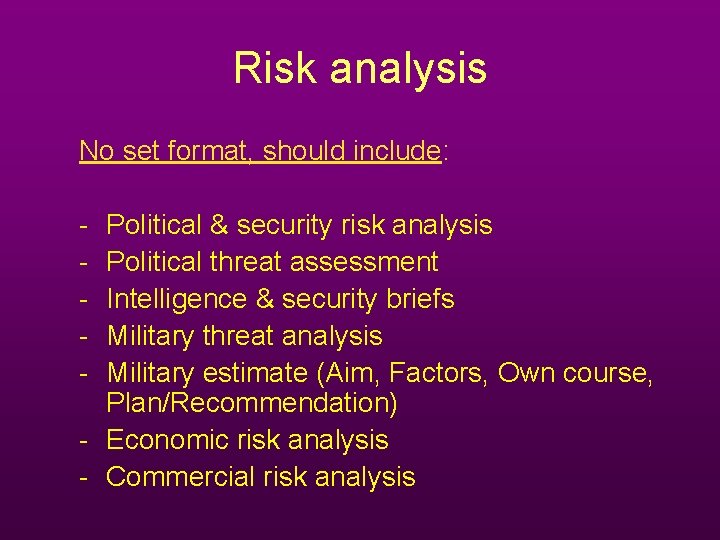
Risk analysis No set format, should include: - Political & security risk analysis Political threat assessment Intelligence & security briefs Military threat analysis Military estimate (Aim, Factors, Own course, Plan/Recommendation) - Economic risk analysis - Commercial risk analysis
Develop Context Descriptions Security Sector Reform Process – Stage 3 1 Identify security threats 2 Develop Security Policy 3 4 5 6 Develop Missions & Tasks Develop Capabilities & Force options Develop Law & Order Policy … Agreement of options 7 Develop Legal Framework … Develop Foreign policy … Develop associated Policies, etc 8 Amend social policies … Publication 9 Develop Defence Policy
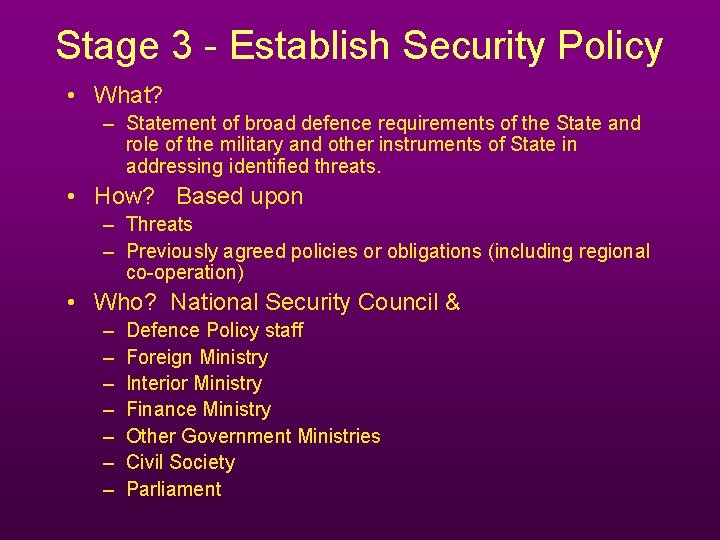
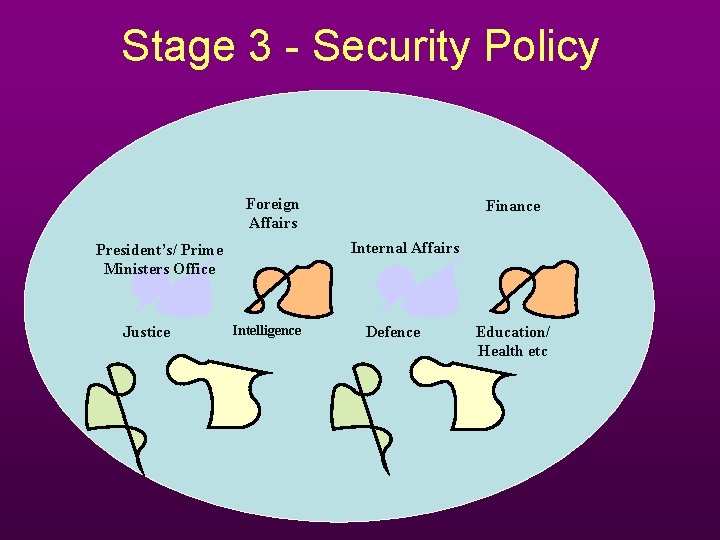
Stage 3 - Establish Security Policy • What? – Statement of broad defence requirements of the State and role of the military and other instruments of State in addressing identified threats. • How? Based upon – Threats – Previously agreed policies or obligations (including regional co-operation) • Who? National Security Council & – – – – Defence Policy staff Foreign Ministry Interior Ministry Finance Ministry Other Government Ministries Civil Society Parliament
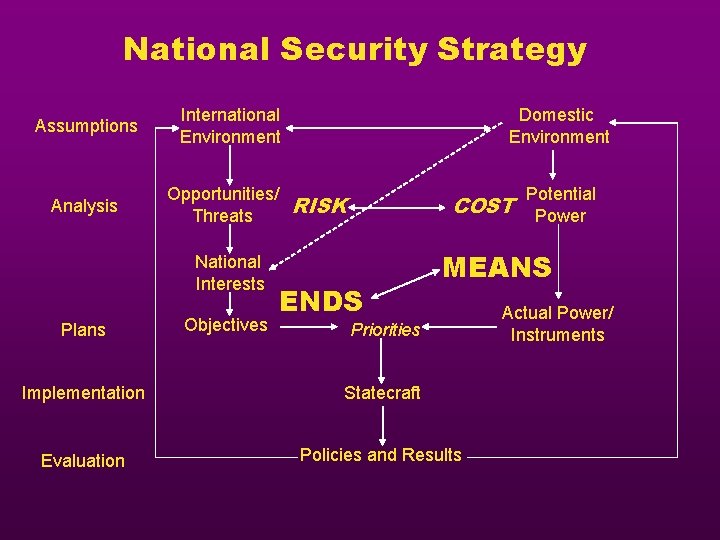
National Security Strategy Assumptions Analysis International Environment Opportunities/ RISK Threats National Interests Plans Domestic Environment Objectives COST ENDS Potential Power MEANS Priorities Implementation Statecraft Evaluation Policies and Results Actual Power/ Instruments
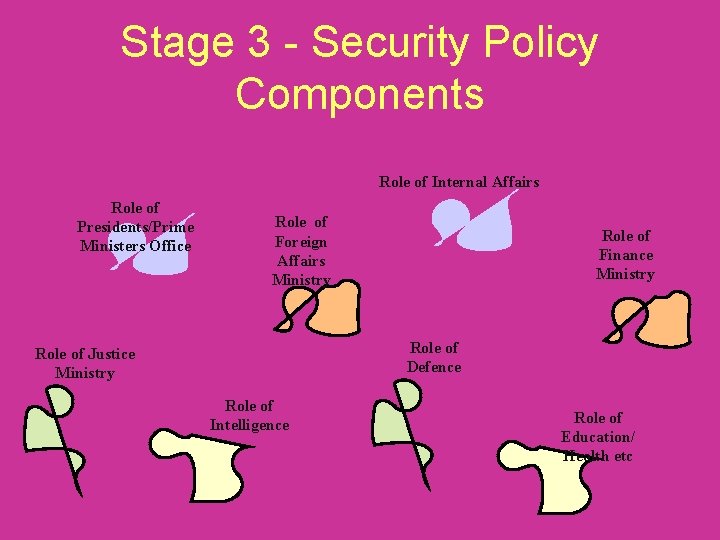
Stage 3 - Security Policy Components Role of Internal Affairs Role of Presidents/Prime Ministers Office Role of Foreign Affairs Ministry Role of Finance Ministry Role of Defence Role of Justice Ministry Role of Intelligence Role of Education/ Health etc
Stage 3 - Security Policy Foreign Affairs Internal Affairs President’s/ Prime Ministers Office Justice Finance Intelligence Defence Education/ Health etc
Develop Context Descriptions Security Sector Reform Process – Stage 4 1 Identify security threats 2 Develop Security Policy 3 4 5 6 Develop Missions & Tasks Develop Capabilities & Force options Develop Law & Order Policy … Agreement of options 7 Develop Legal Framework … Develop Foreign policy … Develop associated Policies, etc 8 Amend social policies … Publication 9 Develop Defence Policy
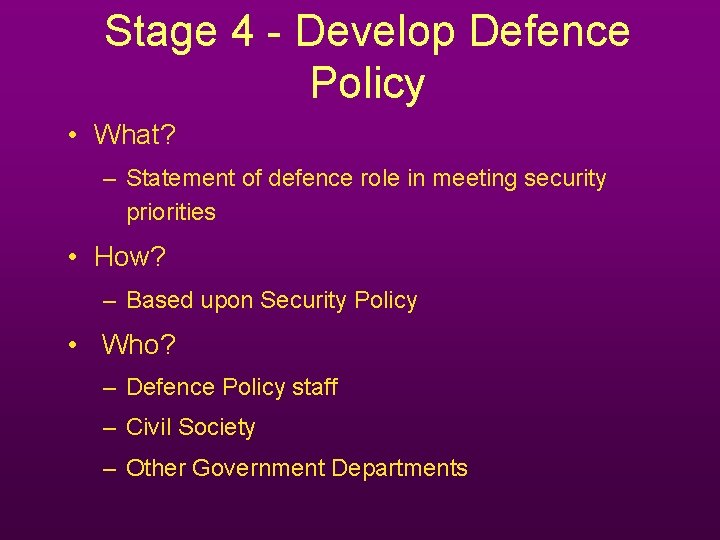
Stage 4 - Develop Defence Policy • What? – Statement of defence role in meeting security priorities • How? – Based upon Security Policy • Who? – Defence Policy staff – Civil Society – Other Government Departments
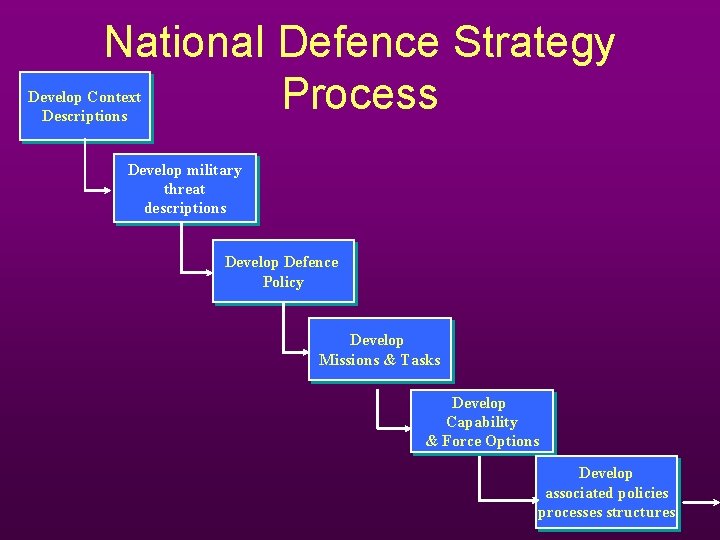
National Defence Strategy Process Develop Context Descriptions Develop military threat descriptions Develop Defence Policy Develop Missions & Tasks Develop Capability & Force Options Develop associated policies processes structures
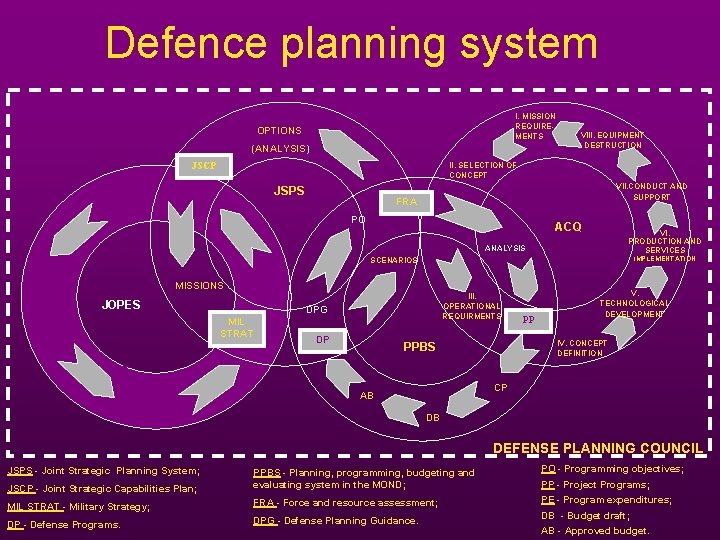
Joint Strategic Planning System Capability Planning Defence Requirements Planning Operational Policy Planning Resource Planning Effective linkage is essential
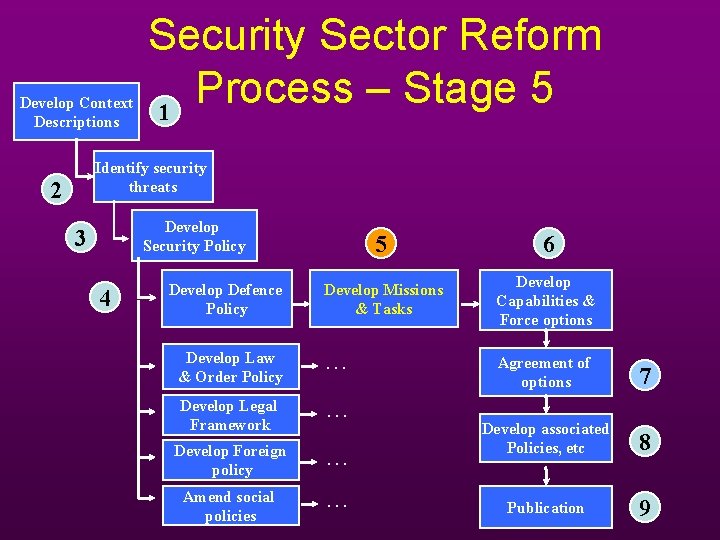
Develop Context Descriptions Security Sector Reform Process – Stage 5 1 Identify security threats 2 Develop Security Policy 3 4 5 6 Develop Missions & Tasks Develop Capabilities & Force options Develop Law & Order Policy … Agreement of options 7 Develop Legal Framework … Develop Foreign policy … Develop associated Policies, etc 8 Amend social policies … Publication 9 Develop Defence Policy
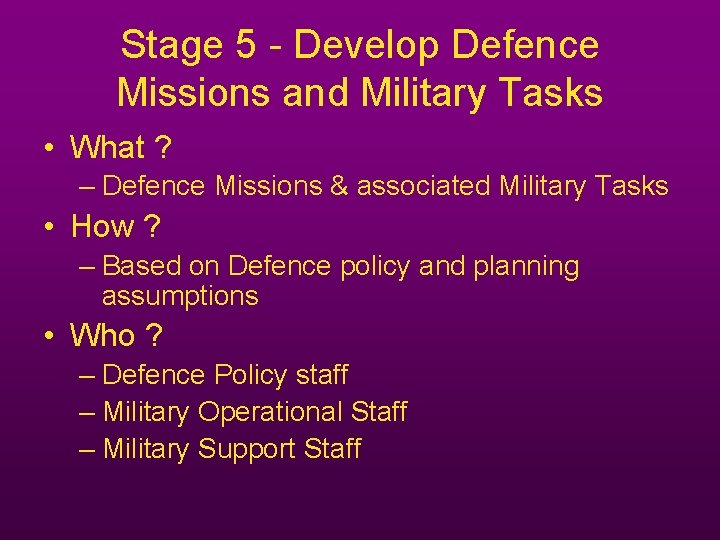
Stage 5 - Develop Defence Missions and Military Tasks • What ? – Defence Missions & associated Military Tasks • How ? – Based on Defence policy and planning assumptions • Who ? – Defence Policy staff – Military Operational Staff – Military Support Staff
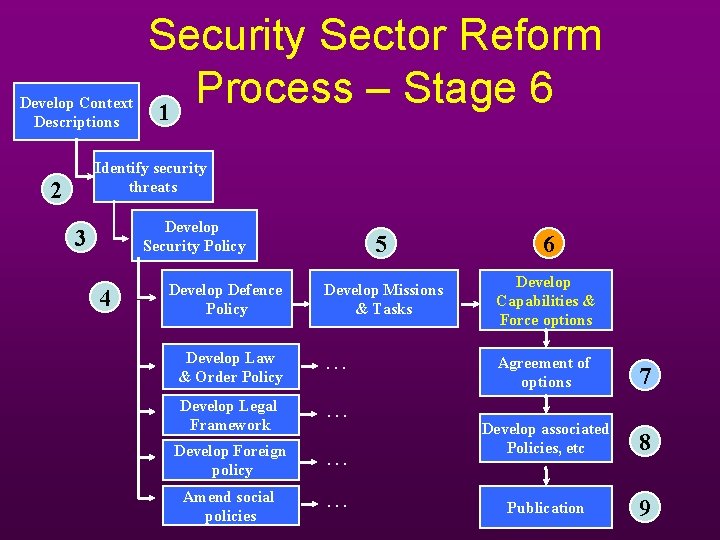
Develop Context Descriptions Security Sector Reform Process – Stage 6 1 Identify security threats 2 Develop Security Policy 3 4 5 6 Develop Missions & Tasks Develop Capabilities & Force options Develop Law & Order Policy … Agreement of options 7 Develop Legal Framework … Develop Foreign policy … Develop associated Policies, etc 8 Amend social policies … Publication 9 Develop Defence Policy
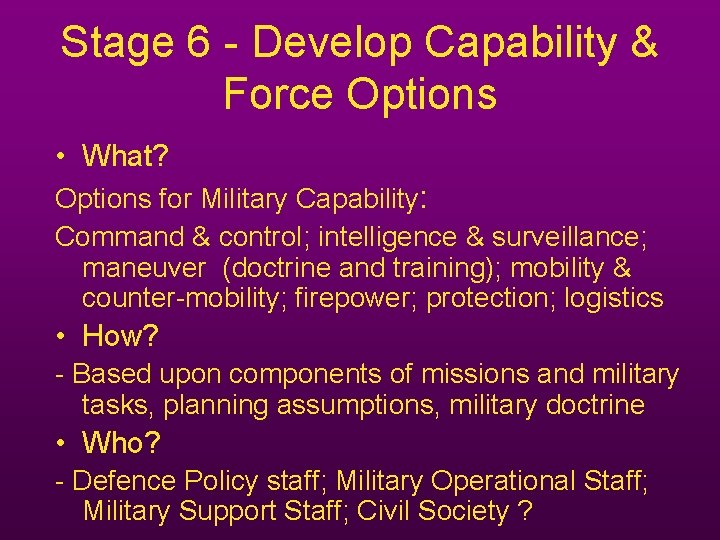
Stage 6 - Develop Capability & Force Options • What? Options for Military Capability: Command & control; intelligence & surveillance; maneuver (doctrine and training); mobility & counter-mobility; firepower; protection; logistics • How? - Based upon components of missions and military tasks, planning assumptions, military doctrine • Who? - Defence Policy staff; Military Operational Staff; Military Support Staff; Civil Society ?
Develop Context Descriptions Security Sector Reform Process – Stage 7 1 Identify security threats 2 Develop Security Policy 3 4 5 6 Develop Missions & Tasks Develop Capabilities & Force options Develop Law & Order Policy … Agreement of options 7 Develop Legal Framework … Develop Foreign policy … Develop associated Policies, etc 8 Amend social policies … Publication 9 Develop Defence Policy
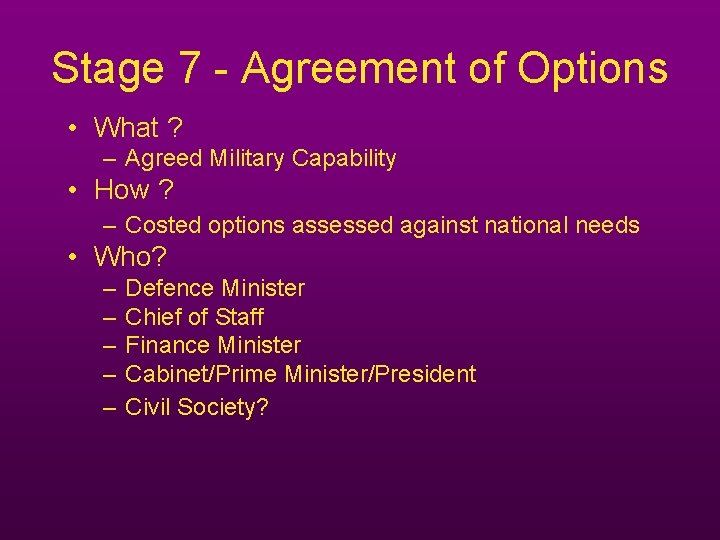
Stage 7 - Agreement of Options • What ? – Agreed Military Capability • How ? – Costed options assessed against national needs • Who? – – – Defence Minister Chief of Staff Finance Minister Cabinet/Prime Minister/President Civil Society?
Develop Context Descriptions Security Sector Reform Process – Stage 8 1 Identify security threats 2 Develop Security Policy 3 4 5 6 Develop Missions & Tasks Develop Capabilities & Force options Develop Law & Order Policy … Agreement of options 77 Develop Legal Framework … Develop Foreign policy … Develop associated Policies, etc 8 Amend social policies … Publication 9 Develop Defence Policy
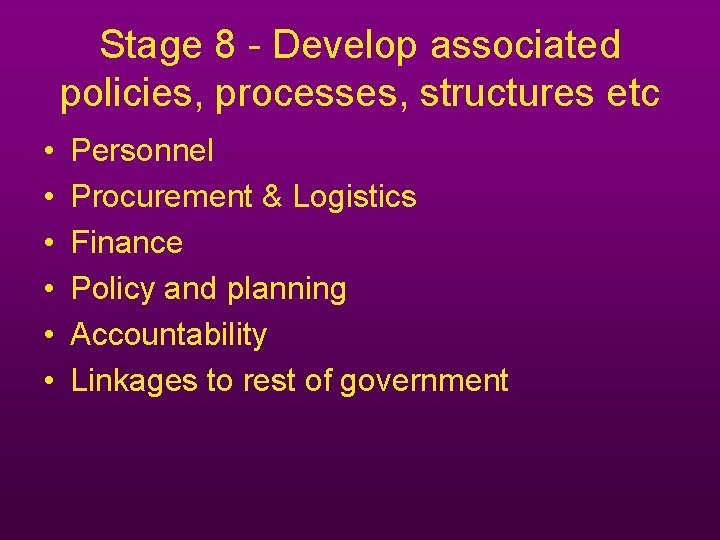
Stage 8 - Develop associated policies, processes, structures etc • • • Personnel Procurement & Logistics Finance Policy and planning Accountability Linkages to rest of government
Develop Context Descriptions Security Sector Reform Process – Stage 9 1 Identify security threats 2 Develop Security Policy 3 4 5 6 Develop Missions & Tasks Develop Capabilities & Force options Develop Law & Order Policy … Agreement of options 7 Develop Legal Framework … Develop Foreign policy … Develop associated Policies, etc 8 Amend social policies … Publication 9 Develop Defence Policy
Stage 9 - Publication • Make publicly available • Parliamentary debate
Timetable • Will probably take longer than planned! Other countries experience: 14 months to 2 years
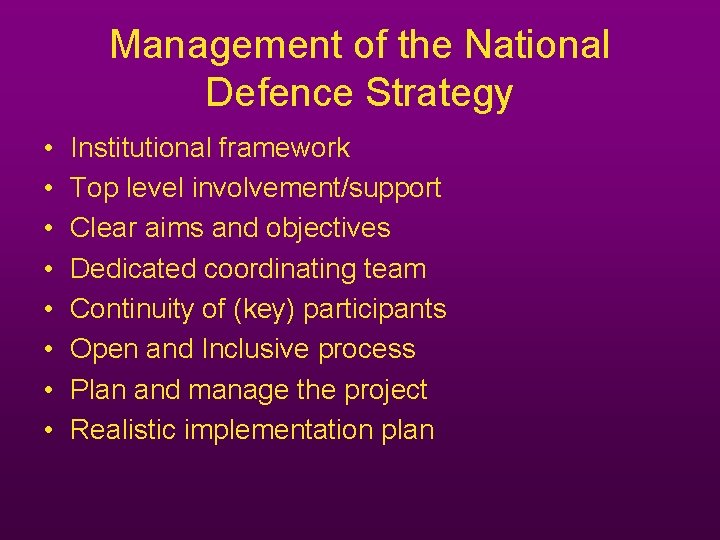
Management of the National Defence Strategy • • Institutional framework Top level involvement/support Clear aims and objectives Dedicated coordinating team Continuity of (key) participants Open and Inclusive process Plan and manage the project Realistic implementation plan
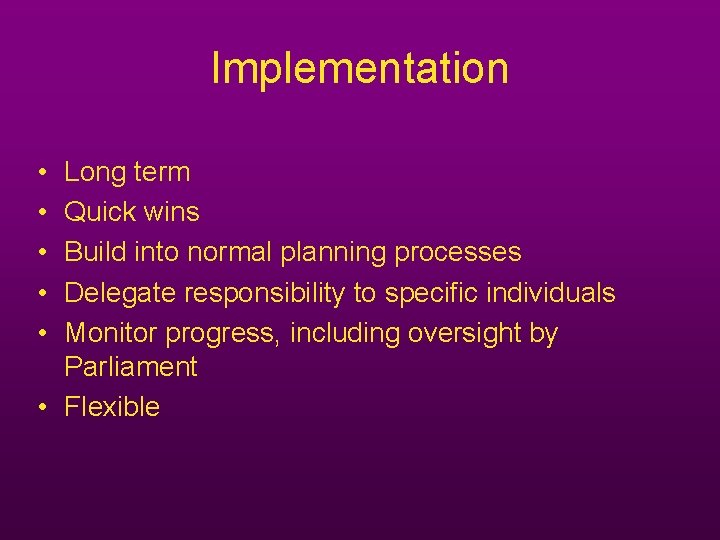
Implementation • • • Long term Quick wins Build into normal planning processes Delegate responsibility to specific individuals Monitor progress, including oversight by Parliament • Flexible
Questions ?
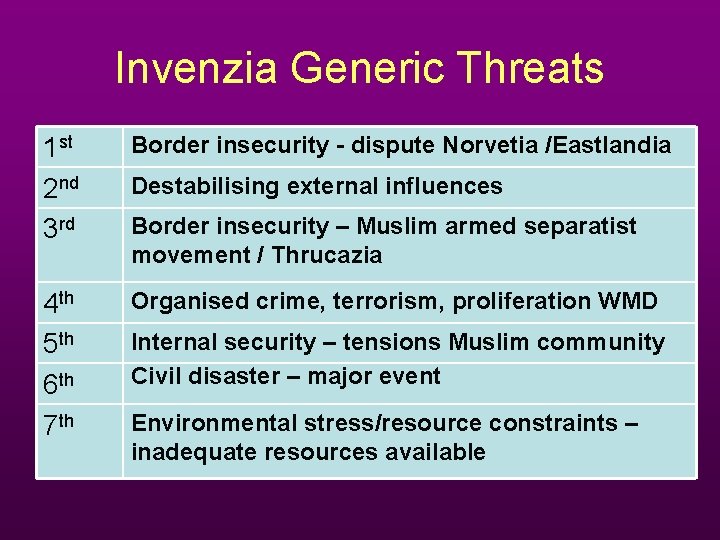
Invenzia Generic Threats 1 st 2 nd 3 rd Border insecurity - dispute Norvetia /Eastlandia 4 th 5 th 6 th 7 th Organised crime, terrorism, proliferation WMD Destabilising external influences Border insecurity – Muslim armed separatist movement / Thrucazia Internal security – tensions Muslim community Civil disaster – major event Environmental stress/resource constraints – inadequate resources available
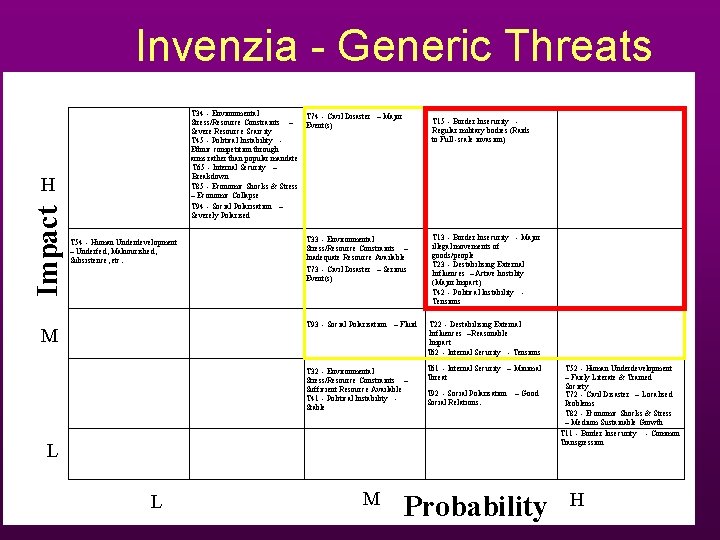
Invenzia - Generic Threats T 34 - Environmental T 74 - Civil Disaster – Major Stress/Resource Constraints – Event(s) Severe Resource Scarcity T 45 - Political Instability Ethnic competition through arms rather than popular mandate T 65 - Internal Security – Breakdown T 85 - Economic Shocks & Stress – Economic Collapse T 94 - Social Polarisation – Severely Polarised Impact H T 54 - Human Underdevelopment – Underfed, Malnourished, Subsistence, etc. M T 15 - Border Insecurity Regular military bodies (Raids to Full -scale invasion) T 33 - Environmental Stress/Resource Constraints – Inadequate Resource Available T 73 - Civil Disaster – Serious Event(s) T 13 - Border Insecurity - Major illegal movements of goods/people T 23 - Destabilising External Influences –Active hostility (Major Impact) T 42 - Political Instability Tensions T 93 - Social Polarisation – Fluid T 22 - Destabilising External Influences –Reasonable Impact T 62 - Internal Security - Tensions T 32 - Environmental Stress/Resource Constraints – Sufficient Resource Available T 41 - Political Instability Stable T 61 - Internal Security – Minimal Threat T 92 - Social Polarisation – Good Social Relations. L L M Probability T 52 - Human Underdevelopment – Fairly Literate & Trained Society T 72 - Civil Disaster – Localised Problems T 82 - Economic Shocks & Stress – Medium Sustainable Growth T 11 - Border Insecurity - Common Transgression H
Defence planning system I. MISSION REQUIREMENTS OPTIONS (ANALYSIS) JSCP VIII. EQUIPMENT DESTRUCTION II. SELECTION OF CONCEPT JSPS I. DIRECTIONS VII. CONDUCT AND SUPPORT FRA PO ACQ VI. PRODUCTION AND SERVICES ANALYSIS IMPLEMENTATION SCENARIOS IV. MISSIONS II. CONCEPT DEVELOPMENT SUPPORT JOPES DPG MIL STRAT III OPERATIONAL AND STRATEGIC PLANS III. OPERATIONAL REQUIRMENTS DP PP V. TECHNOLOGICAL DEVELOPMENT IV. CONCEPT DEFINITION PPBS CP AB DB DEFENSE PLANNING COUNCIL PO - Programming objectives; JSCP - Joint Strategic Capabilities Plan; PPBS - Planning, programming, budgeting and evaluating system in the MOND; MIL STRAT - Military Strategy; FRA - Force and resource assessment; PE - Program expenditures; DP - Defense Programs. DPG - Defense Planning Guidance. JSPS - Joint Strategic Planning System; PP - Project Programs; DB - Budget draft; AB - Approved budget.