Antisocial Personality Disorder Karin Neufeld MD MPH Addiction
- Slides: 34
Antisocial Personality Disorder Karin Neufeld, MD MPH Addiction Treatment Services Department of Psychiatry Johns Hopkins University School of Medicine Copyright Alcohol Medical Scholars Program
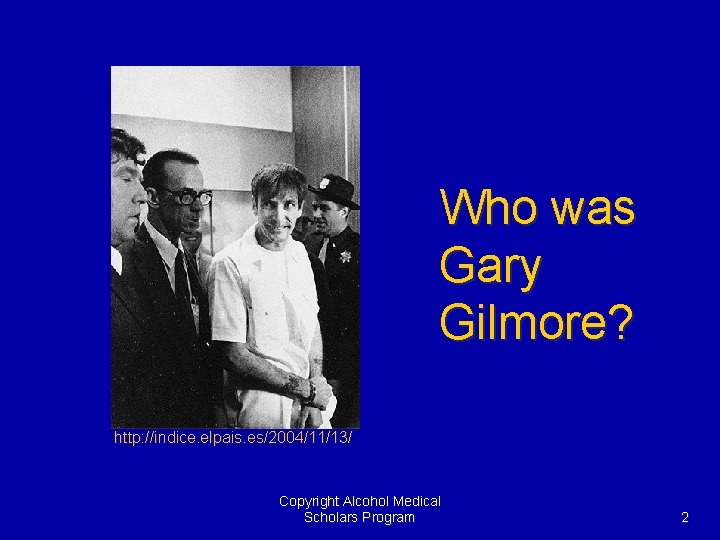
Who was Gary Gilmore? http: //indice. elpais. es/2004/11/13/ Copyright Alcohol Medical Scholars Program 2
History of Identification § 1835 Moral insanity § 1900 Psychopathic character § 1930 Sociopathic personality § 1980 Antisocial personality disorder (ASPD) Copyright Alcohol Medical Scholars Program 3
Validity and Reliability § Empirical data § Childhood precursor – Conduct disorder (CD) § Good reliability Copyright Alcohol Medical Scholars Program 4
Societal Impacts of ASPD § h Risk of death – h 6 x teens/young adults § h Psychiatric comorbidity – 80% substance use disorder (SUD) § High legal cost – 40% of prisoners – $41 billion/yr for US prison system Copyright Alcohol Medical Scholars Program 5
Objectives üReview diagnosis üDescribe epidemiology üReview risk factors üDescribe the course üReview treatment Copyright Alcohol Medical Scholars Program 6
Key Points § Very common in SUD patients § Genes and environment involved § Associated with great suffering § Treatment is helpful Copyright Alcohol Medical Scholars Program 7
Objectives üReview diagnosis Describe epidemiology Review risk factors Describe the course Review treatment Copyright Alcohol Medical Scholars Program 8
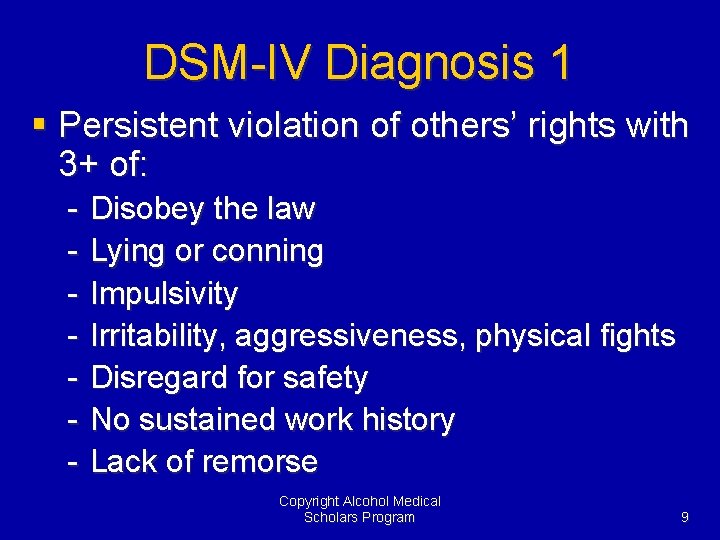
DSM-IV Diagnosis 1 § Persistent violation of others’ rights with 3+ of: - Disobey the law Lying or conning Impulsivity Irritability, aggressiveness, physical fights Disregard for safety No sustained work history Lack of remorse Copyright Alcohol Medical Scholars Program 9
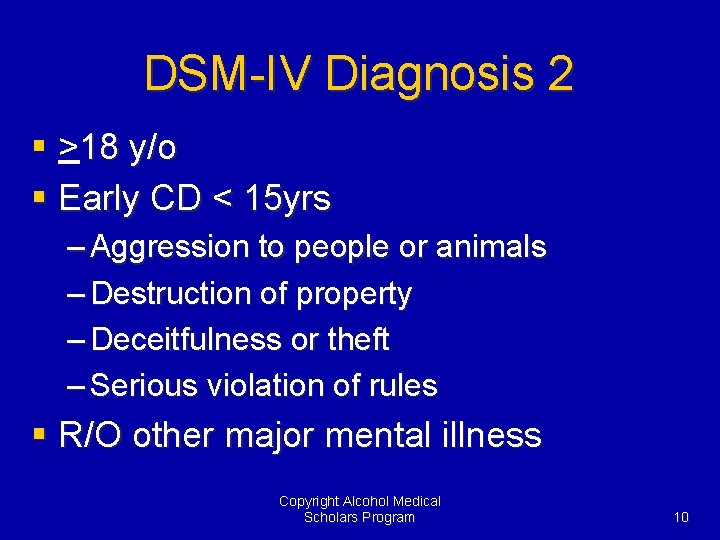
DSM-IV Diagnosis 2 § >18 y/o § Early CD < 15 yrs – Aggression to people or animals – Destruction of property – Deceitfulness or theft – Serious violation of rules § R/O other major mental illness Copyright Alcohol Medical Scholars Program 10
Objectives üReview diagnosis üDescribe epidemiology Review risk factors Describe the course Review treatment Copyright Alcohol Medical Scholars Program 11
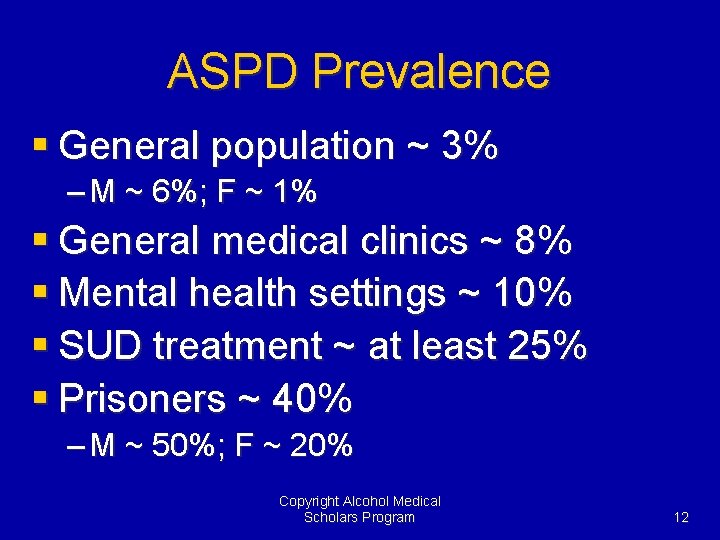
ASPD Prevalence § General population ~ 3% – M ~ 6%; F ~ 1% § General medical clinics ~ 8% § Mental health settings ~ 10% § SUD treatment ~ at least 25% § Prisoners ~ 40% – M ~ 50%; F ~ 20% Copyright Alcohol Medical Scholars Program 12
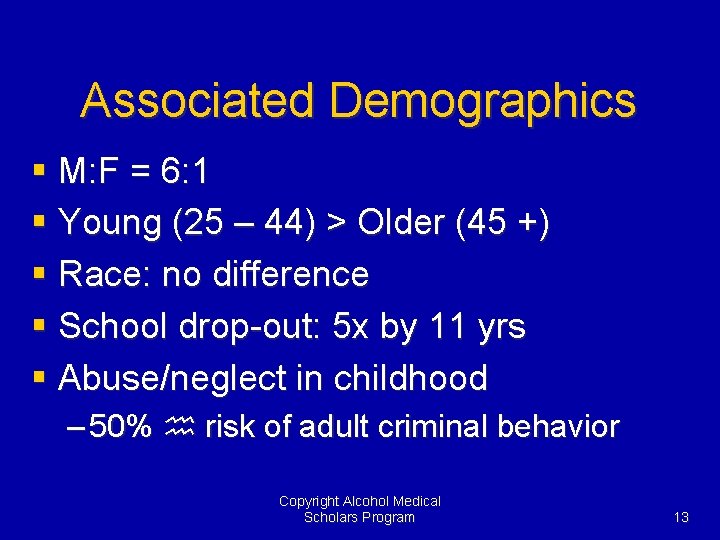
Associated Demographics § M: F = 6: 1 § Young (25 – 44) > Older (45 +) § Race: no difference § School drop-out: 5 x by 11 yrs § Abuse/neglect in childhood – 50% h risk of adult criminal behavior Copyright Alcohol Medical Scholars Program 13
Objectives üReview diagnosis üDescribe epidemiology üReview risk factors Describe the course Review treatment Copyright Alcohol Medical Scholars Program 14
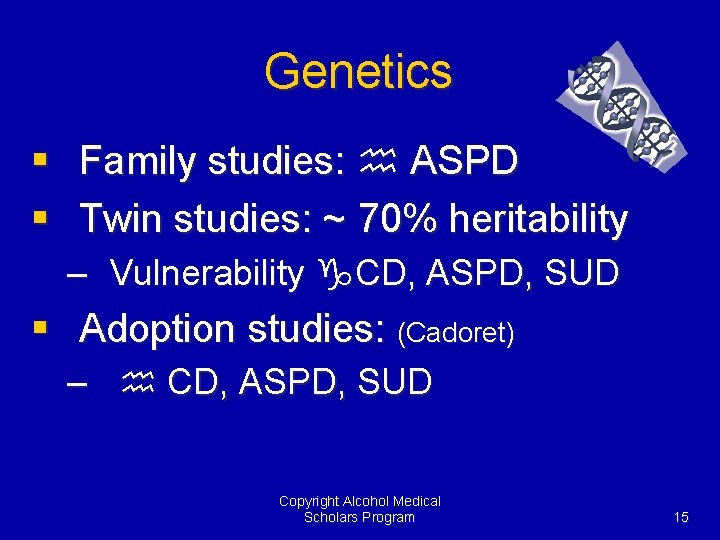
Genetics § Family studies: h ASPD § Twin studies: ~ 70% heritability – Vulnerability g. CD, ASPD, SUD § Adoption studies: (Cadoret) – h CD, ASPD, SUD Copyright Alcohol Medical Scholars Program 15
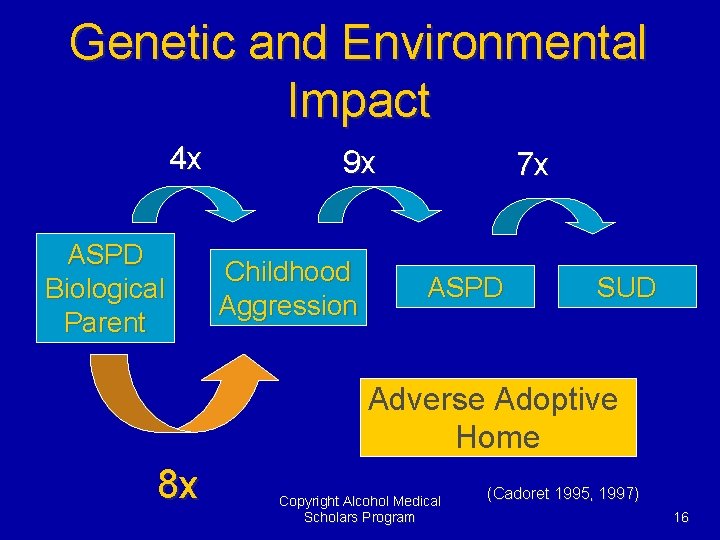
Genetic and Environmental Impact 4 x ASPD Biological Parent 9 x Childhood Aggression 7 x ASPD SUD Adverse Adoptive Home 8 x Copyright Alcohol Medical Scholars Program (Cadoret 1995, 1997) 16
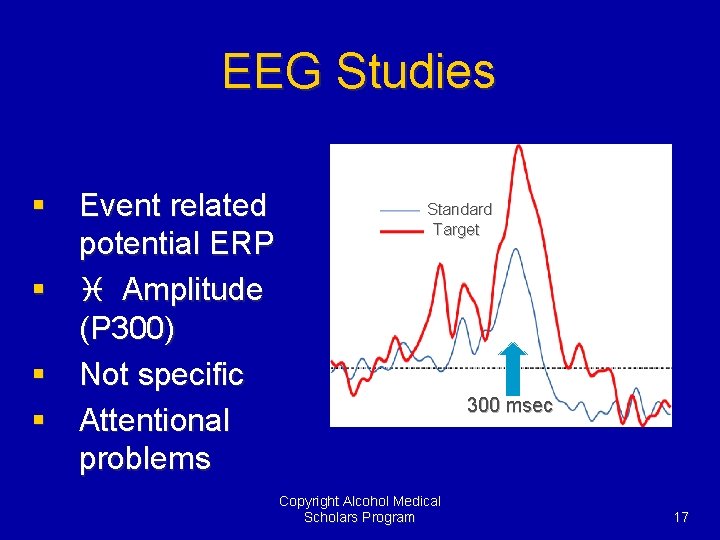
EEG Studies § Event related potential ERP § i Amplitude (P 300) § Not specific § Attentional problems Standard Target 300 msec Copyright Alcohol Medical Scholars Program 17
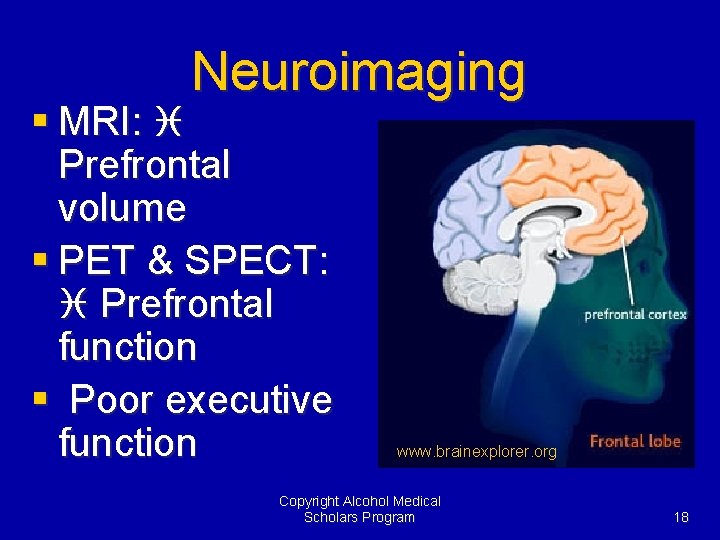
Neuroimaging § MRI: i Prefrontal volume § PET & SPECT: i Prefrontal function § Poor executive function www. brainexplorer. org Copyright Alcohol Medical Scholars Program 18
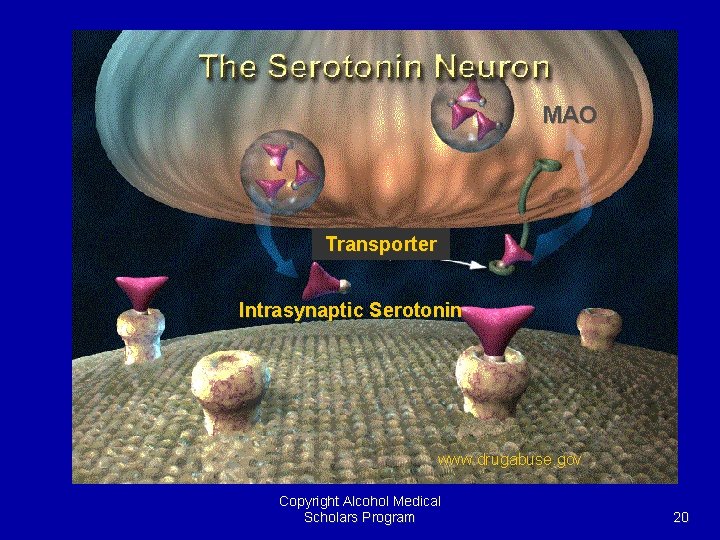
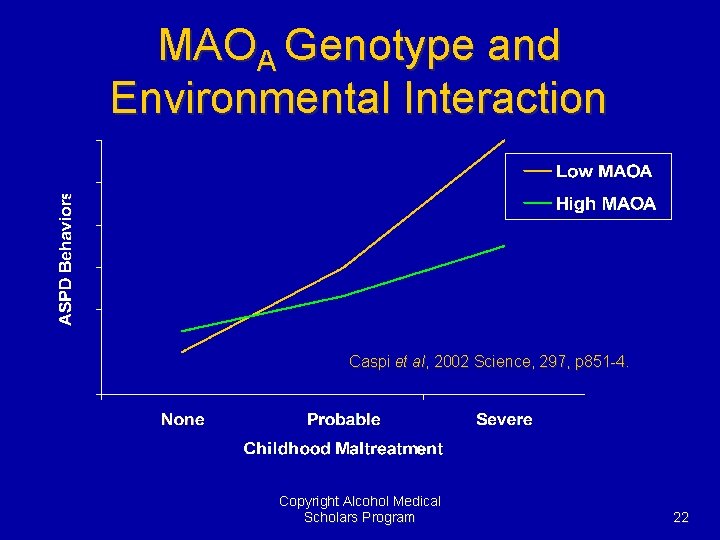
ASPD Biologic Markers § Increased aggression: – i synaptic serotonin (5 HT) § Serotonin transporter protein (STP) – h STP activity ~ h aggression Cadoret ’ 03 – Opposite findings exist § Monoamine oxidase (MAO) – Neuronal 5 HT metabolism Copyright Alcohol Medical Scholars Program 19
MAO Transporter Intrasynaptic Serotonin www. drugabuse. gov Copyright Alcohol Medical Scholars Program 20
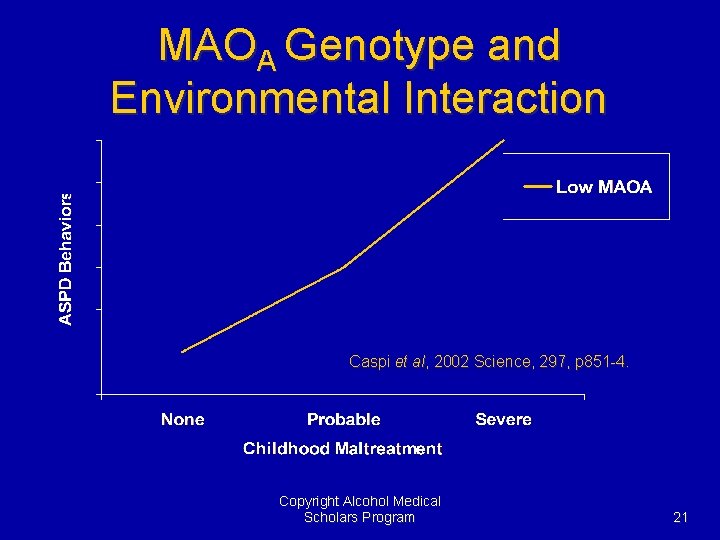
MAOA Genotype and Environmental Interaction Caspi et al, 2002 Science, 297, p 851 -4. Copyright Alcohol Medical Scholars Program 21
MAOA Genotype and Environmental Interaction Caspi et al, 2002 Science, 297, p 851 -4. Copyright Alcohol Medical Scholars Program 22
Objectives üReview diagnosis üDescribe epidemiology üReview risk factors üDescribe the course Review treatment Copyright Alcohol Medical Scholars Program 23
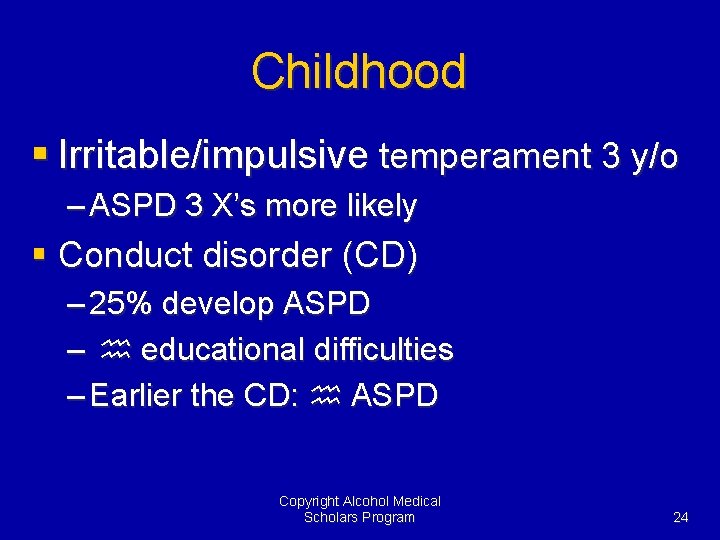
Childhood § Irritable/impulsive temperament 3 y/o – ASPD 3 X’s more likely § Conduct disorder (CD) – 25% develop ASPD – h educational difficulties – Earlier the CD: h ASPD Copyright Alcohol Medical Scholars Program 24
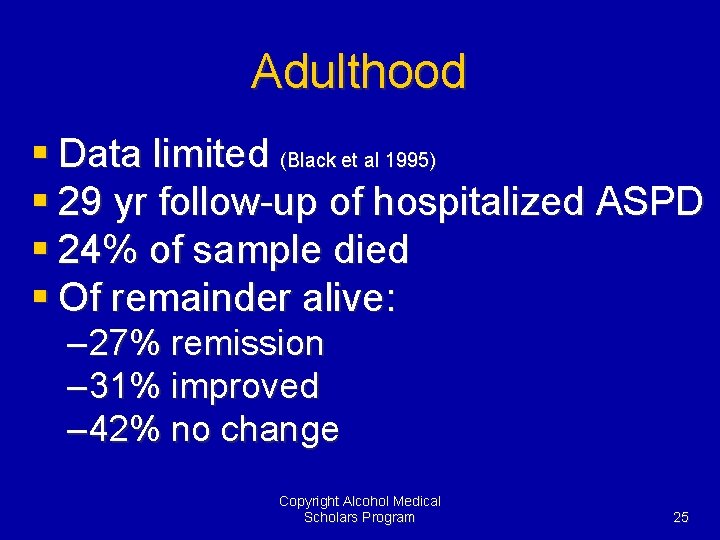
Adulthood § Data limited (Black et al 1995) § 29 yr follow-up of hospitalized ASPD § 24% of sample died § Of remainder alive: – 27% remission – 31% improved – 42% no change Copyright Alcohol Medical Scholars Program 25
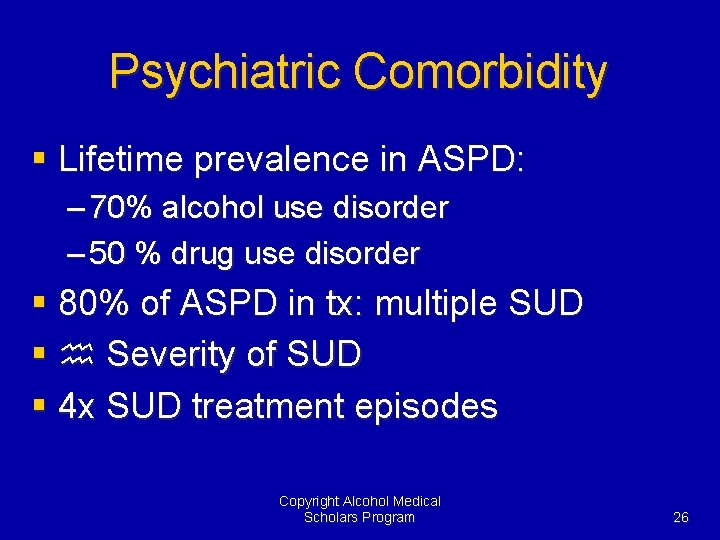
Psychiatric Comorbidity § Lifetime prevalence in ASPD: – 70% alcohol use disorder – 50 % drug use disorder § 80% of ASPD in tx: multiple SUD § h Severity of SUD § 4 x SUD treatment episodes Copyright Alcohol Medical Scholars Program 26
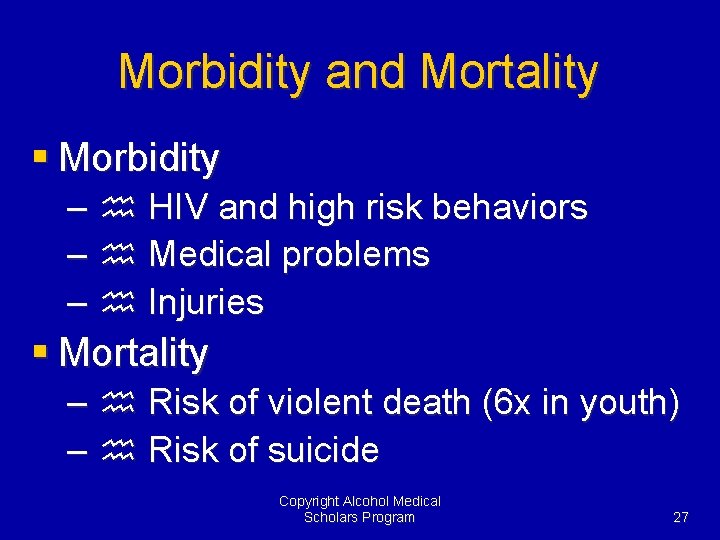
Morbidity and Mortality § Morbidity – h HIV and high risk behaviors – h Medical problems – h Injuries § Mortality – h Risk of violent death (6 x in youth) – h Risk of suicide Copyright Alcohol Medical Scholars Program 27
Objectives üReview diagnosis üDescribe epidemiology üReview risk factors üDescribe the course üReview treatment Copyright Alcohol Medical Scholars Program 28
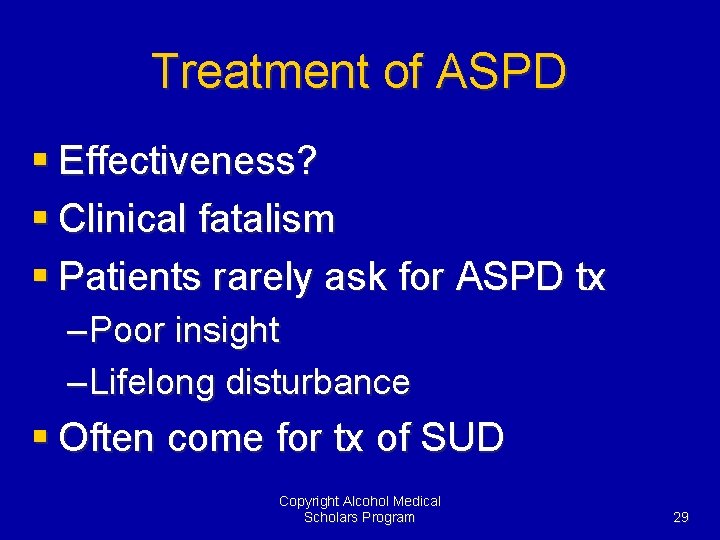
Treatment of ASPD § Effectiveness? § Clinical fatalism § Patients rarely ask for ASPD tx – Poor insight – Lifelong disturbance § Often come for tx of SUD Copyright Alcohol Medical Scholars Program 29
Treatment Elements § Thorough history and exam § Therapeutic relationship – Firm behavioral limits – Professional boundaries – Maintain your empathy – Negotiate behavioral goals in advance Copyright Alcohol Medical Scholars Program 30
Treatment Expectations § Not curative § Focus on improved function § Decrease problem behaviors – i Impulsive actions – Anticipate novelty seeking – h Empathy in patient Copyright Alcohol Medical Scholars Program 31
Treatment Outcomes § SUD literature = best impact data § ASPD and opioid dependence – Same retention in methadone tx – i Drug use – i High risk behaviors § Psychotherapy response mixed § Good response to behavioral tx Copyright Alcohol Medical Scholars Program 32
Pharmacotherapy § Poor to no data § Mood stabilizers ~ i impulsive aggression § SSRI’s ~ maybe i aggression § Antipsychotics not effective § Avoid habit forming drugs – i. e. benzodiazepines Copyright Alcohol Medical Scholars Program 33
Summary § Very common in SUD patients § Genes and environment involved § Associated with great suffering § Treatment is helpful Copyright Alcohol Medical Scholars Program 34