
ABNORMAL PSYCHOLOGY SIXTEENTH EDITION James N Butcher Jill
ABNORMAL PSYCHOLOGY, SIXTEENTH EDITION James N. Butcher/ Jill M. Hooley/ Susan Mineka Chapter 10 Personality Disorders © 2014, 2013, 2010 by Pearson Education, Inc. All rights reserved.
Clinical Features of Personality Disorders Personality disorders, formerly known as “character disorders” • Chronic interpersonal difficulties • Problems with identity or sense of self © 2014, 2013, 2010 by Pearson Education, Inc. All rights reserved.
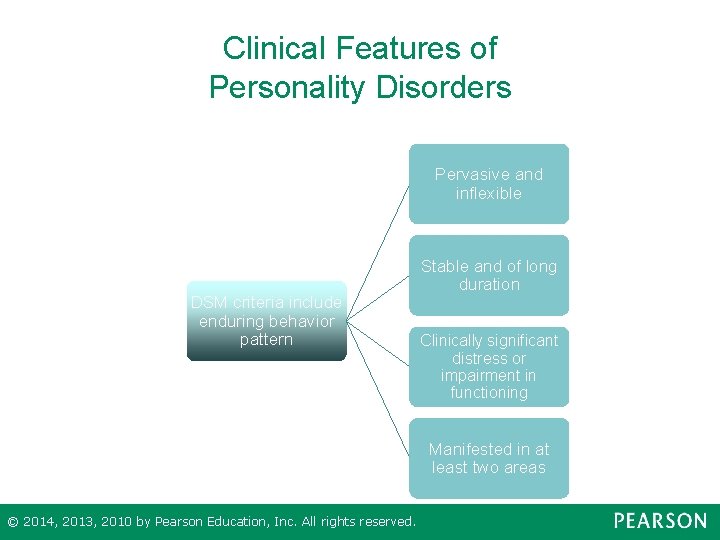
Clinical Features of Personality Disorders Pervasive and inflexible DSM criteria include enduring behavior pattern Stable and of long duration Clinically significant distress or impairment in functioning Manifested in at least two areas © 2014, 2013, 2010 by Pearson Education, Inc. All rights reserved.
Enduring behavior pattern • Manifested in at least two areas: cognition, affectivity, interpersonal functioning, or impulse control • Often cause significant problems in lives of others • Gradually develop inflexible and distorted personality and behavior patterns © 2014, 2013, 2010 by Pearson Education, Inc. All rights reserved.
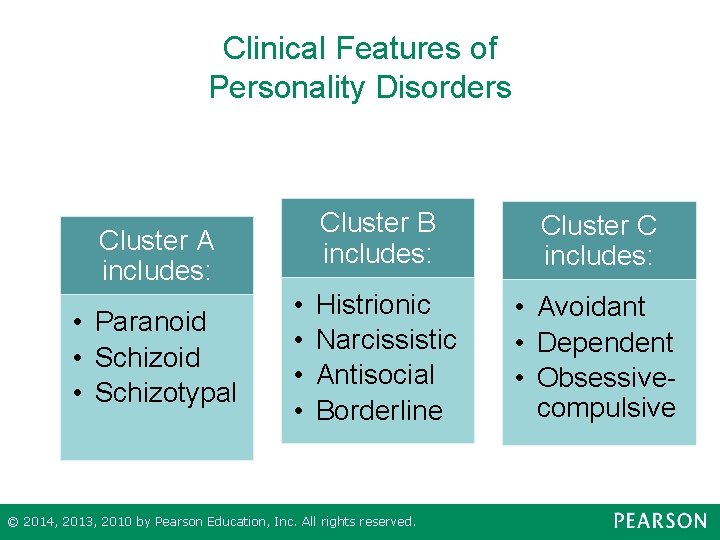
Clinical Features of Personality Disorders Cluster A includes: • Paranoid • Schizotypal • • Cluster B includes: Cluster C includes: Histrionic Narcissistic Antisocial Borderline • Avoidant • Dependent • Obsessivecompulsive © 2014, 2013, 2010 by Pearson Education, Inc. All rights reserved.
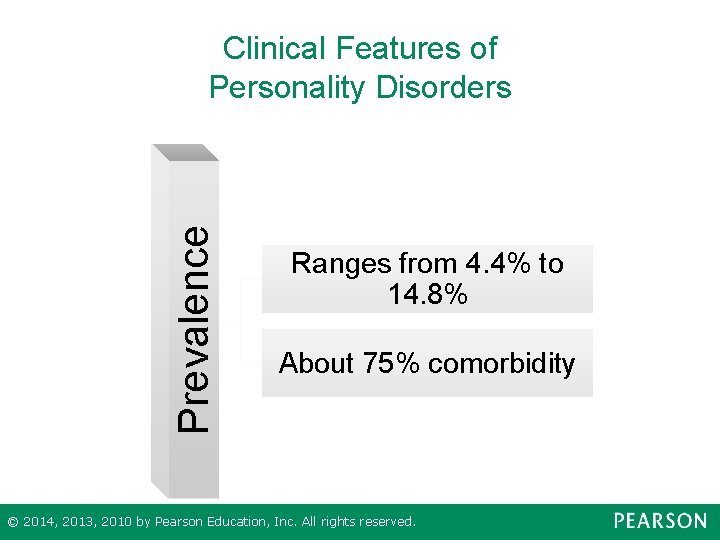
Prevalence Clinical Features of Personality Disorders Ranges from 4. 4% to 14. 8% About 75% comorbidity © 2014, 2013, 2010 by Pearson Education, Inc. All rights reserved.
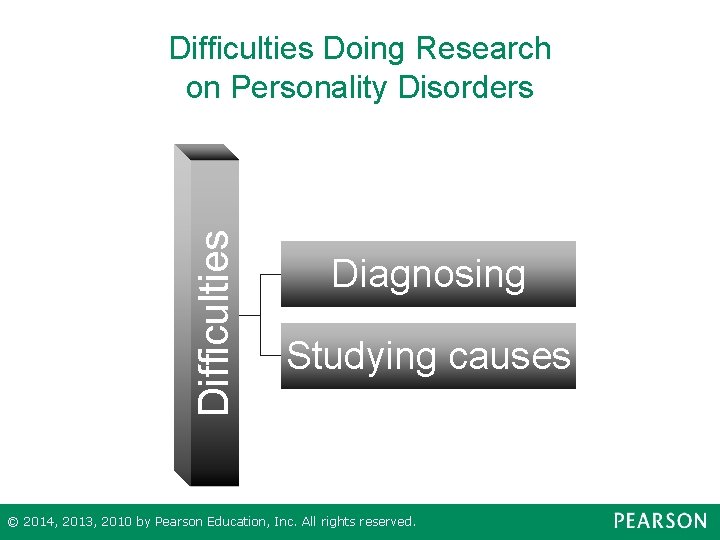
Difficulties Doing Research on Personality Disorders Diagnosing Studying causes © 2014, 2013, 2010 by Pearson Education, Inc. All rights reserved.
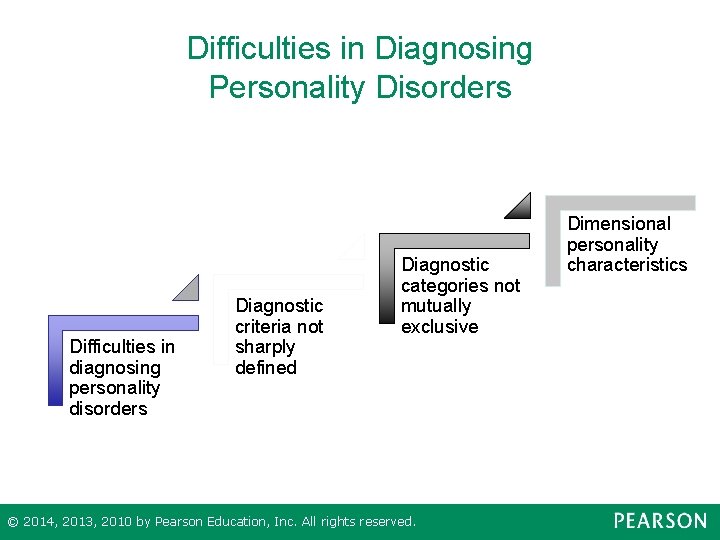
Difficulties in Diagnosing Personality Disorders Difficulties in diagnosing personality disorders Diagnostic criteria not sharply defined Diagnostic categories not mutually exclusive © 2014, 2013, 2010 by Pearson Education, Inc. All rights reserved. Dimensional personality characteristics
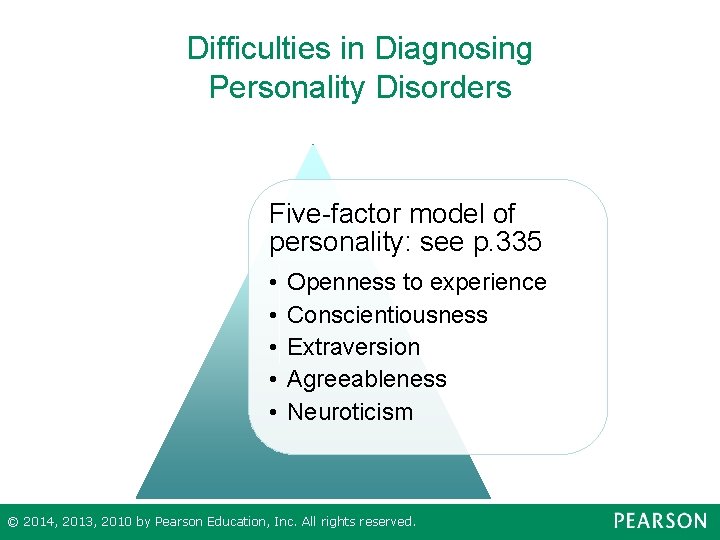
Difficulties in Diagnosing Personality Disorders Five-factor model of personality: see p. 335 • • • Openness to experience Conscientiousness Extraversion Agreeableness Neuroticism © 2014, 2013, 2010 by Pearson Education, Inc. All rights reserved.
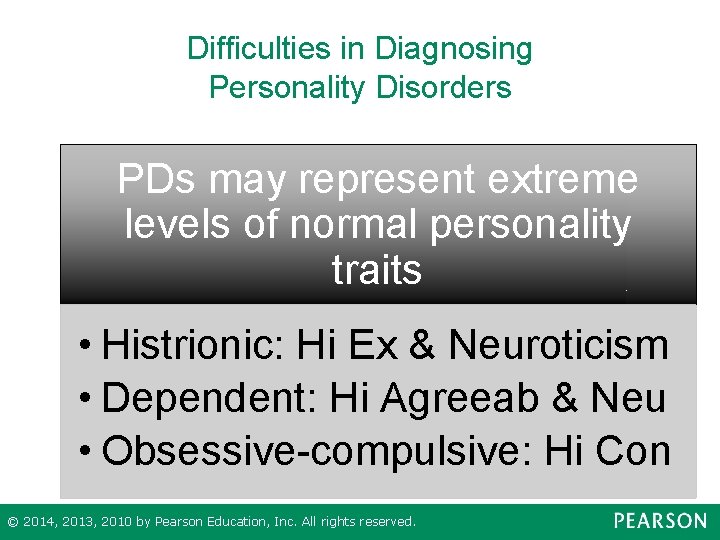
Difficulties in Diagnosing Personality Disorders PDs may represent extreme levels of normal personality traits • Histrionic: Hi Ex & Neuroticism • Dependent: Hi Agreeab & Neu • Obsessive-compulsive: Hi Con © 2014, 2013, 2010 by Pearson Education, Inc. All rights reserved.
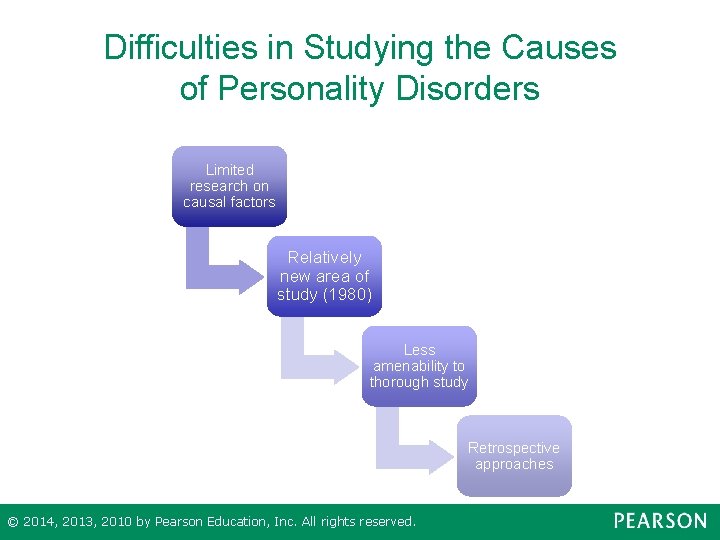
Difficulties in Studying the Causes of Personality Disorders Limited research on causal factors Relatively new area of study (1980) Less amenability to thorough study Retrospective approaches © 2014, 2013, 2010 by Pearson Education, Inc. All rights reserved.
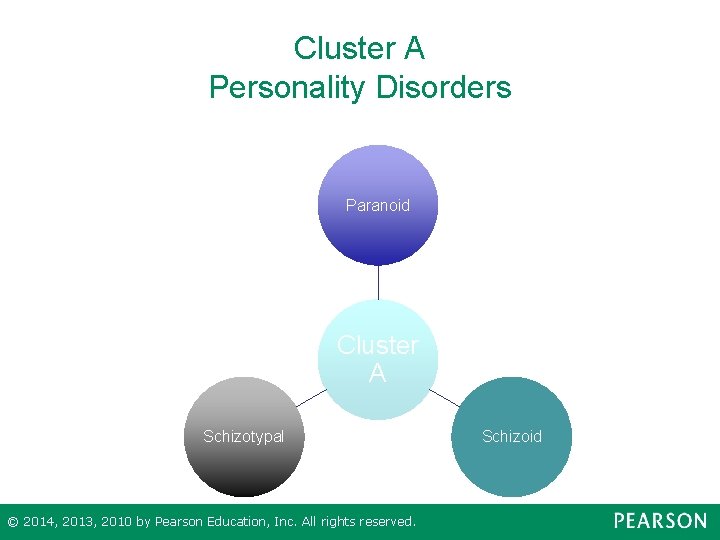
Cluster A Personality Disorders Paranoid Cluster A Schizotypal © 2014, 2013, 2010 by Pearson Education, Inc. All rights reserved. Schizoid
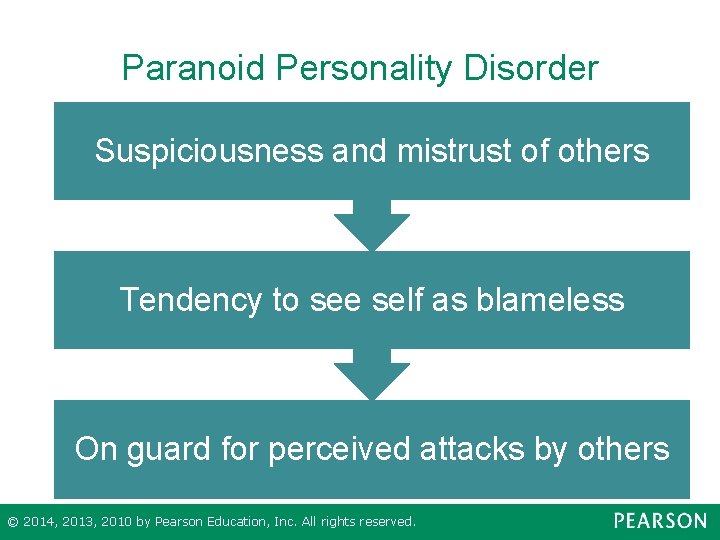
Paranoid Personality Disorder Suspiciousness and mistrust of others Tendency to see self as blameless On guard for perceived attacks by others © 2014, 2013, 2010 by Pearson Education, Inc. All rights reserved.
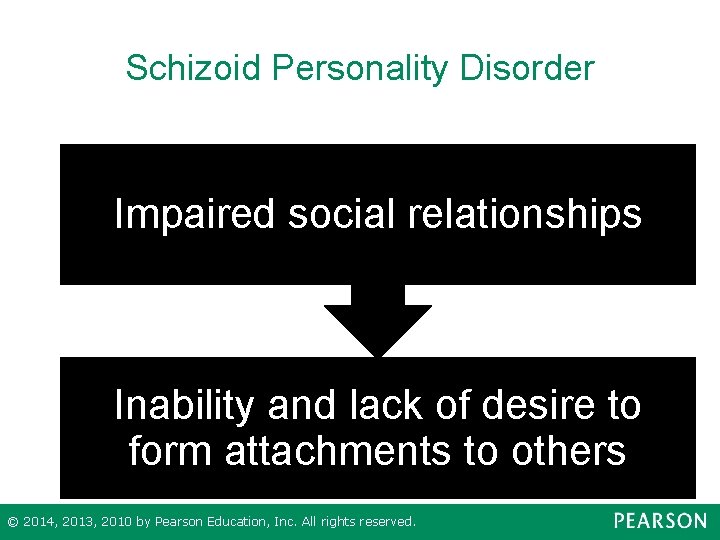
Schizoid Personality Disorder Impaired social relationships Inability and lack of desire to form attachments to others © 2014, 2013, 2010 by Pearson Education, Inc. All rights reserved.
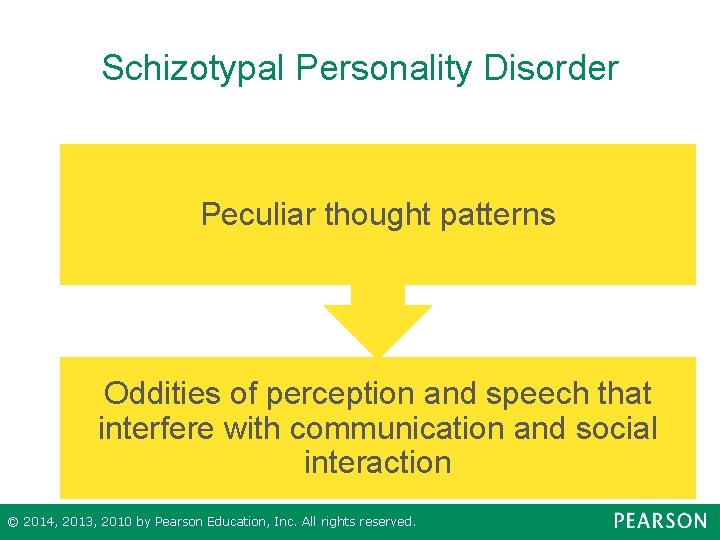
Schizotypal Personality Disorder Peculiar thought patterns Oddities of perception and speech that interfere with communication and social interaction © 2014, 2013, 2010 by Pearson Education, Inc. All rights reserved.

Schizotypal Personality Disorder • Causal factors • Genetic abnormalities similar to schizophrenia; it has been suggested that it might be a milder form of schizophrenia • Prevalence: 2 -3% • Maintain contact with reality, but under severe stress might experience transient psychotic symptoms. © 2014, 2013, 2010 by Pearson Education, Inc. All rights reserved.
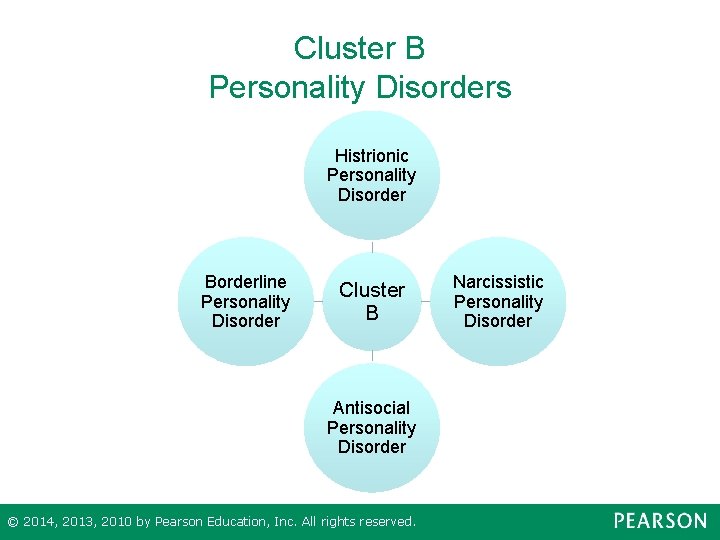
Cluster B Personality Disorders Histrionic Personality Disorder Borderline Personality Disorder Cluster B Antisocial Personality Disorder © 2014, 2013, 2010 by Pearson Education, Inc. All rights reserved. Narcissistic Personality Disorder
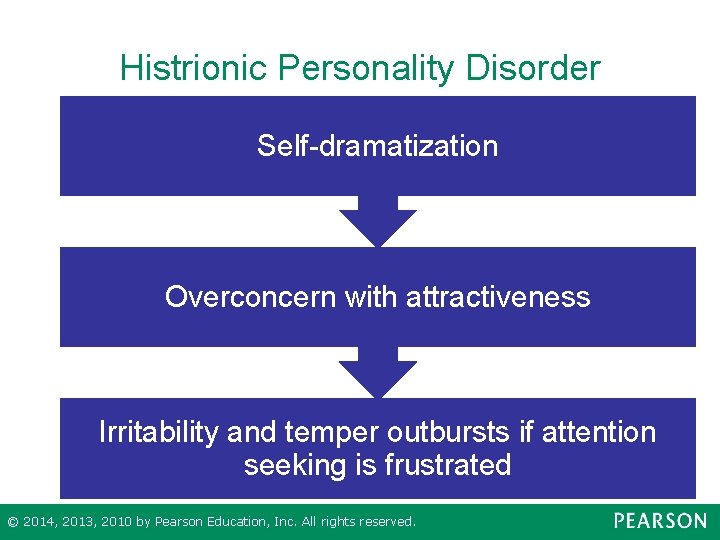
Histrionic Personality Disorder Self-dramatization Overconcern with attractiveness Irritability and temper outbursts if attention seeking is frustrated © 2014, 2013, 2010 by Pearson Education, Inc. All rights reserved.
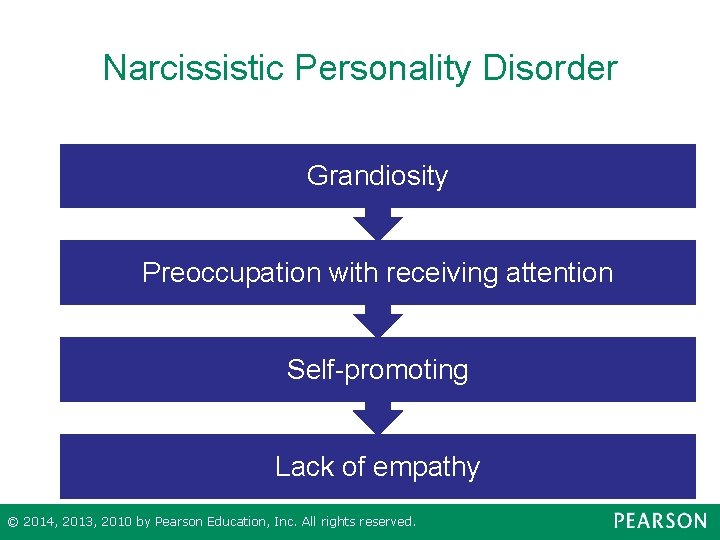
Narcissistic Personality Disorder Grandiosity Preoccupation with receiving attention Self-promoting Lack of empathy © 2014, 2013, 2010 by Pearson Education, Inc. All rights reserved.

• Vulnerable narcissists have unstable selfesteem © 2014, 2013, 2010 by Pearson Education, Inc. All rights reserved.
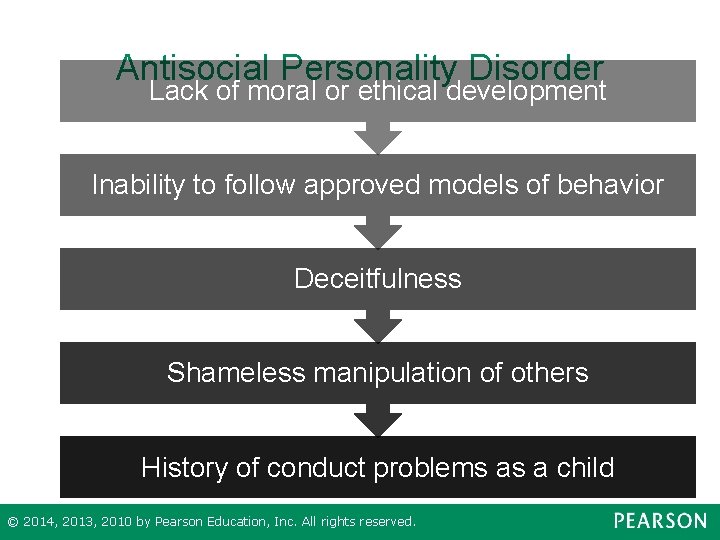
Antisocial Personality Disorder Lack of moral or ethical development Inability to follow approved models of behavior Deceitfulness Shameless manipulation of others History of conduct problems as a child © 2014, 2013, 2010 by Pearson Education, Inc. All rights reserved.
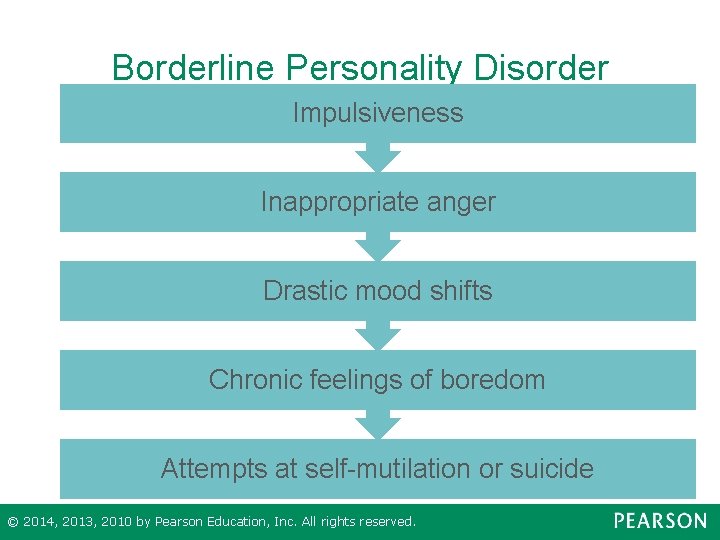
Borderline Personality Disorder Impulsiveness Inappropriate anger Drastic mood shifts Chronic feelings of boredom Attempts at self-mutilation or suicide © 2014, 2013, 2010 by Pearson Education, Inc. All rights reserved.
Borderline Personality Disorder • • Instability and impulsivity partially heritable Lowered functioning of serotonin Hyperresponsive noradrenergic system Decreased activation in brain areas that inhibit aggressive behavior (orbital prefrontal and medial prefrontal cortex) • Reductions in volume of the hippocampus and amygdala (aggression & impulsivity) • Negative & traumatic events in childhood: abuse and neglect, and separation and loss © 2014, 2013, 2010 by Pearson Education, Inc. All rights reserved.
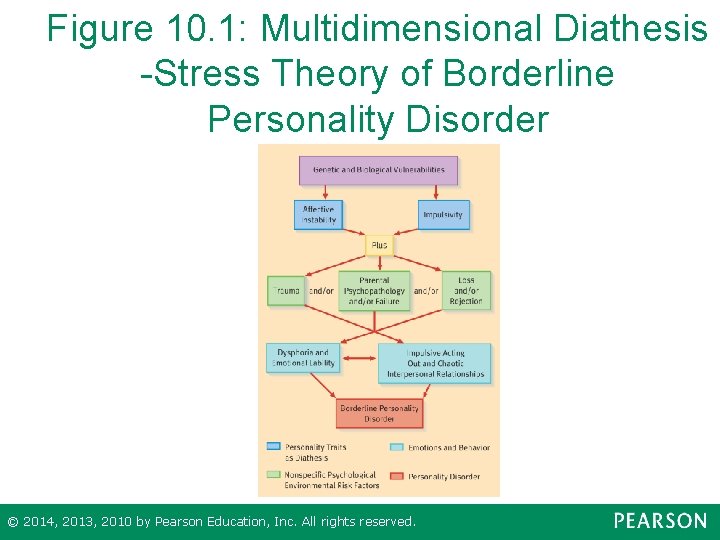
Figure 10. 1: Multidimensional Diathesis -Stress Theory of Borderline Personality Disorder © 2014, 2013, 2010 by Pearson Education, Inc. All rights reserved.
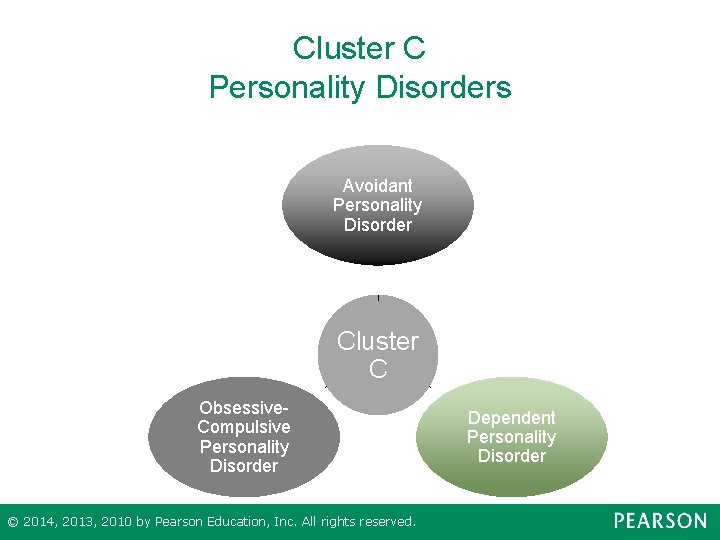
Cluster C Personality Disorders Avoidant Personality Disorder Cluster C Obsessive. Compulsive Personality Disorder © 2014, 2013, 2010 by Pearson Education, Inc. All rights reserved. Dependent Personality Disorder
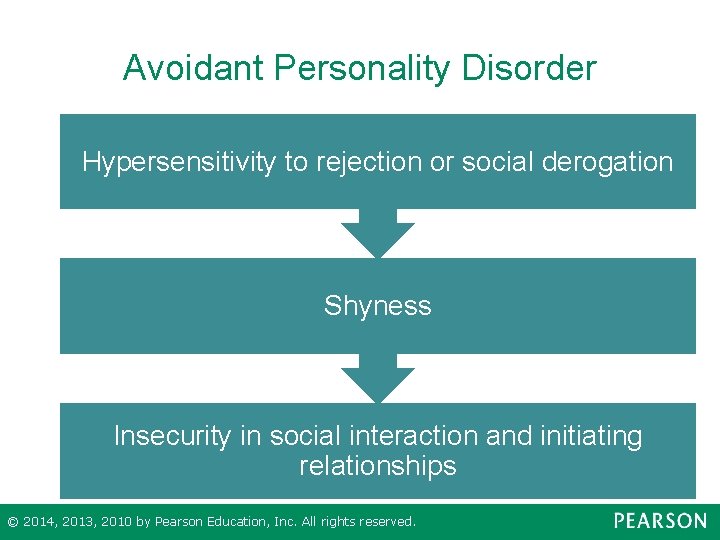
Avoidant Personality Disorder Hypersensitivity to rejection or social derogation Shyness Insecurity in social interaction and initiating relationships © 2014, 2013, 2010 by Pearson Education, Inc. All rights reserved.
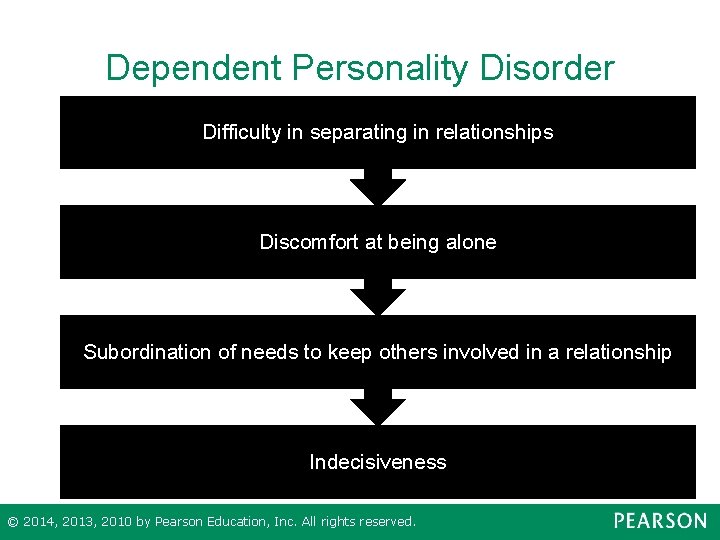
Dependent Personality Disorder Difficulty in separating in relationships Discomfort at being alone Subordination of needs to keep others involved in a relationship Indecisiveness © 2014, 2013, 2010 by Pearson Education, Inc. All rights reserved.
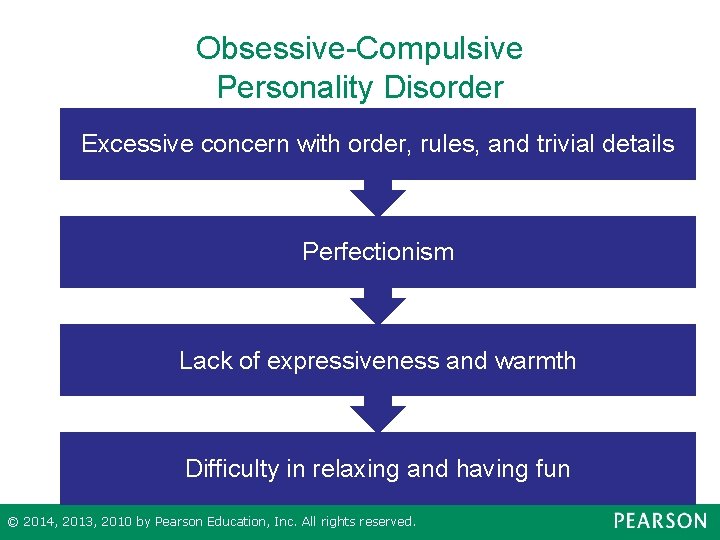
Obsessive-Compulsive Personality Disorder Excessive concern with order, rules, and trivial details Perfectionism Lack of expressiveness and warmth Difficulty in relaxing and having fun © 2014, 2013, 2010 by Pearson Education, Inc. All rights reserved.
General Sociocultural Causal Factors for Personality Disorders What do you think? Is our emphasis on impulse gratification, instant solutions, and pain-free benefits leading more people to develop the self-centered lifestyles that we see in more extreme forms in personality disorders? © 2014, 2013, 2010 by Pearson Education, Inc. All rights reserved.
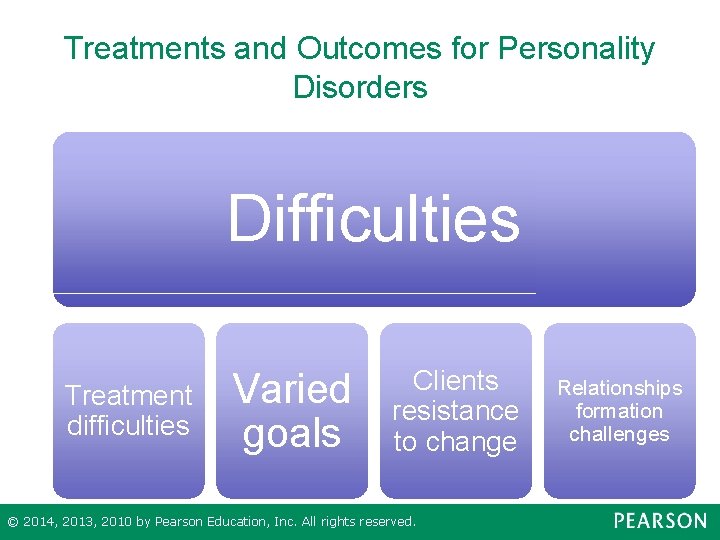
Treatments and Outcomes for Personality Disorders Difficulties Treatment difficulties Varied goals Clients resistance to change © 2014, 2013, 2010 by Pearson Education, Inc. All rights reserved. Relationships formation challenges
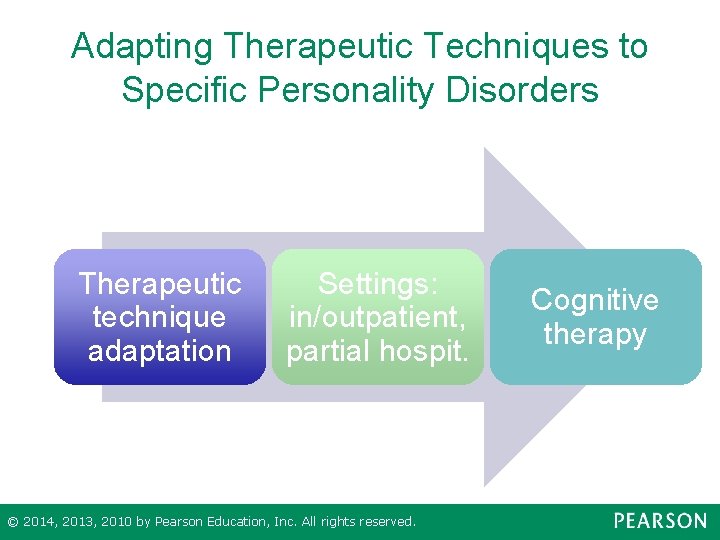
Adapting Therapeutic Techniques to Specific Personality Disorders Therapeutic technique adaptation Settings: in/outpatient, partial hospit. © 2014, 2013, 2010 by Pearson Education, Inc. All rights reserved. Cognitive therapy
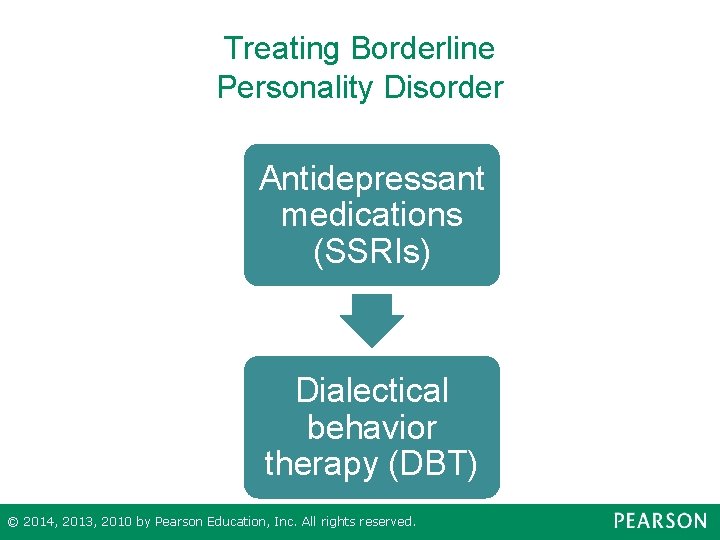
Treating Borderline Personality Disorder Antidepressant medications (SSRIs) Dialectical behavior therapy (DBT) © 2014, 2013, 2010 by Pearson Education, Inc. All rights reserved.
• Regarding treatment, borderline has received more clinical and research attention than the other PDs • Antidepressant medications (SSRIs) • Dialectical behavior therapy (DBT) p. 351 • A unique kind of cognitive and behavioral therapy adapted specifically for borderline • Systematic research supports DBT © 2014, 2013, 2010 by Pearson Education, Inc. All rights reserved.
Other treatments of BPD • Kernberg et al (1985, 1996) have developed a more directive type of psychodynamic psychotherapy • Primary goal: strengthen the weak ego with particular focus on DM of splitting which leads them to black-and white, all-or-none thinking, as well as to rapid shifts in their reactions to themselves & to other people as “all good” or “all bad. ” Help them see the shades of gray between these 2 extremes and integrate + and – views of themselves and others into more nuanced view © 2014, 2013, 2010 by Pearson Education, Inc. All rights reserved.
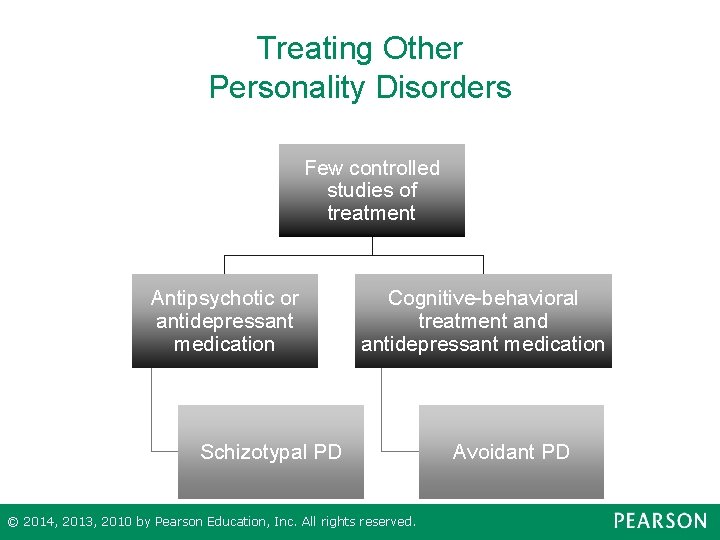
Treating Other Personality Disorders Few controlled studies of treatment Antipsychotic or antidepressant medication Cognitive-behavioral treatment and antidepressant medication Schizotypal PD © 2014, 2013, 2010 by Pearson Education, Inc. All rights reserved. Avoidant PD
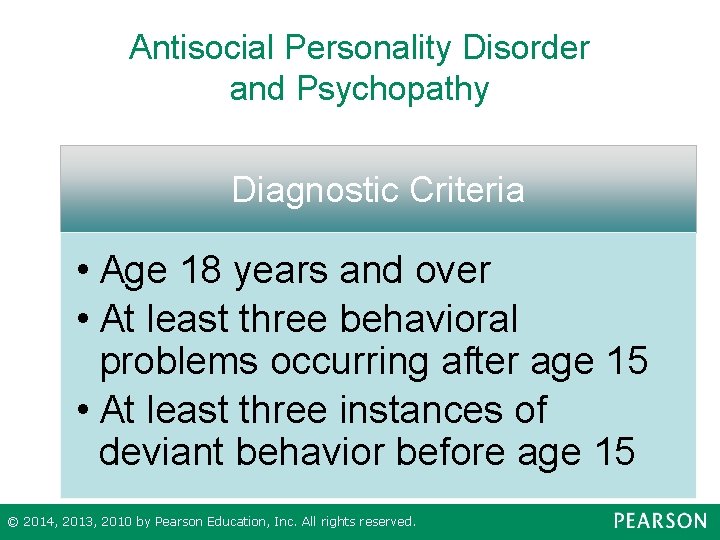
Antisocial Personality Disorder and Psychopathy Diagnostic Criteria • Age 18 years and over • At least three behavioral problems occurring after age 15 • At least three instances of deviant behavior before age 15 © 2014, 2013, 2010 by Pearson Education, Inc. All rights reserved.
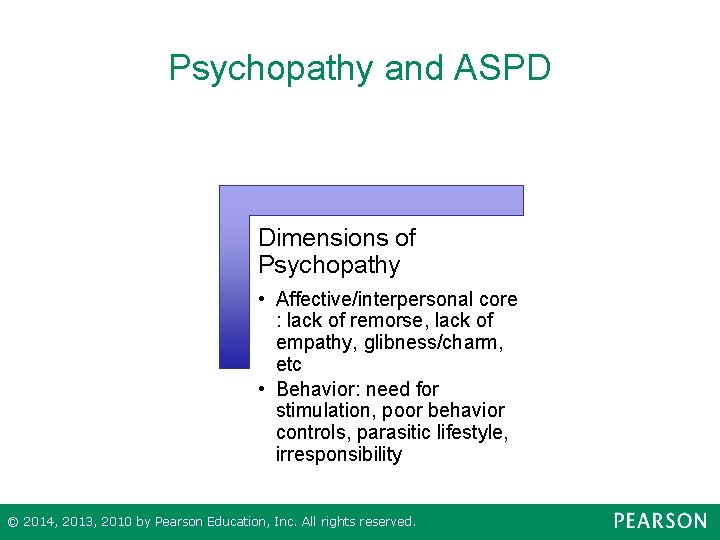
Psychopathy and ASPD Dimensions of Psychopathy • Affective/interpersonal core : lack of remorse, lack of empathy, glibness/charm, etc • Behavior: need for stimulation, poor behavior controls, parasitic lifestyle, irresponsibility © 2014, 2013, 2010 by Pearson Education, Inc. All rights reserved.
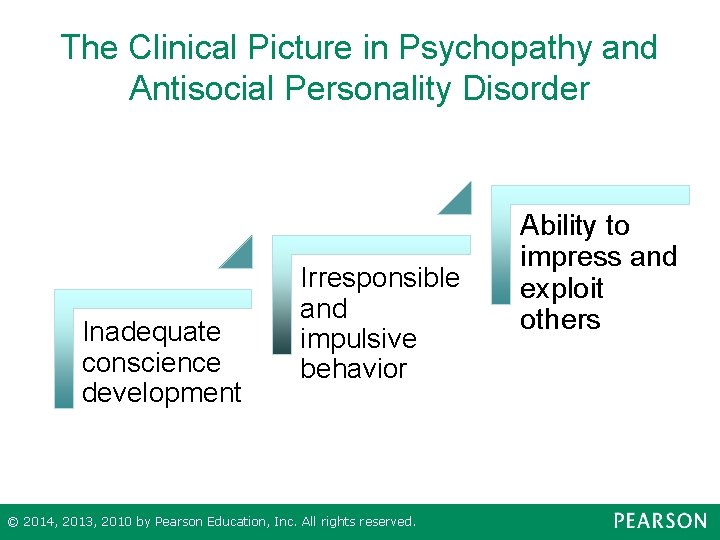
The Clinical Picture in Psychopathy and Antisocial Personality Disorder Inadequate conscience development Irresponsible and impulsive behavior © 2014, 2013, 2010 by Pearson Education, Inc. All rights reserved. Ability to impress and exploit others
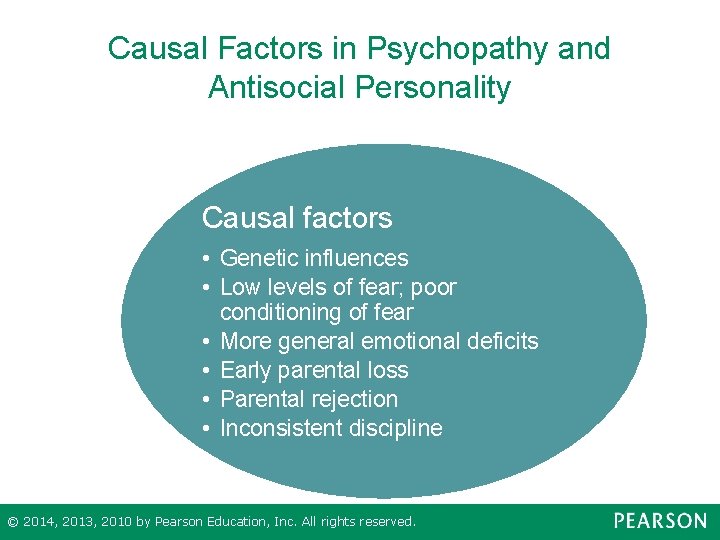
Causal Factors in Psychopathy and Antisocial Personality Causal factors • Genetic influences • Low levels of fear; poor conditioning of fear • More general emotional deficits • Early parental loss • Parental rejection • Inconsistent discipline © 2014, 2013, 2010 by Pearson Education, Inc. All rights reserved.
Developmental Perspective on Psychopathy and Antisocial Personality True or false? Antisocial behavior in childhood is the single best predictor of antisocial personality disorder in adulthood. © 2014, 2013, 2010 by Pearson Education, Inc. All rights reserved.
• True. • Antisocial behavior in childhood is the single best predictor of antisocial personality disorder in adulthood • The younger the antisocial behavior starts, the higher the risk • Antisocial personality disorder is often preceded by conduct disorder, oppositional defiant disorder, or ADHD © 2014, 2013, 2010 by Pearson Education, Inc. All rights reserved.
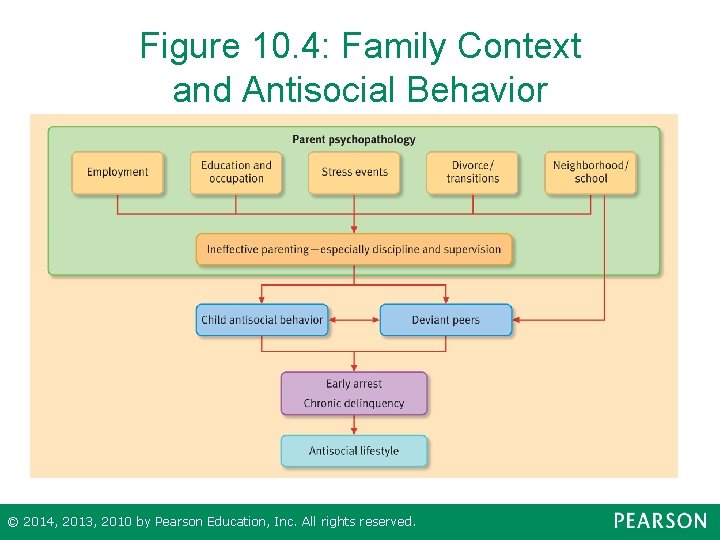
Figure 10. 4: Family Context and Antisocial Behavior © 2014, 2013, 2010 by Pearson Education, Inc. All rights reserved.
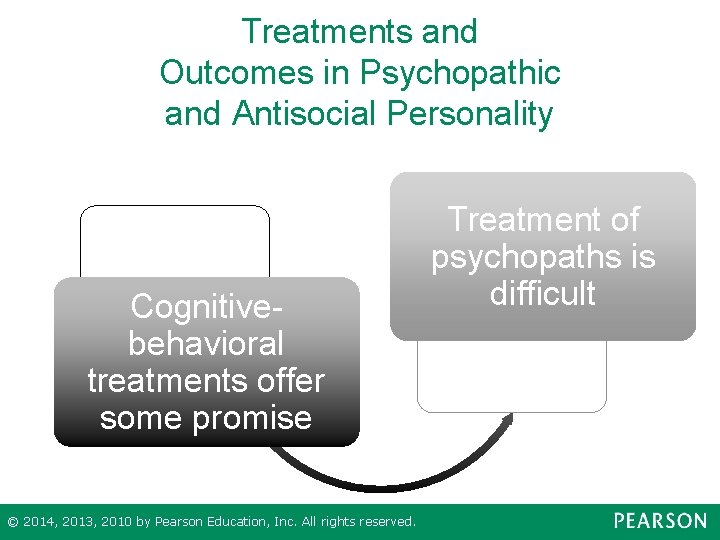
Treatments and Outcomes in Psychopathic and Antisocial Personality Cognitivebehavioral treatments offer some promise © 2014, 2013, 2010 by Pearson Education, Inc. All rights reserved. Treatment of psychopaths is difficult
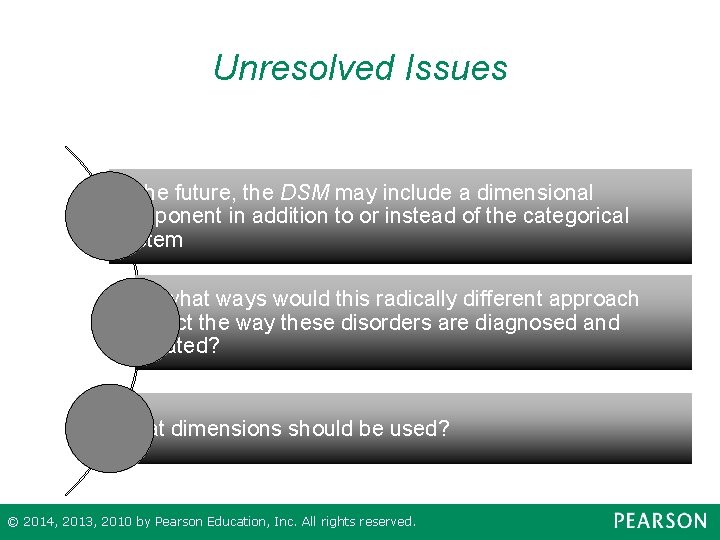
Unresolved Issues In the future, the DSM may include a dimensional component in addition to or instead of the categorical system In what ways would this radically different approach affect the way these disorders are diagnosed and treated? What dimensions should be used? © 2014, 2013, 2010 by Pearson Education, Inc. All rights reserved.
- Slides: 44