Adaptations Introduction Watch this video for an introduction

- Slides: 30
Adaptations
Introduction • Watch this video for an introduction to adaptations • Animals have structural/physical and behavioral adaptations – Structural – body parts – Behavioral – what the animal does • “Animals depend on their physical features to help them obtain food, keep safe, build homes, withstand weather, and attract mates. ”
Examples of Structural Adaptations • • • Shape of bird’s beak Number and arrangement of fingers or toes Color of fur Thickness of fur Shape of nose, ears, or feet
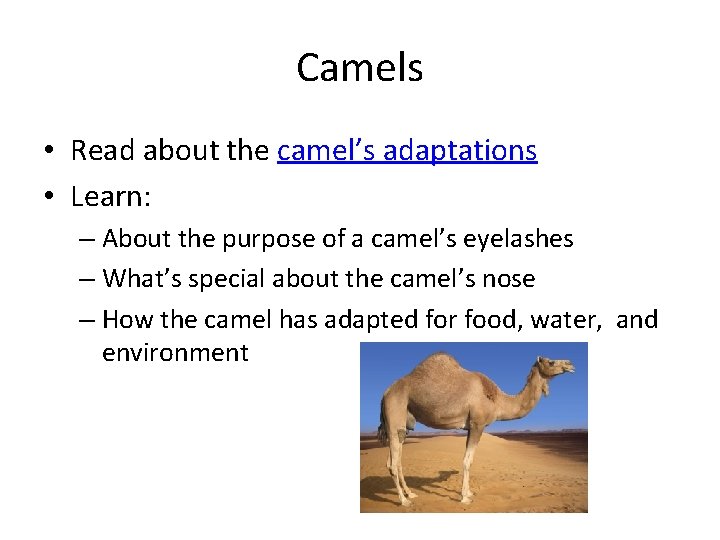
Camels • Read about the camel’s adaptations • Learn: – About the purpose of a camel’s eyelashes – What’s special about the camel’s nose – How the camel has adapted for food, water, and environment
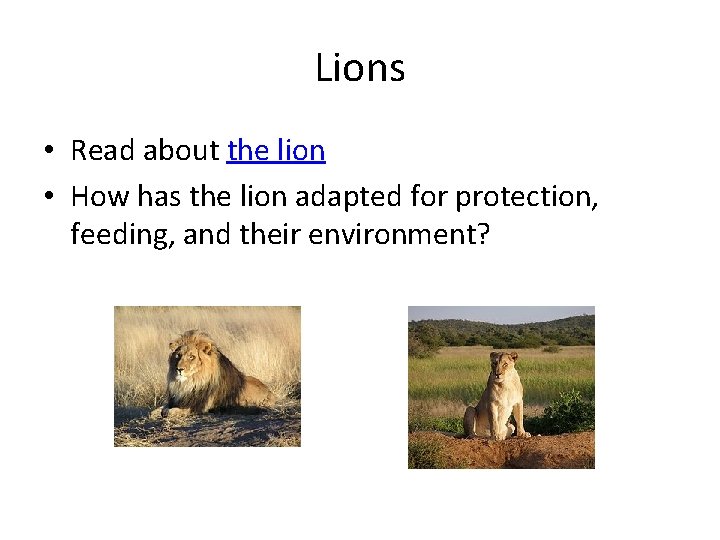
Lions • Read about the lion • How has the lion adapted for protection, feeding, and their environment?
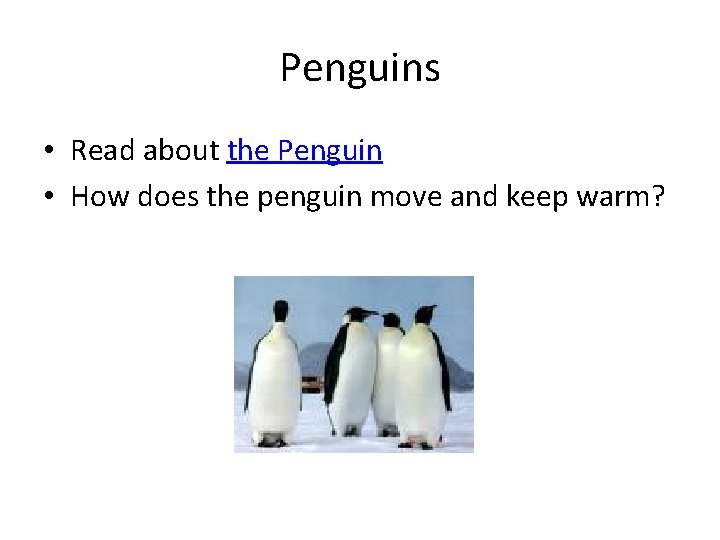
Penguins • Read about the Penguin • How does the penguin move and keep warm?
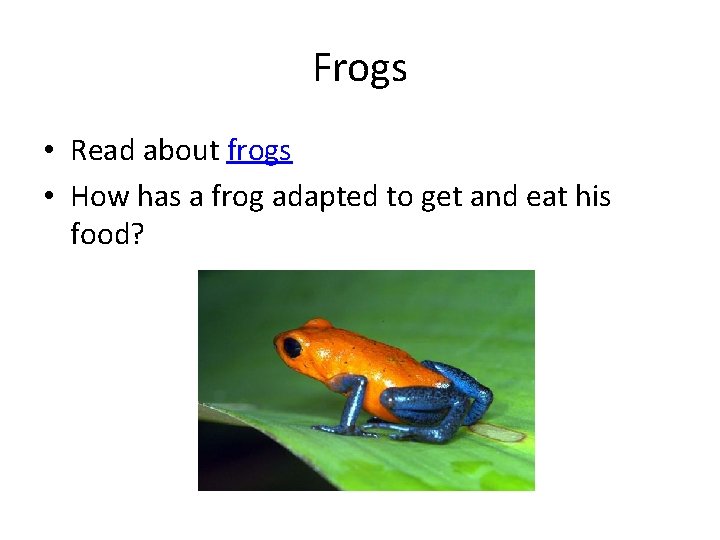
Frogs • Read about frogs • How has a frog adapted to get and eat his food?
Saguaro Cactus • Read about the Saguaro Cactus • How has it adapted to survive in it’s environment?
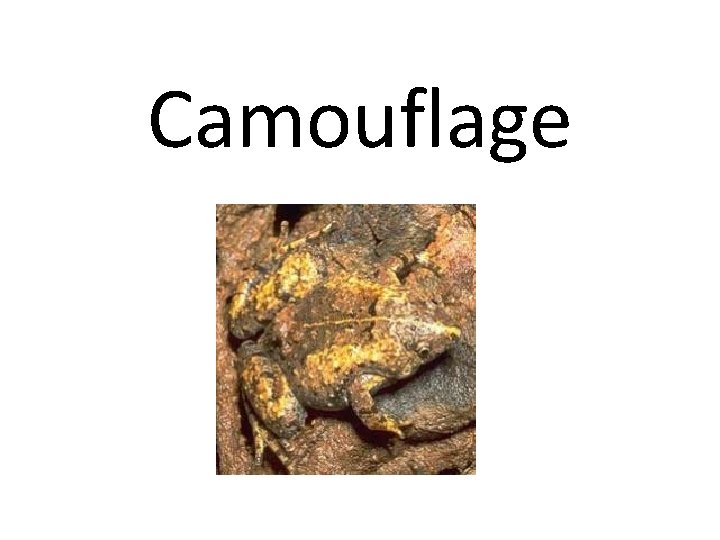
Camouflage
What is Camouflage? • adaptation “increases an animal’s chances of survival” • camouflage – “an animal’s ability to hide itself from predator and prey” • camouflage includes blending in and disguising
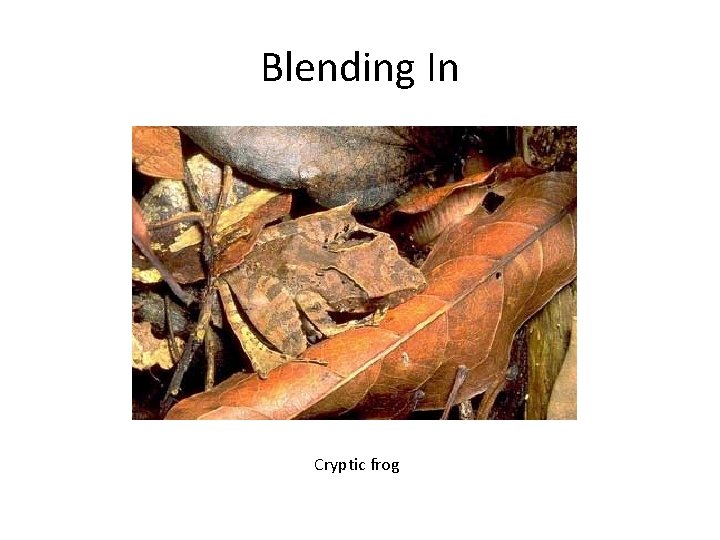
Concealing Animal Colors • Helps animals find food and avoid being attacked or eaten • An “animal’s environment is often the most important factor in what the camouflage looks like” • Camouflage matches the background of the environment.
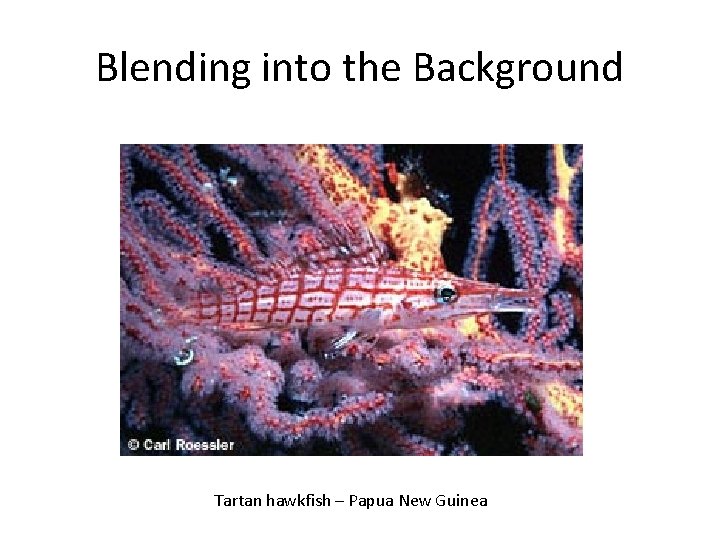
Blending into the Background Tartan hawkfish – Papua New Guinea
Examples of Blending In • “Brownish ‘earth tone’ colors” to blend in with trees and soil – Deer, squirrels, wild turkey • “Grayish-blue coloring” to blend in with underwater color – Sharks, dolphins, stingrays
Blending In Cryptic frog
Animals Who Can Change Their Color • Biochromes – animals produce colors chemically – absorbing some light and reflecting others • Microscopic Physical Structures – refract and scatter light – Polar bears “have black skin but appear white because they have translucent hairs” • Some Animals can do both
Advantages of Camouflage • Animals with better camouflage are more likely to survive • Animals that survive will reproduce and pass their coloring on to their offspring • Natural selection – how the colors develop slowly over generations based on the colors of the animals that have survived • Watch this video clip for a camouflage overview
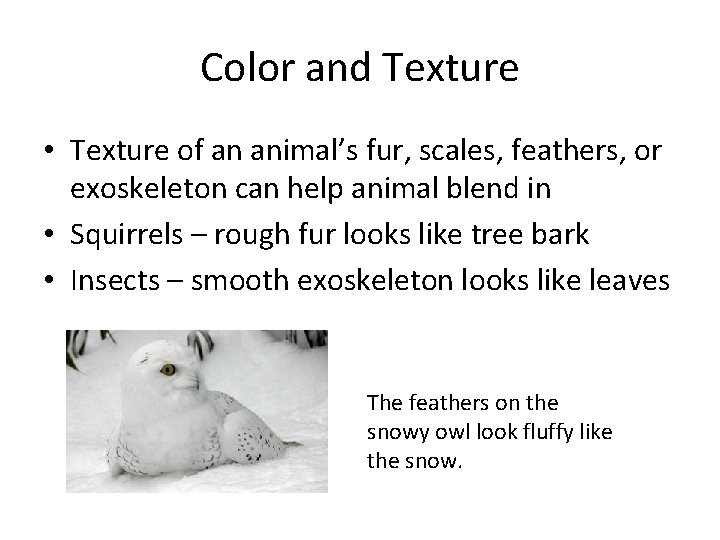
Color and Texture • Texture of an animal’s fur, scales, feathers, or exoskeleton can help animal blend in • Squirrels – rough fur looks like tree bark • Insects – smooth exoskeleton looks like leaves The feathers on the snowy owl look fluffy like the snow.
Adaptive Camouflage • Animals who can change color to match their surroundings • Changing seasons changes the surroundings – Spring and summer – green and brown – Winter and fall – brown or white • Being the same color year-round can be dangerous
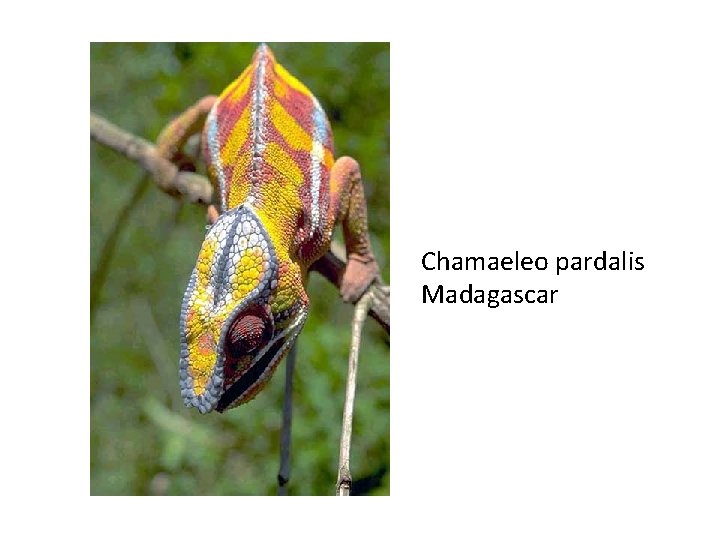
Adaptive Camouflage • Changes in the environment can cause the animal to change color for the season like a tree’s leave change color • Animals can also change their color by contracting or relaxing muscles – Cuttlefish – Watch this video to hear an explanation of the chromataphors and reflective cells and this video to see them change! – Chameleons
Chamaeleo pardalis Madagascar
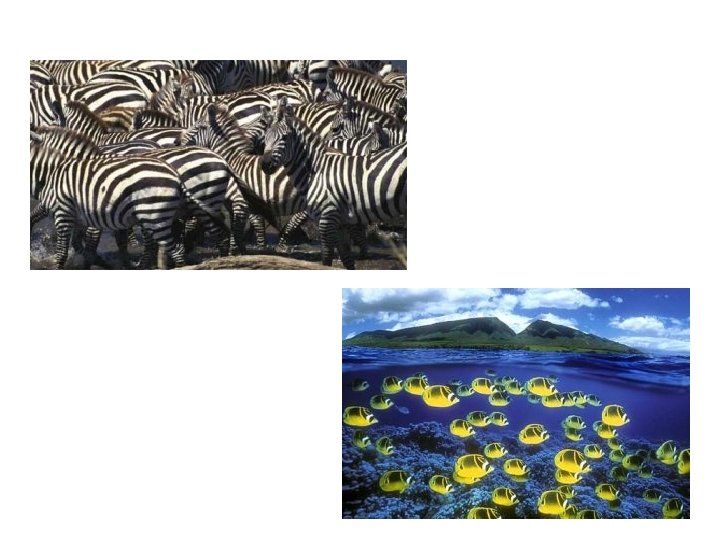
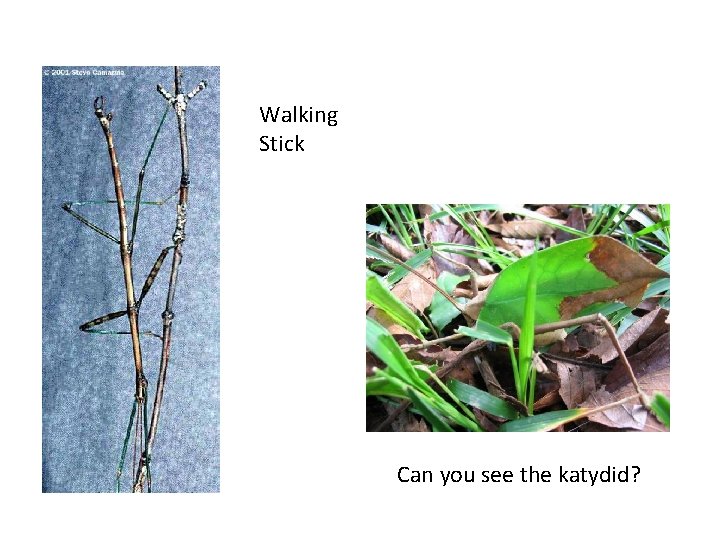
Animal Disguises • Spots, stripes, patches, etc. • Patterns may look similar to the environment – Vertical stripes – grass • Disruption coloration – An outline that doesn’t match the shape of the animal so the predator doesn’t know exactly where the animal is – Zebras – stripes make them look like one big animal, so the predator can’t target one – Fish swimming in schools look like one large fish – Walking Stick looks like a stick
Walking Stick Can you see the katydid?
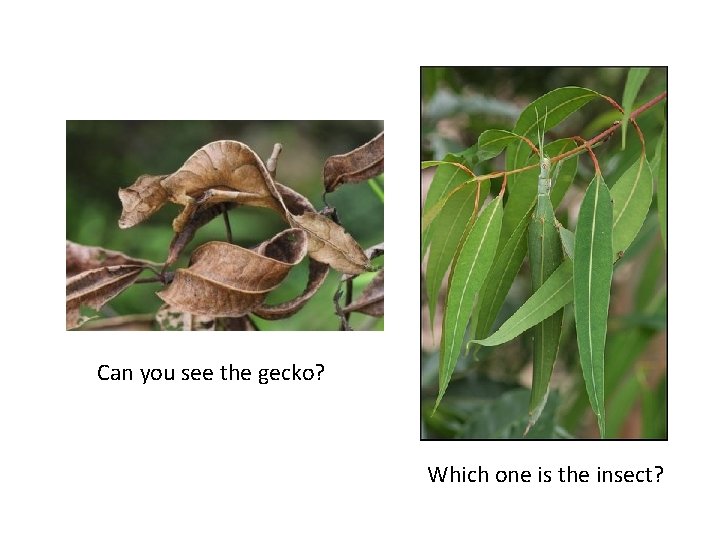
Mimicry • Other animals use mimicry also • Mimicry is when an animal looks like something else • Some animals look like other animals • Some animals have colors that look like poisonous animals
Can you see the gecko? Which one is the insect?
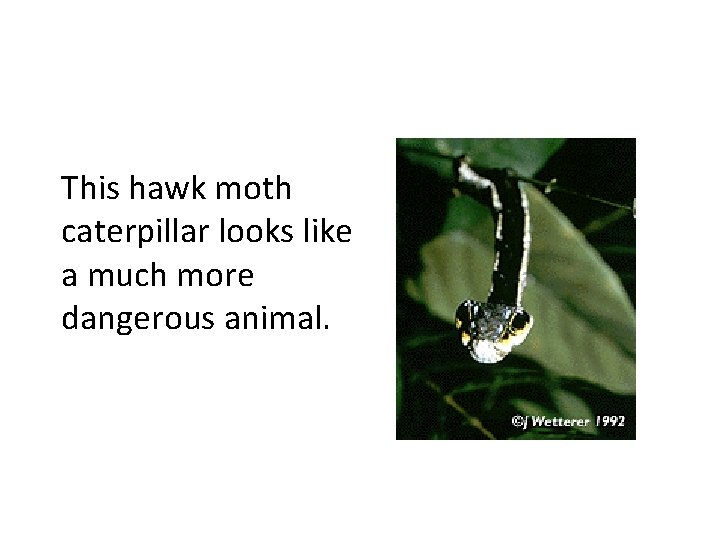
This hawk moth caterpillar looks like a much more dangerous animal.
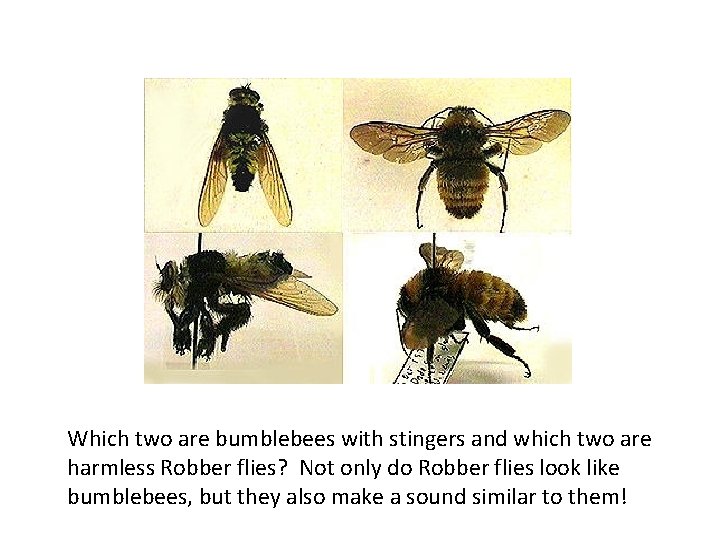
Which two are bumblebees with stingers and which two are harmless Robber flies? Not only do Robber flies look like bumblebees, but they also make a sound similar to them!
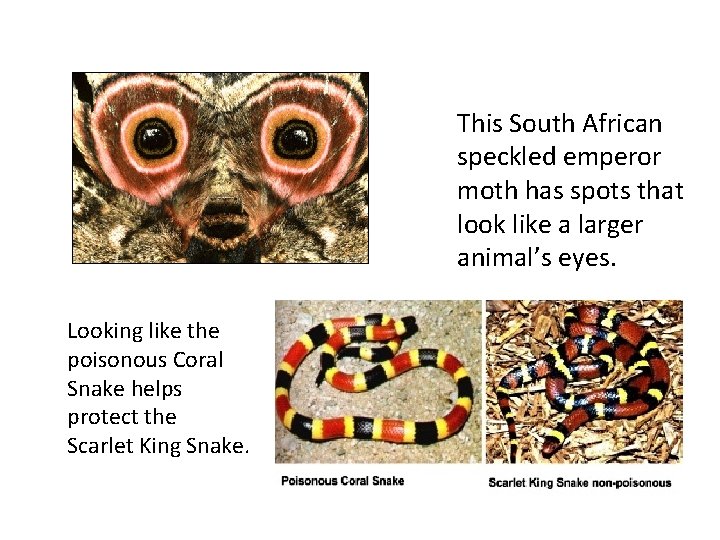
This South African speckled emperor moth has spots that look like a larger animal’s eyes. Looking like the poisonous Coral Snake helps protect the Scarlet King Snake.
Resources • • • http: //www. howstuffworks. com/environmental/life/zoology/all-about-animals/animalcamouflage. htm http: //curiosity. discovery. com/topic/ecology-and-the-environment/animal-camouflage -pictures. htm http: //www. youtube. com/watch? v=2 x-8 v 1 mxp. R 0 http: //www. youtube. com/watch? v=__XA 6 B 41 SQQ http: //thenaturalhistorian. com/2012/03/19/good-creation-mimicry-design-and-thecreationists-dilemma/ http: //www. alleghany. k 12. va. us/animal%20 adaptation%20 webpage/animal_mimicry. h tm http: //malcolmpollack. com/2006/08/08/designer-genes/ http: //oakdome. com/k 5/lesson-plans/powerpoint/animal-camouflage-pictures-andinformation. php http: //www. youtube. com/watch? v=ds 5 q. In 2 TISg http: //www. youtube. com/watch? v=w. EDx. Th. DINg. Q&feature=related
Resources • • • http: //www. nhptv. org/natureworks/nwep 1. htm http: //www. woodlands-junior. kent. sch. uk/homework/adaptation. htm http: //www. casarioblanco. com/poison-dart-frog. html http: //fohn. net/camel-pictures-facts/ http: //en. wikipedia. org/wiki/Lion