Acute Mesenteric Ischemia Scott Q Nguyen M D










- Slides: 39
Acute Mesenteric Ischemia Scott Q. Nguyen, M. D. Celia M. Divino, M. D. Mount Sinai School of Medicine Department of Surgery
Mrs. Mitty • An 83 year-old woman is brought to the ER by ambulance from her nursing home w/ a 4 hour history of severe diffuse abdominal pain and distention.
History What other points of the history do you want to know?
History, Mrs. Mitty Consider the Following • Characterization of symptoms • Temporal sequence • Alleviating / Exacerbating factors: • Pertinent PMH, ROS, MEDS. • Associated signs and symptoms • Relevant family hx.
History, Mrs. Mitty • Characterization of Symptoms: § Sudden onset diffuse abdominal pain and distention 4 hours ago. § Pain not localized to any quadrant. • Alleviating / Exacerbating factors: § Pain is excruciating, it’s the worse she’s ever experienced § Nothing alleviates it • Associated signs/symptoms: § She vomits 1 L of feculent emesis on arrival to ER. § Last BM 2 hours ago, loose
Other History • PMH § Atrial Fibrillation - dx’d 1 month ago, anticoagulation contraindicated with history of massive GI bleed § CHF, CAD, DM • PSH § Cholecystectomy, left hemicolectomy for diverticular disease • MEDS § digoxin, metoprolol, insulin
Other History • Social History § Occasional wine, § 50 pack-yr smoker, quit 2 yrs ago • Family History § Patient unable to give
What is your Differential Diagnosis?
Differential Diagnosis Based on History and Presentation • Small Bowel Obstruction • Acute Mesenteric Ischemia • Perforated Diverticulitis • Ischemic Colitis • Perforated Peptic Ulcer Disease • Acute Pancreatitis • Acute Cholecystitis • Gastroenteritis • Acute Appendicitis
Physical Examination What would you look for?
Physical Examination • Vital Signs: T = 38. 5, P = 103, BP = 140/85, RR = 28 • Appearance: thin , in severe distress, legs pulled up to chest, moaning • Heart: irregularly irregular • Lungs: mild rales at bases • Abdomen: decreased BS, very distended, mildly tender diffusely, no guarding/rebound tenderness, no hernias • Rectal: loose stool in vault, streaked w/ fresh blood Remaining Examination findings non-contributory
Would you like to revise your Differential Diagnosis?
Laboratory What would you obtain?
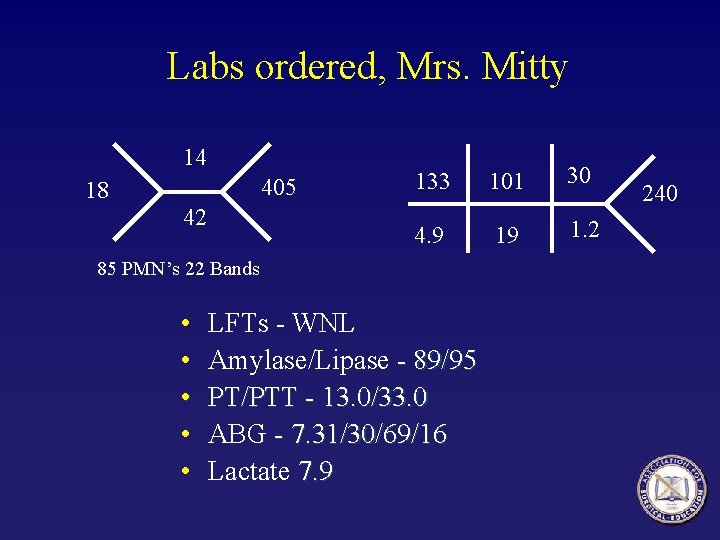
Labs ordered, Mrs. Mitty 14 18 405 42 133 101 30 4. 9 19 1. 2 85 PMN’s 22 Bands • • • LFTs - WNL Amylase/Lipase - 89/95 PT/PTT - 13. 0/33. 0 ABG - 7. 31/30/69/16 Lactate 7. 9 240
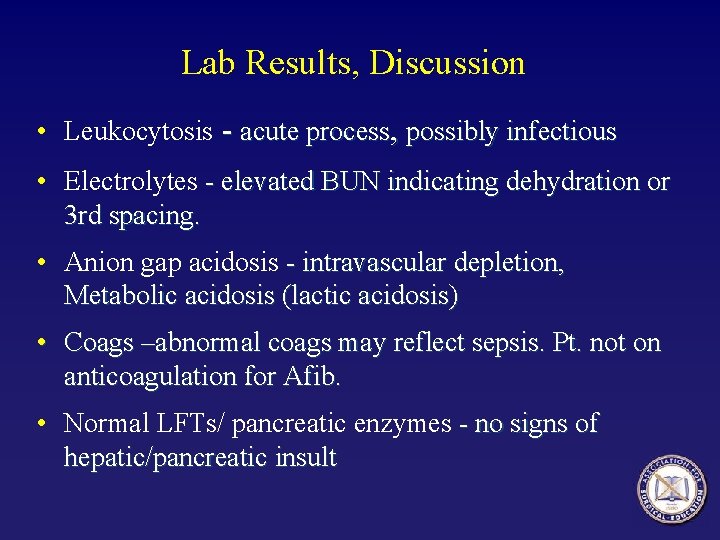
Lab Results, Discussion • Leukocytosis - acute process, possibly infectious • Electrolytes - elevated BUN indicating dehydration or 3 rd spacing. • Anion gap acidosis - intravascular depletion, Metabolic acidosis (lactic acidosis) • Coags –abnormal coags may reflect sepsis. Pt. not on anticoagulation for Afib. • Normal LFTs/ pancreatic enzymes - no signs of hepatic/pancreatic insult
Interventions at this point?
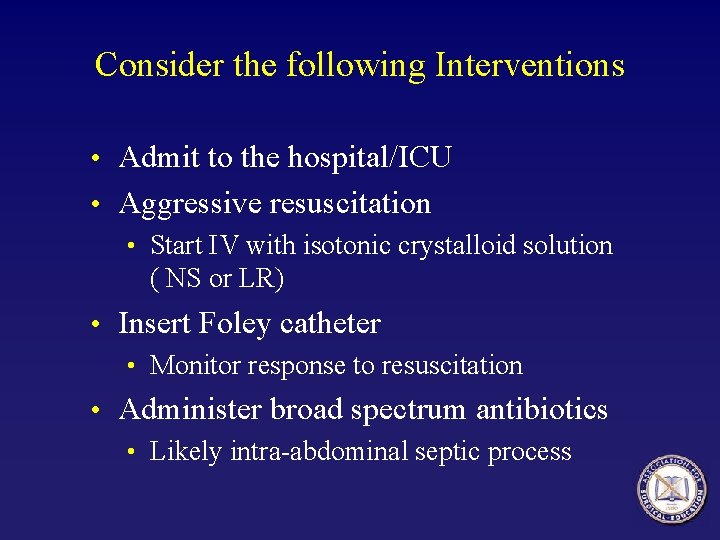
Consider the following Interventions • Admit to the hospital/ICU • Aggressive resuscitation • Start IV with isotonic crystalloid solution ( NS or LR) • Insert Foley catheter • Monitor response to resuscitation • Administer broad spectrum antibiotics • Likely intra-abdominal septic process
Studies What further studies would you want at this time?
Studies, Mrs. Mitty • Abdominal X-rays • Flat / Upright • Acute Abdominal Series (may include chest at some institutions)
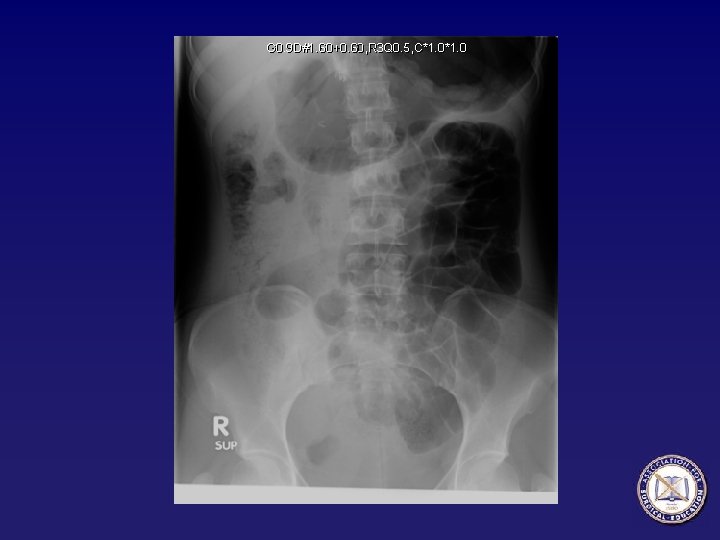
Studies – Results • Plain abdominal films § Diffuse dilation of small bowel w/ air fluid levels on upright view. Some air in Left colon and Rectum. NO free air
What is the differential diagnosis at this point?
Revised Differential Diagnosis 1) Acute Mesenteric Ischemia 2) Strangulated small bowel obstruction 3) Diverticulitis w/ contained perforation?
What next?
What next? • Mesenteric Angiogram or CT Angiogram
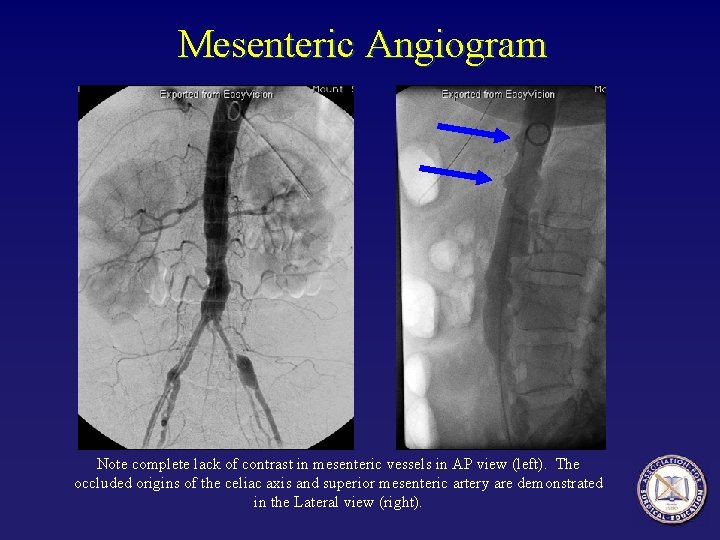
Discussion • With the sudden onset of symptoms, h/o Afib, and “pain out of proportion to physical exam, ” acute mesenteric ischemia should be high on the Differential Diagnosis • A mesenteric angiogram will allow visualization of the visceral vessels (celiac, SMA, IMA)
Mesenteric Angiogram Note complete lack of contrast in mesenteric vessels in AP view (left). The occluded origins of the celiac axis and superior mesenteric artery are demonstrated in the Lateral view (right).
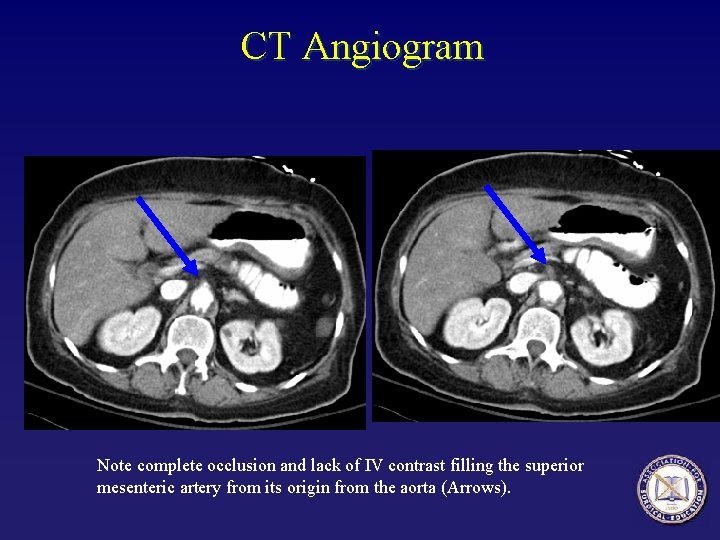
CT Angiogram Note complete occlusion and lack of IV contrast filling the superior mesenteric artery from its origin from the aorta (Arrows).
Other studies CT angiogram / MR angiogram • sensitivity 75%, specificity 100% for emboli • additionally can detect thickened, distended bowel loops • more sensitive for Mesenteric Venous Thrombosis
Management What should be done next?
Management • Pre-operative preparation • Assure adequate resuscitation • Monitoring • Foley Catheter • Urgent exploration • Surgical embolectomy • Assess bowel viability
Management • Pre-operative preparation • • Assure adequate resuscitation Monitoring • Non-invasive: EKG, BP, Pulse Oximetry, foley catheter • Consider invasive monitoring: Central venous catheter, PA Catheter ? Arterial line? • Operative Technique/ Urgent exploration • • Midline Laparotomy Relevant Anatomy Surgical Embolectomy Assess bowel viability
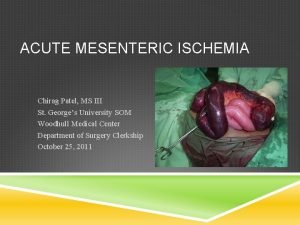
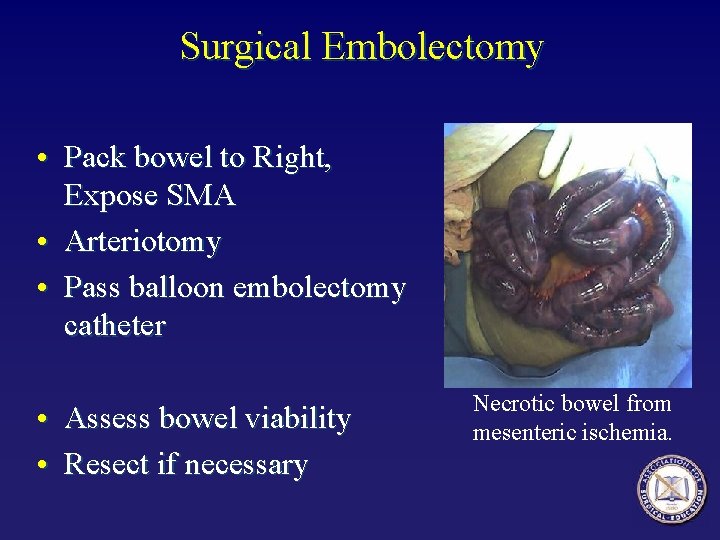
Surgical Embolectomy • Pack bowel to Right, Expose SMA • Arteriotomy • Pass balloon embolectomy catheter • Assess bowel viability • Resect if necessary Necrotic bowel from mesenteric ischemia.
Discussion Acute mesenteric ischemia is a vascular emergency with overall mortality 60 -80%. There are four main pathophysiologic processes which have the same common endpoint, bowel necrosis, abdominal sepsis, and death. Mesenteric arterial anatomy is notable for rich collateral flow between the celiac trunk, superior mesenteric artery, and inferior mesenteric artery. Gradual occlusion of 2 of the 3 vessels is tolerable as rich collateral branches form between these. Acute occlusion of any of the vessels or their branches causes acute intestinal ischemia and necrosis.
Discussion The four processes: 1) Acute arterial embolus -usually from cardiogenic embolus in pts w/ Afib or valvular disorders. SMA is the common vessel affected as it has a less acute take off from aorta 2) Acute arterial thrombosis - chronic atherosclerotic plaque at origin of vessel acutely thromboses 3) Chronic mesenteric ischemia - atherosclerosis of visceral vessels results in abdominal pain (intestinal angina) during times of increased blood demand (digestion) 4) Acute venous occlusion - venous thrombosis causes cessation of venous outflow from intestines *Non-occlusive mesenteric ischemia can also be seen in low-flow states
Discussion Diagnosis - requires high degree of suspicion. Classically presents as “pain out of proportion to physical exam” or severe pain w/o peritoneal signs. The history of Cardiac disease, valvular disease, or Afib should alert one to an embolic disease. Gold standard for diagnosis is mesenteric angiogram, but CT angiogram is more and more being used. Treatment - requires aggressive resuscitation and hemodynamic monitoring as patients become critically ill very quickly. Urgent surgery w/ viseral revascularization (embolectomy, thrombectomy, endarterectomy, or bypass) is required. After this, evaluation of viability of bowel segments should be performed with resection of any necrotic portions.
QUESTIONS ? ? ?
References • Townsend CM. Sabiston Textbook of Surgery. 17 th Edition • Cameron JL. Current Surgical Therapy. 8 th Edition • Oldenburg et al. Acute Mesenteric Ischemia. Arch Intern Med 164: 1054 -62. 2004
Acknowledgment The preceding educational materials were made available through the ASSOCIATION FOR SURGICAL EDUCATION In order to improve our educational materials we welcome your comments/ suggestions at: feedback. PPTM@surgicaleducation. com